Get 20% OFF All Premium 3D & STL Models!

In the rapidly evolving landscapes of game development, cinematic rendering, architectural visualization, and immersive AR/VR experiences, the demand for truly exceptional 3D assets has never been higher. Accuracy, detail, and optimization are paramount, turning mere digital objects into compelling elements that define the success of a project. At the heart of this pursuit for virtual perfection lies the automotive industry, where iconic vehicles are meticulously recreated to bridge the gap between imagination and reality.
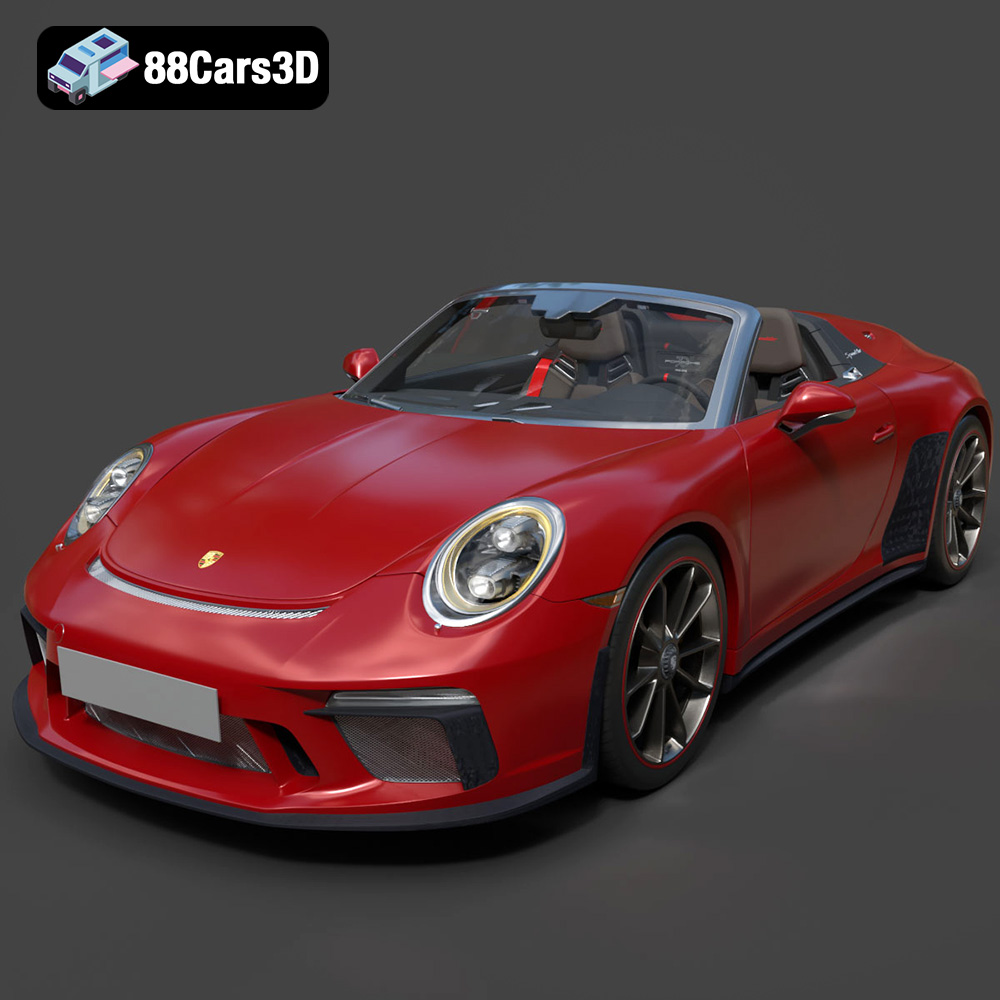
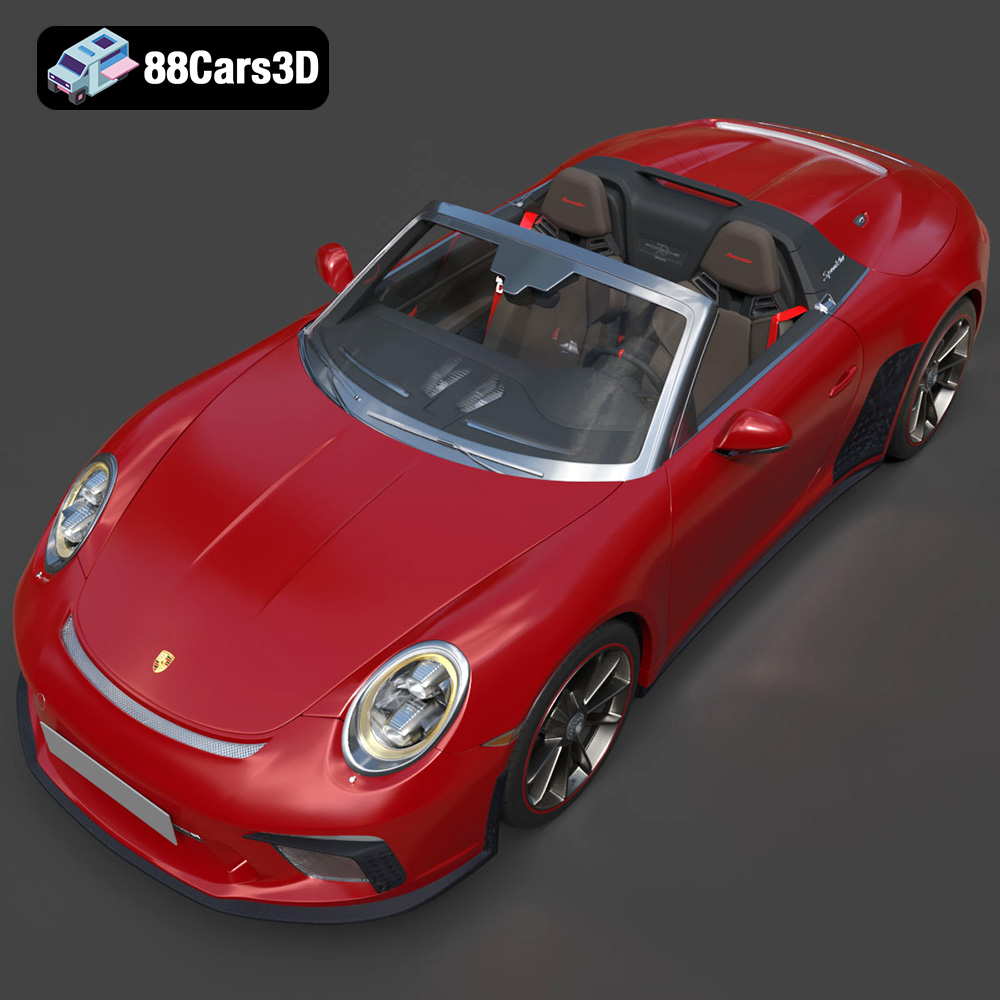
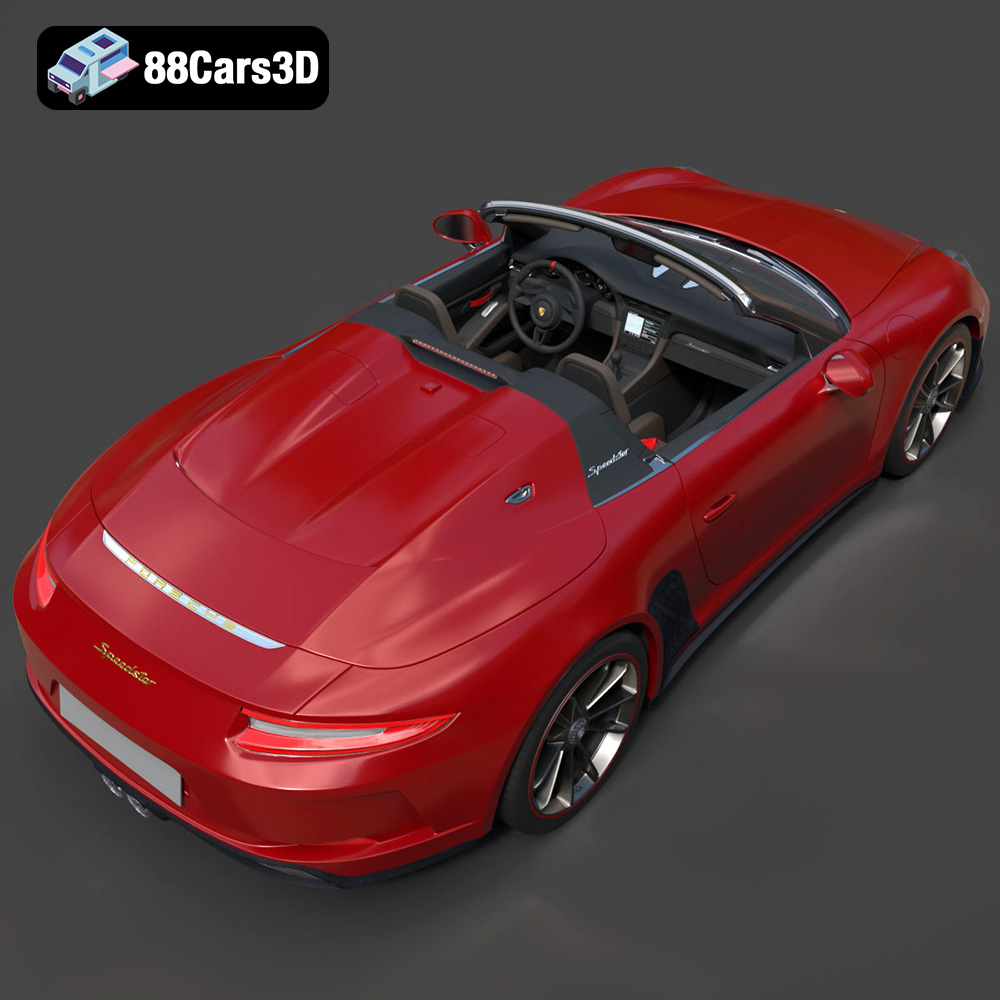
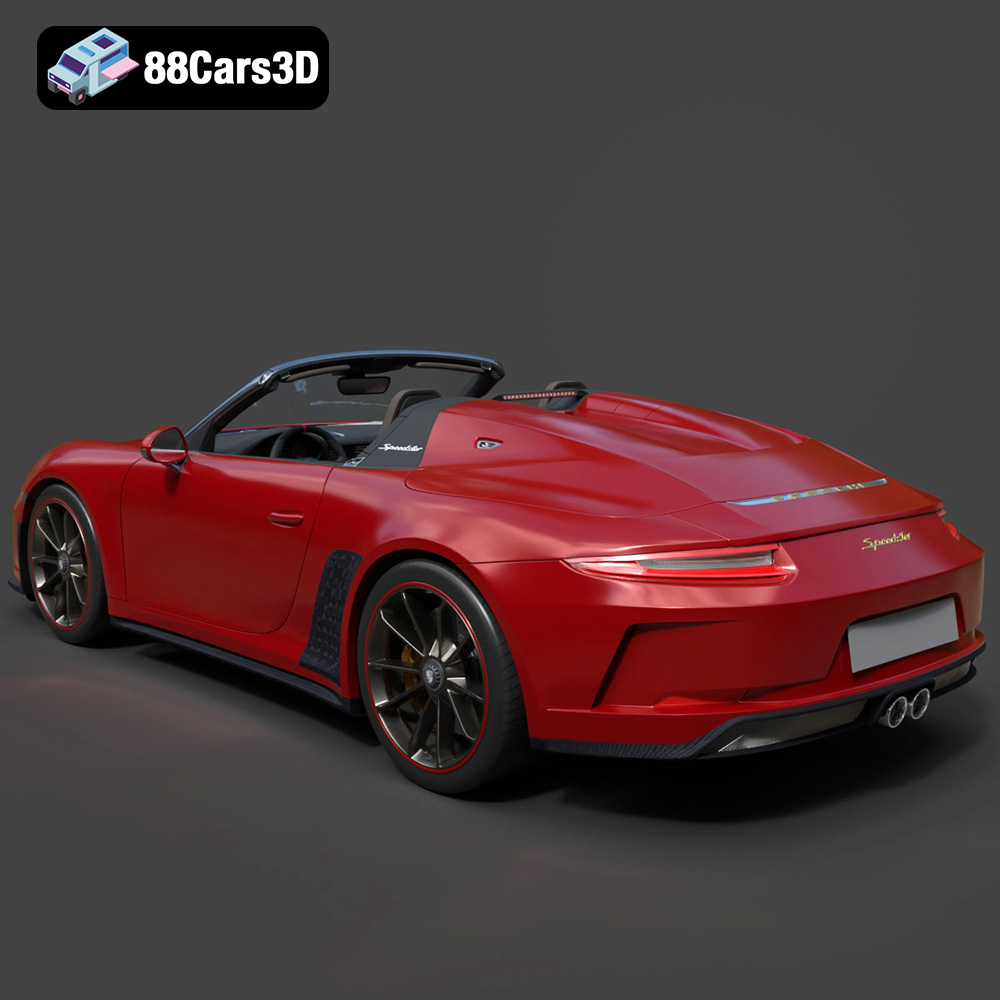
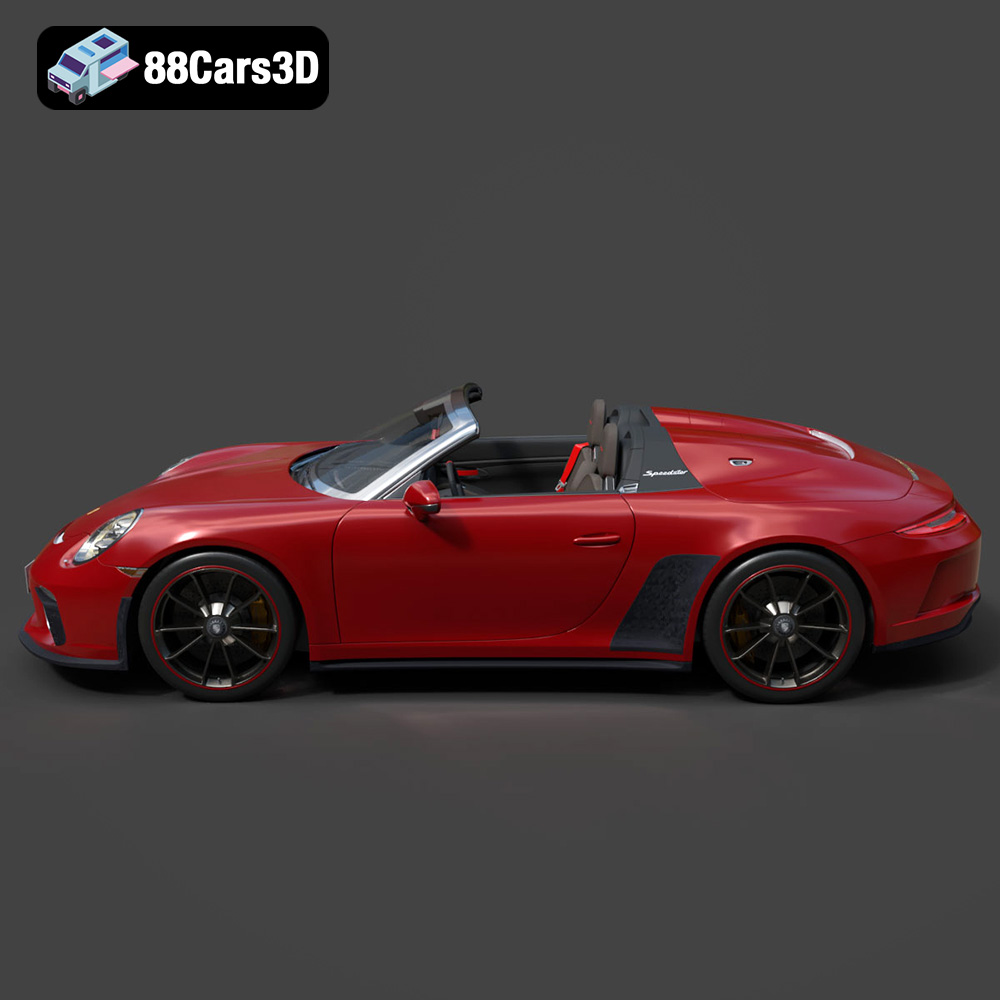
Few cars embody the fusion of heritage, performance, and breathtaking design quite like the Porsche 911 Speedster. The 2019 iteration, marking the spectacular finale of the 991 generation, is a masterpiece. Its naturally aspirated 4.0-liter flat-six engine, unmistakable low-cut windshield, and signature double-bubble rear deck make it a true driver’s car – and an equally stunning subject for digital artists. When a vehicle of this caliber is translated into a 3D model, the result isn’t just a representation; it’s an opportunity to capture its essence with unparalleled fidelity. The Porsche 911 Speedster 2019 3D Model available on 88cars3d.com exemplifies this commitment to excellence, offering creators a meticulously detailed, game-ready asset that empowers a vast array of professional applications.
This blog post will delve into the technical intricacies, practical applications, and creative potential unlocked by such high-quality 3D car models. We’ll explore essential file formats, discuss workflows in popular software like 3ds Max, Blender, and Unreal Engine, and demonstrate how a premium asset like the 2019 Porsche 911 Speedster can become the cornerstone of your next digital masterpiece, from ultra-realistic automotive rendering to immersive game assets and even physical 3D prints.
The versatility of a 3D model is often defined by the range of file formats it supports. Each format serves specific purposes, offering unique advantages for different stages of the production pipeline, from initial modeling to final rendering or real-time deployment. Understanding these distinctions is crucial for seamless integration and optimal performance. The Porsche 911 Speedster 2019 3D model, for instance, comes equipped with a comprehensive suite of formats, ensuring its adaptability across virtually any professional workflow.
The .blend format is the native file type for Blender, a powerful open-source 3D creation suite. When you receive a .blend file, you’re not just getting a static model; you’re gaining access to a fully editable Blender scene. This includes all geometry, materials (with their complex node setups), textures, lighting, cameras, animation data, and even modifiers. For users entrenched in the Blender ecosystem, this format offers the most flexibility for customization, allowing for intricate adjustments to the model’s topology, material properties, and scene composition without any loss of data that might occur during format conversion. It’s ideal for animators, modelers, and artists who want full creative control within Blender.
Autodesk’s .fbx (Filmbox) format is arguably the most widely adopted interchange format in the 3D industry. Its strength lies in its ability to store not only mesh data and UVs but also complex animation, rigging, cameras, and lights. This makes it the go-to choice for exporting models between different 3D software applications and, critically, for importing assets into real-time game engines like Unreal Engine and Unity. For a game-ready asset like the Porsche 911 Speedster, an .fbx file ensures that all the crucial components—separated wheels, correctly pivoted steering, and suspension parts—are preserved and easily animatable within the target engine, streamlining the integration process.
The .obj (Wavefront Object) format is a venerable and highly compatible format, often considered the “lowest common denominator” for 3D model exchange. It excels at storing pure geometric data (vertices, normals, texture coordinates, and faces) and can link to external .mtl (material) files for basic material properties. While it doesn’t support animation, rigging, or advanced material setups, its universality makes it incredibly useful for cross-software compatibility. If you need to import the Porsche 911 Speedster into an obscure or specialized 3D application, or simply need a clean mesh for sculpting or retopology, .obj is a reliable choice.
The .glb (GL Transmission Format Binary) format is a modern, efficient choice designed specifically for the web, augmented reality (AR), and virtual reality (VR) applications. Unlike .obj, .glb packages all model data—geometry, materials, textures, and even animation—into a single, self-contained binary file. This makes it incredibly lightweight and fast to load, perfect for interactive 3D viewers in web browsers, mobile AR experiences, and low-latency VR environments. The Porsche 911 Speedster 3D model in .glb format would be ideal for a virtual car configurator on a dealership’s website or an AR app allowing users to “place” the car in their driveway.
The .stl (Stereolithography) format is the ubiquitous standard for 3D printing. It represents a 3D model as a collection of unconnected triangular facets, defining only the surface geometry without any color, texture, or material information. For designers looking to transform the virtual Porsche 911 Speedster into a tangible collectible or prototype, the .stl file is essential. It directly communicates the mesh data to 3D slicing software, preparing the model for physical fabrication. The product description even provides specific 3D print settings, highlighting the meticulous preparation of this model for physical output.
The .ply (Polygon File Format) is another popular format for storing 3D data, particularly useful in applications involving 3D scanning, CAD, and scientific visualization. It can store a wider range of properties than .stl, including color per vertex or face, normal vectors, and even transparency. While less common for general asset exchange, .ply provides a robust and precise mesh representation, making it valuable for detailed analysis or when integrating the Porsche 911 Speedster into workflows that require highly accurate surface data, such as reverse engineering or quality control.
When a product lists .unreal as an included format, it typically signifies that the asset has been specifically prepared and optimized for seamless integration into Unreal Engine. While .uasset is the native file extension for Unreal Engine assets, .unreal as a downloadable format usually implies a pre-packaged asset or an .fbx file meticulously prepared with Unreal Engine’s import pipeline in mind. This means the model’s materials might be set up using Unreal’s physically based rendering (PBR) standards, textures are correctly packed, and potential collision meshes or LODs (Levels of Detail) are included, significantly reducing setup time for developers.
Similar to .blend for Blender, the .max format is the native file type for Autodesk 3ds Max. It contains the complete 3ds Max scene, including all geometry, modifiers, materials, textures, lighting, cameras, and animation. For professionals working within 3ds Max, this format provides the highest level of editability and allows access to the original scene setup. It’s perfect for complex animation projects, high-end architectural visualization integrations, or when further customization and rendering within 3ds Max are required, leveraging its powerful rendering capabilities like V-Ray or Corona.
The availability of such a diverse range of formats for the Porsche 911 Speedster 2019 3D Model highlights its professional-grade quality and its readiness for any pipeline, from a student project in Blender to a AAA game title in Unreal Engine or a high-resolution marketing campaign rendered in 3ds Max.
Creating a 3D model of a modern vehicle, especially one as iconic and geometrically complex as the Porsche 911 Speedster, is a meticulous process that blends artistic skill with rigorous technical understanding. It’s about more than just replicating shapes; it’s about capturing the soul of the car in a digital medium.
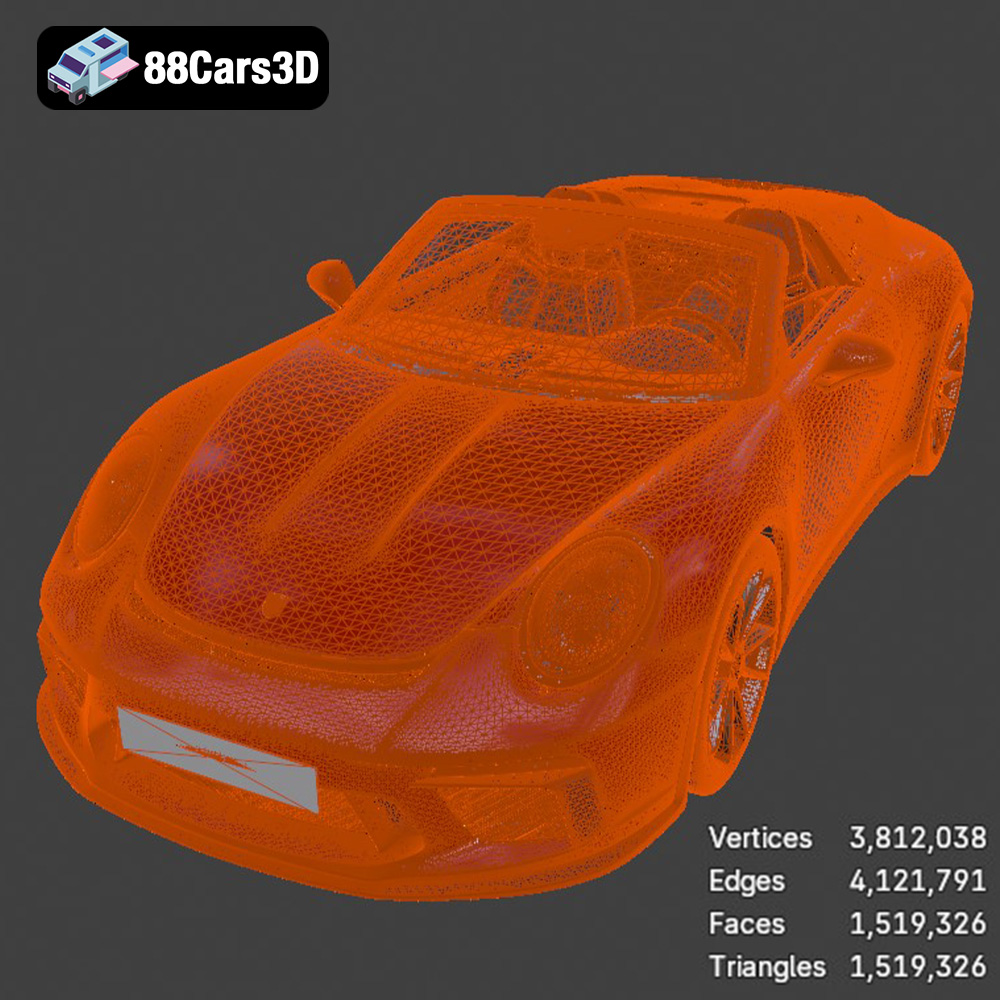
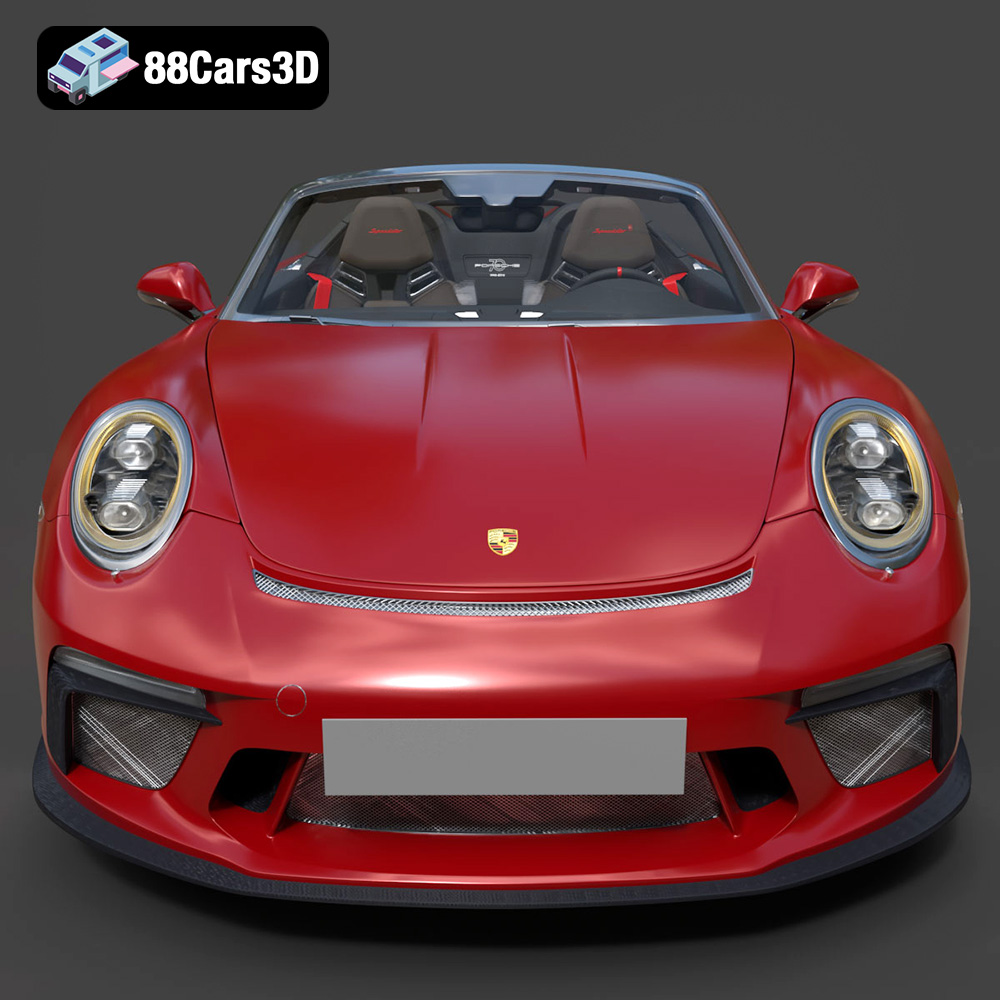
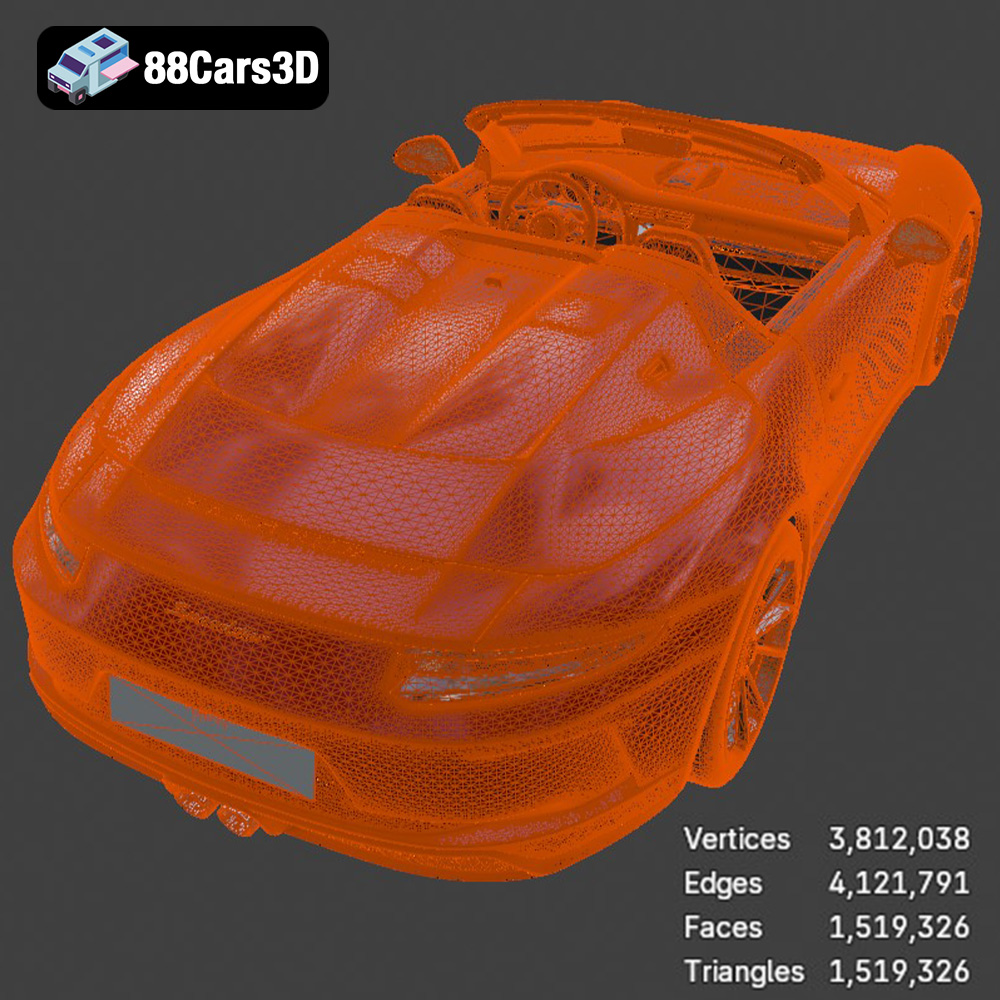
At the core of any high-quality 3D model is its geometry and topology. The Porsche 911 Speedster 2019 3D Model boasts an impressive 1,519,326 triangles, a number that strikes a critical balance. This poly count is high enough to deliver photorealistic visual quality, allowing for extreme close-up renders without pixelation or loss of detail. Every curve, vent, and panel gap of the Speedster, from its low-slung proportions to the intricate LED matrix headlights and sleek 3D taillight clusters, must be precisely sculpted. Crucially, the topology—the arrangement of vertices, edges, and faces—is structured. Good topology ensures smooth deformations for animation, clean subdivision for even higher detail, and efficient UV mapping. This level of precision is particularly evident in the model’s detailed engine components, signature dual-exit titanium exhaust system, and accurately modeled carbon-fiber bucket seats, where every stitch is discernible.
Beyond raw geometry, the realism of a 3D car model is heavily dependent on its materials and textures. Photorealism is achieved through physically based rendering (PBR) workflows, where materials accurately simulate how light interacts with surfaces in the real world. This involves meticulously crafted textures for color (Albedo/Base Color), reflectivity (Metallic), roughness, normal maps for fine surface details, and potentially ambient occlusion. For the Porsche 911 Speedster, this means creating realistic metallic paint finishes that catch the light authentically, carbon fiber patterns with discernible weave, and subtle leather textures in the interior. The center-lock forged alloy wheels, high-performance tires, and ceramic composite brake calipers all require unique material properties to look convincing under any lighting condition, whether in a studio render or a dynamic game environment.
An often-overlooked but vital aspect of high-fidelity 3D car models is adherence to real-world scale accuracy. The Porsche 911 Speedster 2019 3D Model is built to actual vehicle chassis dimensions. This is not merely an aesthetic choice; it’s a technical necessity for seamless integration into various pipelines. In game development, correct scale ensures that the car interacts realistically with environments and characters. In architectural visualization, it guarantees the vehicle fits perfectly within rendered spaces. For AR/VR, precise scaling allows the digital model to feel genuinely present in the physical world. Without accurate proportions, the model would feel “off,” breaking immersion and requiring tedious adjustments from the end-user.
Game developers constantly seek assets that combine visual appeal with optimal performance. The 2019 Porsche 911 Speedster 3D Model is a prime example of a premium asset engineered specifically for the demands of modern game engines.
While 1,519,326 triangles might seem high for a game asset, it’s a carefully considered polycount that strikes a perfect balance for current-generation real-time engines like Unreal and Unity. Modern GPUs can handle a significant number of polygons, especially for hero assets like player vehicles. This polycount allows for the Speedster’s intricate details to shine without necessitating overly complex normal maps to fake geometry. Crucially, the model is “game-ready” through smart topology, efficient UV layouts, and likely pre-exported LODs (Levels of Detail) that automatically swap out lower-poly versions when the car is further from the camera, ensuring smooth framerates even in demanding open-world scenarios. The proper pivot setup for steering, wheel rotation, and suspension travel is also a critical game-ready feature, making it straightforward to rig for in-game physics and animation.
The inclusion of .fbx and .unreal (Unreal Engine-ready) formats for the Porsche 911 Speedster 2019 3D Model significantly streamlines the integration process into leading game engines. In Unreal Engine, an optimized .fbx import brings in the mesh, UVs, and potential rigging. Developers can then utilize Unreal’s powerful material editor to create PBR shaders that leverage the model’s high-quality textures, achieving stunning visual fidelity. The “unreal” specific format often means materials and textures are already set up within Unreal’s framework, requiring minimal tweaking. Similarly, in Unity, the .fbx file allows for quick import, and Unity’s Universal Render Pipeline (URP) or High Definition Render Pipeline (HDRP) can be used to render the vehicle with photorealistic results, making it ideal for racing titles, open-world adventures, or virtual configurators.
For racing game developers, a detailed vehicle model is the canvas upon which the entire player experience is built. The authentic Speedster frame geometry, detailed engine components, and precision-modeled adaptive suspension details of this 3D model provide an exceptional foundation. With separate wheels, suspension, and steering components, developers have the granular control needed to create realistic physics simulations and engaging animation. Imagine the thrill of driving this meticulously recreated Porsche in a high-speed simulation, with its classic five-dial instrument cluster and intricate center console optimized for a first-person POV, providing an unparalleled sense of immersion. Assets from 88cars3d.com directly enable the creation of these high-fidelity experiences.
The utility of a high-quality 3D car model extends far beyond the realm of interactive entertainment, serving as a powerful tool for various visualization and immersive media applications.
For artists creating stunning visual campaigns, product showcases, or cinematic sequences, the Porsche 911 Speedster 2019 3D Model provides an outstanding starting point. Using software like 3ds Max (with its native .max file support) or Blender (with its .blend file), creators can leverage advanced rendering engines such as V-Ray, Corona, Cycles, or Eevee to produce breathtaking photorealistic images and animations. The model’s high-fidelity geometry and structured topology are perfectly suited for these environments, allowing for complex lighting setups, realistic reflections, and intricate details to come to life. Adjusting material finishes (matte, gloss, metallic, carbon fiber) and adapting lighting for different environments becomes a straightforward process, enabling artists to craft bespoke scenes that highlight the Speedster’s iconic design, whether in a sleek studio environment or a dynamic outdoor setting.
Augmented Reality (AR) and Virtual Reality (VR) platforms demand highly optimized yet visually rich 3D assets to create truly immersive experiences. The Porsche 911 Speedster 3D Model, particularly in its .glb format, is tailor-made for these applications. Imagine a virtual showroom where potential buyers can explore the Speedster’s exterior and interior in full 3D, changing colors and materials in real-time. Or an AR app that projects the car into a user’s driveway, allowing them to walk around it and appreciate its scale and design details. The optimized geometry and real-world scale accuracy of this model ensure smooth performance and a believable presence in these cutting-edge interactive environments, making it perfect for immersive virtual showrooms, configurators, and mobile AR experiences that blur the lines between the digital and physical worlds.
From architectural visualization (arch-viz) to product design reviews, a premium 3D car model adds an invaluable layer of realism and context. Placing the Speedster in a rendered luxury garage, an urban street scene, or a sprawling estate instantly elevates the scene’s authenticity and appeal. Its detailed exterior and cockpit features, including the authentically modeled carbon-fiber bucket seats and sport steering wheel, contribute to a high level of fidelity that can significantly impact client presentations and marketing materials. This allows architects to showcase how luxury vehicles complement their designs, or product designers to visualize vehicle integration into smart home ecosystems, creating compelling narratives around automotive excellence.
The journey of a 3D model doesn’t always end on a screen. For enthusiasts, collectors, and prototyping purposes, the ability to 3D print a digital asset transforms it into a tangible, physical object. The Porsche 911 Speedster 2019 3D Model is ready for this transition, with specific instructions provided for 3D printing.
Converting a high-detail rendering model into a 3D printable file requires careful consideration of mesh integrity and manifold geometry. The inclusion of the .stl format specifically for the Porsche 911 Speedster 3D Model signifies that it has been prepared for this process. An .stl file represents the model as a watertight mesh of triangles, crucial for 3D printers to correctly interpret its solid form. Before printing, the model might need further checking in slicing software to ensure there are no self-intersecting faces or non-manifold edges that could cause printing errors. The structured topology of the original model aids in generating a clean and robust .stl output.
Successful 3D printing of a complex car model like the Speedster depends heavily on applying the correct settings. The recommended scale (1:12 / 1:18 / 1:24) is vital for achieving a balance between manageable print time, material usage, and detail retention. A layer height of 0.04–0.12 mm, particularly with resin printing, is suggested for capturing the fine details of the Speedster’s body lines, interior, and intricate components like the exhaust and mirrors. Proper wall thickness (1.2–2.0 mm) ensures structural integrity, while an infill of 20–30% offers a good compromise between strength and material consumption. Supports are almost always required for overhangs and delicate parts, with print orientation—such as printing the frame angled and wheels separately—being critical for optimizing both structural strength and surface quality.
Once printed, the raw 3D model undergoes a transformation through post-processing to achieve a showroom-ready appearance. This typically involves removing supports, sanding to smooth out layer lines or imperfections, and applying primer to create a uniform surface for painting. For a vehicle as iconic as the Porsche 911 Speedster, the final step involves applying authentic factory colors, often with metallic or gloss finishes, to replicate its real-world luster. Additional detailing, such as painting brake calipers, adding subtle window tints, or even custom badging, can elevate the printed model from a mere replica to a true piece of art, showcasing the full potential of high-quality 3D assets from sources like 88cars3d.com.
In the expansive and ever-evolving landscape of digital content creation, the significance of high-quality 3D car models cannot be overstated. They are more than just polygons and textures; they are the fundamental building blocks that empower game developers to craft immersive worlds, visual artists to render cinematic masterpieces, architects to breathe life into their designs, and AR/VR creators to construct believable interactive experiences. The technical specifications, meticulous detailing, and broad format compatibility of a premium asset directly translate into saved development time, enhanced visual fidelity, and ultimately, a more impactful final product.
The Porsche 911 Speedster 2019 3D Model is a testament to this commitment to excellence. From its photorealistic geometry and game-ready optimization to its readiness for cinematic rendering and precise 3D printing, it offers unparalleled versatility for professionals across various industries. Whether you’re integrating it into Unreal Engine for a high-octane racing simulator, rendering it in 3ds Max for a luxury brand campaign, or bringing it to life as a tangible collectible, this model provides the foundation for exceptional results. Investing in such a detailed and adaptable asset is an investment in the quality and efficiency of your projects.
For those seeking to elevate their digital automotive projects, 88cars3d.com stands as a reliable source for top-tier 3D car models that meet the rigorous demands of professional workflows. Explore their collection and discover how premium assets can transform your creative vision into a stunning reality.
The 2019 Porsche 911 Speedster is a masterpiece of modern automotive engineering mixed with rich heritage, marking the spectacular finale of the 991 generation. Renowned for its naturally aspirated 4.0-liter flat-six engine, unmistakable low-cut windshield, and signature double-bubble rear deck, this limited-edition roadster represents the purest essence of driving pleasure. Its aerodynamic styling, carbon fiber accents, and track-focused performance cues make it an iconic standout in any virtual environment.
This exceptionally detailed 3D model boasts a high-fidelity geometry with 1,519,326 triangles, delivering photorealistic visual quality that holds up under extreme close-up rendering while maintaining a structured topology. It is precisely engineered for top-tier visual fidelity across multiple platforms, ensuring seamless integration into game development, high-end AR/VR experiences, architectural visualization, and cinematic animations.
Perfect for high-speed racing simulations, luxury lifestyle visualizations, virtual configurators, and open-world automotive games.
$37.50
.2019
.blend
.fbx
.glb
.max
.obj
.ply
.porsche
.rendering
.sports car
.stl
.supercar
.unreal
911-speedster
car-3d-model
game asset
game-ready
high poly
luxury car
optimized
VR/AR