Get 20% OFF All Premium 3D & STL Models!

In the vibrant world of 3D modeling, where precision meets passion, the demand for high-quality automotive assets is ever-growing. From cinematic visualizations to immersive game environments and groundbreaking AR/VR experiences, a meticulously crafted vehicle model forms the backbone of digital authenticity. Today, we delve into the intricate details and extensive applications of a standout example: the Alfa Romeo Giulietta Quadrifoglio Verde 2014 3D model. This exceptional asset is not merely a collection of polygons; it’s a testament to digital craftsmanship, designed to meet the rigorous demands of professional pipelines across various industries.
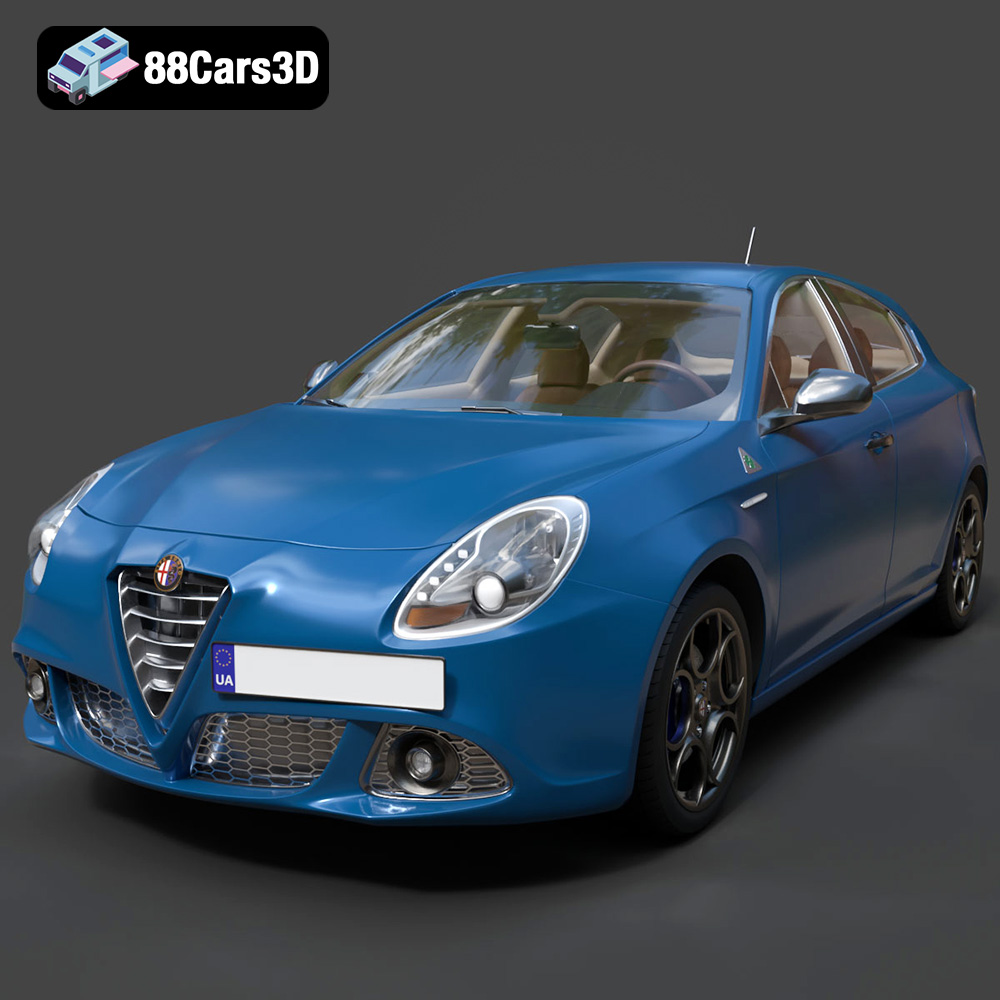
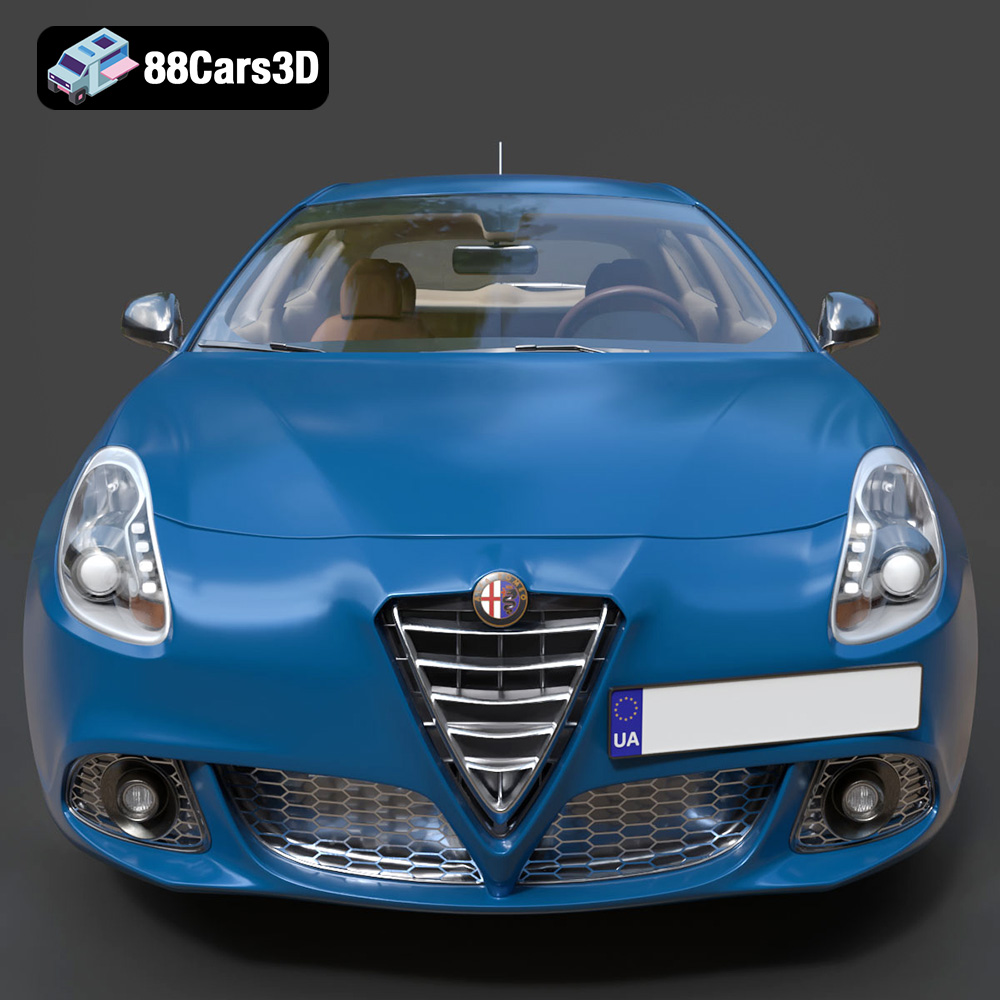
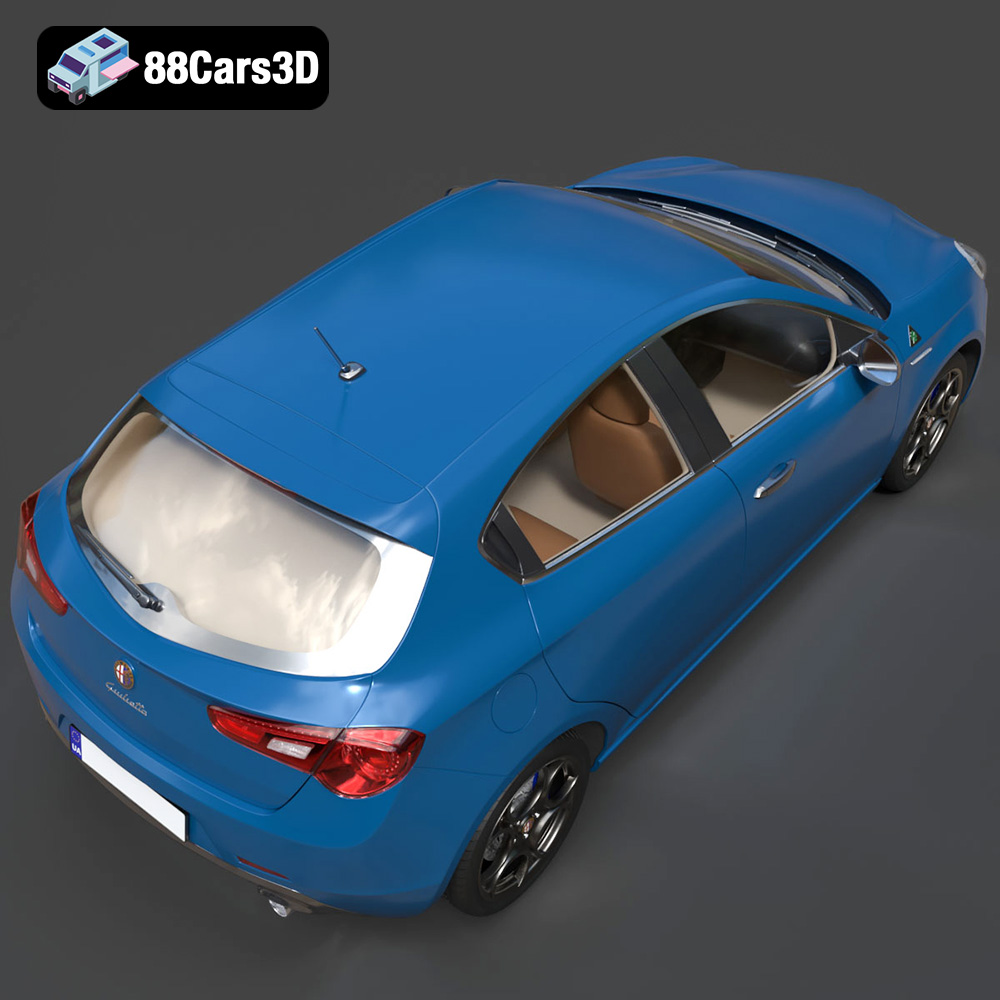
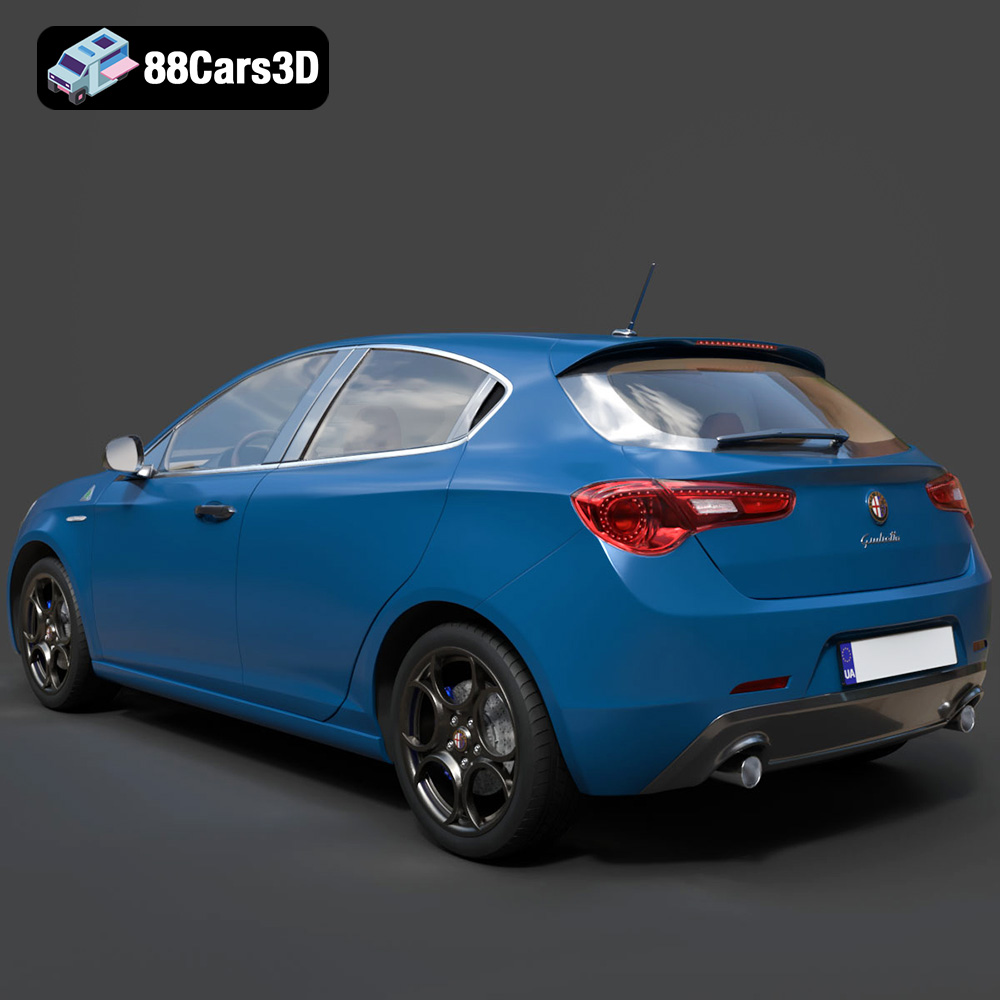
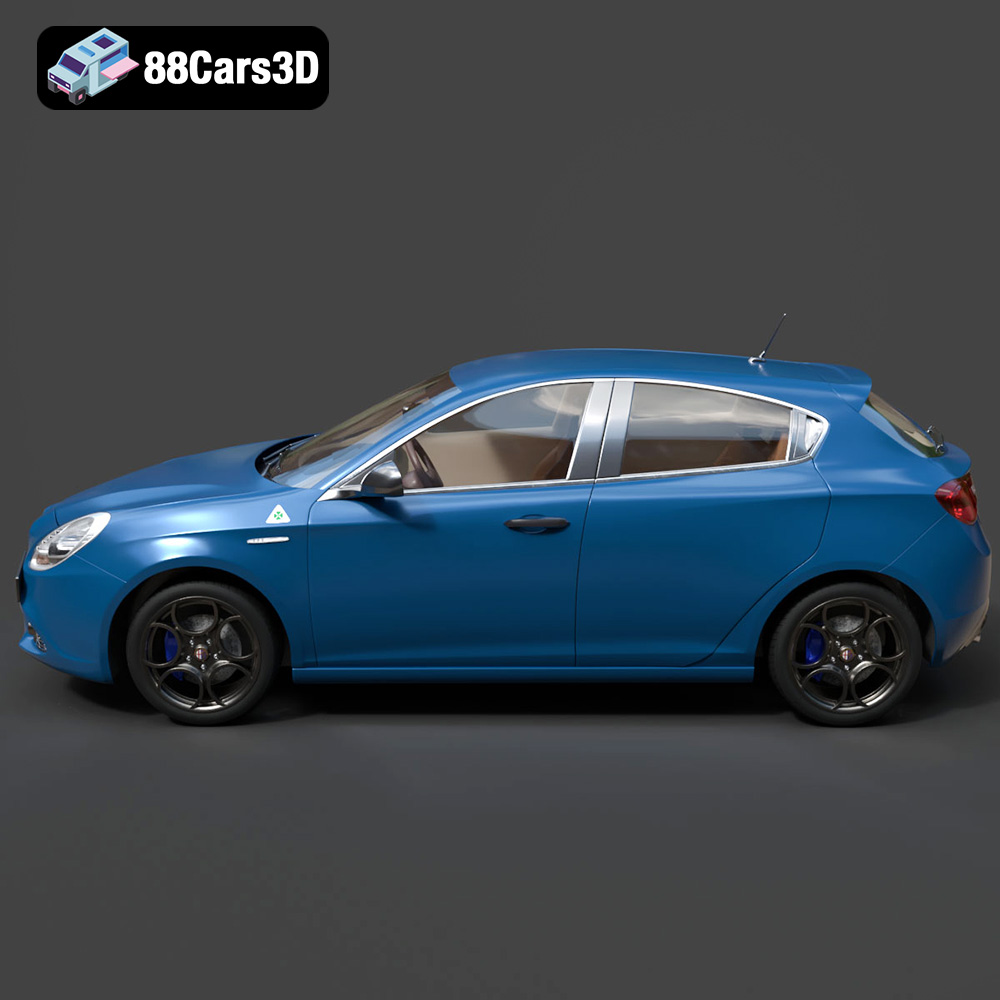
The Alfa Romeo Giulietta Quadrifoglio Verde represents a thrilling blend of Italian design and exhilarating performance. Its iconic triangular scudetto front grille, aggressive aerodynamic profile, and distinctive styling cues capture the essence of a true hot hatch. Translating this automotive artistry into a 3D model requires an unwavering commitment to accuracy and optimization. This particular model, available at 88cars3d.com, encapsulates that spirit, offering uncompromised visual fidelity suitable for a vast array of projects. Whether you’re an automotive designer showcasing a new concept, a game developer populating an open-world, or an architect integrating vehicles into a scene, understanding the nuances of such detailed 3D car models is paramount.
Creating a digital twin of a real-world vehicle like the Alfa Romeo Giulietta Quadrifoglio Verde 2014 is a complex process that goes far beyond basic shape modeling. It involves a deep understanding of automotive design, engineering principles, and the technical requirements of various 3D applications. The goal is not just to replicate the vehicle’s appearance but to capture its spirit, functionality, and performance characteristics in a way that resonates with viewers and users alike.
The foundation of any superior 3D car model lies in its geometric accuracy. For the Alfa Romeo Giulietta Quadrifoglio Verde, this means precisely replicating every curve, panel gap, and aerodynamic line. Professional modelers utilize real-world blueprints, photographic references, and even lidar scans to ensure proportions are spot-on. The distinctive Alfa Romeo elements, such as the scudetto grille, the sweeping taillights, and the classic five-hole telephone dial alloy wheels, must be rendered with impeccable detail. This painstaking attention to exterior features ensures that the model instantly recognizable and visually convincing, whether viewed up close in a high-resolution render or as part of a dynamic scene in a game engine.
Furthermore, the model extends its authenticity to the more subtle yet critical elements, like the sport-tuned dual exhaust system with oversized chrome tips and the accurately modeled lowered sport suspension geometry. These details are crucial for realism, particularly in scenarios where the car might be viewed from different angles or in motion.
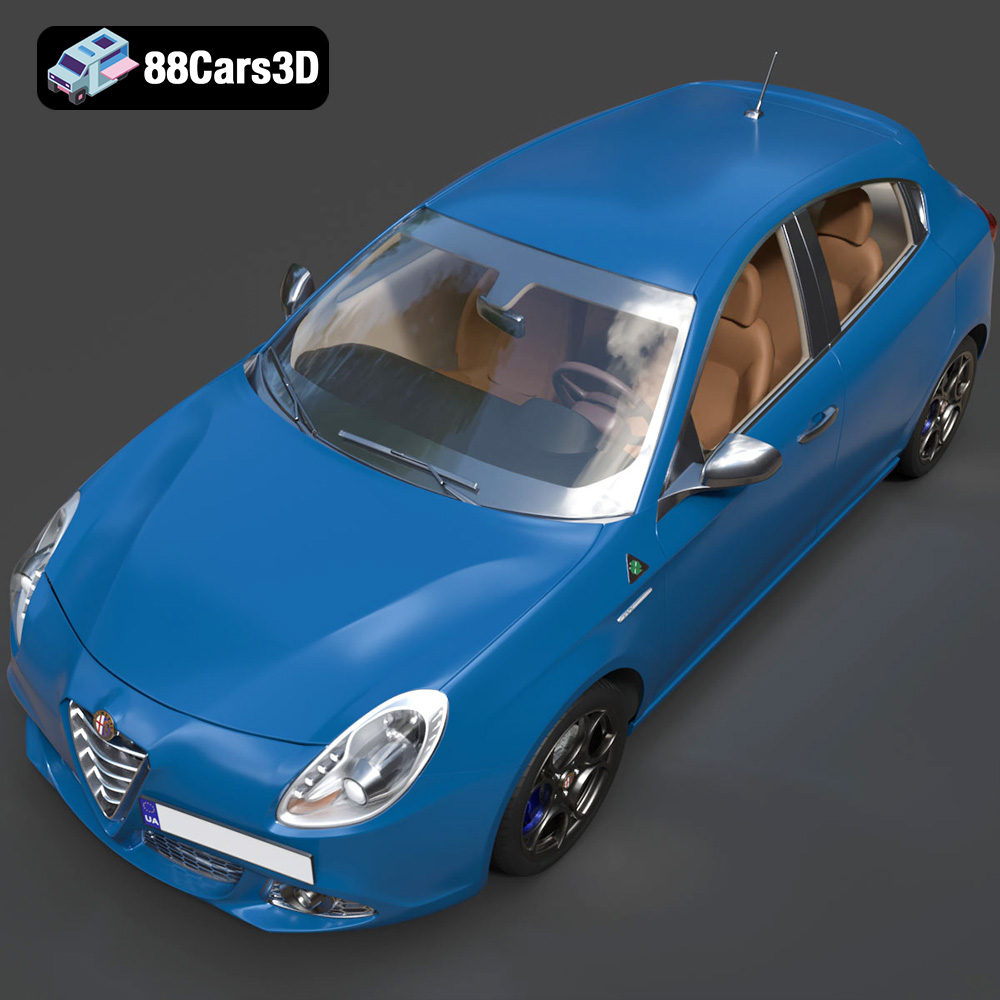
While the exterior catches the eye, a truly immersive 3D experience demands an equally detailed interior. The Alfa Romeo Giulietta model excels here, featuring sport bucket seats with detailed Quadrifoglio Verde stitching, a leather-wrapped, flat-bottomed sport steering wheel, and a deep-set, twin-binnacle instrument cluster. Even the aluminum sport pedals, climate controls, and gear shifter are meticulously recreated. This level of interior fidelity is vital for first-person perspectives in gaming, virtual reality showrooms where users can “sit” inside the car, or high-end configurators where customization options are explored. Optimized geometry for first-person POV ensures that these intricate details don’t compromise real-time performance, striking a perfect balance between visual richness and technical efficiency.
A static model is often just the starting point. For animations, simulations, or interactive experiences, the model needs to be engineered with proper hierarchical structures and pivot points. The Alfa Romeo Giulietta Quadrifoglio Verde model is designed with separate wheels, suspension, and steering components. This allows for realistic animation of steering, wheel rotation, and suspension travel, essential for racing games, cinematic sequences, or even virtual test drives. Proper pivot setup is a technical necessity that greatly enhances the model’s utility and reduces the rigging workload for animators, making it a truly game-ready and animation-friendly asset.
The versatility of a 3D model is often defined by the file formats it supports. Each format has specific strengths, ideal use cases, and technical considerations that make it suitable for different stages of a production pipeline. For professionals working with 3D car models, understanding these formats is crucial for seamless workflow integration and ensuring the model performs as expected. The Alfa Romeo Giulietta Quadrifoglio Verde 2014 3D model, for instance, comes with a comprehensive suite of formats, allowing maximum flexibility.
The availability of such a diverse set of formats for the Alfa Romeo Giulietta Quadrifoglio Verde 3D model ensures that it can seamlessly integrate into virtually any professional pipeline, from high-fidelity rendering to real-time game development and even physical prototyping, exemplifying the flexibility offered by top-tier 3D car models.
The transition of a highly detailed automotive model from a rendering masterpiece to an optimized, game-ready asset is a sophisticated process that balances visual fidelity with real-time performance. This is where models like the Alfa Romeo Giulietta Quadrifoglio Verde 2014 truly shine, offering a “game-ready & optimized” designation that speaks volumes about its utility.
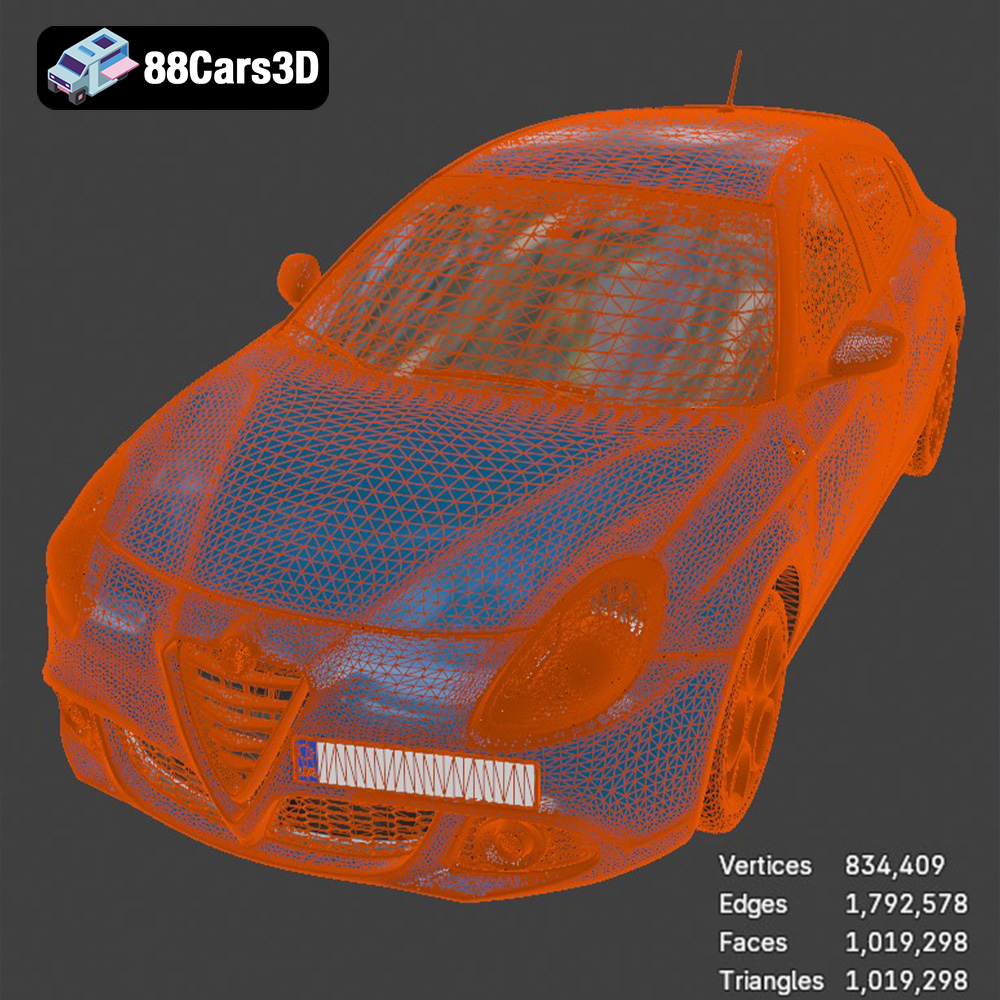
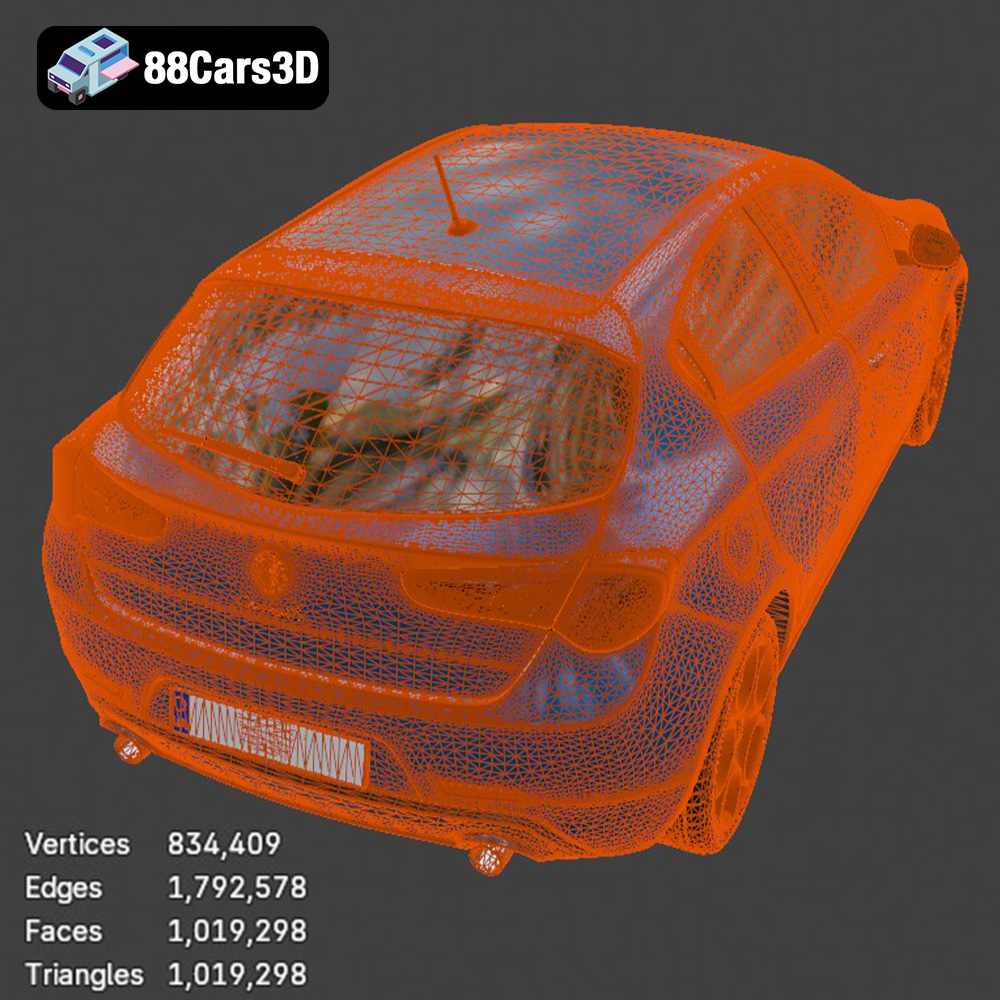
A common challenge in game development is maintaining graphical realism without bogging down the game engine. The Alfa Romeo Giulietta model achieves this delicate balance with 1,019,298 triangles. This polycount is sufficiently high to provide stunning visual realism, capturing the subtle curves and sharp edges of the vehicle, yet it is optimized enough for smooth integration into demanding real-time engines like Unreal and Unity. This isn’t achieved by simply reducing polygons indiscriminately; it involves careful retopology, where edge loops are intelligently managed, and details are preserved where they matter most, ensuring that the model looks great even at speed or in complex environments.
The real-world scale accuracy is another critical optimization. Vehicles that are correctly scaled integrate naturally into game worlds, preventing issues with physics, camera perspectives, or interactions with other assets. This attention to detail ensures that developers can drop the car into their scene with confidence, knowing it will behave and appear realistically.
Beyond geometry, the realism of a 3D car model largely depends on its UV mapping and texturing. Proper UV unwrapping ensures that textures can be applied without distortion, allowing for ultra-realistic reflections, stunning lighting dynamics, and accurate material representation. For the Alfa Romeo Giulietta, this means capturing the metallic sheen of the paint, the intricate patterns of carbon fiber elements (if present), the texture of the leather interior, and the distinct look of tire tread. High-quality PBR (Physically Based Rendering) textures and materials are often included or easily configurable, allowing artists to achieve photorealistic results that react correctly to various lighting conditions, a crucial aspect for modern game engines and rendering solutions.
The journey from a raw 3D model to a functional in-game asset involves several steps within game engines. For Unreal Engine, an .fbx file (or a specially prepped .unreal file) is often the starting point. Upon import, developers can configure materials using Unreal’s powerful PBR system, apply physics assets for realistic driving dynamics, and set up collision meshes. The proper pivot setup for steering, wheel rotation, and suspension travel mentioned earlier significantly simplifies the rigging process for vehicle blueprints, allowing for immediate animation and simulation. Similarly, for Unity, the .fbx format facilitates seamless import, where developers can assign materials, create prefabs, and integrate the car into their game logic. The model’s optimized geometry ensures that it contributes positively to the game’s frame rate, making it an ideal choice for open-world games, racing titles, and simulators.
High-quality 3D car models are indispensable tools in the fields of automotive rendering and visualization. They empower designers, marketers, and architects to create compelling visuals that communicate ideas, evoke emotions, and showcase products in their best light. The Alfa Romeo Giulietta Quadrifoglio Verde model is perfectly suited for these high-fidelity applications, available through 88cars3d.com.
For cinematics, advertising, or product showcases, rendering capabilities are paramount. In software like 3ds Max (using the .max format) or Blender (with the .blend format), artists have full control over lighting, camera angles, environments, and advanced material properties. The detailed engine bay representation of the Alfa Romeo, featuring the 1750 TBi turbocharged layout, can be highlighted in dramatic close-ups. Customizable options such as body colors, tire textures, and material finishes (matte, gloss, metallic) allow for endless creative possibilities. Imagine rendering the Giulietta under different studio lighting setups or within dynamic environmental scenes, capturing its aggressive stance and elegant lines with photorealistic precision. These capabilities are crucial for creating impactful brand campaigns and lifestyle imagery that resonate with audiences.
The immersive potential of Augmented Reality (AR) and Virtual Reality (VR) is transforming how consumers interact with products. For virtual showrooms or interactive configurators, 3D car models are the core assets. The .glb format, optimized for AR/VR, makes the Alfa Romeo Giulietta an excellent candidate for these applications. Users can explore the vehicle in a virtual space, walk around it, change colors, open doors, and even sit inside (leveraging the detailed interior). This level of interaction provides a richer, more engaging experience than traditional static images or videos, offering a glimpse into the future of automotive sales and marketing.
Beyond technical applications, 3D car models serve as powerful tools for storytelling. Agencies and marketing teams can utilize these assets to create visually stunning advertisements, product launch videos, and interactive web experiences. The ability to render the Alfa Romeo Giulietta in any conceivable environment, with custom lighting and styling, allows brands to craft narratives that highlight the vehicle’s features, performance, and emotional appeal without the logistical complexities and costs of physical photography or videography. It’s about bringing a brand’s vision to life with unparalleled control and flexibility.
While often associated with digital screens, 3D models also bridge the gap to the physical world through 3D printing. For hobbyists, collectors, or prototyping engineers, the ability to convert a high-quality 3D car model into a physical object is an exciting prospect. The Alfa Romeo Giulietta Quadrifoglio Verde 3D model supports this with its .stl format inclusion.
The .stl format is the industry standard for 3D printing, providing the necessary triangulated mesh data for printers to interpret. When preparing the Alfa Romeo model for 3D printing, considering the scale is critical. Recommended scales like 1:12, 1:18, or 1:24 allow for a balance between detail and manageable print size. Converting the model to .stl ensures compatibility with slicing software, which prepares the model for the specific 3D printer.
Achieving a high-quality physical model requires careful attention to print settings. For fine details, resin printing is often recommended over FDM, allowing for layer heights as low as 0.04–0.12 mm. Key considerations include wall thickness (1.2–2.0 mm for structural integrity), infill percentage (20–30% for a good balance of strength and material usage), and supports. Detailed parts like exhaust pipes, side mirrors, and spoilers will almost certainly require supports, and print orientation (e.g., frame printed angled, wheels separately) can optimize both structural integrity and surface quality. Post-processing, including sanding, priming, and applying authentic factory colors with metallic finishes, transforms the raw print into a display-worthy replica. This combination of digital precision and physical craftsmanship makes the Alfa Romeo Giulietta model a versatile asset for hobbyists and professionals alike.
In today’s fast-paced digital landscape, the choice of 3D assets can significantly impact project timelines, quality, and overall success. Opting for premium 3D car models like the Alfa Romeo Giulietta Quadrifoglio Verde from trusted sources like 88cars3d.com offers distinct strategic advantages.
Developing a highly detailed, optimized 3D car model from scratch is an incredibly time-consuming and resource-intensive endeavor. It requires specialized skills in modeling, texturing, rigging, and optimization. By leveraging pre-made, high-quality 3D car models, development teams can drastically cut down on production time and costs. This allows artists and developers to focus on higher-level creative tasks, game logic, or scene composition rather than the foundational asset creation. For projects with tight deadlines, this can be the difference between success and delay.
A major benefit of purchasing professionally crafted 3D models is the assurance of consistent quality and technical adherence. The Alfa Romeo Giulietta model, with its accurate geometry, real-world scale, proper pivot setups, and optimized polycount, arrives ready to integrate. This eliminates the guesswork and potential inconsistencies that can arise from custom modeling or using lower-quality assets. Whether for an automotive configurator demanding flawless realism or a game requiring uniform asset quality, premium 3D car models provide a reliable foundation, enhancing the overall visual integrity of any project. It’s an investment in efficiency and excellence that pays dividends across the entire production pipeline.
The digital automotive landscape is continually evolving, driven by advancements in rendering technology, game engines, and immersive experiences. At the heart of this evolution are exceptional 3D car models that blend artistry with technical precision. The Alfa Romeo Giulietta Quadrifoglio Verde 2014 3D model stands as a prime example of such an asset – a detailed, optimized, and versatile model designed to meet the rigorous demands of professionals across game development, automotive rendering, AR/VR, and even 3D printing. Its comprehensive file format support, from .blend and .max for editable projects to .fbx and .unreal for real-time applications, and .stl for physical output, ensures its utility across diverse pipelines.
Investing in high-quality 3D car models like this Alfa Romeo Giulietta from platforms such as 88cars3d.com is not just about acquiring an asset; it’s about acquiring efficiency, ensuring visual excellence, and accelerating your creative and developmental workflows. Whether you’re crafting the next big racing title, visualizing future automotive designs, or bringing virtual showrooms to life, the right 3D model is your key to unlocking unparalleled digital experiences.
Experience the thrilling blend of Italian design and performance with the Alfa Romeo Giulietta Quadrifoglio Verde (2014) 3D model. Capturing the essence of a true hot hatch, this model highlights the vehicle’s legendary heritage with its iconic triangular scudetto front grille, aggressive aerodynamic profile, and distinctive styling cues. Every curve and characteristic line has been meticulously modeled to reflect Alfa Romeo’s passion for automotive artistry, right down to the robust dual exhaust system and performance-oriented stance. Boasting a highly detailed topology with 1,019,298 triangles, this model offers uncompromised visual fidelity while retaining essential optimization for real-time applications. The meticulously structured geometry ensures seamless integration into major game engines, delivering ultra-realistic reflections and stunning lighting dynamics. Whether utilized in high-end automotive configurators, immersive VR experiences, or next-generation racing titles, this model guarantees exceptional performance and visual quality. Perfect for open-world game development, virtual reality showrooms, cinematic rendering, and high-quality 3D printing projects.
$37.50
.2014
.alfa-romeo
.blend
.fbx
.giulietta
.glb
.hot-hatch
.max
.obj
.ply
.rendering
.sports car
.stl
.unreal
car-3d-model
game asset
game-ready
optimized
quadrifoglio-verde
VR/AR