Get 20% OFF All Premium 3D & STL Models!

In the dynamic world of digital content creation, where photorealism meets interactive experiences, the demand for exceptionally detailed and versatile 3D models is constantly escalating. From blockbuster video games to cutting-edge architectural visualizations and immersive AR/VR applications, a high-quality 3D car model can be the centerpiece that elevates a project from good to extraordinary. Few vehicles embody this blend of aggressive performance and sophisticated design as compellingly as the Audi RS7 Sportback 2020. This automotive icon, known for its commanding presence, sharply sculpted lines, and a potent twin-turbo V8 in the real world, translates into an equally powerful digital asset when meticulously crafted.
We’re diving deep into a truly exceptional digital rendition of this modern classic, specifically the Audi RS7 Sportback 2020 3D Model available at 88cars3d.com. This isn’t just a model; it’s a meticulously engineered digital twin, built to meet the rigorous demands of professional artists and developers. Its impressive fidelity and comprehensive suite of file formats make it an indispensable resource for anyone serious about automotive rendering, game development, or any visualization project where authenticity is paramount. Let’s explore how such a high-caliber asset drives innovation across various digital pipelines.
The journey of automotive design, from initial sketch to production vehicle, has always been intertwined with visual representation. In the digital age, this has evolved dramatically, with 3D models becoming central not just to design, but to marketing, simulation, and entertainment. The sophistication of these models directly impacts the final output, influencing everything from subtle reflections on a paint job to the way a car handles in a virtual racing game.
Modern automotive design relies heavily on 3D modeling from its nascent stages. Designers utilize CAD software to sculpt surfaces, test aerodynamics, and refine aesthetics long before a physical prototype is built. These foundational 3D models then transition into high-fidelity versions for marketing and visualization. This involves adding intricate details like interior stitching, headlight projector lenses, and tire treads, pushing the polygon count into the millions. The goal is to capture every nuance of the designer’s intent, ensuring that the digital representation is indistinguishable from the real thing in a photorealistic rendering. The Audi RS7 Sportback 2020 model perfectly exemplifies this attention to detail, born from an understanding of automotive design principles and translated with digital precision.
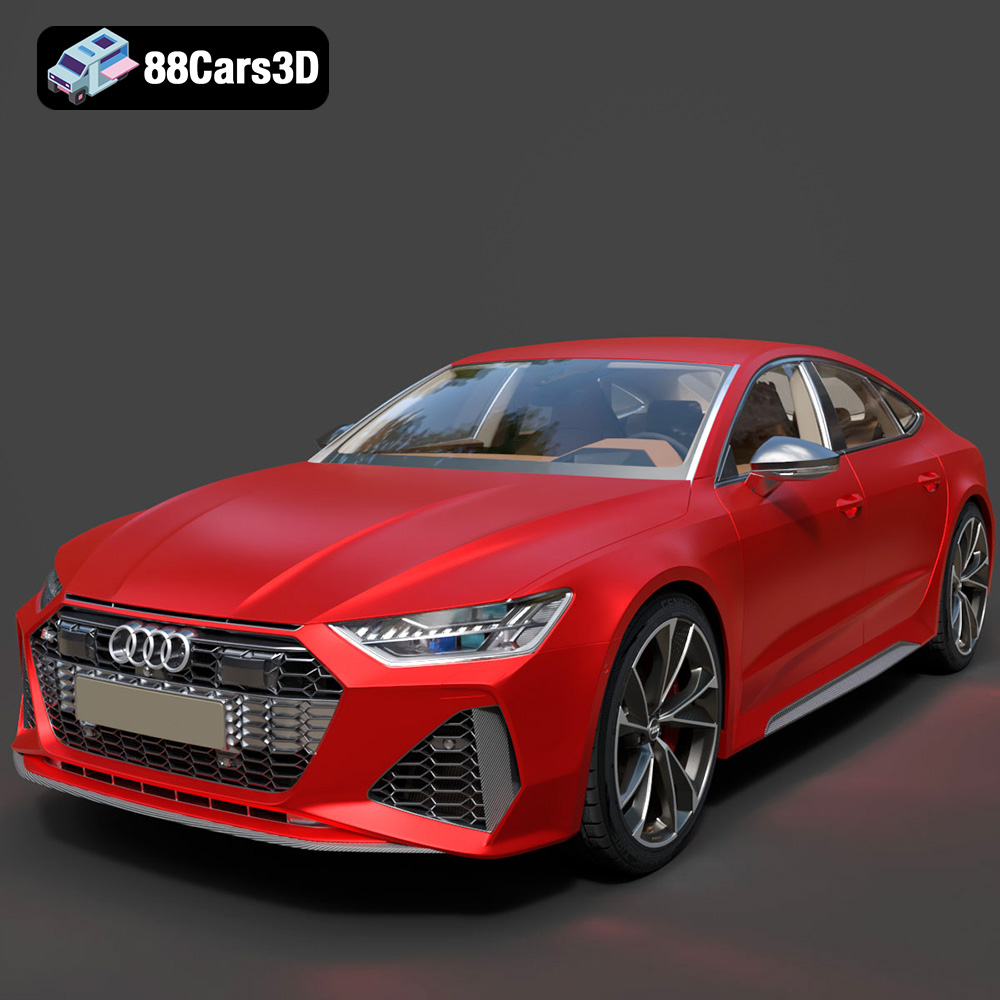
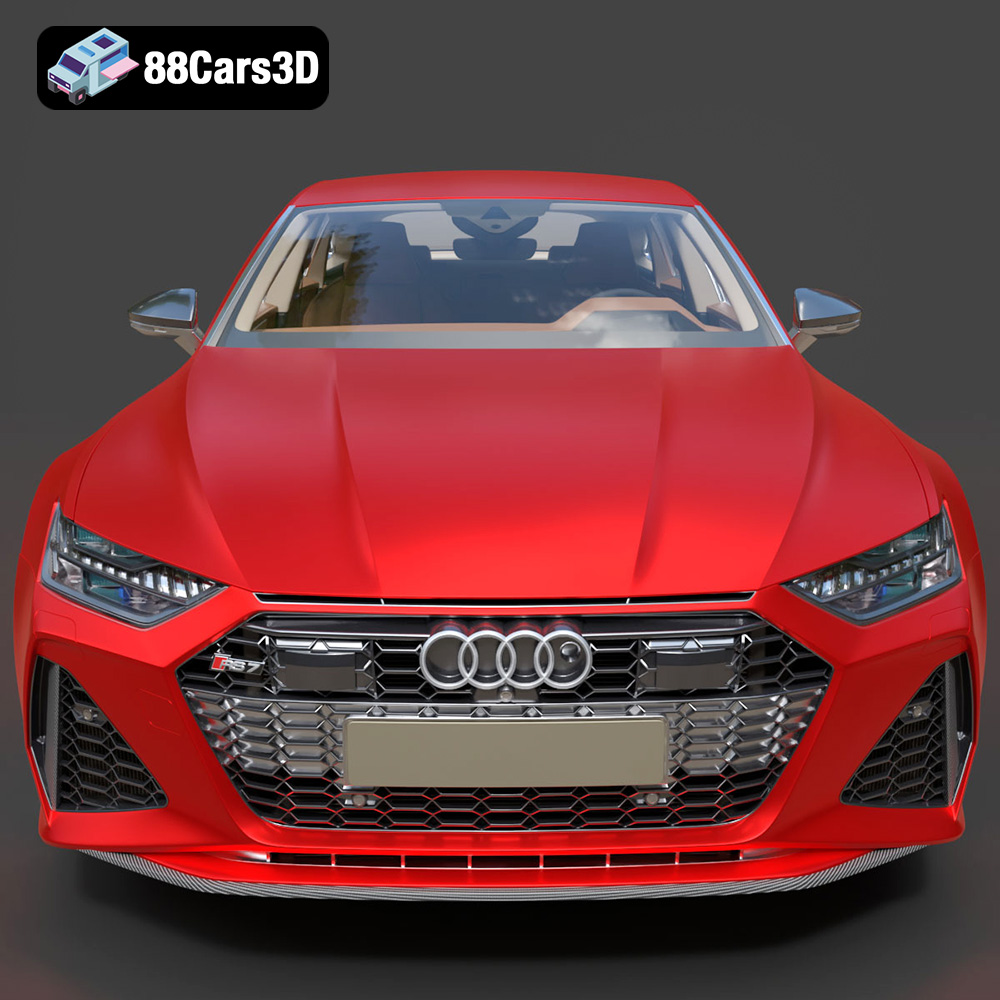
In an era where consumers are increasingly exposed to high-definition visuals, authenticity is no longer a luxury but a necessity. A poorly modeled vehicle with low-resolution textures or inaccurate proportions can instantly break immersion in a game or undermine the credibility of an advertisement. For a car like the Audi RS7 Sportback 2020, its aggressive widebody stance, distinctive single-frame grille, and signature LED matrix headlights are critical identifiers. Capturing these elements accurately, down to the subtle curves and sharp edges, requires thousands, if not millions, of polygons and expert UV mapping. This level of detail ensures that whether it’s viewed up close in a virtual showroom or speeding across a game track, the model maintains its visual integrity and brand recognition.
Beyond static visuals, automotive 3D models are crucial for simulating real-world performance. In game development, accurate vehicle geometry is essential for realistic physics simulations, collision detection, and suspension dynamics. The Audi RS7 Sportback 2020, with its powerful twin-turbo V8, isn’t just a pretty face; it’s a performance machine. A high-quality 3D model translates this performance into virtual environments through proper pivot setups for steering, wheel rotation, and suspension travel. This ensures that a virtual RS7 not only looks the part but also behaves convincingly, offering an immersive experience that resonates with enthusiasts and casual players alike.
Navigating the landscape of 3D production often means grappling with a multitude of file formats, each with its strengths, weaknesses, and specific applications. Choosing the right format for your project is crucial for efficiency, compatibility, and preserving the integrity of your 3D asset. The Audi RS7 Sportback 2020 3D model, available at 88cars3d.com, is delivered in an extensive array of formats, ensuring maximum flexibility for any pipeline. Let’s break down the technical aspects and use cases for each.
The `.blend` format is Blender’s native file type, containing a complete Blender project. This includes not only the mesh geometry but also materials, textures, lighting setups, cameras, animation data, modifiers, and even scripts. For artists working primarily within Blender, this is the most powerful format as it offers full editability and access to every aspect of the scene. If you plan to rig, animate, or extensively customize the Audi RS7 model using Blender’s robust toolset, the `.blend` file is your go-to. It ensures that all original scene data, including the detailed RS sport seats and Virtual Cockpit displays, are perfectly preserved for further work.
FBX (Filmbox) is an industry-standard proprietary file format developed by Autodesk, widely used for exchanging 3D data between various software applications and especially prevalent in game development. It efficiently stores not just geometry and UVs, but also hierarchical information, animations, PBR (Physically Based Rendering) materials, and rig data. Its robust support for animation makes it the preferred choice for importing models into game engines like Unreal Engine and Unity. When integrating the Audi RS7 Sportback into a racing game or a simulation, an `.fbx` file ensures that separate components like wheels, doors, and suspension can be easily imported with correct pivot points and then animated within the engine. It handles complex material setups well, retaining much of the visual fidelity.
The `.obj` (Wavefront OBJ) format is one of the oldest and most universally supported 3D file formats. It’s an open, human-readable format that primarily stores geometric data: vertices, normals, UV coordinates, and faces. It also references external `.mtl` (material template library) files for basic material properties. While `.obj` doesn’t support animations, rigging, or advanced material nodes, its widespread compatibility makes it an excellent choice for static meshes or for transferring models between software that might not support `.fbx` or other complex formats. For foundational geometry of the Audi RS7, `.obj` provides a clean, reliable mesh for import into almost any 3D application for rendering or further modeling.
GLB (GL Transmission Format Binary) is an increasingly important format, particularly for web-based 3D, augmented reality (AR), and virtual reality (VR) applications. It’s a binary version of the GLTF format, meaning it bundles all assets (geometry, textures, animations, materials) into a single, compact file. This optimization makes `.glb` files incredibly efficient for streaming and displaying 3D models directly in web browsers or AR/VR viewers, without requiring external texture files. For creating an interactive virtual configurator of the Audi RS7 or embedding it into a mobile AR experience, the `.glb` format provides the best performance and ease of deployment.
STL (Stereolithography) is the standard file format for 3D printing. Unlike other formats that store color, texture, or animation, an `.stl` file describes only the surface geometry of a 3D object using a collection of interconnected triangles. It essentially defines the shape without any visual attributes. When preparing the Audi RS7 Sportback for 3D printing, converting it to `.stl` is the essential step. The product description details recommended scales (1:12, 1:18, 1:24) and print settings, indicating that the source model is sufficiently robust for physical output, allowing hobbyists to create tangible replicas of this iconic vehicle.
PLY (Polygon File Format), also known as the Stanford Triangle Format, is another file format that stores geometric information. Like `.obj`, it can store vertices, faces, normals, and UVs, but it can also store additional properties such as color per vertex, transparency, range data, and more. This makes it particularly useful for 3D scanned data, scientific applications, and certain CAD (Computer-Aided Design) or engineering analysis workflows where precision and additional per-vertex data are valuable. While less common for general animation, it offers a robust alternative for certain specialized pipelines involving the Audi RS7 model.
The `.unreal` format, or more accurately, an Unreal Engine asset package (often referring to a specific asset structure or direct import through Unreal’s native processes), signifies a model that has been specifically prepared and optimized for direct integration into Unreal Engine. This typically means the model comes with pre-configured materials, textures, collision meshes, Levels of Detail (LODs), and possibly even blueprints or vehicle physics setups. For developers working within the Unreal ecosystem, this format drastically reduces setup time, allowing the Audi RS7 Sportback 2020 to be dropped directly into a project and function as intended with minimal tweaking.
The `.max` format is Autodesk 3ds Max’s native file type, much like `.blend` is for Blender. It contains the entire 3ds Max scene, including geometry, materials (with all their complex shader networks), lighting, cameras, animation, modifiers, and plugins. For professionals using 3ds Max for high-end automotive rendering, architectural visualization, or complex animation sequences, the `.max` file provides the most comprehensive and editable version of the Audi RS7 model. It allows artists to leverage 3ds Max’s powerful rendering capabilities with engines like V-Ray or Corona, giving them full control over every aspect of the scene to achieve stunning photorealistic results.
This extensive selection of formats ensures that the Audi RS7 Sportback 2020 3D model from 88cars3d.com is not only visually stunning but also incredibly adaptable to virtually any professional 3D workflow.
The magic of a truly great 3D model lies in its ability to suspend disbelief. For an iconic vehicle like the Audi RS7 Sportback 2020, this means capturing its essence in every polygon and texture. The model’s technical specifications are not just numbers; they are a testament to the meticulous effort invested in its creation, ensuring it meets the highest standards for visual fidelity and performance.
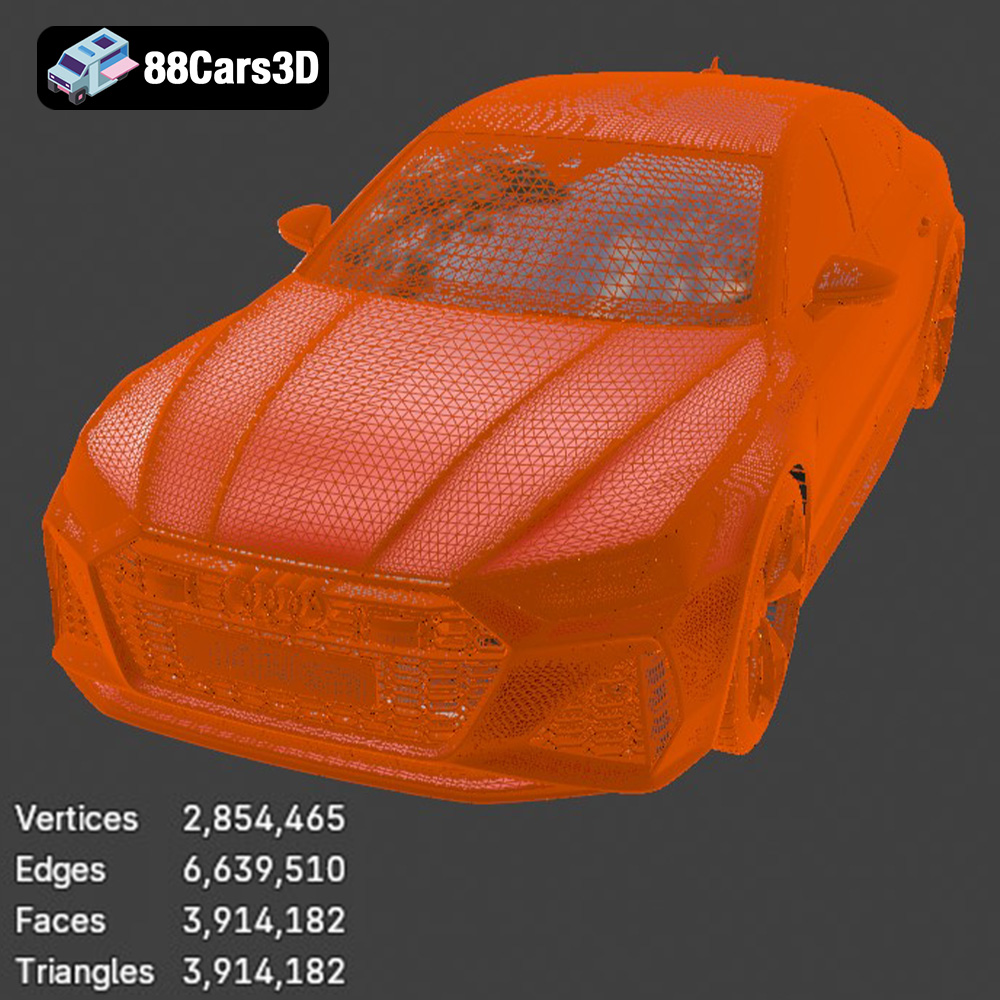
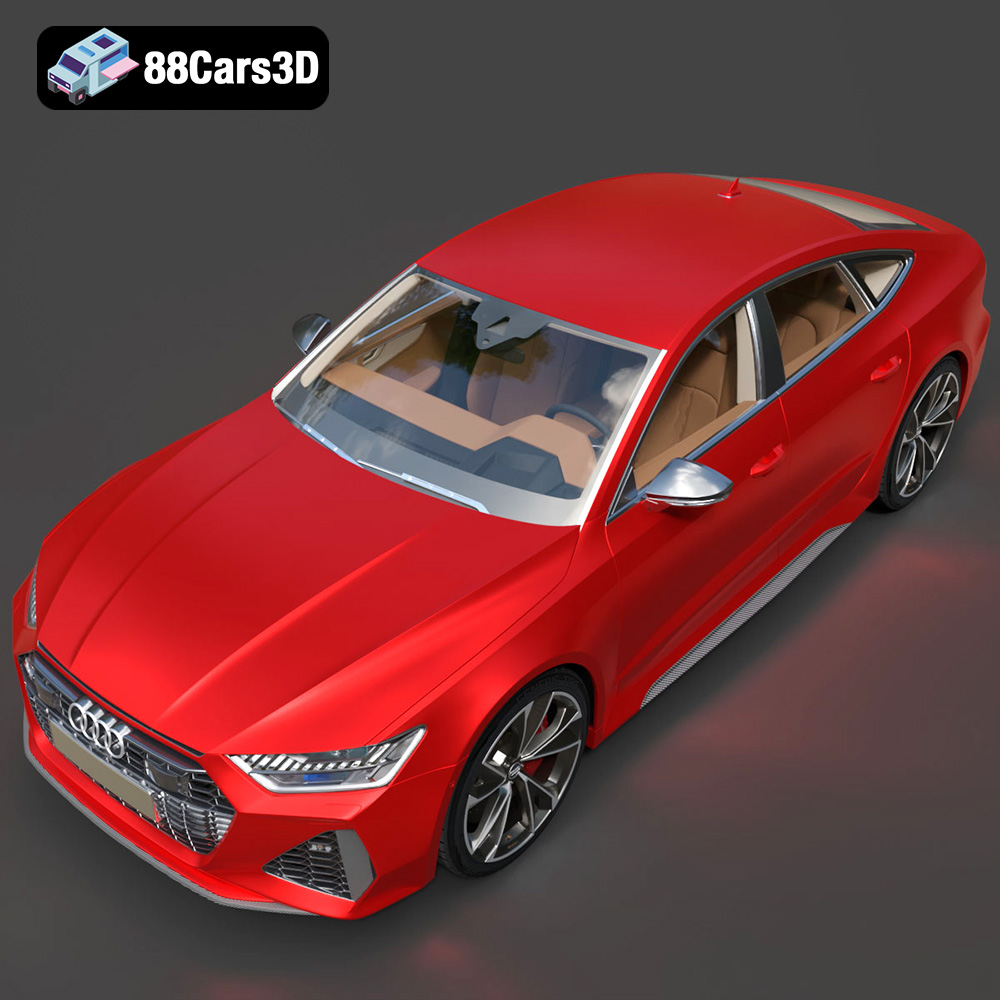
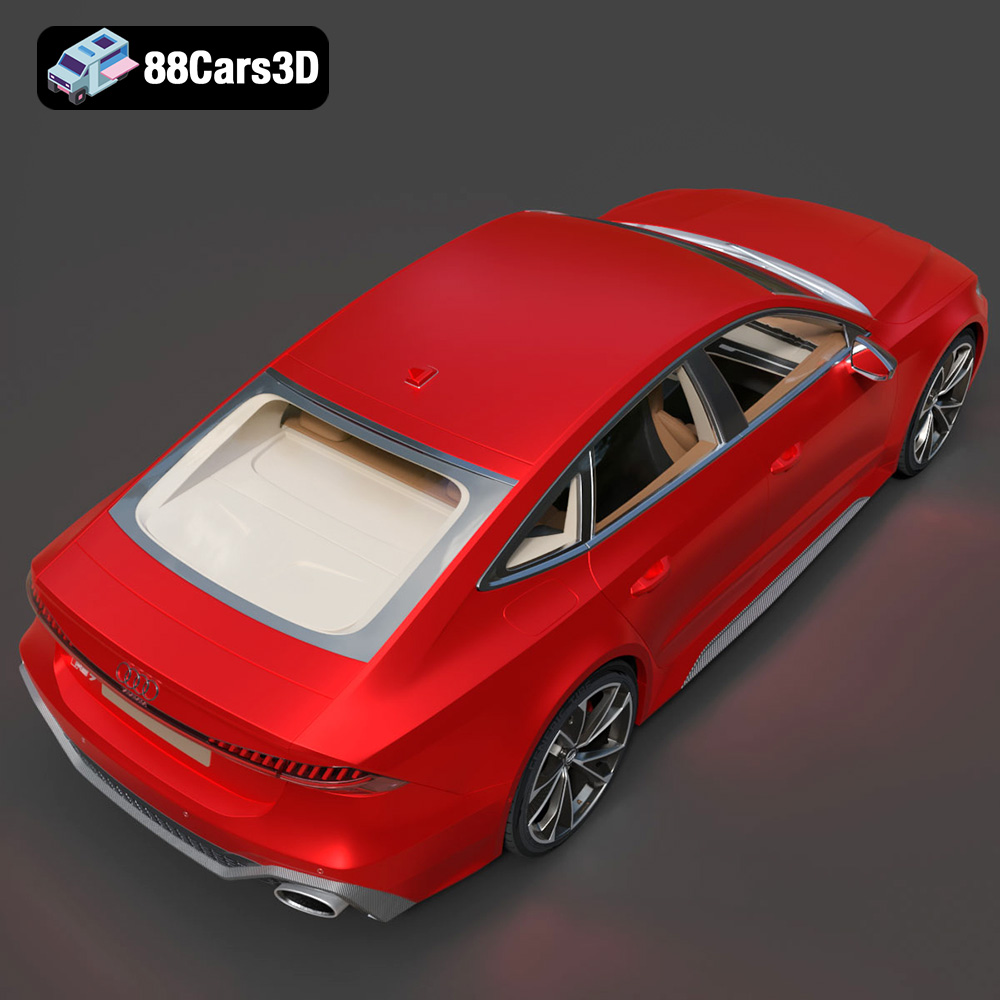
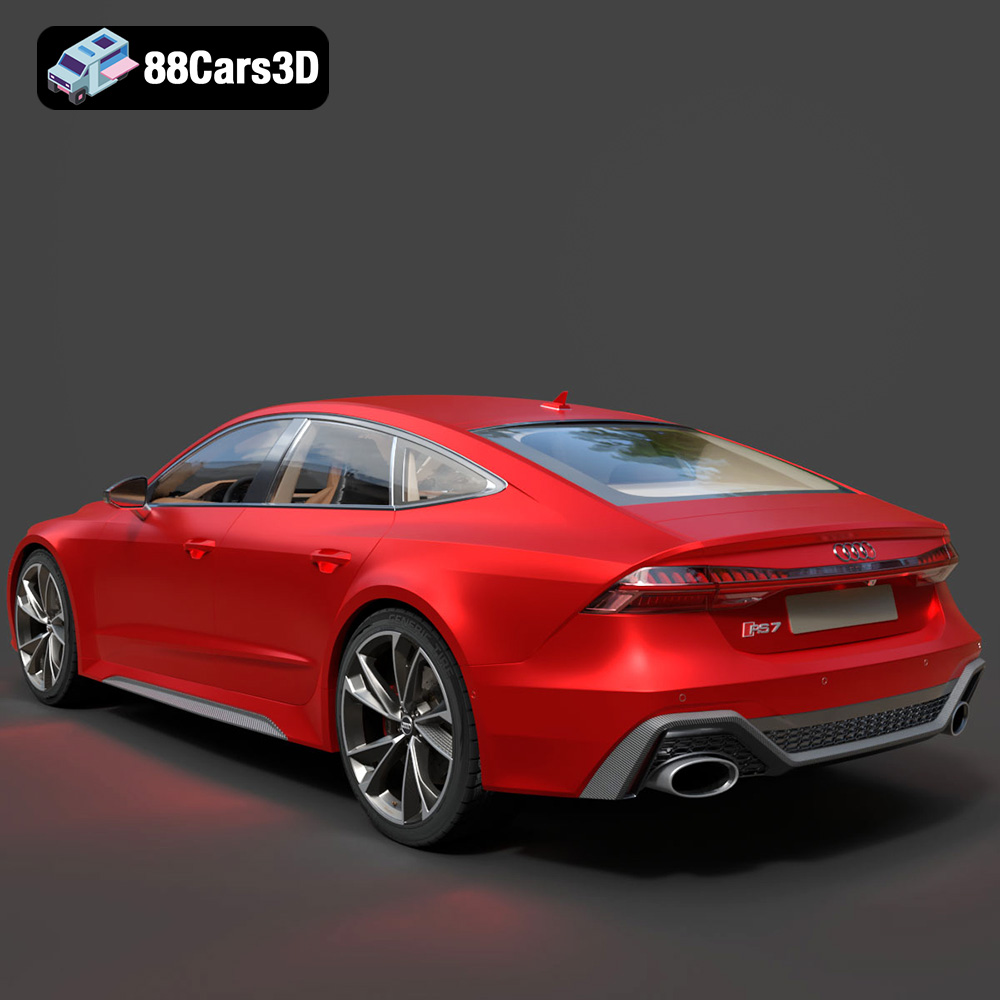
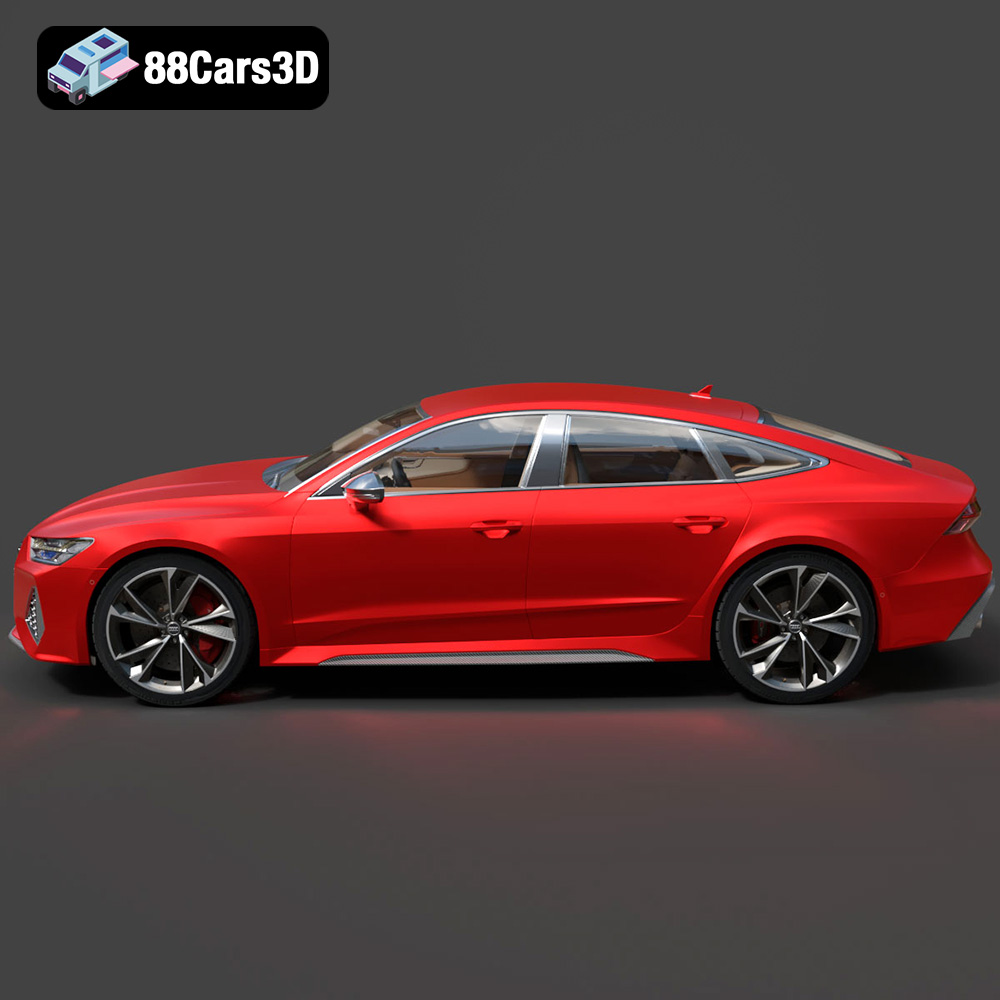
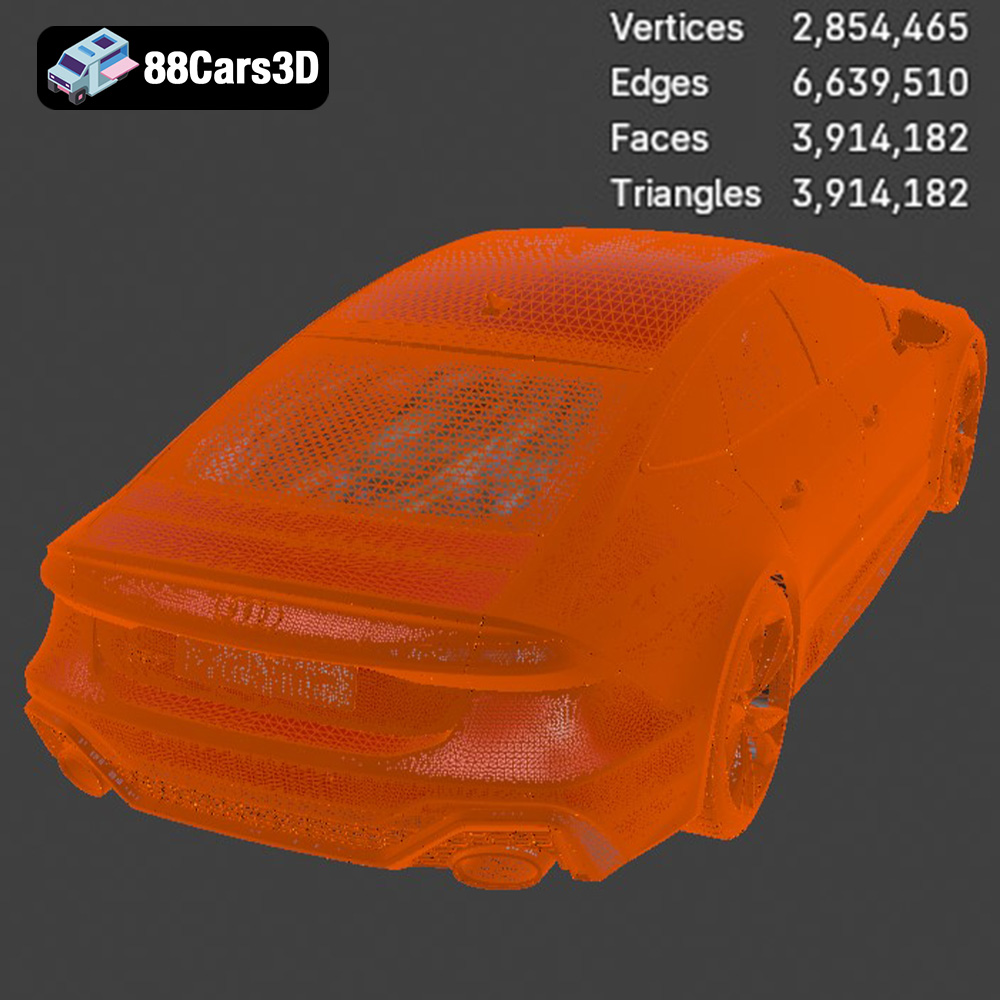
With a triangle count of 3,914,182, this Audi RS7 model delivers an exceptional level of detail, making it suitable for even the closest camera shots in cinematic renderings. Every exterior feature has been faithfully recreated: the accurate widebody proportions that give the RS7 its muscular stance, the distinctive RS-specific front bumper with its aggressive intakes, and the wide single-frame grille that defines Audi’s modern aesthetic. The signature RS dual oval exhaust system and intricately designed rear diffuser are present, enhancing the vehicle’s sporty character. Furthermore, the HD Matrix LED headlights with their laser light detailing and sleek animated taillights are rendered with precision, providing realistic lighting cues. High-performance alloy wheels and a detailed RS braking system with massive calipers complete the look, while a realistic sport suspension stance and undercarriage elements add to its authenticity, even for views from below. Crucially, components like wheels, doors, suspension, and steering are separated, enabling dynamic animations and interactive features.
The exterior is only half the story for a luxury performance vehicle. The interior of the Audi RS7 Sportback is a technological and ergonomic masterpiece, and its digital counterpart doesn’t disappoint. The model features detailed RS sport seats with their characteristic honeycomb stitching patterns, a flat-bottomed Alcantara/leather steering wheel complete with paddle shifters, and the iconic Virtual Cockpit dual-screen MMI infotainment and instrument cluster displays. Every button, knob, and texture on the intricate center console, including the electronic shifter and climate controls, has been carefully modeled. This level of cockpit detail is particularly important for immersive first-person POV experiences in gaming and virtual reality, ensuring that players and users feel truly enveloped in the luxury and technology of the RS7.
Achieving photorealistic detail while maintaining optimal performance for real-time applications is a constant balancing act in 3D production. The Audi RS7 Sportback 2020 model strikes this balance masterfully. While 3,914,182 triangles might seem high, it represents a “game-ready” optimization for current-generation game engines (like Unreal Engine and Unity) that are capable of handling such complex assets without significant performance drops, especially when combined with efficient LOD (Level of Detail) systems. The model’s topology is carefully structured, avoiding unnecessary geometry and ensuring clean deformations if rigged for animation. Its real-world scale accuracy and proper pivot setups for steering, wheel rotation, and suspension travel further confirm its suitability for physics-driven simulations. This blend of high-end visual realism with practical optimization makes it an incredibly versatile asset for a wide range of applications, from cinematic rendering to interactive game environments.
The true value of a premium 3D car model like the Audi RS7 Sportback 2020 is realized when it seamlessly integrates into various professional production pipelines. Its versatility and technical precision allow it to become a foundational asset for diverse creative endeavors.
For high-end automotive commercials, product showcases, or architectural visualizations, photorealistic rendering is paramount. Professionals often turn to industry-standard software like Autodesk 3ds Max, paired with powerful rendering engines such as V-Ray or Corona Renderer. The Audi RS7 Sportback 2020 3D model, with its `.max` and `.fbx` formats, is perfectly suited for this workflow.
A typical process involves importing the `.max` file into 3ds Max, which brings in all geometry, materials, and potentially even studio lighting setups. Artists can then fine-tune PBR materials, adjusting reflectivity, clear coat, and metallic finishes to precisely match real-world car paint, carbon fiber, and leather textures. Environment setup is crucial: HDRIs (High Dynamic Range Images) for realistic lighting and reflections, along with carefully placed studio lights, define the mood. Camera angles are composed to highlight the RS7’s aggressive lines and luxurious interior. The model’s high triangle count ensures that even extreme close-ups on the HD Matrix LED headlights or the honeycomb stitching of the RS sport seats retain their fidelity. The final render sequence, often requiring hours per frame, yields stunning, cinematic results that are virtually indistinguishable from real photography. This streamlines the creation of captivating visual content for marketing agencies and automotive brands.
The demands of game development are unique, requiring both visual quality and real-time performance. For building next-gen racing titles, open-world games, or immersive simulations, Unreal Engine is a dominant force. The Audi RS7 Sportback 2020 model is designed with “game-ready” principles in mind, particularly with its `.fbx` and `.unreal` formats.
Upon importing the `.fbx` or directly using the optimized `.unreal` asset into Unreal Engine, developers can immediately leverage the model’s robust structure. This includes setting up collision meshes for realistic impacts, configuring Levels of Detail (LODs) to optimize performance at varying distances, and implementing advanced vehicle physics. The proper pivot setups for steering and suspension are critical for creating a believable driving experience, allowing the RS7 to lean into turns and absorb bumps dynamically. Material instances can be quickly tweaked within Unreal to create variations in body color, wheel finishes, or even adjust the intensity of ambient interior lighting. Its optimized polycount, while high, is manageable for modern hardware, enabling detailed car models to be featured prominently in gameplay without bogging down frame rates. This directly enhances the player’s immersion and the overall quality of the game.
Augmented Reality (AR) and Virtual Reality (VR) are transforming how we interact with products, offering immersive experiences that transcend traditional media. For virtual car showrooms, interactive configurators, or mobile AR apps, the Audi RS7 Sportback 2020 3D model, particularly in its `.glb` format, is an excellent choice.
The `.glb` format is specifically designed for efficient web and real-time deployment, bundling all necessary assets into a single file. This is crucial for AR/VR, where quick loading times and smooth rendering are essential. In a VR showroom, users can walk around the Audi RS7, open its doors, sit inside, and explore the Virtual Cockpit in full 3D. For an AR experience, the car can be “placed” in a real-world environment via a smartphone, allowing users to visualize it in their driveway or office. Developers can implement interactive elements, such as changing body colors (e.g., Nardo Gray, factory colors) or modifying tire textures directly within the application. The model’s optimized geometry ensures that even on mobile AR devices, the experience remains fluid and visually appealing, driving engagement and providing a tangible sense of presence with the vehicle.
While digital visualization is a core application, the versatility of a well-constructed 3D model extends into the physical realm. The Audi RS7 Sportback 2020 3D model, with its inclusion of the `.stl` format, bridges the gap between the virtual and the tangible, opening up exciting possibilities for hobbyists and professionals alike.
The `.stl` (Stereolithography) format is the cornerstone of 3D printing. It translates the intricate mesh geometry of the Audi RS7 Sportback 2020 into a format that 3D printers can understand and build layer by layer. This means that a highly detailed digital asset can be transformed into a physical, display-scale model. The product description provides excellent guidance for this process, recommending scales like 1:12, 1:18, or 1:24, which are popular for collectible car models.
For optimal results, resin printing is often recommended due to its ability to capture fine details, such as the intricate honeycomb stitching on the RS sport seats or the precise contours of the RS-specific front bumper. Recommended layer heights (0.04–0.12 mm) and wall thicknesses (1.2–2.0 mm) ensure structural integrity and surface smoothness. Crucially, the advice on supports (required for detailed parts like exhaust, mirrors, and the steering wheel) and print orientation (frame angled, wheels separately) highlights the expertise behind the model’s design for successful physical output. Post-processing, including sanding, priming, and applying authentic factory colors with metallic finishes, allows hobbyists to achieve a professional, showroom-quality physical replica of their favorite high-performance sportback. This capability extends the utility of the 3D model far beyond digital screens.
Beyond merely replicating the Audi RS7 Sportback 2020, the included file formats and the model’s inherent structure allow for extensive customization, both digitally and physically. Artists and designers aren’t limited to a single aesthetic; they can adapt the model to suit specific project requirements.
Digitally, this means the ability to effortlessly change body colors, experimenting with factory hues like Nardo Gray, bespoke matte finishes, or even custom liveries for racing simulations. Tire textures can be modified, switching between realistic sport radials for street scenes and aggressive track slicks for high-performance renders. Material finishes can be adjusted across the board—from the gloss of the paint to the texture of carbon fiber accents or the sheen of the interior Alcantara. Lighting can be adapted for different environments, from the subtle ambient interior lighting to the vibrant DRLs (Daytime Running Lights) for dynamic exterior shots. This level of adaptability ensures that the Audi RS7 model remains a relevant and flexible asset for countless creative scenarios, whether it’s for a stylized animation or a hyperrealistic architectural visualization.
The journey through the intricate world of 3D automotive modeling reveals a fascinating convergence of art, engineering, and digital wizardry. High-quality 3D car models are more than just virtual representations; they are pivotal assets that drive innovation across a multitude of industries, from game development and cinematic rendering to AR/VR experiences and even 3D printing. The demand for meticulous detail, technical precision, and format versatility has never been higher.
The Audi RS7 Sportback 2020 3D Model stands as a testament to what is achievable in modern digital craftsmanship. With its staggering 3,914,182 triangle count, accurate exterior and interior features, and careful optimization for real-time engines, it provides an unparalleled foundation for any project requiring automotive excellence. Its comprehensive range of included file formats – from `.blend` and `.max` for full editability in native software, to `.fbx` and `.unreal` for seamless game engine integration, `.glb` for web and AR/VR, and `.stl` for physical 3D prints – ensures that artists and developers have the right tools for any workflow.
Whether you’re an indie game developer aiming for next-gen realism, a visualization artist crafting a luxury brand campaign, or a hobbyist eager to print a true-to-life replica, this Audi RS7 Sportback 2020 model empowers your creative vision. It’s an investment in quality that will elevate your projects and immerse your audience. To explore this exceptional asset and discover other premium 3D car models and game assets, visit 88cars3d.com today. Unlock the full potential of your digital creations with models that truly capture the spirit of automotive design.
The Audi RS7 Sportback 2020 represents the pinnacle of German engineering, seamlessly blending aggressive performance with grand touring luxury. Known for its commanding presence on the road, this high-performance sportback features a menacing front fascia with a wide single-frame grille, sharply sculpted lines, and a distinctive sloping roofline. Powered by a potent twin-turbo V8 engine in the real world, its muscular widebody stance, dual oval exhaust tips, and striking LED matrix headlights make it an iconic modern classic in the luxury performance segment.
This premium 3D model boasts an exceptional level of detail with a triangle count of 3,914,182, ensuring high-fidelity visual realism suitable for close-up shots and high-end cinematic sequences. Despite its meticulous detailing, the model’s topology is carefully structured for integration into game engines and real-time environments. Whether you are developing a next-gen racing title, an immersive VR showroom, or crafting photorealistic visualizations, this asset delivers unparalleled quality and accuracy.
Perfect for urban racing games, luxury architectural visualizations, high-end automotive commercials, and virtual configurators.
.blend, .fbx, .obj, .glb, .stl, .ply, .unreal, .max
Tags:
audi, rs7-sportback, 2020, sports-sedan, luxury-car, performance-car, game-ready, high-poly, optimized, car-3d-model, game-asset, rendering, vr-ar, blend, fbx, obj, glb, stl, ply, unreal, max
$37.50
.2020
.audi
.blend
.fbx
.glb
.max
.obj
.ply
.rendering
.stl
.unreal
car-3d-model
game asset
game-ready
high poly
luxury car
optimized
performance-car
rs7-sportback
sports-sedan
VR/AR