Get 20% OFF All Premium 3D & STL Models!

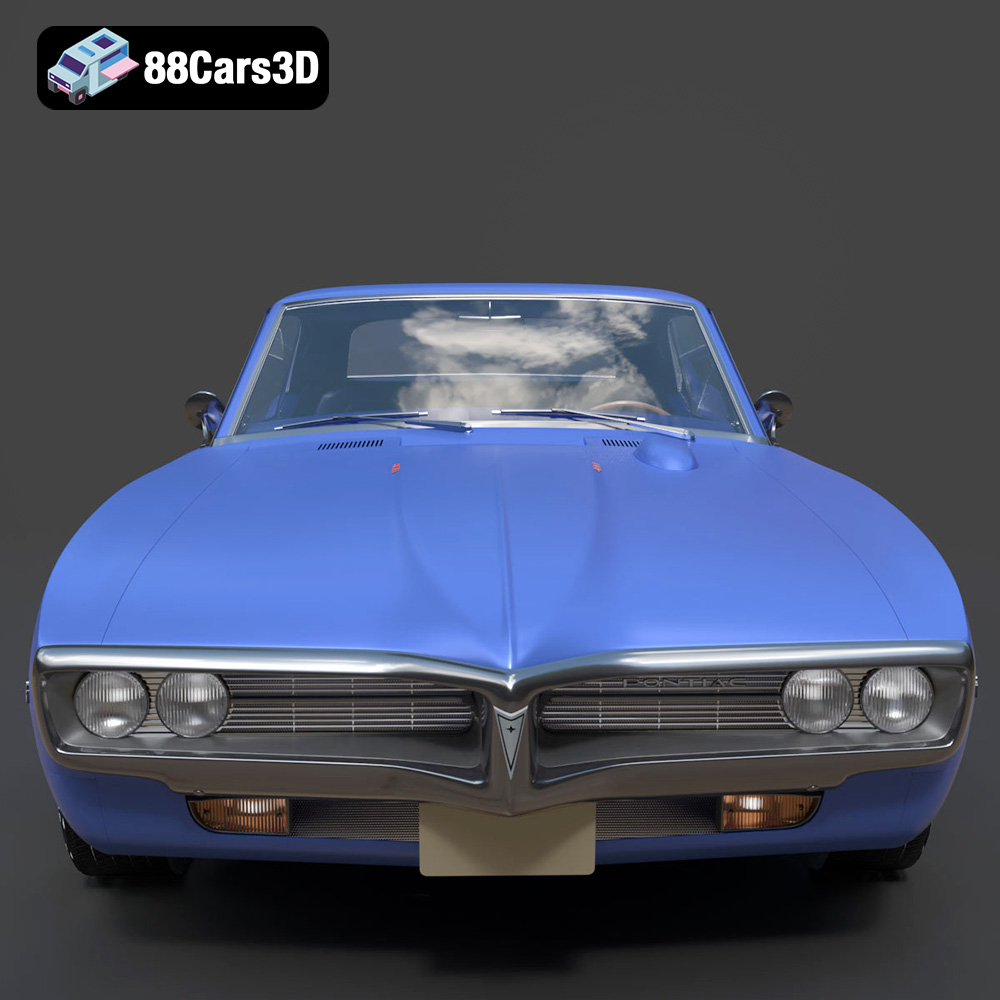
Few vehicles ignite the imagination quite like the classic American muscle car. These machines are more than just transportation; they are symbols of an era, embodying raw power, distinctive style, and an undeniable spirit of rebellion. Among the pantheon of these legends, the 1967 Pontiac Firebird stands tall – a formidable challenger in the burgeoning pony car market, instantly recognizable by its aggressive “Coke-bottle” styling, iconic split-grille bumper, and piercing quad headlights.
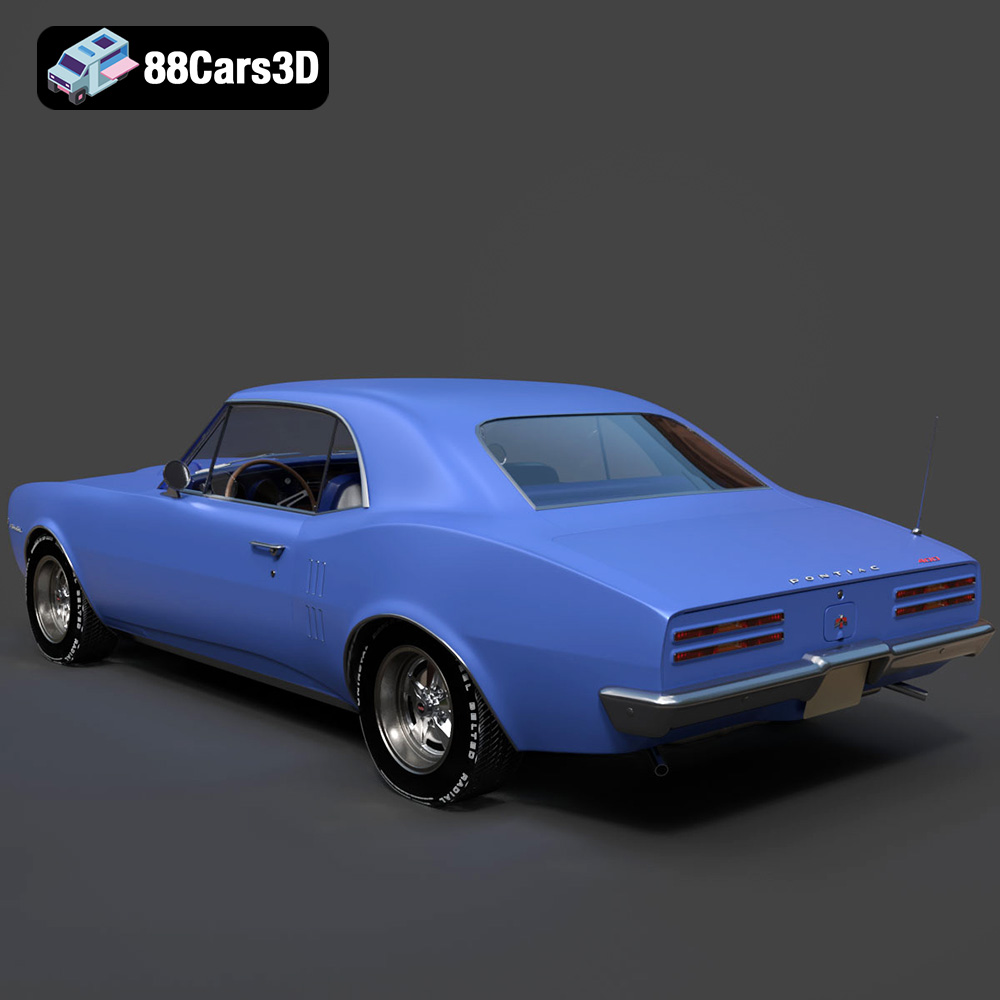
For enthusiasts, designers, game developers, and visualization specialists, recreating such an iconic vehicle in the digital realm presents both a challenge and an immense opportunity. It’s about more than just modeling a car; it’s about translating its soul, its engineering, and its historical significance into a format that can be experienced and manipulated in new dimensions. A truly exceptional 3D car model, such as the Pontiac Firebird 1967 3D Model available on 88cars3d.com, achieves this by meticulously detailing every curve, every component, and every aspect of its original design. From the roar of its V8 engine block (digitally replicated with precision) to the gleam of its dual exhaust system, this model offers a faithful and technically robust representation of a timeless classic.
In today’s fast-paced digital landscape, the demand for high-quality 3D car models is soaring. Automotive manufacturers use them for design visualization and marketing campaigns; game studios integrate them into expansive open worlds and thrilling racing simulators; AR/VR developers create immersive showrooms; and even hobbyists leverage them for detailed 3D printing projects. The key to meeting this diverse demand lies in models that offer a perfect blend of visual fidelity, technical optimization, and broad software compatibility. With its impressive topology of 3,853,174 triangles, striking a balance between high-end detail for close-up renders and efficiency for real-time applications, this Firebird model exemplifies the benchmark for professional-grade 3D car models.
When working with 3D assets, understanding the various file formats is crucial for seamless integration into different software, pipelines, and end-use applications. Each format is designed with specific strengths and purposes, dictating how a 3D model, its textures, materials, and animations are stored and interpreted. The Pontiac Firebird 1967 3D model, recognizing the diverse needs of professionals, comes packaged with an extensive range of formats, ensuring maximum flexibility and compatibility across virtually any project.
The .blend format is the native file type for Blender, the popular open-source 3D creation suite. A .blend file is a complete scene package, storing not just the mesh data, but also materials, textures (often packed within the file), lighting setups, cameras, animation data, physics simulations, and even scene metadata. For users deeply integrated into the Blender ecosystem, this format offers the most editable and comprehensive starting point. It allows full access to modifiers, node-based materials, and any rigging or animation pre-set within the model, making it ideal for customization and direct workflow within Blender.
.fbx (Filmbox) is arguably the most widely adopted proprietary 3D file format for interchange between major 3D software applications and game engines. Developed by Autodesk, .fbx excels at storing not only geometric data (vertices, faces, UVs) but also animation, rigging, skinning, materials, and textures references. Its robust support for skeletal animations and blend shapes makes it indispensable for game development (Unreal, Unity) and complex animation pipelines. When transferring models like the Firebird into a game engine, .fbx is often the go-to choice due to its ability to preserve hierarchies, pivot points, and a wide range of asset properties, ensuring that the model behaves as intended in a real-time environment.
.obj (Wavefront OBJ) is one of the oldest and most universally supported 3D file formats. It’s a simple, text-based format primarily used to store geometry data (vertices, normals, UV coordinates, and faces). While it doesn’t typically store animation or rigging data, it’s excellent for static mesh transfer between almost any 3D software. Materials are usually defined in a separate .mtl (Material Template Library) file. Its widespread support makes it a reliable fallback for cross-software compatibility, especially when the focus is purely on the geometric shape and basic texturing, such as for architectural visualization or basic rendering tasks.
.glb (GL Transmission Format Binary) is the binary version of the glTF format, specifically designed for efficient transmission and loading of 3D scenes and models by applications. It’s becoming the “JPEG of 3D” due to its optimization for web-based AR/VR, online configurators, and e-commerce product visualization. A .glb file packages all necessary data—geometry, materials, textures, animations—into a single, self-contained binary file, reducing load times and simplifying integration into browser environments and mobile AR applications. For showcasing the Pontiac Firebird in an interactive web viewer or a mobile AR app, .glb is the most efficient choice.
.stl (STereoLithography) is the standard file format for 3D printing. It represents a 3D model as a collection of unconnected triangular facets, defining only the surface geometry of an object without color, texture, or other model attributes. While it lacks rich visual data, its simplicity makes it universally compatible with 3D printers and slicing software. The Firebird model, when converted to .stl, can be brought to life as a tangible object, allowing hobbyists and professionals alike to hold a physical representation of this classic muscle car. This is particularly valuable for display-scale models or even prototyping components.
.ply (Polygon File Format) is a format designed to store 3D data from 3D scanners. It can store a wide range of properties, including color, transparency, texture coordinates, normals, and even data reliability. Unlike .stl, it can support both triangular and polygonal faces. While less common for general asset exchange, .ply is valuable in scientific, engineering, and cultural heritage applications where precise mesh data, often from real-world scans, is paramount. For detailed analysis or high-precision fabrication of certain components of the Firebird, .ply might be preferred.
The .unreal format, while not a standalone file extension in the traditional sense, refers to assets specifically prepared and optimized for direct import into the Unreal Engine. This often involves specific naming conventions, asset structuring, and material setups that conform to Unreal’s pipeline. A model provided in an “.unreal” state usually means it has been rigorously tested and configured to leverage Unreal’s powerful rendering capabilities, complete with physically-based rendering (PBR) materials, LODs (Levels of Detail), and optimized collisions. For the Firebird, an “engine-ready asset” means reduced setup time and immediate integration into a high-fidelity real-time environment.
Finally, the .max format is the native file type for Autodesk 3ds Max. Similar to Blender’s .blend, a .max file contains the complete scene data, including geometry, materials, textures, lighting, cameras, animation, and any scene-specific settings. For professionals using 3ds Max for architectural visualization, product design, or animation, having the Firebird model in its native .max format provides the highest level of editability and direct access to all creation parameters within that software environment, enabling advanced customization and animation potential.
Photorealistic automotive rendering is a highly specialized skill, demanding meticulous attention to detail, a deep understanding of light physics, and mastery of complex material properties. The foundation of any stunning render, however, is an impeccably crafted 3D model. The Pontiac Firebird 1967 3D Model provides an exceptional starting point for artists aiming to achieve cinematic quality, showcasing the vehicle’s legendary aesthetics in breathtaking detail.
For high-end rendering, fidelity is paramount. This Firebird model, with its accurate frame geometry, detailed engine block, and authentic suspension components, ensures that even the closest camera angles reveal intricate craftsmanship. Artists can leverage its robust topology and clean mesh to create stunning marketing visuals, product configurators, or even historical documentaries. Imagine a scene where the Firebird gleams under studio lights, its metallic paint reflecting the environment with perfect realism, or a period-accurate street scene where its chrome elements catch the golden hour sun – these are scenarios where the Firebird’s digital precision truly shines.
Beyond geometry, the realism in automotive rendering hinges on sophisticated materials and nuanced lighting. The Firebird model is designed to facilitate this. Its clean UV mapping allows for easy application of PBR (Physically Based Rendering) materials, enabling artists to define everything from the subtle metallic flake in its paint to the worn texture of its vintage vinyl seats and the polished gleam of its chrome. When combined with advanced global illumination and accurate lighting setups in software like V-Ray, Corona, or Arnold (within 3ds Max or Blender), the result is an image indistinguishable from a photograph. The separation of components like wheels, suspension, and steering further allows for realistic material differentiation and dynamic animation setups.
A static render is powerful, but animation breathes life into a scene. The Firebird model’s proper pivot setup for steering, wheel rotation, and suspension travel is a critical advantage for animators. This enables the creation of dynamic sequences – a slow pan around the car, a dramatic drive down a scenic route, or a detailed breakdown of its engine components. Such visualizations are invaluable for automotive reviews, historical showcases, or even brand campaigns that aim to evoke the nostalgia and power of this classic muscle car.
In the realm of game development and real-time interactive experiences, the challenge is always to balance visual splendor with optimal performance. A game-ready asset must not only look fantastic but also run efficiently, without bogging down the game engine. The Pontiac Firebird 1967 3D Model strikes this critical balance, making it an ideal choice for a wide array of interactive projects, from high-fidelity racing simulators to immersive open-world environments.
With 3,853,174 triangles, the Firebird model is classified as a high-poly asset, yet it’s expertly optimized to ensure it performs well in real-time engines like Unreal Engine and Unity. Its geometry is clean and structured, minimizing rendering overhead. For Unreal Engine specifically, the model’s “.unreal” readiness implies a streamlined import process, often with pre-configured materials, LODs (Levels of Detail) to manage performance at varying distances, and accurate collision meshes. This means game developers can drop the Firebird into their projects with minimal post-processing, immediately benefiting from its high visual quality without sacrificing framerate.
Beyond raw polycount, true game optimization involves intelligent asset structuring. The Firebird model features separate components for wheels, suspension, and steering, which is crucial for advanced vehicle physics and interactive controls within a game. Developers can easily apply car controllers, create realistic steering animations, and simulate independent suspension travel. Its optimized geometry for first-person POV in gaming ensures that cockpit views are detailed and immersive, allowing players to truly feel like they are behind the wheel of this classic machine. This level of detail extends to the vintage vinyl-style bucket seats, classic three-spoke wooden steering wheel, and deep-set analog instrument cluster.
The technical advantages of this 3D model extend to its physics integration. With proper pivot setups already established, developers can quickly implement realistic vehicle physics systems, allowing the Firebird to drift, accelerate, and brake authentically. The ability to modify tire textures for off-road or street variants further enhances gameplay customization, providing flexibility for different racing scenarios or environmental settings. Whether it’s a period-accurate racing title set in the late 60s or a customizable classic in a modern sandbox game, the Firebird model provides the robust foundation for engaging and performant interactive experiences.
The utility of a meticulously crafted 3D model like the Pontiac Firebird 1967 extends far beyond traditional rendering and game development. Its versatility allows it to be a cornerstone for cutting-edge immersive technologies like Augmented and Virtual Reality, as well as the tangible world of 3D printing and industrial visualization. This breadth of application underscores the value of high-quality 3D car models from marketplaces like 88cars3d.com.
AR and VR are transforming how we interact with digital content, offering unparalleled levels of immersion. The Firebird model is perfectly suited for these environments, especially with its inclusion of the .glb format, which is optimized for web and mobile AR/VR experiences. Imagine a virtual showroom where customers can walk around the 1967 Firebird, open its doors, examine the detailed interior, and even customize its paint and materials in real-time, all within a VR headset or through their smartphone’s camera. These immersive configurators and virtual experiences provide a powerful marketing tool for automotive brands, historical education platforms, or even interactive museum exhibits, bringing a classic car to life in a completely new dimension.
One of the most exciting applications for high-fidelity 3D models is 3D printing. The Firebird model’s inclusion of the .stl format means it’s ready to be transformed from a digital asset into a physical object. Hobbyists and collectors can print detailed, display-scale replicas (recommended at 1:12, 1:18, or 1:24 scale), holding a piece of automotive history in their hands. The product description provides comprehensive 3D print settings – from recommended layer height and infill to support structures and post-processing techniques like sanding and applying authentic factory colors. This opens up a world of possibilities for custom models, dioramas, or even the creation of unique physical collectibles based on digital designs.
While the Firebird is a classic, the principles of its detailed 3D modeling apply directly to modern industrial design. Engineers and designers can use such a robust model for precise visualization, understanding component fit, and even basic prototyping if adapted appropriately. The .ply format, for instance, offers precision mesh data that can be useful for analysis or integration into specific CAD workflows. For educational purposes, dissecting a highly detailed model like this Firebird in a 3D environment can provide invaluable insight into automotive engineering and design principles, offering a virtual workshop for students and professionals alike.
In any professional 3D production pipeline – be it for a blockbuster game, a high-profile commercial, or an innovative AR application – efficiency and quality are paramount. Starting with a pre-made, high-quality asset like the Pontiac Firebird 1967 3D Model from 88cars3d.com significantly accelerates workflows and elevates the final product. It represents a foundation built on expertise, allowing creative teams to focus on innovation rather than asset creation from scratch.
One of the biggest time-sinks in any 3D project is asset creation and preparation. By providing the Firebird model in multiple industry-standard formats (.blend, .fbx, .obj, .glb, .stl, .ply, .unreal, .max), this model ensures broad compatibility and a smoother integration process. A game studio working in Unreal Engine can quickly import the pre-optimized .fbx or even the dedicated “.unreal” asset, knowing it’s already set up for performance. A visualization studio using 3ds Max can immediately open the .max file, inheriting the full scene setup. This “plug-and-play” capability reduces the need for extensive format conversions, re-topology, or re-texturing, saving valuable production time and resources.
While the Firebird model is highly detailed out-of-the-box, its robust structure and clean geometry make it highly adaptable. Professionals can easily change body colors to match specific factory hues or custom finishes, modify tire textures for diverse environments (e.g., street racing vs. drag strips), and adjust material finishes from matte to gloss or metallic. The separate components for animation – wheels, suspension, steering – mean that even complex rigs and custom animations can be applied without extensive re-modeling. This flexibility allows the model to be tailored to the precise aesthetic and functional requirements of any unique project, from a historically accurate depiction to a stylized, cinematic interpretation.
Investing in a premium 3D car model isn’t just about saving time; it’s about elevating quality. Creating a vehicle as complex and iconic as the 1967 Pontiac Firebird from scratch, with its intricate details, accurate proportions, and optimized topology, would require hundreds of hours of a skilled 3D artist’s time. By starting with a professionally crafted asset, teams can bypass this intensive initial phase and immediately jump into creative development, focusing on lighting, scene composition, animation, and interaction. This allows for higher production values, faster turnaround times, and ultimately, a superior final product that truly captures the essence of this legendary muscle car.
The 1967 Pontiac Firebird is a testament to an era of automotive passion and daring design. Its digital counterpart, the Pontiac Firebird 1967 3D Model, faithfully translates that legacy into a versatile and robust asset for today’s digital creators. From its meticulous exterior and interior details to its optimized topology and extensive file format compatibility, this model stands as an exemplary representation of what high-quality 3D car models should offer.
Whether you are a seasoned game developer, an automotive rendering specialist, an AR/VR innovator, or a 3D printing enthusiast, this Firebird model provides the perfect foundation to bring your creative visions to life. It simplifies complex workflows, accelerates production, and ensures that your projects benefit from unparalleled visual fidelity and technical precision. Explore this and other exceptional 3D car models at 88cars3d.com, and empower your next project with assets that truly drive performance and realism.
The 1967 Pontiac Firebird stands as a true American muscle car legend, introduced to dominate the late-60s pony car era. This digital replica captures its aggressive Coke-bottle styling, distinctive front split-grille bumper design, and iconic quad headlights. Every detail, from the meticulously recreated V8 engine block to the classic dual exhaust system, reflects the raw power and heritage of this historic vehicle.
Featuring an exceptional topology of 3,853,174 triangles, this 3D model delivers unparalleled visual fidelity for close-up shots while remaining versatile enough for high-end real-time applications. Whether used in game development, AR/VR environments, detailed animation, or photorealistic visualization, it provides a premium foundation for any digital automotive project.
Perfect for cinematic automotive rendering, period-accurate open-world racing games, immersive virtual showrooms, and historical vehicle animations.
.blend, .fbx, .obj, .glb, .stl, .ply, .unreal, .max
Tags:
pontiac, firebird, 1967, classic-car, muscle-car, pony-car, car-3d-model, game-ready, high-poly, optimized, game-asset, rendering, vr-ar, blend, fbx, obj, glb, stl, ply, unreal, max
$37.50
.1967
.blend
.fbx
.firebird
.glb
.max
.obj
.ply
.pontiac
.rendering
.stl
.unreal
car-3d-model
classic-car
game asset
game-ready
high poly
muscle-car
optimized
pony-car
VR/AR