Get 20% OFF All Premium 3D & STL Models!

In the dynamic realm of 3D visualization, game development, and immersive experiences, the demand for exceptionally detailed and optimized 3D car models has never been higher. Whether you’re a seasoned automotive renderer aiming for photorealistic marketing campaigns, a game developer crafting the next-generation racing simulator, or an AR/VR innovator building interactive showrooms, the quality of your digital assets is paramount. A truly outstanding 3D car model doesn’t just look good; it’s a meticulously engineered digital twin, ready to perform across a myriad of platforms and applications.
At the heart of any successful automotive visualization project lies a foundation of precision. From the subtle curvature of a fender to the intricate detailing of an engine block, every element must be faithfully recreated to evoke the presence and prestige of its real-world counterpart. This level of fidelity is not merely aesthetic; it’s a technical requirement for achieving believable lighting, accurate reflections, and seamless integration into complex digital environments. The right asset can elevate a project from ordinary to extraordinary, providing an invaluable resource that saves countless hours of modeling and optimization.
Today, we’re diving deep into the world of premium 3D automotive assets, using the iconic Audi R8 2008 3D Model Download STL FBX OBJ GLB Blend as our prime example. This legendary mid-engine sports car redefined everyday supercar usability, and its digital rendition offers a powerful toolkit for artists and developers alike. We’ll explore the technical nuances that make such a model indispensable, delve into the various file formats that dictate its versatility, and uncover how it seamlessly integrates into professional workflows, ensuring your projects achieve unparalleled realism and performance.
The choice of a 3D model file format is often as critical as the model itself, dictating compatibility, feature support, and overall performance within a specific pipeline. High-quality 3D car models, especially those from reputable sources like 88cars3d.com, are often provided in a comprehensive suite of formats to ensure maximum versatility. Understanding these formats is crucial for any professional working with digital assets.
The .blend format is Blender’s native file type. It encapsulates an entire Blender scene, including mesh data, materials, textures, lighting, cameras, animations, rigging, and even custom scripts. For Blender users, this is the most powerful and flexible format, offering full editability. It retains all non-destructive modifiers, precise UV layouts, and complex node-based materials. When working within Blender, having a .blend file means you can dissect every aspect of the model, adapt its topology, or re-render it with specific Cycles or Eevee settings. It’s an artist’s playground for deep customization and fine-tuning.
.fbx (Filmbox) is a proprietary file format owned by Autodesk and has become an industry standard for 3D asset exchange, particularly between different software packages and real-time engines. It excels at transferring not just geometry and materials, but also animation data, skeletal rigs, and even cameras and lights. This makes it ideal for pipelines involving Unreal Engine, Unity, 3ds Max, Maya, and Blender. FBX files support embedded textures, multiple UV channels, and robust material properties, making them perfect for game assets and cinematic production where animated elements are common. Its widespread adoption ensures reliable data transfer across complex production workflows.
The .obj (Wavefront OBJ) format is one of the oldest and most universally supported 3D file formats. It’s a simple, text-based format that primarily stores geometry data (vertices, normals, texture coordinates, and faces) and references external material files (.mtl) for basic color and texture information. While it doesn’t support animation or complex material hierarchies, its simplicity makes it incredibly compatible across virtually all 3D software. For static models or as a reliable fallback when other formats fail, OBJ is an excellent choice for cross-software compatibility and archival purposes.
.glb (GLB, GL Transmission Format Binary) is the binary version of glTF, a royalty-free specification for the efficient transmission and loading of 3D scenes and models by applications. It’s specifically optimized for web-based 3D, AR, and VR applications, acting as a “JPEG for 3D” by packaging all model data (geometry, materials, textures, animation) into a single, self-contained file. This significantly reduces file size and load times, making it perfect for virtual showrooms, online configurators, and mobile AR experiences where performance and rapid deployment are critical. The Audi R8 2008 3D Model, with its .glb offering, is perfectly poised for these modern, interactive applications.
The .stl (STereoLithography) format is the de facto standard for 3D printing. It represents 3D surfaces as a series of triangular facets, defining only the surface geometry of a 3D object without any color, texture, or material information. For designers looking to physicalize their digital creations, STL is the go-to format. When preparing a model like the Audi R8 for 3D printing, conversion to STL is essential, followed by careful consideration of scale, wall thickness, and support structures to ensure a successful print. The provided Audi R8 2008 3D Model includes an STL, making it ready for hobbyists and professionals alike to bring it to life on a print bed.
The .ply (Polygon File Format, or Stanford Triangle Format) is primarily used for storing 3D data from 3D scanners, CAD software, and other sources that require high precision and additional data per vertex or face (e.g., color, transparency, confidence values, surface normal information). While not as commonly used for general asset exchange as FBX or OBJ, it’s invaluable in engineering, scientific visualization, and specific manufacturing workflows where detailed mesh analysis or precise geometric representation is required. It’s a robust format for data integrity and complex mesh properties.
While not a universal file extension in the same vein as FBX or OBJ, the inclusion of an .unreal specific file or content package typically signifies an asset that has been specifically prepared and optimized for Unreal Engine. This often means it’s provided as a UAsset file, an Unreal project file, or an archive containing materials, textures, and Blueprints configured for direct import and use within Unreal. Such assets often feature pre-configured collision meshes, LODs (Levels of Detail), and material instances, saving significant setup time for game developers and real-time artists using Unreal Engine.
Similar to .blend for Blender, the .max format is the native file type for Autodesk 3ds Max. It stores the complete scene data, including geometry, materials, lighting, cameras, modifiers, animation, and scene settings. For users of 3ds Max, this format offers full editability and access to all proprietary features and renderers (like V-Ray or Corona). It’s indispensable for professionals operating within a 3ds Max pipeline, allowing for intricate adjustments, complex rigging, and high-end rendering setups for architectural visualization, product design, and cinematic animation.
The 2008 Audi R8 is not just a car; it’s an automotive icon, recognized for its groundbreaking design and exhilarating performance. Its digital counterpart, the Audi R8 2008 3D Model from 88cars3d.com, carries this legacy into the virtual world, offering an asset of exceptional quality and versatility for a wide array of professional applications.
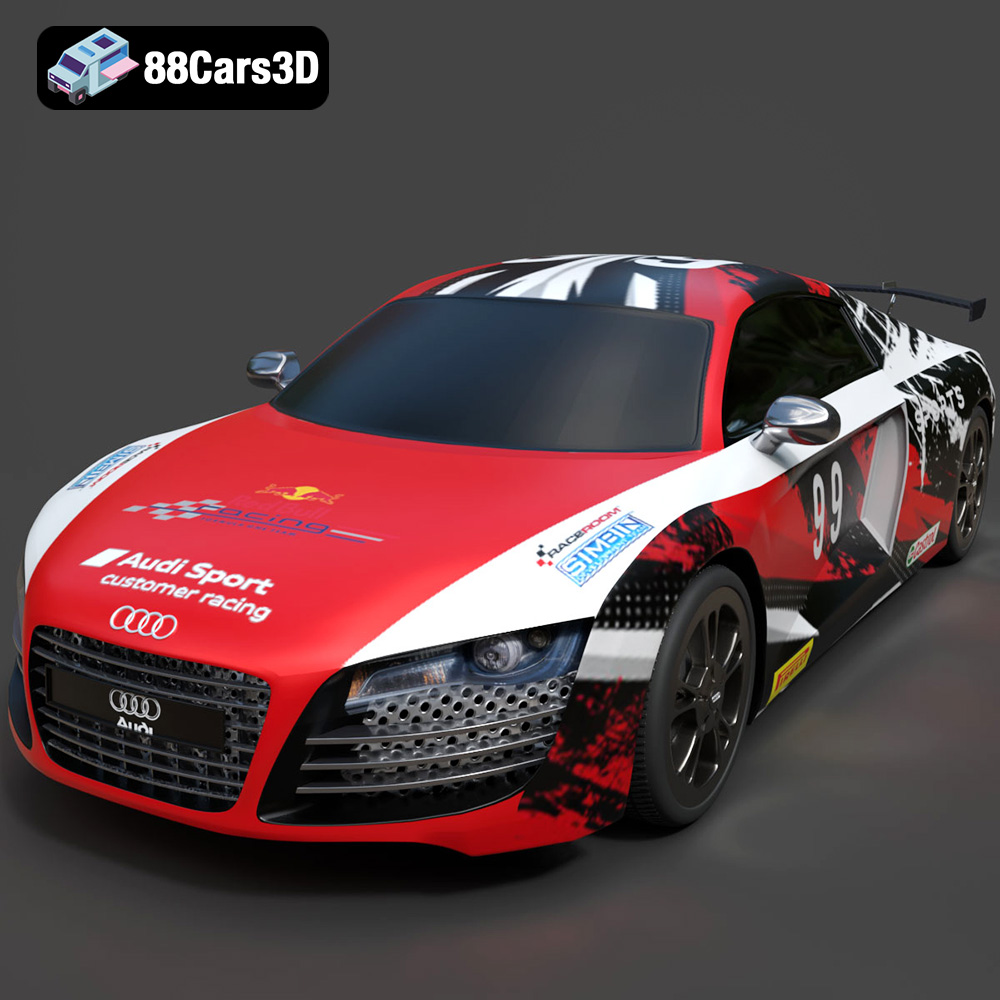
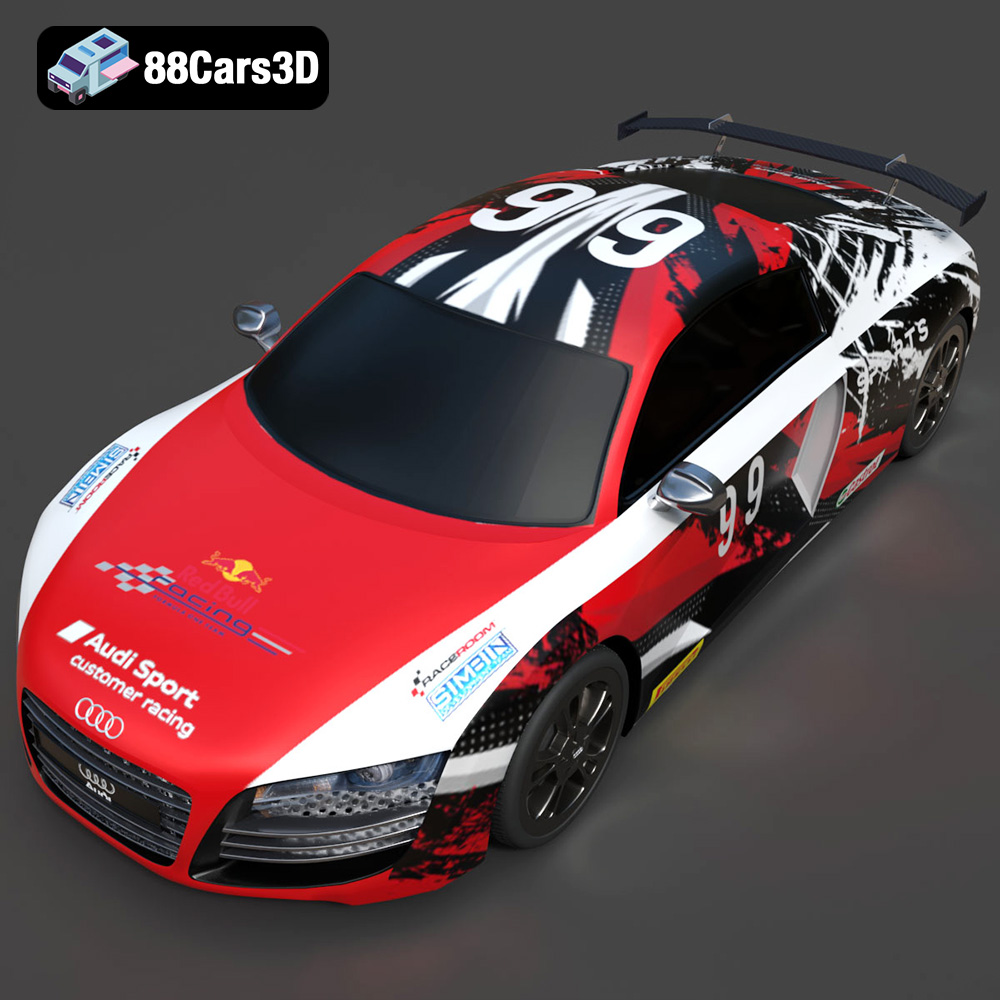
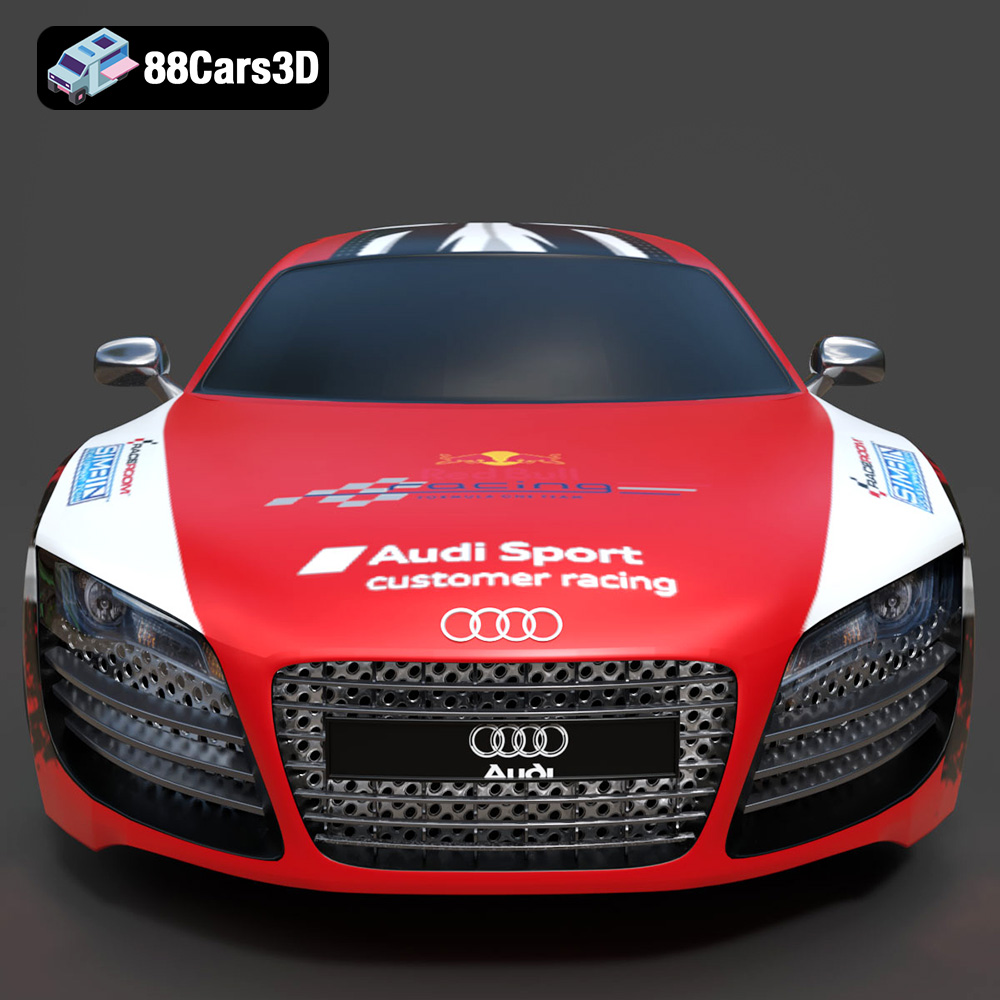
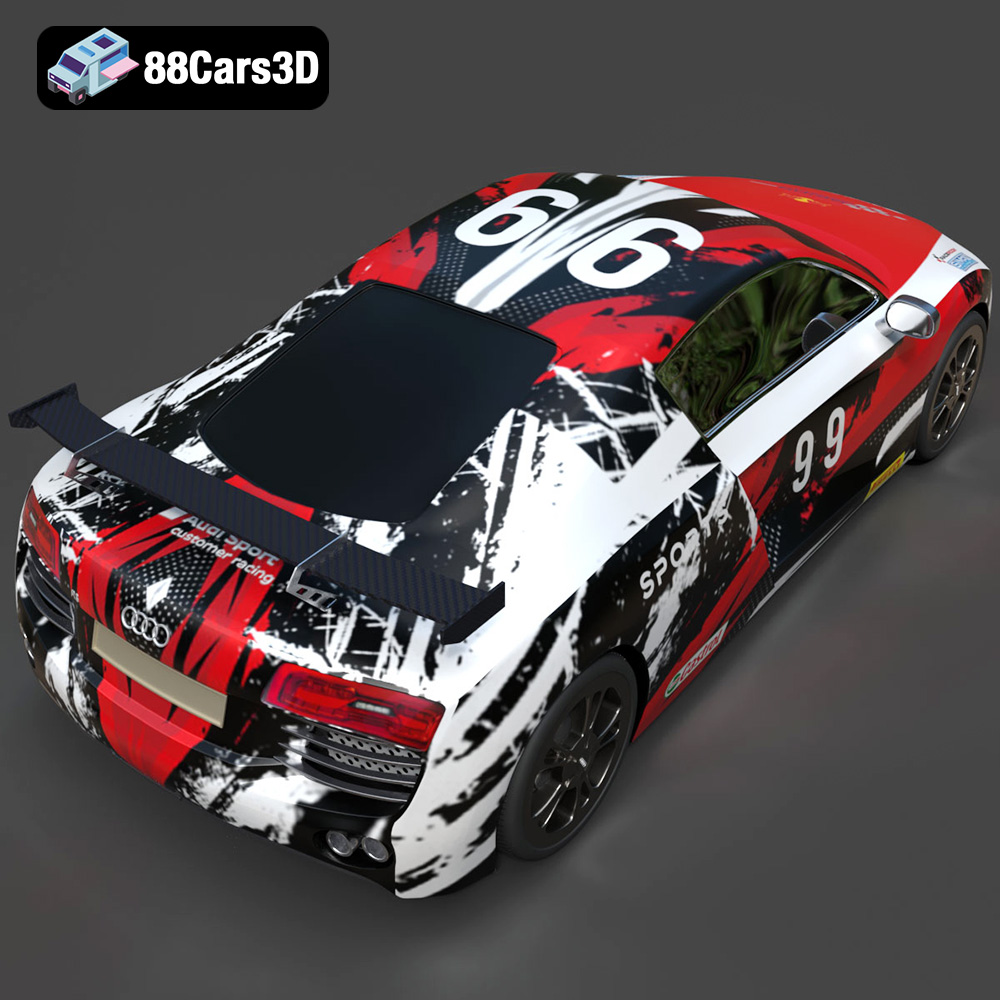
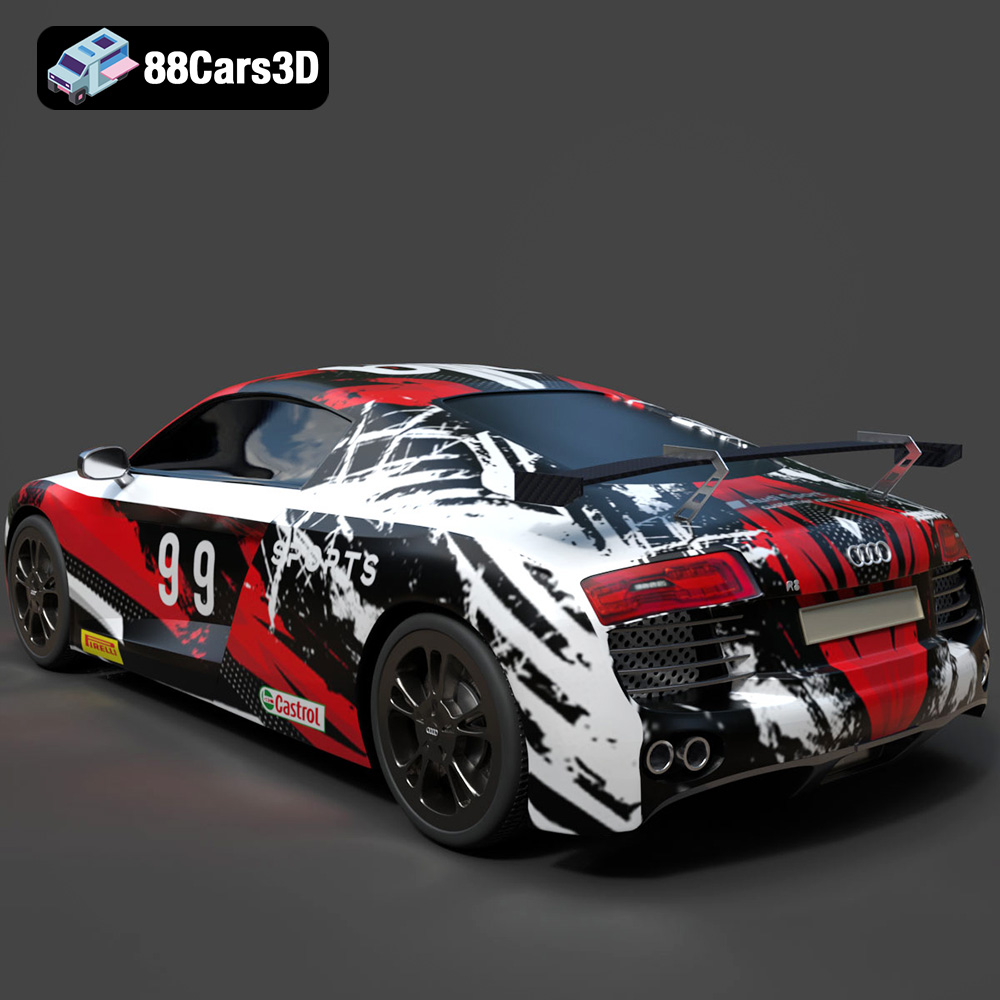
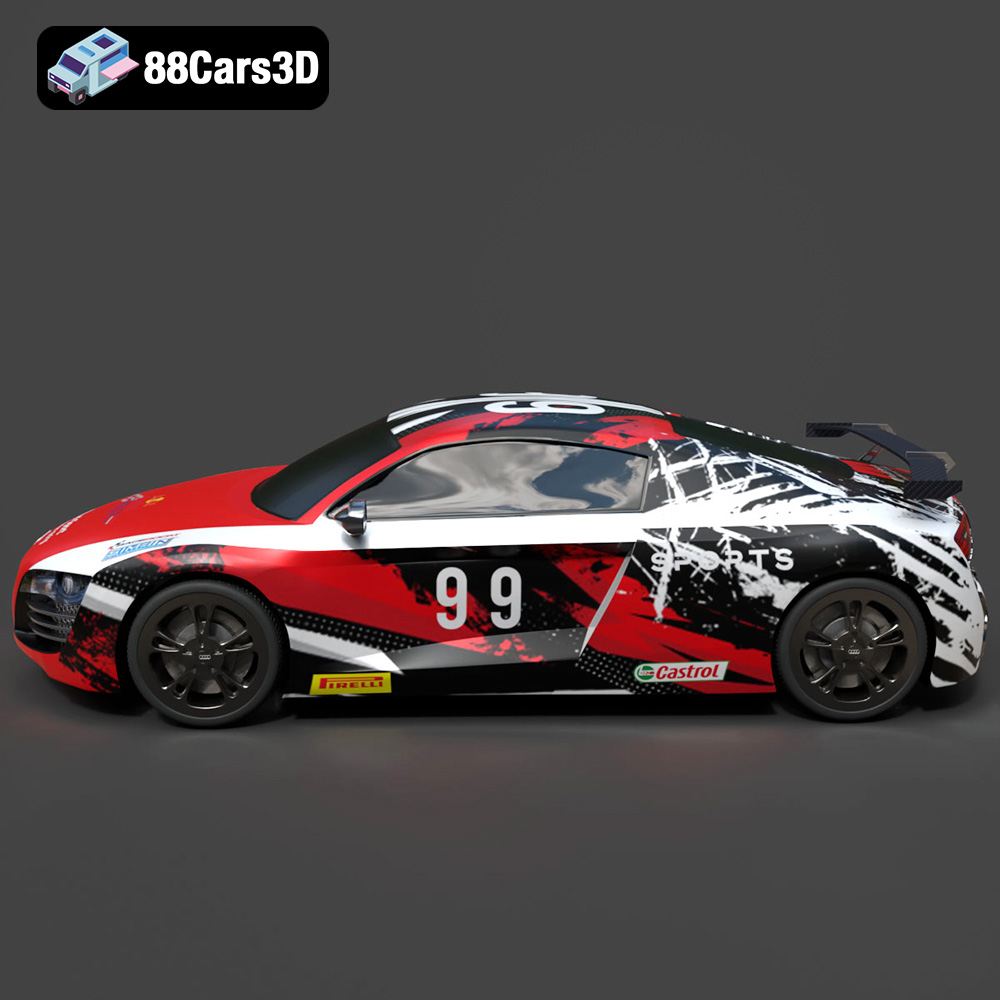
The meticulous attention to detail in this 3D model immediately stands out. It faithfully recreates the R8’s signature elements: the iconic contrasting side blades, the aggressive stance, and the distinctive LED daytime running lights that defined its era. The model captures the breathtaking visible 4.2L V8 mid-engine bay through the rear glass hatch, a testament to the real car’s engineering and a fantastic visual feature for close-up renders. From the quad exhaust system and aggressive rear diffuser to the distinct front grille, every curve and contour is precisely sculpted, reflecting the German engineering precision fused with exotic aesthetics.
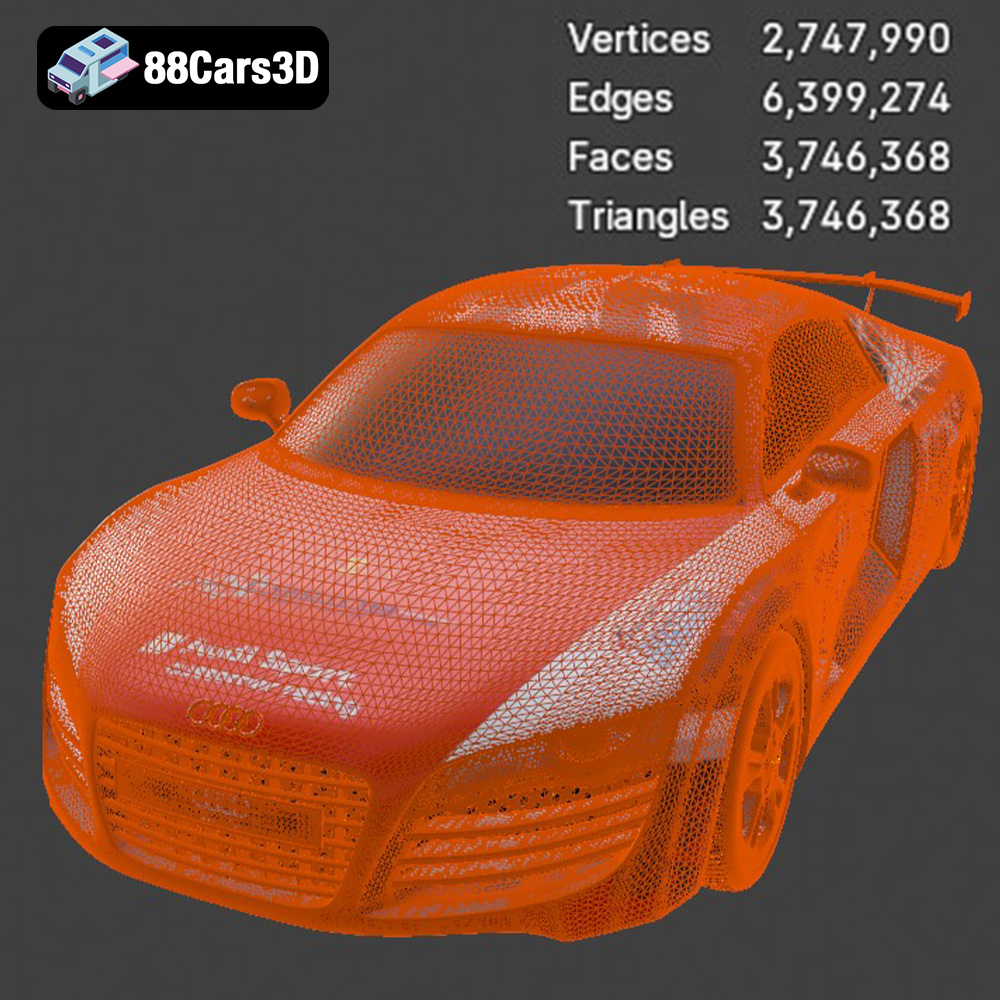
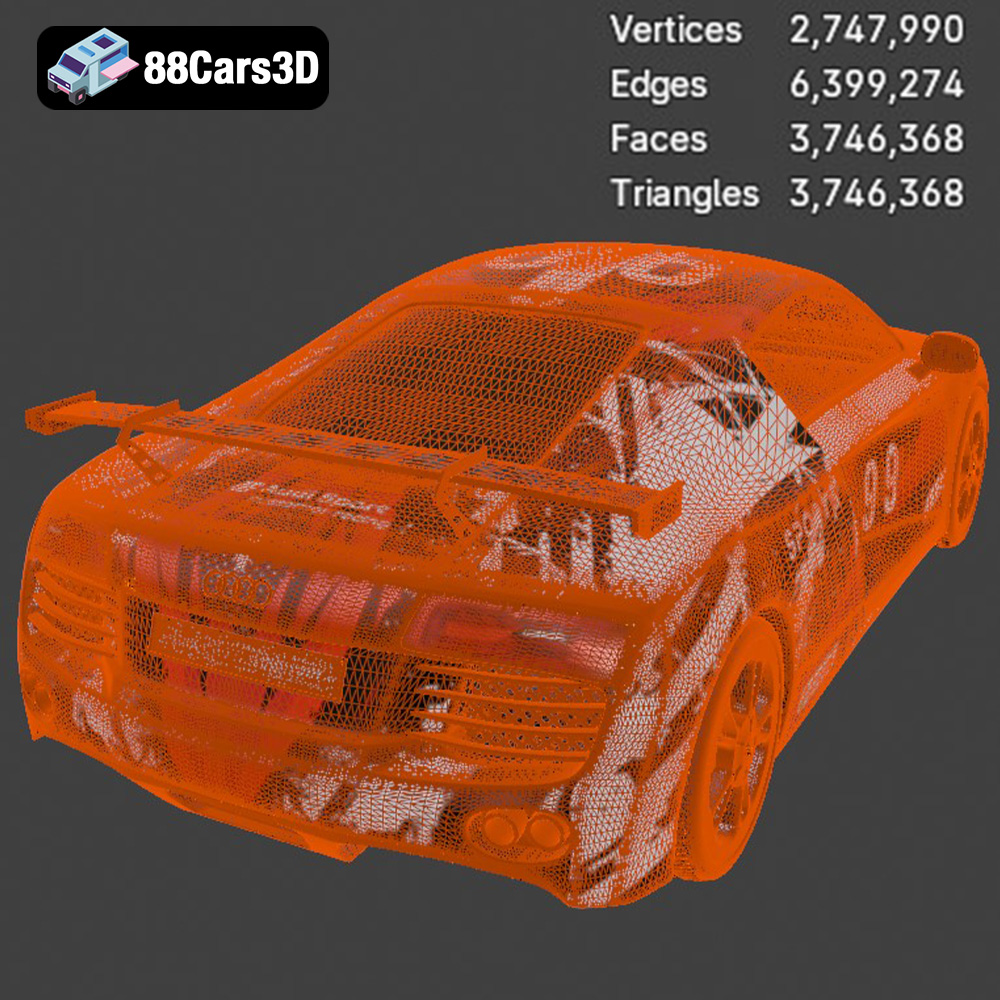
Technically, this 3D model is designed for high-end performance. Boasting a high-definition topology with a remarkable 3,746,368 triangles, it strikes a perfect balance. This poly count is robust enough for unparalleled visual fidelity in studio shots and cinematic renders, allowing for smooth, accurate reflections and crisp details even under extreme close-up. Crucially, it maintains excellent edge flow and structural optimization, making it surprisingly efficient for high-end gaming and immersive AR/VR experiences. This “game-ready” optimization means it performs beautifully in real-time engines like Unreal and Unity without sacrificing visual quality. Furthermore, the model exhibits real-world scale accuracy, based on actual vehicle chassis dimensions, and features proper pivot setups for realistic steering, wheel rotation, and suspension travel, essential for believable animations and physics simulations.
The exterior brilliance is matched by a richly detailed interior. The cockpit features deeply contoured sport seats with accurate stitching and leather texturing, a signature flat-bottomed sport steering wheel with detailed badging, and a driver-focused dual-cowl instrument cluster. Intricate control details, including the iconic gated manual shifter and climate controls, are all present and accounted for. This level of interior fidelity is particularly valuable for first-person perspective applications in gaming or virtual reality, allowing users to feel truly immersed within the legendary supercar. The optimized geometry ensures that even from the driver’s seat, the experience is smooth and visually compelling.
A high-quality 3D asset is only as good as its usability within professional pipelines. The Audi R8 2008 3D Model is designed with interoperability in mind, making it a cornerstone for various demanding projects.
For users of 3ds Max, the native .max file provides an exhaustive starting point. Artists can seamlessly import the model, leverage its pre-existing material slots, and apply advanced render setups using V-Ray, Corona, or Arnold. The separated components—wheels, suspension, and steering—are invaluable for animators seeking to create realistic driving sequences, allowing for precise control over motion paths, suspension compression, and steering input. Similarly, the .blend file offers the same deep integration for Blender artists, enabling full customization of materials using Cycles or Eevee, re-texturing, and complex animation rigging. The clean topology ensures that subdivision modifiers can be applied smoothly for even higher levels of detail if needed, without introducing artifacts.
The “game-ready” nature of the Audi R8 model makes it a standout for real-time applications. The optimized polycount allows for smooth integration into Unreal Engine and Unity without causing performance bottlenecks. Developers can import the .fbx file, which reliably carries the mesh, UVs, and basic material assignments. For Unreal Engine specifically, the inclusion of an .unreal formatted asset signifies that it may already be packaged with pre-configured materials, LODs, and even collision meshes, dramatically cutting down on setup time. The accurate pivot points for wheels and suspension are critical for implementing realistic vehicle physics and animations in racing simulators or open-world games, providing a foundation for dynamic handling and visual feedback.
Beyond gaming, the R8 model excels in high-fidelity rendering scenarios. Architectural visualization artists often use premium car models to add realism and scale to their renders of modern buildings or luxury properties. The R8, with its sophisticated design, serves as an ideal contextual element, enhancing the overall aesthetic and narrative of a scene. In cinematic productions and advertising, the model can be the centerpiece of a stunning product reveal or a dynamic driving sequence, rendered with ray tracing to achieve photorealistic results that blur the line between digital and reality. Its high-definition topology ensures that even extreme close-ups or slow-motion shots maintain impeccable detail and surface quality.
The utility of a robust 3D car model extends far beyond traditional screen-based rendering. With the growth of augmented and virtual reality and the accessibility of 3D printing, these assets are finding new dimensions of application.
The Audi R8 2008 3D Model is perfectly suited for modern immersive experiences. For virtual showrooms, imagine customers exploring the R8’s interior in VR, interacting with the controls, or examining the visible engine in detail. For augmented reality, the model can be projected into a real-world environment via a smartphone or tablet, allowing potential buyers to visualize the car in their driveway or office. The inclusion of the .glb format is crucial here, as it’s highly optimized for web delivery and mobile AR/VR platforms, ensuring fast load times and smooth performance. Developers can create interactive configurators where users customize body colors, adjust material finishes, or even swap out tire textures in real-time, offering a truly engaging and personalized experience.
For enthusiasts and product designers, the ability to transition a digital model into a physical object is incredibly exciting. The .stl format provided with the Audi R8 model opens up the world of 3D printing. This allows for the creation of display-scale models, collector’s items, or even detailed prototypes. The product description provides essential 3D print settings: recommended scales (1:12 / 1:18 / 1:24), layer height (0.04–0.12 mm, with resin printing recommended for fine details), wall thickness (1.2–2.0 mm), and infill (20–30%). Critical advice on supports for intricate parts like exhausts and mirrors, along with print orientation for structural integrity, ensures successful printing. Post-processing suggestions—sanding, primer, and authentic factory colors with metallic finishes—guide users towards achieving a museum-quality physical replica.
Investing in premium 3D assets like the Audi R8 2008 3D Model from 88cars3d.com offers significant advantages that streamline production, elevate quality, and provide a competitive edge in today’s fast-paced digital landscape.
Creating a highly detailed, accurate, and optimized 3D car model from scratch is an incredibly time-consuming and expensive endeavor. It requires expert modelers, texture artists, and optimizers, often taking weeks or even months to perfect. By acquiring a pre-made, game-ready asset, studios and individual artists can drastically reduce their development cycles and associated costs. This allows teams to focus on core project elements like game mechanics, scene composition, or animation, rather than getting bogged down in foundational asset creation. The cost of a professional-grade model is a fraction of what it would take to produce it internally, making it a smart strategic investment.
Quality marketplaces like 88cars3d.com curate their collections to ensure high professional standards. This means models come with clean, efficient topology, accurate real-world scaling, properly set up pivot points, and comprehensive material sets. The inclusion of multiple optimized file formats, such as .blend, .fbx, .obj, .glb, .stl, .ply, .unreal, and .max, signifies a commitment to universal compatibility and ease of integration. This eliminates the uncertainty often associated with lesser-quality assets, where artists might spend valuable time cleaning up messy geometry, fixing broken UVs, or re-creating materials. With a trusted source, you’re not just buying a model; you’re acquiring a reliable, production-ready tool.
A truly versatile 3D model isn’t static; it’s a dynamic base that allows for extensive customization and adapts to future technological advancements.
The Audi R8 2008 3D Model offers robust customization options. Artists can easily change body colors, experimenting with factory hues or applying custom finishes like metallic paints, pearlescents, or matte effects. Tire textures can be modified to reflect different scenarios, from high-performance street variants to more rugged off-road styles, catering to specific game levels or visualization contexts. Material finishes across the entire model—from interior leather to exterior trim—can be adjusted to achieve desired aesthetic and light-interaction properties. Furthermore, adapting lighting for different environments, such as a sunny outdoor scene or a dramatic studio setup, allows the R8 to be placed convincingly in any digital landscape, reflecting its versatility and premium presence.
The comprehensive range of file formats and optimized structure of this model future-proofs your projects. As new rendering technologies emerge or game engines update, the clean geometry and well-defined components make it easy to re-export, re-texture, or re-configure the asset. The balance between high fidelity and optimization ensures that whether you’re targeting current-generation consoles, high-end PC rendering, or emerging AR/VR devices, the R8 model remains a relevant and performant asset. This adaptability protects your investment and ensures that your digital automotive projects can evolve without requiring a complete overhaul of your core assets.
The journey of bringing an automotive icon like the Audi R8 2008 into the digital realm is a testament to the power and precision of 3D modeling. From its stunning exterior to its intricately detailed interior, the Audi R8 2008 3D Model Download STL FBX OBJ GLB Blend exemplifies what a high-quality, professional 3D car model should be. It’s not just a collection of polygons; it’s a versatile, optimized, and meticulously crafted asset ready to empower game developers, automotive renderers, AR/VR innovators, and even 3D printing enthusiasts.
The comprehensive range of included file formats—from .blend and .max for deep software integration, to .fbx for universal game engine compatibility, .glb for web and AR/VR, and .stl for physical fabrication—underscores its adaptability across virtually any professional workflow. This model saves invaluable time and resources while guaranteeing a level of detail and optimization that sets your projects apart. Investing in such a meticulously prepared asset from platforms like 88cars3d.com ensures that your creative vision is backed by technical excellence, allowing you to focus on innovation and delivering truly immersive and visually stunning experiences. Elevate your next project with an asset that combines automotive passion with digital precision.
The 2008 Audi R8 is a legendary mid-engine sports car that redefined everyday supercar usability. Instantly recognizable by its iconic contrasting side blades, aggressive stance, and signature LED daytime running lights, the R8 seamlessly blends German engineering precision with exotic aesthetics. The model captures the breathtaking visible engine bay, beautifully sculpted aerodynamic curves, and the distinct front grille that made it a modern classic. Boasting a high-definition topology with 3,746,368 triangles, this 3D model offers unparalleled visual fidelity. While highly detailed for close-up rendering and studio shots, it maintains excellent edge flow and structural optimization for high-end gaming, cinematic animations, and immersive AR/VR experiences. Perfect for high-fidelity racing simulators, architectural visualizations, virtual automotive showrooms, and cinematic renders.
$37.50
.2008
.audi
.blend
.fbx
.glb
.max
.obj
.ply
.r8
.rendering
.sports car
.stl
.supercar
.unreal
car-3d-model
game asset
game-ready
high poly
mid-engine
optimized
VR/AR