The Art and Engineering of Digital Aviation: Why High-Quality 3D Aircraft Models Matter
In the vast landscape of 3D visualization, few subjects capture the imagination quite like aviation. The sleek lines of an aircraft, the intricate dance of its mechanical components, and the sheer power it represents make airplanes a compelling subject for artists, game developers, engineers, and enthusiasts alike. From crafting hyper-realistic flight simulators to populating vast virtual worlds or producing breathtaking cinematic renders, the demand for top-tier 3D airplane models is constant and ever-evolving.
The challenge, however, lies in bridging the gap between artistic vision and technical execution. A truly exceptional 3D aircraft model must not only be visually stunning but also technically robust, optimized for performance, and versatile enough to integrate into diverse professional pipelines. This is where models like the Airplane 07 truly shine, offering a meticulously crafted asset that embodies both aesthetic precision and engineering foresight. As we delve into the nuances of digital aviation, we’ll explore how such high-quality 3D models elevate projects across industries, illustrating their profound impact on visual fidelity and interactive experiences. Whether you’re a seasoned professional seeking the perfect game asset or an architectural visualizer needing a dynamic element, the Airplane 07 provides a robust foundation for your creative endeavors, available for instant download on marketplaces like 88cars3d.com.
Understanding 3D Model File Formats
The journey of any 3D model, from creation to deployment, is heavily influenced by the file formats it utilizes. Each format is designed with specific use cases, compatibility, and technical advantages in mind. Understanding these distinctions is paramount for anyone working with 3D assets, especially when integrating a complex model like the Airplane 07 into various projects.
- .blend – Fully Editable Blender Scene with Materials: The native file format for Blender, the popular open-source 3D creation suite. A .blend file typically contains not just the mesh data but also materials, textures, animations, lighting, and camera setups. This format offers the highest level of editability for Blender users, allowing for deep customization of the Airplane 07’s geometry, shaders, and rigging. For artists primarily working in Blender, this is the go-to format for full creative control, ensuring all scene properties are preserved exactly as intended by the modeler.
- .fbx – Ideal for Unreal, Unity, and Real-Time Pipelines: Developed by Autodesk, FBX (Filmbox) is one of the most widely supported 3D interchange formats. It excels at transferring model data, including meshes, materials, textures, animations, and skeletal information, between different 3D applications and game engines. For real-time applications like Unreal Engine and Unity, the .fbx format is often the preferred choice due to its robust support for animation curves and hierarchical data, making the Airplane 07 instantly compatible for game development and interactive simulations.
- .obj – Universal Format for Cross-Software Compatibility: OBJ (Object) is a foundational and highly universal 3D file format that stores geometric data – vertices, faces, normals, and UV coordinates. While it’s excellent for mesh data and widely supported across virtually all 3D software, it typically requires accompanying .mtl (material library) files for basic material definitions and separate texture files. The .obj format for the Airplane 07 ensures maximum compatibility, allowing users of less common 3D software to import and work with the model without issues, though material setup might require manual reconstruction.
- .glb – Optimized for AR, VR, and Browser-Based Display: GLB (GL Transmission Format Binary) is the binary version of glTF (GL Transmission Format). It’s a modern, open-standard format designed for efficient transmission and loading of 3D scenes and models by engines and applications. GLB bundles all assets (mesh, materials, textures, animations) into a single file, making it incredibly efficient for web-based 3D, augmented reality (AR), and virtual reality (VR) applications. For developers building immersive experiences, the Airplane 07 in .glb format offers optimized performance and easy integration into web-based viewers or AR/VR platforms.
- .stl – Suitable for 3D Printing Output: STL (Stereolithography) is the standard file format for 3D printing. It represents a 3D model as a series of connected triangles, defining only the surface geometry of an object without color, texture, or other CAD attributes. While it lacks visual fidelity features, its simplicity makes it ideal for additive manufacturing. The Airplane 07’s availability in .stl format means it’s ready for physical reproduction, allowing hobbyists and professionals to 3D print detailed display models, leveraging the meticulous design for tangible outputs.
- .ply – Precision Mesh Format for CAD or Analysis: PLY (Polygon File Format or Stanford Triangle Format) is a versatile format for storing 3D data from 3D scanners, CAD programs, and other applications. It can store various properties, including color, transparency, normals, texture coordinates, and even reliability information. While less common for general asset exchange than FBX or OBJ, .ply is valuable for applications requiring precise mesh data, such as scientific visualization, engineering analysis, or historical preservation. The Airplane 07 in .ply format offers an alternative for highly precise mesh handling.
- .unreal – Engine-Ready Asset for Real-Time Environments: This isn’t a standalone file format in the traditional sense, but rather an indication that the asset is provided in a format (typically .fbx) specifically prepared and optimized for direct import into Unreal Engine projects. It implies proper scaling, pivot points, material slots, and potentially even collision meshes have been considered, ensuring a smooth workflow for Unreal developers. The Airplane 07 labeled as ‘.unreal’ signifies it’s production-ready for the engine’s demanding real-time environment.
- .max – Editable 3ds Max Project for Animation and Rendering: The native file format for Autodesk 3ds Max, a powerful 3D modeling, animation, and rendering software. Similar to .blend, a .max file preserves all scene data, including geometry, materials, lighting, cameras, rigging, and animation. For professionals entrenched in the Autodesk ecosystem, the Airplane 07 in .max format provides complete access to the original scene, enabling advanced rendering setups, intricate animation sequences, and deep customization within 3ds Max.
The comprehensive range of formats offered for the Airplane 07 underscores its adaptability and value across the entire spectrum of 3D production. Whether your project demands real-time performance, intricate animation, physical reproduction, or ultimate cross-software compatibility, this model provides the right tools for the job.
Crafting Realism: Deep Dive into the Airplane 07’s Design and Features
The cornerstone of any outstanding 3D model lies in its meticulous attention to detail and its ability to replicate real-world counterparts with astonishing accuracy. The Airplane 07 is a prime example of this dedication, engineered to deliver both visual fidelity and functional integrity. Its design philosophy centers on capturing the essence of modern aviation, making it an invaluable asset for various professional applications.
Exterior Features: An Engineering Marvel in Digital Form
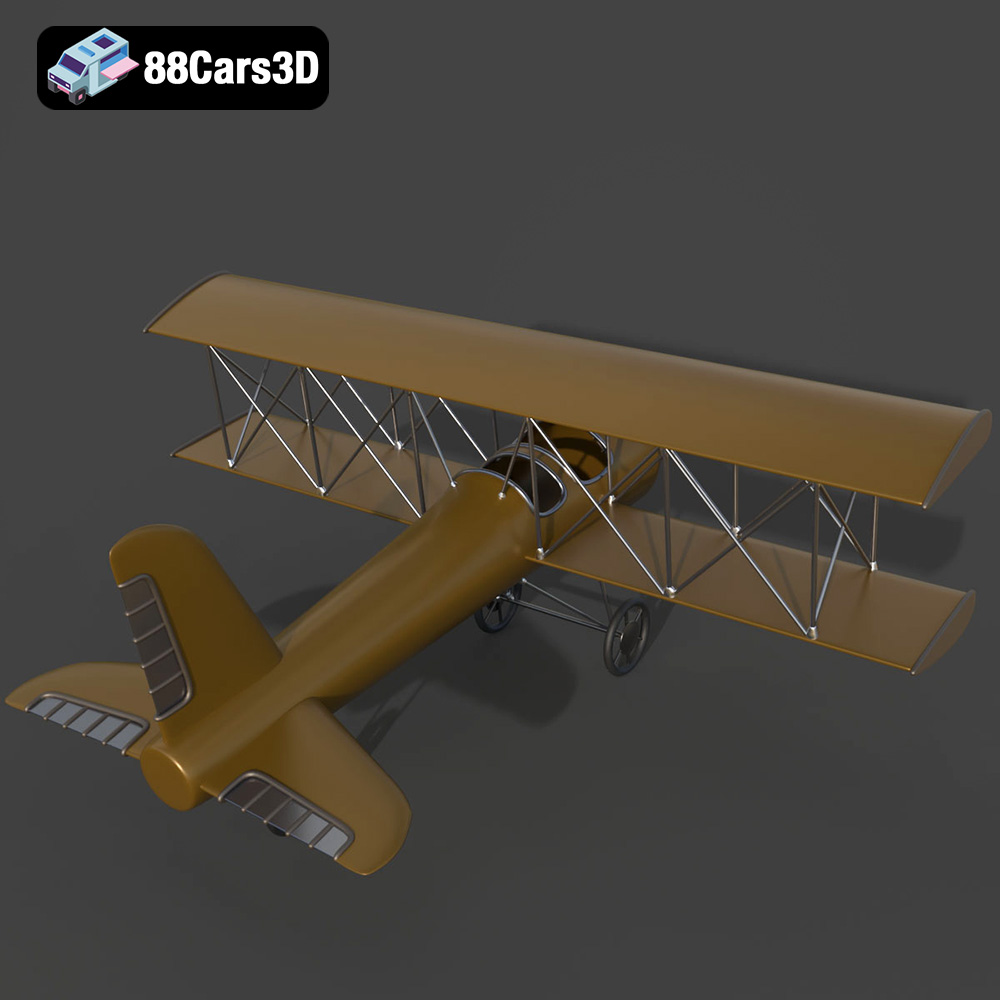
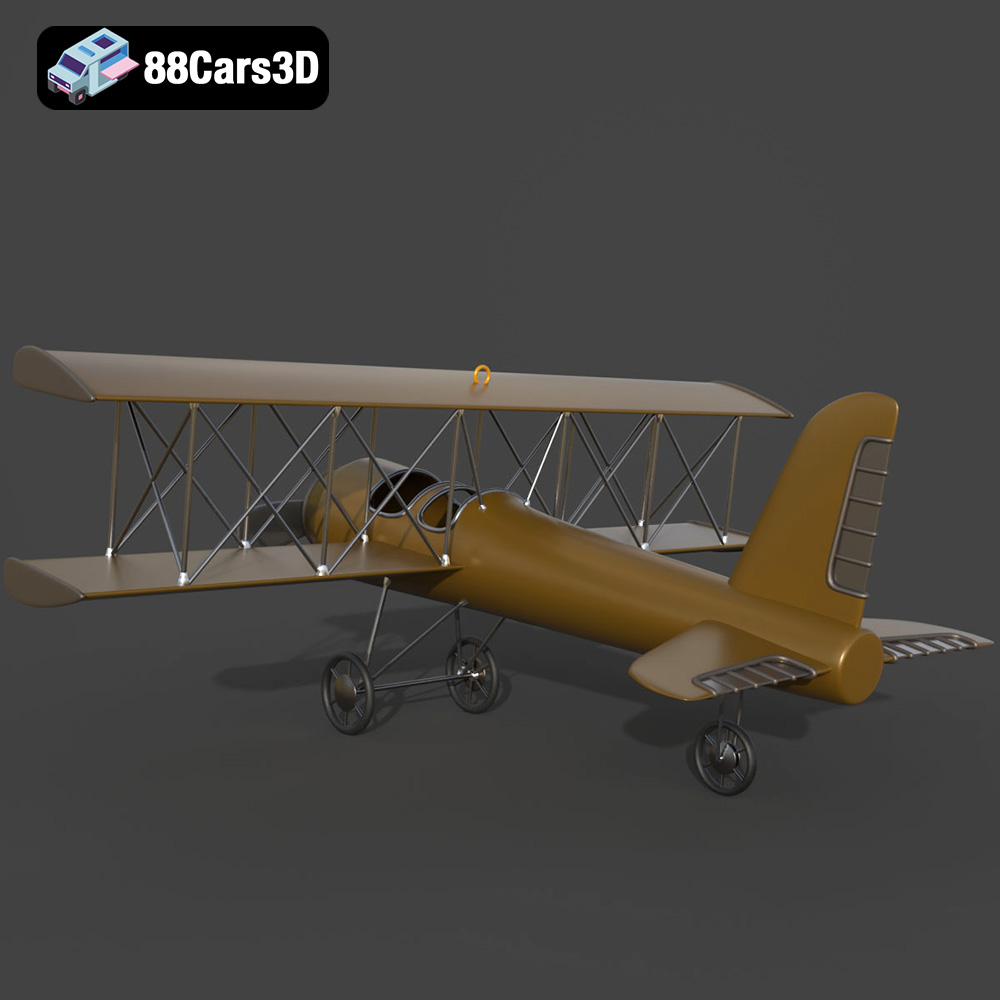
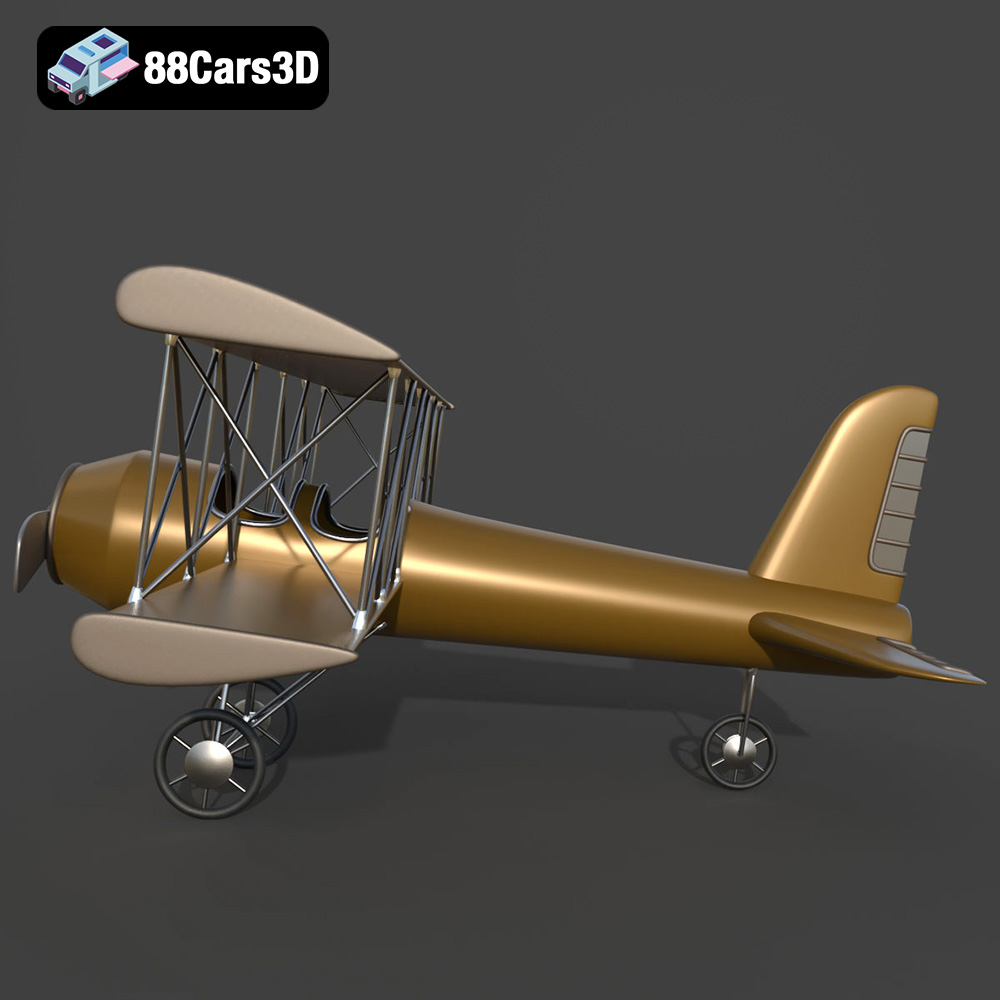
From the sweeping curves of its fuselage to the intricate mechanics of its landing gear, every exterior element of the Airplane 07 has been modeled with precision. The aerodynamic proportions are faithfully reproduced, giving the model an authentic silhouette and visual weight. Key areas of focus include:
- Fuselage Geometry and Aerodynamics: The main body of the aircraft is designed to reflect a modern, high-performance jet, with smooth transitions and accurate panel lines that hint at the complex structure beneath. This level of detail is critical for close-up renders and dynamic camera shots.
- Jet Engine Turbines and Cowlings: The heart of any jet, the engines, are rendered with meticulous care. The intake fans are visible, and the exhaust nozzles are finely detailed, conveying power and mechanical complexity. These elements are essential for conveying realism in both static and animated scenes.
- Lighting Elements: Realistic exterior lighting, including navigation lights, strobes, and landing lights, are integrated. This is vital for night scenes, simulating real-world flight conditions, and enhancing the visual drama of the model in any lighting environment.
- Landing Gear and Control Surfaces: The landing gear, often a complex part of aircraft, is fully detailed with struts and wheel assemblies. Crucially, components like wing flaps, ailerons, and the rudder are modeled separately with proper pivot setups. This enables seamless animation for take-off, landing, and in-flight maneuvers, which is indispensable for flight simulators and cinematic sequences.
Cockpit & Interior Features: Immersive Pilot’s Perspective
For simulations, virtual reality, or any first-person perspective, the interior of an aircraft is just as important as its exterior. The Airplane 07 doesn’t disappoint, offering a thoughtfully designed cockpit that enhances immersion:
- Detailed Seating and Controls: Pilot and co-pilot seating arrangements are accurately depicted, complete with flight yokes, steering controls, and realistic thrust levers and pedals. This level of detail is crucial for authentic flight simulator experiences, allowing virtual pilots to feel truly “in command.”
- Comprehensive Instrument Cluster: The avionics panels and instrument clusters are modeled to provide a convincing control environment. While not functional by default, their visual representation provides the necessary realism for close-up shots or interactive elements in a game engine, supporting an optimized geometry perfect for first-person viewpoints.
Seamless Integration: Workflows for Game Development, AR/VR, and Cinematic Rendering
The true value of a versatile 3D asset like the Airplane 07 lies in its ability to seamlessly integrate into diverse professional workflows. Whether you’re building an immersive game, developing an augmented reality experience, or producing a high-end visual effects sequence, the model’s technical specifications and multi-format availability ensure a smooth transition from asset purchase to final output.
Game Development Workflows: Unreal Engine and Unity
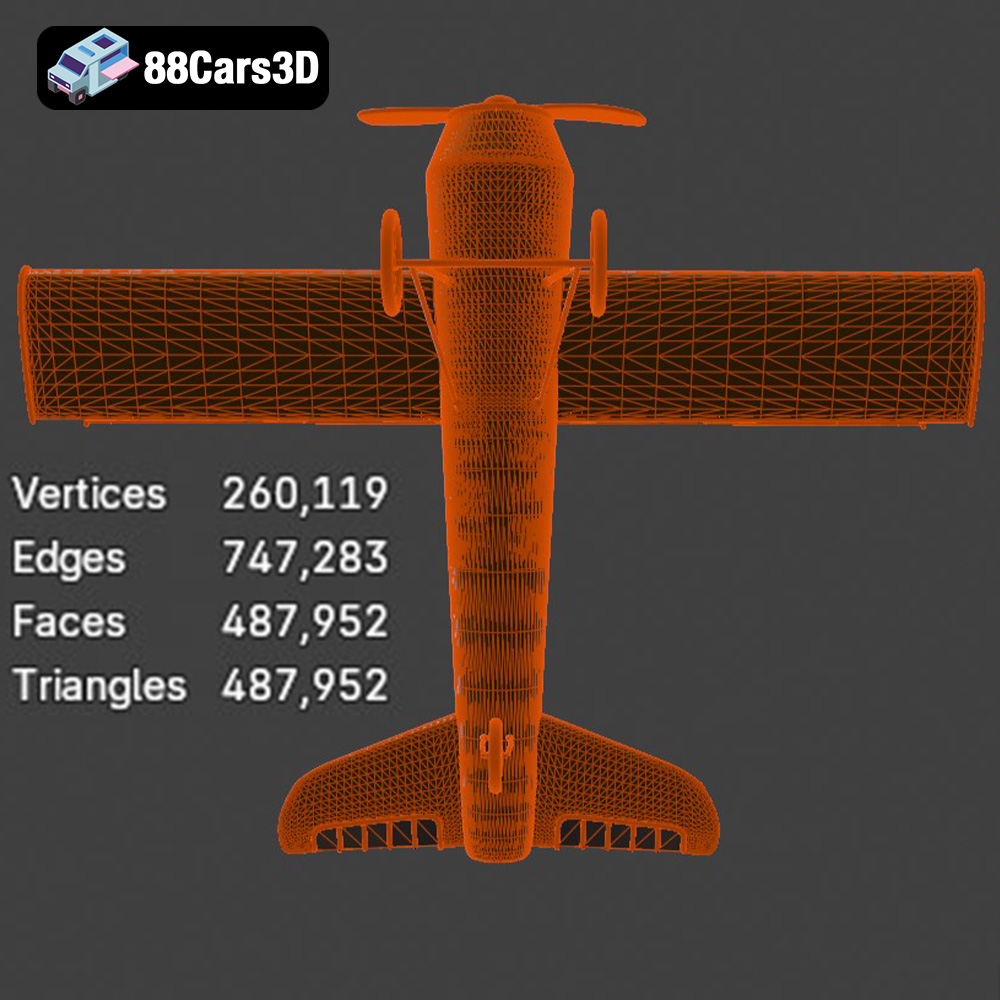
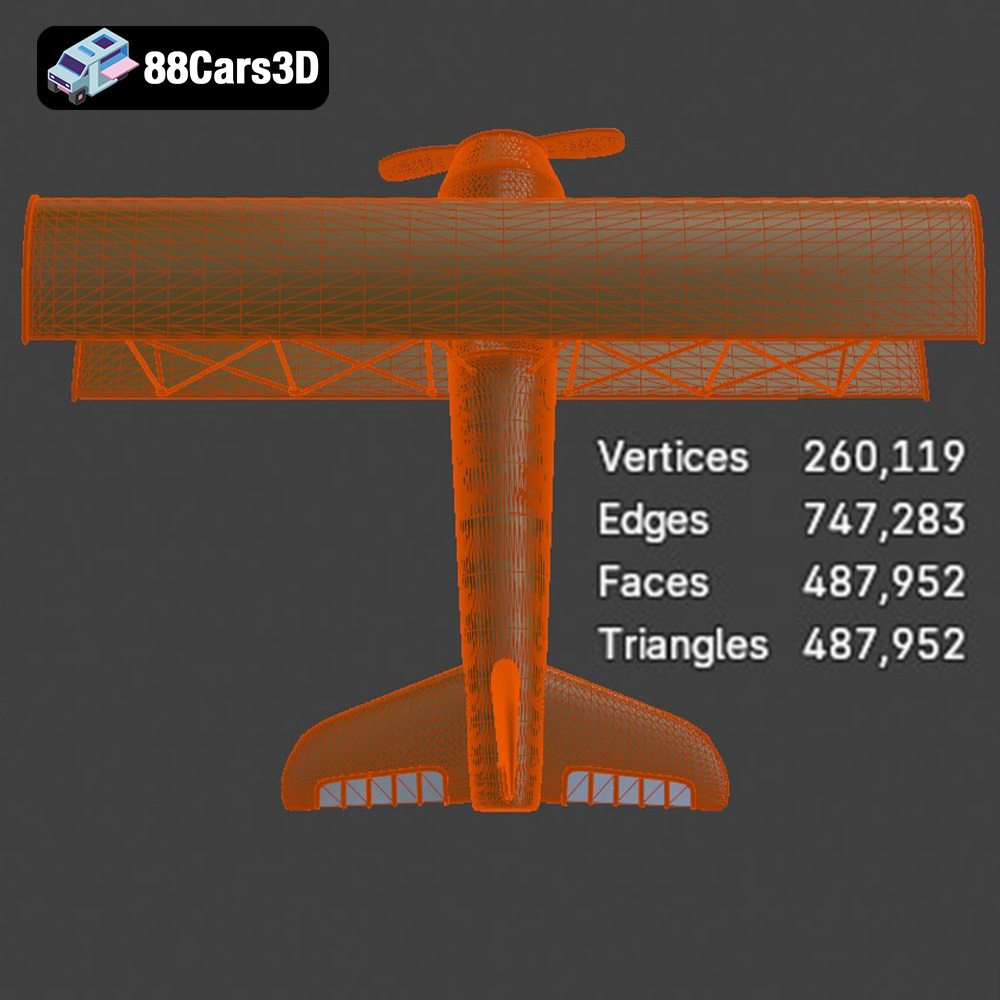
For game developers, the priority is often a balance between visual fidelity and real-time performance. The Airplane 07, with its optimized 487,952 triangle count, is perfectly positioned for this challenge. Utilizing the .fbx or .unreal formats, integration into popular engines like Unreal Engine and Unity is streamlined.
- Import and Setup: Import the .fbx file directly into your engine. The proper pivot setups for landing gear, ailerons, and wheels mean that basic animation logic for retraction, rotation, and control surface movement can be applied almost immediately.
- Material and Texture Application: While specific textures aren’t detailed in the product description, a game-ready model implies well-laid out UVs. Developers can create PBR (Physically Based Rendering) materials using the engine’s native shader systems, applying custom liveries or metallic finishes to achieve desired visual styles.
- Collision and LODs: For real-time performance, developers would typically generate simplified collision meshes and Level of Detail (LOD) models for the Airplane 07. However, the model’s already optimized polycount serves as an excellent base for these optimizations, minimizing the performance hit in large-scale game environments.
AR/VR Experiences: Immersive Simulations and Interactive Showcases
The demand for immersive AR/VR content is rapidly growing, and high-quality 3D models are at its core. The Airplane 07, especially in its .glb format, is an ideal candidate for such applications.
- Optimized for Web and Mobile: The .glb format is specifically designed for efficient loading and display in web browsers and on mobile devices, making it perfect for AR apps where bandwidth and processing power are limited. Imagine placing a realistic Airplane 07 on your desk via AR, or exploring its cockpit in a VR training module.
- Interactive Elements: Leveraging the detailed interior, developers can create interactive virtual cockpits in VR. Users could “grab” the yoke, operate switches, or retract landing gear, turning the static model into a dynamic, educational, or entertainment experience.
Cinematic Rendering and Visualization: 3ds Max and Blender
For high-resolution renders, visual effects, and architectural visualizations, maximum detail and creative control are paramount. The .max and .blend files offer this flexibility.
- Advanced Material Shading: In 3ds Max or Blender, artists have complete control over sophisticated material shaders. They can recreate realistic bare metal finishes, complex paint schemes with subtle weathering, and advanced reflections, pushing the visual fidelity far beyond real-time engine capabilities.
- Lighting and Environment Integration: The Airplane 07 can be placed within detailed studio lighting setups, complex environmental renders, or integrated into live-action footage for VFX. The separate control surfaces and landing gear allow for dynamic animation sequences that bring the aircraft to life in cinematic trailers or animated shorts. The real-world scale accuracy further ensures it fits naturally into any scene, whether landing at a meticulously designed airport in a visualization or flying through a dramatic sky in a film.
Beyond the Screen: The Airplane 07 for 3D Printing and Physical Visualization
The utility of a robust 3D model extends far beyond digital screens. For hobbyists, educators, and professionals seeking tangible representations, the Airplane 07 offers excellent potential for 3D printing. The meticulous design, originally intended for digital rendering and simulation, translates remarkably well into a physical object, allowing aviation enthusiasts to bring this engineering marvel into the real world.
Preparing for Physical Manifestation: The .stl Format
The inclusion of the .stl format is a direct nod to the 3D printing community. STL files translate the model’s geometry into a series of triangles, which 3D printers use to build up the object layer by layer. The inherent detail of the Airplane 07 ensures that even when scaled down, its iconic features remain discernible.
- Scale Recommendations: The recommended scales of 1:48, 1:72, and 1:144 are standard for model aircraft, offering a balance between size, detail, and printability. A 1:48 scale model, for instance, would be a substantial display piece, while 1:144 is excellent for dioramas or smaller collections.
- Layer Height and Resolution: The suggestion of 0.04–0.12 mm layer height, especially with resin printing, highlights the goal of capturing fine details. Resin printers (SLA/DLP) are known for their ability to produce incredibly smooth surfaces and intricate features, making them ideal for replicating the Airplane 07’s engine components, panel lines, and delicate wing structures. FDM printers, while more common, would require careful calibration and potentially larger nozzles to achieve acceptable quality.
Technical Considerations for Successful 3D Prints
Translating a complex 3D model into a successful physical print involves several technical considerations. The Airplane 07’s design and specified settings simplify this process:
- Wall Thickness and Infill: Recommendations for wall thickness (1.2–2.0 mm) and infill (20–30%) are crucial for structural integrity. These parameters ensure that the printed model is robust enough to handle and display without being overly heavy or prone to breaking, particularly for delicate parts like wings or landing gear.
- Supports and Print Orientation: Due to the Airplane 07’s complex geometry with overhangs (wings, engine nacelles, cockpit), supports are essential. The guidance on printing the fuselage angled and wings separately is a best practice. Printing parts individually and then assembling them often yields better results, minimizing the need for extensive supports and allowing for optimal detail preservation on each component.
- Post-processing for a Polished Finish: Post-processing is where the printed model truly comes to life. Sanding removes layer lines, primer creates a uniform surface, and authentic liveries with metallic finishes can transform a raw print into a museum-quality replica. This opens up vast customization options for modelers to replicate specific airline or military aircraft paint schemes, further extending the model’s versatility.
For those who appreciate the tactile nature of physical models, the Airplane 07 offers an exciting pathway from the digital realm to a tangible display piece. The detailed planning inherent in its digital design makes it an accessible and rewarding project for 3D printing enthusiasts.
Optimizing for Performance and Scalability: Technical Advantages for Professionals
In professional 3D production, an asset’s technical specifications are as critical as its visual appeal. Optimization, scalability, and adherence to real-world dimensions ensure that a model is not just beautiful, but also functional and efficient across diverse applications. The Airplane 07 exemplifies these advantages, offering technical attributes that make it a robust choice for demanding projects.
Game-Ready Optimization: The Triangle Count Sweet Spot
The specified triangle count of 487,952 for the Airplane 07 represents a carefully considered balance. It’s high enough to maintain a striking level of visual detail—allowing for smooth curves, intricate panel lines, and detailed engine components—yet optimized enough to perform efficiently in real-time rendering environments like game engines or AR/VR applications.
- Performance vs. Fidelity: In game development, every triangle counts. A model with millions of triangles would quickly bog down a game engine, leading to low frame rates. Conversely, a model that’s too low-poly sacrifices visual realism. The Airplane 07 hits this sweet spot, providing excellent visual fidelity for close-up shots and cinematic sequences within games, without excessively taxing the GPU during gameplay. This makes it ideal for flight simulators where the aircraft is often the central focus, or for integrating into open-world games as a prominent feature.
- Foundation for LODs: While the model is optimized, its detailed base makes it an excellent foundation for generating further Levels of Detail (LODs). Developers can create simplified versions for distant views, further improving performance without a noticeable drop in quality at typical viewing distances.
Real-World Scale and Dimensional Accuracy
Accuracy in scale is not merely an aesthetic concern; it’s a fundamental technical requirement for many applications. The Airplane 07 is built with real-world scale accuracy, based on actual aircraft dimensions.
- Seamless Integration: This precise scaling ensures that the model drops seamlessly into existing scenes, whether it’s an architectural visualization of an airport or a realistic flight simulator environment, without requiring tedious resizing or adjustments. It maintains consistency with other assets and environments.
- Physics and Simulation: For flight simulators and engineering visualizations, accurate scaling is paramount for correct physics calculations and realistic motion. A correctly scaled model behaves more authentically within physics engines, contributing to a more believable and immersive experience.
Proper Pivot Setup for Animation and Interaction
The devil is often in the details, and for animated 3D models, proper pivot points are absolutely crucial. The Airplane 07 boasts proper pivot setups for its ailerons, landing gear retraction, and wheel rotation.
- Simplified Animation Workflow: This feature significantly reduces the setup time for animators and game developers. Instead of manually identifying and setting pivot points, which can be time-consuming and prone to error, the model is ready for animation right out of the box. You can instantly control the rotation of wheels for taxiing, the retraction of landing gear for flight, or the subtle movements of control surfaces during maneuvers.
- Enhanced Realism: Correct pivots ensure that animations are smooth and physically accurate. When the landing gear retracts, it will fold correctly into the fuselage; when the wheels turn, they will rotate around their true axis. This attention to mechanical detail elevates the realism of any animated sequence or interactive experience involving the Airplane 07.
These technical specifications are not just bullet points; they are indicators of a professionally crafted asset designed to minimize friction in production pipelines, enabling artists and developers to focus on creativity rather than troubleshooting.
Unlocking Creative Potential: Customization and Future-Proofing Your Assets
A high-quality 3D model isn’t just about its initial fidelity; it’s also about its capacity for evolution and adaptation. The Airplane 07 is designed with customization in mind, offering artists and developers the flexibility to tailor its appearance and functionality to meet specific project demands, ensuring it remains a valuable asset for years to come.
Infinite Liveries and Paint Schemes
One of the most impactful ways to customize an aircraft is through its livery. The Airplane 07 provides the perfect canvas for a myriad of appearances:
- Commercial, Private, or Military: Whether your project requires a bustling commercial airliner, a sleek private jet, or a rugged military transport, the model can be easily re-skinned. This involves swapping out texture maps for new paint schemes, allowing for rapid iteration and diverse visual storytelling. Imagine showcasing the model in a classic airline livery for a historical simulation, a modern, minimalist design for a corporate visualization, or a camouflaged pattern for a tactical game scenario.
- Decal Details and Tail Numbers: Beyond the primary paint, the ability to modify decal details and tail numbers adds another layer of authenticity. These small but significant elements can transform a generic aircraft into a specific, identifiable machine, crucial for realism in simulators or narrative precision in cinematic projects.
Adapting Material Finishes and Lighting
The surface properties of a 3D model, combined with environmental lighting, dictate its perceived realism. The Airplane 07 allows for extensive customization in these areas:
- Matte, Gloss, Bare Metal: Changing material finishes from a subtle matte to a highly reflective gloss or even a bare, polished metal can dramatically alter the aircraft’s character. This is particularly important for rendering realistic PBR materials where the interplay of reflectivity, roughness, and metallicity brings surfaces to life. A bare metal finish might convey a classic aircraft, while a high-gloss paint job suggests a pristine, modern jet.
- Environmental Lighting: The model’s inherent quality shines under various lighting conditions. Adjusting lighting for different environments—whether it’s the crisp sunlight of a daytime scene, the warm glow of a sunset, or the dramatic shadows of a night flight—allows artists to evoke specific moods and atmospheres. The integrated exterior lighting elements (navigation, strobe, and landing lights) further enhance night scenes, adding crucial visual cues that mimic real-world aviation.
Future-Proofing Your Investment
Investing in a high-quality, customizable 3D model like the Airplane 07 from 88cars3d.com is a strategic decision that future-proofs your projects. Its versatility across multiple file formats and its robust technical foundation mean it will remain relevant and usable as your creative needs evolve and as new technologies emerge. Whether you’re upgrading your game engine, exploring new AR/VR platforms, or pushing the boundaries of cinematic rendering, this model is designed to adapt.
The ability to endlessly customize and integrate the Airplane 07 into diverse scenarios means it’s not just a single-use asset but a foundational component that can be revisited and reimagined across countless projects, providing ongoing value and creative freedom.
Conclusion: Elevating Your Projects with Precision 3D Aviation
The digital world thrives on detail, accuracy, and performance, especially when tackling complex subjects like aviation. As we’ve explored, the demand for high-quality 3D airplane models is not just about aesthetics; it’s about providing robust, optimized, and versatile assets that empower creators across diverse industries. From hyper-realistic flight simulators and immersive AR/VR training applications to breathtaking cinematic sequences and detailed architectural visualizations, the foundation of success lies in the quality of the 3D model itself.
The Airplane 07 stands as a testament to this commitment to excellence. Its meticulous design, encompassing everything from accurate fuselage geometry and detailed engine components to a fully realized cockpit, ensures visual fidelity that captures the imagination. More than just a pretty model, its technical specifications—including an optimized triangle count, real-world scale, and precisely set pivot points—make it a game-ready and animation-friendly asset designed for seamless integration into professional pipelines. The comprehensive range of included file formats, from .blend and .max for deep customization to .fbx for game engines and .glb for web/AR, underscores its unparalleled adaptability.
Furthermore, its potential extends beyond the digital screen, offering clear pathways for 3D printing enthusiasts to bring this magnificent aircraft into physical form. With its inherent customization options, from liveries to material finishes, the Airplane 07 isn’t just a static asset; it’s a dynamic canvas for endless creative exploration. For professionals seeking to elevate their projects with an aircraft model that truly delivers on both form and function, the Airplane 07 is an exceptional choice. Discover this outstanding asset and many other high-quality 3D car models and transportation vehicles available for instant download on 88cars3d.com.
Featured 3D Model
Airplane 07 3D Model Download STL FBX OBJ GLB Blend
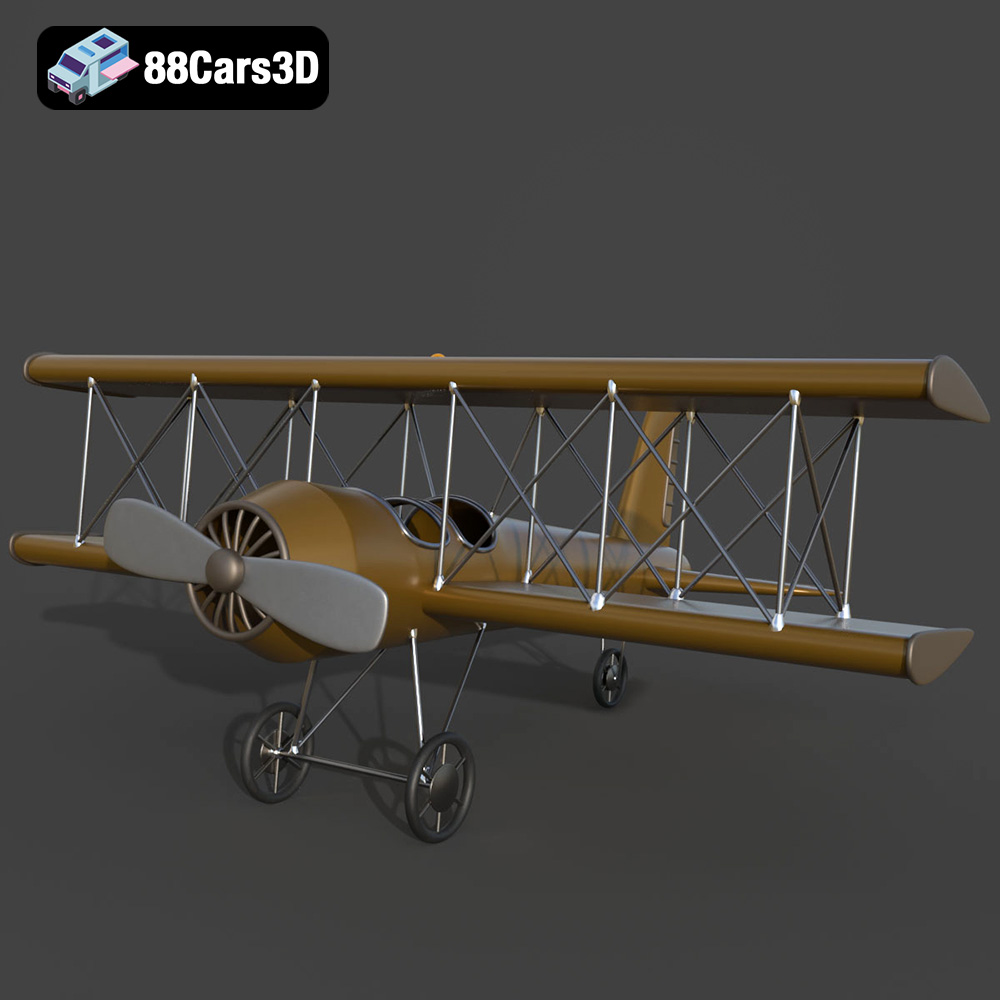
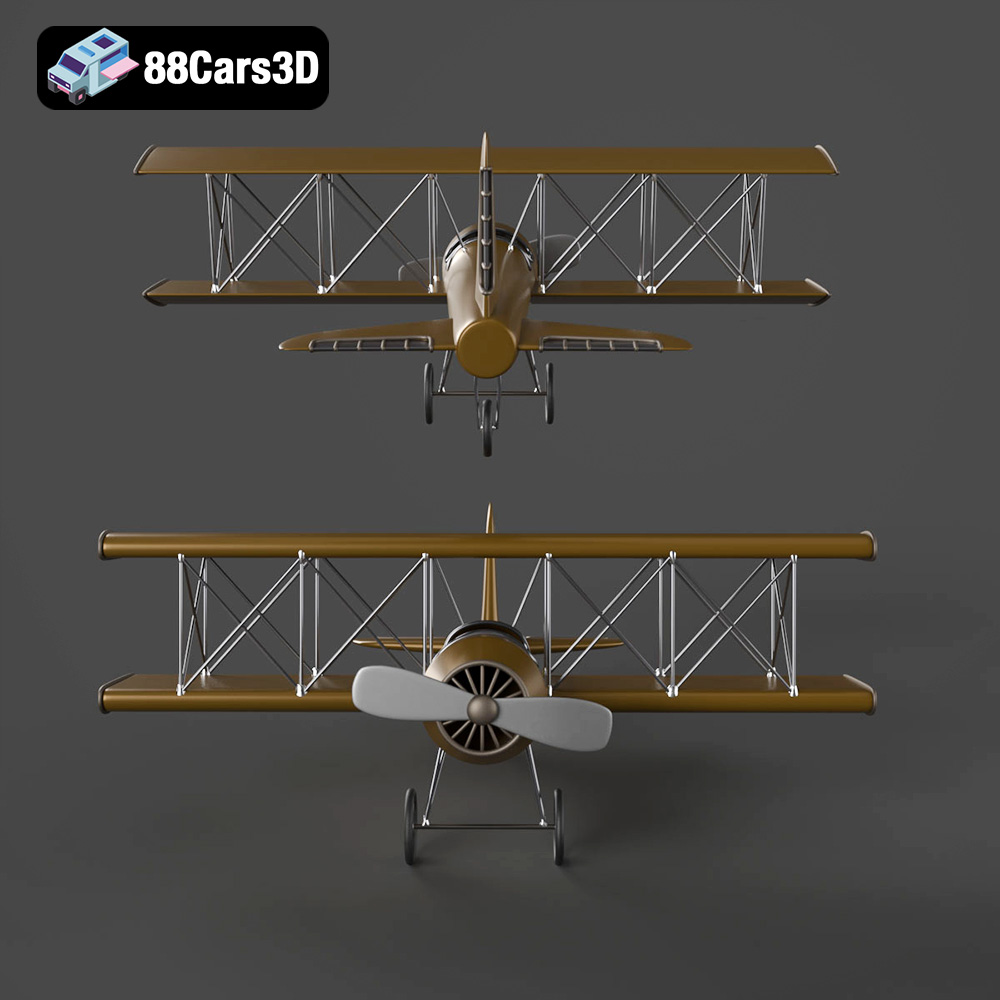
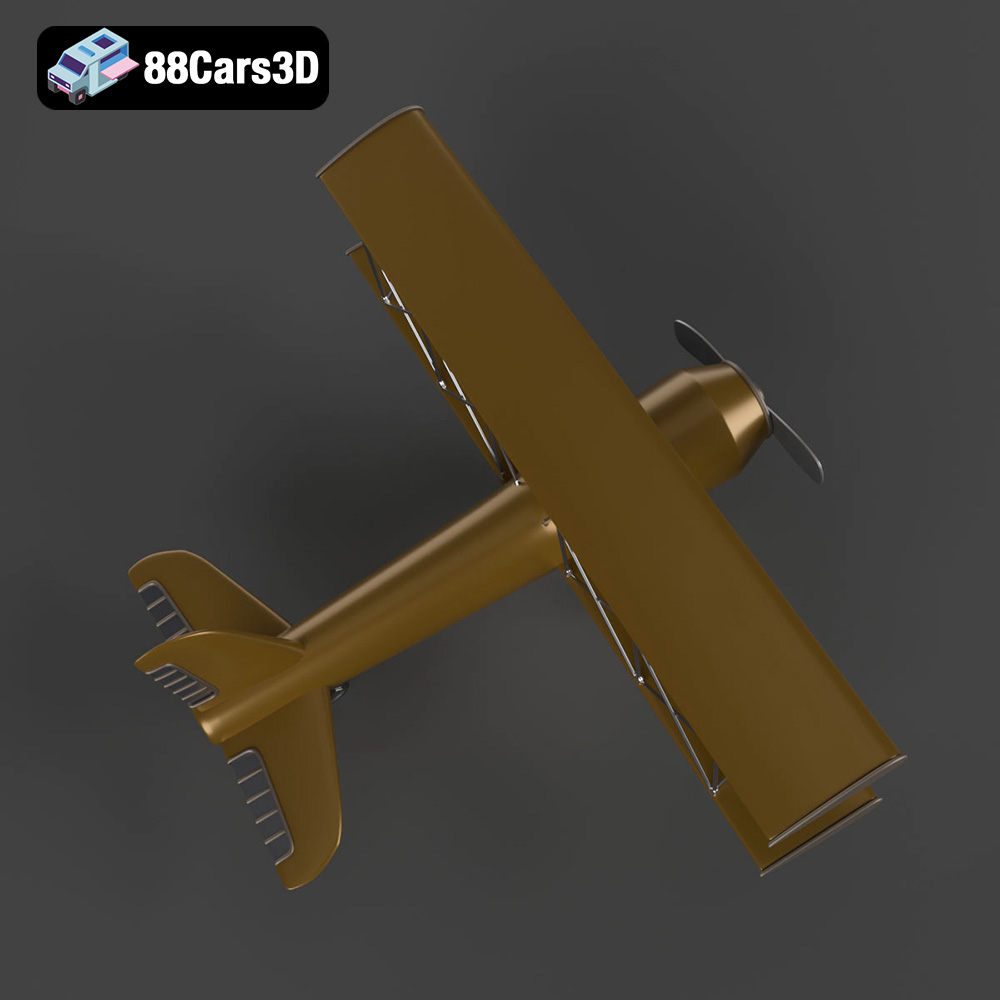
Experience the thrill of aviation with the Airplane 07, a beautifully crafted aircraft featuring sleek aerodynamic design, iconic wing structures, and highly detailed engine components. Every curve and panel line is modeled to reflect the engineering marvel of modern flight, complete with realistic exhaust nozzles, intake fans, and precise exterior styling cues. Boasting a meticulous topology with a triangle count of 487,952, this 3D model offers the perfect synergy between game-ready optimization and high-end visual fidelity. It is exceptionally well-suited for demanding use cases, including game development, immersive AR/VR simulations, professional animation, and architectural visualization.
$26.00
View This Model
Related Tags
.aircraft
.airplane
.aviation
.blend
.fbx
.glb
.max
.obj
.ply
.rendering
.stl
.unreal
airplane-07
airplane-3d-model
game asset
game-ready
low-poly
optimized
VR/AR