Get 20% OFF All Premium 3D & STL Models!

In the fast-paced worlds of automotive design, game development, cinematic rendering, and virtual reality, the demand for incredibly detailed and accurate 3D car models has never been higher. Professionals across these industries require assets that not only look stunning but are also technically robust, versatile, and optimized for their specific platforms. From breathtaking architectural visualizations featuring luxury vehicles to high-octane racing simulations, the quality of a 3D model can significantly impact the final output and overall project success.
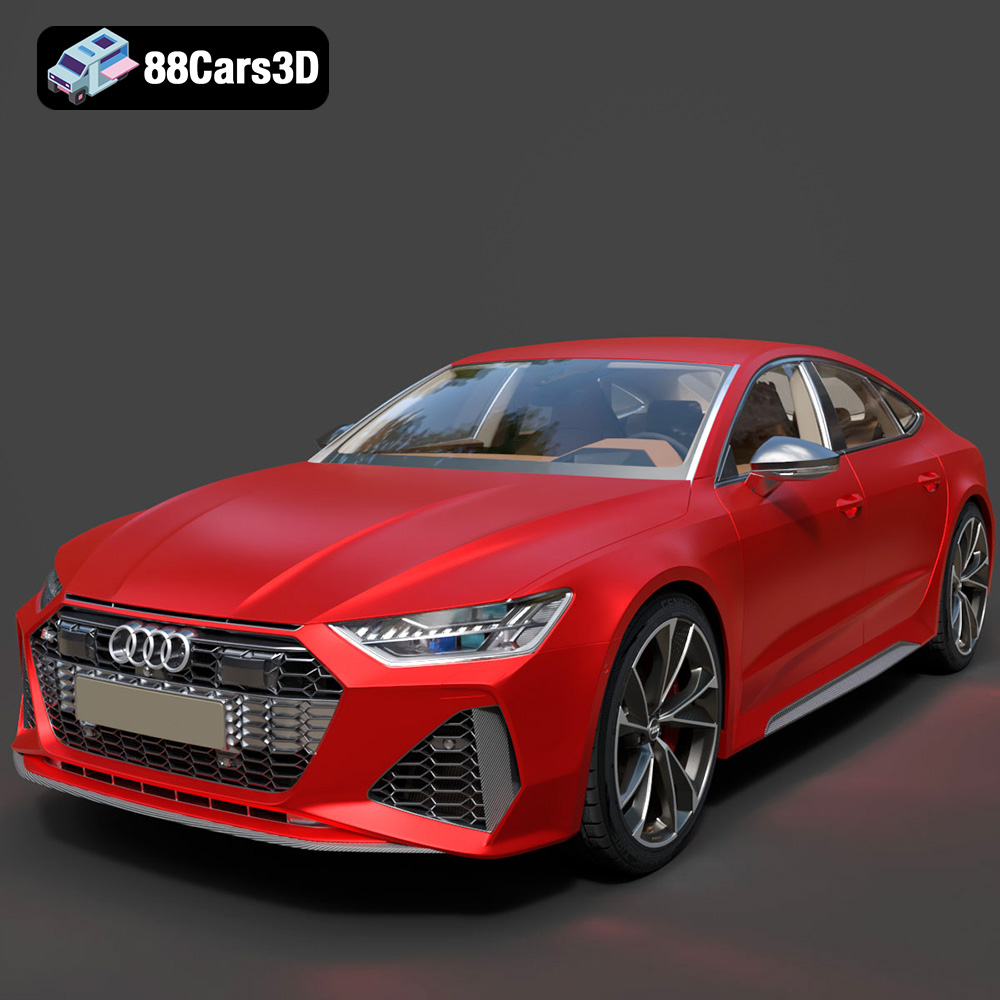
This pursuit of digital perfection brings us to an exemplary asset that truly stands out: the Audi RS7 Sportback 2020 3D Model. Representing a pinnacle of German engineering in the real world, this virtual counterpart captures every aggressive curve, every luxurious detail, and every performance-oriented design cue with meticulous fidelity. Whether you’re aiming to create a photorealistic render, integrate it into a next-gen game, or develop an immersive AR/VR experience, this model provides the foundation for unparalleled visual realism and technical performance. Its availability across a wide range of formats ensures maximum compatibility, making it a go-to choice for discerning 3D artists and developers.
The flexibility of a 3D asset often hinges on the variety and suitability of its included file formats. Each format serves a unique purpose, optimized for specific workflows, software, or applications. Understanding these distinctions is crucial for seamless integration into your projects and for leveraging the full potential of high-quality 3D car models like the Audi RS7 Sportback 2020.
The .blend format is the native file type for Blender, the popular open-source 3D creation suite. A .blend file typically encapsulates an entire Blender scene, including the 3D model geometry, materials, textures, lighting setups, animation data, cameras, and even custom scripts or modifiers. Its primary advantage lies in its comprehensive nature, allowing Blender users to open the model exactly as it was created, with full editing capabilities. For artists working within the Blender ecosystem, a .blend file for the Audi RS7 Sportback 2020 means immediate access to its intricate topology, shader networks, and any pre-configured scene elements, enabling rapid customization and iteration.
.fbx (Filmbox) is arguably the most widely used proprietary 3D file format for exchanging 3D data between different software applications. Developed by Autodesk, it excels in transferring not just geometry, but also materials, textures, rigging, skinning, and most importantly, animation data. This makes it an indispensable format for game development, especially for engines like Unreal Engine and Unity, and for complex animation pipelines in film and television. When importing the Audi RS7 Sportback 2020 as an .fbx, you can expect its hierarchical structure, pivot points, and potential animation setups (like wheel rotation) to transfer cleanly, making it truly “game-ready” for real-time environments.
The .obj (Wavefront Object) format is a universal standard, highly compatible with virtually every 3D software package. It’s a simpler format compared to .fbx, primarily storing geometry data (vertices, normals, texture coordinates, and faces) and referencing external .mtl (material) files for basic material properties. While it doesn’t support animation or complex scene data, its widespread adoption makes it excellent for basic model transfer and static renders. For the Audi RS7 Sportback 2020, the .obj format provides a robust, clean mesh that can be imported into any software as a starting point for re-texturing or integration.
.glb (GL Transmission Format Binary) is a modern, royalty-free specification designed for efficient transmission and loading of 3D scenes and models in web and AR/VR applications. It’s a self-contained single file that bundles geometry, materials, textures, and animation into a compact, optimized package. Its efficiency makes it ideal for streaming 3D content in browsers, creating interactive product configurators, or deploying mobile AR experiences. The .glb version of the Audi RS7 Sportback 2020 would be perfect for virtual showrooms or augmented reality apps, delivering high visual quality with minimal load times.
.stl (Stereolithography) is the de facto standard format for 3D printing. It represents 3D surfaces as a series of connected triangles, essentially describing the model’s geometry without any color, texture, or material information. For designers looking to physically manifest their digital creations, the .stl version of the Audi RS7 Sportback 2020 is essential. It enables direct slicing and printing, allowing hobbyists and professionals to create physical prototypes or display models with precision.
The .ply (Polygon File Format) is often used for storing 3D data from 3D scanners or for CAD/CAM applications that require precise mesh information. It can store not only vertices, faces, and normals but also additional properties like color, transparency, and even confidence values from scanning data. While less common for general-purpose 3D rendering, the .ply format for the Audi RS7 Sportback 2020 could be valuable for engineers or analysts needing a highly accurate mesh representation for simulations or manufacturing processes.
The .unreal designation typically refers to assets specifically packaged or optimized for Unreal Engine. While often an .fbx file imported and configured within the engine, it might also denote a self-contained Unreal Engine asset file (like a .uasset). This means the model has likely undergone specific optimizations for Unreal, such as proper collision geometry, LODs (Levels of Detail), materials setup using Unreal’s PBR workflow, and potentially even blueprint scripts for interactive elements like doors or suspension. For game developers using the Audi RS7 Sportback 2020, an .unreal package offers a significant head start, saving valuable integration time.
Similar to .blend for Blender, .max is the native file format for Autodesk 3ds Max. This format retains all scene data, including geometry, complex material setups (e.g., V-Ray, Corona), lighting, animation, and any modifiers or procedural elements. For professionals working in architectural visualization, automotive advertising, or cinematic production with 3ds Max, the .max file of the Audi RS7 Sportback 2020 provides the highest level of editability and direct access to its sophisticated setup, ensuring fidelity and creative control within the native environment.
The provision of these diverse formats by marketplaces like 88cars3d.com ensures that artists and developers have the right tools for any task, maximizing the utility and value of their purchased 3D car models.
Creating a truly high-fidelity 3D car model is an intricate process that balances artistic interpretation with technical precision. It demands an understanding of form, surface, and light, coupled with meticulous attention to real-world engineering and manufacturing details. The Audi RS7 Sportback 2020 3D Model exemplifies this synergy, delivering a digital asset that stands up to the closest scrutiny.
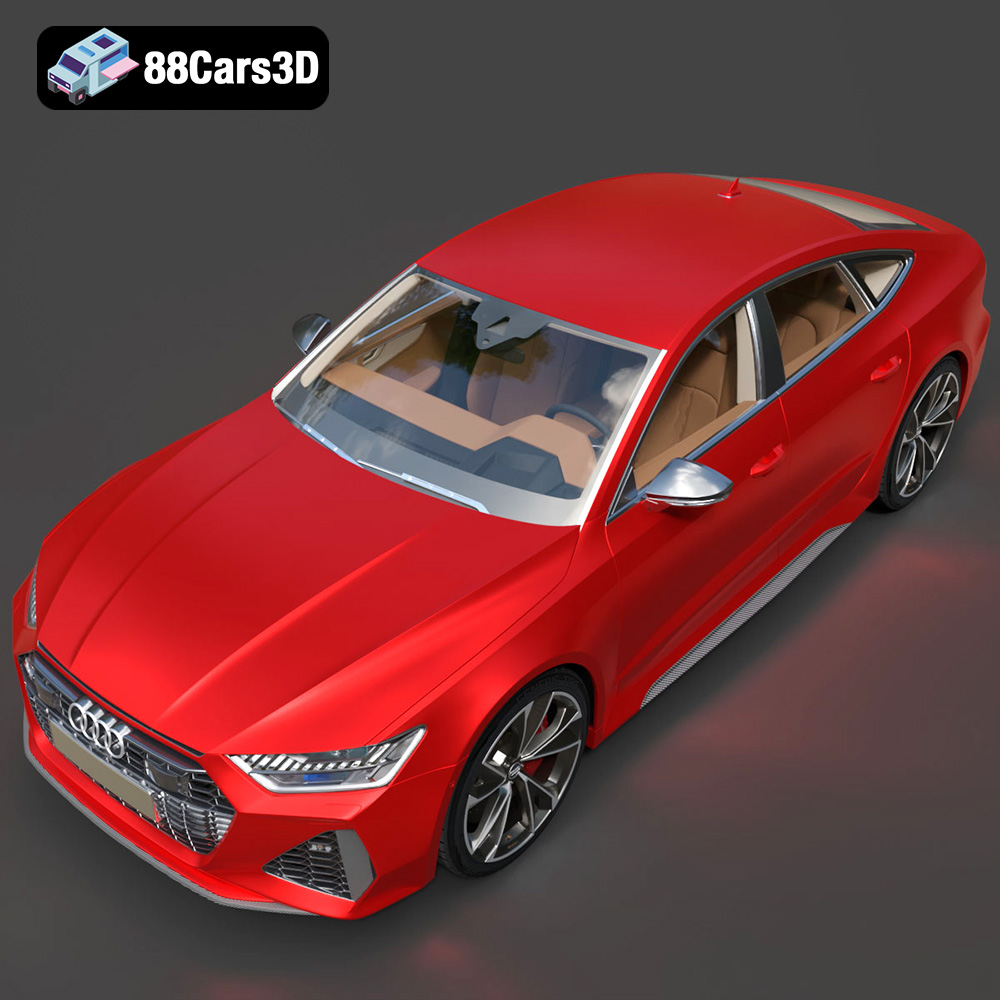
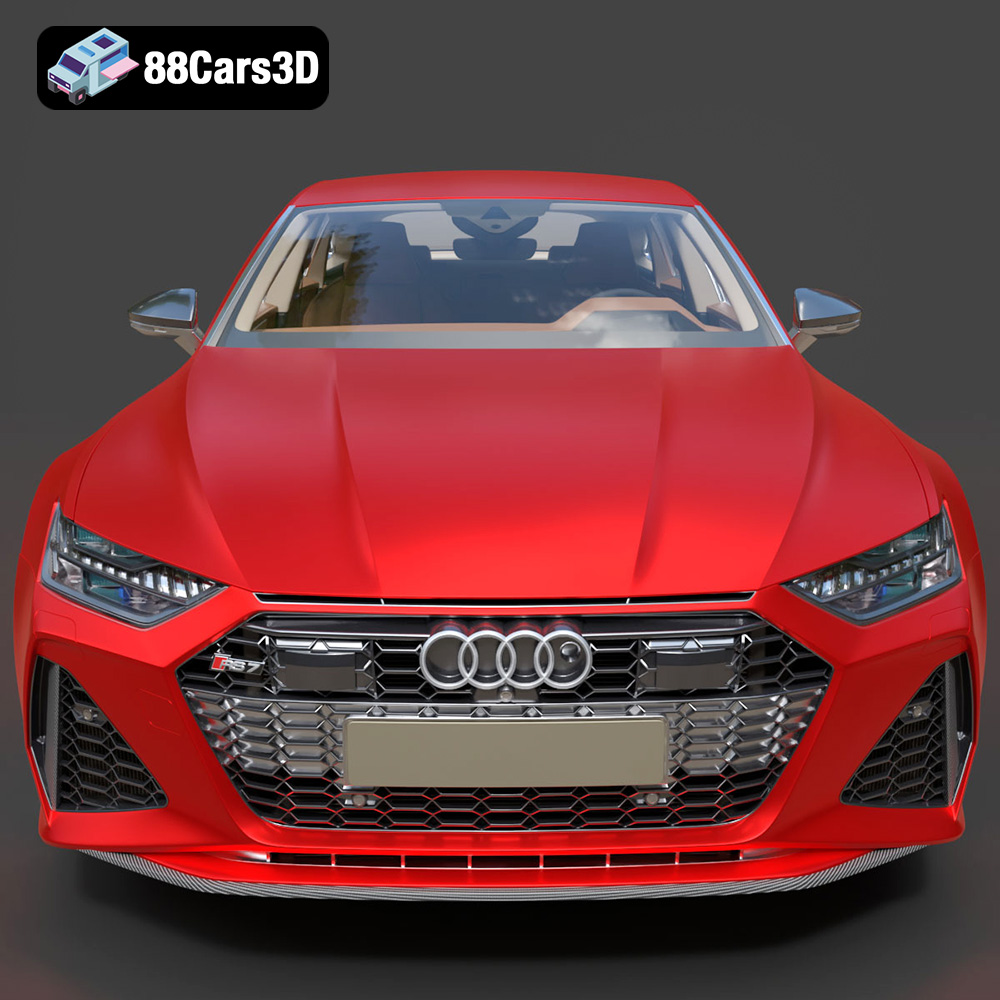
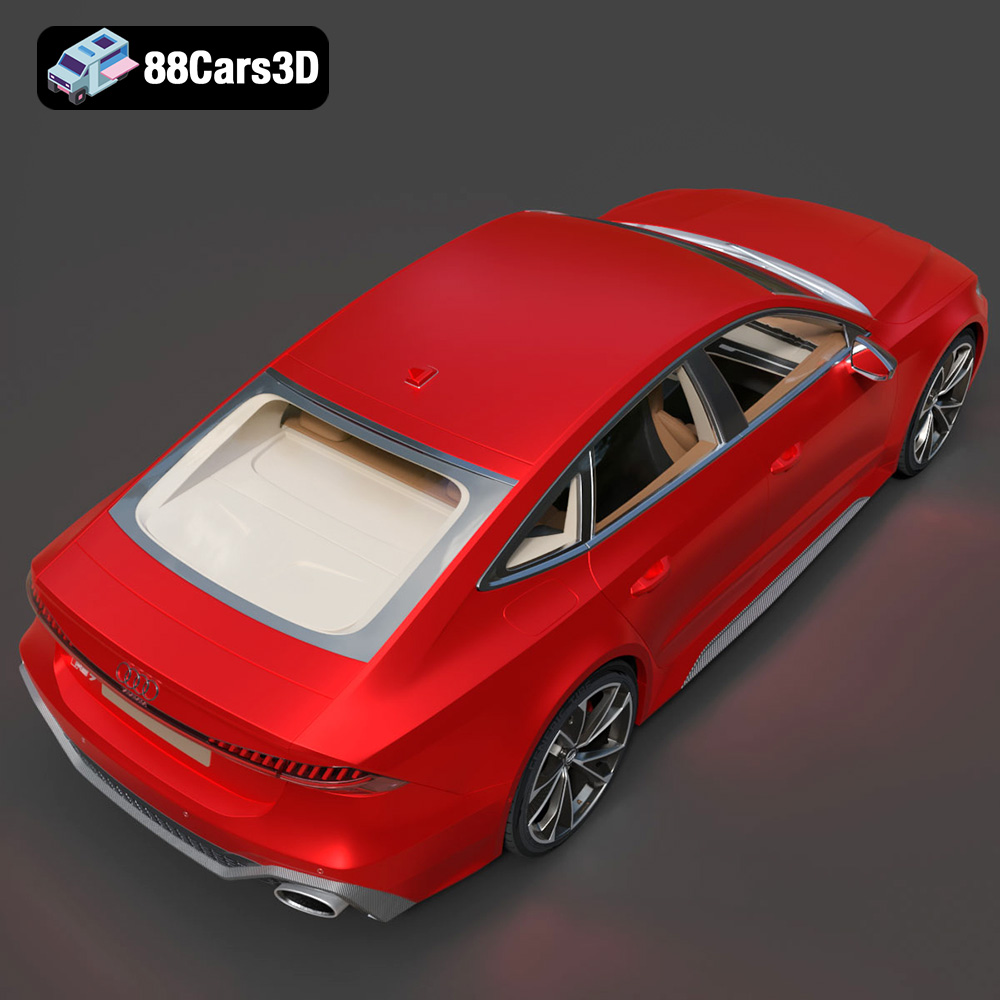
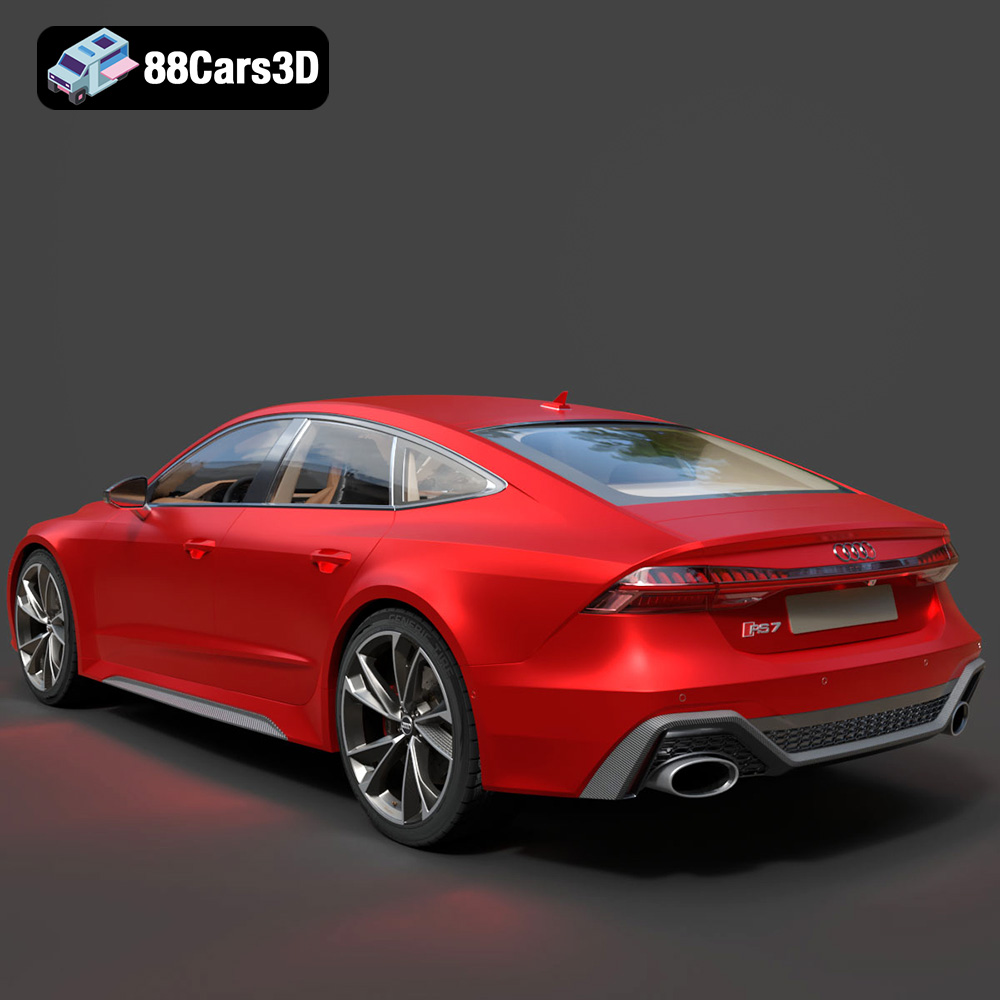
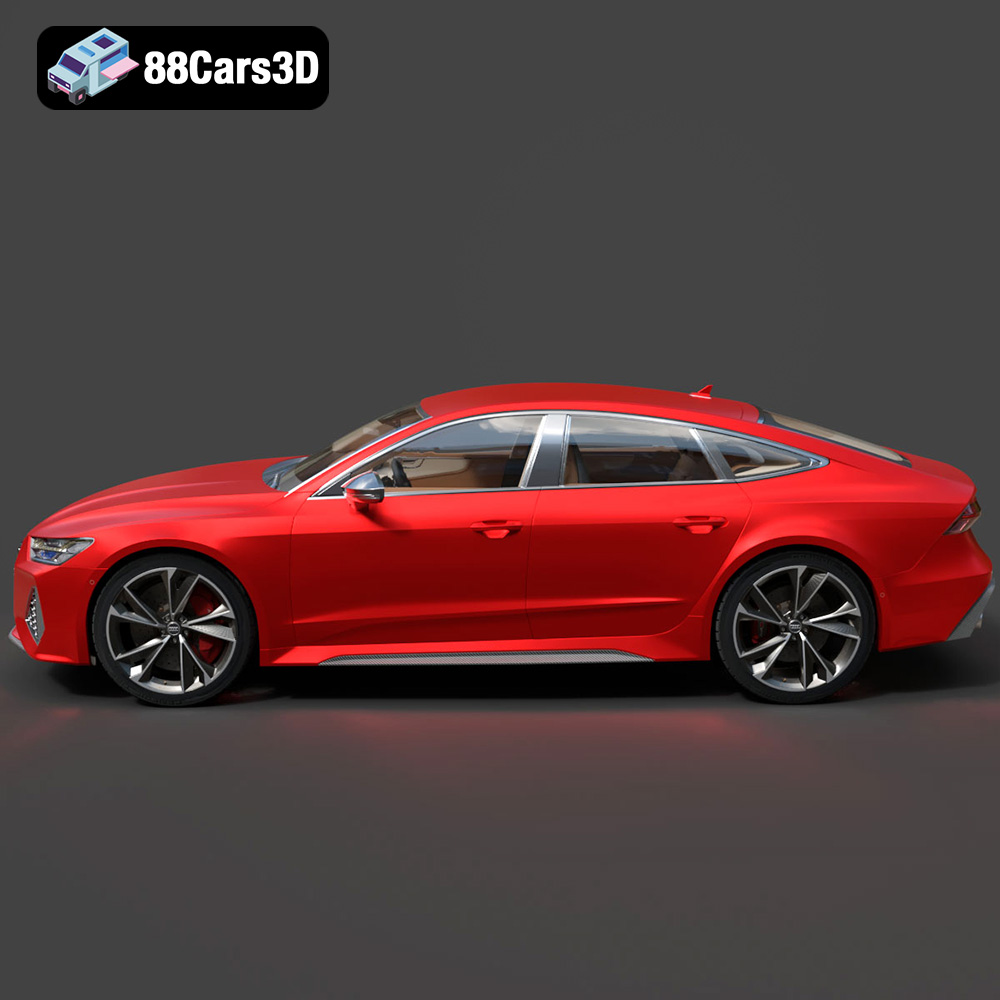
The first impression of any automotive model is its exterior, and the Audi RS7 Sportback 2020 is designed to command attention. Its virtual counterpart meticulously replicates the real vehicle’s aggressive stance and luxurious details. From the wide, single-frame grille – an iconic Audi design element – to the sharply sculpted lines flowing across its widebody proportions, every aspect is faithfully recreated. The model includes signature RS-specific front bumper and air intakes, as well as the distinctive dual oval exhaust system and rear diffuser that signify its high-performance nature. Furthermore, the HD Matrix LED headlights with their intricate laser light detailing and the sleek animated taillights are rendered with exceptional precision, crucial for photorealistic renders. Even the high-performance alloy wheels and detailed RS braking system, complete with massive calipers, contribute to the model’s authentic visual realism. This level of detail ensures that whether seen from a distance or in an extreme close-up, the model maintains its integrity and visual impact.
Beyond the impressive exterior, a truly premium 3D car model offers a fully realized interior, crucial for immersive experiences and detailed visualizations. The Audi RS7 Sportback 2020 model excels here, offering a cockpit that invites interaction. The RS sport seats are rendered with intricate honeycomb stitching patterns, reflecting the luxurious yet performance-oriented nature of the real vehicle. The flat-bottomed Alcantara/leather steering wheel, complete with paddle shifters, is accurately modeled, as are the sophisticated Virtual Cockpit dual-screen MMI infotainment and instrument cluster displays. Every button, dial, and surface on the intricate center console, including the electronic shifter and climate controls, is carefully modeled. This detailed interior geometry is not just for show; it’s optimized for immersive first-person POV in gaming and virtual reality applications, allowing players and users to truly feel present within the vehicle’s luxurious confines.
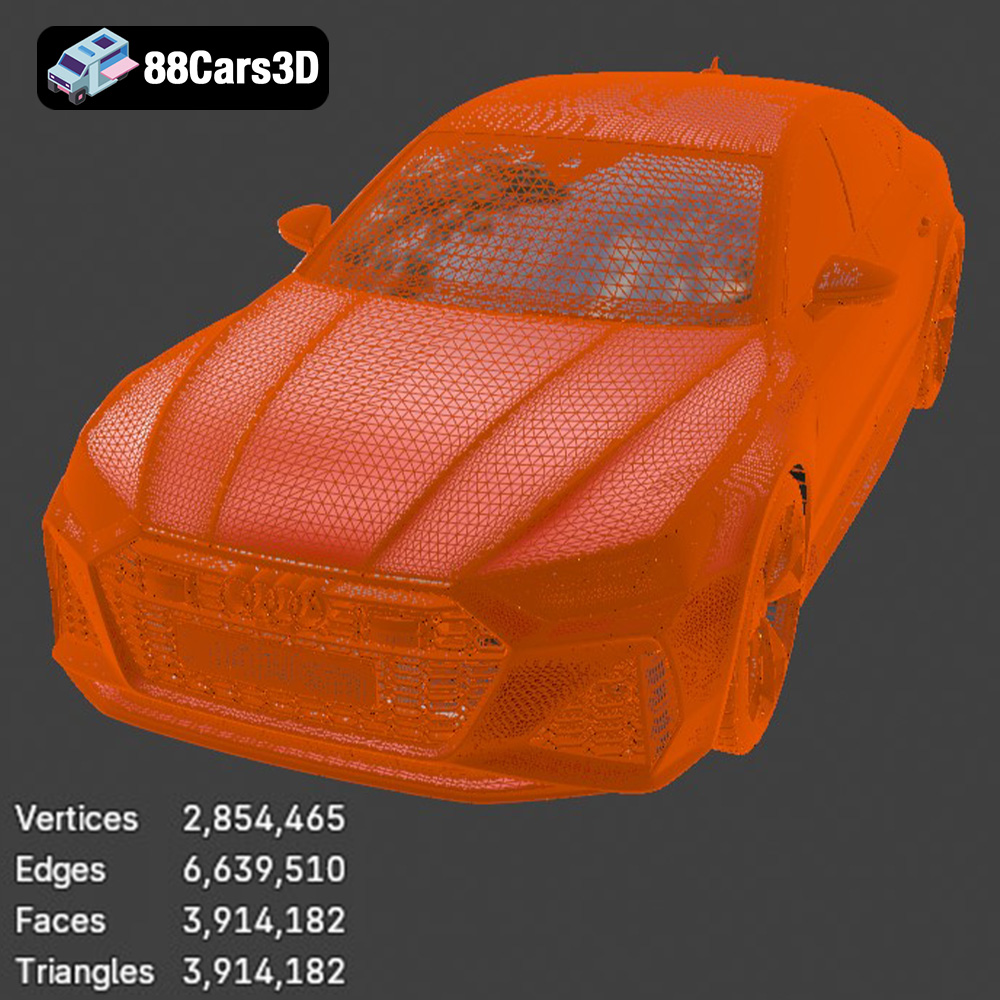
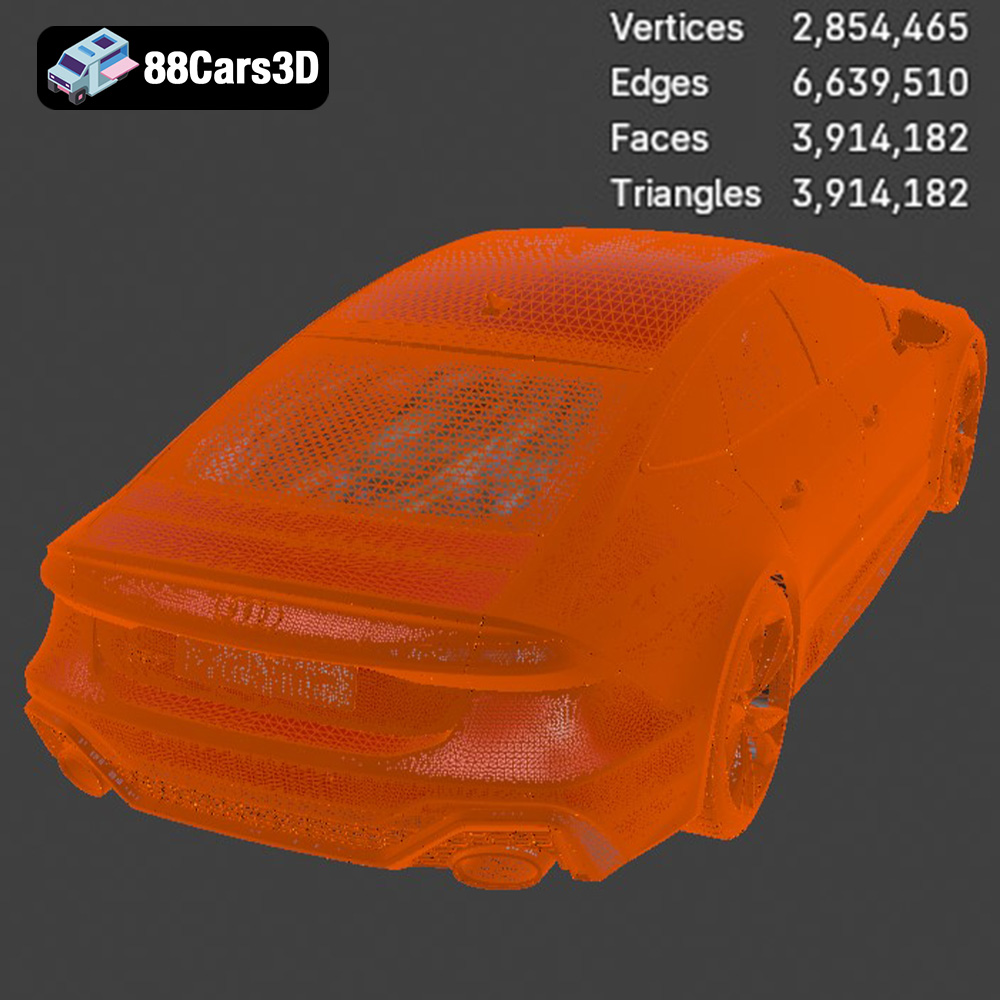
High detail can sometimes come at the cost of performance, especially in real-time applications. However, the Audi RS7 Sportback 2020 3D Model strikes an impressive balance. With a triangle count of 3,914,182, it delivers exceptional visual realism without becoming overly burdensome for game engines. This “game-ready” optimization implies a carefully structured topology, where polygons are efficiently distributed to maintain form while minimizing unnecessary density. Clean edge flow, proper UV mapping (essential for texture application), and a logical hierarchy of objects contribute to its performance. The model also boasts real-world scale accuracy, based on the actual vehicle chassis, and features proper pivot setups for crucial animated parts like steering, wheel rotation, and suspension travel. These technical advantages ensure that the model is not only beautiful but also practical for demanding professional workflows, saving developers time on crucial optimization and rigging tasks.
The true value of a versatile 3D asset like the Audi RS7 Sportback 2020 lies in its seamless integration into diverse professional pipelines. From cinematic advertisements to interactive gaming, its carefully crafted structure and wide format support cater to a spectrum of creative and technical needs.
For those aiming for jaw-dropping photorealism, the Audi RS7 Sportback 2020 3D Model is an ideal starting point in industry-standard software like 3ds Max or Blender. Artists can import the model using the .max, .blend, or a highly compatible .fbx format. The workflow typically involves setting up advanced PBR (Physically Based Rendering) materials – ensuring realistic reflections, refractions, and surface properties for paint, glass, chrome, and rubber. Dynamic lighting, often using HDRI (High Dynamic Range Image) environments combined with studio-style key and fill lights, is crucial for bringing the vehicle to life. Sophisticated camera setups, depth of field, and motion blur are then employed to achieve cinematic quality. For example, an architectural visualization studio could integrate the RS7 into an exterior render of a luxury home, using V-Ray or Corona in 3ds Max, or Cycles/Octane in Blender, to create a lifestyle scene that exudes sophistication. The model’s clean geometry and pre-defined pivot points greatly accelerate the animation of doors, wheels, or even the retractable spoiler, adding an extra layer of dynamism to a render sequence.
Game developers constantly seek high-quality 3D car models that can withstand the rigors of real-time rendering without compromising visual fidelity. The Audi RS7 Sportback 2020, with its “game-ready” optimization and .fbx/.unreal formats, is perfectly suited for engines like Unreal Engine. The integration process often involves importing the .fbx, setting up collision meshes for realistic interaction with the environment, and configuring Levels of Detail (LODs) to optimize performance across different viewing distances. Materials are adapted to Unreal’s robust PBR system, leveraging its advanced shader capabilities for realistic paint and metallic effects. Crucially, the model’s separate components (wheels, doors, suspension, steering) can be rigged and animated using Unreal’s Blueprint system, allowing for realistic vehicle physics, interactive car doors, and dynamic suspension travel. Imagine this RS7 tearing through an open-world racing title, its detailed interior providing an immersive first-person driving experience, or featured prominently in a car combat game, showcasing its robust design.
As augmented and virtual reality become more prevalent, the need for optimized 3D assets that perform well on diverse hardware increases. The Audi RS7 Sportback 2020’s .glb format is tailor-made for these applications. Developers can leverage this compact, single-file format for immersive virtual showrooms where customers can explore the car in a 360-degree environment, change colors, and even open doors. For AR applications, the .glb model can be deployed on mobile devices, allowing users to place a virtual RS7 in their driveway, scaled to real-world dimensions, offering an unprecedented level of interaction with a product before purchase. The efficient nature of .glb also makes it suitable for interactive product configurators embedded directly into websites, bringing high-quality automotive visualizations to a broader audience without requiring powerful dedicated software.
The utility of a high-quality 3D car model extends far beyond digital screens. With advancements in additive manufacturing, these virtual assets can be transformed into tangible objects, opening new avenues for hobbyists, collectors, and prototyping. Furthermore, the inherent flexibility of 3D models allows for extensive customization, empowering creators to adapt assets to their unique artistic visions.
For enthusiasts and model makers, the ability to 3D print a highly detailed model like the Audi RS7 Sportback 2020 is a significant advantage. The inclusion of the .stl format facilitates this process directly. The product description provides crucial 3D print settings, guiding users toward optimal results. Recommended scales like 1:12, 1:18, or 1:24 cater to popular display sizes, while the emphasis on resin printing for fine details ensures that intricate elements like the grille, headlights, and interior are faithfully reproduced. Specific instructions on layer height (0.04–0.12 mm), wall thickness (1.2–2.0 mm), infill (20–30%), and the necessity of supports for delicate parts like the exhaust and mirrors are invaluable. Post-processing recommendations, including sanding, priming, and applying authentic factory colors with metallic finishes, guide users in achieving a museum-quality physical model. This capability transforms a digital asset into a cherished physical collectible or a functional prototype for designers.
A premium 3D model offers more than just accurate geometry; it provides a canvas for creative expression. The Audi RS7 Sportback 2020 3D Model comes with extensive customization options, enabling artists to tailor the vehicle to specific project needs or aesthetic preferences. Users can easily change body colors, experimenting with iconic Audi shades like Nardo Gray, various factory colors, or even unique custom matte finishes. The flexibility extends to tire textures, allowing for switches between aggressive sport radials for street scenes or slick track tires for racing simulations. Material finishes can be adjusted to create different moods – from a high-gloss showroom shine to a gritty, battle-worn matte effect, or the sophisticated sheen of carbon fiber accents. Furthermore, the ability to adapt lighting for different environments, including ambient interior lighting and dynamic DRLs (Daytime Running Lights), enhances the model’s versatility for diverse rendering scenarios. These customization options are vital for maintaining creative control and ensuring the model fits perfectly into any narrative or visual context.
In a crowded marketplace, distinguishing between high-quality, professional-grade 3D car models and lesser alternatives can be challenging. 88cars3d.com stands out by offering assets like the Audi RS7 Sportback 2020, which embody a commitment to technical excellence and artistic fidelity.
When investing in 3D car models, quality is paramount. The Audi RS7 Sportback 2020 model from 88cars3d.com demonstrates meticulous attention to detail, from its accurate real-world scale and geometry to the precise replication of RS-specific features. The technical specifications, such as the balanced 3,914,182 triangle count, signify a model that is optimized for both visual realism and performance. Proper pivot setups for steering, wheels, and suspension ensure that the model is not just a static mesh but a fully functional asset ready for animation and interaction. This level of engineering ensures that the model seamlessly integrates into complex production pipelines, minimizing rework and maximizing creative output.
The extensive range of included file formats – .blend, .fbx, .obj, .glb, .stl, .ply, .unreal, and .max – speaks volumes about the model’s versatility. This broad compatibility means that regardless of your preferred 3D software (Blender, 3ds Max) or real-time engine (Unreal, Unity), you have an optimized version ready for use. Whether your project demands photorealistic automotive rendering, high-performance game assets, immersive AR/VR experiences, or even physical 3D prints, this single asset provides the necessary foundation. Such comprehensive format support makes purchasing from 88cars3d.com a future-proof investment for any 3D professional.
Ultimately, choosing premium 3D assets like the Audi RS7 Sportback 2020 3D Model from 88cars3d.com is about elevating your projects to the next level. High-quality models save invaluable development time by eliminating the need for extensive modeling, optimization, and texture creation from scratch. They provide a strong base for customization, allowing artists to focus on creative aspects rather than technical hurdles. For studios and freelancers alike, using top-tier assets translates into superior visual fidelity, enhanced performance, and a more polished final product that truly captivates audiences and clients. It’s an investment in efficiency, quality, and the pursuit of digital perfection.
The digital landscape for automotive design, game development, and visualization is continuously evolving, driven by the relentless pursuit of realism and immersion. At the heart of this evolution are meticulously crafted 3D models that serve as the building blocks for breathtaking virtual worlds and compelling visual narratives. The Audi RS7 Sportback 2020 3D Model stands as a testament to this pursuit, offering a blend of artistic detail and technical robustness that is essential for modern professional workflows.
From its aggressively sculpted exterior and luxuriously appointed interior to its “game-ready” optimization and versatile file format support, this model is engineered to excel across a spectrum of applications. Whether you’re an automotive renderer aiming for photorealistic cinematic sequences, a game developer building the next-gen racing title in Unreal Engine, or an AR/VR specialist creating immersive virtual showrooms, the Audi RS7 Sportback 2020 provides a powerful, adaptable foundation. Its availability in formats like .blend, .fbx, .obj, .glb, .stl, .ply, .unreal, and .max ensures that creators have the right tools for every facet of their work, including the exciting prospect of 3D printing tangible models.
Investing in premium 3D car models from reputable sources like 88cars3d.com is more than just acquiring an asset; it’s about empowering your creative vision, streamlining your production pipeline, and delivering results that truly stand out. Explore the possibilities and elevate your projects with the exceptional quality and versatility of the Audi RS7 Sportback 2020 3D Model today.
The Audi RS7 Sportback 2020 represents the pinnacle of German engineering, seamlessly blending aggressive performance with grand touring luxury. Known for its commanding presence on the road, this high-performance sportback features a menacing front fascia with a wide single-frame grille, sharply sculpted lines, and a distinctive sloping roofline. Powered by a potent twin-turbo V8 engine in the real world, its muscular widebody stance, dual oval exhaust tips, and striking LED matrix headlights make it an iconic modern classic in the luxury performance segment.
This premium 3D model boasts an exceptional level of detail with a triangle count of 3,914,182, ensuring high-fidelity visual realism suitable for close-up shots and high-end cinematic sequences. Despite its meticulous detailing, the model’s topology is carefully structured for integration into game engines and real-time environments. Whether you are developing a next-gen racing title, an immersive VR showroom, or crafting photorealistic visualizations, this asset delivers unparalleled quality and accuracy.
Perfect for urban racing games, luxury architectural visualizations, high-end automotive commercials, and virtual configurators.
.blend, .fbx, .obj, .glb, .stl, .ply, .unreal, .max
Tags:
audi, rs7-sportback, 2020, sports-sedan, luxury-car, performance-car, game-ready, high-poly, optimized, car-3d-model, game-asset, rendering, vr-ar, blend, fbx, obj, glb, stl, ply, unreal, max
$37.50
.2020
.audi
.blend
.fbx
.glb
.max
.obj
.ply
.rendering
.stl
.unreal
car-3d-model
game asset
game-ready
high poly
luxury car
optimized
performance-car
rs7-sportback
sports-sedan
VR/AR