Get 20% OFF All Premium 3D & STL Models!

In the dynamic world of digital content creation, the pursuit of realism and efficiency is relentless. From breathtaking automotive renders that captivate audiences to immersive game environments that redefine player experiences, the foundation of success often lies in the quality of the 3D assets employed. A meticulously crafted 3D car model isn’t just a visual element; it’s a critical component that can elevate a project from ordinary to extraordinary. It embodies countless hours of design, modeling, and optimization, ensuring that every curve, every reflection, and every detail contributes to a cohesive and believable digital narrative.
This commitment to excellence is exemplified by assets such as the Chevrolet Captiva Premier 2021 3D Model, a versatile and highly detailed representation of a modern family SUV. Available on 88cars3d.com, this model encapsulates the sophisticated design and practical elegance of the actual vehicle, making it an indispensable tool for a wide array of professional applications. Whether you’re an automotive visualization artist striving for photorealistic renders, a game developer building an expansive open-world, or an AR/VR creator crafting interactive experiences, understanding the technical depth and versatility of such a model is paramount. Let’s delve into the intricate world of premium 3D car models and explore how they become the driving force behind cutting-edge digital creations.
The digital landscape is increasingly demanding photorealism and immersive experiences. For anything involving vehicles, the 3D car models you choose are often the most scrutinized assets. They are the heroes of automotive rendering, the protagonists in racing games, and the interactive elements in virtual showrooms. Their quality directly impacts the credibility and visual impact of your project.
High-fidelity 3D car models serve as the crucial link between conceptual design and tangible visualization. For automotive designers and marketers, these models allow for the exploration of new colors, material finishes, and environmental lighting scenarios long before a physical prototype is ever built. A model like the Chevrolet Captiva Premier 2021 provides designers with an accurate, real-world scale representation, enabling them to present the vehicle in various lifestyle contexts – from urban settings to scenic landscapes – with unparalleled realism. This level of detail, down to accurate frame geometry, detailed engine block, and authentic exhaust systems, ensures that marketing campaigns and design reviews are based on truly representative visuals. The ability to manipulate and render such a detailed model saves significant time and resources in the product development lifecycle.
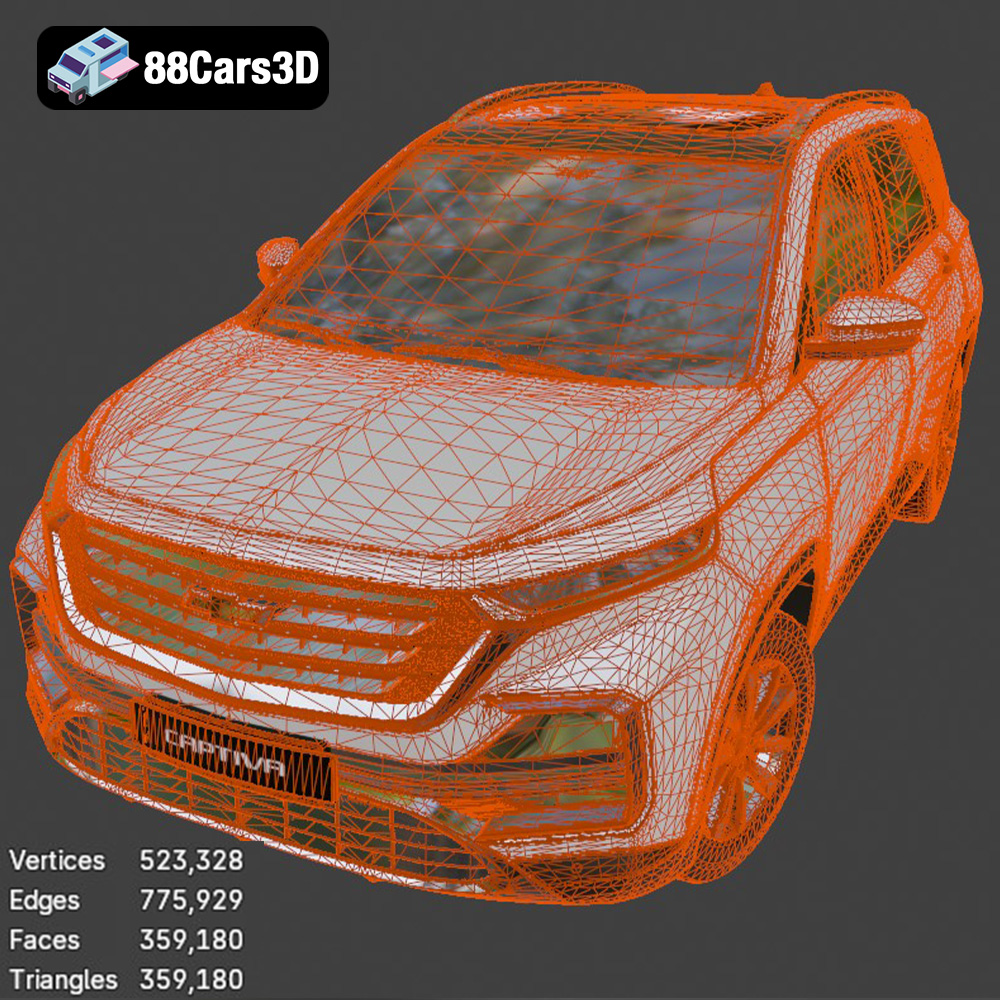
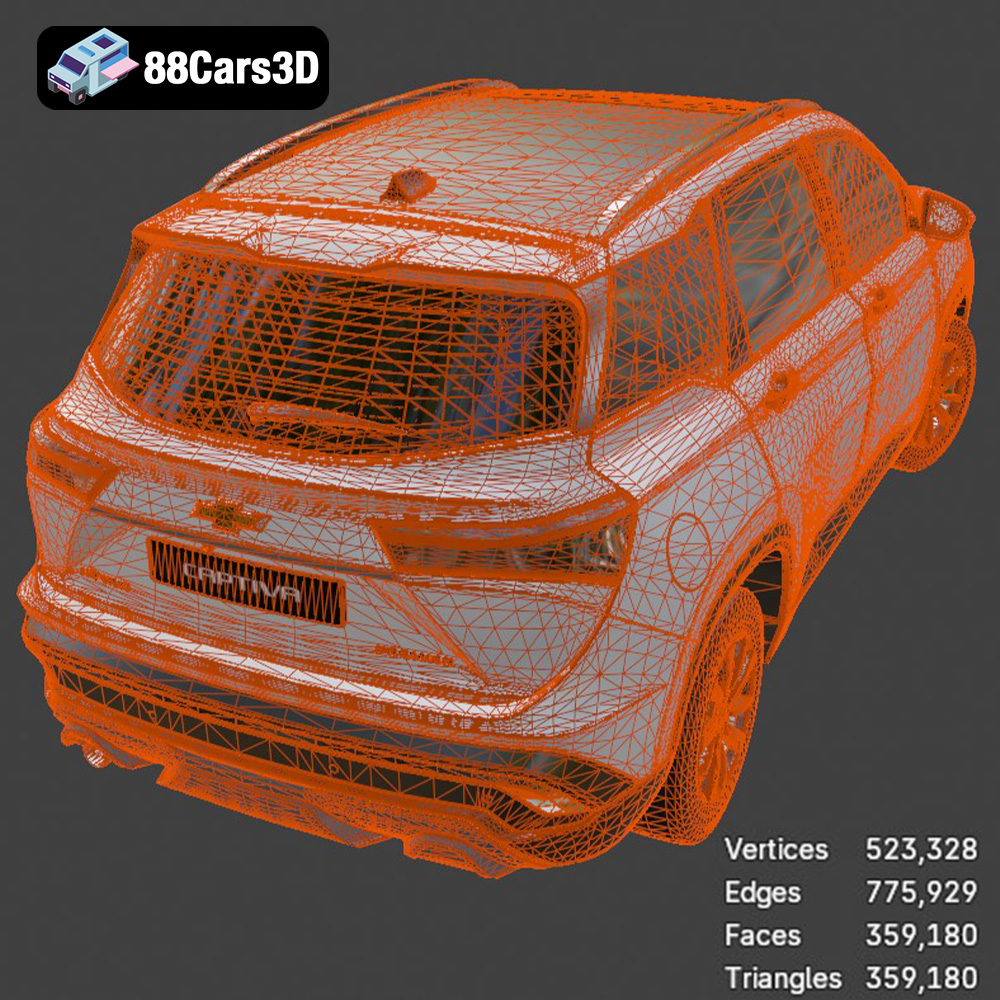
In game development, the challenge is always to balance visual fidelity with real-time performance. A stunningly detailed model is useless if it causes frame rate drops. This is where optimized 3D car models shine. The Chevrolet Captiva Premier 2021 3D Model, with its intelligently optimized topology of 359,180 triangles, strikes a perfect balance. This polycount is high enough to convey exceptional visual detail, including smooth reflections and precise body lines, while remaining efficient enough for demanding real-time engines like Unreal Engine and Unity. Such optimization ensures that players can experience high-quality vehicle visuals without sacrificing smooth gameplay, a critical factor for racing titles, open-world adventures, and driving simulators. Moreover, features like proper pivot setups for steering, wheel rotation, and suspension travel are vital for creating believable in-game physics and animations, making the Captiva model truly “game-ready.”
The selection of the correct file format for your 3D model is a critical decision that impacts workflow, compatibility, and the ultimate application of your asset. Each format has distinct advantages, designed for specific purposes, and understanding them is key to maximizing efficiency and achieving desired outcomes. The Chevrolet Captiva Premier 2021 3D Model is offered in a comprehensive suite of formats, ensuring broad compatibility across various professional pipelines.
The `.blend` file format is the native format for Blender, the popular open-source 3D creation suite. When you download a `.blend` file, you’re getting a fully editable Blender scene, often including materials, textures, lighting setups, and even animation data, all within a single package. This is ideal for artists who primarily work in Blender, as it allows for immediate manipulation and integration into their existing projects without any loss of data or conversion artifacts. For the Captiva model, a `.blend` file would provide direct access to all the meticulously crafted components, from the premium seating details to the accurate instrument cluster, ready for further customization or rendering within Blender’s powerful Cycles or Eevee renderers.
`.fbx` (Filmbox) is one of the most widely supported 3D file formats, developed by Autodesk. It’s an indispensable format for inter-application data exchange, especially between 3D software and real-time engines. `.fbx` can store models, materials, textures, animations, and even rigging information, making it ideal for pipelines involving Unreal Engine, Unity, 3ds Max, Maya, and Blender. Its robust nature makes it the go-to choice for game developers and cinematic artists. When integrating the Chevrolet Captiva Premier 2021 into a game engine, the `.fbx` format ensures that all elements—mesh, materials, and pivot points for animation—transfer seamlessly, ready for immediate deployment.
The `.obj` (Wavefront OBJ) format is a universal standard for 3D geometry. While it primarily stores mesh data (vertices, faces, normals, UVs), it can also reference external `.mtl` (material) files for basic material properties and texture maps. `.obj` is highly compatible with virtually every 3D software application, making it an excellent choice for cross-software compatibility. It’s often used when simplicity and broad reach are priorities, though it may not carry as much complex data (like rigging or advanced materials) as `.fbx`. For users needing to import the Captiva model into a less common application or an older pipeline, `.obj` offers a reliable fallback.
`.glb` (GLB File Format) is the binary version of `glTF` (GL Transmission Format), designed for efficient transmission and loading of 3D scenes and models by applications. It’s quickly becoming the standard for 3D on the web, augmented reality (AR), and virtual reality (VR) experiences due to its compact size and comprehensive data encapsulation (geometry, materials, textures, animations). `.glb` files are self-contained, embedding all assets directly within the file. This makes the Captiva Premier model in `.glb` format perfect for interactive virtual car showrooms online, mobile AR applications, or lightweight VR configurators, ensuring quick loading times and broad accessibility.
`.stl` (Stereolithography) is perhaps the most common file format used for 3D printing. It describes only the surface geometry of a 3D object as a series of connected triangles, without color, texture, or other CAD attributes. While not ideal for visual rendering, it is indispensable for additive manufacturing. The Chevrolet Captiva Premier 2021 model, when converted to `.stl`, becomes a tangible object, allowing hobbyists or designers to 3D print scaled replicas for display, prototyping, or educational purposes. The product description even provides specific print settings, highlighting its readiness for this application.
`.ply` (Polygon File Format, also known as Stanford Triangle Format) is a versatile format for storing 3D data from 3D scanners, CAD applications, or other geometric analysis tools. It can store not just geometry but also properties like color, transparency, surface normals, and even data quality measures for each vertex or face. While less common for general-purpose rendering than `.fbx` or `.obj`, `.ply` is valuable when precise geometric data, often originating from real-world scans or complex simulations, needs to be preserved or integrated. For specific engineering or analytical tasks involving the Captiva’s exterior, `.ply` could be a useful format.
The `.unreal` format is a proprietary asset type specifically designed for Unreal Engine projects. When a 3D model is provided in an `.unreal` format, it means it has been pre-processed and optimized for direct import and use within the Unreal Engine environment. This typically includes proper material setups, collision meshes, LODs (Levels of Detail), and potentially even basic blueprints or animations, all tailored for Unreal’s rendering pipeline. Receiving the Captiva Premier model in `.unreal` format signifies a streamlined workflow for game developers, saving considerable time on asset preparation and ensuring maximum compatibility and performance within their Unreal projects.
The `.max` file format is the native project file for Autodesk 3ds Max, a powerful 3D modeling, animation, and rendering software widely used in architectural visualization, product design, and cinematic production. A `.max` file contains an entire 3ds Max scene, including geometry, lights, cameras, materials, textures, and animation data. For professionals working within the 3ds Max ecosystem, the `.max` version of the Chevrolet Captiva Premier 2021 offers full access to the original scene, allowing for complete control over modifications, complex animations, and high-end V-Ray or Corona renders without any conversion overhead. This is particularly valuable for detailed studio lighting setups or incorporating the model into large-scale architectural visualizations.
Automotive rendering is an art form, demanding both technical prowess and an artistic eye. High-quality 3D car models are the canvas upon which these digital masterpieces are painted, and the Chevrolet Captiva Premier 2021 3D Model provides an exceptional starting point.
Professional artists frequently turn to software like 3ds Max or Blender for automotive rendering. With the Captiva model available in both `.max` and `.blend` formats, artists gain immediate access to a robust scene. In 3ds Max, users can leverage powerful renderers like V-Ray or Corona, fine-tuning every aspect from global illumination to subsurface scattering on materials. The model’s clean topology ensures that subdivision surfaces can be applied smoothly for close-up shots, eliminating any visible facets. Similarly, Blender users can harness Cycles or Eevee, utilizing its intuitive node-based material system to replicate the intricate finishes of the Captiva – from the metallic flake in the paint to the subtle reflections on chrome accents and the complex refractions through headlight lenses. The detailed engine block and undercarriage components, often overlooked, contribute to a sense of authenticity even in distant shots or reflections.
Achieving photorealism is a tripartite effort: exceptional geometry, realistic materials and textures, and expert lighting. The Captiva model comes with optimized geometry structured for perfect reflections and smooth shading, which is crucial for believable car paint, glass, and metal. Material definition involves PBR (Physically Based Rendering) workflows, where properties like albedo, roughness, metallicness, and normal maps are meticulously crafted. Lighting, however, is where the scene truly comes alive. Using HDRI (High Dynamic Range Image) environments combined with targeted area lights in a studio setup can recreate any desired mood. The model’s precision-modeled lighting, including sleek LED DRLs and projector headlights, also becomes an active light source, casting realistic glows and shadows onto the scene. These elements combined elevate a simple 3D object into a compelling visual story.
Imagine a marketing agency tasked with creating a series of launch visuals for the 2021 Captiva Premier. Instead of costly physical photography, they opt for digital rendering using the 88cars3d.com model. An artist imports the `.max` file into 3ds Max, sets up a V-Ray scene, and chooses a dynamic urban environment HDRI. They then customize the body color to the factory-standard “Pearl White” and adjust the metallic flake and clear coat properties for a showroom finish. For a hero shot, they animate the separated wheels and suspension components, capturing a dynamic turn. Close-ups showcase the premium alloy wheel design and accurate tire tread patterns, while interior renders highlight the detailed digital instrument cluster and infotainment screen. The final images, indistinguishable from real-world photographs, are delivered efficiently and cost-effectively, demonstrating the immense power of high-quality 3D car models in commercial applications.
The interactive nature of game development places unique demands on 3D assets. Performance, animation readiness, and ease of integration are paramount, and the Chevrolet Captiva Premier 2021 3D Model is engineered to meet these challenges head-on.
For real-time applications, particularly in game development with engines like Unreal Engine and Unity, optimization is king. The Captiva model’s 359,180 triangles represent a carefully chosen polycount that balances visual fidelity with game engine performance. Upon importing the `.fbx` or `.unreal` version of the model into Unreal Engine, developers can immediately leverage its engine-ready structure. Materials can be quickly set up using PBR workflows, ensuring they look great under various lighting conditions. LODs (Levels of Detail) can be generated or fine-tuned to ensure the model scales gracefully across different distances, maintaining frame rates even in complex scenes. Similar efficiencies are found in Unity, where the clean mesh and appropriate pivot setups simplify the process of adding physics, collision detection, and interactive elements.
A static car model has limited use in a dynamic game. The Chevrolet Captiva Premier 2021 model stands out with its intelligent structure designed for animation. It features separate wheels, suspension, and steering components, each with properly defined pivot points. This means game developers can easily implement realistic wheel rotation, independent suspension travel, and accurate steering behavior. These details are critical for believable driving mechanics in racing games or open-world simulations. Beyond basic movement, the separation allows for complex sequences like crashes, where individual components can deform or detach realistically, enhancing the overall immersion and visual feedback for players.
In modern open-world games, cars are not just props; they are often central to the player’s experience. High-fidelity 3D car models like the Captiva Premier allow developers to populate their virtual worlds with convincing traffic, provide engaging player-controlled vehicles, or create visually rich cutscenes. The detailed interior, with its accurate center console and infotainment screen, is also optimized for first-person POV in gaming, crucial for immersive cockpit views or passenger experiences. By sourcing such high-quality, game-ready assets from platforms like 88cars3d.com, development teams can significantly reduce their asset creation time, allowing them to focus more on gameplay mechanics and world-building, ultimately delivering a richer, more engaging experience to the player.
The utility of a versatile 3D car model extends far beyond traditional rendering and game development, venturing into cutting-edge immersive technologies and even physical fabrication.
Augmented Reality (AR) and Virtual Reality (VR) are revolutionizing how consumers interact with products, especially in the automotive industry. A 3D model like the Chevrolet Captiva Premier 2021 is perfect for creating immersive virtual showrooms where potential buyers can explore the vehicle in 360 degrees, inside and out, from the comfort of their home. Using the `.glb` format, the model can be easily integrated into web-based AR configurators, allowing users to place the Captiva in their driveway via their smartphone camera, change its color, or preview different wheel options in real-time. For VR experiences, the optimized geometry ensures smooth performance, enabling users to “sit inside” the car, interact with the detailed digital instrument cluster, and experience the spacious interior as if they were physically present. These applications provide an unprecedented level of engagement, making the purchase decision process more dynamic and informed.
The `.stl` format, provided with the Captiva Premier 3D model, opens up a fascinating avenue: 3D printing. While often associated with rapid prototyping for engineers, 3D printing also allows hobbyists and collectors to bring digital models into the physical world. Imagine printing a highly detailed 1:18 scale replica of the Chevrolet Captiva Premier 2021 for a desk display or diorama. The product description provides specific 3D print settings, recommending resin printing for fine details and suggesting appropriate layer heights and infill percentages. It also advises on print orientation and the necessity of supports for complex parts like the exhaust and mirrors. The journey from a digital file on 88cars3d.com to a fully post-processed, painted physical model is a testament to the versatility of well-prepared 3D assets.
Consider an automotive training scenario where technicians need to understand the Captiva’s engine layout. With a Mixed Reality headset, the digital 3D model could be overlaid onto a real-world engine bay, allowing trainees to “see through” components, identify parts, and practice maintenance procedures without risk or expensive physical prototypes. The model’s detailed engine block and suspension components become invaluable here. Similarly, for real estate developers showcasing new homes, the Captiva could be rendered virtually in the driveway of a proposed property, giving clients a sense of scale and lifestyle, enhancing the visualization process even further.
Beyond the surface aesthetics, the true value of a professional 3D car model lies in its underlying engineering fidelity and the thoughtful consideration of every component. This attention to detail transforms a mere visual representation into a truly versatile and functional asset.
Many 3D car models focus solely on the exterior, but premium assets like the Chevrolet Captiva Premier 2021 model delve much deeper. The inclusion of a detailed engine block, undercarriage components, and an authentic exhaust system speaks volumes about its quality. While these elements might not always be visible in a standard glamour render, they are crucial for specific applications. For example, in simulations or technical visualizations, understanding the layout of the suspension components or the exhaust route is essential. In racing games, these details contribute to the overall authenticity of damage models or when the vehicle is viewed from a pit crew perspective. Furthermore, the meticulous interior features, from premium seating details with accurate stitching lines to a multifunction steering wheel with precise emblems, ensure that first-person experiences in games or VR environments are fully immersive and convincing.
A truly valuable 3D asset offers flexibility. The Chevrolet Captiva Premier 2021 model provides robust customization options that empower creators to adapt it to diverse project requirements. The ability to easily change body colors, adjust material finishes (matte, gloss, metallic), and modify tire textures (e.g., off-road vs. street variants) means one core model can serve multiple purposes without needing extensive re-modeling. This scalability is vital for studios working on projects with varied visual styles or branding needs. Imagine creating a fleet of Captivas in different colors for a virtual city scene, or presenting the vehicle in both a rugged, adventure-focused advertisement and a sleek, urban lifestyle campaign—all stemming from the same versatile base model.
Ultimately, a production-ready 3D car model from a reputable source like 88cars3d.com represents a significant investment in quality and efficiency. It means fewer headaches from faulty geometry, incomplete textures, or incompatible file formats. The real-world scale accuracy, optimized polycount, and inclusion of all necessary file formats (blend, fbx, obj, glb, stl, ply, unreal, max) ensure that the Chevrolet Captiva Premier 2021 3D Model is ready to be dropped into virtually any professional pipeline. This saves countless hours of modeling, texturing, and optimization, allowing artists and developers to focus on creativity and project delivery. It’s not just a model; it’s a meticulously engineered solution for digital content creation.
The digital realm thrives on detail, accuracy, and efficiency, especially when it comes to high-stakes visual projects like automotive rendering, game development, and immersive AR/VR experiences. A truly exceptional 3D car model isn’t just a visual representation; it’s a meticulously engineered asset designed to integrate seamlessly into diverse professional workflows, elevate visual fidelity, and drive compelling narratives. The comprehensive overview of file formats, detailed application insights, and technical specifications underscore the depth required for such versatile assets.
The Chevrolet Captiva Premier 2021 3D Model exemplifies this standard of excellence. From its optimized topology perfect for real-time engines to its detailed interior, engine bay, and comprehensive file format support, it offers a robust solution for a wide range of creative and technical challenges. Whether you’re aiming for cinematic photorealism, building an engaging game world, or exploring the frontiers of augmented reality or 3D printing, this model provides the quality and flexibility needed to succeed. Investing in high-quality 3D assets from trusted sources like 88cars3d.com is not merely a purchase; it’s a strategic decision that empowers creators to push the boundaries of digital realism and achieve their creative visions with unparalleled precision and impact.
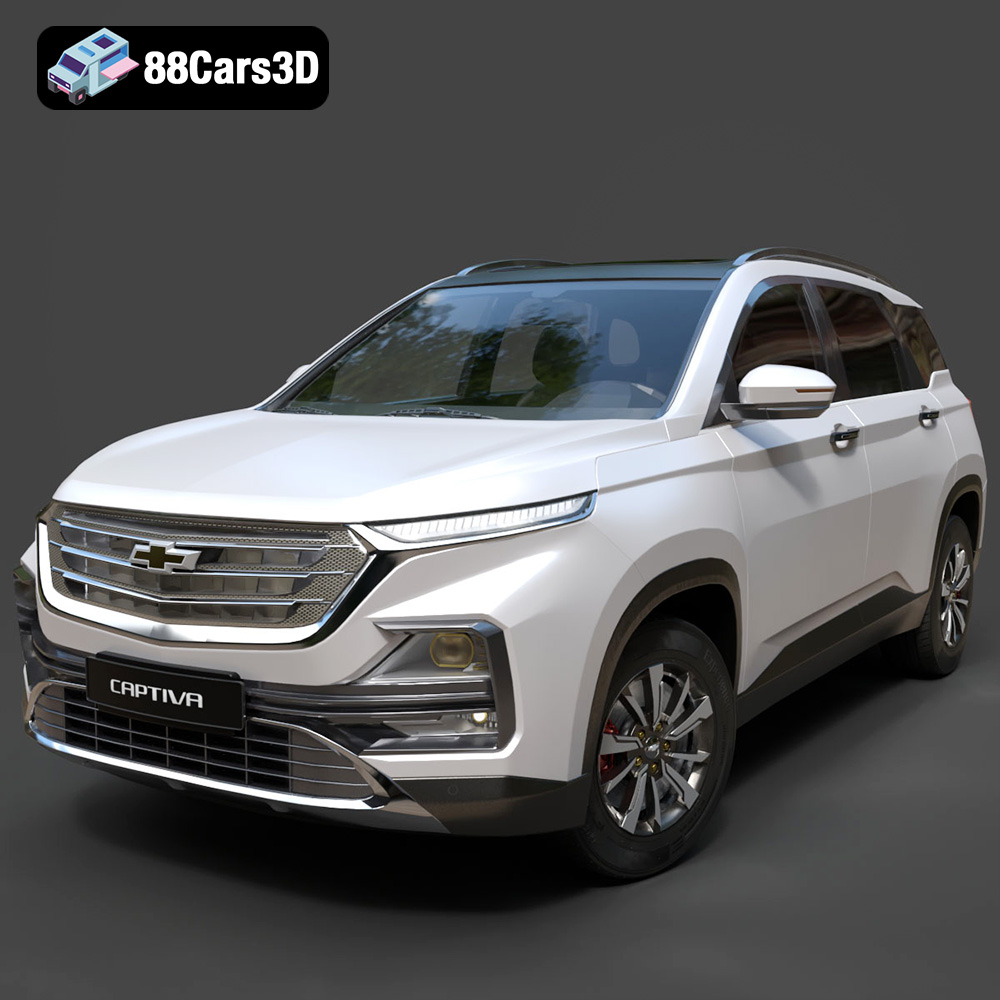
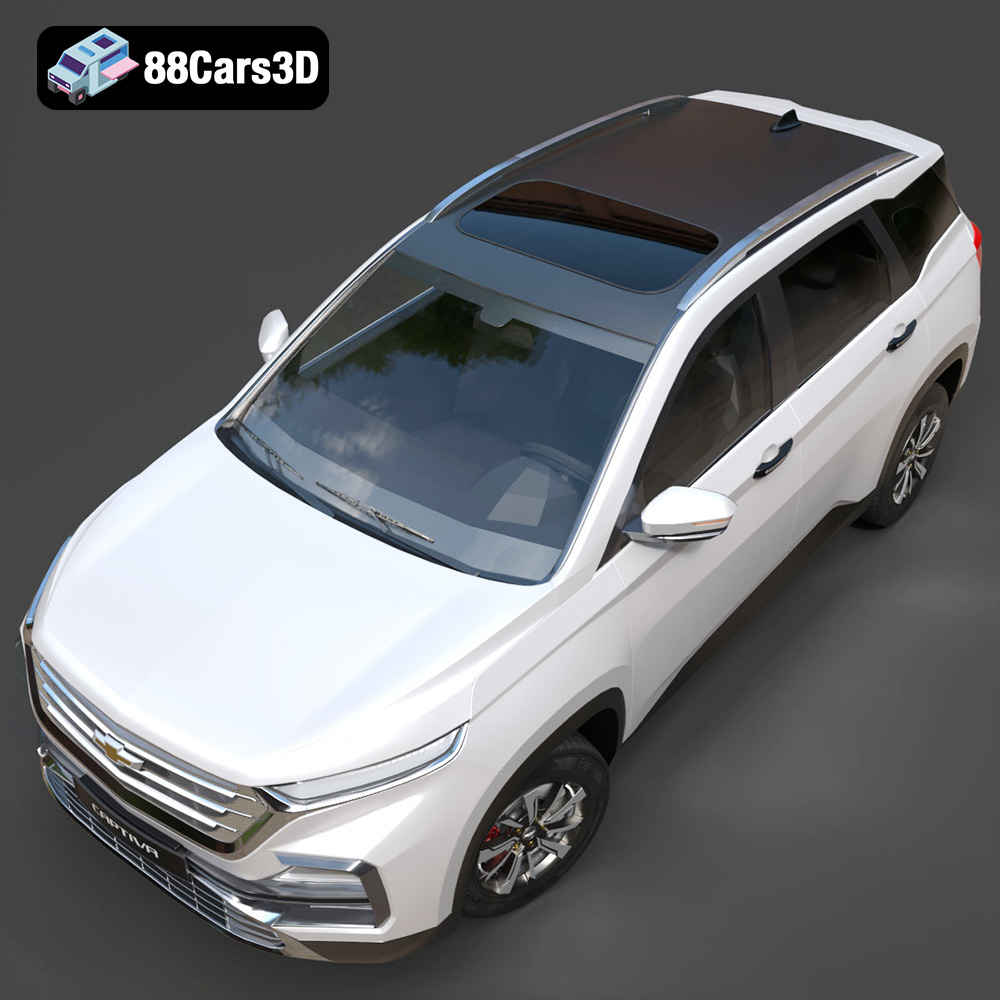
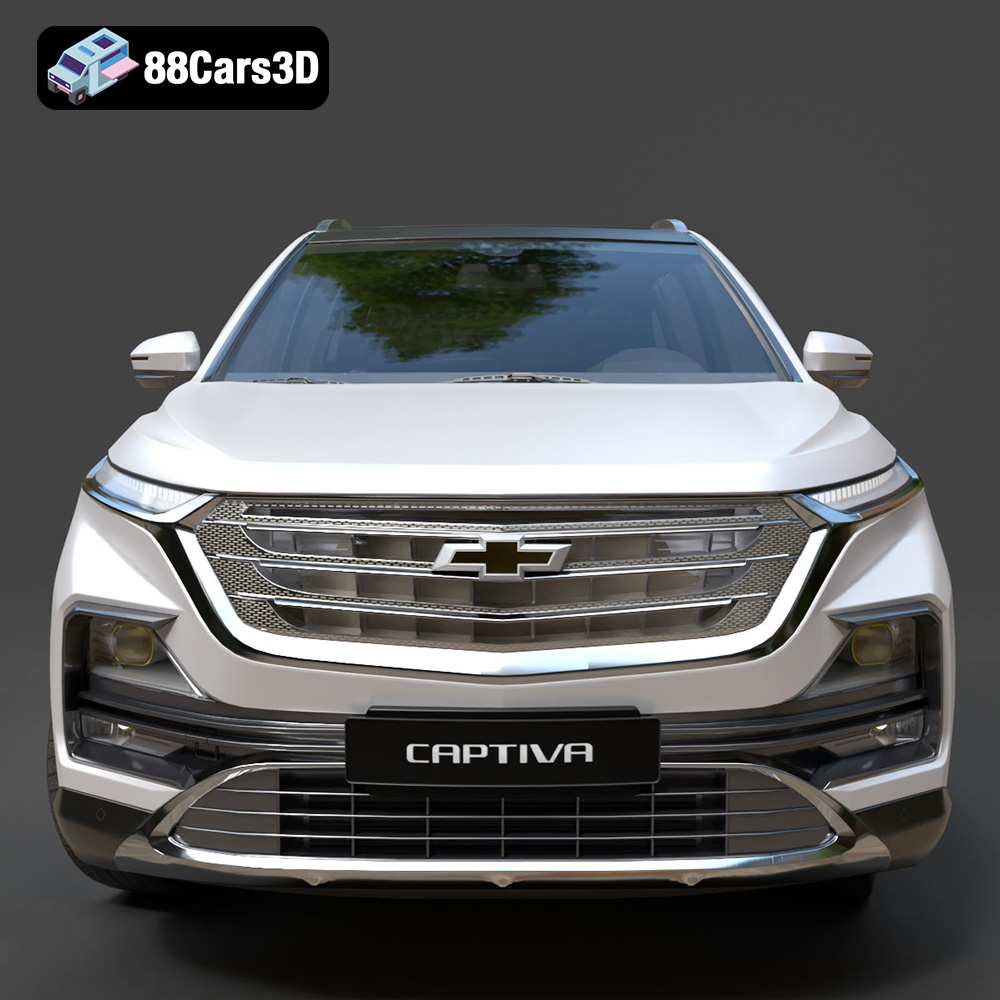
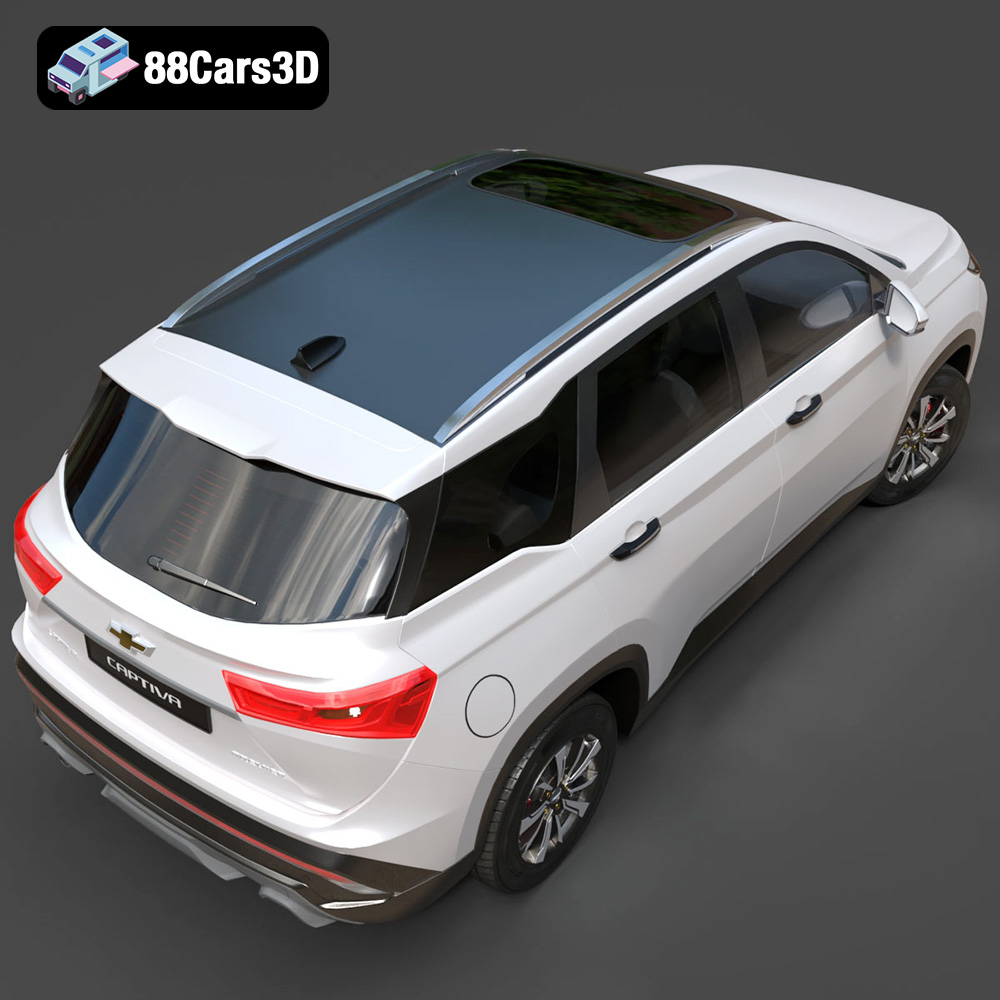
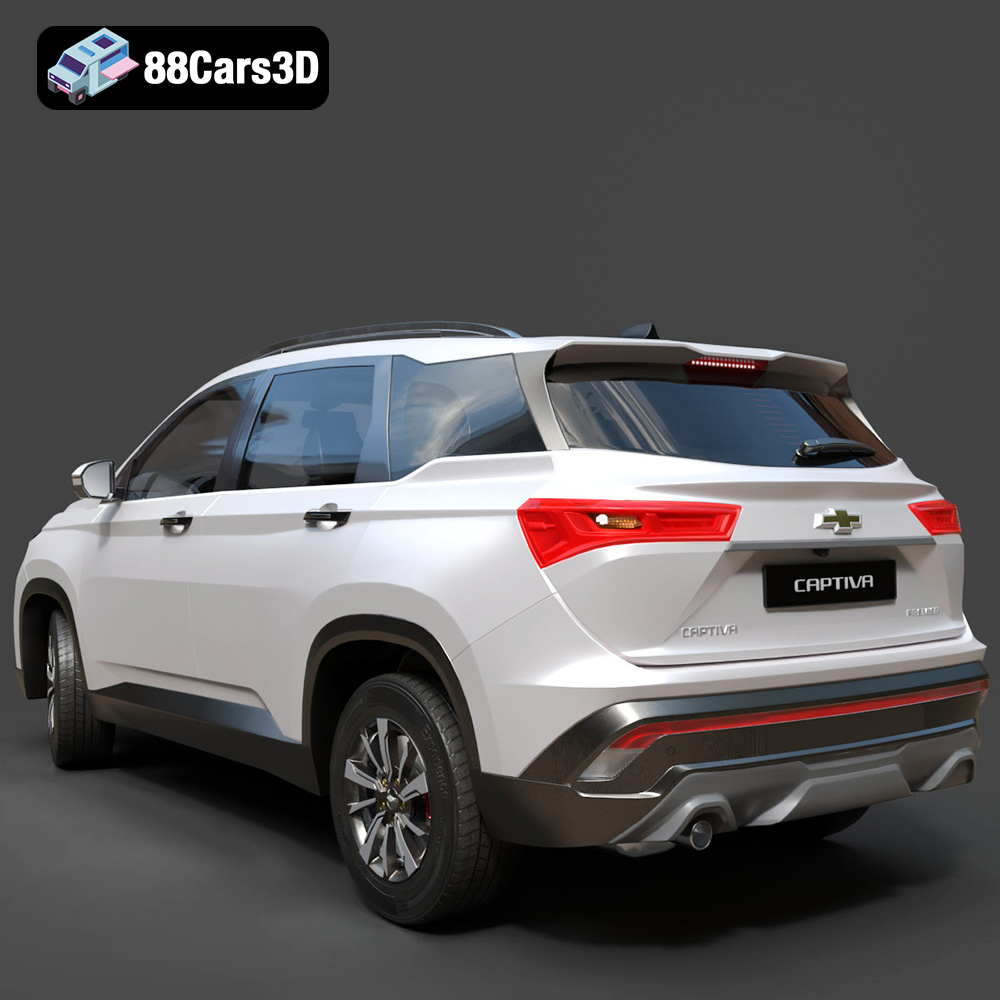
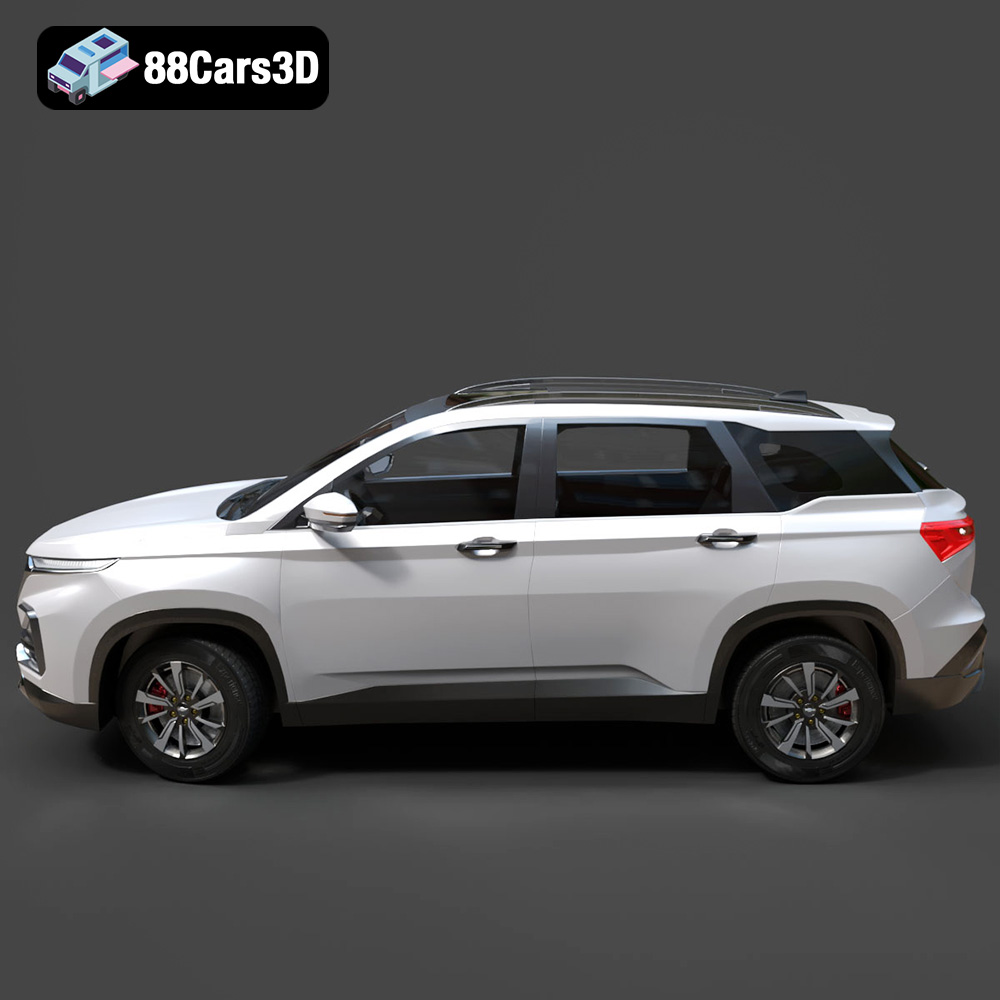
Experience the modern versatility and striking design of the Chevrolet Captiva Premier 2021 with this highly accurate 3D model. Known for its spacious family-oriented design and bold contemporary aesthetics, the Captiva Premier trim boasts a signature horizontal front grille, sleek LED daytime running lights, and a refined aerodynamic profile. Every detail of this popular SUV’s exterior styling has been meticulously captured, making it a standout asset for any digital environment.
$35.99
.2021
.blend
.chevrolet
.fbx
.glb
.max
.obj
.ply
.rendering
.stl
.unreal
captiva-premier
car-3d-model
family-suv
game asset
game-ready
low-poly
optimized
SUV
VR/AR