Get 20% OFF All Premium 3D & STL Models!

In the vast landscape of 3D content creation, the difference between a good project and a truly exceptional one often lies in the quality and versatility of its assets. Whether you’re crafting an expansive open-world game, designing a photorealistic architectural visualization, or developing an immersive virtual reality training simulation, the need for detailed, optimized, and technically sound 3D models is paramount. From the intricate mechanics of an engine to the subtle imperfections of weathered surfaces, every element contributes to the overall realism and user experience.
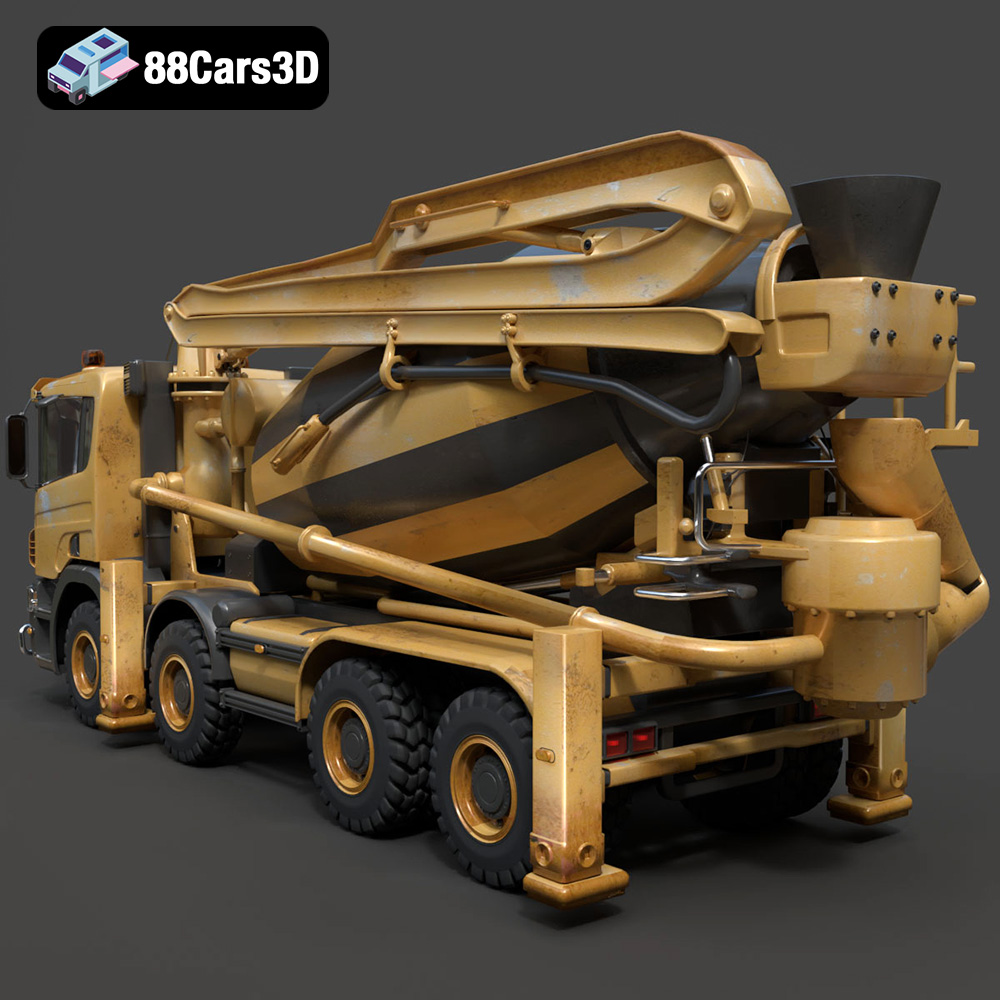
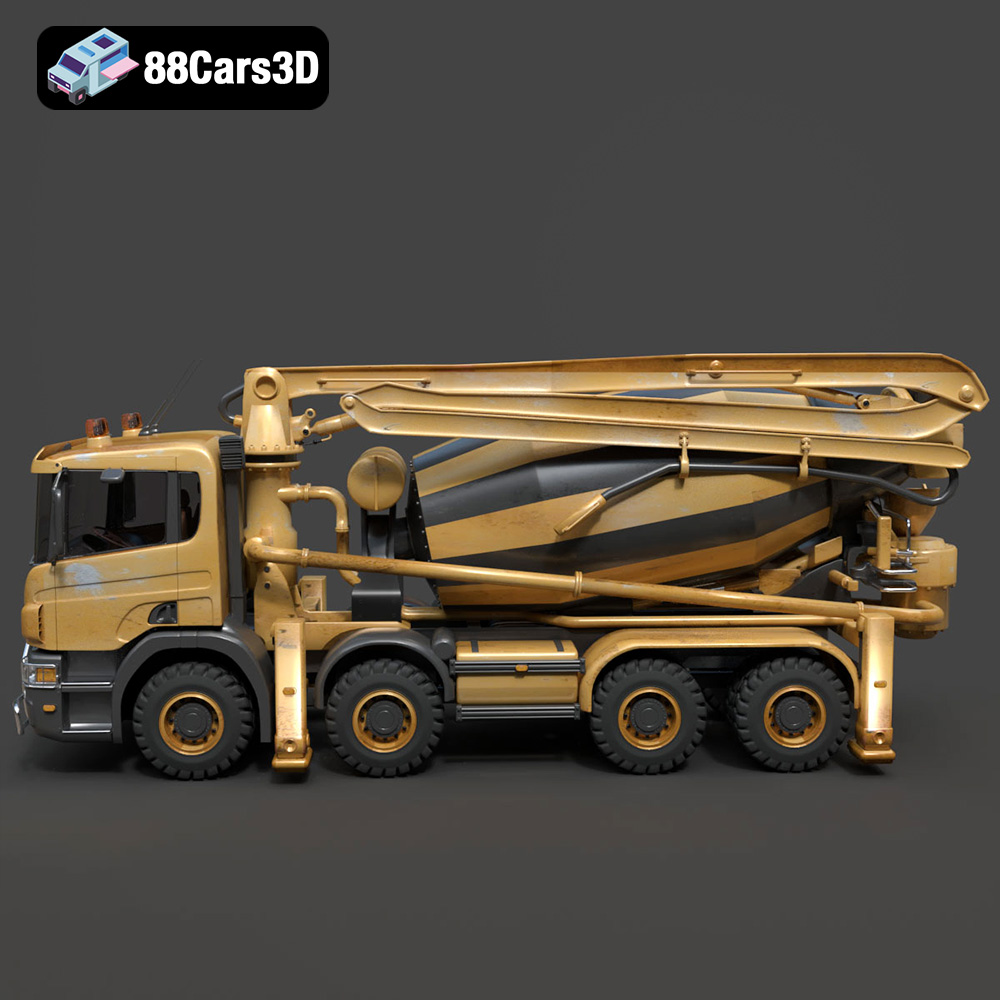
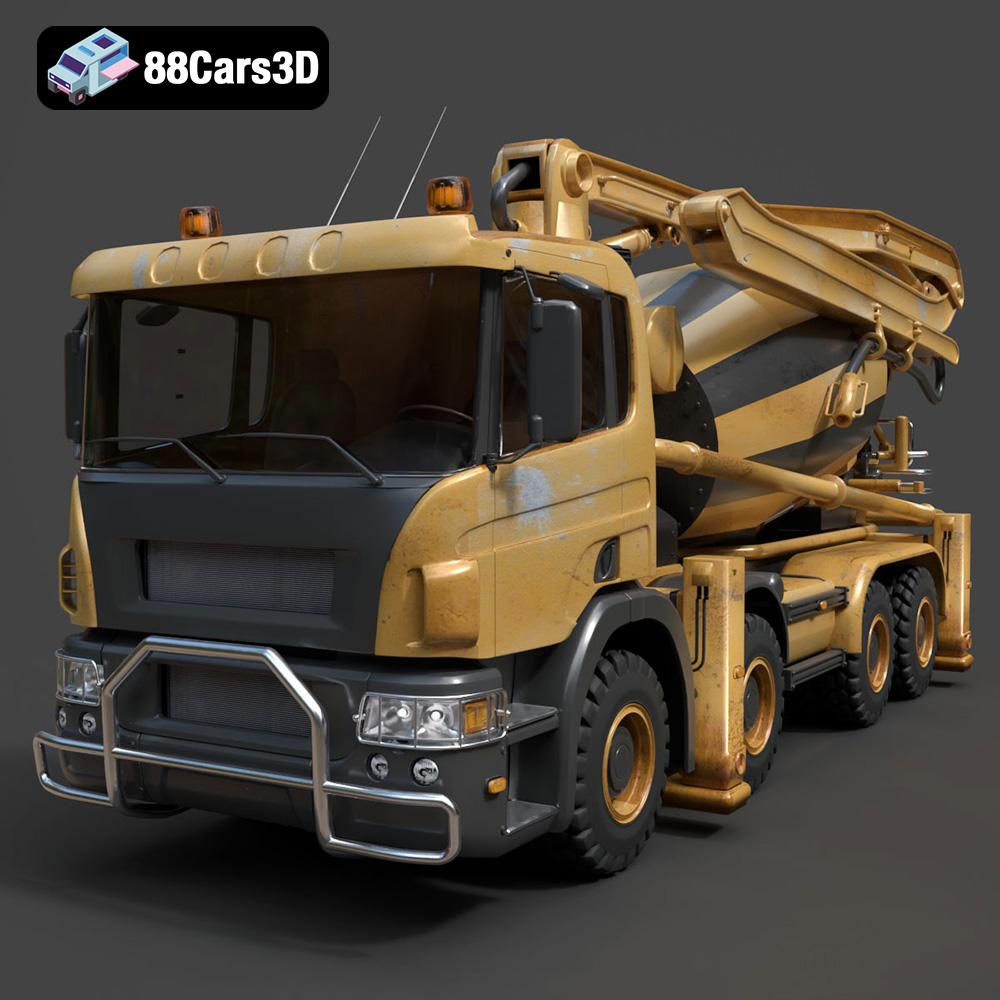
Today, we’re diving deep into an essential component for any digital construction site or industrial scene: the Concrete Mixer 3D Model. This isn’t just a static prop; it’s a meticulously crafted digital asset designed to meet the rigorous demands of professional workflows. With its robust chassis, iconic rotating mixing drum, and intricate rear chute assembly, it embodies the heavy-duty utility that makes it indispensable for modern city environments, construction simulations, and game development. We’ll explore its technical specifications, how it integrates into various software pipelines, and why such a comprehensive model is a cornerstone for creators aiming for unparalleled visual fidelity and performance.
Choosing the correct file format for your 3D assets is as crucial as the modeling process itself. Each format comes with its own strengths and weaknesses, optimized for specific applications, software compatibility, and data transfer requirements. The Concrete Mixer 3D Model is a prime example of an asset offered in a wide array of formats, ensuring maximum flexibility for any project. Understanding these distinctions is key to a streamlined workflow and successful project execution.
The .blend format is Blender’s native file type, offering a complete and fully editable scene. When you download the Concrete Mixer as a .blend file, you’re not just getting the geometry; you’re receiving the entire Blender project, including materials, textures, lighting setups, cameras, and even animation rigs if they were part of the original design. This format is ideal for artists who primarily work within Blender and require full control over every aspect of the model. It allows for seamless modification of topology, UVs, shader networks, and the integration of the asset into a larger Blender-based scene without any loss of data fidelity. For those looking to customize the Concrete Mixer’s components, adjust its PBR materials, or incorporate it into a complex animation sequence within Blender, the .blend file provides the ultimate starting point.
.fbx (Filmbox) is arguably the most widely adopted interchange format in the 3D industry, especially within game development and animation pipelines. Its robust support for geometry, materials, textures, animations, and skeletal data makes it the go-to choice for transferring assets between different software packages like Maya, 3ds Max, Blender, and directly into real-time engines such as Unreal Engine and Unity. The Concrete Mixer in .fbx format is “game-ready” because it preserves all critical information necessary for immediate import, including proper pivot setups for the wheels, drum, and steering, as well as correctly assigned materials. This format ensures that the model performs optimally in real-time environments, maintaining visual integrity and animation capabilities.
The .obj (Wavefront OBJ) format is a classic and highly universal option, primarily known for its excellent compatibility across almost all 3D software. It stores mesh geometry (vertices, normals, UVs, faces) and can reference external .mtl files for material properties. While it doesn’t support advanced features like animation or rigging, its simplicity makes it incredibly reliable for static mesh transfers. For artists needing to import the Concrete Mixer into less common 3D applications or for simple rendering and visualization tasks where animation isn’t a concern, the .obj provides a robust, universally readable solution. It’s a foundational format for cross-software compatibility.
.glb (GL Transmission Format Binary) is the binary version of glTF, specifically designed for efficient transmission and loading of 3D scenes and models in web and AR/VR applications. It packages geometry, materials, textures, and even animations into a single, self-contained file, making it incredibly lightweight and easy to deploy across various platforms. For the Concrete Mixer model, the .glb format is perfect for immersive virtual training, mobile AR experiences, or interactive product viewers on the web. Its optimization for real-time rendering on diverse devices makes it a critical format for cutting-edge interactive applications.
.stl (Stereolithography) is the standard file format for 3D printing. It represents a 3D model as a collection of triangulated surfaces, defining the external geometry of an object without color, texture, or other CAD attributes. When converting the Concrete Mixer to .stl, the focus shifts entirely to physical manufacturability. This format ensures that the model can be sliced and prepared for printing, allowing hobbyists and professionals to bring the digital asset into the physical world. The detailed topology of this particular model ensures a high-quality physical print, capturing the intricate details of its industrial design.
.ply (Polygon File Format or Stanford Triangle Format) is primarily used for storing 3D data from 3D scanners, CAD software, and other precision modeling tools. It can store not only geometry but also color, transparency, and other properties associated with vertices and faces. While less common for general asset exchange than FBX or OBJ, .ply is excellent for applications requiring high precision or for models derived from real-world scans. For analytical purposes or niche CAD integrations of the Concrete Mixer, .ply offers a robust data structure.
The .unreal format typically refers to a pre-packaged Unreal Engine asset. This means the Concrete Mixer isn’t just an FBX that you import; it might come as an Unreal project file, a content pack, or an asset specifically set up with proper materials, collisions, LODs (Levels of Detail), and even blueprints for immediate use within the Unreal Engine environment. This dramatically reduces setup time, allowing developers to drop the Concrete Mixer directly into their scenes and begin working without extensive configuration, making it truly “engine-ready.”
The .max format is 3ds Max’s native project file. Similar to the .blend file for Blender, it contains the complete 3ds Max scene, including geometry, materials, lighting, cameras, modifiers, and animation. For professionals working within 3ds Max, this format provides full access to the original scene, enabling comprehensive customization, retargeting of animations, or integration into existing 3ds Max projects. It’s ideal for high-end rendering, complex scene assembly, and leveraging 3ds Max’s powerful modeling and animation tools for the Concrete Mixer.
By offering the Concrete Mixer 3D model in such a wide array of formats, 88cars3d.com ensures that creators, regardless of their preferred software or end-use application, have the necessary tools to integrate this high-quality asset seamlessly into their pipelines.
The Concrete Mixer is not merely a collection of polygons; it’s a testament to meticulous 3D artistry and technical precision. Designed for a spectrum of professional applications, this model strikes an exceptional balance between visual fidelity and performance efficiency. Its robust construction, utilitarian aesthetics, and critical functionality are all captured with an eye for detail that elevates any digital scene it inhabits.
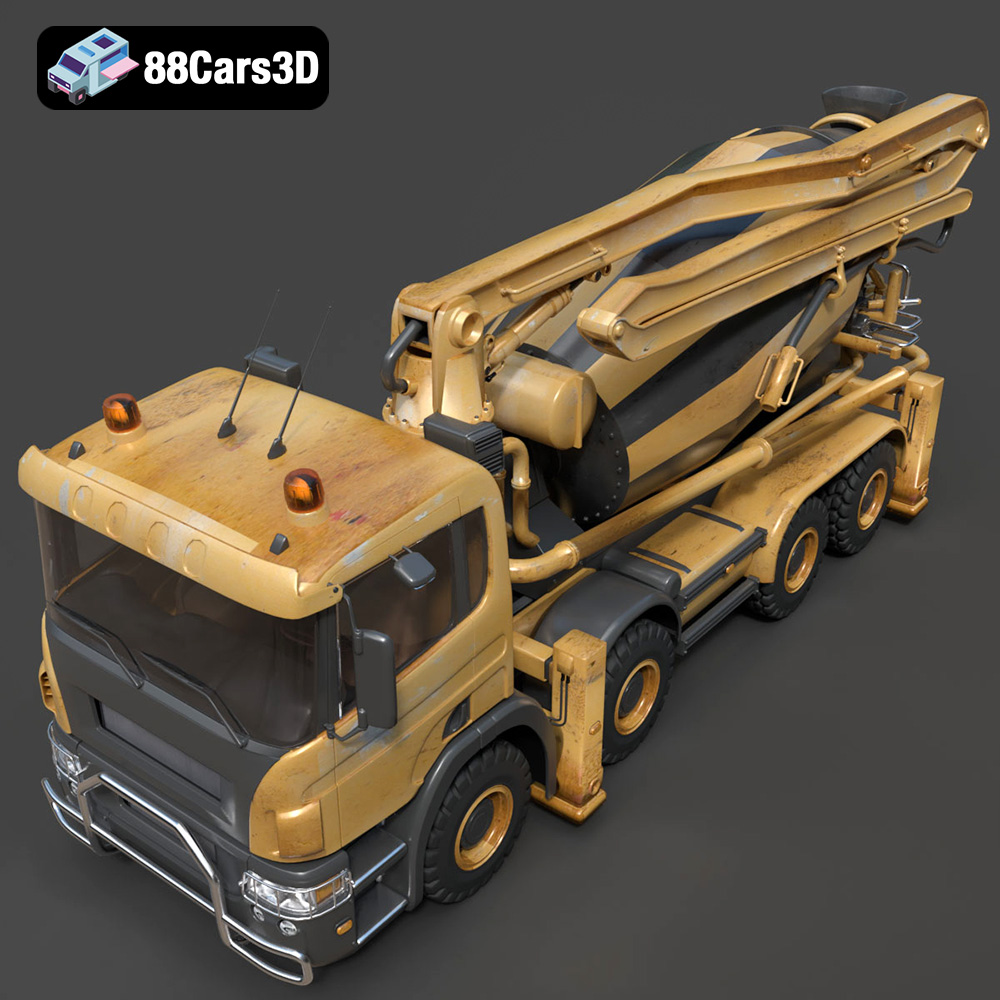
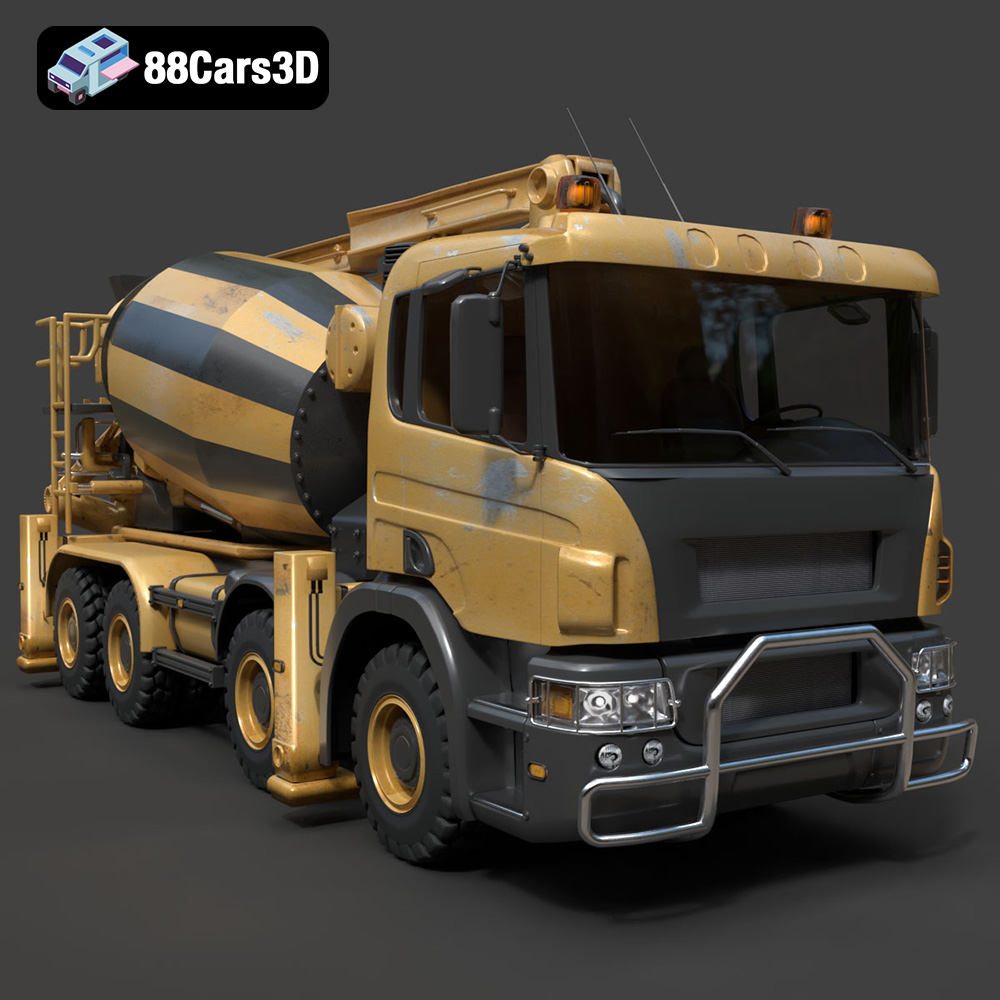
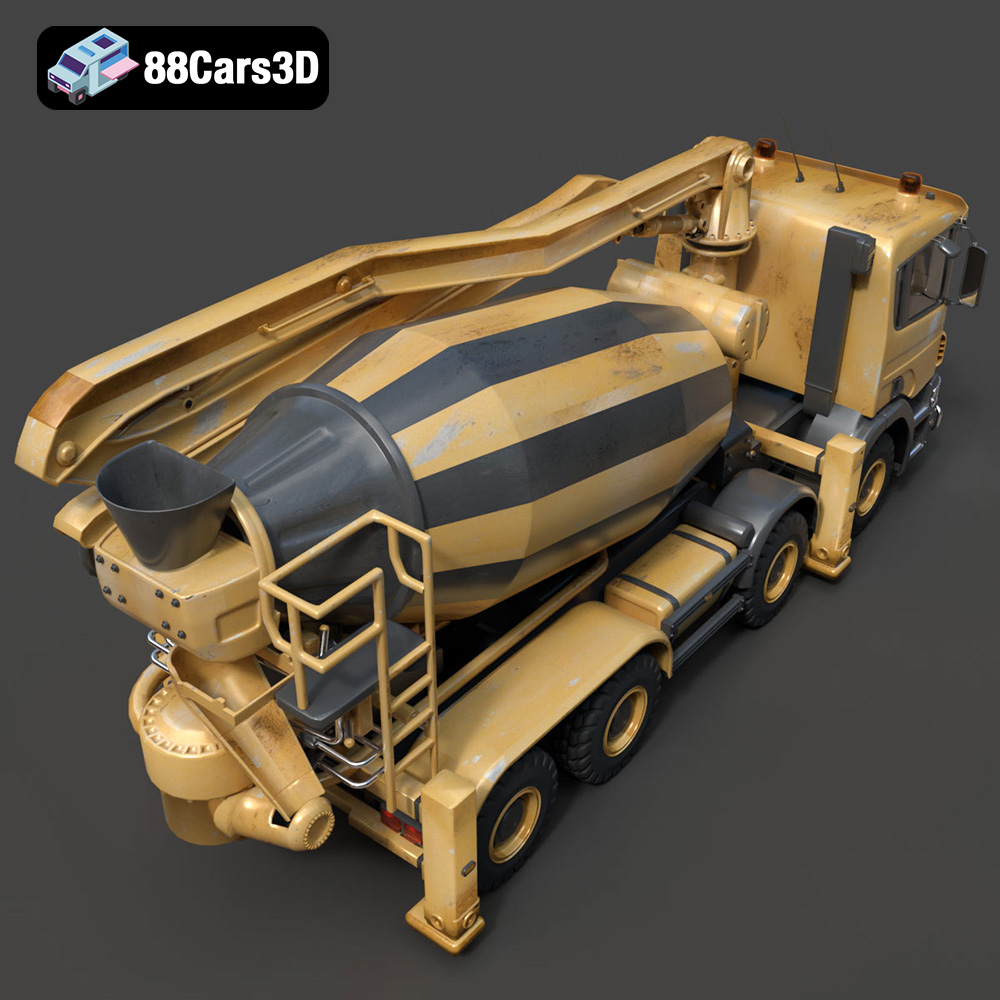
The external features of this Concrete Mixer model are where its industrial character truly shines. The heavy-duty frame geometry and proportions are accurately replicated, reflecting real-world vehicle chassis. This accuracy is vital for simulations and visualizations where authenticity is paramount. The model includes a detailed large-displacement diesel engine block and exhaust stacks, elements that add significant visual weight and realism, even if not always seen up close. The fully realized rotating mixing drum, complete with structural mounting rings, is a focal point, designed to articulate realistically for animations and interactive experiences. Industrial lighting details, such as beacon lights, headlights, and rear work lights, are integrated, ready for specific lighting setups to enhance atmosphere. The heavy-duty commercial wheels and multi-axle tire configurations, alongside reinforced leaf-spring suspension details, aren’t just for show; they are separate components, meticulously modeled to allow for realistic animation of steering, wheel rotation, and suspension travel, crucial for demanding game and simulation environments. Such granular detail ensures that whether the Concrete Mixer is stationary or in motion, every angle holds up to scrutiny.
While the exterior defines the vehicle’s purpose, the interior is where interaction often begins, especially in gaming and simulation. The Concrete Mixer 3D model offers a utilitarian heavy-duty driver seat and cabin layout, providing an authentic environment for virtual operators. Details extend to the industrial-grade steering wheel and column, an accurate instrument cluster, and even fleet communication radios. Operational control levers and hydraulic interfaces are also present, allowing for the potential of interactive elements in simulations. This level of interior detail is not superfluous; it’s specifically optimized geometry for first-person POV in gaming and simulation, ensuring that players or trainees stepping into the virtual cockpit experience a convincing and immersive environment without excessive polycount that could hinder performance.
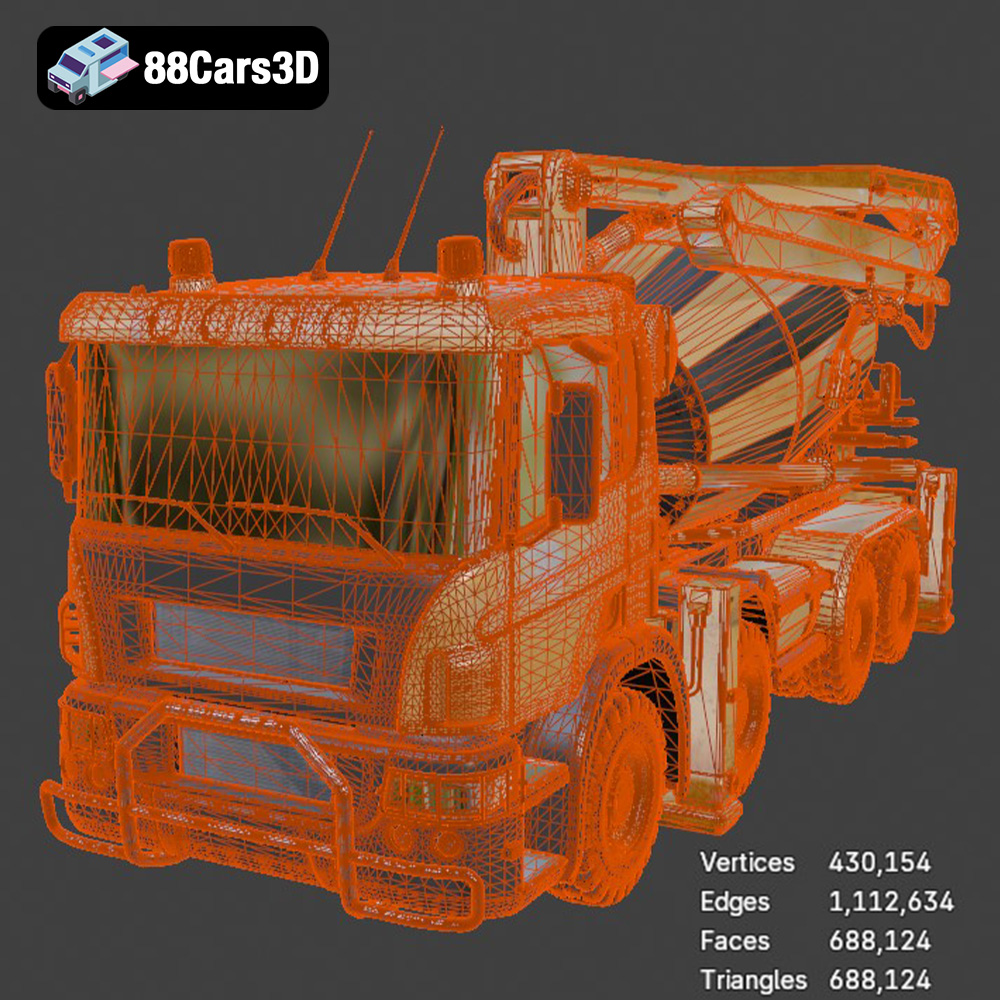
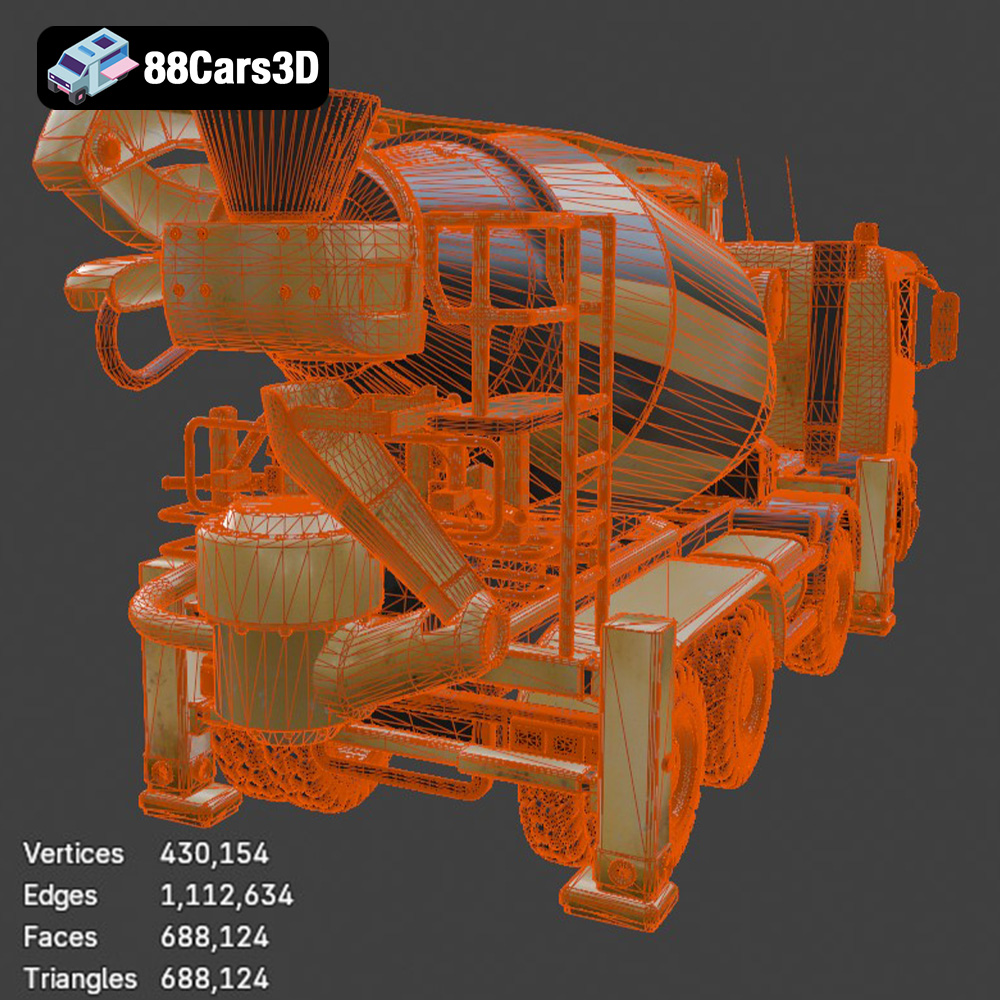
Underpinning the visual realism of the Concrete Mixer is a solid technical foundation. Boasting 688,124 triangles, the model achieves an exceptional visual fidelity while remaining “game-ready” and optimized for real-time engines like Unreal and Unity. This polycount represents a careful balance: high enough to capture fine details and smooth curves, yet optimized to prevent performance bottlenecks. Each triangle contributes to the overall shape and detail, from the rugged textures of the chassis to the intricate mechanisms of the drum. Furthermore, real-world scale accuracy is maintained, ensuring the model integrates seamlessly with other assets in a scene without requiring extensive scaling adjustments. A critical technical advantage is the proper pivot setup for steering, wheel rotation, drum rotation, and suspension travel. This means animators and developers don’t have to spend valuable time setting up rotational centers; the model is pre-configured, ready for animation and interaction right out of the box. This precision in technical setup is what transforms a static mesh into a dynamic, functional asset, ready for complex scenes.
The true value of a high-quality 3D asset lies in its seamless integration into diverse professional pipelines. The Concrete Mixer 3D model from 88cars3d.com is engineered for versatility, making it a powerful addition to various industries.
In the fast-paced world of game development, time is money, and performance is king. This Concrete Mixer model is tailor-made for game environments. Its optimized polycount of 688,124 triangles strikes the perfect balance for real-time engines like Unreal Engine and Unity, ensuring smooth frame rates even in densely populated scenes. For open-world games, simulation titles, or city-building games, this asset can populate virtual construction sites, industrial zones, or city streets, adding unparalleled realism. The inclusion of separate components for animation – wheels, suspension, mixing drum, and steering – means developers can easily implement realistic physics and interactive gameplay mechanics. Imagine a player driving this truck, seeing its suspension react to rough terrain, or watching the drum rotate as it pours virtual concrete – these interactions enhance immersion dramatically. The .fbx and .unreal file formats ensure straightforward import into these engines, often coming with PBR (Physically Based Rendering) materials ready for sophisticated lighting setups, saving countless hours for environment artists and technical animators.
Augmented Reality (AR) and Virtual Reality (VR) applications demand highly optimized models that can run efficiently on a wide range of devices, from high-end headsets to mobile phones. The Concrete Mixer is perfect for immersive virtual training scenarios, where operators can learn to maneuver and operate the heavy machinery in a safe, simulated environment. Its accurate interior, with a detailed instrument cluster and control levers, provides an authentic training ground. For configurators, clients can virtually “see” and customize the truck in real-time. The .glb format is particularly valuable here, providing a compact, single-file solution optimized for browser-based display and mobile AR. This allows for seamless deployment of the Concrete Mixer into interactive experiences, making complex machinery accessible for educational, marketing, or simulation purposes without compromising visual quality.
For industrial campaigns, construction scene visualizations, or architectural fly-throughs, photorealism is non-negotiable. The high-fidelity topology and detailed features of the Concrete Mixer model make it an excellent candidate for high-end rendering. Whether placed in a vast construction site alongside other heavy machinery or featured as a hero asset in a product visualization, its realistic textures and geometry will stand up to close-up shots and detailed lighting. Architects and visualization artists can leverage formats like .max (for 3ds Max users) or .blend (for Blender users) to integrate the model into their existing scene files, apply advanced rendering techniques, and customize materials for specific lighting conditions. This allows for stunning marketing materials, compelling client presentations, and powerful visual narratives that convey the scale and activity of a construction project with authenticity.
Beyond digital displays, the Concrete Mixer 3D Model offers the unique opportunity to bring this industrial marvel into the physical world through 3D printing. With the included .stl format, hobbyists and professionals can create highly detailed physical replicas, perfect for display, dioramas, or even functional prototypes. However, successful 3D printing requires attention to specific settings and post-processing techniques.
When preparing the Concrete Mixer for 3D printing, especially for fine details, resin printing (SLA/DLP) is highly recommended over FDM. Resin printers can achieve much finer layer heights, typically between 0.04–0.12 mm, which is crucial for capturing the intricate details of the engine, chassis, and cabin. Recommended scales like 1:35, 1:48, or 1:50 provide a good balance between detail and print size. Wall thickness should be between 1.2–2.0 mm to ensure structural integrity without unnecessary material use. An infill of 20–30% is usually sufficient for most parts, providing strength while keeping print time and material consumption reasonable. Crucially, supports will be required for complex overhangs and delicate parts such as the exhaust stacks, mirrors, chutes, and axles. Thoughtful print orientation is also vital; printing the main frame angled can improve structural integrity, while wheels and the mixing drum are best printed separately to capture their circular forms perfectly. Proper preparation in slicing software will minimize print failures and maximize detail retention from the digital model.
Once printed, the physical Concrete Mixer model can be transformed into a stunning replica with diligent post-processing. This typically begins with careful removal of supports, followed by sanding to smooth out any layer lines or imperfections. A good primer coat is essential to provide an even surface for painting and to help subsequent layers adhere properly. For the most authentic results, consider using authentic fleet colors for the cabin and drum, often industrial grays, whites, or specific company branding colors. The true magic, however, lies in weathering. Techniques like washes, dry-brushing, and pigment powders can simulate rust, dirt, oil stains, and general wear and tear, giving the model a lived-in, heavy-duty appearance. Applying a clear matte coat can seal the weathering effects and provide a realistic finish. This entire process, from digital file to painted physical model, is a rewarding journey for any enthusiast, showcasing the versatility of the Concrete Mixer 3D model.
A truly professional 3D asset provides not only high quality but also flexibility for customization. The Concrete Mixer 3D model is designed with this adaptability in mind, allowing artists and developers to tailor its appearance to fit specific project requirements or creative visions.
The model’s robust material setup allows for extensive customization. Users can easily change the cabin and drum colors, switching between standard fleet colors, safety oranges, or specific corporate branding colors to match a particular client or game faction. Beyond basic color, the textures can be modified to reflect different levels of wear and tear. Imagine changing tire textures from clean, street-ready variants to heavy mud-caked versions for an off-road simulation or a challenging construction environment. Adjusting material finishes – from a pristine glossy paint job to a heavily weathered, matte, and scratched surface – can dramatically alter the perception of the vehicle’s age and use. This flexibility is crucial for ensuring the Concrete Mixer fits seamlessly into various visual styles and narrative contexts without requiring a complete re-texture from scratch.
The ability to adapt the Concrete Mixer to different scenarios enhances its utility across projects. Lighting, for example, can be adjusted for day or night work environments, activating its industrial beacon lights, headlights, and rear work lights for nighttime construction scenes. For game developers, this could mean creating different LODs (Levels of Detail) to ensure optimal performance when the truck is far away, or integrating collision meshes for realistic physical interactions. For AR/VR applications, simplified versions might be necessary for mobile devices, while high-detail versions are used for desktop VR. Furthermore, separate components like the drum, wheels, and steering mechanisms can be leveraged for custom animations or interactive controls, enabling anything from a simple rotating prop in an architectural render to a fully controllable vehicle in an advanced simulation. This inherent customization potential ensures the Concrete Mixer model remains relevant and valuable across a broad spectrum of creative endeavors.
In the demanding world of 3D content creation, the difference between a project that merely exists and one that truly captivates lies in the quality, technical integrity, and versatility of its assets. The Concrete Mixer 3D Model exemplifies these principles, offering a high-fidelity, optimized, and incredibly flexible solution for a wide range of applications. From its meticulously detailed exterior and immersive interior to its game-ready optimization and comprehensive file format support, this model is built to empower creators. Whether you’re a game developer crafting a sprawling urban landscape, an AR/VR innovator building immersive training experiences, an architectural visualization artist seeking photorealistic scenes, or a hobbyist bringing digital models to life through 3D printing, this Concrete Mixer stands as a testament to professional-grade digital asset creation.
The ability to integrate seamlessly into workflows across 3ds Max, Blender, Unreal Engine, and more, coupled with its readiness for advanced animation and diverse customization, makes it an invaluable addition to any asset library. This isn’t just a 3D car model; it’s a foundational piece of industrial equipment, ready to serve as a critical component in your next masterpiece. Explore the potential of this exceptional game asset and many more at 88cars3d.com, where quality meets innovation in the world of 3D modeling.
The Concrete Mixer is a powerhouse of the construction site, renowned for its heavy-duty utility and iconic rotating mixing drum. This industrial marvel is characterized by its robust chassis, immense diesel engine, and the intricate rear chute assembly designed for precise concrete pouring. Its utilitarian styling and rugged aesthetic make it an essential element for any modern construction or city environment. Boasting a high-fidelity topology with 688,124 triangles, this 3D model delivers exceptional visual realism while maintaining efficient optimization. Designed for seamless integration into real-time engines, it provides the perfect asset for demanding game development, immersive AR/VR applications, high-end animation, and architectural visualization. Perfect for construction site simulations, city-building games, industrial visual campaigns, and virtual heavy machinery training.
$47.50
.blend
.fbx
.glb
.max
.obj
.ply
.rendering
.stl
.truck
.unreal
concrete-mixer
construction-vehicle
game asset
game-ready
heavy-machinery
industrial-equipment
low-poly
optimized
truck-3d-model
VR/AR