Get 20% OFF All Premium 3D & STL Models!

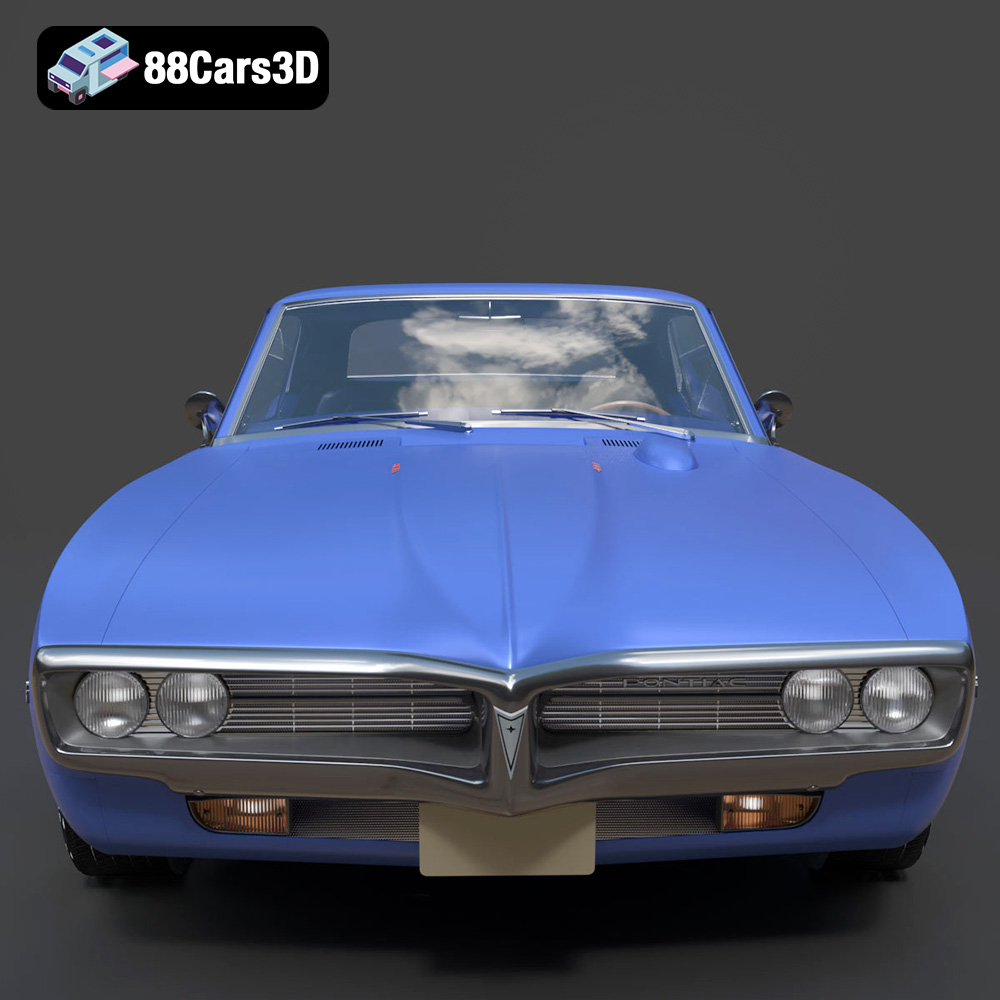
In the vibrant tapestry of automotive history, few vehicles command attention quite like the 1967 Pontiac Firebird. A true icon of American muscle, this legendary pony car roared onto the scene with aggressive styling, raw power, and an unmistakable presence. For automotive designers, game developers, visualization artists, and AR/VR creators, bringing such a historic machine to life in the digital realm presents both a creative challenge and a technical endeavor. Capturing the essence of its ‘Coke-bottle’ silhouette, the distinctive split-grille, and its potent V8 engine requires a meticulous approach to 3D modeling, ensuring every curve and component translates perfectly from steel and chrome to polygons and textures.
The demand for high-fidelity 3D car models has never been greater. Whether the goal is to create a photorealistic render for a marketing campaign, develop an immersive racing game, or craft a virtual showroom, the foundation lies in an expertly crafted digital asset. This is where models like the Pontiac Firebird 1967 3D Model from 88cars3d.com truly shine. This particular model isn’t just a static representation; it’s a meticulously engineered digital replica, designed to excel across a spectrum of professional applications. From its accurately proportioned frame to the intricate details of its V8 engine block and the classic rally wheels, every element has been thoughtfully integrated to provide an unparalleled asset for any digital project focusing on the golden age of American muscle cars.
The world of 3D modeling is vast, and a critical aspect of working with digital assets, especially high-quality 3D car models like the 1967 Pontiac Firebird, is understanding the various file formats available. Each format serves a specific purpose, offering unique advantages for different stages of a professional workflow, from initial design and animation to game development and 3D printing. Selecting the correct format ensures compatibility, preserves data integrity, and optimizes performance for your intended application.
The .blend file format is the native format for Blender, a powerful and increasingly popular open-source 3D creation suite. When you download the Pontiac Firebird 1967 model in .blend format, you receive a fully editable Blender scene. This includes not just the mesh geometry, but also materials, textures, lighting setups, camera positions, animations, and even rigging information. It’s ideal for artists who primarily work within Blender and need complete control over every aspect of the model for extensive customization, scene creation, or complex animation sequences. This format ensures that all original data from the Blender creation process is preserved, offering maximum flexibility for further development.
.fbx (Filmbox) is arguably one of the most widely supported and robust 3D file formats, making it an industry standard for data exchange between different 3D software applications. It excels at preserving complex scene data, including geometry, materials, textures, animations, and rigging. For integration into real-time pipelines like Unreal Engine and Unity, .fbx is often the go-to choice. Its ability to accurately transfer skeletal animations and blend shapes makes it indispensable for game development. When using the Firebird .fbx, developers can expect a smooth import with most of its properties intact, ready for optimization and scene integration.
The .obj (Wavefront Object) format is a universal standard for storing 3D geometry. It’s highly compatible across virtually all 3D software and is excellent for transferring mesh data, including vertices, normals, and UV coordinates. While it’s very reliable for geometry, .obj files often store material information separately in an accompanying .mtl (material template library) file, which might require manual re-linking or setup in the destination software. For simple static mesh transfers, or when maximum cross-software compatibility is paramount, the .obj version of the Firebird model is an excellent, reliable option.
.glb (GL Transmission Format Binary) is a relatively newer format that has rapidly gained traction, especially for applications in Augmented Reality (AR), Virtual Reality (VR), and browser-based 3D display. It’s a single-file, self-contained asset that includes model data, textures, and animations, all highly optimized for efficient transmission and loading on the web and mobile devices. Its binary nature makes it compact and fast to load. For showcasing the Pontiac Firebird in an interactive web viewer or deploying it in a mobile AR experience, the .glb format offers superb performance and ease of integration.
.stl (Stereolithography) is the de facto standard for 3D printing. This format represents a 3D model as a series of connected triangles, defining only the surface geometry of an object without color, texture, or other CAD attributes. When preparing the Pontiac Firebird model for physical fabrication, the .stl version provides a clean, watertight mesh optimized for slicing software. Hobbyists and professionals looking to produce physical scale models of this classic muscle car will find the .stl format essential, ensuring precise reproduction of its iconic bodywork.
The .ply (Polygon File Format or Stanford Triangle Format) is a versatile format capable of storing a wider range of information than .stl, including color, transparency, and sometimes even scanner data. It’s often used in academic, research, and engineering fields for precise mesh representation, especially when dealing with scanned data or models that require high accuracy for analysis or reverse engineering. For detailed inspection or specific CAD workflows involving the Firebird, .ply can be a useful choice.
The .unreal format signifies an asset specifically optimized and configured for direct import into Unreal Engine. While Unreal primarily uses .fbx for import, a .unreal file implies a package that might contain pre-configured materials, collision meshes, LODs (Levels of Detail), and other engine-specific settings. This “engine-ready” designation streamlines the workflow, allowing developers to quickly drop the Firebird into their Unreal projects with minimal setup, saving valuable time in game development.
Finally, the .max format is the native file type for Autodesk 3ds Max, a leading software for 3D modeling, animation, and rendering, particularly strong in architectural visualization and product design. Similar to .blend, a .max file contains the complete scene data, including geometry, modifiers, materials, lights, cameras, and animation tracks. For professionals who use 3ds Max extensively, having the Pontiac Firebird 1967 model in .max format means they can immediately access the original project setup, allowing for advanced customization, integration into existing scenes, and high-end rendering with tools like V-Ray or Corona.
The availability of the Pontiac Firebird 1967 model in such a wide array of formats from 88cars3d.com demonstrates a commitment to flexibility and professional utility, ensuring that no matter the project or software preference, artists and developers have the right version at their fingertips.
Achieving truly immersive and convincing automotive renders or interactive experiences hinges on the technical prowess of the 3D car models themselves. The 1967 Pontiac Firebird model exemplifies this dedication to technical excellence, striking a crucial balance between visual fidelity and performance optimization. Its specifications are tailored to meet the rigorous demands of professional production pipelines.
At the heart of any high-quality 3D model is its topology. The Pontiac Firebird 1967 model boasts an impressive 3,853,174 triangles. This polycount is significant because it allows for an extraordinary level of detail without compromising too heavily on performance, particularly in modern real-time engines. For cinematic rendering, this dense mesh ensures smooth curves, sharp edges, and intricate details like panel gaps, chrome reflections, and subtle body contours are rendered flawlessly, even in extreme close-up shots. Every crease of the “Coke-bottle” styling and the distinctive front split-grille bumper design is accurately represented, allowing for photorealistic output. Furthermore, this topology is carefully constructed to support deformation and animation, which is vital for interactive elements or dynamic scene sequences.
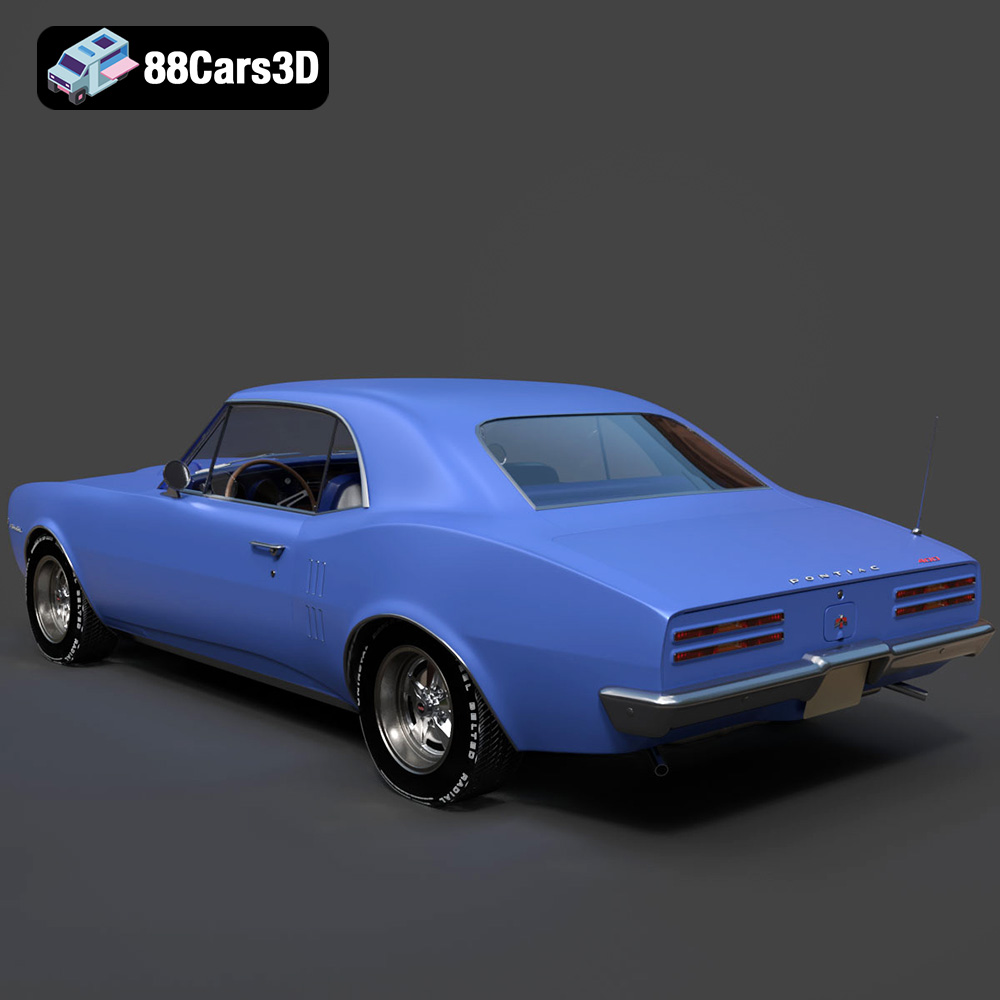
The value of a premium 3D model lies in its ability to faithfully recreate every aspect of its real-world counterpart. The digital Firebird goes far beyond just exterior shape. It includes a detailed V8 engine block, reflecting the raw power and engineering of the original. Elements like the classic dual exhaust system with polished chrome tips, the iconic quad headlights, and the slotted taillights are not merely textured details but actual geometric representations. The classic rally wheels with period-accurate tire treads add another layer of authenticity, crucial for any automotive scene. The model also features authentic leaf-spring and independent front suspension details, which not only contribute to visual realism but also offer a functional basis for advanced animation or physics simulations. Separate components for wheels, suspension, and steering ensure they are ready for complex movement.
A truly comprehensive automotive model extends its detail into the cockpit. The Firebird’s interior is a testament to this, featuring vintage vinyl-style bucket seat detailing that reflects the era. The classic three-spoke wooden steering wheel, deep-set analog instrument cluster, and dashboard layout transport the viewer directly into the driver’s seat. A floor-mounted shifter and historically accurate pedal placement complete the interior, making the model ideal for first-person POV in gaming or virtual reality experiences. The optimized geometry for these interior elements ensures they render efficiently while maintaining visual fidelity, a critical consideration for performance-sensitive applications.
The utility of a premium 3D car model like the 1967 Pontiac Firebird from 88cars3d.com is measured by its seamless integration into various professional workflows. Artists and developers demand assets that are not only visually stunning but also technically robust and easy to manipulate within their preferred software ecosystems. Let’s explore how this model fits into common industry pipelines.
For professionals utilizing 3ds Max, the provided .max file format offers a native and fully editable project. Upon opening, artists will find the Firebird model already scaled to real-world dimensions, with proper pivot setups for crucial components like the wheels, steering, and suspension. This immediate readiness is invaluable for:
Blender users benefit from the .blend file, which opens the Firebird model with all its materials, textures, and possibly even basic lighting setups intact. This allows for immediate iteration and customization:
For game developers and AR/VR creators, the Firebird’s game-ready optimization and dedicated .unreal or .fbx formats are critical.
The utility of high-quality 3D car models extends far beyond static renders or simple animations. Modern digital assets, especially those meticulously crafted like the 1967 Pontiac Firebird model, serve as fundamental building blocks for a myriad of advanced applications across various industries.
The realm of video games continually pushes the boundaries of graphical realism, and authentic automotive assets are indispensable. The Pontiac Firebird 1967 3D Model is tailor-made for game development due to its ‘Game-Ready & Optimized’ technical specifications. Its 3,853,174 triangles provide a rich level of detail that looks stunning in modern engines like Unreal and Unity, while still being performant enough for real-time rendering. This makes it ideal for:
Augmented Reality (AR) and Virtual Reality (VR) are revolutionizing how consumers interact with products and how historical artifacts are preserved and experienced. 3D car models are at the forefront of this revolution:
The ability to transform a digital model into a tangible object has opened new avenues for hobbyists, collectors, and design professionals. The 1967 Pontiac Firebird 3D Model is also configured for 3D printing, primarily through its .stl format. This application requires specific considerations:
In the fast-paced world of digital content creation, time is a precious commodity. Creating a truly authentic and technically sound 3D car model from scratch, especially one as iconic and detailed as the 1967 Pontiac Firebird, is an enormous undertaking. It requires hundreds of hours of meticulous modeling, texturing, UV mapping, and optimization by highly skilled artists. This is where platforms like 88cars3d.com provide immense value.
Acquiring a ready-to-use, high-quality asset significantly reduces production timelines and development costs. Instead of dedicating valuable internal resources to model creation, studios and independent artists can immediately integrate the Firebird into their projects. This allows teams to focus on core creative tasks – building compelling scenes, developing intricate game mechanics, or crafting engaging narratives – rather than the foundational asset creation. The Pontiac Firebird model, with its accurate proportions, optimized geometry, and included file formats, eliminates the need for extensive post-purchase cleanup or re-exporting, ensuring a smooth transition into any workflow.
Every professional project demands consistent quality. The 3,853,174 triangle topology, the detailed interior and exterior features, and the proper pivot setups are hallmarks of a production-ready asset. When you purchase 3D car models from a reputable marketplace like 88cars3d.com, you are investing in expertly crafted models that adhere to industry best practices. This ensures that the Firebird will not only look stunning but will also perform reliably, whether it’s being rendered in a cinematic sequence or interacting within a real-time game engine. The technical advantages, such as real-world scale accuracy and compatibility with major 3D software platforms, underscore this commitment to quality.
While the Firebird model is ready to use out-of-the-box, it also offers extensive customization options. Artists can easily change body colors, modify tire textures for off-road or street variants, adjust material finishes, and adapt lighting for different environments. This flexibility ensures that while the core model is consistent, its appearance can be tailored to suit specific brand campaigns, artistic styles, or game aesthetics. The availability in multiple formats like .blend, .fbx, .obj, .glb, .stl, .ply, .unreal, and .max further enhances its versatility, catering to diverse software environments and specific project requirements. For instance, the .stl format allows hobbyists to 3D print and then customize paint schemes, bringing their personalized vision to life.
The journey of transforming a classic automobile like the 1967 Pontiac Firebird into a meticulously crafted 3D car model is a testament to the blend of artistry and technical precision. From its aggressive ‘Coke-bottle’ styling to the roaring V8 engine block, every detail captured in this digital replica is designed to ignite inspiration and elevate any project. We’ve explored how its exceptional topology and game-ready optimization make it a powerhouse for everything from cinematic rendering and intricate animation in 3ds Max and Blender, to highly interactive experiences in Unreal Engine, and even tangible 3D prints.
Understanding the nuances of various file formats – from the comprehensive .blend and .max project files to the versatile .fbx and web-optimized .glb, or the print-ready .stl – is paramount for modern digital artists and developers. The Pontiac Firebird 1967 3D Model embodies this versatility, providing a robust foundation for professionals across game development, AR/VR, and high-end visualization. By leveraging production-ready assets like this from 88cars3d.com, creators can save invaluable time, ensure consistent quality, and focus their energies on pushing the boundaries of digital innovation.
Ultimately, whether you’re building the next great racing game, designing an immersive virtual showroom, or simply creating stunning automotive renders, investing in a high-fidelity, technically sound 3D model like this iconic Firebird ensures your project starts with an undeniable advantage. It’s more than just a model; it’s a gateway to bringing legendary automotive heritage to life in the digital age.
The 1967 Pontiac Firebird stands as a true American muscle car legend, introduced to dominate the late-60s pony car era. This digital replica captures its aggressive Coke-bottle styling, distinctive front split-grille bumper design, and iconic quad headlights. Every detail, from the meticulously recreated V8 engine block to the classic dual exhaust system, reflects the raw power and heritage of this historic vehicle.
Featuring an exceptional topology of 3,853,174 triangles, this 3D model delivers unparalleled visual fidelity for close-up shots while remaining versatile enough for high-end real-time applications. Whether used in game development, AR/VR environments, detailed animation, or photorealistic visualization, it provides a premium foundation for any digital automotive project.
Perfect for cinematic automotive rendering, period-accurate open-world racing games, immersive virtual showrooms, and historical vehicle animations.
.blend, .fbx, .obj, .glb, .stl, .ply, .unreal, .max
Tags:
pontiac, firebird, 1967, classic-car, muscle-car, pony-car, car-3d-model, game-ready, high-poly, optimized, game-asset, rendering, vr-ar, blend, fbx, obj, glb, stl, ply, unreal, max
$37.50
.1967
.blend
.fbx
.firebird
.glb
.max
.obj
.ply
.pontiac
.rendering
.stl
.unreal
car-3d-model
classic-car
game asset
game-ready
high poly
muscle-car
optimized
pony-car
VR/AR