Get 20% OFF All Premium 3D & STL Models!

In the vast landscape of 3D modeling, few categories demand as much precision, versatility, and technical prowess as heavy machinery. From the intricate gears of an engine to the robust hydraulics of a lifting arm, every detail must be faithfully recreated to deliver realism. Among these mechanical titans, the skid steer loader stands out – a compact, powerful workhorse indispensable across construction, agriculture, and landscaping. Its unique agility and formidable lifting capabilities make it a fascinating subject for 3D artists and developers alike.
The challenge lies in translating this real-world complexity into a game-ready, render-optimized 3D asset that performs flawlessly across various applications, from high-fidelity visualizations to real-time interactive experiences. This is where a meticulously crafted asset, such as the Skid Steer Loader 3D Model available on 88cars3d.com, becomes invaluable. This comprehensive model embodies the rugged versatility of its real-life counterpart, offering an exceptional balance of visual fidelity and technical optimization crucial for professional projects. It’s not just a model; it’s a foundation for innovation in game development, architectural visualization, AR/VR training, and even physical 3D printing.
The choice of a 3D model file format is far more critical than simply picking the first option available. Each format is designed with specific use cases, software compatibilities, and data efficiencies in mind. Understanding these nuances is essential for any professional working with 3D assets, whether you’re developing high-performance game environments or creating hyper-realistic architectural renderings. The Skid Steer Loader 3D Model, for instance, comes in a comprehensive array of formats, ensuring maximum flexibility for diverse workflows.
The .blend format is Blender’s native file type, offering a complete encapsulation of a Blender scene. This includes not just the mesh data (geometry, UVs, normals) but also materials, textures, lighting, cameras, animations, rigging, modifiers, and even scene settings. For artists deeply integrated into the Blender ecosystem, a .blend file is the ultimate starting point for customization. It allows for full editability, enabling modifications to the topology, shader graphs, or animation keyframes without any loss of data that might occur during format conversions. When working with the Skid Steer Loader, having the native .blend file means you can easily adjust its robust frame geometry, fine-tune its hydraulic arms, or modify its detailed cockpit features directly within Blender, leveraging all of Blender’s powerful tools.
.fbx (Filmbox) is arguably the most widely adopted interchange format in the 3D industry, especially prevalent in game development and animation pipelines. Developed by Autodesk, it excels at transferring 3D model data, including geometry, materials, textures, skinning, and animations, between different software packages like Maya, 3ds Max, Unity, and Unreal Engine. Its robust support for skeletal animations and blend shapes makes it ideal for animated assets like the Skid Steer Loader, which features separate wheels, lift arms, and a bucket designed for animation. When exporting to game engines or collaborating with artists using different DCC (Digital Content Creation) tools, .fbx ensures a relatively seamless transfer of all essential animated and static data.
The .obj (Wavefront OBJ) format is one of the oldest and most universally supported 3D file formats. It’s renowned for its simplicity and excellent compatibility across almost all 3D software. An .obj file primarily stores geometry data (vertices, normals, texture coordinates, and faces) and references external .mtl (material) files for basic material properties. While it doesn’t support animation or rigging, its widespread support makes it an excellent choice for static mesh transfers, archival, or as a fallback when more complex formats encounter issues. For the Skid Steer Loader, the .obj format provides a clean mesh for general visualization or as a base for retopology in other software.
.glb (GL Transmission Format Binary) is the binary version of glTF, a royalty-free specification for the efficient transmission and loading of 3D scenes and models by applications. Optimized for web-based 3D, AR, and VR experiences, .glb bundles all assets (geometry, textures, animations, PBR materials) into a single, compact file. This makes it incredibly efficient for streaming and display in browsers or mobile AR/VR apps. For industrial training or virtual showrooms featuring the Skid Steer Loader, the .glb format offers a high-performance, lightweight solution that ensures rapid loading and smooth interaction in real-time web environments.
The .stl (Stereolithography) format is the de facto standard for 3D printing. It represents a 3D model as a series of connected triangles (a triangulated surface mesh) without color, texture, or other CAD attributes. Its simplicity makes it universally readable by 3D printers and slicing software. While it’s primarily for manufacturing, it’s critical for hobbyists or professionals looking to create physical prototypes or scale models of the Skid Steer Loader. The model’s description specifically highlights its suitability for 3D printing, making the inclusion of an .stl file crucial for those planning to bring this digital workhorse into the tangible world.
.ply (Polygon File Format) is another format for storing 3D data, particularly popular for scanner data, scientific applications, and detailed mesh analysis. Unlike .stl, .ply can store a wider range of properties, including color, transparency, texture coordinates, normals, and even confidence values for each vertex or face. This makes it valuable for applications requiring more robust mesh information beyond basic geometry. For specialized analysis of the Skid Steer Loader’s complex surfaces or for higher-fidelity mesh exports, .ply offers a more comprehensive data representation.
The .unreal format signifies an asset specifically packaged and optimized for direct import into Unreal Engine. While often based on .fbx internally, having a dedicated .unreal asset implies a pipeline that has already configured optimal settings, material setups (often PBR-ready), and perhaps even blueprint connections for seamless integration. This “engine-ready” state drastically reduces setup time for developers using Unreal Engine, allowing them to drop the Skid Steer Loader directly into their scene with pre-configured materials and collision. It’s a testament to the model’s game-ready design.
Finally, the .max format is the native file type for Autodesk 3ds Max, much like .blend for Blender. It stores the entire 3ds Max scene, including geometry, materials (with complex shaders), lighting, animation, cameras, and any plugins or modifiers used. For 3ds Max users, this provides complete editability and access to all the original scene settings and construction history. Professionals using 3ds Max for high-end rendering, animation, or complex scene assembly will find the .max file essential for leveraging the full capabilities of this powerful software with the Skid Steer Loader model.
The comprehensive file format support for the Skid Steer Loader 3D Model underscores its versatility and professional-grade quality, catering to virtually every major workflow in 3D production.
Game development demands a unique blend of artistic vision and technical optimization. Every asset, from sprawling environments to individual props, must contribute to both visual quality and real-time performance. The Skid Steer Loader 3D Model from 88cars3d.com is specifically designed with these requirements in mind, making it an outstanding game asset for construction simulators, open-world environments, or even specialized heavy machinery games.
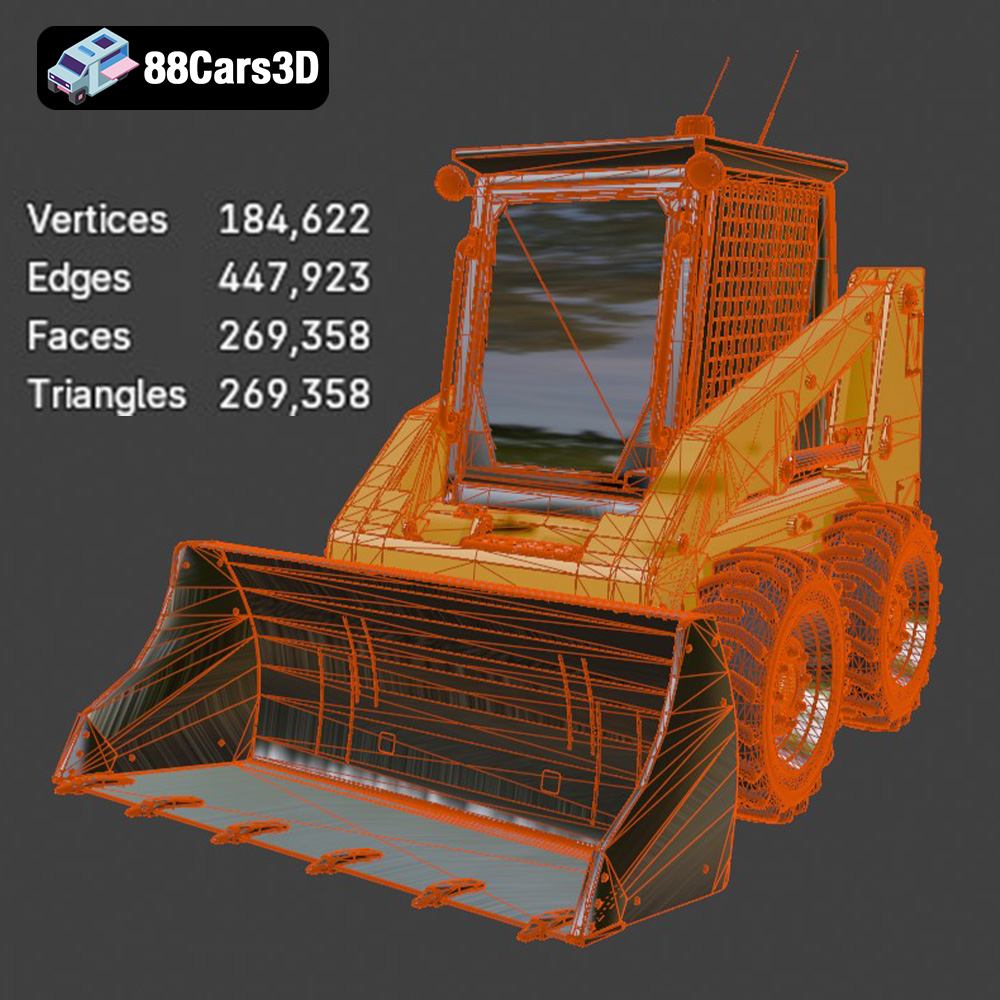
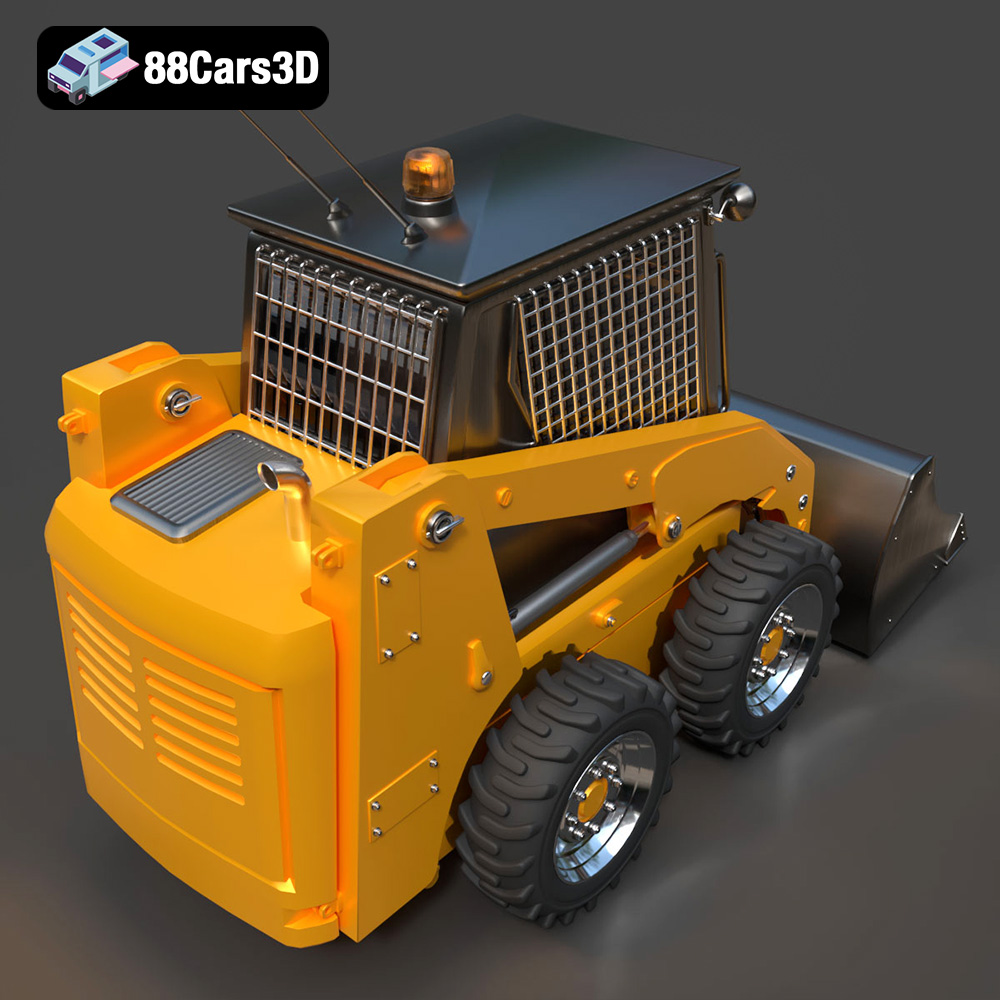
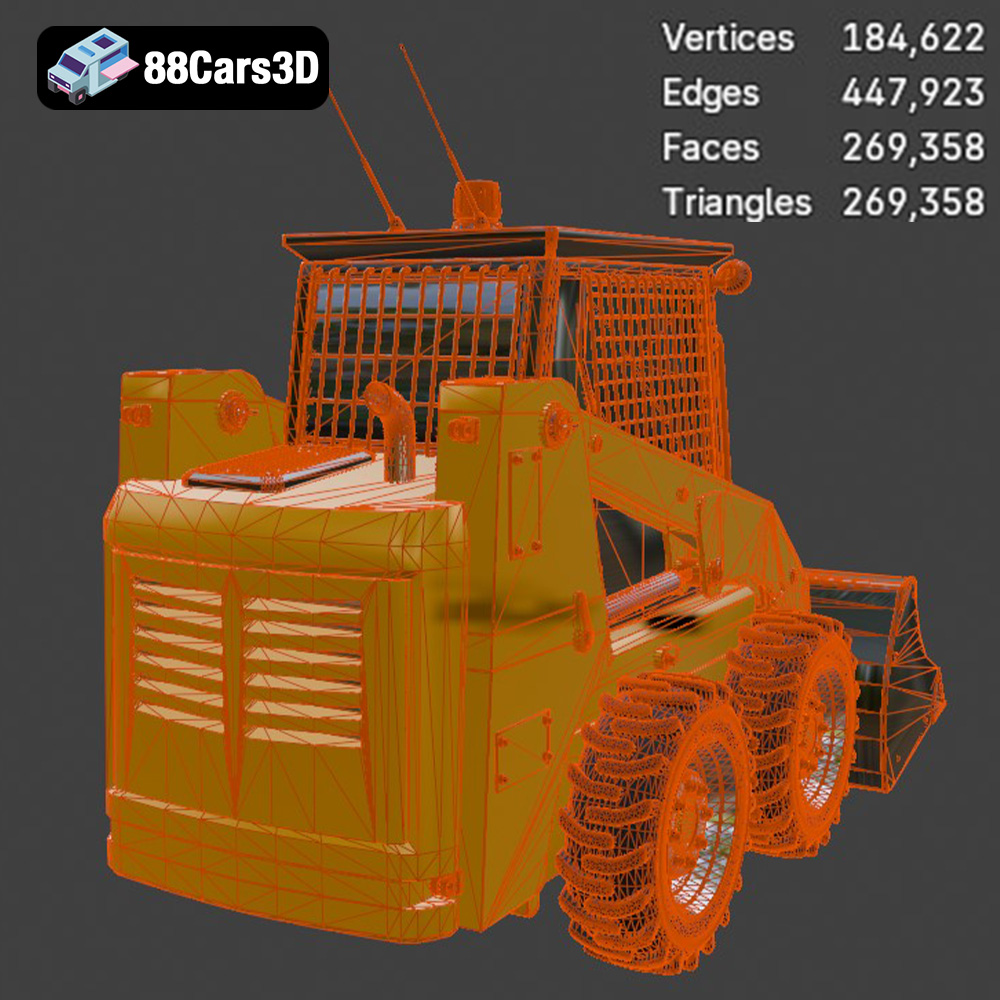
The most crucial aspect for game assets is performance. A highly detailed model can bring even the most powerful gaming rigs to a crawl if not properly optimized. This Skid Steer Loader model boasts a triangle count of 269,358, which strikes an excellent balance. It’s detailed enough to convey high-end visual realism – capturing the robust lifting arms, hydraulic cylinders, and detailed engine compartment ventilation – yet optimized to ensure smooth frame rates in real-time engines like Unreal and Unity. This “game-ready” approach means developers spend less time on optimization and more on core gameplay, leveraging the model’s well-optimized topology straight out of the box.
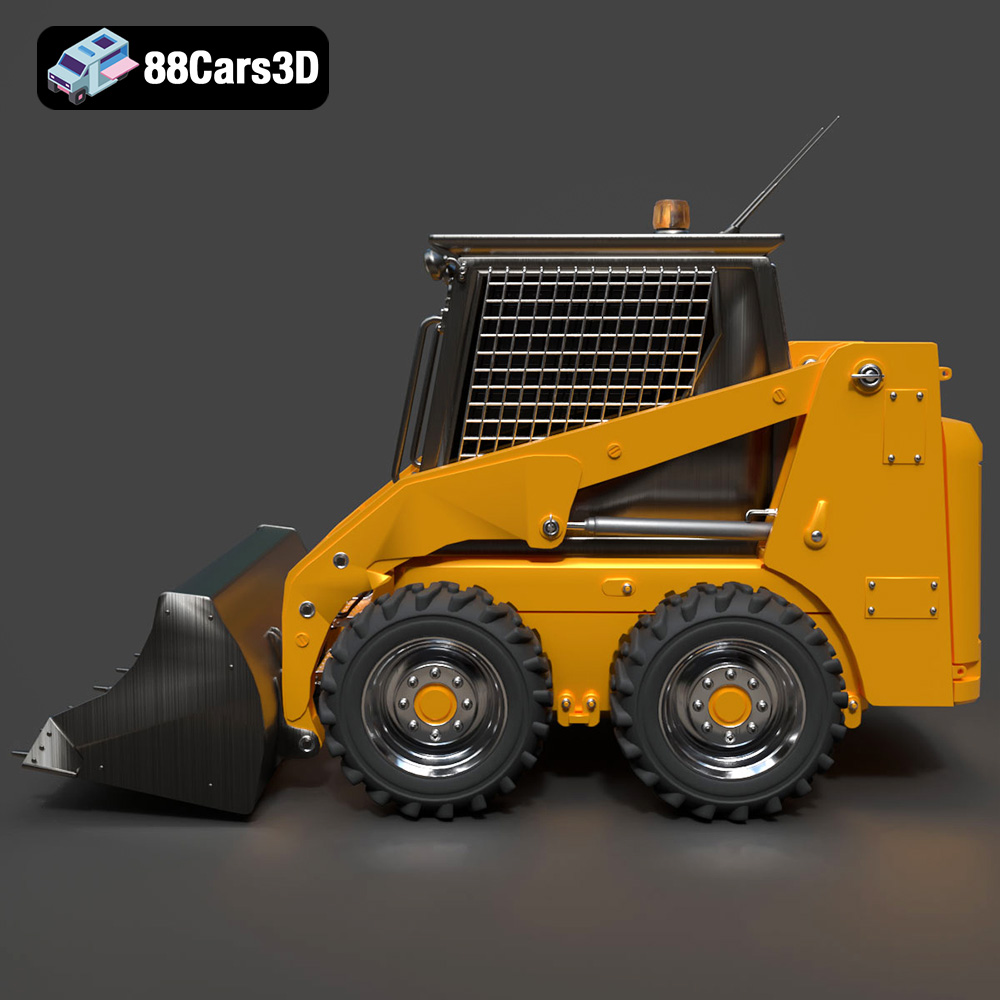
Beyond static meshes, interactive game assets require sophisticated rigging and animation. This Skid Steer Loader model is built for dynamism, featuring separate meshes for its wheels, lift arms, bucket, and hydraulic components. This modularity is vital for animation pipelines, allowing developers to easily rig the model for complex movements: realistic steering, wheel rotation, the powerful lifting action of the arms, and precise bucket tilting. Proper pivot setup is already considered, simplifying the rigging process significantly. Imagine a player operating this machine in a virtual construction site, digging trenches or loading trucks – the integrated animation readiness of this 3D model provides the foundation for truly engaging gameplay mechanics.
Consider a hypothetical construction simulation game. A developer could use the Skid Steer Loader 3D Model as a primary player-controlled vehicle. Alongside other heavy machinery 3D models (e.g., excavators, dump trucks), it forms a realistic ecosystem. The optimized geometry ensures that multiple such vehicles can populate a scene without crippling performance. Its detailed interior, including the operator seat, dual-joystick steering, and industrial instrument cluster, is perfect for a first-person cockpit view, enhancing immersion. Developers can then script complex tasks, such as clearing debris or moving materials, relying on the model’s animation-ready components to provide visually accurate feedback. This capability extends beyond games into serious applications, like training modules where operators learn to handle the machinery in a safe, virtual environment.
The applications of high-quality 3D assets extend far beyond traditional rendering and gaming. Augmented Reality (AR) and Virtual Reality (VR) are transforming industries, particularly in training, visualization, and safety simulations. The precision and detail of the Skid Steer Loader 3D Model make it an ideal candidate for these cutting-edge immersive technologies, offering a unique blend of realism and interactivity.
One of the most impactful uses of 3D models in AR/VR is in industrial training. Operating heavy machinery like a skid steer loader requires significant skill and safety awareness. Traditional training can be costly and hazardous. VR simulations, built with assets like this model, offer a safe, repeatable, and cost-effective alternative. The model’s accurate real-world scale and detailed cockpit interior – complete with safety restraint system, control levers, and monitoring displays – create a highly believable environment. Trainees can practice complex maneuvers, learn emergency procedures, and develop muscle memory without any risk or wear and tear on actual equipment. The optimized geometry ensures smooth performance even on standalone VR headsets, providing an uninterrupted, immersive learning experience.
Augmented Reality presents opportunities for visualizing construction sites or industrial operations in a new light. Imagine field engineers or site managers using a tablet to overlay a virtual Skid Steer Loader onto a real construction blueprint, demonstrating potential pathways or operational zones. Or, maintenance technicians could use AR to view an exploded diagram of the loader’s hydraulic system directly over the physical machine, aiding in repair or diagnostic tasks. The .glb format, included with this model, is particularly well-suited for these types of AR applications, being optimized for efficient loading and display on mobile devices and web browsers.
Beyond training, AR/VR can revolutionize sales and marketing. Manufacturers of heavy equipment can create virtual showrooms where potential clients can explore products like the Skid Steer Loader in interactive 3D. Customers could walk around the virtual machine, inspect its reinforced front bucket, examine the heavy-duty off-road tires, or even sit virtually in the driver’s seat. The ability to customize aspects like body colors or material finishes, as described for this model, would allow clients to configure their ideal machine in real-time, greatly enhancing the buying experience. This not only showcases the product in exceptional detail but also provides a memorable, engaging interaction that standard brochures simply cannot match.
For architectural visualization studios, marketing agencies, or product designers, stunning renders are paramount. They communicate product quality, illustrate functionality, and evoke the desired aesthetic. Rendering heavy machinery like the Skid Steer Loader demands attention to specific details that convey its industrial nature, power, and rugged utility. The Skid Steer Loader 3D Model provides an exceptional foundation for achieving photorealistic results in any rendering engine, from V-Ray to Corona to Cycles.
Realism in rendering largely hinges on materials and textures. For industrial equipment, this means replicating weathered metal, worn rubber, greasy hydraulic components, and grimy surfaces. The included formats like .max, .blend, and .fbx allow artists to apply sophisticated Physically Based Rendering (PBR) materials, leveraging maps for albedo (base color), roughness, metallic, normal, and ambient occlusion. Artists can simulate the sun-bleached yellow paint, the scuff marks on the bucket, the deep, mud-clearing treads of the tires, or the subtle rust on exposed bolts. Customization options, such as modifying tire textures for muddy or dusty conditions and adjusting material finishes for heavy weathering, enable artists to tell a compelling visual story about the machine’s environment and use. This attention to surface detail is what elevates a good render to a great one.
Effective lighting is crucial for defining form and mood. For a Skid Steer Loader, artists might choose harsh, directional sunlight to emphasize its robust geometry and cast strong shadows, typical of a construction site during the day. Alternatively, dramatic night-time renders with functional work lighting (front headlights and rear safety lights, as detailed in the model’s features) can highlight its operational capabilities in low-light conditions. High-dynamic-range imaging (HDRI) environments can provide realistic reflections and ambient light, further grounding the model in its scene. By carefully crafting the lighting setup, renderers can accentuate the model’s accurate industrial proportions and highlight its formidable features, making it stand out in any visualization.
Once raw renders are complete, post-production in software like Photoshop or Affinity Photo adds the final layer of polish. This can involve color grading, adding atmospheric effects like dust or haze to suggest a busy construction environment, subtle depth of field to draw focus, or compositing the Skid Steer Loader into existing photographic backplates of architectural projects. For architects, showcasing their buildings alongside realistic heavy machinery like this Skid Steer Loader adds context, scale, and a sense of bustling activity to their visualizations. It transforms a static scene into a dynamic narrative, illustrating how a finished project integrates into its real-world operational setting.
While digital visualization and interactive experiences dominate 3D modeling, the ability to bring a virtual asset into the physical world through 3D printing opens up another exciting dimension. Hobbyists, collectors, and even professionals needing physical prototypes can leverage high-quality 3D models for fabrication. The Skid Steer Loader 3D Model, with its detailed geometry and robust construction, is perfectly suited for this, especially with the included .stl format.
The journey from a digital 3D model to a physical object requires careful preparation. For 3D printing, especially with FDM (Fused Deposition Modeling) or resin (SLA/DLP) printers, understanding the model’s topology and internal structure is key. The Skid Steer Loader model is convertible to .stl format, which is the universal language for 3D printers. When preparing the model, aspects like recommended scale (1:24, 1:35, 1:50), layer height, and wall thickness become critical. Resin printing is often recommended for fine details like the roll cage, hydraulic arms, and joysticks, ensuring that the intricate features of the detailed operator seat and instrument cluster are preserved. For larger parts like the frame, FDM can be suitable with appropriate settings.
3D printing is often just the first step. Post-processing can elevate a raw print to a museum-quality scale model. For the Skid Steer Loader, this would involve removing supports, sanding to smooth layer lines, and then applying primer. The product description suggests an authentic industrial yellow/orange with weathering effects – a common finishing for heavy machinery. This can be achieved through airbrushing, hand painting, and techniques like washes, dry brushing, and pigments to simulate mud, dust, and rust. Modelers can meticulously paint the heavy-duty off-road tires, the functional work lighting, and the reinforced front bucket to match real-world counterparts, creating a truly impressive display piece that captures the essence of this rugged workhorse.
In the fast-paced world of 3D production, time is money. Relying on professional-grade 3D assets can dramatically accelerate project timelines, improve visual quality, and free up artists to focus on creative problem-solving rather than modeling from scratch. This is the core advantage offered by marketplaces like 88cars3d.com, which specializes in high-quality 3D car models and other essential vehicle assets, including robust heavy machinery like the Skid Steer Loader 3D Model.
The 88cars3d.com platform prides itself on providing meticulously crafted 3D models that meet the rigorous demands of professional studios. The Skid Steer Loader exemplifies this commitment: it’s not merely a mesh but a “game-ready & optimized” asset with proper pivot setups for animation, real-world scale accuracy, and compatibility across major 3D software and real-time engines. This ensures that whether you’re building a next-gen game, a sophisticated AR/VR training simulation, or a photorealistic architectural rendering, the assets you acquire are ready to perform without extensive cleanup or re-engineering. The diverse range of included file formats further underscores this versatility, providing the right tool for every job.
For individual designers, small studios, and large development houses, the value proposition is clear: access to high-fidelity, production-ready assets at an accessible price. Instead of dedicating valuable artist hours to modeling every bolt and hydraulic line, teams can purchase a pre-made, high-quality asset like this Skid Steer Loader 3D Model and integrate it directly into their pipeline. This allows for greater focus on unique game mechanics, bespoke architectural elements, or complex scene composition. The ability to customize the model, from changing body colors to adjusting material finishes, further enhances its utility, providing creative freedom within a solid technical framework. This efficiency is critical in achieving project deadlines and maintaining competitive visual standards, making 88cars3d.com a reliable resource for premium 3D vehicle models and more.
The Skid Steer Loader is more than just a piece of heavy machinery; it’s a symbol of utility, power, and efficiency. Translating this robust character into a high-quality 3D model, optimized for diverse applications, is a testament to skilled digital craftsmanship. The Skid Steer Loader 3D Model stands out as a versatile, game-ready, and render-optimized asset capable of transforming a multitude of digital projects.
From its well-optimized topology ensuring smooth game performance to its detailed cockpit and animation-ready components, this model empowers developers and artists to create immersive game environments, cutting-edge AR/VR training simulations, stunning architectural visualizations, and even tangible 3D printed scale models. The comprehensive suite of file formats – including .blend, .fbx, .obj, .glb, .stl, .ply, .unreal, and .max – guarantees seamless integration into virtually any professional workflow.
Whether you’re building the next great construction simulator, designing an industrial training module, or simply need a photorealistic heavy machinery asset for your renders, this Skid Steer Loader 3D Model provides the detail, optimization, and flexibility required. Explore its potential and elevate your projects with high-quality 3D assets available at 88cars3d.com, your trusted source for professional 3D vehicle models and game assets.
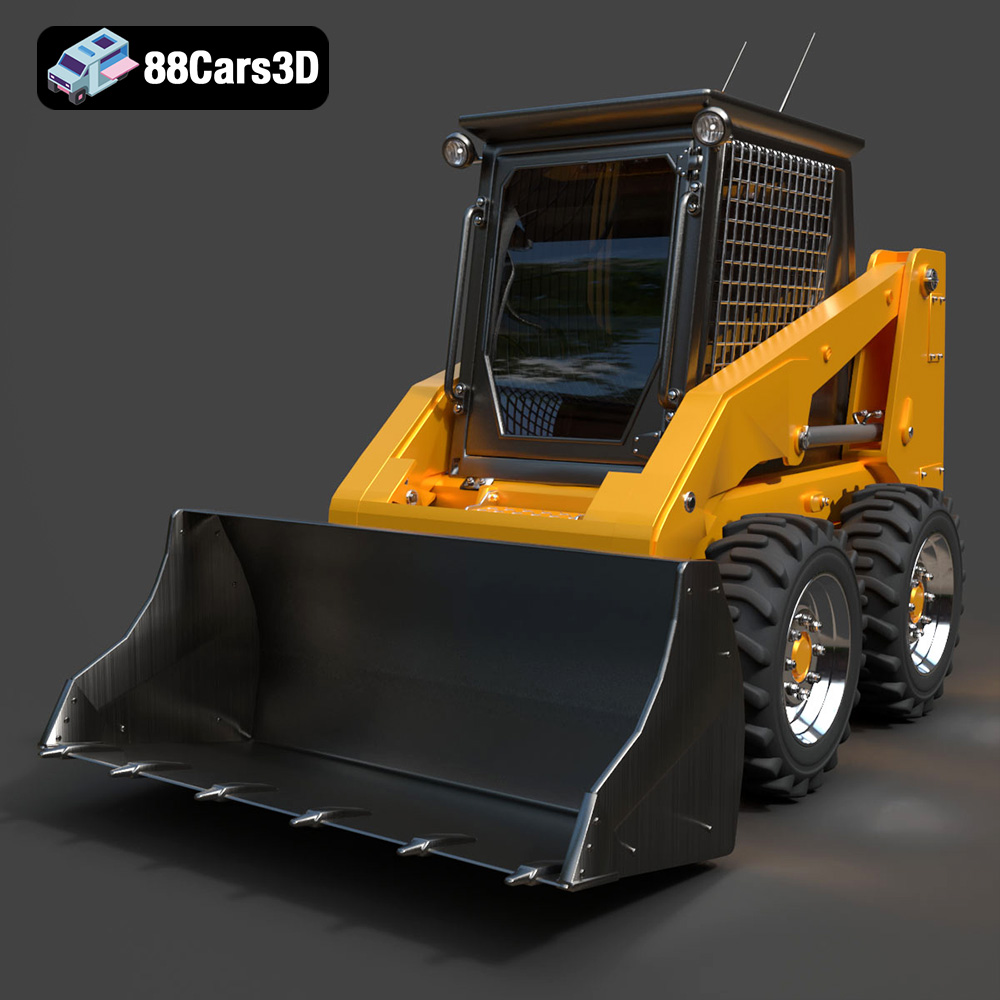
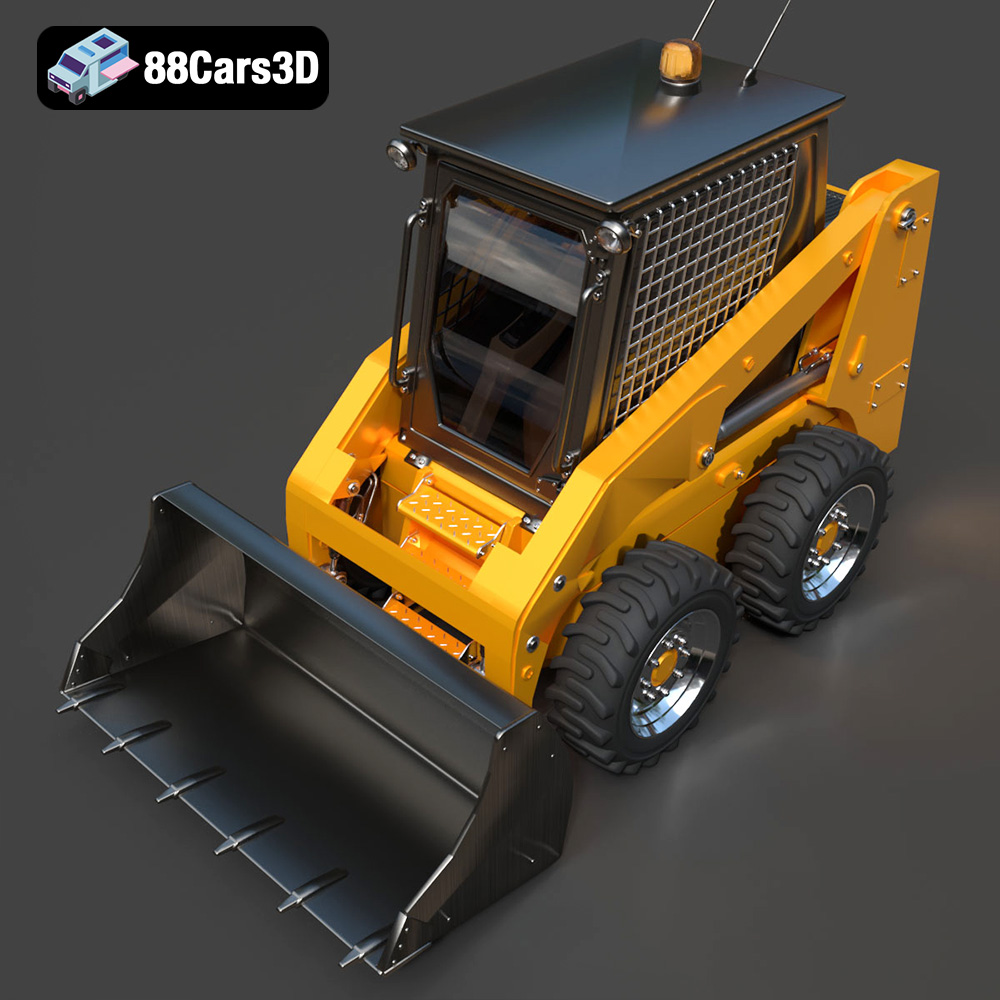
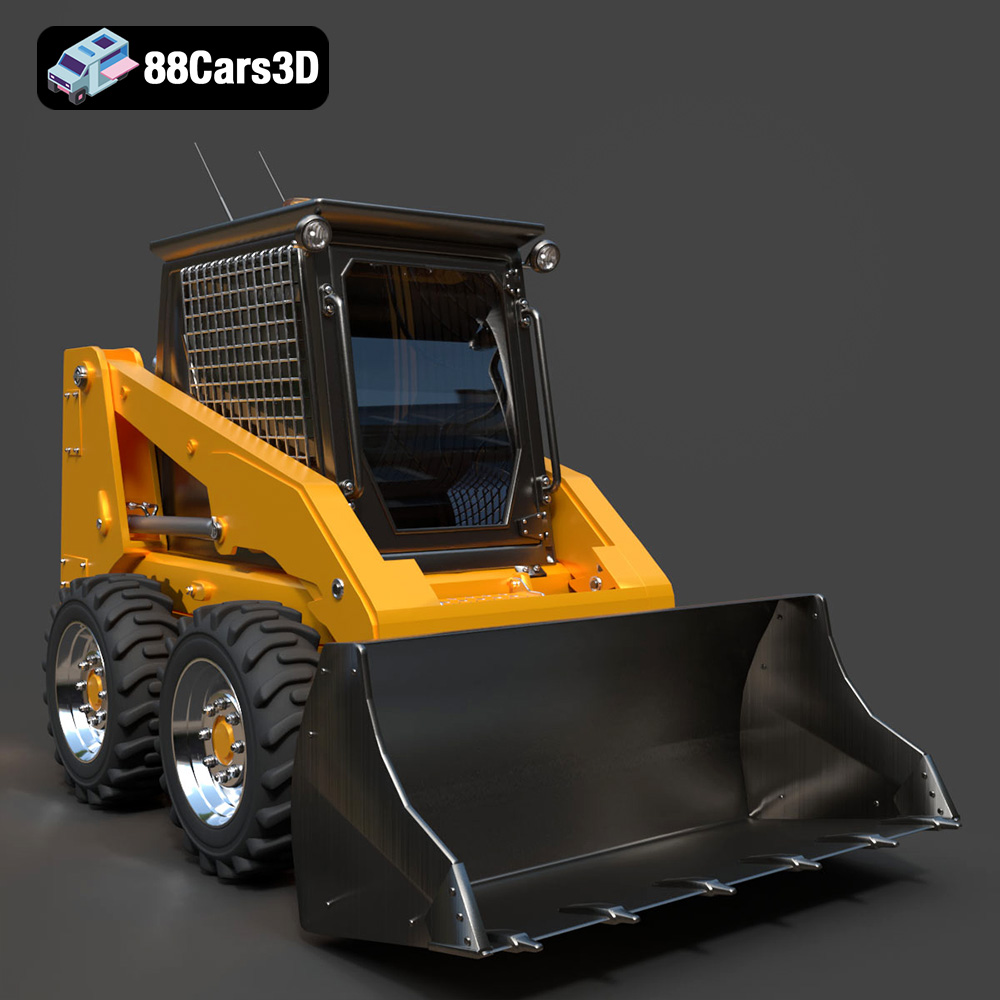
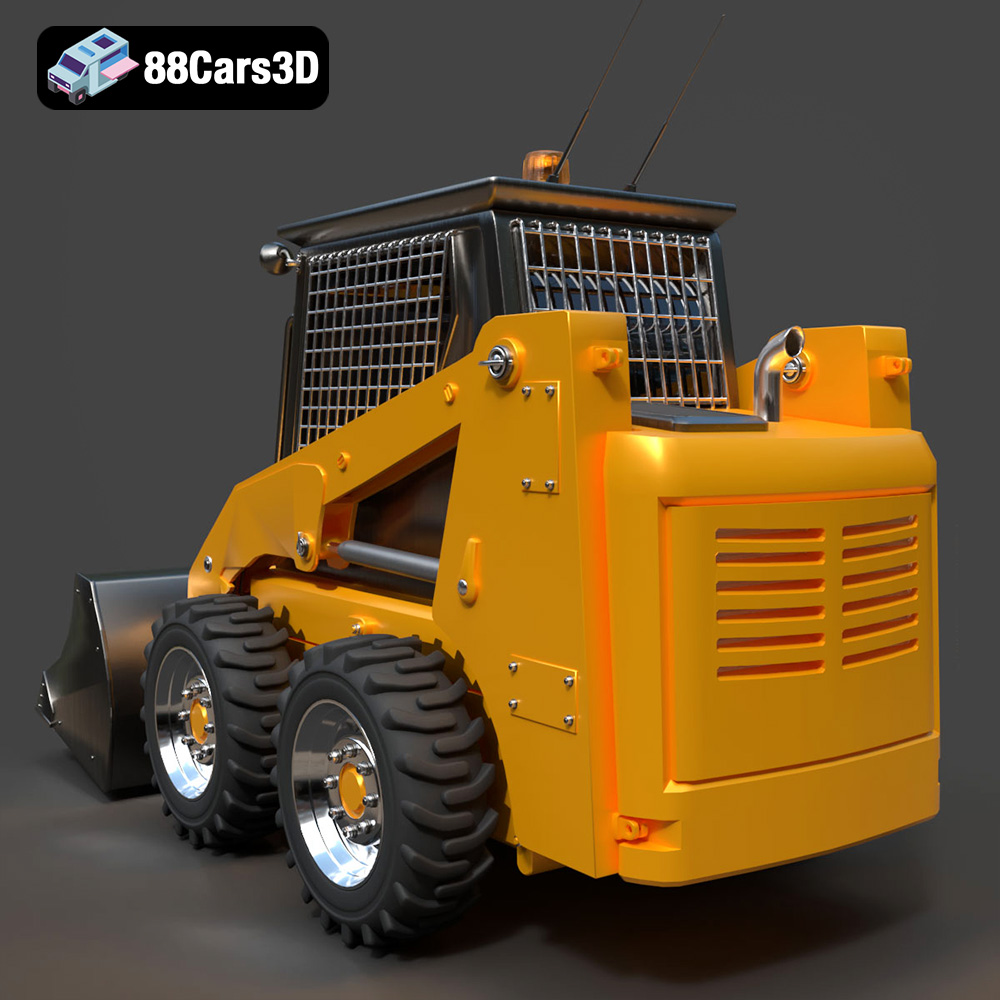
Explore the rugged versatility of this Skid Steer Loader, a highly accurate 3D model representing the workhorse of modern construction, landscaping, and agriculture. Known for its compact frame, tight turning radius, and formidable lifting power, this model captures the heavy-duty aesthetics perfectly, from its robust lifting arms and reinforced front bucket to its protective roll cage and hydraulic cylinders.
This 3D model features a well-optimized topology with a triangle count of 269,358, providing an exceptional balance between high-end visual fidelity and real-time engine performance. Designed to be game-ready, the model ensures smooth integration into various platforms, making it an outstanding asset for game development, AR/VR industrial training applications, and realistic architectural visualizations.
Perfect for construction site simulations, industrial animations, heavy machinery games, and VR operator training modules.
.blend, .fbx, .obj, .glb, .stl, .ply, .unreal, .max
Tags:
skid-steer-loader, construction-equipment, heavy-machinery, loader, game-ready, low-poly, optimized, vehicle-3d-model, game-asset, rendering, vr-ar, blend, fbx, obj, glb, stl, ply, unreal, max
$27.99
.blend
.fbx
.glb
.max
.obj
.ply
.rendering
.stl
.unreal
construction-equipment
game asset
game-ready
heavy-machinery
loader
low-poly
optimized
skid-steer-loader
vehicle-3d-model
VR/AR