Get 20% OFF All Premium 3D & STL Models!

In the rapidly evolving landscape of digital content creation, the demand for highly detailed, performant, and versatile 3D models has never been greater. From cinematic blockbusters to immersive game worlds, and from intricate architectural visualizations to cutting-edge AR/VR experiences, the quality of a 3D asset forms the bedrock of a compelling visual narrative. Whether you’re a seasoned game developer integrating realistic 3D car models into an open-world environment or a visualization artist crafting breathtaking automotive rendering scenes, the precision and optimization of your assets are paramount.
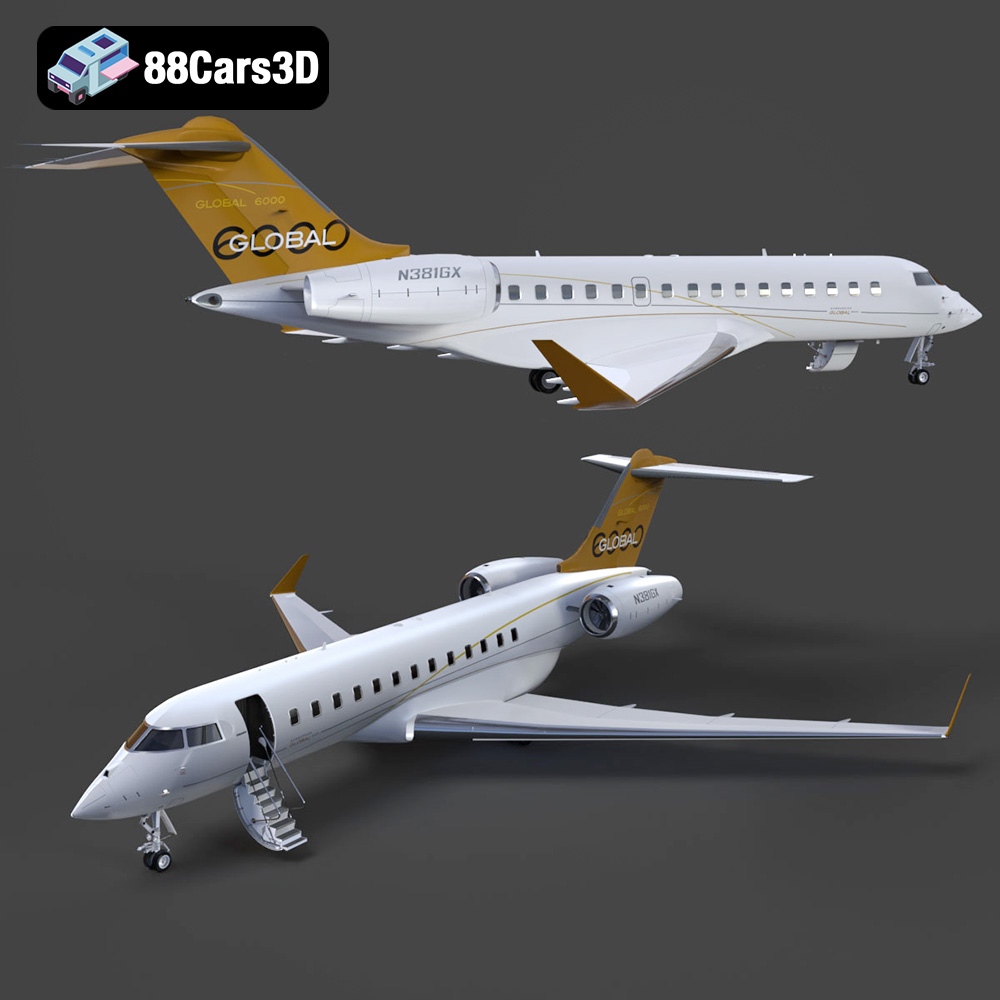
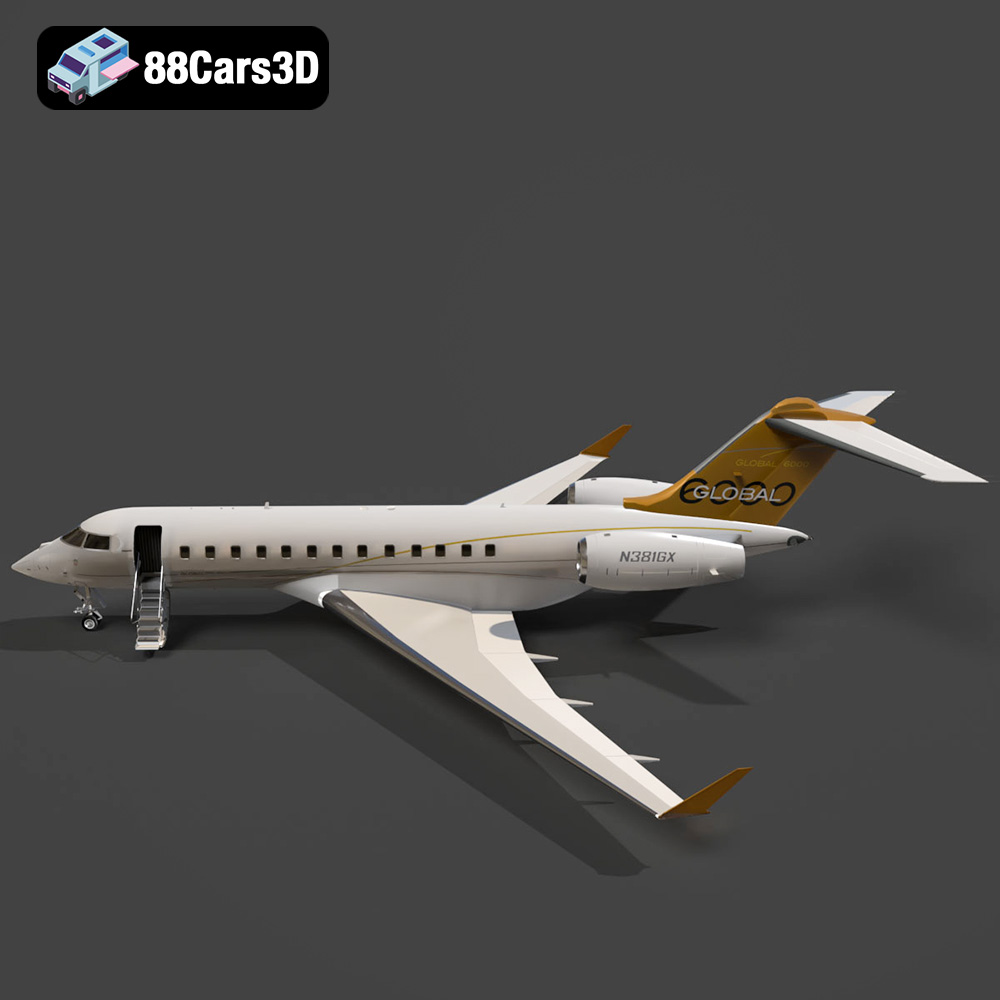
Today, we delve into the world of luxury aviation, exploring how a meticulously crafted asset like the Bombardier 6000 3D Model can serve as a cornerstone for diverse professional applications. This premier long-range business jet, renowned for its exceptional performance and striking aerodynamic profile, translates into a powerful digital asset that embodies the pinnacle of design and technical execution. Its detailed representation allows artists and developers to push the boundaries of realism, offering an unparalleled foundation for flight simulation games, high-end corporate presentations, and advanced virtual training modules.
Creating a digital twin of a complex machine like an aircraft is an arduous task, demanding both artistic flair and rigorous technical understanding. It’s not merely about replicating form but capturing the essence of its engineering, the subtleties of its surfaces, and the functionality of its components. High-fidelity 3D aviation models represent a fusion of passion for detail and precision in execution.
The Bombardier 6000, with its elegant sweeping lines and iconic winglets, presents a formidable challenge for 3D artists. Achieving aerodynamic perfection in a digital model requires a deep understanding of the aircraft’s design principles. Every curve, every panel line, and every junction must be accurately translated from engineering schematics into a polygonal mesh. This involves meticulous modeling techniques, ensuring that the fuselage geometry, the detailed twin turbofan engine nacelles, and the high-fidelity wing structures – complete with ailerons and flaps – faithfully represent the real-world counterpart. Such precision is vital for applications where visual authenticity directly impacts user immersion, such as flight simulators or promotional materials for luxury brands.
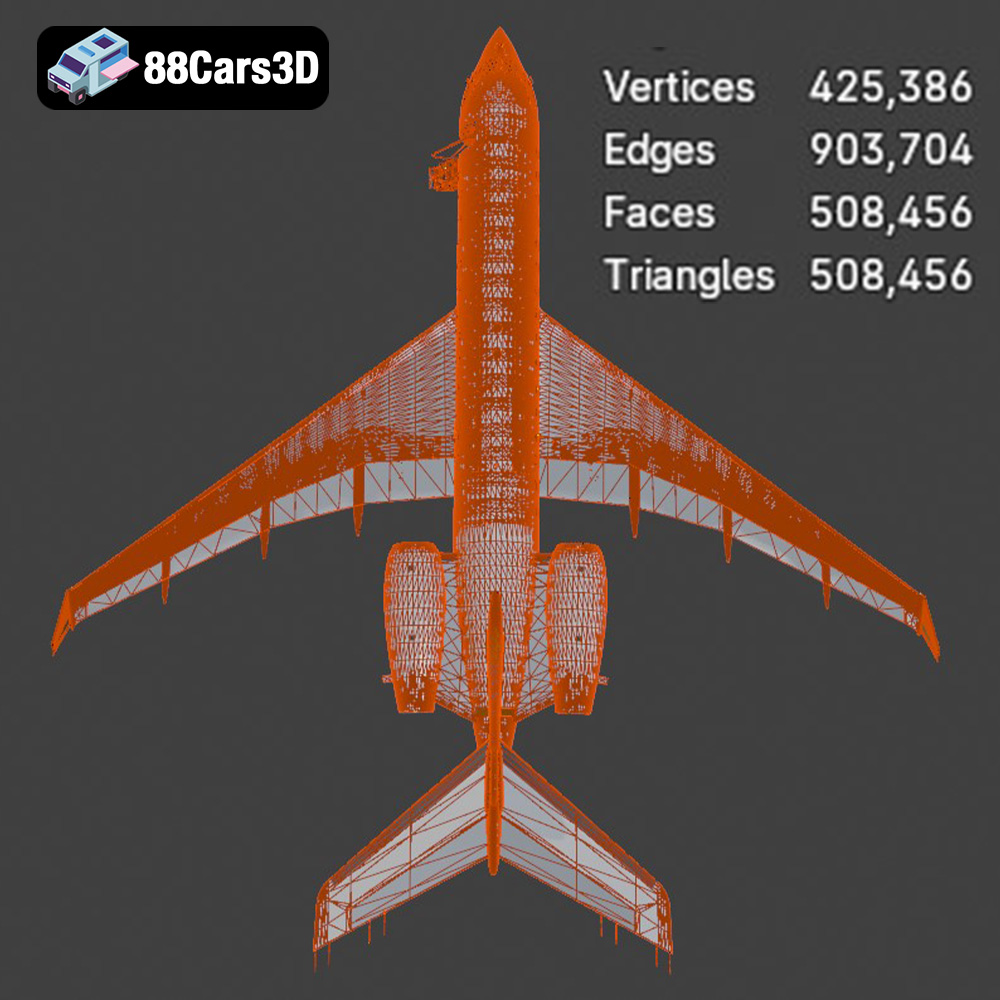
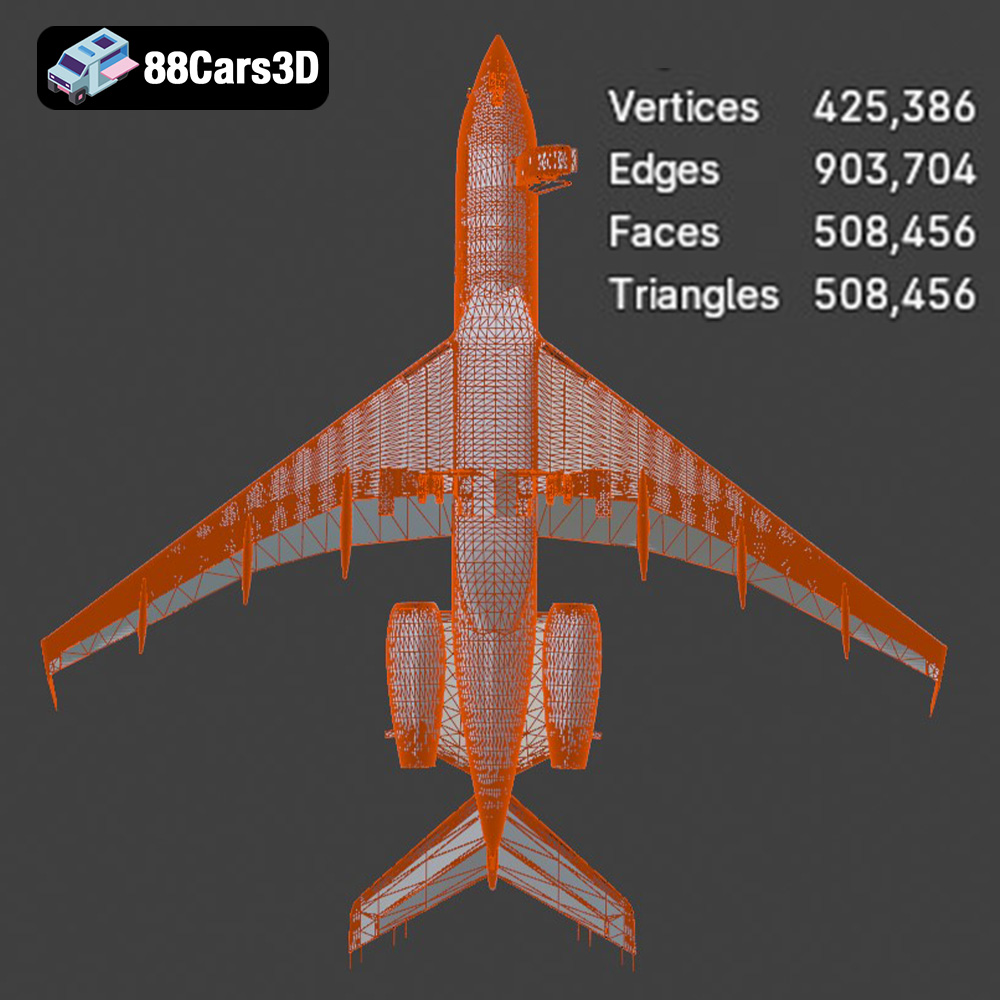
While absolute detail is often desired, practical applications frequently demand optimized performance. This is particularly true for game assets, where frame rates and memory usage are critical considerations. A key challenge lies in striking the perfect balance between visual fidelity and computational efficiency. For the Bombardier 6000 3D model, this balance is achieved with a triangle count of 508,456. This polycount is sufficiently high to deliver unparalleled visual realism for close-up renders and detailed animations, yet optimized enough to remain efficient for real-time engines like Unreal or Unity. This thoughtful optimization ensures that the model can be seamlessly integrated into demanding interactive environments without compromising performance, making it a truly game-ready asset.
The choice of file format for a 3D model is often as critical as the model’s detail itself. Each format is designed with specific use cases and software ecosystems in mind, offering distinct advantages for different stages of a professional workflow. Understanding these distinctions is fundamental for any artist, developer, or designer working with 3D car models, aircraft, or any other digital asset. The Bombardier 6000 3D model, for instance, comes in a comprehensive suite of formats, ensuring maximum compatibility and utility across various platforms.
The `.blend` file format is native to Blender, a powerful open-source 3D creation suite. When you receive a `.blend` file, you’re getting a fully editable Blender scene. This includes not just the mesh geometry, but also materials, textures, lighting, camera setups, and even animation data. It’s ideal for artists who primarily work in Blender and require full control over every aspect of the model for further modification, rigging, or rendering within Blender’s ecosystem. For the Bombardier 6000, the `.blend` file allows immediate customization, from adjusting material finishes to setting up custom lighting scenarios, all within a familiar environment.
FBX (Filmbox) is a proprietary file format developed by Autodesk, renowned for its robust support for 3D models, animation, and various scene data. It has become an industry standard for data exchange between different 3D applications, making it ideal for pipelines involving Unreal Engine, Unity, and other real-time environments. The `.fbx` format efficiently stores geometry, materials, textures, rigging, and animation, making it incredibly versatile. When importing the Bombardier 6000 as an `.fbx`, developers can expect a smooth transition into their game engine, with proper hierarchies and pivot points maintained for easy animation of landing gear or flight control surfaces.
The `.obj` (Wavefront Object) format is one of the oldest and most widely supported 3D file formats. It’s a simple, universal format primarily used for transferring mesh data (vertices, normals, UVs) between different 3D software applications. While it doesn’t store animation or advanced material definitions as robustly as `.fbx`, its ubiquity makes it excellent for cross-software compatibility. If you need a clean mesh to start with in almost any 3D package, `.obj` is a reliable choice. It’s particularly useful for artists who might be using niche software or need a barebones mesh for specific sculpting or retopology tasks.
GLB (GL Transmission Format Binary) is a binary version of glTF (GL Transmission Format), designed for efficient transmission and loading of 3D scenes and models. It encapsulates geometry, materials, textures, and animation into a single compact file, making it perfectly optimized for augmented reality (AR), virtual reality (VR), and browser-based display. The `.glb` format is a game-changer for interactive web applications and mobile AR experiences, allowing users to view the Bombardier 6000 in a virtual showroom directly through their browser or on their smartphone, without requiring powerful dedicated software.
STL (Standard Tessellation Language) is the de facto file format for 3D printing. It describes the surface geometry of a 3D object using a collection of interconnected triangles. While it doesn’t contain color or texture information, its simplicity and widespread support by 3D printers and slicing software make it indispensable for physical prototyping. The inclusion of an `.stl` file for the Bombardier 6000 caters to aviation hobbyists or designers looking to create physical scale models, allowing them to bring the digital aircraft into the tangible world.
PLY (Polygon File Format or Stanford Triangle Format) is another widely used file format for storing 3D data, particularly from 3D scanners. It’s known for its ability to store various properties beyond just geometry, such as color, transparency, and even surface normal information for each vertex. It’s often favored in academic and research settings for its flexibility and precision, suitable for CAD applications, scientific visualization, or detailed mesh analysis where a robust and extensible format is needed. For highly accurate visualizations or reverse engineering projects, the `.ply` format provides a solid foundation.
While `.fbx` is the primary import format for Unreal Engine, providing a specifically prepared `.unreal` asset often implies an asset that has been tested, optimized, and perhaps even includes pre-configured material instances or blueprints within the engine. This format signifies an asset that is truly engine-ready, often with collision meshes, LODs (Levels of Detail), and PBR (Physically Based Rendering) materials already set up to leverage Unreal Engine’s advanced rendering capabilities, significantly streamlining the integration process for developers.
The `.max` file format is native to Autodesk 3ds Max, one of the most powerful and widely used 3D modeling, animation, and rendering software packages in the industry. Similar to `.blend` for Blender, a `.max` file contains the complete scene data, including geometry, modifiers, materials, lights, cameras, and animation keyframes. It offers maximum flexibility for artists who use 3ds Max for high-end rendering, complex character rigging, or detailed environment construction, allowing for extensive customization and iterative design changes to the Bombardier 6000 model.
The Bombardier 6000 3D model stands as a testament to the meticulous craftsmanship and technical prowess involved in creating premium digital assets. Every aspect of its design has been considered to deliver both visual authenticity and practical utility across a spectrum of professional applications.
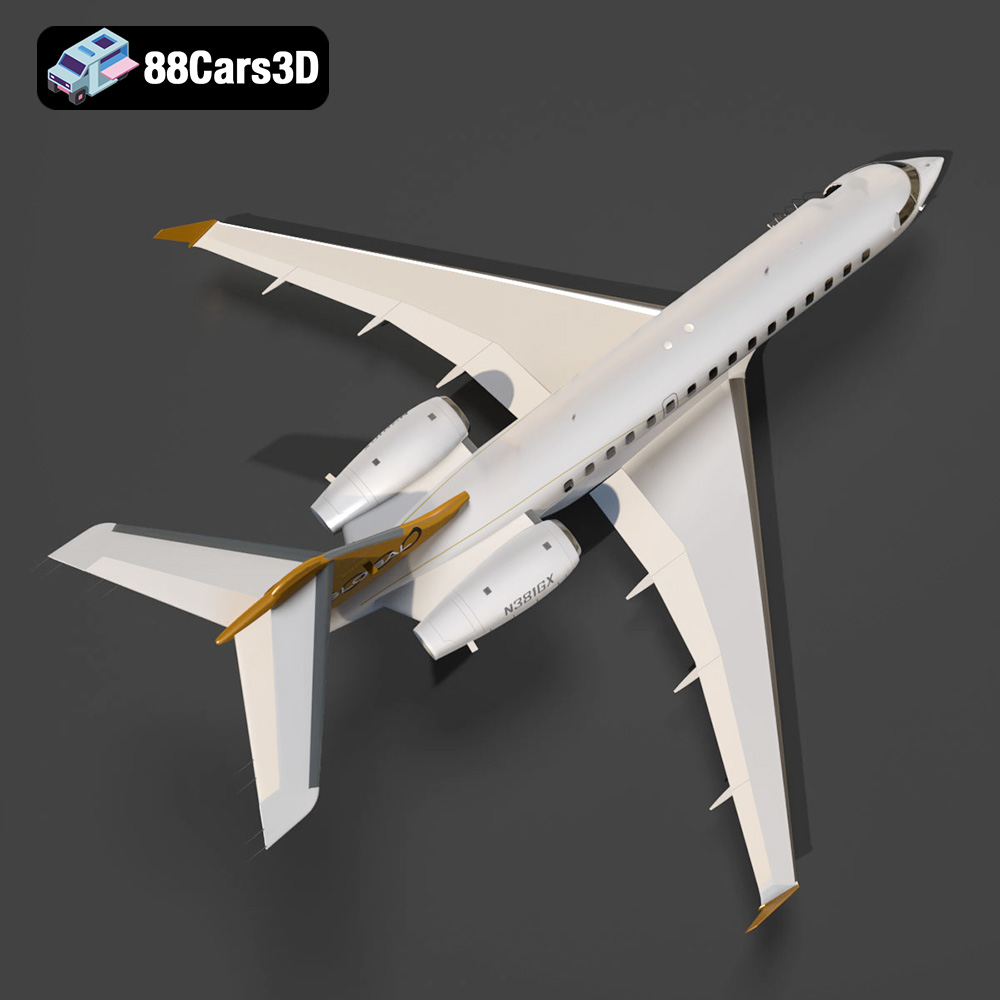
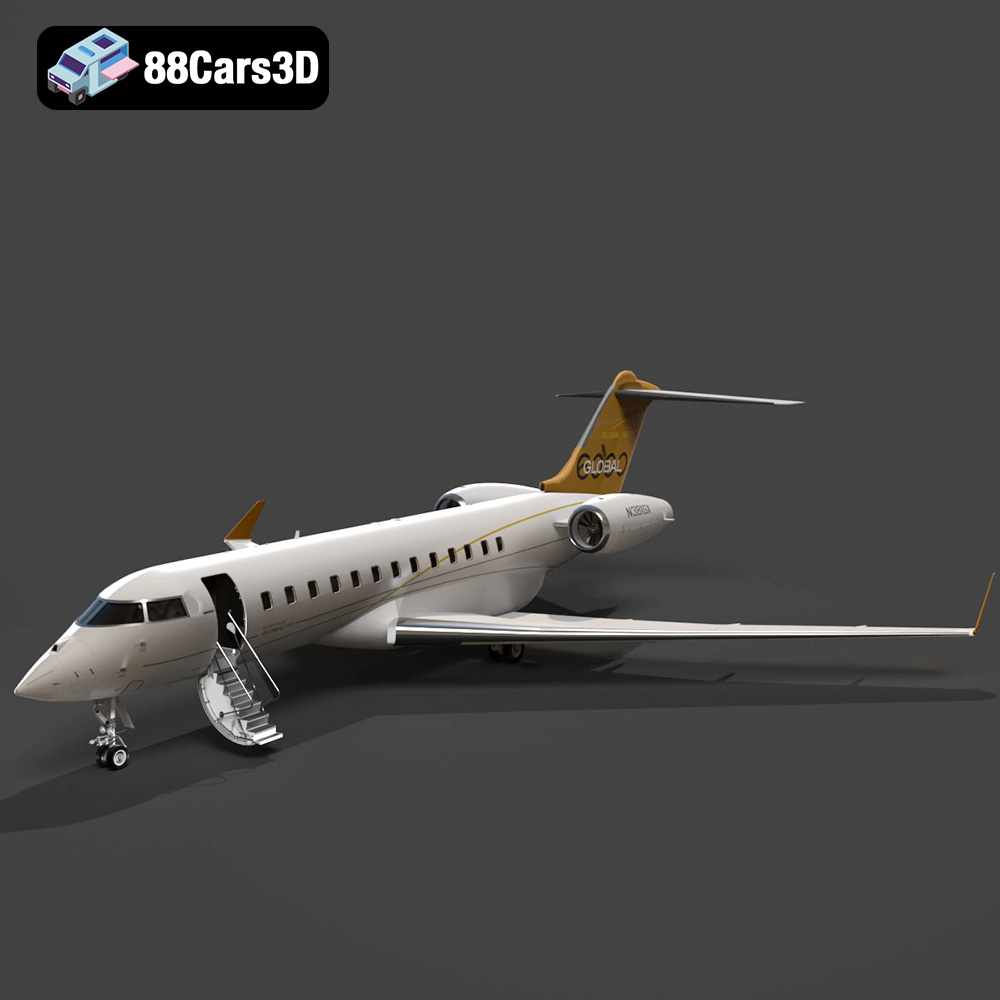
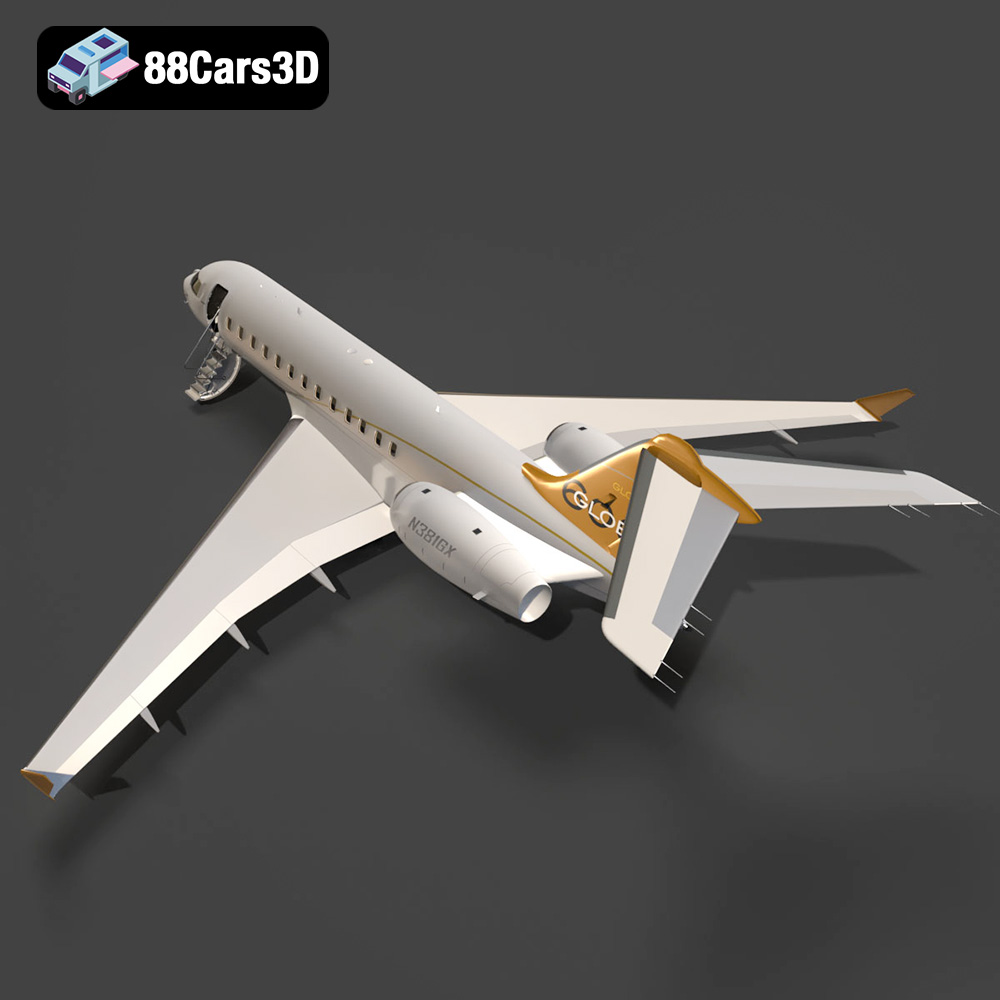
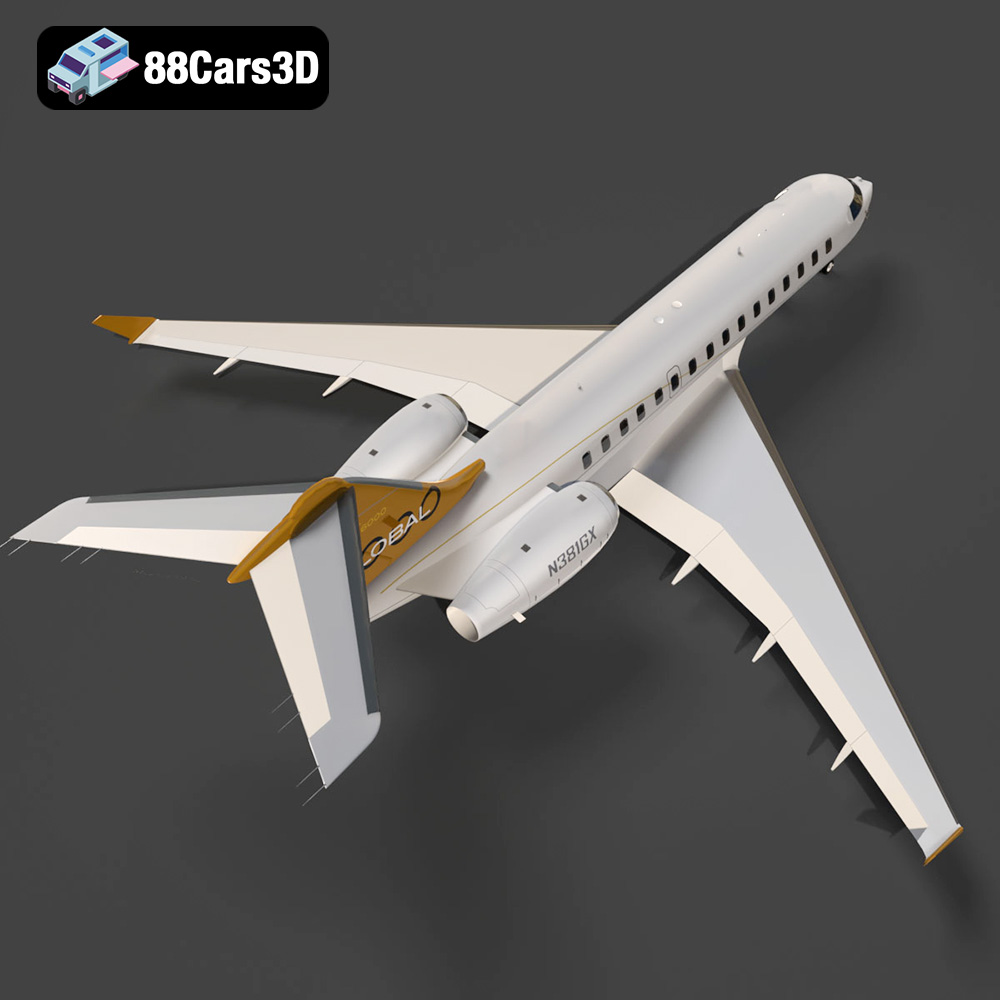
The exterior of the Bombardier 6000 has been captured with an obsessive eye for detail. The accurate fuselage geometry and sweeping aerodynamic proportions are immediately apparent, forming the backbone of its realistic appearance. Beyond the overall shape, the model boasts highly detailed twin turbofan engine nacelles and exhaust nozzles, adding significant realism to rendered scenes. The high-fidelity wing structures, including precisely modeled ailerons, flaps, and the aircraft’s signature winglets, are designed not just for aesthetics but also for potential animation. Furthermore, accurately modeled exterior lighting – including landing, navigation, and strobe lights – provides essential elements for realistic day-night cycles and cinematic lighting setups. The intricacy extends to the landing gear assemblies, wheels, tires, and bay doors, all modeled to enable seamless retraction and deployment animations. Separately modeled components like landing gear, flight control surfaces, and engine turbines ensure that the model is ready for dynamic, interactive scenarios.
Beyond the impressive exterior, the Bombardier 6000 3D model offers an immersive cockpit and partial interior that elevates its utility for first-person experiences. Detailed pilot and co-pilot seating arrangements provide a credible environment for virtual flight. Accurately proportioned flight yokes and steering columns, along with comprehensive instrument panel geometry, are prepared for the integration of glass cockpit displays and interactive elements. The throttle quadrant and center console control details further enhance the sense of realism. This optimized geometry for immersive first-person POV makes the model perfect for advanced flight simulators and VR training modules, allowing users to truly step inside and interact with the aircraft.
The true strength of the Bombardier 6000 3D model lies in its technical specifications and advantages, which cater directly to the needs of professional artists and developers. Being “Game-Ready & Optimized” means its 508,456 triangles strike a perfect balance for real-time engines while maintaining high-end visual realism crucial for game assets. It adheres to real-world scale accuracy, based on actual aircraft dimensions, which is vital for architectural visualizations, simulator development, and any project demanding precise environmental integration. Crucially, it features proper pivot setups for all animatable parts – landing gear retraction, aileron movement, and turbine rotation – streamlining the animation workflow significantly. Its compatibility with major 3D software platforms and real-time rendering engines ensures it can be a plug-and-play asset in almost any production pipeline.
The utility of a high-quality 3D asset like the Bombardier 6000 extends across numerous professional domains. Whether creating immersive interactive experiences or producing stunning static renders, the foundational quality of the model dictates the final output. This is equally true when working with 3D car models for automotive projects or intricate machinery.
For game developers, the Bombardier 6000 is an ideal candidate for flight simulators, aviation games, and open-world environments. Its optimized polycount and game-ready status mean it can be seamlessly integrated into engines like Unreal and Unity. The included `.fbx` and `.unreal` formats are tailored for this purpose, facilitating quick import and setup. Developers can leverage the accurate pivot points for rigging and animation, implementing realistic flight dynamics, landing gear cycles, and control surface movements. Furthermore, PBR (Physically Based Rendering) material setups can be applied to maximize visual fidelity, making the aircraft look stunning under any lighting condition within the game engine. This makes it a prime example of an invaluable game asset.
While the focus here is an aircraft, the principles of high-end rendering apply directly to automotive rendering and architectural visualization. The Bombardier 6000 3D model excels in these areas, serving as an excellent asset for luxury brand campaigns, cinematic airport scenes, and virtual showrooms. Artists using 3ds Max or Blender can utilize the `.max` or `.blend` files to fully customize materials, apply advanced texture maps, and set up sophisticated lighting rigs. The model’s intricate details, from engine nacelles to interior cockpit elements, come to life under physically accurate rendering engines like V-Ray, Corona, or Cycles, producing photorealistic stills and animations that are indistinguishable from reality. Imagine this aircraft parked on a luxury tarmac, complementing a high-end sports car in a marketing visual – the synergy of quality assets is undeniable.
Augmented Reality (AR) and Virtual Reality (VR) represent new frontiers for immersive content. The Bombardier 6000 3D model is perfectly suited for these applications, enabling immersive virtual showrooms, luxury jet configurators, and mobile AR experiences. The `.glb` format is particularly valuable here, offering an optimized, single-file solution for web-based and mobile AR/VR. Users could virtually walk around the aircraft, explore its interior in VR, or even place a scaled model on their desk using AR. This level of interaction provides a powerful tool for marketing, sales, and even training, allowing potential buyers or students to engage with the product in unprecedented ways.
Beyond screen-based applications, the Bombardier 6000 3D model bridges the gap between the digital and physical realms through 3D printing. This capability opens up new avenues for hobbyists, collectors, and designers to create tangible representations of this magnificent aircraft.
Converting a detailed digital model into a successful 3D print requires specific considerations. The `.stl` format, included with the Bombardier 6000, is the standard for this process. However, a model designed for rendering might need adjustments for printability, such as ensuring sufficient wall thickness for structural integrity and identifying areas that will require support structures during printing. The Bombardier 6000’s design, with its separated landing gear and control surfaces, lends itself well to multi-part printing, allowing for greater detail and easier post-processing.
For aviation models, selecting the right 3D print settings is crucial. The recommended scales (1:72, 1:100, 1:144) allow for detailed display models. Layer height recommendations (0.04–0.12 mm) suggest that resin printing is often preferable for capturing fine details like antennas and delicate landing gear components, which might be lost on FDM printers. Wall thickness (1.2–2.0 mm) ensures the model isn’t too fragile. Infill (20–30%) provides internal support without excessive material use. Supports are unequivocally required for complex geometries like wings, horizontal stabilizers, engines, and landing gear, preventing print failures. Strategic print orientation – such as printing the fuselage angled or vertically – enhances structural integrity. Finally, post-processing with sanding, priming, and applying authentic corporate livery painting with gloss finishes transforms the raw print into a museum-quality replica, making it an excellent project for dedicated enthusiasts.
A truly professional 3D asset offers more than just static beauty; it provides a canvas for boundless creativity and adaptation. The Bombardier 6000 3D model is designed with customization at its core, allowing artists to tailor it precisely to their project’s unique requirements.
The ability to easily change exterior colors is a powerful feature, enabling the creation of custom corporate liveries or artistic designs. This is crucial for branding, marketing, or depicting fictional airlines and private owners within game or animation projects. Beyond color, the model allows for modification of tire textures to depict varying levels of wear, adding another layer of realism depending on the scenario. Artists can also adjust material finishes on the fuselage, switching between matte, high-gloss, or metallic accents to achieve specific visual effects or match desired aesthetic profiles. This level of material control is invaluable for creating diverse and dynamic scenes.
The model’s adaptability extends to its integration within dynamic environments. Cabin and exterior lighting can be adjusted to flawlessly transition between day or night environments, enhancing the realism of flight simulations or cinematic sequences. With separate landing gear, flight control surfaces, and engine turbines, the model is built for animation. This allows for realistic take-off and landing sequences, in-flight maneuvers, or pre-flight inspections, making it an incredibly flexible asset for storytelling and interactive experiences. Whether you need a pristine, brand-new jet for a luxury advertisement or a weathered workhorse for a gritty game scene, this model provides the foundation for limitless creative expression.
In the competitive world of digital content creation, the difference between good and great often lies in the quality of the underlying assets. The Bombardier 6000 3D model exemplifies what a premium asset should be: highly detailed, technically optimized, and supremely versatile across a multitude of applications. From enhancing the realism of game development and immersive AR/VR experiences to producing breathtaking automotive rendering and even facilitating 3D printing, this model serves as a robust foundation for professionals and hobbyists alike.
Its comprehensive array of included file formats ensures seamless integration into virtually any workflow, whether you’re working in 3ds Max, Blender, Unreal Engine, or preparing for a physical print. By balancing intricate detail with efficient polygon count, it allows creators to achieve photorealism without sacrificing performance, making it an ideal choice for the most demanding projects. As the demand for sophisticated digital content continues to soar, investing in high-quality 3D car models and aircraft assets from reputable sources like 88cars3d.com becomes an increasingly strategic decision, empowering creators to realize their visions with unparalleled fidelity and efficiency.
Experience the epitome of luxury aviation with this highly detailed 3D model of the Bombardier 6000, a premier long-range business jet renowned for its exceptional performance, striking aerodynamic profile, and global reach. This model meticulously captures the aircraft’s elegant sweeping lines, iconic winglets, and powerful turbofan engine housings that make it a standout in any virtual fleet or high-end aviation visualization. Featuring a beautifully optimized topology with a triangle count of 508,456, this model delivers unparalleled visual fidelity while remaining efficient for real-time applications. Designed with developers and 3D artists in mind, it provides the perfect balance of detail and performance, making it highly suitable for flight simulation games, AR/VR experiences, animation, and architectural or high-end lifestyle visualizations. Perfect for flight simulators, luxury brand campaigns, cinematic airport scenes, and virtual showrooms.
$26.00
.aircraft
.blend
.bombardier
.fbx
.glb
.max
.obj
.ply
.rendering
.stl
.unreal
airplane-3d-model
bombardier-6000
game asset
game-ready
low-poly
optimized
private-jet
VR/AR