Get 20% OFF All Premium 3D & STL Models!

In the vast landscapes of digital creation, where realism and performance often battle for supremacy, the demand for meticulously crafted 3D assets continues to surge. From the intricate details of a vintage automobile to the colossal scale of industrial titans, the ability to accurately represent complex machinery in a digital environment is paramount. These digital assets are the backbone of everything from immersive game worlds and compelling visualizations to critical training simulations and even physical prototypes.
Today, we delve into the specialized world of heavy machinery 3D modeling, exploring the technical nuances, diverse applications, and profound impact these assets have across industries. We’ll specifically examine an exemplary piece of digital engineering: the Electric Rope Shovel 3D Model available on 88cars3d.com. This incredible asset isn’t just a static representation; it’s a versatile, game-ready tool designed to elevate projects in game development, AR/VR, visualization, and even 3D printing. Understanding what makes such a model exceptional, and how to effectively integrate it into your pipeline, is key to unlocking its full potential.
Before diving into the specifics of any single 3D model, it’s crucial to grasp the landscape of file formats that define how these digital creations are stored, transferred, and utilized. Each format serves a specific purpose, offering unique advantages for different stages of a project or target platforms. The Electric Rope Shovel 3D Model, for instance, comes in a comprehensive suite of formats, ensuring maximum compatibility and utility. Let’s break down these essential digital blueprints:
The .blend format is Blender’s native file type. It’s a complete package, containing not just the mesh data but also materials, textures, lighting, cameras, animations, rigging, and even scene settings. For artists and developers working within the Blender ecosystem, a .blend file offers unparalleled flexibility. It allows for full editability of every component, from adjusting vertex positions to tweaking complex node-based materials. If you plan on customizing the Electric Rope Shovel 3D Model’s textures, re-rigging parts, or integrating it seamlessly into an existing Blender scene, the .blend file is your go-to choice. Its primary use is for active development and scene creation within Blender.
.fbx (Filmbox) is arguably the most widely adopted interchange format in the 3D industry, especially for game development and animation pipelines. Developed by Autodesk, FBX files are excellent for transferring 3D models, animation data, skeletal rigs, and PBR (Physically Based Rendering) materials between different software applications like 3ds Max, Maya, Blender, and real-time engines such as Unreal Engine and Unity. For the Electric Rope Shovel, an .fbx file would be ideal for importing into a game engine, where its optimized mesh and pivot setup for animation can be directly utilized. It’s a robust format that retains a significant amount of data, making it perfect for dynamic, animated assets in real-time environments.
The .obj (Wavefront OBJ) format is a classic and highly compatible option, often referred to as the “universal” format for 3D geometry. It primarily stores vertex positions, UV coordinates, and normal vectors, defining the mesh structure. While it can reference external .mtl (material) files for basic color and texture information, it doesn’t support advanced material properties, rigging, or animation. OBJ files are perfect for static models or when you need a clean mesh to import into virtually any 3D software for further processing or retopology. For simple rendering or cross-software compatibility of the Electric Rope Shovel’s raw geometry, .obj is a reliable choice.
.glb (GL Transmission Format Binary) is an increasingly popular format optimized for efficient transmission and loading of 3D scenes and models on the web and in augmented/virtual reality (AR/VR) applications. It’s a self-contained, binary format that embeds all textures and data directly within a single file, reducing HTTP requests and load times. If you’re developing an interactive web configurator for heavy machinery, integrating the Electric Rope Shovel into a mobile AR experience, or deploying it within a browser-based VR environment, the .glb format offers excellent performance and ease of use.
The .stl (Stereolithography) format is the de facto standard for 3D printing. It represents 3D models as a collection of triangles, defining only the surface geometry without any color, texture, or material information. While simplistic, its widespread adoption makes it universally compatible with 3D printers and slicing software. When preparing the Electric Rope Shovel for a physical print, converting it to .stl is necessary. It’s important to note that the model needs to be “manifold” (watertight) for successful printing, a characteristic often inherent in well-made assets like this one.
The .ply (Polygon File Format) is a versatile format capable of storing more complex information than .obj, including color, transparency, normals, texture coordinates, and even reliability information for each vertex and face. It’s commonly used in applications involving 3D scanning, CAD software, and scientific visualization where precise mesh data and associated attributes are crucial. For advanced analysis or integration into CAD pipelines, the .ply format for the Electric Rope Shovel offers a more robust data structure than .obj.
While not a universal file format in the same vein as .fbx or .obj, .unreal typically refers to a pre-packaged asset or project file specifically prepared for the Unreal Engine. This often means the model has already been imported into an Unreal project, had its materials set up (PBR textures applied), collisions generated, and potentially even includes basic blueprints for animation or interaction. For developers working with Unreal Engine, an “.unreal” asset significantly streamlines the workflow, allowing for immediate integration of the Electric Rope Shovel into a game or simulation without tedious setup. It represents an “engine-ready” state, saving valuable development time.
Finally, the .max format is the native file type for Autodesk 3ds Max. Like .blend, it saves the entire scene, including models, materials, lights, cameras, animations, and render settings. For professionals operating within 3ds Max, the .max file provides full editability and access to all modifiers and parameters used in the model’s creation. If you need to perform detailed scene composition, complex animations, or high-fidelity renders with engines like V-Ray or Corona, the .max version of the Electric Rope Shovel 3D Model offers the ultimate level of control and flexibility within its native environment.
The availability of such a diverse range of formats for the Electric Rope Shovel 3D Model highlights its developer’s commitment to providing maximum utility for various professional pipelines, ensuring that regardless of your software or project requirements, you have the right tool for the job.
Creating a 3D model of heavy machinery like an Electric Rope Shovel demands a unique blend of artistic skill and technical accuracy. It’s not just about aesthetics; it’s about replicating real-world functionality and robust engineering. The Electric Rope Shovel 3D Model from 88cars3d.com exemplifies this philosophy, presenting a digital twin that is both visually stunning and technically sound.
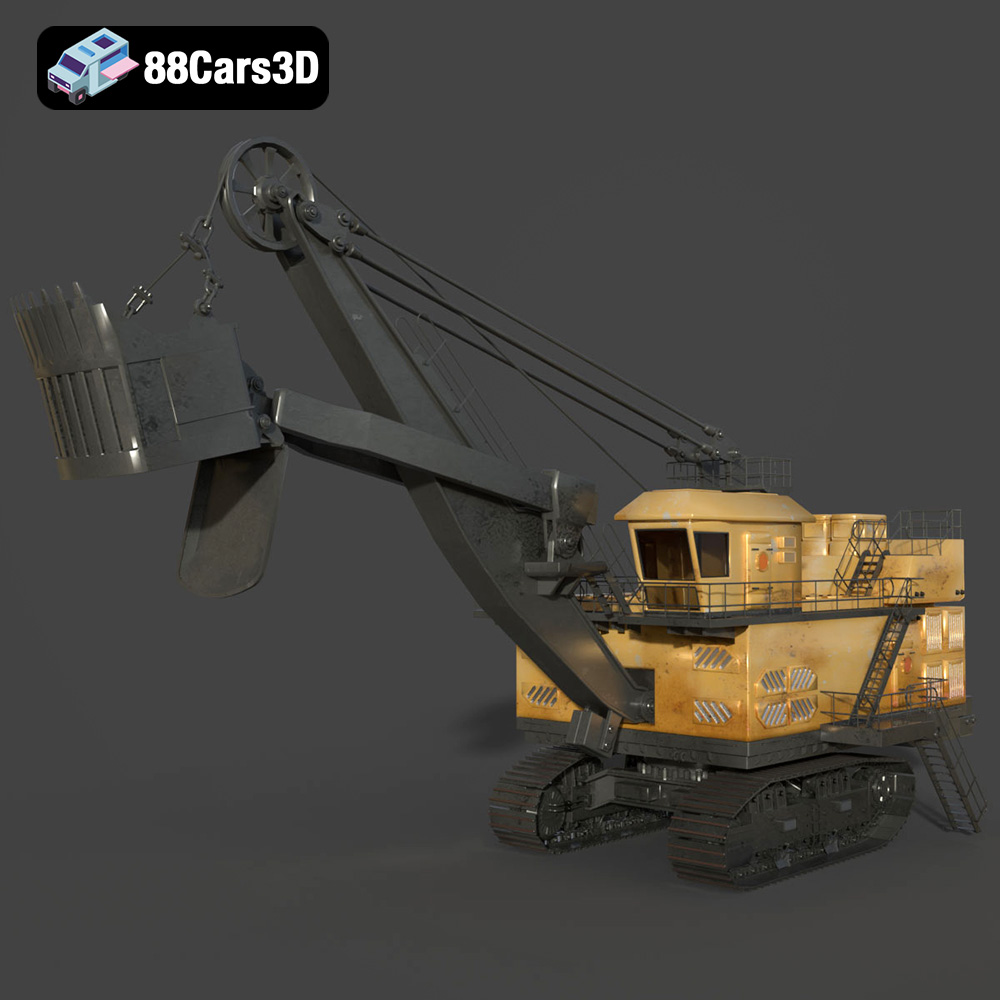
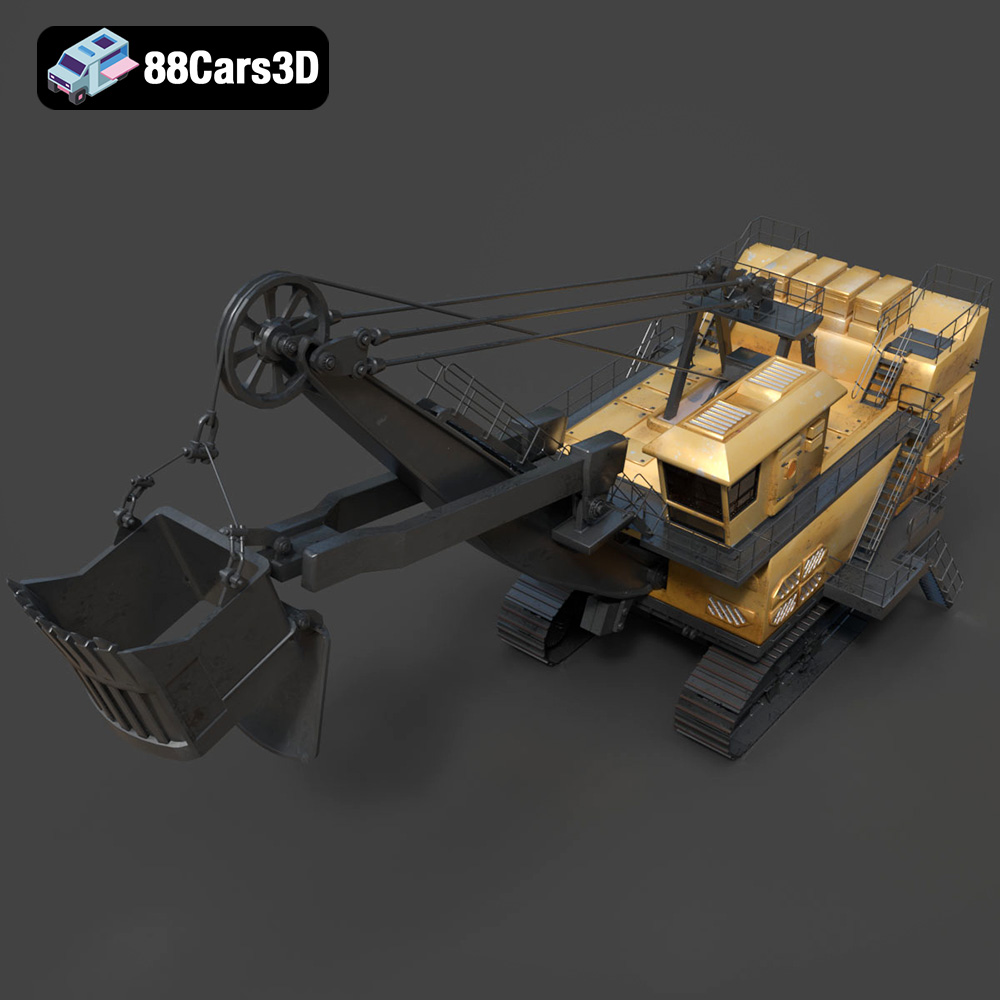
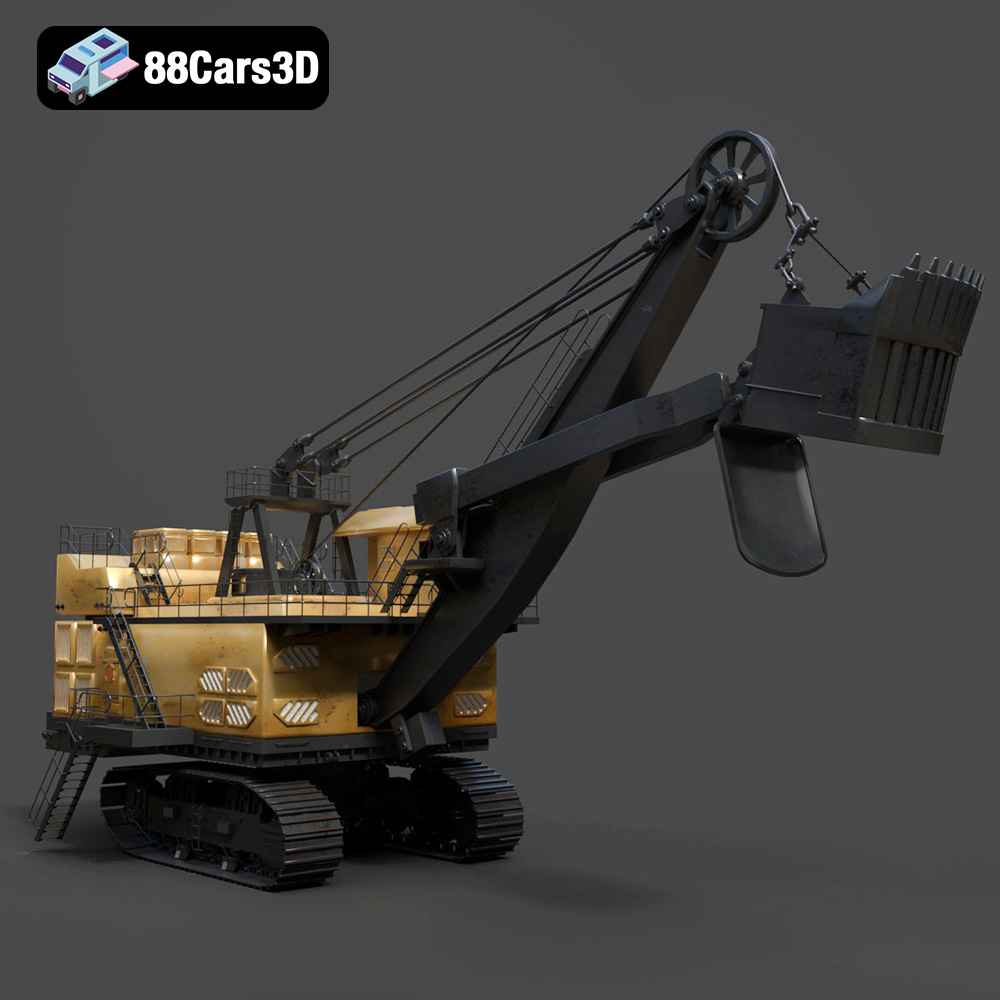
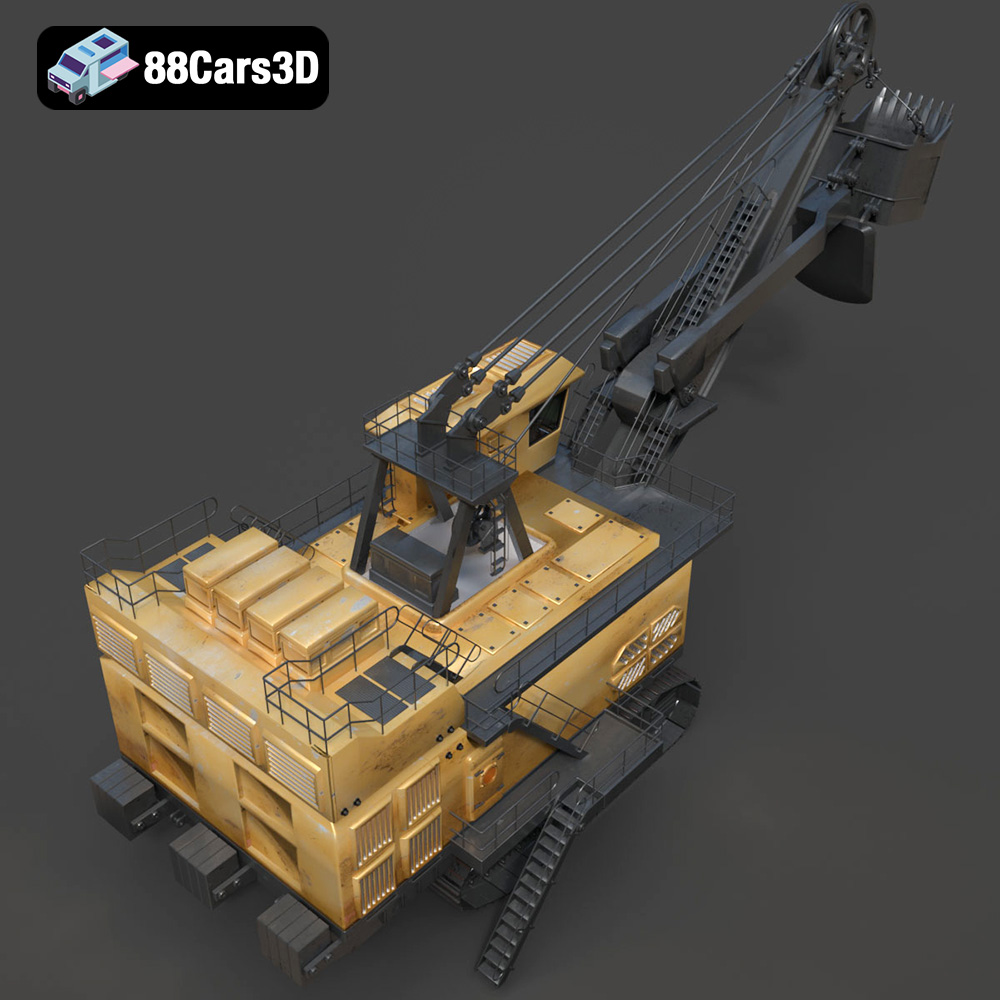
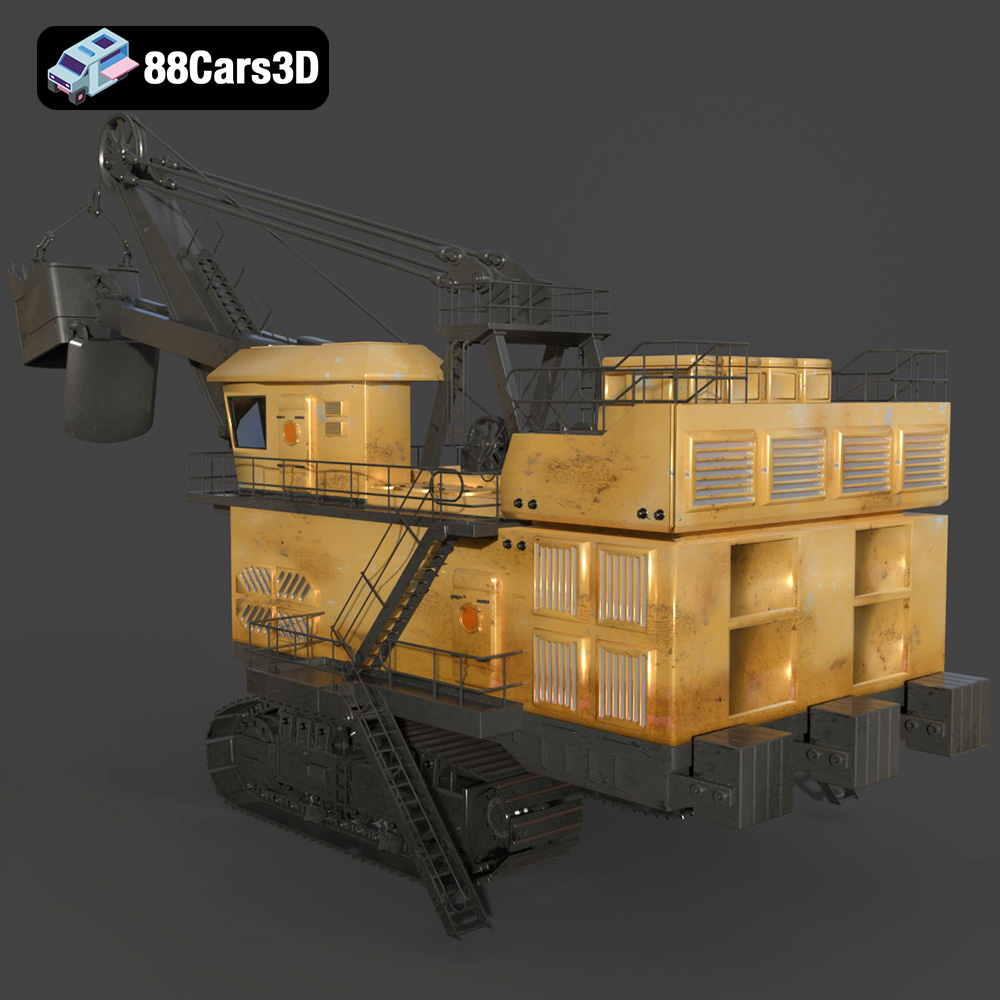
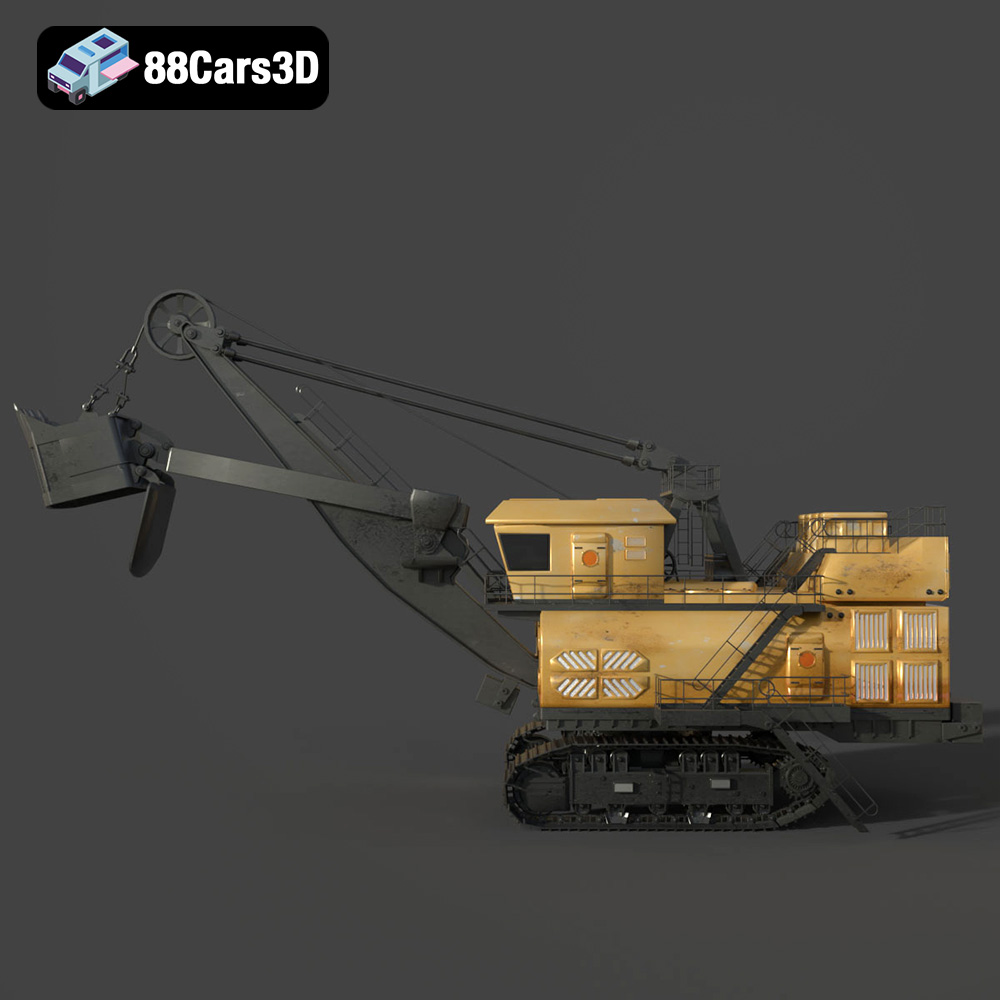
The exterior of this digital titan is a testament to meticulous observation and modeling. The structural geometry faithfully mirrors the massive proportions of its real-world counterpart, capturing the raw power and industrial grandeur. Key elements like the intricate boom, the heavy-duty dipper bucket with its detailed teeth and functional door mechanisms, and the massive crawler track assemblies (featuring individual links for enhanced realism) are all precisely rendered. The model also includes detailed heavy machinery electric motors, complex hoist and crowd rigging systems, industrial safety lighting, and access ladder detailing. This level of granularity ensures that whether viewed up close in a VR environment or from a distance in a vast open world, the shovel maintains its impressive visual integrity. Critically, separate boom, bucket, cables, and tracks are provided, offering crucial flexibility for complex animation setups.
Beyond the imposing exterior, the Electric Rope Shovel 3D Model extends its detail to a fully enclosed operator cab. Inside, users will find meticulously crafted industrial control panels, heavy machinery joysticks, and detailed operator consoles with monitoring displays. Even the heavy-duty pedals, levers, and safety switches are represented with care. This attention to interior detail is paramount for applications requiring first-person perspectives, such as VR safety training modules or immersive game environments, where an operator’s interaction with the controls needs to feel authentic and engaging.
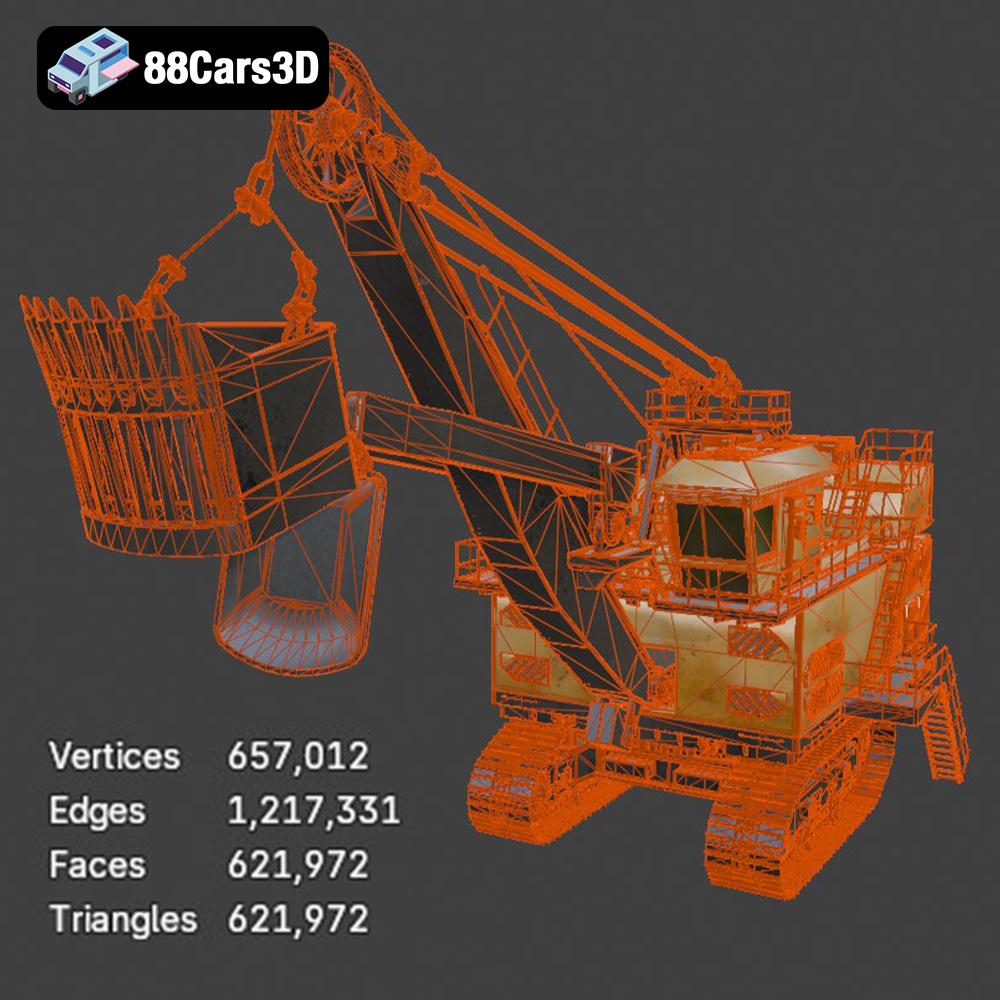
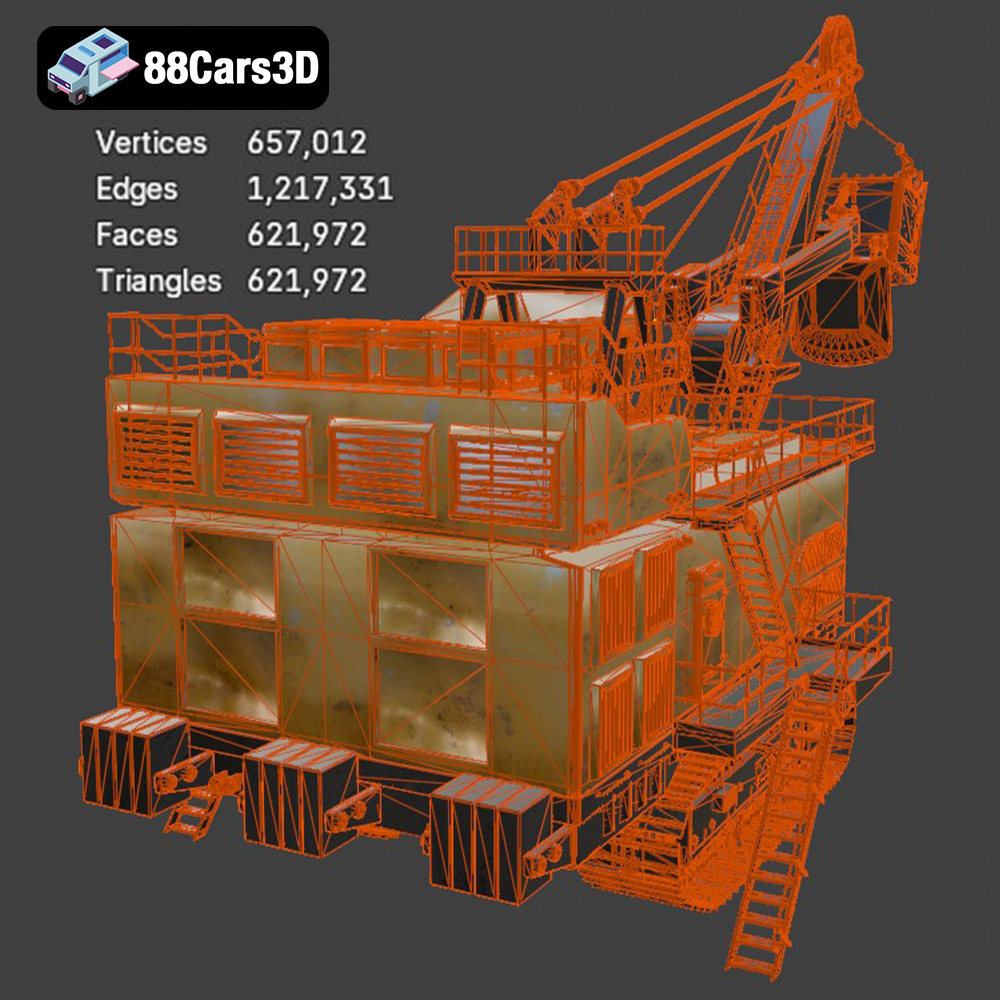
Technical specifications are where a 3D model truly proves its worth, particularly for performance-sensitive applications. This Electric Rope Shovel model boasts 621,972 triangles, striking an excellent balance between high-end visual realism and optimized performance. This polycount is perfectly suited for real-time engines like Unreal and Unity, ensuring smooth frame rates without sacrificing visual fidelity. The model maintains real-world scale accuracy, a crucial factor for believable simulations and interoperability with other assets. Furthermore, proper pivot setups for track rotation, boom movement, bucket articulation, and cab rotation are pre-configured, drastically simplifying the animation process for developers. This ‘game-ready’ status is a significant advantage, reducing the need for extensive post-import cleanup and rigging.
The versatility of a high-quality 3D asset like the Electric Rope Shovel 3D Model transcends mere aesthetic appeal. Its robust design and optimized topology make it an indispensable tool across a spectrum of professional applications, from virtual entertainment to critical industrial training.
For game developers, this 3D model is a treasure trove. Its optimized polycount of 621,972 triangles means it can be seamlessly integrated into open-world games, industrial simulators, and construction titles without significantly impacting performance. Imagine sprawling mining operations in an open-world sandbox game, where players can operate this massive machine with authentic movement and mechanics. Or consider a dedicated industrial simulator designed to train future operators, where every lever and switch within the detailed cockpit responds realistically. The proper pivot setups for track, boom, and bucket articulation greatly simplify the animation workflow, allowing developers to focus on gameplay and interactive elements.
The immersive capabilities of AR/VR environments are profoundly enhanced by highly detailed and accurately scaled 3D models. The Electric Rope Shovel is perfect for creating virtual training facilities where prospective operators can learn to maneuver the machine in a safe, controlled, and cost-effective manner. Imagine putting on a VR headset and being virtually transported into the cockpit, operating the controls, and performing digging tasks, all before stepping foot into a real-world machine. Beyond training, it’s ideal for industrial equipment configurators, allowing clients to visualize custom paint jobs or modifications in real-time AR, or for mobile AR experiences that bring the scale of this machinery into any physical space through a smartphone or tablet.
In marketing, industrial design, and architectural visualization, the ability to render photorealistic machinery is paramount. This model excels in industrial showcases, providing stunning visuals for machinery demonstrations, product launches, or investor presentations. It can be placed within studio lighting setups for dramatic product shots or integrated into large-scale visualizations of mining sites, construction zones, or industrial parks. The meticulous detail, from individual track links to the intricate rigging systems, ensures that high-resolution renders convey the immense power and complexity of the shovel, making it invaluable for agencies and design firms seeking top-tier visual content.
Beyond the digital realm, the Electric Rope Shovel 3D Model offers exciting possibilities for 3D printing. With its convertible .stl format, hobbyists can bring this digital titan into the physical world. Imagine a meticulously detailed scale model for display, perhaps as part of a diorama or a collector’s item. The provided 3D print settings, including recommended scales (1:50, 1:64, 1:87), layer height, wall thickness, infill, and support strategies, guide users through the process. Resin printing is recommended for capturing the fine details, and the advice on post-processing, such as authentic industrial colors and weathering effects, enables stunning physical replicas. This dual-use capability – digital and physical – underscores the model’s comprehensive value.
Acquiring a high-quality 3D model is only the first step. The true mastery lies in seamlessly integrating it into your chosen software and engine workflows. The Electric Rope Shovel 3D Model is designed for maximum compatibility, making this process as smooth as possible.
For artists and animators, the native .blend and .max files are indispensable. In Blender, you can leverage its powerful non-destructive modifiers to add further detail, or use its robust rigging and animation tools to create complex sequences of the boom extending, the bucket digging, and the tracks rotating. The node-based material system allows for advanced texture adjustments and shader development. Similarly, in 3ds Max, you can utilize its extensive modeling and animation toolsets, integrate it into a V-Ray or Corona render pipeline for hyper-realistic stills or animations, or even use its particle systems to simulate dust and debris as the shovel operates. Having the source files ensures complete control over the model, enabling extensive customization to fit any project’s specific aesthetic or functional requirements.
When it comes to game development and real-time simulations, Unreal Engine and Unity are the platforms of choice. The Electric Rope Shovel’s game-ready .fbx and .unreal files significantly streamline the integration process. Importing the .fbx into either engine is straightforward; the pre-configured pivot points mean you can immediately begin setting up animation blueprints or state machines. PBR materials can be easily configured using the provided textures, ensuring consistent visual quality under various lighting conditions. For Unreal Engine users, the .unreal asset often means the materials are already set up, and basic collision meshes might be included, reducing setup time. Developers can then script custom behaviors, integrate physics, or create interactive controls for the shovel, bringing it to life within their virtual environments with minimal hassle.
The base model provides an excellent foundation, but customization truly makes it unique to your project. Changing machine house and boom colors to match specific industrial liveries, modifying wear and tear textures to reflect a well-used machine in a muddy mine, or adjusting material finishes (from matte metal to glossy painted steel) are all straightforward processes. Adapting lighting for different scenarios, such as a dramatic night-shift mining environment, adds another layer of realism. These customization options, combined with the model’s clean topology and organized structure, empower artists to create unique visual narratives and achieve the exact look and feel required for their specific application.
High-quality 3D models like the Electric Rope Shovel aren’t just theoretical tools; they are actively shaping industries and driving innovation. Let’s look at a few hypothetical, yet highly plausible, scenarios:
A global mining corporation invests in a bespoke VR training simulator. They acquire the Electric Rope Shovel 3D Model and integrate it into a meticulously recreated digital mine environment. New operators don VR headsets and are placed inside the shovel’s cockpit. They learn to identify controls, perform pre-operational checks, and execute complex digging sequences without any risk to actual equipment or personnel. The accurate scale, detailed interior, and realistic articulation of the model provide an unparalleled learning experience, significantly reducing training costs and improving safety records. The optimized polycount ensures a smooth, immersive VR experience.
An architectural firm is tasked with designing a new industrial park that includes a large-scale mining operation. To present their vision to stakeholders and investors, they use high-fidelity renders and animated fly-throughs. The Electric Rope Shovel 3D Model is placed strategically within the digital landscape, adding a crucial layer of realism and scale. Its presence helps convey the true magnitude of the proposed operations and how human-scale elements interact with heavy machinery. The .max or .blend file allows the architectural visualization artists to integrate it seamlessly into their scene, adjusting materials and lighting to match their aesthetic, and produce stunning marketing collateral.
An indie game studio developing a detailed mining management simulator needs a flagship piece of machinery for players to control. They discover the Electric Rope Shovel 3D Model on 88cars3d.com. The game-ready .fbx is imported into Unity, and the pre-set pivots allow for quick animation setup via Unity’s Animator system. The developers implement custom scripts for digging physics, resource collection, and AI-controlled operations. The balanced polycount ensures the game runs smoothly, even with multiple shovels operating simultaneously. The model becomes a central, iconic asset in their game, contributing significantly to the immersive gameplay experience.
The journey through the intricate world of heavy machinery 3D models reveals a powerful confluence of art, engineering, and technology. The Electric Rope Shovel 3D Model stands as a prime example of a meticulously crafted asset, designed not just for visual appeal but for robust functionality across an array of professional applications.
From its detailed exterior and fully realized cockpit to its optimized topology and extensive file format support, this model is a testament to quality. Whether you are building the next big simulation game, developing cutting-edge AR/VR training modules, creating stunning architectural visualizations, or even bringing a digital design to life through 3D printing, the versatility and technical prowess of this model from 88cars3d.com make it an invaluable asset. It saves countless hours of modeling and optimization, allowing creators to focus on innovation and storytelling. Investing in such a high-quality, game-ready 3D car models and industrial assets is not just about acquiring a digital object; it’s about empowering your projects with the foundation for digital excellence and bringing your creative visions to life with unparalleled realism and performance.
The Electric Rope Shovel is a titan of the mining and heavy construction industry, renowned for its immense digging power and massive scale. This incredibly detailed 3D model captures the rugged industrial design of the real-world machine, featuring a meticulously crafted boom, a heavy-duty dipper bucket, intricate crawler tracks, and the complex mechanical rigging systems essential to its operation. Boasting a detailed yet manageable topology with 621,972 triangles, this 3D model strikes an excellent balance between high-end visual fidelity and optimized performance. Whether you are building an expansive mining simulator, an industrial visualization, or a VR training application, this asset delivers unparalleled realism. Perfect for industrial simulators, heavy machinery rendering, VR safety training modules, and open-world mining environments.
$45.50
.blend
.excavator
.fbx
.glb
.max
.obj
.ply
.rendering
.stl
.unreal
construction-vehicle
electric-rope-shovel
game asset
game-ready
heavy-machinery
industrial-3d-model
low-poly
mining-equipment
optimized
VR/AR