Get 20% OFF All Premium 3D & STL Models!

In the dynamic world of digital content creation, the demand for high-quality 3D car models is ever-increasing. From blockbuster game titles and photorealistic automotive rendering for marketing campaigns to immersive AR/VR experiences and even precise 3D printing, a meticulously crafted vehicle asset can be the cornerstone of success. Imagine bringing the rugged spirit and iconic design of a modern legend to life with unparalleled detail. This is precisely what the Ford Bronco 4-Door 2021 3D model offers – a versatile, high-fidelity digital replica that stands ready to elevate a multitude of professional projects.
The Ford Bronco, a name synonymous with adventure and robust capability, has made a triumphant return, captivating enthusiasts worldwide. Its digital counterpart, available on 88cars3d.com, encapsulates every intricate detail of this celebrated off-road icon. This comprehensive article delves into the technical specifications, diverse applications, and professional workflows that make such a sophisticated 3D asset an indispensable tool for designers, developers, and visual artists alike. We’ll explore how this specific model, with its optimized geometry and extensive file format support, is engineered for seamless integration across various creative pipelines, ensuring your projects stand out with authenticity and visual splendor.
Creating a truly exceptional 3D car model is a delicate balance between artistic vision and technical precision. It’s about more than just replicating shapes; it’s about capturing the essence, the engineering intent, and the tactile feel of a real vehicle in a digital space. This process requires a deep understanding of automotive design, topology optimization, and material science to ensure the model performs flawlessly across different applications.
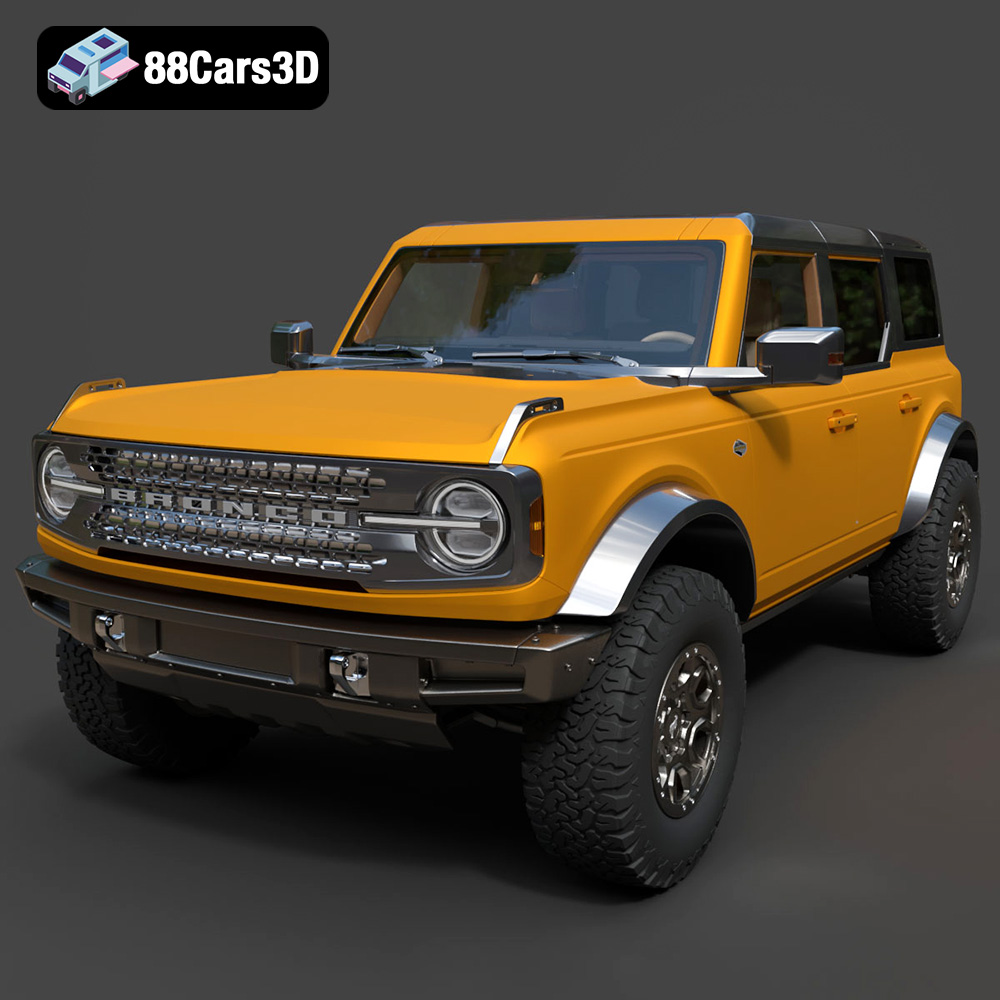
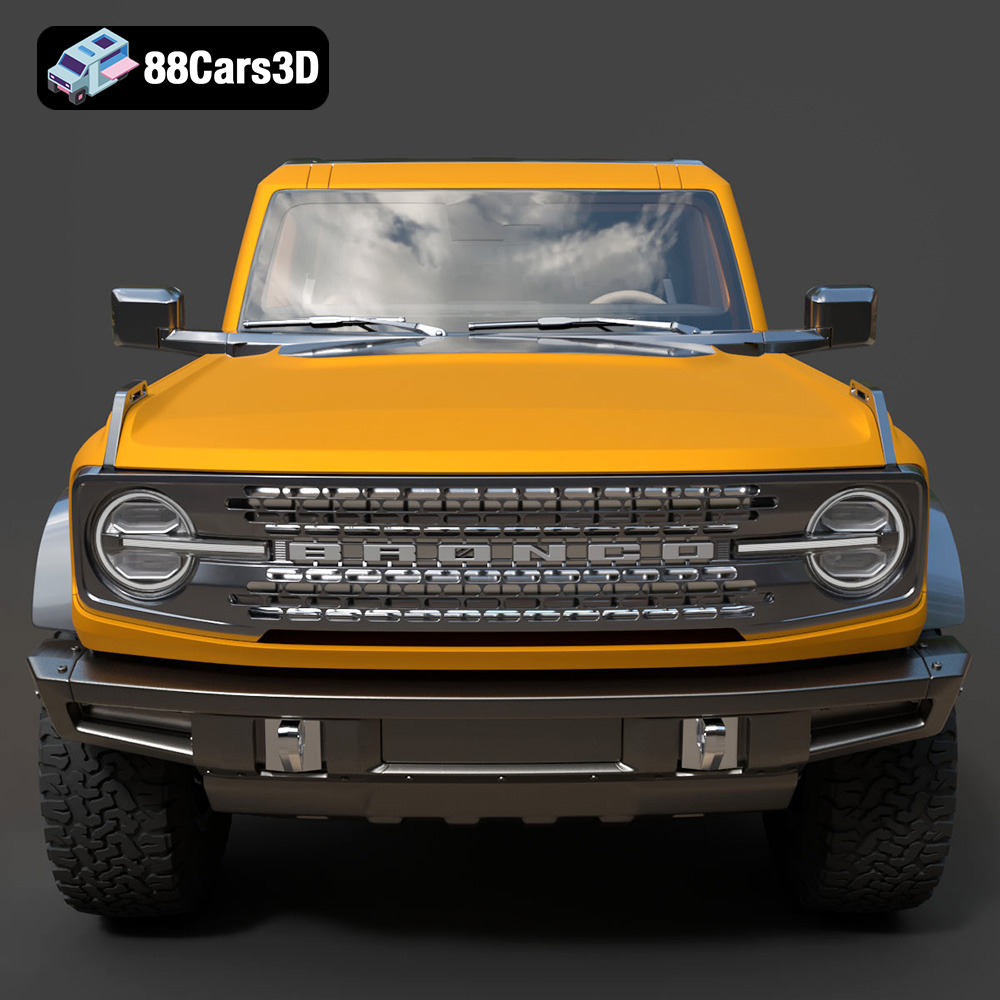
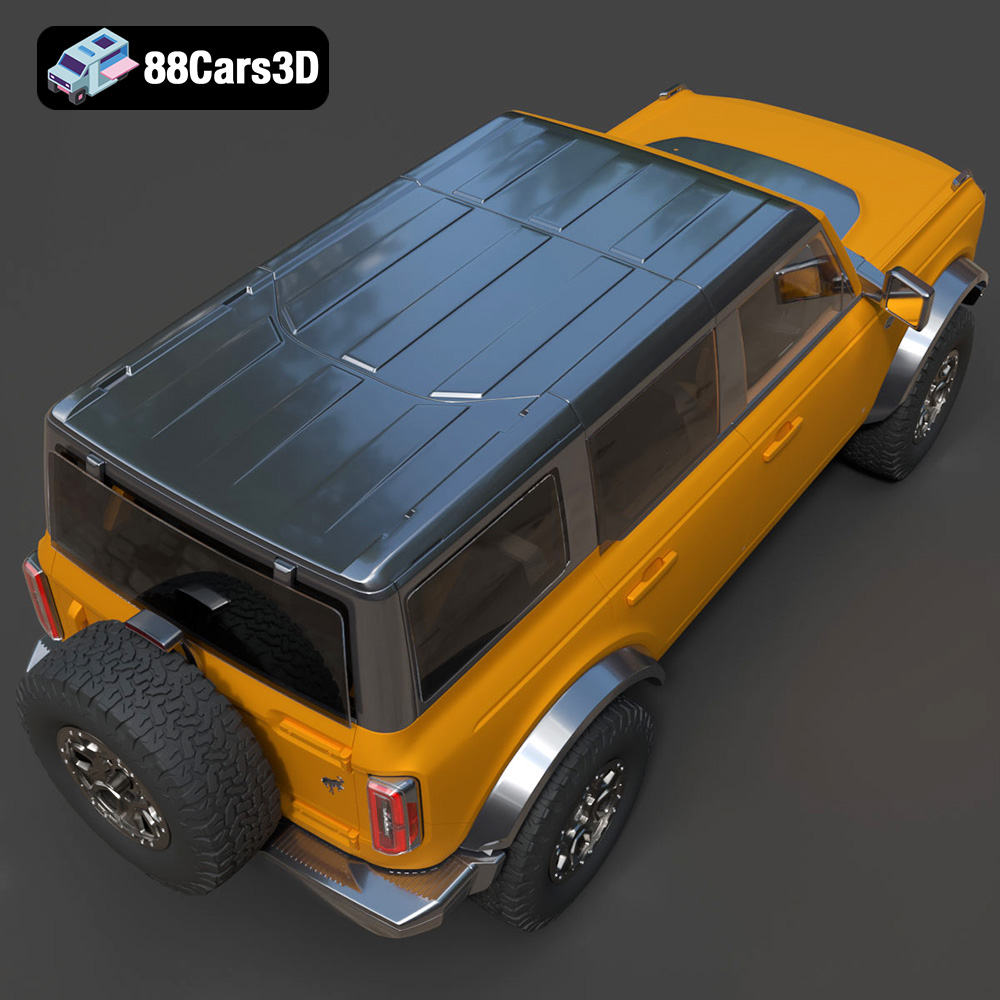
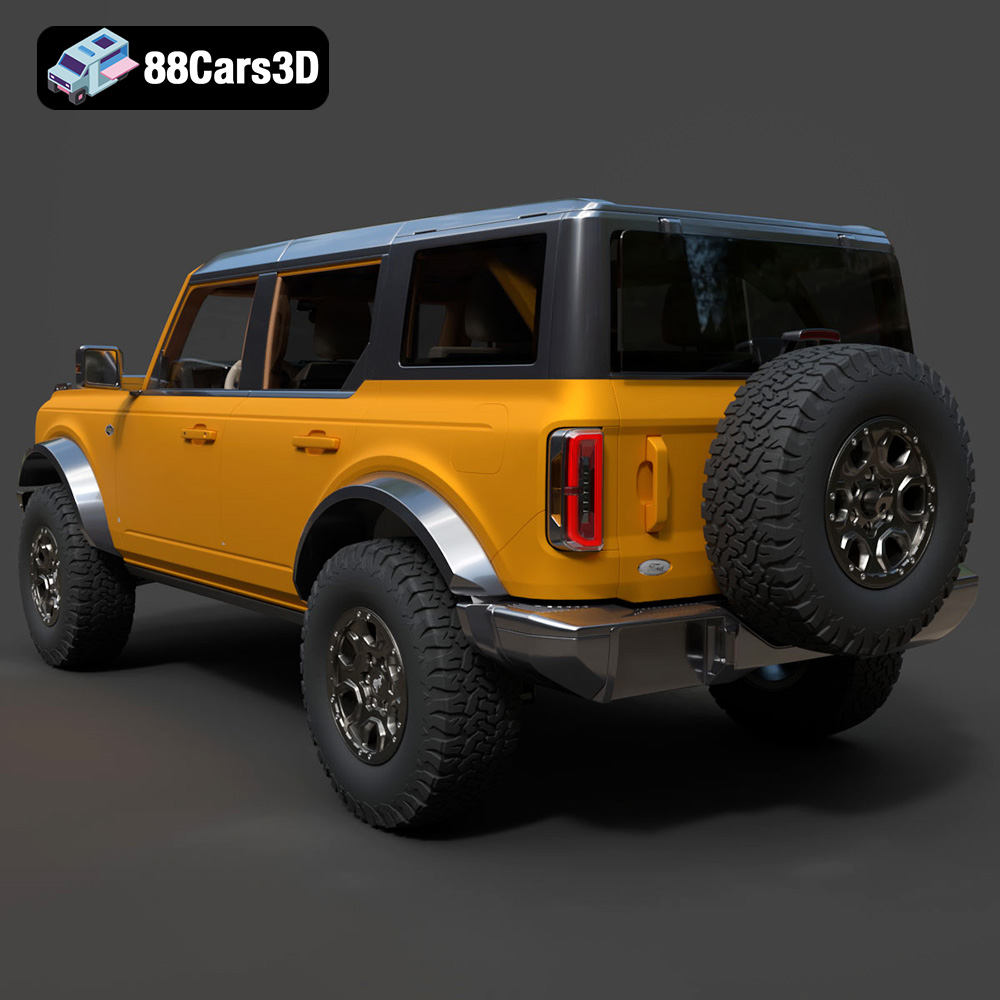
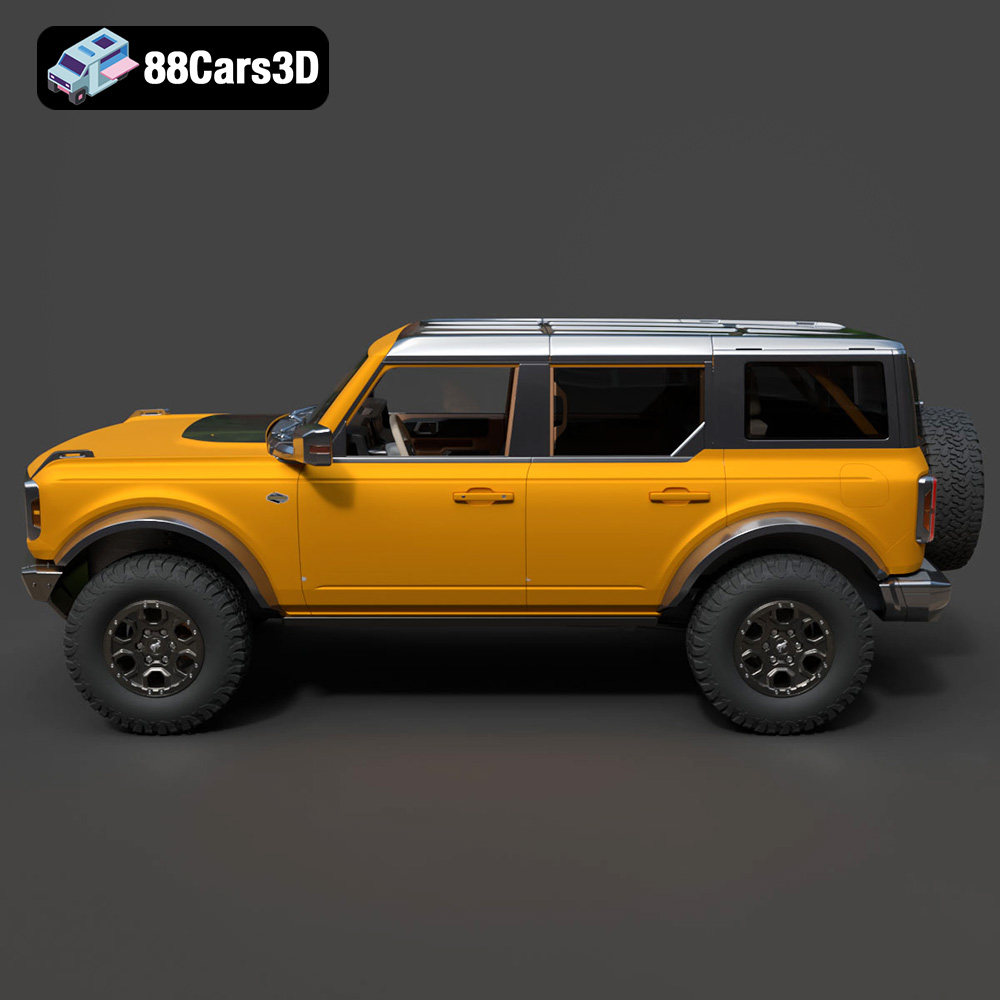
The Ford Bronco 4-Door 2021 3D model is a testament to this meticulous approach. Every curve, panel gap, and component has been scrutinized and recreated to reflect the authentic vehicle. The distinctive boxy silhouette, the signature round LED headlights flanking the bold grille, and the highly detailed modular body structure are all faithfully represented. From the robust off-road suspension that defines its adventurous character to the intricately modeled EcoBoost engine compartment, no detail has been overlooked. This level of dedication ensures that when artists use this model for automotive rendering or game development, they are working with an asset that exudes realism and respects the original design integrity of the Bronco.
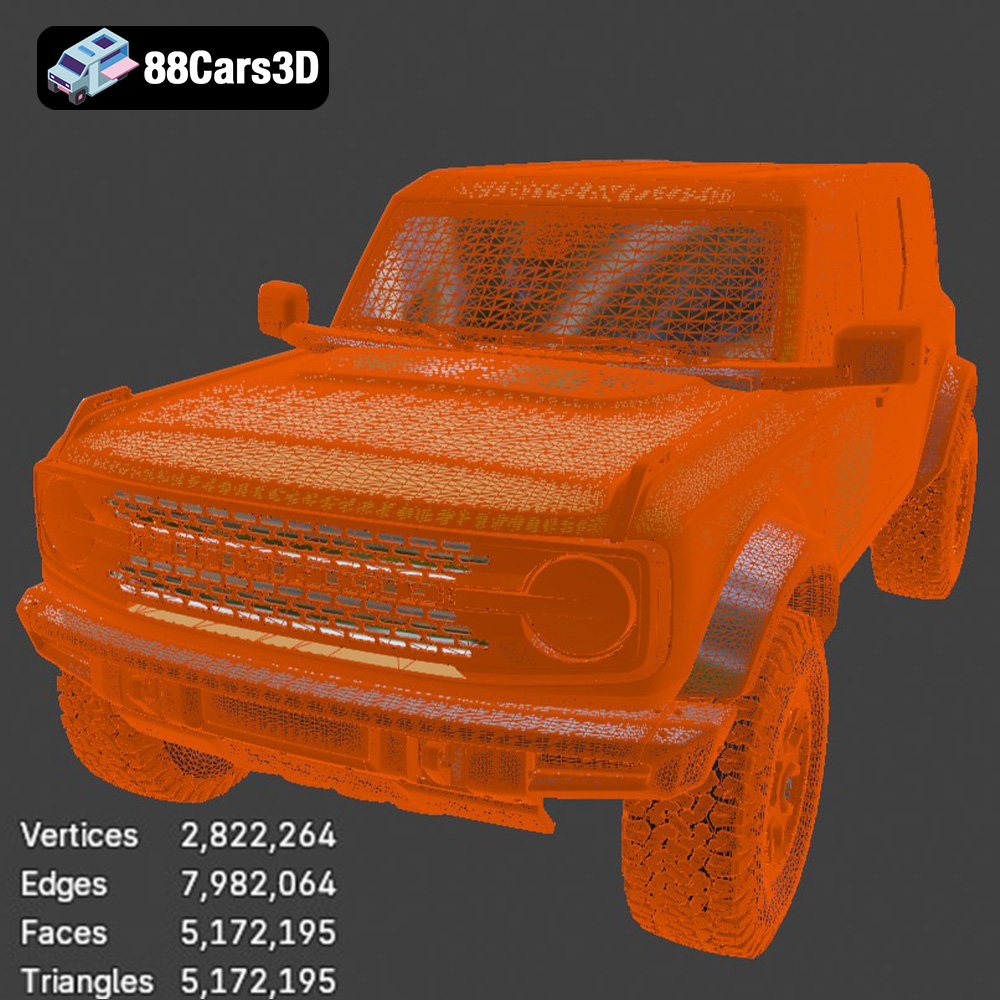
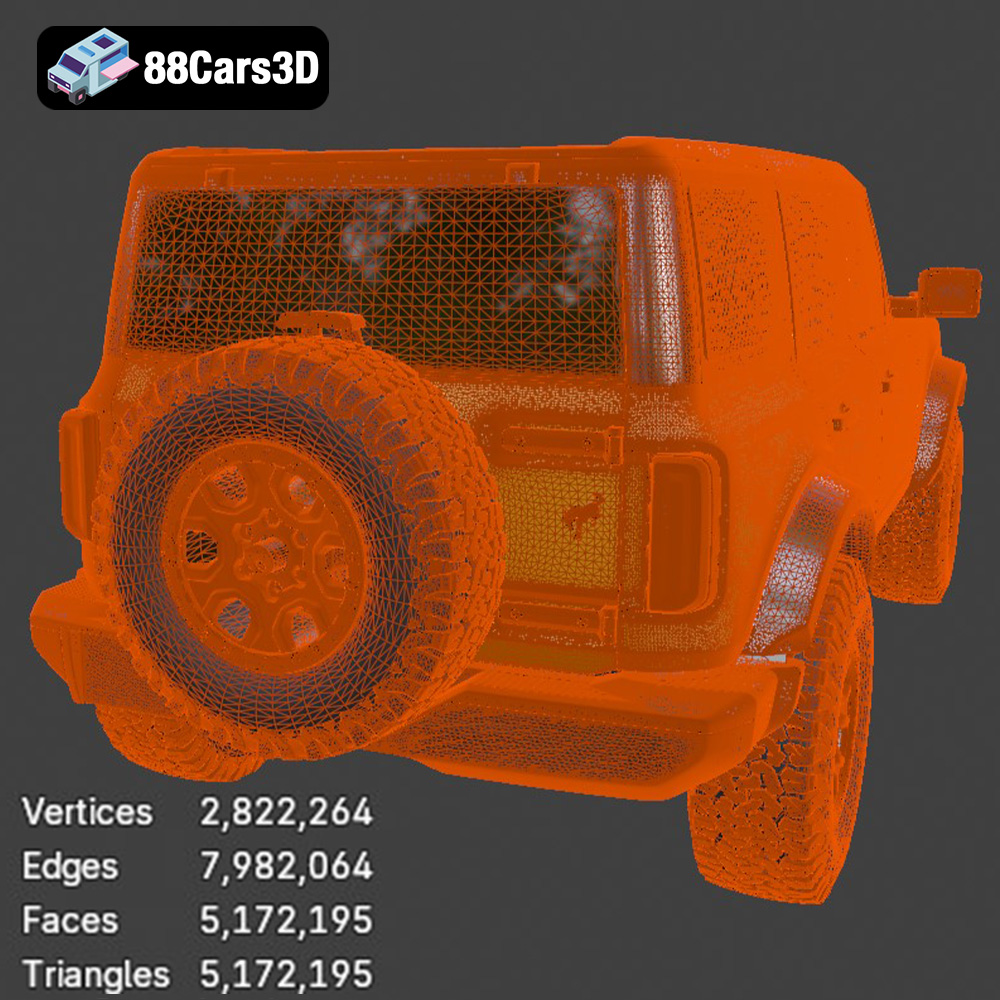
One of the most significant challenges in 3D modeling, especially for vehicles, is striking the perfect balance between high visual fidelity and optimized performance. A model that looks stunning but cripples a game engine or render farm is ultimately impractical. The Ford Bronco 4-Door 2021 3D model achieves this delicate equilibrium with its highly detailed topology boasting 5,172,195 triangles. This polycount is substantial enough to deliver unparalleled visual fidelity for close-up renders and detailed animations, yet it is also carefully optimized to allow for seamless integration into real-time environments like Unreal Engine or Unity. This strategic optimization means artists and developers don’t have to compromise between breathtaking visuals and smooth performance, making it a truly versatile game asset.
The versatility of any high-quality 3D asset, such as the Ford Bronco 4-Door 2021 model, is often defined by the range of file formats it supports. Each format serves a specific purpose, offering unique advantages for different stages of the 3D pipeline – from initial modeling and animation to real-time rendering and physical production. Understanding these formats is crucial for professional workflows, ensuring compatibility and maximizing the utility of your 3D car models.
The Ford Bronco 4-Door 2021 3D model from 88cars3d.com is provided with a comprehensive suite of file formats, offering unparalleled flexibility:
The .blend format is the native file type for Blender, one of the most powerful and widely used open-source 3D software suites. When a model is provided in .blend format, it means you’re getting the complete working file. This includes not just the mesh geometry, but also all materials (with their node setups), textures, lighting, cameras, animations, and any modifiers applied to the object. For artists working in Blender, this is invaluable as it allows for full editability and deep customization without any loss of data that might occur during conversion. It’s ideal for projects where the model needs extensive modification, rigging, or integration into a larger Blender-based scene.
.fbx (Filmbox) is an industry-standard 3D exchange format developed by Autodesk. It’s renowned for its robust support for inter-application data exchange, especially for animation, rigging, and PBR (Physically Based Rendering) materials. This makes it the go-to format for game developers and those working with real-time engines like Unreal Engine and Unity, or even other DCC (Digital Content Creation) tools like Maya, 3ds Max, and Cinema 4D. An .fbx file can package not only geometry but also skeletal animation, blend shapes, lights, and cameras, ensuring a smooth transition of complex animated 3D car models between different software environments with minimal loss of fidelity.
The .obj (Wavefront OBJ) format is one of the oldest and most universally supported 3D file formats. It’s primarily a geometry definition file, storing vertex positions, normals, texture coordinates, and faces. While it doesn’t support animation or rigging, its simplicity and widespread adoption make it excellent for static meshes and cross-software compatibility. Almost every 3D application can import and export .obj files, making it a reliable choice for sharing base mesh data. Material information is typically stored in a companion .mtl (Material Template Library) file, which specifies colors and texture maps.
.glb (GL Transmission Format Binary) is the binary version of glTF, an open standard for 3D scenes and models. Designed for efficient transmission and loading of 3D content, .glb files are highly optimized and contain all necessary assets (geometry, materials, textures, animations) within a single file. This makes them perfect for web-based 3D viewers, AR (Augmented Reality), and VR (Virtual Reality) applications, where file size and quick loading times are critical. Its PBR material support ensures consistent visual quality across different platforms, making it an excellent choice for virtual showrooms and interactive experiences.
.stl (Stereolithography) is the standard file format for 3D printing. Unlike other formats that store various types of information, .stl strictly describes the surface geometry of a 3D object using a collection of interconnected triangles. It contains no color, texture, or material information, focusing solely on the shape for physical manufacturing. For hobbyists and professionals looking to bring the Ford Bronco 4-Door 2021 3D model into the physical world, the .stl format is essential, acting as the blueprint for 3D printers to construct the model layer by layer.
.ply (Polygon File Format) is another format primarily used for storing 3D scanner data and meshes. It’s more versatile than .obj or .stl in that it can store a wider range of properties, including color, transparency, normals, texture coordinates, and confidence values per vertex or face. This makes it valuable for applications requiring precision data, such as reverse engineering, CAD integration, or scientific analysis. While less common for general rendering, its ability to carry rich mesh data makes it a powerful format for specific technical applications.
The “.unreal” file format isn’t a direct standalone file extension in the same way .fbx or .obj are. Instead, it signifies that the asset is provided as a pre-packaged, engine-ready asset specifically for Unreal Engine. This typically means the model has already been imported into an Unreal project, has its materials and textures properly set up as Unreal Engine assets (.uasset files), and may include pre-configured blueprints, collision meshes, or Level of Detail (LOD) variations. This significantly streamlines the integration process for developers, saving valuable time on setup and ensuring the model performs optimally within the Unreal Engine ecosystem. It’s essentially a plug-and-play solution for real-time environments, offering immediate use for game development, architectural visualization, or cinematic sequences within Unreal.
The .max format is the native file type for Autodesk 3ds Max, a leading software in architectural visualization, game development, and character animation. Similar to .blend, a .max file contains the complete scene data, including geometry, materials (with all their properties, including those for V-Ray or Corona renders), lights, cameras, animations, modifiers, and plugin-specific data. For users of 3ds Max, this provides full control over the model, allowing for extensive modifications, complex scene setups, and high-end automotive rendering. It’s the ultimate starting point for professionals deeply embedded in the 3ds Max ecosystem.
The true value of a premium 3D asset lies in its seamless integration into diverse professional workflows. The Ford Bronco 4-Door 2021 3D model, with its robust build and extensive format support, is designed to be a cornerstone for various industries, from high-stakes marketing to immersive interactive experiences.
For marketing agencies and automotive designers, photorealistic rendering is paramount. Using software like 3ds Max with V-Ray or Corona Render, or Blender with Cycles, artists can create stunning visuals that are indistinguishable from actual photographs. The Ford Bronco 4-Door 2021 3D model provides the necessary detail for this. Its accurate geometry and well-defined PBR materials respond beautifully to complex lighting setups, from studio softboxes to high dynamic range image (HDRI) environments. Imagine showcasing the Bronco’s rugged all-terrain tires and beadlock-capable wheels in a dramatic desert landscape, or highlighting its high-resolution digital instrument cluster in a sophisticated virtual showroom. The model’s intricate components, including the detailed engine block and high-clearance exhaust system, allow for close-up hero shots that emphasize engineering prowess and design elegance. This makes it an ideal choice for creating compelling brand campaigns and lifestyle scenes.
Game development demands both visual quality and optimal performance. The Ford Bronco’s “game-ready & optimized” designation, with its 5,172,195 triangles, strikes a perfect balance. For Unreal Engine and Unity developers, the inclusion of the .fbx and .unreal (engine-ready asset) formats simplifies the import and setup process significantly. Proper pivot setups for steering, wheel rotation, and suspension travel are already integrated, meaning developers can quickly implement complex vehicle physics and animations without extensive rework. Whether it’s for open-world exploration games, off-road racing simulators, or interactive virtual garages, this model provides the foundational quality needed for engaging gameplay and stunning in-game cinematics. The optimized geometry ensures smooth frame rates even in demanding real-time environments, positioning it as a top-tier game asset.
The burgeoning fields of Augmented Reality (AR) and Virtual Reality (VR) offer new frontiers for automotive visualization. Immersive virtual showrooms, interactive configurators, and mobile AR experiences benefit immensely from high-quality, optimized 3D car models. The Ford Bronco’s inclusion of the .glb format is particularly valuable here. Its compact, PBR-enabled structure is perfect for web-based deployment and mobile device rendering, allowing users to interact with a realistic Bronco model on their phone or through a VR headset. Imagine prospective buyers customizing the Bronco’s body colors, tire textures, or material finishes in real-time, exploring every detail of its exterior and highly detailed interior before making a purchase decision. The optimized geometry ensures that these experiences are fluid and responsive, providing a truly immersive user journey.
Beyond its aesthetic appeal, the Ford Bronco 4-Door 2021 3D model boasts a suite of technical specifications that underscore its professional-grade quality. These details are crucial for artists and developers who require precision, flexibility, and performance from their 3D car models.
The model’s core strength lies in its meticulously crafted geometry. With 5,172,195 triangles, it achieves a high level of visual fidelity without becoming prohibitively dense for real-time applications. This carefully managed polycount ensures that even the smallest details, from the texture of the marine-grade vinyl seats to the intricate SYNC 4 infotainment screen, are sharply defined. Crucially, the model adheres to real-world scale accuracy, based on the actual vehicle chassis. This precision is vital for any project requiring realistic interaction with other scaled assets, such as in architectural visualizations, virtual production sets, or simulation environments, ensuring consistent perspective and physical interaction.
A static model limits creative possibilities. The Ford Bronco 4-Door 2021 3D model is designed with animation in mind. Key components such as the wheels, suspension, and steering elements are provided as separate, distinct objects. This modular design, combined with proper pivot setups, allows animators to easily articulate these parts for dynamic sequences. Imagine simulating realistic suspension travel as the Bronco traverses uneven terrain, or executing precise steering maneuvers in a racing game. This readiness for animation significantly reduces production time and effort, empowering creators to bring the Bronco to life with dynamic motion, from simple wheel rotations to complex driving simulations.
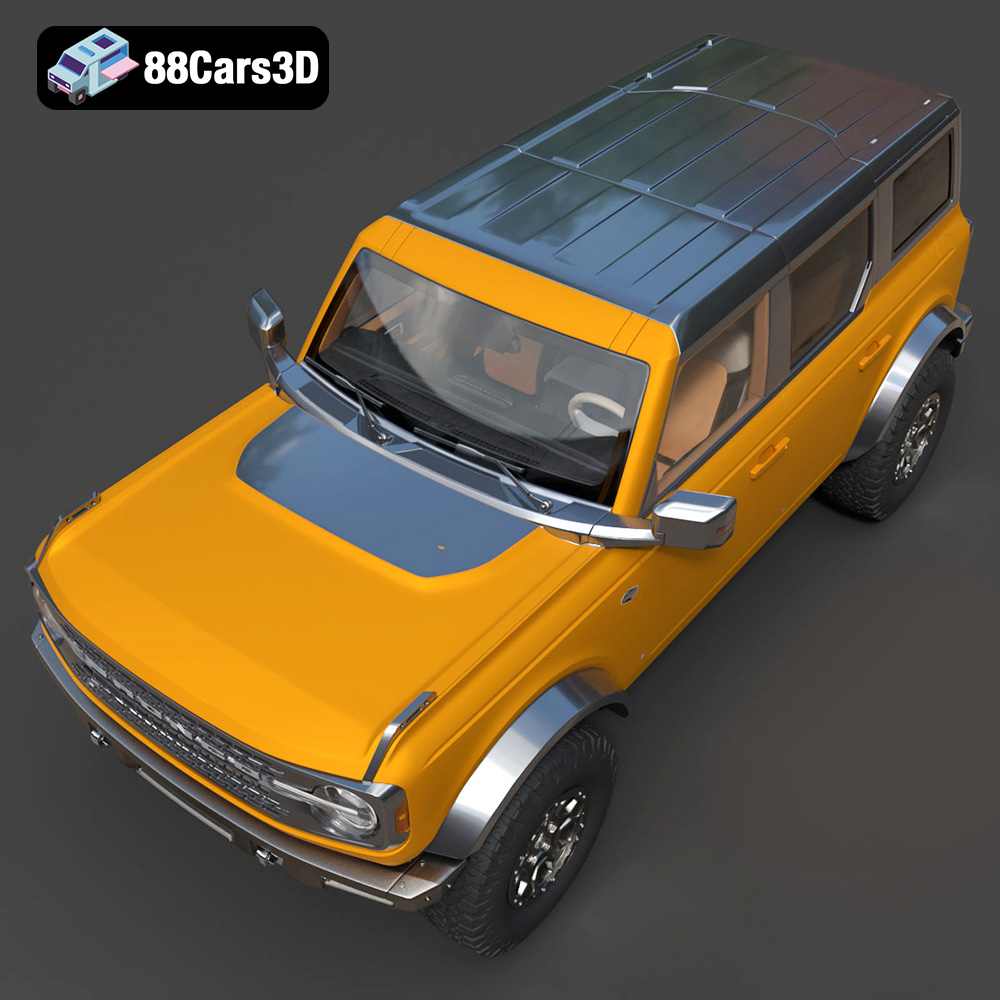
True immersion in a 3D model extends beyond its exterior. The Ford Bronco provides an equally detailed interior, essential for first-person perspectives in games or close-up virtual tours. The cockpit features highly detailed seating surfaces, an accurate multi-function steering wheel, and a meticulously recreated steering column. The high-resolution digital instrument cluster and the SYNC 4 infotainment screen are not just placeholders but detailed models themselves, ready to display custom graphics. Exterior features like the authentic high-clearance exhaust system, signature LED headlights and taillights, and the High-Performance Off-Road Stability Suspension (HOSS) detailing all contribute to a comprehensive and believable digital vehicle. This unwavering attention to both exterior and interior elements ensures that the model can withstand intense scrutiny from any angle.
The utility of a robust 3D car model extends beyond purely digital visualization. The ability to transition from the virtual to the physical, and to adapt the model to specific creative visions, adds another layer of value to assets like the Ford Bronco 4-Door 2021.
For hobbyists, collectors, or even automotive engineers seeking physical prototypes, the Ford Bronco 4-Door 2021 3D model offers seamless conversion to the .stl format, making it ready for 3D printing. This capability opens up opportunities to create display-scale models or detailed miniature replicas. To achieve the best results, specific print settings are recommended: ideal scales include 1:12, 1:18, or 1:24. Resin printing is often recommended over FDM for finer details, with layer heights between 0.04–0.12 mm. Proper wall thickness (1.2–2.0 mm) and infill (20–30%) ensure structural integrity. Crucially, supports will be required for intricate parts like the exhaust system, mirrors, and handlebars, and specific print orientations (e.g., frame angled, wheels separately) optimize the outcome. Post-processing, including sanding, priming, and applying authentic factory colors with metallic finishes, can transform a raw print into a stunning physical replica.
No two projects are exactly alike, and the ability to customize a 3D car model is invaluable. The Ford Bronco 4-Door 2021 3D model provides extensive customization options, allowing artists to tailor the asset to their specific needs. Users can easily change body and tank colors to match factory palettes or explore custom finishes, from matte to high-gloss metallic. Tire textures can be modified to reflect different use cases, transitioning from rugged off-road variants to sleek street-optimized options. Material finishes across the model, from upholstery to dashboard plastics, can be adjusted to create specific moods or match brand aesthetics. Furthermore, adapting the lighting for different environments – whether it’s a dramatic sunset scene or a clinical studio setup – can drastically alter the model’s appearance and emotional impact. This flexibility ensures the Ford Bronco remains a versatile asset throughout its lifecycle, adapting to evolving project requirements.
The digital automotive landscape is continually evolving, demanding assets that are not only visually stunning but also technically robust and highly adaptable. The Ford Bronco 4-Door 2021 3D model stands as a prime example of a premium asset that meets these exacting standards. From its highly optimized geometry and meticulous detailing to its comprehensive support for various file formats, it empowers creators across diverse fields – game development, architectural visualization, automotive rendering, AR/VR, and even 3D printing.
Whether you’re a professional seeking to enhance your next big project or an enthusiast embarking on a creative journey, the strategic investment in a high-quality 3D car model like this Ford Bronco 4-Door 2021 offers unparalleled returns in terms of efficiency, fidelity, and creative potential. It minimizes production bottlenecks, maximizes visual impact, and ensures your digital creations resonate with authenticity. Explore the possibilities and elevate your work with this exceptional asset, available for download on 88cars3d.com, where quality and versatility drive innovation.
Experience the legendary revival of an off-road icon with the Ford Bronco 4-Door 2021 3D model. Celebrating its rugged heritage while embracing modern engineering, this digital replica captures the uncompromising spirit of the Bronco. It features the distinctive boxy silhouette, signature round LED headlights flanking the bold grille, and a highly detailed modular body structure that makes it a true standout. From its robust off-road suspension to the intricately modeled EcoBoost engine compartment, every styling cue has been meticulously crafted to deliver breathtaking realism. Boasting a highly detailed topology with 5,172,195 triangles, this 3D model delivers unparalleled visual fidelity while retaining optimized geometry for seamless integration into high-end projects. Whether you are developing the next hit off-road simulator, creating immersive AR/VR configurators, or rendering photorealistic marketing materials, this model provides the premium quality necessary for top-tier professional use. Perfect for rugged wilderness environments, off-road racing simulators, virtual automotive showrooms, and photorealistic lifestyle renderings.
$37.50
.2021
.4×4
.blend
.bronco
.fbx
.ford
.glb
.max
.obj
.ply
.rendering
.stl
.unreal
bronco-4-door
car-3d-model
game asset
game-ready
off-road
optimized
SUV
VR/AR