Get 20% OFF All Premium 3D & STL Models!

In the rapidly evolving landscape of digital visualization, the demand for high-fidelity 3D assets is more pronounced than ever. From blockbuster game titles and photorealistic architectural renders to groundbreaking AR/VR experiences and cinematic automotive advertising, the quality of a 3D model can make or break a project. Automotive design, in particular, thrives on precision and detail, requiring digital representations that faithfully capture the essence and engineering prowess of real-world vehicles.
Today, we delve into a prime example of such a professional-grade asset: the Audi Q2 2021 3D Model. This particular model, available on 88cars3d.com, is not just a digital replica; it’s a versatile tool designed to accelerate professional workflows across multiple industries. With its blend of progressive design and everyday functionality, the Audi Q2 is a standout premium subcompact luxury crossover SUV, and its digital counterpart mirrors this distinction with unparalleled visual quality and technical optimization. Whether you’re a game developer seeking an optimized vehicle for an open-world environment, an architect integrating realistic cars into a visualization, or a marketing professional crafting a stunning automotive campaign, understanding the nuances of such a robust 3D model is crucial.
Navigating the diverse world of 3D software and engines often requires a deep understanding of file formats. Each format serves a specific purpose, excelling in different scenarios, from native editing to real-time deployment and physical manufacturing. The Audi Q2 2021 3D Model is supplied in a comprehensive range of formats, ensuring maximum compatibility and utility for any project. Here’s a breakdown of the included formats and their ideal applications:
This extensive range of formats ensures that the Audi Q2 2021 3D model from 88cars3d.com is not only versatile but also adaptable to virtually any professional pipeline, providing a seamless experience from initial concept to final deployment.
The essence of a truly professional 3D car model lies in its ability to replicate reality with exceptional fidelity. The Audi Q2 2021 3D Model exemplifies this, offering a meticulously crafted digital asset that captures the distinctive character of its real-world counterpart. This attention to detail ensures that whether the model is used in a static render or an interactive environment, it maintains a compelling sense of authenticity.
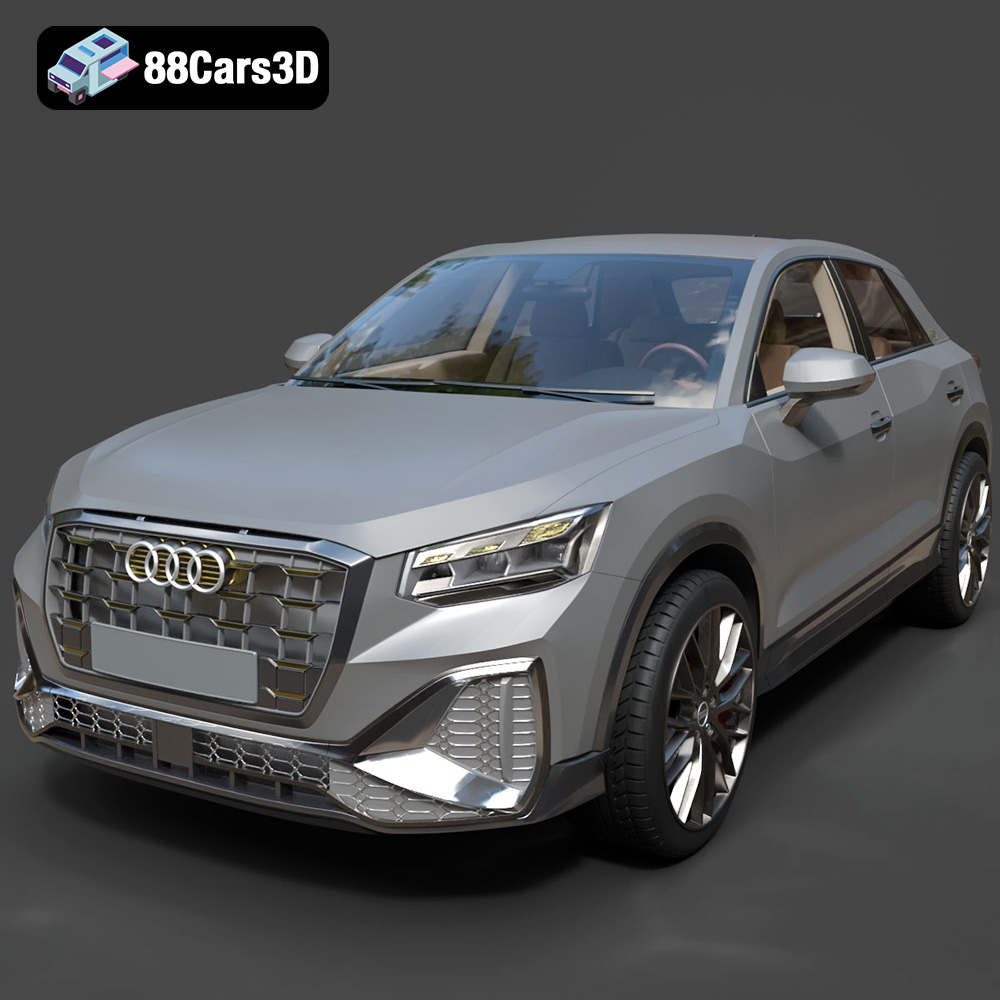
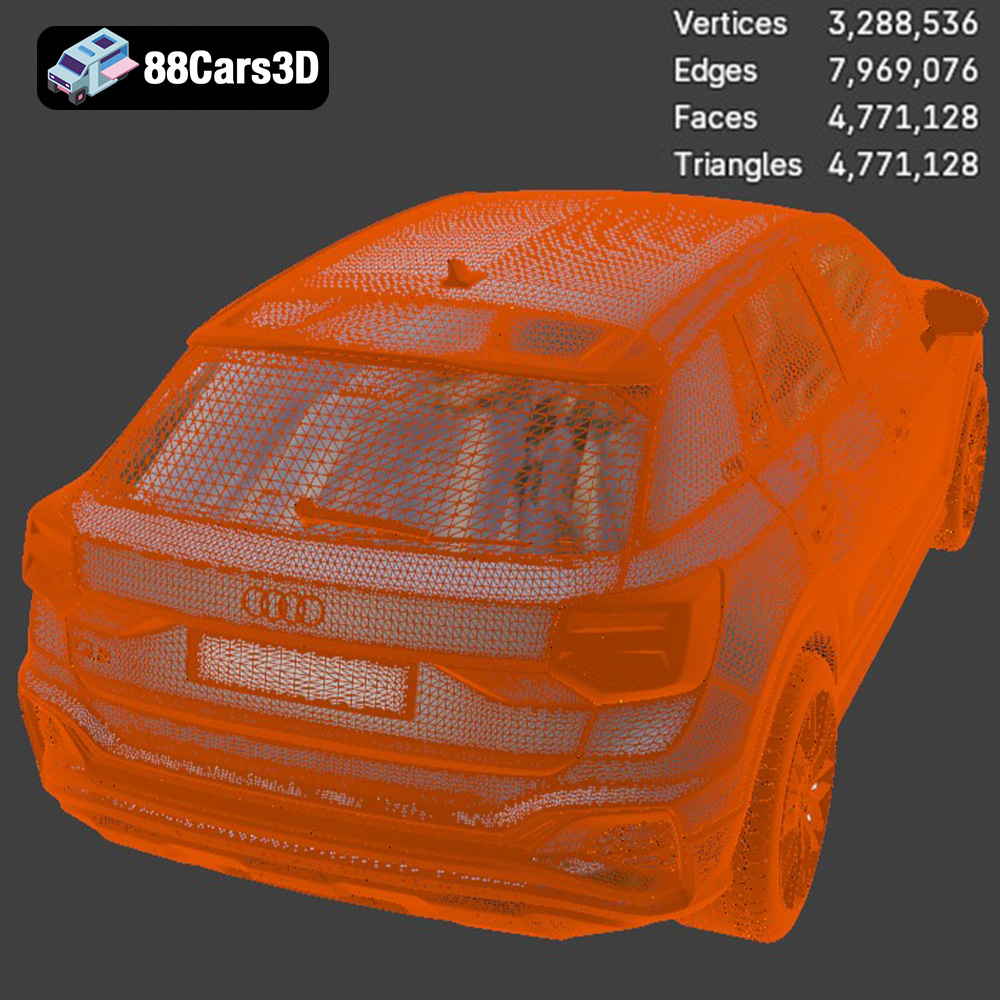
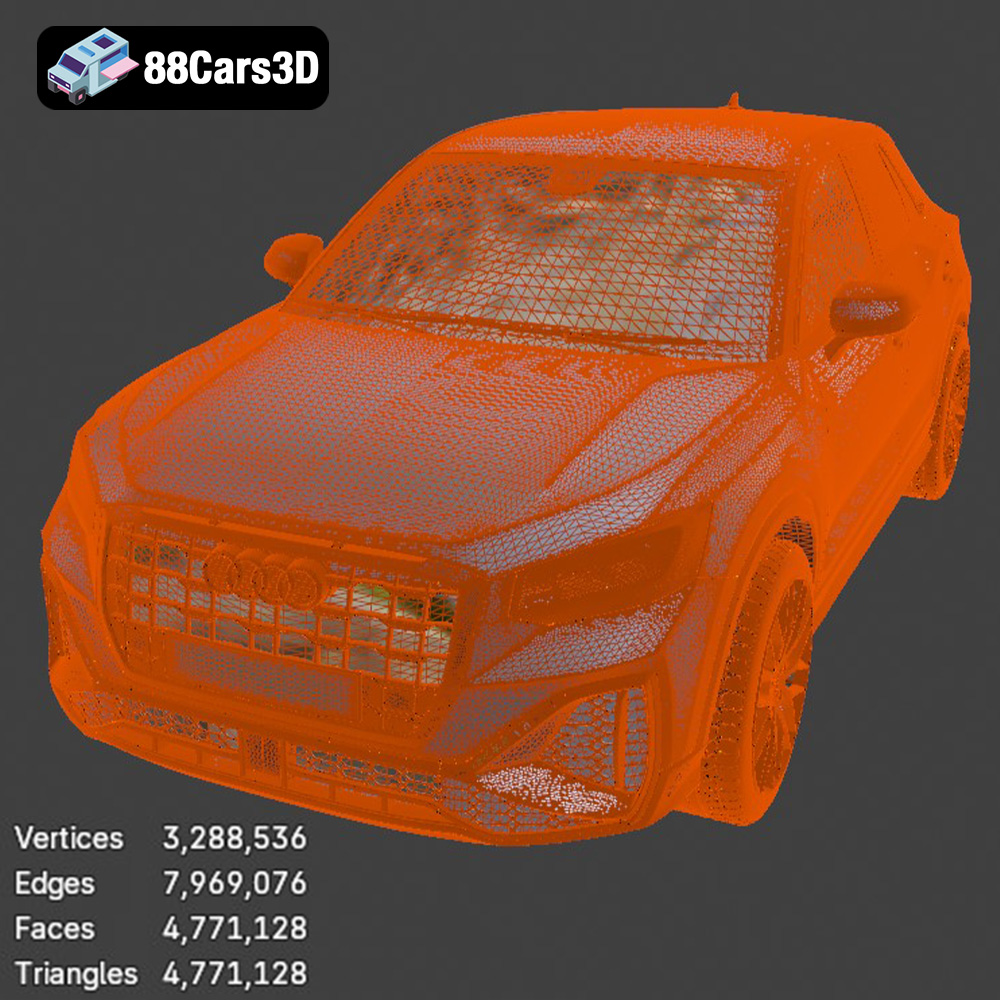
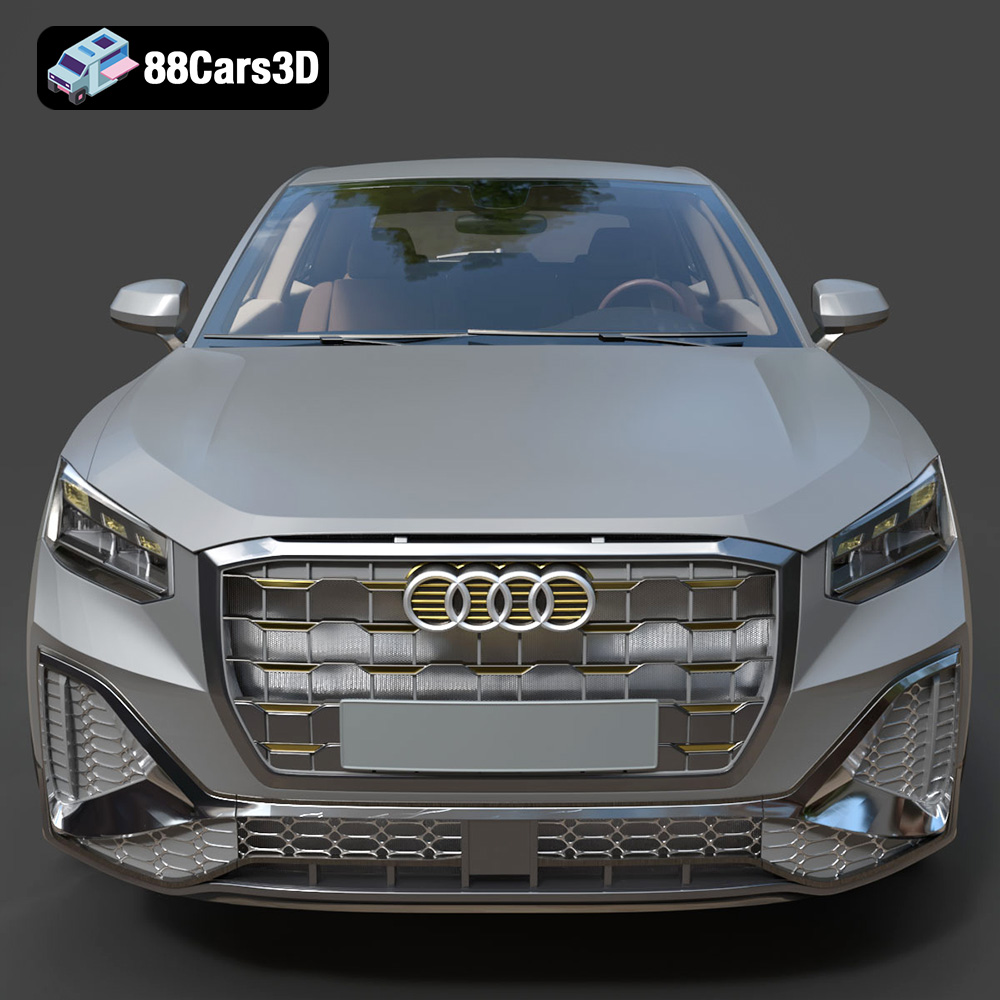
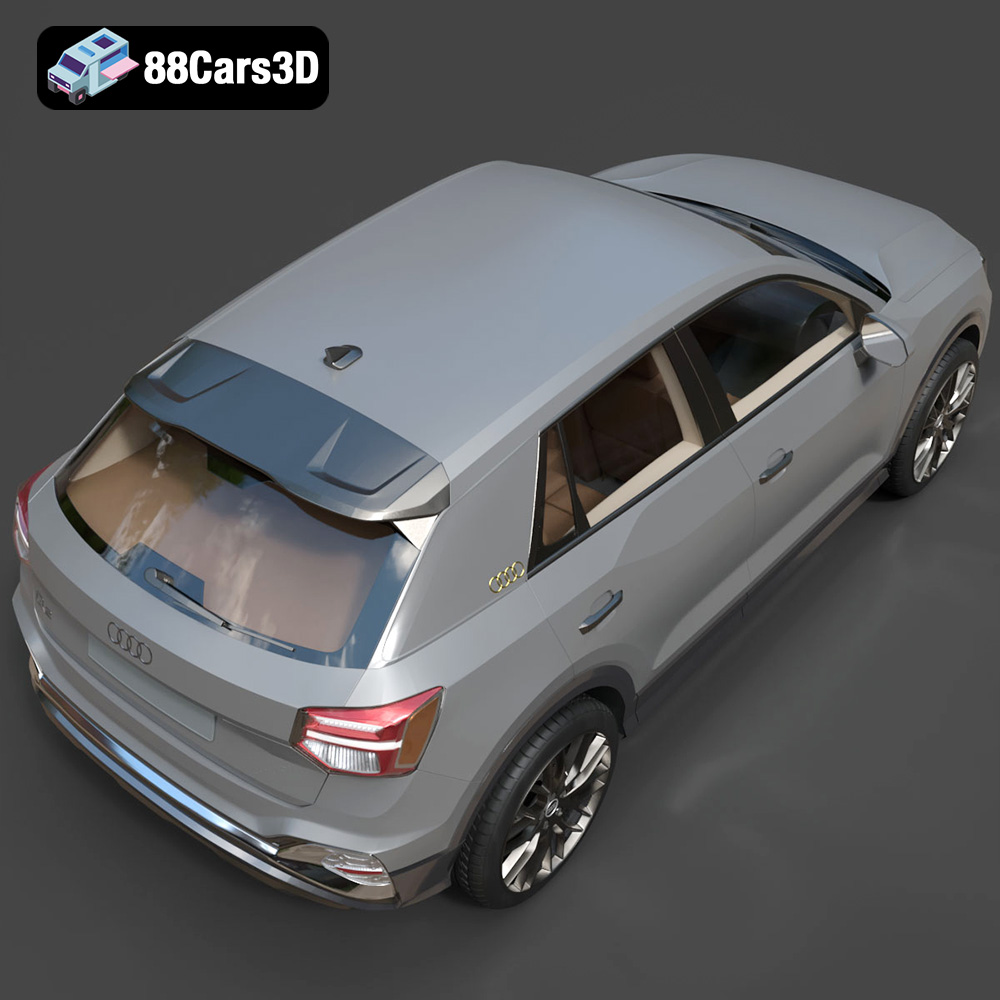
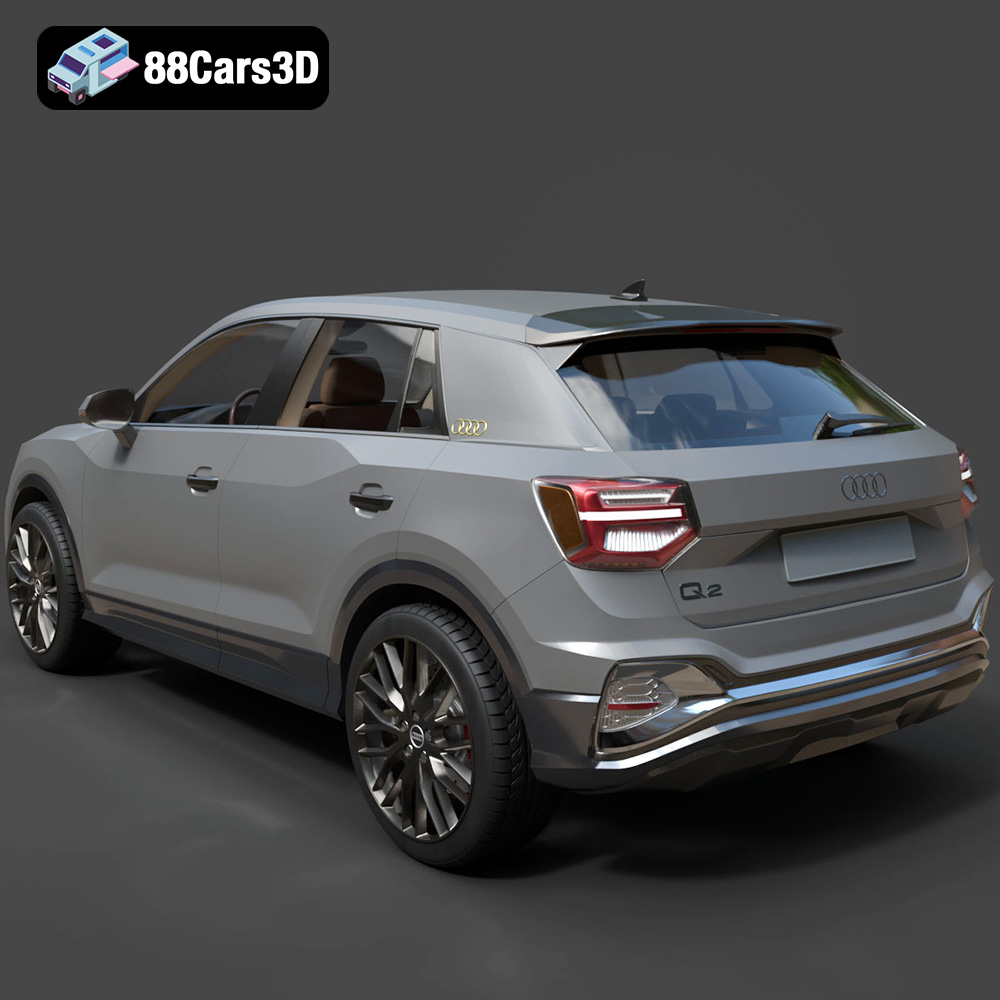
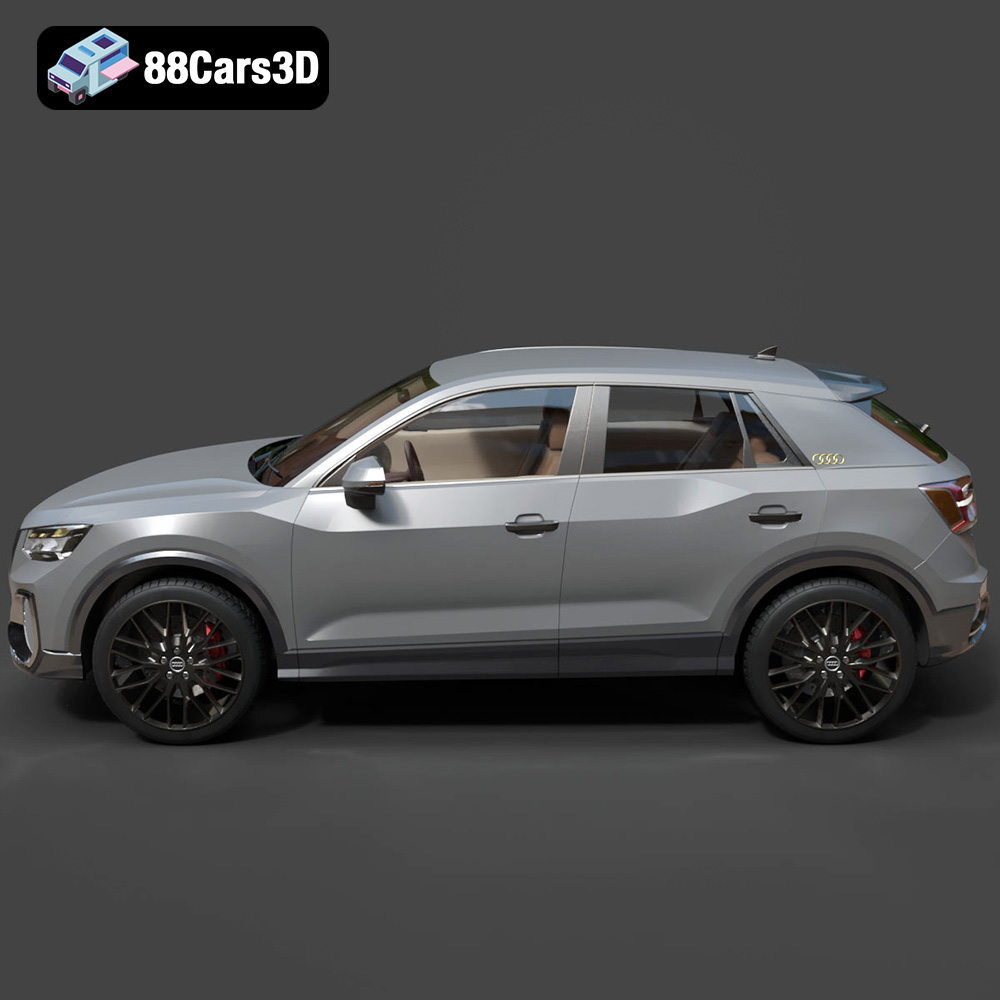
The first impression of any vehicle is its exterior, and the Audi Q2 2021 model makes a powerful statement. Boasting an impressive 4,771,128 triangles, this high-poly model delivers unparalleled visual quality and photorealism. This dense mesh ensures exceptional surface smoothness, capturing every sculpted curve and bold character line of the Audi Q2’s polygonal exterior. The signature Singleframe grille is rendered with intricate precision, as are the striking LED matrix headlights and dynamic taillights that define its contemporary aesthetic. Beyond the visible, the model features an accurately detailed engine block and undercarriage layout, integrated dual exhaust finishers, and precise suspension and braking components. Crucially for animation, separate wheels, suspension, and steering components are provided, allowing for realistic motion and dynamic scene creation. The authentic alloy wheels with realistic tire treads further cement its realism, making it suitable for even the closest studio shots and high-resolution renders.
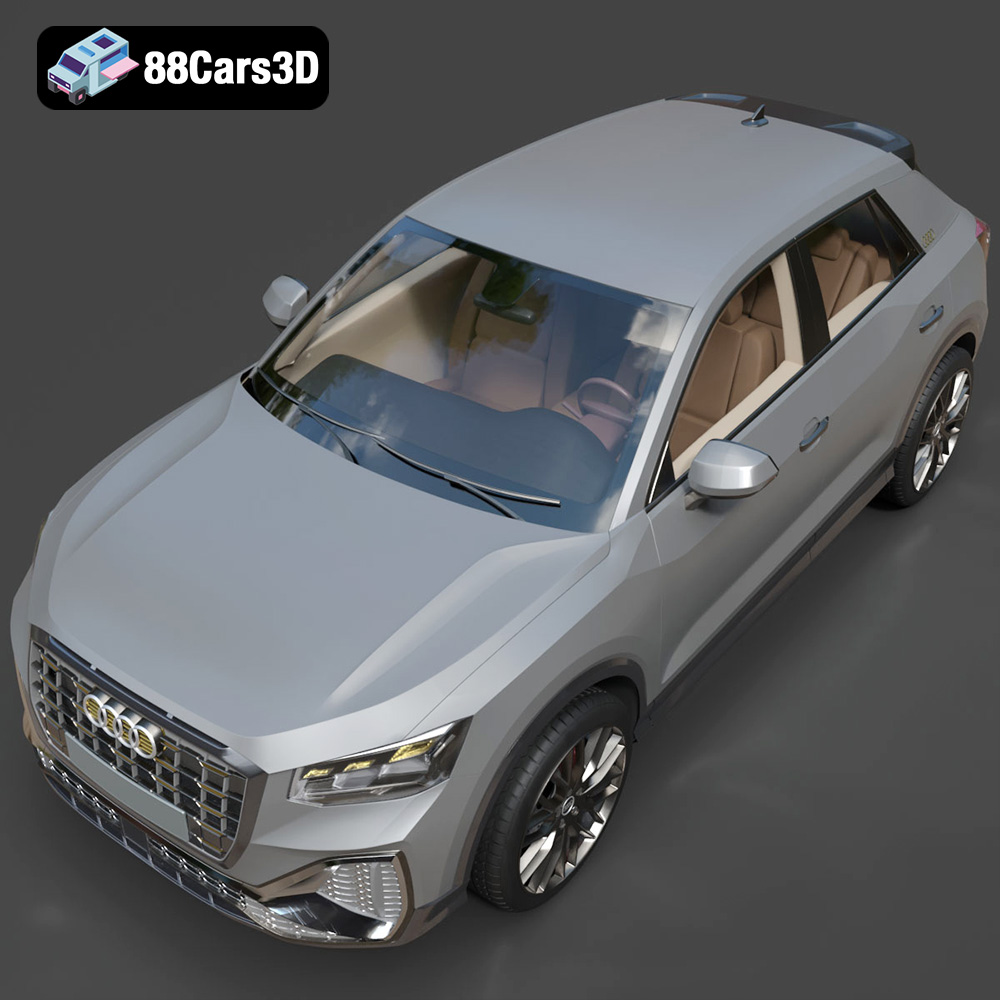
Stepping inside the virtual cabin of the Audi Q2 2021 3D Model reveals an equally impressive level of detail. The interior features premium leather-style seat upholstery and ergonomic cabin details, meticulously designed to reflect the luxury and comfort of the actual vehicle. The multi-function steering wheel proudly displays Audi badging, while the Virtual Cockpit digital instrument cluster and MMI infotainment display with center console controls are accurately recreated, complete with legible interfaces. For applications like game development or VR experiences, this level of interior fidelity is paramount. The optimized geometry for first-person POV ensures that players or users can experience the cockpit authentically, enhancing immersion in racing titles, open-world games, or virtual showroom configurators. This deep detailing transforms the model from a mere exterior shell into a complete, believable vehicle.
The true value of a high-quality 3D asset like the Audi Q2 2021 3D Model lies in its seamless integration into various professional pipelines. Its versatility and robust construction make it a cornerstone for diverse projects, from high-fidelity rendering to real-time interactive experiences.
For artists focused on producing stunning, photorealistic images or cinematic animations, the Audi Q2 2021 model is an ideal canvas. In environments like 3ds Max or Blender, its detailed geometry and well-structured materials are a significant advantage.
3ds Max Workflow: Users leveraging the .max file can directly open the model, preserving all the scene data. This allows for immediate integration with renderers like V-Ray or Corona. A typical workflow might involve:
Blender Workflow: Similarly, the .blend file provides a native experience for Blender artists. With Cycles or Eevee renderers, artists can achieve incredible results:
The high triangle count of 4,771,128, while demanding, is perfectly suited for these offline rendering scenarios, ensuring no detail is lost and surfaces appear impeccably smooth.
While high-poly, the Audi Q2 2021 model is also designed to be “Game-Ready & Optimized,” striking a perfect balance between visual fidelity and real-time performance. Its polycount, though high for some older engines, is well within the capabilities of modern platforms like Unreal Engine and Unity for hero assets or specific scenarios.
Unreal Engine Workflow: For Unreal Engine developers, the included .fbx and .unreal files are invaluable.
This integration streamlines the development process, allowing game developers to focus on gameplay and interaction rather than foundational asset creation.
The versatility of the Audi Q2 2021 3D model extends beyond traditional rendering and game development into the immersive realms of Augmented Reality (AR), Virtual Reality (VR), and Architectural Visualization (Arch-Viz).
AR/VR Experiences: The .glb format is a game-changer for AR/VR applications. Its single-file, optimized nature makes it ideal for web-based AR configurators where users can virtually place the Q2 in their driveway via their smartphone, or for immersive VR showrooms where potential buyers can explore the vehicle’s interior and exterior in a true-to-scale virtual environment. The model’s premium interior details shine in these experiences, offering a tactile sense of luxury.
Architectural Visualization: In arch-viz, cars are essential for adding scale, context, and a sense of realism to renders of buildings and urban landscapes. Integrating the Audi Q2 into an architectural scene elevates its credibility. Architects and visualization artists can place the Q2 model in driveways, on streets, or within parking structures to accurately represent the spatial relationship between human-scale objects and buildings, enhancing the overall composition and realism of their presentations. Its accurate real-world scale is paramount here, ensuring harmonious integration with other architectural elements.
The utility of the Audi Q2 2021 3D Model transcends digital screens, offering avenues for physical manifestation and extensive creative modification. This dual capability ensures the model is not just a render asset but a truly adaptable component for diverse projects.
For hobbyists, collectors, or designers looking to create a tangible replica, the Audi Q2 2021 3D model is convertible to the .stl format, making it suitable for 3D printing. This allows for the creation of display-scale models that capture the intricate details of the digital asset.
To achieve the best results, specific 3D print settings are recommended:
These guidelines ensure that the transition from digital mesh to physical object is successful, resulting in a high-quality, durable model.
Beyond its inherent quality, the Audi Q2 2021 3D Model offers significant flexibility for customization, allowing artists and developers to tailor its appearance to specific project needs. This adaptability is a key advantage for creative workflows.
This level of customization ensures that the Audi Q2 2021 3D model remains a versatile and future-proof asset, capable of evolving with the demands of any project or creative vision.
In today’s fast-paced digital production environment, time is a precious commodity. Creating a highly detailed, accurate 3D model like the Audi Q2 2021 from scratch demands hundreds of hours of expert modeling, texturing, and optimization. This is where a marketplace like 88cars3d.com becomes an indispensable resource for professionals.
Choosing premium 3D car models from 88cars3d.com offers several distinct advantages. Firstly, it’s about **saving invaluable production time**. Instead of allocating resources to model creation, teams can immediately integrate a pre-built, high-quality asset into their workflow, accelerating project timelines significantly. Secondly, it guarantees **professional-grade quality and consistency**. The models available, such as the Audi Q2, are meticulously crafted by skilled artists, ensuring real-world scale accuracy, optimized geometry, and proper material setups. This consistency is vital for maintaining a high standard across multiple projects or when collaborating within larger teams. Thirdly, the comprehensive package of included file formats – .blend, .fbx, .obj, .glb, .stl, .ply, .unreal, .max – provides unparalleled flexibility, ensuring compatibility with virtually any software or engine you might be using.
For rendering, game development, AR/VR experiences, or 3D printing, investing in a robust asset from 88cars3d.com means acquiring a reliable foundation that delivers exceptional visual results without the overhead of internal development. It allows studios and freelancers to focus on their core competencies, whether that’s animation, scene composition, or gameplay mechanics, knowing that their automotive assets are of the highest standard.
The world of 3D visualization and interactive experiences is continually pushing boundaries, demanding assets that are not only visually stunning but also technically robust and versatile. The Audi Q2 2021 3D Model stands as a testament to this evolution, offering an exceptional blend of design fidelity, technical optimization, and broad compatibility.
From its impressive 4.7 million triangles capturing every nuance of its exterior and interior to its readiness for diverse professional workflows – be it high-end cinematic rendering in 3ds Max, real-time game development in Unreal Engine, immersive AR/VR applications with .glb, or even precise 3D printing – this model is engineered for success. It eliminates the need for artists and developers to reinvent the wheel, providing a professional starting point that saves time and guarantees quality.
Whether you’re aiming to create breathtaking automotive renders, build a compelling virtual environment, or produce a tangible replica, the Audi Q2 2021 3D Model, available on 88cars3d.com, is an invaluable asset designed to help you drive your projects forward with confidence and unparalleled realism.
The Audi Q2 2021 is a premium subcompact luxury crossover SUV that blends progressive design with everyday functionality. Featuring Audi’s signature Singleframe grille, striking LED matrix headlights, and a sculpted, polygonal exterior, the Q2 commands attention on the road. Its sporty stance and bold character lines make it a standout in the compact SUV segment.
This high-fidelity 3D model boasts an impressive 4,771,128 triangles, ensuring unparalleled visual quality and photorealism. Designed for high-end rendering, architectural visualization, and next-gen gaming, it delivers exceptional surface smoothness and intricate detailing suitable for close-up studio shots.
Perfect for cinematic automotive renders, high-end commercial visualizations, immersive VR showroom experiences, and detailed urban environment scenes.
.blend, .fbx, .obj, .glb, .stl, .ply, .unreal, .max
Tags:
audi, audi-q2, audi-q2-2021, suv, compact-suv, luxury-crossover, game-ready, high-poly, car-3d-model, game-asset, rendering, vr-ar, blend, fbx, obj, glb, stl, ply, unreal, max
$37.50
.audi
.blend
.fbx
.glb
.max
.obj
.ply
.rendering
.stl
.unreal
audi-q2
audi-q2-2021
car-3d-model
compact-suv
game asset
game-ready
high poly
luxury-crossover
SUV
VR/AR