Get 20% OFF All Premium 3D & STL Models!

In the rapidly evolving landscape of digital media, the demand for realistic, high-quality 3D assets is insatiable. From blockbuster video games and immersive virtual reality experiences to photorealistic architectural visualizations and captivating automotive marketing campaigns, the fidelity of a 3D model can make or break a project. Automotive design, in particular, requires an unparalleled level of precision and detail, capturing not just the shape of a vehicle, but its very essence.
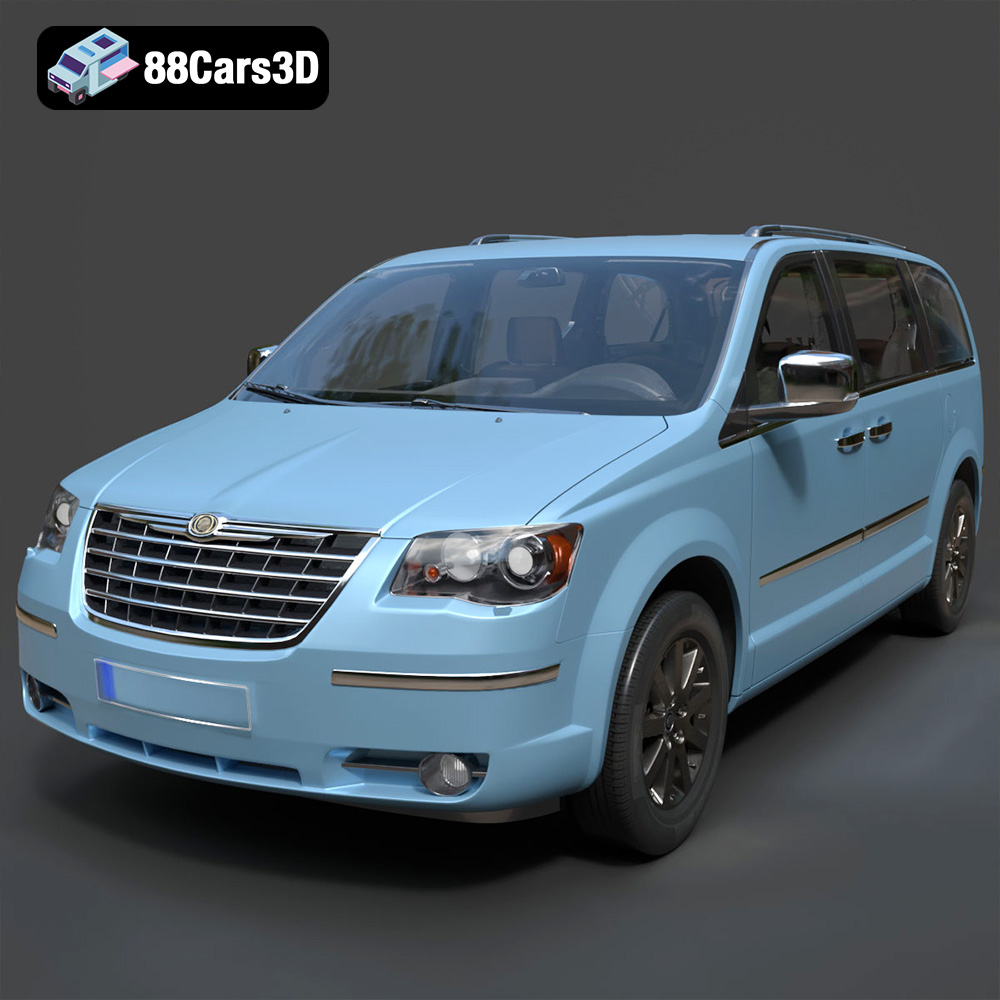
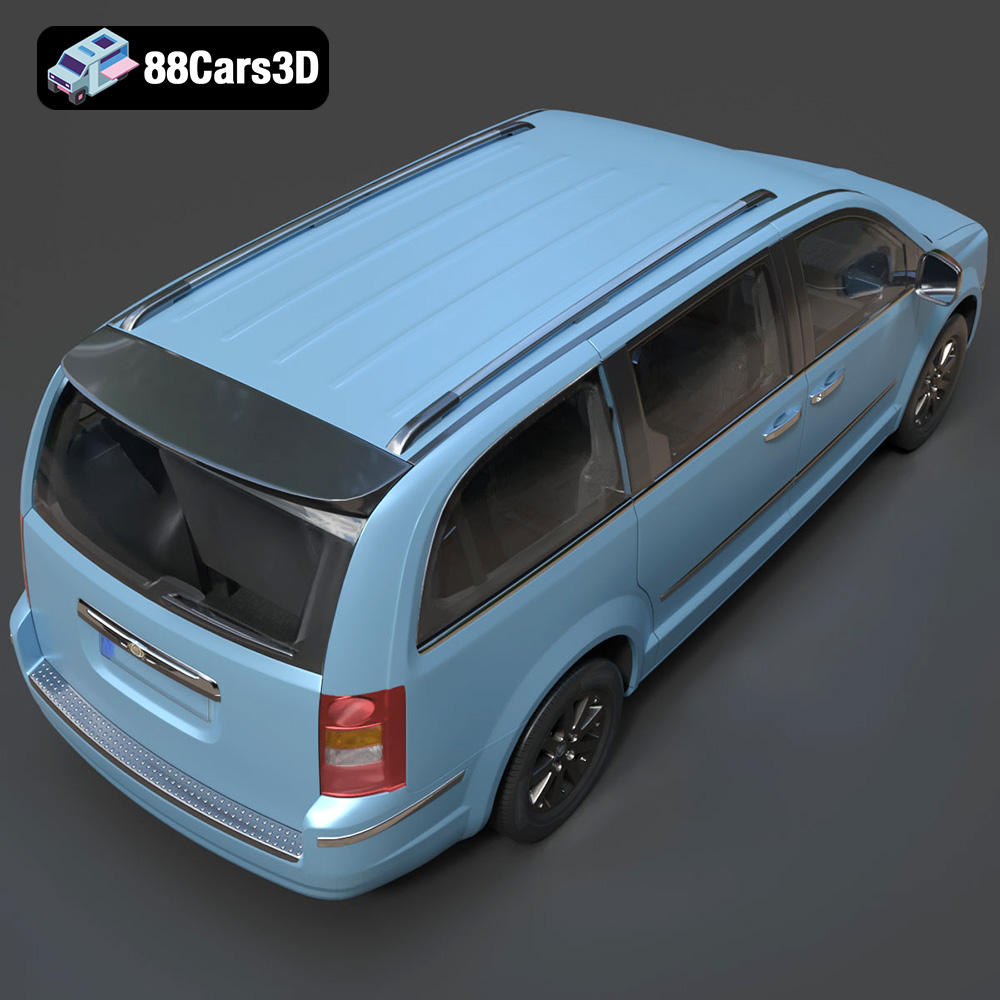
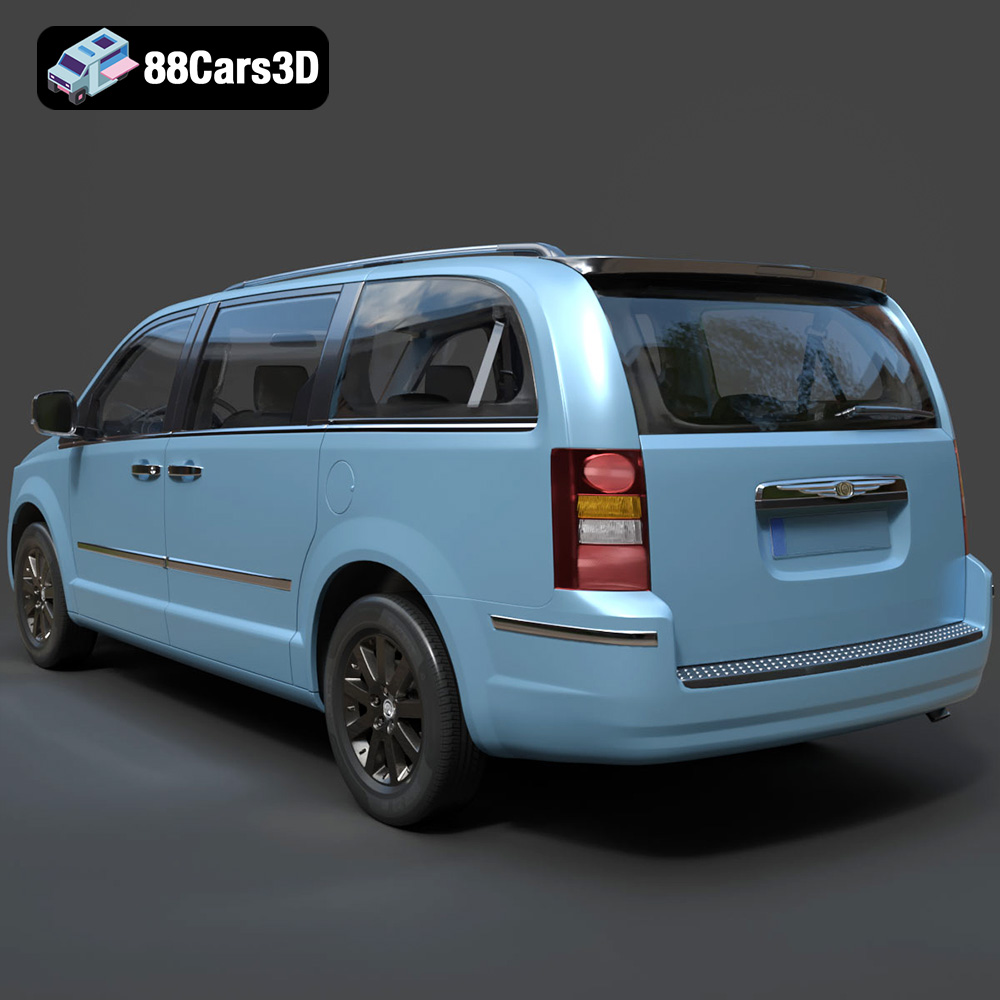
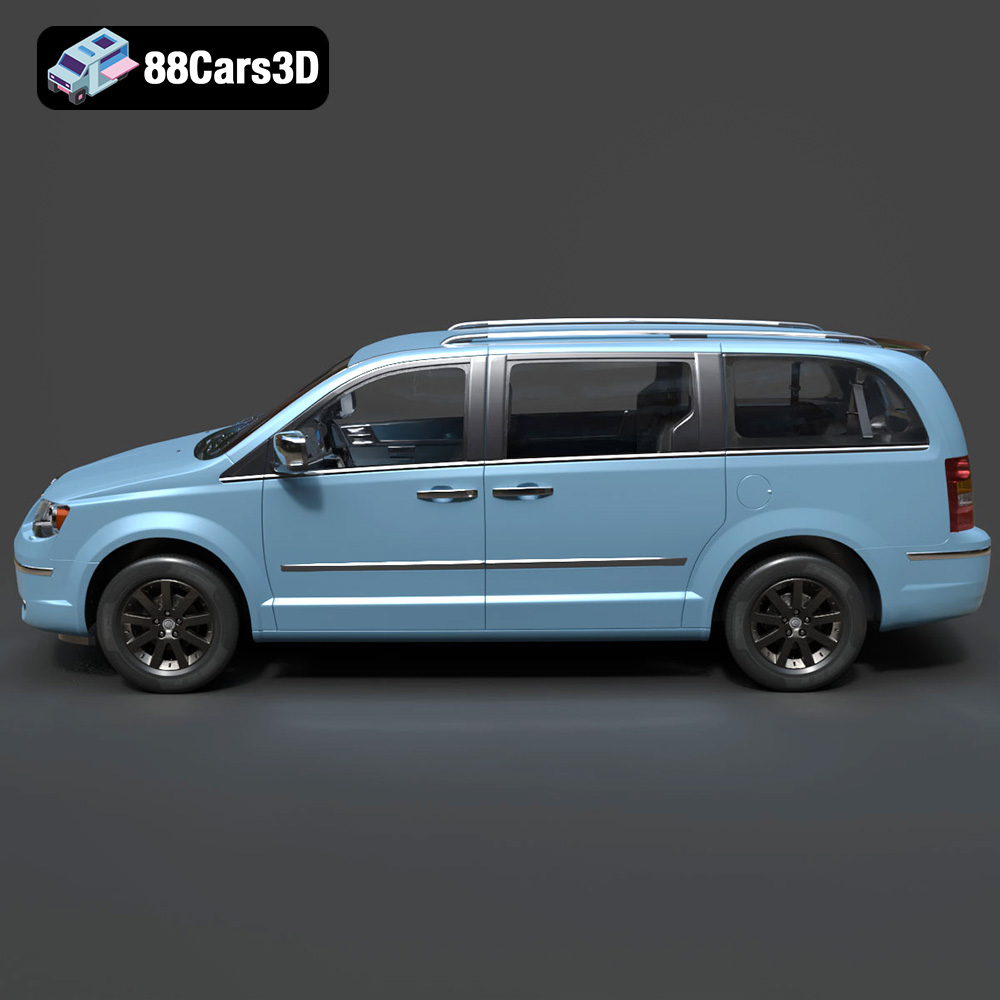
At the heart of many such ambitious projects lies the need for exceptional 3D car models. These aren’t just static representations; they are dynamic digital sculptures, engineered for performance across diverse platforms. Whether you’re a game developer striving for authentic traffic simulations, an architect populating a sprawling urban scene, or a marketing professional crafting a compelling product visualization, the quality of your chosen assets is paramount. This is where specialized marketplaces like 88cars3d.com become invaluable, offering a curated selection of expertly crafted models designed to meet rigorous professional standards. Today, we’re diving deep into the technical intricacies and versatile applications of such an asset, exemplified by the detailed Chrysler Grand Voyager 2008 3D Model.
When acquiring a 3D model, understanding the various file formats is crucial. Each format serves a specific purpose, offering unique advantages for different stages of a project, from initial sculpting and animation to real-time deployment and even physical fabrication. The Chrysler Grand Voyager 2008 model from 88cars3d.com exemplifies this versatility by providing a comprehensive suite of formats, ensuring maximum compatibility and utility.
The .blend format is Blender’s native file type. It encapsulates an entire Blender scene, including all 3D geometry, materials, textures, lighting, cameras, animations, and even physics simulations. This is the ideal format for users who work primarily within Blender, offering full editability. You can easily modify the mesh, adjust materials, re-rig components, or integrate the model into a larger Blender project. Its comprehensive nature makes it perfect for artists who need to customize or animate the Chrysler Grand Voyager for specific cinematic renders or game sequences within Blender’s powerful ecosystem.
.fbx (Filmbox) is an Autodesk-developed proprietary file format, widely considered the industry standard for exchanging 3D data between different software applications. It supports geometry, materials, textures (though often linked externally), skeletal animations, and blend shapes. For game development, especially with Unreal Engine or Unity, .fbx is often the go-to format due to its robust support for animation data and hierarchical structures. The .fbx version of the Grand Voyager is optimized for direct import into real-time engines, ensuring that its separate wheels, suspension, and steering components retain their pivot points for easy animation within game environments.
The .obj (Wavefront OBJ) format is one of the oldest and most universally supported 3D file formats. It primarily stores geometric data (vertices, normals, texture coordinates, and faces) and can also reference external material files (.mtl). While it doesn’t support animation or rigging, its simplicity and widespread compatibility make it excellent for static mesh exchange across virtually any 3D software. If you need a clean, unadorned mesh of the Chrysler Grand Voyager to bring into an obscure renderer or a CAD package, .obj is a reliable choice.
.glb (GL Transmission Format Binary) is the binary version of glTF, a royalty-free specification for the efficient transmission and loading of 3D scenes and models by applications. It’s particularly optimized for web-based 3D, augmented reality (AR), and virtual reality (VR) applications. A .glb file packages all assets—geometry, materials, textures, animations—into a single, compact binary file. This makes it perfect for quickly deploying the Chrysler Grand Voyager into a mobile AR configurator or an interactive web visualization without complex asset management.
The .stl (STereoLithography) format is the ubiquitous standard for 3D printing. It represents a 3D model as a series of connected triangles, describing only the surface geometry of an object without color, texture, or other attributes. For hobbyists or professionals looking to physically manifest the Chrysler Grand Voyager, the .stl version is precisely what’s needed. The model’s description even includes recommended 3D print settings, like layer height, infill, and support requirements, ensuring a successful physical output.
The .ply (Polygon File Format, or Stanford Triangle Format) is a versatile format capable of storing various properties of a 3D object, including color, transparency, and even properties of the mesh itself (like normals and texture coordinates). It’s often used in academic and research contexts for storing data from 3D scanners, and for applications requiring precision mesh data for CAD or analysis. For detailed engineering analysis or complex procedural generation based on the Grand Voyager’s geometry, .ply can be a powerful tool.
The .unreal format signifies an asset specifically prepared and often pre-imported into an Unreal Engine project. This could be a static mesh asset, a skeletal mesh, or even a pre-setup blueprint or material instance. The benefit here is a near plug-and-play experience, saving developers significant time on import settings, material setup, and scaling adjustments. An .unreal asset for the Chrysler Grand Voyager means it’s already optimized and configured for the engine’s rendering pipeline, ready for immediate use in your game world.
Finally, the .max format is the native scene file for Autodesk 3ds Max. Similar to .blend, it contains all the information about a scene within 3ds Max, including geometry, materials, lighting, cameras, and animation data. This format is crucial for professionals who use 3ds Max for high-end rendering, complex animation, or architectural visualization, allowing them full creative control over the Chrysler Grand Voyager model within this industry-leading software.
This diverse array of formats ensures that the Chrysler Grand Voyager 2008 3D model is not just a digital asset, but a complete solution, adaptable to virtually any project or pipeline an artist or developer might encounter.
Creating a truly convincing 3D car model is a delicate balance between artistic interpretation and technical precision. It goes far beyond simply mimicking real-world dimensions; it involves a deep understanding of topology, materials, and optimization. The Chrysler Grand Voyager 2008 model is a prime example of this synthesis.
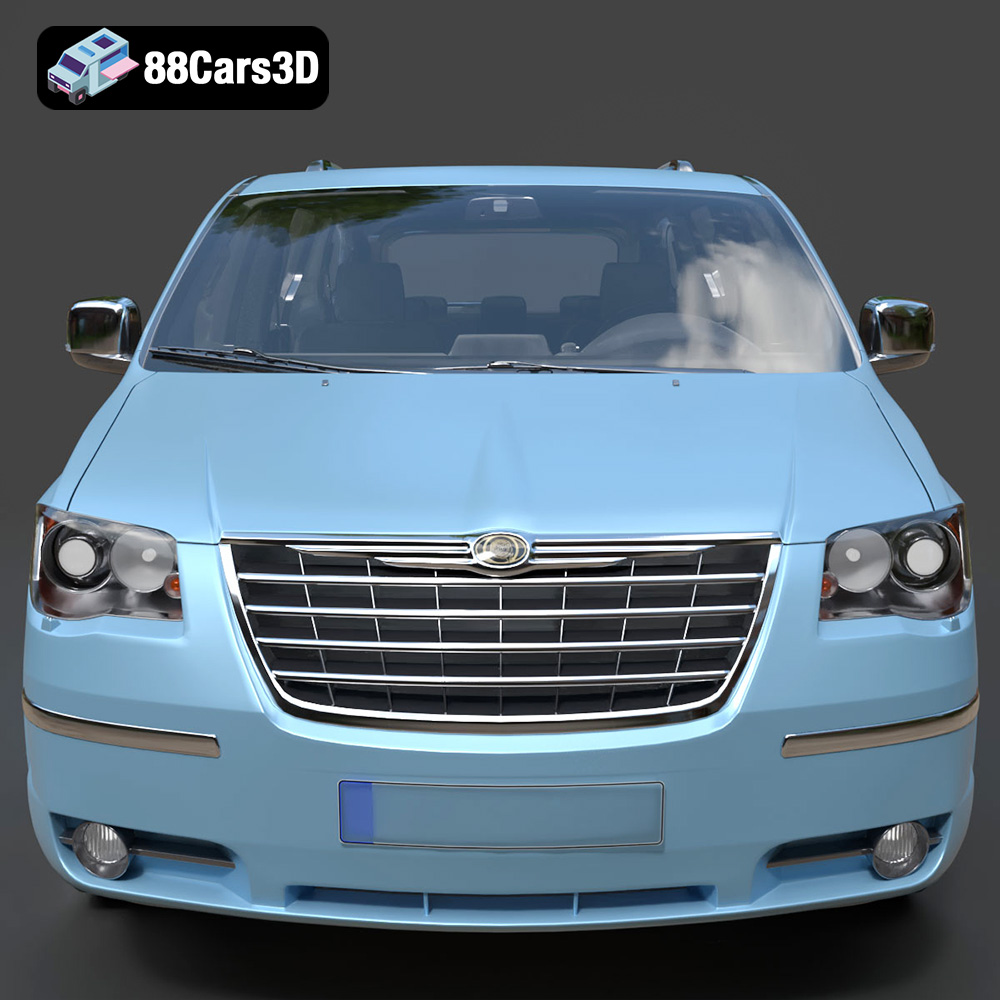
At the core of any high-quality 3D model is its geometry. For automotive assets, this means meticulous attention to curves, panel gaps, and overall vehicle proportions. The Grand Voyager model accurately captures its signature wide front grille, prominent headlight housings, and elongated, aerodynamic body. However, accuracy isn’t enough; the geometry must also be “clean.” This refers to the arrangement of polygons (usually quads, but triangles are acceptable if optimized) in a way that ensures smooth shading, predictable deformation during animation, and efficient UV mapping. A clean topology, as featured in this model, means surfaces like the car body will reflect light realistically without visual artifacts, making it perfect for demanding automotive rendering scenarios.
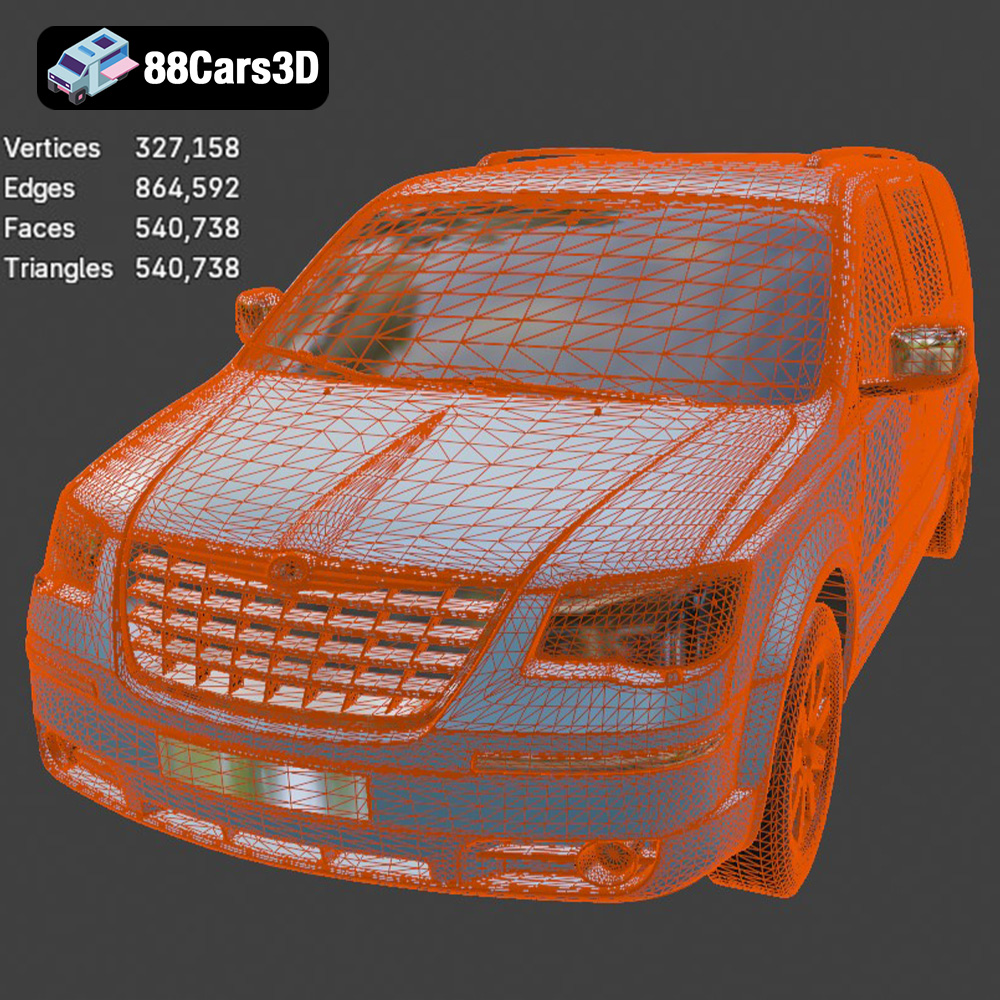
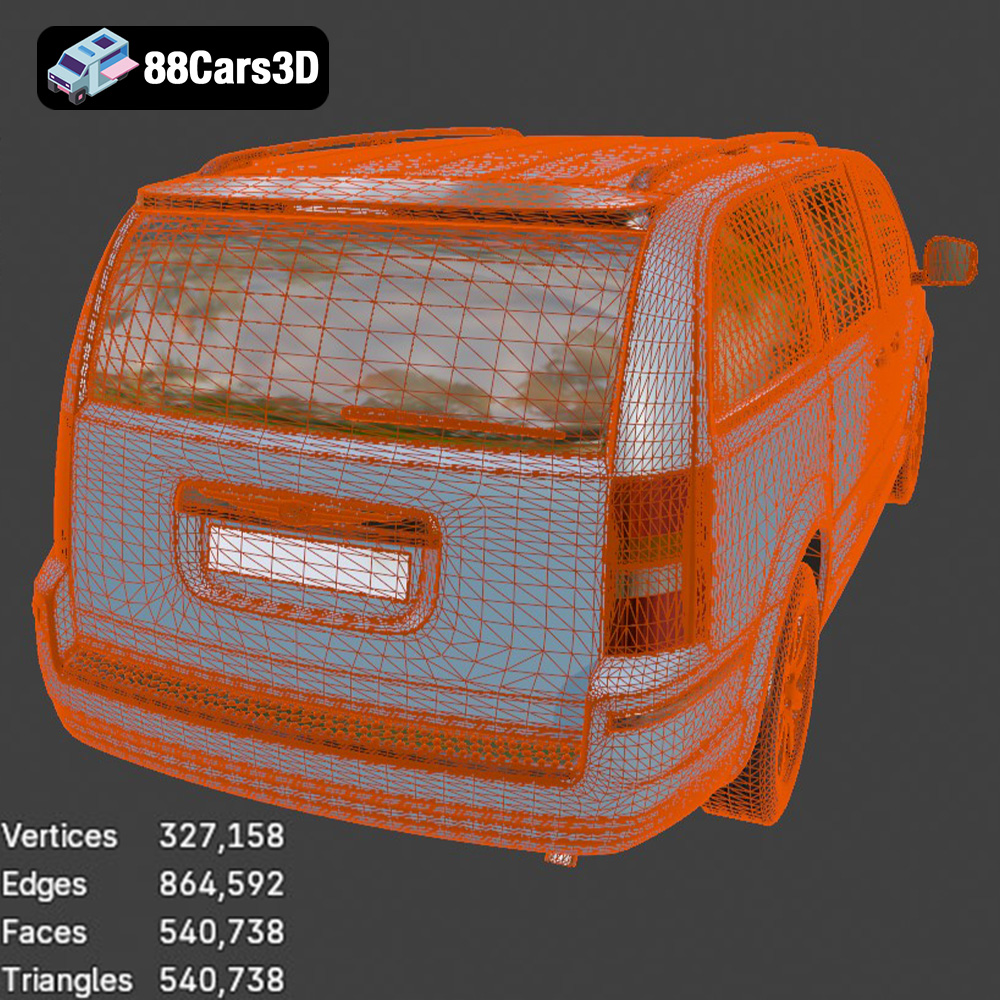
One of the most critical technical specifications for any 3D model, especially for real-time applications like games or AR/VR, is its polycount (triangle count). The Chrysler Grand Voyager 2008 3D model strikes an impressive balance with 540,738 triangles. This count is high enough to convey exceptional visual fidelity, including intricate details like multi-spoke wheel designs, realistic tire tread patterns, and detailed interior components, yet it remains optimized for game-ready performance. This avoids bogging down real-time engines, allowing for smoother frame rates even when multiple instances of the vehicle are present. Achieving this balance requires careful modeling techniques, often involving intelligent use of subdivision surfaces during high-poly modeling, followed by retopology and baking normal maps for the optimized low-poly version.
Beyond the mesh itself, the materials and textures define the visual appeal of a 3D car model. This involves meticulous UV mapping—the process of unwrapping the 3D surface into a 2D layout so textures can be applied without distortion. A well-UV-mapped model allows for high-resolution textures, enabling realistic paint finishes (metallic, gloss, matte), intricate tire sidewall details, and convincing interior upholstery patterns. The model’s description implies excellent UVs through its emphasis on “flawless reflections and shading,” which is directly tied to proper texture coordinates and material definitions. Furthermore, the inclusion of separate components like wheels, suspension, and steering allows for individual material adjustments, enabling customization options such as changing body/trim colors or modifying tire textures to suit specific project needs.
The versatility of a well-crafted 3D car model like the Chrysler Grand Voyager 2008 lies in its ability to seamlessly integrate into various professional pipelines. Each discipline has its unique requirements and utilizes specific tools, making the availability of multiple file formats a significant advantage.
For game developers, 3D car models are fundamental for populating open-world environments, creating realistic racing experiences, or designing immersive simulations. The Chrysler Grand Voyager 2008 is “Game-Ready & Optimized,” making it an ideal candidate. Its optimized polycount of 540,738 triangles ensures it won’t excessively tax game engines like Unreal Engine or Unity, even in dense traffic scenarios. The inclusion of .fbx and .unreal formats directly caters to these engines, simplifying import and setup. Furthermore, the model features proper pivot setups for steering, wheel rotation, and suspension travel, which are critical for animating a believable driving experience and integrating with vehicle physics systems. Imagine this Grand Voyager navigating a bustling city street in a driving simulator or serving as a background vehicle in an adventure game, contributing to the overall realism without sacrificing performance.
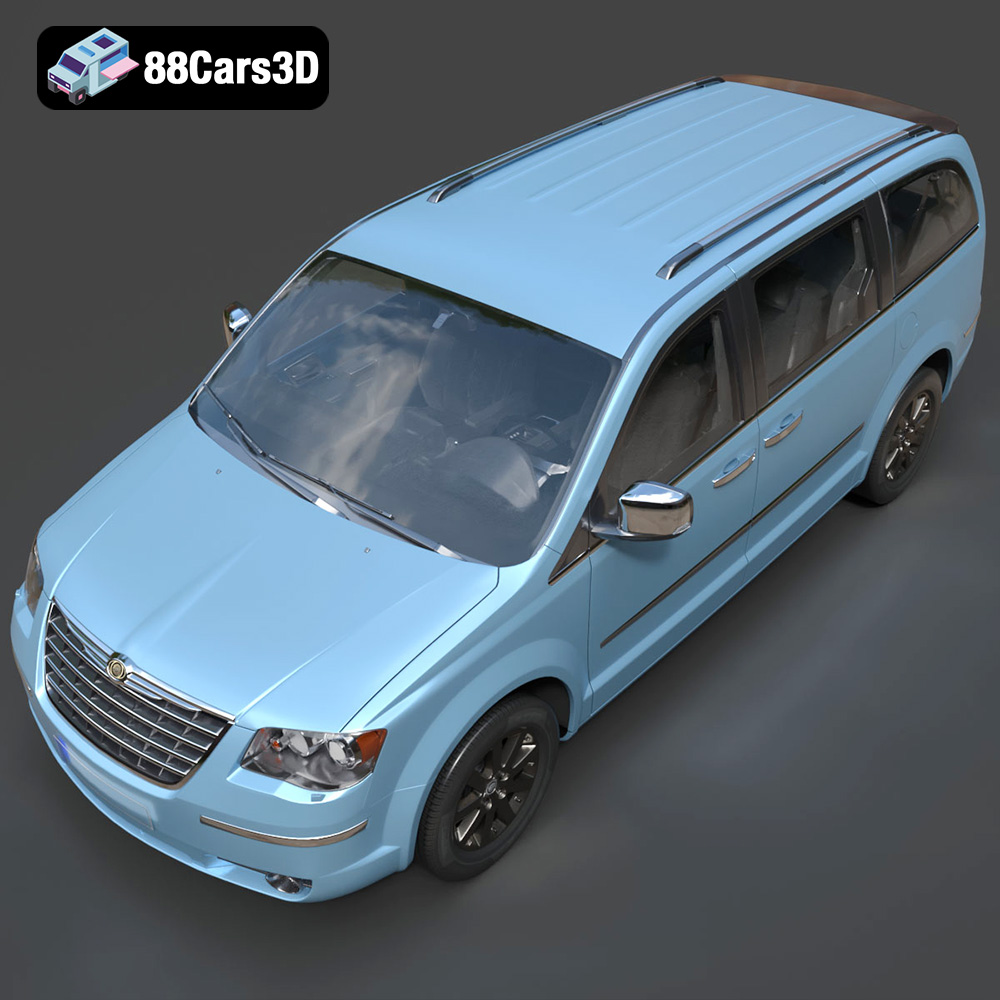
In architectural visualization (ArchViz) and cinematic rendering, the goal is photorealism. Cars are often used to ground a scene, provide scale, or inject a sense of lifestyle and movement. For ArchViz artists using software like 3ds Max (with V-Ray or Corona) or Blender (with Cycles), the .max and .blend files offer complete control over materials, lighting, and animation. The detailed exterior and interior features, from the accurate frame geometry to the multi-row seating arrangement, ensure that the Grand Voyager looks convincing whether seen from afar or up close through a window. It can transform a static building render into a vibrant scene, showcasing a family arriving home or parked outside a commercial property. Similarly, for cinematic animations, the separated components (wheels, suspension, steering) allow for dynamic sequences, from a subtle suspension compression over a bump to a full turning animation.
Augmented Reality (AR) and Virtual Reality (VR) demand efficient, high-quality assets to maintain smooth framerates and truly immersive experiences. The .glb format, included with the Chrysler Grand Voyager, is specifically optimized for these applications, allowing for quick loading and display in mobile AR apps or interactive VR showrooms. Imagine a potential customer exploring the Grand Voyager in their driveway via an AR app, or stepping into a virtual dealership and examining the interior in full VR. The model’s “Optimized interior geometry ideal for first-person POV in gaming and VR” further enhances its suitability, ensuring a compelling interactive experience where users can virtually sit inside the vehicle and explore its detailed cockpit, instrument cluster, and center infotainment console.
The versatility of a well-designed 3D car model like the Chrysler Grand Voyager 2008 makes it invaluable across a spectrum of real-world scenarios. Its attributes lend themselves to a myriad of practical and creative applications.
One of the most common applications for 3D car models is populating digital environments. For architects, city planners, or game developers building urban landscapes, the Grand Voyager serves as an excellent vehicle for “urban environment dressing.” Its instantly recognizable silhouette helps to establish a realistic sense of scale and place. For traffic simulation scenarios, where hundreds or thousands of vehicles might be rendered simultaneously, the model’s “Game-Ready & Optimized” nature with its balanced polycount is critical. This ensures that the simulation runs smoothly without performance bottlenecks, allowing for realistic traffic flow studies, autonomous vehicle testing simulations, or even cinematic cityscapes where every car contributes to the dynamic visual narrative.
The Chrysler Grand Voyager 2008, as a quintessential family MPV, is perfect for “family lifestyle renders.” Marketing agencies and advertisers frequently need to depict relatable scenarios. A render featuring the Grand Voyager parked in front of a suburban home, loaded with luggage for a trip, or with kids getting in, can evoke powerful emotional connections. The detailed interior, with its multi-row seating, allows for close-up shots that highlight the vehicle’s practicality and comfort. This model, available on 88cars3d.com, could be the centerpiece of a digital campaign for anything from travel insurance to home goods, subtly conveying a message of family, reliability, and everyday life.
With the rise of online commerce, interactive virtual showrooms and configurators are becoming standard. These tools allow potential buyers to explore a product in 3D, customize features, and visualize options before purchase. The Grand Voyager model’s “Customization Options,” such as changing body/trim colors, modifying tire textures, and adjusting material finishes (matte, gloss, metallic), are directly applicable here. Using the .glb format for web-based configurators or the .fbx for dedicated VR applications, users could dynamically change the paint color, select different wheel options, and even open doors to view the interior, all in real-time. This level of interaction enhances the buying experience and provides a deeper understanding of the product without requiring a physical presence.
Optimization is not merely about reducing polycount; it’s a holistic approach to ensuring a 3D model performs efficiently across its intended applications. The Chrysler Grand Voyager 2008 3D Model embodies several key optimization strategies.
As mentioned, the 540,738 triangle count is a sweet spot. For game engines, assets need to be visually appealing without causing a performance hit. This polycount allows for the accurate representation of the Grand Voyager’s distinct body lines, detailed front grille, and comprehensive interior without overwhelming the GPU. In comparison, ultra-high-poly models (millions of triangles) are suitable for offline rendering but impractical for real-time. Conversely, extremely low-poly models might lack the necessary detail. This model navigates that middle ground perfectly, making it versatile for both high-fidelity rendering and responsive real-time environments.
A truly game-ready asset isn’t just a single mesh. The Grand Voyager model features “Separate wheels, suspension, and steering components for animation.” This modularity is crucial. It allows developers to apply unique physics properties, set up individual animation blueprints, and optimize culling (only rendering visible parts). Crucially, “Proper pivot setup for steering, wheel rotation, and suspension travel” means that these separated parts are correctly aligned and centered at their rotational axes. This saves countless hours for animators and technical artists who would otherwise have to manually adjust pivots, ensuring that the wheels rotate realistically and the suspension compresses correctly when integrated into a game’s physics system.
While the product description emphasizes detailed textures, optimization also extends to how these textures are managed. Using efficient UV layouts, consolidating textures into atlases where appropriate, and employing physically based rendering (PBR) workflows can significantly improve performance and visual consistency. PBR materials, common in modern engines, allow for realistic lighting interactions with metallic, rough, and smooth surfaces, enhancing the visual fidelity of the Grand Voyager’s paintwork, glass, and interior fabrics without excessive computational cost. The ability to “Change body/trim colors” and “Modify tire textures” also implies a flexible material setup, allowing artists to easily create variations without needing to re-texture from scratch.
While digital visualization is a primary use case, 3D printing offers a tangible extension to the utility of 3D models. The Chrysler Grand Voyager 2008 3D model, specifically including an .stl format, opens up exciting possibilities for hobbyists, collectors, and designers alike.
The inclusion of the .stl format is a direct gateway to physical reproduction. This triangulated mesh format is the universal standard for virtually all 3D printers. It strips away color, texture, and animation data, leaving behind only the pure geometric form, ready to be sliced into printable layers. For enthusiasts of the Chrysler Grand Voyager, this means they can create a physical replica of the 2008 minivan, perfect for display, model dioramas, or even as a personalized desk ornament.
3D printing success hinges on correct settings, and the product description provides excellent guidance. “Recommended scale: 1:12 / 1:18 / 1:24” offers practical starting points, allowing users to choose a size that fits their display needs or printer capabilities. Key parameters like “Layer height: 0.04–0.12 mm” are crucial for detail; a finer layer height (lower number) will yield smoother surfaces, particularly important for automotive bodywork. The recommendation for “Resin printing recommended for fine details” is spot on, as resin (SLA/DLP) printers excel at reproducing the intricate features like the detailed grille, exhaust system, and interior components that filament (FDM) printers might struggle with. Furthermore, “Supports: Required for detailed parts like exhaust, mirrors, steering wheel” and “Print orientation: Frame printed angled for structural integrity; wheels printed separately” are expert tips that prevent print failures and ensure parts are robust.
Once printed, the physical model offers a new canvas for creativity. The suggested “Post-processing: Sanding, primer, and authentic factory colors with metallic finishes” highlights the potential for achieving a showroom-quality miniature. Users can mimic the original factory paint schemes, experiment with custom liveries, or even weather the model for a more realistic, “in-use” look. The ability to customize digitally (e.g., change body/trim colors, adjust material finishes) can also inform the physical painting process, allowing for a cohesive vision from screen to tangible object.
The world of 3D modeling is a confluence of art, engineering, and digital wizardry. High-quality 3D car models are not just assets; they are foundational components that breathe life into virtual worlds, enhance architectural designs, and provide tangible results through 3D printing. The Chrysler Grand Voyager 2008 3D Model stands as a testament to the meticulous craftsmanship and technical foresight required in this specialized domain.
From its optimized polycount of 540,738 triangles ensuring game-ready performance, to its highly detailed exterior and interior features perfect for photorealistic rendering, this model delivers on all fronts. The comprehensive suite of file formats—including .blend, .fbx, .obj, .glb, .stl, .ply, .unreal, and .max—guarantees compatibility across virtually any professional workflow, whether you’re animating in 3ds Max, developing a game in Unreal Engine, or preparing a model for physical fabrication. It’s a versatile tool for game developers, AR/VR creators, visualization artists, and even 3D printing enthusiasts.
By offering assets like this detailed Grand Voyager, 88cars3d.com empowers creators with the foundational tools to realize their most ambitious digital and physical projects. Investing in high-quality 3D car models means investing in efficiency, realism, and creative freedom, ensuring that your automotive visions are not just rendered, but truly brought to life.
The Chrysler Grand Voyager 2008 stands as a quintessential icon of modern family transport, renowned for its spaciousness, practicality, and unmistakable road presence. This 3D model captures the essence of the classic MPV, featuring the vehicle’s signature wide front grille, prominent headlight housings, and the elongated, aerodynamic body that defined a generation of minivans. From the meticulously crafted dual exhaust styling to the subtle curves of the rear tailgate, every defining styling cue has been faithfully recreated to deliver an authentic visual experience. Crafted with a detailed yet optimized triangle count of 540,738, this model perfectly balances high-end visual fidelity with game-ready performance. The clean topology ensures flawless reflections and shading, making it an exceptionally versatile asset for game development, AR/VR applications, architectural visualization, and cinematic animations. The geometry has been structured to maintain high realism without bogging down real-time engines.
$42.50
.2008
.blend
.chrysler
.fbx
.glb
.max
.minivan
.mpv
.obj
.ply
.rendering
.stl
.unreal
car-3d-model
family-car
game asset
game-ready
grand-voyager
low-poly
optimized
VR/AR