Get 20% OFF All Premium 3D & STL Models!

In the dynamic world of 3D visualization, from high-fidelity cinematic renders to immersive real-time gaming environments, the demand for exceptionally detailed and technically sound 3D car models is consistently high. Artists, developers, and designers rely on precise digital assets to bring their visions to life, ensuring realism, performance, and adaptability across various platforms. The automotive sector, in particular, thrives on accurate digital representations for everything from concept design and marketing campaigns to driving simulators and virtual showrooms. Investing in a meticulously crafted model can significantly streamline workflows and elevate the final product.
This comprehensive guide delves into the intricate world of professional 3D car models, using the Infinity JX35 3D Model as a prime example of excellence in digital automotive asset creation. We’ll explore the technical considerations, practical applications, and the strategic advantages of incorporating such a high-quality model into diverse professional pipelines. Whether your goal is photorealistic automotive rendering, creating engaging game assets, or developing cutting-edge AR/VR experiences, understanding the nuances of these digital vehicles is paramount.
Creating a compelling 3D car model is a fusion of artistic skill and engineering precision. It involves meticulously translating real-world vehicles into a digital format, ensuring both visual authenticity and technical efficiency. Every curve, panel gap, and functional component must be accurately represented while adhering to optimization principles suitable for its intended use.
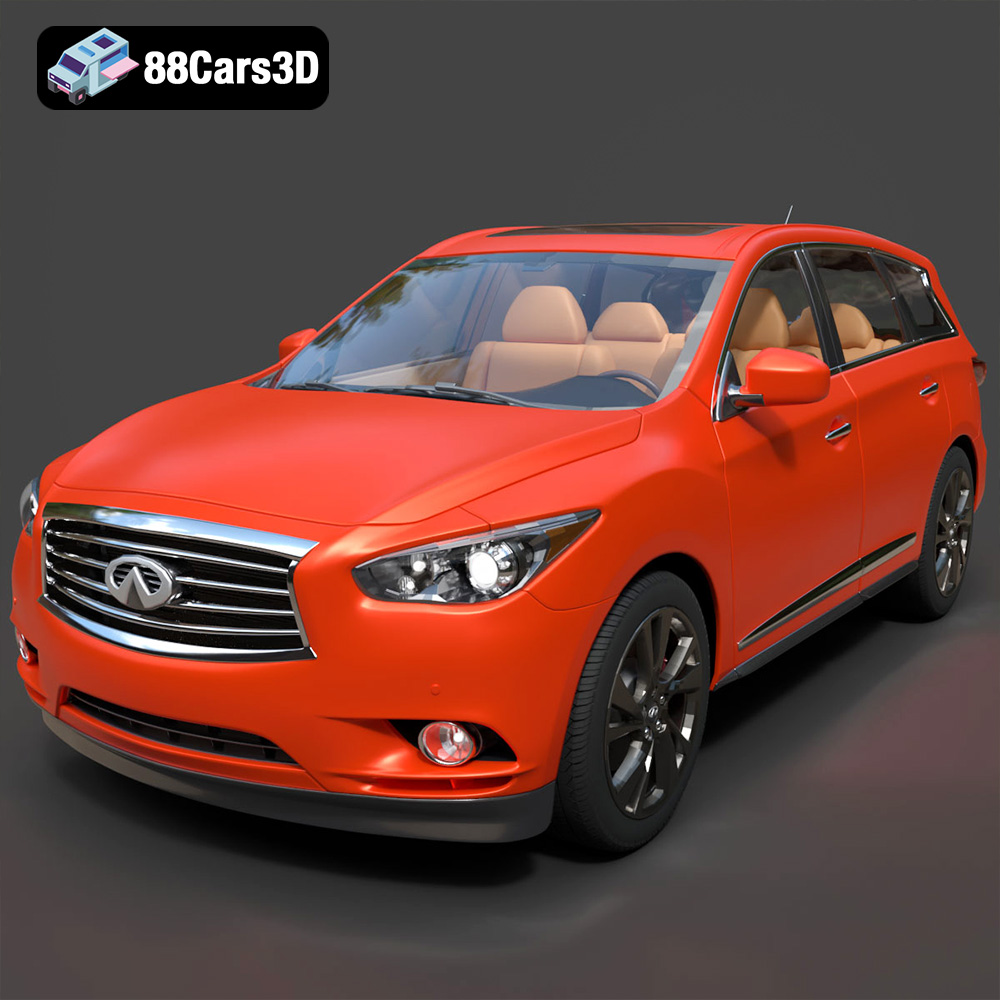
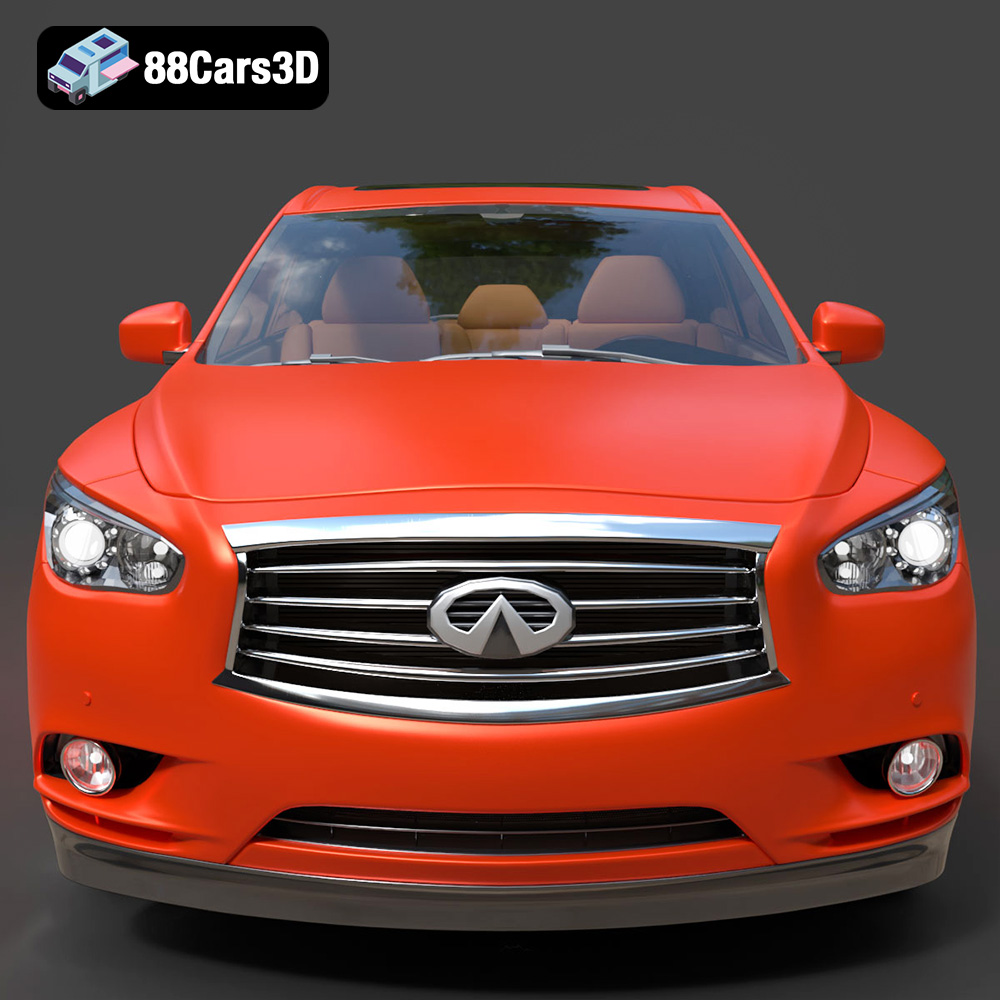
The core of a superior 3D car model lies in its ability to replicate the real vehicle’s design language and physical characteristics. This starts with accurate proportions, precise surface topology, and the faithful recreation of distinctive styling elements. For a luxury crossover like the Infinity JX35, this means capturing its elegant styling, the signature double-arch grille, and the iconic crescent-cut D-pillar. Such details are not merely aesthetic; they are critical for the model to be instantly recognizable and believable in any virtual setting. Achieving this level of realism often involves careful study of blueprints, photographic references, and, in some cases, even laser scan data from the actual vehicle. The goal is to ensure that from every angle, the digital model communicates the same presence and luxury as its physical counterpart.
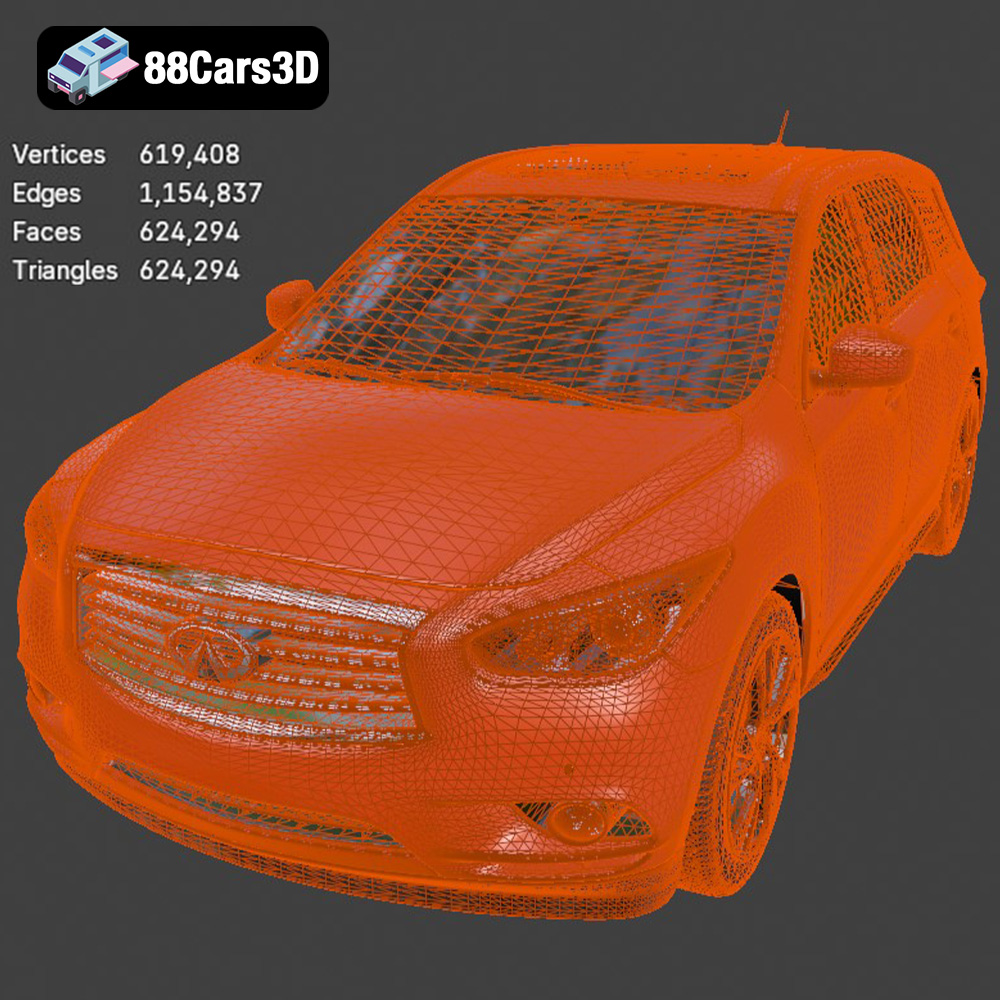
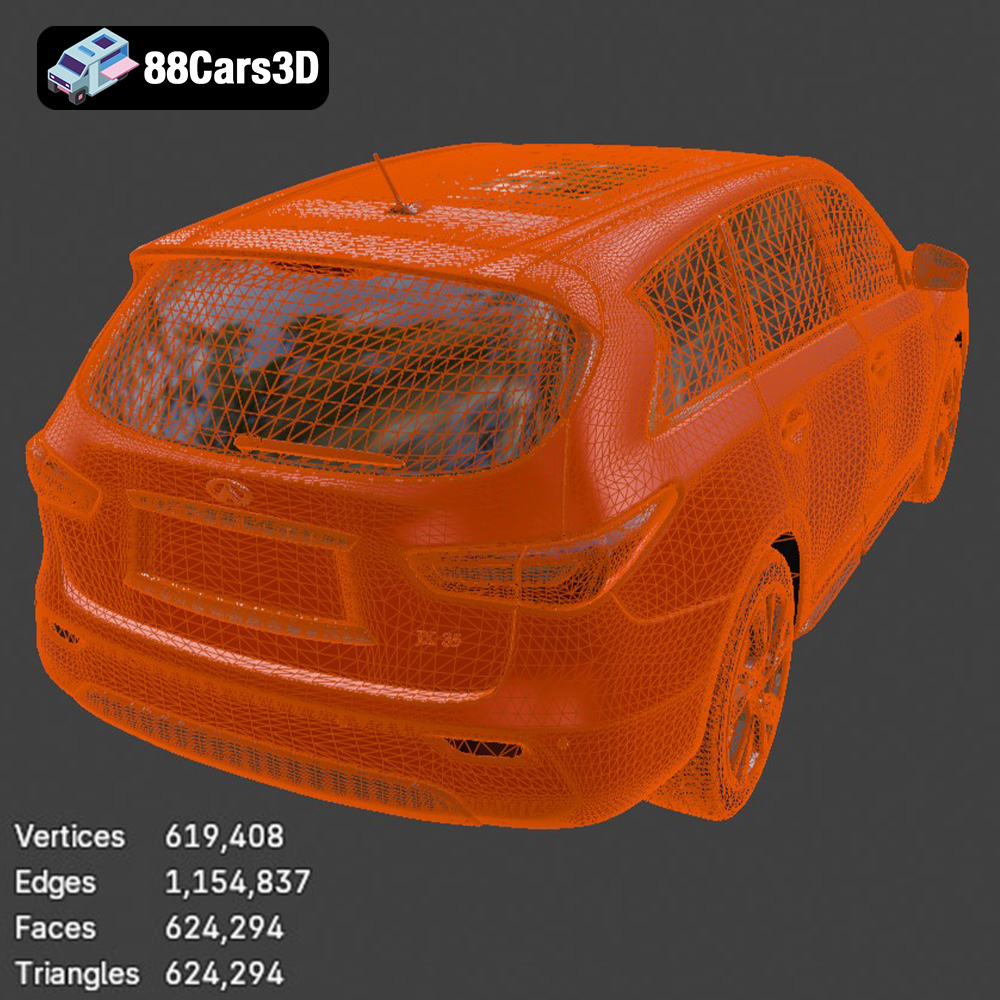
One of the most crucial technical aspects of 3D modeling is finding the sweet spot between visual detail and computational efficiency. This balance is primarily managed through polycount (the number of polygons or triangles in a mesh) and topology (how these polygons are arranged). A model with an excessive polycount might offer breathtaking detail but could cripple real-time performance in games or VR. Conversely, a model with too few polygons might run smoothly but lack visual fidelity for close-up renders. The Infinity JX35 3D Model, with its optimized topology of 624,294 triangles, exemplifies this balance. This specific polycount is ideal for delivering high-end visual fidelity in close-up shots while remaining efficient enough for demanding real-time engines like Unreal Engine or Unity. Good topology also ensures clean deformations during animation and simplifies UV unwrapping for texture application, crucial for professional game assets and rendered sequences.
For a 3D car model to be truly useful in professional pipelines, it must adhere to real-world scale. This ensures correct interaction with other scaled assets in a scene, proper physics simulation in game engines, and accurate measurements for architectural visualization or product placement. Beyond scale, articulation is vital. Components such as wheels, steering, and suspension must be separated and have properly positioned pivot points. This allows for realistic animation of driving dynamics, enabling developers to create compelling simulations, cinematics, or interactive configurators without extensive re-rigging. The Infinity JX35 model, for example, features separate wheels, suspension, and steering components, along with proper pivot setups, making it ready for immediate animation in any professional project.
Choosing the correct file format is a critical decision in any 3D workflow, directly impacting compatibility, feature retention, and overall project efficiency. Each format serves distinct purposes and excels in particular scenarios, making it essential for professionals to understand their nuances. The Infinity JX35 3D Model from 88cars3d.com is provided in a comprehensive suite of formats, ensuring maximum flexibility for any project.
The .blend format is Blender’s native file type, offering a complete and fully editable Blender scene. This includes not just the mesh data but also materials, textures, lighting, cameras, animations, and even physics simulations. For artists and studios primarily working within Blender, this is the most convenient and powerful format. It preserves every aspect of the project, allowing for deep customization and iteration. Developers can easily modify the model’s topology, adjust UVs, fine-tune PBR materials, or integrate the model directly into complex Blender-based animation pipelines.
.fbx (Filmbox) is arguably the most ubiquitous interchange format in the 3D industry, particularly favored for game development and animation. It supports mesh data, materials (often simplified), textures, animations, skinning, and camera information. Its strength lies in its excellent compatibility with major software like Unreal Engine, Unity, 3ds Max, Maya, and Cinema 4D. When exporting to .fbx, it’s crucial to consider export settings for unit scale, coordinate systems, and embedding media to ensure seamless integration into the target application. For real-time pipelines, .fbx is often the go-to format for its robust support of animation and skeletal data, making it ideal for the JX35 in driving simulators or cinematic sequences.
The .obj (Wavefront OBJ) format is a widely supported, universal 3D geometry definition file. It stores vertex positions, UV coordinates, normals, and face information, and can reference external material (.mtl) files for basic color and texture mapping. While it doesn’t support animation or rigging, its simplicity and broad compatibility make it excellent for static mesh exchange between virtually any 3D software. For archivists or those needing a clean mesh for sculpting or retopology in a different program, .obj is a reliable choice. The JX35 in .obj format provides a clean base mesh for diverse applications.
.glb (GL Transmission Format Binary) is a relatively modern format optimized for efficient transmission and loading of 3D scenes and models in web browsers, AR, and VR applications. It encapsulates mesh data, PBR (Physically Based Rendering) materials, textures, and animation into a single binary file. This self-contained nature and optimization for web-based rendering make it perfect for interactive product configurators, virtual showrooms, and mobile augmented reality experiences. For the Infinity JX35, the .glb format is indispensable for creating immersive virtual car showrooms or engaging AR experiences where users can view the model in their environment via a smartphone.
The .stl (Stereolithography) format is the standard for 3D printing. It represents 3D surfaces as a series of connected triangles (a tessellation) without color, texture, or other CAD information. While it lacks the richness of other formats, its simplicity is its strength for manufacturing. When preparing the JX35 for 3D printing, converting to .stl is the first step, followed by careful consideration of scale, wall thickness, infill, and support structures as outlined in the product’s 3D print settings. This format transforms the digital asset into a tangible, physical model, perfect for hobbyists or rapid prototyping.
.ply (Polygon File Format or Stanford Triangle Format) is a file format for storing 3D data, particularly from 3D scanners. It supports properties like color, transparency, normals, texture coordinates, and confidence values, making it ideal for precision mesh data. While less common for general 3D asset exchange than .fbx or .obj, .ply is valuable in scientific, engineering, and CAD applications where precise geometric analysis or reverse engineering is required. For detailed inspection or integration into specialized analysis software, the JX35 .ply file provides robust geometric information.
The .unreal format signifies an asset specifically prepared and exported for direct use within Unreal Engine. This might involve optimized FBX imports tailored to Unreal’s material system, collision meshes, LODs (Levels of Detail), and blueprint setups. Assets provided in this ‘engine-ready’ state save significant time for game developers, as much of the import and initial setup work has already been performed. For the game-ready Infinity JX35, an .unreal file implies a highly optimized asset, potentially pre-configured with PBR materials compatible with Unreal’s rendering pipeline and ready for immediate integration into an interactive environment.
The .max format is the native file type for Autodesk 3ds Max. Similar to .blend for Blender, it contains an entire 3ds Max scene, including all geometry, materials, textures, lighting, cameras, animation, and scene settings. It is the preferred format for users of 3ds Max, allowing for full editability and leveraging all the powerful features of the software for high-end rendering, animation, and modeling. For detailed studio renders or complex automotive animations, the JX35 in .max format provides the complete project file, enabling artists to delve deep into its structure and customize every aspect.
The Infinity JX35 3D Model available on 88cars3d.com is a testament to meticulous craftsmanship, engineered to meet the stringent demands of professional 3D projects. Its design and technical specifications reflect a deep understanding of what makes a 3D car model truly versatile and valuable.
The exterior of the JX35 model has been replicated with astonishing precision. It accurately captures the full frame geometry and the distinctive crossover SUV proportions that define the vehicle. Key features like the detailed 3.5L V6 engine block representation and realistic dual exhaust system, along with undercarriage details, add layers of authenticity that are often overlooked in lesser models. The high-resolution LED taillights and detailed HID xenon headlights contribute significantly to its photorealistic appeal, ensuring the vehicle looks convincing in any lighting scenario. Furthermore, the authentic alloy wheels with high-quality tire tread patterns and detailed independent suspension geometry are crucial for both visual accuracy and dynamic simulations. These elements are not just static textures; they are modeled components, enhancing realism for close-ups and animations.
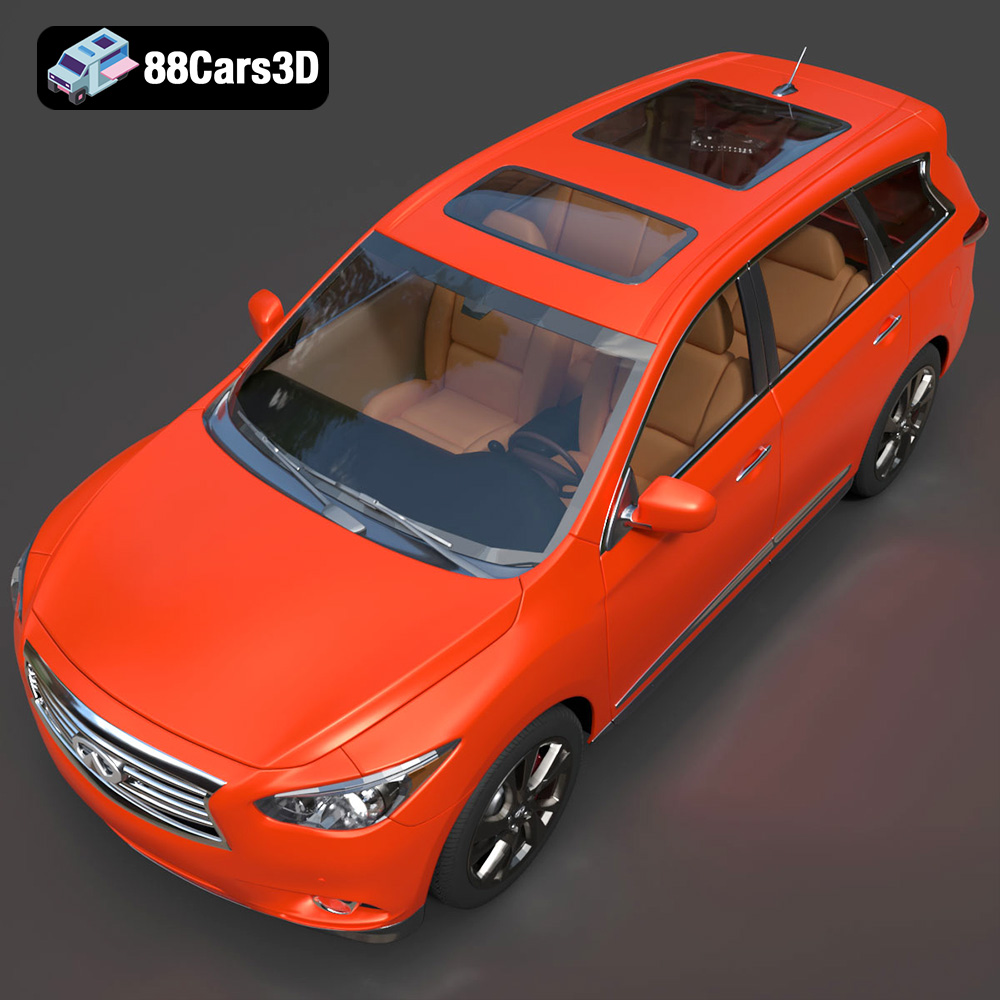
Beyond the impressive exterior, the Infinity JX35 3D Model offers an equally detailed interior, vital for first-person perspectives in games or immersive VR experiences. The luxurious three-row leather-appointed seating details, detailed leather-wrapped steering wheel with multifunction controls, and premium instrument cluster are all carefully modeled. The center infotainment screen, accurate center console, shifter, and foot pedals complete the immersive cockpit. This level of interior detail is particularly important for applications where the user or camera will spend time inside the vehicle, ensuring a consistent high-fidelity experience.
As highlighted, the model’s optimized topology of 624,294 triangles strikes a perfect balance. This makes it genuinely “game-ready,” enabling smooth performance in demanding real-time engines like Unreal and Unity, without sacrificing the visual realism needed for high-end rendering. Real-world scale accuracy is maintained, which is fundamental for seamless integration into existing scenes and environments. Crucially, the model features a proper pivot setup for steering, wheel rotation, and suspension travel. This pre-rigged articulation saves countless hours for animators and game developers, allowing them to instantly animate complex driving mechanics or create interactive vehicle systems without manual rigging. This attention to detail on both aesthetic and technical fronts truly sets this model apart as a premium automotive asset.
The versatility of a high-quality 3D car model is best demonstrated by its seamless integration into various professional workflows. The Infinity JX35 3D Model, with its optimized geometry and comprehensive file format support, is designed for this very purpose, serving a wide array of industries.
For game developers, the Infinity JX35 3D Model is an invaluable game asset. Its optimized polycount of 624,294 triangles is perfectly suited for open-world games, racing titles, and driving simulators. The clean topology ensures efficient rendering and smooth performance, even when multiple vehicles are present. With included .fbx and .unreal formats, developers can quickly import the model into engines like Unreal Engine or Unity. The separated wheels, suspension, and steering components, coupled with proper pivot points, mean that vehicle physics and animations—such as steering, suspension compression, and wheel rotation—can be implemented with minimal effort. This significantly reduces development time, allowing teams to focus on gameplay and user experience rather than asset preparation.
In advertising, architectural visualization (arch-viz), and product marketing, photorealistic rendering is paramount. The Infinity JX35 excels in this domain. Using the .max or .blend files, artists can leverage the full power of rendering software like V-Ray, Corona Renderer, or Cycles. The detailed exterior and interior features, from the intricate lighting fixtures to the luxurious leather seating, allow for breathtaking close-up shots and studio lighting setups. Artists can customize materials, adjust reflections, and integrate the vehicle into lifestyle scenes or architectural renders to showcase its elegance and appeal. The model’s real-world scale and accurate proportions ensure it integrates seamlessly with other scene elements, producing convincing and visually stunning marketing collateral or immersive architectural walk-throughs.
Augmented Reality (AR) and Virtual Reality (VR) are transforming how consumers interact with products, particularly in the automotive industry. Virtual showrooms and configurators offer immersive experiences, allowing potential buyers to explore vehicles in detail. The Infinity JX35 3D Model is ideal for these applications, especially with its .glb format, which is optimized for web and mobile AR/VR. Its balanced polycount ensures smooth performance on various devices, from high-end VR headsets to smartphones running AR apps. Imagine a customer exploring the JX35’s spacious interior in VR or placing a life-sized virtual model in their driveway via AR—the fidelity and optimization of this model make such experiences truly impactful and engaging.
Beyond digital displays, 3D printing offers a tangible connection to 3D models. The JX35’s inclusion of the .stl format, specifically designed for 3D printing, opens up possibilities for physical prototypes, scale models, or collector’s items. Hobbyists can print highly detailed replicas at recommended scales (1:12, 1:18, 1:24), benefiting from the model’s clean geometry. The provided 3D print settings—including layer height recommendations, wall thickness, infill, and support requirements—guide users through the process, ensuring successful prints, especially when utilizing resin printing for the finest details. Post-processing with sanding, primer, and authentic factory colors can result in stunning display pieces that bridge the gap between digital and physical.
A truly professional 3D asset provides not just fidelity but also flexibility. The Infinity JX35 3D Model is designed with customization in mind, empowering artists and developers to tailor it precisely to their project’s unique requirements.
The model allows for extensive customization of its material properties. Artists can easily change body colors, experimenting with factory hues, custom finishes, or even dynamic liveries. This includes adjusting material attributes like matte, gloss, or metallic finishes to achieve specific aesthetic effects or match brand guidelines. The flexibility to modify tire textures, perhaps switching between street variants for urban scenes or more aggressive patterns for off-road simulations, further enhances the model’s adaptability. This level of material control is essential for creating varied visual narratives and ensuring the car looks perfect in any scenario, from a showroom floor to a rugged landscape.
Beyond static representation, the Infinity JX35 3D Model is built for animation. Its intelligently separated components, including wheels, suspension, and steering, are complemented by properly set pivot points. This pre-configured setup is a significant advantage, as it simplifies the rigging process for animators. They can immediately begin creating complex driving sequences, suspension articulation, or steering movements without the arduous task of manually setting up pivots and hierarchies. This “animation-ready” state is crucial for cinematic sequences, game mechanics, and interactive product configurators where dynamic movement is key to engagement.
The inherent versatility of the JX35 model allows it to fit seamlessly into a multitude of environments and themes. Its luxurious design naturally lends itself to urban driving simulators and high-end lifestyle renders, portraying an image of sophistication and comfort. However, its robust crossover SUV nature also means it can be adapted for more adventurous settings. With custom textures and material adjustments, it could easily feature in a rugged terrain simulation or an outdoor adventure scene. The ability to adapt lighting for different environments further enhances this versatility, ensuring the model appears congruent whether bathed in warm sunlight or under the cool glow of city lights. This adaptability ensures a long lifespan for the asset across multiple projects and creative directions.
In every facet of modern digital content creation, from rendering and game development to AR/VR experiences and 3D printing, the quality of 3D assets is paramount. The Infinity JX35 3D Model stands as a prime example of a meticulously crafted automotive asset that meets and exceeds these professional standards. Its blend of high visual fidelity with game-ready optimization, comprehensive file format support, and thoughtful articulation makes it an indispensable tool for any serious creative professional.
Whether you’re developing the next big racing title, producing stunning automotive marketing visuals, designing immersive virtual showrooms, or creating tangible scale models, this JX35 model provides the technical foundation for success. The breadth of included file formats—from .blend and .max for full editability, to .fbx and .unreal for real-time engines, and .glb for web/AR/VR, plus .stl for 3D printing—ensures unparalleled compatibility and flexibility across virtually any workflow. By choosing a high-quality 3D car model from a reputable source like 88cars3d.com, you are investing in efficiency, realism, and creative potential, empowering your projects to stand out in a competitive digital landscape.
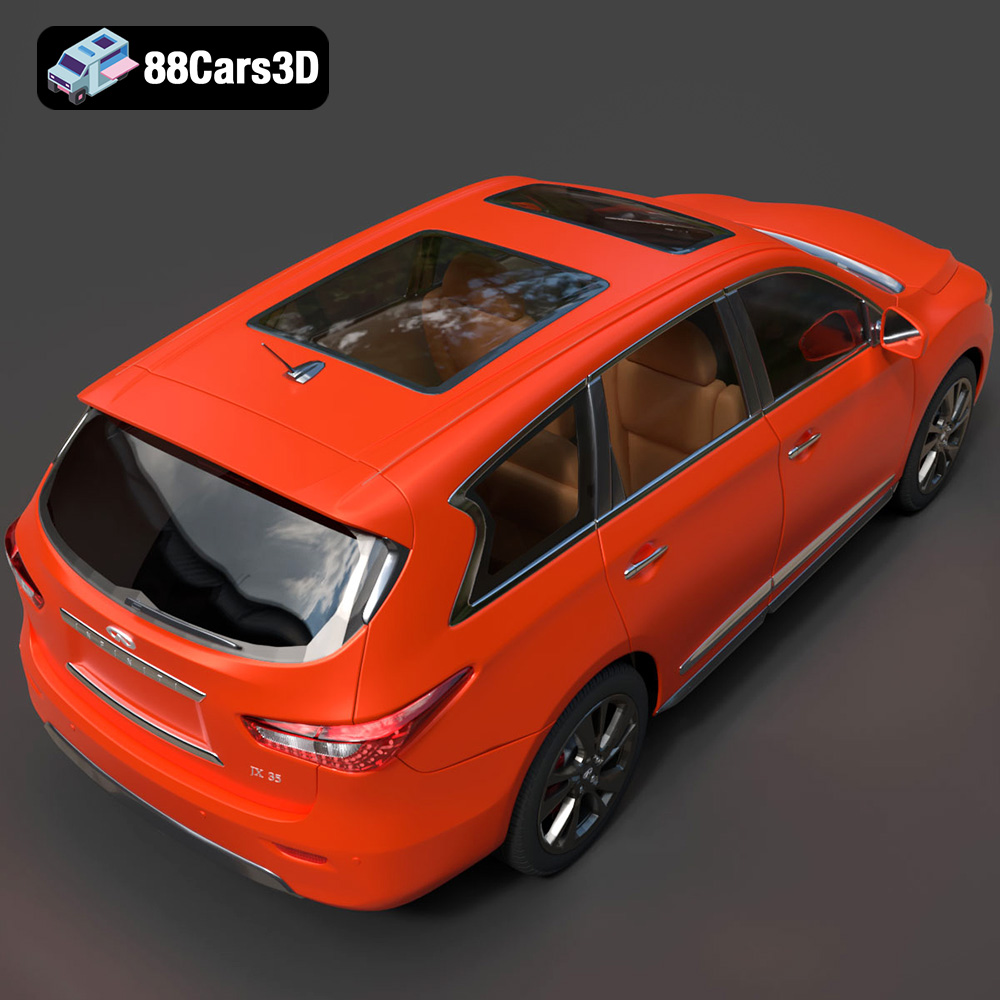
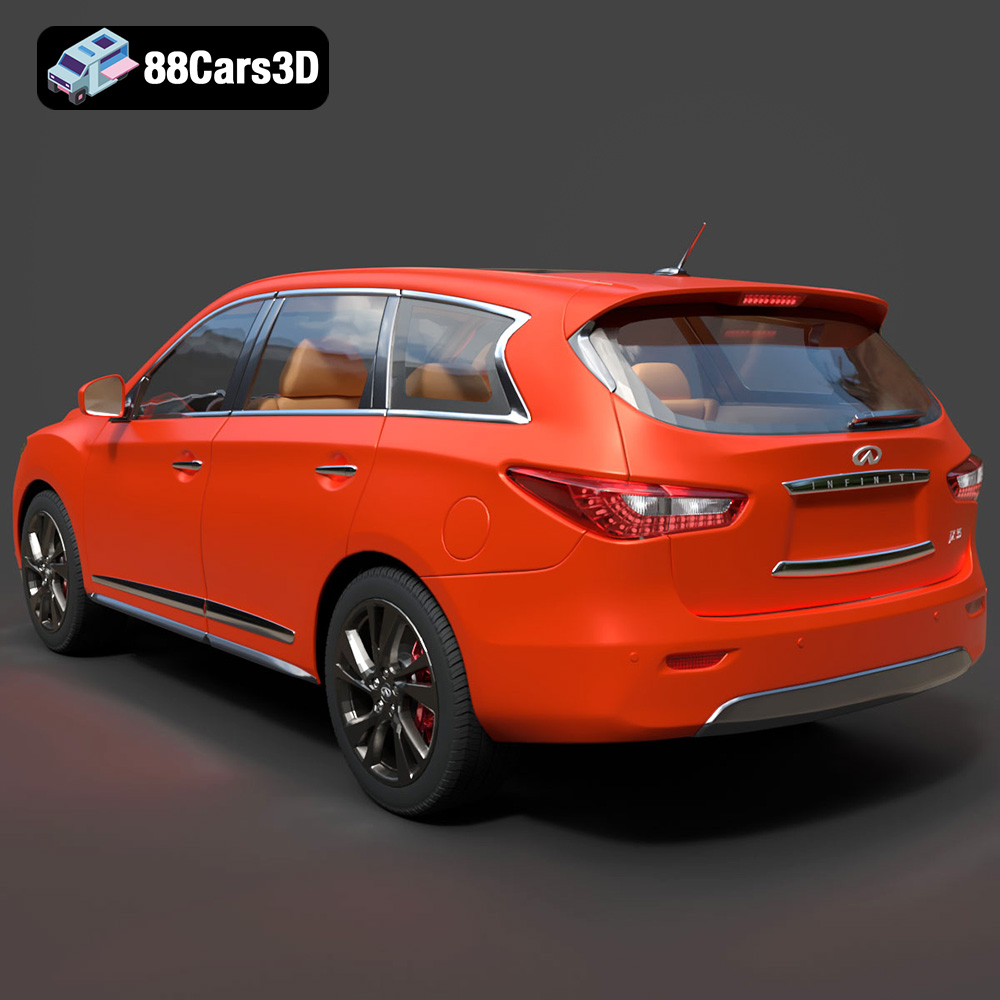
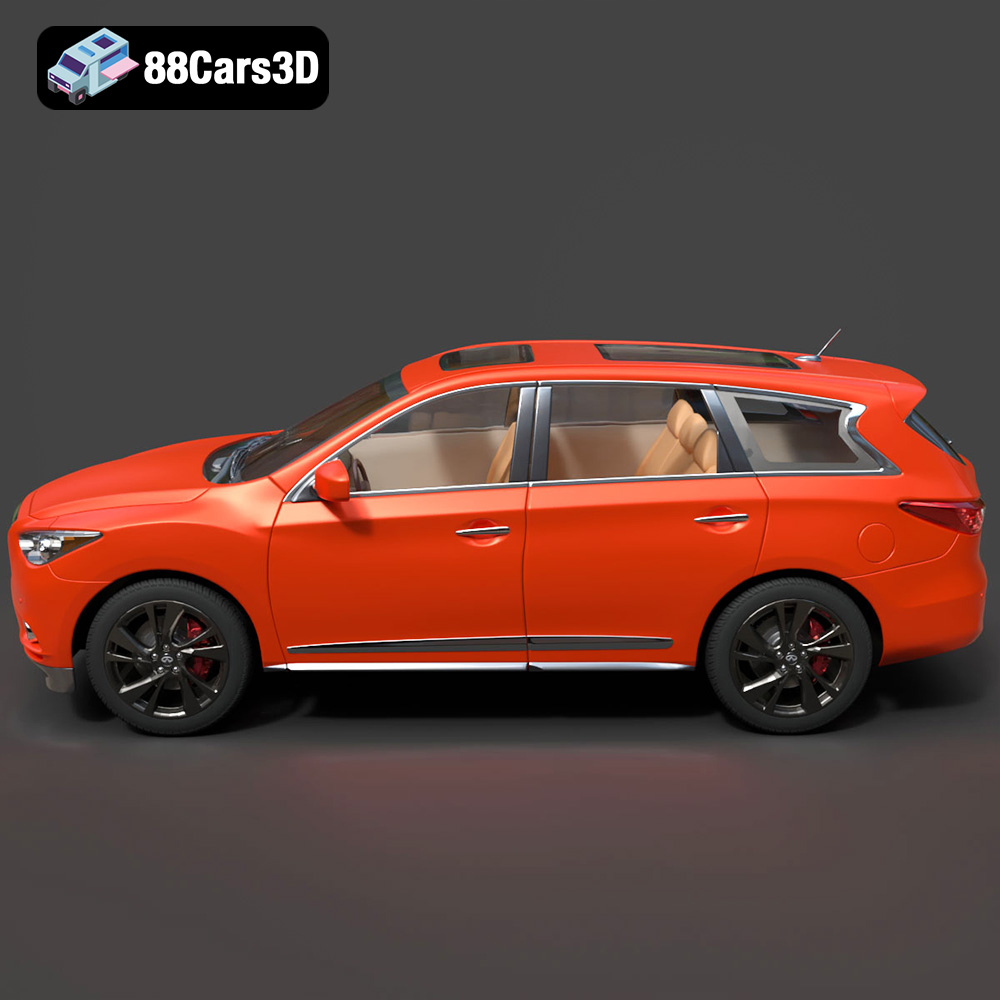
The Infinity JX35 is a premium luxury crossover SUV renowned for its elegant styling, spacious three-row interior, and smooth V6 performance. This meticulously crafted 3D model captures the vehicle’s sophisticated lines, signature double-arch grille, iconic crescent-cut D-pillar, and commanding road presence. From the sleek aerodynamic profile to the detailed lighting fixtures and exhaust system, every element is designed to replicate the luxury and versatility of the original SUV. Engineered with a highly optimized topology of 624,294 triangles, this model balances high-end visual fidelity with game-ready performance. It is tailored for demanding digital applications, providing exceptional detail for close-up shots while maintaining efficiency for real-time engines. Whether used in game development, augmented and virtual reality (AR/VR) environments, or high-end animation, this model delivers uncompromising quality. Perfect for urban driving simulators, luxury lifestyle renders, architectural visualizations, and immersive virtual car showrooms.
$45.50
.blend
.crossover
.fbx
.glb
.infiniti
.luxury suv
.max
.obj
.ply
.rendering
.stl
.unreal
car-3d-model
family-car
game asset
game-ready
infinity
jx35
low-poly
optimized
SUV
VR/AR