Get 20% OFF All Premium 3D & STL Models!

In the dynamic world of 3D visualization, simulation, and interactive experiences, the demand for highly detailed yet optimized assets is paramount. From the intricate mechanics of a high-performance sports car to the robust engineering of heavy construction equipment, accuracy and efficiency are non-negotiable. Professionals across game development, architectural visualization, AR/VR training, and industrial design constantly seek models that not only look authentic but also perform flawlessly within demanding real-time engines and rendering pipelines. This pursuit of excellence often leads them to specialized marketplaces where quality is a hallmark.
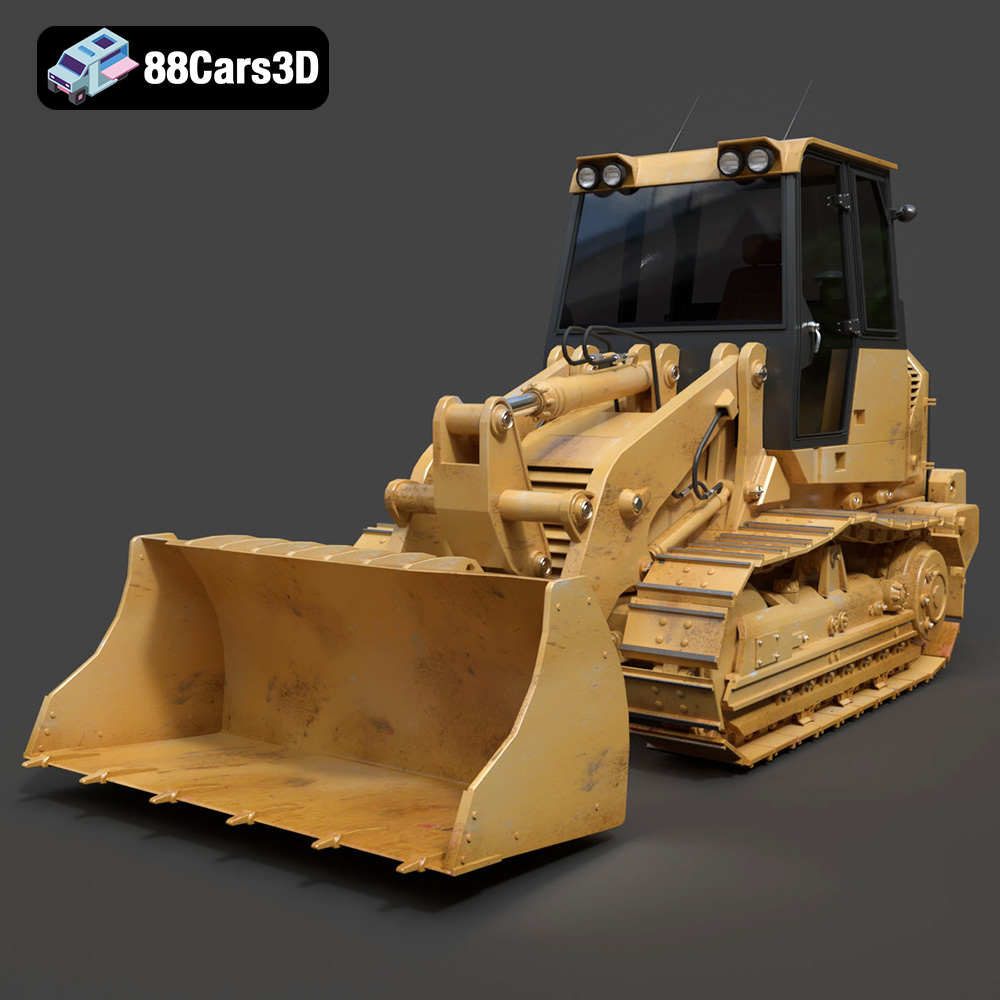
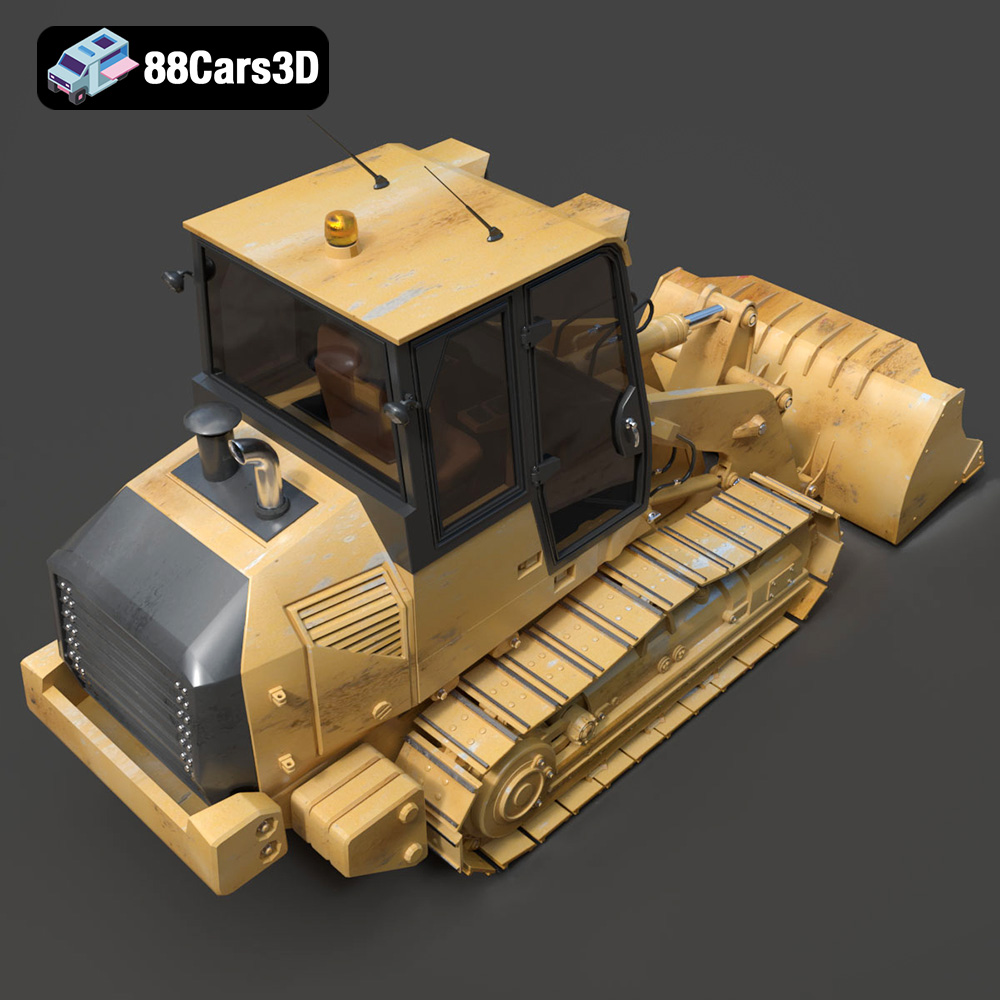
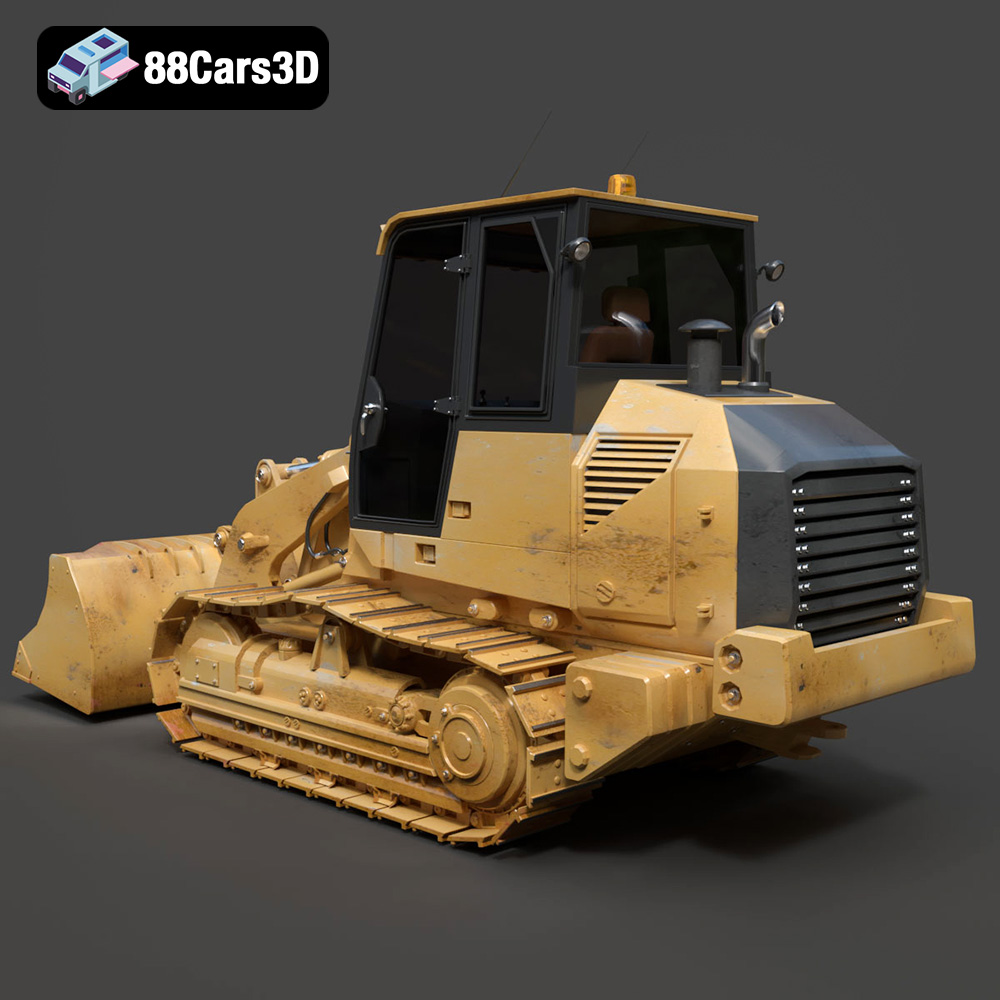
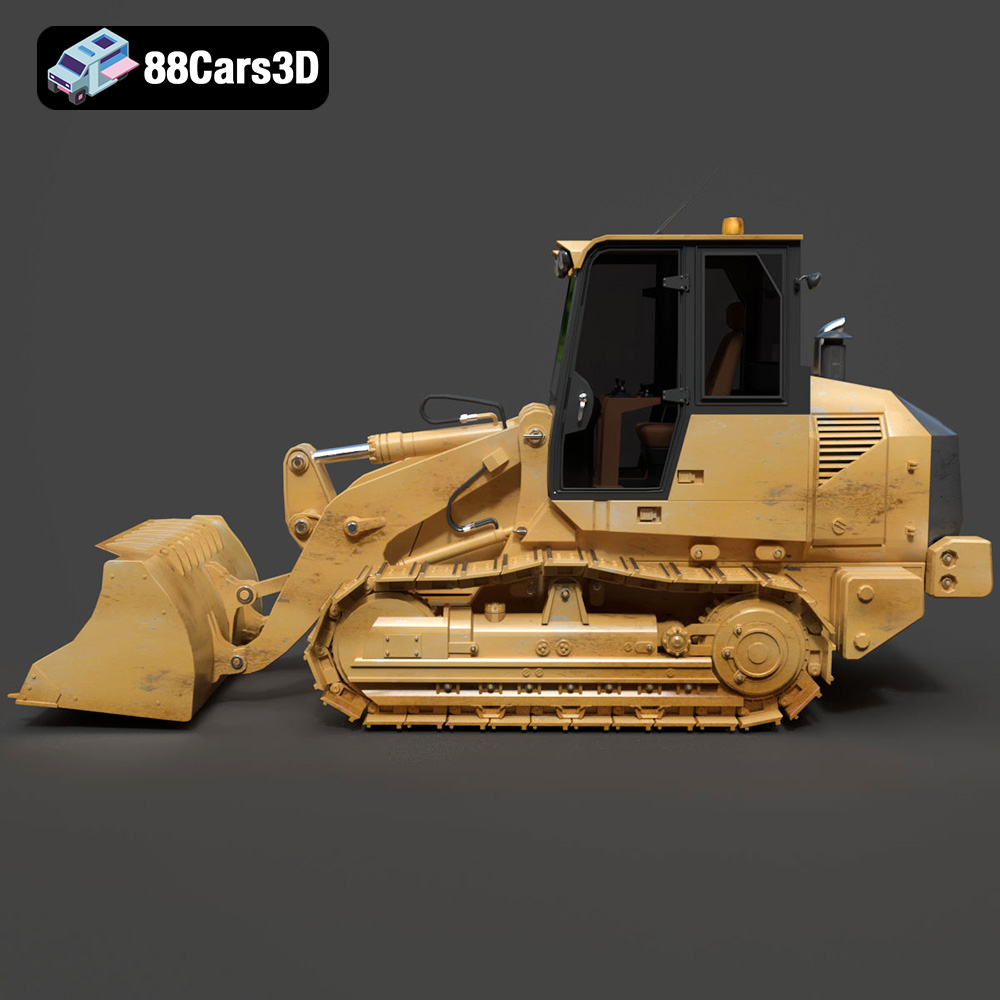
Today, we’re delving deep into a prime example of such a critical asset: the Track Loader 3D Model. This formidable piece of virtual heavy machinery, available on 88cars3d.com, is engineered to meet the stringent requirements of professional applications. Renowned for its pushing power, traction, and lifting capabilities, a track loader is an essential component of any virtual construction site, industrial training scenario, or earthmoving simulation. This detailed 3D model authentically captures the utilitarian aesthetics and complex mechanics, offering an invaluable tool for creators aiming for realism and performance.
The versatility of any high-quality 3D asset, especially one as intricate as the Track Loader 3D Model, hinges significantly on the range of file formats it supports. Each format serves specific purposes, catering to different software ecosystems, project requirements, and stages of a production pipeline. Understanding these distinctions is crucial for seamless integration and optimal workflow efficiency. The Track Loader model is thoughtfully provided in a comprehensive suite of formats, ensuring its adaptability across various professional applications.
.blend – Fully Editable Blender Scene with Materials
The .blend format is native to Blender, a powerful open-source 3D creation suite. When a model like the Track Loader is provided in this format, it means artists gain access to the complete Blender scene. This includes not just the mesh data but also the material setups, lighting configurations, camera positions, and any modifiers or rigging applied. For studios heavily reliant on Blender, this offers unparalleled flexibility for customization, animation, and rendering directly within their preferred environment. It allows for deep edits, such as modifying the hydraulic system linkages or adjusting the cab interior details, with all original setup preserved.
.fbx – Ideal for Unreal, Unity, and Real-time Pipelines
FBX (Filmbox) is an industry-standard proprietary file format developed by Autodesk, widely adopted for its excellent interoperability. It excels at transferring not only geometry but also crucial data like materials, textures, animations, rigging, and scene hierarchies between different 3D software and game engines. For assets like our Track Loader, .fbx is the go-to format for integration into real-time engines such as Unreal Engine and Unity. Its robust handling of complex animated rigs makes it indispensable for bringing the loader’s boom, bucket, and tracks to life in a simulation or game. The .fbx variant of the Track Loader ensures that its proper pivot setup for boom elevation and bucket tilt is maintained, simplifying the animation process within these engines.
.obj – Universal Format for Cross-Software Compatibility
OBJ (or .obj) is one of the most widely supported and universal 3D file formats. While it primarily stores geometric data (vertices, normals, texture coordinates), it can also reference external material files (.mtl) for basic shading information. The strength of .obj lies in its simplicity and broad compatibility; nearly every 3D software application can import and export it. For artists needing to transfer the Track Loader’s core mesh between disparate software applications without concern for proprietary data, .obj serves as a reliable bridge. It’s often used as a fallback or for models where complex animations or advanced material nodes are not the primary focus of the transfer.
.glb – Optimized for AR, VR, and Browser-based Display
GLB is the binary version of glTF (Graphics Language Transmission Format), designed for efficient transmission and loading of 3D scenes and models by engines and applications. It’s quickly becoming the standard for 3D content in AR (Augmented Reality), VR (Virtual Reality), and web-based viewers due to its compact size and comprehensive support for PBR (Physically Based Rendering) materials, animations, and scene graphs. The Track Loader in .glb format is perfectly suited for immersive safety training modules in VR or interactive virtual fleet configurators displayed directly within a web browser, offering optimized performance for these emerging platforms.
.stl – Suitable for 3D Printing Output
STL (Stereolithography) is the most common file format used for 3D printing. It represents a 3D model as a series of connected triangles, essentially describing the surface geometry of an object without color, texture, or other CAD attributes. For hobbyists or professionals looking to create a physical display model of the Track Loader, the .stl format is essential. It provides the raw mesh data required by slicing software to prepare the model for additive manufacturing, allowing for the creation of tangible construction equipment miniatures.
.ply – Precision Mesh Format for CAD or Analysis
PLY (Polygon File Format) is another format for storing 3D data, often used in scientific and engineering applications, particularly for scanned data or models requiring precise geometric representation. Unlike .stl, .ply can store a wider range of properties, including color, transparency, normals, texture coordinates, and even scalar data at each vertex. For the Track Loader, a .ply export could be valuable for engineers performing structural analysis, reverse engineering, or integrating the model into CAD workflows where high precision and additional attribute data are important.
.unreal – Engine-Ready Asset for Real-time Environments
While not a universal file extension in the same vein as .fbx or .obj, the inclusion of an “.unreal” file often signifies a pre-configured asset package specifically prepared for Unreal Engine. This typically means the model, its materials, textures, and possibly blueprints or skeletal meshes, have been imported, set up, and optimized within an Unreal Engine project. This dramatically streamlines the workflow for Unreal users, enabling drag-and-drop integration of the Track Loader into construction site virtual environments or heavy machinery simulators with minimal setup required.
.max – Editable 3ds Max Project for Animation and Rendering
The .max format is the native scene file for Autodesk 3ds Max, a leading software in architectural visualization, animation, and game content creation. Similar to .blend, a .max file provides the complete 3ds Max scene, including all modifiers, material definitions (often V-Ray or Corona materials), lighting, cameras, and animation data. For professionals whose pipelines are centered around 3ds Max, this format of the Track Loader offers the highest degree of editability. It’s perfect for complex animations, high-fidelity industrial rendering, and detailed scene compositions, allowing artists to leverage the full power of 3ds Max’s toolset.
The availability of the Track Loader 3D Model in these diverse formats—from the fully editable .blend and .max files to the game-engine-ready .fbx and .unreal, and the AR/VR optimized .glb—underscores its professional-grade utility. This comprehensive support ensures that irrespective of your chosen software or end-application, this asset can be seamlessly integrated and leveraged to its fullest potential.
Creating a compelling 3D model, especially for complex machinery like a track loader, involves a delicate balance between artistic fidelity and technical optimization. Every decision, from the initial polygon count to the final texture map, impacts the model’s usability across various platforms. The Track Loader 3D Model from 88cars3d.com exemplifies this meticulous approach.
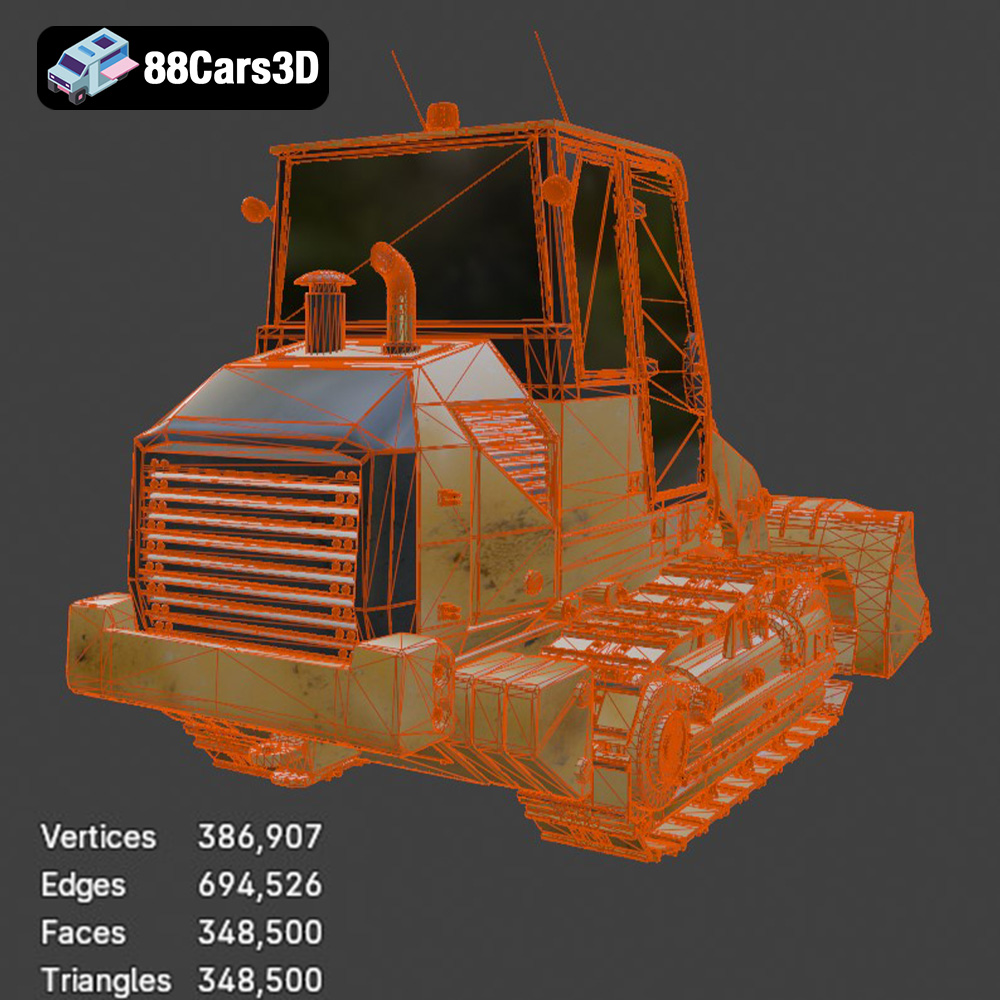
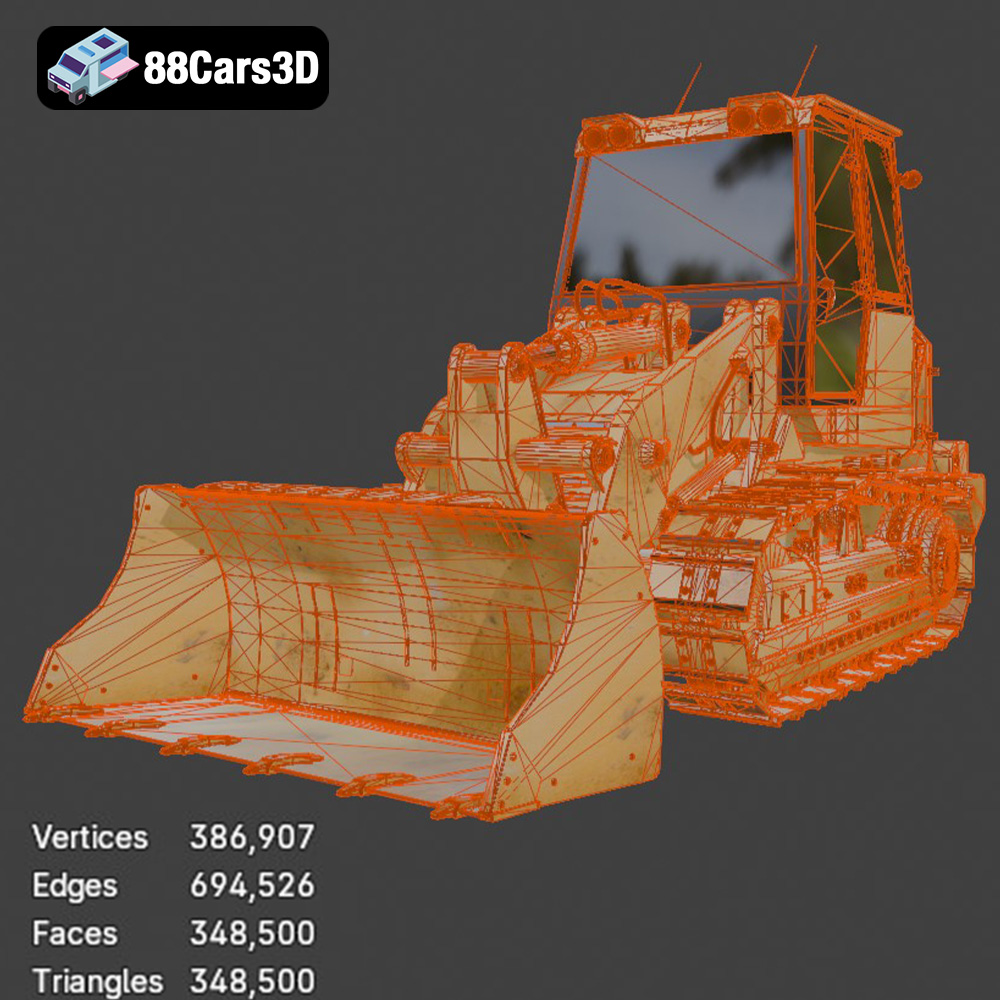
The foundation of any high-quality 3D asset is its mesh. The Track Loader boasts an optimized topology of approximately 348,500 triangles. This specific count isn’t arbitrary; it represents a carefully calculated balance. It delivers exceptional visual fidelity, capturing the intricate hydraulic cylinders, aggressive track treads, and industrial paneling, while remaining efficient enough for demanding real-time applications like game engines (Unreal, Unity) and AR/VR simulations. A common challenge in 3D modeling is achieving detail without burdening performance. Here, clean edge flow, efficient polygon distribution, and careful UV mapping ensure that textures are applied without distortion and the model renders smoothly. Real-world scale accuracy, based on actual construction vehicle schematics, further enhances the model’s believability and integration into realistic environments.
Heavy machinery is defined by its movement. A static model, no matter how detailed, falls short in interactive or animated contexts. The Track Loader 3D Model addresses this by providing separate components prepped for mechanical animation: the bucket, boom, chassis, and track components. Crucially, it features proper pivot setups for boom elevation, bucket tilt, and continuous track rotation. This is vital for animators and technical artists. Instead of painstakingly identifying and setting pivots, they can immediately begin scripting or keyframing realistic movements. For a heavy machinery simulator, the accuracy of these pivot points and the resulting mechanical motion is paramount for a convincing and functional user experience.
The Track Loader 3D Model is not just a static display piece; it’s a dynamic tool designed to empower creators across a multitude of immersive and visualization applications. Its robust technical specifications make it a versatile asset in diverse professional pipelines.
In game development, particularly for construction simulators, open-world sandbox games, and heavy machinery titles, the authenticity and performance of assets can make or break the experience. The optimized polycount (348,500 triangles) of the Track Loader strikes a perfect balance for real-time engines like Unreal and Unity, ensuring high-end visual realism without sacrificing framerates. Developers can integrate this model to populate vast construction sites, challenge players with complex excavation tasks, or offer a deep, immersive simulation of operating heavy equipment. Its game-ready nature means less time spent on optimization and more time on gameplay mechanics and creative level design.
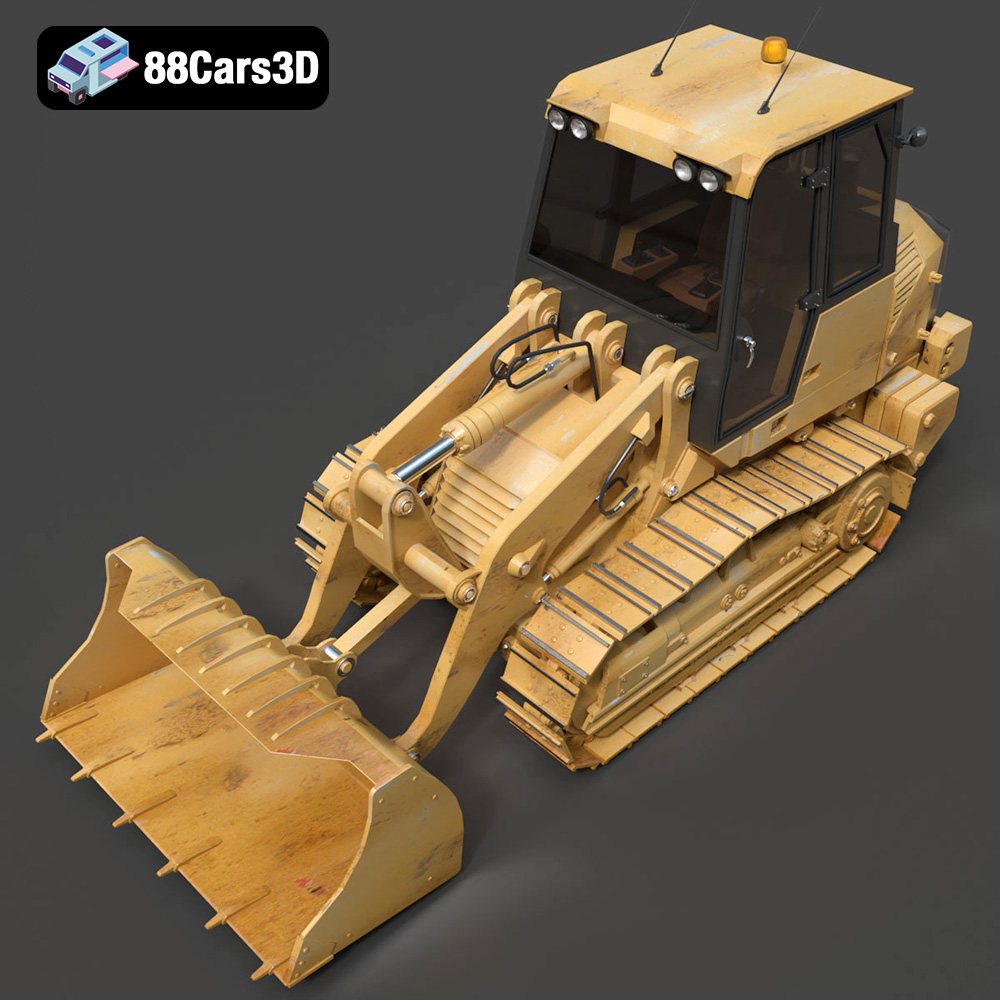
Augmented and Virtual Reality platforms are transforming how industries approach training, design, and education. The Track Loader 3D Model is perfect for immersive safety training modules, where operators can learn critical procedures in a risk-free virtual environment. Imagine a trainee virtually entering the highly detailed industrial operator cab, enclosed within its robust ROPS, and manipulating the accurate dual joystick control layout for precision boom and bucket operation. The optimized glass reflections and accurate interior spatial geometry are crucial for a convincing first-person POV in such simulators. Beyond training, the model can be used for virtual fleet configurators, allowing potential buyers to explore customization options in AR, or for interactive educational experiences demonstrating the principles of earthmoving.
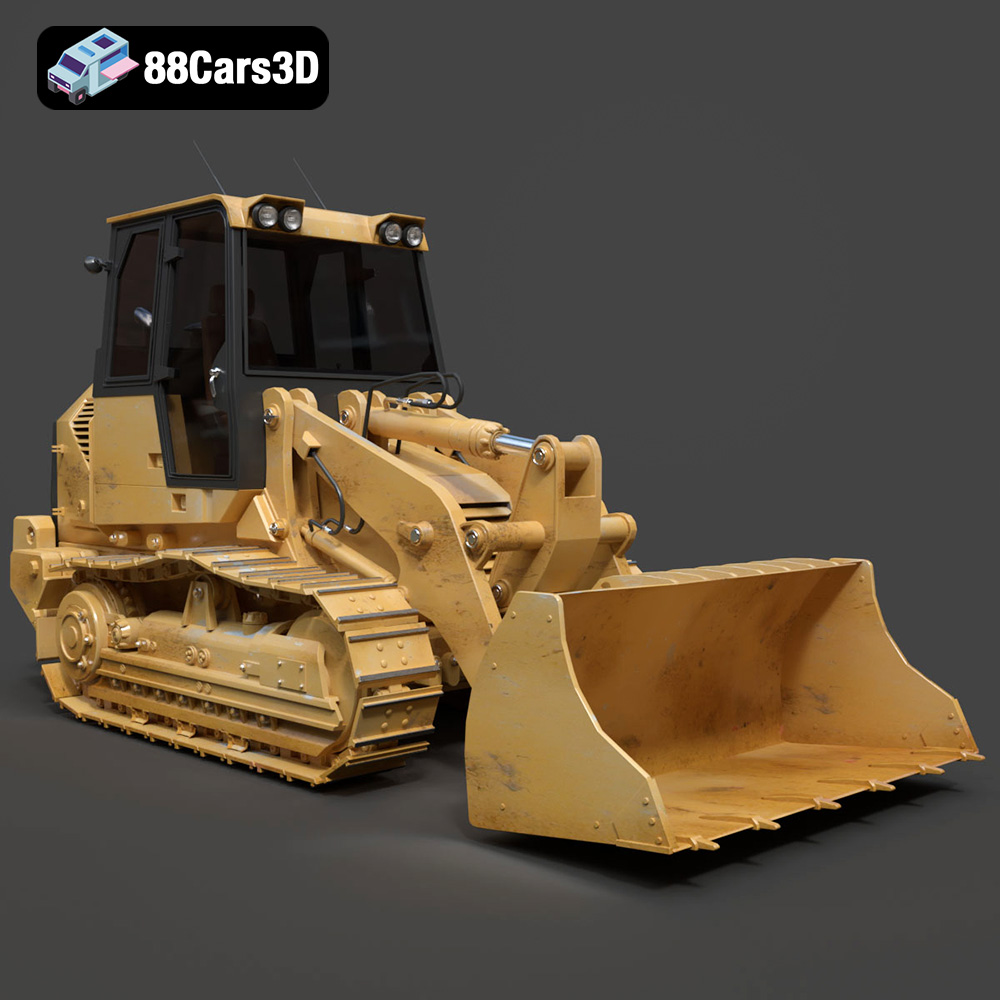
For industrial marketing campaigns, site planning visualizations, and high-end studio lighting setups, visual fidelity is key. The Track Loader provides excellent source material for stunning renders. Whether showcasing its formidable pushing power in a promotional video or integrating it into a detailed architectural visualization of a future construction site, the model’s meticulous detailing—from hydraulic lines to aggressive track treads—shines through. The flexibility to adjust material finishes (matte industrial paint, gloss accents), apply custom corporate fleet liveries, or adapt lighting for daytime construction sites or nighttime work environments offers endless possibilities for compelling visual narratives. This allows marketing teams to create impactful visuals that truly represent the equipment’s capabilities and brand identity.
The true value of a professional 3D asset lies not just in its initial quality, but in its adaptability and the ease with which it can be customized to fit unique project requirements. The Track Loader 3D Model excels in this regard, offering extensive customization options crucial for diverse production pipelines.
No two projects are identical, and the ability to customize an asset like the Track Loader without compromising its integrity is invaluable. Artists can easily change exterior chassis colors, transforming a standard construction yellow into a specific corporate fleet livery or even an emergency vehicle color. Furthermore, the model allows for modifying material textures to apply realistic dirt, mud, or worn-metal weathering effects, instantly transforming a factory-new vehicle into a battle-hardened workhorse. Adjusting material finishes, from a rugged matte industrial paint to gloss accents on specific components, offers subtle yet impactful visual differentiation. This level of control ensures that the model can integrate seamlessly into any scene, conveying the precise narrative required.
Modern 3D production often involves multiple software applications working in concert. The comprehensive file format support for the Track Loader 3D Model is a testament to its design for such multi-software pipelines. Whether a team primarily uses 3ds Max for complex animations and V-Ray renders, Blender for its powerful sculpting and procedural tools, or Unreal Engine for real-time experiences, the asset can be integrated smoothly. The inclusion of native scene files (.blend, .max) means that artists can access the original setup, including materials, lighting, and hierarchy, providing a deeper level of customization and iteration compared to generic exports. This flexibility minimizes friction and accelerates development, allowing artists to focus on creative tasks rather than conversion woes.
While the digital realm is where 3D models typically reside, the capability to translate these virtual creations into tangible objects opens up a whole new dimension of applications, bridging the gap between digital design and physical reality.
The Track Loader 3D Model’s availability in .stl format makes it perfectly suitable for 3D printing, catering to construction equipment hobbyists, educators, or even industrial designers looking for physical prototypes. However, preparing a high-detail model for additive manufacturing requires specific considerations. The recommended scales (1:24 / 1:35 / 1:50) provide practical sizes for display. For optimal results, especially for fine hydraulic details, resin printing is recommended due to its higher resolution capabilities. Specific settings like layer height (0.04–0.12 mm), wall thickness (1.2–2.0 mm), and infill (20–30%) are provided to guide users. Crucially, the model’s design accounts for the need for supports for detailed parts like hydraulic arms, cab roof overhang, and safety rails, and suggests print orientation (frame angled; tracks and bucket separately) to ensure structural integrity and reduce material waste.
Once printed, the Track Loader model can undergo post-processing, including sanding, priming, and painting with authentic construction yellow/orange factory colors, followed by weathering effects to mimic real-world usage. This process transforms a digital asset into a physical miniature, valuable for display, educational purposes, or even as a tangible representation for client presentations where a physical model can convey scale and detail more effectively than a screen-based image. Furthermore, precision mesh formats like .ply, also included, can be used for more advanced applications like engineering analysis or integration into CAD workflows for physical prototyping, allowing engineers to study ergonomic or structural properties before full-scale manufacturing. This capacity to transition from digital visualization to a physical product underscores the comprehensive utility of such a well-developed 3D asset.
In the demanding landscape of 3D content creation, the difference between an ordinary project and an exceptional one often lies in the quality and versatility of its assets. The Track Loader 3D Model stands as a testament to this principle, offering a meticulously crafted, highly optimized, and incredibly adaptable solution for a wide array of professional applications. Its comprehensive file format support, from editable scene files for 3ds Max and Blender to game-ready formats for Unreal Engine and Unity, along with AR/VR optimized .glb and 3D print-ready .stl, ensures seamless integration into virtually any pipeline.
Whether you are developing an immersive game, crafting a compelling industrial visualization, building a cutting-edge AR/VR training simulation, or even producing a physical prototype, this Track Loader 3D Model provides the technical foundation and visual fidelity required to achieve outstanding results. Its attention to detail, from the robust chassis to the intricate hydraulic systems and functional cockpit, combined with its optimized topology and animation-ready setup, positions it as an invaluable asset for any serious 3D professional.
For those seeking to elevate their projects with high-quality 3D car models, heavy machinery, and game assets that combine realism with performance, resources like 88cars3d.com offer a curated selection. Invest in assets that not only meet your project’s immediate needs but also provide the flexibility and technical depth to push creative boundaries. The Track Loader 3D Model is more than just a model; it’s a strategic asset designed for professional success in the ever-evolving world of 3D.
The Track Loader is a versatile and heavy-duty piece of construction machinery, renowned for its formidable pushing power, traction, and lifting capabilities. Featuring rugged continuous tracks, a robust front bucket mechanism, and a reinforced industrial chassis, this earthmoving beast is essential for demanding excavation, grading, and material handling tasks. The model authentically captures the utilitarian aesthetics of heavy equipment, complete with detailed hydraulic systems and a secure operator’s cabin.
This highly detailed 3D model boasts an optimized topology of approximately 348,500 triangles, delivering exceptional visual fidelity while remaining efficient for real-time applications. From the intricate hydraulic cylinders and linkages to the aggressive track treads and industrial paneling, every element has been meticulously crafted to meet the highest standards of game development, AR/VR simulations, and high-end industrial visualization.
Perfect for heavy machinery simulators, construction site virtual environments, industrial safety training VR modules, and earthmoving game environments.
.blend, .fbx, .obj, .glb, .stl, .ply, .unreal, .max
Tags:
track-loader, heavy-machinery, construction-equipment, loader, earthmover, industrial-vehicle, game-ready, low-poly, optimized, 3d-model, game-asset, rendering, vr-ar, blend, fbx, obj, glb, stl, ply, unreal, max
$26.00
.blend
.fbx
.glb
.max
.obj
.ply
.rendering
.stl
.unreal
3d model
construction-equipment
earthmover
game asset
game-ready
heavy-machinery
industrial-vehicle
loader
low-poly
optimized
track-loader
VR/AR