Get 20% OFF All Premium 3D & STL Models!

In the dynamic realm of digital design and simulation, the demand for high-fidelity 3D models of real-world objects is paramount. From breathtaking architectural visualizations to immersive game environments and highly accurate industrial training simulations, the quality of a 3D asset directly impacts the authenticity and effectiveness of the final product. Nowhere is this more evident than in the challenging field of heavy machinery, where every rivet, hydraulic hose, and articulated joint must convey an undeniable sense of raw power and functional purpose. It is within this demanding context that a meticulously crafted asset like the Wheel Loader 3D Model truly shines, offering an unparalleled level of detail and optimization for a vast array of professional applications.
The journey from conceptual design to a fully realized digital twin requires a deep understanding of both aesthetics and technical specifications. Professionals across industries—be it game developers creating the next big simulator, engineers visualizing complex construction projects, or VR specialists building interactive training modules—rely on assets that are not only visually stunning but also technically robust and versatile. This article will delve into the critical aspects of professional 3D asset utilization, exploring the technical intricacies, workflow integrations, and diverse applications that high-quality models bring to the table. We’ll examine how a model like the Wheel Loader from 88cars3d.com elevates projects, providing the foundational realism needed for compelling digital experiences.
In industries ranging from construction and mining to logistics and manufacturing, effective visualization and simulation are no longer luxuries but necessities. High-quality 3D assets serve as the bedrock for these critical applications, enabling stakeholders to understand, interact with, and analyze complex machinery and environments long before physical prototypes are built or operations begin. The Wheel Loader 3D Model exemplifies this necessity, providing a detailed and accurate digital representation of an indispensable piece of heavy construction machinery.
Transforming two-dimensional blueprints and technical schematics into a tangible, three-dimensional digital model is an art and a science. It requires meticulous attention to detail, accurate scaling, and an understanding of how real-world physics and mechanics translate into a digital framework. A high-quality model, such as the Wheel Loader, starts with accurate articulated frame geometry and proportions. This precision allows for not only visual fidelity but also correct functional animation, making it invaluable for planning site layouts, assessing operational clearances, and even simulating potential hazards. This kind of detailed modeling reduces errors in real-world deployment and significantly cuts down on design and testing costs.
For operations involving heavy machinery, training and safety are paramount. Immersive AR/VR training simulations have revolutionized how operators learn to handle complex equipment. These simulations require highly detailed and interactive models, complete with accurate interiors, controls, and responsive mechanics. The Wheel Loader’s detailed cockpit, featuring an operator seat, steering wheel, realistic hydraulic joystick controls, and instrument cluster, is crucial for creating an authentic first-person POV experience. This level of detail ensures that trainees can practice procedures, react to scenarios, and build muscle memory in a safe, controlled virtual environment, bridging the skill gap effectively. The game-ready and optimized nature of models found on 88cars3d.com ensures seamless integration into these performance-intensive real-time applications.
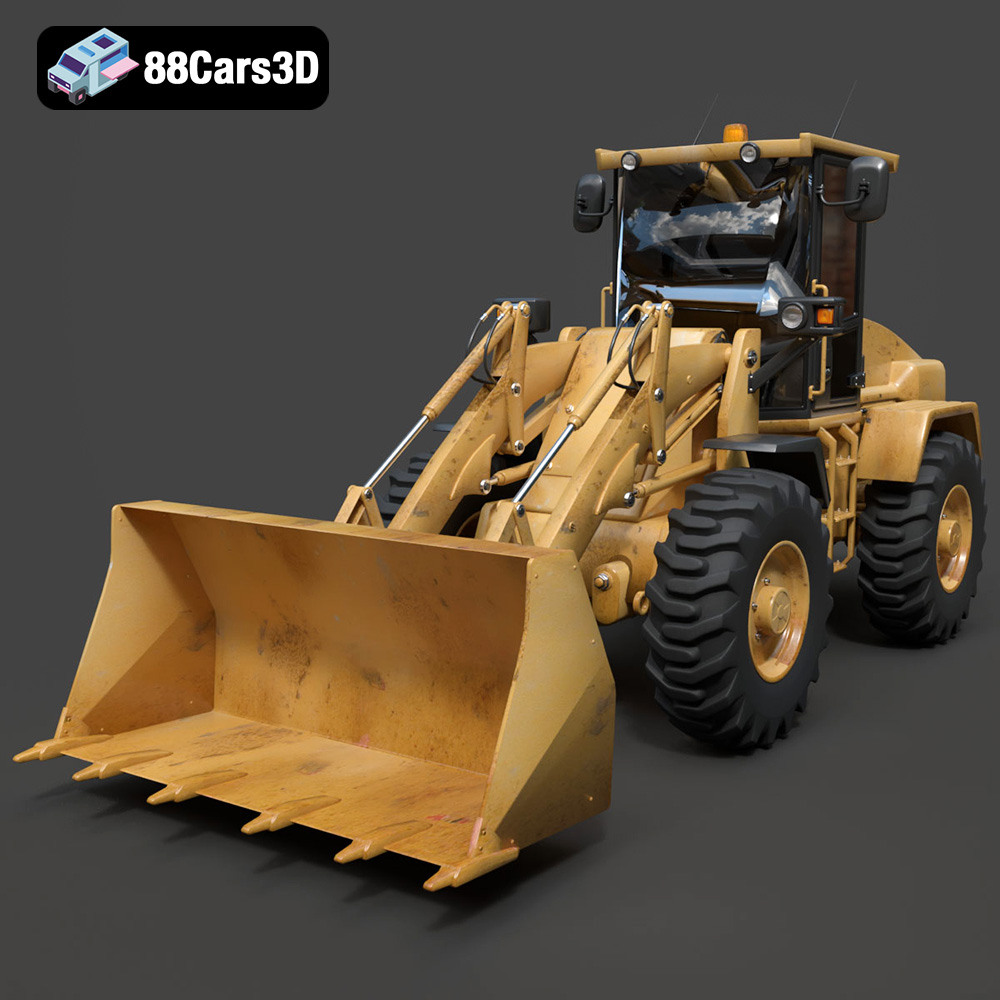
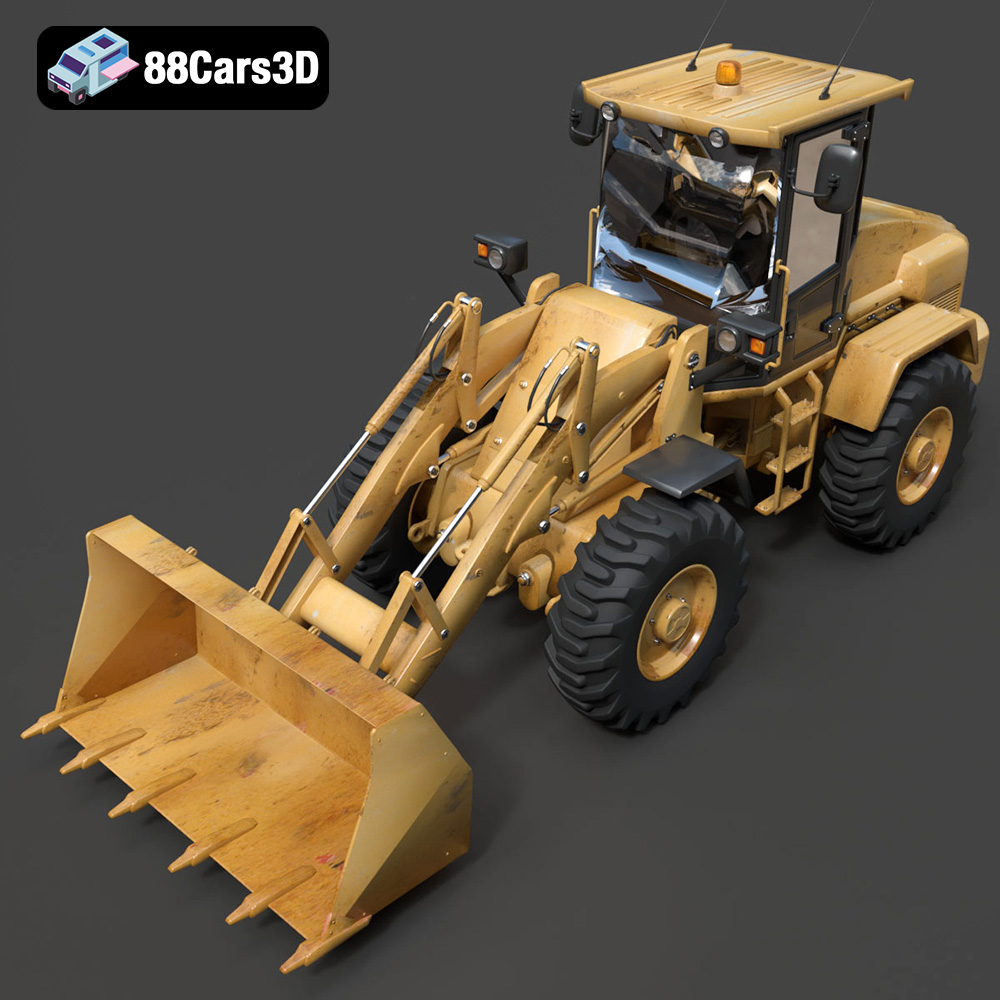
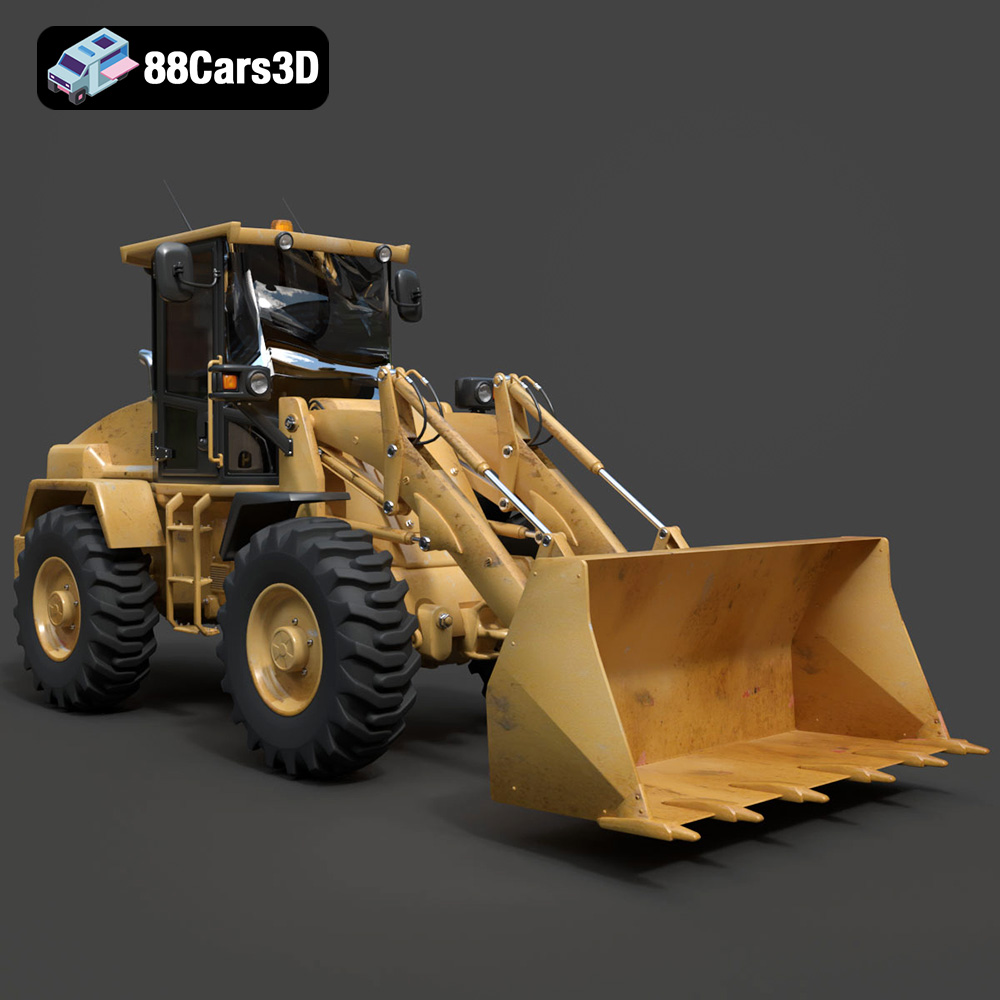
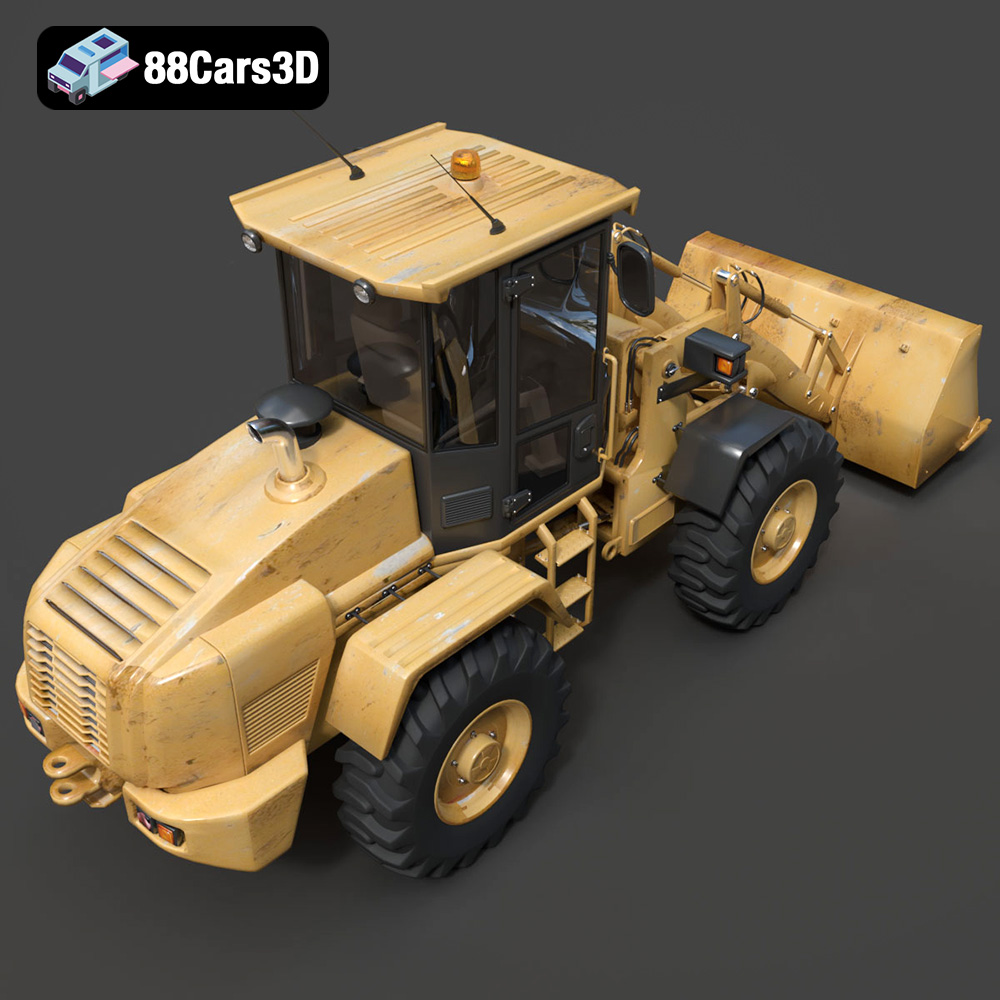
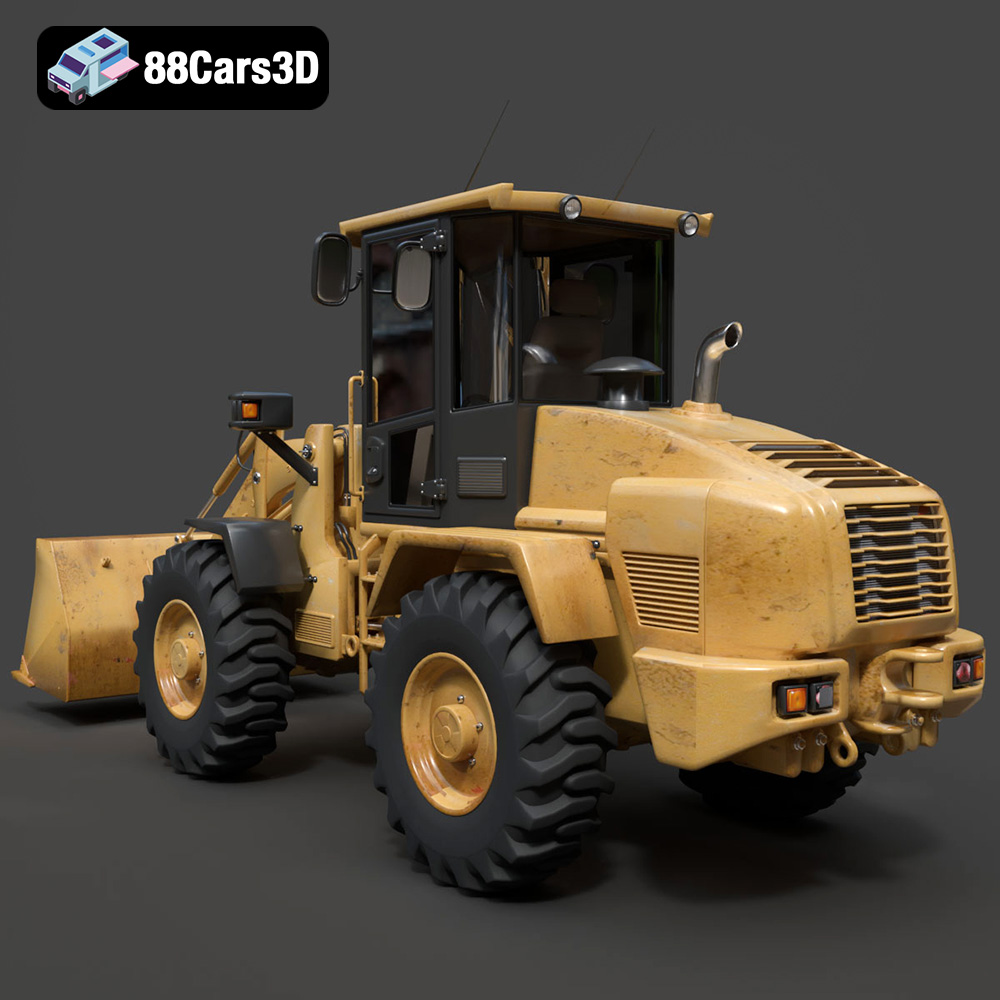
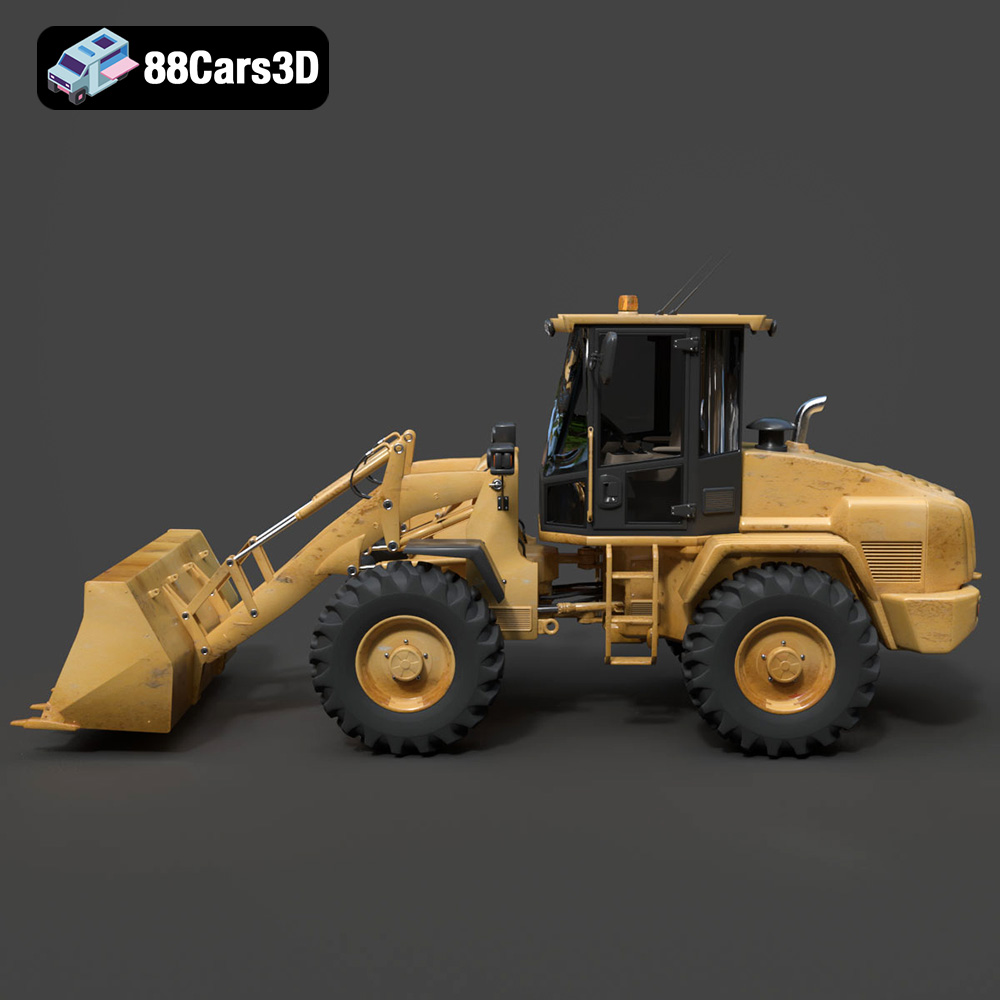
The Wheel Loader 3D Model sets a high standard for realism and utility in industrial visualization. Its robust design features, including a massive front-mounted bucket, intricate hydraulic lifting mechanisms, an articulated steering joint, and heavily vented engine housing, are not merely aesthetic details. They are functional elements critical for accurate simulation and visual impact. The inclusion of deep-tread off-road tires, safety railings, and high-visibility work lighting further enhances its authenticity, making it suitable for a wide range of scenarios, from photorealistic renders to dynamic game environments.
Navigating the diverse landscape of 3D software and applications requires a solid understanding of various file formats. Each format is designed with specific use cases, compatibilities, and technical advantages in mind. Choosing the right format for your project is crucial for optimizing workflow efficiency, maintaining model integrity, and ensuring seamless integration. The Wheel Loader 3D Model, available on 88cars3d.com, offers a comprehensive suite of these formats, catering to virtually any professional pipeline.
The .blend format is the native file type for Blender, the powerful open-source 3D creation suite. A .blend file typically contains not only the 3D mesh data but also materials, textures, animations, lighting, cameras, and even scene settings. This makes it an incredibly comprehensive format for users who work primarily within Blender, allowing for full editability and seamless transfer of complete projects. For the Wheel Loader model, the .blend file would include all its intricate parts, materials, and pivot setups, ready for immediate manipulation and rendering within Blender.
.fbx (Filmbox) is a proprietary file format owned by Autodesk, widely recognized as one of the most versatile and robust formats for exchanging 3D data between different software applications. It supports geometry, materials, textures, rigging, animation, and more, making it ideal for pipelines involving multiple software packages like 3ds Max, Maya, Unity, and Unreal Engine. For real-time applications and game development, .fbx is often the go-to choice due to its excellent support for animation and hierarchal structures, which is critical for an articulated model like the Wheel Loader.
.obj (Wavefront Object) is one of the oldest and most universally supported 3D file formats. It primarily stores geometric data—vertices, normals, texture coordinates, and faces—along with references to external material files (.mtl). While it doesn’t support animation or advanced scene data, its simplicity makes it incredibly stable for cross-software compatibility. It’s often used as a fallback or for simple mesh exchange. The Wheel Loader in .obj format would provide a clean mesh for straightforward import into virtually any 3D software, ready for material setup.
.glb (GL Transmission Format Binary) is the binary version of glTF (GL Transmission Format), a modern, royalty-free specification for 3D scenes and models. Designed for efficient transmission and loading of 3D content, .glb packages all necessary data (geometry, materials, textures, animations) into a single compact file. It’s quickly becoming the standard for web-based 3D, augmented reality (AR), and virtual reality (VR) applications due to its optimization for real-time rendering. The Wheel Loader as a .glb asset would be perfectly suited for immersive mobile AR experiences or interactive 3D viewers in web browsers, enabling quick loading times and excellent performance.
.stl (STereoLithography) is the de facto standard file format for 3D printing. It represents a 3D model as a series of connected triangles (a tessellated surface) without any color, texture, or material information. Its primary purpose is to describe the surface geometry of an object for additive manufacturing processes. While simple, its universal acceptance makes it indispensable for physical prototyping or creating scale models. The Wheel Loader model can be converted to .stl for hobbyists or professionals looking to 3D print display-scale versions for dioramas or conceptual models, requiring careful preparation for printability as outlined in the product specifications.
.ply (Polygon File Format) is another format primarily used for storing 3D data from 3D scanners, CAD systems, and other sources that generate point clouds or polygon meshes. It can store various properties beyond geometry, such as color, transparency, normals, and even confidence values for each vertex. It’s a robust format for precise mesh representation and often used in scientific, engineering, and architectural applications for data analysis or accurate visualization where detailed attribute information is important. For the Wheel Loader, a .ply export could be useful for specific engineering analyses.
While not a standalone file format in the traditional sense, “unreal” often refers to assets specifically prepared and optimized for direct import into Unreal Engine. This typically means an .fbx file that has been correctly scaled, pivoted, has collision meshes, and materials ready for the engine’s PBR (Physically Based Rendering) system. The inclusion of an “.unreal” optimized file for the Wheel Loader signals that the model is thoroughly prepared for instant use within Unreal Engine, minimizing setup time and maximizing performance in game development and high-end visualization projects.
.max is the native file format for Autodesk 3ds Max, a leading software for 3D modeling, animation, rendering, and compositing. Similar to .blend, a .max file stores the complete scene, including geometry, materials, textures, lighting, cameras, animations, and modifier stacks. For professionals entrenched in the 3ds Max ecosystem, having the Wheel Loader in its native .max format ensures full editability, allowing for complex animation rigging, advanced material setups, and integration into existing 3ds Max projects with all features intact. This provides maximum flexibility for users specializing in architectural visualization or high-quality video production.
The true value of a 3D model, especially for demanding applications, lies in its technical underpinnings. The Wheel Loader 3D Model exemplifies a perfect marriage of aesthetic detail and technical optimization, ensuring it performs exceptionally across various platforms. This is where the expertise of marketplaces like 88cars3d.com truly stands out, offering assets that meet professional standards.
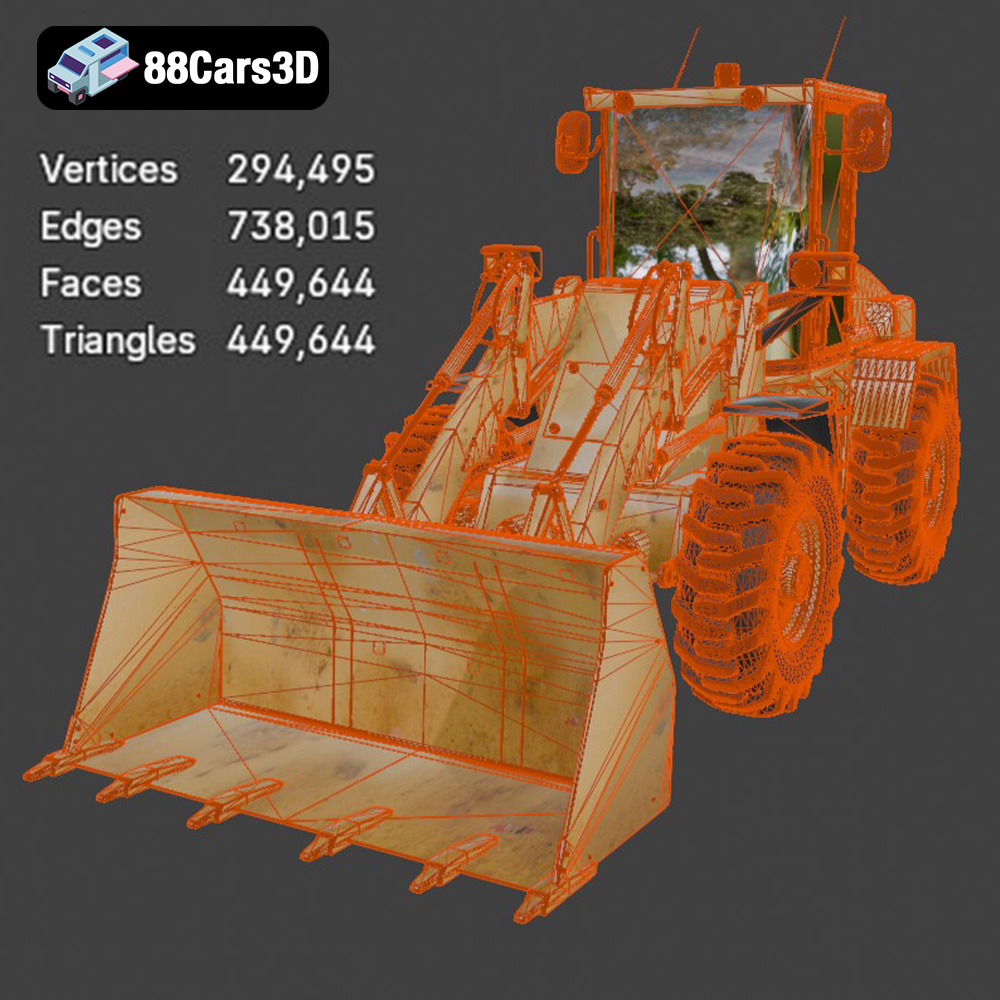
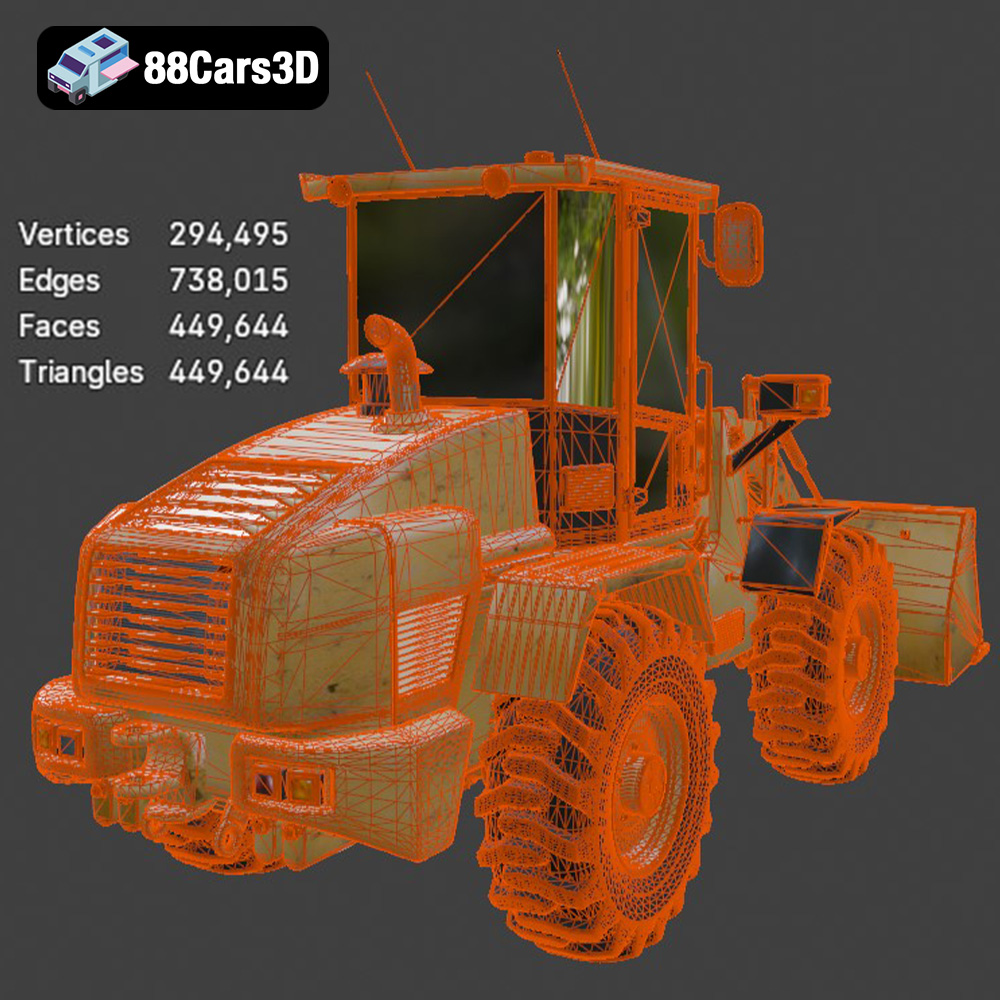
One of the most critical aspects of a professional 3D asset is its topology—the arrangement of vertices, edges, and faces that make up the model’s surface. The Wheel Loader boasts a well-optimized topology with a triangle count of 449,644. This figure represents a sweet spot, balancing high-end realism with performance efficiency. For game development and real-time engines like Unreal and Unity, this polycount allows for impressive visual fidelity without overburdening the GPU, ensuring smooth frame rates. For rendering and visualization, it provides enough detail for close-up shots while maintaining manageable file sizes and render times. This meticulous optimization is a hallmark of quality game assets.
A static model, no matter how detailed, has limited utility for dynamic applications. The Wheel Loader is engineered for animation, featuring separate wheels, bucket, lift arms, and articulated steering components. Crucially, it has proper pivot setups for its articulated steering, wheel rotation, boom lift, and bucket tilt. This “animation-ready” state means that animators and developers can instantly import the model and begin rigging and animating its functional parts without time-consuming preparation. This foresight drastically accelerates production workflows for simulations, cinematics, and interactive experiences.
Beyond geometry, the realism of a 3D model hinges on its materials and textures. While not explicitly detailed in the description, a high-quality model like this would certainly come with carefully crafted PBR (Physically Based Rendering) materials. This includes diffuse (albedo) maps, normal maps for surface detail, roughness/gloss maps for material reflectivity, and metallic maps where applicable. Proper UV mapping is essential, ensuring that textures are applied without stretching or distortion. Furthermore, the customization options—changing main body colors, modifying tire textures (clean vs. muddy/weathered), and adjusting material finishes (matte industrial paint, gloss, rusted metal)—speak to a flexible material setup, allowing artists to adapt the model’s appearance to suit specific project needs, from factory-fresh to heavily weathered industrial workhorses. This level of material versatility is essential for creating compelling automotive rendering and industrial scenes.
The versatility of the Wheel Loader 3D Model makes it an invaluable asset across a spectrum of professional endeavors. Its design, optimization, and included file formats ensure seamless integration into various pipelines, from interactive entertainment to serious industry applications.
Game developers constantly seek high-quality, optimized assets that can drop directly into their engines. The Wheel Loader, with its game-ready polycount of 449,644 triangles and support for .fbx and .unreal formats, is perfectly suited for this. Whether building a construction simulator, an open-world exploration game, or a management title requiring heavy machinery, this model provides a solid foundation. Its articulated components and proper pivot setup mean less time spent on rigging and more time on gameplay mechanics and environmental storytelling. Furthermore, optimized UVs (implied for a game-ready asset) ensure efficient texture memory usage and crisp visual details, crucial for immersive gaming experiences.
The demand for immersive training experiences is rapidly growing. Companies utilize AR/VR to simulate dangerous or complex real-world scenarios, allowing trainees to learn in a safe, cost-effective manner. The Wheel Loader’s detailed interior, complete with an operator seat, joystick controls, and instrument cluster, makes it ideal for first-person POV VR operator training modules. Its real-world scale accuracy ensures that the virtual experience directly translates to physical operation. The .glb format is particularly beneficial for mobile AR applications, providing an optimized model for instant deployment on smartphones and tablets, allowing engineers to visualize machinery in situ or for on-the-job training enhancements.
For architects, engineers, and industrial designers, photorealistic rendering and visualization are key to communicating complex ideas. Incorporating highly detailed 3D vehicle models like the Wheel Loader into architectural renderings of construction sites, mining operations, or industrial facilities adds a layer of realism and context that is difficult to achieve otherwise. Using formats like .max for 3ds Max or .blend for Blender allows visualization artists to leverage their preferred rendering engines (V-Ray, Corona, Cycles, etc.) to produce stunning, lifelike imagery. The model’s heavy-duty aesthetic, complete with safety railings and work lighting, contributes significantly to the authenticity of these scenes, making it a powerful tool for conveying detailed project plans and operational concepts.
While digital visualization offers immense flexibility, the ability to bring a 3D model into the physical world opens up new avenues for prototyping, display, and educational purposes. The Wheel Loader 3D Model provides the necessary components and recommendations for successful 3D printing, extending its utility beyond the digital realm.
The inclusion of the .stl format is a direct nod to 3D printing capabilities. However, converting a high-fidelity rendering or game asset to a print-ready model often requires specific adjustments. The product description’s detailed 3D print settings – recommended scales (1:35 / 1:50 / 1:64), layer height, wall thickness, infill, and support requirements – are crucial for successful output. Recommendations like resin printing for fine details and specific print orientations for structural integrity highlight a deep understanding of the 3D printing process. These guidelines transform a complex digital model into a viable physical object, whether for a hobbyist diorama or a professional display.
3D printed versions of the Wheel Loader can serve multiple purposes. For hobbyists, it provides a highly detailed base for painting and weathering, creating realistic dioramas or scale models of construction sites. For professionals, it can be used for rapid prototyping of attachments or modifications, offering a tangible reference during design reviews. Educators might use them as teaching aids to explain mechanical principles or construction processes. Even for sales and marketing, a physical model can be a powerful tool to engage clients, demonstrating scale and detail in a way that 2D images cannot fully convey. The ability to post-process with sanding, primer, and authentic industrial colors ensures that the printed model can achieve a high degree of realism, mirroring its digital counterpart.
No two projects are exactly alike, and the ability to customize 3D assets is paramount for ensuring they perfectly fit unique visual requirements. The Wheel Loader 3D Model excels in this regard, offering several pathways for adaptation that significantly enhance its versatility and applicability.
The customization options provided for the Wheel Loader model empower artists and developers to tailor its appearance to match specific brand guidelines, environmental contexts, or narrative needs. Changing main body colors from standard industrial yellow to construction orange or corporate white allows for seamless integration into diverse visual styles. Modifying tire textures to include clean, muddy, or heavily weathered variants instantly transforms the model’s story, placing it within a specific operational environment. Similarly, adjusting material finishes from matte industrial paint to gloss or even rusted metal can convey age, usage, and environmental exposure, adding layers of authenticity to any scene. These material adjustments are crucial for photorealistic automotive rendering and industrial visualization.
Beyond simple color changes, the ability to customize the Wheel Loader extends to how it interacts with and fits within a scene. Adapting lighting for different environments—whether simulating a night work site with powerful high-visibility work lighting or a bright daylight construction zone—can dramatically alter the mood and realism of a render or game level. The presence of detailed hydraulic systems, exhaust stacks, and heavy axles ensures that even in dynamic lighting conditions, the model holds up to scrutiny. This robust detail, combined with customizable surface properties, allows for the creation of highly convincing digital environments, where the Wheel Loader looks and feels like an integral part of its surroundings, rather than a generic placeholder. The quality of 3D car models and heavy machinery assets from 88cars3d.com ensures this level of flexibility.
In the evolving landscape of 3D visualization, game development, and industrial simulation, the demand for high-quality, technically robust assets is unwavering. The Wheel Loader 3D Model stands as a testament to what a meticulously crafted 3D asset can achieve. Its impressive visual fidelity, optimized topology, and animation-ready components make it an indispensable tool for professionals across various industries. From creating immersive AR/VR training experiences and engaging game assets to producing stunning architectural and industrial renderings, this model delivers both performance and realism.
The comprehensive range of included file formats—from .blend and .max for native software flexibility to .fbx for universal interoperability, .glb for web and XR, and .stl for tangible 3D prints—underscores its exceptional versatility. This strategic offering ensures that irrespective of your chosen workflow or final application, the Wheel Loader 3D Model seamlessly integrates, saving valuable development time and enhancing project quality. For those seeking top-tier 3D models that bridge the gap between digital creativity and real-world precision, exploring the curated selection at 88cars3d.com is an excellent starting point. The Wheel Loader is more than just a model; it’s a gateway to bringing your most ambitious heavy machinery and industrial visualization projects to life with unparalleled realism and efficiency.
The Wheel Loader is an essential piece of heavy construction machinery, renowned for its formidable earthmoving capabilities and robust industrial design. This highly detailed 3D model perfectly captures the raw power of the actual vehicle, featuring a massive front-mounted bucket, intricate hydraulic lifting mechanisms, an articulated steering joint, and a heavily vented rear engine housing. Designed for heavy-duty operations, it showcases authentic industrial styling cues including large, deep-tread off-road tires, safety railings, and high-visibility work lighting.
Engineered with exceptional visual fidelity, this model features a well-optimized topology with a triangle count of 449,644. It strikes an excellent balance between high-end realism and performance, making it highly versatile for various digital applications. Whether utilized in real-time game engines, immersive AR/VR training simulations, or high-resolution architectural visualizations, this wheel loader asset provides top-tier quality and seamless integration.
Perfect for construction site simulations, heavy machinery games, industrial visualizations, and VR operator training modules.
.blend, .fbx, .obj, .glb, .stl, .ply, .unreal, .max
Tags:
wheel-loader, heavy-duty, construction-equipment, earthmover, industrial, tractor, heavy-machinery, game-ready, high-poly, optimized, vehicle-3d-model, game-asset, rendering, vr-ar, blend, fbx, obj, glb, stl, ply, unreal, max
$26.00
.blend
.fbx
.glb
.industrial
.max
.obj
.ply
.rendering
.stl
.tractor
.unreal
construction-equipment
earthmover
game asset
game-ready
heavy-duty
heavy-machinery
high poly
optimized
vehicle-3d-model
VR/AR
wheel-loader