Get 20% OFF All Premium 3D & STL Models!

In the fast-paced world of digital creation, the demand for photorealistic 3D assets continues to soar. From blockbuster films and cutting-edge video games to immersive architectural visualizations and advanced product configurators, the quality of a 3D model can make or break a project’s impact. Automotive design, in particular, requires an unparalleled level of precision and detail, where every curve, reflection, and material finish must convey the essence of the real-world vehicle. This pursuit of perfection often leads artists and developers on a quest for assets that not only look stunning but are also technically robust and workflow-ready.
Consider the challenge of recreating a modern automotive masterpiece. It’s not just about getting the shape right; it’s about capturing the soul of the machine. The aggressive stance, the intricate lighting signatures, the luxurious interior appointments – each element demands meticulous attention. This is where premium 3D car models become invaluable, significantly streamlining production pipelines and empowering creatives to focus on their artistic vision rather than wrestling with foundational modeling tasks. For professionals seeking an exemplary starting point, the Audi RS7 Sportback 2020 3D Model available on 88cars3d.com stands out as a testament to high-fidelity automotive asset creation. It provides a robust foundation for a myriad of applications, offering both visual fidelity and technical versatility.
The journey of a 3D model from concept to a final render or interactive experience often involves traversing various software environments. The choice of file format is paramount, dictating compatibility, feature preservation, and suitability for specific pipelines. Understanding the nuances of each format is crucial for any professional working with 3D car models, ensuring seamless integration and optimal performance. The Audi RS7 Sportback 2020 3D model, for instance, comes in a comprehensive suite of formats, catering to virtually every professional requirement.
The .blend format is Blender’s native file type, preserving an entire scene with all its data: meshes, materials, textures, lighting, cameras, animation, and even modifiers. For artists deeply integrated into the Blender workflow, this format offers maximum flexibility and editability. It’s ideal for making extensive modifications, rigging for custom animations, or simply leveraging Blender’s powerful rendering engines like Cycles or Eevee. The .blend file for the Audi RS7 Sportback allows artists full access to the original scene setup, making it perfect for bespoke projects where deep customization is required.
Autodesk’s .fbx (Filmbox) is arguably the most widely adopted interchange format in the 3D industry, particularly favored for game development and real-time pipelines like Unreal Engine and Unity. It excels at transferring geometry, materials (though often requiring re-setup in the target engine), textures, animations, and skeletal data. Its robust support across major software means assets like the Audi RS7 Sportback can be reliably moved between 3ds Max, Maya, Blender, and directly into game engines. When preparing game assets, the .fbx format is the go-to for its balance of data preservation and compatibility, ensuring that the optimized polycount and pivot setups of models like the Audi RS7 translate smoothly.
The .obj (Wavefront Object) format is a venerable and universally supported standard, primarily focused on transferring geometry (vertices, normals, UVs) and material definitions (via an accompanying .mtl file). While it doesn’t support animation or rigging, its simplicity and widespread compatibility make it an excellent choice for basic mesh transfer between almost any 3D software. For archival purposes or when a clean, geometry-only export is needed for further sculpting or retopology, the .obj format of the Audi RS7 Sportback is invaluable for cross-software compatibility.
.glb (GL Transmission Format Binary) is the binary version of glTF, a royalty-free specification for 3D scenes and models. It’s quickly becoming the standard for efficient delivery of 3D assets on the web, in augmented reality (AR), virtual reality (VR), and mobile applications. A .glb file encapsulates everything – geometry, materials, textures, animations – into a single, optimized binary package, making it highly efficient for streaming and display. The Audi RS7 Sportback 2020 in .glb format is perfectly suited for interactive virtual showrooms, AR car configurators, or integrating into browser-based experiences due to its compact size and comprehensive data.
The .stl (STereoLithography) format is the industry standard for 3D printing. It represents a 3D model as a collection of unconnected triangles, defining only the surface geometry without color, texture, or material information. While not ideal for visual rendering, it is precisely what 3D printers need to generate physical objects. The inclusion of an .stl file for the Audi RS7 Sportback 2020 caters to hobbyists and professionals looking to create physical scale models, allowing them to leverage the intricate design for tangible outputs with specified print settings like layer height and support requirements.
The .ply (Polygon File Format) is another popular format for storing 3D data, particularly useful for scanned data, CAD applications, and scientific visualization. It can store various properties beyond just geometry, such as color, transparency, normals, and even confidence values per vertex or face. While less common for general animation or game development compared to .fbx, it offers a robust way to preserve detailed mesh information, making it suitable for engineering analysis or highly precise visualization scenarios where the Audi RS7 Sportback might be integrated into a larger technical simulation.
The .unreal format (often referring to assets specifically prepared and packaged for Unreal Engine) signifies an asset that has been meticulously optimized and configured for direct import and use within the Unreal Engine environment. This typically means proper UV unwrapping, PBR material setup, collision meshes, LODs (Levels of Detail), and correct pivot points. An .unreal asset, such as the Audi RS7 Sportback 2020 3D model, minimizes setup time for developers, allowing immediate integration into racing titles, architectural walkthroughs, or cinematic sequences within the engine, highlighting its “game-ready” advantage.
Similar to .blend for Blender, the .max format is Autodesk 3ds Max’s native file. It encapsulates the entire 3ds Max scene, including all modifiers, materials, textures, lighting, cameras, and animation data. For users of 3ds Max, this provides the most comprehensive and editable version of the model. It’s the preferred format for those who wish to delve deep into the model’s construction, adapt it for complex animations, or leverage 3ds Max’s powerful rendering capabilities with V-Ray or Corona Renderer. The .max file for the Audi RS7 Sportback allows full creative control, making it ideal for high-end rendering and specialized animation projects.
Automotive rendering is an art form that demands a keen eye for detail, a deep understanding of light physics, and mastery of 3D software. The goal is to produce images that are indistinguishable from real photographs, often surpassing them in aesthetic perfection. The Audi RS7 Sportback 2020 3D model provides an exceptional foundation for achieving this level of realism.
The core of photorealistic rendering lies in materials and textures. For a luxury vehicle like the RS7, this involves meticulously crafting shaders for metallic paintwork, glass, carbon fiber, leather, Alcantara, and chrome. The 3D model, with its accurate geometry and clean UV mapping, serves as a perfect canvas. Artists can apply Physically Based Rendering (PBR) materials, ensuring that surfaces react correctly to light in various environments. This includes detailed normal maps to capture subtle panel gaps and stitching, roughness maps for varying specular reflections, and metallic maps for true metal representation. The model’s interior features, such as the honeycomb stitching patterns on the RS sport seats, greatly benefit from high-resolution texture maps, bringing the cockpit to life with intricate detail.
Effective lighting is crucial for showcasing the form and luxury of a vehicle. Studio lighting setups, often featuring large softboxes and rim lights, are commonly employed to highlight the car’s contours and reflections. HDRI (High Dynamic Range Image) environments are indispensable for placing the car in realistic outdoor or indoor settings, providing both lighting and reflections. For the Audi RS7 Sportback, artists can experiment with dramatic key lights to emphasize its aggressive lines, subtle fill lights to lift shadows, and environmental reflections that bring out the car’s metallic flake paint. Techniques like global illumination and caustic rendering further enhance realism, simulating how light interacts with the car’s highly reflective surfaces and glass elements. This attention to lighting, combined with the detailed 3D model, can transform a static scene into a dynamic, aspirational visualization.
Developing modern video games, especially racing titles or open-world experiences, requires a delicate balance between visual fidelity and performance. A high-quality 3D car model must be “game-ready,” meaning it’s optimized for real-time rendering without sacrificing crucial visual detail. The Audi RS7 Sportback 2020 3D model is specifically designed with this balance in mind.
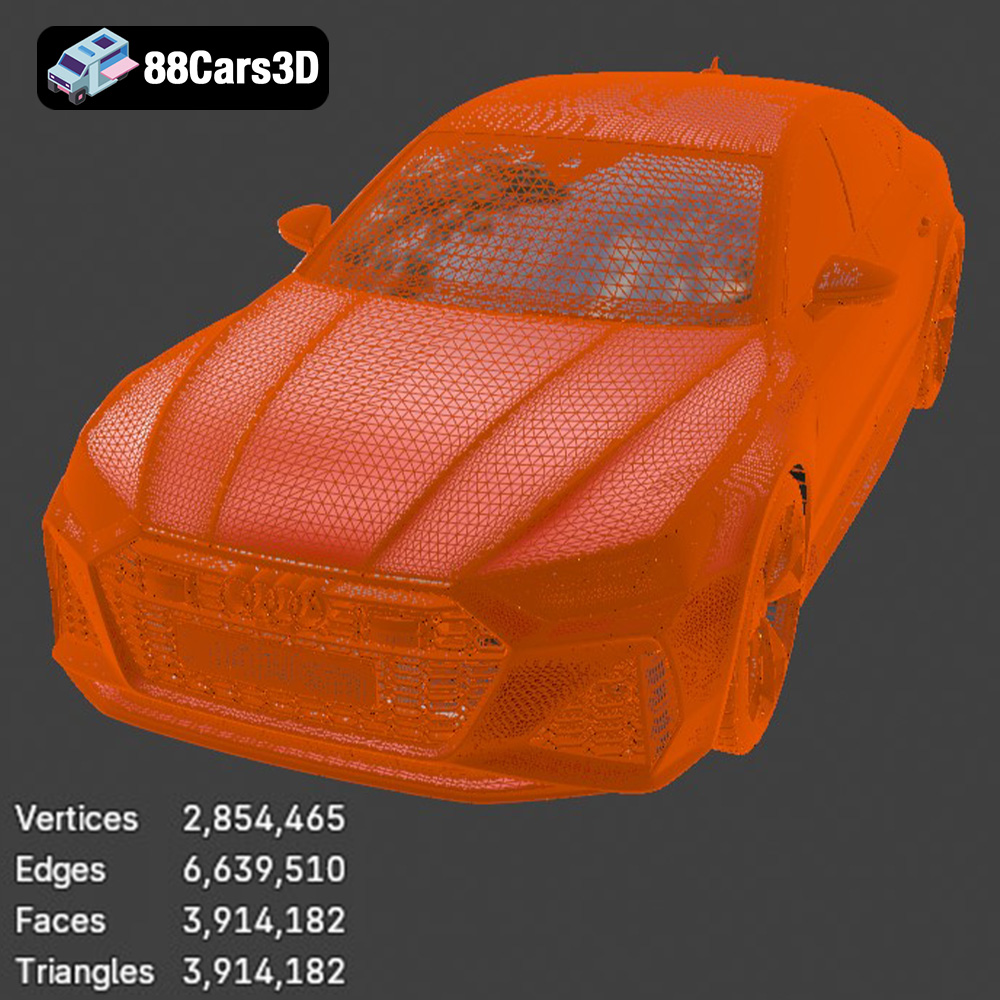
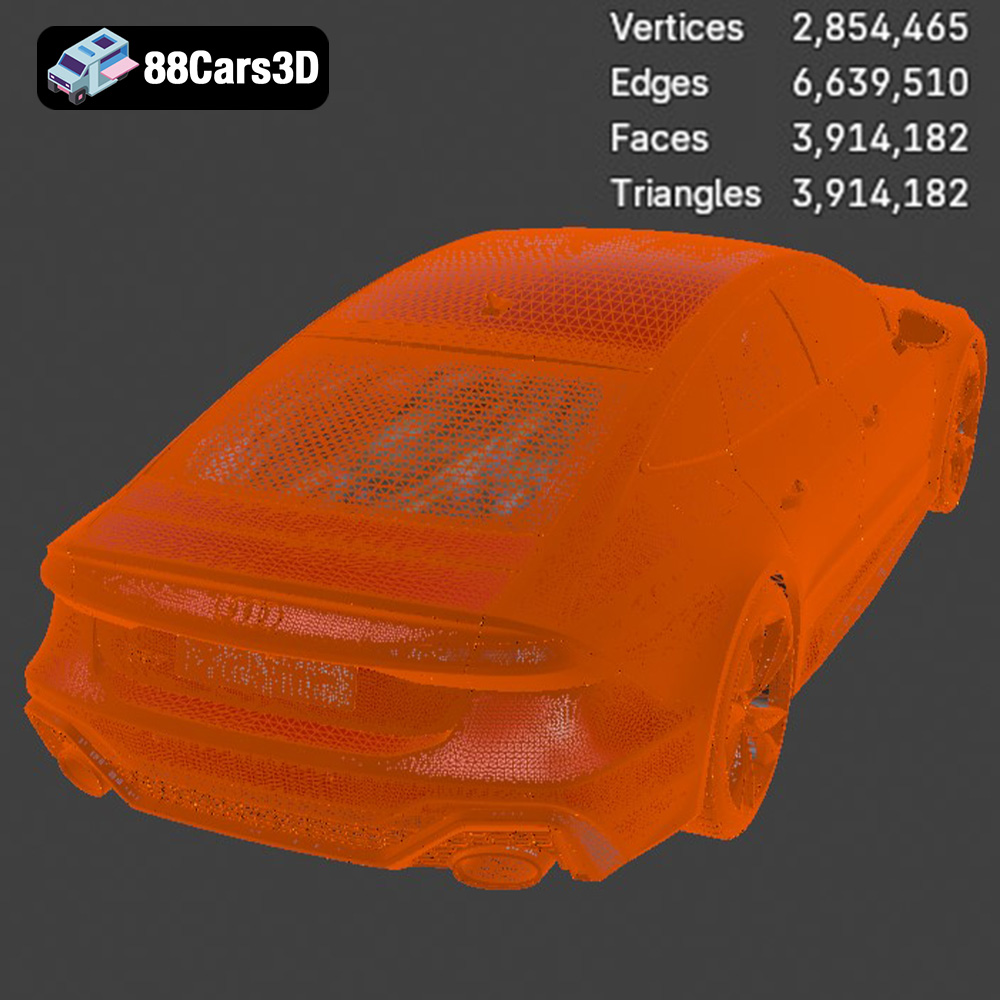
With a triangle count of 3,914,182, the Audi RS7 model strikes an excellent balance for high-end game development. While considered “high-poly” for some real-time applications, this count is increasingly common for hero vehicles in current-generation games where visual realism is paramount. For broader game integration, especially on less powerful platforms, artists might employ Level of Detail (LOD) techniques, creating progressively lower-poly versions of the model that swap in and out depending on the camera’s distance. The model’s carefully structured topology and proper pivot setup for steering, wheel rotation, and suspension travel are critical advantages. These technical preparations save countless hours in the game development pipeline, allowing developers to quickly implement the vehicle’s physics and animation without extensive re-rigging or re-modeling.
The “game-ready” nature of the Audi RS7 Sportback extends to its material setup and UVs, which are configured for efficient PBR rendering within engines like Unreal and Unity. This allows for stunning visual quality with realistic reflections and material responses, crucial for immersive gameplay. Imagine tearing down a digital highway in this meticulously rendered RS7, the virtual cockpit’s dual-screen MMI infotainment and instrument cluster displays reflecting the passing environment. The optimized geometry for immersive first-person POV ensures that even in close-up interior shots, the detail holds up, providing a truly engaging experience for players and virtual enthusiasts alike. This level of detail makes it perfect for open-world games, racing simulators, and even VR training applications.
The utility of a premium 3D car model extends far beyond traditional rendering and game development. The rapidly evolving fields of Augmented Reality (AR), Virtual Reality (VR), and 3D printing offer new and exciting avenues for interaction with high-fidelity automotive assets.
For AR/VR applications, models like the Audi RS7 Sportback 2020 are transformative. Imagine a virtual showroom where potential buyers can walk around, open doors, and even “sit inside” the car from the comfort of their home, experiencing its luxury and features in an immersive 3D environment. Product configurators, both virtual and augmented, allow users to customize colors, wheels, and interior trims in real-time. The .glb file format, specifically optimized for such experiences, ensures efficient loading and smooth interaction across various devices. The model’s detailed interior, including the Virtual Cockpit and intricate center console, is especially valuable for first-person VR perspectives, creating a compelling sense of presence.
The inclusion of an .stl format for the Audi RS7 Sportback 2020 3D model opens up the exciting possibility of physical prototyping and scale model creation. Hobbyists and professional designers can leverage the digital design to produce tangible replicas. The provided 3D print settings, such as recommended scales (1:12, 1:18, 1:24), layer height (0.04–0.12 mm for resin), and support requirements, are crucial for successful output. Printing complex parts like the exhaust, mirrors, and steering wheel separately, and then assembling them, ensures optimal detail and structural integrity. Post-processing with sanding, priming, and painting in authentic factory colors with metallic finishes can result in a stunning physical display model, a testament to the versatility of 88cars3d.com’s offerings.
A truly professional 3D car model is defined not just by its aesthetics but by its underlying technical craftsmanship. The Audi RS7 Sportback 2020 3D model is a prime example of this, built with meticulous attention to real-world accuracy and digital functionality.
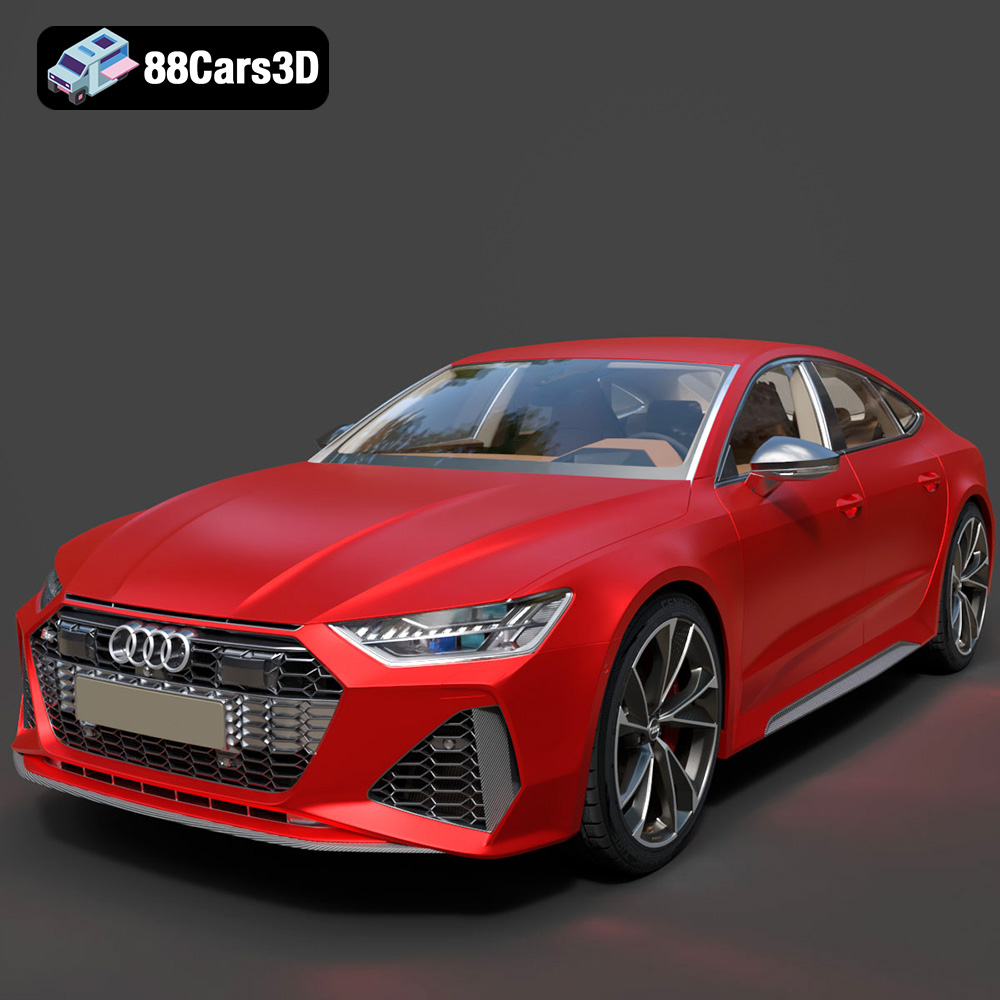
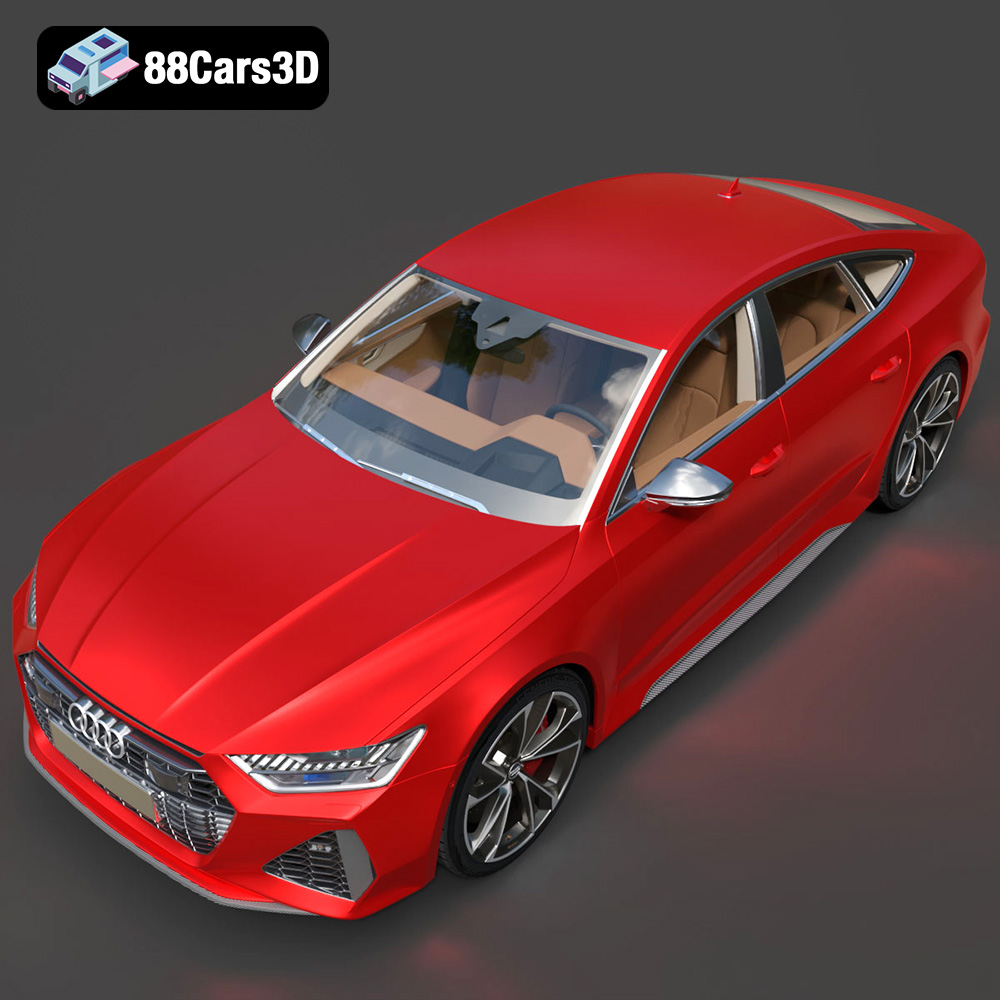
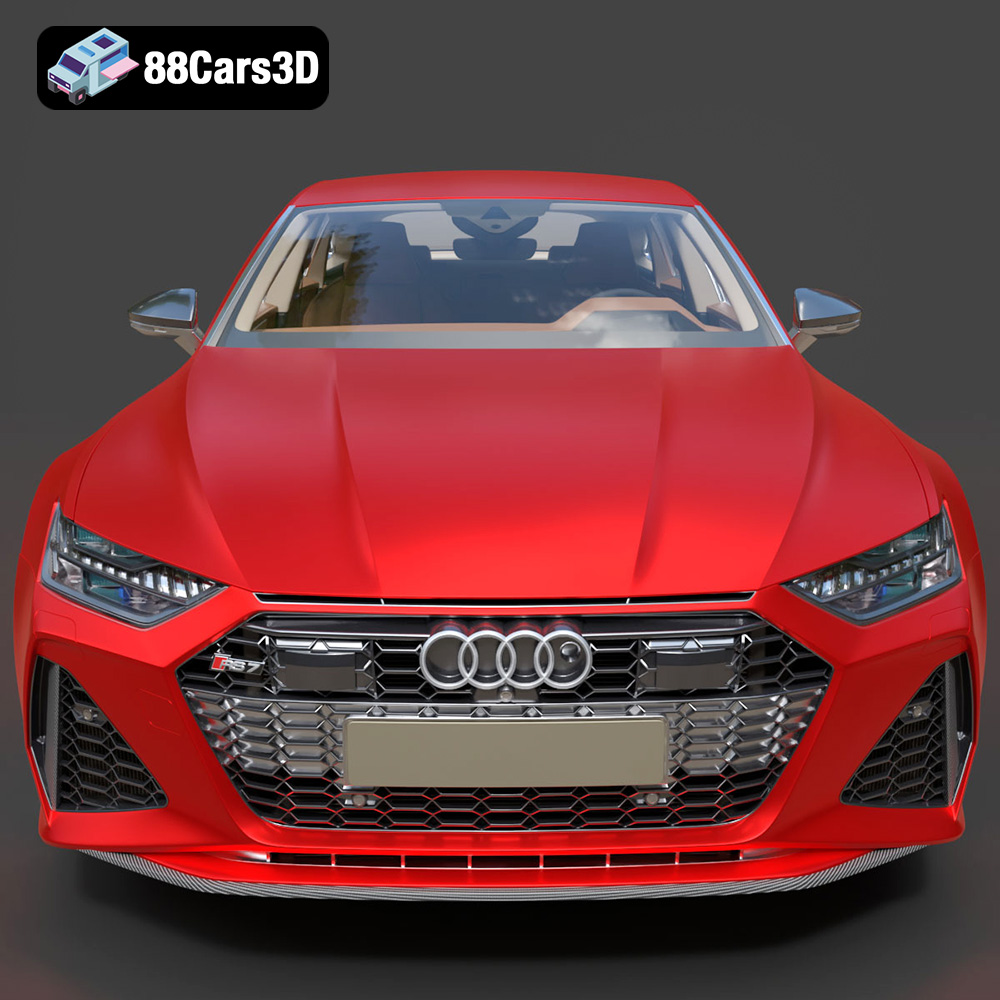
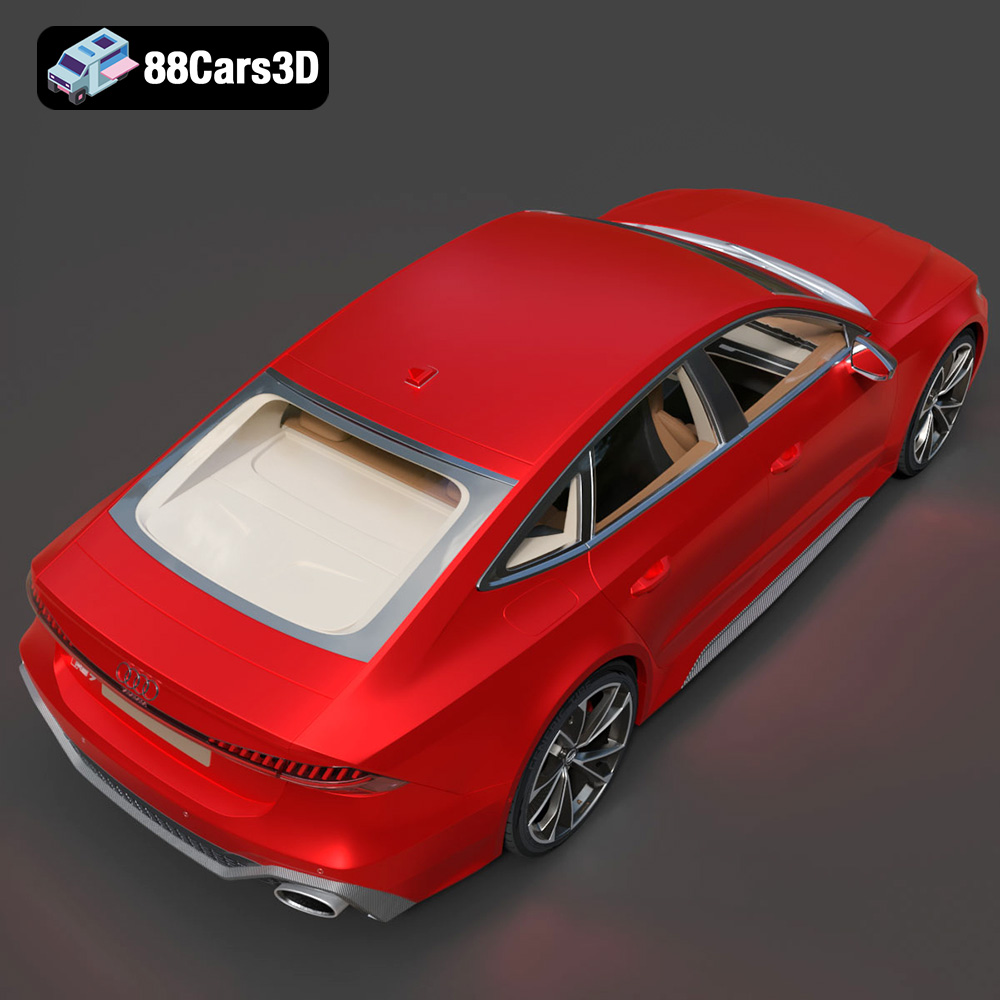
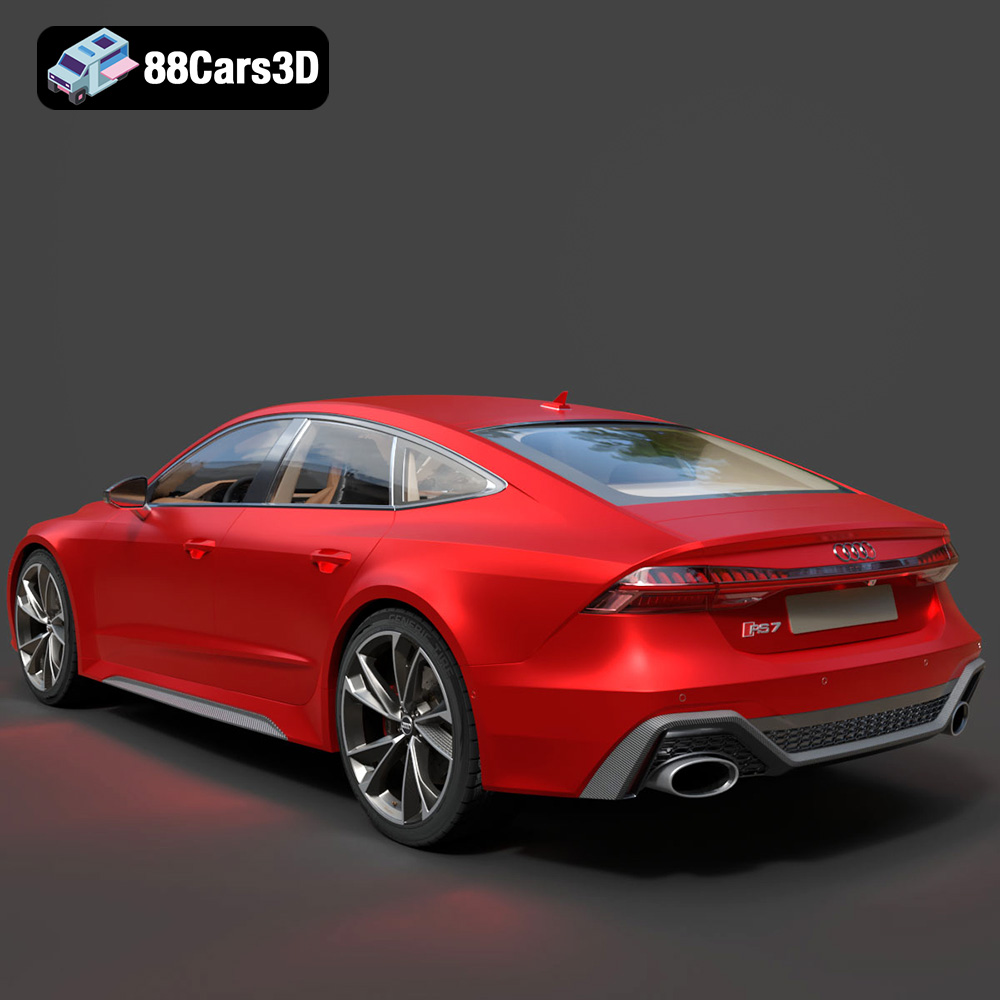
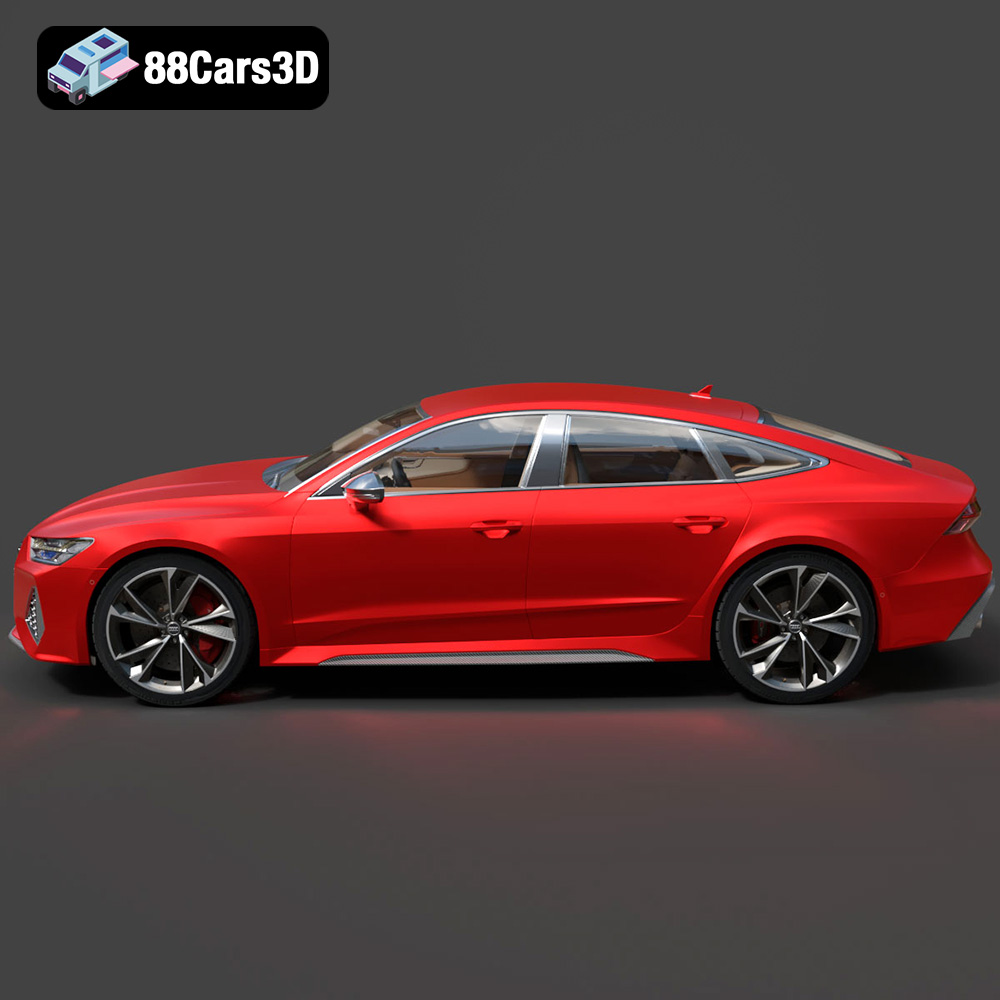
The model accurately captures the Audi RS7 Sportback 2020’s commanding presence, from its distinctive sloping roofline and widebody proportions to the menacing single-frame grille and signature dual oval exhaust system. Every detail, down to the HD Matrix LED headlights with laser light detailing and the high-performance alloy wheels with massive calipers, is faithfully recreated. Inside, the RS sport seats with their detailed honeycomb stitching, the flat-bottomed Alcantara/leather steering wheel, and the comprehensive Virtual Cockpit dual-screen MMI infotainment system demonstrate an unparalleled commitment to interior accuracy. This ensures that whether viewed from afar or in a close-up cinematic shot, the model maintains its integrity and visual appeal.
One of the significant advantages of this model is its thoughtful preparation for animation and customization. The separate wheels, doors, suspension, and steering components are not merely static elements; they are designed with proper pivot setups. This means an animator can directly manipulate these parts without needing to re-rig, saving substantial time in production. The real-world scale accuracy, based on the actual vehicle chassis, is critical for realistic physics simulations in games and for accurate integration into architectural visualization scenes. Furthermore, the model allows for straightforward customization, from changing body colors (e.g., Nardo Gray, factory colors, custom matte finishes) and modifying tire textures to adjusting material finishes and adapting lighting, offering artists immense creative freedom.
The true value of a premium 3D asset lies in its ability to seamlessly integrate into diverse professional workflows, accelerating production and elevating output quality. The Audi RS7 Sportback 2020 3D model from 88cars3d.com exemplifies this.
For automotive design studios and visualization agencies, time is money. Starting a project with a meticulously crafted 3D model like the RS7 Sportback eliminates the time-consuming initial modeling phase. Designers can immediately jump into tasks like environment integration, custom paint schemes, accessory development, or dynamic animation sequences. This model serves as a high-fidelity base for virtual photoshoots, product launches, and luxury brand campaigns, ensuring consistency and unparalleled visual quality across all marketing materials. Its adaptability to various rendering engines means studios can leverage their preferred tools, from V-Ray in 3ds Max to Cycles in Blender or the real-time capabilities of Unreal Engine.
Independent artists and smaller game development teams often face resource constraints. Investing in high-quality game assets like this 3D car model provides access to world-class content without the prohibitive cost and time of creating it from scratch. For game developers, the “game-ready” optimization and proper pivot setups mean less wrestling with technical setup and more focus on gameplay and creative storytelling. For freelance artists, having a detailed, pre-made luxury vehicle allows them to take on more ambitious rendering projects, showcasing their skills with top-tier assets and delivering exceptional results to clients. The comprehensive file format support further democratizes access, ensuring that artists using different software packages can all benefit from this exceptional asset.
In the competitive landscape of digital content creation, the pursuit of realism and efficiency is constant. High-quality 3D car models are no longer a luxury but a necessity for projects aiming for visual excellence and technical robustness. The Audi RS7 Sportback 2020 3D Model embodies this principle, offering an exceptional blend of meticulous detail, optimized performance, and unparalleled versatility across a wide array of applications.
From captivating automotive rendering and cutting-edge game development to immersive AR/VR experiences and even tangible 3D prints, this model provides a solid foundation for creative professionals. Its comprehensive technical specifications, including a game-ready poly count, accurate real-world scale, and a full suite of file formats (.blend, .fbx, .obj, .glb, .stl, .ply, .unreal, .max), ensure seamless integration into virtually any pipeline. By choosing premium assets like this, available at 88cars3d.com, artists and developers can significantly enhance their workflow, reduce production times, and ultimately deliver breathtaking results that truly stand out. It’s more than just a 3D model; it’s an investment in digital excellence and a catalyst for creative innovation.
The Audi RS7 Sportback 2020 represents the pinnacle of German engineering, seamlessly blending aggressive performance with grand touring luxury. Known for its commanding presence on the road, this high-performance sportback features a menacing front fascia with a wide single-frame grille, sharply sculpted lines, and a distinctive sloping roofline. Powered by a potent twin-turbo V8 engine in the real world, its muscular widebody stance, dual oval exhaust tips, and striking LED matrix headlights make it an iconic modern classic in the luxury performance segment. This premium 3D model boasts an exceptional level of detail with a triangle count of 3,914,182, ensuring high-fidelity visual realism suitable for close-up shots and high-end cinematic sequences. Despite its meticulous detailing, the model’s topology is carefully structured for integration into game engines and real-time environments. Whether you are developing a next-gen racing title, an immersive VR showroom, or crafting photorealistic visualizations, this asset delivers unparalleled quality and accuracy.
$37.50
.2020
.audi
.blend
.fbx
.glb
.max
.obj
.ply
.rendering
.stl
.unreal
car-3d-model
game asset
game-ready
high poly
luxury car
optimized
performance-car
rs7-sportback
sports-sedan
VR/AR