Get 20% OFF All Premium 3D & STL Models!

In the vibrant landscape of digital creation, the demand for hyper-realistic and meticulously optimized 3D assets is ever-growing. From the adrenaline-pumping world of racing games to the sleek showcases of architectural visualization, and the immersive realms of AR/VR, a high-quality 3D car model is often the linchpin of a successful project. These assets don’t just fill a scene; they define its authenticity, drive engagement, and elevate the overall user experience. The challenge lies in finding models that strike the perfect balance between visual fidelity, technical precision, and cross-platform compatibility.
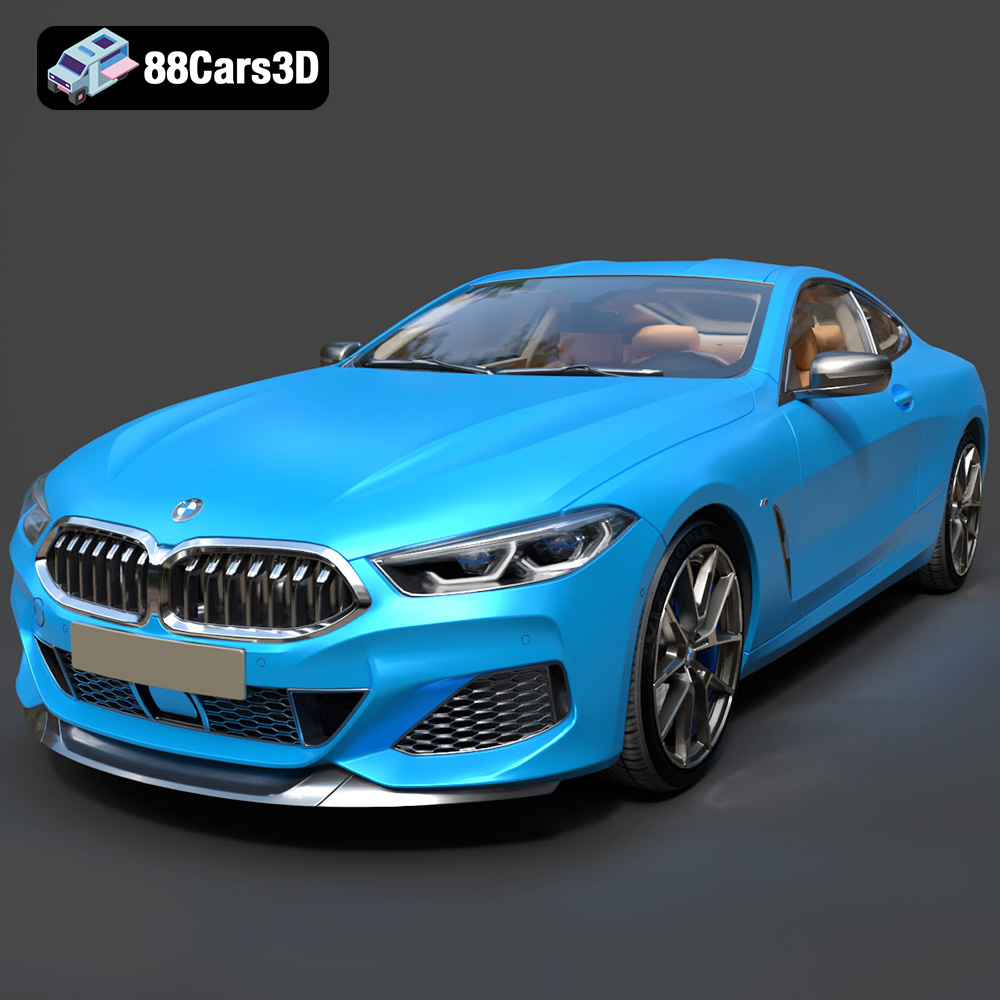
Today, we’re taking a closer look at what makes an exceptional automotive 3D asset by dissecting a prime example: the BMW M850i 3D Model. This particular model, available on 88cars3d.com, encapsulates the pinnacle of modern grand touring luxury and aggressive performance. It’s a testament to how advanced 3D modeling can capture the very essence of a vehicle, making it an invaluable tool for professionals across various industries. Whether you’re a game developer striving for photorealism, an architect enhancing a scene, or a product designer visualizing concepts, understanding the nuances of such models is crucial for bringing your visions to life.
The versatility of a 3D car model largely hinges on the array of file formats it supports. Each format serves distinct purposes, catering to specific software environments, rendering pipelines, or end-use applications. When acquiring a premium asset like the BMW M850i 3D Model, understanding these formats is paramount for seamless integration and optimal performance. Let’s delve into the technical specifics of the common formats often included with high-quality 3D models.
The .blend format is Blender’s native file type, offering a complete and fully editable scene. This means not only the mesh geometry but also materials, textures, lighting, cameras, animation data, and even physics simulations can be stored within a single .blend file. For artists and studios primarily working within the Blender ecosystem, this is often the most convenient and powerful format. It allows for immediate manipulation, modification of materials, or adjustments to the model’s rigging and animation setup without any data loss or conversion issues. Its robust nature makes it ideal for complex projects where deep customization and iterative design are required.
.fbx (Filmbox) is arguably the most widely adopted interchange format in the 3D industry, especially for game development and real-time pipelines like Unreal Engine and Unity. Developed by Autodesk, FBX is designed to store not just geometry, but also animation, rigging, materials (though often simplified), cameras, and lights. Its strength lies in its ability to transfer complex scene data between different software applications with a high degree of fidelity. For the BMW M850i 3D Model, an FBX file would be perfectly optimized for direct import into game engines, ensuring that the model’s structure, pivots (for wheels, steering, suspension), and basic material assignments are preserved, ready for engine-specific material setup.
The .obj (Wavefront OBJ) format is a universal standard, highly compatible across virtually all 3D software. It primarily stores geometry data – vertices, normals, UV coordinates, and faces – and can reference external material files (.mtl). While it doesn’t typically store animation or rigging data, its simplicity and widespread support make it an excellent choice for basic mesh transfer. When you need a clean mesh to start with in a new application, or if you’re working with less common 3D software, OBJ is often the most reliable option for the BMW M850i model, providing a solid foundation for further detailing and material work.
.glb (GLB format for glTF) is a relatively newer format gaining significant traction, particularly for augmented reality (AR), virtual reality (VR), and browser-based 3D applications. It’s a binary version of the glTF (Graphics Language Transmission Format), packing all necessary assets (model, textures, animations) into a single, self-contained file. This optimization makes GLB incredibly efficient for quick loading and rendering on various devices and platforms. For interactive web viewers or mobile AR experiences featuring the BMW M850i, the GLB format ensures a streamlined, high-performance display of the model.
.stl (Stereolithography) is the standard file format for 3D printing. It represents a 3D model as a series of connected triangles (a tessellated surface) without color, texture, or other CAD attributes. While it lacks visual information, its robustness for defining surface geometry is unmatched for additive manufacturing. For hobbyists or professionals looking to physically manifest the BMW M850i, the STL version provides a print-ready mesh, ensuring structural integrity and precise dimensions for scales like 1:12 or 1:18, as recommended for the 88cars3d.com model.
The .ply (Polygon File Format) is a file format for storing 3D data, particularly from 3D scanners. It’s capable of storing a wide range of properties, including color, transparency, normals, texture coordinates, and even reliability information. While less common for direct asset exchange in entertainment, it’s highly valued in scientific, CAD, and engineering applications for its precision and ability to retain detailed mesh attributes, making it suitable for analysis or highly accurate reproductions of the BMW M850i.
The term .unreal often refers to an asset specifically prepared and exported for the Unreal Engine, potentially as an FBX file with specific settings or an Unreal Asset file package. This implies the model is not just compatible but optimized for Unreal’s rendering pipeline, often including proper material setup, collision meshes, LODs (Levels of Detail), and blueprint integration. An “Unreal” format for the BMW M850i suggests it’s truly game-ready, saving developers significant time on optimization and setup.
Similar to .blend for Blender, the .max format is Autodesk 3ds Max’s native file type. It contains the complete 3ds Max scene, including geometry, materials, textures, lighting, cameras, animation, modifiers, and plugin data. For artists working within 3ds Max, this format offers the highest level of editability and flexibility for advanced rendering, complex animation sequences, or integration with other Autodesk tools. Leveraging the .max file for the BMW M850i allows for extensive customization, high-fidelity rendering setup, and integration into professional architectural visualization or cinematic pipelines.
The inclusion of such a diverse range of formats with the BMW M850i 3D Model highlights its adaptability, ensuring that regardless of your software preference or project requirements, you have a solid foundation to build upon. This comprehensive file support is a hallmark of premium 3D car models like those found on 88cars3d.com.
The BMW M850i 3D model is more than just a digital representation; it’s a meticulously crafted asset designed to meet the rigorous demands of professional 3D production. Its strength lies in its balance of breathtaking visual fidelity and game-ready optimization.
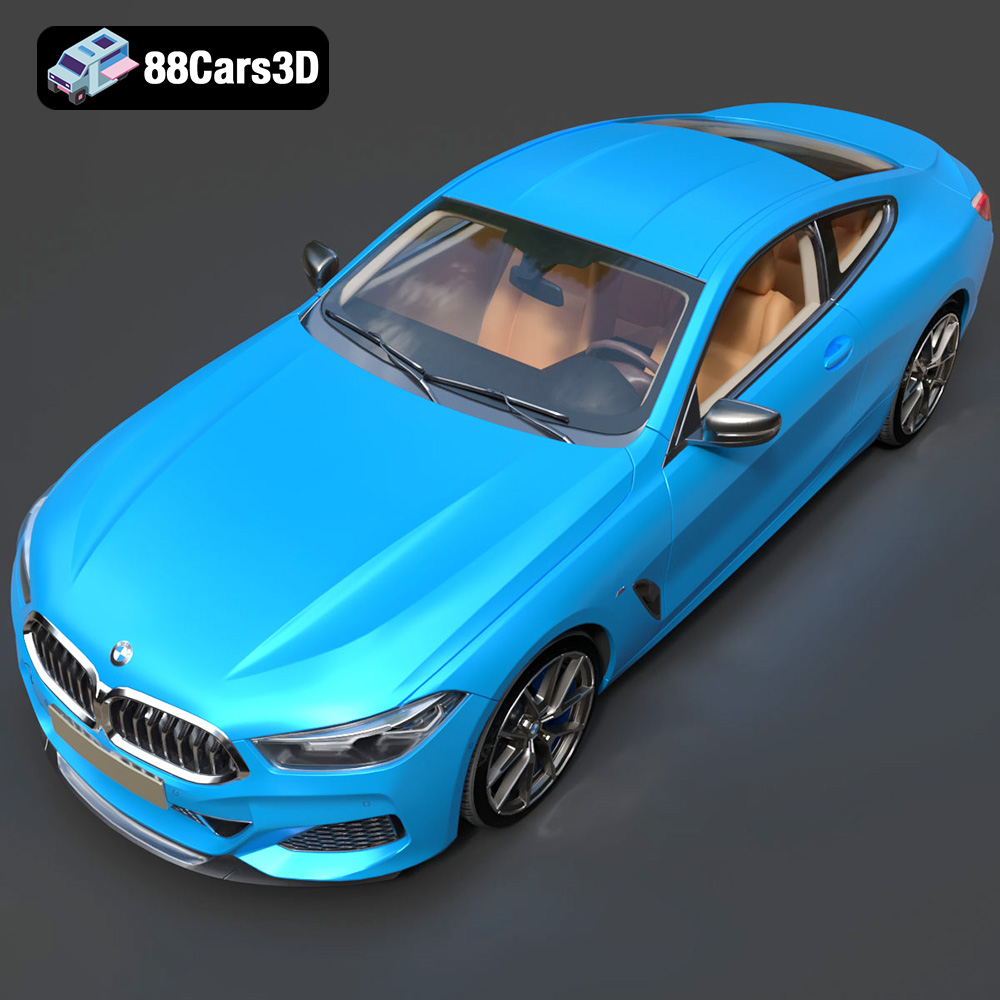
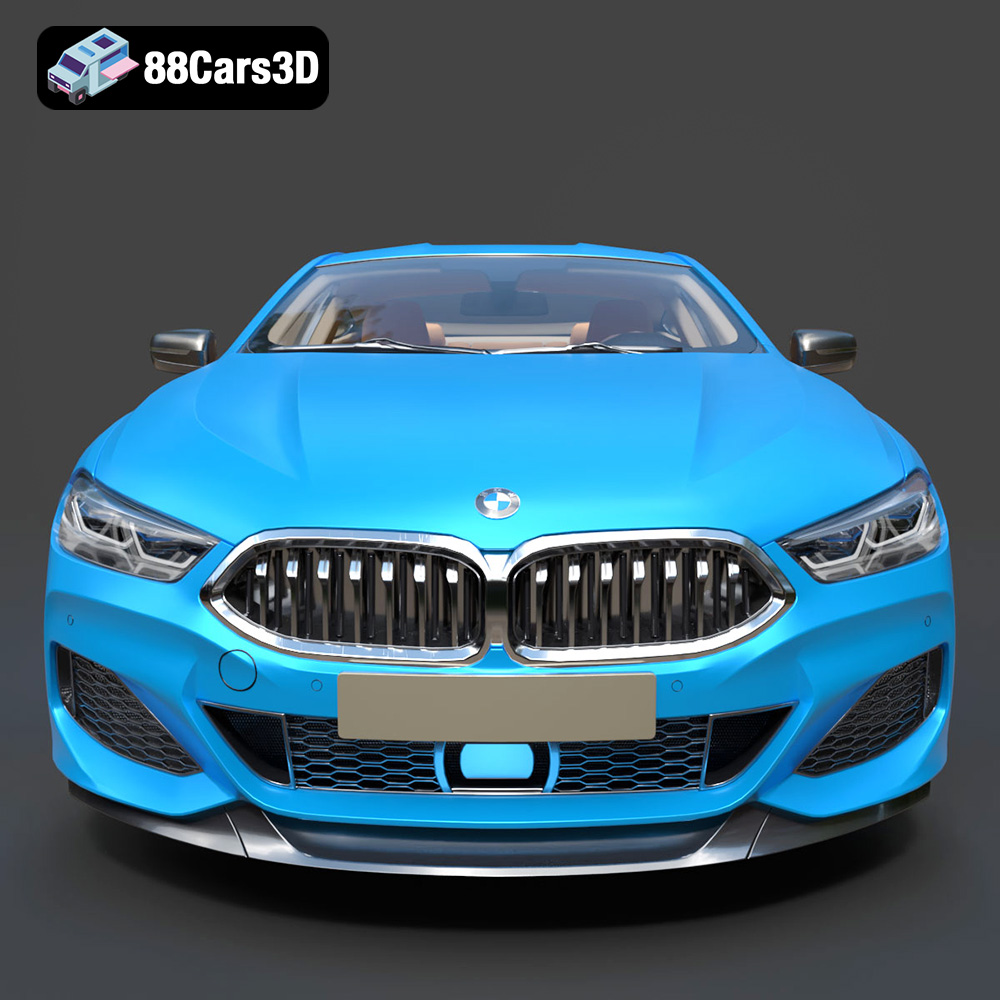
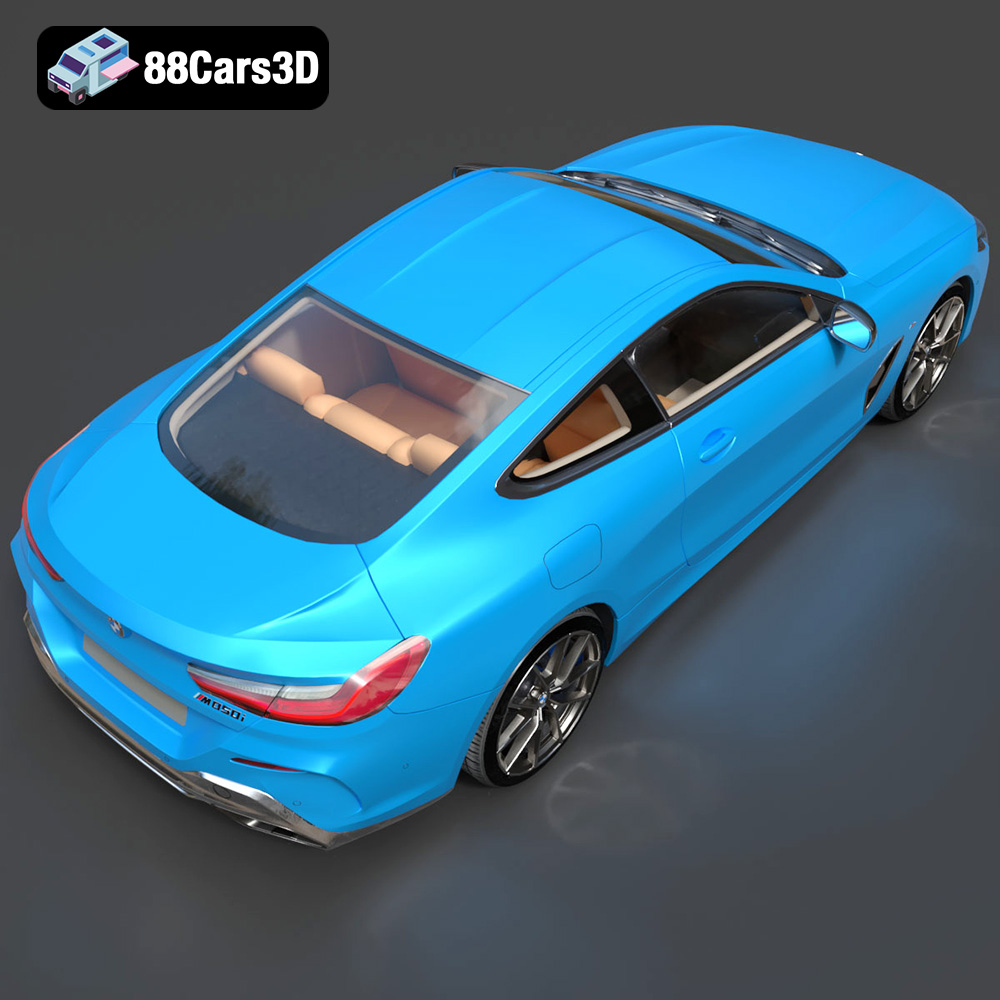
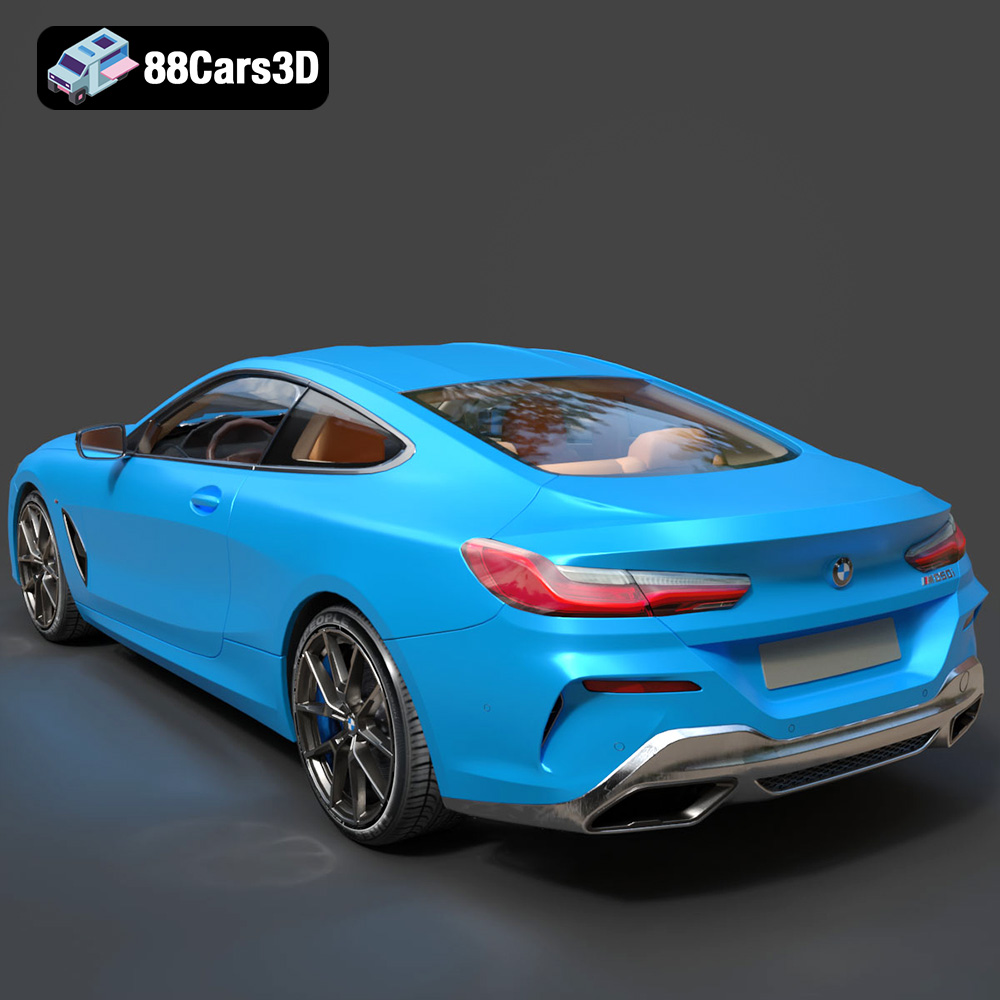
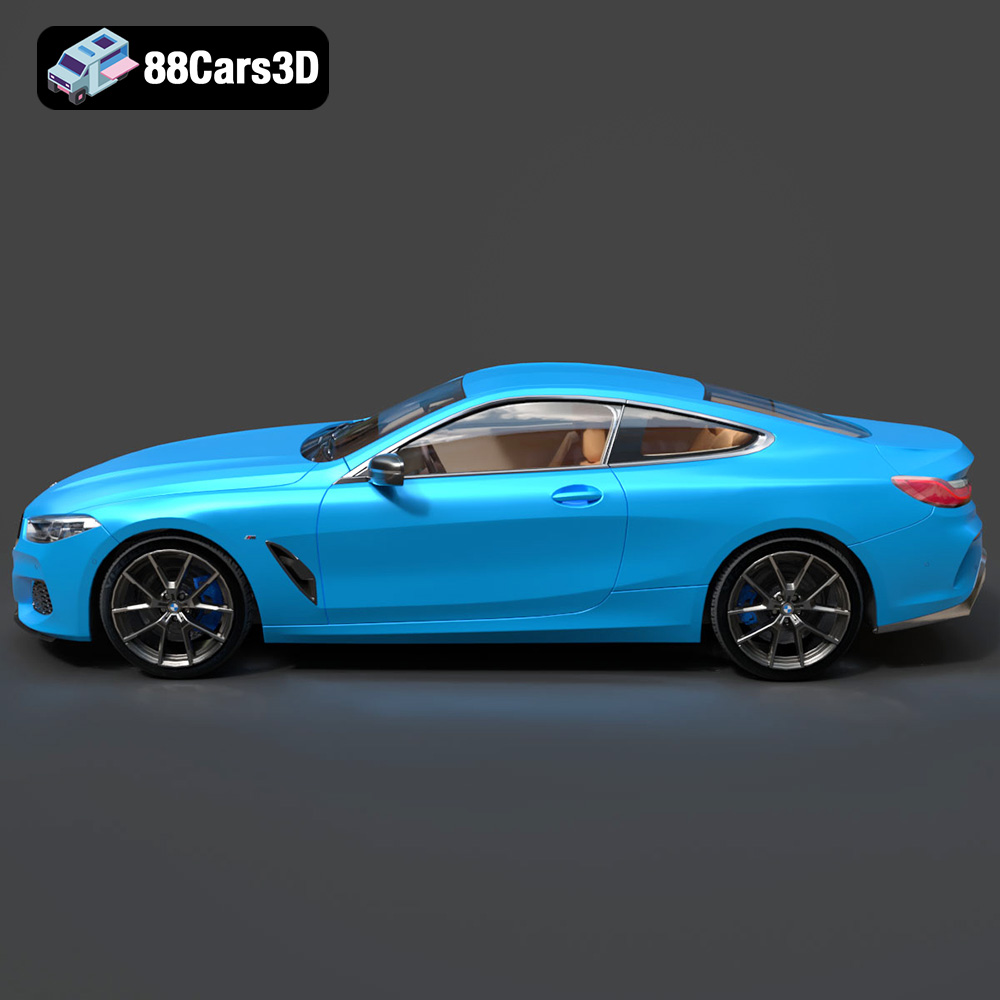
Every curve and contour of the real BMW M850i is faithfully replicated. The model accurately captures the vehicle’s heritage, from its iconic wide kidney grilles to the aggressive M-Sport front bumper. Details such as the laser-light style headlamps and the quad-tipped exhaust system aren’t merely suggested; they are intricately modeled, ensuring that the car looks authentic from every angle. The model includes accurately proportioned frame geometry, detailed M-Sport aerodynamic vents, and even cues for the twin-turbo V8 engine bay layout, adding a layer of realism visible even when only hints are shown. The intricately modeled M-style alloy wheels, complete with low-profile tires and detailed brake calipers, are a testament to the granular attention paid during its creation. Crucially, components like wheels, suspension, and steering are separated, laying the groundwork for realistic animation.
A true premium 3D car model doesn’t stop at the exterior. The BMW M850i 3D model extends its detailed craftsmanship to the cockpit, offering a fully optimized interior perfect for first-person POV in gaming or VR. Luxurious sculpted sport seating features detailed stitching geometry, adding a tactile sense of realism. The M-Sport leather-wrapped steering wheel, complete with paddle shifters, is precisely modeled. Crucial elements like the high-resolution digital instrument cluster and central infotainment display housing are present, alongside a detailed center console with a precise gear selector, iDrive controller, and pedals. This level of interior detail makes the model ideal for virtual showrooms, configurators, or even cinematic close-ups, where the viewer can truly appreciate the luxury.
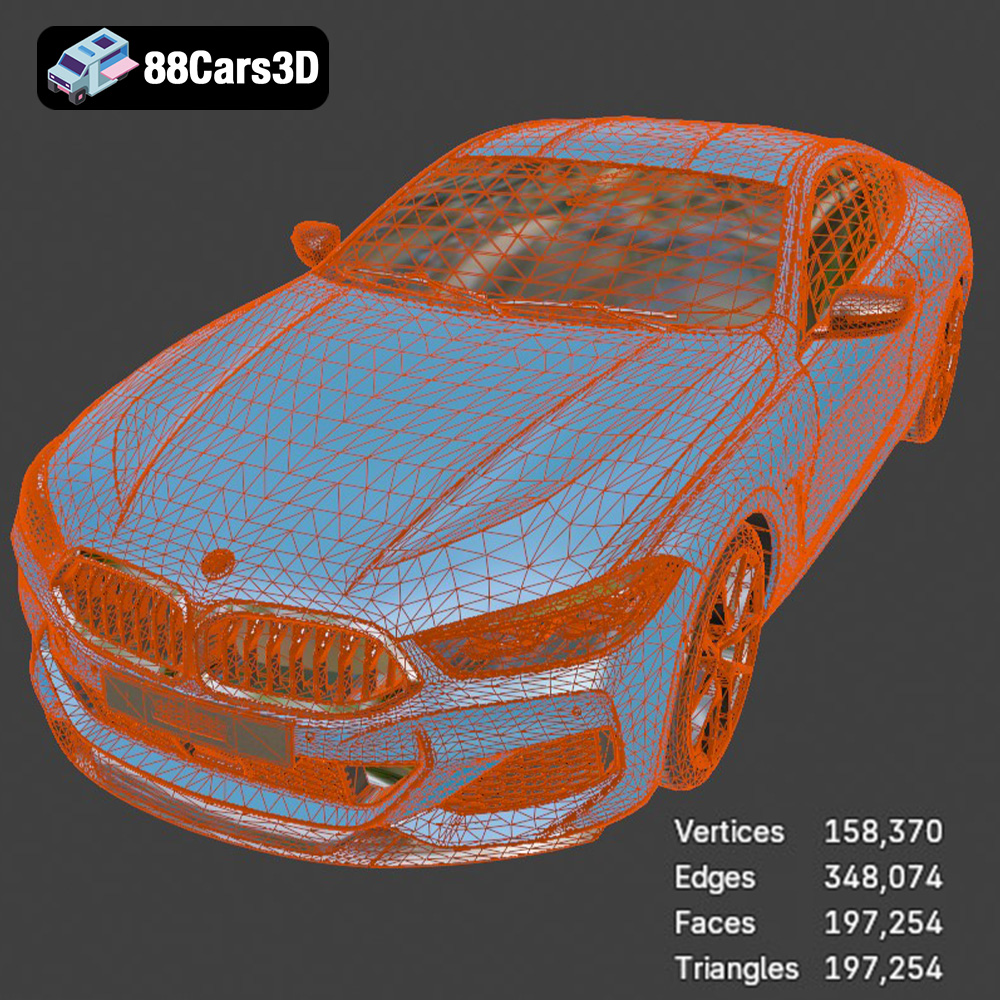
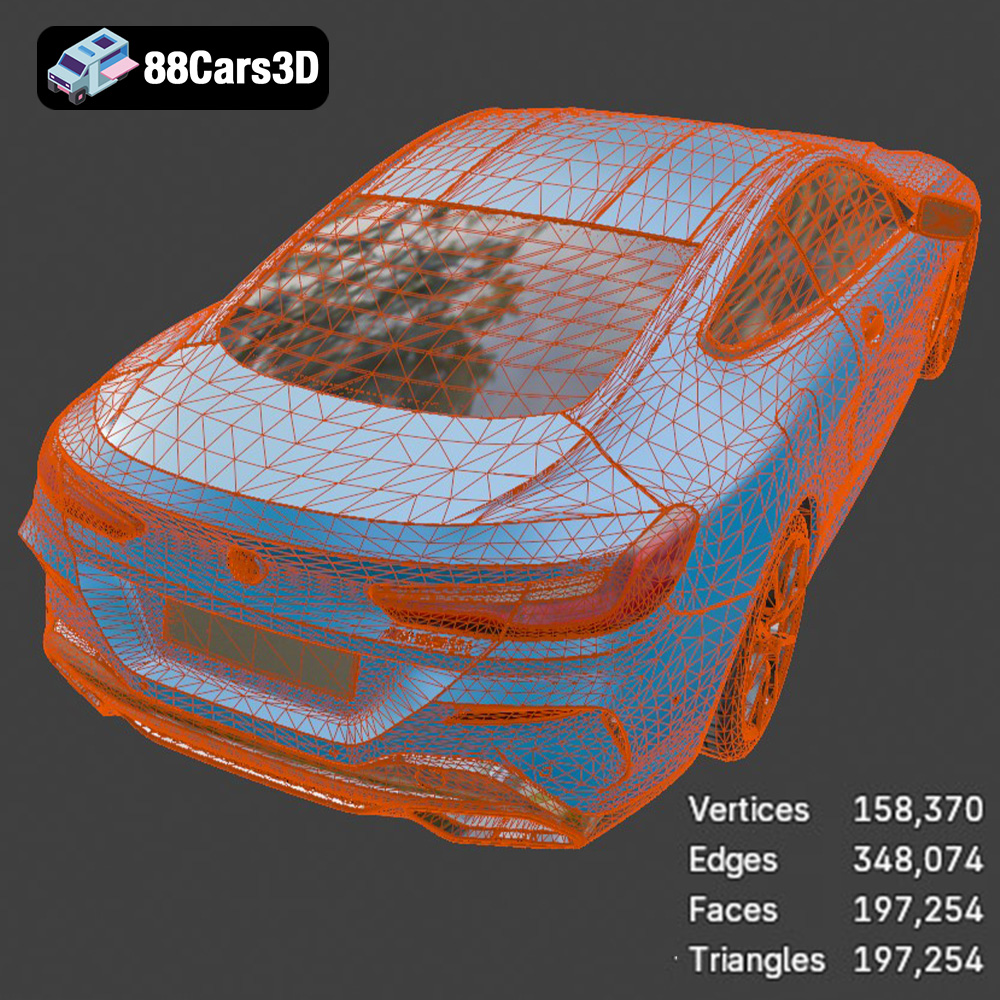
Beyond aesthetics, the technical underpinnings of this BMW M850i model are engineered for peak performance across various platforms. With a triangle count of 197,254, it strikes a crucial balance. This poly count is low enough to be considered “game-ready” for real-time engines like Unreal and Unity, ensuring smooth frame rates without sacrificing visual realism. Simultaneously, it’s rich enough in detail for high-end rendering and visualization projects. The model maintains real-world scale accuracy, based on actual vehicle chassis, which is critical for consistent integration into any scene or engine. Furthermore, proper pivot setups for steering, wheel rotation, and suspension travel are already established, significantly reducing setup time for animators and game developers. This combination of optimization and detail truly sets this 3D car model apart.
The versatility of the BMW M850i 3D model from 88cars3d.com shines brightest when integrated into professional production pipelines. Its multi-format availability ensures compatibility with industry-standard software and real-time engines.
For architectural visualization (arch-viz) artists or those creating cinematic renders, the .max or .blend files offer maximum flexibility. In 3ds Max, artists can leverage the full scene data, apply V-Ray or Corona materials, and integrate the M850i into complex environments. The accurately modeled exterior and detailed interior make it an ideal prop for luxury property renders, bringing a sense of lifestyle and realism to static images or animations. Similarly, Blender users benefit from the native .blend file for immediate material setup with Cycles or Eevee, enabling rapid iteration and stunning results for advertising campaigns or brand visualization. The separated components (wheels, suspension) allow for dynamic renders showing motion blur or detailed mechanical breakdowns.
The “game-ready” optimization of the BMW M850i 3D model is a huge advantage for game developers. The 197,254 triangle count is perfectly suited for modern open-world racing games or driving simulators. Using the .fbx or .unreal formats, developers can import the model directly into Unreal Engine or Unity. The pre-set pivots for steering and wheels drastically simplify rigging and animation setup, allowing for quick integration into vehicle physics systems. Artists can then apply engine-specific PBR materials, set up dynamic lighting, and even implement LODs (Levels of Detail) to ensure optimal performance across different hardware configurations, making the M850i a hero asset in any virtual garage.
The rise of AR and VR platforms necessitates highly optimized yet visually rich assets. The BMW M850i model, particularly in its .glb format, is ideal for creating immersive virtual showrooms, interactive configurators, or mobile AR experiences. Its balanced polycount ensures smooth performance on VR headsets and mobile devices without sacrificing the detailed aesthetics. Imagine a user exploring the M850i in a virtual garage, opening doors, changing paint colors, or even “sitting” inside the meticulously detailed cockpit – all powered by this robust 3D model. Such applications are perfect for automotive brands looking to offer cutting-edge customer engagement.
While digital visualization is a primary use case, the versatility of this BMW M850i model extends into the physical realm through 3D printing. The inclusion of the .stl format, specifically designed for additive manufacturing, opens up new possibilities for hobbyists and collectors.
The provided .stl file is a direct gateway to creating a tangible replica of the M850i. For optimal results, specific print settings are recommended. A scale of 1:12, 1:18, or 1:24 provides a good balance between detail retention and manageable print size. Resin printing is highly recommended over FDM for fine details like grilles, mirrors, and body lines, allowing for a layer height of 0.04–0.12 mm. Ensuring a wall thickness of 1.2–2.0 mm provides structural integrity. Infill settings of 20–30% strike a balance between material usage and model strength. Crucially, supports will be required for overhangs and intricate parts such as the exhaust tips, side mirrors, spoilers, and front grilles. The model is also designed for print orientation where the frame is angled for better structural integrity, with wheels printed separately for cleaner results and easier assembly.
Once printed, the journey to a display-worthy model involves careful post-processing. Sanding is essential to remove layer lines or support marks, followed by a primer coat to create an even surface for painting. The real magic happens with authentic factory colors, potentially incorporating metallic finishes to truly capture the BMW M850i’s luxurious sheen. This blend of digital precision and hands-on craftsmanship transforms a virtual asset into a beautiful physical collectible, demonstrating the full spectrum of a high-quality 3D car model’s potential.
A truly valuable 3D asset provides not just a final product, but a foundation for endless creative exploration. The BMW M850i 3D model is built with customization in mind, ensuring it remains relevant and adaptable for future projects.
The ability to easily customize key aspects of the model is a significant advantage. Artists can effortlessly change body colors, experimenting with factory hues or designing unique metallic and matte finishes to suit specific project aesthetics. This is particularly useful for virtual configurators or advertising campaigns requiring various color options. Furthermore, modifying tire textures allows for switching between street variants and track slicks, instantly altering the car’s character. Adjusting other material finishes, such as adding carbon fiber accents or varying interior trim, further enhances the model’s versatility. Even environmental lighting can be adapted to highlight different aspects of the car, whether it’s a sunny outdoor scene or a dramatic studio setup.
In the fast-evolving world of 3D, an asset’s longevity is tied to its adaptability. The clean topology, real-world scale, and separated components of the BMW M850i model make it highly future-proof. Should new rendering techniques emerge or engine requirements shift, the model’s fundamental structure allows for relatively easy updates and re-optimization. Its comprehensive set of included file formats ensures backward and forward compatibility with new software versions and emerging platforms. This makes the 88cars3d.com BMW M850i 3D model a sound investment, capable of serving diverse and evolving creative needs for years to come.
The digital automotive landscape demands assets that combine impeccable detail with robust optimization and versatile compatibility. The BMW M850i 3D Model stands out as a prime example of such an asset, meticulously crafted to elevate any project it touches. From its accurately sculpted exterior and luxuriously detailed interior to its game-ready polycount and thoughtful technical specifications, every aspect of this model is engineered for professional-grade performance.
Whether you are developing an immersive racing title, creating a photorealistic architectural rendering, designing an engaging AR/VR experience, or even bringing a digital concept to life through 3D printing, this premium 3D car model provides the foundational excellence required. Its comprehensive support for diverse file formats—from .blend and .max for deep software integration to .fbx and .unreal for real-time engines, .glb for web, and .stl for manufacturing—ensures seamless workflow integration across the creative spectrum.
By investing in high-quality 3D car models like the BMW M850i available on 88cars3d.com, creators are not just acquiring a digital file; they are gaining a powerful tool that saves production time, enhances visual impact, and future-proofs their creative endeavors. It’s more than just a model; it’s a testament to the art and science of 3D, ready to accelerate your projects to new heights of realism and engagement.
The BMW M850i represents the pinnacle of modern grand touring luxury and aggressive performance. As the flagship of the 8 Series, it boasts a sleek, muscular silhouette, striking aerodynamic lines, and a commanding presence on the road. This 3D model meticulously captures the vehicle’s heritage, highlighting its iconic wide kidney grilles, aggressive M-sport front bumper, laser-light style headlamps, and quad-tipped exhaust system. The model accurately reflects the sheer power and elegance that define this elite sports coupe. Engineered with exceptional attention to detail, this 3D model features a highly optimized topology with a triangle count of 197,254. It delivers breathtaking visual fidelity while maintaining the performance standards required for modern game-ready assets. Whether integrated into next-gen rendering engines or real-time simulations, the geometry provides incredibly smooth reflections and precise light interactions, making it a premium asset for game development, AR/VR, animation, and high-end automotive visualization. Perfect for open-world racing games, luxury vehicle configurators, architectural visualization scenes, and immersive VR automotive showrooms.
$24.50
.blend
.bmw
.fbx
.glb
.m850i
.max
.obj
.ply
.rendering
.sports car
.stl
.unreal
8-series
car-3d-model
game asset
game-ready
grand-tourer
low-poly
luxury-coupe
optimized
VR/AR