Get 20% OFF All Premium 3D & STL Models!

In the dynamic world of 3D visualization, game development, and immersive experiences, the quality of your assets dictates the impact of your project. Automotive design, in particular, demands an unparalleled level of detail and authenticity to captivate audiences. Whether you’re crafting a hyper-realistic scene for a commercial, building an expansive open-world racing game, or developing an interactive AR configurator, the foundation of success lies in exceptional 3D car models.
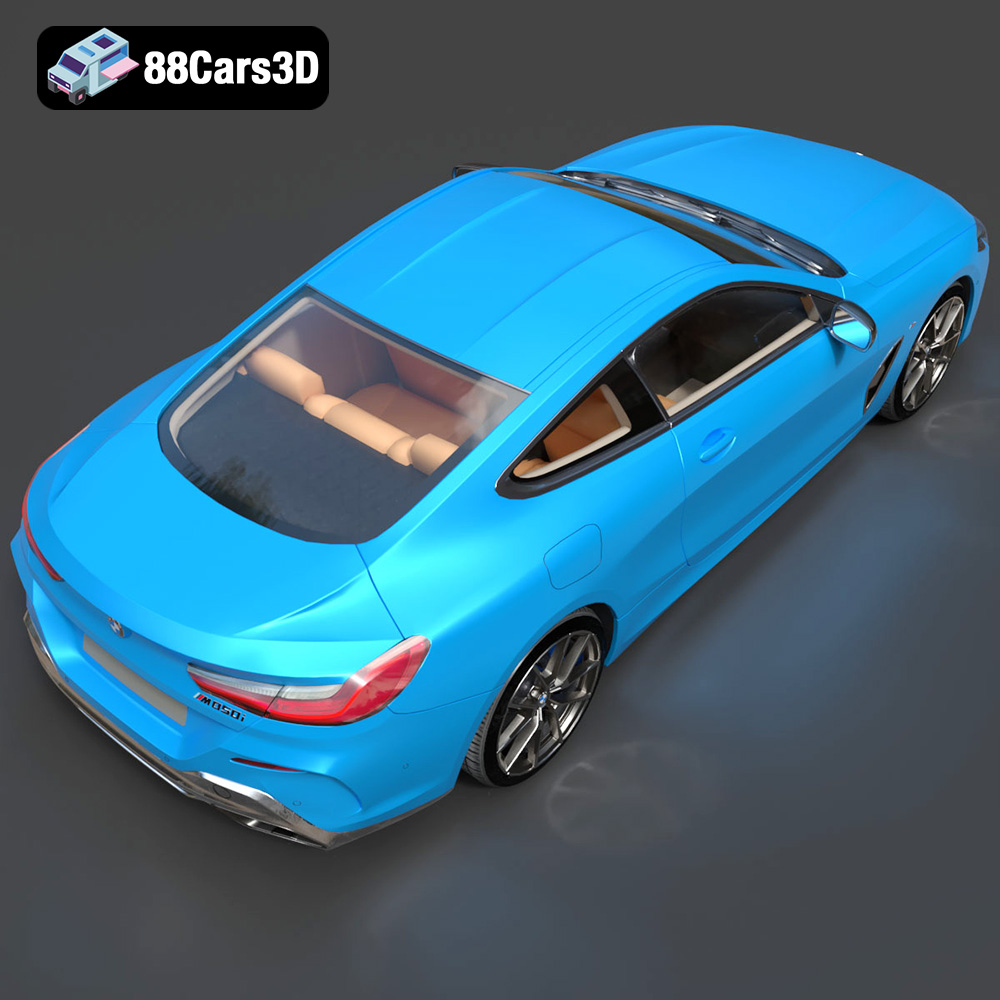
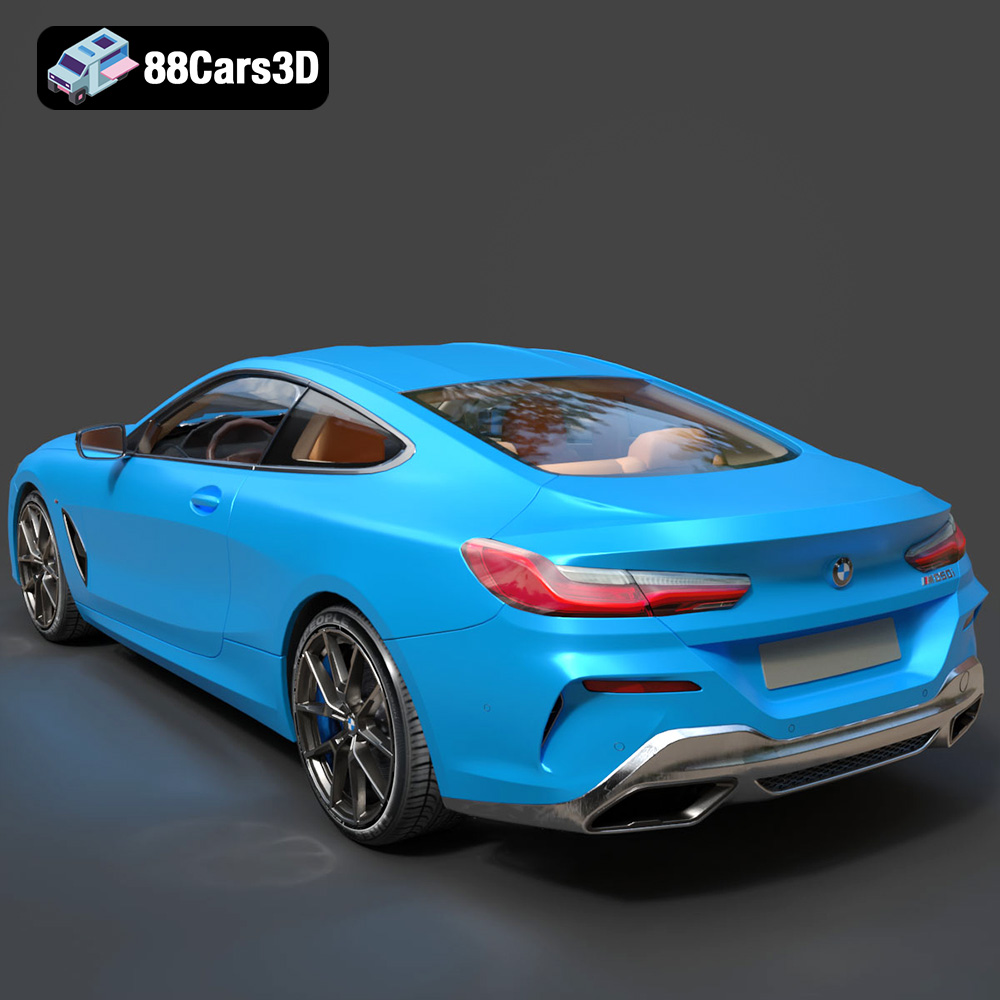
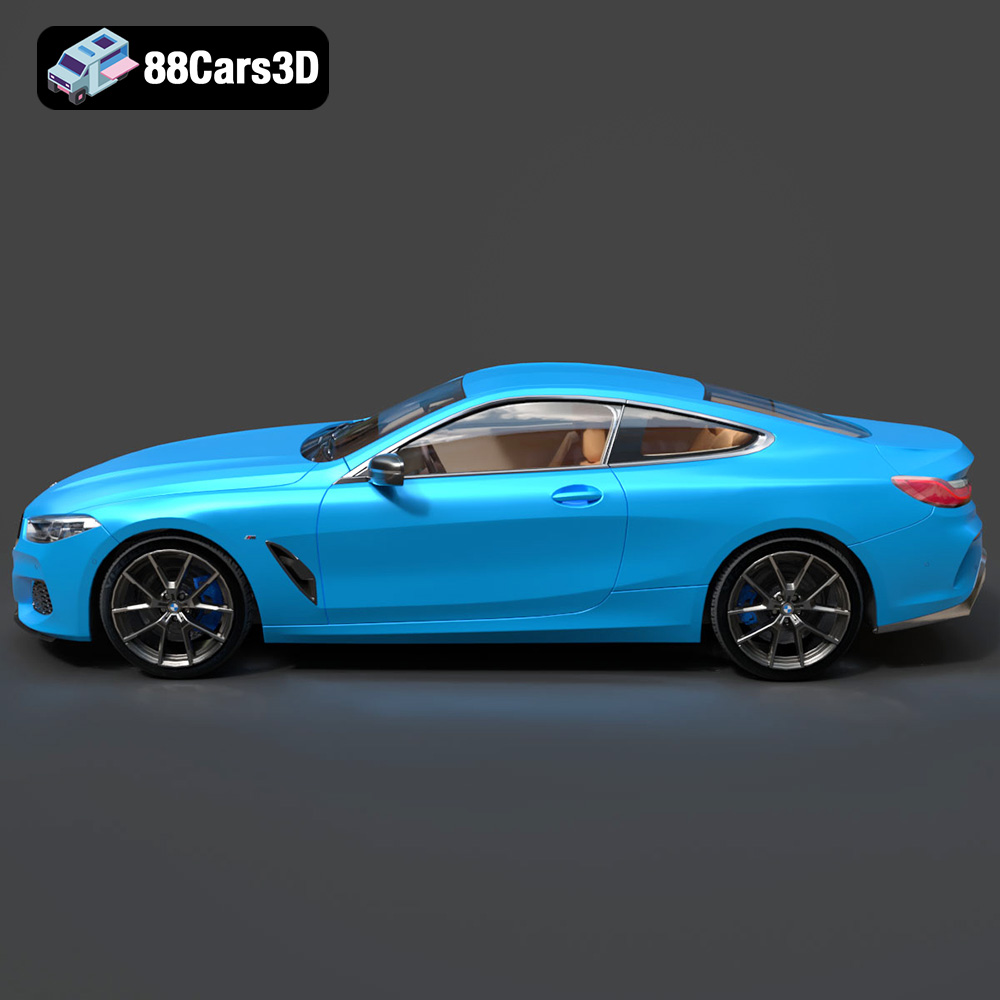
Today, we delve into the intricate artistry and technical prowess behind creating and utilizing such assets, highlighting how a meticulously crafted model can elevate your work. Our journey will showcase the comprehensive utility of premium assets, exemplified by the stunning BMW M850i 3D Model available on 88cars3d.com. This model represents the pinnacle of modern grand touring luxury and aggressive performance, translated into a digital masterpiece engineered for diverse professional applications.
The versatility of a 3D model often hinges on its available file formats. Each format is designed with specific use cases, software compatibility, and technical advantages in mind. Understanding these distinctions is crucial for seamless integration into your project pipeline and achieving optimal results. The BMW M850i 3D Model, for instance, offers a comprehensive suite of formats, ensuring it’s ready for any challenge.
The .blend format is native to Blender, one of the most powerful and popular open-source 3D creation suites. When you download a .blend file, you’re not just getting the raw geometry; you’re receiving a complete Blender scene. This typically includes all materials, textures, lighting setups, cameras, and even animation data, precisely as the artist intended. This format is ideal for users who work primarily in Blender, offering maximum flexibility for modifications, retopology, custom rigging, or adapting the model’s materials to different rendering engines like Cycles or Eevee. It provides full editability and preserves all scene information, making it excellent for artists who want to delve deep into the asset’s structure or extend its capabilities.
.fbx (Filmbox) is an industry-standard format developed by Autodesk, renowned for its excellent interoperability across various 3D software and game engines. It’s particularly favored in game development for engines like Unreal Engine and Unity due to its ability to store not only mesh data but also animations, rigs, skinning, blend shapes, and PBR (Physically Based Rendering) materials. When exporting to .fbx, artists can often embed textures, ensuring that the asset remains self-contained and easy to import into real-time environments. Its robust support for skeletal animation and material definitions makes it the go-to choice for dynamic, interactive content.
The .obj (Wavefront Object) format is a classic and highly universal geometry definition file format. It’s widely supported by almost every 3D application, making it an excellent choice for basic mesh data exchange. An .obj file primarily stores vertex positions, UV coordinates, normals, and face information. Material definitions are typically stored in a companion .mtl (Material Template Library) file. While .obj doesn’t support animation or complex rigging, its simplicity and widespread compatibility make it invaluable for static mesh imports, particularly when moving assets between disparate software environments or for initial modeling stages where only geometry is needed.
.glb (GLB format for glTF) is a relatively newer format that has quickly gained traction, especially for web-based 3D, augmented reality (AR), and virtual reality (VR) applications. It is the binary version of glTF (Graphics Language Transmission Format), which means all assets – geometry, textures, animations, and PBR material data – are packaged into a single, compact file. This “all-in-one” nature makes .glb incredibly efficient for streaming and displaying 3D models directly in browsers or mobile AR/VR viewers without external dependencies. Its optimization for real-time rendering and small file size makes it perfect for immersive web experiences and mobile applications.
The .stl (STereoLithography) format is the de facto standard for 3D printing. It represents a 3D model as a series of connected triangles, defining only the surface geometry of an object without color, texture, or other advanced attributes. For 3D printing, the .stl file essentially provides a “shell” that slicing software can interpret to generate print paths. While simple, its universal acceptance in the 3D printing community makes it essential for anyone looking to bring their digital automotive designs into the physical world, as is the case with the BMW M850i model, which is perfectly convertible to .stl for display-scale hobbyists.
.ply (Polygon File Format or Stanford Triangle Format) is a versatile format often used for storing 3D data from 3D scanners, CAD applications, or for scientific and analytical purposes. Like .obj and .stl, it defines polygonal meshes, but it can also store a wider range of properties for each vertex and face, such as color, transparency, surface normals, and texture coordinates. This makes it a richer format for capturing complex real-world data or for applications requiring precise geometric analysis, offering more flexibility than .stl while being more comprehensive than simple .obj for certain data types.
The .unreal format typically refers to an asset that has been specifically prepared and packaged for direct import into Unreal Engine. While Unreal primarily imports .fbx, an .unreal file might denote a pre-packaged asset with optimized settings, correctly configured materials (often using Unreal’s own material editor), LODs (Levels of Detail), and possibly collision meshes. This format implies that the asset is “engine-ready,” minimizing the setup time for developers and ensuring it adheres to best practices for performance within the Unreal ecosystem. For developers, this can be a significant time-saver, providing a plug-and-play experience for high-quality assets like the BMW M850i.
Finally, the .max format is native to Autodesk 3ds Max, a leading software for 3D modeling, animation, rendering, and visualization. Similar to .blend, a .max file contains the entire 3ds Max scene, including all geometry, modifiers, materials, lighting, cameras, and animation data. This format provides the most comprehensive level of editability for users working within 3ds Max. It’s ideal for high-end rendering projects, detailed architectural visualization, and complex animation sequences where deep interaction with the model’s construction is required. For professional studios relying on 3ds Max for their automotive rendering pipelines, having the native .max file for the BMW M850i is invaluable.
The BMW M850i is a marvel of engineering and design, and its digital counterpart must live up to that legacy. This 3D car model meticulously captures the vehicle’s essence, from its aggressive stance to its luxurious interior, making it a stellar example of a high-quality asset for any professional pipeline.
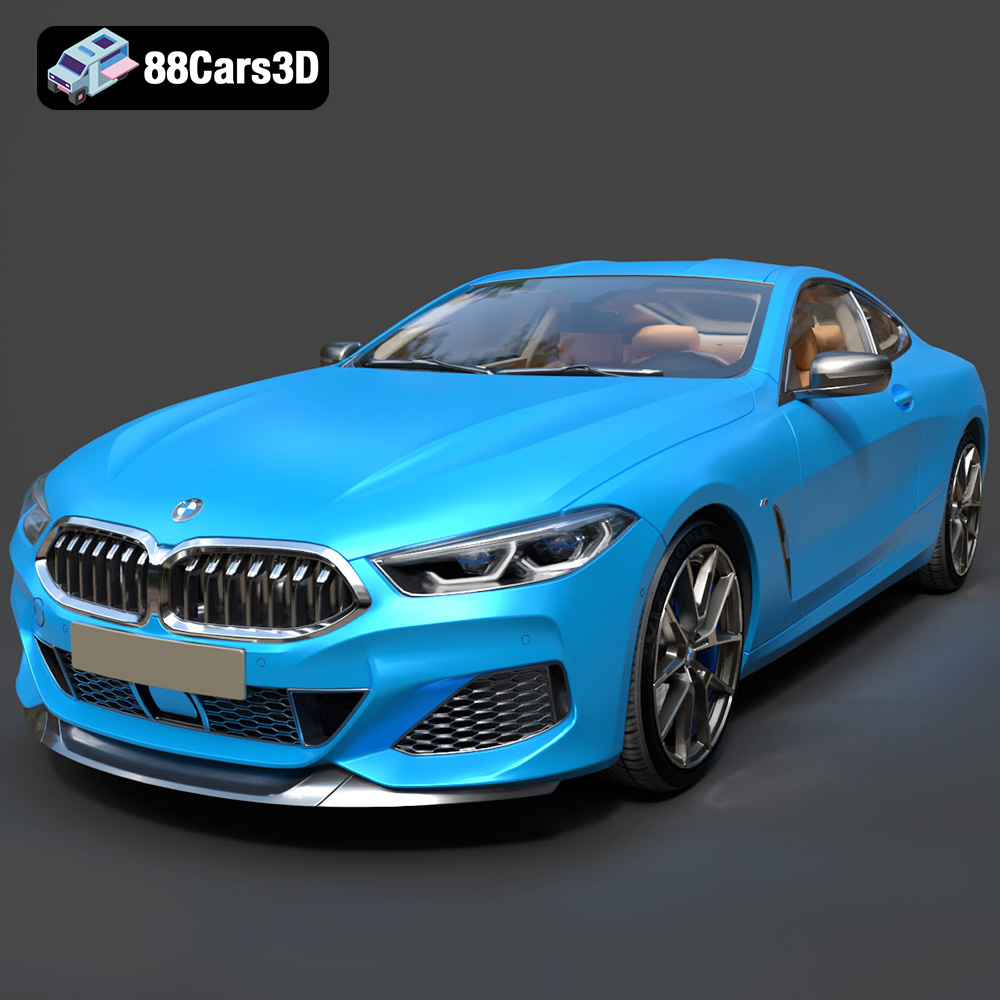
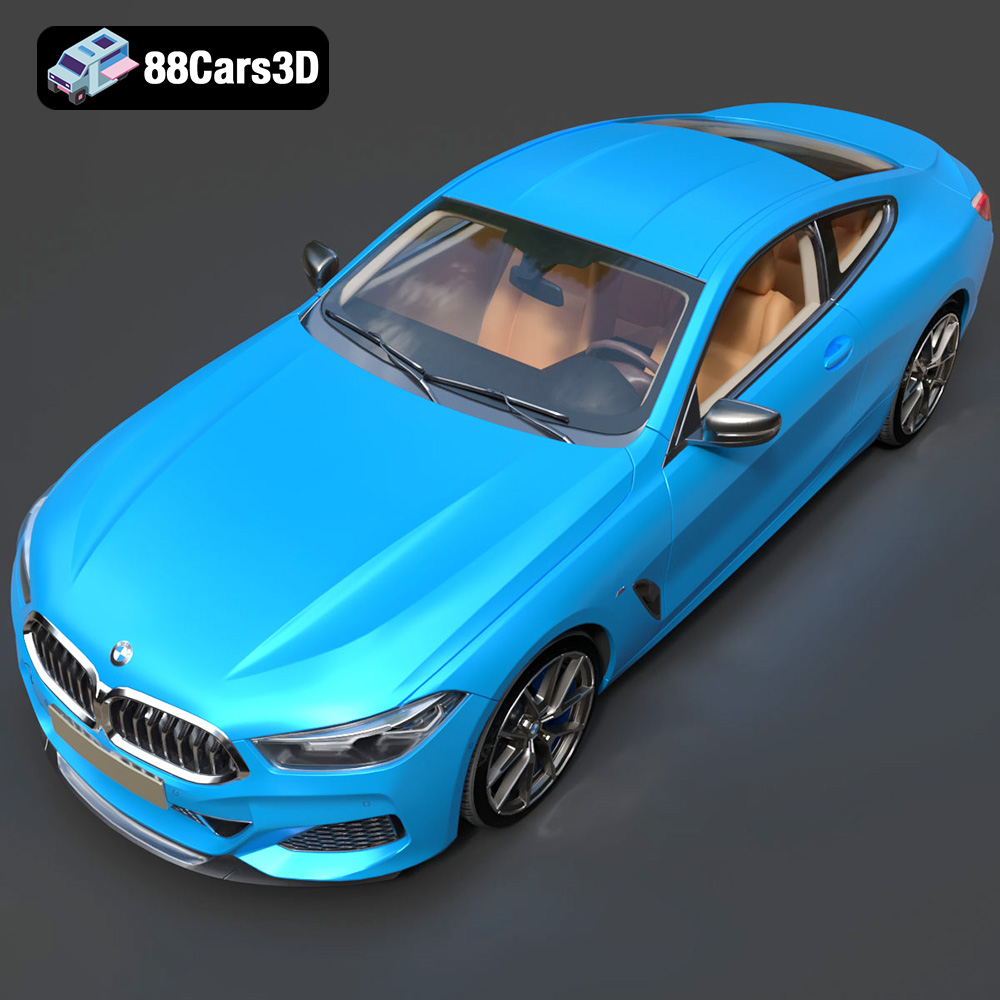
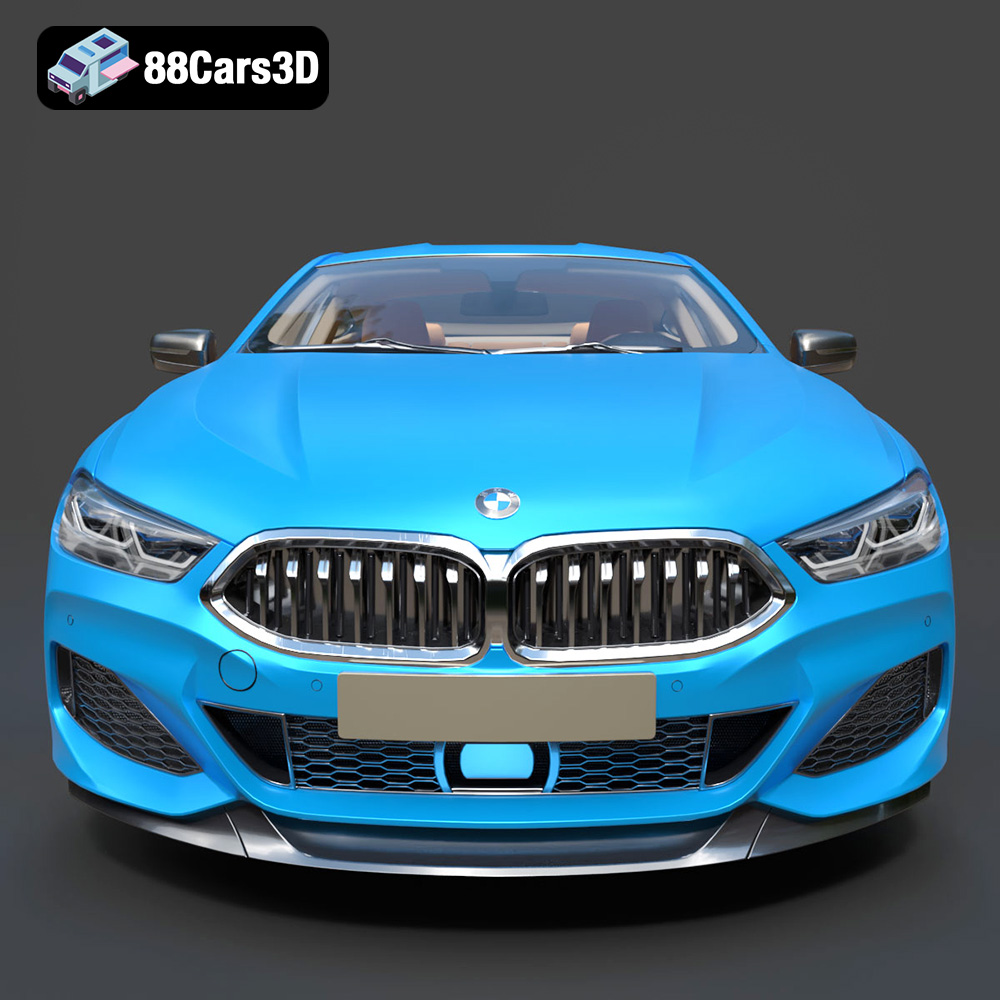
The exterior of the BMW M850i model is a masterclass in digital recreation. It features accurate frame geometry and sports coupe proportions that immediately convey its real-world counterpart’s presence. Every detail, from the iconic wide kidney grilles to the aggressive M-Sport front bumper, is carefully modeled. The laser-light style headlamps and high-fidelity LED taillights are rendered with precision, hinting at the advanced lighting technology of the actual car. Furthermore, the intricately modeled M-style alloy wheels with low-profile tires and detailed brake calipers showcase an exceptional commitment to visual authenticity. For animators, the inclusion of separate wheels, suspension, and steering components is critical, allowing for realistic vehicle dynamics and cinematic sequences.
A truly high-fidelity automotive rendering asset isn’t complete without a detailed interior. The BMW M850i model doesn’t disappoint, offering a luxurious sculpted sport seating with detailed stitching geometry that adds tactile realism. The M-Sport leather-wrapped steering wheel with paddle shifters and the high-resolution digital instrument cluster and central infotainment display housing create an immersive cockpit experience. Even the center console with its precise gear selector, iDrive controller, and pedals are optimized. This level of interior detail is paramount for first-person POV applications in gaming or virtual reality (VR), allowing users to truly feel present within the vehicle.
The versatility of a premium 3D car model is defined by its adaptability across various professional applications. The BMW M850i 3D Model from 88cars3d.com is designed with this in mind, offering unparalleled integration into diverse creative and technical pipelines.
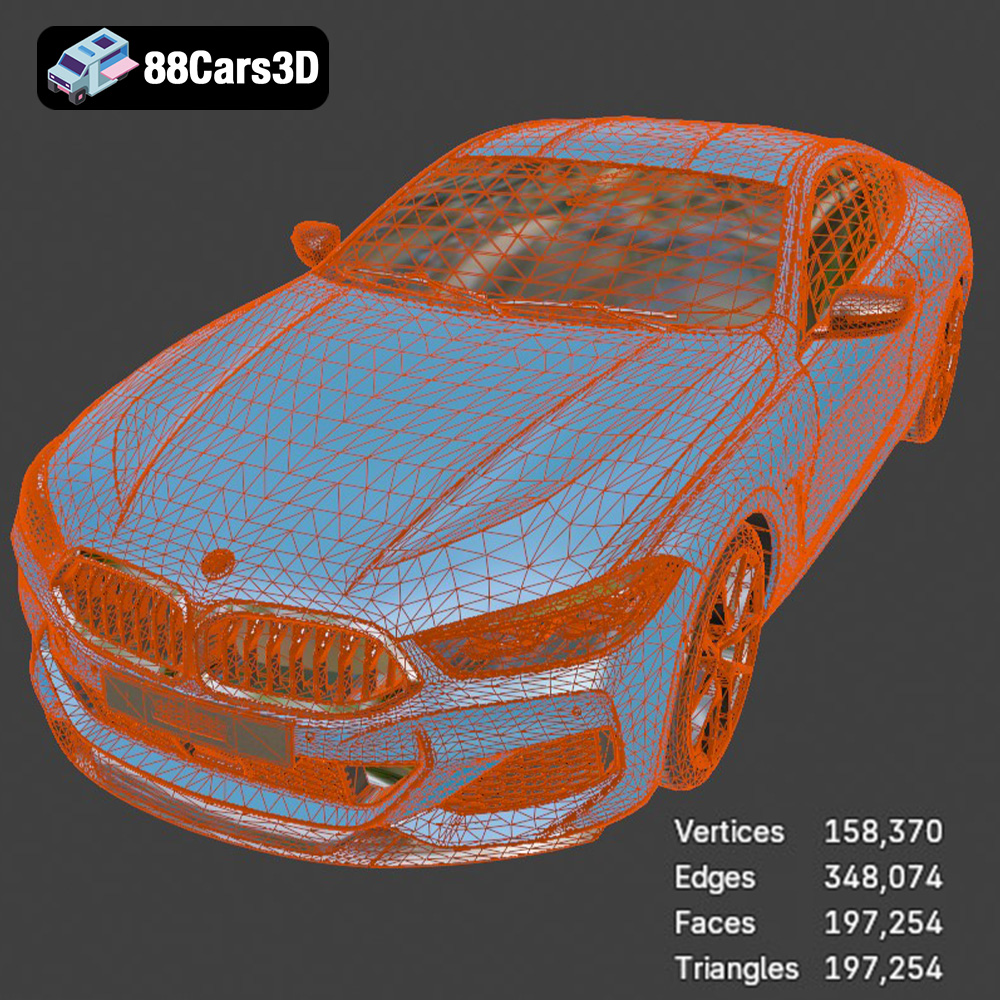
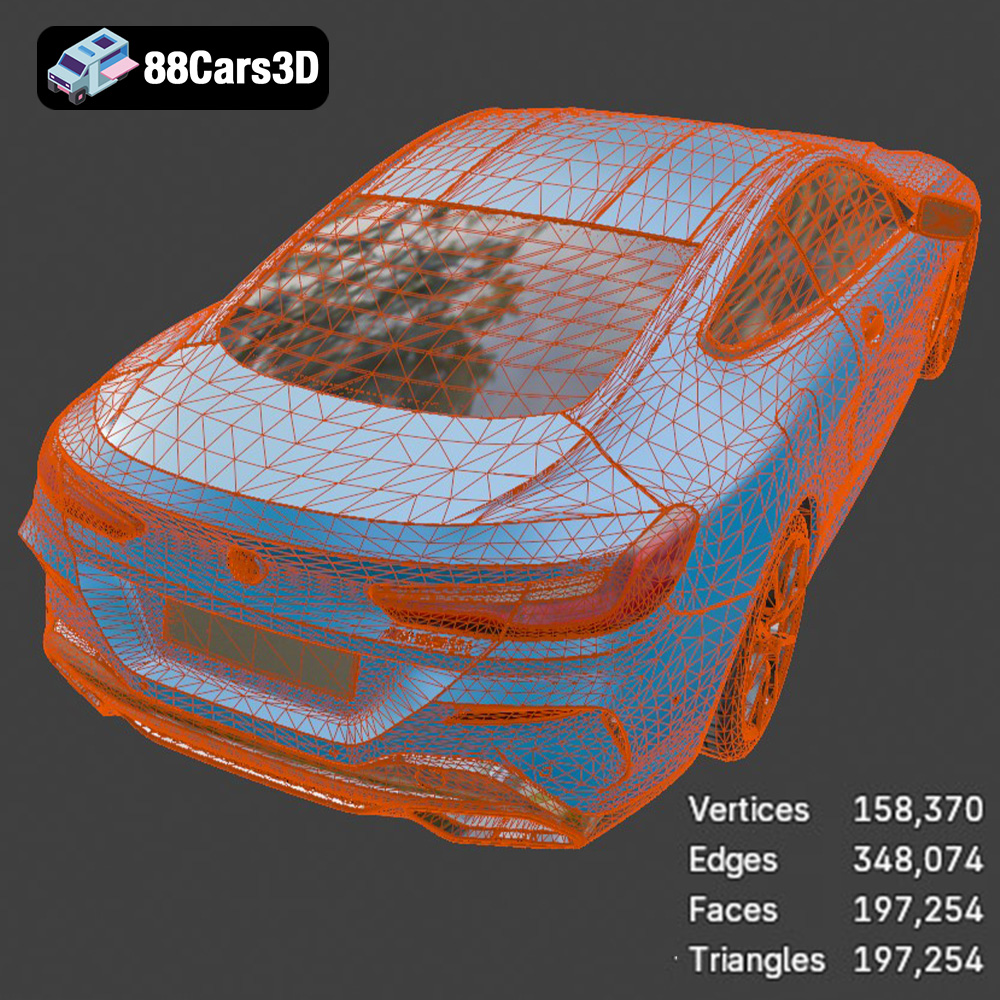
For game developers, performance is as crucial as visual fidelity. The BMW M850i model strikes an excellent balance with a highly optimized topology featuring a triangle count of 197,254. This makes it a perfect game asset for open-world racing titles, simulators, and even adventure games where vehicles play a prominent role. Its game-ready optimization ensures smooth frame rates in real-time engines like Unreal Engine and Unity, without compromising on the stunning visual realism expected in modern titles. The proper pivot setup for steering, wheel rotation, and suspension travel simplifies rigging and animation, significantly reducing development time.
Beyond gaming, this model is an invaluable tool for architectural visualization (ArchViz) and product rendering. Imagine placing the sleek BMW M850i in front of a modern luxury villa or showcasing it in a minimalist studio setup for a high-end advertisement. The detailed geometry provides incredibly smooth reflections and precise light interactions, which are essential for photorealistic renders. With native .max and .blend files, artists can easily integrate the car into complex scenes, adjust materials for various lighting conditions, and create breathtaking visual campaigns that resonate with luxury and sophistication.
The utility of a robust 3D car model extends far beyond traditional screen-based rendering. Modern technologies like 3D printing and augmented/virtual reality open up new dimensions for interaction and display.
The BMW M850i 3D Model is perfectly suited for immersive AR/VR applications. With its optimized polycount and inclusion of the .glb format, it’s ideal for virtual showrooms, interactive vehicle configurators, and mobile AR experiences. Imagine a customer exploring the M850i in a virtual environment, changing colors, inspecting the detailed interior, or even placing the car in their driveway using AR – all powered by this high-quality asset. The optimized interior geometry is particularly perfect for first-person POV in VR, creating a truly engaging and realistic user experience that could redefine automotive sales and marketing.
For enthusiasts, designers, or educators, the ability to physically hold a 3D model of their favorite car is a dream. The BMW M850i model, convertible to the .stl format, makes this possible. Hobbyists can scale the model to 1:12, 1:18, or 1:24, and with recommended resin printing for fine details, bring this luxury coupe to life. The detailed print settings provided – from layer height to support requirements and print orientation – ensure a successful print. Post-processing with sanding, primer, and authentic factory colors can result in stunning display-scale replicas, turning a digital asset into a tangible masterpiece.
The true power of a professional 3D car model lies not just in its initial appearance but in its underlying technical specifications and the flexibility it offers for customization. The BMW M850i model excels in both areas.
At the heart of this model’s versatility is its robust technical foundation. With 197,254 triangles, the model achieves a critical balance: high-end visual realism without overburdening real-time engines. This “game-ready & optimized” status is a significant advantage, as it saves countless hours of optimization work. Real-world scale accuracy ensures the car integrates seamlessly into scenes without manual scaling adjustments, maintaining correct proportions relative to other assets. Furthermore, the proper pivot setup for steering, wheel rotation, and suspension travel is a subtle yet crucial detail that simplifies complex vehicle animations, ensuring dynamic movements are both realistic and easy to implement.
No two projects are identical, and the ability to customize assets is paramount. This BMW M850i model offers extensive customization options. Artists can easily change body colors to match factory colors or experiment with custom metallic finishes to suit a specific brand identity or mood. Modifying tire textures from street variants to track slicks can instantly transform the vehicle’s character. Adjusting material finishes – be it matte, gloss, or adding carbon fiber accents – allows for precise visual storytelling. And, of course, adapting lighting for different environments is fundamental to any rendering workflow, enabling the car to look its best in any setting, from a sun-drenched beach to a moody urban night scene.
In the vast ocean of online 3D marketplaces, finding truly high-quality, professional-grade 3D car models can be a challenge. 88cars3d.com distinguishes itself by offering assets like the BMW M850i 3D Model that are not only visually stunning but also technically sound and optimized for real-world production pipelines.
When you invest in a model from 88cars3d.com, you’re acquiring more than just polygons and textures. You’re getting a meticulously engineered asset that saves you valuable production time, enhances the realism of your projects, and provides the flexibility needed for diverse applications. The inclusion of multiple file formats, from native .blend and .max to universally compatible .fbx, .obj, and specialized formats like .glb and .stl, ensures that the model integrates effortlessly into almost any workflow, whether you’re a solo indie developer or part of a large studio.
The journey through the world of high-fidelity 3D car models reveals a complex interplay of artistic vision and technical precision. Assets like the BMW M850i 3D Model exemplify how these two elements converge to create digital resources that are indispensable for modern creative industries. From detailed exteriors and immersive interiors to optimized performance across game engines, rendering software, AR/VR platforms, and even 3D printing, the value of such a comprehensive model is undeniable.
By understanding the nuances of different file formats and leveraging the technical specifications and customization options, professionals can unlock the full potential of these digital masterpieces. The BMW M850i model, with its balanced polycount, accurate dimensions, and extensive format support, stands as a testament to what a premium game asset or automotive rendering tool should be. Elevate your projects and bring your visions to life with assets that truly deliver quality and performance. Explore the possibilities and find this exceptional model and many more at 88cars3d.com.
The BMW M850i represents the pinnacle of modern grand touring luxury and aggressive performance. As the flagship of the 8 Series, it boasts a sleek, muscular silhouette, striking aerodynamic lines, and a commanding presence on the road. This 3D model meticulously captures the vehicle’s heritage, highlighting its iconic wide kidney grilles, aggressive M-sport front bumper, laser-light style headlamps, and quad-tipped exhaust system. The model accurately reflects the sheer power and elegance that define this elite sports coupe. Engineered with exceptional attention to detail, this 3D model features a highly optimized topology with a triangle count of 197,254. It delivers breathtaking visual fidelity while maintaining the performance standards required for modern game-ready assets. Whether integrated into next-gen rendering engines or real-time simulations, the geometry provides incredibly smooth reflections and precise light interactions, making it a premium asset for game development, AR/VR, animation, and high-end automotive visualization.
$24.50
.blend
.bmw
.fbx
.glb
.m850i
.max
.obj
.ply
.rendering
.sports car
.stl
.unreal
8-series
car-3d-model
game asset
game-ready
grand-tourer
low-poly
luxury-coupe
optimized
VR/AR