Get 20% OFF All Premium 3D & STL Models!

In the rapidly evolving world of digital content creation, the demand for photorealistic and highly detailed 3D assets has never been greater. From cinematic automotive advertisements to immersive open-world video games, and from architectural visualizations to cutting-edge AR/VR experiences, the quality of a 3D model directly impacts the final product’s impact and believability. A well-crafted 3D car model is more than just a digital representation; it’s a meticulously engineered asset that serves as the foundation for countless creative applications.
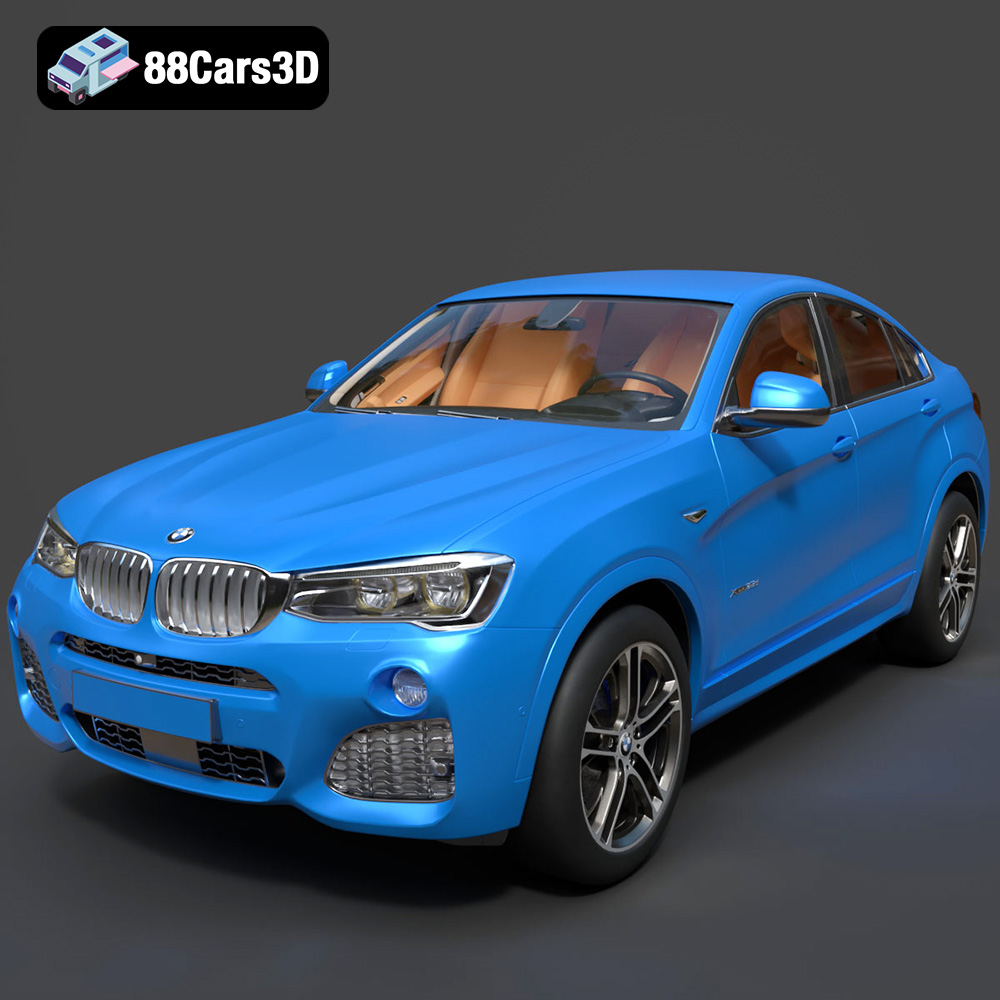
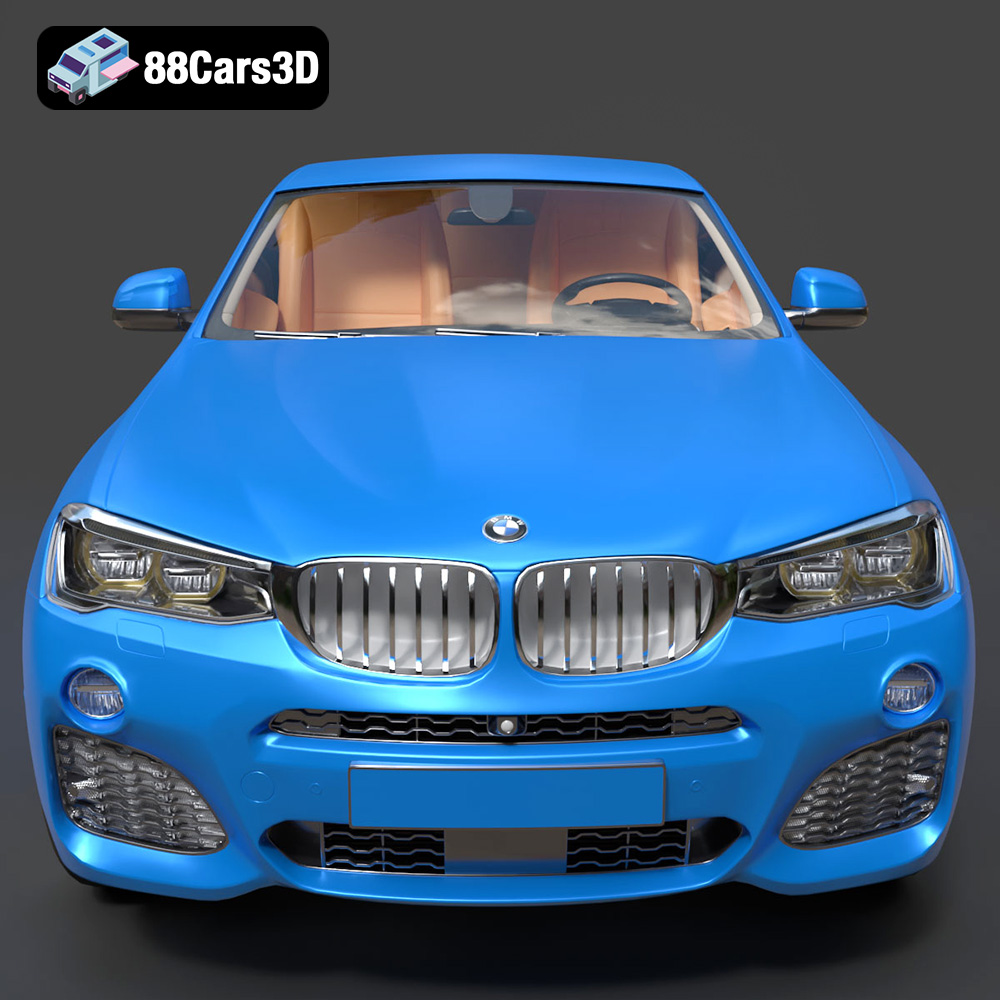
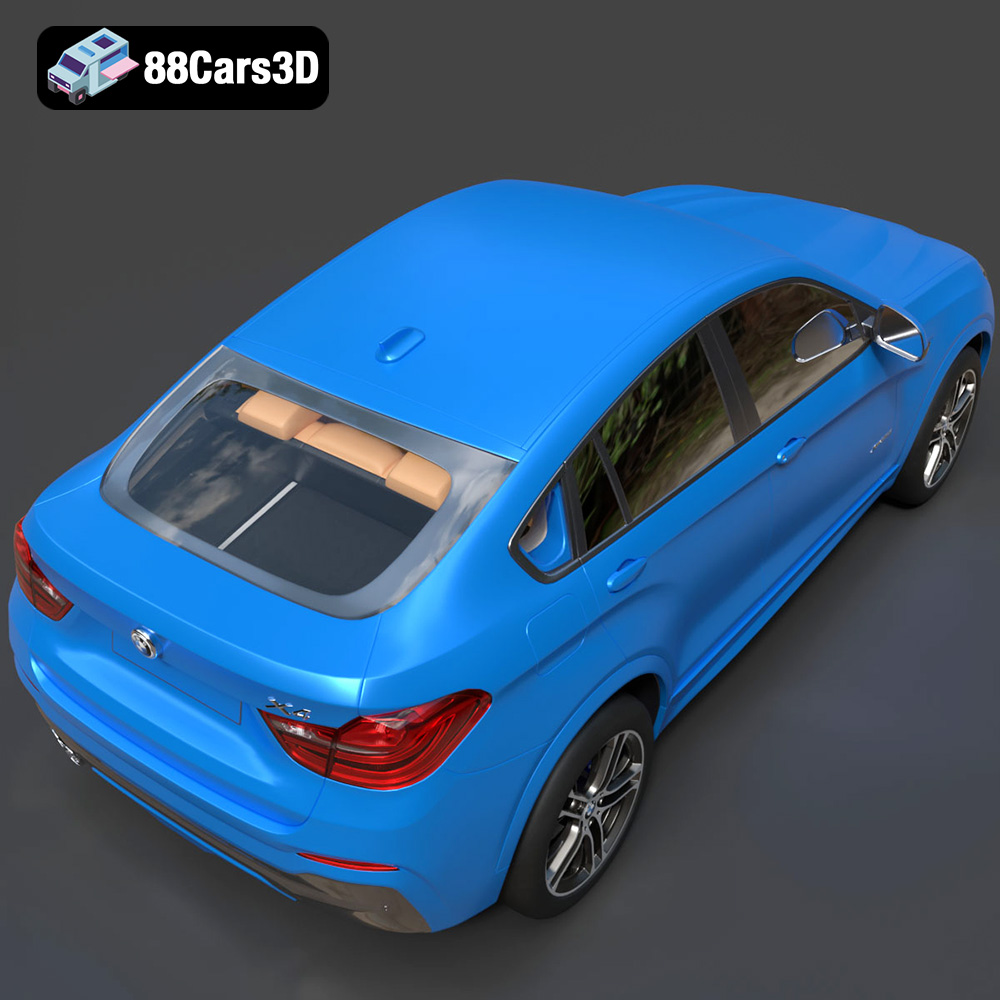
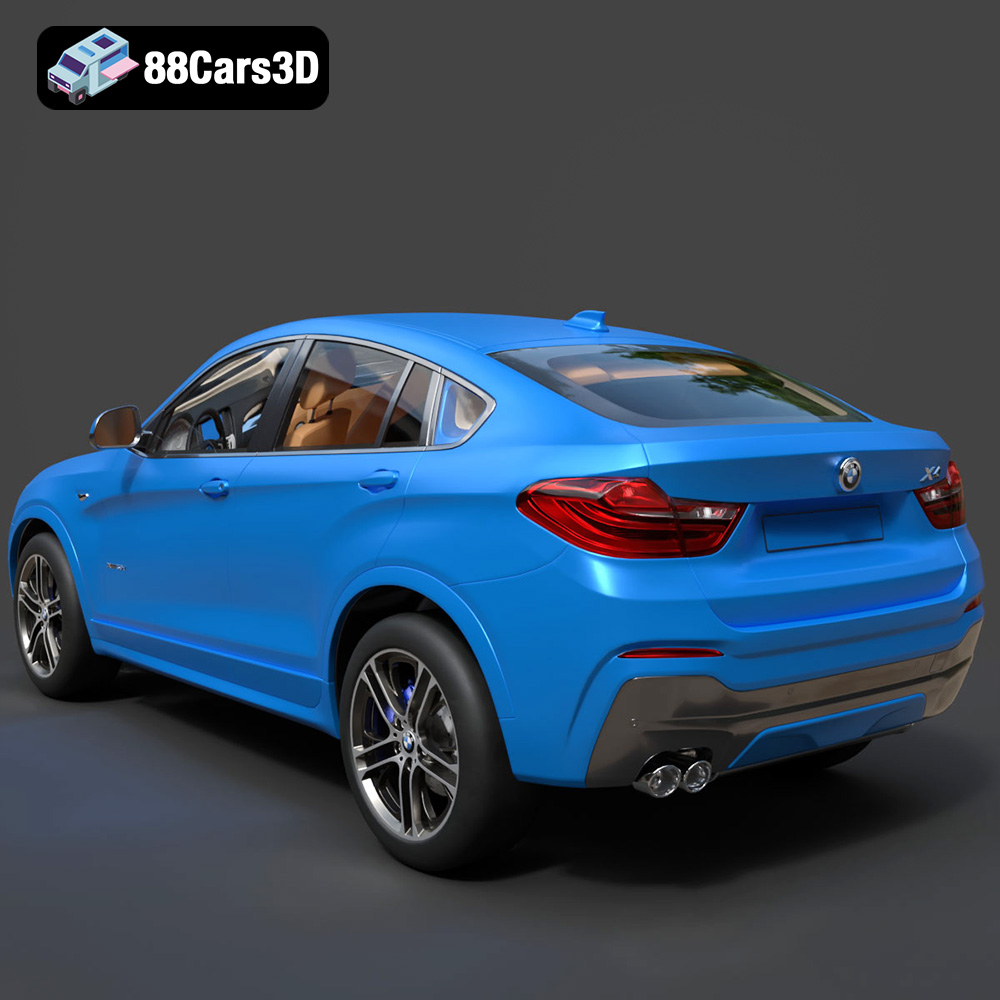
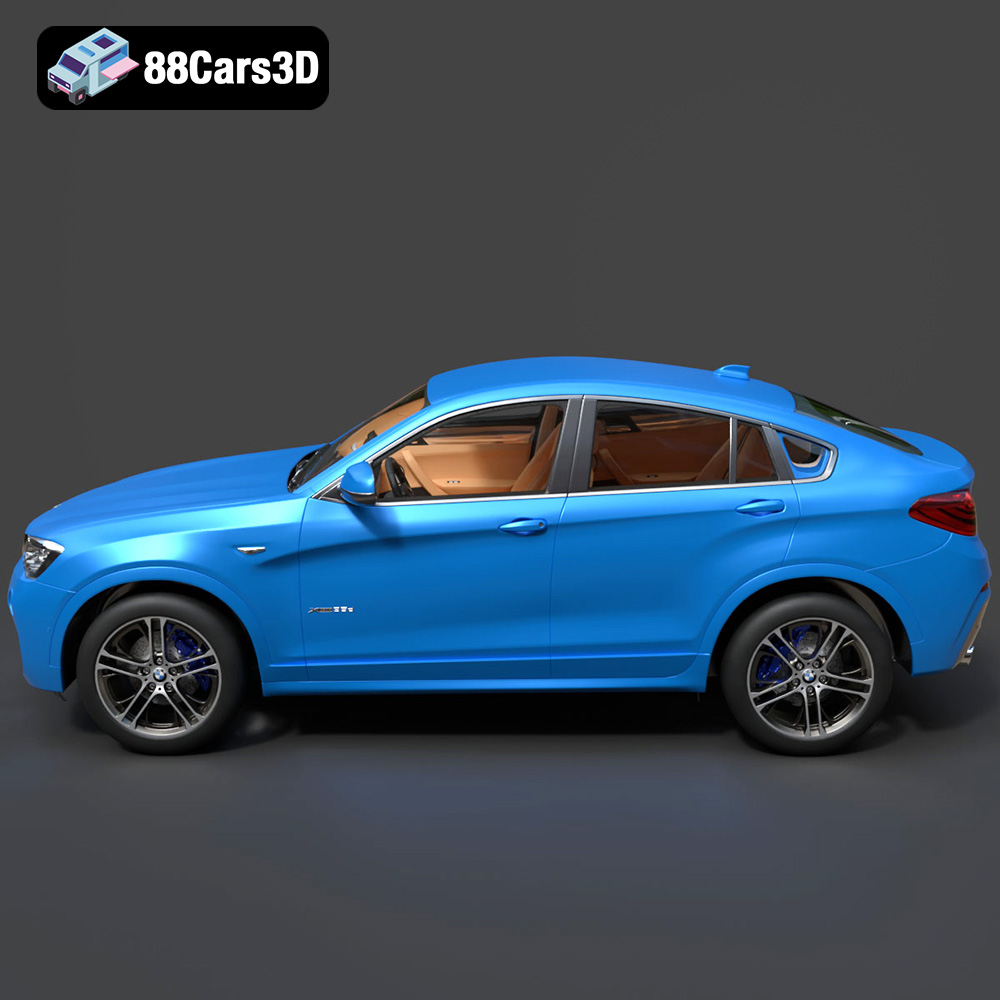
One such exemplary asset is the BMW X4 3D Model, a stunning digital recreation of the iconic Sports Activity Coupe (SAC). This model perfectly encapsulates the blend of robust capability and elegant design that defines the real-world vehicle. With its aggressive front fascia, signature BMW kidney grille, muscular haunches, and refined aerodynamic profile, the X4 commands attention. The digital counterpart, available on 88cars3d.com, mirrors this dynamic presence, offering creators an unparalleled level of detail and versatility for their projects. It’s not merely a static object; it’s a dynamic foundation ready for animation, customization, and integration into diverse digital ecosystems.
Choosing the right file format is a critical first step for any 3D project, directly influencing compatibility, performance, and the scope of future modifications. Understanding the strengths and weaknesses of each format is essential for maximizing a 3D model’s utility across different software and platforms. The BMW X4 3D Model from 88cars3d.com provides a comprehensive suite of formats, ensuring seamless integration into virtually any professional pipeline.
The .blend format is native to Blender, the popular open-source 3D creation suite. When you download a .blend file, you’re not just getting the model; you’re getting a complete Blender scene. This includes the fully editable mesh, materials with all their textures and nodes, lighting setups, camera positions, animation data, and even modifiers. For users working within the Blender ecosystem, this offers the highest degree of flexibility and customization. Artists can easily adjust topology, tweak materials, re-rig, or re-animate components with all original scene data intact. It’s the ideal starting point for those who want full creative control and plan to make significant changes or build complex scenes around the vehicle.
.fbx (Filmbox) is a proprietary file format owned by Autodesk and has become the de facto industry standard for 3D data interchange, especially in game development and animation. Its primary strength lies in its ability to store not just mesh data, but also animation, rigging, materials (though material definitions can vary between software), cameras, and lights in a single, well-structured file. This makes it invaluable for transferring complex animated assets between applications like 3ds Max, Maya, Unity, and Unreal Engine. For the BMW X4, the .fbx version is optimized for real-time pipelines, ensuring that the model’s geometry and component hierarchy are preserved, making it “game-ready” for immediate use.
The .obj (Wavefront OBJ) format is one of the oldest and most universally supported 3D file formats. It’s an open standard that primarily stores geometric data – vertices, faces, normals, and UV coordinates. Material properties are usually defined in a separate .mtl file that accompanies the .obj. While it doesn’t support animation or rigging, its widespread compatibility makes it an excellent choice for general cross-software transfer where only the raw geometry is needed. It’s often used as a fallback or for situations where simplicity and universal access are paramount, allowing virtually any 3D software to open and work with the model.
.glb (GL Transmission Format Binary) is the binary version of the glTF format, designed for efficient transmission and loading of 3D scenes and models by engines and applications. It’s a relatively newer format that has gained significant traction for its optimization for AR, VR, and browser-based display. A .glb file packages all necessary data – mesh, materials, textures, and even animation – into a single binary file, making it highly portable and ideal for web-based configurators, social media filters, and interactive 3D experiences. Its compactness and performance-oriented design make it perfect for showcasing the BMW X4 in immersive digital environments.
.stl (Stereolithography) is the most common file format for 3D printing. It represents a 3D model as a series of connected triangles, essentially describing only the surface geometry of an object without color, texture, or other CAD attributes. While simple, its ubiquity in the 3D printing world is unmatched. For hobbyists or professionals looking to create a physical replica of the BMW X4, the .stl version provides the watertight mesh required by 3D printers, ready to be sliced and fabricated.
The .ply (Polygon File Format or Stanford Triangle Format) is a versatile format for storing graphical objects that have properties such as color and transparency associated with their vertices and faces. It’s often used in academic and research contexts, particularly for data from 3D scanners, and for applications in CAD or detailed mesh analysis. While less common for everyday artistic workflows, its ability to store detailed mesh data with additional attributes makes it valuable for specialized engineering or inspection tasks related to the BMW X4 model.
The inclusion of an .unreal file (or an Unreal Engine project file/asset pack specifically structured for Unreal) indicates that the asset has been pre-configured and optimized for direct import and use within Unreal Engine. This often means textures are properly packed, materials are set up with Unreal’s Physically Based Rendering (PBR) pipeline, and any necessary Blueprints or specific scene settings are included. For game developers or real-time visualization artists, this significantly streamlines the integration process, allowing them to drop the BMW X4 model directly into their Unreal projects with minimal setup.
Similar to .blend for Blender, the .max format is native to Autodesk 3ds Max, a powerful 3D modeling, animation, and rendering software widely used in architectural visualization, product design, and cinematic production. A .max file contains the complete scene, including the model’s geometry, modifiers, materials, textures, lighting, cameras, and animation curves. This format offers the highest fidelity for 3ds Max users, providing full editability and the ability to leverage all of Max’s advanced rendering and animation capabilities for the BMW X4.
The availability of such a diverse array of formats for the BMW X4 3D Model underscores its versatility, catering to virtually every professional workflow and application imaginable, making it a truly robust investment for any digital artist or developer.
The hallmark of a premium 3D asset lies in its meticulous attention to detail and its technical robustness. The BMW X4 3D Model from 88cars3d.com stands out in this regard, engineered to meet the stringent demands of high-end production environments. Its design ethos focuses on balancing visual fidelity with performance, making it suitable for a broad spectrum of applications, from static renders to interactive real-time experiences.
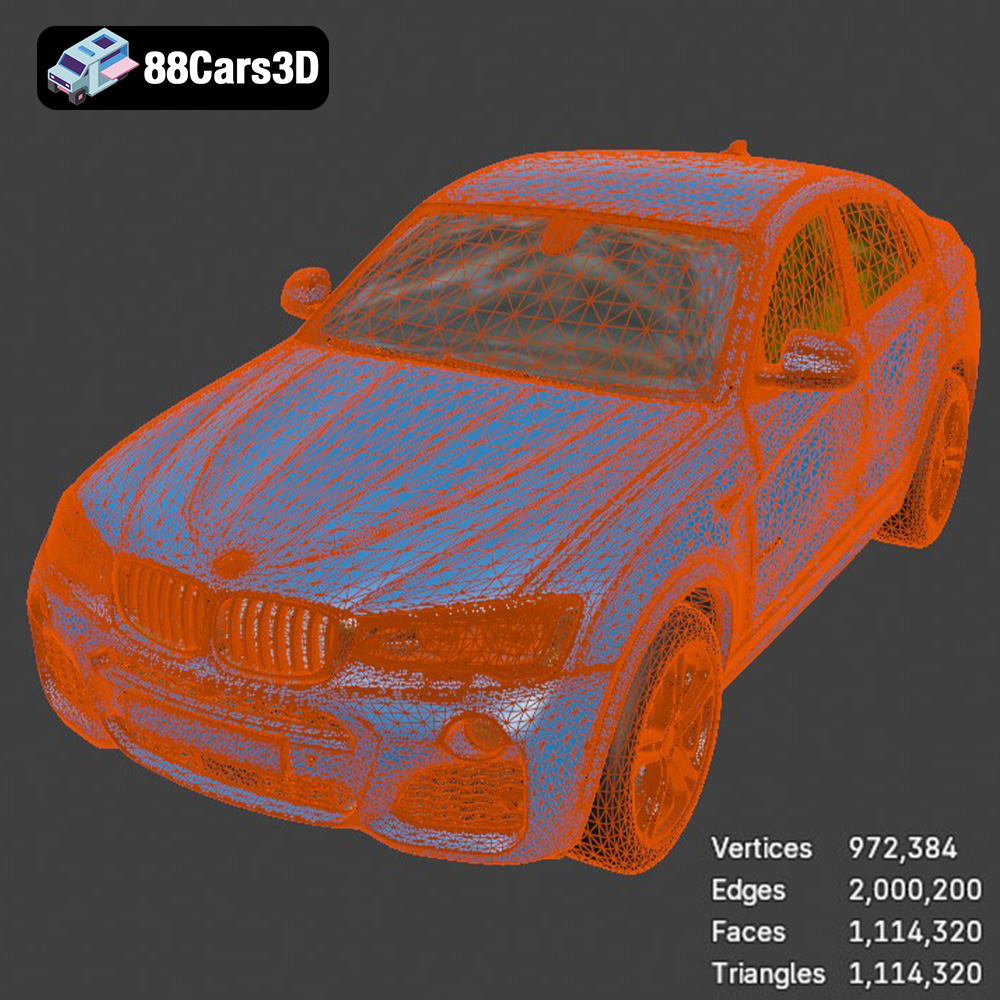
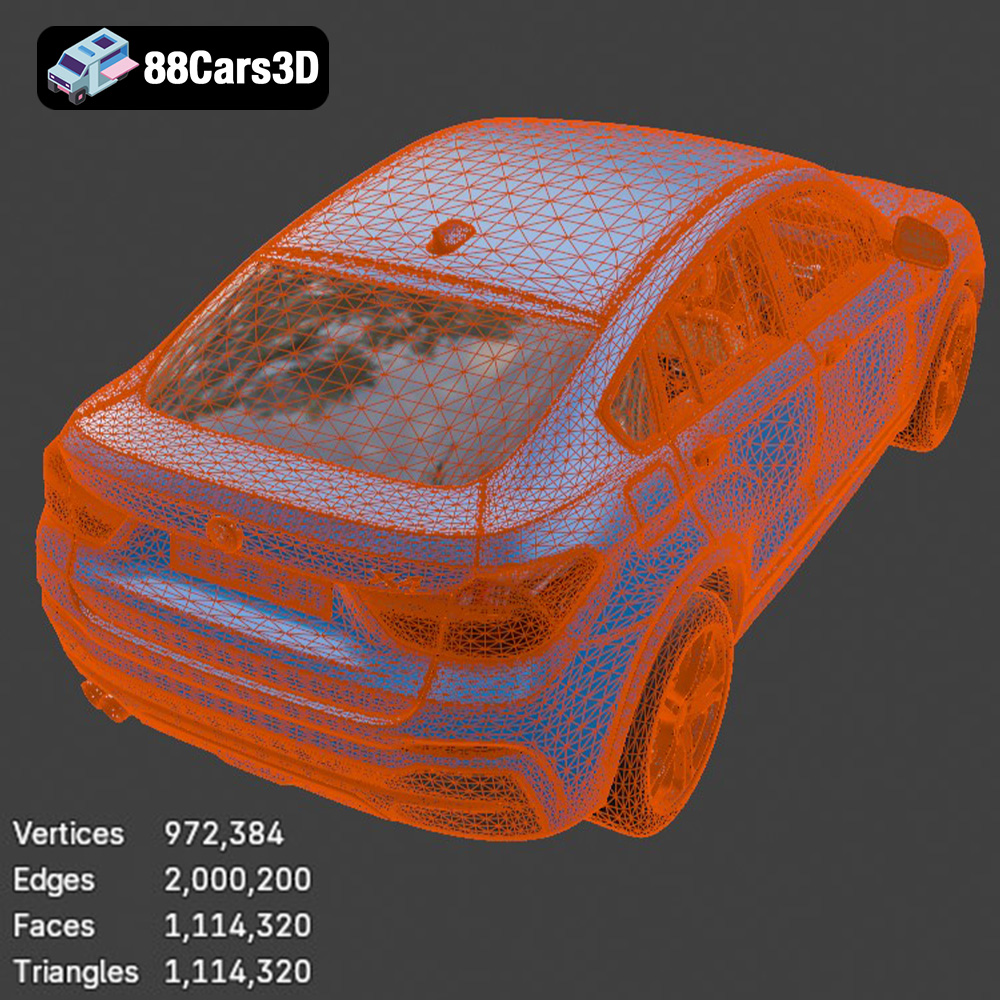
Boasting an impressive 1,114,320 triangles, this model achieves an unparalleled level of visual fidelity. This high polygon count ensures that every curve, every subtle surface undulation, and every sharp crease of the BMW X4’s distinctive bodywork is captured with photorealistic accuracy. Unlike many high-poly models, the BMW X4’s topology is carefully structured. This isn’t just about having a lot of polygons; it’s about having them where they count, intelligently distributed to maintain smooth reflections, prevent pinching, and ensure crisp edge loops. Such clean topology is crucial for close-up renders and animations, where imperfections are easily magnified. It also supports advanced shading techniques and physically based rendering (PBR) pipelines, allowing for stunning material realism.
Beyond the surface, the BMW X4 3D Model is built with real-world scale accuracy, based on actual vehicle chassis dimensions. This attention to scale is vital for architectural visualizations, automotive configurators, and any scene where the car interacts realistically with its environment. The model includes an array of intricate exterior features:
Crucially, components like wheels, suspension, and steering are separated with proper pivot setups. This thoughtful engineering allows for realistic animation of steering, wheel rotation, and suspension travel, a non-negotiable requirement for racing games, simulators, and cinematic sequences.
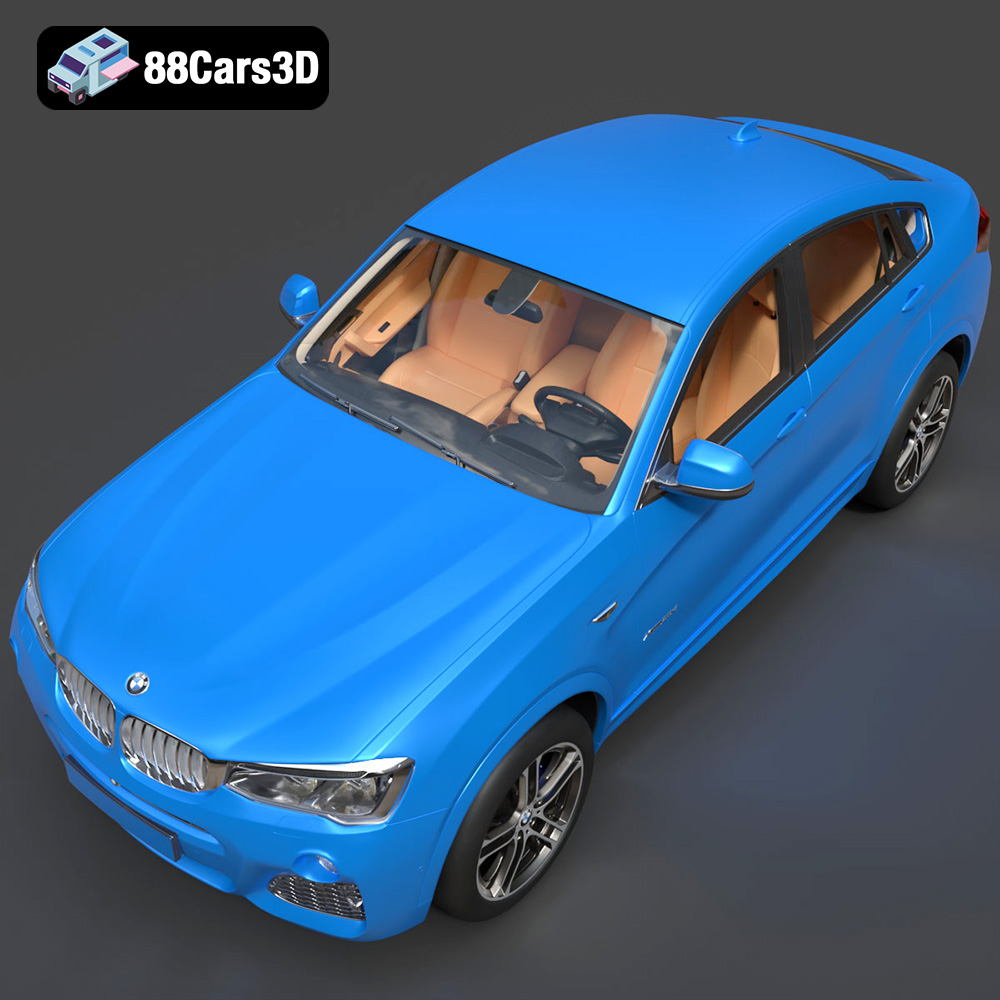
The attention to detail extends into the cockpit and interior, making the model suitable for first-person perspectives common in modern gaming and VR applications. Key interior features include:
This level of interior detail ensures that the BMW X4 3D Model is not just a pretty exterior but a fully immersive experience from all angles, satisfying the needs of even the most demanding projects.
The versatility of the BMW X4 3D Model, coupled with its robust file format options, makes it an ideal candidate for integration into various professional 3D content creation pipelines. Whether you’re a seasoned animator, a game developer, or a visualization artist, this model provides a solid foundation.
For high-end automotive rendering and visualization, software like Autodesk 3ds Max and Blender are industry staples. The .max and .blend files included with the BMW X4 model are perfect starting points for these applications.
Artists using 3ds Max can directly open the .max file, which typically retains all scene data including materials, basic lighting, and potentially animation setups. From there, the workflow might involve:
Blender artists benefit from the native .blend file, offering complete control over every aspect. Workflows in Blender might include:
For game development, AR/VR experiences, and real-time configurators, Unreal Engine is a dominant platform. The “game-ready & optimized” nature of the BMW X4 3D Model, with its 1,114,320 triangles, strikes an excellent balance for modern real-time engines. The inclusion of an .unreal or optimized .fbx file simplifies the integration process.
The utility of a high-quality 3D car model like the BMW X4 extends far beyond static renders. Its robust design and diverse file formats open doors to interactive experiences, virtual environments, and even tangible physical reproductions.
Modern video games, particularly open-world titles, racing simulators, and driving games, demand vehicles with immense detail and optimized performance. The BMW X4 3D Model is tailor-made for this arena. With its optimized polycount of 1,114,320 triangles, it strikes a perfect balance for modern real-time engines like Unreal and Unity. The game-ready nature means fewer headaches for developers, allowing them to focus on gameplay and interaction rather than asset cleanup.
This BMW X4 model serves as an excellent example of a premium game asset that elevates the visual quality and realism of any driving experience.
Augmented Reality (AR) and Virtual Reality (VR) are transforming how consumers interact with products, especially in the automotive sector. The BMW X4 3D Model is an ideal candidate for creating immersive virtual showrooms, interactive car configurators, or engaging mobile AR experiences.
The model’s high detail ensures that these immersive experiences are visually compelling and convincing, providing a true sense of presence.
For enthusiasts and model makers, the ability to transform a digital model into a physical object is a fascinating prospect. The BMW X4 3D Model is convertible to the .stl format, making it suitable for 3D printing.
This allows designers, collectors, and hobbyists to create high-quality physical replicas, bridging the gap between digital creation and tangible craftsmanship.
A truly versatile 3D model isn’t just about its inherent quality; it’s also about the flexibility it offers for customization. The BMW X4 3D Model provides extensive options for adaptation, ensuring it can be tailored to fit specific project requirements and artistic visions.
One of the primary advantages of a well-structured 3D model is the ability to easily modify its appearance. For the BMW X4, this translates into numerous possibilities:
These customization options empower artists to create unique visual narratives, adapting the BMW X4 to a diverse range of scenarios without needing to remodel the vehicle from scratch. It transforms the model from a static asset into a dynamic tool for creative expression.
The digital realm continues to expand, and with it, the demand for sophisticated, high-quality 3D assets. The BMW X4 3D Model is a testament to the advancements in automotive digital asset creation, offering a level of detail, technical precision, and versatility that meets the rigorous demands of professional production pipelines. From its impressive 1,114,320 triangles and meticulously crafted topology to its comprehensive suite of file formats, this model is designed for excellence in every application.
Whether you are developing the next generation of racing games, crafting cinematic automotive advertisements, designing immersive AR/VR experiences, or even producing physical 3D printed replicas, the BMW X4 3D Model provides a robust and reliable foundation. Its compatibility across major software like 3ds Max, Blender, and Unreal Engine, combined with its detailed interior and exterior features, ensures that creators have all the tools they need to bring their visions to life.
Investing in such a high-caliber 3D car model from a trusted source like 88cars3d.com not only streamlines production but also elevates the final quality of any project. It’s more than just a model; it’s a gateway to limitless creative possibilities, embodying the pinnacle of digital automotive artistry. As the digital landscape continues to evolve, assets like the BMW X4 3D Model will remain indispensable for driving innovation and delivering unparalleled visual experiences.
The BMW X4 is a striking Sports Activity Coupe (SAC) that masterfully combines the robust capability of a premium SUV with the elegant, sloping roofline of a sports coupe. Renowned for its dynamic road presence, the X4 boasts an aggressive front fascia with the signature BMW kidney grille, muscular haunches, and a refined aerodynamic profile. Beneath its stylish exterior lies the promise of athletic performance, highlighted by its twin-tailpipe exhaust system and bold aerodynamic styling cues.
$37.50
.blend
.bmw
.fbx
.glb
.max
.obj
.ply
.rendering
.stl
.unreal
bmw-x4
car-3d-model
coupe-suv
game asset
game-ready
high poly
luxury car
optimized
SUV
VR/AR
x4