Get 20% OFF All Premium 3D & STL Models!

The allure of an exotic supercar is undeniable. Its sculpted lines, aggressive stance, and raw power captivate enthusiasts worldwide. For 3D artists, game developers, architectural visualizers, and AR/VR creators, translating this visceral experience into a digital realm requires assets of unparalleled quality and precision. This is where a meticulously crafted 3D car model becomes indispensable, transforming concepts into breathtaking realities.
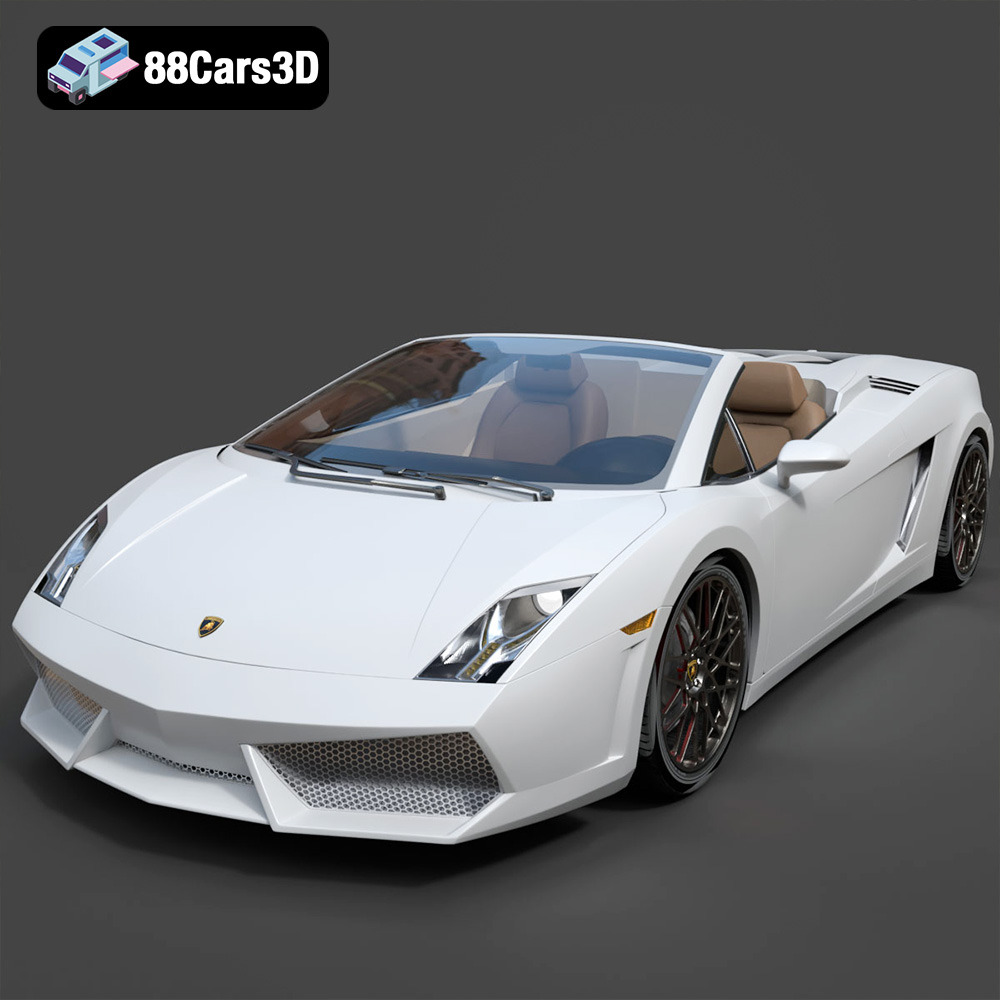
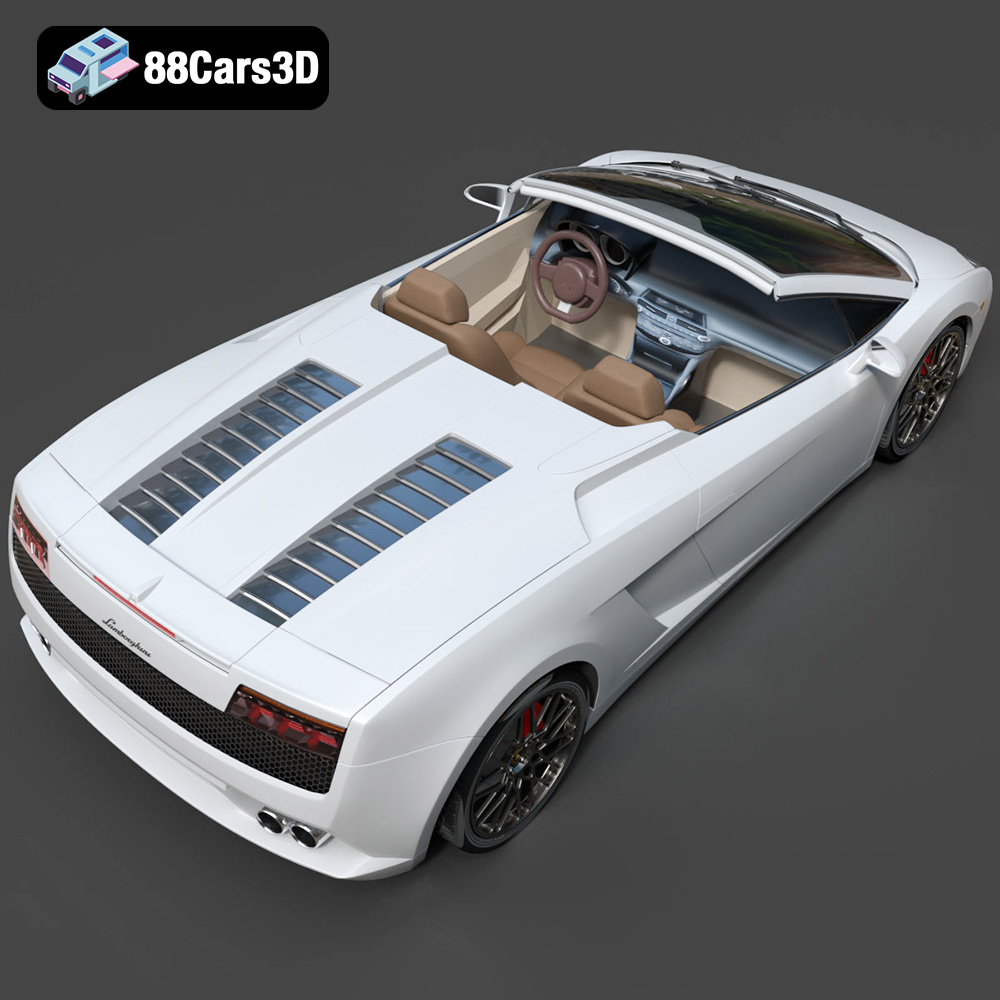
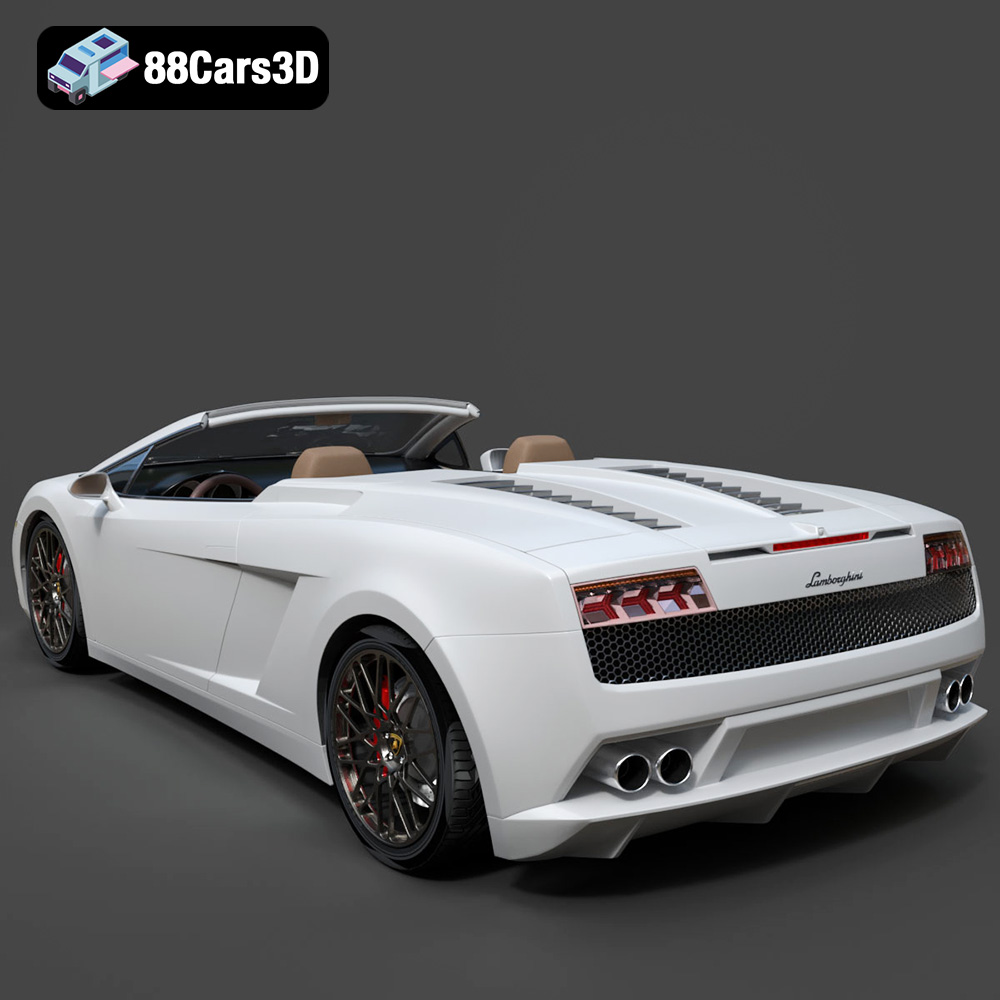
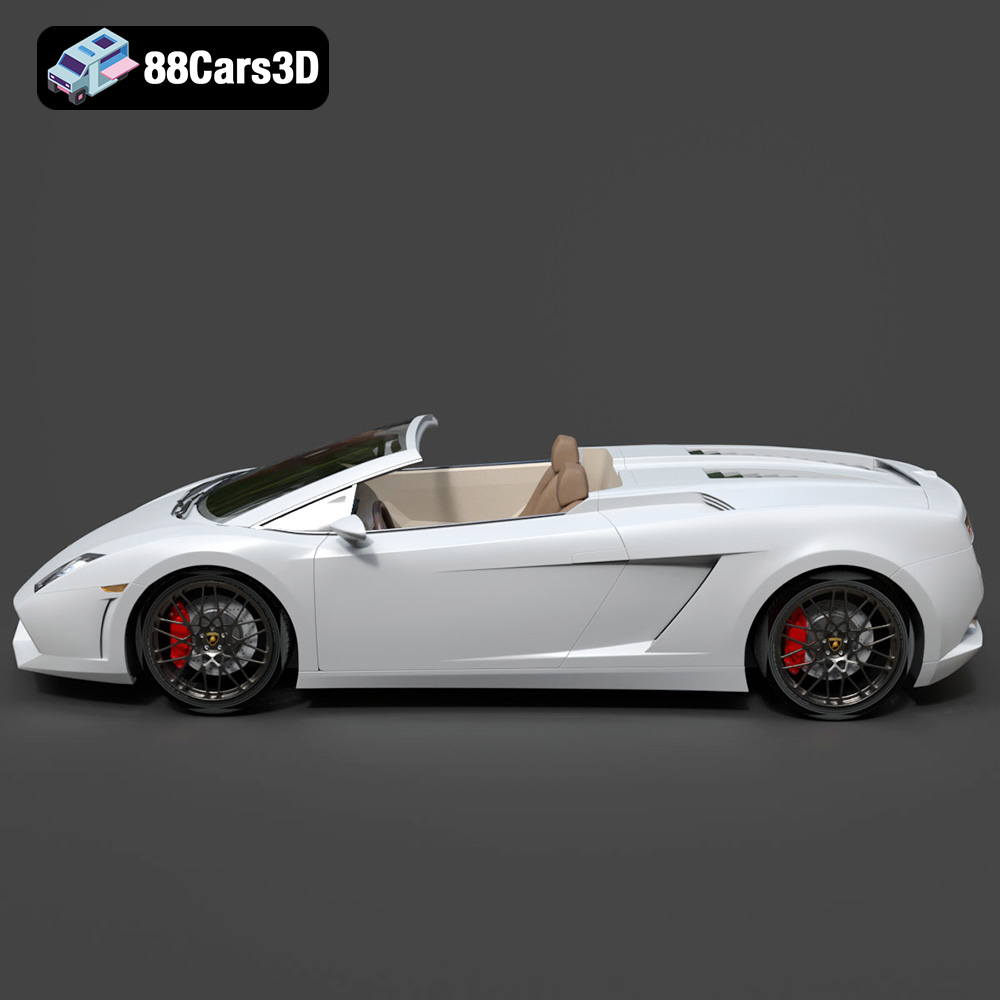
Imagine effortlessly integrating a photorealistic, performance-optimized model of one of Italy’s most iconic supercars into your next project. We’re talking about the Lamborghini Gallardo Spyder 3D Model – a true marvel of digital craftsmanship. This premium asset, available at 88cars3d.com, encapsulates the radical Italian automotive engineering, showcasing a striking balance of aerodynamic aggression and breathtaking performance that makes the Gallardo Spyder a legend. Renowned for its heritage of uncompromising power, this exotic supercar features a low-slung, wedge-shaped profile, signature sharp angular lines, and an imposing rear diffuser. The unmistakable styling cues, combined with a meticulously detailed mid-engine layout and menacing exhaust ports, make it a true masterpiece of modern hypercar design.
Whether your goal is to push the boundaries of automotive rendering, create immersive game assets, or visualize luxury in stunning detail, understanding the technical underpinnings and professional applications of such a model is key. This article will explore the intricate details of the Lamborghini Gallardo Spyder 3D model, its versatile file formats, and how it seamlessly integrates into diverse professional workflows, empowering you to achieve cinematic visual fidelity and real-time performance.
Navigating the world of 3D assets often begins with understanding file formats. Each format serves a specific purpose, optimized for different software, engines, or end-use applications. When acquiring a premium 3D car model like the Lamborghini Gallardo Spyder, the availability of multiple formats significantly enhances its versatility and compatibility across your professional pipeline. Let’s break down the critical formats included with this exceptional model:
The .blend file format is the native file type for Blender, the powerful open-source 3D creation suite. When you receive a .blend file, you’re getting a fully editable Blender scene. This means all the model’s geometry, materials (with their nodes and textures), lighting setups, cameras, animations, and even physics simulations are contained within. For artists who primarily work in Blender, this is invaluable. It offers maximum flexibility for customization, allowing you to tweak shaders, adjust topology, or integrate the model into a larger Blender project without any data loss during import/export. It’s perfect for detailed automotive rendering and animation within Blender’s ecosystem.
.fbx (Filmbox) is a proprietary file format owned by Autodesk and is widely considered the industry standard for 3D data exchange, especially in game development and animation. Its strength lies in its ability to store a comprehensive range of 3D data, including geometry, materials (though sometimes requiring re-setup), textures, animations, skinning, and camera information. It’s ideal for transferring models between different 3D software packages (like 3ds Max, Maya, Blender) and directly into real-time engines such as Unreal Engine and Unity. For a model like the Lamborghini Gallardo Spyder, an .fbx ensures a smooth import process into your game pipeline, preserving hierarchies and pivot points crucial for animation and interaction.
.obj (Wavefront OBJ) is one of the oldest and most widely supported 3D file formats, renowned for its universality. It’s primarily a geometry definition file, storing vertex positions, normals, texture coordinates (UVs), and faces. While it can reference external material (.mtl) files, it doesn’t embed textures or advanced material properties directly. The .obj format is excellent for cross-software compatibility, offering a robust solution for transferring pure mesh data between almost any 3D application. It’s often used as a fallback or for projects where only the raw geometric data is needed, making it a reliable choice for the base model of the Lamborghini Gallardo Spyder.
.glb (GL Transmission Format Binary) is the binary version of the glTF (Graphics Language Transmission Format) standard. Designed for efficient transmission and loading of 3D scenes and models by engines and applications, .glb packages all necessary data (geometry, materials, textures, animations) into a single, self-contained file. It’s the go-to format for AR, VR, and browser-based 3D applications because of its compact size and rapid parsing. If you’re building a virtual showroom for the Lamborghini Gallardo Spyder, or showcasing it in a mobile AR experience, the .glb format provides an optimized, ready-to-display asset.
.stl (Stereolithography) is almost exclusively used for 3D printing. This format represents a 3D model as a series of connected triangles, describing only the surface geometry of an object without color, texture, or other CAD attributes. Its simplicity makes it universally compatible with 3D printers and slicing software. For hobbyists or professionals looking to create a physical replica of the Lamborghini Gallardo Spyder, the .stl file is your starting point, enabling you to bring the digital model into the tangible world.
.ply (Polygon File Format) is another format that stores 3D data, primarily from 3D scanners. It can store various properties beyond just geometry, such as color, transparency, and even normal vectors per vertex or face. While not as universally used as .obj or .fbx for general asset exchange, it’s valuable for applications requiring precise mesh data, often in scientific, engineering, or CAD contexts. For detailed analysis or specific manufacturing pipelines beyond standard 3D printing, the .ply for the Lamborghini Gallardo Spyder offers a high-fidelity representation.
An “.unreal” file, or more accurately, an asset specifically structured and optimized for Unreal Engine, implies a level of preparation beyond a generic .fbx. This might mean optimized material setups, collision meshes, LODs (Levels of Detail), and proper pivot points already configured for the engine’s requirements. Receiving an Unreal-ready asset for the Lamborghini Gallardo Spyder drastically cuts down on import and setup time, allowing developers to immediately integrate and utilize the car in their real-time environments, benefiting from Unreal’s advanced rendering capabilities.
.max is the native file format for Autodesk 3ds Max, a leading 3D modeling, animation, and rendering software. Similar to a .blend file for Blender, a .max file contains the complete scene data, including geometry, materials, textures, lighting, camera settings, and animations. For 3ds Max users, this format offers the highest level of editability and ensures that all the intricate details, hierarchies, and setups from the original creation environment of the Lamborghini Gallardo Spyder are preserved, making it ideal for high-end rendering, animation, and architectural visualization projects.
The availability of such a comprehensive array of file formats for the Lamborghini Gallardo Spyder ensures that professionals across different disciplines can seamlessly integrate this high-quality 3D model into their workflow, regardless of their preferred software or end application. This flexibility is a hallmark of premium 3D car models found on platforms like 88cars3d.com.
Creating a truly exceptional 3D car model is an intricate dance between artistic interpretation and technical precision. The Lamborghini Gallardo Spyder 3D model exemplifies this balance, meticulously capturing the essence of this automotive icon. It’s not merely a collection of polygons, but a digital sculpture engineered for both visual impact and functional versatility.
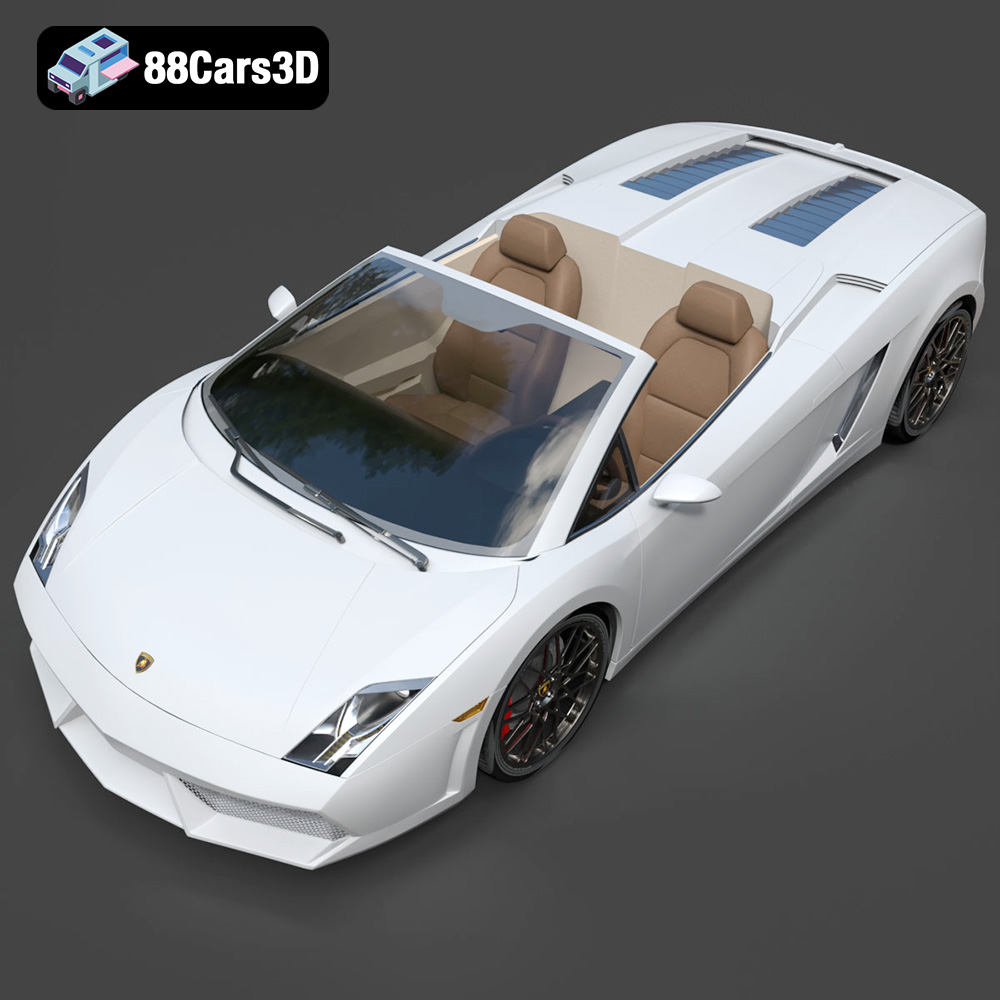
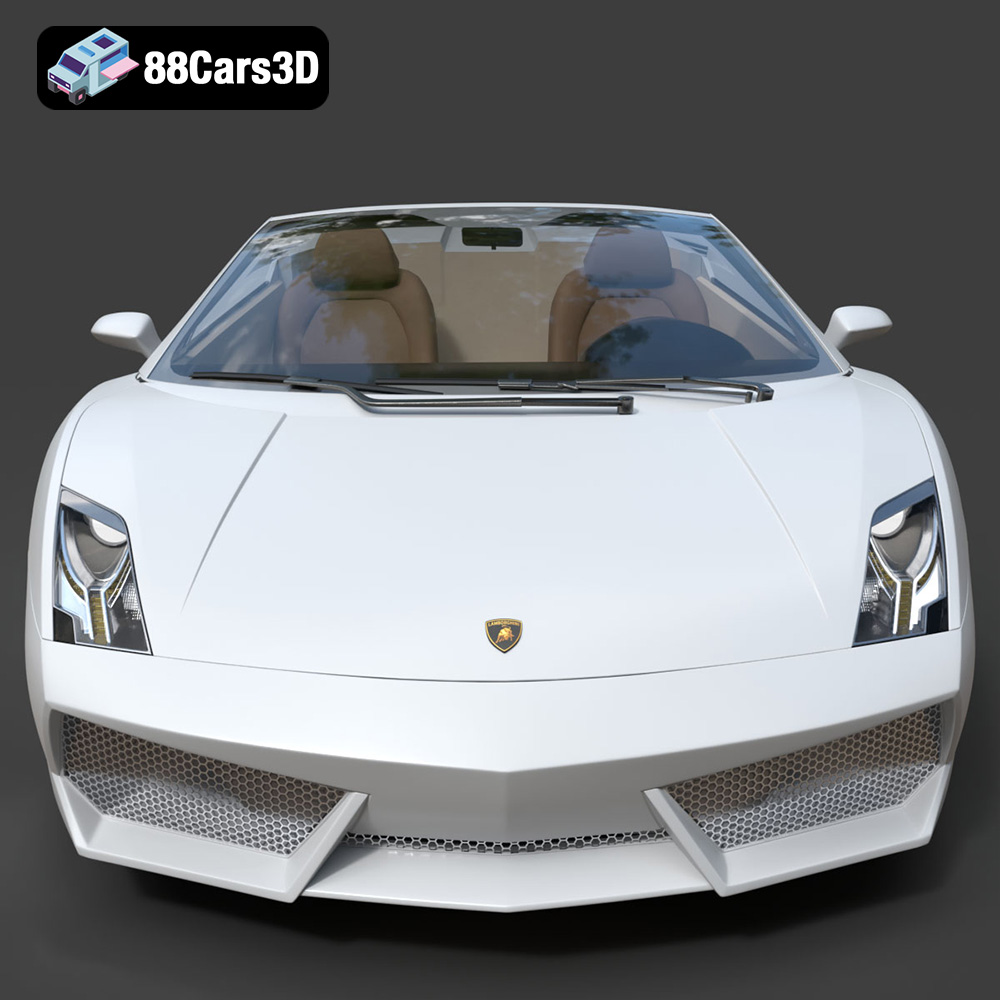
The first impression of any supercar is its exterior, and the Gallardo Spyder 3D model does not disappoint. It features accurate Lamborghini Gallardo Spyder frame geometry and aggressive aerodynamic proportions. Every curve, vent, and panel has been recreated with an obsessive attention to detail that rivals cinematic assets. The model showcases a detailed engine block visible beneath the rear glass cover, a testament to the creator’s commitment to internal authenticity, even for parts rarely seen. The performance-oriented quad-exhaust system, complete with carbon-fiber styled surrounds, adds to its menacing realism. Signature Y-shaped LED daytime running lights and aggressive geometric taillights further cement its identity. From the high-performance alloy wheels clad in detailed low-profile track tires to the massive carbon-ceramic brake discs and detailed suspension calipers, no detail has been overlooked. Importantly, separate wheels, suspension, and steering components are included, which are crucial for realistic animation workflows.
A supercar’s interior is its command center, and the Lamborghini Gallardo Spyder 3D model extends its fidelity to the cockpit. Artists will find high-bolstered Alcantara-style racing seats with contrast stitching details, inviting an immersive virtual experience. The fighter-jet inspired flat-bottom steering wheel and column, along with a detailed digital instrument cluster and center console telemetry displays, offer a comprehensive and accurate representation. Precision control details, including paddle shifters, alloy pedals, and the signature start button, complete the interior. This optimized geometry is perfect for first-person POV in gaming and VR simulations, allowing users to truly feel present within the vehicle.
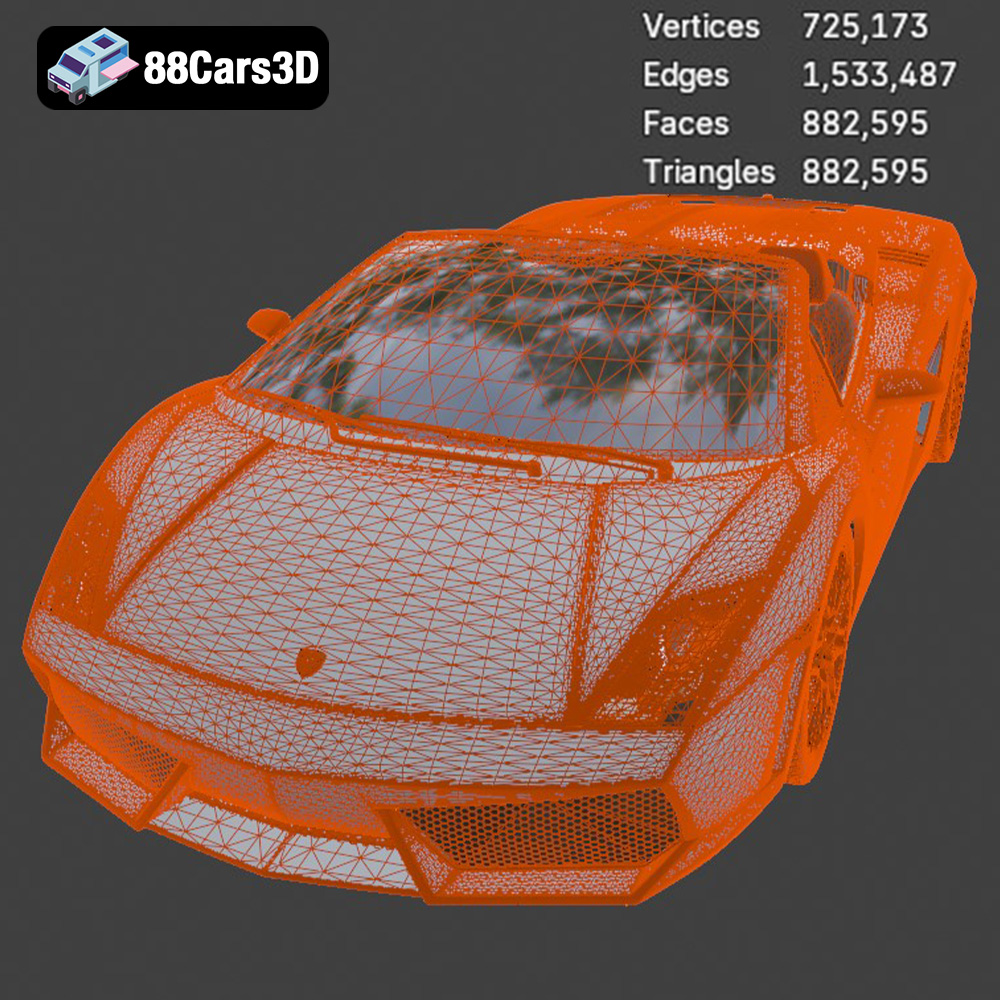
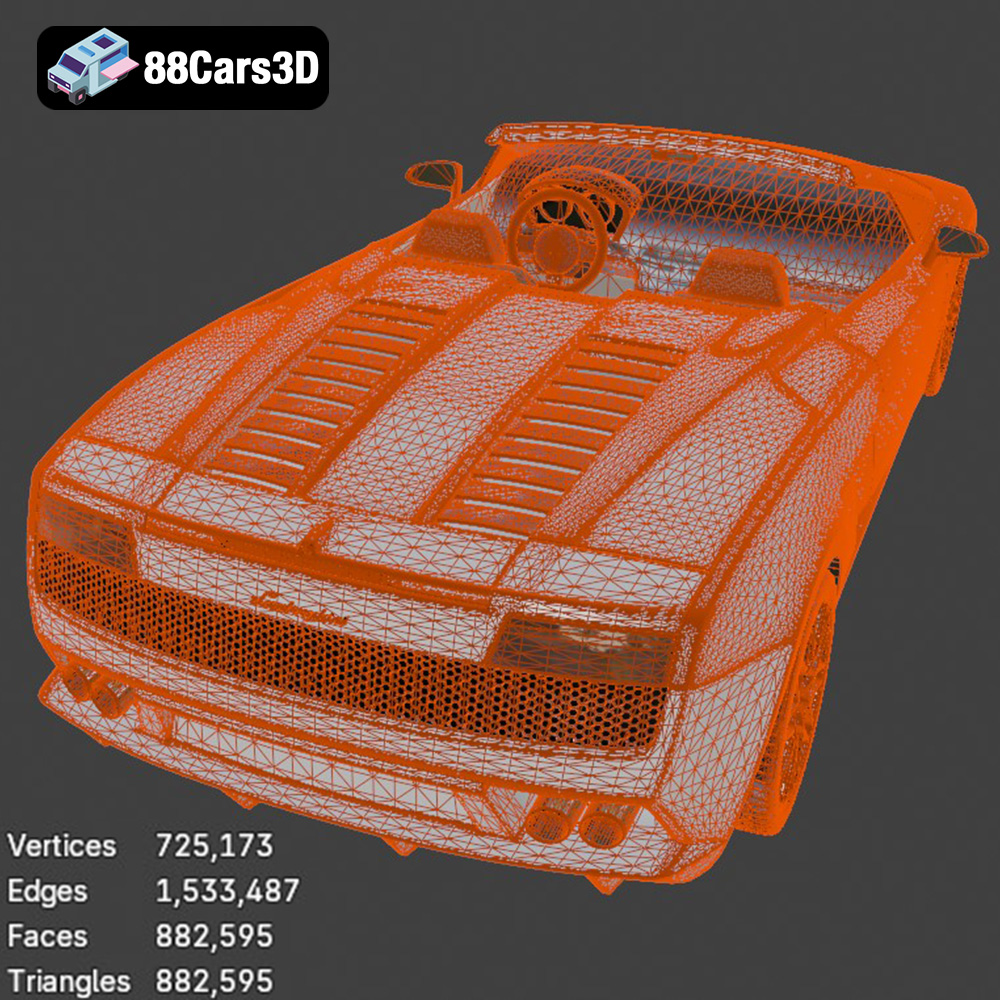
A high-quality 3D model must strike a delicate balance between visual fidelity and performance, especially for real-time applications. The Lamborghini Gallardo Spyder model achieves this with 882,595 triangles. This polycount is game-ready and optimized, striking a perfect balance for real-time engines like Unreal and Unity while maintaining high-end visual realism. This ensures that the model can be used in demanding environments without excessive performance overhead. Furthermore, it boasts real-world scale accuracy based on actual vehicle chassis, critical for believable physics and spatial consistency in simulations. Proper pivot setup for steering, wheel rotation, and suspension travel is also included, simplifying the animation process significantly. This model’s compatibility with major 3D software platforms and real-time rendering engines underlines its versatility as a professional-grade asset.
The true value of a premium 3D car model like the Lamborghini Gallardo Spyder lies in its adaptability. Its high fidelity and optimized structure make it a versatile centerpiece for a myriad of applications across several industries, from entertainment to engineering.
For game developers, the Lamborghini Gallardo Spyder 3D model is a dream asset. Its optimized polycount of 882,595 triangles strikes the perfect balance, delivering stunning visual realism without compromising real-time performance. This makes it ideal for open-world games, high-speed racing titles, and immersive simulators. Imagine the thrill of driving this digital beast through a virtual metropolis or on a challenging track. Game studios frequently leverage such high-quality 3D car models as foundational assets, saving hundreds of hours of development time. The included .fbx and .unreal formats ensure seamless integration into game engines like Unreal Engine and Unity, allowing developers to focus on gameplay mechanics and user experience rather than asset creation. With proper pivot setup for animated components, it’s ready for realistic physics and driving simulations right out of the box, becoming a true game asset that elevates any project.
The demand for immersive experiences is exploding, and 3D car models are at the forefront. The Lamborghini Gallardo Spyder model is perfect for AR/VR applications such as virtual showrooms, where customers can explore the car in a realistic 3D environment, rotate it, change colors, and even “sit inside.” Its optimized geometry also makes it suitable for configurators and mobile AR experiences, allowing users to place the virtual car in their real-world environment. Beyond interactive experiences, the model excels in rendering and visualization for brand campaigns, luxury lifestyle scenes, and studio lighting setups. Its high-detail topology and PBR (Physically Based Rendering) readiness ensure that renders achieve photorealism, essential for advertising and marketing materials that need to convey luxury and sophistication. Architectural visualization projects can also benefit immensely, adding a touch of high-end realism to exterior and interior scene renders.
While digital applications are primary, the physical potential of this 3D car model is also significant. The Lamborghini Gallardo Spyder can be converted to an .stl format, making it suitable for 3D printing. This opens up possibilities for display-scale hobbyists, collectors, or even professional model makers. The product description provides specific 3D print settings: recommended scales (1:12, 1:18, 1:24), layer height (0.04–0.12 mm, with resin printing recommended for fine details), wall thickness, infill percentage, and crucial support requirements for intricate parts like exhausts, mirrors, and spoilers. It even suggests print orientation (frame angled for structural integrity, wheels separately) and post-processing steps like sanding, priming, and applying authentic factory colors with metallic finishes. This comprehensive guidance allows enthusiasts to transform the digital supercar into a tangible collectible, bridging the gap between virtual and physical craftsmanship.
Integrating a complex 3D car model like the Lamborghini Gallardo Spyder into a professional workflow requires understanding how its various file formats and features can be best utilized in different software environments. This model is designed for seamless assimilation, maximizing efficiency and creative control.
For artists deeply entrenched in 3ds Max or Blender, the included .max and .blend files are invaluable. These native formats ensure that the model opens exactly as it was created, preserving all its intricate details, material setups, and scene organization. In 3ds Max, professionals can leverage its robust animation tools to create dynamic shots, showcasing the Lamborghini Gallardo Spyder in motion with realistic wheel rotation, suspension travel, and steering. The detailed model provides a perfect foundation for high-end automotive rendering, where artists can refine materials, adjust lighting for cinematic studio setups or environmental scenes, and integrate the car into complex architectural visualizations. Similarly, Blender users can take full advantage of its Cycles or Eevee rendering engines, adjusting the comprehensive materials and applying advanced compositing techniques. The fully editable scene in Blender allows for deep customization, from modifying the mesh to implementing custom physics simulations or advanced character interactions with the vehicle.
Game developers and real-time visualization specialists will find the .fbx and .unreal (Unreal Engine ready) formats particularly useful. These are optimized for direct import into game engines like Unreal Engine and Unity. When importing the .fbx, critical attributes like mesh hierarchies, pivot points, and UVs are preserved, simplifying the setup process for animation and interaction. For Unreal Engine, the “Unreal-ready” asset significantly streamlines the pipeline, often including pre-configured materials, collision meshes, and sometimes even basic LODs (Levels of Detail) to ensure optimal performance across different viewing distances. Developers can swiftly integrate the Lamborghini Gallardo Spyder into open-world environments, racing simulations, or interactive configurators. Setting up realistic car physics, tire deformation, and dynamic lighting effects becomes a much faster process with a well-optimized base model, allowing teams to focus on game logic and visual effects rather than spending countless hours on asset preparation.
A truly professional 3D car model offers extensive customization options, allowing artists to adapt it to specific project requirements. The Lamborghini Gallardo Spyder model provides significant flexibility: users can easily change body and tank colors to match factory colors, apply custom finishes (matte, gloss, metallic), or even explore bespoke paint jobs. The ability to modify tire textures (e.g., track vs. street variants) adds another layer of realism and context. Furthermore, adjusting material finishes for components like carbon fiber, chrome, and interior fabrics allows for fine-tuning the visual presentation. Adapting lighting for different environments – from a sun-drenched coastal road to a moody urban street scene – is crucial for impactful automotive rendering. This inherent adaptability ensures that the model can be a consistent, high-quality component across a wide array of creative and technical projects, proving its worth as a versatile game asset or rendering centerpiece.
In the fast-paced world of 3D production, time is a precious commodity. Investing in premium 3D car models like the Lamborghini Gallardo Spyder is not just about acquiring an asset; it’s about making a strategic decision that impacts project efficiency, quality, and ultimately, your bottom line.
Modeling a complex vehicle like the Lamborghini Gallardo Spyder from scratch is an incredibly time-consuming and resource-intensive endeavor. It requires highly specialized skills in hard-surface modeling, UV mapping, texturing, and rigging – a process that can take hundreds, if not thousands, of hours for a single artist or a small team. By choosing a pre-optimized, high-quality 3D car model from a reputable source like 88cars3d.com, you bypass this arduous initial phase. Your artists can immediately jump into integration, rendering, animation, or game development, significantly reducing project timelines and freeing up valuable resources for other critical tasks. This efficiency translates directly into cost savings and the ability to deliver projects faster, providing a competitive edge.
Premium 3D car models are distinguished by their uncompromised quality and meticulous attention to detail. The Lamborghini Gallardo Spyder 3D model, with its 882,595 triangles, accurate real-world scale, detailed interior and exterior, and proper pivot setups, showcases this commitment to excellence. These assets are built by experienced professionals who understand the nuances of automotive design and the technical demands of various 3D applications. The result is a model that is PBR-ready, ensuring stunning photorealism in physically based rendering workflows, and optimized for real-time engines, guaranteeing smooth performance without sacrificing visual fidelity. When you need to convey luxury, speed, and precision, an asset of this caliber delivers a level of realism that generic or hastily made models simply cannot match. 88cars3d.com is dedicated to offering such top-tier 3D car models, providing artists and developers with reliable, production-ready assets.
The versatility provided by a comprehensive suite of file formats – .blend, .fbx, .obj, .glb, .stl, .ply, .unreal, and .max – makes the Lamborghini Gallardo Spyder 3D model a future-proof investment. This extensive compatibility ensures that the asset can be seamlessly integrated into current projects across different software ecosystems and adapted for future technological advancements. Whether you need to render a high-resolution image for print, integrate it into a cutting-edge virtual reality experience, export it for 3D printing, or prepare it for the next generation of game engines, this model is ready. Its robust structure and clean topology mean it can be easily updated or re-textured as new rendering techniques emerge, preserving its value over the long term. This adaptability protects your creative assets, ensuring they remain relevant and usable as your projects and the industry evolve.
The Lamborghini Gallardo Spyder 3D model represents the pinnacle of digital automotive artistry and engineering. From its stunningly accurate exterior and meticulously detailed interior to its optimized performance specifications and a comprehensive suite of file formats, it stands as a testament to what premium 3D car models can offer. It’s an indispensable asset for professionals across game development, automotive rendering, AR/VR, and 3D printing, enabling rapid prototyping, cinematic visualizations, and immersive interactive experiences.
By leveraging an asset of this caliber, artists and developers can significantly enhance their workflows, save invaluable time and resources, and consistently achieve unparalleled visual quality. The versatility and attention to technical detail embedded within this model ensure it integrates seamlessly into virtually any professional pipeline, providing a robust foundation for your most ambitious projects. Explore the possibilities and elevate your creative endeavors with this exceptional 3D car model, available now at 88cars3d.com.
The Lamborghini Gallardo Spyder embodies the pinnacle of radical Italian automotive engineering, showcasing a striking balance of aerodynamic aggression and breathtaking performance. Renowned for its heritage of uncompromising power, this exotic supercar features a low-slung, wedge-shaped profile, signature sharp angular lines, and an imposing rear diffuser. The unmistakable styling cues, combined with a meticulously detailed mid-engine layout and menacing exhaust ports, make it a true masterpiece of modern hypercar design.
This premium 3D model features a highly detailed topology with 882,595 triangles, offering exceptional visual fidelity that rivals cinematic assets while remaining efficiently structured. The optimized mesh ensures stunning realism in physically based rendering (PBR) workflows, making it a versatile centerpiece for cutting-edge game development, immersive AR/VR experiences, professional animation, and architectural visualization.
Perfect for high-speed racing simulations, luxury lifestyle automotive visualization, virtual showrooms, and cinematic urban street scenes.
.blend, .fbx, .obj, .glb, .stl, .ply, .unreal, .max
Tags:
lamborghini, Gallardo Spyder, supercar, hypercar, sports-car, game-ready, high-poly, optimized, car-3d-model, game-asset, rendering, vr-ar, blend, fbx, obj, glb, stl, ply, unreal, max
$58.50
.blend
.fbx
.glb
.hypercar
.max
.obj
.ply
.rendering
.sports car
.stl
.supercar
.unreal
car-3d-model
game asset
game-ready
high poly
Lamborghini Gallardo Spyder
optimized
VR/AR