Get 20% OFF All Premium 3D & STL Models!

In today’s fast-paced digital landscape, the demand for realistic, high-fidelity 3D assets is skyrocketing across industries. From groundbreaking automotive design and immersive game development to cutting-edge AR/VR experiences and cinematic visualizations, the quality of a 3D model can make or break a project. Automotive models, in particular, require an exceptional level of detail, accuracy, and technical sophistication to truly capture the essence of a vehicle and meet the rigorous demands of professional workflows.
Imagine showcasing a luxury electric SUV, not just as a static image, but as a fully interactive, photorealistic representation that can be explored from every angle, customized in real-time, or even driven in a virtual world. This is where premium 3D car models become indispensable. They serve as the foundational building blocks for creating compelling visual narratives and engaging user experiences.
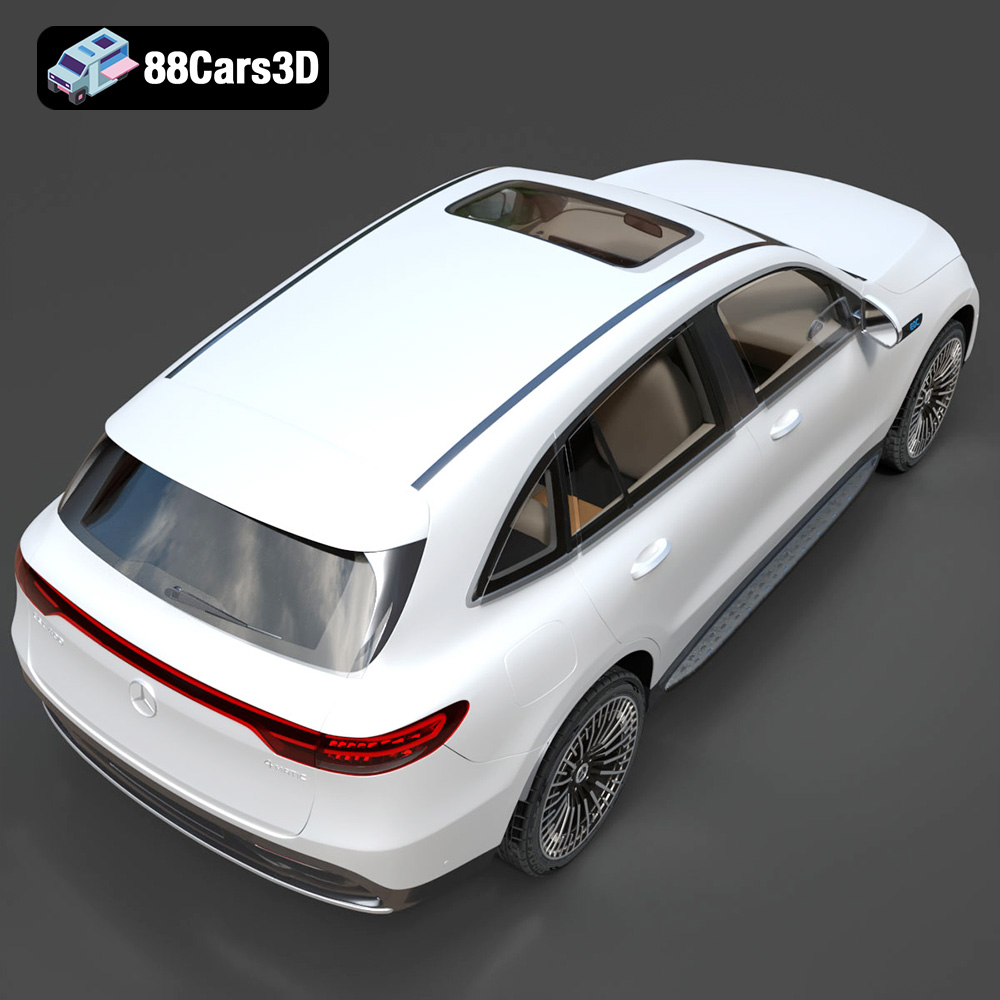
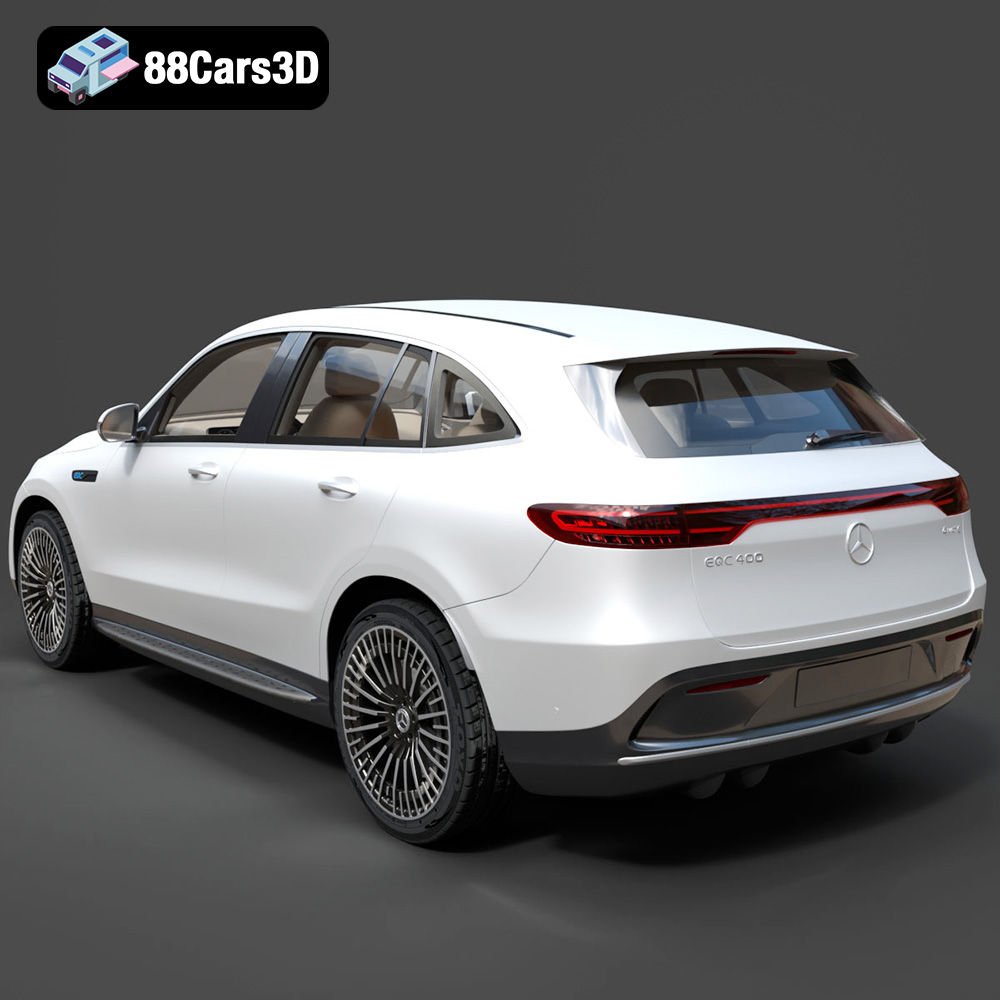
One such exemplary asset, perfectly embodying this fusion of precision and versatility, is the Mercedes-Benz EQC 3D Model. Available for download on 88cars3d.com, this model isn’t just a digital replica; it’s a meticulously crafted asset designed to elevate your projects, whether you’re an architect visualizing urban landscapes, a game developer crafting realistic driving simulators, or a marketing professional creating captivating brand campaigns.
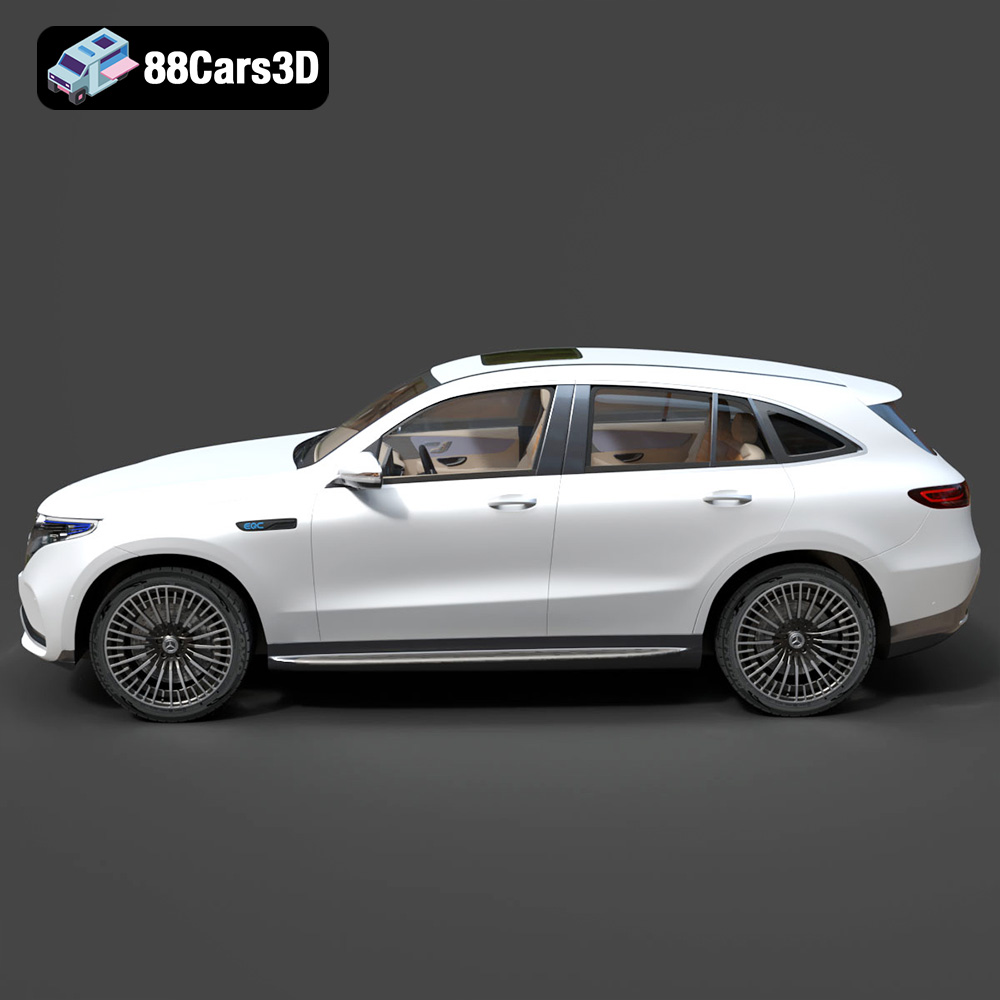
The Mercedes-Benz EQC represents a significant leap in electric vehicle design, blending avant-garde aesthetics with the unmistakable luxury of its brand. Translating such a distinctive vehicle into a 3D model requires an extraordinary commitment to detail, ensuring every curve, line, and material finish is faithfully reproduced. The Mercedes-Benz EQC 3D model from 88cars3d.com excels in this regard, offering a digital asset that stands up to the closest scrutiny.
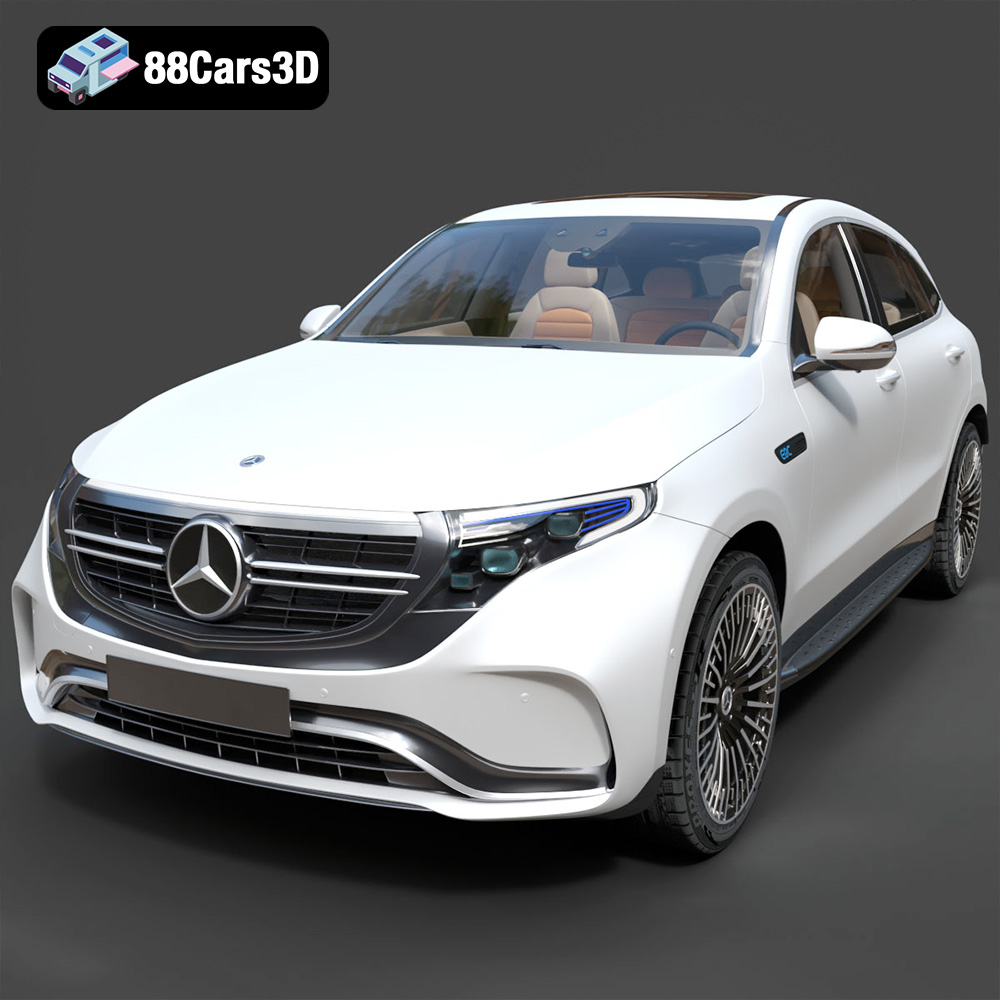
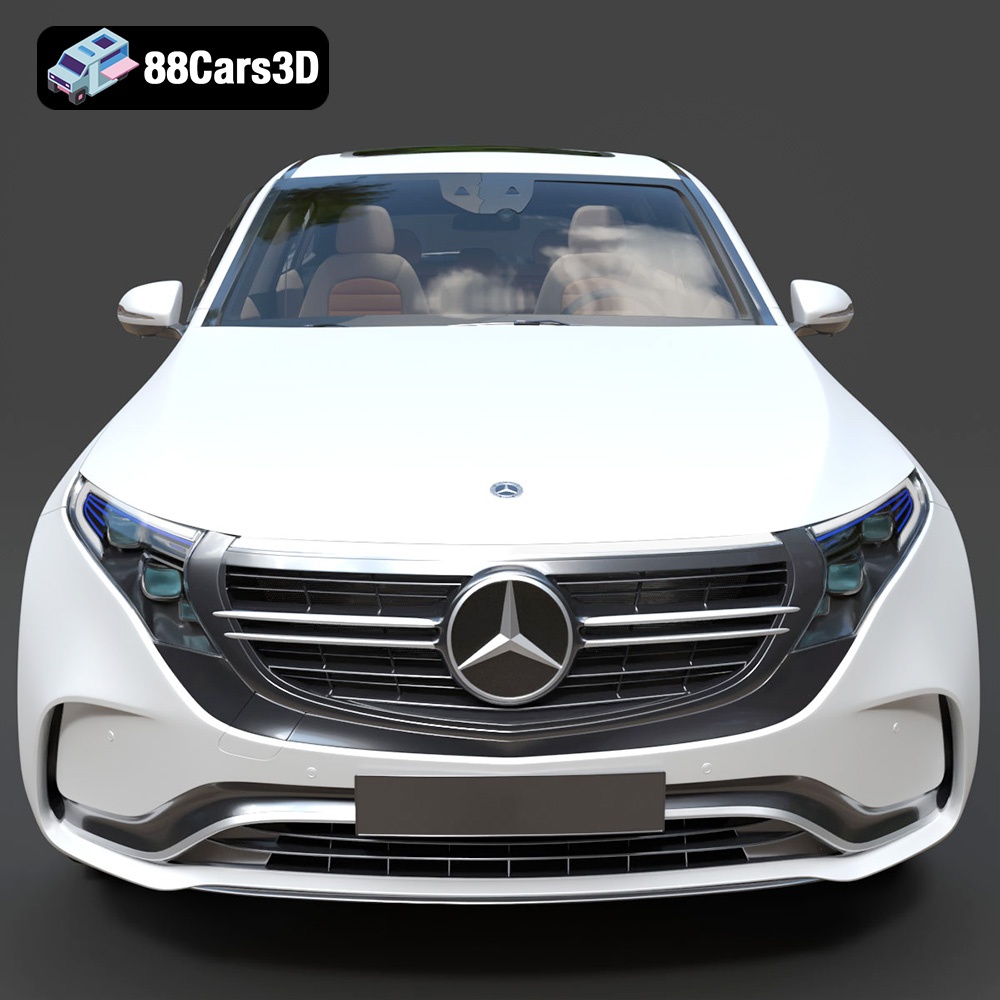
The real-world Mercedes-Benz EQC distinguishes itself with a unique “electro-aesthetic” design philosophy. This includes a seamless, aerodynamic silhouette, a signature black-panel radiator grille that integrates headlights and the Mercedes star, and distinctive continuous LED light bands that sweep across the front and rear. The 3D model meticulously captures these defining features. Its geometry is engineered to reflect the vehicle’s flowing lines and sculpted surfaces, ensuring that digital renders convey the same sense of modern luxury and electric-powered elegance as the physical car. This attention to such specific design language makes the model invaluable for brand-focused visualizations and authentic digital representations.
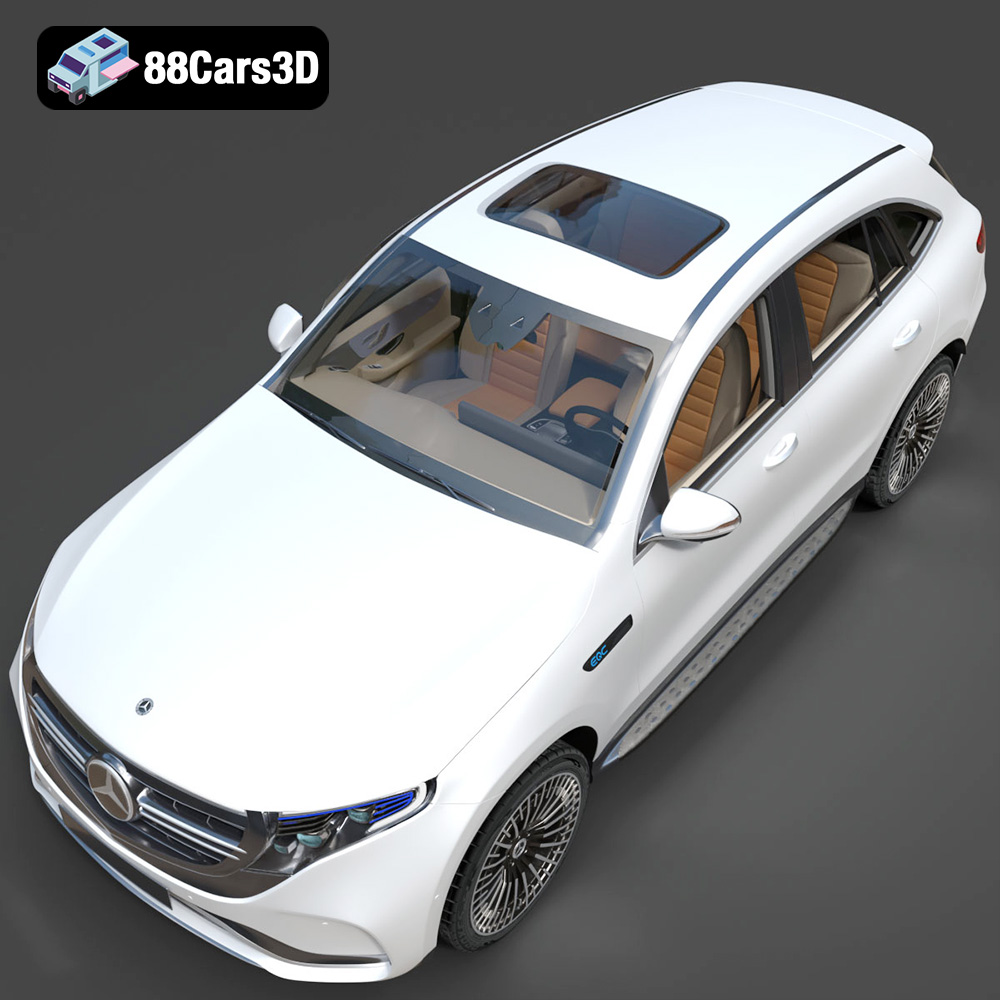
Beyond its overall form, the exterior of the Mercedes-Benz EQC 3D model boasts an impressive array of fine details. Users will find accurate chassis geometry and proportions, crucial for realistic scale and integration into various scenes. The aerodynamic underbody and front fascia design, essential for the EQC’s efficiency, are also precisely modeled. Furthermore, key visual identifiers like the signature continuous LED light bands, distinctive multibeam headlights, and taillights are rendered with high fidelity. The model includes aero-optimized multi-spoke alloy wheels with realistic tire treads, separate from the main body, along with accurate independent suspension details and steering components. This separation is critical for animators and game developers who need to articulate these parts for realistic motion and interactive experiences.
A truly comprehensive 3D car model doesn’t stop at the exterior. The Mercedes-Benz EQC model extends its exceptional detail to the cockpit and interior. Premium contoured seats feature realistic upholstery flow, providing a plush and authentic appearance. The multifunction steering wheel is meticulously detailed, complete with touch control buttons. Perhaps most striking is the accurately modeled widescreen cockpit dual-display instrument cluster and MBUX interface, bringing the EQC’s advanced infotainment system to life. The central console, pedals, and intuitive EV drive selectors are also present. This level of interior fidelity is paramount for applications like virtual showrooms, AR/VR experiences, and particularly for game development, where optimized geometry for first-person POV allows players to fully immerse themselves in the driver’s seat.
Navigating the world of 3D modeling often requires a deep understanding of various file formats, each tailored for specific purposes and software environments. The Mercedes-Benz EQC 3D model from 88cars3d.com is provided in a comprehensive suite of formats, ensuring maximum compatibility and utility across a diverse range of professional applications. Choosing the right format is crucial for workflow efficiency and achieving desired outcomes.
The .blend format is the native file type for Blender, the powerful open-source 3D creation suite. When you download the EQC model in .blend, you receive a fully editable Blender scene, complete with materials, textures, lighting setups, and potentially even rigging or animation data. This format is ideal for artists who primarily work in Blender, allowing for direct manipulation, customization, and integration into existing Blender projects. It offers the most flexibility for those who want to delve into the model’s construction, modify its topology, or reconfigure its materials using Blender’s robust Cycles or Eevee render engines.
.fbx (Filmbox) is one of the most widely used and versatile 3D file formats in the industry, developed by Autodesk. It’s renowned for its ability to store not only geometry but also materials, textures, animation, rigging, and even camera data in a single file. This makes it an ideal choice for transferring complex 3D car models between different software applications like 3ds Max, Maya, Cinema 4D, and most importantly, into real-time game engines such as Unreal Engine and Unity. For the EQC, the .fbx variant is optimized for seamless integration into game development pipelines, ensuring that the high-fidelity geometry and material definitions translate accurately.
.obj (Wavefront Object) is a universal 3D interchange format recognized by almost every 3D software package. It’s a simpler format compared to .fbx, primarily storing geometry (vertices, normals, texture coordinates, and faces) and referencing external material files (.mtl) and texture images. While it doesn’t support animation or rigging, its widespread compatibility makes it an excellent choice for basic model exchange when you need to ensure that virtually any 3D application can open and display the mesh. For the EQC model, .obj serves as a robust fallback for cross-software compatibility, ensuring the core geometry is accessible to all.
.glb (GL Transmission Format Binary) is an increasingly popular format, especially for web-based 3D, augmented reality (AR), and virtual reality (VR) applications. It’s a binary version of glTF, designed for efficient transmission and loading of 3D scenes and models. A single .glb file can contain the model’s geometry, materials, textures, animations, and skeletal structures, all optimized for performance. For showcasing the Mercedes-Benz EQC in an interactive browser-based configurator or a mobile AR experience, the .glb format is indispensable due to its compact size and quick loading times.
.stl (Stereolithography) is the de facto standard file format for 3D printing. It represents 3D surfaces as a series of connected triangles, forming a mesh that defines the object’s outer geometry. While it does not contain color or texture information, its simplicity and widespread adoption make it essential for additive manufacturing. The EQC model’s .stl variant is prepared for physical output, allowing hobbyists and professionals alike to print detailed scale models of the vehicle, with specific recommendations for optimal printing settings.
.ply (Polygon File Format or Stanford Triangle Format) is another format that describes 3D objects as a collection of polygons. It’s known for its ability to store a wide range of properties for each vertex, face, and edge, including color, transparency, normals, texture coordinates, and even reliability information. Often used in scientific applications, 3D scanning, and CAD, .ply offers a more precise and extensible alternative to .obj for certain technical analyses or when additional data is embedded within the mesh structure. For the EQC, it provides an option for highly detailed mesh data suitable for advanced technical workflows.
The .unreal format, or more accurately, assets packaged specifically for Unreal Engine projects, signifies a model that has been pre-processed and optimized for direct import into the Unreal Engine. This typically means that the mesh has been correctly scaled, materials are set up with PBR (Physically Based Rendering) textures, UVs are properly unwrapped for lightmaps, and collision meshes might be included. For the EQC, this ready-to-use Unreal asset significantly streamlines the workflow for game developers and real-time visualization artists, minimizing setup time and ensuring optimal performance within the engine.
The .max format is the native file type for Autodesk 3ds Max, a leading software for 3D modeling, animation, rendering, and visualization. When you obtain the EQC model in .max format, you receive the original working file, allowing full access to all aspects of its creation, including modifiers, scene lights, cameras, rendering settings, and complex material networks. This format is ideal for professional studios and artists who rely on 3ds Max for high-end automotive rendering, detailed animation sequences, or extensive scene integration. It provides the ultimate level of control and flexibility for those deeply entrenched in the 3ds Max ecosystem.
A truly professional 3D car model doesn’t just look good; it’s also technically robust, designed to perform efficiently across a spectrum of applications. The Mercedes-Benz EQC 3D model exemplifies this balance, offering both visual fidelity and practical usability.
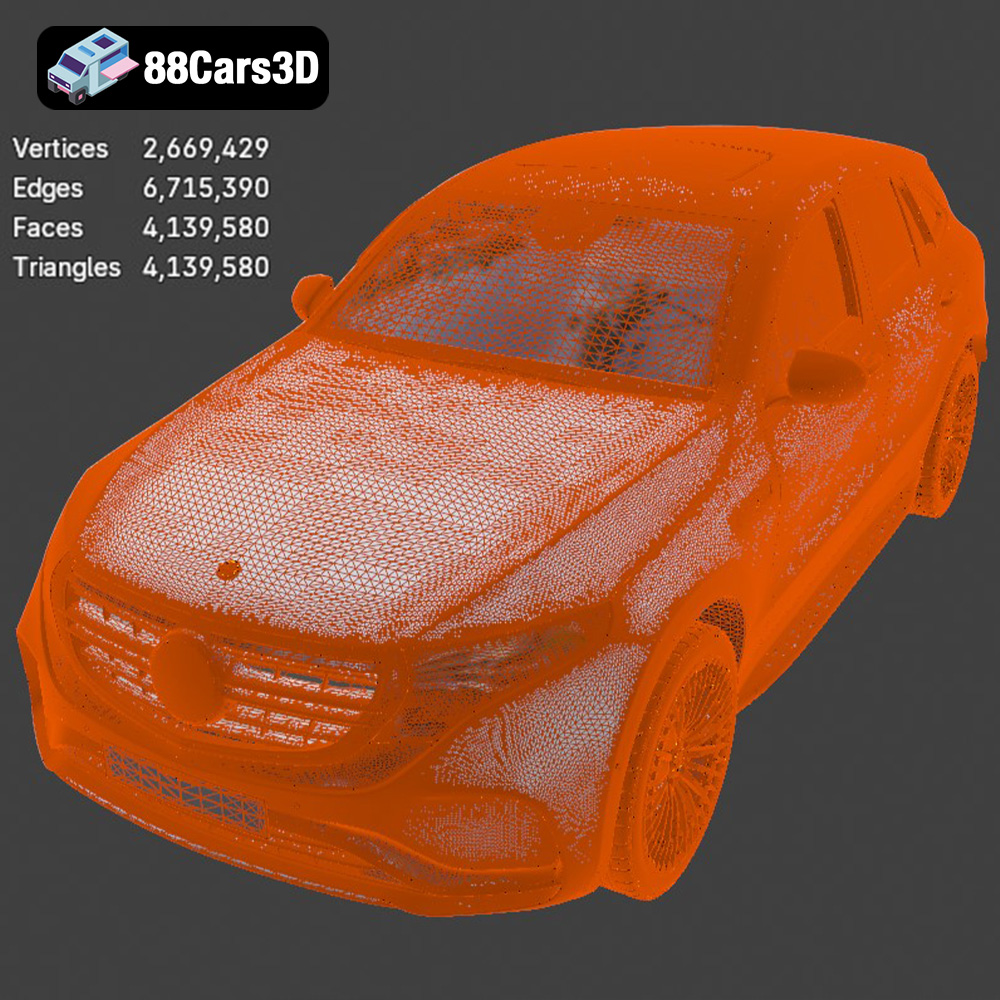
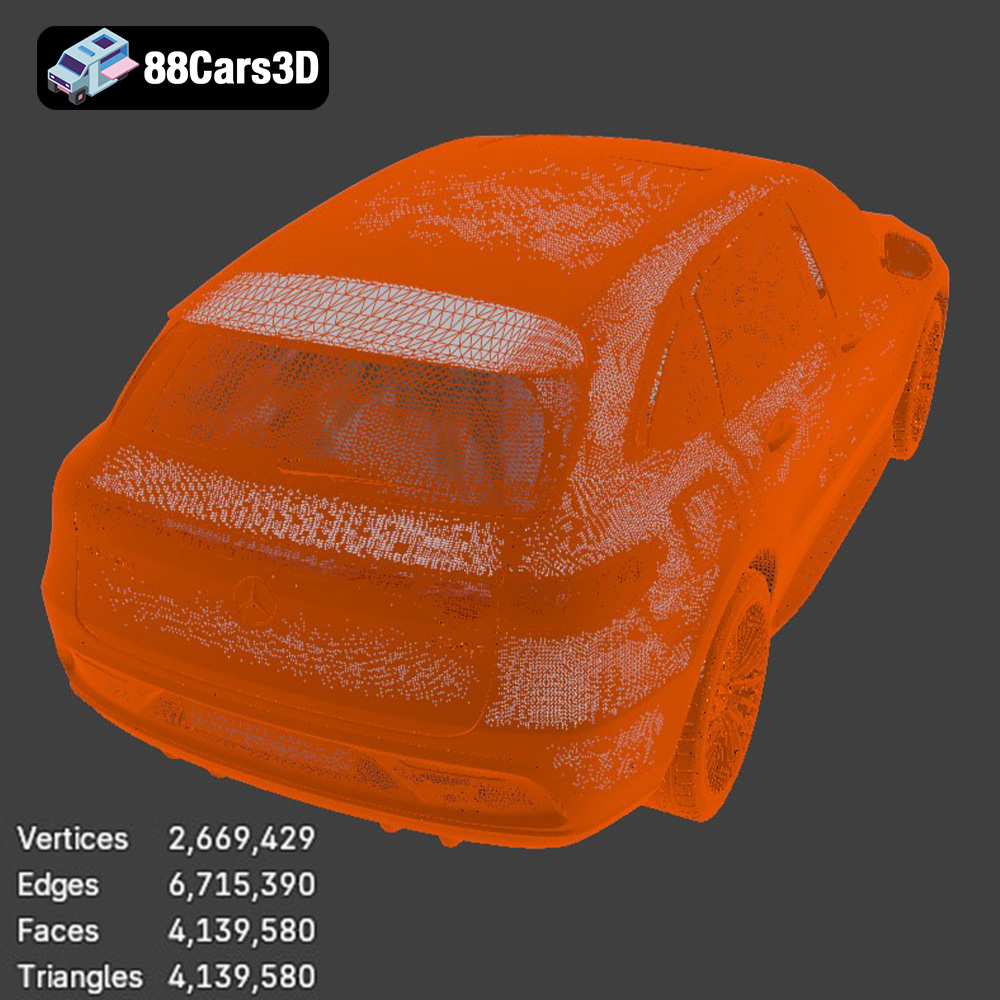
The EQC model achieves a remarkable equilibrium with a triangle count of 4,139,580. This “game-ready & optimized” specification means it’s suitable for real-time engines like Unreal and Unity, where performance is critical. However, unlike lower-poly game assets, this model retains an exceptional level of detail, making it equally adept for high-end visual realism in cinematic renders. The logical part separation further aids optimization, allowing developers to hide or simplify components not visible, or to implement level-of-detail (LOD) systems effectively. This dual capability makes it an incredibly versatile asset for projects that span from interactive simulations to photorealistic marketing campaigns.
Accuracy is paramount in automotive 3D modeling. The EQC model is built to real-world scale, based on actual vehicle chassis dimensions. This ensures that when integrated into virtual environments, it maintains correct proportions relative to other objects, characters, and architectural elements. Furthermore, the model features proper pivot setups for crucial animated components like steering, wheel rotation, and suspension travel. This meticulous articulation is not just about aesthetics; it’s a technical requirement for creating believable driving dynamics in games or realistic animation sequences for presentations. Animators can seamlessly rig and animate the car’s movement without having to painstakingly adjust pivot points.
Creative projects often require flexibility, and the EQC model provides extensive customization options. Users can easily change body colors, applying authentic factory shades or experimenting with custom finishes like matte, gloss, or metallic effects. Tire textures can be modified to switch between street and off-road variants, catering to different scene requirements or interactive configurations. Material finishes across the entire vehicle can be adjusted to fine-tune reflections, roughness, and specularity. Moreover, the model is designed to adapt to diverse lighting environments, allowing artists to achieve optimal visual impact whether placing the car under studio lights, in a sun-drenched outdoor scene, or a moody night setting. This adaptability saves significant time and opens up vast creative possibilities.
Beyond digital displays, the Mercedes-Benz EQC 3D model is also prepared for physical manifestation through 3D printing, primarily via its .stl format. The product description provides highly specific and valuable recommendations:
These detailed guidelines are invaluable for anyone looking to bridge the gap between digital and physical, transforming a high-fidelity 3D car model into a tangible object.
The true value of a professional 3D model lies in its seamless integration into various design and development workflows. The Mercedes-Benz EQC 3D model is built with this principle in mind, ready to be dropped into industry-standard software and engines.
For high-end automotive rendering, both 3ds Max and Blender offer robust environments. In 3ds Max, artists can import the .max or .fbx file, leverage powerful rendering engines like V-Ray or Corona, and utilize advanced lighting setups (HDRI environments, physical lights) to achieve photorealistic results. The EQC’s detailed geometry and PBR-ready materials make it a prime candidate for studio lighting scenes, showing off its flawless reflections and smooth surfaces. Similarly, Blender users can import the .blend or .fbx, utilizing Cycles or Eevee. Workflows typically involve setting up realistic car paint shaders, adding environment lighting, and carefully placing cameras to capture the vehicle’s best angles for compelling marketing images or animations. The separate wheels and suspension components are particularly useful for creating turntable animations or sequences demonstrating the vehicle’s dynamic capabilities.
For game development and real-time visualization, Unreal Engine is a dominant force. The Mercedes-Benz EQC 3D model, especially in its .fbx or .unreal formats, is tailored for this environment. Developers can import the model, which typically includes correctly separated meshes and PBR materials. The “game-ready” aspect means its polycount is optimized for real-time performance without sacrificing visual quality. Within Unreal, blueprints can be used to add interactive elements – opening doors, changing colors, activating lights, or even implementing basic driving mechanics. Collision meshes can be generated or imported to ensure realistic interaction with the environment. For projects requiring high frame rates and visual fidelity, the EQC model serves as an excellent foundation.
The burgeoning fields of Augmented Reality (AR) and Virtual Reality (VR) demand highly optimized yet visually rich assets. The EQC model, particularly in the .glb format, is perfectly suited for these applications. For a virtual showroom, the model can be integrated into a VR environment, allowing potential customers to walk around, sit inside, and interact with the vehicle as if it were physically present. In AR, the EQC can be overlaid onto the real world via a smartphone or tablet, providing an immersive product preview. The optimized mesh and efficient file formats ensure smooth performance on mobile devices and VR headsets, delivering a truly engaging and interactive experience that goes beyond traditional marketing.
The versatility and technical excellence of a 3D asset like the Mercedes-Benz EQC model open doors to a myriad of professional applications. Let’s explore a few hypothetical, yet entirely plausible, case studies.
Imagine a leading automotive marketing agency tasked with launching a new campaign for the Mercedes-Benz EQC. Instead of costly physical photoshoots in exotic locations, they leverage the 3D model. Using 3ds Max and V-Ray, artists create stunning studio renders, showcasing the EQC’s elegant lines and advanced features. They then place the model into a photorealistic CGI environment – perhaps a futuristic cityscape at dusk or a pristine mountain road. The model’s detailed geometry ensures flawless reflections, capturing the ambient light and setting. The ability to customize body colors and material finishes allows for iterative design reviews, quickly generating variants without re-rendering the entire scene, saving significant time and budget while maintaining brand consistency and luxury appeal.
A specialized game development studio is tasked with creating a highly realistic electric vehicle driving simulator. They require a high-fidelity car model that is also optimized for real-time physics and interactions. The Mercedes-Benz EQC 3D model, with its “game-ready” polycount and accurate pivot setups for wheels, steering, and suspension, is an ideal candidate. Imported into Unreal Engine, the studio’s engineers can quickly integrate it with their physics engine, allowing for realistic acceleration, braking, and handling that mirrors the EQC’s actual performance. The detailed interior, optimized for first-person POV, provides an immersive experience for the driver, complete with functioning MBUX displays and animated steering wheels. This asset becomes a cornerstone for creating an authentic and engaging simulation, whether for professional driver training or a high-end racing game.
An automotive dealership group seeks to enhance its online presence by offering an interactive product configurator for the EQC. They utilize the .glb version of the 3D model, integrated into a web-based platform. Customers can rotate the vehicle 360 degrees, open doors, explore the interior in detail, and instantly change exterior colors, wheel designs, and interior trim options. The optimized nature of the .glb format ensures fast loading times and smooth interaction directly within the browser, even on mobile devices. This immersive experience not only educates potential buyers but also empowers them to visualize their dream car, leading to higher engagement and conversion rates, all thanks to a meticulously crafted and format-flexible 3D car model.
The journey of a 3D model, from concept to creation and application, is a testament to the power of digital artistry and technical expertise. High-quality 3D car models are no longer a luxury but a fundamental requirement for professional endeavors across diverse industries. The Mercedes-Benz EQC 3D model stands as a shining example of this excellence, offering unparalleled detail, game-ready optimization, and compatibility across a spectrum of crucial file formats.
Whether your project demands cinematic automotive rendering, immersive AR/VR experiences, robust game assets, or even precision 3D printing, this model provides the foundational quality and flexibility needed to succeed. Its meticulous recreation of the EQC’s “electro-aesthetic” design, coupled with its technical advantages like accurate scaling, articulated components, and extensive customization options, makes it an invaluable asset for any discerning professional.
By choosing high-quality 3D car models like the Mercedes-Benz EQC from trusted sources such as 88cars3d.com, you invest in efficiency, realism, and creative freedom, ensuring your digital projects are not just visually appealing but also technically sound and future-proof.
Experience the future of luxury mobility with this exceptionally detailed 3D model of the Mercedes-Benz EQC. As the pioneer of the Mercedes-EQ family, this fully electric SUV combines avant-garde styling with legendary Mercedes craftsmanship. The model accurately captures its seamless, aerodynamic silhouette, the signature black-panel radiator grille, and the distinctive continuous LED light bands at the front and rear that define its striking electro-aesthetic. Boasting a highly detailed topology with a triangle count of 4,139,580, this high-fidelity 3D model offers unparalleled visual realism suitable for extreme close-ups while maintaining logical part separation for optimization. The geometry ensures flawless reflections and smooth surfaces, making it an exceptional asset for high-end rendering, virtual showrooms, and advanced interactive experiences.
$90.00
.blend
.eqc
.fbx
.glb
.max
.obj
.ply
.rendering
.stl
.unreal
car-3d-model
electric-vehicle
game asset
game-ready
high poly
luxury car
mercedes-benz
optimized
SUV
VR/AR