Get 20% OFF All Premium 3D & STL Models!

In the rapidly evolving landscape of digital creation, the demand for exquisite, high-fidelity 3D assets is ever-present. From the immersive worlds of video games to the precision of architectural visualization and the allure of cinematic rendering, a meticulously crafted 3D model can be the linchpin of a successful project. Automotive design, in particular, thrives on this digital artistry, bringing iconic vehicles to life with stunning realism.
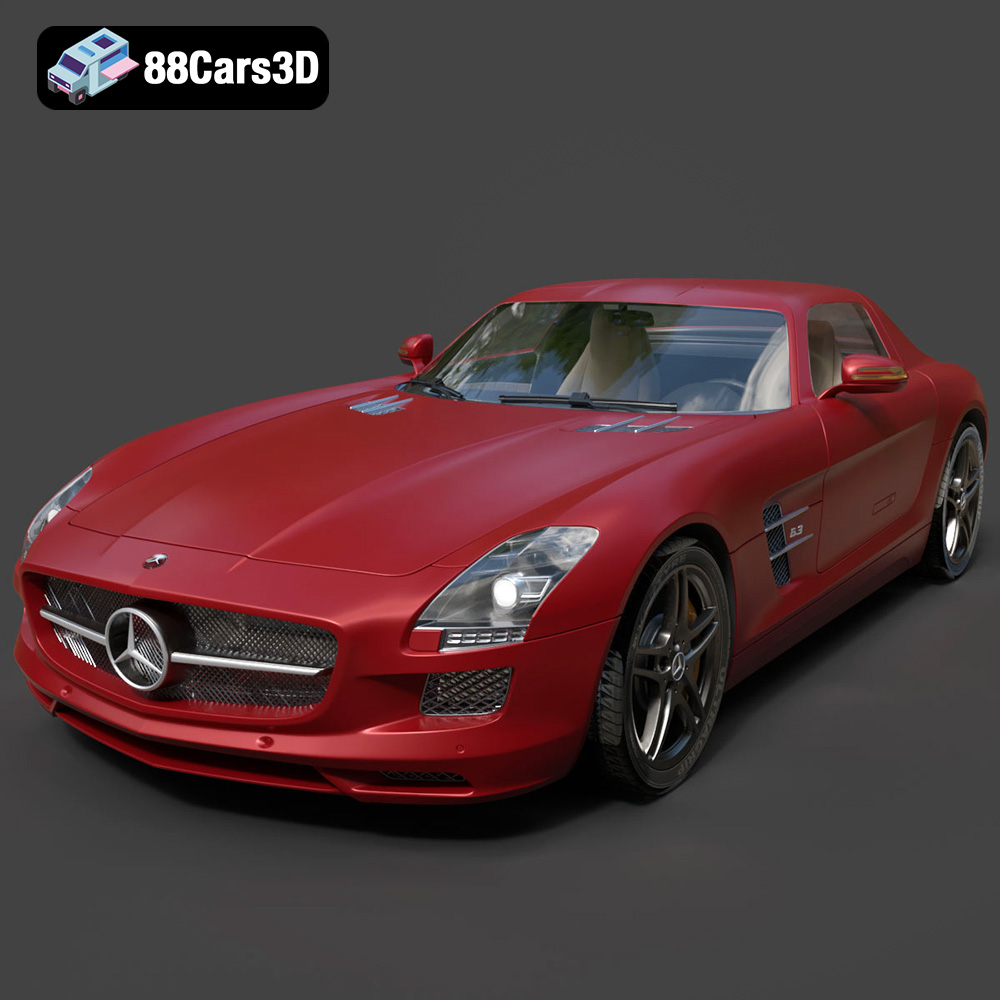
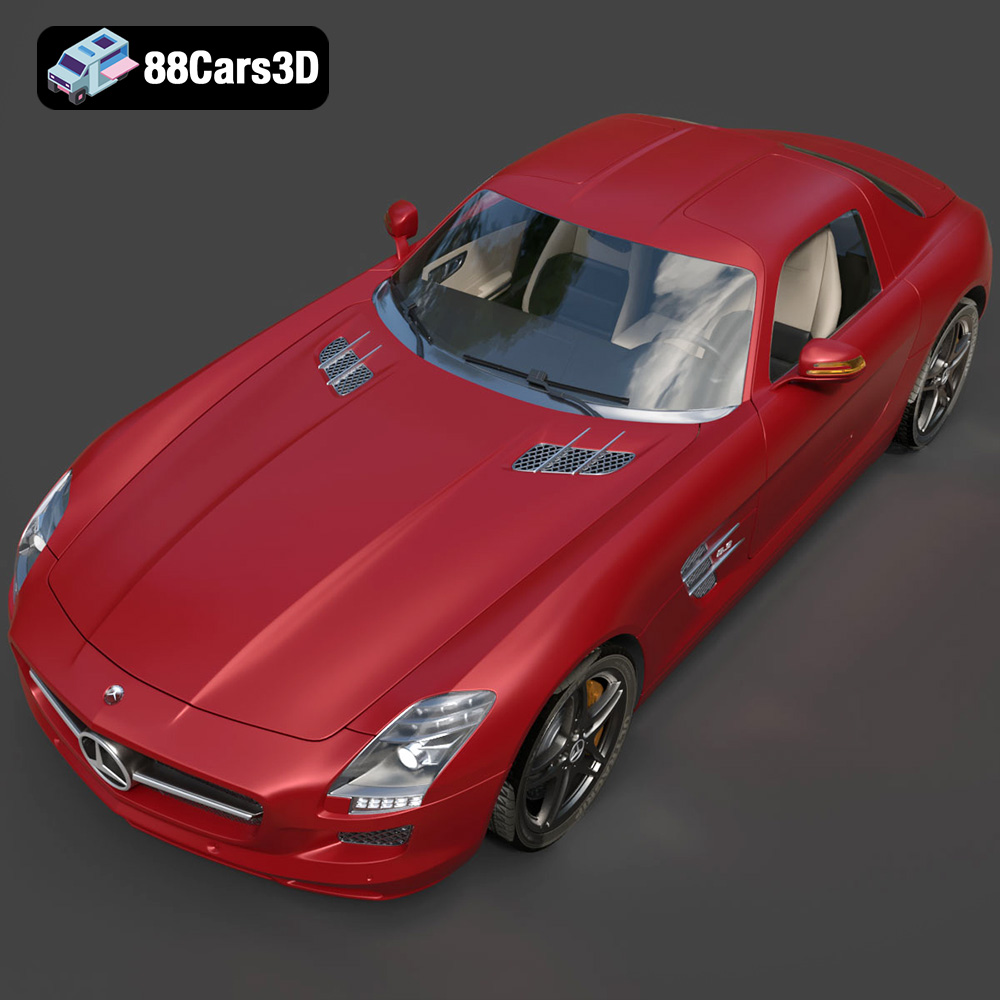
Few vehicles command attention quite like the Mercedes-Benz SLS. A modern homage to legendary automotive design, its iconic gullwing doors, elongated hood, and aggressive grand tourer proportions make it a true masterpiece of engineering and aesthetics. Capturing this essence in a digital format requires an exceptional level of detail and technical precision. This is where a premium 3D model, such as the Mercedes-Benz SLS 3D Model available on 88cars3d.com, becomes an invaluable asset for professionals across various industries.
This comprehensive guide delves into the technical intricacies of utilizing such high-quality 3D car models, exploring file formats, professional workflows, and the diverse applications where superior digital assets make all the difference. Whether you’re a game developer, a visualization artist, or an AR/VR enthusiast, understanding the nuances of these digital tools is paramount to achieving unparalleled results.
The choice of a 3D model file format is not a trivial decision; it dictates compatibility, performance, and the range of possibilities within your workflow. For a detailed 3D car model like the Mercedes-Benz SLS, understanding the strengths and weaknesses of each format is crucial for seamless integration into diverse projects. This model offers an extensive array of file types, ensuring maximum versatility across different software and applications.
The .blend file format is native to Blender, one of the most powerful and popular open-source 3D creation suites. When you download the Mercedes-Benz SLS 3D Model in .blend format, you’re not just getting geometry; you’re receiving a fully editable Blender scene. This includes all materials, textures, lighting setups, and even camera configurations that might have been part of the original creation. Artists working in Blender will find this format ideal for immediate customization, material adjustments via node-based shading, or even animating various components like the gullwing doors or steering mechanism. It offers a complete, self-contained project for deep editing and rendering within the Blender ecosystem, making it a favorite for those committed to an open-source pipeline.
The .fbx (Filmbox) format is arguably the most widely adopted proprietary file format for 3D data exchange across different software. Developed by Autodesk, it’s a robust format that supports not only mesh data but also animations, skinning, camera information, and even material properties (though often simplified). For professionals integrating the Mercedes-Benz SLS 3D Model into real-time pipelines like Unreal Engine or Unity, .fbx is the go-to choice. Its reliability in transferring complex scene data, including the separate wheels, suspension, and steering components crucial for vehicle animation, makes it indispensable for game development and advanced rendering setups where multiple software packages are involved.
The .obj (Wavefront OBJ) format is a universal standard, highly compatible with almost every 3D application available. It primarily stores geometry (vertices, normals, texture coordinates, and faces) and can reference external .mtl files for basic material properties and texture paths. While it doesn’t support animation or complex material networks like .fbx or .blend, its simplicity makes it an excellent choice for basic mesh exchange, especially when you need to ensure broad compatibility. For artists who need to quickly import the Mercedes-Benz SLS model into less common software or simply require the raw geometric data, .obj provides a clean, reliable foundation.
.glb (GL Transmission Format Binary) is the binary version of glTF, a royalty-free specification for the efficient transmission and loading of 3D scenes and models by applications. It’s quickly becoming the standard for 3D content on the web, AR, and VR due to its optimization for delivery and runtime performance. A .glb file contains the 3D model, textures, and animations embedded into a single, compact file. This makes the Mercedes-Benz SLS 3D Model in .glb format perfect for virtual showrooms, augmented reality applications on mobile devices, or interactive 3D viewers directly within a web browser, offering rapid loading and excellent visual quality.
The .stl (Stereolithography) format is the standard file type for 3D printing and rapid prototyping. It represents a 3D model as a series of connected triangles, defining only the surface geometry without color or texture information. For hobbyists or professionals looking to bring the Mercedes-Benz SLS into the physical world, the .stl version of this 3D car model is essential. While it requires careful preparation regarding scale and support structures, it’s the direct bridge from digital design to tangible product, allowing for display-scale models or intricate prototypes.
The .ply (Polygon File Format or Stanford Triangle Format) is a versatile file format that can store various properties, including color, transparency, normals, range data, and confidence values, in addition to simple geometric data. While less common for general rendering or gaming, it’s often used in academic and research contexts, particularly for storing 3D scanner data or for applications requiring high-precision mesh analysis. If you’re using the Mercedes-Benz SLS 3D Model for reverse engineering, detailed mesh inspections, or integration into CAD software, the .ply format offers a robust, extensible structure.
While not a standalone file extension in the traditional sense, the “.unreal” designation often refers to assets specifically prepared or packaged for Unreal Engine. This typically means the model has been imported as an FBX, had its materials configured using Unreal’s physically-based rendering (PBR) system, and may include LODs (Levels of Detail), collision meshes, and even blueprints for interactive elements. The Mercedes-Benz SLS 3D Model, when designated as .unreal ready, implies it’s optimized for drag-and-drop implementation, significantly reducing setup time for game developers and real-time visualization artists.
Similar to .blend for Blender, the .max file format is native to Autodesk 3ds Max. This means the Mercedes-Benz SLS 3D Model, when provided as a .max file, is an editable project containing all the scene data, including complex modifiers, specific 3ds Max materials, animation layers, and render settings. For professionals deeply embedded in the 3ds Max ecosystem, this format offers the most control and flexibility for animation, high-end rendering with engines like V-Ray or Corona, and integrating the model into larger architectural or cinematic scenes without losing any specific 3ds Max features.
The true value of a premium 3D asset lies in its meticulous execution, blending artistic fidelity with technical optimization. The Mercedes-Benz SLS 3D Model from 88cars3d.com exemplifies this balance, offering a highly detailed representation that is simultaneously game-ready and primed for photorealistic rendering.
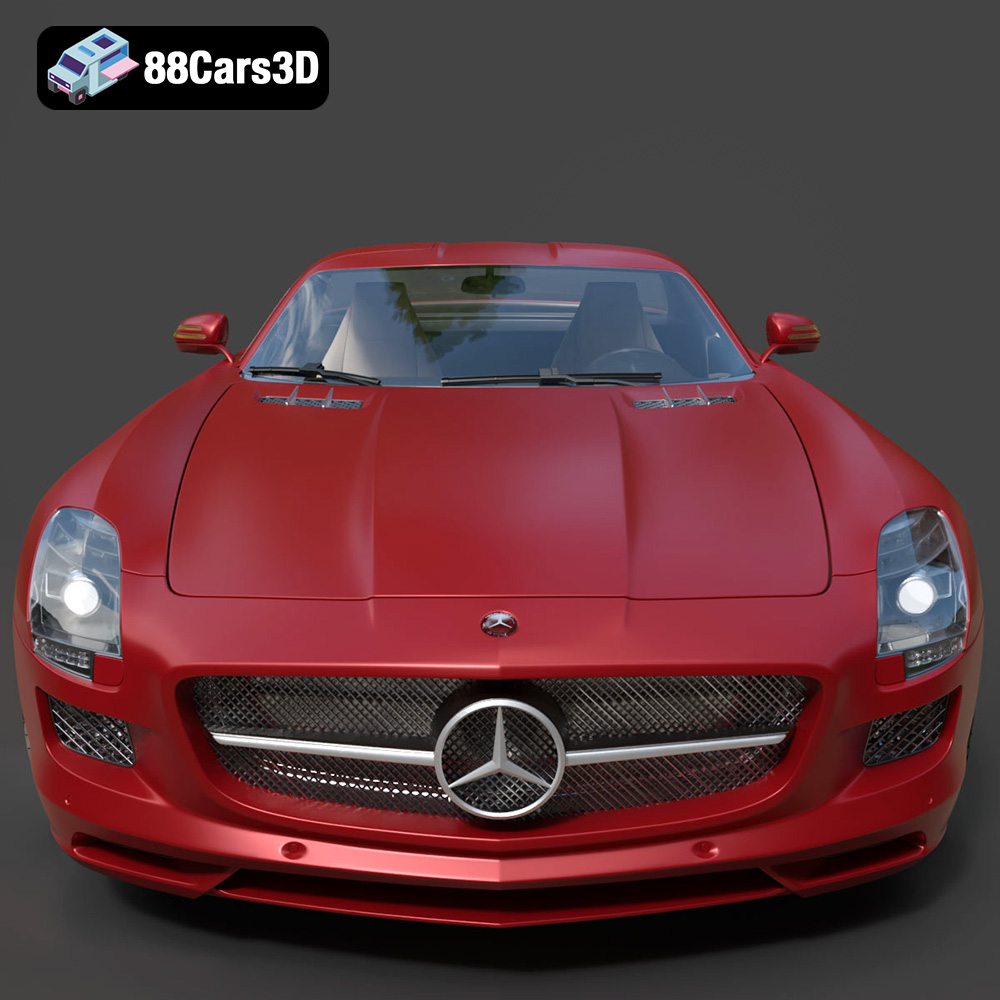
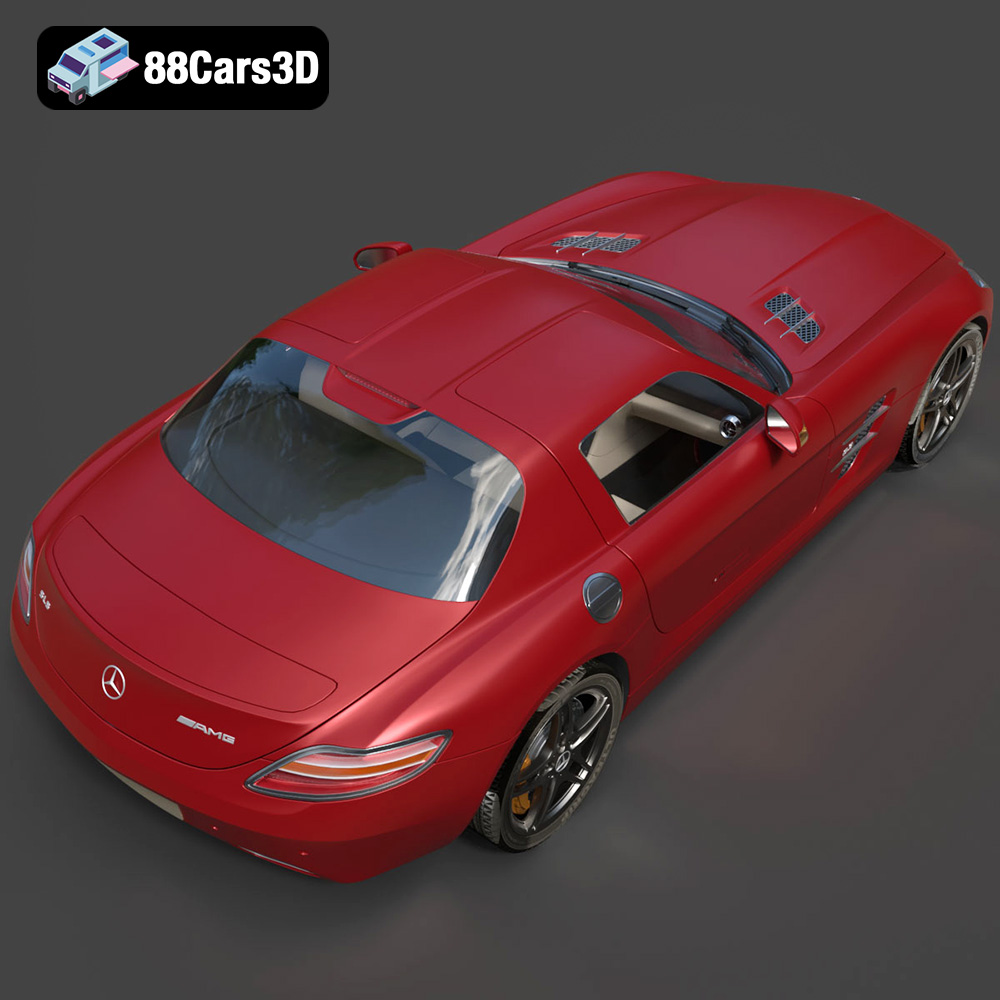
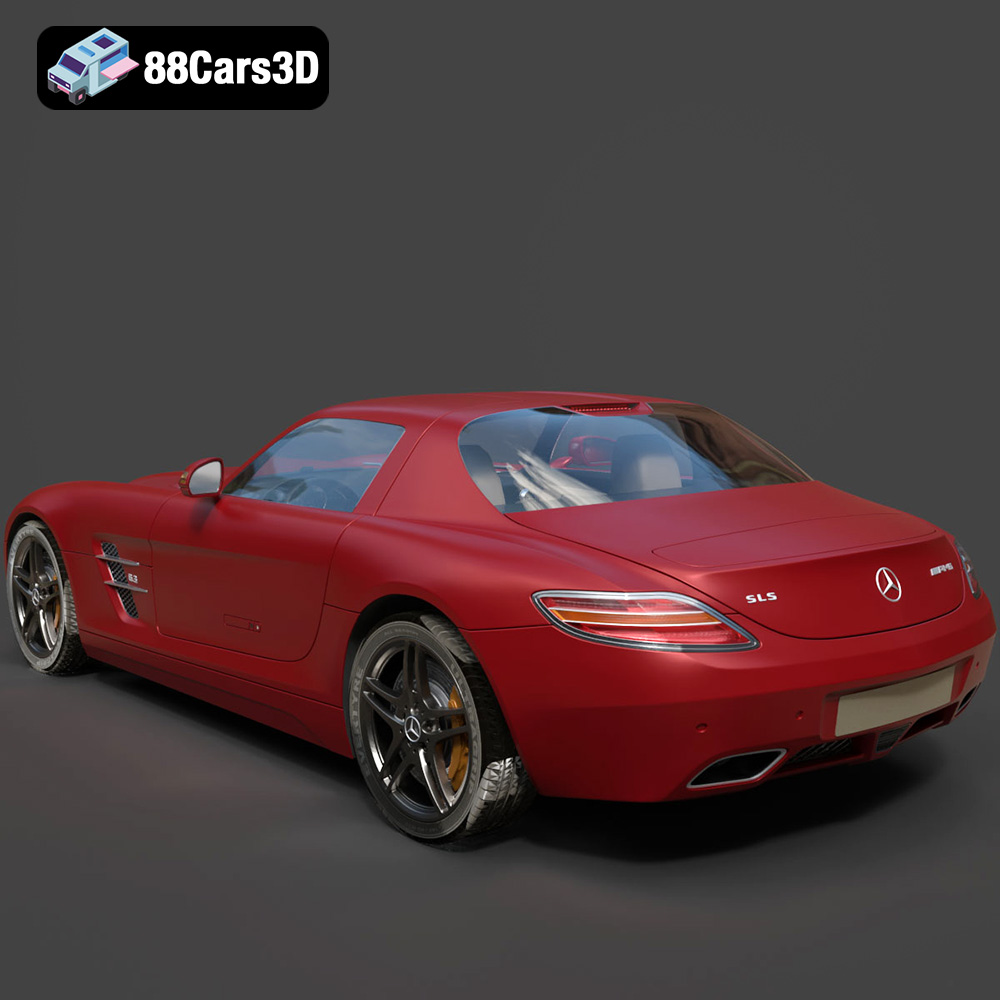
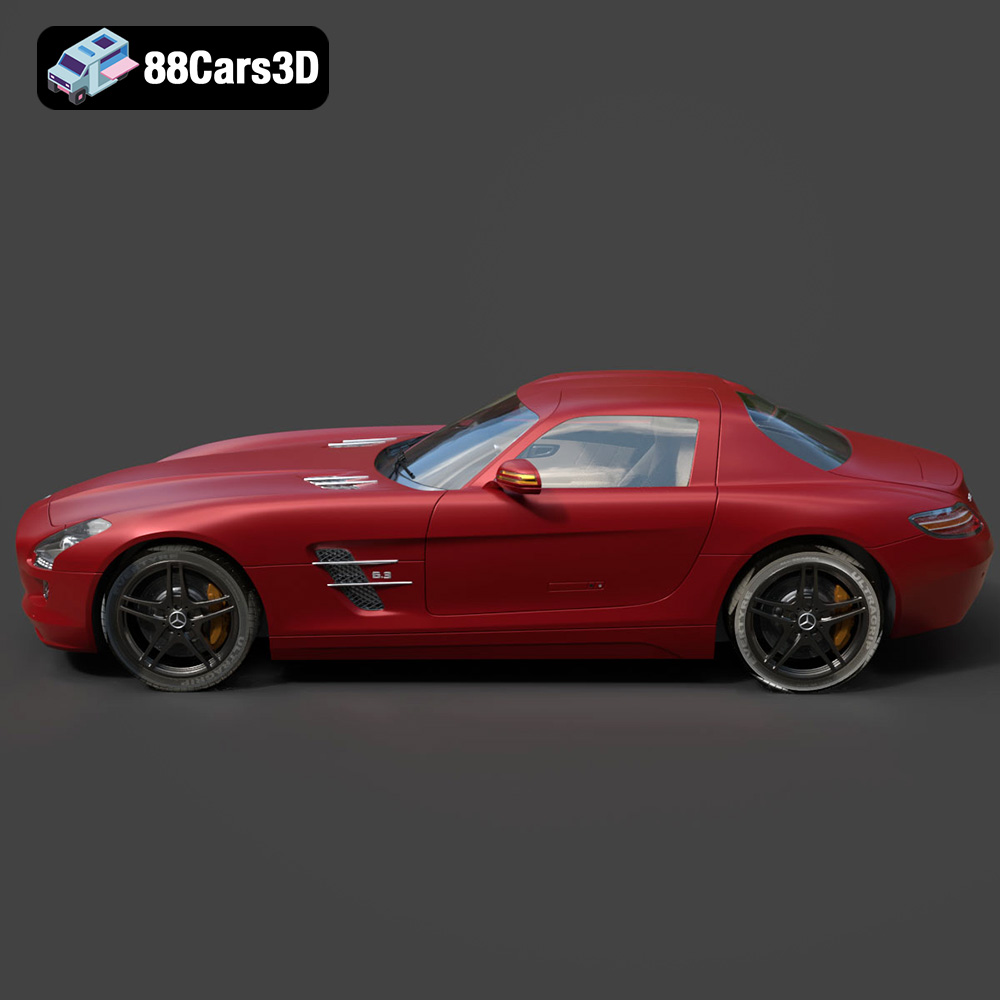
This model perfectly captures the iconic essence of the Mercedes-Benz SLS. From the instantly recognizable gullwing doors to the sleek aerodynamic profile and the aggressive grand tourer proportions, every curve and contour has been faithfully recreated. The signature front grille, a hallmark of Mercedes-Benz design, is intricately detailed, alongside the authentic dual-tip performance exhaust system that defines its rear. Beyond the prominent features, attention extends to the subtle yet critical elements: the detailed multi-spoke alloy wheels, accurately modeled performance tires, and the visible brake calipers add a layer of realism vital for close-up shots. Even the accurate suspension and drivetrain components are modeled, providing the necessary depth for advanced animations and detailed visualizations.
A significant advantage for animation-focused projects is the separate geometry for wheels, suspension, and steering components. This allows for precise rigging and animation of steering, independent wheel rotation, and realistic suspension travel, crucial for racing simulators and cinematic sequences depicting dynamic movement.
The exterior brilliance is matched by an equally impressive interior. The cockpit of this Mercedes-Benz SLS 3D Model is designed for immersion, featuring sculpted sport bucket seats with meticulously detailed upholstery and stitching. The authentic flat-bottom performance steering wheel, classic dual-pod instrument cluster, and dashboard layout all contribute to a believable and functional digital environment. Smaller, yet important, details like the aviation-style air vents, pedals, and center console gear selector are also present, enhancing the overall realism. Critically, the interior geometry is optimized for first-person POV in gaming, ensuring a smooth and visually appealing experience when players are behind the wheel.
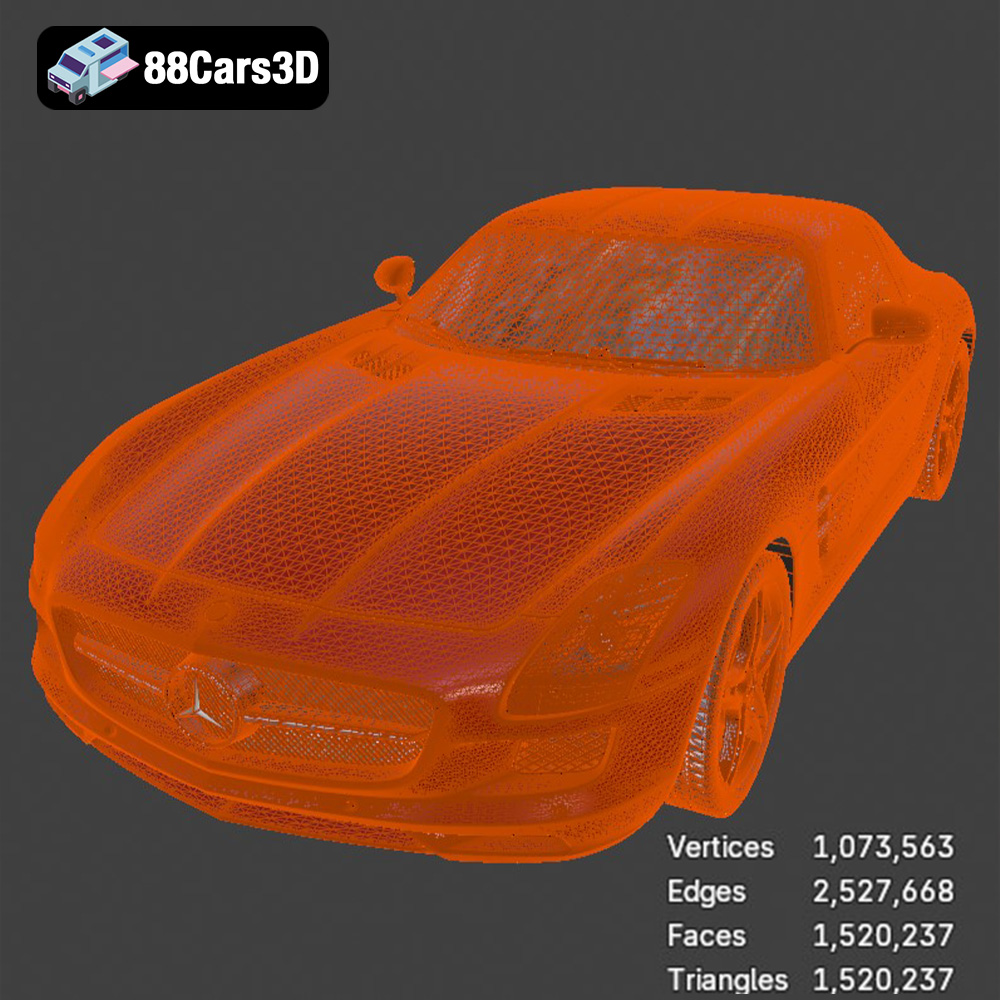
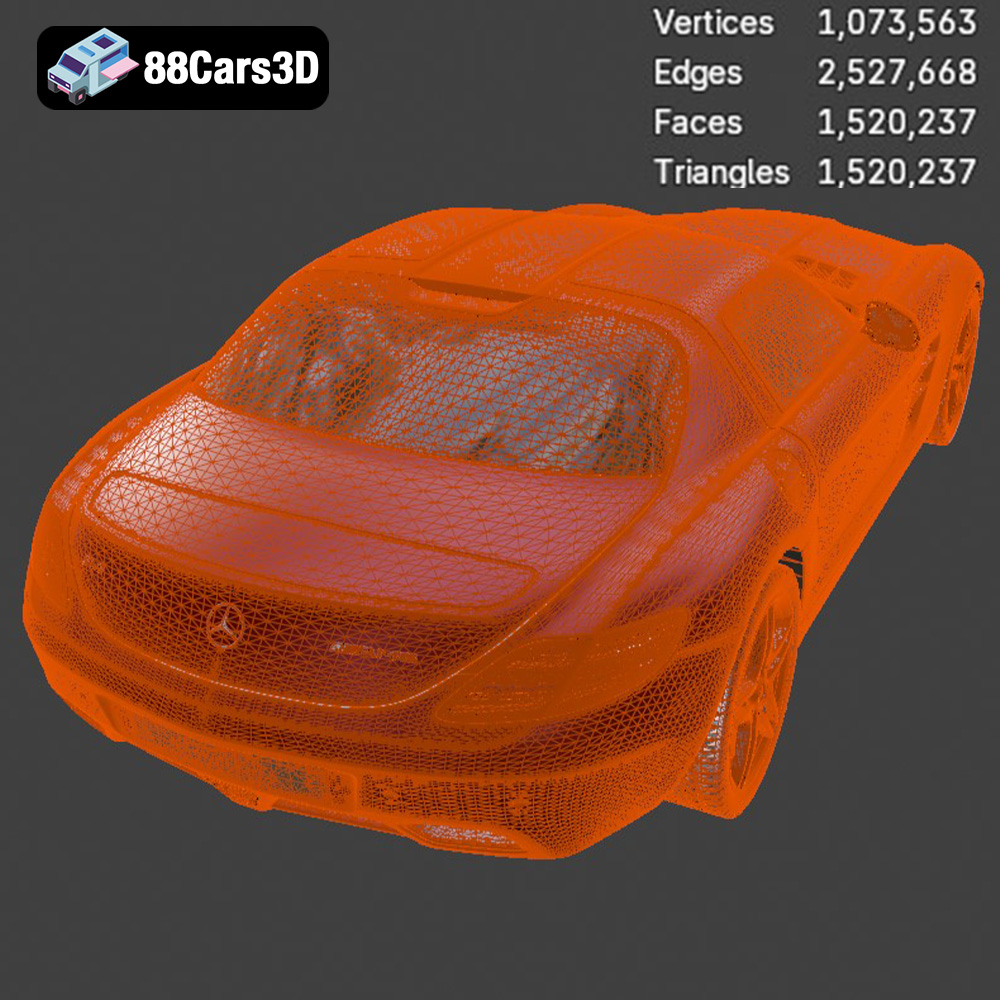
At 1,520,237 triangles, this 3D model strikes an ideal balance. This poly count is high enough to deliver incredible visual fidelity, making it suitable for high-end rendering and detailed close-ups, while remaining optimized for performance in real-time engines like Unreal and Unity. This “game-ready” optimization means developers can integrate it into their projects without extensive re-topology or simplification efforts. Furthermore, the model boasts real-world scale accuracy, based on actual vehicle chassis dimensions, ensuring correct proportions when placed within any virtual environment. Proper pivot setups for steering, wheel rotation, and suspension travel are pre-configured, simplifying the rigging and animation process. This meticulous technical preparation makes the Mercedes-Benz SLS 3D Model a highly efficient and valuable asset for any professional workflow.
The demand for realistic and engaging experiences in game development and AR/VR is skyrocketing. High-quality 3D car models are central to delivering these immersive environments, and the Mercedes-Benz SLS 3D Model is purpose-built for such applications.
For game developers, efficiency and fidelity are paramount. Utilizing the .fbx or .unreal formats of this Mercedes-Benz SLS model significantly streamlines the workflow in engines like Unreal Engine and Unity. After importing the .fbx, artists can quickly set up physically-based rendering (PBR) materials, leveraging the model’s clean UV mapping and detailed textures to achieve photorealistic finishes under various lighting conditions. Implementing Level of Detail (LOD) systems is straightforward, allowing the engine to swap lower-poly versions of the model at a distance, thus optimizing performance without sacrificing visual quality up close. Crucially, the model’s pre-defined pivot points for wheels, steering, and suspension greatly accelerate the rigging process, enabling developers to quickly implement driving physics and animation systems. For open-world games, racing titles, or simulators, this optimized asset reduces development time while delivering a premium visual experience.
Augmented Reality (AR) and Virtual Reality (VR) experiences offer unique opportunities for showcasing automotive design. The Mercedes-Benz SLS 3D Model, particularly in its .glb format, is ideal for these platforms. Its optimized geometry ensures smooth performance on mobile AR devices and standalone VR headsets, where computational resources are often limited. Imagine a virtual showroom where potential buyers can walk around the SLS, open its gullwing doors, or even customize its paint finish in real-time. With the ability to change body colors, modify tire textures, and adjust material finishes (matte, gloss, metallic), this model provides a robust foundation for interactive configurators and immersive brand campaigns. Companies can leverage these digital assets to create engaging pre-sales experiences or educational tools, bringing the car directly to the customer, no matter their physical location.
Beyond real-time applications, the Mercedes-Benz SLS 3D Model excels in producing stunning, photorealistic renders and cinematic animations. High-end automotive rendering is a specialized field that demands impeccable model quality and advanced software techniques.
For professionals using 3ds Max or Blender, the respective .max and .blend formats of the SLS model offer unparalleled control. In 3ds Max, artists can leverage powerful renderers like V-Ray or Corona Renderer. The workflow typically involves setting up a realistic studio lighting environment – often using HDRI maps combined with strategically placed area lights to simulate softboxes and reflectors. Materials are then refined using PBR workflows, accurately reproducing metallic paints, reflective chrome, and the subtle textures of the interior upholstery. The precise geometry and detailing of the Mercedes-Benz SLS 3D Model ensure that these advanced material and lighting setups translate into breathtakingly realistic images, perfect for advertising campaigns or high-resolution product shots. Similarly, in Blender, Cycles or Eevee can be used to achieve comparable results, exploiting Blender’s robust node editor for complex material creation and sophisticated rendering techniques.
The animation-ready features of this model, with its separate components for wheels, suspension, and steering, are invaluable for cinematic production. Artists can animate the gullwing doors opening gracefully, the car driving through a dynamic environment, or even detailed camera fly-throughs of the interior. In 3ds Max, complex animation sequences can be choreographed, rendered frame by frame, and then composited in post-production software. For architectural visualizations, the SLS model can be placed within realistic environments to add a touch of luxury and scale, enhancing the overall scene’s believability. Whether it’s for an automotive commercial, a game trailer, or a high-profile brand presentation, this 3D car model provides the fidelity and flexibility required to tell compelling visual stories.
The versatility of a high-quality 3D model extends beyond digital displays, offering a tangible connection through 3D printing. The Mercedes-Benz SLS 3D Model, with its inclusion of the .stl format, provides an exciting pathway for creating physical replicas.
Converting a complex digital model into a printable format requires attention to detail. The .stl format provided is specifically designed for 3D printing, representing the model’s surface geometry as a triangulated mesh. Hobbyists and professionals can choose recommended scales such as 1:12, 1:18, or 1:24 to suit their display or prototyping needs. For optimal detail and surface quality, especially for intricate parts like the detailed engine block or exhaust system, resin printing is highly recommended, allowing for finer layer heights (0.04–0.12 mm) compared to filament-based printing. Considerations like wall thickness (1.2–2.0 mm) and infill (20–30%) are critical for structural integrity, ensuring the printed model is robust yet efficient in material usage. Furthermore, understanding where supports are required – for instance, under the exhaust, mirrors, or other overhangs – prevents deformation during the printing process. Optimal print orientation, such as printing the frame angled and wheels separately, further enhances structural integrity and print quality.
The journey from a raw 3D print to a showroom-quality physical model involves meticulous post-processing. This typically includes sanding to remove layer lines or support marks, followed by the application of primer to create a smooth, uniform surface for painting. The true artistry comes in applying authentic factory colors, often with metallic finishes, to accurately replicate the look of a real Mercedes-Benz SLS. Details like painting the brake calipers, adding subtle washes to panel lines, and applying clear coats can elevate the model to an exhibition-worthy piece. This fusion of digital design and physical craftsmanship allows enthusiasts and designers alike to hold a tangible piece of automotive excellence, directly born from the precise data of the Mercedes-Benz SLS 3D Model.
The realm of 3D modeling for automotive design is a convergence of art and engineering, demanding precision, versatility, and visual fidelity. High-quality 3D car models like the Mercedes-Benz SLS 3D Model are indispensable tools that empower creators to bring their visions to life, whether in the digital ether or the physical world. From its meticulously crafted exterior and immersive interior to its technical optimization for real-time engines and detailed preparation for 3D printing, this model stands as a testament to professional-grade asset creation.
Understanding the nuances of various file formats – from the editable power of .blend and .max, the universal compatibility of .fbx and .obj, to the web-optimized .glb and the print-ready .stl – is fundamental for any professional workflow. This depth of technical detail ensures that the Mercedes-Benz SLS 3D Model can seamlessly integrate into game development, AR/VR experiences, high-end automotive rendering, and even tangible prototyping. Ultimately, investing in such a robust and versatile 3D car model from a reputable source like 88cars3d.com significantly enhances efficiency, elevates visual quality, and opens up a myriad of creative possibilities across the digital design spectrum.
The Mercedes-Benz SLS stands as a modern homage to legendary automotive design, renowned for its iconic gullwing doors, elongated hood, and aggressive grand tourer proportions. This meticulously crafted model perfectly captures the essence of the classic supercar, featuring its signature front grille, sleek aerodynamic profile, and intricately detailed quad exhaust system. Boasting a highly detailed 1,520,237 triangle count, this 3D model offers incredible visual fidelity while remaining optimized for high-end rendering and detailed close-ups. It is expertly crafted to deliver premium quality for AAA game development, immersive AR/VR experiences, and cinematic animations.
$37.50
.blend
.fbx
.glb
.max
.obj
.ply
.rendering
.sls
.sports car
.stl
.supercar
.unreal
car-3d-model
game asset
game-ready
grand-tourer
low-poly
mercedes-benz
optimized
VR/AR