Get 20% OFF All Premium 3D & STL Models!

In the expansive and ever-evolving landscape of 3D visualization, the demand for high-quality, technically sound assets is paramount. From blockbuster video games to cutting-edge architectural walkthroughs, and from immersive virtual reality training simulations to precision 3D prints, the foundation of every compelling digital experience lies in its meticulously crafted models. Heavy machinery, in particular, presents a unique challenge, requiring a delicate balance of complex mechanical detail, robust real-world scale, and optimized performance. This is where a truly versatile asset like the Telehandler 08 3D Model steps into the spotlight, demonstrating how a single, well-engineered digital product can serve a multitude of professional applications. Offered on platforms like 88cars3d.com, such specialized vehicle 3D models provide an invaluable resource for designers, developers, and animators looking to elevate their projects.
The journey of any 3D model, from its initial creation to its final application, often involves a diverse ecosystem of software and platforms. Understanding the nuances of different 3D file formats is critical for ensuring seamless integration, optimal performance, and the preservation of crucial data. The Telehandler 08 3D model exemplifies this versatility by being available in a comprehensive suite of formats, each serving distinct purposes in professional workflows.
The .blend file format is the native project file for Blender, the widely acclaimed open-source 3D creation suite. When you acquire a model in .blend format, you’re not just getting the geometry; you’re often getting a fully editable scene, complete with materials, textures, lighting setups, and even animation rigs. For the Telehandler 08, a .blend file offers Blender users unparalleled flexibility to inspect the model’s topology, modify its materials using Blender’s powerful node-based shader editor, or extend its existing animation capabilities. It’s ideal for artists who wish to deeply customize the asset, add specific details, or integrate it into larger Blender-centric projects with minimal friction.
The Filmbox (.fbx) format, developed by Autodesk, has become a de facto industry standard for exchanging 3D data between various software applications and game engines. Its strength lies in its ability to encapsulate not just mesh data, but also animations, skinning, camera information, and even material properties (though material fidelity can vary between applications). For game development, particularly for engines like Unreal Engine and Unity, .fbx is the preferred format for importing complex animated assets like the Telehandler 08. Its robust support for skeletal animation and hierarchical transformations ensures that the model’s separate, animatable components (boom, wheels, steering) retain their functional relationships, making it ready for real-time interaction.
The Wavefront OBJ (.obj) format is one of the oldest and most universally supported 3D file formats. It’s primarily used for storing geometry data (vertices, normals, texture coordinates, and faces). While it doesn’t typically carry animation, rigging, or advanced material definitions, its simplicity makes it an excellent choice for basic mesh exchange between almost any 3D software. If you need to import the Telehandler 08 into a niche application or simply require the raw geometric data for sculpting or re-topology, .obj provides a clean, compatible starting point. Material information is often stored in an accompanying .mtl file, detailing basic properties and texture map references.
GLB (GL Transmission Format Binary) is the binary version of glTF, a royalty-free specification for the efficient transmission and loading of 3D scenes and models by engines and applications. Its “binary” nature means that all assets (geometry, textures, animations) are packaged into a single, self-contained file, making it incredibly efficient for web-based 3D viewers, augmented reality (AR), virtual reality (VR), and mobile applications. The Telehandler 08 in .glb format is perfectly suited for quick deployment in interactive web experiences, AR product showcases, or lightweight VR training modules, offering a compact and performant solution for these emerging platforms.
Stereolithography (.stl) is the standard file format for additive manufacturing. It describes only the surface geometry of a 3D object, represented by a series of connected triangles. While it lacks color, texture, or material information, its universal acceptance in 3D printing software makes it indispensable for bringing digital models into the physical world. Preparing the Telehandler 08 for 3D printing in .stl format involves careful consideration of scale, wall thickness, and support structures, ensuring a successful physical output for hobbyists creating dioramas or engineers prototyping scale models.
The Polygon File Format (.ply) is another mesh-based format capable of storing a variety of information, including color, transparency, and sometimes even scalar fields, in addition to geometry. It’s often used for scanned 3D data, CAD applications, and scientific visualization where precise geometric and attribute data is crucial. While less common for general content creation than .fbx or .obj, its robust data storage capabilities make it valuable for specific engineering or analytical tasks involving the Telehandler 08 model.
The .unreal format, or a pre-configured asset package designed for Unreal Engine, signifies a model that has been specifically prepared and optimized for this powerful real-time engine. This typically means the asset comes with pre-set materials using Unreal’s physically-based rendering (PBR) system, appropriate collision meshes, level of detail (LOD) setups, and perhaps even basic Blueprints for interactive elements. For the Telehandler 08, an .unreal package streamlines the development process for game designers and simulation engineers, allowing for immediate integration into complex virtual environments without extensive setup or optimization work.
Similar to .blend for Blender, the .max file is the native project format for Autodesk 3ds Max, a leading software for 3D modeling, animation, and rendering. An .max file provides the complete scene, including lights, cameras, modifiers, and potentially advanced V-Ray or Corona Renderer materials, if configured. This format is ideal for professionals working within the 3ds Max ecosystem who need full control over the Telehandler 08 model for high-fidelity offline rendering, complex animation sequences, or integration into architectural visualization (arch-viz) scenes alongside other high-detail 3D car models or buildings.
The Telehandler 08 is not just a collection of polygons; it’s a meticulously engineered digital representation of a vital piece of heavy machinery. Its design principle focuses on delivering both aesthetic realism and technical efficiency, making it an indispensable asset for a wide array of professional applications.
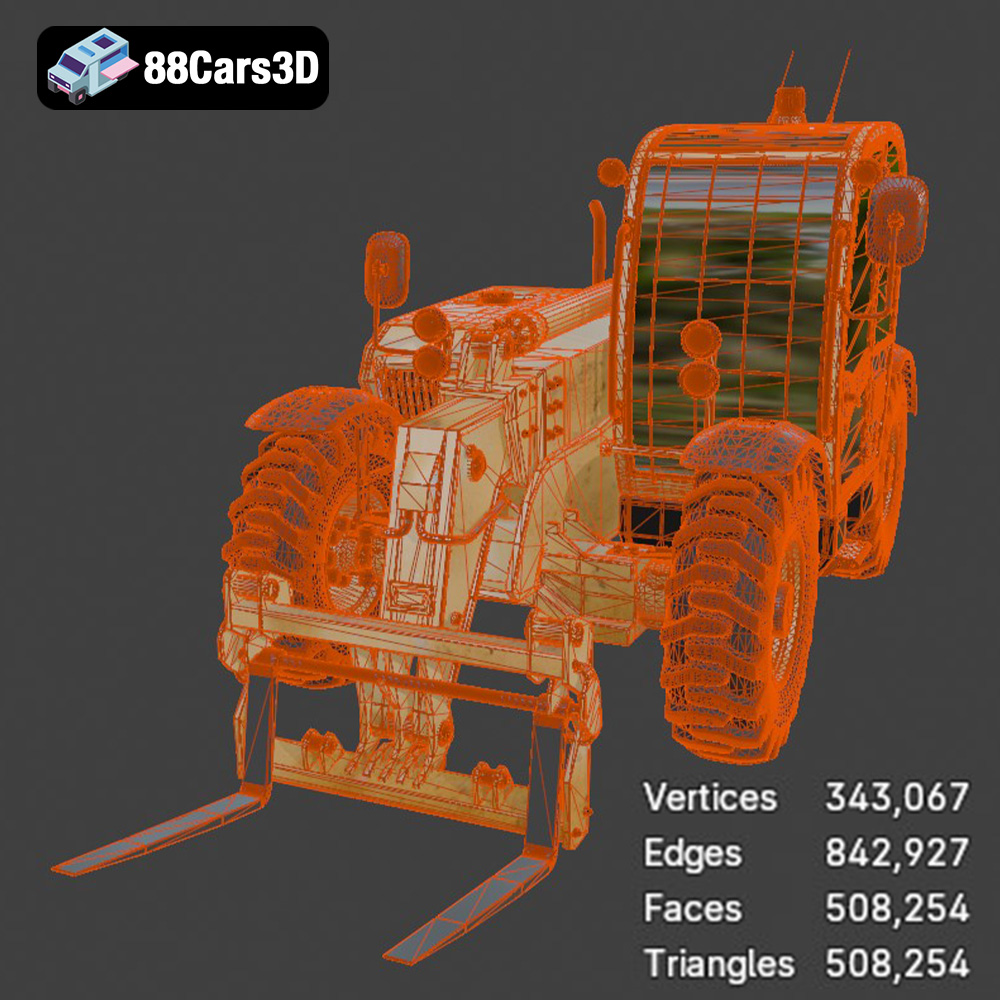
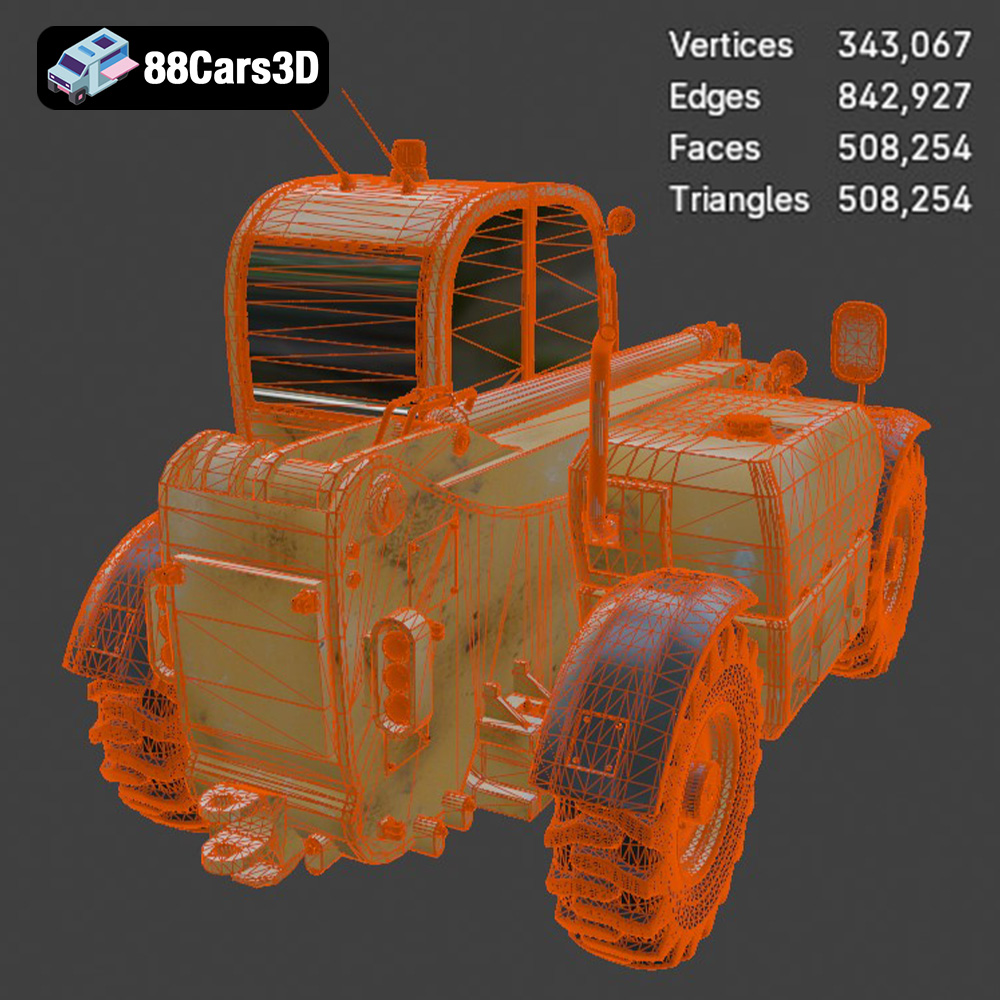
Achieving visual fidelity in 3D models often comes at the cost of performance, especially in real-time applications. The Telehandler 08 skillfully navigates this challenge with a triangle count of 508,254. This figure represents a carefully chosen balance, providing enough geometric detail to capture the rugged exterior, prominent hydraulic cylinders, and intricate mechanical components without over-burdening game engines or rendering pipelines. From the detailed internal diesel engine components visible through ventilation grilles to the aggressive off-road tire treads and accurate suspension assemblies, every element is crafted to convey authenticity. The protective ROPS/FOPS operator cabin, industrial instrument cluster, and multi-function joystick controls provide an immersive experience, even optimized for first-person views in heavy machinery simulators.
A static model, no matter how detailed, has limited utility for dynamic projects. The Telehandler 08 is built with animation in mind. Its design features separate components for wheels, boom segments, forks, and steering, all set up with proper pivot points. This meticulous preparation allows animators to accurately replicate the machine’s real-world movements, from the multi-stage extension of the telescopic boom and the precise tilting of the forks to the rotation of the wheels and articulated steering. Furthermore, the model is built to real-world scale accuracy, ensuring that it seamlessly integrates into environments and interacts realistically with other objects, adhering to the physical constraints expected in simulations or visualizations.
Beyond its geometry, the Telehandler 08 is designed to support a wide range of material interpretations. While specific texture maps might vary, the underlying UV mapping and material structure allow for sophisticated physically-based rendering (PBR) workflows. This means the model can convincingly portray various finishes—from standard industrial yellow paint to weathered, rusted metal, or even custom corporate liveries. The ability to modify tire textures for heavy mud, construction dust, or a clean factory finish, coupled with adaptable lighting for different work environments, empowers artists to achieve the precise visual narrative their project demands. This level of customization ensures the asset can evolve to fit diverse scene requirements and artistic directions, proving its value in a professional toolkit.
The true measure of a 3D asset lies in its utility across diverse professional pipelines. The Telehandler 08, with its blend of detail and optimization, is an excellent candidate for integration into various high-stakes projects.
The gaming industry constantly seeks high-fidelity assets that run efficiently. The Telehandler 08’s “game-ready & optimized” status, with its balanced polycount and separate animatable parts, makes it an ideal candidate for construction simulators, farming games, and open-world industrial environments. Developers can leverage the .fbx or .unreal formats for seamless integration into Unreal Engine or Unity. For instance, in a large-scale construction simulation game, the Telehandler 08 can be rigged for player control, complete with realistic physics and damage models. Its optimized geometry ensures that it contributes to an immersive experience without causing significant performance bottlenecks, even when numerous other vehicles and characters are present. The proper pivot setup for boom extension and fork tilting allows for authentic gameplay mechanics, providing players with a realistic heavy machinery experience.
For professionals in architectural visualization (ArchViz) and industrial rendering, the Telehandler 08 provides a highly detailed prop that can add realism and context to a scene. Using the .max or .blend file, artists in 3ds Max (with V-Ray or Corona Renderer) or Blender (with Cycles or Eevee) can integrate the model into construction site plans, industrial facility walkthroughs, or marketing renders for equipment manufacturers. Imagine a promotional video showcasing a new building project; placing the Telehandler 08 on the digital site, with accurate shadows and reflections, instantly conveys a sense of scale, activity, and authenticity. This application of 3D car models (or rather, heavy vehicle models in this context) extends beyond mere aesthetics, serving as a powerful communication tool for stakeholders.
The ability to animate the Telehandler 08’s functional parts opens doors for dynamic training modules and compelling marketing content. Manufacturers can use the model to create detailed animation sequences demonstrating proper operation, maintenance procedures, or safety protocols. A short animated video could show the boom extending, forks lifting a pallet, and the machine navigating a tight space, providing a clear visual guide that is far more engaging than static diagrams. The separate wheels, boom segments, and steering components allow for highly realistic motion, making the Telehandler 08 from 88cars3d.com a valuable asset for creating instructional content, technical demonstrations, or engaging digital advertisements.
Beyond traditional screen-based applications, the Telehandler 08 demonstrates exceptional versatility in the burgeoning fields of augmented reality, virtual reality, and additive manufacturing.
The optimized nature of the Telehandler 08 makes it a prime candidate for AR/VR applications. In virtual reality, the model can be the centerpiece of an immersive safety training program, allowing operators to practice complex maneuvers or hazardous tasks in a risk-free environment. Using the .unreal or .fbx formats, developers can build interactive VR simulations where users can virtually sit in the protective ROPS/FOPS operator cabin, manipulate the detailed multi-function joystick controls, and learn about the machine’s operation firsthand. For augmented reality, especially for mobile experiences or product showcases, the compact .glb format shines. Imagine holding your phone up to a construction site and seeing a virtual Telehandler 08 appear, allowing you to walk around it, inspect its features, or even see it in action, overlaid onto the real world. This capability for real-time interaction and immersion is invaluable for equipment familiarization and engaging mobile experiences.
The bridge between the digital and physical realms is nowhere more apparent than in 3D printing. The Telehandler 08, convertible to the .stl format, offers hobbyists and professionals alike the opportunity to bring this heavy machinery into tangible form. For a hobbyist creating a detailed construction diorama, printing the Telehandler 08 at a recommended scale of 1:24, 1:32, or 1:50 adds an unparalleled level of realism. The provided 3D print settings are crucial: recommending resin printing for fine mechanical details, suggesting a layer height of 0.04–0.12 mm, and specifying wall thickness and infill for structural integrity. The necessity of supports for intricate parts like hydraulic lines and the cabin cage, along with specific print orientations, ensures successful output. Post-processing steps—sanding, primer, and applying authentic factory colors with metallic finishes and weathering effects—transform a raw print into a display-worthy replica. This ability to cross over from digital asset to physical object highlights the enduring value and versatility of well-crafted 3D car models and heavy equipment.
Investing in a high-quality 3D model like the Telehandler 08 is not just about acquiring geometry; it’s about gaining a versatile tool that can adapt to evolving project requirements and artistic visions.
The customization options inherent in the Telehandler 08 provide significant strategic advantages. The ability to change body colors from standard industrial yellow to custom corporate livery ensures brand consistency across marketing materials or within a branded game environment. Modifying tire textures to reflect heavy mud, construction dust, or a pristine factory finish allows the model to seamlessly integrate into diverse scene contexts—whether it’s a gritty construction site, a clean logistics warehouse, or a polished showroom. Adjusting material finishes (matte, gloss, rusted) and adapting lighting for different work environments further enhances its adaptability. This level of flexibility means that a single asset can be re-purposed for numerous projects, drastically reducing the need to create new models from scratch and saving valuable development time.
A well-optimized, game-ready asset like the Telehandler 08 represents a sound investment for any studio or individual artist. Its compatibility with major 3D software platforms and real-time rendering engines, combined with its detailed yet performant topology, future-proofs its utility. The proper pivot setup for all articulated components, real-world scale accuracy, and inclusion of multiple file formats ensure that it remains relevant and functional across technology shifts and project iterations. By minimizing the need for extensive post-purchase optimization or re-work, the Telehandler 08 from 88cars3d.com allows creative teams to focus on innovation and content creation, rather than technical hurdles, ultimately enhancing the overall quality and efficiency of their productions involving 3D car models and industrial vehicles.
The Telehandler 08 3D model stands as a testament to the power of meticulous 3D asset creation. Its robust design, optimized topology, and comprehensive file format support make it an exceptionally versatile tool for professionals across game development, architectural visualization, AR/VR simulation, and 3D printing. Whether you’re building an immersive construction simulator in Unreal Engine, crafting high-resolution marketing renders in 3ds Max, developing critical safety training modules, or even producing a tangible scale model, this asset delivers on both visual fidelity and technical performance. By understanding the capabilities inherent in such a detailed and flexible model, and by leveraging the right file formats for each specific application, creators can unlock new levels of realism and efficiency in their projects. For those seeking high-quality 3D car models and industrial assets, platforms like 88cars3d.com offer an invaluable resource for elevating any digital endeavor.
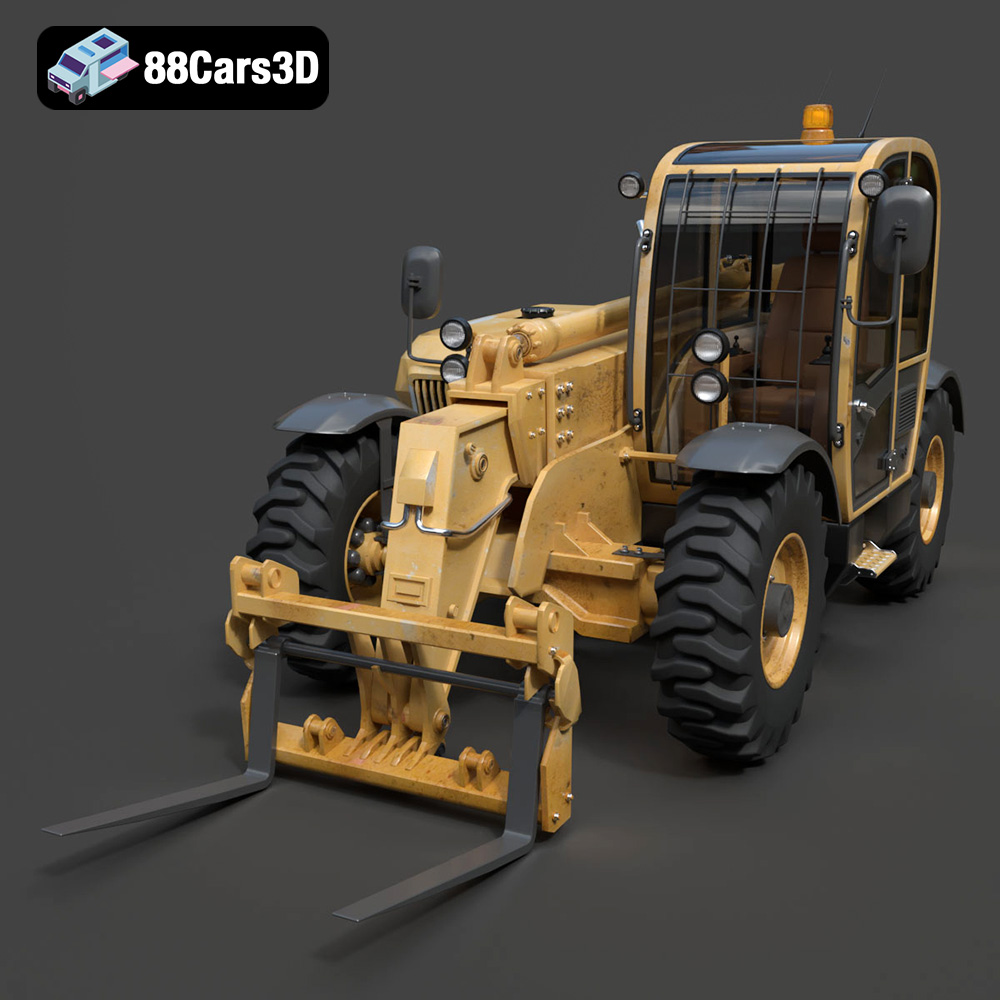
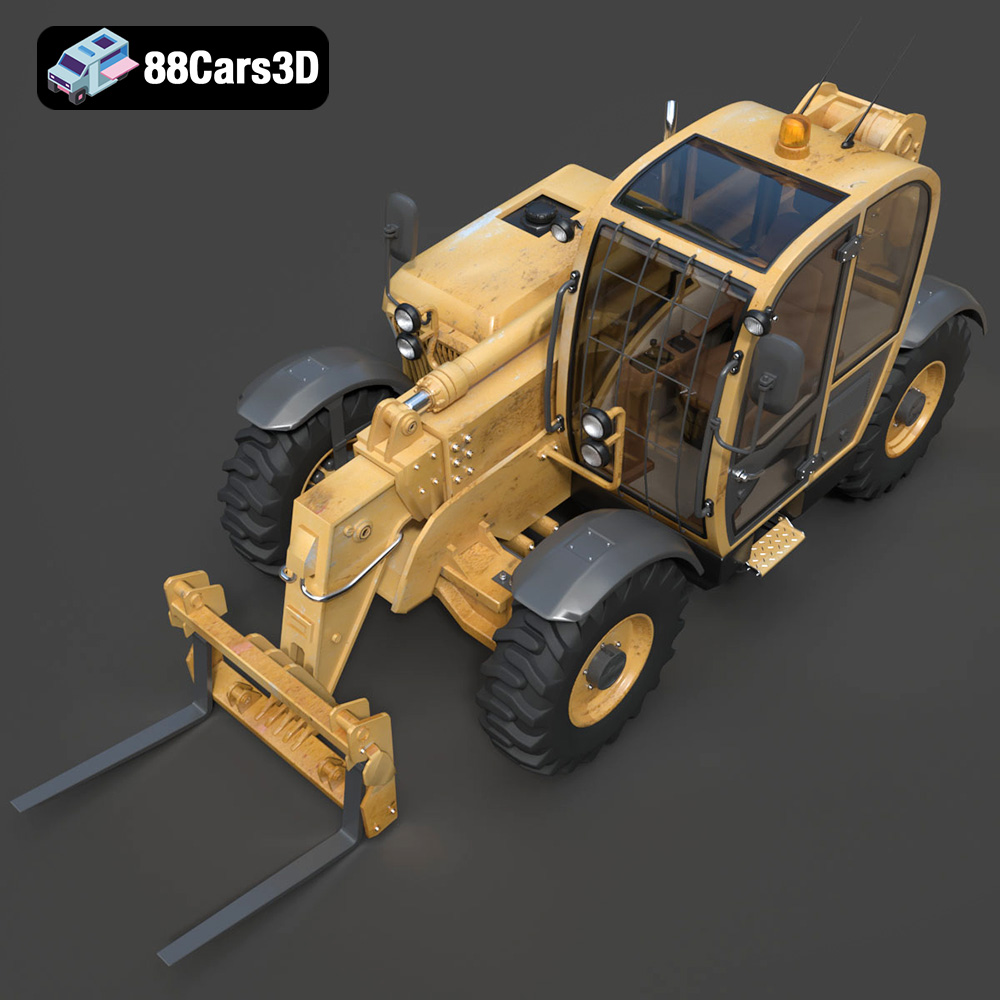
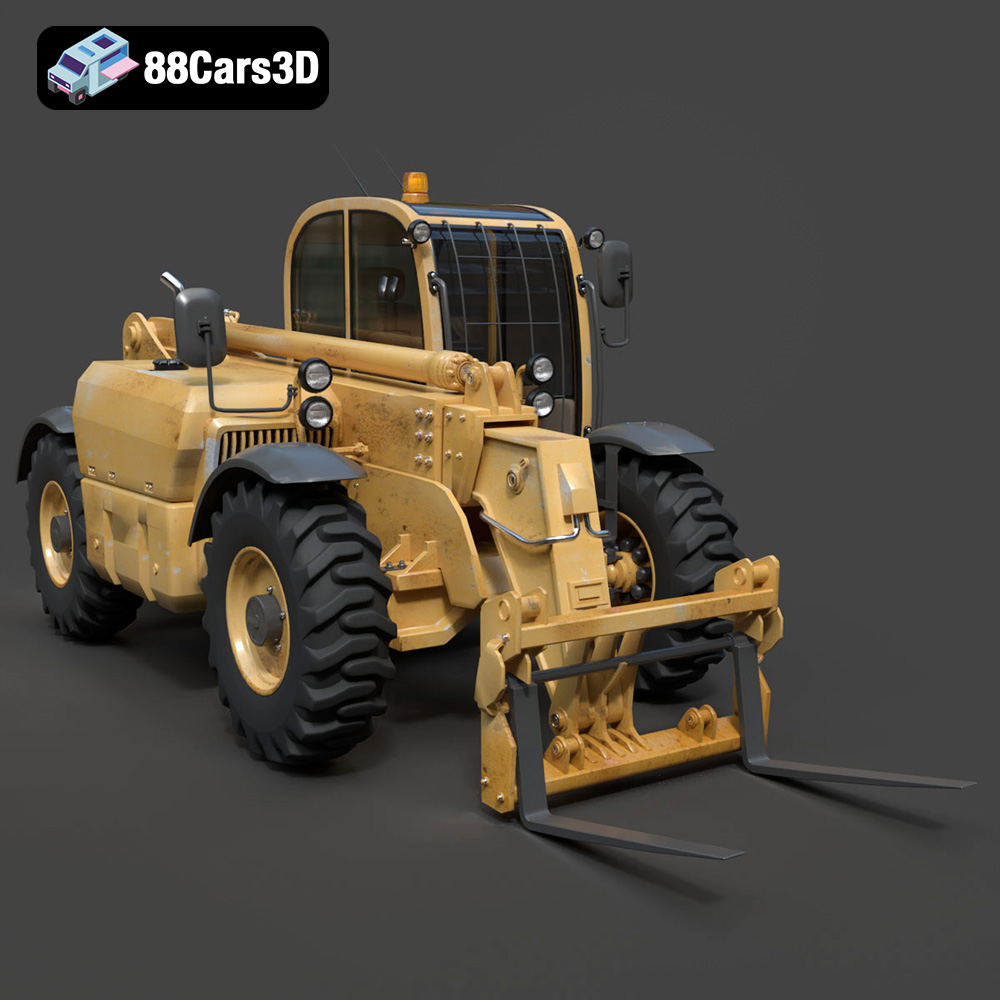
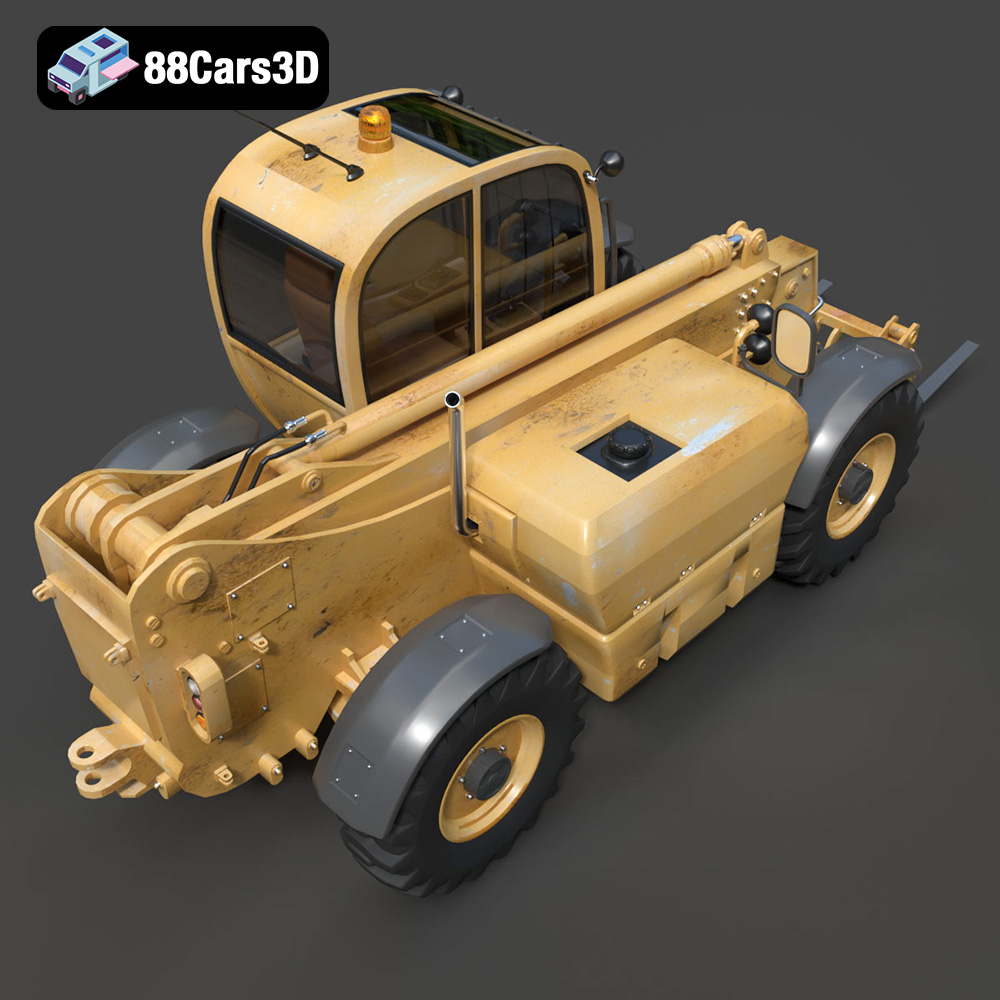
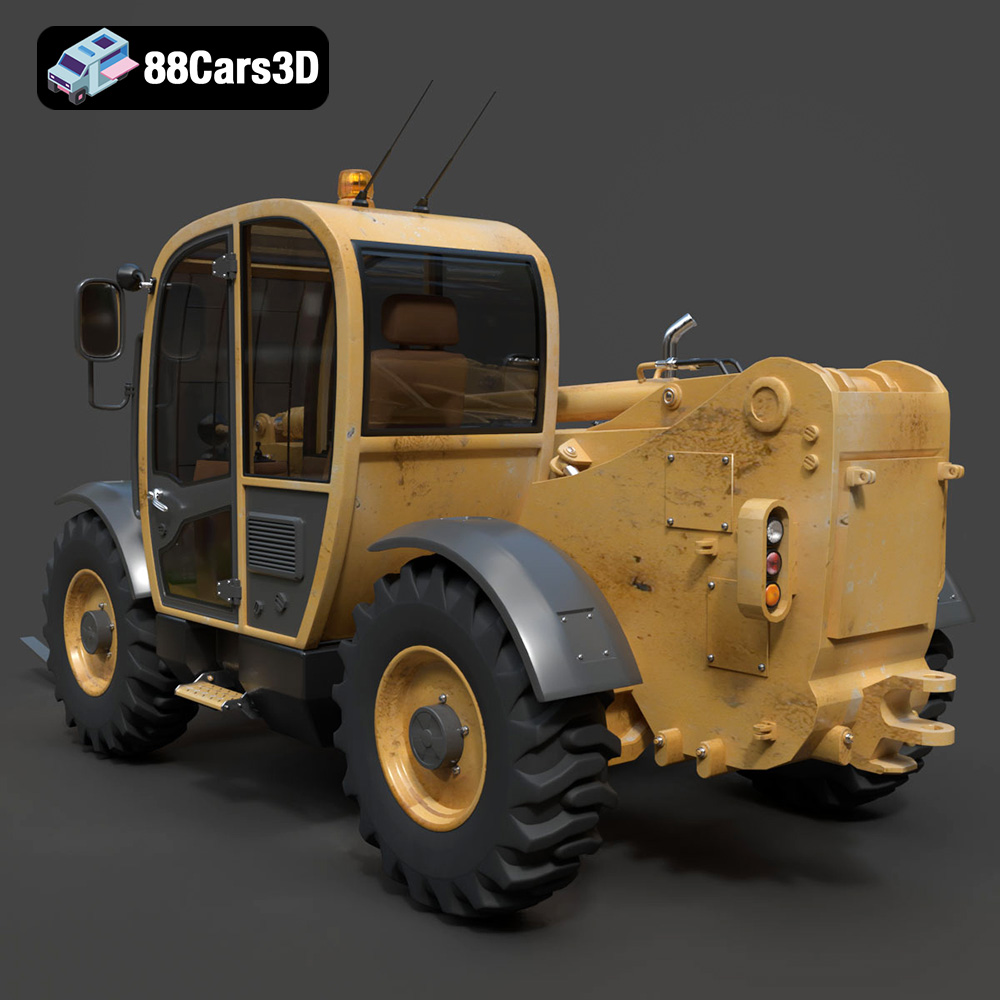
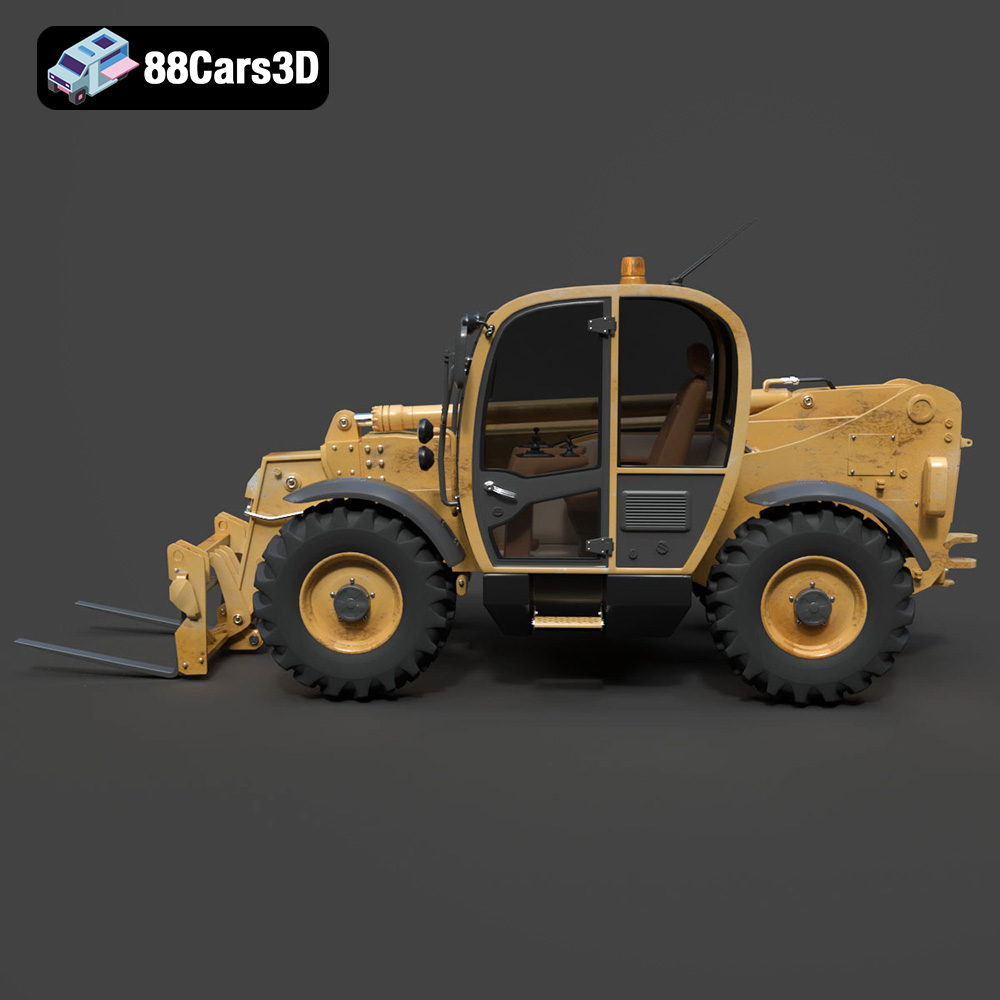
The Telehandler 08 represents the pinnacle of modern heavy lifting and material handling machinery. Characterized by its robust telescopic boom, heavy-duty chassis, and industrial-grade construction, this versatile vehicle is essential for construction sites, agricultural operations, and logistics. The design features a rugged exterior with prominent hydraulic cylinders, a protective ROPS/FOPS operator cabin, and aggressive off-road tires designed to navigate treacherous terrain while carrying heavy loads. This premium 3D model features a meticulously optimized topology with a triangle count of 508,254, striking the perfect balance between high-end visual fidelity and real-time performance. Designed specifically for integration into modern game engines like Unreal Engine and Unity, the model boasts game-ready optimization without sacrificing the intricate details of its mechanical components. It is equally suited for high-resolution offline rendering, immersive AR/VR training simulations, and dynamic animations requiring articulated machinery. Perfect for construction site environments, agricultural and farming simulators, heavy machinery VR training programs, and industrial visualization projects.
$26.00
.blend
.fbx
.glb
.max
.obj
.ply
.rendering
.stl
.tractor
.unreal
construction-equipment
game asset
game-ready
heavy-machinery
low-poly
optimized
telehandler
telehandler-08
telescopic-handler
vehicle-3d-model
VR/AR