Get 20% OFF All Premium 3D & STL Models!

In the dynamic worlds of game development, architectural visualization, and immersive AR/VR experiences, the demand for highly detailed and performant 3D models is ever-present. From the sleek lines of high-performance vehicles to the formidable presence of industrial machinery, capturing realism and technical precision is paramount. This is especially true for heavy-duty construction equipment, where every rivet, hydraulic hose, and structural component tells a story of raw power and intricate engineering. Today, we’re taking an in-depth look at a prime example of such a meticulously crafted asset: the Wheel Loader 3D Model. This formidable digital creation is not just an object; it’s a gateway to creating believable construction sites, compelling simulations, and stunning visualizations, offering a level of detail and optimization that sets it apart for professional use. Whether you’re a seasoned developer or a visualization artist, understanding the intricacies of such assets, and where to acquire them, like on 88cars3d.com, is key to elevating your projects.
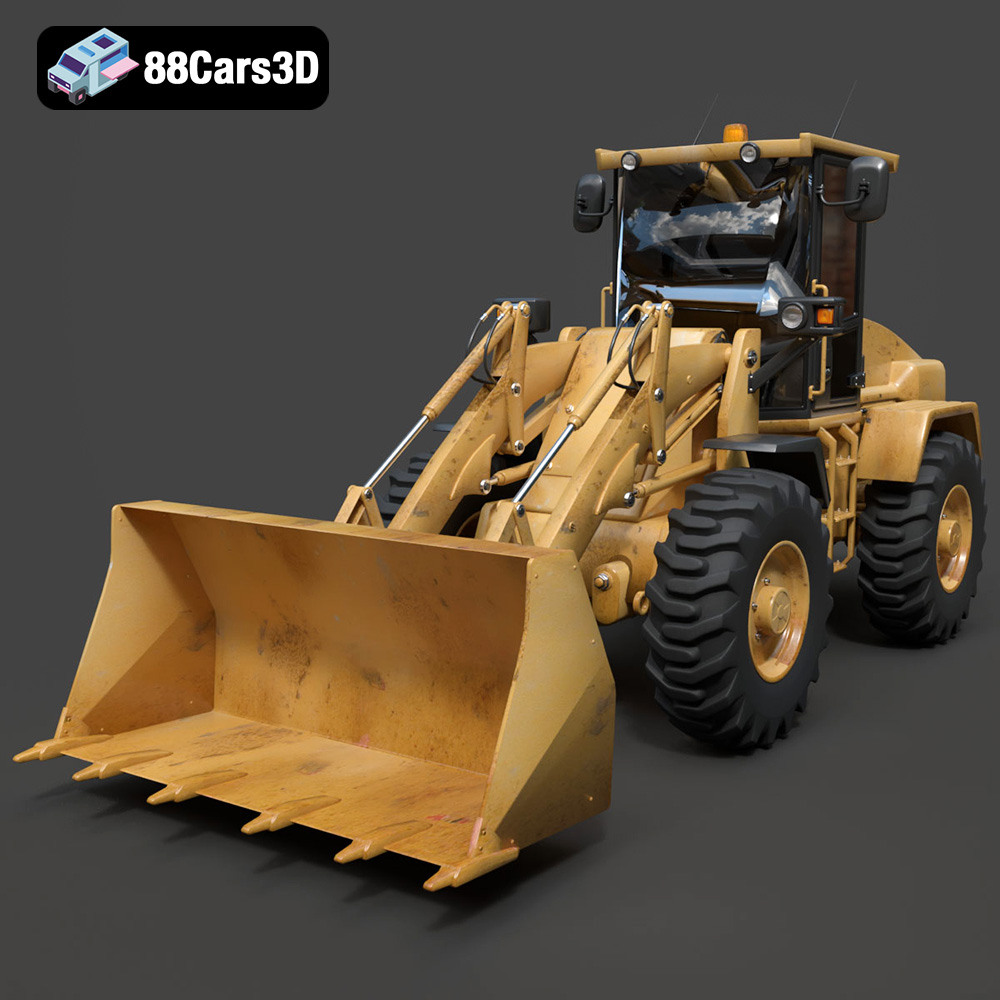
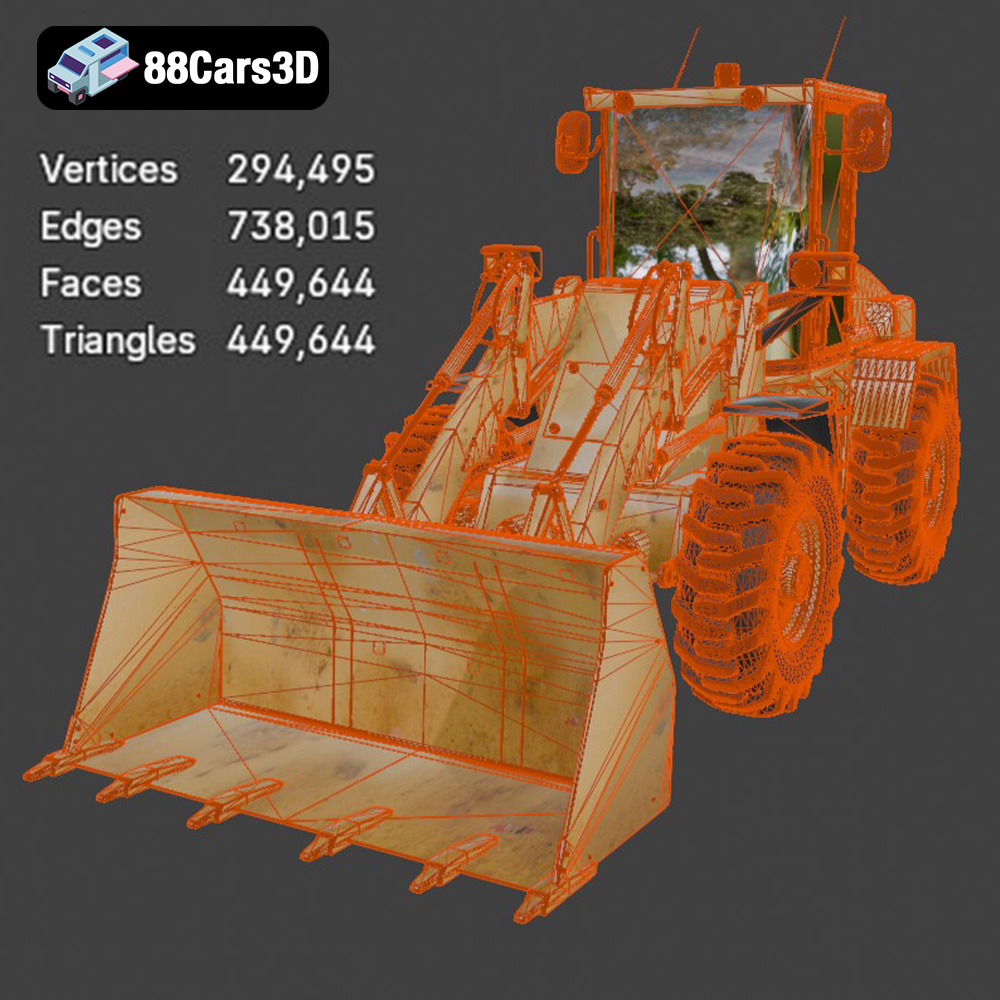
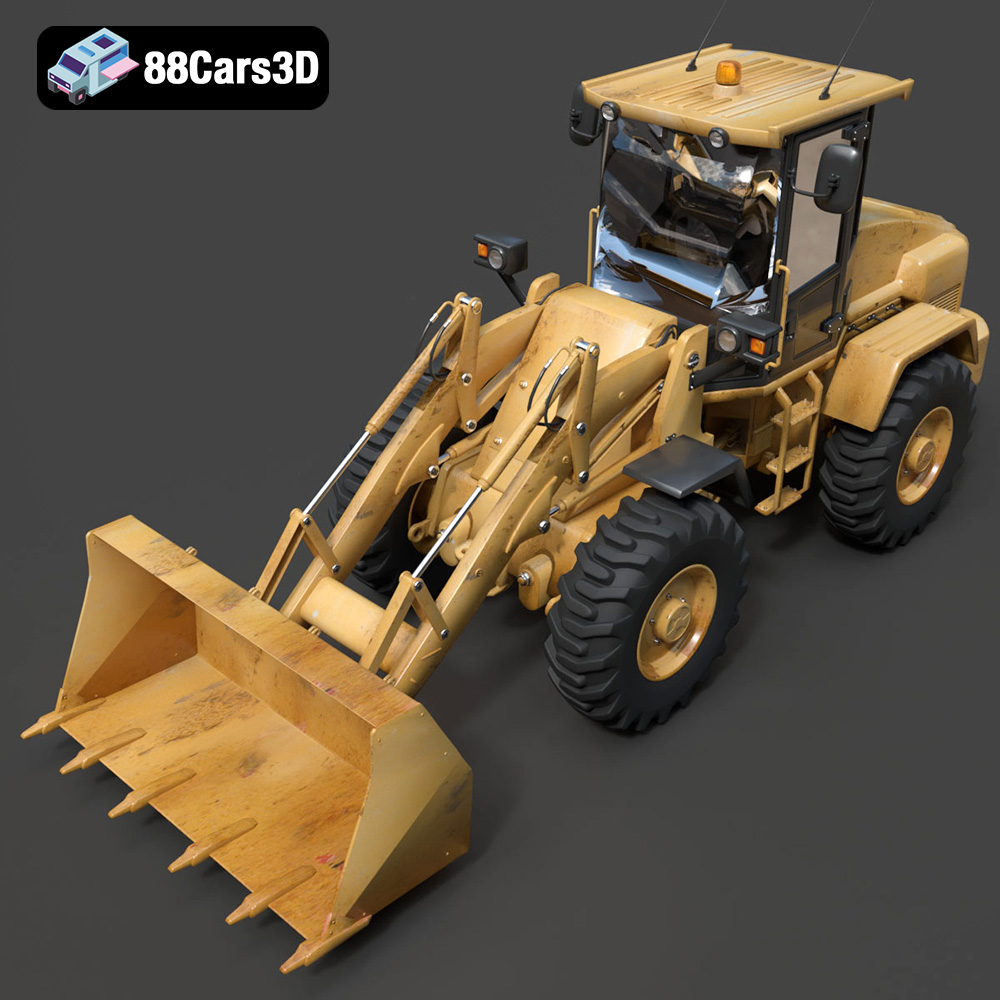
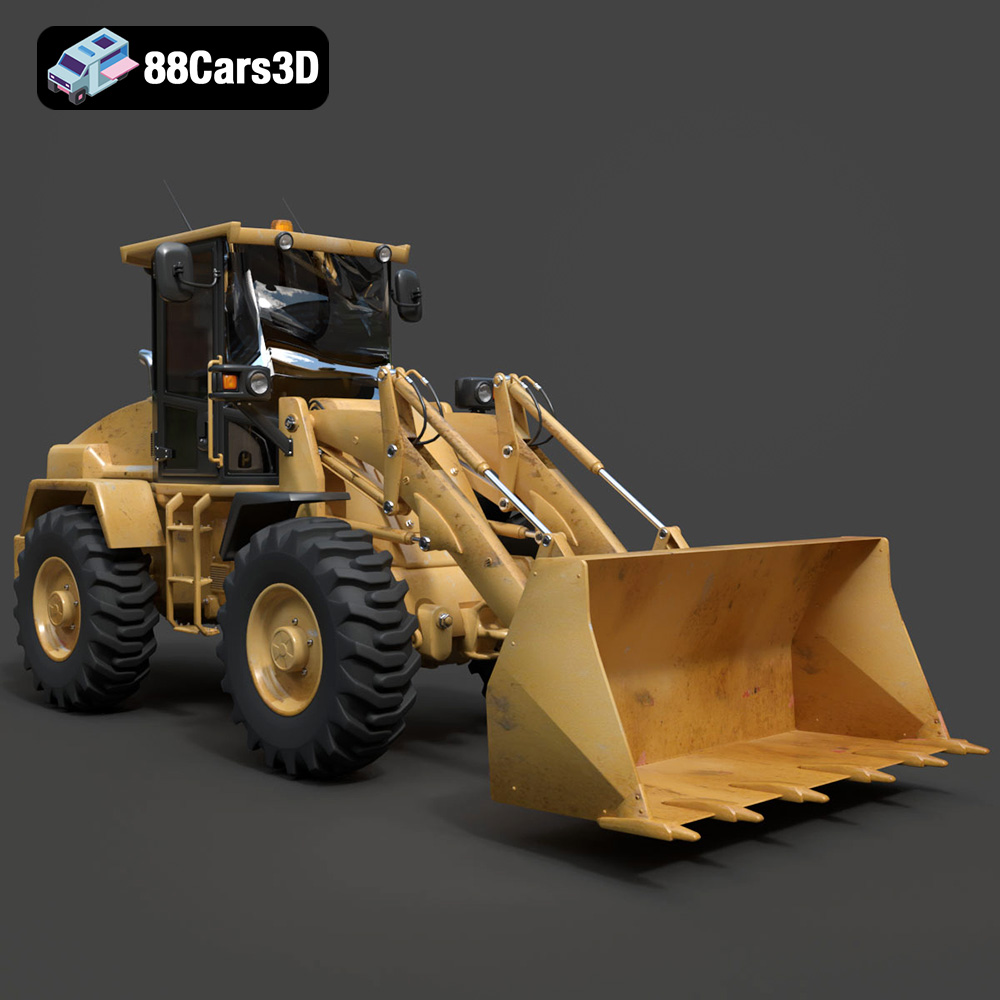
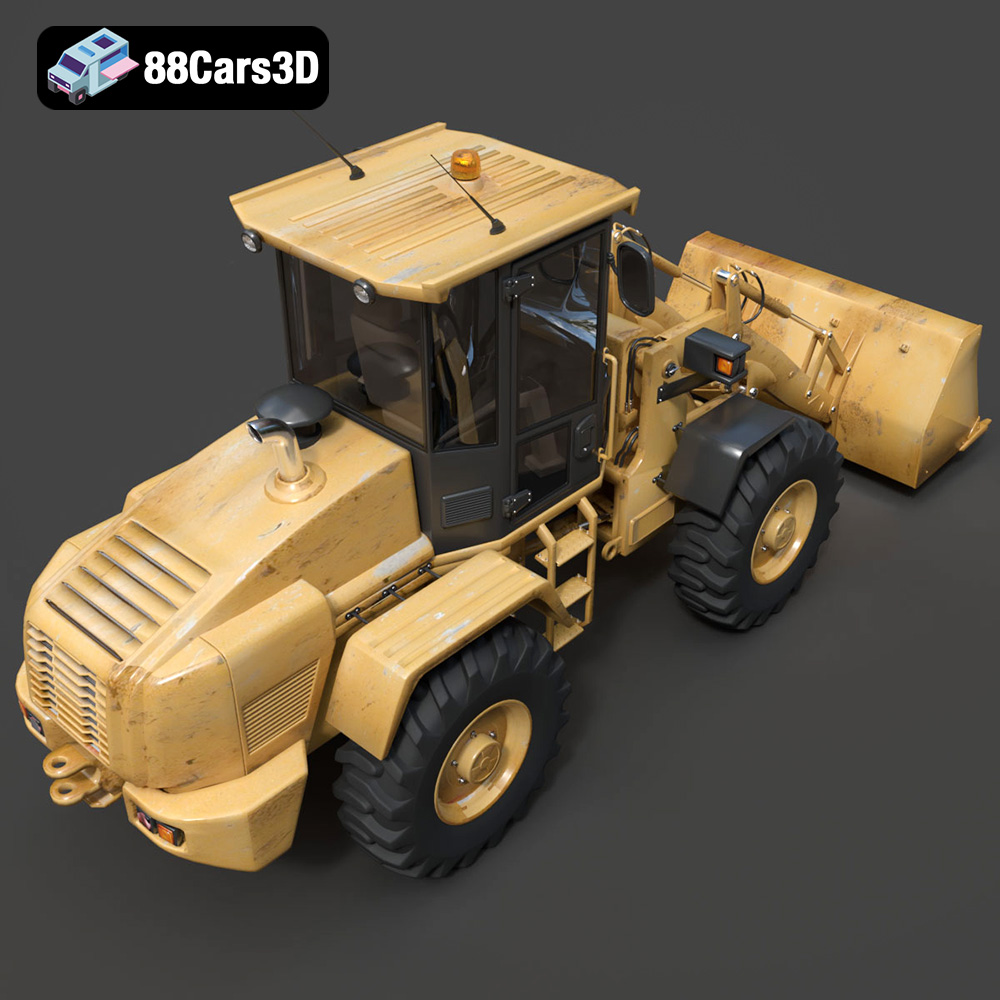
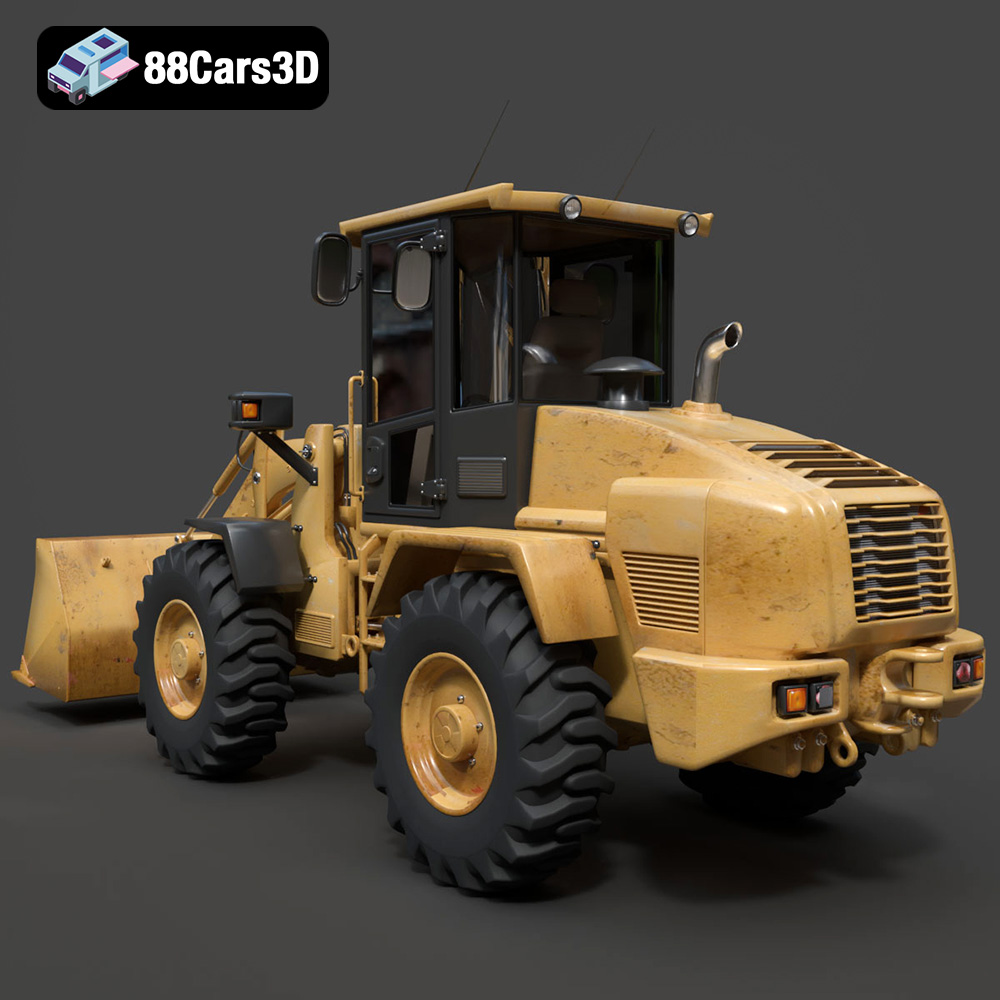
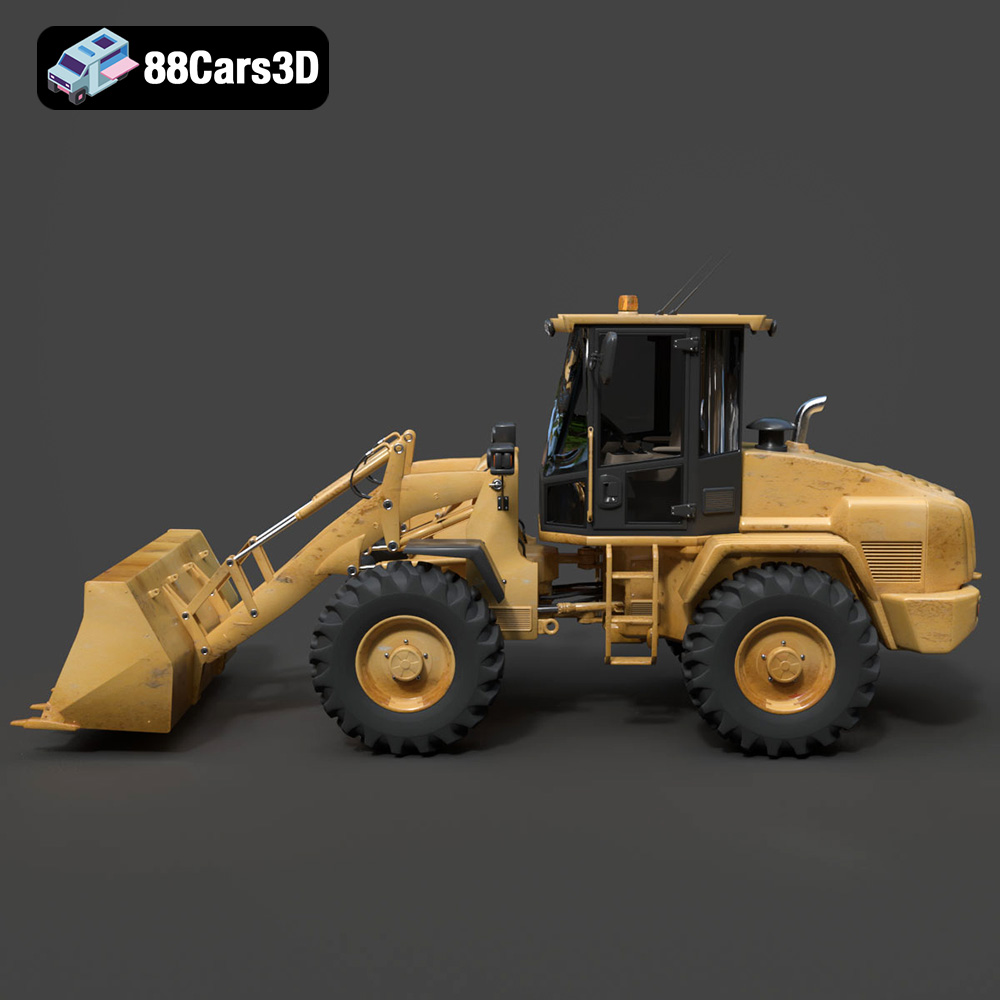
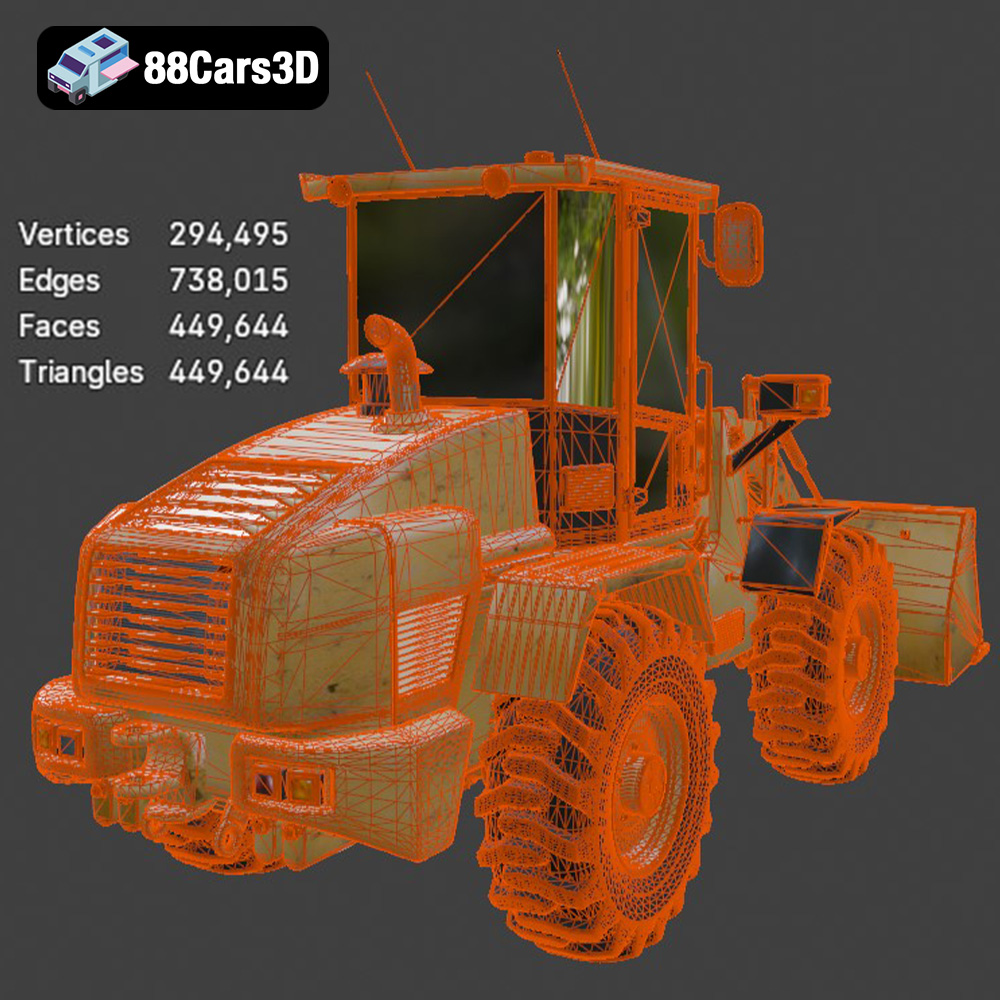
The Wheel Loader stands as an icon of strength and efficiency on any construction site. Its digital counterpart must embody this robust nature, providing both visual fidelity and practical utility within various software environments. This particular Wheel Loader 3D Model delivers on all fronts, featuring everything from its massive front-mounted bucket and intricate hydraulic lifting mechanisms to its articulated steering joint and heavily vented rear engine housing. Its design meticulously replicates authentic industrial styling cues, including large, deep-tread off-road tires, safety railings, and high-visibility work lighting. With a well-optimized topology of 449,644 triangles, it strikes an exceptional balance between high-end realism and real-time performance, making it an indispensable asset for a wide array of digital applications.
For any professional working with 3D models, the choice of file format is not a trivial decision; it dictates compatibility, functionality, and workflow efficiency. High-quality 3D models, such as the Wheel Loader available on 88cars3d.com, are often provided in multiple formats to ensure maximum versatility across diverse platforms and applications. Each format serves specific purposes, optimized for different stages of the 3D pipeline, from initial modeling and animation to real-time rendering and physical production. Let’s delve into the key formats included with this Wheel Loader 3D Model and understand their technical nuances and optimal use cases.
The .blend format is the native file type for Blender, the powerful open-source 3D creation suite. When you receive a .blend file, you’re getting a fully editable Blender scene. This means all the original geometry, materials, textures, lighting, cameras, animations, and scene settings are preserved. For artists and designers who use Blender, this format offers unparalleled flexibility. You can dissect the model, modify its topology, adjust materials, rig new animations, or integrate it seamlessly into existing Blender projects without any loss of data or conversion artifacts. It’s ideal for deep customization and for artists whose primary workflow is centered around Blender.
.fbx (Filmbox) is arguably the most widely adopted interchange format in the 3D industry, particularly favored for game development and real-time visualization. Developed by Autodesk, FBX files can store a vast array of 3D data, including geometry, materials, textures, animations, skinning, and camera information. Its robust support across major 3D software (like 3ds Max, Maya, Blender) and game engines (Unreal Engine, Unity) makes it the go-to format for transferring animated or complex models between different applications. For the Wheel Loader, the .fbx file ensures that its articulated steering, boom lift, and bucket tilt animations, along with its materials, can be imported directly into game engines or other DCC applications with minimal setup, making it ideal for Unreal, Unity, and real-time pipelines.
The .obj (Wavefront OBJ) format is a classic and highly compatible format, primarily used for transferring static 3D geometry and basic material information. While it doesn’t support animation or rigging as comprehensively as FBX, its simplicity and widespread support make it a universal format for cross-software compatibility. Almost every 3D application can open and export .obj files. It’s excellent for situations where you only need the mesh data and perhaps basic UV mapping and material references. For the Wheel Loader, an .obj file provides a clean, raw mesh, perfect for artists who prefer to rebuild materials or integrate the model into older or less common software platforms.
.glb (GLB format, derived from glTF, Graphics Language Transmission Format) is an increasingly popular format, especially optimized for AR, VR, and browser-based 3D display. It’s a binary container that bundles geometry, materials, textures, and even animations into a single, compact file. This “all-in-one” nature makes it incredibly efficient for web loading and real-time applications where file size and speed are critical. The Wheel Loader in .glb format would be perfect for deploying into a mobile AR experience, a web-based configurator, or a lightweight VR scene, ensuring fast loading and consistent visual quality across different devices.
.stl (Stereolithography) is the de facto standard file format for 3D printing. It represents a 3D model as a collection of unconnected triangles, describing only the surface geometry of an object without color, texture, or other attributes. For the Wheel Loader, the .stl file allows hobbyists and professionals to physically produce the model. While it’s a “dumb” format in terms of preserving design intent, its simplicity ensures universal compatibility with 3D printers and slicing software. The Wheel Loader’s .stl output is crucial for those looking to create display-scale models or prototypes.
.ply (Polygon File Format) is another format for storing 3D data, often used in applications like 3D scanning, CAD, and scientific visualization. It can store a wider range of properties than .obj, including color, transparency, surface normals, and even confidence values. While less common for general asset distribution, its inclusion for the Wheel Loader suggests an emphasis on precision mesh data, potentially useful for engineering analysis, reverse engineering workflows, or integration into specialized CAD or geological simulation software.
The .unreal designation typically refers to a pre-packaged asset optimized specifically for Unreal Engine. This isn’t a standard universal file extension but rather implies that the asset comes as an Unreal project file, a content pack, or a fully configured export ready for direct import into the Unreal Editor with materials, textures, and possibly blueprints already set up. This dramatically accelerates workflow for Unreal developers, minimizing the time spent on material setup and ensuring the model looks as intended straight out of the box. For the Wheel Loader, this means engine-ready asset for real-time environments, saving countless hours for game developers and simulation creators.
Similar to .blend for Blender, .max is the native file format for Autodesk 3ds Max. This format contains the complete 3ds Max scene, including geometry, modifiers, materials, textures, lights, cameras, animations, and render settings. For artists and studios relying on 3ds Max for architectural visualization, automotive rendering, or complex animation, the .max file provides the full project context. It allows for detailed manipulation, integration into existing 3ds Max scenes, or leveraging its robust rendering capabilities. The Wheel Loader provided as a .max file offers maximum flexibility for artists using this powerful DCC application for animation and rendering.
The true value of a professional 3D asset lies in its ability to marry visual authenticity with technical efficiency. The Wheel Loader 3D Model achieves this delicate balance, making it a standout choice for various high-fidelity applications. Its engineering reflects a deep understanding of both the real-world machine and the demands of digital content creation.
From the first glance, this Wheel Loader exudes realism. The accurate articulated frame geometry and proportions faithfully reproduce the actual heavy machinery, providing a solid foundation for any scene. Critical elements like the detailed engine compartment, complete with ventilation louvers and a heavy-duty exhaust stack, add significant visual depth and believability. The intricate hydraulic system, a defining characteristic of a wheel loader, is rendered with precision, showcasing dual lift cylinders, tilt cylinders, and meticulously routed hoses. These details are not just aesthetic; they are functional, hinting at the model’s capacity for animation.
Industrial work lighting, including roof-mounted beacons, headlights, and tail lamps, are present, ready to be illuminated for dynamic night scenes or safety simulations. The heavy-duty wheels with their deep-tread off-road earthmoving tires are a testament to the model’s robust nature, while accurate heavy axles and lower chassis components complete the undercarriage. Crucially, components like the wheels, bucket, lift arms, and articulated steering elements are separated, ensuring seamless animation capabilities within any professional pipeline.
Beyond the impressive exterior, the Wheel Loader 3D Model extends its attention to detail into the operator’s realm. The cockpit features a detailed operator seat with armrests and safety restraints, nestled within a protective ROPS/FOPS cabin, emphasizing safety and ergonomics. Essential controls like the steering wheel and realistic hydraulic joystick controls are modeled with care, ready to provide an authentic interactive experience. An instrument cluster with digital displays and industrial gauges, along with foot pedals, transmission levers, and switch panels, round out the control details. This meticulous interior design is particularly vital for first-person POV applications in gaming and VR operator training, where immersion hinges on such authentic elements.
Under the hood, the Wheel Loader 3D Model is engineered for optimal performance. Its “Game-Ready & Optimized” status comes from its 449,644 triangles, a polycount that strikes a perfect balance. It’s high enough to maintain exceptional visual realism for close-up shots in high-resolution renders, yet optimized enough for smooth integration into real-time engines like Unreal and Unity. This careful optimization prevents performance bottlenecks common with excessively high-poly models, while still delivering the visual punch expected from a premium asset. The model also boasts real-world scale accuracy, based on actual heavy machinery chassis, ensuring proportional correctness when integrated into larger scenes or alongside other realistic assets. Furthermore, proper pivot setup for articulated steering, wheel rotation, boom lift, and bucket tilt makes animating this model intuitive and realistic.
The true measure of a high-quality 3D model lies in its seamless integration into diverse professional pipelines. The Wheel Loader 3D Model, with its optimized geometry and multi-format availability, is designed to be a versatile workhorse, enhancing projects across game development, AR/VR, and rendering visualization.
For game developers, especially those creating construction simulators, open-world games, or management titles, this Wheel Loader is an invaluable game asset. Its optimized polycount of 449,644 triangles ensures that it can be dropped into a real-time engine like Unreal or Unity without significant performance overhead. The pre-setup pivots for articulated steering, boom lift, and bucket tilt dramatically reduce the rigging and animation workload. Imagine a large-scale construction site in a game, teeming with detailed machinery. Having assets like this Wheel Loader ready to integrate allows developers to focus on gameplay mechanics and environmental storytelling rather than spending weeks modeling and optimizing individual vehicles. The included .fbx and .unreal formats are specifically tailored to streamline this process, making it a truly game-ready asset.
The burgeoning fields of AR (Augmented Reality) and VR (Virtual Reality) demand models that are not only visually convincing but also lightweight and responsive. The Wheel Loader 3D Model excels here, making it perfect for immersive virtual operator training, industrial configurators, and mobile AR experiences. For a VR training module, the detailed cockpit and interior features are critical, offering an authentic first-person POV that helps operators learn controls and procedures in a safe, virtual environment. The .glb format is particularly beneficial for AR/VR applications due to its optimized delivery for web and mobile platforms. Companies can use this model to create virtual showrooms, allowing potential buyers to inspect the machinery in augmented reality, or to train new recruits on equipment operation without the need for physical machines, offering significant cost savings and increased safety.
In architectural visualization, mining site scenes, and industrial studio lighting setups, the quality of ancillary assets can make or break a render. The Wheel Loader provides excellent detail for adding realism and context to such scenes. Whether it’s foregrounding a new building development with active construction equipment or showcasing the scale of a mining operation, this model adds an unparalleled level of authenticity. Artists using 3ds Max or Blender (supported by .max and .blend formats respectively) can leverage the model’s high visual fidelity for stunning still images or animated sequences. Its real-world scale accuracy ensures it fits perfectly within scene environments, making it a go-to for automotive rendering professionals who need realistic vehicle integration for their projects. From a clean showroom finish to a mud-splattered workhorse, the model’s robust material properties allow for diverse rendering scenarios.
The utility of the Wheel Loader 3D Model extends beyond the digital realm. With its inclusion of an .stl file, it opens up exciting possibilities for 3D printing, catering to display-scale hobbyists, diorama builders, and even rapid prototyping. Creating a physical rendition of this powerful machine brings a new dimension to its appreciation, allowing for tactile interaction and showcasing its intricate design in a tangible form.
Achieving a high-quality 3D print requires careful attention to specific settings. For this Wheel Loader, several recommendations ensure the best possible physical model:
A truly professional 3D asset provides not only detail and optimization but also the flexibility for customization. The Wheel Loader 3D Model offers excellent avenues for artists to adapt its appearance to suit specific project requirements, ensuring it never looks out of place.
The underlying structure and material setup of this model are designed with customization in mind. Artists can easily modify the main body colors, transforming it from a standard industrial yellow to a vibrant construction orange, a corporate white, or even a custom livery. This flexibility is crucial when integrating the asset into diverse branding requirements or specific scene narratives. Furthermore, the ability to modify tire textures is a significant advantage; switching between clean, factory-fresh tires and heavily muddy or weathered variants can instantly communicate the operational context of the vehicle, adding to the visual storytelling. Adjusting material finishes, from a matte industrial paint to a glossy sheen or even a rusted metal look, allows for a wide range of aesthetic outcomes, from pristine showroom models to battle-hardened site machinery. Finally, adapting the lighting for different environments—be it a brightly lit daytime scene or a dramatically shadowed night work site—can profoundly impact the mood and realism of your renders and real-time environments.
This level of customization ensures that the Wheel Loader 3D Model remains a versatile asset, capable of fulfilling the specific creative visions of any project. It’s an investment that pays dividends in flexibility and creative control, empowering artists to achieve their desired visual outcomes without compromise.
In the competitive fields of 3D visualization, game development, and AR/VR, the quality of your assets directly impacts the success and impact of your projects. The Wheel Loader 3D Model stands as a testament to the power of meticulously crafted digital content, offering a potent combination of visual fidelity, technical optimization, and workflow flexibility. Its detailed exterior and interior features, coupled with its game-ready specifications, make it an indispensable asset for a broad spectrum of professional applications.
From enriching a construction simulator with realistic machinery and creating immersive VR operator training modules to adding contextual realism to architectural visualizations and even producing physical models through 3D printing, this Wheel Loader 3D Model delivers exceptional value. Its multi-format availability, including .blend, .fbx, .obj, .glb, .stl, .ply, .unreal, and .max, ensures seamless integration into virtually any professional pipeline, providing artists and developers with the tools they need to bring their visions to life. For high-quality 3D car models and industrial assets that meet the rigorous demands of modern digital production, resources like 88cars3d.com continue to be an essential destination for professionals seeking to elevate their work. Investing in such premium assets is not just about acquiring a model; it’s about acquiring efficiency, realism, and a foundation for limitless creative possibilities.
The Wheel Loader is an essential piece of heavy construction machinery, renowned for its formidable earthmoving capabilities and robust industrial design. This highly detailed 3D model perfectly captures the raw power of the actual vehicle, featuring a massive front-mounted bucket, intricate hydraulic lifting mechanisms, an articulated steering joint, and a heavily vented rear engine housing. Designed for heavy-duty operations, it showcases authentic industrial styling cues including large, deep-tread off-road tires, safety railings, and high-visibility work lighting.
Engineered with exceptional visual fidelity, this model features a well-optimized topology with a triangle count of 449,644. It strikes an excellent balance between high-end realism and performance, making it highly versatile for various digital applications. Whether utilized in real-time game engines, immersive AR/VR training simulations, or high-resolution architectural visualizations, this wheel loader asset provides top-tier quality and seamless integration.
Perfect for construction site simulations, heavy machinery games, industrial visualizations, and VR operator training modules.
.blend, .fbx, .obj, .glb, .stl, .ply, .unreal, .max
Tags:
wheel-loader, heavy-duty, construction-equipment, earthmover, industrial, tractor, heavy-machinery, game-ready, high-poly, optimized, vehicle-3d-model, game-asset, rendering, vr-ar, blend, fbx, obj, glb, stl, ply, unreal, max
$26.00
.blend
.fbx
.glb
.industrial
.max
.obj
.ply
.rendering
.stl
.tractor
.unreal
construction-equipment
earthmover
game asset
game-ready
heavy-duty
heavy-machinery
high poly
optimized
vehicle-3d-model
VR/AR
wheel-loader