Get 20% OFF All Premium 3D & STL Models!

In the dynamic realm of 3D visualization, the demand for highly realistic and meticulously optimized assets is ever-growing. Whether you’re an automotive designer crafting the next-generation vehicle, a game developer building an expansive open-world city, or an architect integrating realistic streetscapes into your renders, the quality of your 3D car models can make or break a project. The intricate details, accurate proportions, and optimized topology of a professional-grade 3D vehicle are paramount for achieving stunning photorealism and seamless real-time performance.
Today, we delve into the world of premium 3D car models, exploring their critical role across various industries. We’ll examine the technical specifications that define excellence, the diverse applications they enable, and the workflow considerations for integrating them into your projects. As a prime example of versatility and quality, we’ll frequently reference the BMW X1 2013 3D model, a meticulously crafted asset available on 88cars3d.com that embodies the precision required for high-end automotive rendering and interactive experiences.
Navigating the landscape of 3D modeling requires a solid understanding of file formats. Each format serves a specific purpose, excelling in certain workflows, software compatibilities, and end-use applications. Choosing the right format is crucial for efficiency, maintaining data integrity, and achieving your desired output.
The .blend file format is native to Blender, the popular open-source 3D creation suite. A .blend file is a complete package, saving not just the mesh data but also materials, textures, lighting, animation data, cameras, and even scene settings. This makes it an ideal format for artists who primarily work in Blender or for those who want a fully editable and reconstructable scene. For a model like the BMW X1 2013, a .blend file would provide complete access to its topology, material nodes, and any pre-setup rigging or animation, offering maximum flexibility for customization within Blender’s powerful ecosystem.
.fbx (Filmbox) is a proprietary file format owned by Autodesk and is widely considered the industry standard for exchanging 3D data between different software applications. Its strength lies in its ability to store a comprehensive range of 3D data, including geometry, materials, textures, lights, cameras, animations, and even rigging information. This makes .fbx invaluable for game development (Unreal Engine, Unity), film and VFX pipelines, and general cross-software collaboration. When using the BMW X1 2013 in a game engine, the .fbx format ensures all necessary components like the mesh, UVs, and potentially a basic rig are transferred efficiently and accurately.
The .obj (Wavefront OBJ) format is one of the oldest and most universally supported 3D file formats. It primarily stores geometry (vertices, normals, texture coordinates, polygonal faces) and can reference external material files (.mtl) for basic shading information. While .obj doesn’t typically support animation or advanced scene data, its simplicity and widespread compatibility make it excellent for static mesh exchange between virtually any 3D software. For archival purposes or when you only need the raw mesh of the BMW X1 2013, .obj is a reliable choice.
.glb (GL Transmission Format Binary) is the binary version of glTF, a royalty-free specification for the efficient transmission and loading of 3D scenes and models by engines and applications. .glb packages all necessary data (geometry, textures, animations) into a single file, making it incredibly efficient for web-based 3D viewers, AR/VR applications, and mobile platforms. Its optimization for real-time rendering makes it perfect for interactive car configurators or virtual showrooms featuring the BMW X1 2013 in augmented or virtual reality environments.
The .stl (Stereolithography) format is the de facto standard for 3D printing. It represents a 3D model as a series of connected triangles (a tessellation) defining only the surface geometry, with no color, texture, or material information. While simple, its ubiquity ensures compatibility with nearly all 3D printers and slicing software. For hobbyists or professionals looking to physically manifest a detailed model like the BMW X1 2013, the .stl format is the essential starting point for converting the digital asset into a tangible object.
.ply (Polygon File Format or Stanford Triangle Format) is a flexible format for storing 3D data, often used in scientific applications, CAD, and 3D scanning. It can store various properties beyond just geometry, such as color, transparency, surface normals, and even data about the “confidence” of a vertex. While less common for general artistic asset exchange, its precision and ability to store complex data make it valuable for detailed analysis or specific engineering workflows where the robust mesh data of the BMW X1 2013 might be needed for simulation.
The .unreal file is not a distinct file format but typically refers to an asset that has been properly imported, configured, and saved within an Unreal Engine project. This means the model (often initially an .fbx) has had its materials set up, collision meshes generated, and optimizations applied to function seamlessly within Unreal Engine’s real-time rendering environment. A .unreal-ready BMW X1 2013 model implies it’s been prepared for immediate use in interactive simulations, games, or cinematic sequences within the engine.
Similar to .blend for Blender, .max is the native file format for Autodesk 3ds Max, a powerful software widely used for architectural visualization, game development, and high-end rendering. A .max file contains the complete scene, including geometry, materials (with complex shaders like V-Ray or Corona), lighting, cameras, animation, and modifiers. For professionals relying on 3ds Max for complex automotive rendering or animation projects, the .max version of the BMW X1 2013 offers full editability and access to all scene components for advanced customization and rendering.
Automotive rendering is a specialized field that demands an unparalleled level of detail and a deep understanding of light, material properties, and composition. From high-resolution marketing imagery to photorealistic animations, the goal is always to blur the line between the digital and the real. A high-quality 3D car model is the foundation upon which this realism is built.
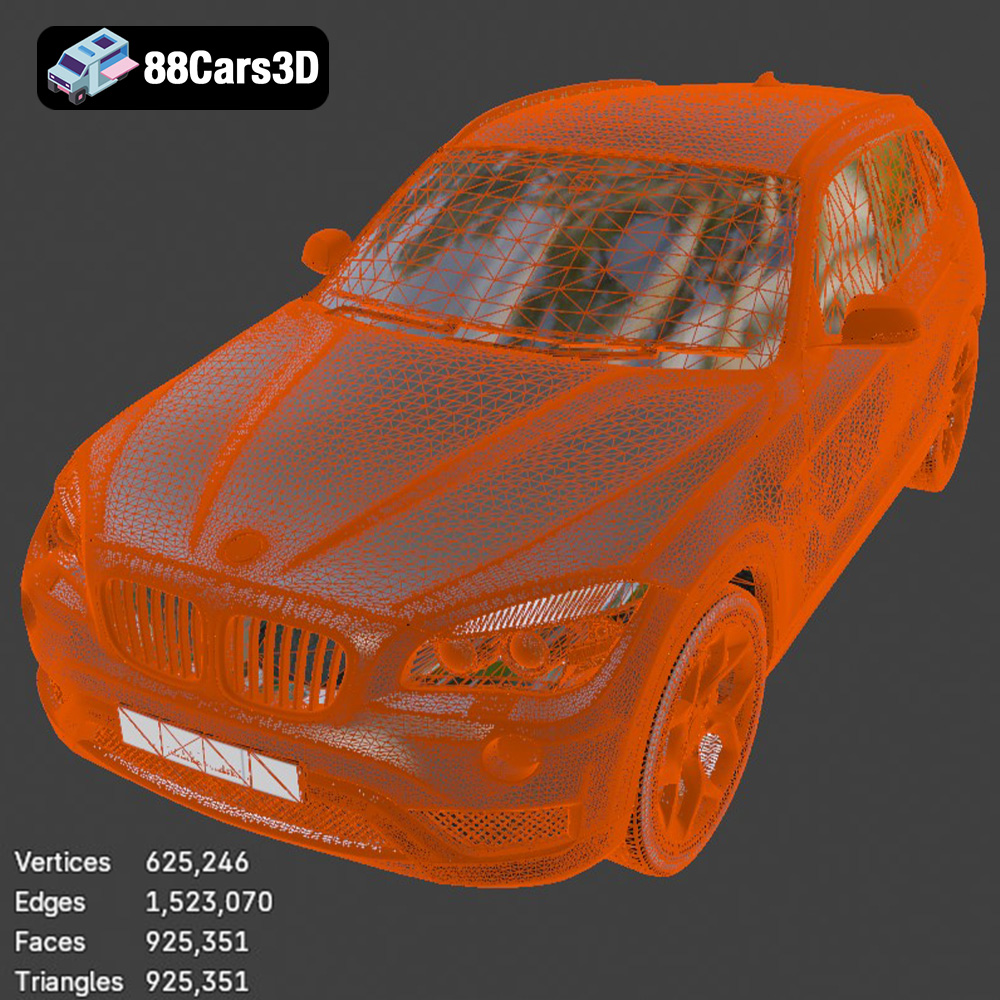
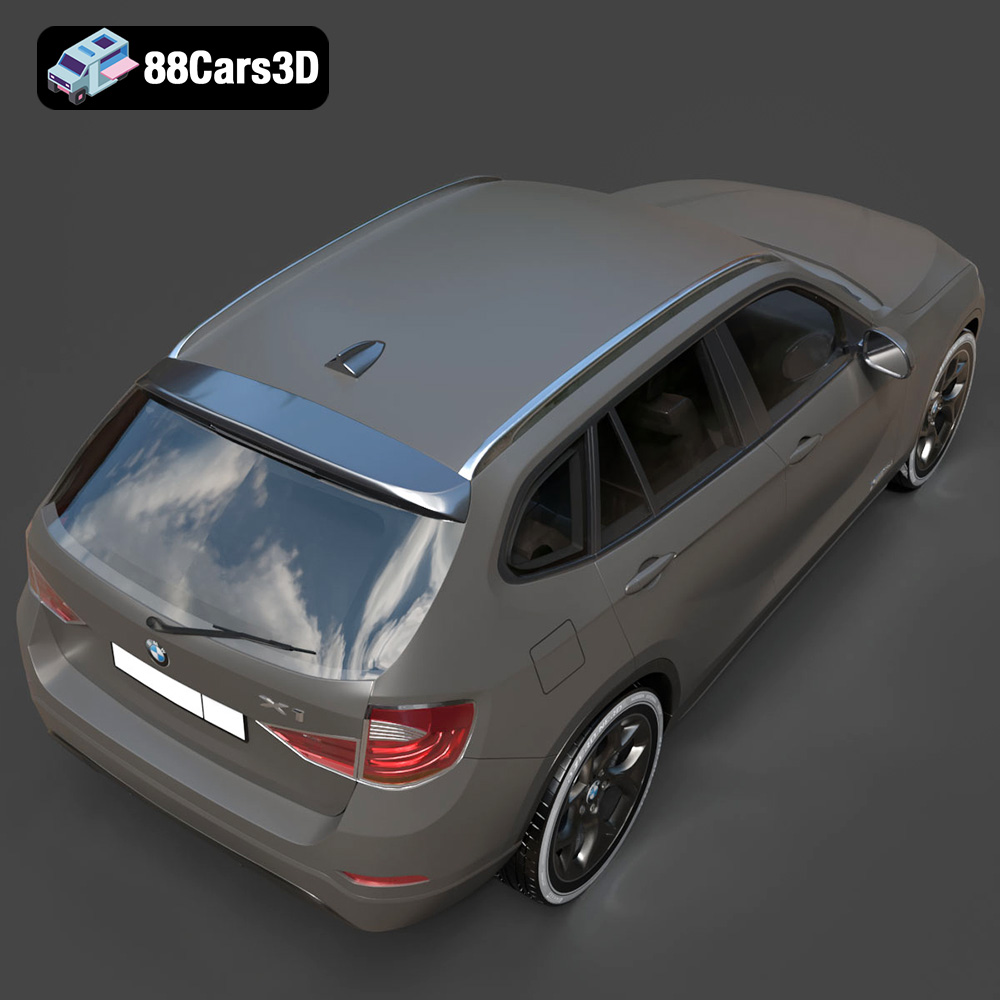
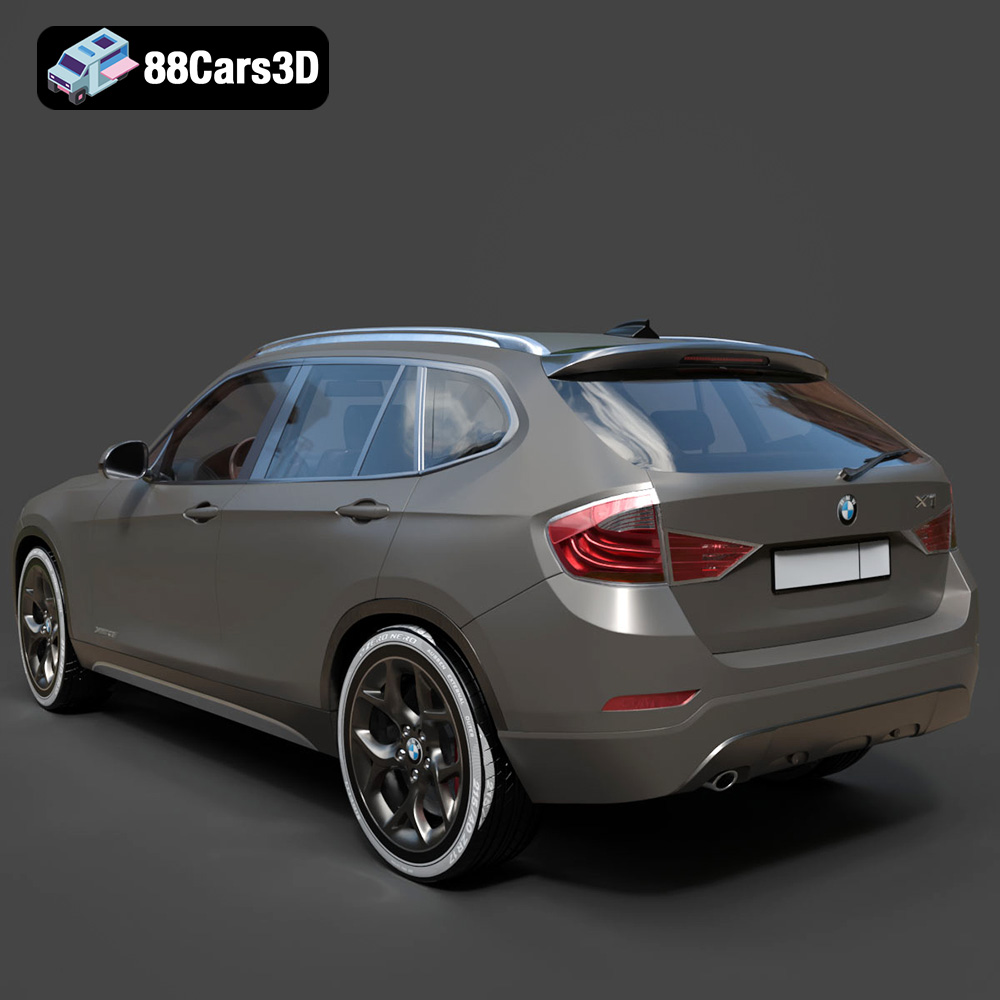
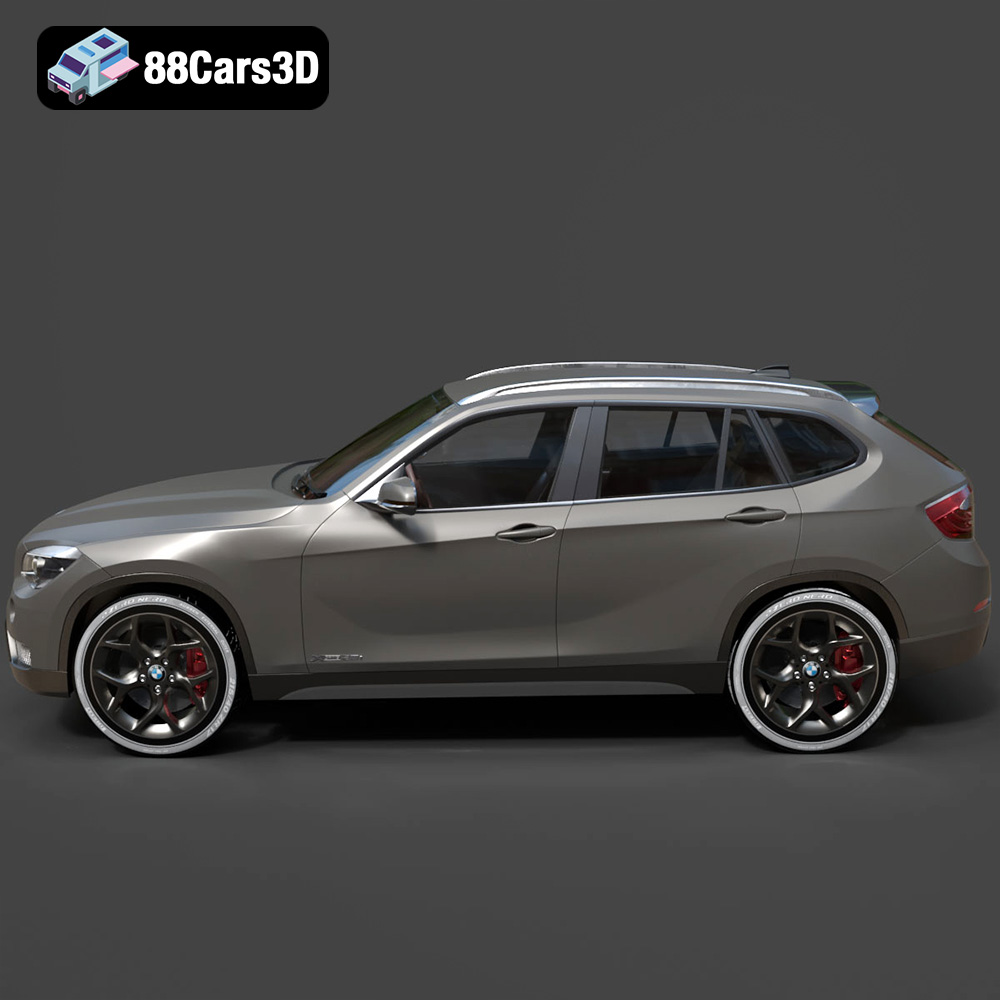
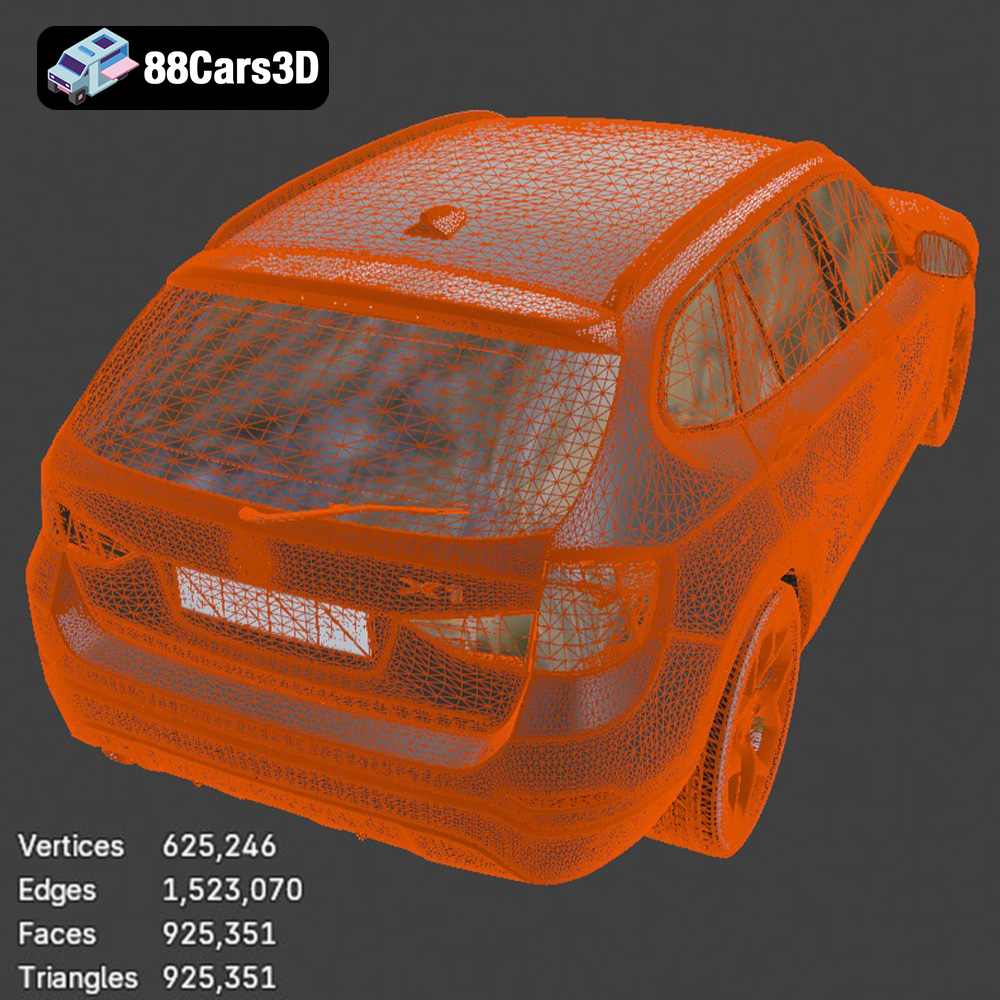
The process begins with meticulous modeling. For a car like the BMW X1 2013, this means capturing every curve, panel gap, and design element with exactitude. The model features accurate BMW X1 2013 frame geometry and proportions, ensuring that the digital representation is indistinguishable from its real-world counterpart. Details extend to the engine bay and undercarriage components, realistic exhaust system, and intricately modeled headlights and taillights. The provided BMW X1 2013 3D model boasts a robust triangle count of 925,351. This polycount strikes a crucial balance: it’s high enough to support exceptional visual fidelity and smooth surface reflections, yet optimized to perform efficiently in various rendering and real-time environments.
Beyond geometry, materials are what truly bring a 3D car model to life. Automotive materials are complex, involving layers of clear coat, metallic flakes, diffuse color, and subtle imperfections. Creating believable paint, glass, rubber, chrome, and leather textures requires advanced shader networks. The BMW X1 2013 model is designed to respond beautifully to studio lighting setups, allowing artists to customize material finishes—matte, gloss, or metallic—and adapt lighting for different environments, showcasing its authentic Bavarian styling whether in an urban setting or a pristine studio.
Game development and real-time simulations present unique challenges for 3D car models. While visual fidelity is still paramount, performance optimization becomes equally critical. Assets must be lightweight enough to run smoothly at high frame rates while retaining enough detail to be convincing.
The key to game-ready assets lies in balancing polygon count, texture resolution, and efficient UV mapping. The BMW X1 2013 3D model, with its game-ready and optimized 925,351 triangles, is perfectly suited for modern game engines like Unreal Engine and Unity. This polycount allows for impressive visual realism, making it ideal for open-world games, racing titles, and driving simulators. The model’s real-world scale accuracy and proper pivot setup for steering, wheel rotation, and suspension travel are crucial for authentic in-game physics and animations.
For Unreal Engine developers, the .fbx format is the go-to for importing models. Once imported, the raw mesh data of the BMW X1 2013 can be further optimized within Unreal. This involves:
Imagine a high-fidelity driving simulator where players can experience the precise handling of the BMW X1 2013. The detailed cockpit and interior features, including the authentic multi-adjustable front seats, driver-oriented dashboard, and dual-dial analog instrument cluster, provide an immersive first-person POV in gaming. This level of detail, combined with optimized geometry, ensures a smooth and believable driving experience, whether cruising through a virtual city or competing on a track. For open-world games, these high-quality 3D car models populate environments with realistic traffic or serve as player vehicles, enhancing the overall immersion and visual richness of the game world.
Augmented Reality (AR) and Virtual Reality (VR) are transforming how we interact with digital content, offering unprecedented levels of immersion. 3D car models are at the forefront of this revolution, enabling virtual showrooms, interactive configurators, and mobile AR experiences.
For automotive brands, AR/VR presents an incredible opportunity to engage customers. Imagine a potential buyer exploring the BMW X1 2013 in a virtual showroom, walking around the vehicle, opening doors, and even sitting inside (in VR). With an interactive configurator, they could change body colors (e.g., factory colors or custom finishes), modify tire textures (off-road vs. street variants), and adjust material finishes in real-time, all before the physical car is even built. The .glb format, optimized for AR/VR and browser-based display, is perfectly suited for these applications, allowing for efficient streaming and rendering of complex models on various devices.
Mobile AR allows users to project 3D models into their real-world environment using a smartphone or tablet. Picture placing the BMW X1 2013 onto your driveway via your phone, walking around it, and seeing it at real-world scale. This is a powerful marketing tool, offering a tangible sense of ownership and presence. The optimized polycount and efficient format choices of the 88cars3d.com model ensure smooth performance on mobile devices, making such experiences feasible and visually compelling.
While the BMW X1 2013 model is optimized, further considerations for AR/VR include:
The detailed exterior and interior features of the BMW X1 2013, combined with its optimized geometry, make it an excellent candidate for these cutting-edge interactive applications, providing a rich user experience.
The utility of 3D car models extends beyond digital screens. 3D printing offers the exciting possibility of transforming virtual assets into tangible physical objects, perfect for display, prototyping, or scale model collections.
The .stl format is the universal language of 3D printing. While the BMW X1 2013 3D model is designed for rendering and real-time use, its robust geometry makes it convertible to .stl for 3D printing. This allows hobbyists and designers to create physical replicas at various scales.
Successful 3D printing requires careful attention to settings:
After printing, post-processing techniques like sanding, priming, and painting are essential to achieve a professional finish. Enthusiasts can apply authentic factory colors with metallic finishes, mimicking the original BMW X1 2013. The ability to produce physical models opens up new avenues for product display, rapid prototyping, and creating bespoke collector’s items based on precise digital assets like those found on 88cars3d.com.
In any professional 3D pipeline, efficiency is paramount. Starting with a high-quality, pre-optimized 3D car model significantly streamlines workflows and ensures consistent, superior results.
Building a detailed, production-ready 3D car model from scratch is an incredibly time-consuming and expensive endeavor, often requiring hundreds of hours from skilled 3D artists. By purchasing a model like the BMW X1 2013 from 88cars3d.com, designers, developers, and artists can save considerable time and resources, allowing them to focus on scene composition, animation, and unique project aspects rather than foundational asset creation. This not only reduces project timelines but also ensures access to expert-level modeling and optimization without the associated development cost.
Premium 3D car models come with a guarantee of accuracy and consistency. The BMW X1 2013 model, for instance, is based on real-world scale accuracy and captures the intricate details of the first-generation E84 X1. This means less time spent correcting proportions or adjusting topology, leading to more reliable and professional outcomes across all applications, from brand campaigns to game environments.
High-quality assets are designed for seamless integration into major 3D software platforms and real-time rendering engines. The inclusion of multiple file formats (.blend, .fbx, .obj, .glb, .stl, .ply, .unreal, .max) for the BMW X1 2013 ensures maximum compatibility for various pipelines. Furthermore, the model offers extensive customization options, allowing users to change body colors, modify tire textures, and adjust material finishes. This flexibility empowers artists to adapt the model to specific project requirements without compromising on quality or performance.
Whether you’re rendering an automotive advertisement in 3ds Max, developing a racing game in Unreal Engine, or creating a virtual showroom, investing in a robust and versatile 3D car model like the BMW X1 2013 significantly enhances productivity and the overall quality of your final output.
The landscape of 3D visualization is constantly evolving, driven by the need for ever-increasing realism and efficiency across diverse applications. High-quality 3D car models are central to this evolution, serving as indispensable assets for automotive rendering, game development, AR/VR experiences, and even physical 3D printing. From the nuanced curves of a vehicle’s body to its intricately detailed interior, every element must be crafted with precision and optimized for performance.
The BMW X1 2013 3D model exemplifies the kind of versatile and technically proficient asset that empowers professionals to achieve their creative visions. With its balanced polycount, real-world accuracy, detailed features, and wide array of compatible file formats, it stands ready to be integrated into any demanding workflow. By understanding the technical specifications, file formats, and application-specific optimizations, artists and developers can leverage these premium 3D car models to produce breathtaking visuals and engaging interactive experiences, cementing their projects at the forefront of digital design. Explore the vast possibilities and elevate your projects with exceptional 3D models available on 88cars3d.com.
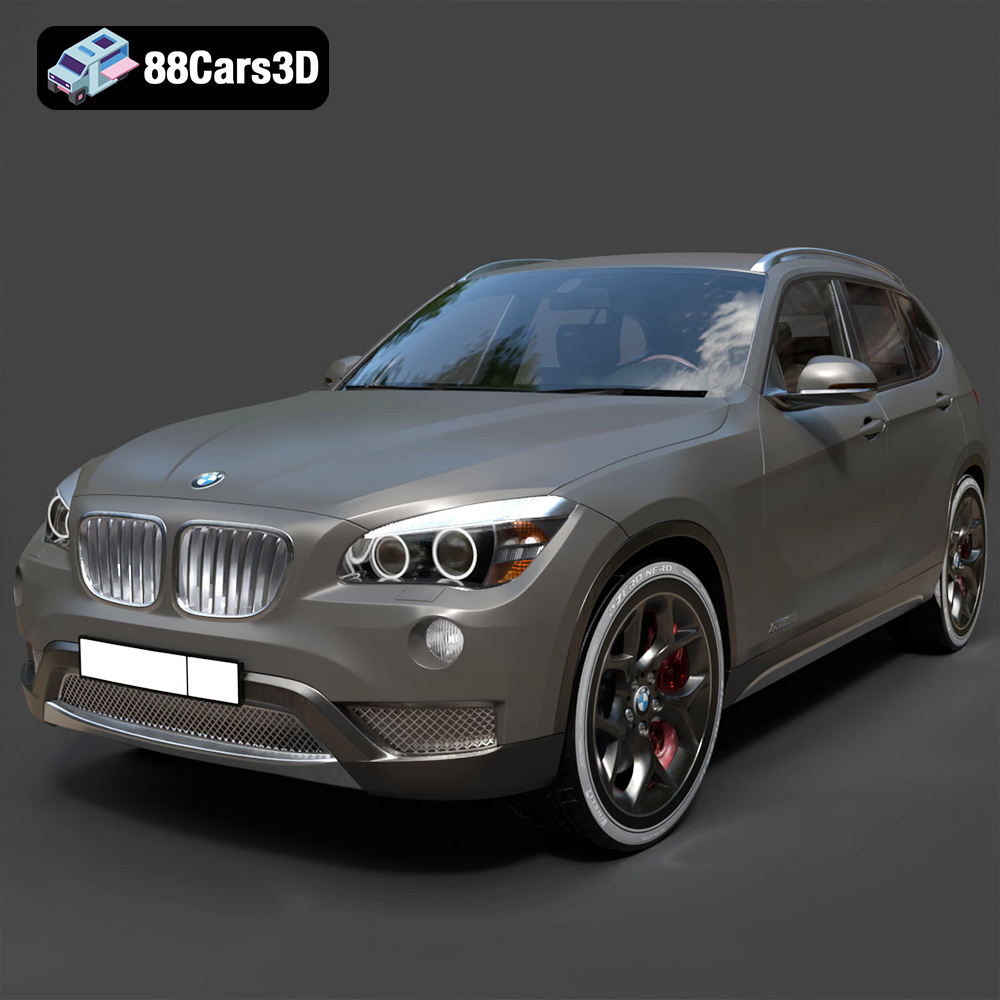
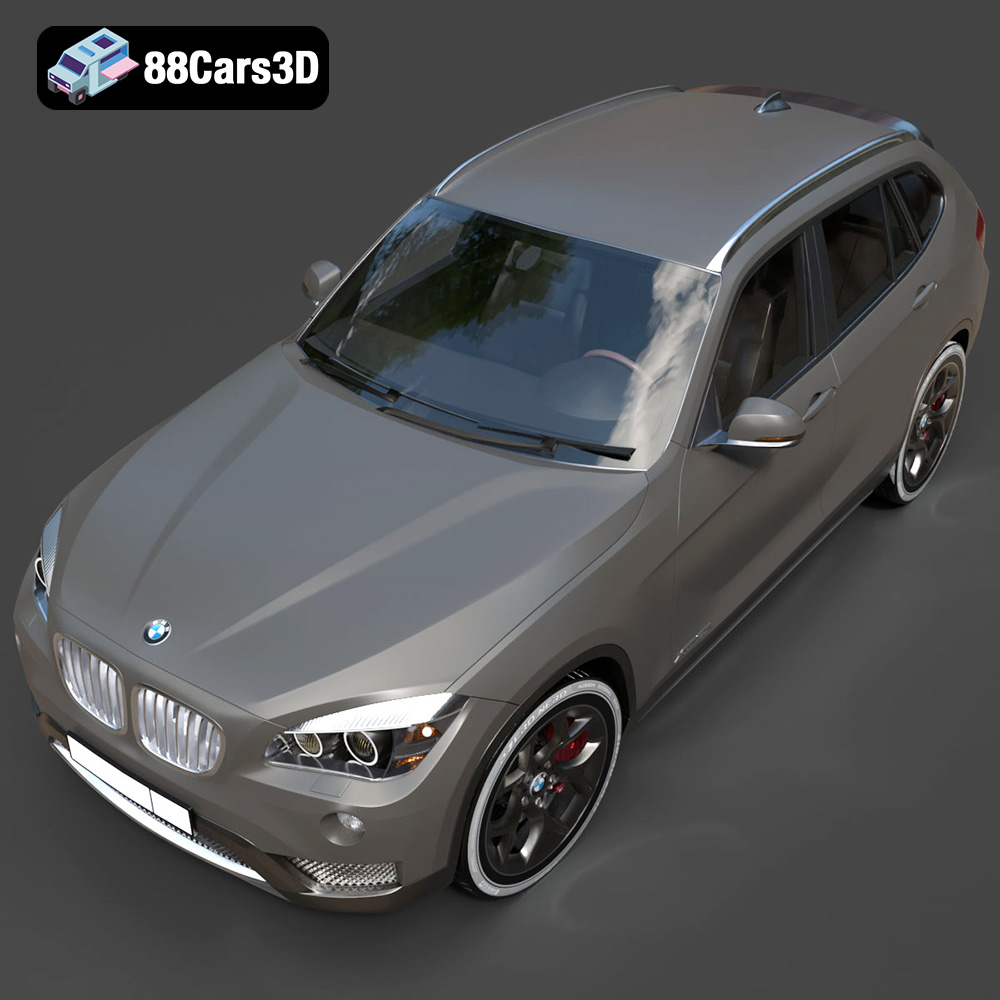
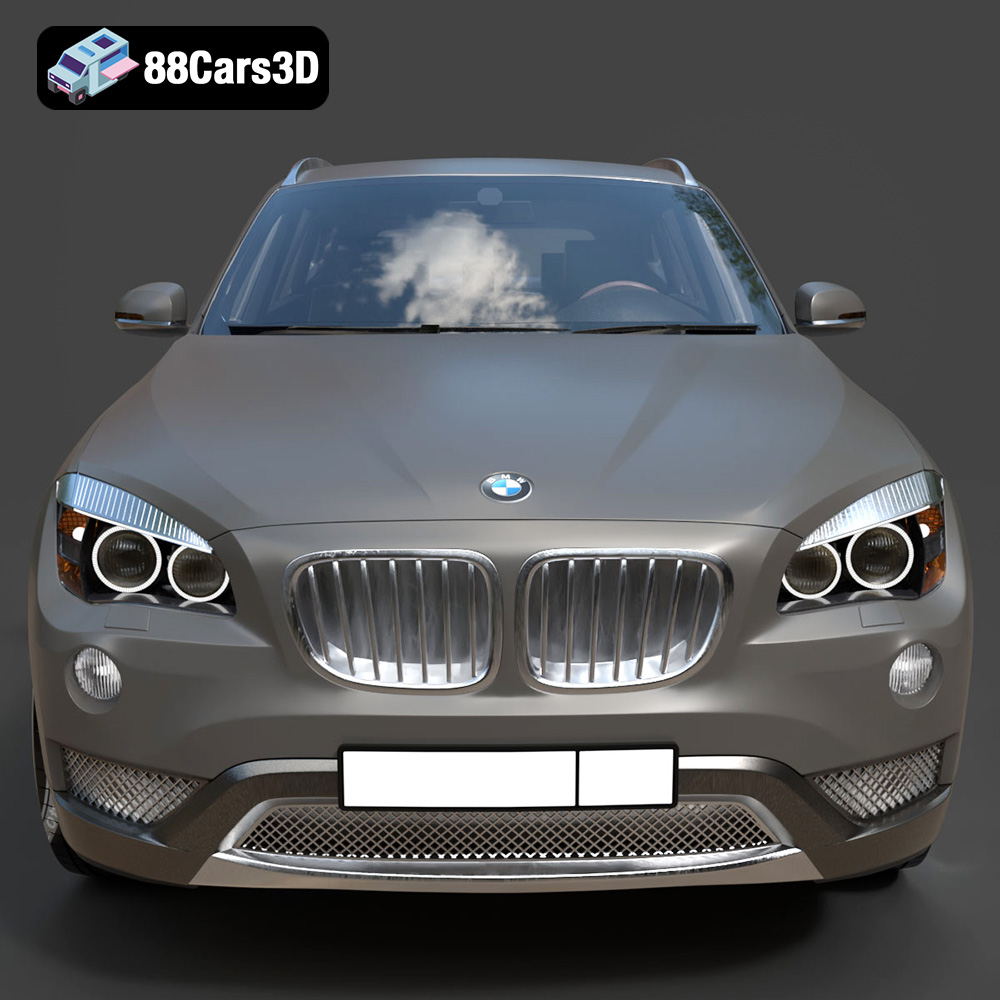
Discover the pioneer of the premium compact SUV segment with our highly accurate BMW X1 2013 3D model. This meticulously crafted digital asset captures the sporty, versatile essence of the first-generation E84 X1, blending the dynamic driving characteristics of a sports sedan with the commanding stance of an SAV (Sports Activity Vehicle). Highlighting iconic visual elements such as the signature kidney grille, sculpted hood, and unmistakable twin-circular headlights, this model brings authentic Bavarian styling to your virtual environment. Boasting a highly detailed topology with a triangle count of 925,351, this 3D model delivers exceptional visual fidelity and smooth surface reflections. Expertly optimized for modern real-time rendering, game engines, and high-end visualization workflows, the model ensures stunning photorealism without sacrificing structural accuracy. Whether used for up-close cinematic shots or dynamic driving animations, it stands ready to perform seamlessly. Perfect for urban driving simulators, architectural visualizations, interactive AR/VR car configurators, and modern lifestyle renders.
$26.00
.2013
.blend
.bmw
.fbx
.glb
.max
.obj
.ply
.rendering
.stl
.unreal
car-3d-model
compact-suv
game asset
game-ready
optimized
SUV
VR/AR
x1