Get 20% OFF All Premium 3D & STL Models!

In the fast-evolving realms of game development, cinematic rendering, virtual reality, and even physical prototyping, the quality of your 3D assets can make or break a project. Automotive design, in particular, demands an exquisite blend of artistic flair and technical precision. Capturing the intricate lines, reflective surfaces, and unique character of a vehicle in a digital environment is a significant challenge, one that calls for meticulously crafted 3D models.
Enter the world of high-fidelity 3D car models, designed to elevate your projects from concept to breathtaking reality. Today, we’re diving deep into an exceptional example of digital craftsmanship: the Citroen DS5 3D Model. Renowned for its avant-garde French styling and aviation-inspired aesthetics, the DS5 is a perfect case study for exploring the versatility and technical demands of modern 3D asset integration. Whether you’re a game developer seeking realistic vehicles for an open-world environment, an architect visualizing a contemporary street scene, or an animator crafting a dynamic commercial, a premium asset like the Citroen DS5 3D Model provides an unparalleled foundation for success. This model, available through platforms like 88cars3d.com, encapsulates the very essence of detailed automotive design, ready for diverse applications.
The choice of file format for a 3D model is far more than a mere technicality; it’s a strategic decision that dictates compatibility, workflow efficiency, and the ultimate usability of your asset across different software and platforms. For a complex asset like a detailed 3D car model, having access to a range of formats, as offered with the Citroen DS5 3D Model, is absolutely critical. Let’s break down the essential formats and their specific advantages:
The .blend format is the native file type for Blender, the powerful open-source 3D creation suite. When you receive a model in .blend format, you’re gaining full access to the original project file, including all its editable components: mesh data, materials (Blender’s Cycles or Eevee nodes), textures, lighting setups, cameras, animations, and even modifiers. This format is ideal for users deeply integrated into the Blender ecosystem who require maximum flexibility for customization, rigging, or further development. It’s perfect for artists who want to dissect the model, understand its construction, or make significant alterations without losing any original data.
.fbx (Filmbox) is a proprietary file format owned by Autodesk and has become an industry-standard exchange format, particularly for game development and animation pipelines. Its strength lies in its ability to store a wide array of 3D data, including geometry, materials, textures, animations, skinning information, and even camera and light data, all within a single file. This makes .fbx incredibly versatile for transferring assets between different 3D software packages like 3ds Max, Maya, Blender, and directly into game engines like Unreal Engine and Unity. For a 3D car model, .fbx is often the go-to for ensuring that everything from the vehicle’s body to its wheels and suspension animations transfers smoothly into a real-time environment.
The .obj (Wavefront OBJ) format is one of the oldest and most widely supported 3D file formats. It’s renowned for its simplicity and universality, primarily storing polygonal geometry (vertices, normals, texture coordinates, and faces) and referencing external material files (.mtl) for surface properties. While .obj does not support animation, rigging, or advanced material setups, its broad compatibility across virtually all 3D software makes it an excellent choice for basic mesh exchange. If you need a clean mesh that can be imported into almost any program for further modeling, texturing, or rendering, .obj is a reliable choice.
.glb is the binary version of the glTF (GL Transmission Format), a royalty-free specification for the efficient transmission and loading of 3D scenes and models by applications. GLB files are self-contained, embedding textures and other assets directly within the file, making them highly optimized for web browsers, AR (Augmented Reality), and VR (Virtual Reality) experiences. For presenting a 3D car model in a web-based configurator or a mobile AR application, .glb offers excellent performance and ease of deployment, ensuring quick load times and smooth interaction.
The .stl (Stereolithography) format is the cornerstone of 3D printing. It represents 3D surfaces as a series of connected triangles, forming a tessellated mesh. Crucially, .stl files do not contain color, texture, or material information – they define only the geometry. This makes them perfect for sending models to 3D printers, which require precise surface data to fabricate physical objects layer by layer. The Citroen DS5 3D Model, provided in .stl, opens up possibilities for creating tangible display models or prototypes.
.ply (Polygon File Format) is often used for storing 3D data from 3D scanners, CAD software, and scientific applications. It can store a variety of properties, including color, transparency, texture coordinates, and even properties like confidence values for each data point. While not as universally used as .obj or .fbx for general 3D asset exchange, .ply is a robust format for applications requiring precise mesh data, often in fields like engineering, cultural heritage preservation, or medical imaging.
A direct .unreal file implies an asset specifically packaged and optimized for use within Unreal Engine. This often means the model comes pre-configured with materials, collision meshes, LODs (Levels of Detail), and potentially even blueprint setups tailored for the engine. For game developers, this is an invaluable asset, significantly reducing the setup time and ensuring seamless integration into their Unreal projects, allowing them to focus on gameplay and environment design rather than asset preparation.
Finally, the .max format is the native file type for Autodesk 3ds Max, a leading software for 3D modeling, animation, rendering, and visualization. Similar to .blend, a .max file contains a complete scene, including geometry, materials (often V-Ray or Corona setups), lights, cameras, animation data, and modifiers. For professionals working in architectural visualization, product design, or high-end cinematic rendering who rely on 3ds Max, having the original .max file provides the ultimate control and flexibility for customization and integration into their existing projects.
The inclusion of such a comprehensive array of formats with the Citroen DS5 3D Model highlights its exceptional versatility and readiness for any professional workflow, making it a truly valuable asset from 88cars3d.com.
Automotive design is a fusion of art and engineering, where every curve, surface, and detail contributes to a vehicle’s identity. Translating this intricate reality into a digital 3D model requires immense skill and attention. For applications ranging from marketing campaigns to immersive simulations, accuracy and aesthetic fidelity are paramount.
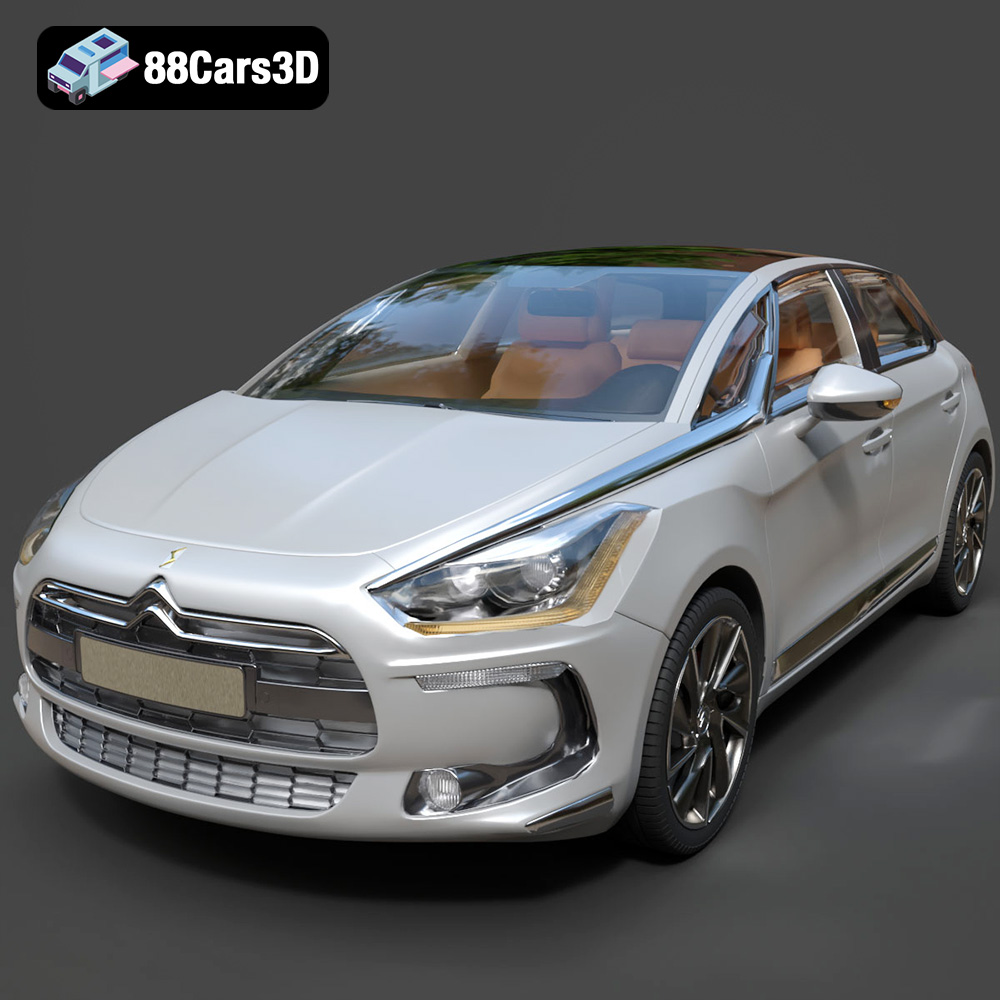
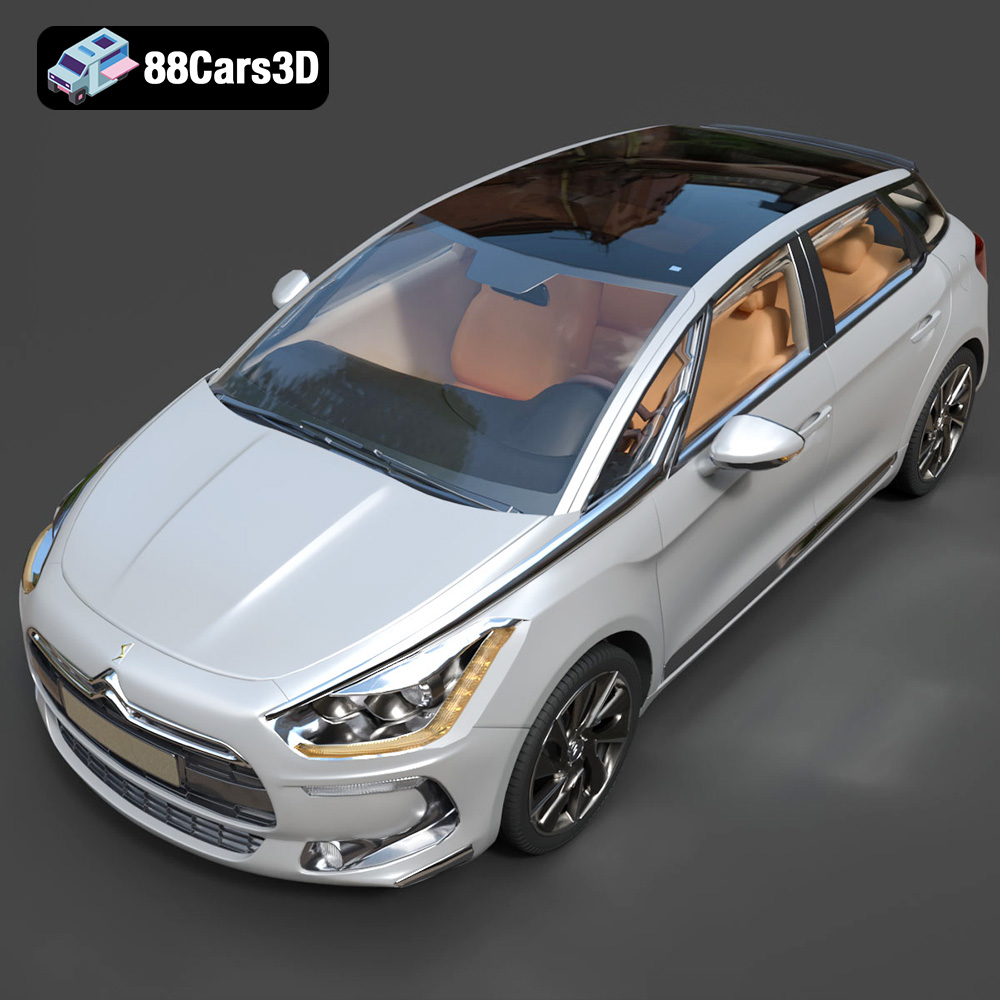
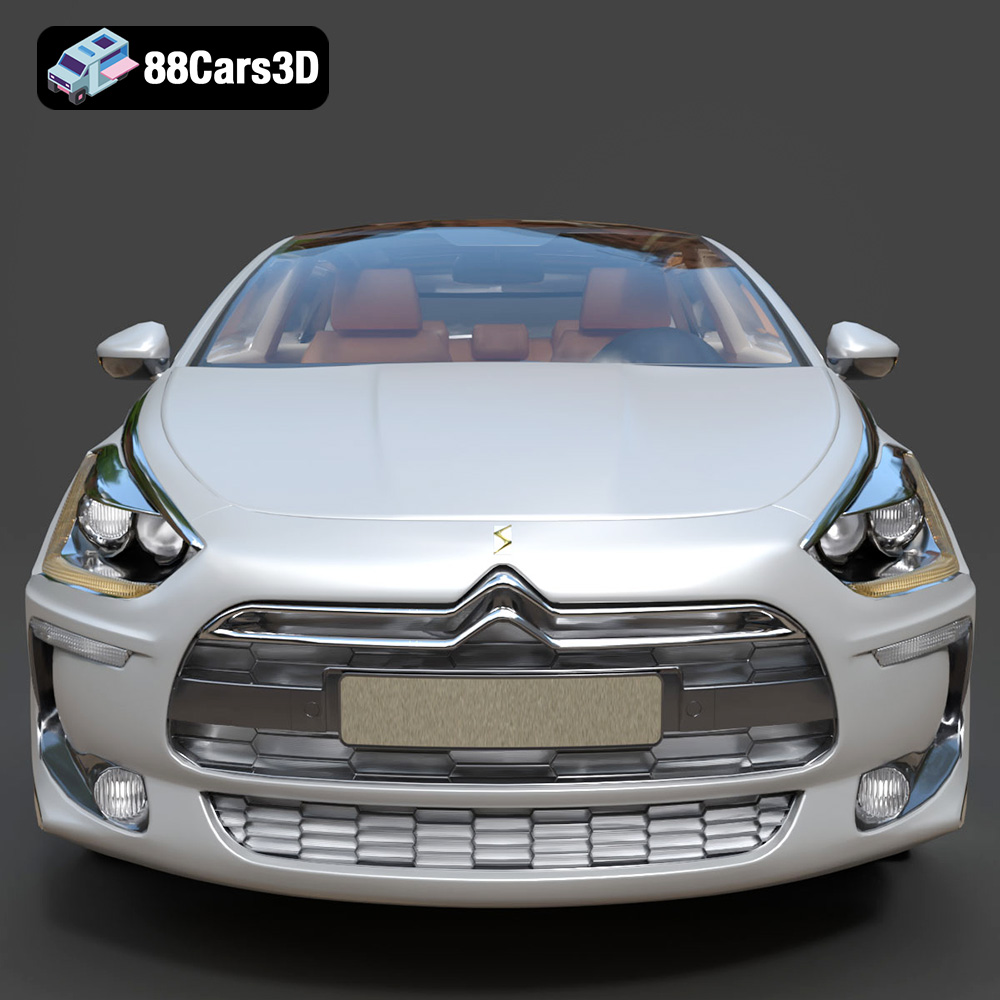
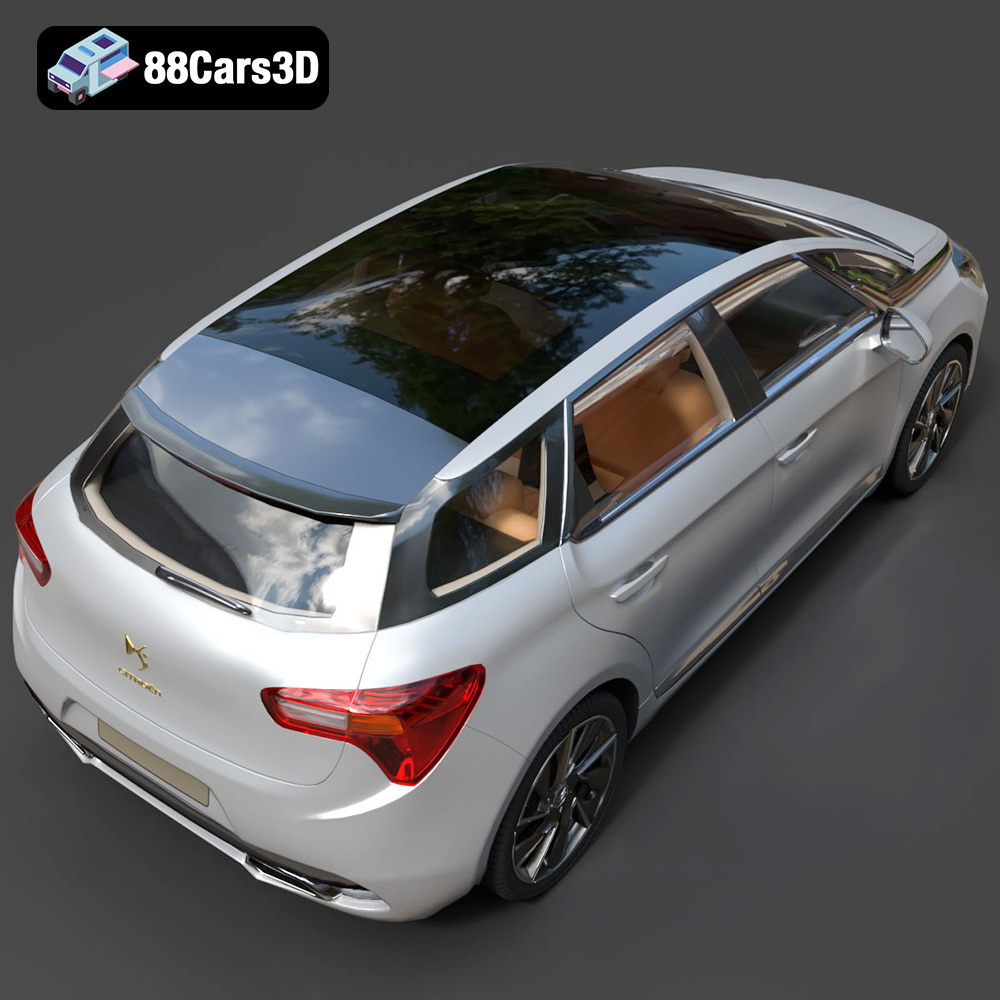
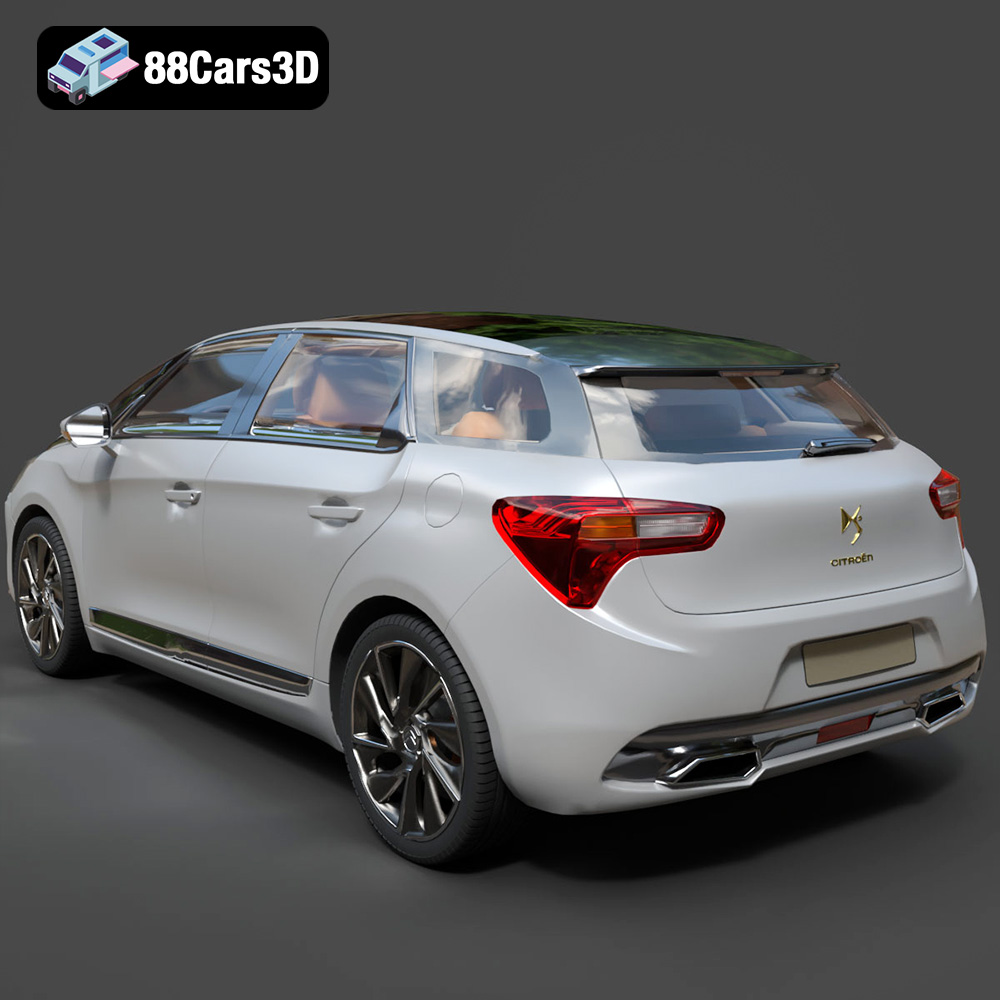
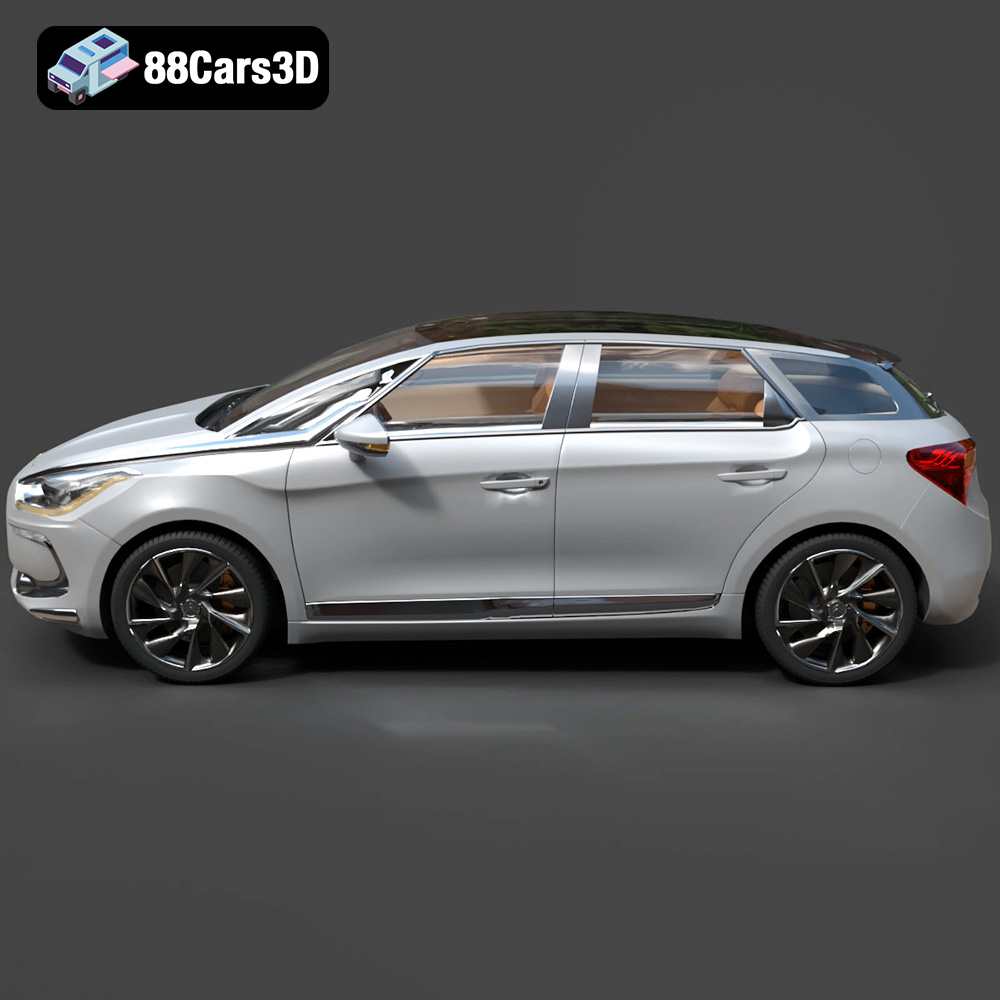
The challenge of replicating a real-world vehicle like the Citroen DS5 lies in capturing its distinctive “feel” and signature elements. The DS5, with its avant-garde styling, presents a unique test case. Its iconic chrome “sabers” stretching from the aggressive headlight clusters to the A-pillars, the sculpted bodywork, dynamic dual exhaust, and complex LED lighting signatures are all integral to its visual identity. A high-fidelity 3D model must reproduce these elements faithfully. The Citroen DS5 3D Model excels here, with its “accurate Citroen DS5 aerodynamic profile and frame geometry,” “distinctive chrome ‘saber’ trim pieces,” and “complex LED lighting signatures.” Even the interior, with its “aviation-inspired cockpit layout” and “sporty, flat-bottomed steering wheel detailing,” is meticulously reproduced. This level of detail isn’t just about looking good; it’s about conveying the luxury and futuristic heritage of the vehicle, which is crucial for authentic brand representation or an immersive user experience.
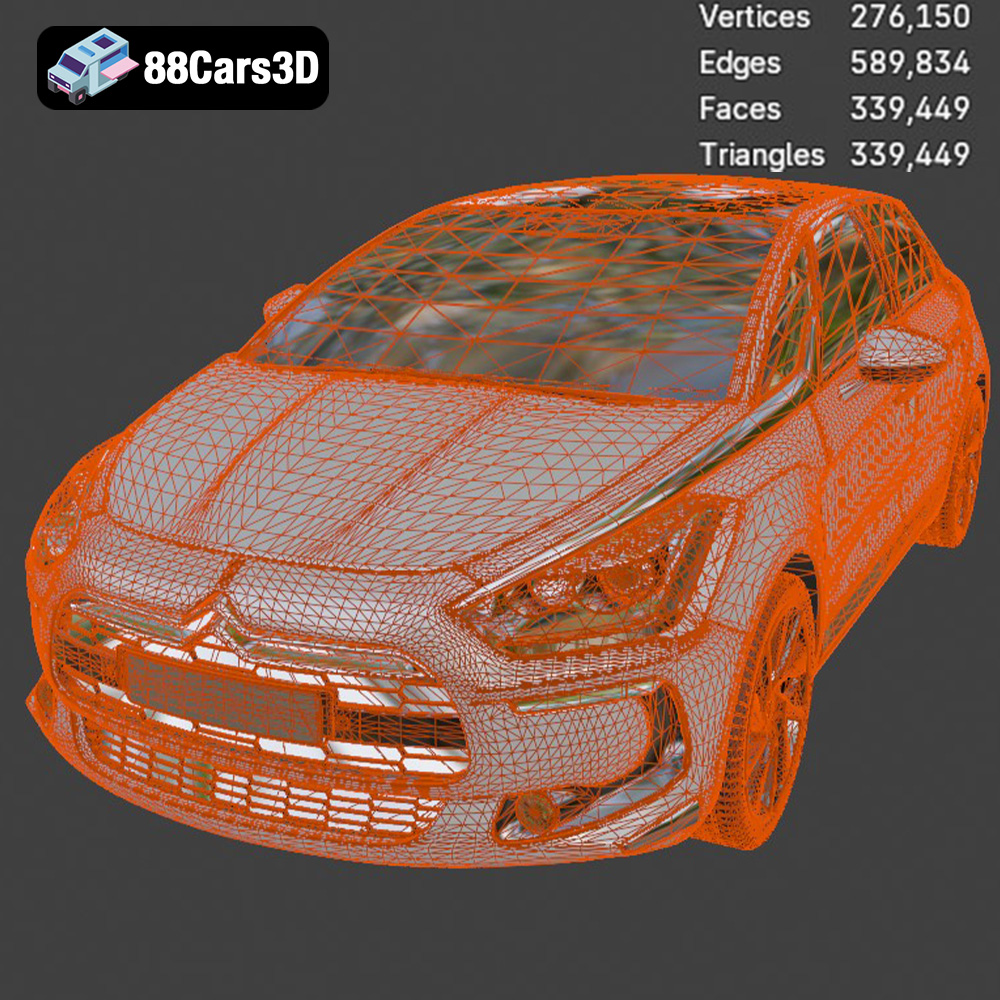
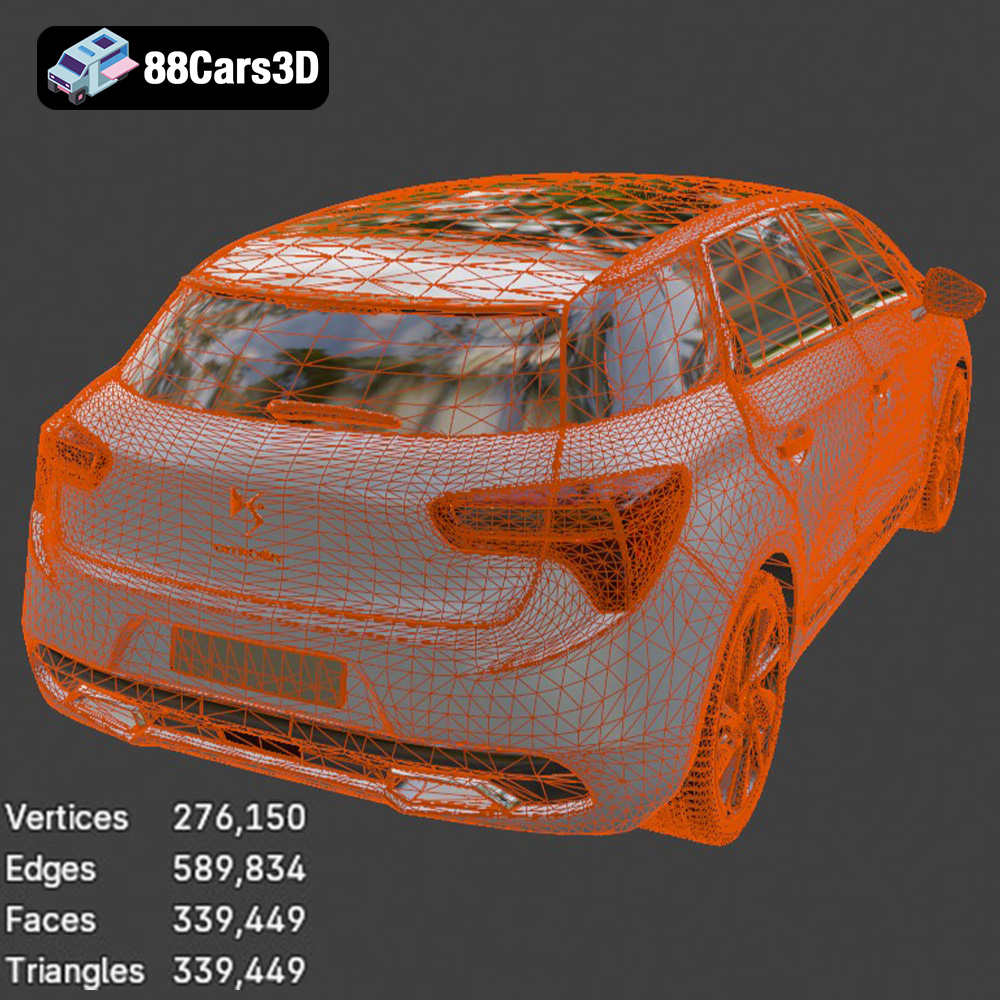
Beyond visual accuracy, a professional 3D car model must also be technically robust and optimized for performance. The Citroen DS5 3D Model boasts a “meticulously optimized topology with a triangle count of 339,449.” This isn’t an arbitrary number; it represents a sweet spot. For game developers, this poly count ensures “game-ready performance” without sacrificing “high-end visual fidelity.” A model that is too high-poly can cripple real-time performance, while one that is too low will lack detail. This balance is critical for seamless integration into engines like Unreal and Unity. Furthermore, the model features “real-world scale accuracy” and “proper pivot setup for steering, wheel rotation, and suspension travel.” These technical advantages are vital for realistic animations and dynamic interactions, providing a foundation for compelling physics simulations and lifelike movement.
The true value of a versatile 3D asset like the Citroen DS5 3D Model is realized in its seamless integration into various professional workflows. From game development studios to architectural visualization firms, the demand for high-quality, ready-to-use automotive assets is constant.
For game developers, performance and visual quality go hand-in-hand. The “game-ready & optimized” nature of the Citroen DS5 3D Model, with its 339,449 triangles, makes it ideal for modern game engines. When using formats like .fbx or the dedicated .unreal file, developers can swiftly import the model into Unreal Engine or Unity. The “proper pivot setup” for steering, wheels, and suspension components is a massive time-saver, allowing animators and programmers to quickly rig the vehicle for realistic driving mechanics. Setting up materials is straightforward, leveraging the engine’s PBR (Physically Based Rendering) workflows for photorealistic surfaces. Collision meshes and Levels of Detail (LODs) would typically be added or adjusted, ensuring the model performs well at varying distances. Imagine the DS5 as a stylish city car in an open-world racing title or a sleek NPC vehicle adding realism to a bustling metropolis – its optimized geometry ensures it won’t be a performance bottleneck, making it a prime game asset.
For high-end cinematic renders, product visualizations, or architectural visualization (ArchViz), realism is king. Professionals using 3ds Max can utilize the .max file, providing access to the full project scene, often complete with V-Ray or Corona Render materials and lighting setups. Blender users benefit from the .blend file, enabling them to leverage Cycles or Eevee for stunning visuals. The model’s intricate details, such as the LED lighting signatures, chrome accents, and detailed wheels, truly shine in a controlled studio lighting environment. Artists can customize material finishes – from metallic paints to matte wraps – and integrate the DS5 into sophisticated scenes, perhaps parked elegantly outside a luxury villa or driving through a bustling city street at dusk. These types of projects often require multiple angles, close-ups, and dynamic camera movements, all of which are supported by the model’s high detail and proper geometry.
The rapidly expanding fields of Augmented Reality (AR) and Virtual Reality (VR) demand highly optimized assets that can run smoothly on mobile devices or VR headsets. The .glb format, included with the Citroen DS5 3D Model, is perfectly suited for these applications. Its compact, self-contained nature allows for quick loading and efficient display in web-based configurators, virtual showrooms, or mobile AR apps. Businesses can create immersive experiences where potential customers can explore the DS5’s interior, customize its exterior colors in real-time, or even place a virtual model of the car in their own driveway using AR. The “optimized geometry for first-person POV in gaming and VR simulations” further enhances its utility for these interactive, real-time applications.
The utility of a 3D car model isn’t limited to digital screens. For designers, hobbyists, or engineers, translating a virtual model into a tangible object opens up a new dimension of possibilities. The inclusion of the .stl format with the Citroen DS5 3D Model makes this transition seamless.
When preparing the Citroen DS5 3D Model for 3D printing, the .stl file becomes indispensable. This format defines the model’s geometry as a series of triangles, ready for slicing software to convert into printer instructions. As specified, recommended scales like 1:12, 1:18, or 1:24 allow for various display sizes. For achieving the fine details of the DS5, such as the distinctive chrome sabers or the intricate alloy wheels, “resin printing is recommended.” This method typically offers superior resolution compared to FDM (Fused Deposition Modeling) printers. Layer heights between 0.04–0.12 mm are ideal for capturing subtle curves and sharp edges. Essential considerations include ensuring adequate “wall thickness” (1.2–2.0 mm) for structural integrity and strategically adding “supports” for complex parts like exhaust systems, mirrors, and side trims. Printing the frame angled and wheels separately is a common practice to optimize structural strength and detail for each component.
Once printed, the physical model undergoes a crucial post-processing phase. This involves removing supports, sanding to smooth out layer lines, and applying primer to create an even surface for painting. For an authentic replica of the Citroen DS5, applying “authentic factory colors with metallic finishes” is key. This meticulous attention to detail during the physical finishing process ensures that the 3D print truly reflects the high-quality digital model. Such physical models serve various purposes: from desktop display pieces for automotive enthusiasts to tangible prototypes for design reviews or educational aids in engineering courses.
A truly valuable 3D asset provides a strong foundation, but its versatility is amplified by the ease with which it can be customized and adapted to various creative visions. The Citroen DS5 3D Model offers extensive options for personalization, empowering artists and developers to make it uniquely their own.
The primary canvas for customization is the vehicle’s aesthetics. With the Citroen DS5 3D Model, users can effortlessly “change body/tank colors” to match specific brand palettes, introduce custom finishes, or experiment with the original “factory colors.” Beyond paint, modifying “material finishes” (matte, gloss, metallic) can drastically alter the car’s perceived luxury or sportiness. Imagine the DS5 in a sleek matte black for an aggressive look, or a vibrant metallic blue for a premium feel. Tire textures can be swapped to reflect different driving conditions or styles – from a smooth street variant for urban scenes to a slightly more rugged texture for an adventurous concept. Even the interior offers potential for customization, allowing artists to adjust material representations for seats, dashboard, and trim to create unique cabin environments.
Integrating the DS5 into diverse digital environments is another area where its versatility shines. The model can be seamlessly placed in “modern urban driving games,” “virtual automotive showrooms,” or “architectural visualization scenes.” Adjusting the “lighting for different environments” is crucial for realism; a studio render will require precise softboxes, while an outdoor scene demands realistic sun and sky lighting. This adaptability means the same high-quality 3D car model can serve multiple roles across different projects, providing exceptional value. Platforms like 88cars3d.com understand this need for adaptable assets, ensuring that their 3D car models are not just visually stunning but also technically pliable, significantly speeding up complex production workflows and fostering greater creative freedom for artists and developers.
In the demanding landscape of modern digital content creation, the difference between good and great often hinges on the quality and versatility of your core assets. The Citroen DS5 3D Model stands as a prime example of a premium 3D car model that offers both exceptional fidelity and unparalleled flexibility across a multitude of applications. From its meticulous reproduction of the avant-garde DS5 styling, including the signature chrome “sabers” and detailed interior, to its optimized topology and extensive file format support, this model is engineered for success.
Whether you’re developing high-performance game assets for Unreal or Unity, crafting photorealistic renders in 3ds Max or Blender, building immersive AR/VR experiences with .glb, or even bringing the digital design to life through precise 3D printing in .stl, the Citroen DS5 3D Model provides the technical foundation you need. Its game-ready optimization, real-world scale accuracy, and proper pivot setups ensure that it integrates seamlessly into professional workflows, saving valuable production time and enhancing creative output. For anyone seeking to elevate their automotive rendering, game development, or visualization projects, investing in high-quality 3D car models like this one is a strategic advantage.
Explore the possibilities and unlock new levels of realism and efficiency for your next project. Discover the comprehensive range of professional-grade 3D car models, including this versatile Citroen DS5, available for immediate download at 88cars3d.com.
Experience avant-garde French automotive design with this highly detailed 3D model of the Citroen DS5. Renowned for its striking, aviation-inspired styling, the DS5 bridges the gap between a premium hatchback and a sleek executive estate. This model captures the vehicle’s iconic visual elements, most notably the signature chrome “sabers” that stretch seamlessly from the aggressive headlight clusters to the A-pillars. The sculpted bodywork, distinctive front grille, and dynamic dual exhaust setup are faithfully reproduced to reflect its luxurious and futuristic heritage. Engineered for maximum versatility, this 3D model features a meticulously optimized topology with a triangle count of 339,449. This ensures an impeccable balance between game-ready performance and high-end visual fidelity. Whether you are developing interactive real-time applications, crafting immersive AR/VR experiences, or producing photorealistic cinematic animations, this model delivers exceptional detail without compromising system performance. Perfect for modern urban driving games, virtual automotive showrooms, architectural visualization scenes, and high-end lifestyle rendering.
$35.00
.blend
.citroen
.ds5
.fbx
.glb
.hatchback
.max
.obj
.ply
.rendering
.stl
.unreal
car-3d-model
executive-car
game asset
game-ready
low-poly
optimized
VR/AR