Mercedes-Benz 540K Roadster 1936 3D Model Download STL FBX OBJ GLB Blend – The Art and Science of Crafting Premium 3D Car Models

In the expansive and ever-evolving landscape of 3D visualization, automotive models stand as some of the most challenging yet rewarding assets to create and deploy. Whether destined for the photorealistic depths of a cinematic rendering, the fast-paced action of a cutting-edge video game, or the interactive realms of virtual and augmented reality, a high-quality 3D car model demands an unparalleled blend of artistic fidelity and technical precision. Professional artists and developers constantly seek assets that not only look stunning but are also impeccably optimized and versatile enough to integrate seamlessly into diverse production pipelines.

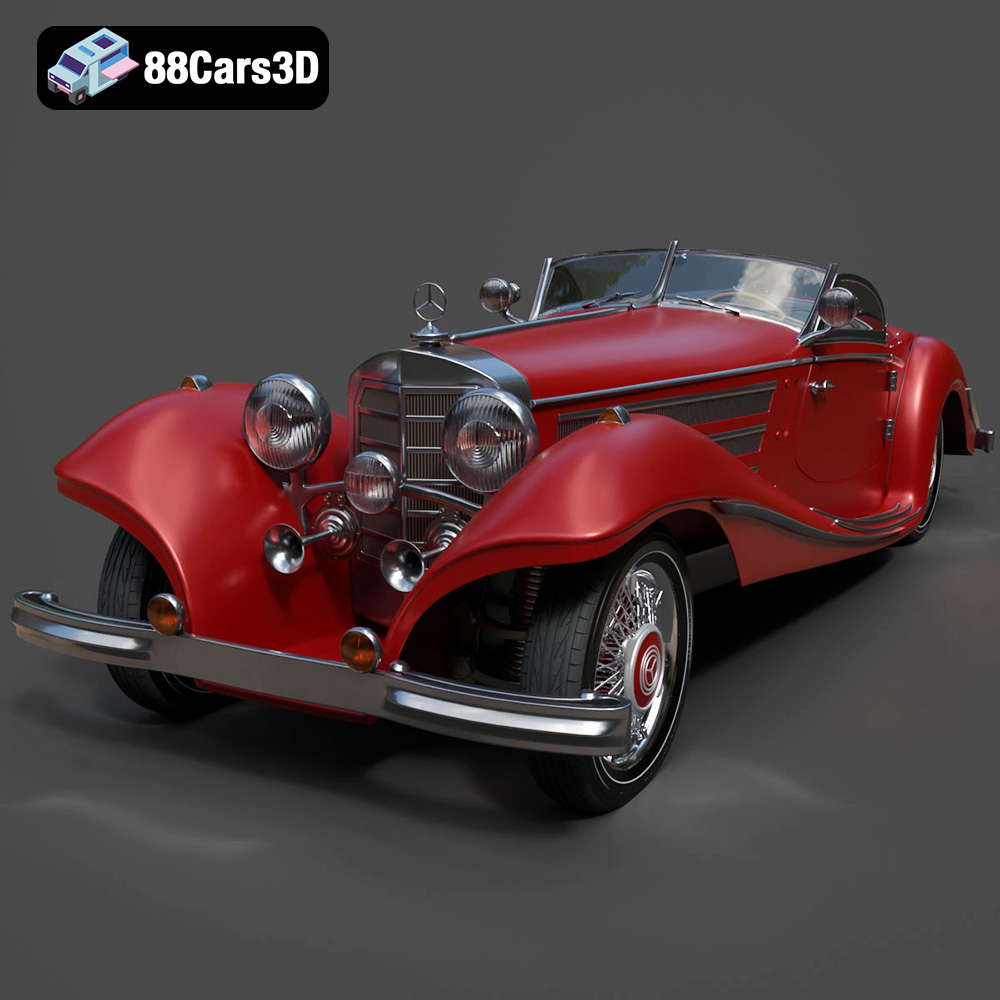
Among the pantheon of automotive legends, few command the same reverence as the pre-war titans, and the 1936 Mercedes-Benz 540K Roadster stands as an undisputed masterpiece. Its sweeping lines, iconic supercharged engine, and an aura of unparalleled luxury make it a dream subject for any 3D artist. Capturing such an intricate piece of history requires painstaking attention to detail, from the curve of every fender to the intricate spokes of its wheels. When a model like this is delivered with professional-grade topology, optimized for various applications, and available in a comprehensive suite of file formats, it becomes an invaluable asset for any serious creative endeavor.

Our focus today is on such an exemplary asset: the Mercedes-Benz 540K Roadster 1936 3D Model. This meticulously crafted digital recreation offers a gateway to bringing this automotive icon to life across a spectrum of professional applications. From high-end automotive rendering to serving as a premium game asset, this model exemplifies the pinnacle of what 3D car models can achieve.

The Art and Science of Crafting Premium 3D Car Models

Creating a truly outstanding 3D car model is a multi-faceted discipline that marries artistic vision with rigorous technical expertise. It goes far beyond simply mimicking shapes; it’s about capturing the soul of the vehicle, understanding its engineering, and preparing it for the demands of modern digital environments. The journey from a real-world vehicle to a perfectly realized 3D asset is arduous, involving countless hours of research, modeling, texturing, and optimization.

From Blueprint to Polygon: Capturing Automotive Authenticity

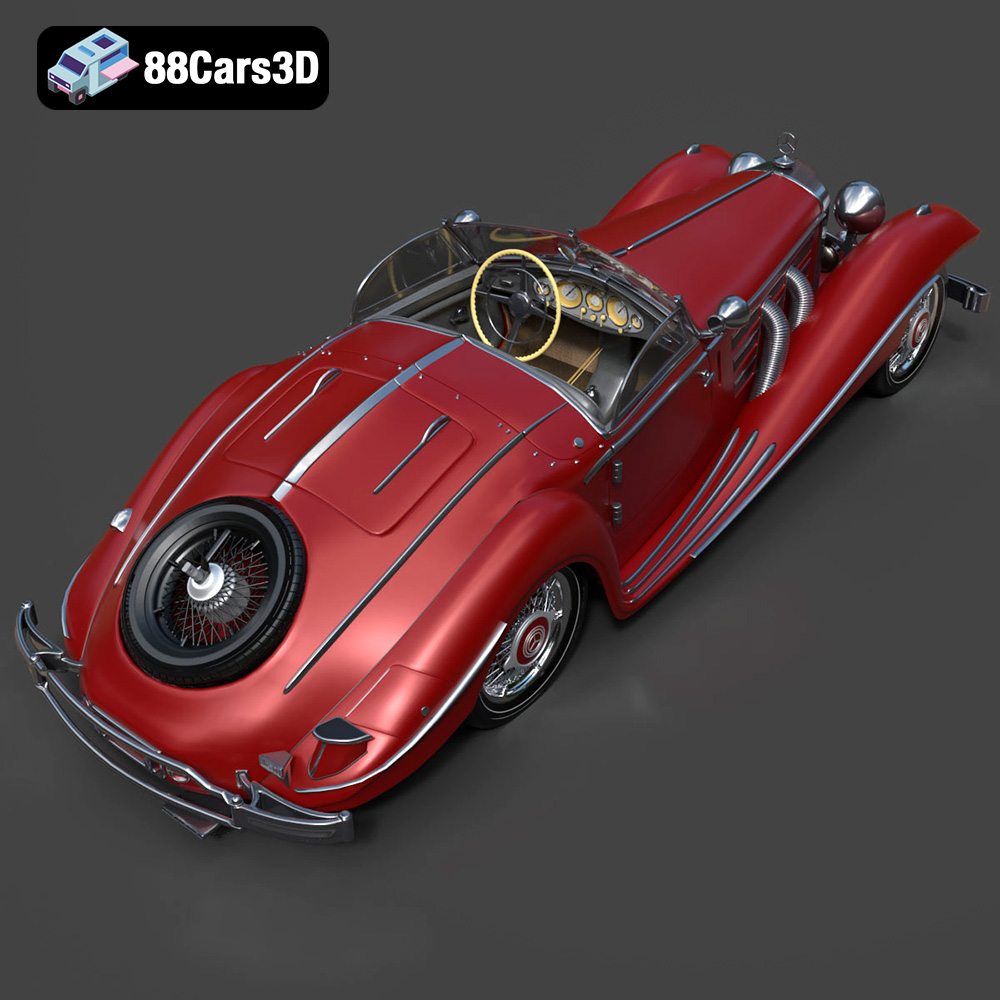
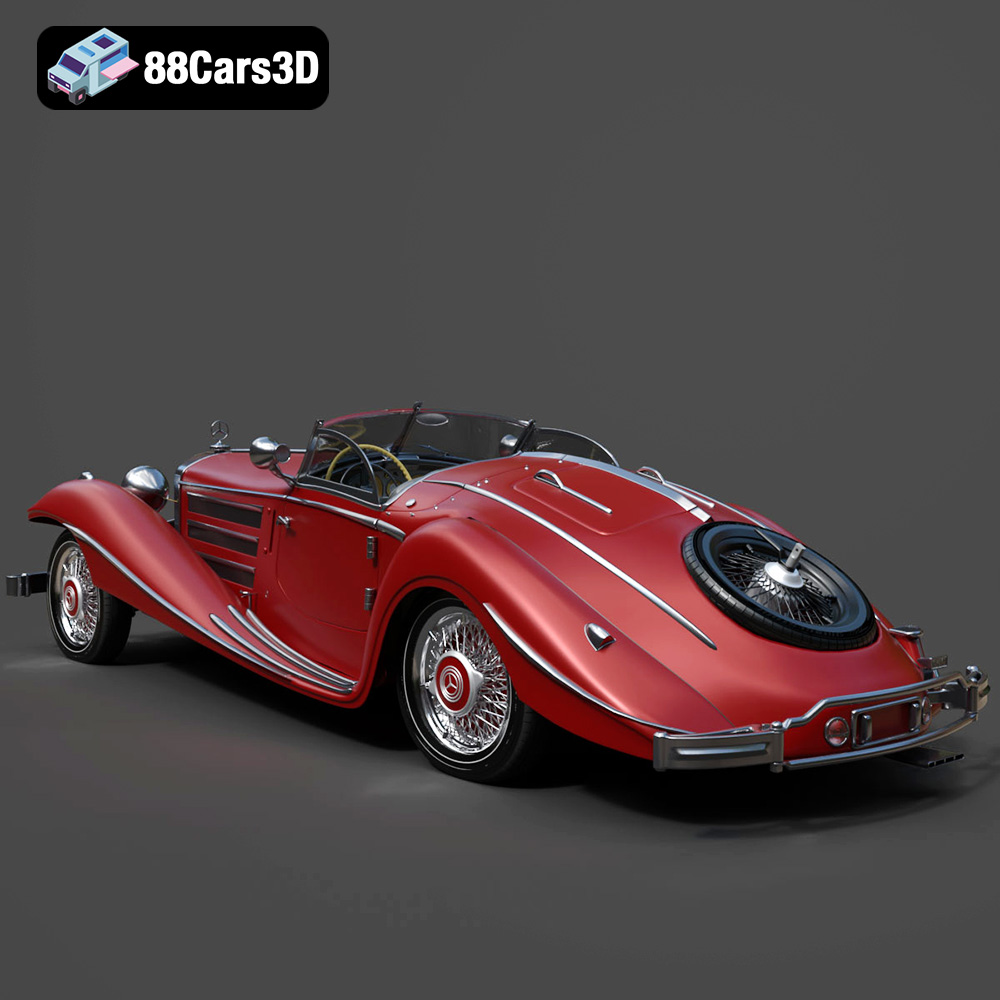
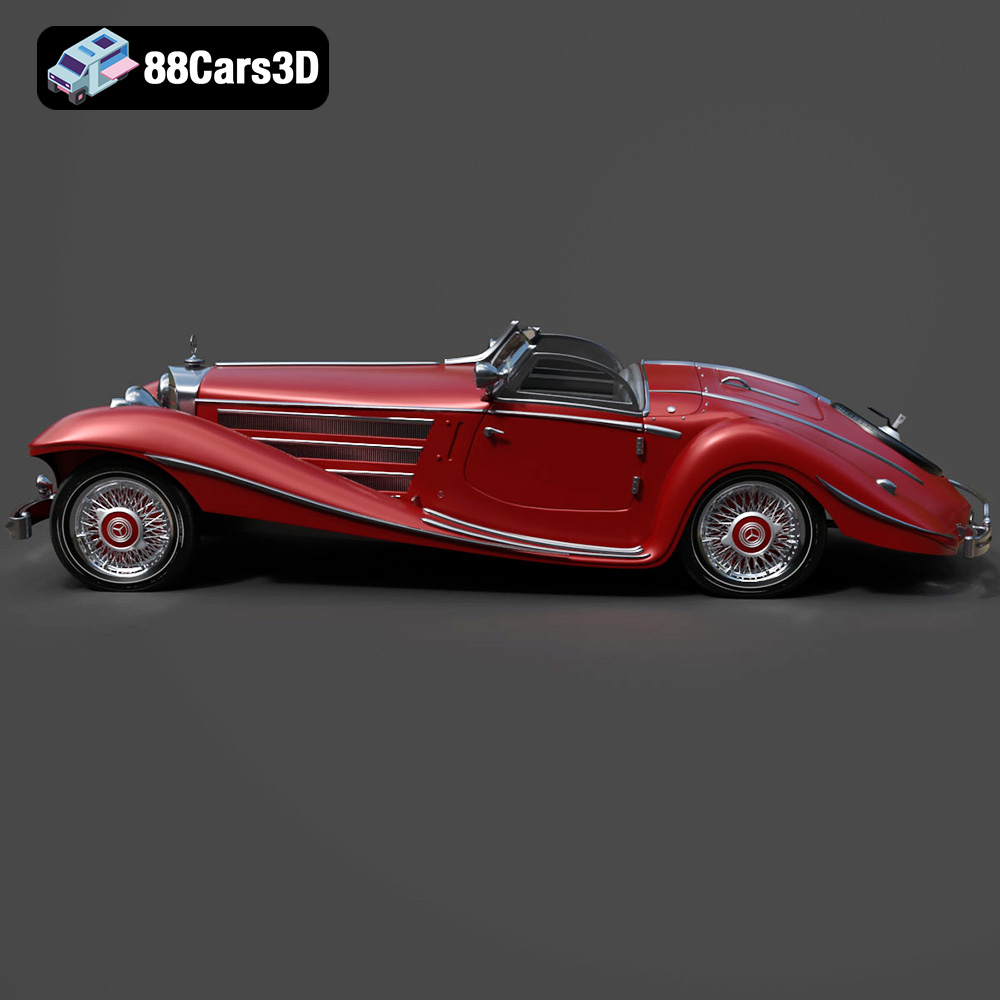
The foundation of any high-quality 3D model lies in its accuracy. For a vehicle like the Mercedes-Benz 540K Roadster, this means poring over historical blueprints, photographs, and even physical scans where available. Every dimension, every curve, every intricate detail, from the majestic radiator grille to the delicate taillights, must be meticulously reproduced. This hard-surface modeling process demands precision and an understanding of how real-world materials and manufacturing techniques translate into a digital mesh. The model of the Mercedes-Benz 540K Roadster, for instance, perfectly captures its elegant proportions and signature styling cues, including the external exhaust pipes and intricate wire-spoke wheels – details that are critical for an authentic recreation.

The Balance of Detail and Performance: Optimization for Diverse Applications

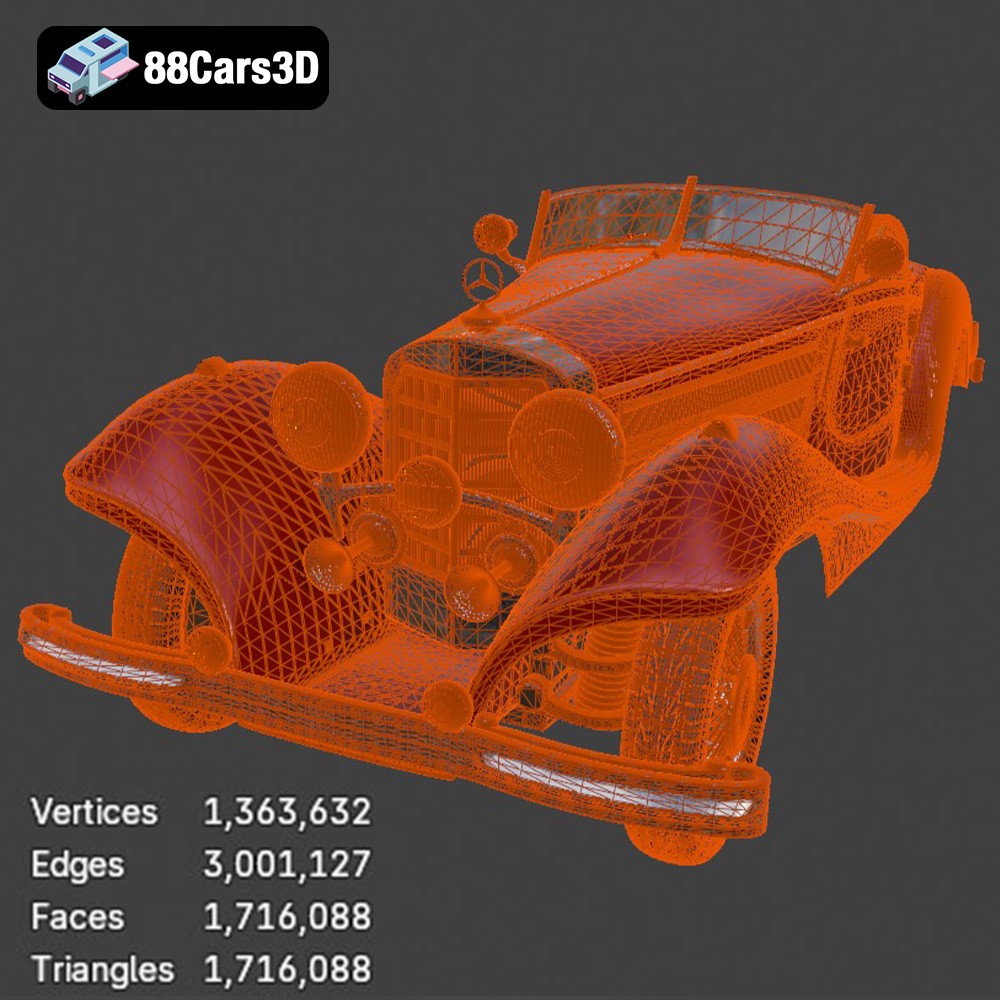
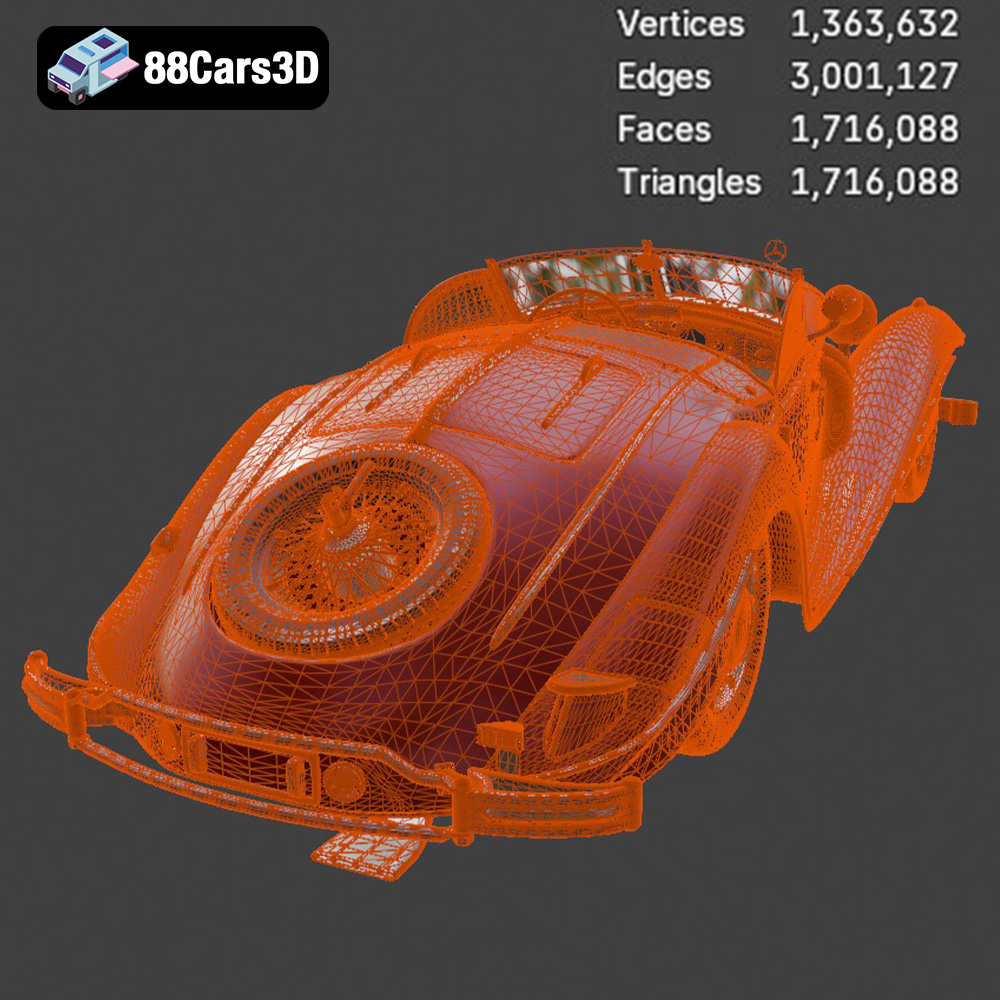
While accuracy is paramount, raw detail must be balanced with performance, especially for real-time applications like game development or AR/VR. A model that looks perfect but brings a game engine to its knees is not a usable asset. This is where optimization comes into play. Skilled 3D artists employ techniques to ensure that the polygon count, while high enough to convey detail, remains manageable. The Mercedes-Benz 540K Roadster 3D model exemplifies this balance with a highly detailed topology of 1,716,088 triangles. This count is meticulously chosen to deliver unparalleled visual fidelity for cinematic renders while remaining structured for modern workflows that leverage advanced real-time engines, providing a top-tier game asset.

Understanding 3D Model File Formats

One of the most crucial aspects of professional 3D asset management, and often a point of confusion for newcomers, is the choice and understanding of various 3D model file formats. A truly versatile and professional 3D car model, like the Mercedes-Benz 540K Roadster, is delivered in a comprehensive suite of formats, each serving distinct purposes and catering to specific software and pipelines. Knowing when and why to use each format is essential for maximizing efficiency and compatibility across projects.

The Ecosystem of 3D Formats: Compatibility and Use Cases

The product offers a wide array of formats, showcasing its incredible versatility:

  • .blend – Fully Editable Blender Scene with Materials: This is Blender’s native file format. It’s ideal if your primary 3D application is Blender, offering a complete scene with all objects, modifiers, materials, textures, lighting, and animation data preserved. For artists working within the Blender ecosystem, a .blend file offers maximum editability and direct access to the full creative project, including Cycles or Eevee material setups. It’s a go-to for deep customization and animation within Blender.
  • .fbx – Ideal for Unreal, Unity, and Real-time Pipelines: FBX (Filmbox) is an industry-standard format developed by Autodesk, widely adopted for interoperability between different 3D software and especially prevalent in game development. It efficiently stores not only geometry (meshes, UVs) but also crucial data like animations, camera information, lights, and skeleton/rigging data. This makes it perfect for importing complex animated models into game engines like Unreal Engine and Unity, where its hierarchical structure and support for various animation curves are invaluable for creating dynamic game assets.
  • .obj – Universal Format for Cross-Software Compatibility: OBJ (Wavefront Object) is one of the oldest and most universally supported 3D formats. It’s excellent for exchanging purely geometric data between virtually any 3D software. An OBJ file primarily stores vertex positions, UV coordinates, normals, and face information. While it doesn’t typically store animation or material definitions within the file itself (often referencing an accompanying .mtl file for basic material properties), its widespread compatibility makes it a safe choice for broad asset sharing or when you only need the mesh data.
  • .glb – Optimized for AR, VR, and Browser-based Display: GLB (GL Transmission Format Binary) is the binary version of glTF, a modern, royalty-free specification for 3D scenes and models. GLB is highly optimized for efficient transmission and loading in web applications, augmented reality (AR), and virtual reality (VR) environments. It packages all data – geometry, materials (PBR ready), textures, and animations – into a single binary file, making it incredibly convenient for deploying interactive 3D content directly in browsers or mobile AR apps. Its compact size and PBR material support are huge advantages for immersive experiences.
  • .stl – Suitable for 3D Printing Output: STL (Stereolithography) is the de-facto standard file format for 3D printing. It represents a 3D model as a collection of unconnected triangles, defining only the surface geometry of an object without color, texture, or material information. When preparing a 3D model like the Mercedes-Benz 540K Roadster for physical output, converting it to STL is the critical step. It ensures the model is watertight and ready for slicing software to generate printer instructions.
  • .ply – Precision Mesh Format for CAD or Analysis: PLY (Polygon File Format) is often used for storing 3D data from 3D scanners, CAD applications, or scientific data visualization. It can store a wider range of properties than OBJ or STL, including color at the vertex level, transparency, surface normals, and even texture coordinates. While less common for general asset exchange, its precision and ability to carry extensive vertex data make it valuable for specific engineering, scientific analysis, or archival purposes.
  • .unreal – Engine-ready Asset for Real-time Environments: While not a standalone file format in the same vein as FBX or OBJ, the inclusion of “.unreal” indicates an asset specifically prepared or packaged for direct import and optimal performance within Unreal Engine. This often implies that the FBX has been rigorously tested, materials are set up, and potential import issues have been addressed, offering a near plug-and-play experience for Unreal Engine developers seeking high-performance game assets.
  • .max – Editable 3ds Max Project for Animation and Rendering: This is the native file format for Autodesk 3ds Max, a powerhouse in architectural visualization, cinematic rendering, and animation. Like .blend, it contains a complete scene with all elements, including complex modifiers, advanced material setups (e.g., V-Ray, Corona), lighting, and animation timelines. For studios or artists whose primary workflow revolves around 3ds Max, having the .max file provides the highest level of editability and ensures compatibility with specific rendering engines and proprietary plugins.

This comprehensive collection of formats demonstrates a clear commitment to professional users, ensuring that whether you’re building a virtual car museum in Blender, animating a cinematic sequence in 3ds Max, or deploying an interactive experience in Unreal Engine, the Mercedes-Benz 540K Roadster 3D model is ready for your specific demands. This flexibility is a hallmark of the high-quality 3D car models available at 88cars3d.com.

Unleashing the Mercedes-Benz 540K Roadster in Professional Workflows

The true measure of a high-quality 3D car model lies in its practical application across various professional domains. The Mercedes-Benz 540K Roadster 1936 3D model isn’t just a static digital sculpture; it’s a dynamic tool designed to integrate seamlessly into diverse production pipelines, from hyper-realistic marketing campaigns to interactive virtual experiences.

Automotive Rendering and Visualization: Showcasing Grandeur

For automotive studios, marketing agencies, and visualization artists, photorealistic rendering is paramount. The detailed geometry of the Mercedes-Benz 540K Roadster, boasting 1,716,088 triangles, provides an exceptional foundation for stunning visuals. When paired with advanced rendering engines like V-Ray or Corona in 3ds Max, or Cycles in Blender, artists can create breathtaking images and animations. Imagine the dramatic play of light on its sweeping fenders, the gleam of its chrome, and the luxurious texture of its tufted leather interior. This model is perfect for:

  • Brand Campaigns: Creating hero shots or lifestyle scenes for luxury brands or classic car auctions.
  • Configurators: Developing high-fidelity interactive configurators where users can customize colors and materials in real-time.
  • Cinematic Animations: Featuring in period-piece films, documentaries, or virtual tours that demand historical accuracy and visual splendor.

Game Development and Real-time Engines: Driving the Narrative

The demands of game development are unique, requiring a delicate balance between visual quality and real-time performance. The Mercedes-Benz 540K Roadster 3D model is designed as a game-ready asset. Its optimized polycount, coupled with real-world scale accuracy and proper pivot setups for steering, wheel rotation, and suspension travel, make it ideal for integration into modern game engines like Unreal Engine and Unity.

  • Open-World & Racing Games: Serve as a hero vehicle or a collectible car in titles that prioritize realism and historical accuracy.
  • Simulators: Provide an authentic driving experience in classic car simulators, leveraging its detailed cockpit for first-person POV.
  • Virtual Classic Car Museums: Populate virtual environments where users can explore historical vehicles up close.

Immersive AR/VR Experiences: Stepping into History

Augmented Reality (AR) and Virtual Reality (VR) are transforming how we interact with digital content, offering immersive experiences that can transport users to different times and places. The availability of the Mercedes-Benz 540K Roadster in formats like .glb makes it perfectly suited for these cutting-edge applications.

  • Virtual Showrooms: Allow potential buyers or enthusiasts to walk around, inspect, and even “sit inside” the classic car from anywhere in the world.
  • Mobile AR Experiences: Project the 540K Roadster into a real-world environment via a smartphone, enabling interactive exploration.
  • Educational Content: Create engaging historical lessons or interactive exhibits in VR, providing an unparalleled sense of presence with the vehicle.

Technical Deep Dive: The Mercedes-Benz 540K Roadster’s Engineering Fidelity

Beyond its aesthetic appeal, the Mercedes-Benz 540K Roadster 1936 3D model is a triumph of technical modeling, built to withstand the scrutiny of professional workflows. Its advantages stem from a meticulous approach to recreating every aspect of the original vehicle, ensuring both visual accuracy and functional adaptability.

Exterior and Chassis Authenticity: A Masterpiece Reimagined

The exterior of the 540K Roadster is its most defining feature, and the 3D model meticulously captures every element that makes it an icon:

  • Accurate Frame Geometry: The model faithfully reproduces the car’s elegant proportions and robust frame, ensuring that the silhouette and stance are historically correct.
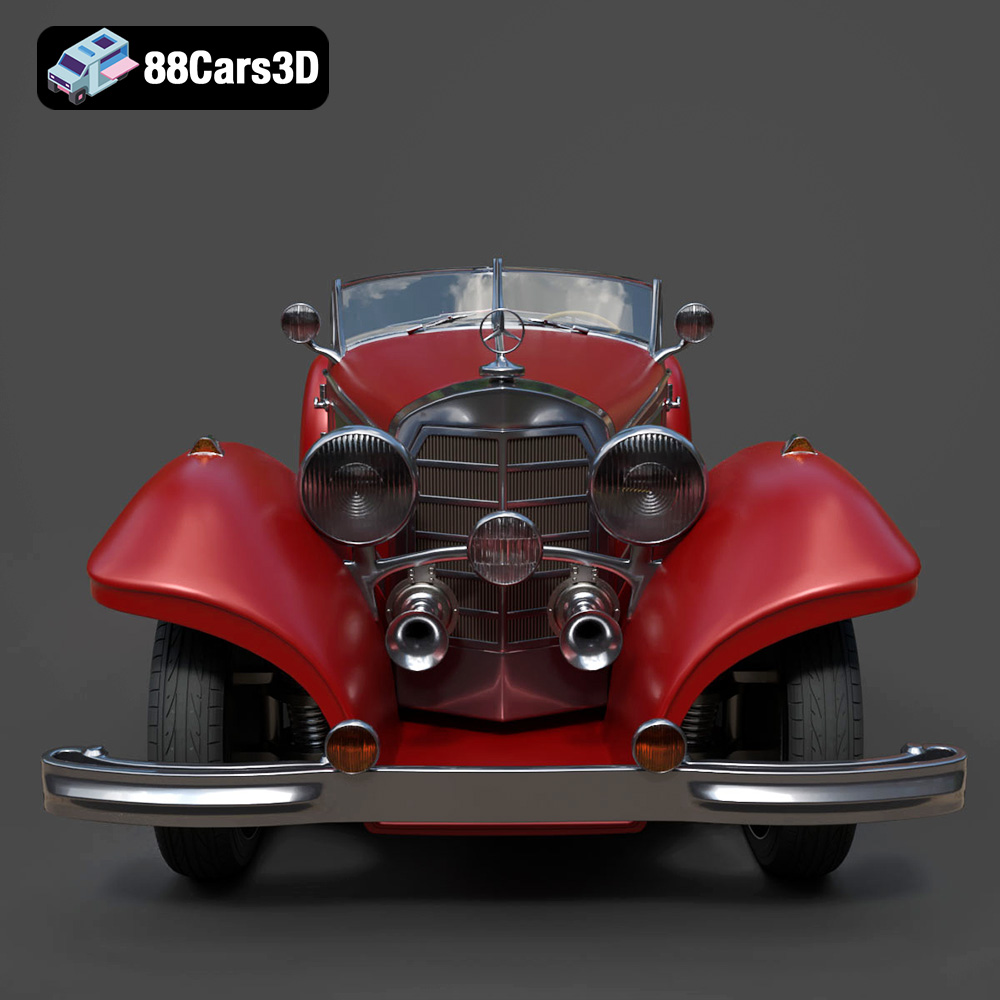
  • Detailed Straight-Eight Engine Block: The legendary supercharged engine, a hallmark of the 540K, is replicated with visible supercharger elements and the signature external chrome exhaust pipes cascading from the hood, adding significant visual richness.
  • Authentic Period-Correct Lighting: Large classic headlamps and delicate taillights are accurately modeled, reflecting the design sensibilities of the 1930s.
  • Intricate Wire-Spoke Wheels: These complex components are faithfully reproduced, fitted with classic whitewall tires, enhancing the period aesthetic.
  • Detailed Classic Suspension Chassis Setup: The underlying engineering is not overlooked, providing a solid foundation for realistic animation and physics in real-time applications.

This attention to exterior detail ensures that the model stands up to close-up shots and high-resolution renders, making it an invaluable asset for any project demanding historical accuracy.

Interior Craftsmanship and Gaming Optimization: The Driver’s Perspective

The cockpit of the Mercedes-Benz 540K Roadster was a realm of luxury, and the 3D model extends its high fidelity to the interior:

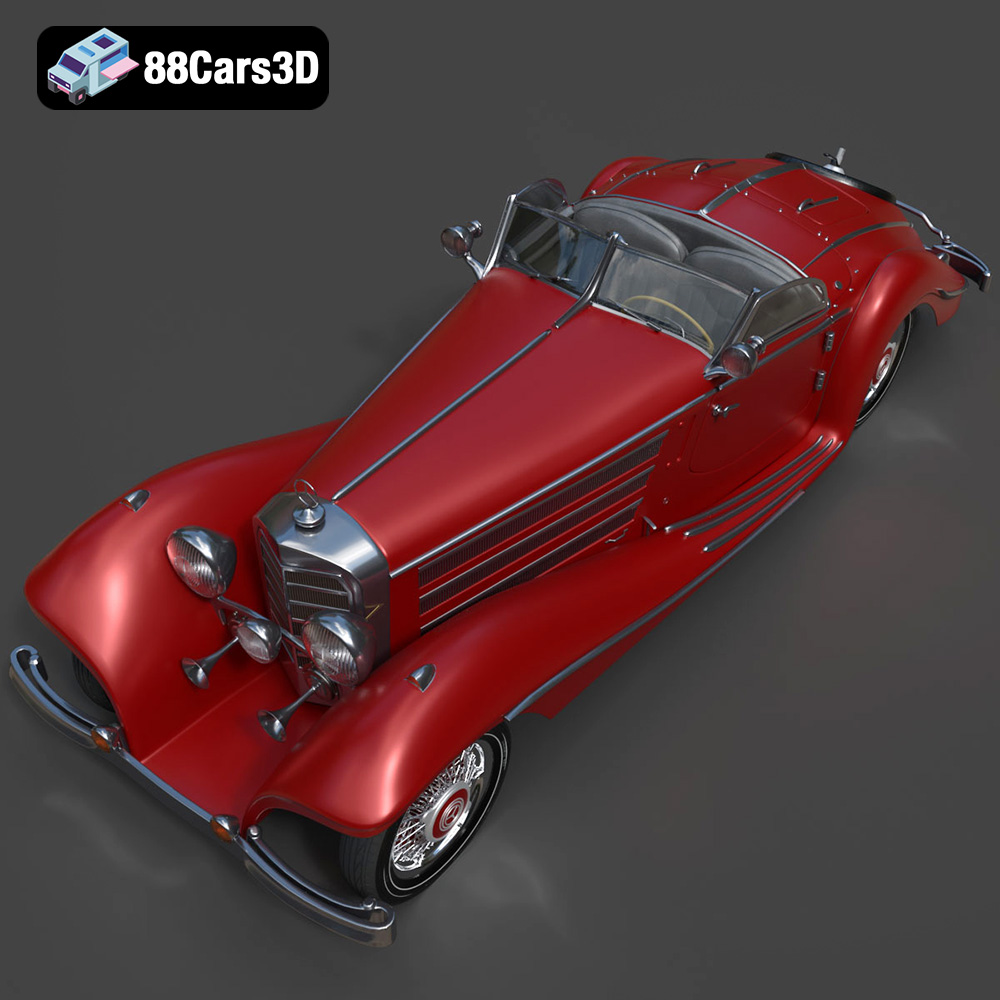
  • Luxurious, Tufted Leather Bench Seating: The seating is crafted to convey the opulence of the original, complete with detailed stitching and material representation.
  • Vintage-Style Steering Wheel: A large-diameter steering wheel with precise spoke detailing adds to the authenticity of the driving experience.
  • Accurate Analog Instrument Cluster: Classic dial faces and gauges are meticulously modeled, providing a fully immersive first-person view, crucial for gaming and simulation.
  • Authentic Control Layout: The floor-mounted shifter, handbrake, and mechanical pedal assembly are all accurately placed and modeled, ready for interactive use.

The interior geometry is specifically optimized for first-person POV in gaming, ensuring that players can experience the car’s lavish cockpit without performance compromise.

Modularity and Customization for Dynamic Projects

A truly professional 3D car model offers flexibility. This Mercedes-Benz 540K Roadster 3D model excels in this area:

  • Separate Components for Animation: Wheels, suspension, and steering components are modeled separately, allowing for realistic animation sequences in renders and dynamic physics in game engines.
  • Customization Options: Artists can easily change body/tank colors to match factory specifications or custom finishes, modify tire textures for different scenarios (e.g., off-road vs. street variants), and adjust material finishes (matte, gloss, metallic) to suit specific aesthetic requirements.
  • Lighting Adaptation: The model is designed to adapt to various lighting environments, from studio setups to natural outdoor scenes, enabling consistent visual quality across diverse projects.

This modularity and customization potential significantly enhance the model’s value, allowing it to be adapted for a wide array of creative briefs and project specifications.

Bringing Classic Automotive Dreams to Life with 3D Printing

The journey of a 3D model often extends beyond the digital realm, finding new life as a tangible object through 3D printing. The Mercedes-Benz 540K Roadster 1936 3D model, available in .stl format, offers enthusiasts and model makers an incredible opportunity to hold a piece of automotive history in their hands. This bridge between digital fidelity and physical reality opens up a world of possibilities for display, collection, and personalized craftsmanship.

From Digital Asset to Tangible Masterpiece: The 3D Printing Process

Converting a complex digital asset like a high-detail 3D car model into a physically printable object requires careful consideration. The .stl format provided ensures that the model is represented as a triangulated mesh, which is the standard input for 3D printing slicing software. This allows hobbyists and professionals alike to bring the iconic lines of the 540K Roadster into the real world.

  • Recommended Scales: The model is ideally suited for common display scales such as 1:12, 1:18, or 1:24. These scales strike a perfect balance between showcasing intricate details and maintaining manageable print times and material usage.
  • Choosing Your Printer: While FDM (Fused Deposition Modeling) printers can work, for a model with such fine details as the wire-spoke wheels or engine elements, resin printing (SLA/DLP) is highly recommended. Resin printers can achieve much finer layer heights and resolve smaller features with greater accuracy, resulting in a smoother, more detailed final print.
  • Preparing for Print: It’s crucial to ensure the model is “watertight” (no holes in the mesh) before slicing. While 88cars3d.com provides high-quality models, a quick check in your slicing software is always good practice.

Essential 3D Print Settings and Post-Processing for Perfection

Achieving a museum-quality physical model from a 3D print involves adhering to specific settings and dedicating time to post-processing. The product description provides excellent guidelines:

  • Layer Height: For resin printing, a layer height of 0.04–0.12 mm is recommended. Lower layer heights will produce finer details and smoother surfaces but will increase print time.
  • Wall Thickness: A wall thickness of 1.2–2.0 mm ensures structural integrity for the printed parts, preventing breakage during handling and assembly.
  • Infill: For most display models, an infill of 20–30% is sufficient. This provides internal support without excessive material consumption.
  • Supports: Supports are almost always required for complex models with overhangs, especially for intricate parts like the exhaust pipes, mirrors, and the delicate wire-spoke wheels. Proper support placement is critical to prevent print failures and minimize damage to the model’s surface upon removal.
  • Print Orientation: Printing the frame angled can often improve structural integrity and reduce the need for supports on critical surfaces. Wheels should typically be printed separately to optimize detail and minimize support marks.
  • Post-processing: This stage is where the magic truly happens. Sanding to remove layer lines or support marks, applying primer to create a uniform surface, and then painting with authentic factory colors, often with metallic finishes, will elevate the printed model to a stunning display piece. Techniques like airbrushing, weathering, and detailing can bring out the full character of this classic car.

The availability of the Mercedes-Benz 540K Roadster as an .stl file transforms it from a digital render into a tangible object, offering a unique avenue for engagement with this automotive masterpiece.

Conclusion

The world of 3D modeling is an intricate blend of art and engineering, constantly pushing the boundaries of what’s possible in digital visualization. For professionals across game development, architectural visualization, cinematic rendering, and immersive AR/VR experiences, the demand for high-quality, technically sound 3D car models remains constant. The Mercedes-Benz 540K Roadster 1936 3D model download epitomizes excellence in this domain, offering a meticulously crafted asset that combines historical accuracy with modern optimization.

From its faithfully recreated exterior and luxurious interior to its versatile range of file formats—including .blend, .fbx, .obj, .glb, .stl, .ply, .unreal, and .max—this model is engineered for seamless integration into virtually any professional workflow. Whether you are aiming for photorealistic automotive rendering, developing a high-performance game asset, or even bringing a tangible piece of automotive history to life through 3D printing, this model provides the foundation for unparalleled results. It stands as a testament to the dedication required to produce top-tier 3D assets.

For those seeking to elevate their projects with premium 3D car models that combine breathtaking detail with robust technical specifications, the Mercedes-Benz 540K Roadster 1936 is an exceptional choice. Explore this model and many other exquisite 3D car models designed for professional applications at 88cars3d.com, your trusted source for high-quality digital automotive assets.

Featured 3D Model

Mercedes-Benz 540K Roadster 1936 3D Model Download STL FBX OBJ GLB Blend

Experience the epitome of pre-war automotive luxury with our Mercedes-Benz 540K Roadster 3D model. A true masterpiece of 1930s engineering and design, the 540K is renowned for its sweeping, majestic fenders, elongated hood housing the legendary supercharged straight-eight engine, and iconic external exhaust pipes. Every signature styling cue, from the prominent chrome radiator grille to the elegant wire-spoke wheels, has been meticulously recreated to capture the majestic presence of this historical classic. Boasting a highly detailed topology with 1,716,088 triangles, this 3D model delivers unparalleled visual fidelity while remaining structured for modern workflows. Designed to leverage the power of advanced real-time engines utilizing virtualized geometry, it serves as a top-tier asset for high-end game development, cinematic animation, immersive AR/VR experiences, and photorealistic automotive visualization. Perfect for historic racing games, virtual classic car museums, cinematic period-piece animations, and high-end luxury configurators.

$81.00

View This Model

Product Image Gallery

Mercedes-Benz 540K Roadster 1936

Related Tags

.blend

.fbx

.glb

.max

.obj

.ply

.rendering

.stl

.unreal

540k-roadster

car-3d-model

classic-car

game asset

game-ready

high poly

luxury car

mercedes-benz

optimized

vintage-car

VR/AR

Nick
Author: Nick

Lamborghini Aventador 001

🎁 Get a FREE 3D Model + 5% OFF

We don’t spam! Read our privacy policy for more info.

Leave a Reply

Your email address will not be published. Required fields are marked *