Get 20% OFF All Premium 3D & STL Models!

In the dynamic world of digital design, the demand for high-quality 3D car models has never been greater. From photorealistic automotive rendering to immersive game development and groundbreaking AR/VR experiences, precision-engineered vehicles are the bedrock of countless professional projects. The ability to seamlessly integrate detailed, technically sound car models into diverse workflows is a hallmark of top-tier production.
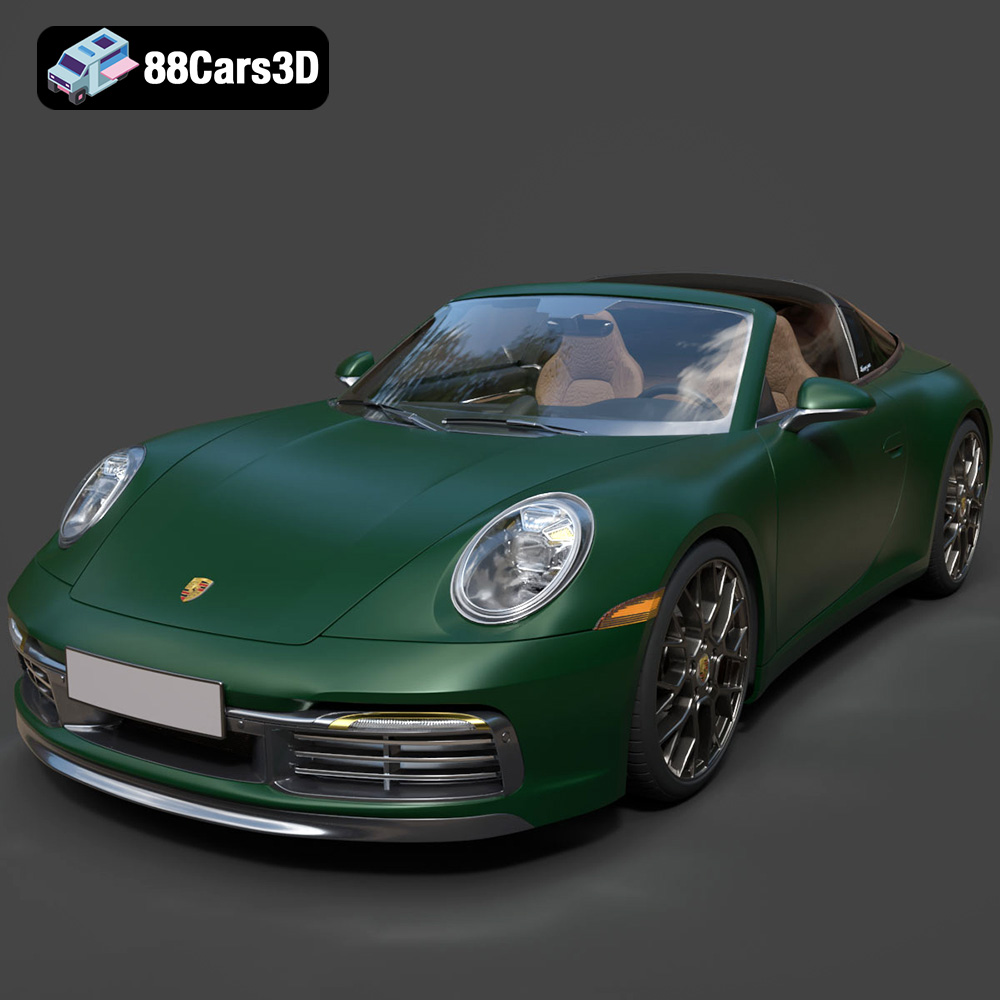
Imagine bringing an iconic vehicle, revered for its design and engineering, to life in a virtual space. This is precisely the power that a meticulously crafted 3D asset provides. Take, for instance, the legendary Porsche 911 Targa – a car that embodies both thrilling performance and timeless elegance. Capturing its essence in a 3D model requires an understanding of intricate topology, material science, and real-time optimization. Whether you’re a seasoned professional or an aspiring artist, understanding the technical nuances behind these assets is crucial for success.
This comprehensive guide delves into the technical requirements, diverse applications, and professional workflows surrounding 3D car models, using the exceptional Porsche 911 Targa 3D Model available at 88cars3d.com as a prime example of excellence.
The versatility of a 3D model often hinges on the file formats it supports. Different formats are optimized for various applications, software, and platforms, each with its unique strengths and technical considerations. A professional 3D car model, such as the Porsche 911 Targa available, offers a comprehensive suite of formats, ensuring maximum compatibility and utility across diverse pipelines.
The .blend format is native to Blender, the powerful open-source 3D creation suite. When you download a .blend file, you’re getting a fully editable Blender scene, complete with materials, textures, lighting setups, and often even animation rigs. This format is ideal for artists and studios who primarily use Blender for their modeling, texturing, rigging, and rendering. It allows for deep customization, enabling users to tweak geometry, modify shaders, and integrate the model seamlessly into existing Blender projects. Its greatest advantage lies in its comprehensive scene data, preserving all aspects of the model within the Blender ecosystem.
.fbx (Filmbox) is arguably the most widely adopted interchange format in the 3D industry, particularly popular for its robust support of animation, rigging, and material data. It’s the go-to choice for transferring assets between different 3D software packages like 3ds Max, Maya, and Blender, and is especially critical for game development. Both Unreal Engine and Unity heavily rely on .fbx for importing character models, environments, and, crucially, high-fidelity 3D car models. It’s excellent for real-time pipelines due to its efficient handling of mesh data, PBR (Physically Based Rendering) materials, and skeletal animations. When you need to move a detailed asset like the Porsche 911 Targa into a game engine, .fbx is usually the first choice.
The .obj (Wavefront OBJ) format is a classic and highly compatible file type, often considered a universal standard for raw 3D mesh data. While it doesn’t typically store advanced animation or rigging information, it excels at preserving geometric accuracy, UV mapping coordinates, and basic material references (via an accompanying .mtl file). Its simplicity makes it incredibly stable and widely supported across virtually all 3D software. For cross-software compatibility, especially when the primary concern is the pure mesh and its UVs for texturing in a different application, .obj is an invaluable choice.
.glb (GL Transmission Format Binary) is a relatively newer format, gaining significant traction due to its optimization for modern real-time applications, particularly in AR, VR, and web-based 3D. It’s essentially a binary version of glTF, bundling all necessary assets like geometry, textures, and animations into a single, compact file. This “all-in-one” characteristic makes it extremely efficient for quick loading and display in browsers (e.g., using Three.js or Babylon.js), mobile AR apps (like Apple ARKit or Google ARCore), and lightweight VR experiences. For interactive configurators or virtual showrooms of a vehicle like the Porsche 911 Targa, .glb offers unparalleled performance and ease of deployment.
The .stl (Stereolithography) format is the undisputed king of 3D printing. It represents a 3D model as a collection of unconnected triangles, forming the surface geometry of an object. While it lacks color, texture, or material information, its simplicity makes it universally compatible with 3D printers and slicing software. For hobbyists and professionals looking to materialize a digital design, converting a detailed 3D car model into .stl is the first step. The Porsche 911 Targa model, specifically designed with 3D printing considerations, illustrates how a complex digital asset can be brought into the physical world, allowing for display-scale replicas with meticulous detail.
.ply (Polygon File Format) is another format primarily used for storing 3D data, particularly from 3D scanners or for applications requiring precise mesh data for scientific or engineering analysis. It can store a wider range of properties than .stl, including color, transparency, and normal vectors, for each vertex and face. It’s often used in CAD (Computer-Aided Design) workflows and for more technical applications where absolute mesh integrity and additional per-vertex data are critical, offering a robust solution for detailed inspections or reverse engineering tasks.
The .unreal designation indicates an asset specifically prepared and optimized for direct integration into Unreal Engine. While often derived from .fbx imports, a .unreal file might imply a pre-packaged asset with correct material setups, collision meshes, LODs (Levels of Detail), and blueprint configurations already applied, saving significant development time. For game developers or real-time visualization artists working within the Unreal ecosystem, an engine-ready asset like this Porsche 911 Targa dramatically streamlines the import and implementation process, allowing for immediate deployment in interactive simulations, racing games, or cinematic renders.
Finally, the .max format is the native project file for Autodesk 3ds Max, a powerful 3D modeling, animation, and rendering software. Similar to .blend for Blender, a .max file contains the complete scene data, including all geometry, textures, materials, lighting, cameras, and any animation or rigging setups. It’s invaluable for professionals who use 3ds Max as their primary creative tool, offering full flexibility for editing, refining, animating, and rendering the 3D car model within a robust production environment. This allows for deep customization and leveraging 3ds Max’s extensive toolset for high-fidelity animation and visual effects.
The inclusion of all these diverse formats with the Porsche 911 Targa 3D Model highlights its adaptability and value, making it an ideal choice for professionals across various industries, reinforcing why 88cars3d.com prioritizes comprehensive file support.
Automotive visualization is an intricate blend of artistic vision and technical precision. It’s about more than just rendering a car; it’s about telling a story, evoking emotion, and showcasing design intent. Professional 3D car models are central to this process, forming the photorealistic core of high-impact visual campaigns.
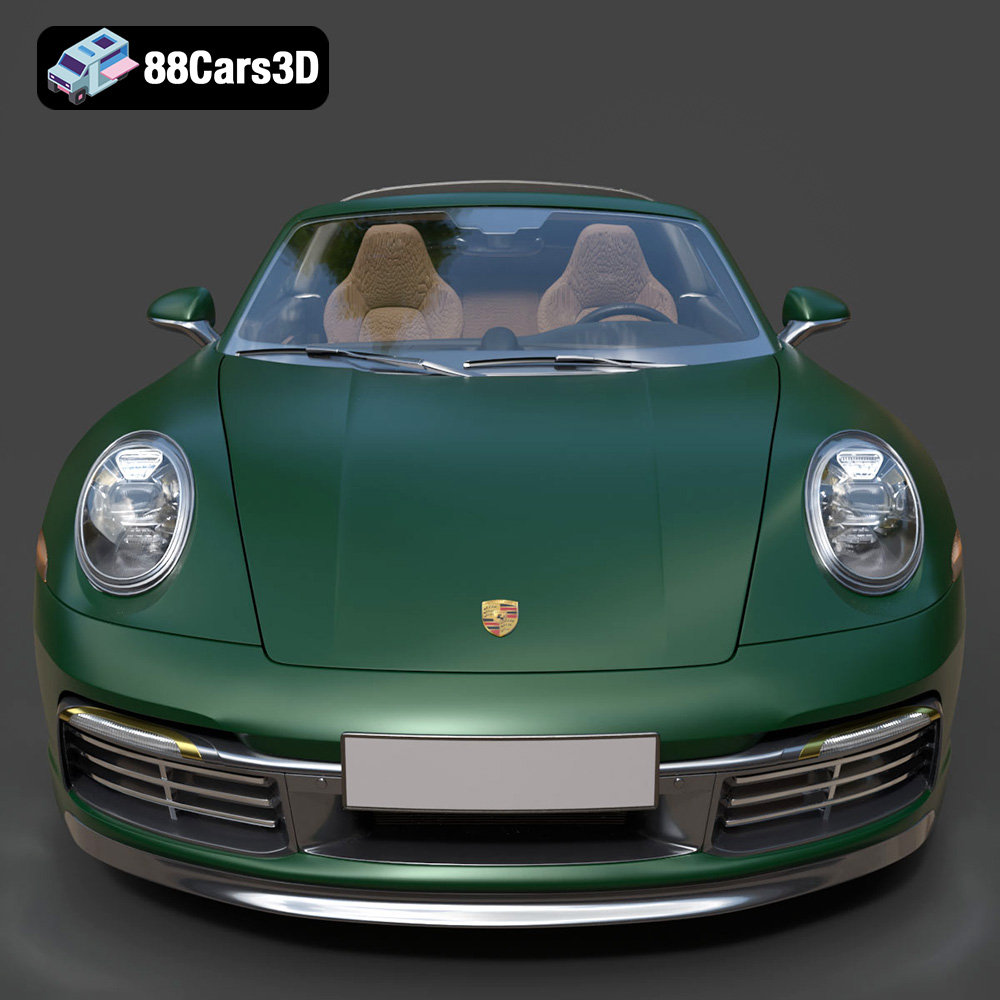
Achieving photorealism in automotive rendering requires meticulous attention to detail. This starts with a high-fidelity 3D model, featuring accurate geometry and realistic material definitions. The Porsche 911 Targa model, with its authentic proportions, detailed engine block, and signature LED headlights, provides an excellent foundation. Artists utilize physically based rendering (PBR) workflows to define surfaces – from the metallic flake of the paint to the subtle reflectivity of chrome and the intricate stitching of leather interiors. Software like V-Ray, Corona Renderer, and Cycles (in Blender) are leveraged to simulate real-world lighting, reflections, and refractions, turning a digital model into an indistinguishable replica of its physical counterpart.
High-end 3D car models are indispensable for creating breathtaking cinematic sequences, whether for commercials, product launches, or feature films. The ability to animate separate components – such as wheels, suspension, and steering – as offered by the Porsche 911 Targa model, is critical for dynamic shots. Beyond standalone renders, these models seamlessly integrate into architectural visualizations, adding a sense of scale, lifestyle, and realism to proposed buildings and urban environments. A luxury car parked outside a modern architectural masterpiece can elevate a scene from a static image to a vibrant, aspirational vision, demonstrating the model’s versatility in diverse professional contexts.
In the realm of interactive entertainment, 3D car models are not just visual elements; they are integral components of the player experience. From open-world adventures to high-octane racing simulators, game-ready assets demand a unique balance of visual quality and technical optimization.
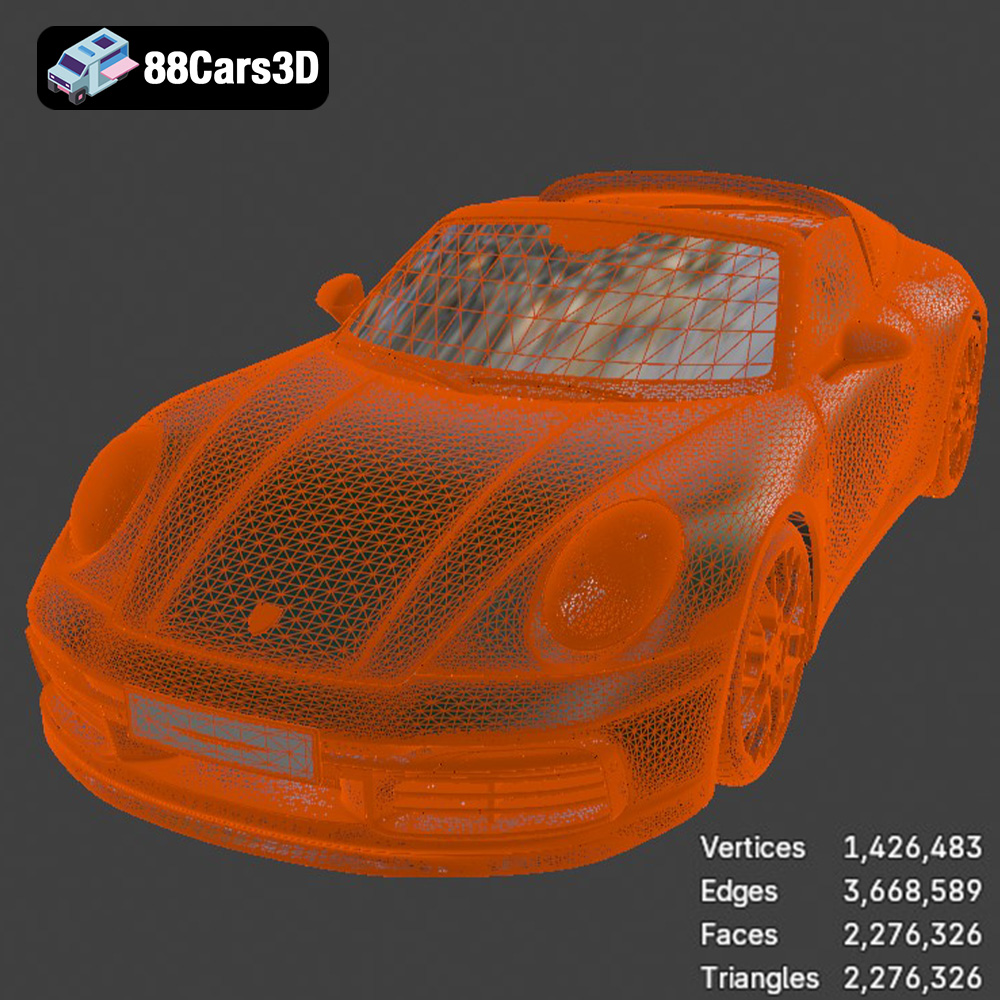
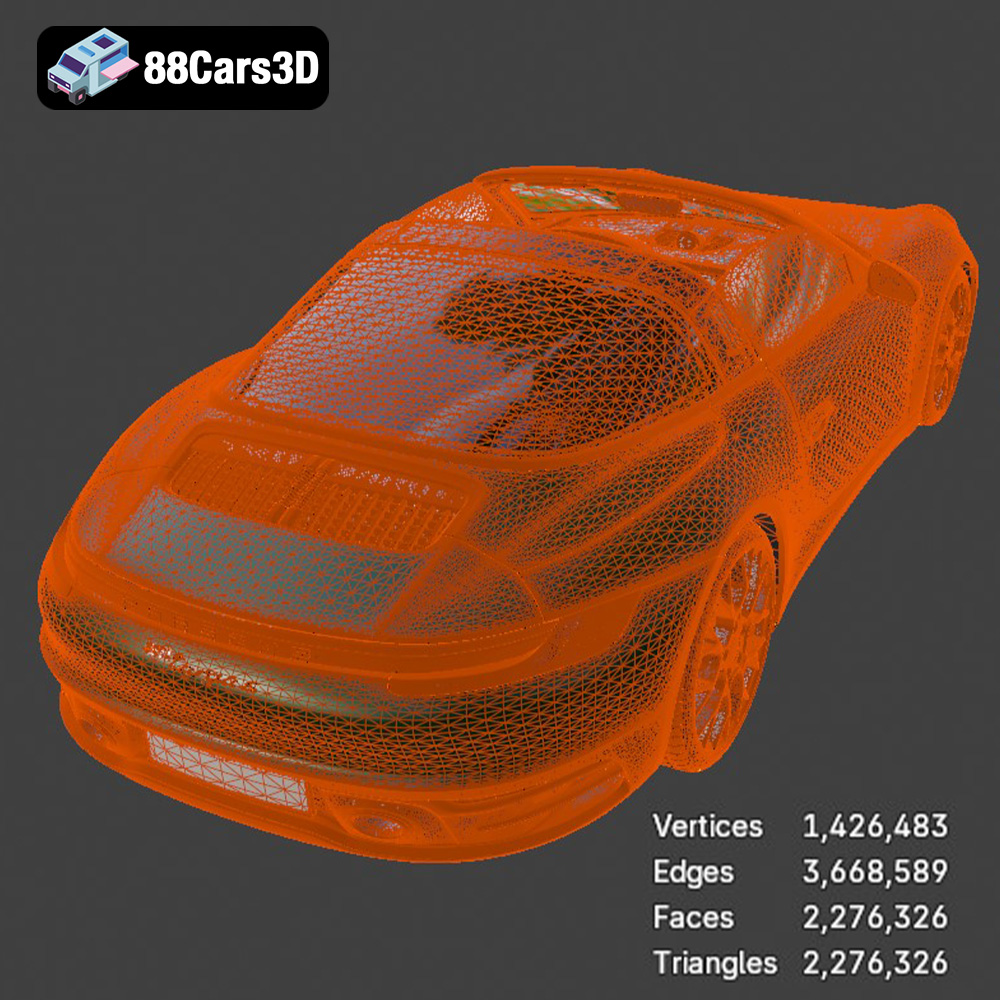
Game development requires models that are efficient enough to render in real-time while maintaining visual fidelity. This is where concepts like polycount and proper topology become paramount. The Porsche 911 Targa 3D Model, with its 2,276,326 triangles, strikes an excellent balance. This polycount is high enough for stunning realism, yet optimized for modern real-time engines like Unreal Engine and Unity. Key optimization strategies include efficient UV mapping for texture atlases, realistic but performance-friendly PBR materials, and often, the implementation of LODs (Levels of Detail) to swap out higher-resolution meshes for lower-resolution ones as the vehicle moves away from the camera. The included .fbx and .unreal formats are specifically tailored for these demanding game development pipelines.
For racing titles and simulators, the realism of the driving experience hinges on the accuracy of the vehicle model. The Porsche 911 Targa’s real-world scale accuracy, combined with proper pivot setups for steering, wheel rotation, and suspension travel, ensures authentic handling and visual feedback. In open-world games, these detailed car models contribute significantly to environmental immersion, allowing players to interact with vehicles that look and feel convincing. The interior features, such as the classic five-dial instrument cluster and detailed center console, further enhance first-person POV experiences, adding depth and credibility to the virtual environment.
The utility of high-quality 3D car models extends far beyond traditional screens, opening up new frontiers in interactive and physical applications. Augmented Reality (AR), Virtual Reality (VR), and 3D printing offer innovative ways to experience and interact with these digital assets.
AR and VR are transforming how we interact with products, especially in the automotive sector. Imagine a potential customer exploring a Porsche 911 Targa in a virtual showroom, walking around it, opening doors, and even sitting inside, all before it’s physically built. High-fidelity 3D car models are crucial for these immersive virtual showrooms and configurators. The optimized geometry of the Targa model makes it perfect for such applications, ensuring smooth performance even on mobile AR platforms. The .glb format is particularly beneficial here, offering a lightweight, single-file solution for web-based AR/VR experiences, allowing brands to showcase their vehicles in engaging, interactive ways.
The ability to convert a complex digital model into a tangible object through 3D printing is a testament to the model’s underlying geometry and detail. While the primary use of 3D car models is digital, converting them to .stl for 3D printing opens up avenues for display-scale replicas and custom prototypes. The Porsche 911 Targa model includes specific recommendations for 3D print settings, such as recommended scales (1:12 / 1:18 / 1:24), layer height, wall thickness, and support requirements. This level of detail ensures that even the physical output retains the model’s intricate features, from the dual exhaust system to the premium alloy wheels, making it a valuable asset for collectors, hobbyists, and rapid prototyping workflows.
The Porsche 911 Targa 3D Model available at 88cars3d.com stands as a prime example of a professionally crafted automotive asset, tailored to meet the rigorous demands of various creative industries. Its technical specifications and included features underscore its versatility and high quality.
At the heart of this model’s appeal is its exact triangle count of 2,276,326. This figure isn’t arbitrary; it represents a carefully considered balance between visual fidelity for high-end rendering and optimized topology for real-time applications. Such a polycount ensures that every curve of the iconic 911 Targa silhouette, every detail of its flat-six engine block, and every intricate component of its suspension geometry is accurately represented without overburdening rendering engines or game pipelines. The “game-ready & optimized” claim is genuinely met, making it suitable for next-gen game development without extensive post-purchase optimization.
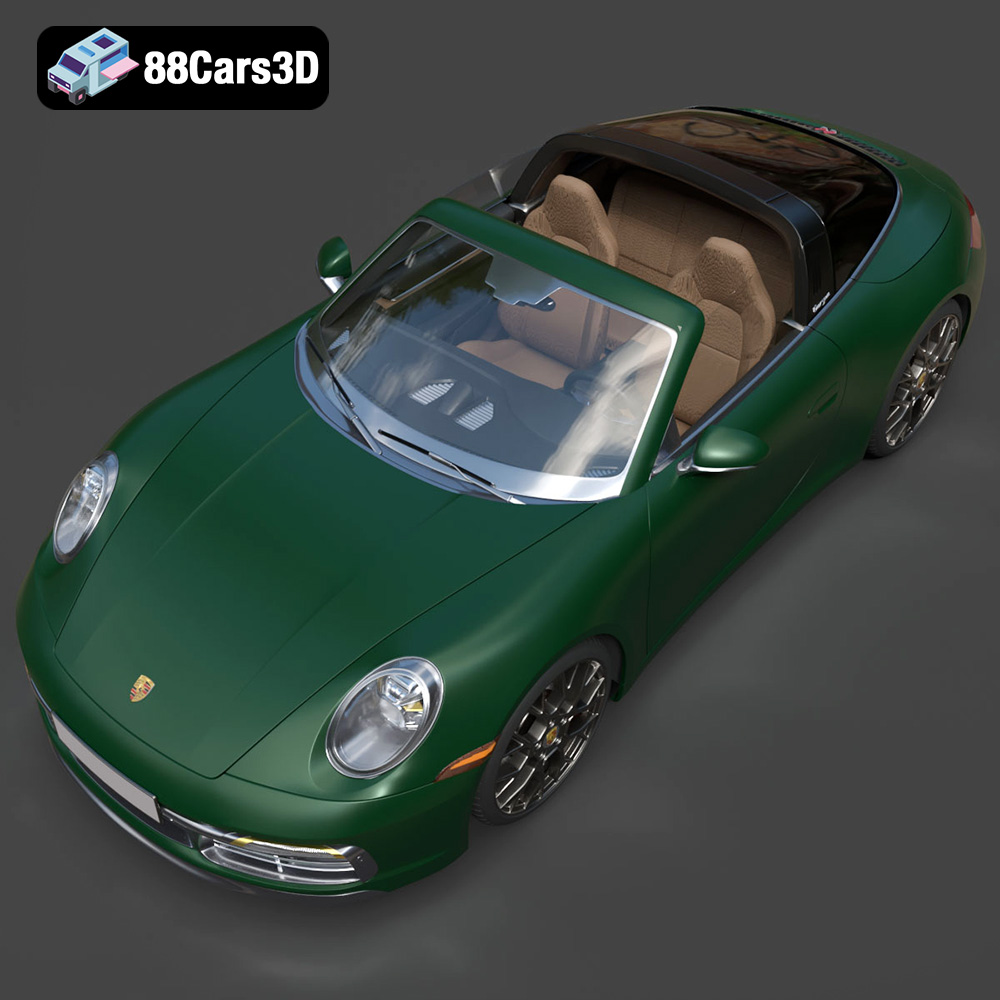
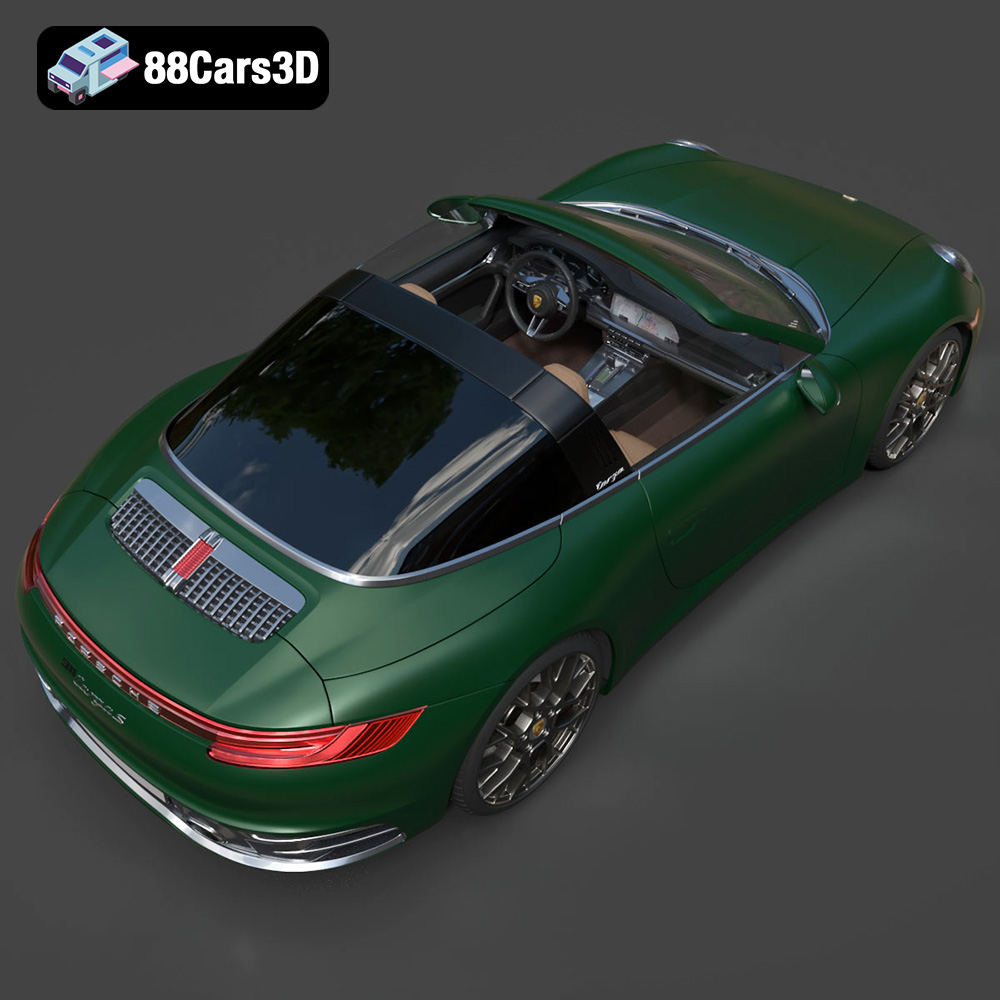
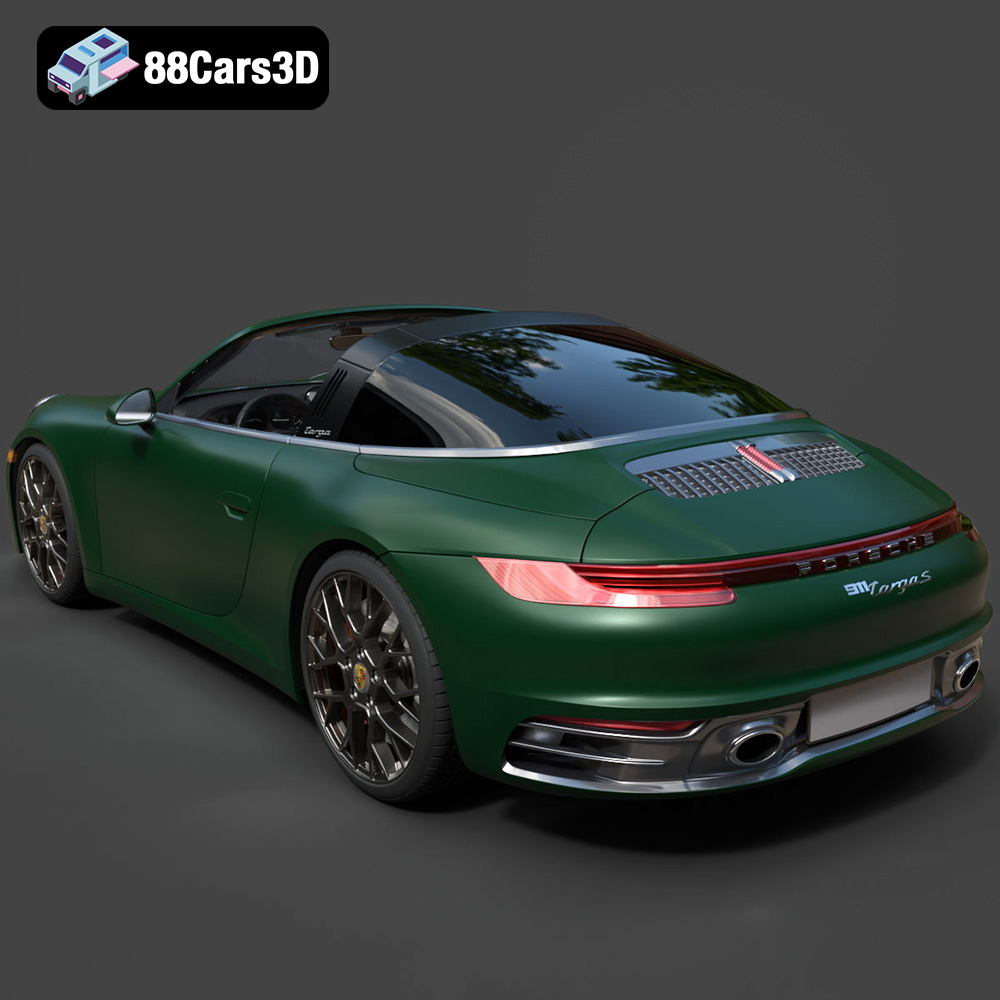
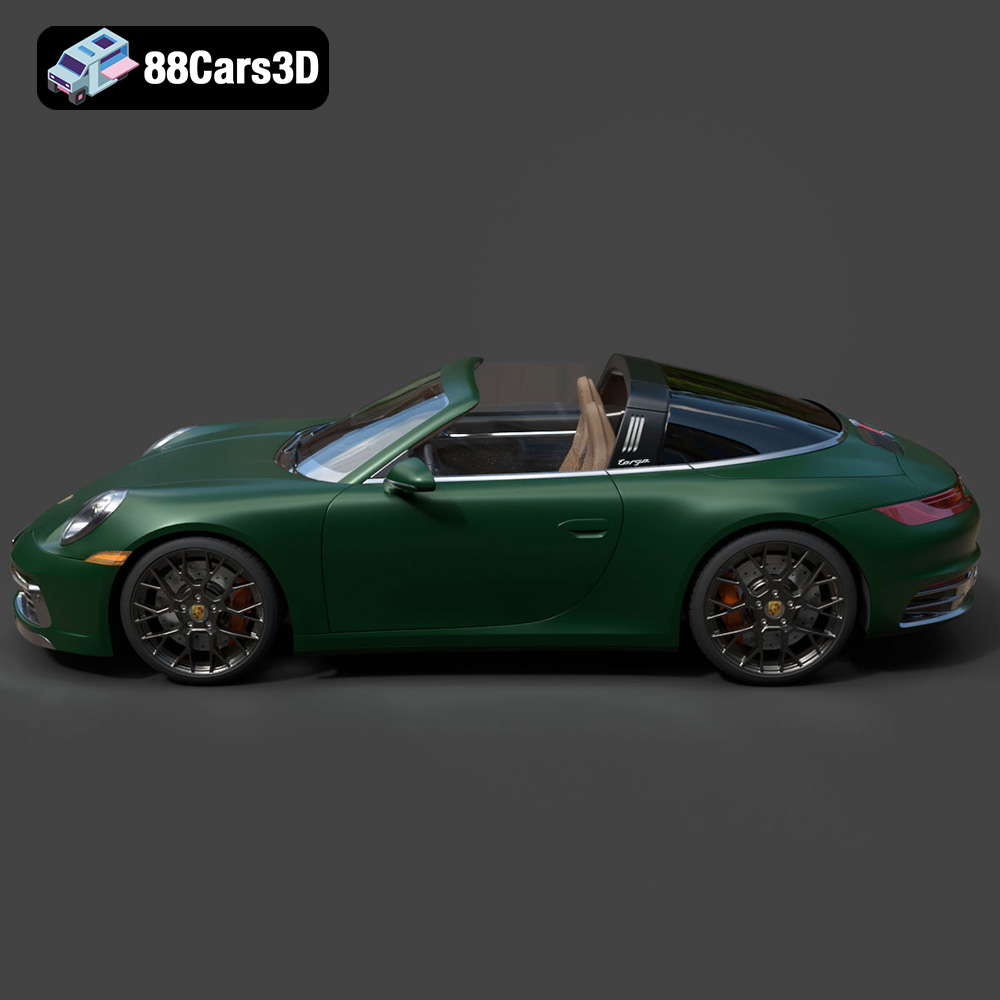
The model’s exterior features are nothing short of exhaustive. From the accurate frame geometry and authentic dual exhaust system to the signature LED headlights and continuous rear taillight strip, every element contributes to an astonishing level of realism. Crucially, components like the wheels, suspension, and steering are separated, providing animators with precise control for dynamic shots and realistic simulations. Inside, the cockpit boasts premium leather-trimmed sport seats, an iconic 911 steering wheel, and a classic five-dial instrument cluster, optimized for first-person POV in gaming. This level of granular detail allows for versatile applications, from close-up renders to interactive virtual walkthroughs.
Beyond its inherent detail, the Porsche 911 Targa model offers significant advantages in scalability and customization. Its real-world scale accuracy ensures seamless integration into environments, be it an architectural scene or a racing track. The proper pivot setup for crucial mechanical parts simplifies rigging and animation. Furthermore, the model is designed for customization, allowing users to effortlessly change body colors, modify tire textures, adjust material finishes (matte, gloss, metallic), and adapt lighting for different environments. This flexibility ensures that the model can be tailored to specific project requirements, maintaining its value across a diverse range of professional applications. The inclusion of a wide array of file formats, including .blend, .fbx, .obj, .glb, .stl, .ply, .unreal, and .max, further cements its position as a truly versatile and professional-grade 3D car model, ready for any pipeline imaginable from 88cars3d.com.
The journey through the world of professional 3D car models reveals a landscape where technical precision meets artistic expression. From the foundational understanding of diverse file formats to the intricate workflows of automotive rendering, game development, and the burgeoning fields of AR/VR and 3D printing, high-quality assets are indispensable. The Porsche 911 Targa 3D Model exemplifies this standard of excellence, offering a meticulously detailed, optimized, and versatile asset that meets the rigorous demands of creative professionals.
Whether you’re striving for photorealistic cinematic renders, building an immersive racing simulator, or crafting an interactive virtual experience, the right 3D car model can significantly elevate your project. The comprehensive technical specifications, multi-format support, and thoughtful optimization of assets like the Porsche 911 Targa available on 88cars3d.com empower artists and developers to bring their visions to life with unparalleled realism and efficiency. Investing in high-quality 3D car models is not just about acquiring an asset; it’s about unlocking a world of creative possibilities and driving your projects towards a future of digital excellence.
The Porsche 911 Targa is an iconic masterpiece of automotive engineering, celebrated for its legendary rear-engine layout, unmistakable silhouette, and the classic Targa roof mechanism. Perfectly blending the thrill of open-top driving with the structural rigidity of a coupe, this model features signature round headlights, sweeping rear fenders, and a meticulously crafted dual exhaust system. With an exact triangle count of 2,276,326, this highly detailed 3D model delivers unparalleled visual fidelity and exceptional topology. Optimized for both high-end rendering and detailed visualizations, it maintains the precise geometry needed for cinematic sequences, immersive VR/AR experiences, and next-gen game development. Perfect for high-fidelity racing simulators, luxury virtual showrooms, architectural visualizations, and cinematic automotive animations.
$87.50
.blend
.fbx
.glb
.max
.obj
.ply
.porsche
.rendering
.sports car
.stl
.unreal
911-targa
car-3d-model
classic-car
game asset
game-ready
low-poly
optimized
VR/AR