Get 20% OFF All Premium 3D & STL Models!

In the expansive and ever-evolving landscape of 3D visualization, simulation, and game development, the demand for highly detailed and technically accurate models is paramount. From creating breathtaking automotive renders to populating expansive virtual worlds with authentic machinery, the quality of a 3D asset directly impacts the realism and immersion of the final project. Whether you’re a seasoned architectural visualizer, a game developer crafting the next big construction simulator, or an engineer designing virtual training modules, having access to expertly crafted 3D car models and industrial assets is crucial for achieving professional-grade results.
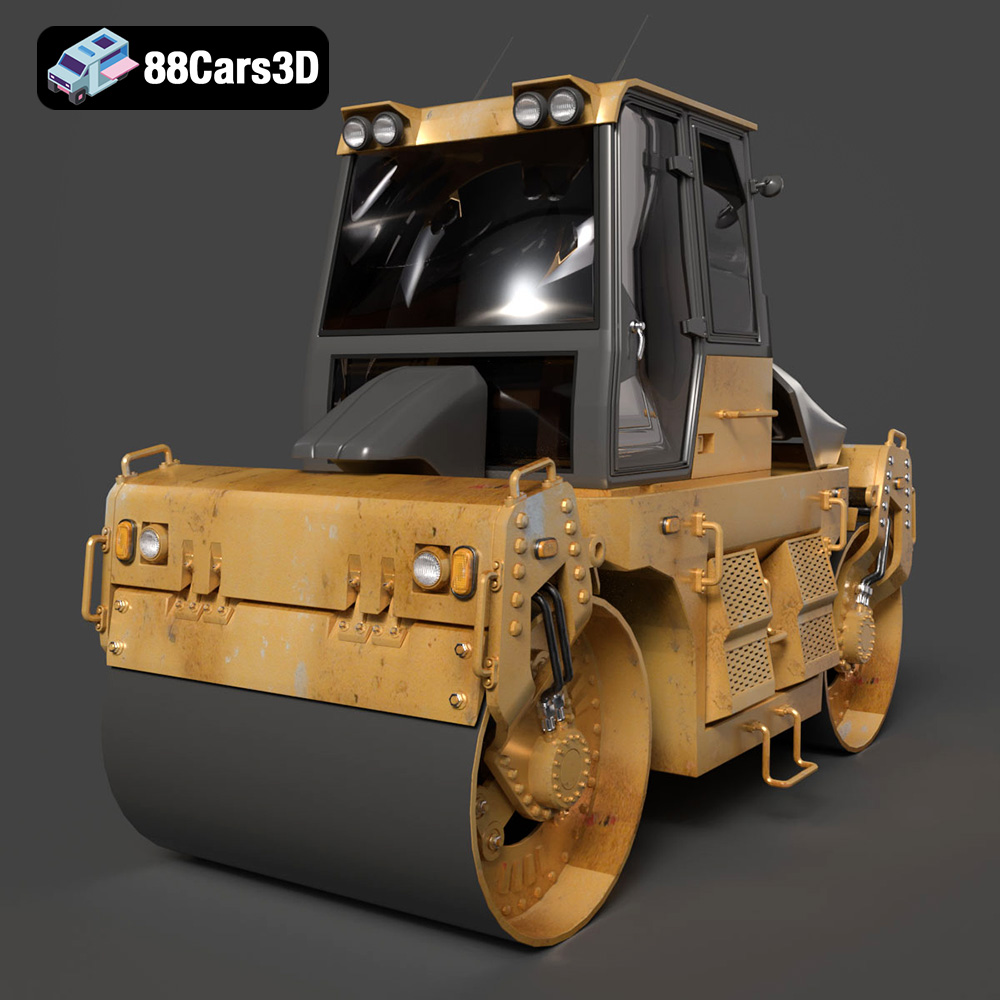
Today, we delve into the intricate world of heavy construction equipment with a spotlight on a particularly versatile and robust asset: the Road Roller Vibratory Tandem 3D Model. This isn’t just a static representation; it’s a meticulously engineered digital twin, ready to be deployed across a multitude of platforms and applications. Its dual steel drums and articulated chassis are not only iconic but also functionally replicated, making it an ideal choice for anyone needing a high-fidelity heavy machinery asset. Let’s explore how such a specialized model can revolutionize your digital projects, from the foundational file formats to advanced rendering and real-time integration.
The journey of any 3D model, especially complex assets like heavy machinery, begins and largely depends on its file format. Choosing the correct format is not merely a matter of preference but a critical technical decision that impacts compatibility, feature retention, and overall workflow efficiency. A high-quality marketplace like 88cars3d.com understands this diversity, offering models like the Road Roller Vibratory Tandem in a comprehensive suite of formats to cater to every professional need. Let’s break down the most common and crucial ones included with this exceptional model.
The .blend format is native to Blender, the increasingly popular open-source 3D creation suite. When you receive a model in .blend format, you’re getting a fully editable Blender scene, complete with materials, textures, lighting, and any rigging or animation data. This provides unparalleled flexibility for artists who use Blender for modeling, rendering (Cycles or Eevee), or animation. For our Road Roller, the .blend file would allow you to delve into the underlying mesh, modify materials with Blender’s powerful node editor, adjust lighting setups for specific renders, or even develop custom animations for its articulated joints and vibrating drums directly within the software.
.fbx (Filmbox) is arguably the most widely adopted interchange format in the 3D industry, particularly favored for game development and real-time pipelines. Developed by Autodesk, it excels at carrying comprehensive scene information, including geometry, materials, textures, cameras, lights, and animation data, between different 3D applications like 3ds Max, Maya, Blender, Unity, and Unreal Engine. The .fbx version of the Road Roller is ideal for direct import into game engines, ensuring that all its detailed features, pivot points, and potential animation setups are preserved, making it a true game asset.
The .obj (Wavefront OBJ) format is a universal standard for storing 3D geometry. It’s a simple, widely supported format that can be opened by virtually any 3D software. While it handles mesh data (vertices, normals, UV coordinates) exceptionally well, its material definition is usually in a separate .mtl file, and it doesn’t inherently support animations or rigging. For general cross-software compatibility or for processes that primarily require the mesh geometry, like preliminary CAD work or some 3D printing preparation, the .obj file for the Road Roller provides a clean and robust base.
.glb (GL Transmission Format Binary) is an increasingly vital format, especially for the burgeoning fields of Augmented Reality (AR), Virtual Reality (VR), and browser-based 3D applications. It’s a binary container that efficiently packages 3D model data – geometry, materials, textures, and even animations – into a single, compact file. This optimization makes it perfect for fast loading and rendering on mobile devices and web platforms, which often have performance constraints. Deploying the Road Roller in an AR experience or a web-based configurator becomes significantly smoother with its .glb iteration.
.stl (Stereolithography) is the de facto standard for 3D printing. It represents a 3D model as a series of connected triangles, defining only the surface geometry without color, texture, or material information. For hobbyists or professionals looking to bring the Road Roller Vibratory Tandem into the physical world, the .stl file is indispensable. It’s the direct input for most slicing software, preparing the model for additive manufacturing, whether for display-scale replicas or diorama elements.
.ply (Polygon File Format) is another format for storing 3D data, often used in scientific and engineering applications, particularly for representing scanned data or precise mesh outputs from CAD software. It can store a wider range of properties per vertex or face than .obj, including color, transparency, and normal vectors. While less common for everyday artistic workflows, its inclusion for the Road Roller underscores its technical precision, making it suitable for certain analyses or specialized industrial visualization tasks.
The .unreal format signifies an asset specifically optimized and configured for direct use within Unreal Engine. This often means the model comes with pre-set materials, collision meshes, LODs (Levels of Detail), and potentially even basic blueprints, streamlining the integration process considerably. For game developers or architectural visualizers using Unreal Engine, the .unreal file for the Road Roller is a massive time-saver, bypassing many import and setup hurdles, and allowing for immediate deployment into interactive scenes or high-fidelity renders.
Finally, the .max format is the native file type for Autodesk 3ds Max, a long-standing industry leader for 3D modeling, animation, and rendering. Similar to .blend, a .max file provides the full scene data, allowing artists to leverage 3ds Max’s robust toolset for high-end rendering with renderers like V-Ray or Corona, complex animation sequences, or detailed scene composition. For professionals deeply embedded in the Autodesk ecosystem, the .max version of the Road Roller Vibratory Tandem ensures complete control and access to all aspects of the model within their preferred environment.
A truly professional 3D model, especially for specialized equipment like a road roller, goes far beyond a mere visual representation. It’s an intricate assembly of accurate geometry, thoughtful optimization, and intelligent design that makes it versatile across various applications. The Road Roller Vibratory Tandem 3D Model from 88cars3d.com exemplifies this philosophy, offering a balance of aesthetic realism and technical efficiency.
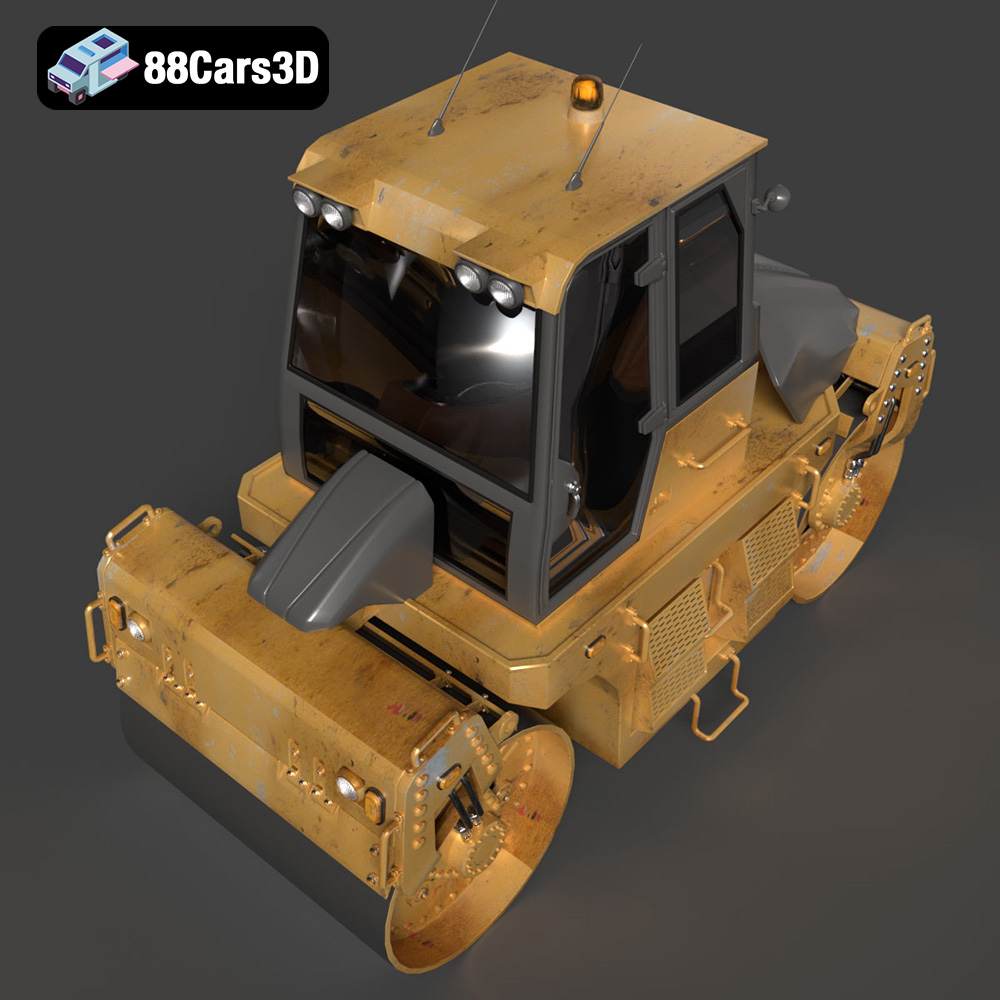
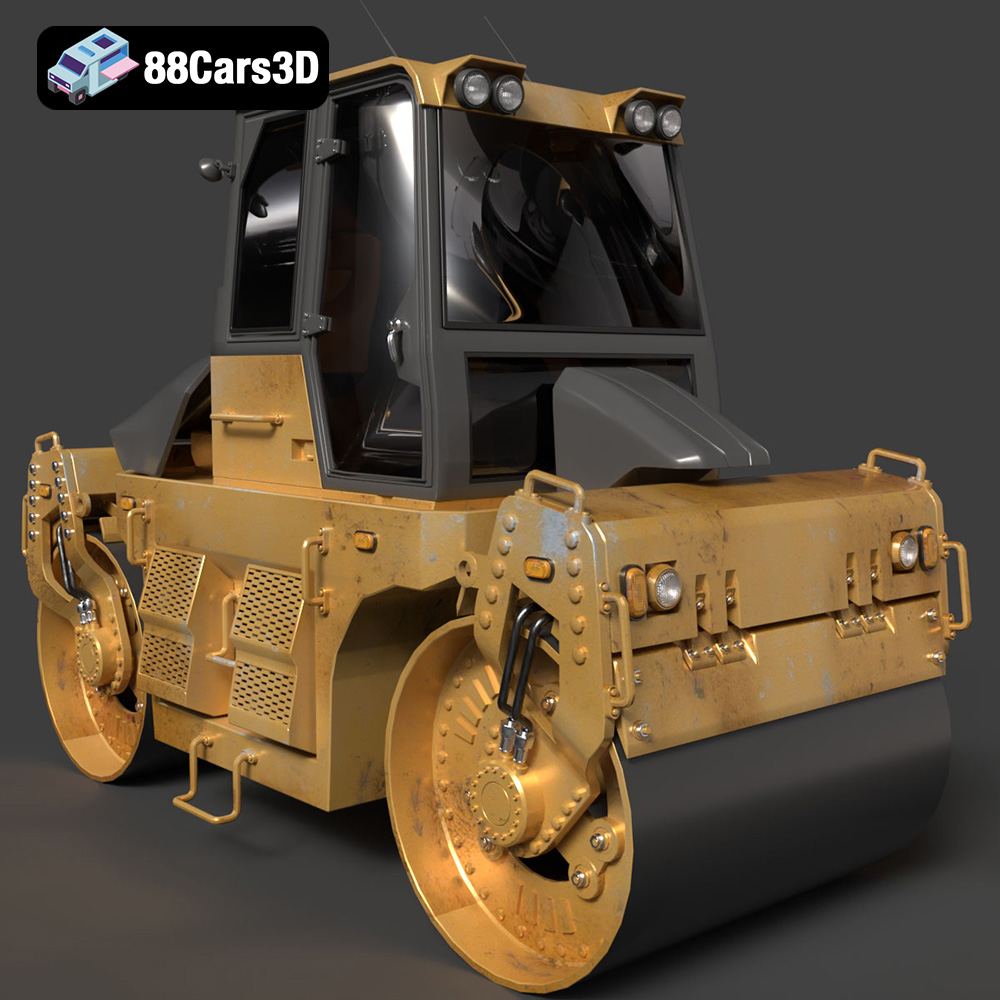
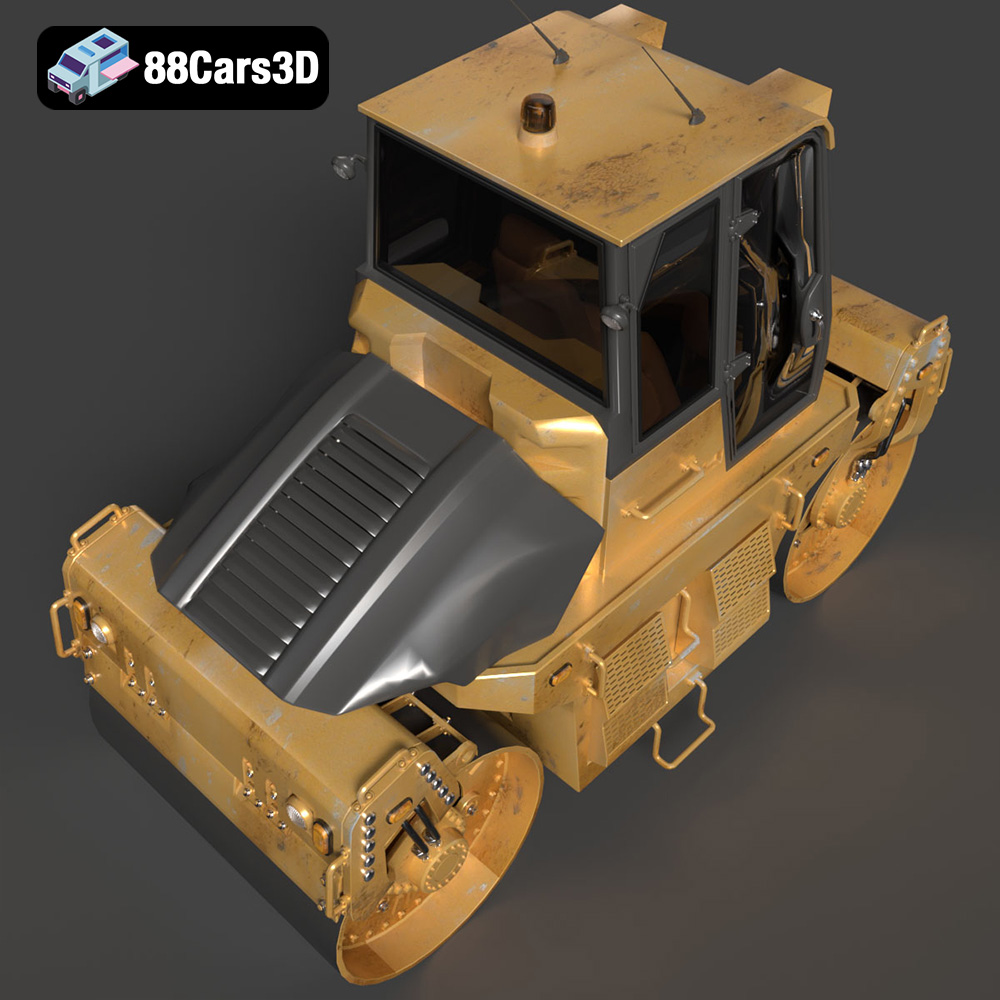
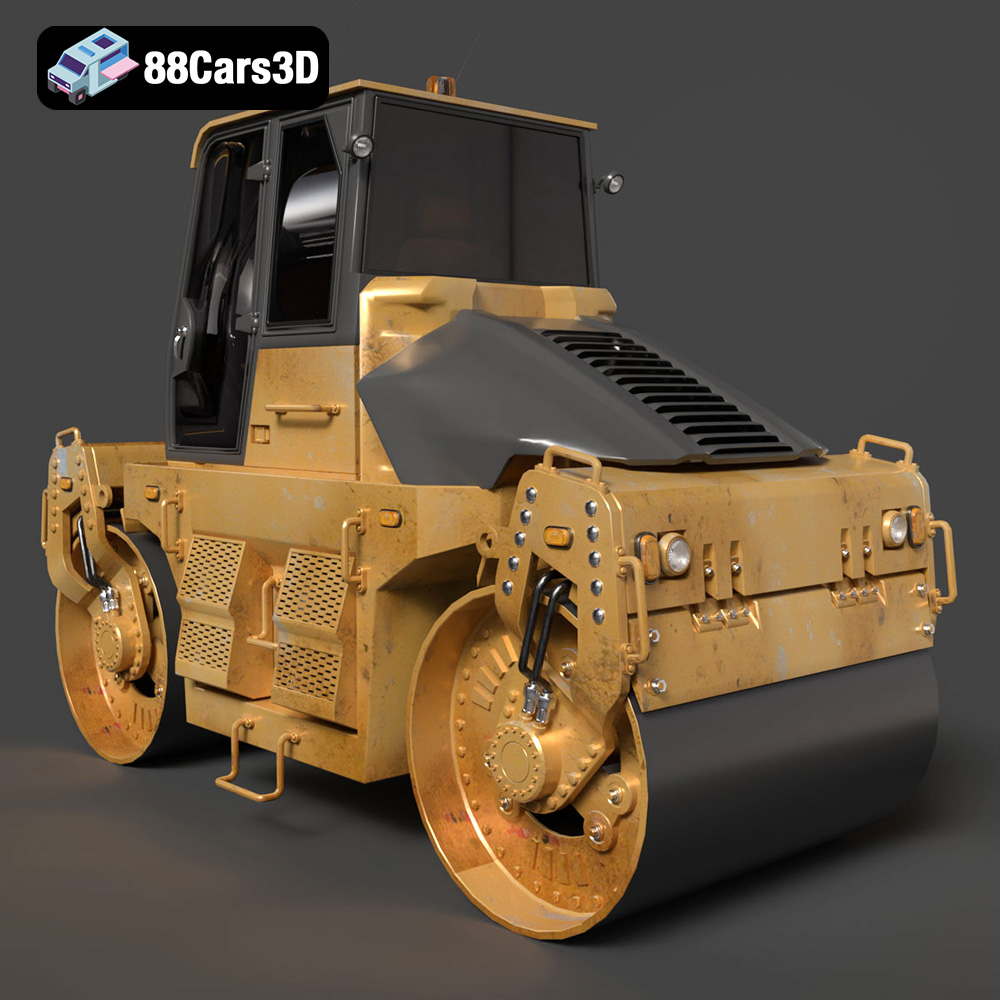
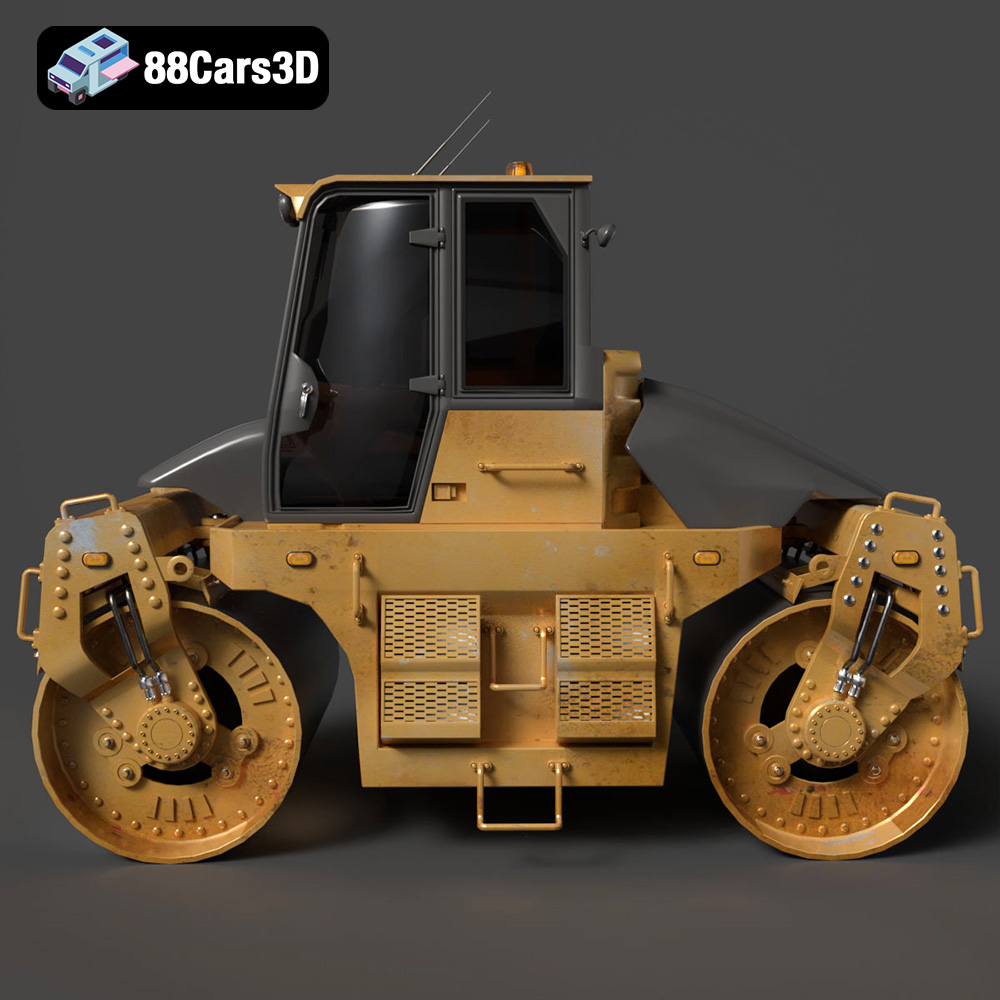
The visual impact of any heavy machinery model lies in its faithful reproduction of real-world details. This model boasts accurate frame geometry and proportions, ensuring it looks and feels authentic within any digital environment. The heavy-duty diesel engine housing, complete with vents, adds a layer of believability, suggesting the powerful core beneath. The dual steel compacting drums, the very essence of a road roller, are meticulously crafted, even featuring realistic scraper mechanisms. Industrial-grade work lights and safety beacons are included, vital for nighttime construction scenarios or adding functional realism to game assets. Crucially, the articulated center steering joint and its accompanying hydraulic cylinder details are not only visually precise but also designed for animation, allowing for dynamic, realistic movement within simulations or cinematics. Furthermore, the inclusion of a water spray system components and reservoir detailing rounds out the exterior, making it a comprehensive and believable heavy construction vehicle.
While often overlooked in general visualizations, the interior of a heavy machinery model is paramount for immersive experiences, particularly in simulators and VR training. This Road Roller model doesn’t disappoint, offering a detailed cockpit designed for operator interaction. It features an ergonomic operator seat with suspension detailing, a heavy machinery steering wheel, and a comprehensive control console. The instrument cluster with industrial gauges, along with vibration, throttle, and directional control levers, are all accurately modeled. This optimized geometry ensures a convincing first-person POV, making it perfect for construction simulators where the user needs to feel truly present within the vehicle’s cabin.
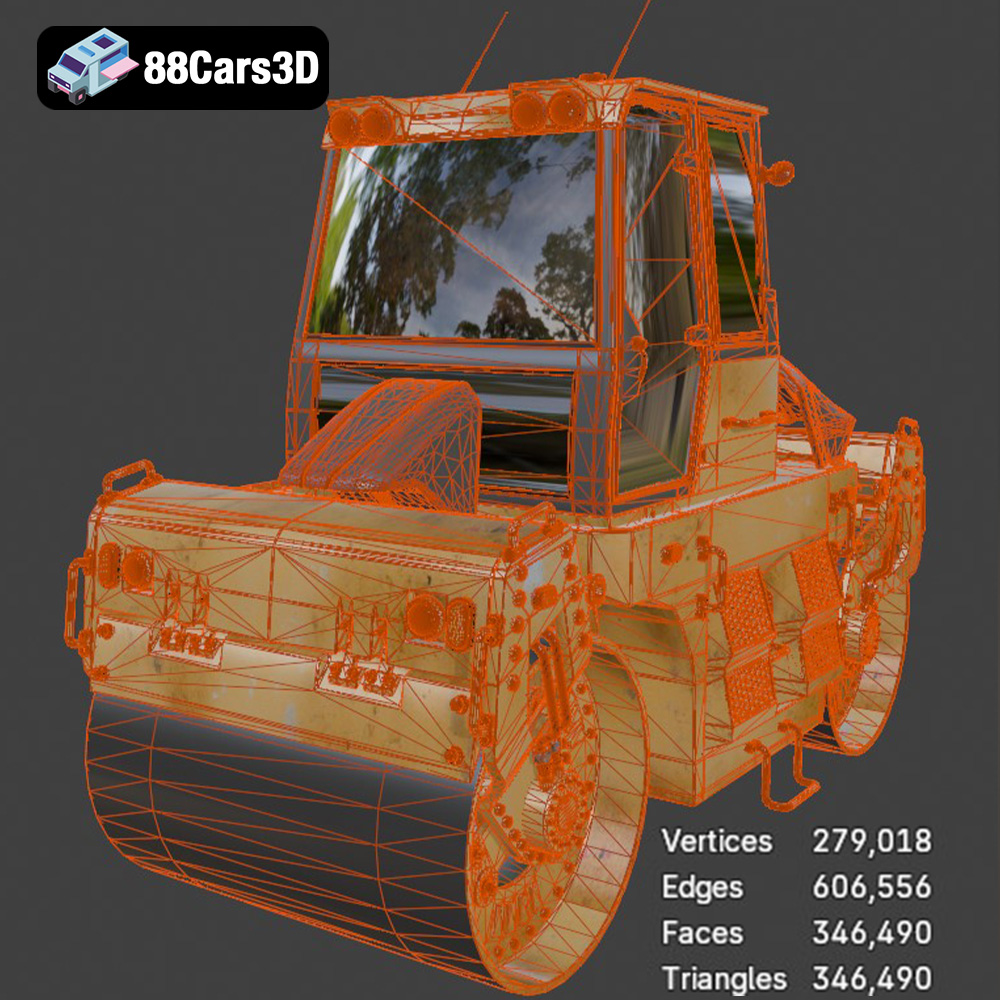
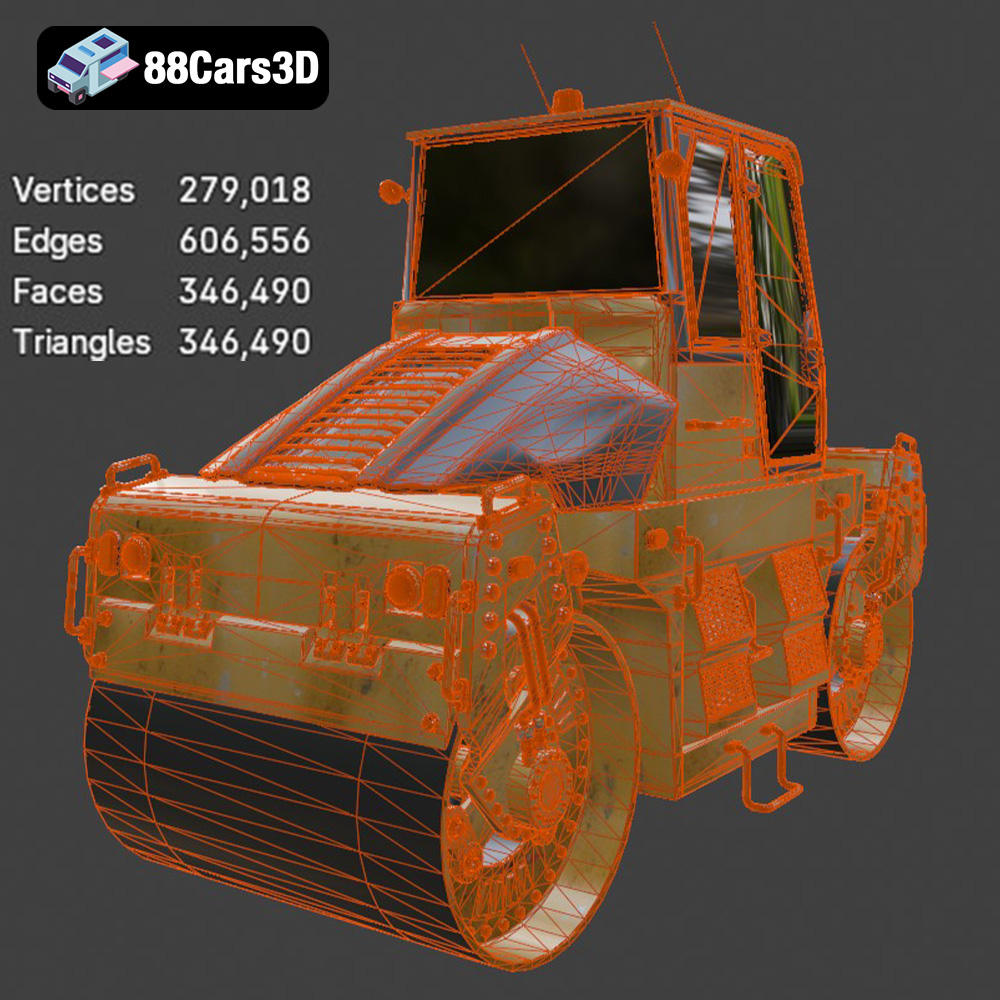
One of the most significant technical advantages of this particular model is its masterful balance between visual fidelity and real-time performance. With exactly 346,490 triangles, it achieves remarkable visual realism without becoming overly burdensome for game engines like Unreal and Unity. This optimized polycount is critical for maintaining high frame rates in open-world games or complex simulation environments. Beyond just the polygon count, the model features real-world scale accuracy, based on actual vehicle chassis dimensions, which is essential for consistent scaling within larger scenes. Furthermore, proper pivot setups for steering articulation, drum rotation, and other mechanical movements are pre-configured. This ‘game-ready’ status means less time spent on preparation and more time on creative implementation, making it an invaluable asset for game development and interactive applications.
Automotive rendering is an art form that transforms 3D models into photorealistic images and animations. While the term “automotive” often conjures images of sleek cars, the principles apply equally to heavy machinery, demanding meticulous attention to lighting, materials, and composition. The Road Roller Vibratory Tandem 3D Model provides an excellent foundation for achieving stunning renders.
The effectiveness of any render hinges on its lighting setup. For this Road Roller model, artists can explore various lighting scenarios. A studio lighting setup, common in product visualization, can highlight its industrial design and robust construction with dramatic shadows and reflections. Conversely, an outdoor construction site environment, complete with directional sunlight, ambient occlusion, and perhaps even some dust particles, would ground the model in a realistic context. The model’s detailed work lights and safety beacons can be activated to create compelling nighttime renders, adding atmosphere and dynamism. The ability to customize body colors (e.g., standard construction yellow, orange, or custom fleet finishes) and adjust material finishes (matte, gloss, heavy weathering) provides creative control to match any scene or brand aesthetic.
Leveraging the native .max and .blend files, artists can dive deep into advanced rendering techniques. In 3ds Max, powerful renderers like V-Ray and Corona Renderer allow for physically-based rendering (PBR), accurately simulating how light interacts with the model’s surfaces. This includes setting up complex PBR materials for the steel drums, rubber tires, painted metal, and interior plastics, each with appropriate albedo, roughness, metallic, and normal maps. Similarly, Blender users can utilize Cycles for high-fidelity path tracing or Eevee for real-time rendering with impressive visual quality. The separated drums, articulation joints, and steering components enable artists to create subtle animation loops, like a slow drum rotation or slight steering adjustments, to add a layer of realism to static images, hinting at the machine’s operational capability. A high-quality 3D car model from 88cars3d.com significantly streamlines this process, as the foundational mesh and initial material separation are already expertly handled.
Even the most technically perfect render can be enhanced through post-production. Techniques such as color grading can set the mood, from the harsh light of a desert construction site to the soft glow of a misty morning. Adding depth of field can draw the viewer’s eye to specific details, while subtle motion blur can convey movement in a still image. Lens flares, chromatic aberration, and atmospheric effects like fog or haze can further embed the Road Roller into its environment, creating a truly cinematic final image. This iterative process of rendering and post-processing allows artists to extract maximum impact from a detailed asset, transforming raw renders into captivating visual narratives.
The role of heavy machinery in modern game development and real-time simulations has grown exponentially. From massive open-world titles to specialized industrial training programs, these vehicles are crucial for creating believable and interactive experiences. The Road Roller Vibratory Tandem 3D Model is engineered precisely for these demanding environments, proving itself an ideal game asset.
For game developers, efficiency and performance are paramount. The .fbx format included with the Road Roller is the go-to for seamless import into both Unreal Engine and Unity. This format ensures that the model’s geometry, UVs, and pivot points are retained perfectly. For Unreal Engine users, the dedicated .unreal file takes integration a step further, often providing a pre-configured asset that requires minimal setup, allowing developers to quickly drop the Road Roller into their levels. Once imported, the next steps involve setting up robust collision meshes to ensure realistic interactions with the game world and player characters. Physics assets can be configured to simulate the weight and movement of the machine, crucial for compelling driving mechanics in construction simulators. The model’s separate drums, articulation joints, and steering components are designed for animation, allowing developers to implement realistic steering, drum rotation, and vibration effects, enhancing player immersion.
Furthermore, given the model’s optimized topology of 346,490 triangles, it strikes an excellent balance for real-time engines, ensuring high-end visual realism without sacrificing performance. This makes it suitable for both high-fidelity cinematics and functional in-game vehicle dynamics. Implementing LODs (Levels of Detail) would further optimize performance, automatically swapping to lower-polygon versions of the model when viewed from a distance, freeing up resources for other complex game systems. The model’s real-world scale also simplifies integration, preventing scaling issues when combining it with other game assets or environments.
Beyond traditional games, the Road Roller Vibratory Tandem model is perfectly suited for cutting-edge AR/VR applications. In virtual training simulations, the detailed cockpit and interior features, including the ergonomic operator seat and control console, provide an immersive and realistic environment for learning heavy machinery operation. Trainees can interact with the steering wheel, levers, and gauges, developing muscle memory and operational understanding in a safe, virtual space. The .glb format, with its optimization for AR/VR and mobile platforms, is particularly valuable here, allowing for seamless deployment on headsets or smartphones for interactive experiences.
Architectural visualizations and infrastructure projects also benefit immensely from such a detailed asset. Placing the Road Roller within a virtual construction site walkthrough, accessible via VR, provides stakeholders with a realistic sense of scale and operational context. Safety configurators can use the model to demonstrate proper safety protocols around heavy equipment. The versatility of this 3D car model as a game asset extends its utility far beyond entertainment, making it a powerful tool for education, safety, and operational planning in various industries.
The utility of a comprehensive 3D model extends even into the physical realm, offering opportunities for tangible creations through 3D printing. The inclusion of the .stl format for the Road Roller Vibratory Tandem 3D Model specifically caters to this application, allowing enthusiasts and professionals alike to bring this robust machine to life.
The .stl file is the cornerstone for 3D printing, translating the digital geometry into a format that 3D printers can understand. When preparing the Road Roller for printing, several technical considerations come into play. The recommended scales of 1:24, 1:35, or 1:50 provide flexibility for different display sizes, from larger, more detailed models to smaller diorama elements. For optimal detail and surface quality, resin printing is often recommended, especially for fine features like the cabin frame, articulation joint, and mirrors. However, FDM (Fused Deposition Modeling) printers can also yield excellent results with careful settings.
Key print settings include a layer height of 0.04–0.12 mm for a smooth finish, wall thickness between 1.2–2.0 mm for structural integrity, and an infill of 20–30% to balance strength and material usage. Due to the model’s complex geometry, support structures will be required, particularly for overhangs and intricate parts. Strategic print orientation is also crucial; printing the frame angled can enhance structural integrity, while printing drums separately allows for cleaner results and easier post-processing. These technical considerations ensure that the transition from a digital 3D car model to a physical replica is as smooth and successful as possible.
Once printed, the physical model undergoes post-processing to achieve an authentic, professional finish. This typically involves removing supports, sanding down any visible layer lines or imperfections, and applying a primer coat to prepare the surface for painting. For a truly realistic look, hobbyists and model makers can then apply authentic factory colors, such as the classic construction yellow or orange, often with metallic finishes for the steel components. Weathering techniques, including washes, dry-brushing, and pigment powders, can be used to simulate dirt, rust, and wear, giving the Road Roller a battle-hardened appearance as if it just rolled off a busy construction site. The ability to customize drum textures, whether to represent clean steel or worn asphalt-coated surfaces, adds another layer of realism and storytelling to the finished physical model.
In the dynamic world of digital content creation, the value of a meticulously crafted 3D model cannot be overstated. The Road Roller Vibratory Tandem 3D Model stands as a testament to this, offering an unparalleled blend of technical accuracy, visual fidelity, and versatile utility across an astonishing range of applications. From enhancing architectural visualizations and industrial renders to serving as a robust game asset in sprawling virtual construction sites, or even becoming a tangible replica through 3D printing, this model is designed to empower creators.
Its comprehensive file format support, encompassing .blend, .fbx, .obj, .glb, .stl, .ply, .unreal, and .max, ensures seamless integration into virtually any professional workflow. Whether you’re an artist focused on automotive rendering, a developer building the next generation of construction simulators, or an engineer crafting immersive AR/VR training experiences, this asset provides the technical foundation you need to succeed. Investing in high-quality 3D car models and heavy machinery assets like this one from 88cars3d.com not only saves precious development time but also elevates the realism and professionalism of your final projects, driving digital progress forward.
The Road Roller Vibratory Tandem is an essential piece of heavy construction machinery, universally recognized for its robust double steel drums and articulated chassis. Designed to compact asphalt, gravel, and soil, this vehicle features distinctive industrial styling, a powerful diesel engine housing, and a specialized vibratory mechanism built for high-efficiency paving operations.
This highly detailed 3D model boasts an optimized topology with exactly 346,490 triangles, delivering remarkable visual fidelity while remaining efficient for real-time applications. Whether used in high-end game development, architectural visualization, or immersive VR training simulations, the model’s precise geometry and realistic material separation provide an exceptional asset for developers and 3D artists alike.
Perfect for construction site environments, city building games, heavy machinery simulators, and industrial visualizations.
.blend, .fbx, .obj, .glb, .stl, .ply, .unreal, .max
Tags:
road-roller, vibratory-tandem, heavy-machinery, construction-equipment, game-ready, optimized, car-3d-model, game-asset, rendering, vr-ar, blend, fbx, obj, glb, stl, ply, unreal, max
$35.50
.blend
.fbx
.glb
.max
.obj
.ply
.rendering
.stl
.unreal
car-3d-model
construction-equipment
game asset
game-ready
heavy-machinery
optimized
road-roller
vibratory-tandem
VR/AR