Get 20% OFF All Premium 3D & STL Models!

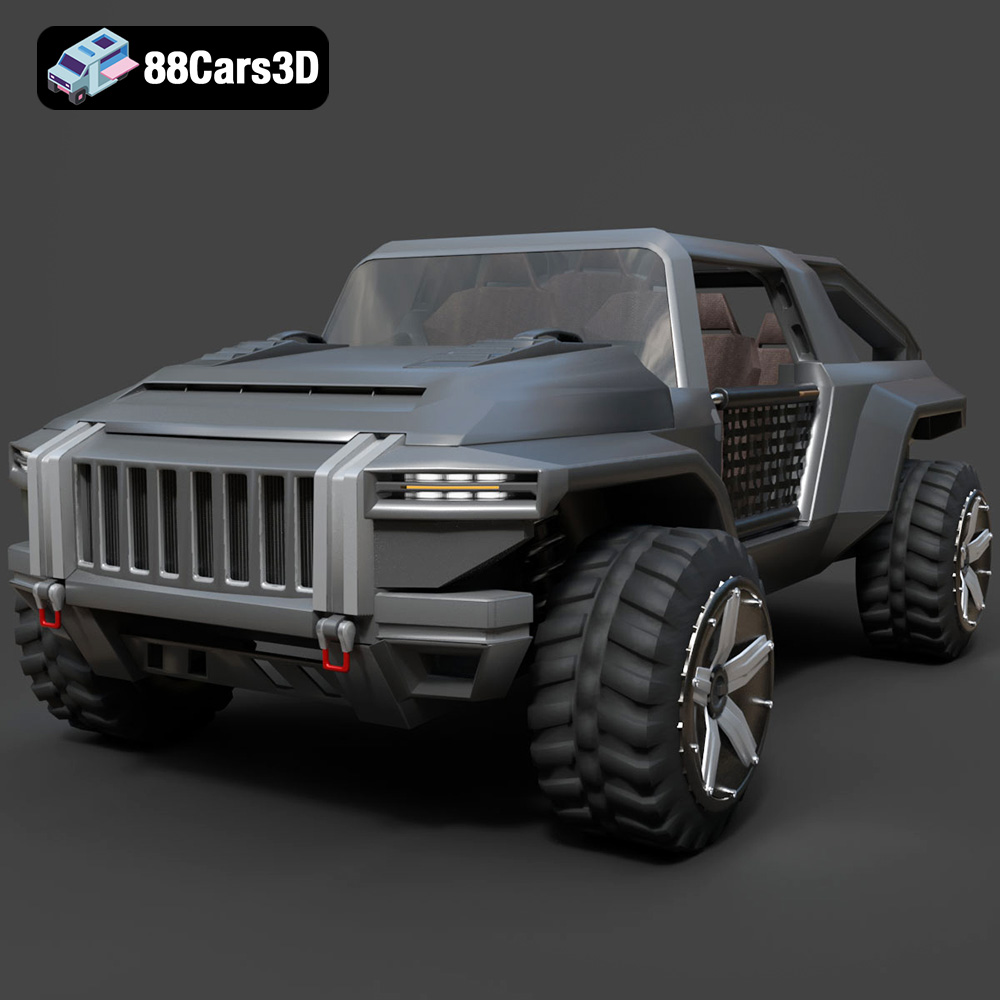
In the dynamic world of digital content creation, the demand for exceptionally crafted 3D car models continues to accelerate. From breathtaking photorealistic visualizations to immersive interactive experiences, the quality of your automotive assets can make or break a project. Professionals in automotive design, game development, film VFX, and architectural visualization understand that a truly great 3D model offers more than just aesthetic appeal; it provides unparalleled technical flexibility, optimization, and accuracy. It’s about empowering artists and developers to bring their visions to life without being hindered by subpar assets. This pursuit of excellence is precisely why platforms like 88cars3d.com have become indispensable resources, offering a curated selection of models built to the highest industry standards. One such stellar example, perfectly embodying versatility and robust design, is the Cactus Jeep 3D Model, a quintessential off-roader designed to thrive in any digital environment.
The foundation of any compelling visual project lies in the quality of its core assets. For anything involving vehicles, this means meticulously detailed, accurately scaled, and properly optimized 3D car models. They are the silent workhorses that drive realism, performance, and user engagement across various digital mediums.
For automotive designers and marketing agencies, photorealistic rendering is paramount. High-quality 3D car models allow for the creation of stunning marketing materials, configurators, and concept visualizations long before a physical prototype exists. Every curve, every material reflection, and every subtle detail contributes to a believable image. Models like the Cactus Jeep, with its accurate geometry, separate components for animation, and real-world scale, provide the perfect canvas for showcasing design intent under various lighting conditions, making it an ideal choice for studio renders or environmental presentations.
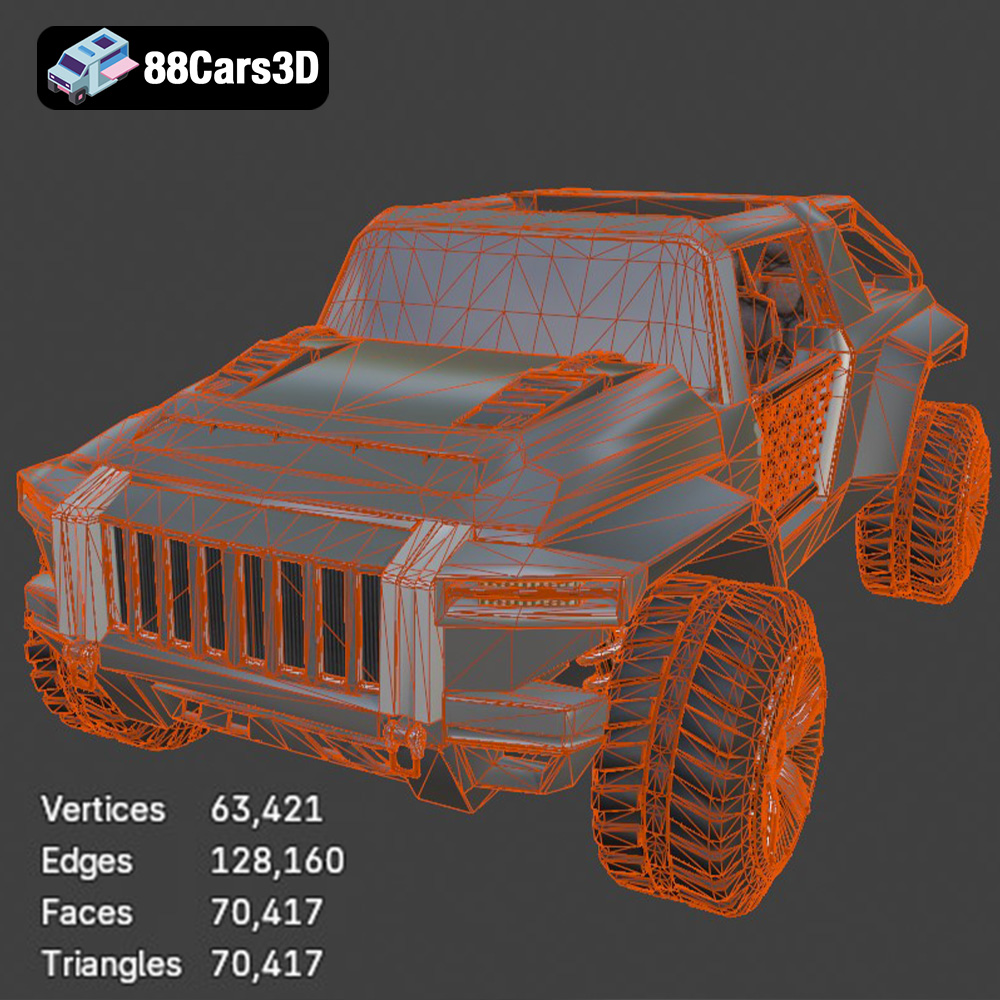
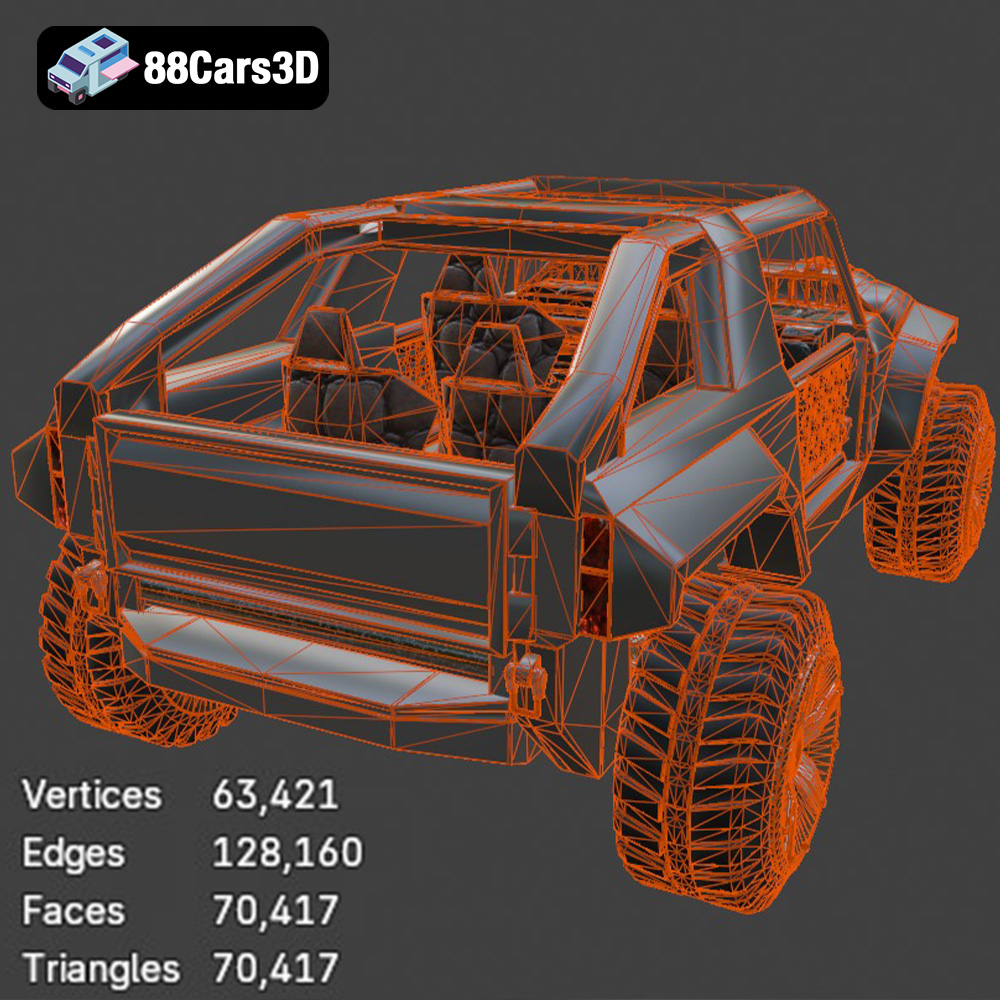
In game development, the stakes are even higher. A 3D car model must not only look fantastic but also perform flawlessly within real-time engines. Optimization is key to maintaining high frame rates and a smooth user experience. The Cactus Jeep 3D Model, with its efficient topology of 70,417 triangles, exemplifies a game-ready asset that strikes an optimal balance between visual fidelity and performance. Its detailed interior and exterior features allow for compelling first-person and third-person perspectives, essential for open-world adventure games, racing simulations, and survival titles where players demand both immersion and responsive gameplay.
Beyond traditional rendering and gaming, high-quality 3D car models are pushing boundaries in emerging technologies. Augmented Reality (AR) and Virtual Reality (VR) experiences benefit immensely from optimized models that load quickly and render smoothly, offering users truly immersive interactions, whether in a virtual showroom or an interactive training simulation. Similarly, the burgeoning field of 3D printing relies on clean, manifold geometry to produce physical replicas. The Cactus Jeep’s availability in formats like .glb for AR/VR and .stl for 3D printing underscores its adaptability, allowing creators to bridge the gap between digital creation and tangible products.
Navigating the world of 3D content creation requires a clear understanding of various file formats, each tailored for specific workflows, software, and end-use applications. When you acquire a versatile asset like the Cactus Jeep 3D Model, understanding its included formats is crucial for seamless integration into your projects.
The **.blend** file format is the native project file for Blender, the widely popular open-source 3D creation suite. A .blend file typically encapsulates an entire scene, including mesh data, materials, textures, lighting, cameras, animation data, and even custom scripts or modifier stacks. This format offers maximum editability and flexibility if you’re working within Blender, allowing you to deconstruct and fully customize every aspect of the model, from adjusting its topology to modifying shader nodes. For the Cactus Jeep, the .blend file provides a complete, ready-to-render scene environment within Blender, ensuring all materials are set up and editable.
The **.fbx** (Filmbox) format is an industry-standard proprietary file format developed by Autodesk, designed for interoperability between different 3D applications. It’s excellent for transferring entire scenes or individual models, supporting geometry, materials, textures, animations, and camera data. Because of its robust support for animation and scene hierarchy, .fbx is often the go-to format for exporting models into game engines like Unreal Engine and Unity, making it ideal for the Cactus Jeep’s game-ready status.
The **.obj** (Wavefront OBJ) format is one of the most widely supported and simplest formats for 3D geometry. It primarily stores vertex positions, UV coordinates, normals, and material group information, with material properties usually defined in a separate .mtl (material template library) file. While it doesn’t support animation or rigging directly, its universal compatibility makes it an excellent choice for static mesh exchange across virtually all 3D software. If you need a clean mesh for sculpting or basic rendering in an application that might not fully support .fbx or .blend, .obj is a reliable fallback for the Cactus Jeep.
The **.glb** (GL Transmission Format Binary) is an increasingly important format for web-based 3D, AR, and VR applications. It’s a binary version of glTF, which packages all necessary assets (geometry, materials, textures, animations) into a single, self-contained file. This makes .glb highly efficient for streaming and display in browsers or mobile AR/VR environments, ensuring quick loading times and broad compatibility. For the Cactus Jeep, the .glb format is perfect for showcasing the model in a web viewer or integrating it into a mobile AR experience without complex setup.
The **.unreal** format isn’t a single file format in the traditional sense, but rather a designation for assets specifically packaged and optimized for direct import into Unreal Engine projects. This often means .fbx files with carefully configured materials, collision meshes, LODs (Levels of Detail), and pivot points that adhere to Unreal’s specifications. When a model like the Cactus Jeep is provided as “.unreal,” it implies it’s pre-configured and ready to drop into an Unreal project, significantly reducing setup time for game developers.
The **.stl** (Stereolithography) format is the standard for 3D printing. It represents 3D surfaces as a collection of unconnected triangular facets, making it highly compatible with 3D printers and slicer software. While it doesn’t store color or material information, its simplicity ensures reliable physical output. The Cactus Jeep’s availability in .stl format means hobbyists and professionals can easily prepare it for additive manufacturing, bringing the digital model into the physical world.
The **.ply** (Polygon File Format) is another popular format for storing 3D data, particularly useful for scanned data, CAD models, or models requiring high precision. It can store not only geometry but also color, transparency, and even normals per vertex or face. It’s often used in scientific or engineering visualization where data integrity is critical. For the Cactus Jeep, a .ply file might be beneficial for highly accurate measurements or analysis of its intricate frame and components.
Finally, the **.max** file is the native project format for Autodesk 3ds Max, a powerhouse 3D modeling, animation, and rendering software widely used in architectural visualization, film, and game development. Similar to .blend, a .max file contains the entire scene data, offering full editability. This is invaluable for professionals working within the 3ds Max ecosystem, allowing them to leverage all of Max’s advanced tools for rigging, animation, rendering with V-Ray or Corona, and extensive scene management for the Cactus Jeep.
The Cactus Jeep 3D Model, available on 88cars3d.com, is more than just a digital representation; it’s a meticulously engineered asset designed to meet the rigorous demands of professional workflows. Its appeal lies not only in its faithful recreation of a rugged off-road legend but also in its underlying technical specifications.
At the heart of any high-performing 3D model is its geometry and topology. The Cactus Jeep boasts an efficient topology of 70,417 triangles. This specific polycount is not arbitrary; it represents a strategic balance. It’s low enough to ensure excellent real-time performance in demanding game engines like Unreal and Unity, preventing performance bottlenecks, yet high enough to retain the intricate details necessary for high-fidelity rendering. This “game-ready” optimization means developers can integrate the model directly without extensive cleanup or retopology, saving valuable development time and resources.
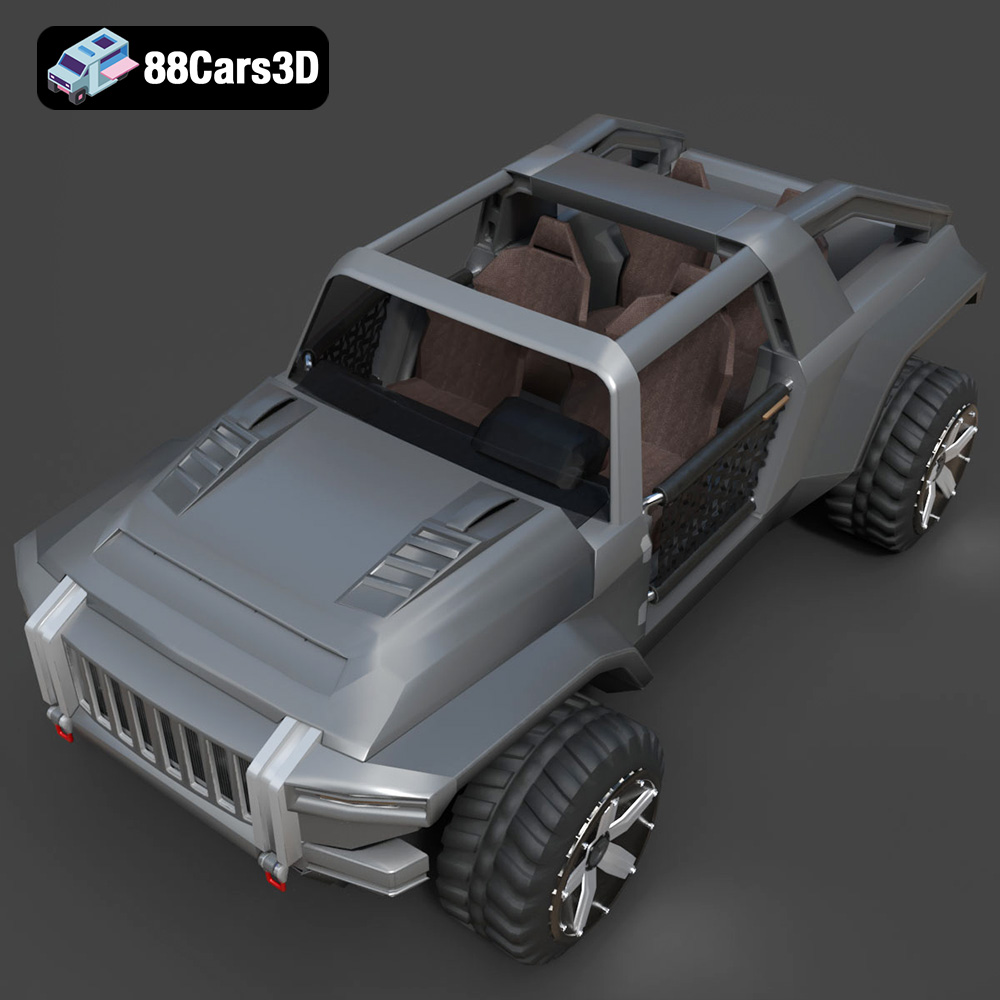
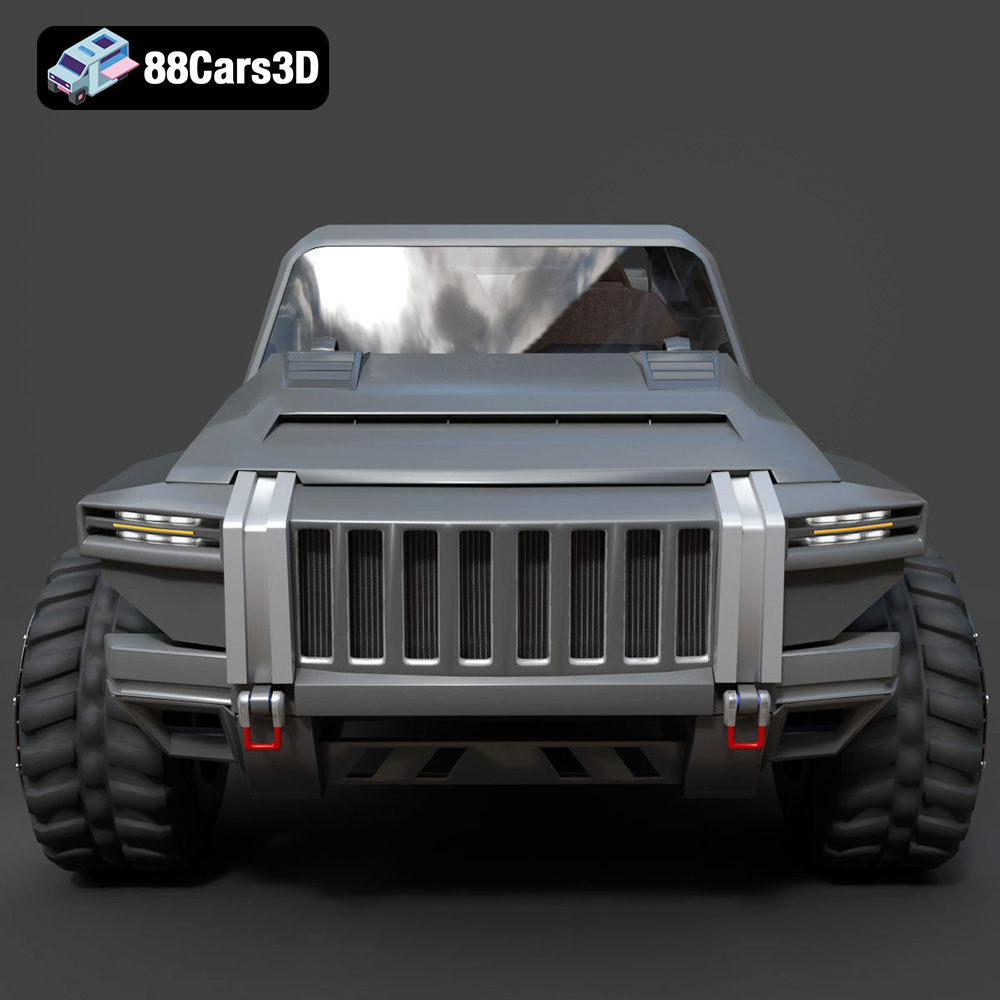
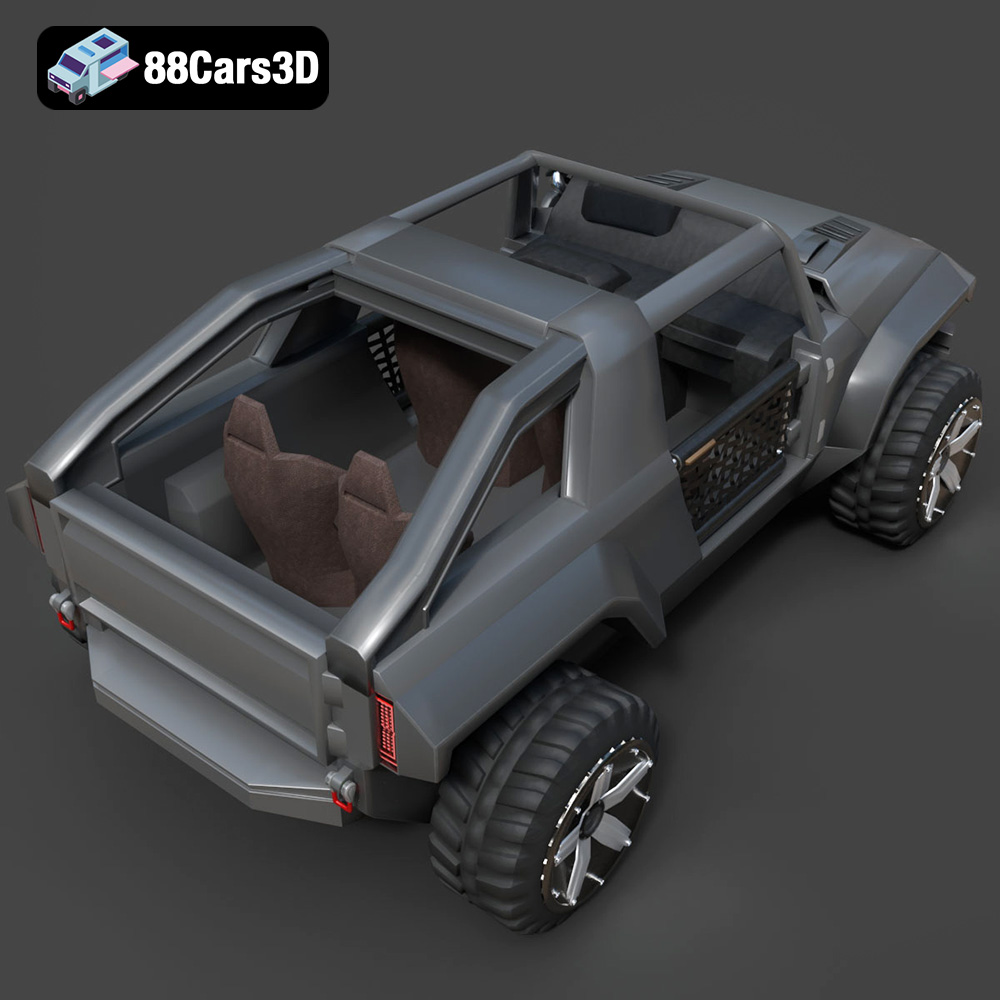
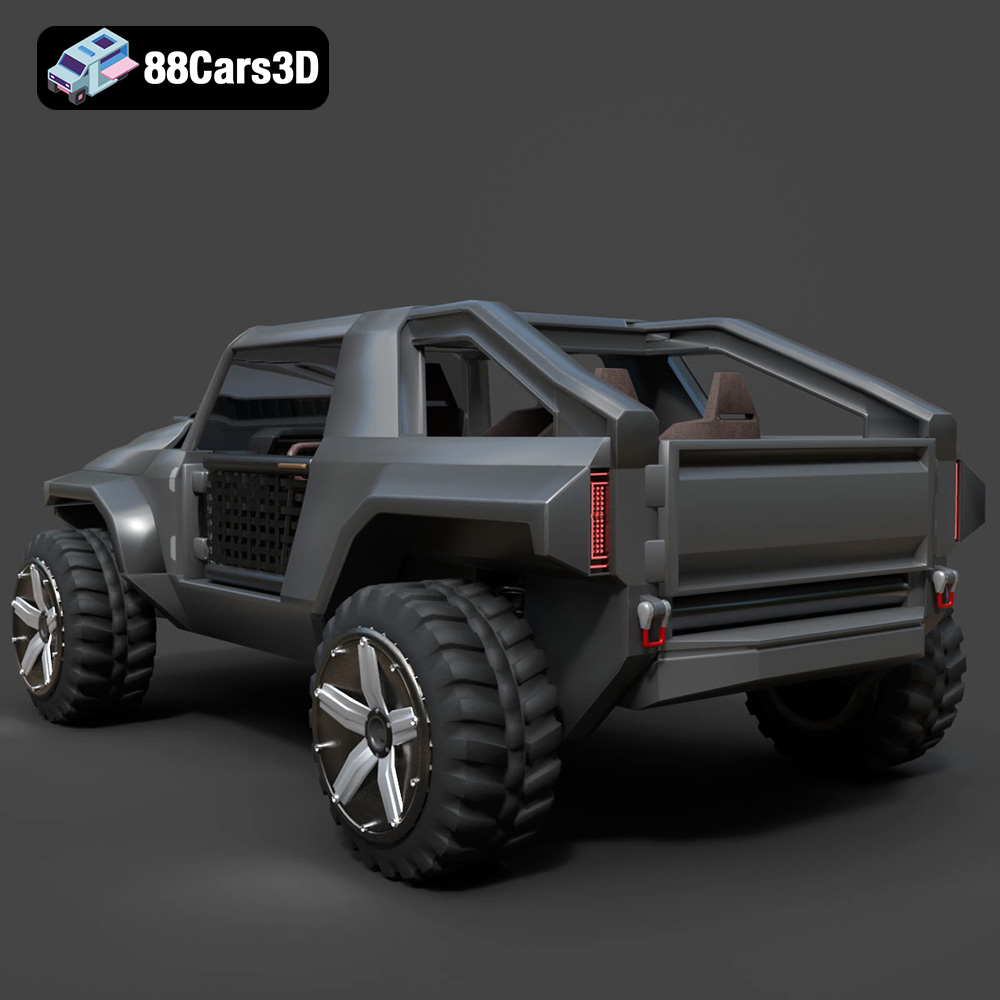
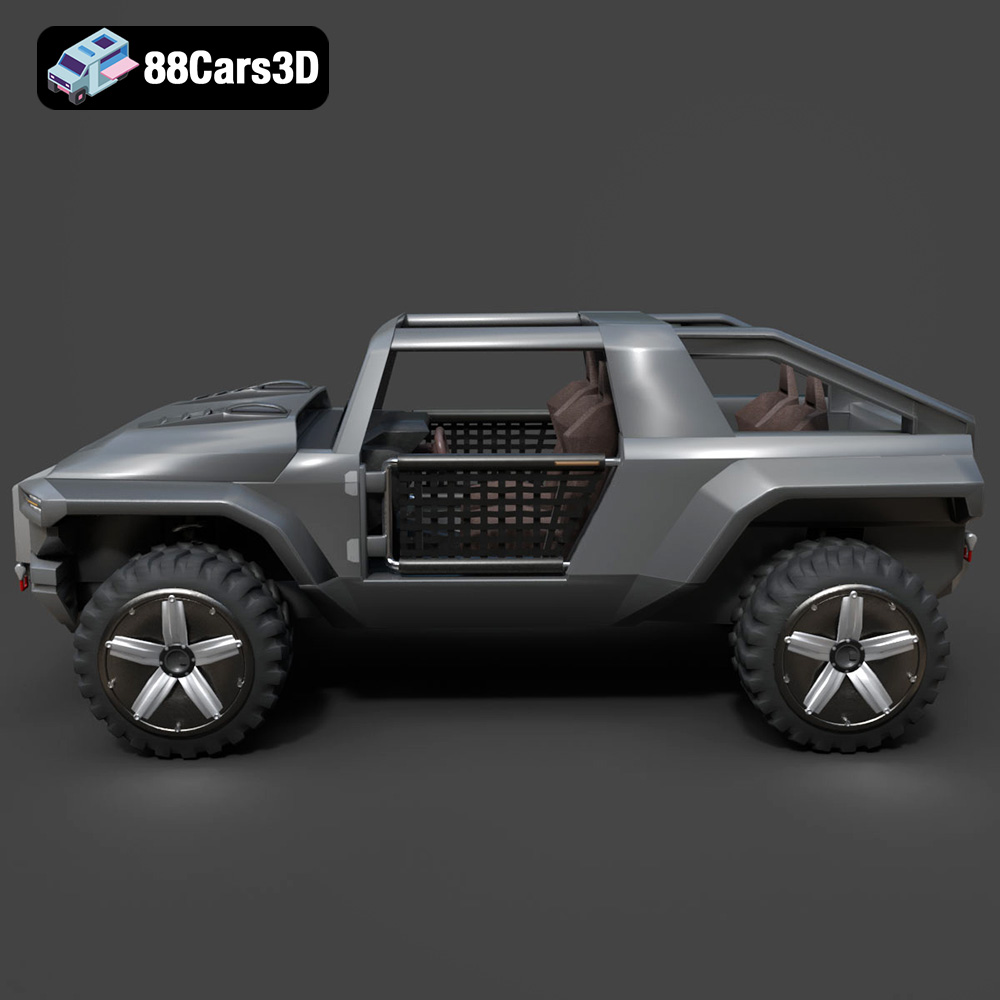
The model truly shines in its commitment to authenticity. From the signature front grille to the exposed heavy-duty chassis, every element captures the utilitarian styling and rugged spirit of a classic off-roader. The exterior features are incredibly thorough: accurate frame geometry, detailed engine bay components, a heavy-duty exhaust, classic round headlights, and chunky all-terrain tires on robust steel wheels. Inside, the attention to detail continues with utilitarian front bucket seats, a classic heavy-duty steering wheel, vintage-inspired analog instrument clusters, and detailed manual transmission shifters. These granular details ensure that whether viewed from a distance in an open-world environment or up close in a first-person cockpit view, the model maintains its visual integrity and immersive quality.
For any vehicle model, animation capabilities are critical. The Cactus Jeep is engineered with separate components for its wheels, suspension, and steering, all featuring proper pivot setups. This design choice is fundamental for creating realistic animation cycles, allowing for independent rotation of wheels, accurate suspension travel over uneven terrain, and responsive steering mechanics. Coupled with its real-world scale accuracy, the model provides a foundation for physically accurate simulations and believable motion, crucial for both game physics and professional automotive animation.
The versatility of the Cactus Jeep 3D Model makes it an invaluable asset across a spectrum of professional digital content creation pipelines. Its optimized design and varied file formats ensure it can seamlessly transition between different software environments and end-use applications.
For game developers, the Cactus Jeep is a plug-and-play solution. Its 70,417 triangle count is perfectly suited for modern game engines. When using the included .fbx or the Unreal-ready assets, integration is streamlined. In Unreal Engine, for example, the .fbx can be imported with auto-generated collision, and its separate chassis, wheels, and suspension components allow for immediate setup with vehicle blueprints. Developers can quickly apply physics assets, create material instances for customization, and integrate it into open-world environments. The detailed interior is also optimized for first-person viewpoints, enhancing immersion for players navigating the digital wilderness.
Artists focused on high-end automotive rendering will find the Cactus Jeep a robust starting point. In 3ds Max, the .max file provides full access to the scene, allowing artists to utilize powerful rendering engines like V-Ray or Corona. They can easily adjust PBR materials for paint, metal, and rubber, set up complex studio lighting, and create dynamic camera animations. Similarly, in Blender, the .blend file provides a complete scene for Cycles or Eevee rendering, enabling artists to leverage Blender’s extensive shader editor for intricate material setups and sophisticated environmental lighting, producing stunning marketing visuals or lifestyle renders.
The shift towards interactive and immersive experiences in AR/VR means models need to be exceptionally well-optimized. The Cactus Jeep, especially in its .glb format, is ideal for these applications. Developers can quickly integrate it into ARKit or ARCore projects for mobile AR, allowing users to place the virtual Jeep in their physical environment. For VR showrooms or virtual test drives, its balanced polycount ensures smooth framerates on VR headsets, while its detailed design provides a compelling visual presence, whether the user is interacting with a configurator or exploring a virtual landscape.
The journey of a 3D model doesn’t always end on a screen. For enthusiasts, collectors, or even designers needing a physical prototype, 3D printing offers an exciting avenue. The Cactus Jeep 3D Model provides the necessary files to make this transition from digital to tangible.
The included .stl format is your gateway to 3D printing the Cactus Jeep. Before printing, the .stl file will typically be loaded into a slicer software (e.g., Cura, PrusaSlicer, Chitubox). Here, you’ll need to confirm the recommended scale (1:12 / 1:18 / 1:24 are suggested for this model), define layer height (0.04–0.12 mm for fine details, with resin printing often recommended for superior fidelity), and set infill density (20-30% for a good balance of strength and material usage). Critical for intricate models like this Jeep is the strategic placement of supports, especially for overhangs like the exhaust system, mirrors, and auxiliary light mounts. Proper print orientation, such as printing the frame at an angle for structural integrity and wheels separately, further optimizes print success.
Once printed, the physical model moves into the realm of post-processing. This phase can involve sanding to smooth out layer lines, applying a primer to prepare the surface, and then painting with authentic factory colors or custom metallic finishes to bring the model to life. For the Cactus Jeep, paying attention to details like weathering effects on the rugged tires or a subtle metallic sheen on the body paint can significantly enhance its realism as a display piece.
Investing in a high-quality 3D asset like the Cactus Jeep from 88cars3d.com is about more than just immediate project needs; it’s about acquiring a versatile tool that grows with your creative requirements.
The Cactus Jeep 3D Model isn’t a static asset; it’s a foundation for endless creative possibilities. Its well-structured materials and separate components allow for extensive customization. Artists can easily modify body and tank colors to match specific brand aesthetics or custom desires, explore different tire textures (off-road vs. street variants), and adjust material finishes from matte to gloss or metallic. Adapting lighting for various environments—be it a sun-drenched desert, a gritty urban scene, or a pristine studio setup—further extends its utility, ensuring the model can fit into virtually any narrative or visual context.
A truly professional 3D model is future-proof. With its optimized polycount, real-world scale, and broad file format compatibility, the Cactus Jeep represents a long-term asset. As software evolves and new rendering techniques emerge, its clean geometry and robust structure will remain relevant. This ensures that your investment continues to pay dividends, ready for future projects, software updates, and new visualization demands, making it a valuable addition to any professional’s digital library.
The world of 3D modeling thrives on quality, precision, and versatility. Whether you’re a game developer pushing the boundaries of realism, an automotive designer visualizing future concepts, or an artist crafting immersive AR/VR experiences, the right 3D car models are essential. The Cactus Jeep 3D Model stands out as a prime example of a meticulously crafted asset that delivers on all fronts: technical excellence, stunning visual fidelity, and broad compatibility across diverse professional workflows. Its robust design, optimized geometry, and comprehensive file format support make it an invaluable tool for anyone serious about creating compelling digital content. Explore this model and many other high-quality assets at 88cars3d.com, and empower your creative vision to take on any digital terrain.
Experience the ultimate blend of rugged utility and off-road heritage with the Cactus Jeep. This iconic 4×4 vehicle is celebrated for its utilitarian styling, exceptional durability, and unmatched capability on rough terrains. From its signature front grille and exposed heavy-duty chassis to its muscular wheel arches and functional boxy silhouette, this 3D model captures the true spirit of a classic off-roading legend ready to tackle the wilderness. Engineered for seamless integration into modern digital environments, this model boasts an efficient topology of 70,417 triangles. It delivers stunning visual fidelity without compromising performance, making it an exceptional game-ready asset. Whether you are developing an immersive open-world adventure, creating realistic automotive renders, or building an magnificent interactive VR experience, this meticulously optimized model guarantees high-end results across various real-time engines and rendering software.
$14.99
.4×4
.blend
.fbx
.glb
.jeep
.max
.obj
.ply
.rendering
.stl
.unreal
cactus
car-3d-model
game asset
game-ready
low-poly
off-road
optimized
SUV
VR/AR