Get 20% OFF All Premium 3D & STL Models!

The roar of an engine, the glint of chrome under studio lights, the sleek lines of a performance car — these are the elements that captivate us. In the realm of 3D visualization and game development, recreating such automotive masterpieces is both an art and a science. The demand for accurate, high-fidelity 3D car models has never been greater, bridging the gap between imagination and digital reality. From cinematic renders that grace the silver screen to immersive virtual showrooms and pulse-pounding racing simulators, these digital assets are the bedrock of modern visual content.
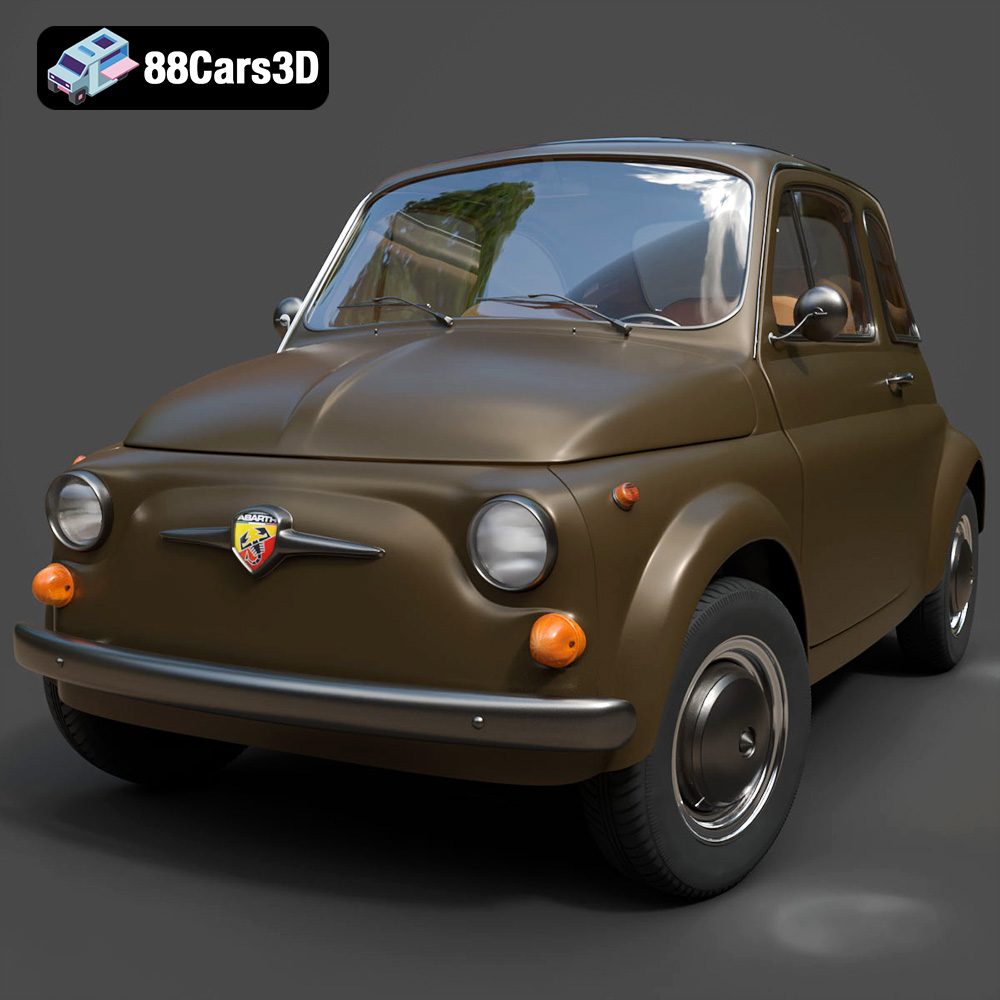
Today, we’re taking an in-depth look at a prime example of such digital artistry: the Fiat 500 Abarth 695 3D Model. This particular model, available at 88cars3d.com, isn’t just a static representation; it’s a meticulously crafted digital twin designed to bring the iconic Italian hot hatch to life across a myriad of platforms. Known for its aggressive stance, legendary racing heritage, and formidable T-Jet engine, the Abarth 695 is a car with undeniable personality, and translating that into a 3D model requires precision, technical expertise, and an eye for detail. This article will explore the technical nuances behind such an asset, its diverse applications, and how it seamlessly integrates into professional workflows, ensuring stunning visual fidelity and optimal performance.
Navigating the world of 3D modeling often begins with understanding the various file formats that serve as the containers for your digital creations. Each format is designed with specific use cases, compatibilities, and technical advantages in mind. Choosing the right format is crucial for workflow efficiency, data integrity, and project success, especially when working with complex assets like the Fiat 500 Abarth 695 3D model. Let’s break down the key formats provided with this model and their optimal applications.
The `.blend` format is the native file type for Blender, the powerful open-source 3D creation suite. When you acquire a `.blend` file like that for the Fiat 500 Abarth 695, you’re getting a fully editable Blender scene. This includes not just the mesh data, but also materials (configured for Cycles or Eevee renderers), textures, lighting setups, cameras, animation data, and even modifiers. It offers the most flexibility for artists working within Blender, allowing for direct manipulation of geometry, easy material adjustments, and seamless integration into existing Blender projects. Its primary use case is for artists who intend to extensively modify the model, create custom animations, or render it within Blender itself.
The Filmbox (`.fbx`) format is arguably the most widely adopted interchange format in the 3D industry. Developed by Autodesk, it’s ideal for transferring 3D data between different software applications, especially for game development pipelines involving Unreal Engine, Unity, and other real-time platforms. An `.fbx` file can store complex scene data including polygonal geometry, materials (often with basic properties that need re-setting in the target engine), textures, animations, bones/skeletons, and cameras. For the Abarth 695 model, the `.fbx` version ensures that its separate components like wheels, suspension, and steering can be easily imported with proper pivot setups, ready for animation and physics simulation in a game engine. It’s the go-to format for robust cross-software compatibility.
The Wavefront Object (`.obj`) format is one of the oldest and most universal 3D file formats. It’s a simple, human-readable text-based format primarily used for storing geometric data—vertices, normals, texture coordinates, and faces. Material definitions are typically stored in an accompanying `.mtl` (Material Template Library) file. While it doesn’t support advanced features like animation or rigging, its widespread compatibility makes it an excellent choice for basic mesh transfer between virtually any 3D software. If you need a clean mesh of the Fiat 500 Abarth 695 without complex scene data, or if you’re working with older software, `.obj` is a reliable option.
The GL Transmission Format Binary (`.glb`) is a binary version of `glTF` (GL Transmission Format), designed for efficient transmission and loading of 3D scenes and models in web and real-time applications. It packages all necessary assets – geometry, materials, textures, animations – into a single binary file. This makes `.glb` highly optimized for AR/VR experiences, online configurators, and browser-based 3D viewers, where load times and file sizes are critical. The Abarth 695 model in `.glb` format is perfect for developers building immersive virtual showrooms or mobile AR applications, ensuring fast performance and visual fidelity.
Stereolithography (`.stl`) is the de facto standard for 3D printing. This format represents 3D surfaces as a collection of unconnected triangular facets, making it essentially a “shell” that describes the object’s geometry without color or texture information. While not suitable for rendering or animation, the `.stl` version of the Fiat 500 Abarth 695 model is crucial for hobbyists and professionals looking to physically manifest the digital design. It’s what your slicer software uses to prepare the model for printing, allowing you to create a tangible replica of this iconic hot hatch.
The Polygon File Format (`.ply`), sometimes called the Stanford Triangle Format, is primarily used to store 3D data from 3D scanners, CAD software, or for scientific and engineering applications. It can store a variety of properties including color, transparency, surface normals, texture coordinates, and confidence values for each vertex and face. It’s a more comprehensive geometric description than `.obj` for certain use cases, often favored in fields requiring high precision mesh data for analysis or direct fabrication. While less common for general rendering, its inclusion ensures the Abarth 695 model is versatile for niche applications requiring this specific data fidelity.
The `.unreal` format isn’t a standard independent file type but rather an indicator that the asset is specifically prepared and exported for direct use within Unreal Engine. This typically means the `.fbx` or similar source asset has been imported into Unreal Engine, had its materials set up (often leveraging Unreal’s robust material editor), textures linked, and possibly even basic Blueprints or level sequences created. When a model is provided in an “unreal” variant, it signifies that it’s engine-ready, saving developers significant setup time and ensuring optimal performance and visual quality within the Unreal ecosystem. The Abarth 695, described as game-ready, would benefit immensely from this pre-configured state.
The `.max` format is the proprietary scene file type for Autodesk 3ds Max, a leading software for 3D modeling, animation, and rendering in architectural visualization, game development, and film. Similar to `.blend` for Blender, a `.max` file contains all scene data—geometry, materials, textures, lighting, cameras, animation, and modifiers—making it fully editable within 3ds Max. For users whose primary workflow is in 3ds Max, having the Fiat 500 Abarth 695 model in this format provides the highest level of control and flexibility for customization, detailed rendering with V-Ray or Corona, and complex animation sequences.
Recreating a vehicle as distinctive as the Fiat 500 Abarth 695 in 3D demands an unwavering commitment to authenticity. It’s not just about getting the shape right; it’s about meticulously translating its “personality” – its aggressive stance, its performance-oriented features, and its iconic branding – into a digital asset. The Fiat 500 Abarth 695 3D model from 88cars3d.com exemplifies this dedication, delivering unparalleled visual realism.
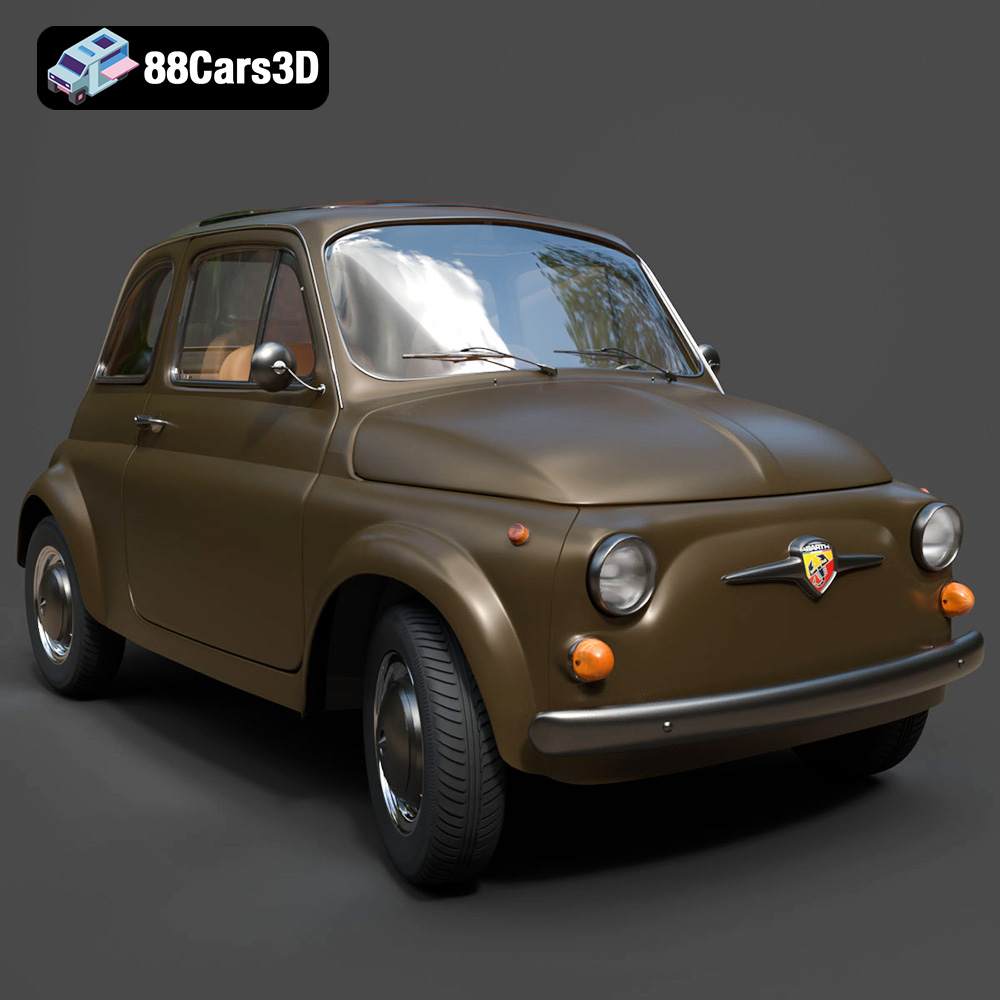
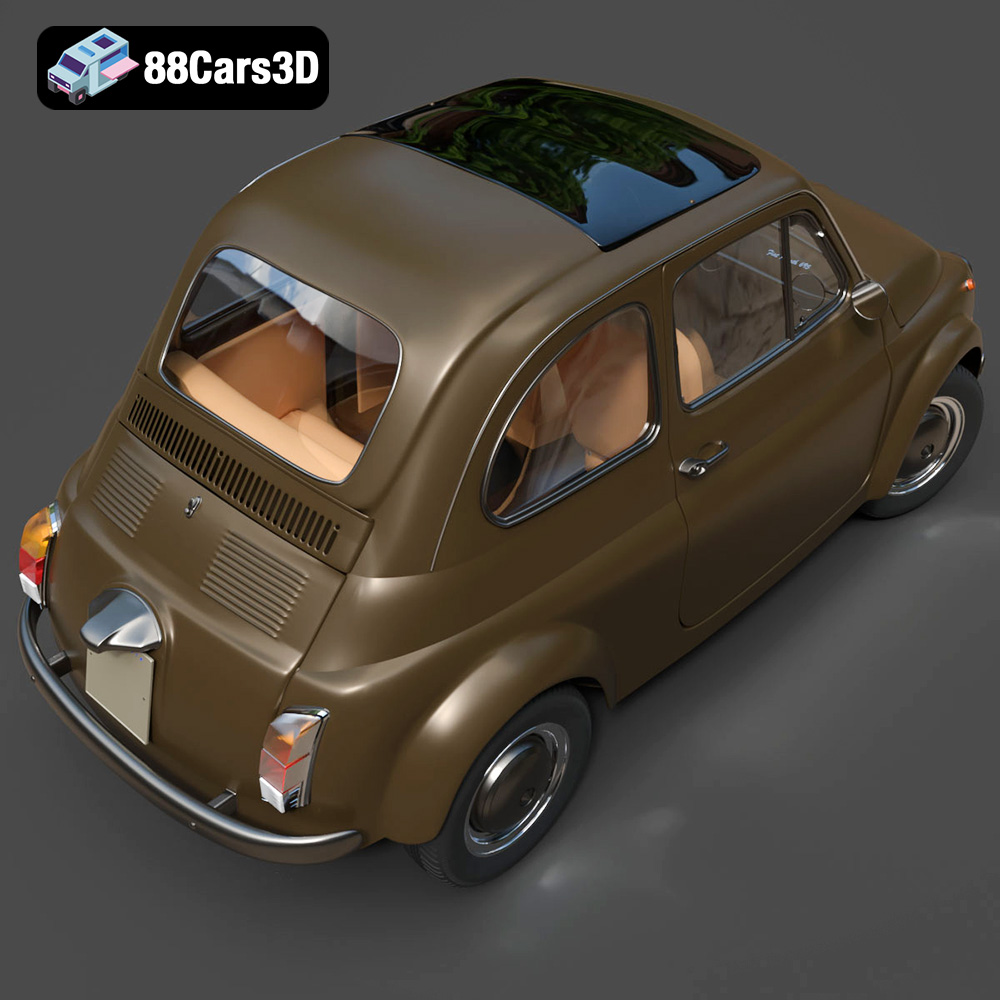
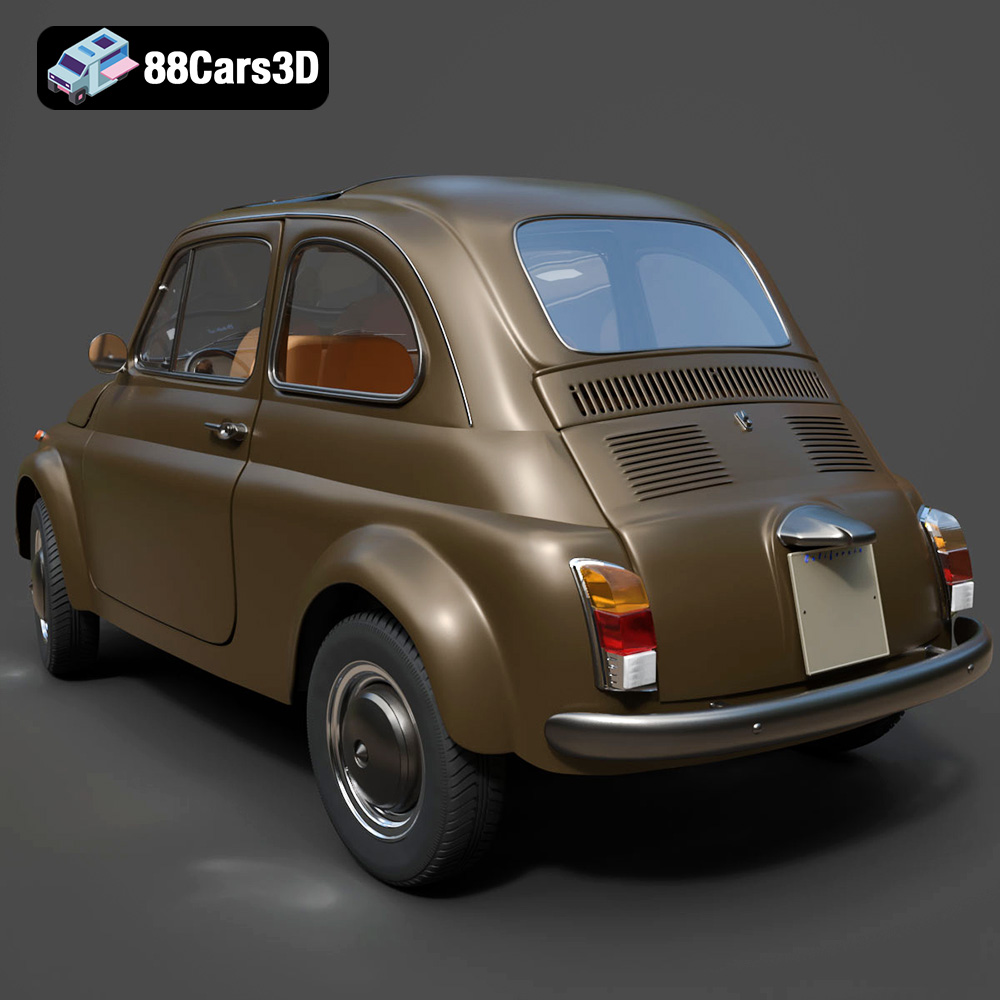
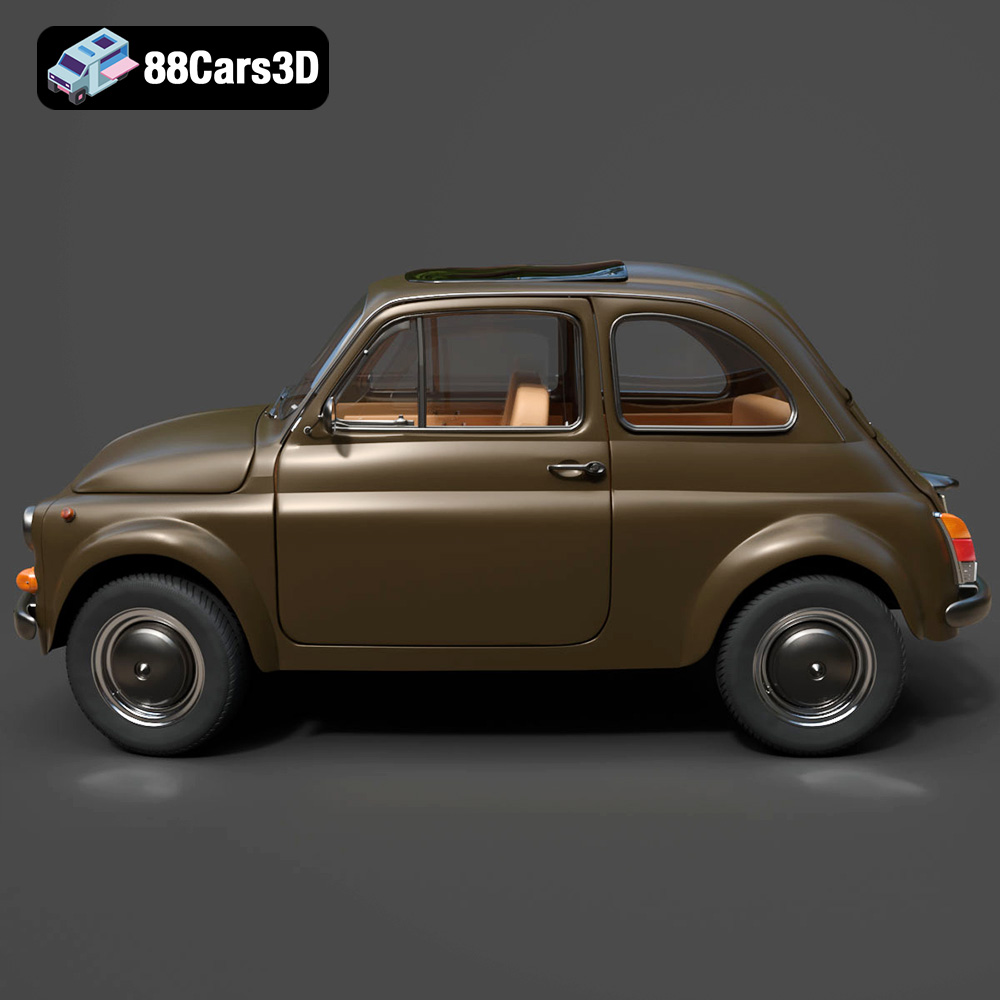
The exterior of the Abarth 695 is where its hot hatch character truly shines, and the 3D model captures every nuance. The accurate frame geometry and proportions are the foundation, ensuring the vehicle looks correct from every angle. This includes the wider track and the integrated aerodynamic body kit, which aren’t just cosmetic but define the car’s performance aesthetic. Key details like the signature Record Monza quad-tailpipe exhaust system are meticulously modeled, down to the subtle curves and chrome finishes that hint at the engine’s power.
The front fascia, with its precisely modeled projector headlights and LED daytime running lights, contributes significantly to the car’s aggressive gaze. Authenticity extends to the wheels: Abarth-styled multi-spoke alloy wheels wrapped in low-profile performance tires. Even the sport-tuned lowered suspension setup, complete with detailed brake calipers and rotors, is individually modeled. This granular detail is crucial for realistic renders and especially for game development, where separate wheels, suspension, and steering components enable dynamic animation and realistic physics simulations. This level of external accuracy is what elevates a generic car model to a true digital replica.
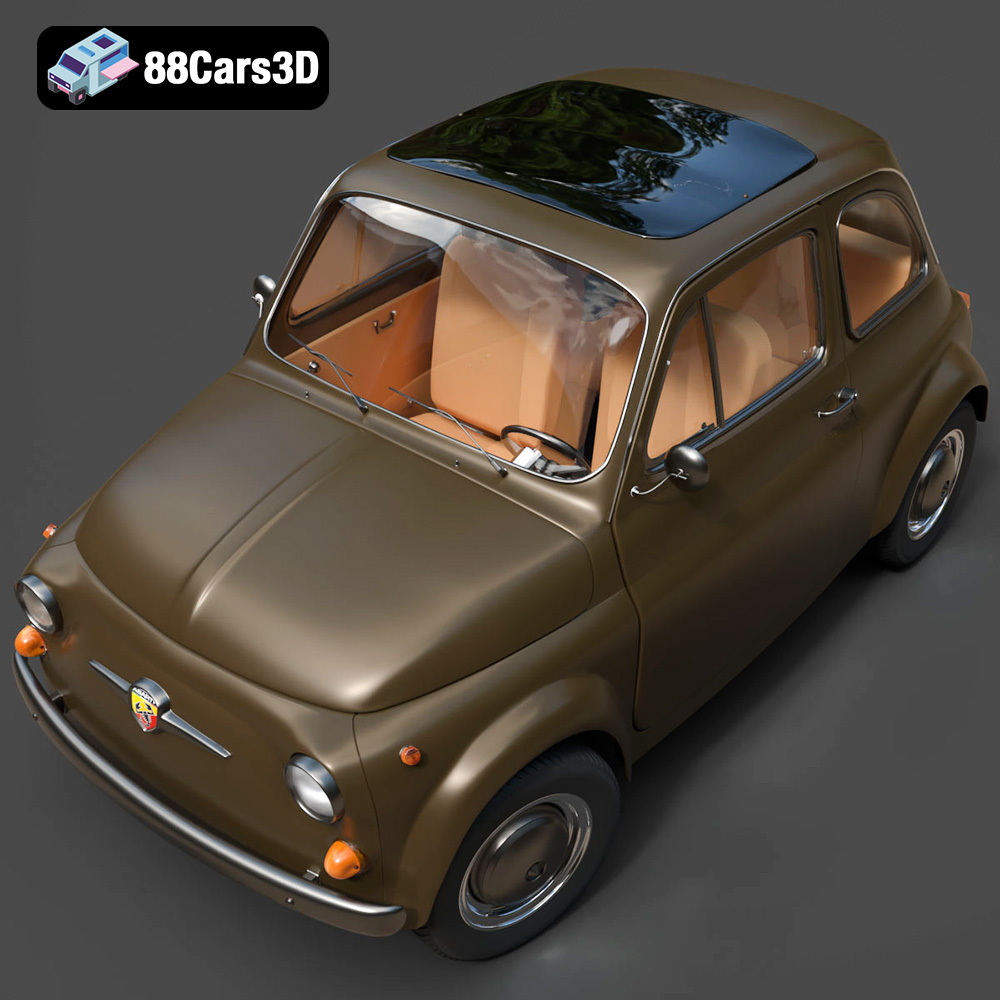
While the exterior grabs immediate attention, the interior is where the driver interacts with the car. For a high-fidelity 3D model like the Abarth 695, the cockpit must convey the same level of precision and performance. The model features highly detailed Sabelt racing seats, complete with authentic stitching and contours that speak to their racing pedigree. The sport-contoured steering wheel, adorned with precise Abarth badging, is rendered with tactile realism.
The digital TFT instrument cluster and boost gauge are accurately recreated, providing functional visual appeal. Intricate control details, including aluminum sport pedals, a precisely modeled gear shifter, and dashboard switches, contribute to an immersive interior environment. For game developers, this optimized geometry is particularly vital for first-person point-of-view (POV) gameplay, where the player directly experiences the car’s cabin. This attention to interior detail is what transforms a simple car asset into a fully immersive vehicle, capable of delivering a compelling user experience whether in a render or a virtual environment.
In the fast-paced world of game development and real-time visualization, striking the perfect balance between visual fidelity and performance is paramount. A 3D model must look stunning, but it also needs to run smoothly without crippling frame rates. The Fiat 500 Abarth 695 3D model is specifically designed with this equilibrium in mind, making it an ideal game asset.
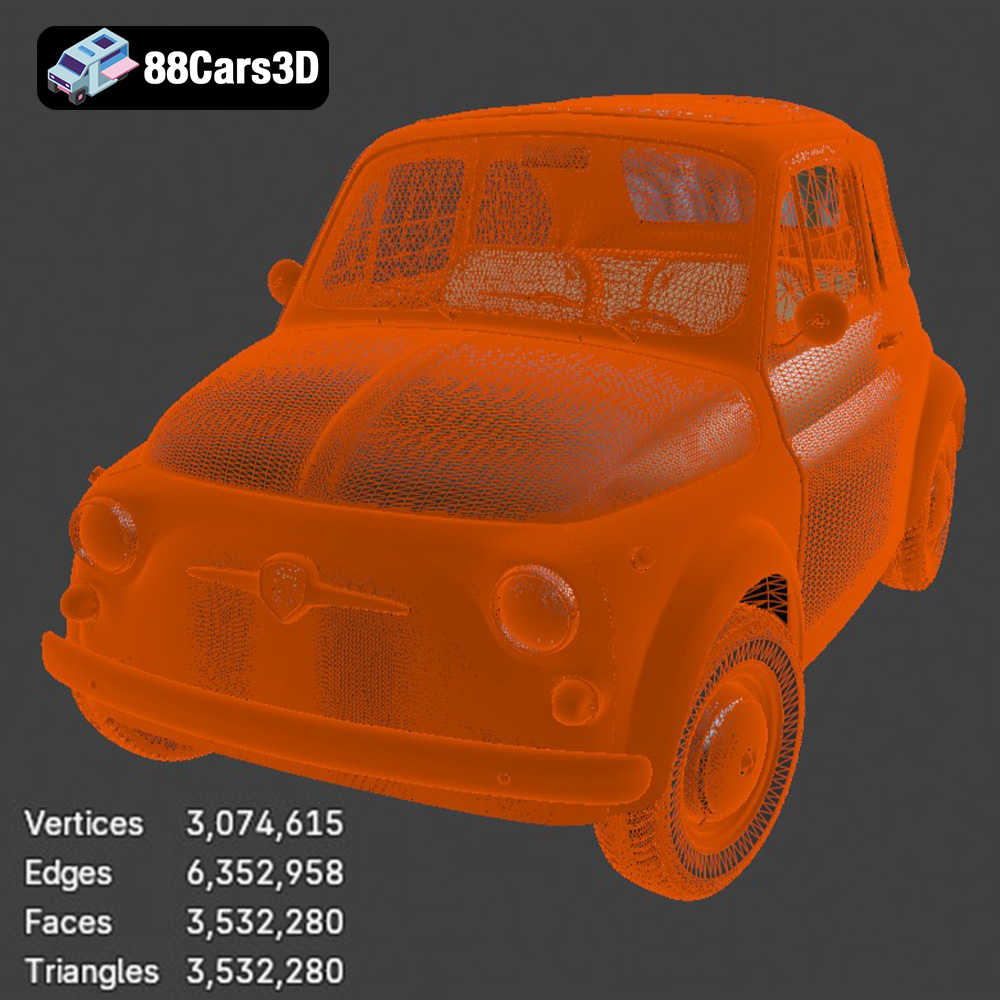
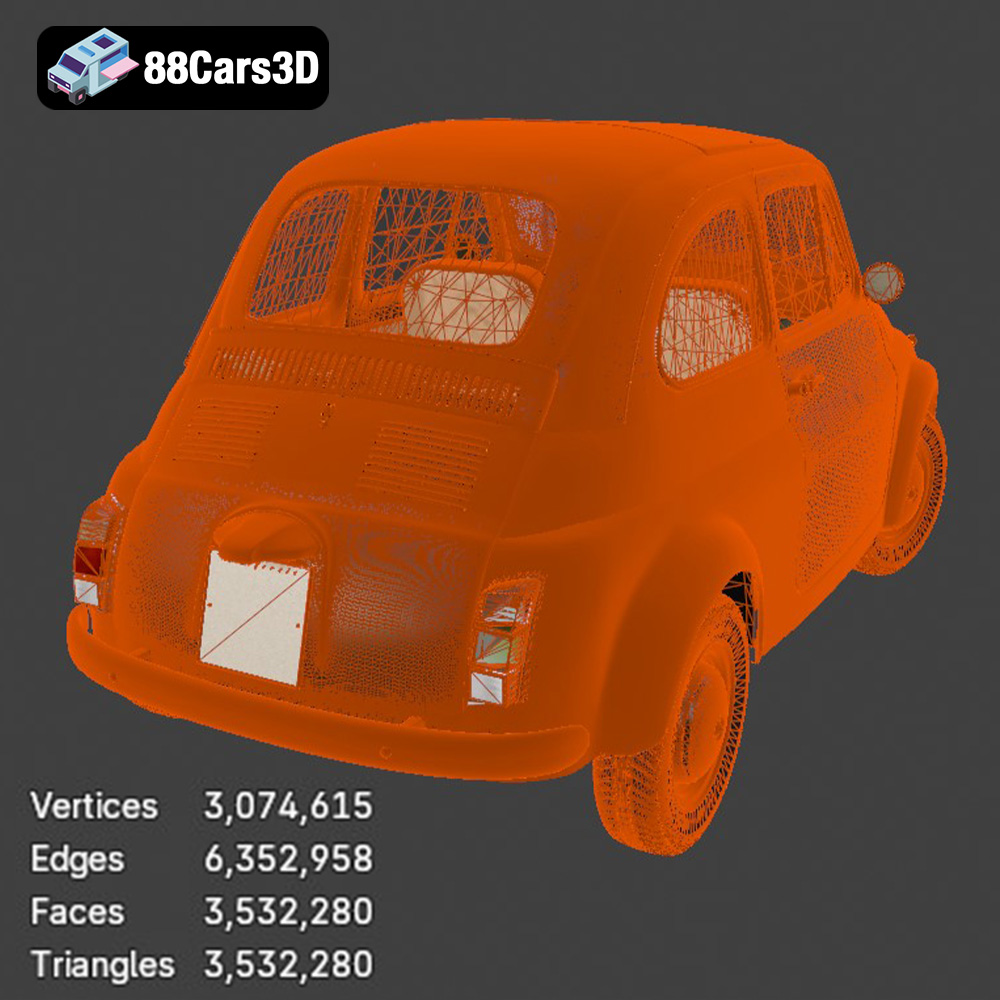
The model boasts a comprehensive topology of 3,532,280 triangles. At first glance, this might seem high for a “game-ready” asset. However, for modern AAA game development, particularly on current-generation consoles and high-end PCs, this polycount represents a ‘high-fidelity game-ready’ asset. It allows for incredible visual realism without immediately requiring aggressive Level of Detail (LOD) down-sampling for hero shots or closer camera views. For open-world games or racing titles where the car is a central focus, this level of detail ensures crisp visuals.
The optimization lies in the *structure* of the mesh and the careful distribution of polygons. Critical areas like the engine, interior, and exterior body panels receive the detail they need, while less visible areas are optimized. Game developers can still implement a robust LOD system (Level of Detail) if needed, using this high-poly model as the base. Lower poly versions for distant objects can be generated, ensuring the car renders efficiently across different distances while maintaining its detailed appearance up close.
The “Game-Ready & Optimized” designation means this Fiat 500 Abarth 695 model is built to seamlessly integrate into popular real-time engines like Unreal Engine and Unity. This involves several technical considerations:
* **PBR Materials:** The model would come with Physically Based Rendering (PBR) textures and materials, ensuring realistic surface properties (metallic, roughness, normal maps) that react accurately to light within the engine. This is critical for achieving a realistic automotive finish.
* **Proper Pivot Setup:** The technical specifications highlight “Proper pivot setup for steering, wheel rotation, and suspension travel.” This is non-negotiable for vehicle dynamics in a game. Correct pivots mean animators and programmers can easily implement steering, wheel spin, and suspension compression/extension without complex workarounds, saving significant development time.
* **Real-world Scale:** Accuracy based on actual vehicle chassis ensures the car fits correctly within game environments, interacts realistically with other assets, and maintains true proportions for an immersive experience.
* **Modular Components:** With separate wheels, suspension, and steering, developers can easily rig the car, apply individual physics settings, and create custom animations (e.g., dynamic suspension compression over bumps, accurate steering input).
Whether building an urban racing simulation, a detailed virtual showroom, or simply populating a virtual city, the Fiat 500 Abarth 695 model provides a robust foundation for visually stunning and performant real-time applications.
While the Fiat 500 Abarth 695 3D model is optimized for real-time environments, its exceptional detail and comprehensive geometry truly shine in high-fidelity rendering and visualization workflows. This is where cinematic quality, photorealism, and meticulous attention to light and shadow transform a digital asset into a work of art.
For studios producing high-end marketing campaigns, animated sequences, or lifestyle scenes, the `.max` (for 3ds Max) and `.blend` (for Blender) formats of the Abarth 695 model are invaluable. These native formats allow artists to leverage the full power of advanced offline renderers like V-Ray, Corona Renderer (for 3ds Max), and Cycles (for Blender).
* **Material Authoring:** Artists can dive deep into material creation, refining paint finishes with layered metallic flakes, achieving accurate rubber textures on tires, and simulating the complex refractions of glass. The high polycount provides ample geometric detail for ambient occlusion and subsurface scattering effects, adding depth and realism that simpler models cannot achieve.
* **Lighting & Environments:** With offline renderers, artists have unparalleled control over global illumination, complex light bounces, and sophisticated camera effects. Imagine the Fiat 500 Abarth 695 gleaming under simulated studio lights, or parked dramatically in a photorealistic street scene with realistic reflections from wet asphalt and surrounding architecture. The model’s detailed geometry, from the projector headlights to the precise Abarth badging, interacts authentically with light, creating stunning visual narratives.
* **Animation & Dynamics:** The fully editable `.max` or `.blend` files allow for extensive animation, from subtle camera movements around the vehicle to full driving sequences. With separate components for wheels, steering, and suspension, animators can simulate realistic vehicle dynamics for engaging visual storytelling.
The demand for interactive, visually rich automotive experiences is booming. High-fidelity 3D car models are the cornerstone of virtual showrooms and advanced configurators. The Fiat 500 Abarth 695 model, with its real-world scale accuracy and detailed features, is perfect for these applications.
* **Immersive Exploration:** In a virtual showroom, prospective buyers can explore the Abarth 695 from every angle, zoom in on intricate details like the Sabelt racing seats or the Record Monza exhaust, and even ‘sit inside’ the car in a first-person perspective. The optimized geometry for first-person POV in gaming directly translates to an immersive cockpit experience in VR showrooms.
* **Dynamic Customization:** For configurators, the model’s structure allows for dynamic customization. Users can instantly change body colors (e.g., to authentic factory colors or custom finishes), modify tire textures (off-road vs. street variants), adjust material finishes (matte, gloss, metallic), and even adapt lighting for different environments (day, night, studio). This interactive capability, driven by the modularity and detail of the 3D asset, provides a powerful sales and marketing tool, allowing customers to visualize their dream car before it’s even built. The high polygon count ensures that even close-up views of custom details remain sharp and convincing.
The journey of a 3D model doesn’t always end on a screen. For enthusiasts, collectors, and prototyping professionals, the ability to transform a digital asset into a tangible object is incredibly exciting. The Fiat 500 Abarth 695 3D model is thoughtfully provided in `.stl` format, opening the door to the world of 3D printing and physical realization.
While the `.stl` format simplifies the geometry for printing, successful 3D printing requires careful preparation and understanding of printing parameters. The recommended print settings for the Abarth 695 model offer a roadmap for achieving high-quality physical replicas:
* **Scale Considerations:** The suggested scales (1:12 / 1:18 / 1:24) are popular choices for display models, balancing detail retention with manageable print times and material usage. Larger scales will inherently show more detail but demand more material and print duration.
* **Layer Height & Printer Type:** A crucial detail is the recommendation for a layer height of 0.04–0.12 mm, with resin printing being specifically recommended for fine details. FDM (Fused Deposition Modeling) printers, while more common and affordable, might struggle to capture the intricate nuances of the Abarth’s exterior trim, the Abarth badging, or the Sabelt seat stitching at smaller scales. Resin (SLA/DLP) printers, with their higher resolution capabilities, are ideal for producing smooth surfaces and capturing delicate details, making them the superior choice for a detailed car model.
* **Structural Integrity:** Recommendations like a wall thickness of 1.2–2.0 mm and an infill of 20–30% are critical for ensuring the printed model is robust enough to handle and display without fragility. The suggested print orientation – “Frame printed angled for structural integrity; wheels printed separately” – minimizes the need for supports on critical aesthetic surfaces and helps prevent warping, especially for long, flat chassis elements.
Detailed 3D models like the Abarth 695 will almost always require support structures during printing. The product description explicitly states: “Supports: Required for detailed parts like exhaust, mirrors, handlebars.” These structures prevent overhangs from deforming during printing and ensure geometric accuracy. Removing them cleanly post-print is an art in itself.
Post-processing is where the model truly comes to life. After printing and support removal, sanding is often necessary to achieve a smooth surface, especially with FDM prints. Applying primer helps reveal any imperfections and provides an even base for paint. Finally, applying authentic factory colors with metallic finishes, or even custom liveries, can transform a raw print into a stunning miniature replica. This complete workflow, from digital file to painted physical model, offers a deeply rewarding creative experience.
In today’s fast-paced creative industries, time is a precious commodity. For 3D artists, game developers, and visualization specialists, the choice between building every asset from scratch or leveraging high-quality pre-made models can significantly impact project timelines and budgets. This is where marketplaces like 88cars3d.com prove invaluable, offering expertly crafted assets such as the Fiat 500 Abarth 695 3D model.
Creating a car model of the caliber of the Fiat 500 Abarth 695 from the ground up is an immense undertaking. It requires specialized skills in hard-surface modeling, meticulous attention to real-world references, advanced UV unwrapping, material authoring, and optimization for various platforms. This process can take hundreds, if not thousands, of hours for a single vehicle.
By sourcing a professional-grade 3D car model from 88cars3d.com, studios and individual artists gain several critical advantages:
* **Significant Time Savings:** Instantly access a production-ready asset, freeing up valuable artist time to focus on other aspects of the project, such as scene composition, animation, or interactive logic.
* **Cost Efficiency:** The cost of purchasing a high-quality model is almost always a fraction of the labor costs involved in modeling it in-house.
* **Guaranteed Quality and Consistency:** Reputable marketplaces vet their products for technical quality, accuracy, and adherence to industry standards. This particular Abarth 695 model, with its “comprehensive topology of 3,532,280 triangles” and “real-world scale accuracy,” ensures a high standard.
* **Versatility of Formats:** The inclusion of multiple file formats (.blend, .fbx, .obj, .glb, .stl, .ply, .unreal, .max) ensures compatibility across virtually all major 3D software and engines, minimizing conversion issues and accelerating workflow integration.
Whether you are a solo indie developer, a large game studio, or an automotive marketing agency, the Fiat 500 Abarth 695 3D model seamlessly integrates into your existing pipelines.
* **For Game Development:** The “game-ready & optimized” nature means less setup time in Unreal Engine or Unity. The proper pivot points and separate components are crucial for immediate rigging and physics application. Imagine dropping this Abarth directly into a racing game track or an open-world city, ready to drive.
* **For Architectural and Product Visualization:** Need to populate an exterior architectural render with a stylish vehicle? Or create an eye-catching product shot for a digital advertisement? This Abarth model provides an instant, high-impact element. Its detailed interior even allows for close-up shots through windows, adding realism to any scene.
* **For AR/VR Experiences:** The `.glb` format ensures a smooth rollout for mobile AR apps or immersive VR showroom experiences. The model’s high fidelity means it will hold up under close scrutiny in a virtual environment, engaging users with its realistic appearance.
In essence, investing in a high-quality 3D car model like the Fiat 500 Abarth 695 from 88cars3d.com is not just a purchase; it’s a strategic decision that empowers creators to produce stunning visuals and engaging experiences more efficiently and effectively.
The world of 3D modeling is constantly evolving, driven by the demand for ever-increasing realism and efficiency across diverse applications. From the high-octane simulations of racing games to the exquisite detail of cinematic renders and the innovative frontier of AR/VR, the foundation of success lies in the quality of the digital assets we employ. The Fiat 500 Abarth 695 3D Model stands as a testament to this principle, offering a meticulously crafted digital representation of an iconic vehicle.
We’ve explored how its comprehensive topology and detailed features, from the aggressive front fascia to the intricate cockpit, are designed to deliver unparalleled visual fidelity. We’ve delved into the critical role of understanding various file formats, demonstrating how the provision of `.blend`, `.fbx`, `.obj`, `.glb`, `.stl`, `.ply`, `.unreal`, and `.max` ensures maximum compatibility and utility across professional workflows. Furthermore, we’ve highlighted its dual optimization for both performance-critical real-time environments and high-fidelity rendering, along with its potential for tangible creations through 3D printing.
Ultimately, whether you’re a game developer seeking an authentic racing machine, a visualization artist crafting a stunning automotive scene, or an enthusiast wanting to print a detailed replica, this Fiat 500 Abarth 695 3D model offers a robust and versatile solution. It represents not just a car, but a powerful asset ready to integrate into your next ambitious project, saving you time and elevating your creative output. Discover this exceptional asset and other premium 3D car models at 88cars3d.com, where quality meets efficiency for all your digital automotive needs.
The Fiat 500 Abarth 695 represents the pinnacle of Italian hot hatch performance, boasting a legendary racing heritage and an unmistakable aggressive stance. This 3D model meticulously captures the vehicle’s iconic styling cues, including its widened track, aerodynamic body kit, signature Record Monza dual exhaust system, and the formidable T-Jet engine. Every curve and detail has been carefully recreated to reflect the car’s dynamic personality and track-ready capabilities.
$90.00
.blend
.fbx
.fiat
.glb
.hot-hatch
.max
.obj
.ply
.rendering
.sports car
.stl
.unreal
500-abarth-695
car-3d-model
game asset
game-ready
optimized
VR/AR