Get 20% OFF All Premium 3D & STL Models!

The roar of a V8, the unmistakable silhouette, the thrill of raw power – few vehicles encapsulate the spirit of American automotive performance quite like the Ford Cobra. A true icon of speed and style, this classic roadster has captivated enthusiasts for decades. In the world of 3D modeling, bringing such a legend to life requires meticulous attention to detail, technical precision, and a deep understanding of how these digital assets will be used across diverse applications, from high-fidelity cinematic renders to immersive real-time gaming environments.
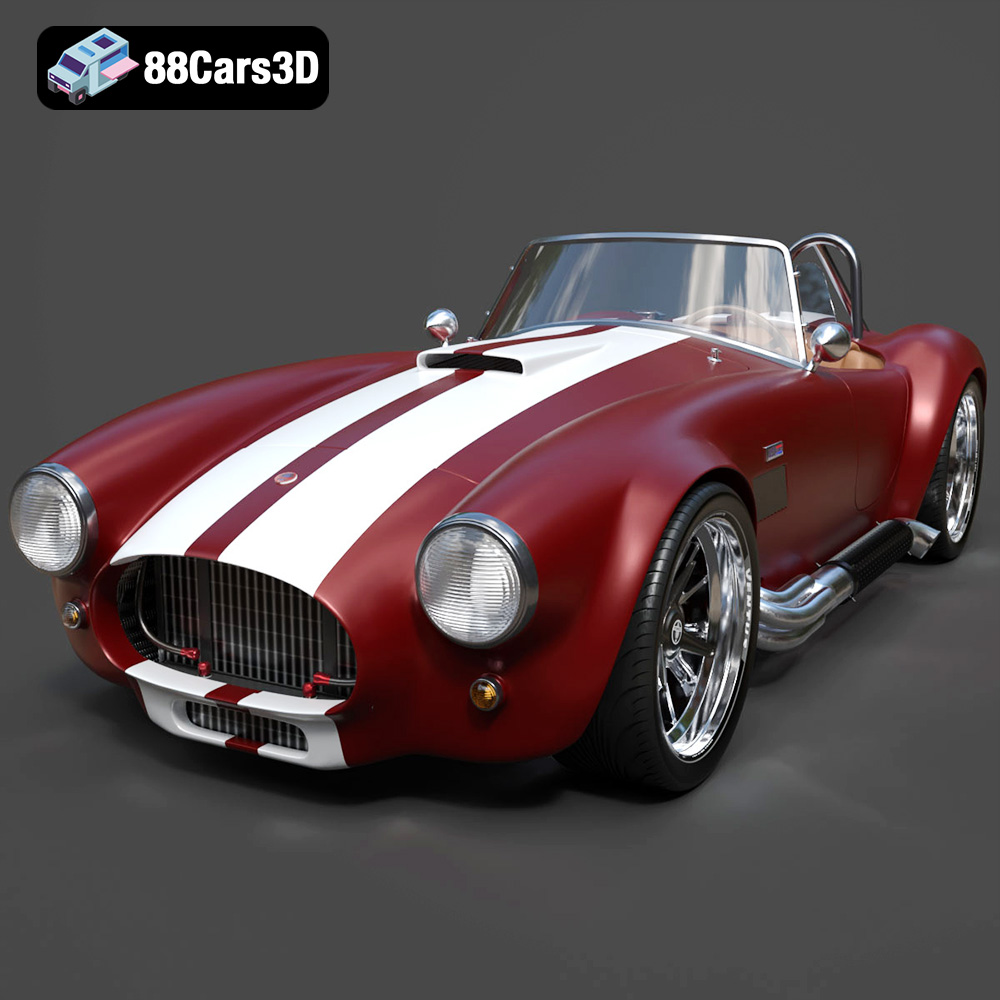
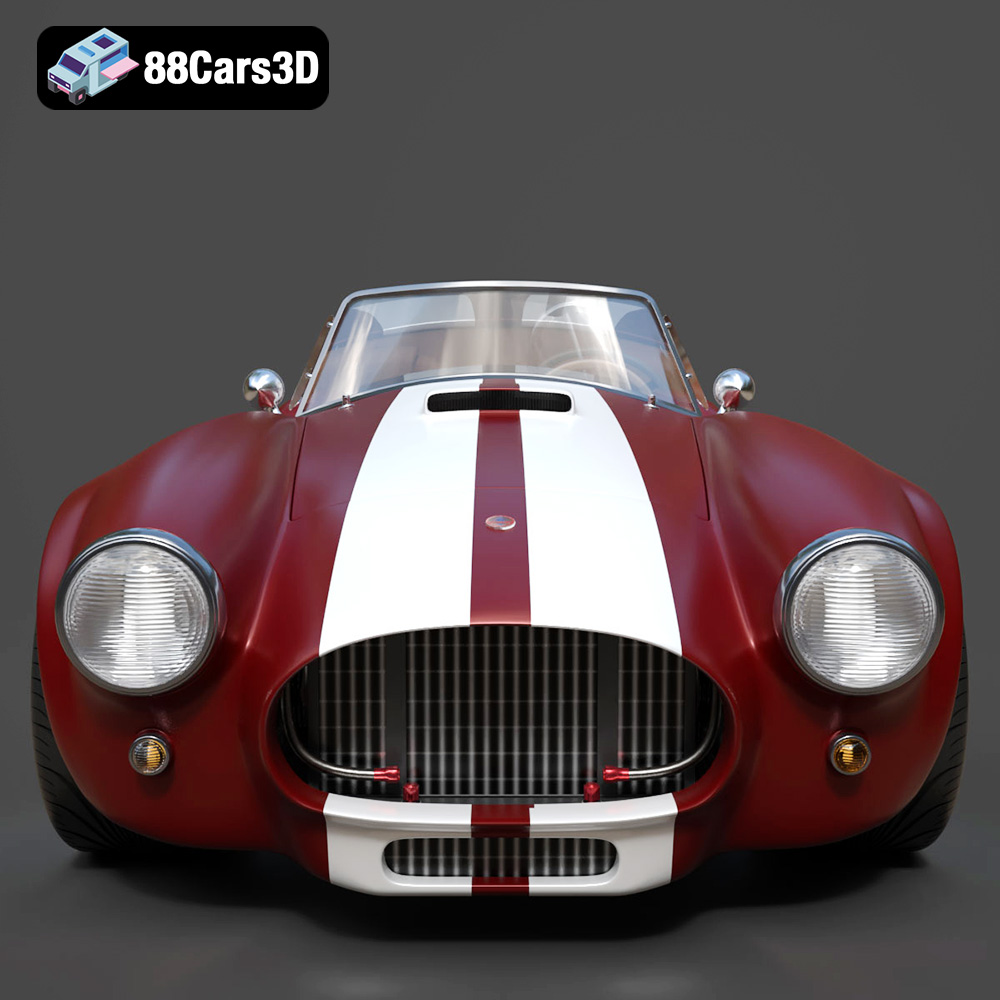
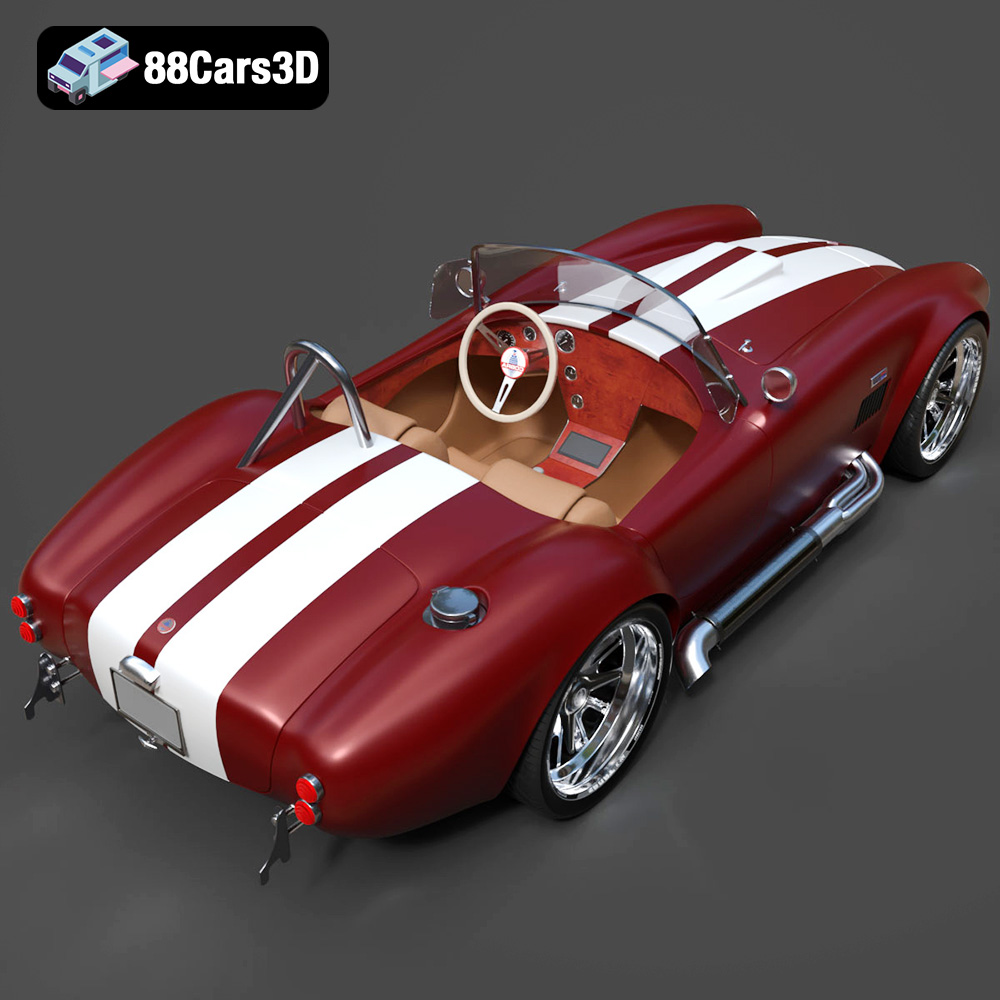
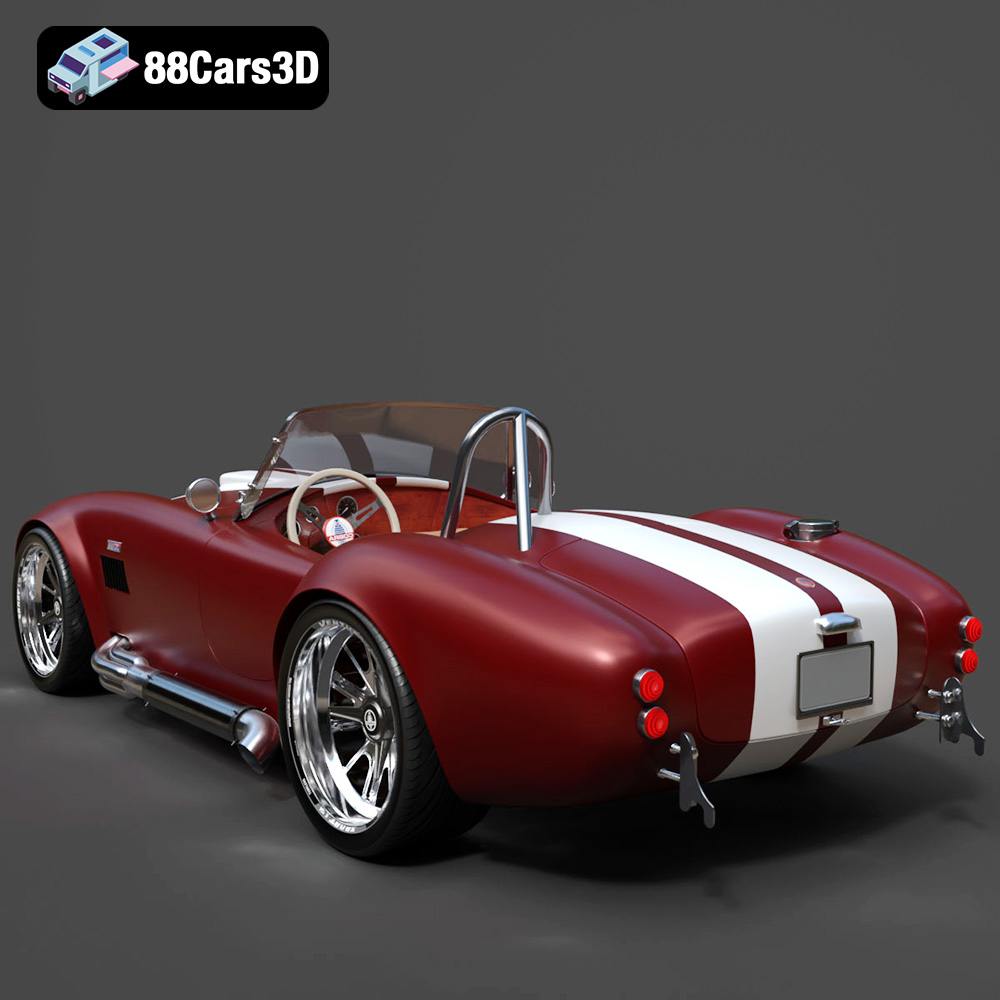
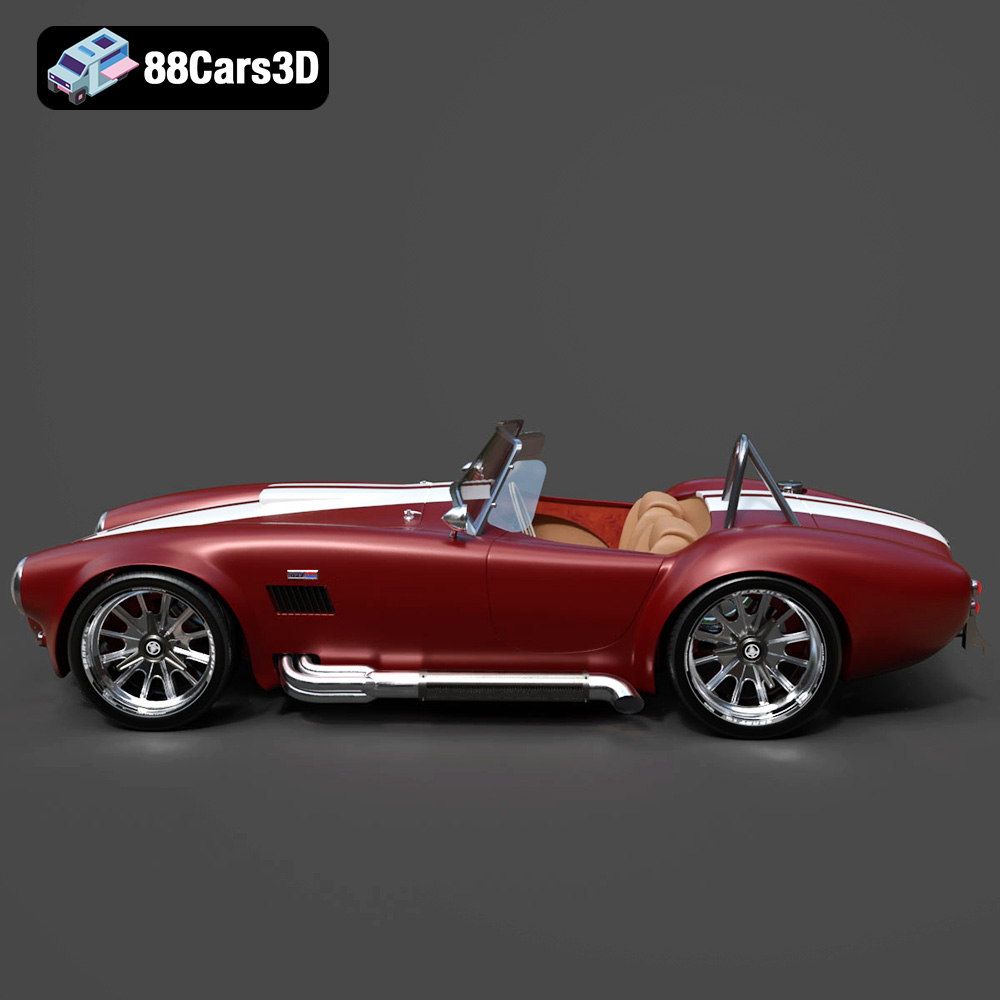
Today, professionals across various industries, including game development, architectural visualization, AR/VR experiences, and marketing, demand 3D car models that are not just visually stunning but also technically robust and versatile. This pursuit of digital perfection is where assets like the Ford Cobra 3D Model Download STL FBX OBJ GLB Blend truly shine. It offers a meticulously crafted representation of this automotive masterpiece, designed to meet the rigorous standards of modern production pipelines. From its iconic flared fenders and aggressive stance to its signature side-exit exhausts, every aspect has been carefully recreated to ensure authenticity and performance, setting a new standard for high-quality 3D car models.
The versatility of a 3D model often hinges on the file formats it supports. Different applications and workflows demand specific formats, each with its own advantages and technical considerations. Understanding these distinctions is crucial for anyone working with 3D car models, whether for automotive rendering, game assets, or specialized applications like 3D printing and AR/VR. The Ford Cobra 3D model, for instance, comes bundled with an impressive array of formats, ensuring broad compatibility and utility across virtually any professional pipeline.
The `.blend` format is Blender’s native file type, storing an entire Blender project. This includes not only the mesh geometry but also materials, textures, lighting setups, animations, cameras, and scene configurations. For artists who primarily work within Blender, having a `.blend` file offers maximum editability. You can dive deep into the shader nodes, adjust UV mapping, modify the mesh at a vertex level, or even retopologize parts of the car if a specific project demands it. It’s the most flexible option for deep customization and leveraging Blender’s powerful rendering engines like Eevee and Cycles.
FBX (Filmbox) is arguably the most widely adopted interchange format in the 3D industry, especially prevalent in game development. It efficiently supports geometry, materials, textures, animations, and skeletal data. Its robust nature makes it ideal for transferring assets between different 3D software packages (e.g., from Blender to 3ds Max or Unreal Engine/Unity). For game assets, `.fbx` files often contain baked animations, blend shapes, and LODs (Levels of Detail), making them engine-ready. The Ford Cobra in `.fbx` format is perfectly suited for direct import into game engines for real-time environments, offering excellent fidelity and performance.
OBJ (Wavefront Object) is a simpler, more universal format primarily used for exchanging 3D geometry and basic material information. It’s incredibly compatible, recognized by almost every 3D application. While it doesn’t typically store advanced features like animation or rigging, it excels at providing clean, raw mesh data. For archival purposes or when you need a widely accessible base model, `.obj` is an excellent choice. Artists often start with an `.obj` to import into a new software environment for texturing and rigging from scratch.
GLB (GL Transmission Format Binary) is the binary version of glTF, a royalty-free specification for the efficient transmission and loading of 3D scenes and models by applications. It’s quickly becoming the standard for 3D content on the web, in AR (Augmented Reality), and VR (Virtual Reality) applications due to its compact size and single-file nature (embedding textures and other assets). For displaying the Ford Cobra in a browser-based configurator, an AR app on a smartphone, or within a WebGL experience, the `.glb` format provides optimized performance and ease of integration.
STL (Stereolithography) is the de facto standard file format for 3D printing. It represents a 3D model as a series of connected triangles, defining only the surface geometry of an object. It lacks color, texture, or other CAD attributes, focusing purely on the physical form. When preparing the Ford Cobra for fabrication, the `.stl` file ensures that the model can be correctly sliced and printed on a 3D printer. This allows hobbyists and professionals to bring the digital model into the tangible world, perfect for creating scale replicas.
PLY (Polygon File Format) is another format for storing 3D data, often used in scientific applications, 3D scanning, and CAD/CAM. It can store a wider range of properties than `.stl`, including color, transparency, and often normal vectors and texture coordinates. While less common for general animation or game development, its precision and ability to handle complex point cloud data make it valuable for detailed analysis or specific manufacturing processes where the Ford Cobra’s intricate design might need scrutiny.
While not strictly a generic file format like FBX, an `.unreal` package or asset refers to a model specifically prepared and optimized for direct import and use within Unreal Engine. This often implies proper material setup using Unreal’s physically based rendering (PBR) system, collision meshes, LODs, and potentially blueprints for interactive elements. A Ford Cobra provided in this “engine-ready” state dramatically accelerates development for projects built in Unreal, minimizing setup time and ensuring optimal performance within the engine’s ecosystem.
Similar to `.blend` for Blender, `.max` is the native file format for Autodesk 3ds Max. It stores the complete 3ds Max scene, including geometry, modifiers, materials, lights, cameras, and animations. For artists working within 3ds Max, this format offers full editability and access to all of Max’s powerful modeling, rigging, and rendering tools. It’s particularly useful for high-end architectural visualization and cinematic rendering where the intricate details of the Ford Cobra can be pushed to their visual limits using renderers like V-Ray or Corona.
The availability of such a wide range of formats in a single package, like with the Ford Cobra 3D Model from 88cars3d.com, underscores its value as a truly production-ready asset, adaptable to virtually any creative challenge.
Creating a truly convincing 3D car model, especially one as iconic as the Ford Cobra, goes far beyond just visual appeal. It demands a deep understanding of technical specifications that dictate performance, fidelity, and adaptability across various digital platforms. The difference between a generic model and a professional-grade asset lies in these often-invisible details.
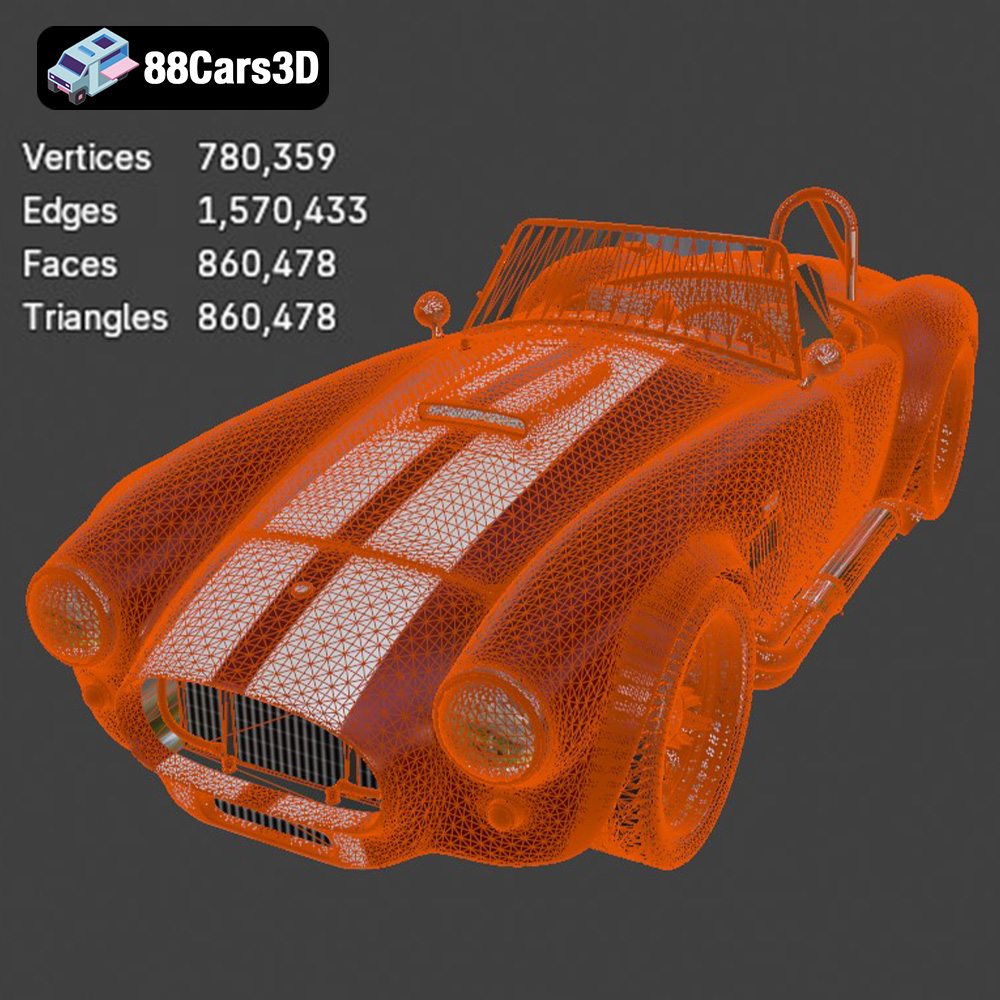
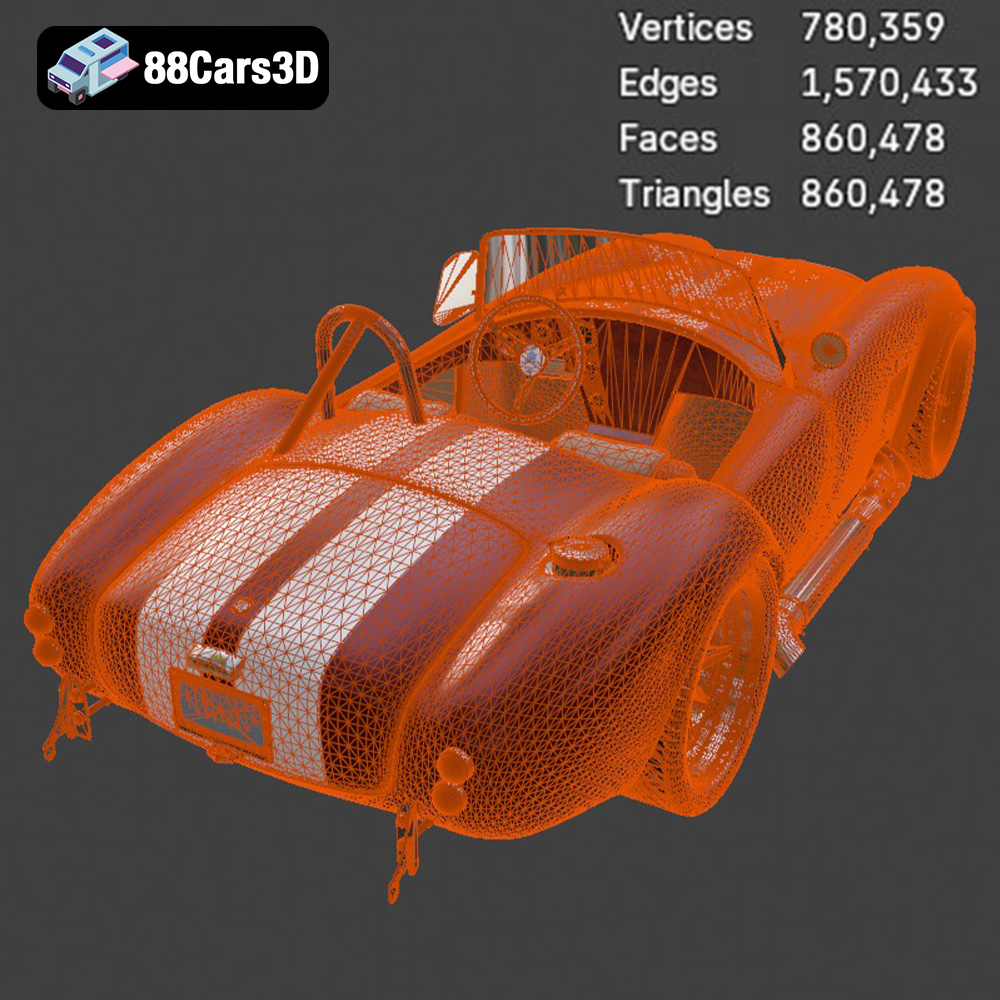
The core of any 3D model is its mesh topology – the arrangement of vertices, edges, and faces that define its shape. For the Ford Cobra 3D model, its 860,478 triangles (or approximately 430,000 polygons) represent a sweet spot. This polycount is high enough to capture the complex curves of the Cobra’s flared fenders, the intricate details of its V8 engine block, and the precise lines of its vintage interior, ensuring stunning visual fidelity in close-up renders. Yet, it’s also optimized to be “game-ready,” meaning it can be efficiently rendered in real-time engines like Unreal Engine and Unity without causing significant performance bottlenecks. This balance is critical for dynamic environments where multiple complex assets interact simultaneously.
A well-optimized topology also implies clean quad-based geometry (converted to triangles upon export), which facilitates smooth subdivision for even higher detail if needed, and efficient UV unwrapping for texture application. The accuracy of the Ford Cobra frame geometry is paramount, ensuring that the digital model faithfully represents its real-world counterpart.
Real-world scale accuracy is a non-negotiable for professional 3D car models. This ensures that the Ford Cobra integrates seamlessly into virtual scenes, whether it’s parked in a photorealistic garage or navigating an open-world environment. Beyond scale, the model’s modularity is a key technical advantage. Separate components for wheels, suspension, and steering, each with proper pivot setups, allow for realistic animation. Imagine a racing simulator where the Cobra’s suspension compresses over bumps, or a cinematic where the steering wheel turns with the driver’s input – these functionalities are only possible with a thoughtfully constructed, component-based model.
Detailed suspension and undercarriage components, often overlooked in lower-quality models, contribute significantly to realism, especially in virtual reality experiences where users can often inspect vehicles from all angles. Even the smallest details, like accurate knock-off style wheels and wide performance tires, enhance authenticity.
The true test of a high-quality 3D asset is its seamless integration into diverse professional workflows. The Ford Cobra 3D model is not just a static object; it’s a versatile tool designed to accelerate production across various industries.
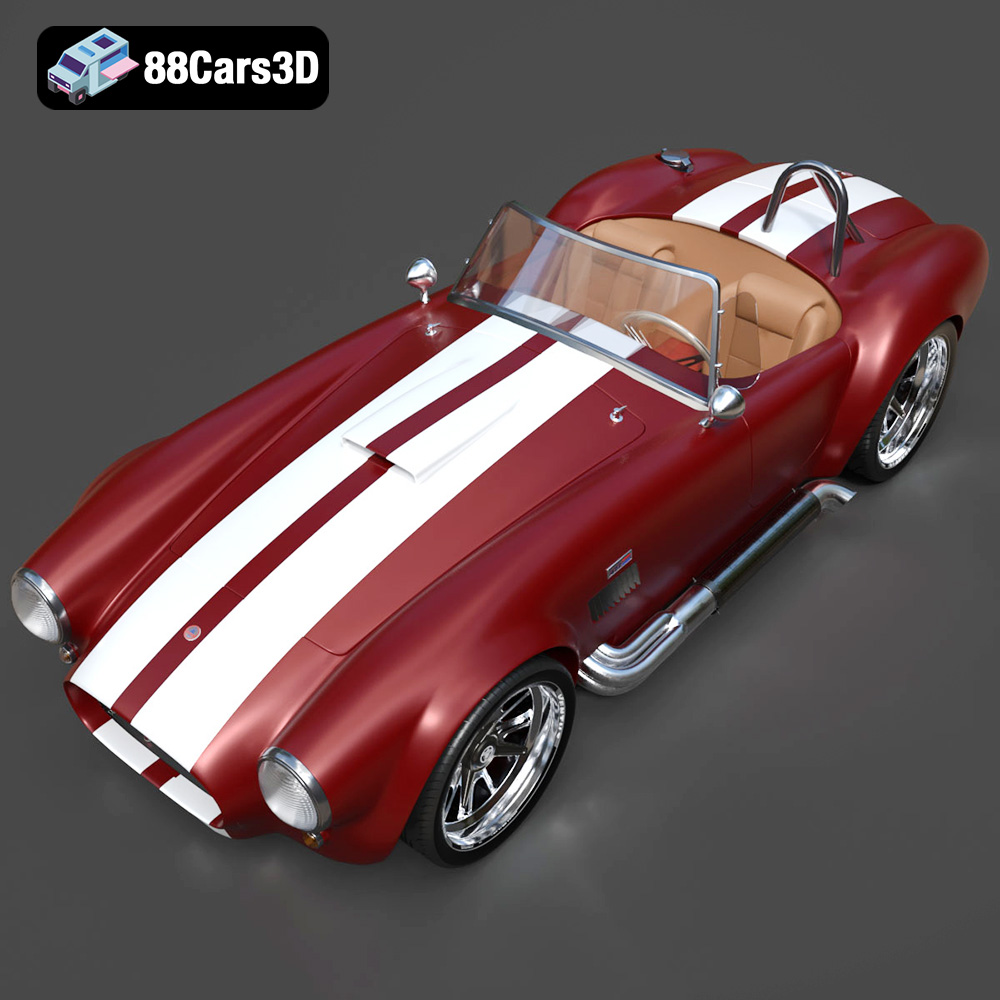
The gaming industry constantly seeks realistic and optimized assets. The Ford Cobra’s “game-ready” designation and optimized polycount make it an invaluable asset for racing titles, open-world games, and immersive simulators. Developers can drop the `.fbx` or `.unreal` version directly into Unreal Engine or Unity, leveraging its pre-configured materials and pivot points for immediate integration. Its detailed V8 engine block and authentic cockpit details, including the vintage leather-textured bucket seats and classic wood-rimmed steering wheel, are perfect for first-person POV experiences, immersing players in the legend.
In the world of advertising, product showcases, and cinematic productions, visual fidelity is paramount. The Ford Cobra 3D model excels here, offering the level of detail required for stunning photorealistic renders. Using the `.blend` or `.max` files, artists can leverage powerful rendering engines like Blender’s Cycles or 3ds Max’s V-Ray/Corona to create breathtaking imagery and animations. Imagine a sleek commercial showcasing the Cobra, with light glinting off its signature chrome side-exit exhaust system, or a detailed studio shot highlighting its period-correct analog instrument cluster.
Augmented Reality and Virtual Reality are transforming how we interact with digital content. The Ford Cobra 3D model, particularly in its `.glb` format, is ideal for creating immersive experiences. Imagine a virtual garage where users can walk around the Cobra, open its doors, and even sit inside (first-person POV optimized interior), or an AR app that places the iconic car directly into your driveway.
The journey of a 3D model doesn’t always end on a screen. With the advent of accessible 3D printing technology, digital assets can cross the threshold into the physical realm. The Ford Cobra 3D model offers an `.stl` file specifically designed for this purpose, allowing enthusiasts and professionals to create tangible replicas of this classic car.
Converting a high-detail rendering model into a print-ready file involves careful consideration. The `.stl` format simplifies the mesh for efficient slicing, making it compatible with virtually any 3D printer. The recommended scales (1:12, 1:18, 1:24) cater to popular model car sizes, perfect for display-scale hobbyists. For optimal results, especially with intricate details like the side-exit exhausts or the fine lines of the cockpit, resin printing is often recommended due to its ability to achieve finer layer heights (0.04–0.12 mm) and smoother finishes.
Once printed, the physical model enters a phase of post-processing. This typically involves sanding to remove layer lines and support marks, followed by priming to create an even surface for paint. The real magic happens with the paintwork. Applying authentic factory colors with metallic finishes, perhaps even classic racing stripes, can transform a raw 3D print into a stunning, museum-quality replica. This blend of digital precision and traditional craftsmanship allows artists to not only visualize but also physically hold and display the iconic Ford Cobra.
The ability to leverage a single, high-quality 3D car model for both digital rendering and physical fabrication underscores its versatility and long-term value in any creative toolkit. 88cars3d.com understands this comprehensive need, providing assets that bridge these diverse requirements.
In today’s fast-paced digital production environment, time is a critical commodity. Building a highly detailed, technically accurate 3D model like the Ford Cobra from scratch can take hundreds of hours, demanding expertise in modeling, texturing, rigging, and optimization. This is where a marketplace like 88cars3d.com becomes an indispensable resource for professionals and enthusiasts alike. Providing ready-to-use, meticulously crafted 3D car models significantly streamlines workflows and empowers creators to focus on their artistic vision rather than getting bogged down in foundational asset creation.
The Ford Cobra 3D model is a prime example of a production-ready asset that delivers immediate value. Its high-detail topology, combined with game-ready optimization, means it can be dropped into a project and put to use almost instantly. This saves countless hours of development time for game studios needing authentic vehicles, marketing agencies crafting compelling visual campaigns, or AR/VR developers building immersive experiences. The comprehensive file format support, including `.blend`, `.fbx`, `.obj`, `.glb`, `.stl`, `.ply`, `.unreal`, and `.max`, ensures compatibility with virtually any software pipeline, eliminating conversion headaches and potential data loss.
Furthermore, the detailed exterior features – from the accurate frame geometry and iconic flared bodywork to the detailed suspension and undercarriage components – ensure that the model stands up to close-up scrutiny in high-resolution renders and VR experiences. Similarly, the period-correct interior, optimized for first-person POV in gaming, provides an authentic experience from every angle.
Beyond being immediately usable, professional 3D car models must also be adaptable. The Ford Cobra 3D model offers extensive customization options, allowing artists to tailor it to specific project requirements. Changing body colors to classic racing stripes, modifying tire textures, or adjusting material finishes from matte to metallic allows for endless creative possibilities without compromising the model’s underlying quality. This flexibility ensures that while the base asset is pre-made, the final output can be uniquely styled to fit any narrative or aesthetic.
Investing in high-quality 3D car models from trusted sources like 88cars3d.com is not just about acquiring assets; it’s about acquiring efficiency, reliability, and the foundation for exceptional digital creations. It frees up valuable resources, allowing studios and individuals to push creative boundaries and deliver projects faster and with higher fidelity.
The journey of a classic like the Ford Cobra from the asphalt to the digital realm is a testament to the power of modern 3D modeling. It’s a synthesis of art and engineering, meticulously recreating every curve, every engine detail, and every iconic feature that defines this automotive legend. For professionals in game development, cinematic rendering, AR/VR, and even 3D printing, the demand for high-quality, versatile 3D car models has never been greater.
The Ford Cobra 3D Model stands out as an exemplary asset, offering an unparalleled balance of visual fidelity, technical optimization, and broad format compatibility. Its 860,478 triangles provide stunning detail for high-end rendering while remaining “game-ready” for real-time applications. With native files for Blender and 3ds Max, universal formats like FBX and OBJ, and specialized options like GLB for AR/VR and STL for 3D printing, it caters to virtually every conceivable workflow. From animating dynamic racing sequences to crafting photorealistic advertising campaigns or even printing a physical replica, this model provides the foundation for truly exceptional digital and tangible creations.
In an industry where precision and efficiency are paramount, assets like the Ford Cobra 3D Model Download STL FBX OBJ GLB Blend from 88cars3d.com prove invaluable. They empower creators to bring automotive dreams to life with ease and confidence, ensuring that the legacy of machines like the Ford Cobra continues to inspire in every dimension.
The Ford Cobra represents the pinnacle of classic American muscle, combining lightweight roadster design with immense V8 performance. Known for its iconic flared fenders, aggressive wide stance, signature side-exit exhausts, and legendary racing heritage, this vehicle is a true automotive masterpiece that captures the essence of 1960s sports cars. This meticulously crafted 3D model features a highly detailed topology with 860,478 triangles. It ensures stunning visual fidelity and game-ready optimization, making it an exceptional asset for high-end rendering, game development, AR/VR environments, and detailed animation work. Perfect for classic car racing simulators, vintage automotive showcases, cinematic animations, and virtual reality garage experiences.
$57.99
.blend
.cobra
.fbx
.ford
.glb
.max
.obj
.ply
.rendering
.roadster
.sports car
.stl
.unreal
car-3d-model
classic-car
game asset
game-ready
low-poly
muscle-car
optimized
VR/AR