Get 20% OFF All Premium 3D & STL Models!

In the rapidly evolving landscape of digital creation, the demand for exceptionally detailed and versatile 3D models continues to grow exponentially. From blockbuster video games to cutting-edge architectural visualizations and immersive virtual reality experiences, high-quality assets are the cornerstone of compelling content. Automotive design, in particular, thrives on precision, realism, and efficiency, pushing the boundaries of what’s possible in a digital environment.
The journey from a designer’s sketch to a virtual showroom often relies on sophisticated 3D car models that capture every nuance of a vehicle’s aesthetic and engineering. These digital twins serve a multitude of purposes, from validating design concepts and conducting aerodynamic simulations to populating virtual worlds and crafting stunning marketing campaigns. It’s within this dynamic ecosystem that specialized assets, like the Kia K5 3D Model, truly shine, offering an unparalleled blend of fidelity, optimization, and adaptability for professionals across various industries.
This comprehensive exploration will delve into the critical role of 3D car models, dissect the technical intricacies that define their quality, and illustrate how a meticulously crafted asset, such as the Kia K5 3D Model available at 88cars3d.com, empowers creators to achieve their most ambitious visions. Whether you’re a game developer seeking realistic vehicles, an architect visualizing urban landscapes, or a marketing professional crafting a compelling automotive narrative, understanding the underlying technology and best practices is paramount to digital success.
The automotive industry has long been at the forefront of adopting advanced visualization techniques. Before a single piece of metal is cut, virtual prototypes allow designers and engineers to iterate rapidly, test concepts, and identify potential issues, saving immense time and resources. This reliance on digital tools extends far beyond the design phase, influencing everything from manufacturing to sales and marketing.
For car manufacturers, 3D models are indispensable. They enable full-scale digital reviews, where stakeholders can experience a vehicle in a virtual environment, making critical decisions without physical prototypes. This process, known as digital twin technology, allows for continuous refinement, ensuring that the final physical product precisely matches its digital counterpart. Beyond internal development, these models form the basis for external communication, allowing the public to experience new vehicles through interactive configurators, engaging commercials, and immersive digital showrooms long before they hit the market.
The quest for realism drives the demand for high-fidelity 3D car models. Consumers and clients expect photorealistic renders and seamless real-time experiences. This means models must possess not only accurate geometry but also intricate details like interior dashboards, engine bays, suspension components, and even specific tire tread patterns. Achieving this level of detail while maintaining performance optimization, especially for real-time applications like games or AR/VR, is a significant technical challenge. Assets that successfully balance these requirements, such as the Kia K5 3D Model, become invaluable tools for professionals.
The versatility of a 3D model often depends on the file formats it supports. Different formats are optimized for distinct purposes, software compatibility, and workflow stages. Understanding these distinctions is crucial for selecting the right asset for your project and ensuring a smooth production pipeline. The Kia K5 3D Model, for instance, offers a comprehensive suite of formats, catering to virtually any professional application.
The .blend format is the native file type for Blender, a powerful open-source 3D creation suite. When you download a .blend file, you’re not just getting a mesh; you’re receiving a complete Blender scene. This includes all the model’s geometry, materials, textures, lighting, cameras, animations (if present), and even physics simulations. Its primary advantage is full editability within Blender. Artists can modify topology, adjust materials, add animations, or integrate the model into complex scenes directly. It’s ideal for projects where Blender is the primary DCC (Digital Content Creation) tool, offering maximum flexibility and preservation of all scene data.
.fbx (Filmbox) is a proprietary file format developed by Autodesk, widely regarded as the industry standard for interoperability between 3D software applications and game engines. It supports geometry, materials, textures, rigging, and animation data in a single file, making it incredibly versatile for asset exchange. Its strength lies in its robust support for animation and skeletal data, which is critical for animated characters and vehicles. For game development with engines like Unreal Engine and Unity, .fbx is often the go-to choice for importing complex models like 3D car models, ensuring that all animation data and hierarchical structures are preserved.
The .obj (Wavefront OBJ) format is one of the oldest and most universally supported 3D file formats. It’s a simple, text-based format that primarily describes 3D geometry—vertices, normals, texture coordinates, and faces. It can also reference external material files (.mtl) for basic shading information. While .obj doesn’t support animation or rigging, its widespread compatibility makes it an excellent choice for static mesh interchange between virtually any 3D software. It’s a reliable “lowest common denominator” for ensuring your model can be opened and worked with, regardless of the software ecosystem.
.glb (GL Transmission Format Binary) is the binary version of the glTF format, specifically designed for efficient transmission and loading of 3D scenes and models in web and real-time applications. It packages all assets—geometry, textures, animations, and materials—into a single file, reducing HTTP requests and accelerating load times. .glb is rapidly becoming the standard for augmented reality (AR), virtual reality (VR), and browser-based 3D viewers due to its optimization for delivery and GPU-friendly structure. It’s perfect for virtual showrooms or interactive mobile experiences, like those featuring the Kia K5 3D Model.
.stl (Stereolithography) is another venerable file format, exclusively used for 3D printing. It represents a 3D model as a series of connected triangles (a triangular mesh) and contains no color or texture information, only surface geometry. While it doesn’t offer the visual richness of other formats, its simplicity and ubiquity make it the standard for additive manufacturing. When preparing a 3D car model for physical production, converting it to .stl is the essential step, ensuring the printer has all the necessary geometric data to accurately build the object layer by layer.
.ply (Polygon File Format) is a versatile format capable of storing more complex information than .obj or .stl, including color, transparency, and often properties like normal vectors, vertex colors, and even data from 3D scanners. It’s often used in scientific and engineering fields, such as CAD (Computer-Aided Design), medical imaging, and reverse engineering, where precise geometric and attribute data is crucial. While not as common for general artistic asset exchange as .fbx or .obj, it offers a robust solution for data analysis and visualization in specialized contexts.
The .unreal file format, while not a universal open standard, signifies an asset specifically prepared and optimized for direct import into Unreal Engine. This often means the model has undergone pre-processing—such as material setup with physically based rendering (PBR) textures, proper collision meshes, LOD (Level of Detail) settings, and sometimes even blueprint components—to be “drag-and-drop” ready for the engine. While .fbx is the common import method, an .unreal file suggests an even smoother integration, minimizing setup time for developers working in the Unreal ecosystem. Such assets are incredibly valuable for accelerating game development.
The .max format is the native file type for Autodesk 3ds Max, a powerful 3D modeling, animation, and rendering software. Similar to .blend, a .max file contains the entire scene, including geometry, materials (especially specific 3ds Max renderers like V-Ray or Corona), lights, cameras, modifiers, and animations. It offers complete editability within 3ds Max, making it the preferred format for studios and artists who use 3ds Max as their primary creative tool. It’s excellent for advanced rendering setups, complex animations, and leveraging the extensive toolset of 3ds Max.
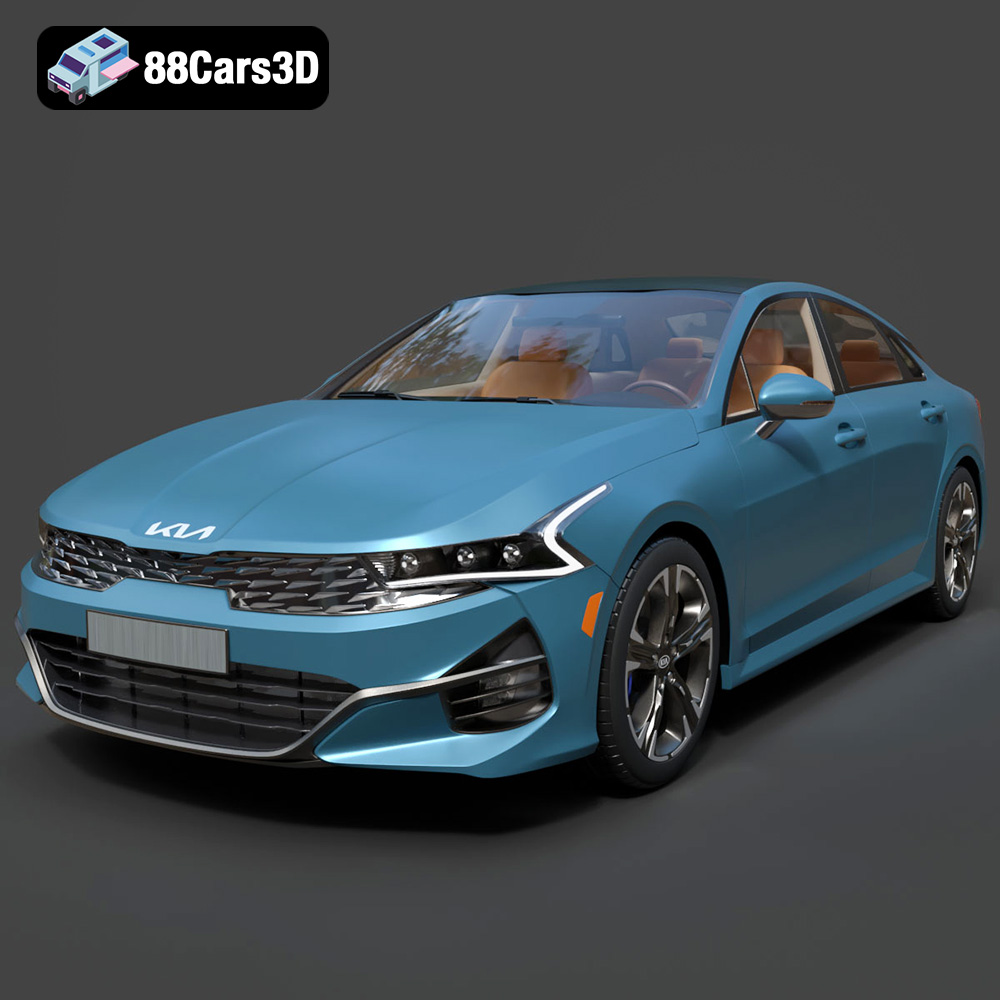
The Kia K5 stands as a testament to modern automotive design, blending aggressive lines with sophisticated elegance. Capturing this essence in a digital format requires meticulous attention to detail and a deep understanding of 3D modeling principles. The Kia K5 3D Model available at 88cars3d.com exemplifies this dedication, offering a high-fidelity asset engineered for diverse professional applications.
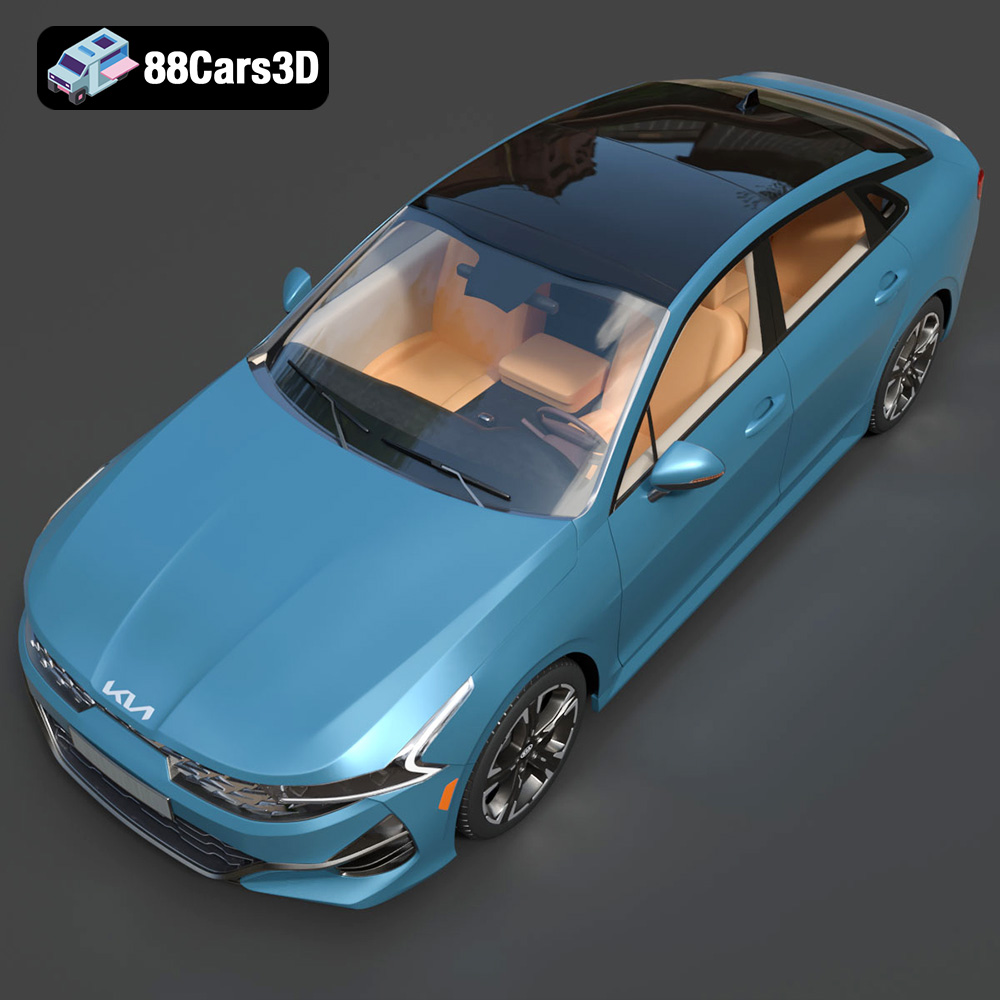
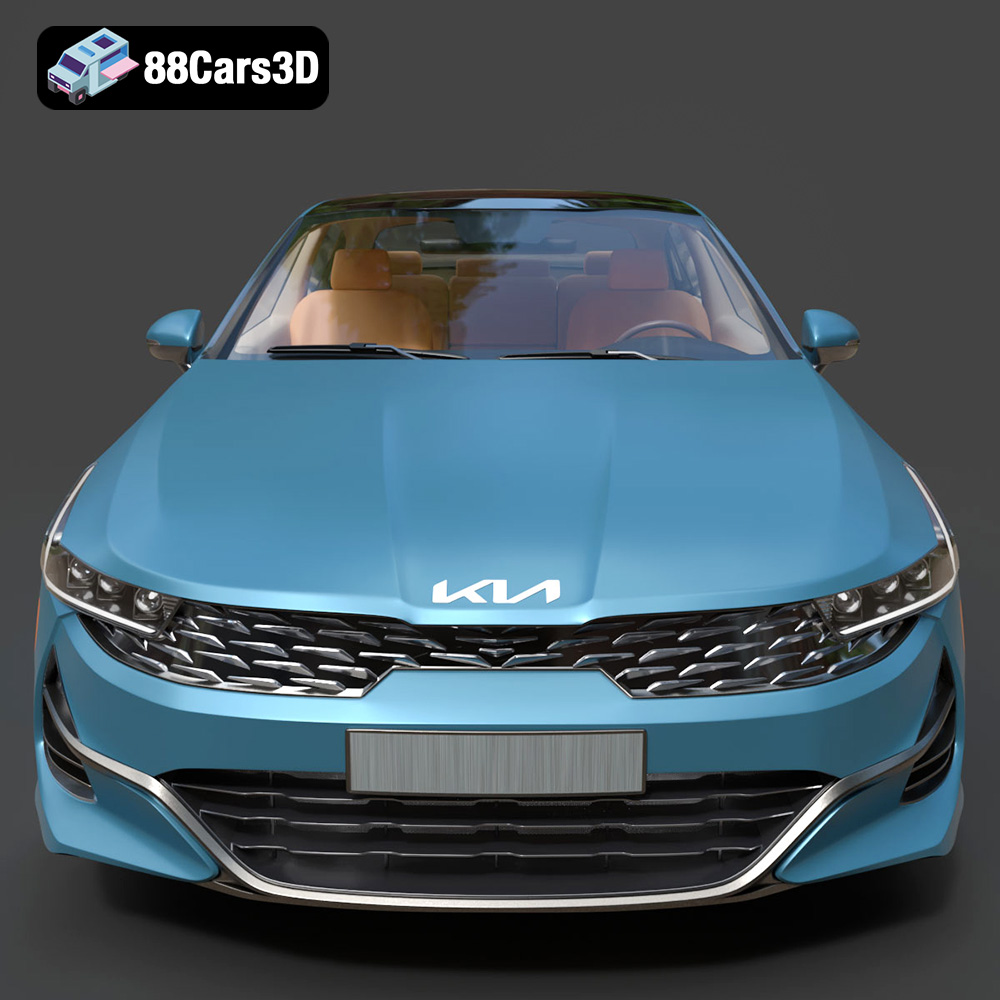
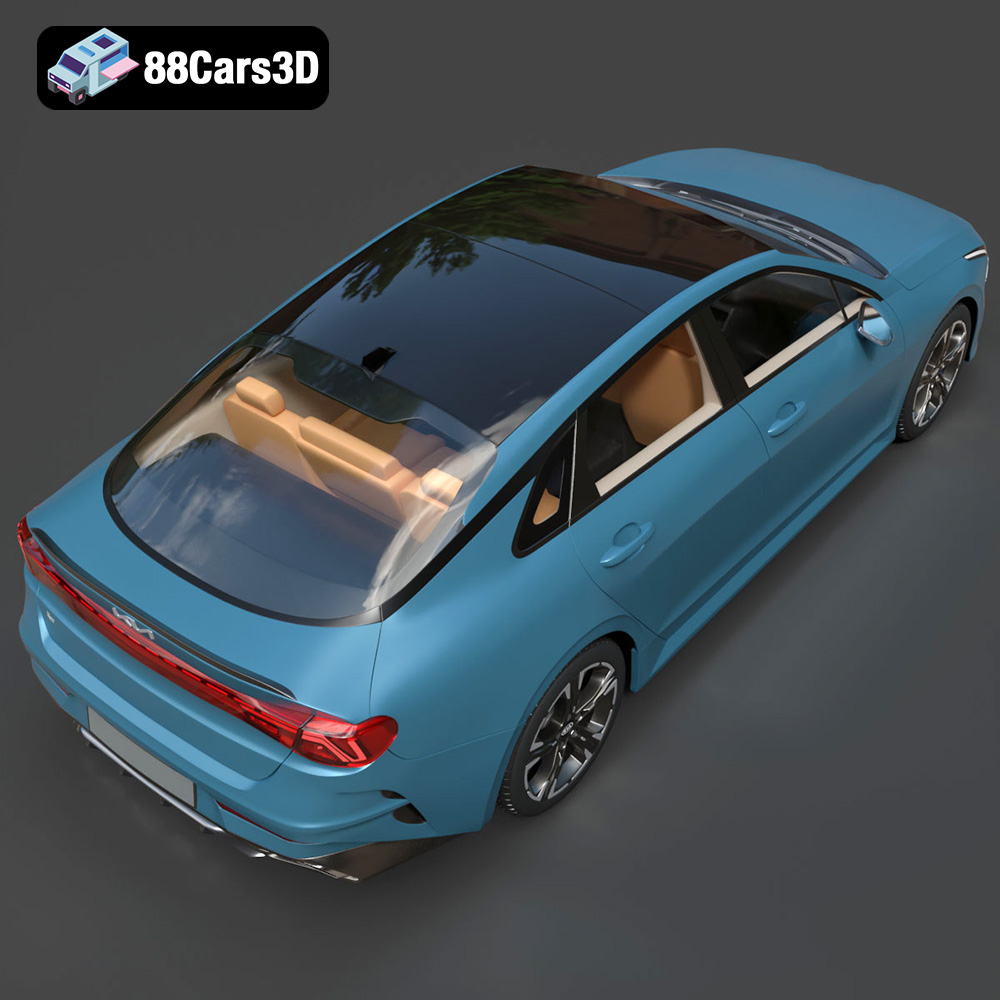
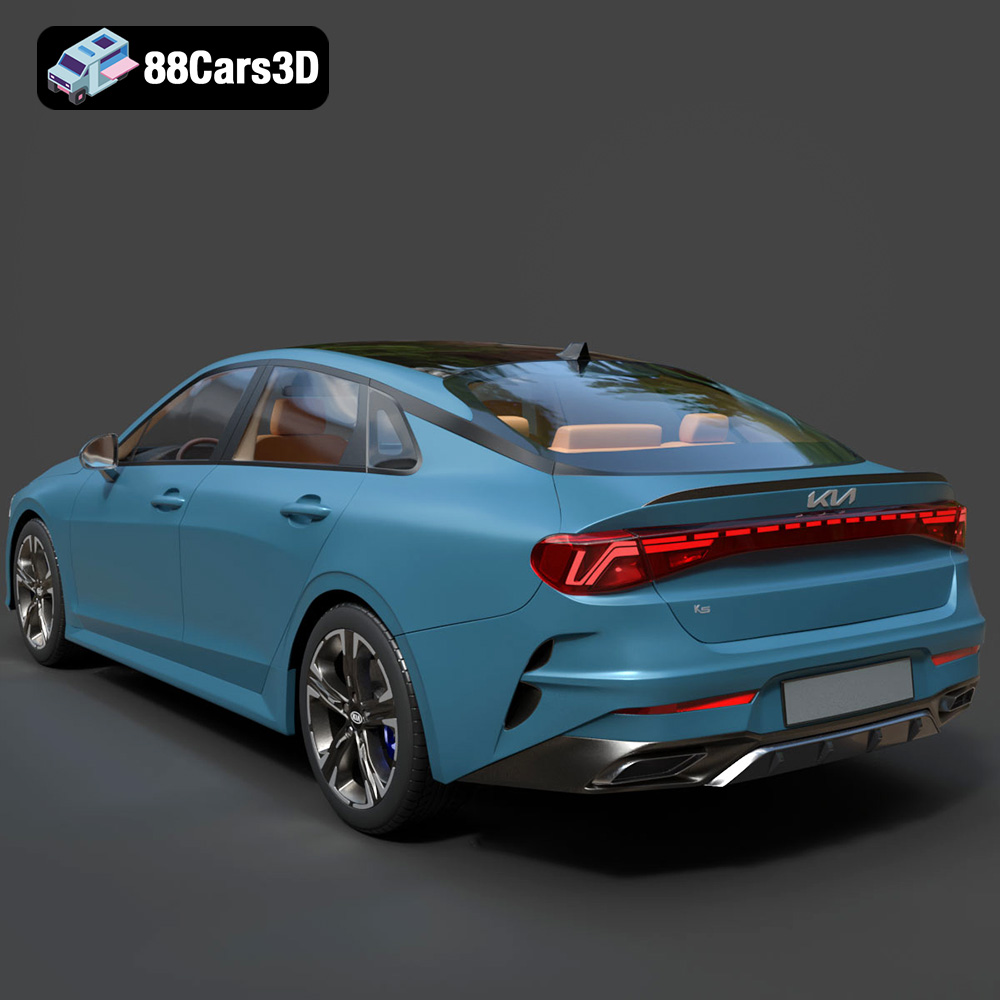
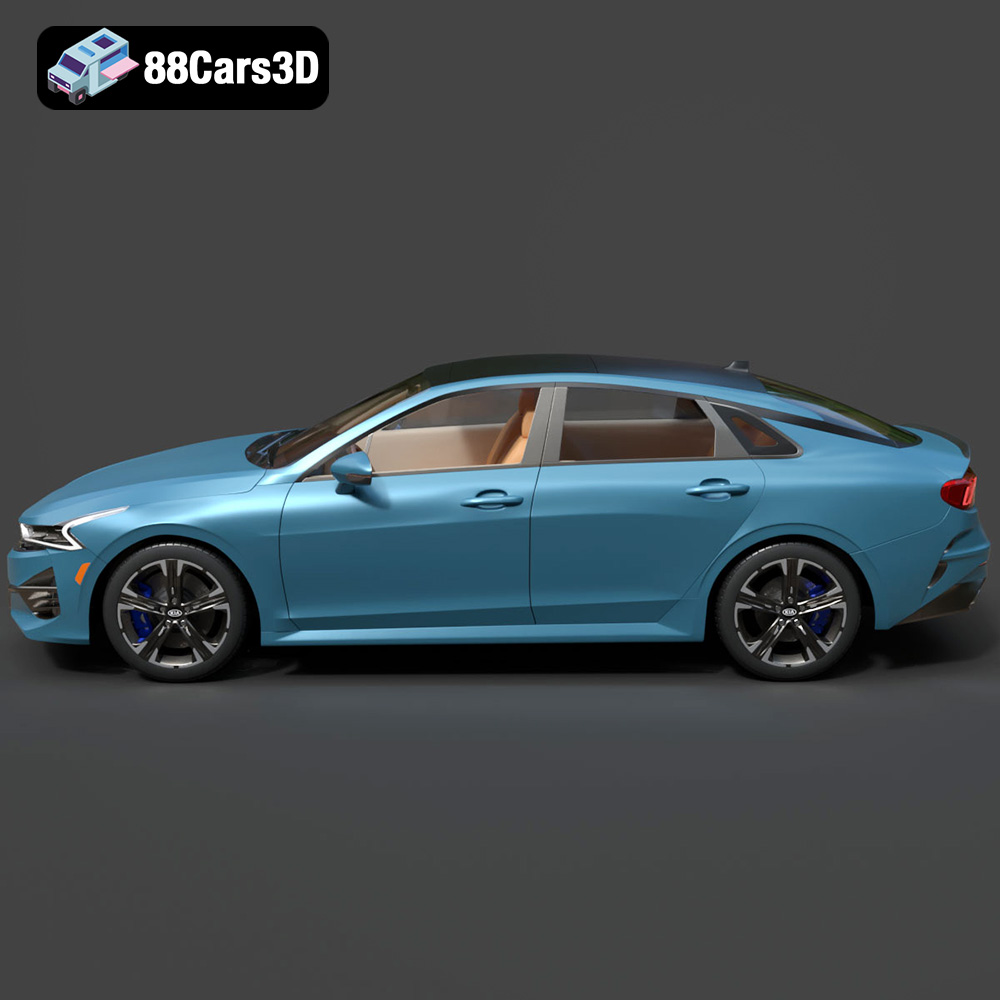
The exterior of this Kia K5 3D Model is a masterclass in accurate digital reproduction. Every curve, panel gap, and aerodynamic feature of the real vehicle has been meticulously recreated. This includes the distinctive “Tiger Nose” grille, the aggressive front fascia, and the elegant sloping fastback roofline. Details such as the signature LED headlights and full-width taillights are not merely texture maps but geometrically accurate representations, ensuring they react realistically to lighting conditions. Furthermore, the model features high-resolution multi-spoke alloy wheels with authentic tire treads, along with detailed MacPherson strut front and multi-link rear suspension components. The dual-tipped sporty exhaust system and detailed engine block are also faithfully rendered, providing comprehensive accuracy for close-up shots or even under-the-hood visualizations.
The interior of a vehicle is just as crucial for realism, particularly for applications like virtual showrooms or first-person gaming experiences. The Kia K5 3D Model delivers a highly detailed cockpit, featuring sport-contoured seating with realistic material textures. The steering wheel design, digital instrument cluster, wide infotainment screen, and precise control details such as pedals, levers, and the center console shifter are all accurately modeled. This level of interior fidelity ensures that whether viewed from outside or experienced from a first-person perspective, the model provides a truly immersive and believable environment.
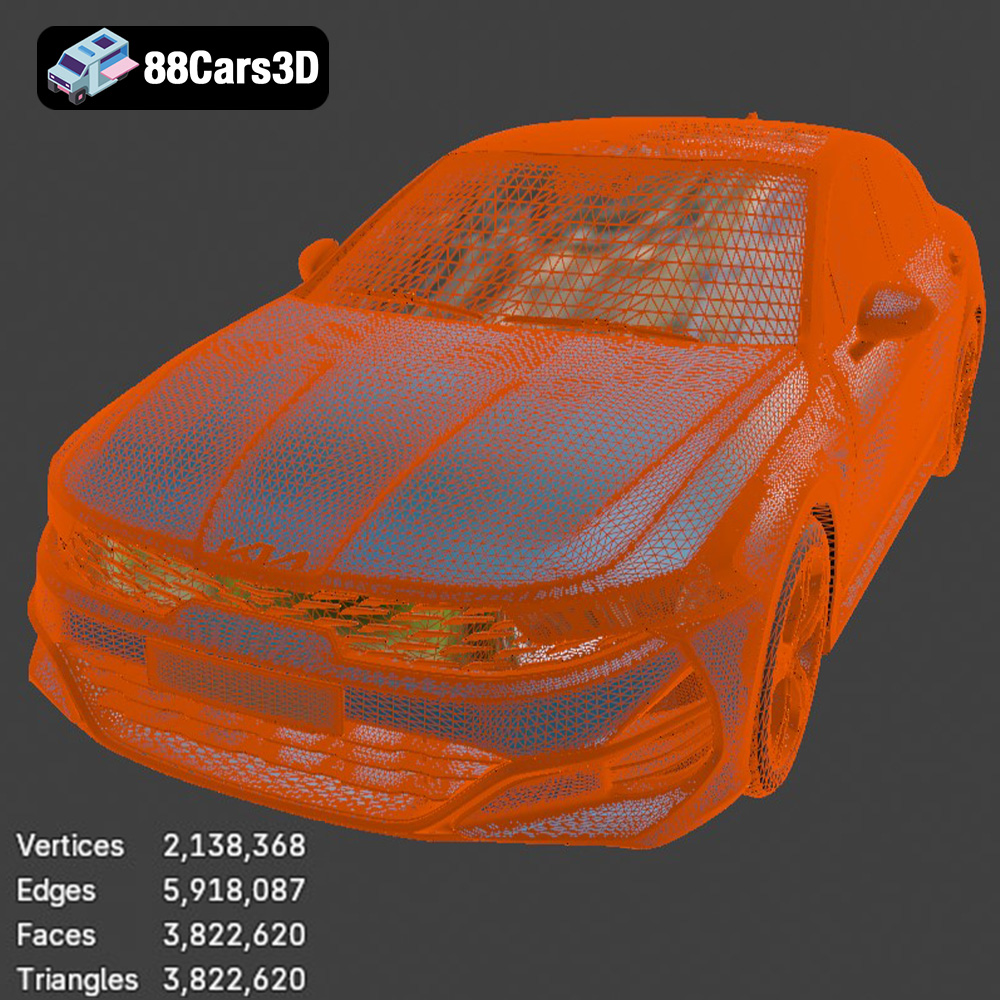
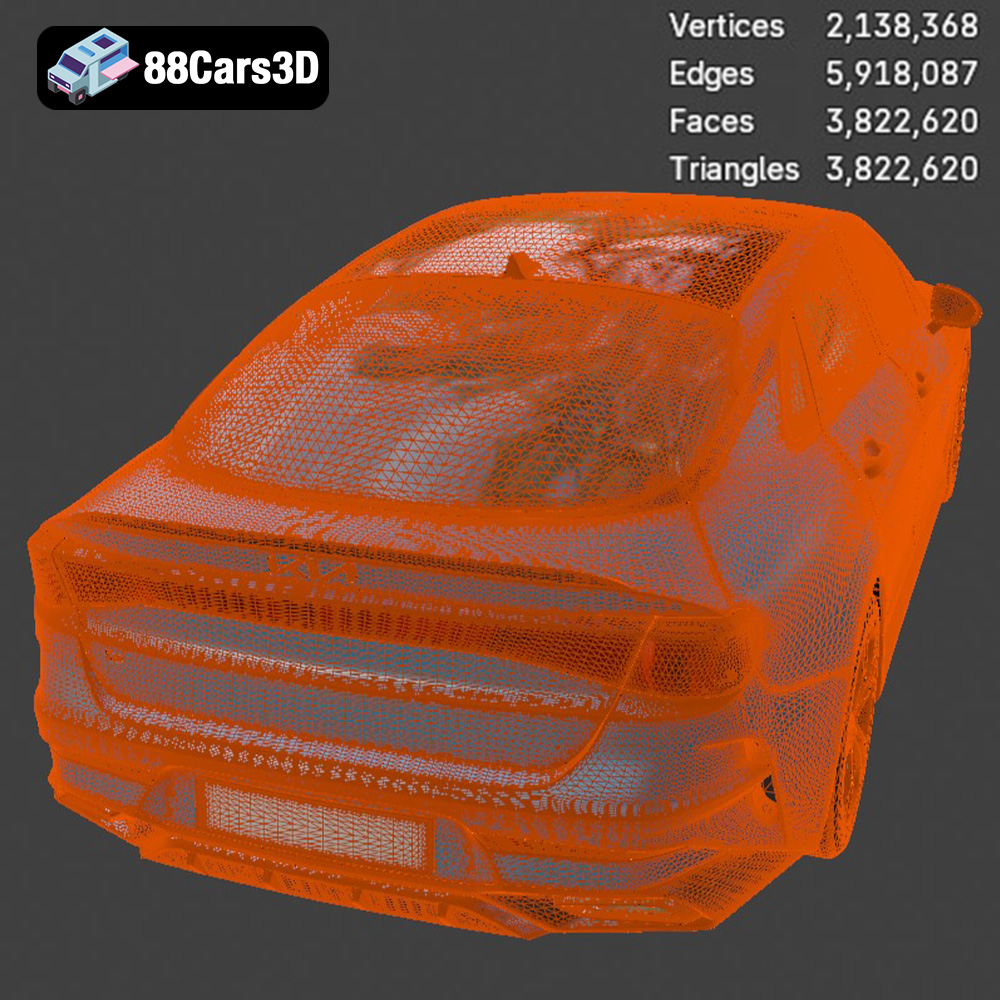
Beyond visual fidelity, the technical foundation of a 3D model dictates its usability. This Kia K5 3D Model boasts real-world scale accuracy, based on the actual vehicle chassis, which is critical for integration into architectural scenes or simulations. A key advantage for animators and game developers is the proper pivot setup for steering, wheel rotation, and suspension travel. This pre-configured rigging saves countless hours of setup time and ensures realistic motion dynamics. With 3,822,620 triangles, the model strikes an exceptional balance: high enough for stunning close-up renders, yet carefully optimized to be game-ready for real-time engines like Unreal and Unity without compromising visual realism. This intelligent optimization strategy is a hallmark of truly professional game assets.
The versatility of a well-crafted 3D car model like the Kia K5 extends across a multitude of industries, each finding unique ways to leverage its technical capabilities and visual appeal.
For game developers, the Kia K5 3D Model is an immediate asset. Its optimized polycount and meticulous detailing make it ideal for integration into a wide array of game genres. In open-world games, it can serve as a detailed background vehicle, while in racing titles or simulators, its precise geometry and pre-setup pivots allow for realistic physics and animated components. The inclusion of .fbx and .unreal formats ensures seamless import into leading engines, facilitating rapid prototyping and efficient content creation. The model’s “game-ready” designation signifies it has been prepared to perform efficiently in real-time environments, maintaining high frame rates while delivering visual quality.
Augmented Reality (AR) and Virtual Reality (VR) are transforming how we interact with products. The Kia K5 3D Model is perfectly suited for creating immersive virtual showrooms where customers can explore the car in a 3D space, configure options, and even place it in their driveway using AR. The .glb format, specifically optimized for web and mobile AR/VR, ensures quick loading and smooth performance on various devices. This capability is invaluable for automotive brands looking to offer interactive, engaging experiences that transcend traditional marketing.
When photorealism is paramount, for instance in advertising campaigns, lifestyle scenes, or product showcases, this Kia K5 model excels. Its high-fidelity topology and accurate material setups mean it can be rendered in stunning detail using advanced rendering engines like V-Ray, Corona, or Cycles. Artists can achieve breathtaking visuals for print media, television commercials, or online presentations. The model’s inclusion of .max and .blend formats provides direct access for artists working in 3ds Max or Blender to leverage their preferred rendering workflows, creating bespoke studio lighting setups and cinematic sequences.
For hobbyists, designers, or educators, the ability to transition a digital model into a physical object is a powerful capability. The Kia K5 3D Model, convertible to the .stl format, is suitable for 3D printing. The provided print settings (recommended scale, layer height, infill, and support requirements) guide users in achieving high-quality physical replicas. Resin printing is specifically recommended for capturing the fine details, like the delicate aerodynamic parts, mirrors, and exhaust system. This application bridges the digital and physical realms, offering tangible results from a high-quality digital asset.
A professional 3D asset should integrate smoothly into established industry workflows, minimizing friction and maximizing creative output. The Kia K5 3D Model is designed with this principle in mind, offering compatibility with major software platforms.
For artists working in 3ds Max, the included .max file provides an immediate and fully editable project. Users can import the model directly, leveraging 3ds Max’s robust toolset for scene composition, lighting, and advanced rendering. With proper material assignments, often utilizing physically based rendering (PBR) workflows, artists can achieve photorealistic results with renderers like V-Ray or Corona. The separate wheels, suspension, and steering components, combined with the proper pivot setup, facilitate complex animations, allowing for dynamic camera movements and realistic vehicle motion in cinematic sequences or architectural visualizations.
Blender users benefit from the native .blend file, offering complete control over the model. Artists can directly access and modify the geometry, adjust materials using Blender’s powerful Cycles or Eevee render engines, and integrate the K5 into larger scenes. Blender’s comprehensive suite of tools allows for custom rigging, adding environmental effects, or creating compelling still renders. The editable nature of the .blend file empowers artists to adapt the model extensively to fit specific artistic visions or project requirements, from concept art to detailed animations.
Unreal Engine developers will find the Kia K5 3D Model particularly valuable due to its game-ready optimization and dedicated .fbx and .unreal formats. Importing the .fbx file allows for easy integration of the mesh, materials, and skeletal data into an Unreal project. The optimized polycount ensures excellent performance within real-time environments. Developers can quickly set up physically based materials, integrate the car into vehicle blueprints for drivable mechanics, and utilize Unreal’s advanced lighting and VFX systems to create stunning, interactive experiences. The .unreal file, if it includes pre-configured assets, further streamlines the integration process, reducing the time spent on initial setup.
The true value of a premium 3D model extends beyond its initial fidelity; it lies in its adaptability and potential for customization. Projects evolve, and requirements change. An asset that can be easily modified provides long-term utility and creative flexibility.
The Kia K5 3D Model is designed to be highly customizable. Users can effortlessly change body colors, experimenting with factory finishes, custom paints, or even experimental artistic styles. Modifying tire textures, for example, from street variants to more aggressive off-road treads, can dramatically alter the vehicle’s character. Adjusting material finishes—switching between matte, gloss, or metallic—allows for precise control over the car’s aesthetic, matching it perfectly to specific brand guidelines or scene requirements. This level of material control ensures the model remains versatile across different visual styles and project demands.
As project scopes expand or technologies advance, the ability to adapt 3D assets is paramount. The modular nature of this Kia K5 model, with separate components for animation, facilitates easier re-rigging or integration with new simulation systems. Its robust topology provides a solid foundation for adding further detail if required for extreme close-ups or higher-fidelity VR experiences in the future. By offering a comprehensive set of file formats and an intelligent structure, high-quality 3D car models purchased from platforms like 88cars3d.com become future-proof investments, ready to meet the challenges of tomorrow’s digital landscapes.
The world of 3D modeling for automotive design is a fascinating blend of artistry and engineering. High-quality 3D car models are no longer just visual representations; they are fundamental tools that drive innovation, streamline workflows, and enable breathtaking digital experiences. From facilitating rapid prototyping for manufacturers to empowering game developers to create immersive worlds and allowing marketing professionals to craft compelling narratives, the impact of these assets is profound.
The Kia K5 3D Model stands out as an exemplary asset, offering an exceptional balance of visual fidelity, technical optimization, and cross-platform compatibility. Its meticulous attention to both exterior and interior details, combined with intelligent structural design and a comprehensive array of file formats including .blend, .fbx, .obj, .glb, .stl, .ply, .unreal, and .max, ensures it is ready for any challenge. Whether your project demands photorealistic rendering, real-time interactivity, or even physical 3D printing, this model provides the foundation for success. For professionals seeking premium, reliable game assets and automotive rendering solutions, investing in such a versatile and detailed 3D model from a trusted source like 88cars3d.com is a clear path to achieving unparalleled digital excellence.
The Kia K5 stands out as a sleek, dynamic mid-size sedan that redefines modern automotive design. Known for its aggressive front fascia, distinctive signature grille, and sloping fastback roofline, this vehicle perfectly balances sporty performance with elegant styling. This 3D model meticulously captures every curve and aerodynamic feature, including the detailed engine bay, twin exhaust system, and signature LED lighting cues.
Featuring an exceptional high-fidelity topology with 3,822,620 triangles, this model offers unmatched visual fidelity while being carefully structured for game-ready optimization and high-end rendering. Whether deployed in cutting-edge game development, immersive AR/VR applications, or photorealistic architectural and visualization projects, the model delivers uncompromising quality.
Perfect for urban racing games, virtual automotive showrooms, high-end commercial rendering, and interactive mobile AR experiences.
.blend, .fbx, .obj, .glb, .stl, .ply, .unreal, .max
Tags:
kia, k5, sedan, mid-size-car, game-ready, low-poly, optimized, car-3d-model, game-asset, rendering, vr-ar, blend, fbx, obj, glb, stl, ply, unreal, max
$90.00
.blend
.fbx
.glb
.k5
.kia
.max
.obj
.ply
.rendering
.sedan
.stl
.unreal
car-3d-model
game asset
game-ready
low-poly
mid-size-car
optimized
VR/AR