Get 20% OFF All Premium 3D & STL Models!

In today’s fast-paced digital landscape, the demand for realistic and impeccably detailed 3D assets is skyrocketing across industries. From blockbuster game titles and cutting-edge automotive configurators to compelling architectural visualizations and immersive virtual reality experiences, a high-quality 3D car model is often the linchpin that elevates a project from good to truly exceptional. These assets are not mere decorative elements; they are complex digital blueprints that demand precision, technical sophistication, and a deep understanding of various production pipelines.
The creation of a truly convincing 3D vehicle, such as the iconic Land Rover Range Rover 2008 3D model available on 88cars3d.com, is an intricate process. It involves capturing every curve, every reflection, and every nuanced detail that gives a vehicle its character. For professionals, having access to pre-built, production-ready models saves countless hours of development time and ensures a consistent level of quality that would be challenging and costly to achieve from scratch. This particular model of the Land Rover Range Rover 2008 stands out as a prime example of an asset engineered to meet the stringent demands of modern digital workflows, offering an unparalleled balance of visual fidelity and technical optimization for a multitude of applications.
The versatility of a 3D model is often defined by the range of file formats it supports. Each format serves a specific purpose, offering unique advantages for different stages of the production pipeline, from initial modeling to final rendering, real-time deployment, and even physical fabrication. Understanding these formats is crucial for any professional working with 3D assets, as it ensures seamless integration and optimal performance within their chosen software and platforms. The Land Rover Range Rover 2008 3D model, for instance, comes equipped with an impressive array of formats, catering to virtually every professional need.
The .blend format is the native file type for Blender, the popular open-source 3D creation suite. When you receive a .blend file, you’re getting a fully editable Blender scene, complete with all its associated data: meshes, materials, textures, lighting setups, cameras, animations, modifiers, and even intricate node-based material networks. This format is ideal for artists and studios heavily invested in the Blender ecosystem, providing maximum flexibility for modifications, rigging, animation, and rendering within Blender’s powerful Cycles or Eevee renderers. For the Land Rover Range Rover 2008 model, the .blend file would offer an unparalleled starting point for custom enhancements or integration into existing Blender projects.
.fbx (Filmbox) is arguably the most widely adopted proprietary 3D file format for data interchange between various 3D software applications and game engines. Developed by Autodesk, FBX is highly regarded for its ability to store a comprehensive range of 3D data, including geometry (meshes), materials, textures (though often referenced externally), animations (skeletal and blend shapes), cameras, and lights. It is the go-to format for exporting models to real-time engines like Unreal Engine and Unity, making it perfect for game development, AR/VR experiences, and animation pipelines where complex hierarchical data and animation need to be preserved. The FBX version of the Range Rover 2008 model would retain its separated components and pivot setups, crucial for interactive elements.
The .obj (Wavefront OBJ) format is a universal, open-standard file format primarily used for exchanging 3D geometry data. It is highly compatible across virtually all 3D modeling software, making it a robust choice when cross-software compatibility is the top priority. OBJ files store vertex positions, UV coordinates, normals, and polygonal faces. While it doesn’t typically store animation, rigging, or scene information, it’s excellent for static mesh export and import. Materials and textures are usually referenced through an accompanying .mtl (material template library) file. For the Land Rover, the .obj version ensures its core geometry can be imported into any 3D application with minimal fuss, ready for custom texturing and setup.
.glb (GL Transmission Format Binary) is the binary version of glTF, a royalty-free specification for the efficient transmission and loading of 3D scenes and models by engines and applications. GLB files package all asset data (geometry, materials, textures, animations) into a single, self-contained binary file, which makes them incredibly efficient for web-based 3D, AR (Augmented Reality), and VR (Virtual Reality) applications. Its “single file” nature simplifies distribution and ensures faster loading times, making it a critical format for virtual showrooms or interactive web configurators using the Range Rover 2008 model.
.stl (Stereolithography) is the de facto standard file format for 3D printing. It represents a 3D model as a collection of unconnected triangular facets, defining only the surface geometry without color, texture, or other CAD attributes. While simple, its ubiquity makes it essential for physical prototyping and manufacturing. For hobbyists or professionals looking to 3D print a display-scale model of the Land Rover Range Rover 2008, the .stl format provides the ready-to-process mesh required by slicing software, ensuring the digital asset can be brought into the physical realm.
The .ply (Polygon File Format, also known as Stanford Triangle Format) is another format for storing 3D data, often used in scientific and CAD applications for precision mesh representation. It can store a wider range of properties than STL, including color, transparency, surface normals, and even confidence values, making it suitable for scanned data or models requiring detailed analysis. While less common for general interchange than FBX or OBJ, its inclusion for the Range Rover model indicates a commitment to versatile data representation for specialized engineering or analytical workflows.
The .unreal format signifies an asset that is specifically packaged and optimized for direct import into Unreal Engine projects. This often means the model has already been processed with appropriate materials, collision meshes, LODs (Levels of Detail), and pivot points, aligning with Unreal’s asset pipeline. For developers using the Land Rover Range Rover 2008 in an Unreal project, this format significantly streamlines the integration process, reducing the need for extensive manual setup and allowing for a rapid transition from asset acquisition to in-engine deployment.
Similar to .blend for Blender, .max is the native file format for Autodesk 3ds Max, a leading software in architectural visualization, animation, and game asset creation. A .max file contains the complete scene information, including geometry, materials, lighting, cameras, animation data, and any modifiers or plugins used within 3ds Max. For professionals working in a 3ds Max environment, the .max version of the Land Rover Range Rover 2008 offers full editability and direct compatibility with their established workflows, ensuring seamless integration into complex rendering and animation projects.
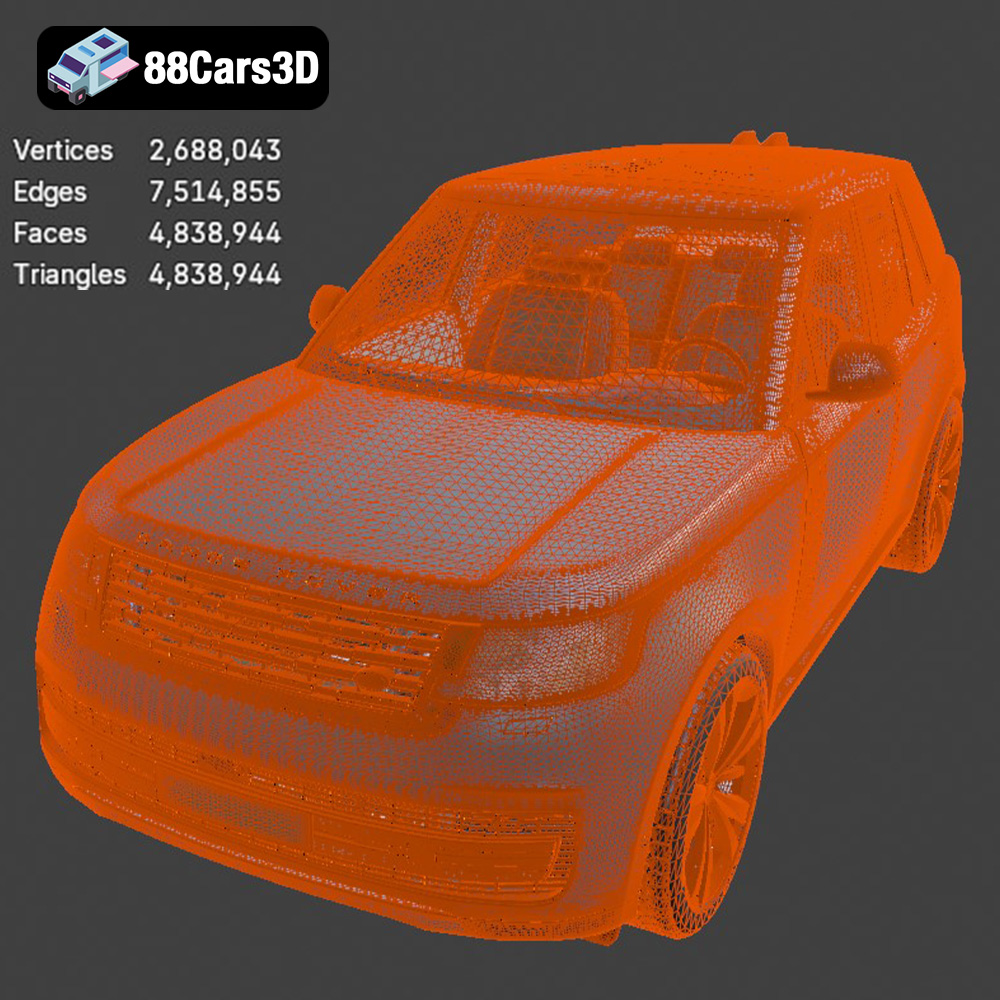
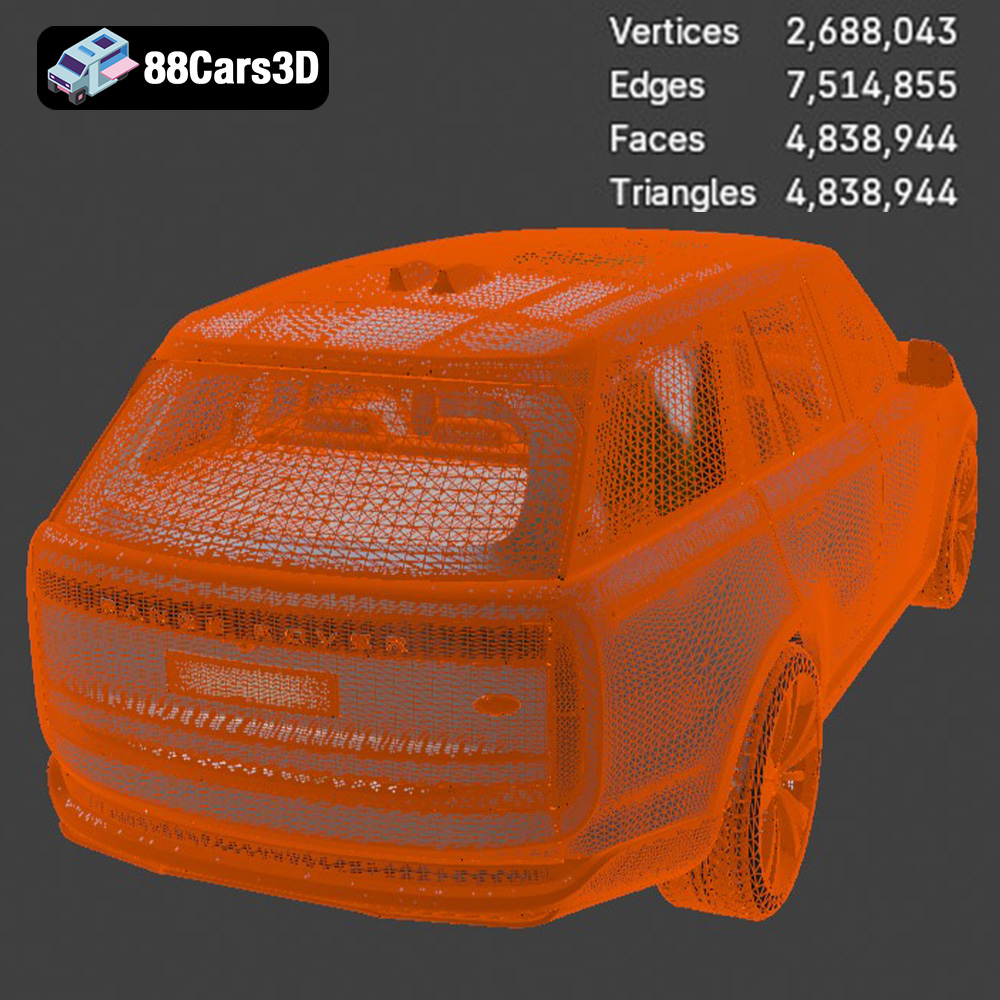
Creating a truly convincing 3D car model is far more complex than simply extruding shapes. It requires an artistic eye combined with rigorous technical discipline. The Land Rover Range Rover 2008 3D model exemplifies this fusion, boasting a triangle count of 4,838,944 – a figure that strikes a sophisticated balance between extreme detail and performance efficiency. This is crucial for modern applications, where visual realism is paramount but real-time frame rates or render times must remain manageable.
The impressive triangle count of the Land Rover Range Rover 2008 model isn’t just a number; it reflects carefully crafted topology. Good topology ensures that the model’s surfaces deform correctly during animation, that reflections behave physically accurately, and that subdivision surfaces (if applied) result in smooth, clean geometry. For real-time applications, particularly with engines like Unreal Engine 5 leveraging technologies like Nanite, a high-density mesh can be directly utilized as a “hero asset.” Nanite intelligently streams and renders only the necessary detail, allowing artists to work with cinematic-quality models directly in-engine without traditional polygon budget constraints. This means the Range Rover can serve as a centerpiece in a game or interactive experience, delivering stunning visual fidelity without compromising performance, a testament to its “Game-Ready & Optimized” status.
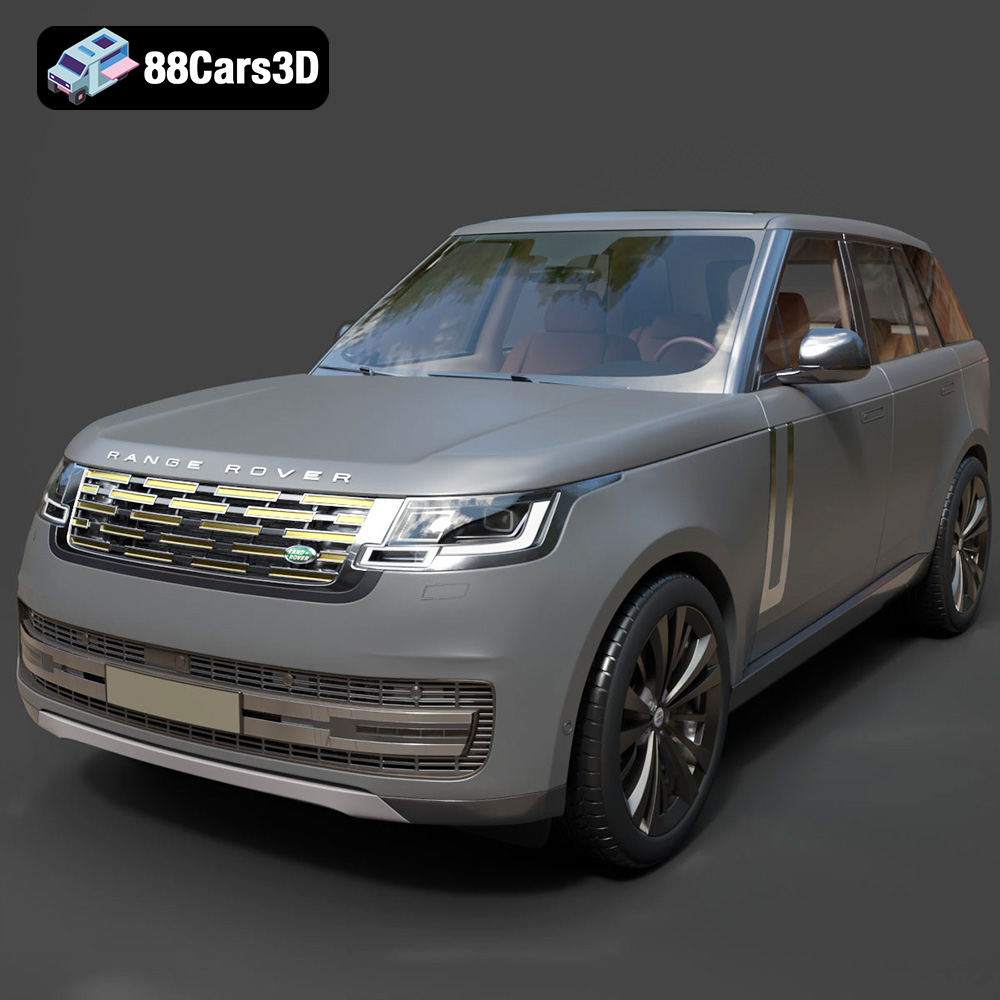
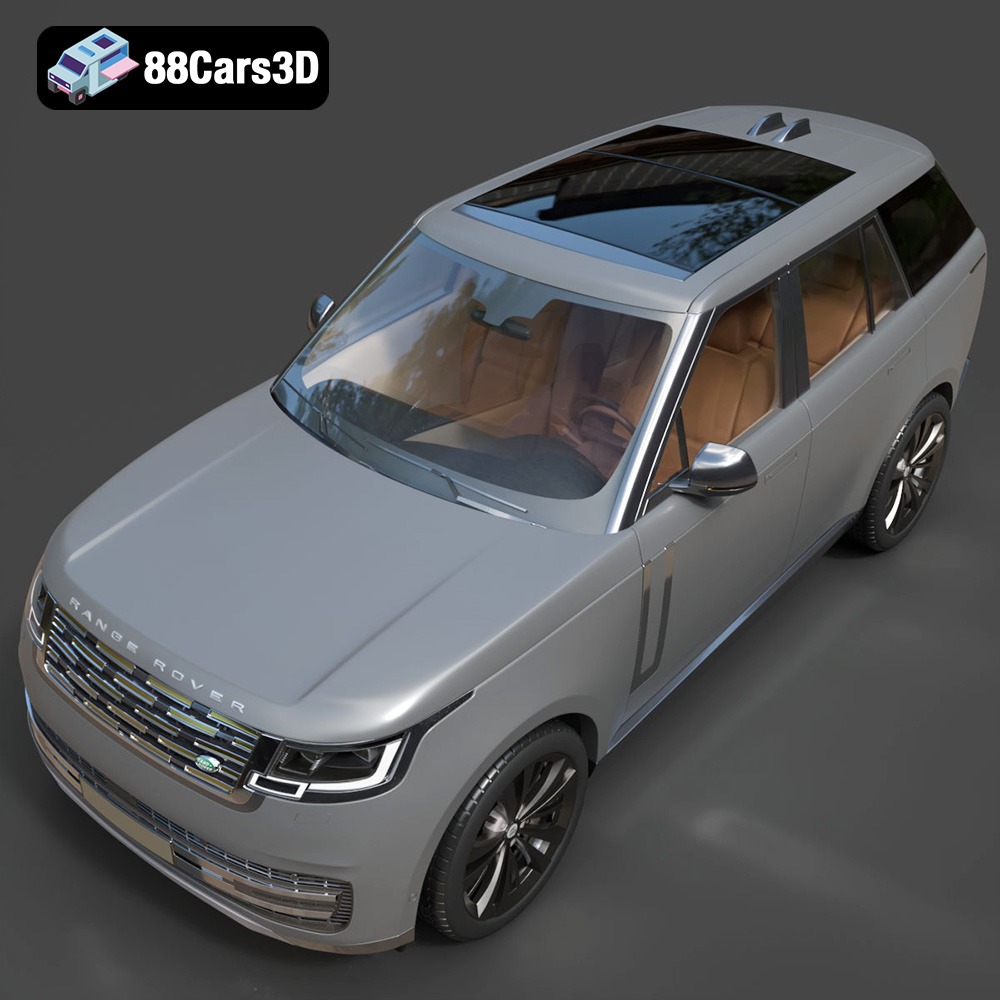
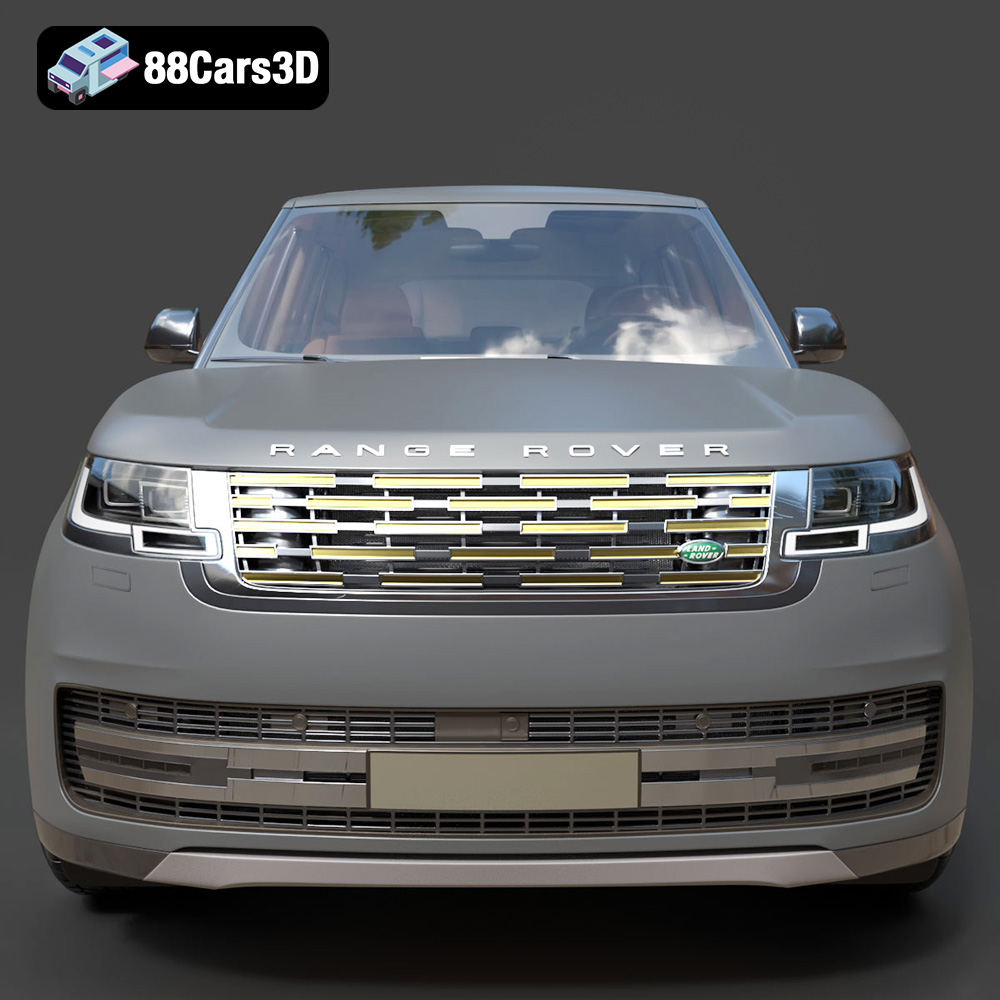
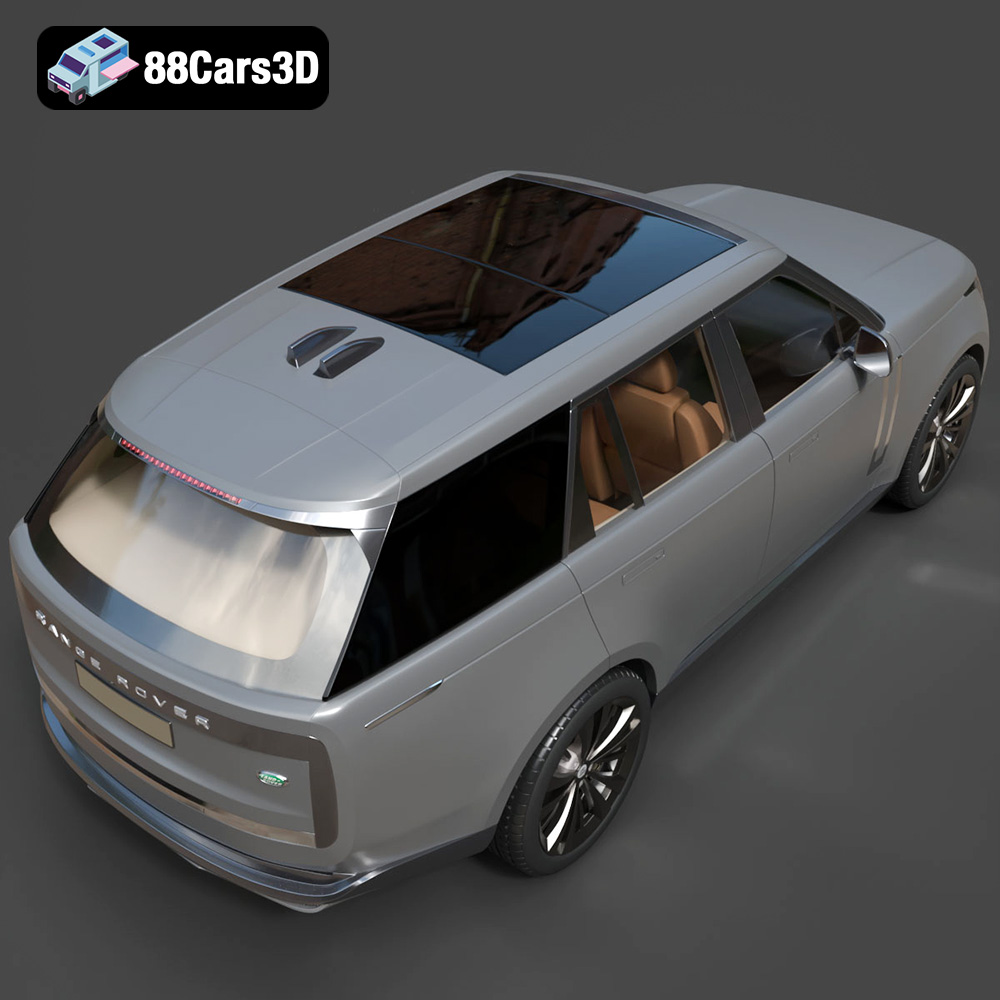
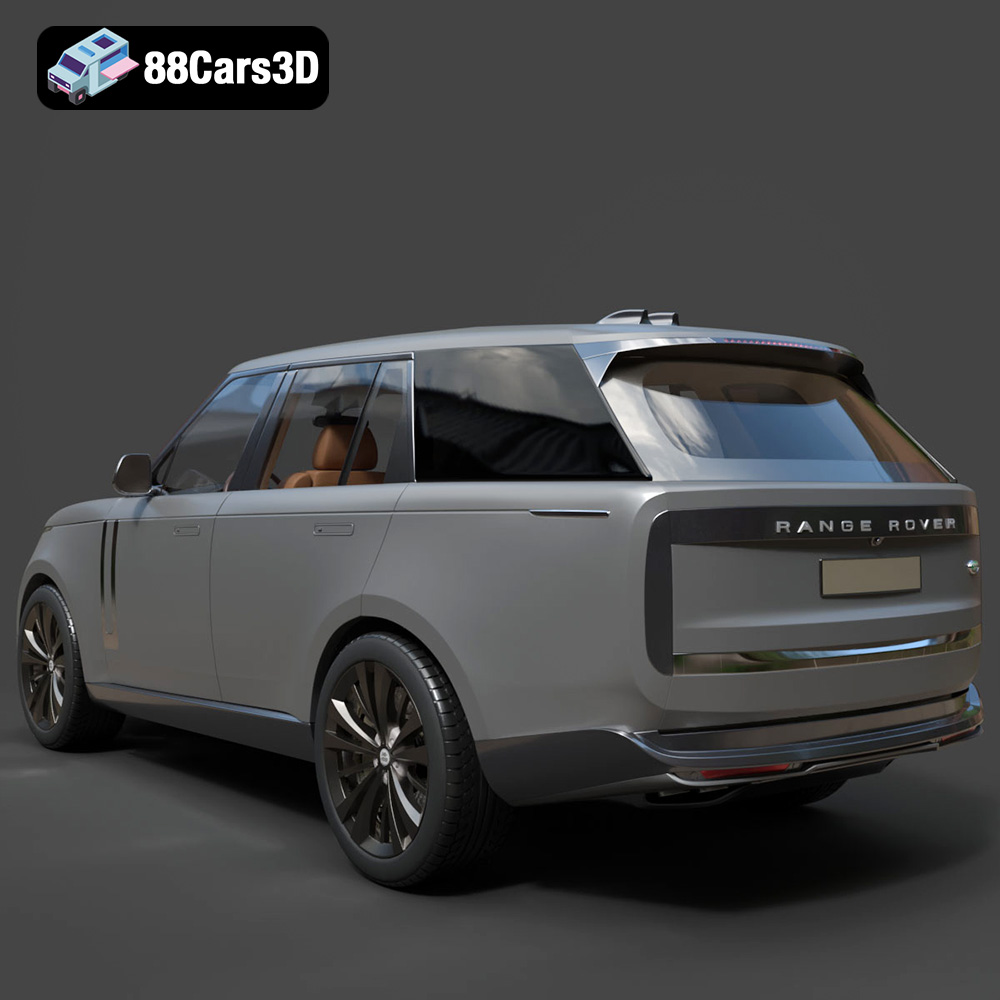
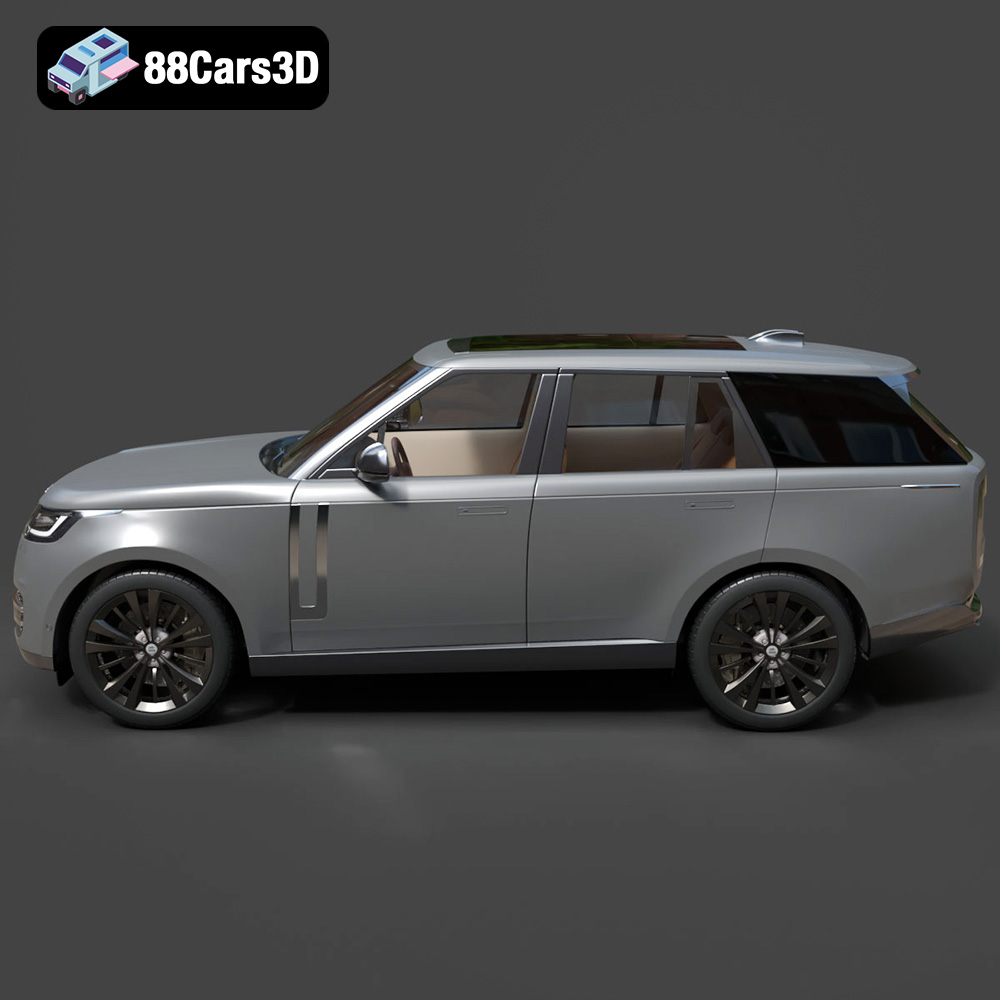
What truly sets a premium 3D car model apart is its commitment to authenticity. The Land Rover Range Rover 2008 model precisely captures its unmistakable boxy silhouette, commanding road presence, and signature styling cues. From the bold front grille and distinctive side vents to the sophisticated projector headlamps and accurate dual exhaust system with chrome finishers, every exterior detail is meticulously replicated. This level of detail extends to the premium alloy wheels with high-resolution tire treads, the accurate air suspension system, and even the detailed engine block and undercarriage components. For professionals, this means the model holds up to extreme close-ups and offers the foundational realism needed for marketing renders or detailed simulations.
The interior is equally important for immersive experiences. The model features premium leather-textured seating, detailed door panels, an authentic 4-spoke steering wheel with multi-function controls, and a high-resolution instrument cluster. This “Optimized geometry for first-person POV in gaming” ensures that whether a player is driving in a simulator or exploring a virtual showroom, the experience remains truly immersive and believable. The real-world scale accuracy further reinforces its suitability for professional applications where precision is non-negotiable.
Game development demands an extraordinary fusion of artistic vision and technical prowess. High-quality 3D car models like the Land Rover Range Rover 2008 are crucial assets, serving as key vehicles in open-world games, racing titles, and simulators. The model’s “Game-Ready & Optimized” status is a direct answer to the complex demands of real-time environments, ensuring it performs exceptionally while delivering visual splendor.
When integrating a vehicle into a real-time engine such as Unreal Engine or Unity, several factors come into play beyond raw polygon count. The .fbx and .unreal formats provided with this Land Rover model are engineered for seamless transition. Clean geometry, efficient UV mapping (implied by the quality), and appropriate material setups are paramount. In Unreal Engine 5, especially with Nanite, the high triangle count becomes an advantage, allowing for unprecedented detail without the burden of traditional LOD (Level of Detail) creation for distant objects. This means the Land Rover Range Rover 2008 can be placed anywhere in a vast game world, maintaining its stunning visual fidelity whether seen from afar or up close in a cinematic cutscene.
Beyond visual fidelity, proper asset setup ensures smooth gameplay. Collision meshes, often generated from the model, dictate how the vehicle interacts with the environment. Performance optimization might also involve baking complex lighting information or using advanced shader techniques to enhance realism without heavy computational cost. The Land Rover Range Rover 2008’s design anticipates these needs, providing a robust foundation for in-engine implementation.
A static car model is only part of the story; for games and simulations, dynamic animation is essential. The Land Rover Range Rover 2008 model boasts “Separate wheels, suspension, and steering components for animation” and “Proper pivot setup for steering, wheel rotation, and suspension travel.” This is a critical technical advantage. Correct pivot points mean that game engine physics can be applied accurately, allowing wheels to rotate realistically, suspension to compress and extend over bumps, and the steering wheel to articulate in sync with driver input. This level of preparation vastly reduces development time for animators and programmers, enabling them to quickly implement realistic driving mechanics and character interactions within the vehicle. Whether it’s a cinematic sequence or an interactive driving experience, the model’s inherent animation readiness provides a solid framework for dynamic vehicle behavior.
Beyond interactive applications, high-quality 3D car models are indispensable tools for offline rendering and visualization. Architectural visualization, product marketing, brand campaigns, and lifestyle scenes all leverage these assets to create compelling, photorealistic imagery. The Land Rover Range Rover 2008 3D model, with its “unparalleled visual fidelity and high-end realism,” is exceptionally well-suited for these demanding tasks.
Achieving cinematic quality in renders relies on several factors: pristine geometry, sophisticated material definitions, and expert lighting. The Land Rover model’s “geometry guarantees pristine reflections and accurate shadow casting,” which is fundamental for photorealism. In rendering software like V-Ray, Corona Renderer, Arnold, or even Blender’s Cycles, PBR (Physically Based Rendering) materials are key. These materials simulate how light interacts with surfaces in the real world, requiring accurate textures for albedo, roughness, metallic, normal, and displacement maps. A high-quality base model like this Land Rover offers the perfect canvas for applying these PBR textures, allowing artists to achieve authentic factory colors, metallic finishes, and realistic gloss or matte appearances through custom material adjustments.
Studio lighting setups, environmental HDRI maps, and careful camera placement can transform the Range Rover into a star. Imagine it gleaming under soft studio lights, reflecting a perfectly blurred background, or navigating a stunning digital landscape. The level of detail, from the textured leather seating to the precision of the headlamps, ensures that every angle holds up to scrutiny, making it an excellent choice for branding and marketing visualization.
The Land Rover Range Rover 2008 model is “Perfect for architectural visualization” because vehicles often act as crucial contextual elements in architectural renders. Placing a realistic car in front of a newly designed building adds scale, life, and a sense of realism, making the scene more believable and appealing. The model’s accurate proportions and high fidelity ensure it blends seamlessly into complex architectural scenes without looking out of place or low-quality. Similarly, in product visualization, a vehicle can establish a lifestyle context for other products, demonstrating how they might be used or who they are targeted at. The ability to easily change body colors, modify tire textures, and adjust material finishes provides flexibility to match specific project requirements, integrating the Range Rover into diverse visual narratives.
The utility of a high-quality 3D car model extends far beyond rendering and game engines. With advancements in 3D printing and immersive technologies like AR/VR, these digital assets are finding new life in tangible forms and highly interactive digital environments.
The Land Rover Range Rover 2008 3D model is “Perfect for immersive VR showrooms, configurators, and mobile AR experiences.” The .glb format, in particular, is optimized for these applications, allowing for quick loading and smooth interaction on various devices. Imagine a virtual showroom where prospective buyers can walk around, open doors, explore the detailed interior in first-person, and customize the vehicle’s paint, wheels, and interior trims in real-time. This interactive experience offers a powerful marketing tool, engaging customers in a way traditional static images or videos cannot. For mobile AR, placing the Range Rover in a real-world environment through a smartphone camera creates an engaging, shareable experience, further blurring the lines between the digital and physical.
The inclusion of the .stl format means the Land Rover Range Rover 2008 can transition “From Digital to Tangible.” 3D printing allows enthusiasts, designers, or even engineers to create physical scale models for display, prototyping, or educational purposes. The provided 3D print settings are invaluable here, guiding users on recommended scales (1:12, 1:18, 1:24), layer height, wall thickness, infill, and crucially, support requirements. Resin printing is specifically recommended for its ability to capture the model’s “fine details,” like the exhaust system, mirrors, and door handles. Printing the frame angled for structural integrity and wheels separately ensures optimal results. Post-processing, including sanding, priming, and applying authentic factory colors with metallic finishes, can transform a raw 3D print into a stunning, miniature replica of the luxury SUV. This capability expands the model’s value proposition significantly, bridging the gap between virtual and physical craftsmanship.
The digital realm is constantly evolving, and with it, the demands for high-quality 3D assets continue to grow. A well-crafted 3D car model is not just a digital object; it’s an investment in efficiency, realism, and versatility across an incredibly diverse range of applications. From enhancing the immersion of next-generation games to delivering photorealistic marketing renders, enabling interactive AR/VR experiences, and even bringing designs to life through 3D printing, the foundational quality of the asset dictates the success of the project.
The Land Rover Range Rover 2008 3D model exemplifies this standard of excellence. Its meticulously detailed geometry, optimized topology, comprehensive file format support, and thoughtful preparation for animation and real-time engines make it an indispensable tool for professionals. Whether you’re an automotive designer, a game developer, an architectural visualizer, or an AR/VR content creator, this model provides the robust, high-fidelity foundation you need to elevate your work. By choosing premium assets like this Land Rover Range Rover 2008 3D model from 88cars3d.com, you are not just acquiring a file; you are acquiring a proven component ready to integrate seamlessly into your most ambitious projects, unlocking new levels of creativity and production value.
Experience the epitome of British luxury and off-road capability with our highly detailed 3D model of the Land Rover Range Rover 2008. This iconic SUV is celebrated for its unmistakable boxy silhouette, commanding road presence, and seamless blend of rugged performance with premium refinement. The model accurately captures its signature styling cues, including the bold front grille, distinctive side vents, sophisticated projector headlamps, and the robust yet elegant exterior proportions that defined an era of luxury utility vehicles. Boasting an impressive topology with a triangle count of 4,838,944, this model delivers unparalleled visual fidelity and high-end realism. Carefully structured to balance extreme detail with performance, it serves perfectly as a hero asset in next-generation real-time engines (such as Unreal Engine 5 with Nanite), high-end cinematic animations, and professional automotive visualizations. The geometry guarantees pristine reflections and accurate shadow casting, making it an exceptional choice for demanding rendering tasks and immersive environments. Perfect for architectural visualization, immersive VR showrooms, high-end automotive configurators, and AAA game development.
$90.00
.blend
.fbx
.glb
.land-rover
.luxury suv
.max
.obj
.ply
.range-rover
.rendering
.stl
.unreal
car-3d-model
game asset
game-ready
high poly
optimized
range-rover-2008
SUV
VR/AR