Get 20% OFF All Premium 3D & STL Models!

In the dynamic world of 3D modeling, precision and versatility are paramount, especially when dealing with complex industrial machinery. From game development studios to architectural visualization firms and AR/VR innovators, the demand for meticulously crafted 3D assets that are both visually stunning and technically optimized has never been higher. These models serve as the foundation for immersive experiences, critical simulations, and compelling marketing visuals. Today, we’re taking an in-depth look at a prime example of such an asset: the Soil Road Roller 3D Model. This impressive piece of heavy construction equipment, available for download at 88cars3d.com, encapsulates the essence of industrial power and detailed design, ready to integrate seamlessly into a multitude of professional workflows.
Capturing the essence of a real-world machine like a soil road roller requires an expert blend of artistic vision and technical acumen. It’s not just about replicating its massive physical presence, but also ensuring that every bolt, hydraulic line, and internal component contributes to a coherent, functional, and efficient digital asset. This particular model stands out for its balanced approach to fidelity and optimization, making it an invaluable tool for projects ranging from high-fidelity rendering to real-time game environments and even tangible 3D prints.
Navigating the vast landscape of 3D software and engines often requires a solid grasp of various file formats, each serving distinct purposes and offering unique advantages. The Soil Road Roller 3D Model exemplifies this versatility by offering a comprehensive suite of formats, ensuring maximum compatibility and utility for professionals across different disciplines. Understanding when and why to use each format is crucial for an efficient and successful workflow.
The `.blend` file format is native to Blender, the powerful open-source 3D creation suite. When you download a `.blend` file, you’re receiving a complete Blender scene, often including cameras, lights, materials, and even animation data, all fully editable within Blender. For artists who primarily use Blender, this format provides the most flexibility, allowing for direct manipulation of mesh data, material nodes, rigging, and scene composition without any data translation loss. It’s ideal for deep customization, extending the model, or integrating it into a larger Blender-centric project. The Soil Road Roller’s `.blend` file would empower a Blender user with direct access to its meticulously arranged geometry and PBR material setup.
FBX (Filmbox) is arguably the most widely adopted proprietary 3D asset exchange format, developed by Autodesk. Its strength lies in its robust support for various types of 3D data, including geometry, materials, textures, animations, bones, and even camera and light information. This makes `.fbx` an indispensable format for transferring models between different 3D applications like 3ds Max, Maya, Blender, Cinema 4D, and critically, into real-time engines like Unreal Engine and Unity. When working with animated models or complex scenes that need to move between software packages, `.fbx` is the go-to choice due preserving as much data as possible during export/import. For the Soil Road Roller, its `.fbx` file ensures that the model’s articulation joints and potential animation pivots are correctly maintained, making it truly game-ready.
OBJ (Wavefront Object) is one of the oldest and most universally supported 3D file formats. It’s an open, human-readable text file that describes only the geometry (vertices, normals, texture coordinates, and faces) and references external material files (.mtl) for basic material properties. While it doesn’t support animation or rigging, its simplicity and widespread compatibility make it excellent for static mesh assets that need to be imported into virtually any 3D software. For simple scene integration or archival purposes where animation is not a concern, the `.obj` version of the Soil Road Roller provides a clean, compatible mesh.
GLB (GL Transmission Format Binary) is a relatively newer format, an evolution of glTF, specifically designed for efficient transmission and loading of 3D scenes and models in web and real-time applications. It’s a single binary file that contains model data, textures, and animations, making it highly portable and ideal for augmented reality (AR), virtual reality (VR), and browser-based 3D viewers. Its optimization for lightweight, performant display is crucial for mobile and web environments where bandwidth and processing power are limited. The Soil Road Roller in `.glb` format is perfectly suited for showcasing on product pages, integrating into virtual showrooms, or creating interactive AR experiences.
STL (Stereolithography) is the de facto standard file format for 3D printing. It represents a 3D model as a series of connected triangles, essentially describing the surface geometry of an object without color, texture, or other advanced attributes. When preparing the Soil Road Roller for physical fabrication, the `.stl` file becomes essential. It’s a clean, triangulated mesh ready for slicing software to convert into printable layers. The product’s detailed description of 3D print settings further emphasizes the utility of this format for hobbyists and professionals alike who wish to bring the digital model into the physical world.
PLY (Polygon File Format) is often used to store 3D data from 3D scanners, CAD applications, or for scientific and engineering analysis. It can store various properties beyond geometry, such as color, transparency, normals, and depth, associated with each vertex or face. While not as universally used for general asset exchange as FBX or OBJ, `.ply` is valuable when precision mesh data is required, or for workflows that involve processing scan data. For niche applications requiring high-fidelity surface data of the Soil Road Roller, the `.ply` format provides an accurate representation.
While not a universally recognized open standard like FBX or OBJ, the inclusion of an `.unreal` file typically implies a meticulously packaged asset specifically configured for Unreal Engine. This often means the model (likely an `.fbx` internally) has been pre-imported, had its materials set up with Unreal’s Physically Based Rendering (PBR) system, collisions generated, LODs (Levels of Detail) potentially configured, and pivot points correctly aligned for animation and interaction within the engine. This “engine-ready” format significantly streamlines the integration process for game developers and real-time visualization specialists, saving countless hours on setup and optimization. The Soil Road Roller’s `.unreal` variant ensures it’s a drag-and-drop solution for your next construction simulation or open-world game.
The `.max` file is the native project format for Autodesk 3ds Max, a leading software in 3D modeling, animation, rendering, and compositing. Similar to `.blend` for Blender, a `.max` file contains an entire 3ds Max scene, including all geometry, textures, materials, lighting setups, cameras, and animation data. It offers full editability within 3ds Max, making it ideal for users who operate within the Autodesk ecosystem and need to leverage 3ds Max’s powerful rendering capabilities (like V-Ray or Corona) or advanced animation tools. For those requiring the utmost control over the Soil Road Roller for high-end cinematic renders or complex scene integration within a 3ds Max pipeline, this format is indispensable.
The availability of the Soil Road Roller 3D Model in all these diverse formats on 88cars3d.com underscores its incredible versatility and the thoughtful consideration put into its professional utility.
In today’s fast-paced digital landscape, the clarity and realism of visual communication are paramount. For industries dealing with heavy machinery, infrastructure, and complex engineering, high-quality 3D models are no longer a luxury but a fundamental necessity. They transform abstract concepts into tangible, explorable realities, significantly impacting everything from design and planning to marketing and training.
Before a single piece of steel is cut or a foundation is laid, 3D models allow engineers, designers, and stakeholders to visualize and interact with machinery in its intended environment. A model like the Soil Road Roller enables precise spatial planning within a virtual construction site, identifying potential clashes, optimizing placement, and evaluating operational clearances. This iterative design process, facilitated by accurate 3D representations, drastically reduces costly errors and rework down the line. Furthermore, for marketing and sales, these models bridge the gap between a product specification sheet and a potential customer’s understanding, allowing for interactive tours or detailed visual breakdowns of complex features.
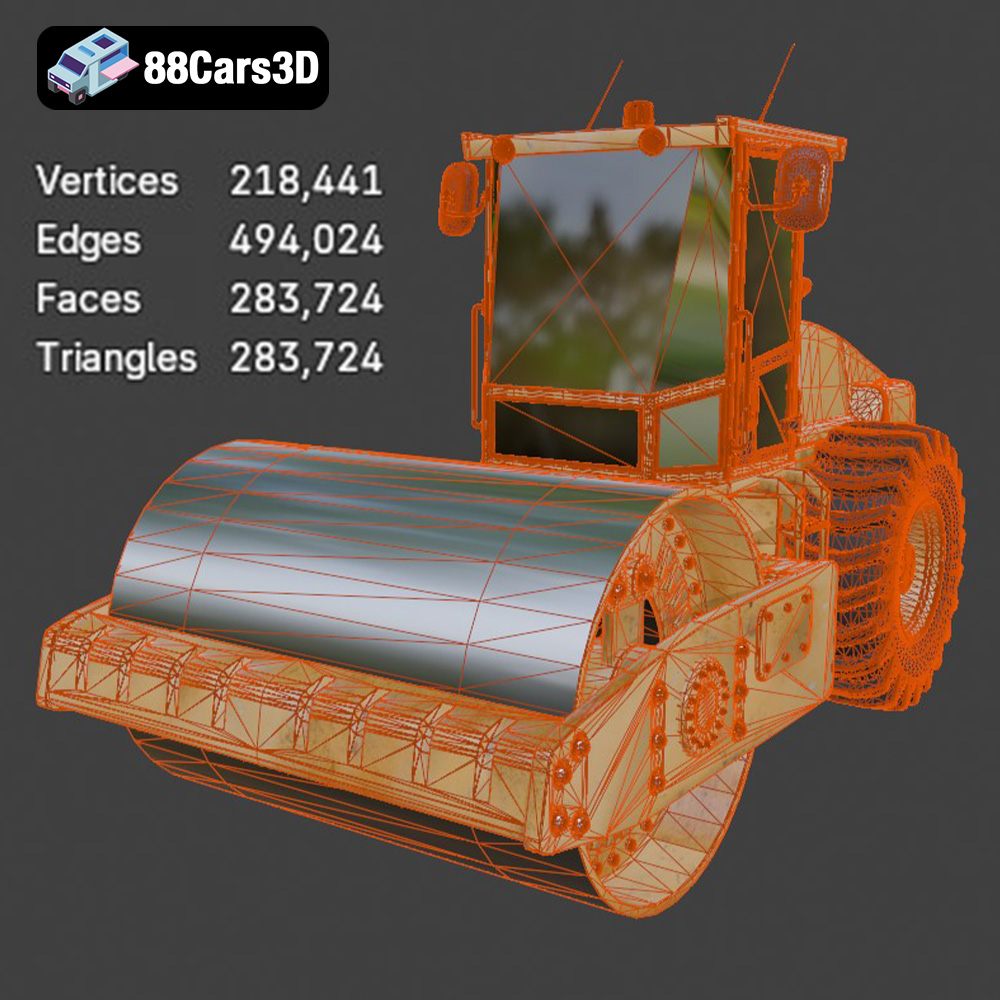
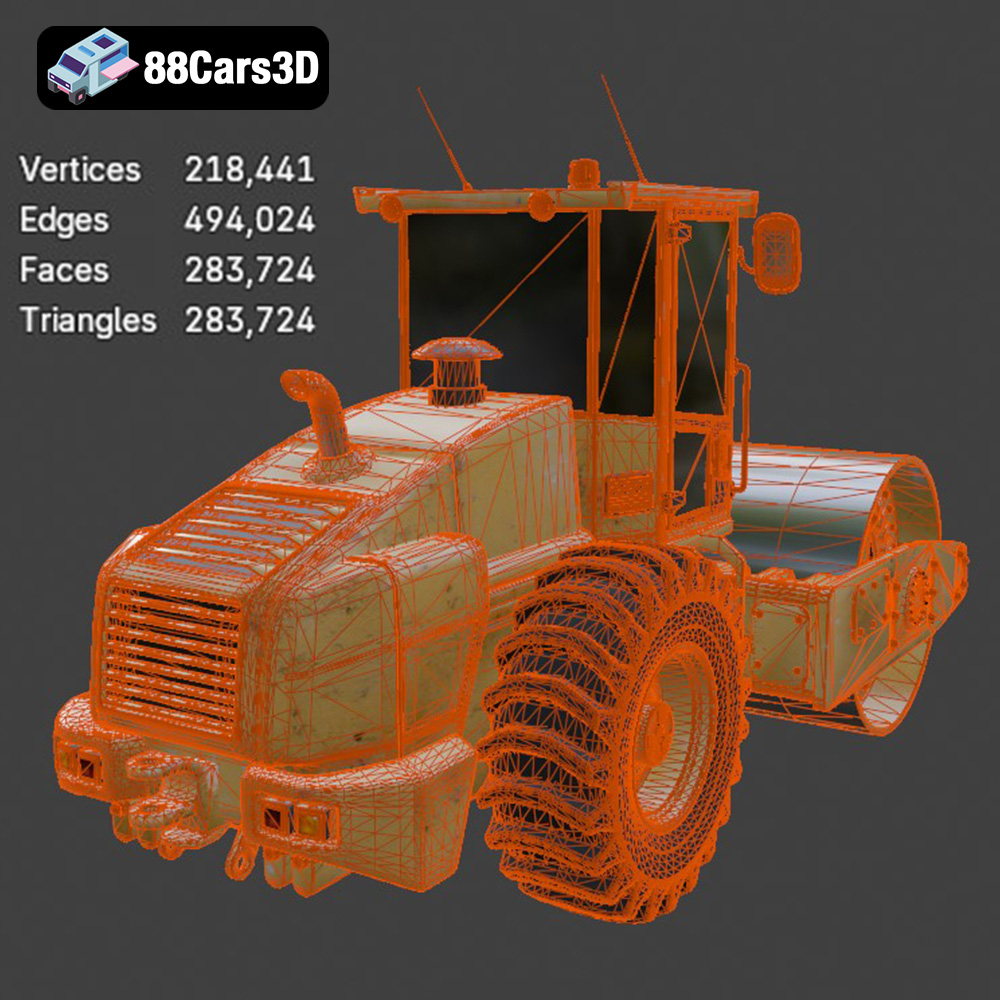
From a production standpoint, acquiring a professionally optimized 3D model like the Soil Road Roller from 88cars3d.com represents a colossal saving in time and resources. Modeling complex industrial equipment from scratch, ensuring accurate proportions, intricate mechanical details, and a clean topology, can take hundreds of hours for even experienced artists. By leveraging pre-made, high-quality assets, development teams can bypass this arduous initial phase and focus directly on integration, animation, texturing, and scene building. This efficiency is critical for meeting tight deadlines in game development, delivering rapid prototypes for AR/VR experiences, or producing timely marketing collateral. The “game-ready” optimization, as seen in the Soil Road Roller’s 283,724 triangles, means less time spent on manual retopology and poly reduction, allowing immediate deployment into real-time engines.
The Soil Road Roller 3D Model is more than just a collection of polygons; it’s a testament to meticulous design and engineering translation into the digital realm. Every aspect of this model has been crafted to deliver both visual fidelity and practical utility across diverse applications.
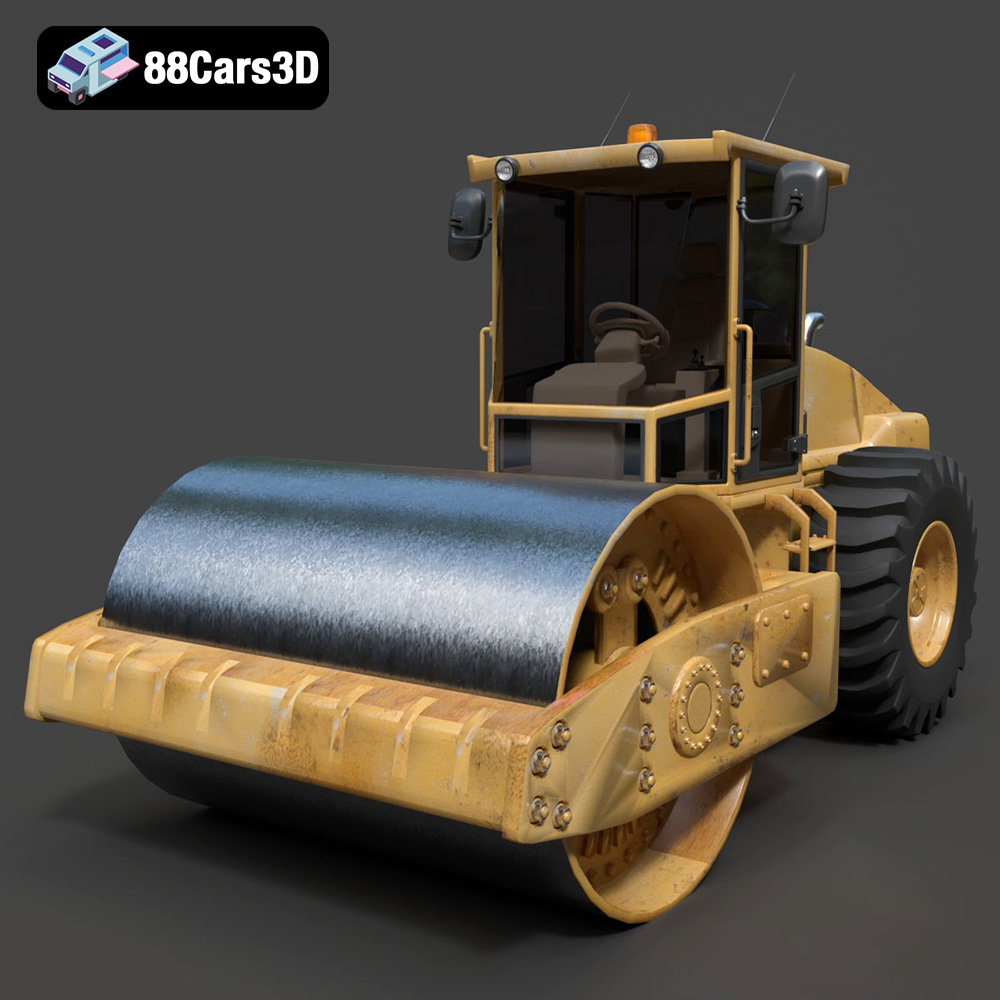
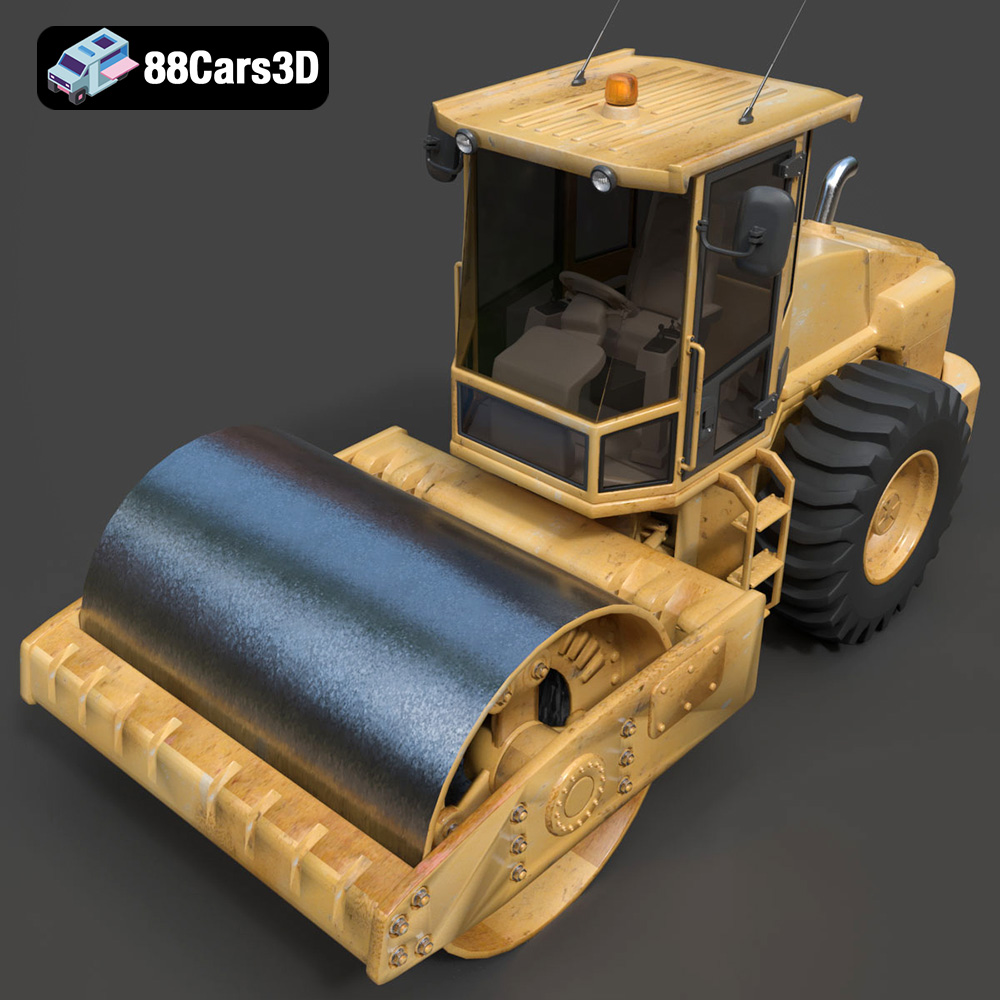
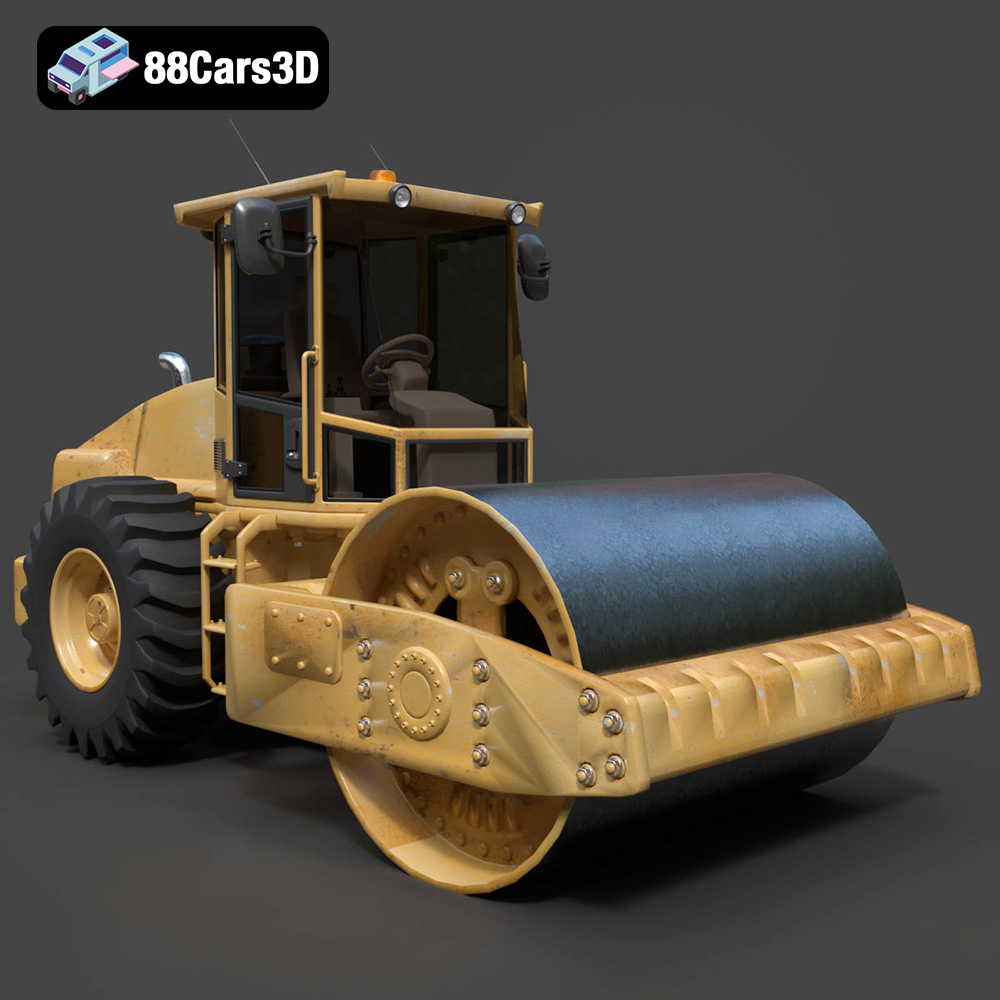
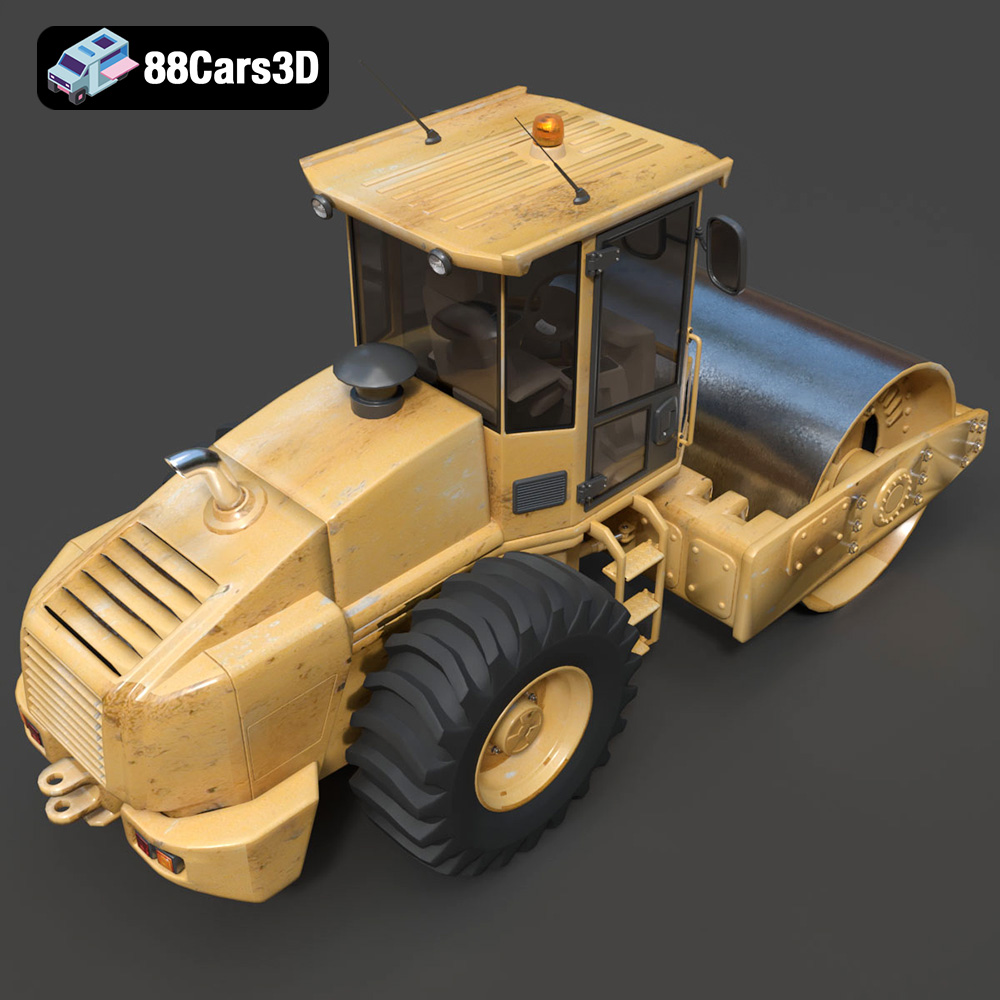
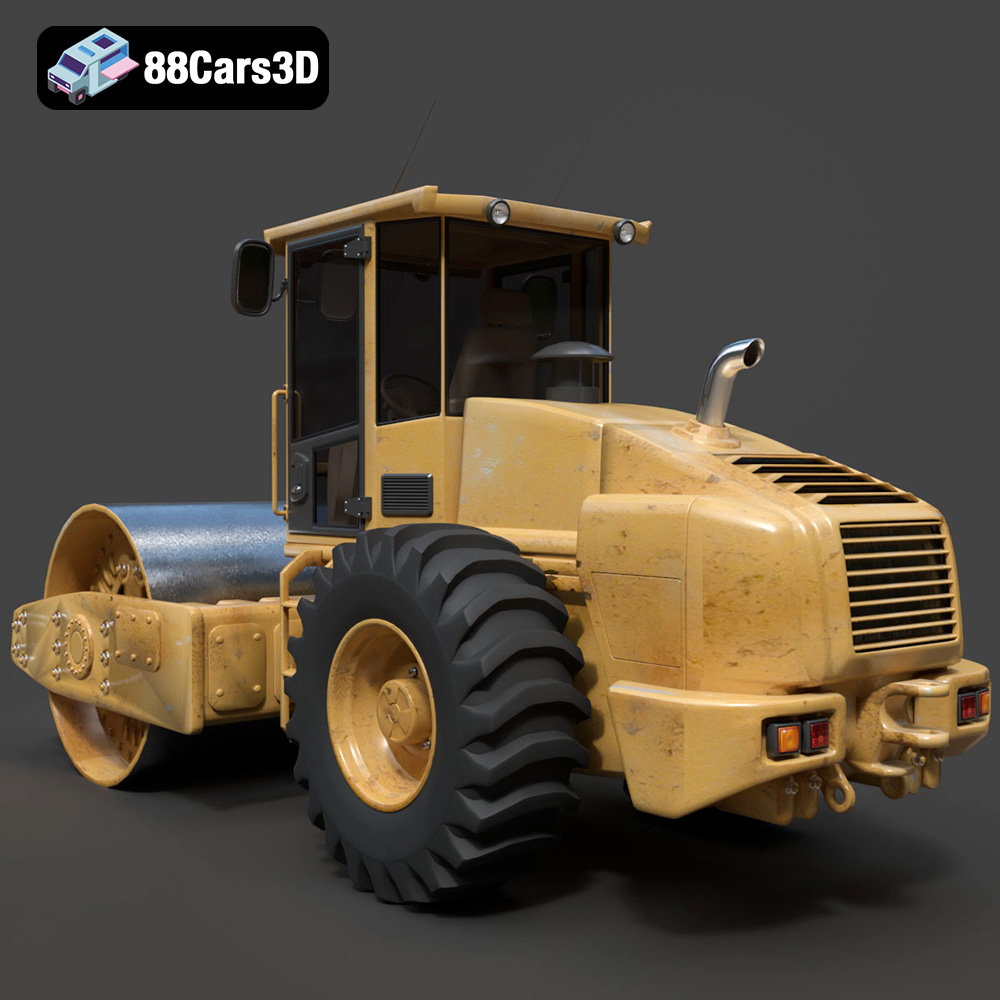
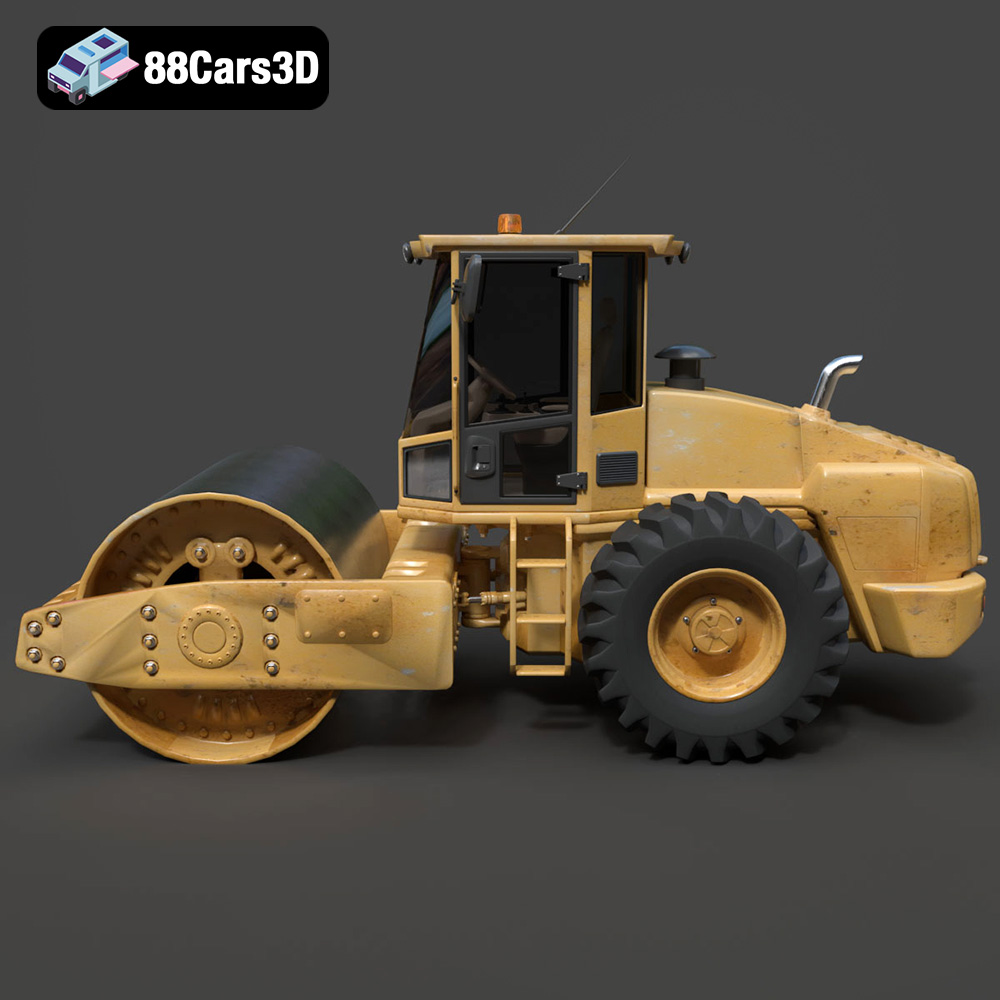
The model’s exterior is where its industrial essence truly comes to life. It accurately captures the articulated frame geometry and robust proportions characteristic of a real soil road roller. The attention to detail extends to functional elements such as the heavy-duty diesel engine block, complete with its vertical exhaust system and rain cap, suggesting the raw power contained within. High-intensity LED work lights, headlights, and warning beacons are not merely placeholders but are designed to function convincingly in rendered scenes. The massive steel front compaction drum and deep-tread rear pneumatic tires are faithfully reproduced, providing realistic visual weight and material presence. Crucially, exposed hydraulic cylinders, hoses, and articulation joints are modeled with precision, allowing for authentic movement and close-up renders that showcase the machine’s mechanical complexity. The separation of the drum, wheels, articulation joints, and steering components ensures that the model is fully prepped for animation, a critical feature for dynamic simulations and game assets.
While the exterior commands attention, the interior of the Soil Road Roller is equally detailed and optimized for specific use cases. The industrial operator seat, complete with a suspension base, provides a realistic focal point. The heavy-duty steering column and directional control joysticks are accurately represented, alongside a comprehensive instrument cluster and monitoring displays. Control details such as pedals, hydraulic levers, and safety switches are modeled to a degree that supports first-person point-of-view (POV) in gaming. This attention to interior detail is vital for creating truly immersive experiences, whether in a simulation where the user operates the machine or in a cinematic sequence showcasing the operator’s environment.
Beyond its visual appeal, the Soil Road Roller 3D Model boasts several technical advantages that underscore its professional-grade quality. With 283,724 triangles, it strikes an optimal balance between high visual realism and game-ready optimization. This polycount is sufficiently detailed for close-up renders without overburdening real-time engines like Unreal and Unity. The model adheres to real-world scale accuracy, based on actual vehicle chassis dimensions, ensuring it fits seamlessly into environments built to scale. Furthermore, the proper pivot setup for steering, wheel rotation, and suspension travel is a huge time-saver. These pre-configured pivots mean animators and game developers can immediately begin rigging and animating the machine’s functional components without extensive preparatory work, significantly accelerating the development pipeline.
The true value of a high-quality 3D model lies in its seamless integration into diverse professional pipelines. The Soil Road Roller 3D Model, with its optimized geometry and multi-format availability, excels in this regard.
For game developers, the Soil Road Roller is an ideal candidate for populating open-world construction sites, creating vehicle-based gameplay, or building immersive simulation experiences. The `.fbx` and `.unreal` formats are particularly advantageous here. Developers can import the FBX into either Unreal Engine or Unity, utilizing its pre-defined pivots for quick rigging and animation setup. The optimized polycount of 283,724 triangles ensures that the model performs well in real-time environments, maintaining high frame rates even with multiple instances. Setting up PBR materials is straightforward, allowing artists to achieve realistic textures for dirt, metal, and plastic. Collision meshes can be generated automatically or custom-built for precise physics interactions. For Unreal users, the `.unreal` package further streamlines this, often coming with pre-configured materials, collisions, and possibly even basic blueprint interactivity, making it a true plug-and-play game asset.
Architectural visualization, product showcases, and cinematic productions demand the highest level of visual fidelity. Here, the `.max` and `.blend` files come into their own. In 3ds Max, artists can leverage the full scene data to create stunning renders using powerful renderers like V-Ray or Corona. This involves setting up realistic studio lighting, applying advanced PBR shaders (with options for wear, rust, or clean finishes), and composing compelling camera angles to highlight the road roller’s details. Similarly, Blender artists can utilize the `.blend` file to take advantage of Cycles or Eevee renderers, employing node-based materials for intricate surface control and environmental lighting setups. Imagine the Soil Road Roller in a dynamic scene, perhaps kicking up dust on a freshly graded road, showcasing its power and precision for a major construction brand’s advertising campaign – these models make such visions achievable.
The burgeoning fields of Augmented Reality and Virtual Reality, along with interactive web experiences, are hungry for optimized 3D assets. The `.glb` format is the hero here. Its lightweight, self-contained nature makes the Soil Road Roller perfect for immersive virtual showrooms, where customers can explore the machine from all angles using a VR headset. For AR applications, the `.glb` model can be easily integrated into mobile apps, allowing users to project the virtual road roller into their real-world environment – perhaps to see how it would look on a job site or simply for an engaging product demonstration. Web-based configurators or interactive 3D viewers can also leverage `.glb` to allow potential buyers to customize colors or inspect features directly in their browser, providing an engaging and accessible experience that traditional 2D images cannot match.
The versatility of the Soil Road Roller 3D Model extends beyond digital displays, offering tangible applications and a wide array of customization possibilities to meet specific project demands.
For hobbyists, educators, or professionals who require a physical representation of the model, the `.stl` file is your gateway to 3D printing. The Soil Road Roller’s detailed geometry translates beautifully into a physical model, especially when printed at recommended scales (1:12, 1:18, 1:24). The product description wisely recommends resin printing for optimal fine details, given the intricate hydraulic lines, engine components, and cockpit features. Layer heights between 0.04–0.12 mm will ensure smooth surfaces and sharp edges. Thoughtful print orientation, such as printing the frame angled for structural integrity and wheels separately, minimizes the need for extensive supports and improves print quality. Post-processing, including sanding, priming, and applying authentic factory colors with metallic finishes, can transform a raw print into a stunning miniature replica, perfect for display or even as a prop in a physical diorama.
Even the most detailed 3D models often require some level of customization to perfectly fit a specific project’s aesthetic or functional requirements. The Soil Road Roller 3D Model provides ample opportunity for this. Artists can easily change body and tank colors, moving from standard industrial yellow or orange to custom fleet colors or unique thematic hues. Modifying tire textures, perhaps from clean street variants to off-road mud or even snow, can quickly adapt the model to different environments. Adjusting material finishes – making surfaces more matte, glossier, adding metallic flake, or applying rust and dirt overlays – can instantly change the machine’s perceived age or usage. Furthermore, adapting the lighting setup for different environments, whether it’s a bright outdoor construction site, a dimly lit warehouse, or a dramatic sunset scene, will ensure the road roller always looks its best. These customization options provide immense flexibility, allowing the base model to serve a multitude of creative visions.
The practical applications for a robust 3D model like the Soil Road Roller are vast and varied, showcasing its utility in solving real-world challenges and enhancing digital experiences.
One of the most impactful applications for the Soil Road Roller 3D Model is within construction site simulators. These simulators are invaluable for training heavy equipment operators, allowing them to gain hands-on experience in a safe, controlled virtual environment. The model’s accurate geometry, animated components (thanks to proper pivot setups), and detailed cockpit interior make for a highly realistic and immersive training experience. Trainees can practice compaction techniques, navigate challenging terrains, and respond to simulated hazards without risk or the high cost of fuel and maintenance associated with physical machinery. This translates to better-prepared operators and improved safety on actual job sites.
In the realm of sales and marketing, compelling visuals are key. Manufacturers of heavy equipment can utilize the Soil Road Roller 3D Model to create breathtaking marketing campaigns without the need for expensive physical prototypes or location shoots. High-resolution renders can highlight specific features, demonstrate product capabilities, or even be used in interactive product configurators on their websites. The ability to render the machine in pristine condition or covered in realistic dirt and grime allows for versatile storytelling, catering to different marketing narratives. This kind of *automotive rendering*, applied to heavy machinery, offers a powerful way to engage potential buyers.
Urban planners, architects, and civil engineers often need to visualize proposed infrastructure projects in their entirety. Integrating realistic 3D heavy equipment models, like the Soil Road Roller, into these larger scene compositions adds a layer of authenticity and detail. It helps convey the scale of a project, the type of work being undertaken, and the potential impact on the surrounding environment. Whether it’s showing a new road being constructed or an area being prepared for development, the presence of accurately rendered machinery brings the scene to life and enhances the overall presentation to stakeholders and the public.
The Soil Road Roller 3D Model is a remarkable example of how a high-quality 3D asset can serve a multitude of professional needs. From its meticulously detailed exterior and functional interior to its game-ready optimization and extensive file format support, it is designed for maximum utility across game development, AR/VR, rendering, visualization, and even 3D printing. The technical specifications, including its balanced polycount and proper pivot setups, ensure it’s not just a pretty model, but a truly efficient and versatile tool for creators.
Whether you’re building an immersive construction simulator, crafting cinematic renders for a marketing campaign, developing an interactive AR experience, or bringing a detailed miniature to life through 3D printing, this model provides the foundation you need. The comprehensive range of included file formats – from `.blend` and `.max` for full software integration, to `.fbx` and `.unreal` for real-time engines, and `.glb` for web and AR/VR, and `.stl` for physical output – ensures that this asset fits seamlessly into virtually any professional pipeline. By choosing expertly crafted 3D assets like this Soil Road Roller, you save invaluable development time and elevate the quality of your final output.
Explore this Soil Road Roller 3D Model and a diverse collection of other high-quality 3D models, including an impressive array of 3D car models and industrial game assets, at 88cars3d.com. Equip your projects with the precision and performance they deserve.
The Soil Road Roller is an essential piece of heavy construction equipment, meticulously designed for earthwork, soil compaction, and road paving projects. This highly detailed 3D model captures its massive industrial presence, featuring a large steel compaction drum, an articulated heavy-duty frame, a robust diesel engine block, and authentic functional styling cues such as rugged hydraulic lines and industrial-grade exhausts.
With a precise topology of 283,724 triangles, this model balances high visual fidelity with game-ready optimization. It delivers exceptional realism through carefully modeled surfaces and mechanical components, making it ideal for close-up renders, cinematic sequences, and real-time environments across game development, AR/VR applications, and professional visualization software.
Perfect for construction site simulators, open-world industrial environments, infrastructure visualization, and heavy machinery games.
.blend, .fbx, .obj, .glb, .stl, .ply, .unreal, .max
Tags:
soil-road-roller, road-roller, compactor, heavy-equipment, construction-vehicle, game-ready, low-poly, optimized, vehicle-3d-model, game-asset, rendering, vr-ar, blend, fbx, obj, glb, stl, ply, unreal, max
$24.99
.blend
.fbx
.glb
.heavy-equipment
.max
.obj
.ply
.rendering
.stl
.unreal
compactor
construction-vehicle
game asset
game-ready
low-poly
optimized
road-roller
soil-road-roller
vehicle-3d-model
VR/AR