Get 20% OFF All Premium 3D & STL Models!

In the rapidly evolving landscape of 3D visualization, the demand for high-fidelity, meticulously crafted digital assets is paramount. Whether for cutting-edge game development, immersive AR/VR training simulations, cinematic animations, or detailed historical visualizations, the foundation of any successful project lies in the quality of its 3D models. A prime example of such an asset, perfectly blending intricate detail with optimized performance, is the Bradley M2A3 3D model, available for download on 88cars3d.com. This iconic American Infantry Fighting Vehicle (IFV) represents a significant challenge for 3D artists due to its complex mechanics, formidable armor, and distinctive features. Crafting a digital replica that meets professional standards requires not only artistic skill but also a deep understanding of technical specifications and diverse software workflows.
This comprehensive article delves into the technical intricacies of working with advanced 3D models like the Bradley M2A3. We’ll explore the critical role of various file formats, examine how such a detailed model integrates into professional pipelines like game development and cinematic rendering, and even discuss its potential for tangible 3D printing. By dissecting the capabilities of this exceptional 3D model, we aim to provide insights for designers, developers, and enthusiasts looking to leverage top-tier 3D vehicle models for their ambitious projects.
Navigating the world of 3D assets means understanding the various file formats, each tailored for specific workflows, software, and end-use applications. The Bradley M2A3 3D model from 88cars3d.com is provided in a comprehensive suite of formats, ensuring maximum compatibility and flexibility for professionals across different industries. Choosing the right format is crucial for maintaining data integrity, optimizing performance, and achieving desired results.
The .blend format is the native file type for Blender, a powerful open-source 3D creation suite. When you download the Bradley M2A3 in .blend, you receive a fully editable scene, complete with materials, textures, lighting setups, and any embedded animations or rigging. This format is ideal for artists who primarily work in Blender, offering the most comprehensive control over the model’s components. It allows for direct manipulation of the mesh, modification of UVs, tweaking of shader networks, and integration into existing Blender projects. Its self-contained nature ensures that all scene data is present, making it convenient for continued development and customization.
FBX (Filmbox) is a proprietary file format owned by Autodesk, widely regarded as the industry standard for exchanging 3D data between different software applications. Its strength lies in its ability to store not only mesh data but also animations, rigging, cameras, lights, and materials in a single file. This makes the .fbx version of the Bradley M2A3 ideal for transferring to game engines like Unreal Engine and Unity, or between DCC (Digital Content Creation) tools such as 3ds Max, Maya, and Cinema 4D. For real-time pipelines, .fbx is often the go-to choice due to its robust support for skeletal animations and material assignments, which are critical for dynamic game assets.
OBJ (or .obj) is one of the oldest and most universally supported 3D file formats. It is primarily used for static mesh data, storing vertex positions, normals, UV coordinates, and material group information. While it doesn’t typically embed animations or complex material nodes, its simplicity ensures near-universal compatibility across almost all 3D software. The .obj version of the Bradley M2A3 is excellent for situations where you need a clean mesh to import into a new software environment for texturing, sculpting, or re-topology. It’s a reliable fallback when other formats present compatibility issues, serving as a foundational format for cross-software collaboration.
GLB (GL Transmission Format Binary) is a relatively newer format designed for the efficient transmission of 3D scenes and models. It’s often referred to as the “JPEG of 3D” due to its compact size and efficiency. .glb files are optimized for web-based applications, augmented reality (AR), virtual reality (VR), and mobile platforms. They embed textures and animations directly within the single file, making them incredibly convenient for quick loading and display in browsers or dedicated AR/VR viewers. The Bradley M2A3 in .glb format would be perfect for interactive online product showcases, virtual training modules accessible via a web browser, or mobile AR experiences where file size and loading speed are critical.
STL (STereoLithography) is the de facto standard file format for 3D printing. It represents a 3D model as a series of connected triangles, describing the surface geometry without color, texture, or other properties. The .stl version of the Bradley M2A3 is specifically prepared for hobbyists and professionals who wish to fabricate a physical replica. While it lacks visual fidelity inherent in other formats, its precision in defining the mesh makes it essential for slicer software to generate print paths. The provided model’s high polygon count ensures that printed details are crisp and accurate, especially for the intricate components of the IFV.
PLY (Polygon File Format) is another popular format for storing 3D data, particularly useful for scanned data, CAD applications, and scientific visualization. Unlike .obj, .ply can also store color, transparency, and other attributes per vertex or per face. While less common for general DCC work compared to .fbx or .obj, its ability to carry more complex vertex-level data makes it suitable for applications requiring high precision mesh information, such as reverse engineering, measurement, or detailed analytical simulations of the Bradley M2A3’s geometry.
The .unreal format implies a file specifically prepared or optimized for direct import into Unreal Engine. While Unreal primarily uses .fbx for importing individual assets, a .unreal file might represent a full Unreal Engine project file or an asset package specifically configured with Unreal’s material systems, collision meshes, LODs (Levels of Detail), and blueprint functionality. This format streamlines the integration process significantly, potentially saving hours of setup time for developers building military combat simulations or tactical VR training environments with the Bradley M2A3 model.
Similar to .blend for Blender, .max is the native file format for Autodesk 3ds Max, a leading software for 3D modeling, animation, and rendering. The .max file contains the complete scene data, including geometry, materials, textures, lighting, cameras, and any animation or rigging setups within 3ds Max. For professionals working within the Autodesk ecosystem, the .max version of the Bradley M2A3 offers the highest level of editability and allows for seamless integration into existing 3ds Max projects, making it ideal for cinematic cutscenes, high-resolution architectural visualization (if one were to place an IFV in such a scene), or complex animation sequences.
The Bradley M2A3 is more than just a military vehicle; it’s an emblem of modern warfare, known for its strategic versatility and formidable presence on the battlefield. Recreating such an iconic vehicle in 3D demands an extraordinary level of attention to detail and a profound understanding of its real-world counterpart. The Bradley M2A3 3D model stands as a testament to this commitment, offering a digital twin that captures the essence and technical specifications of the original IFV.
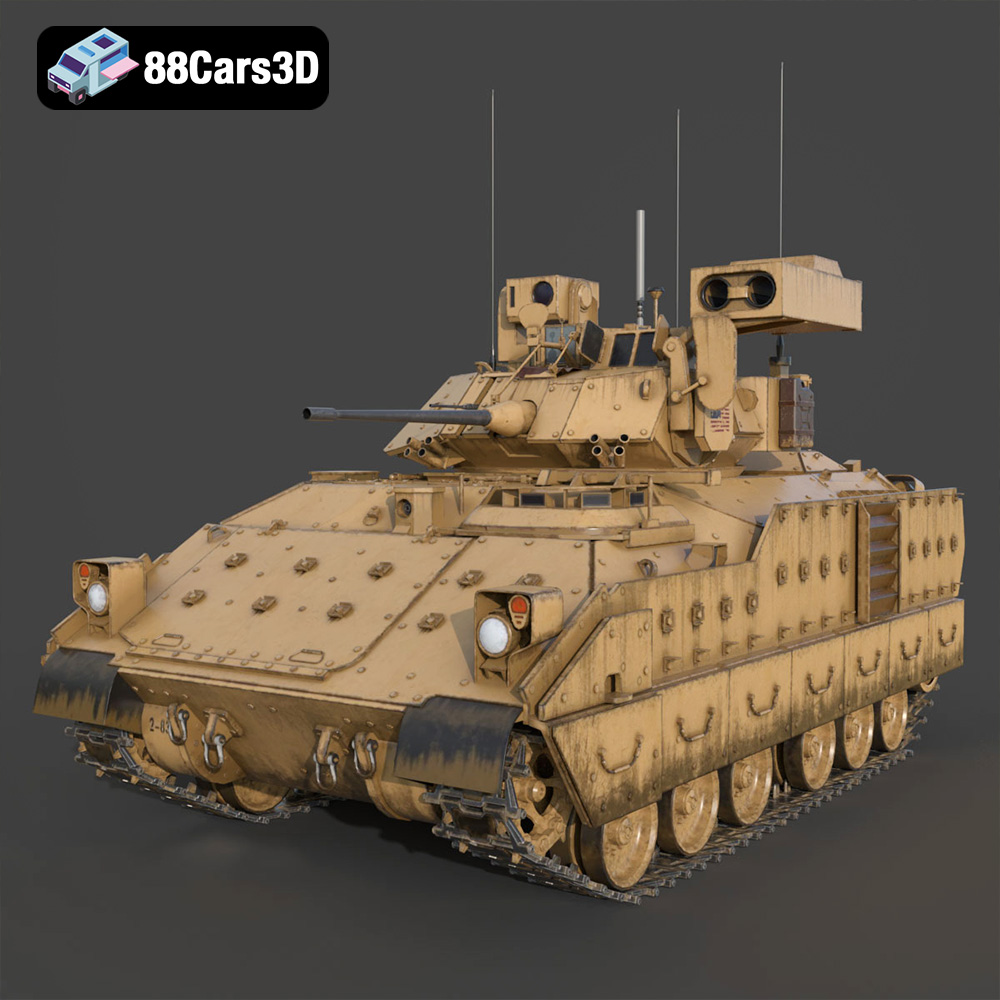
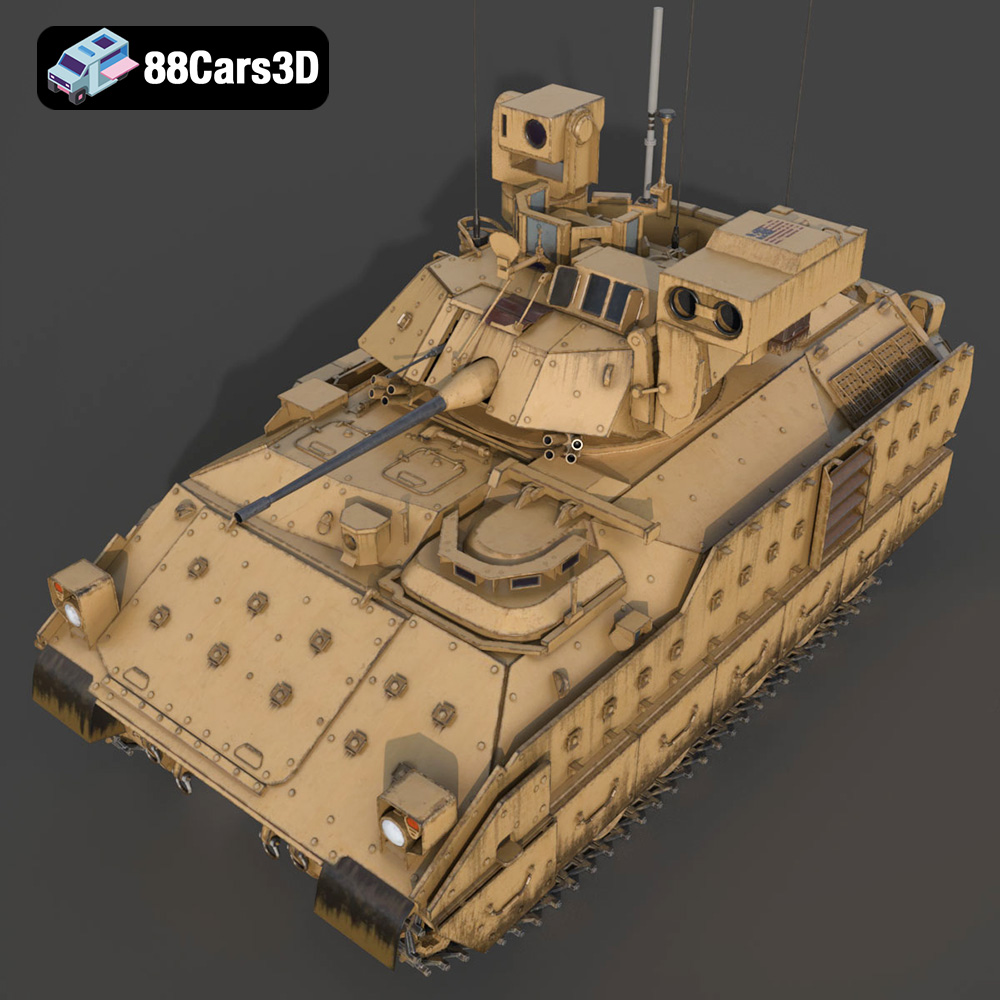
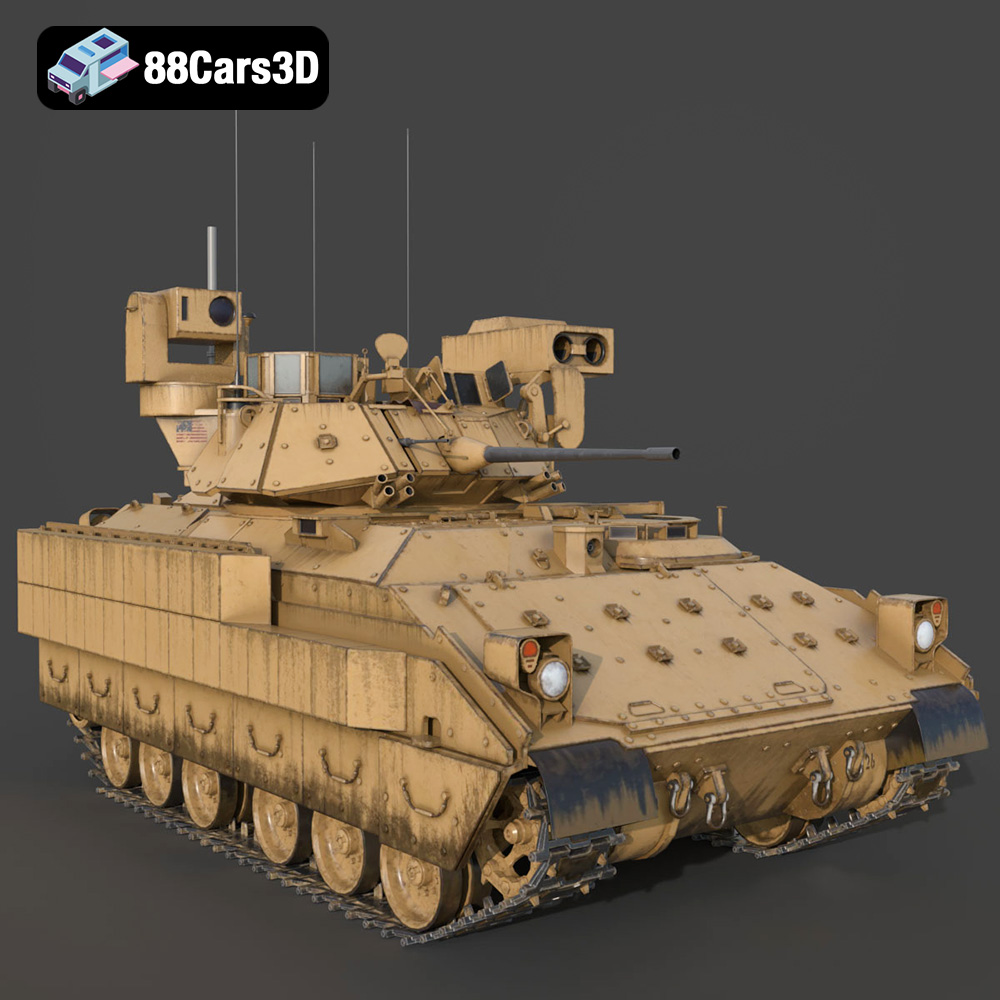
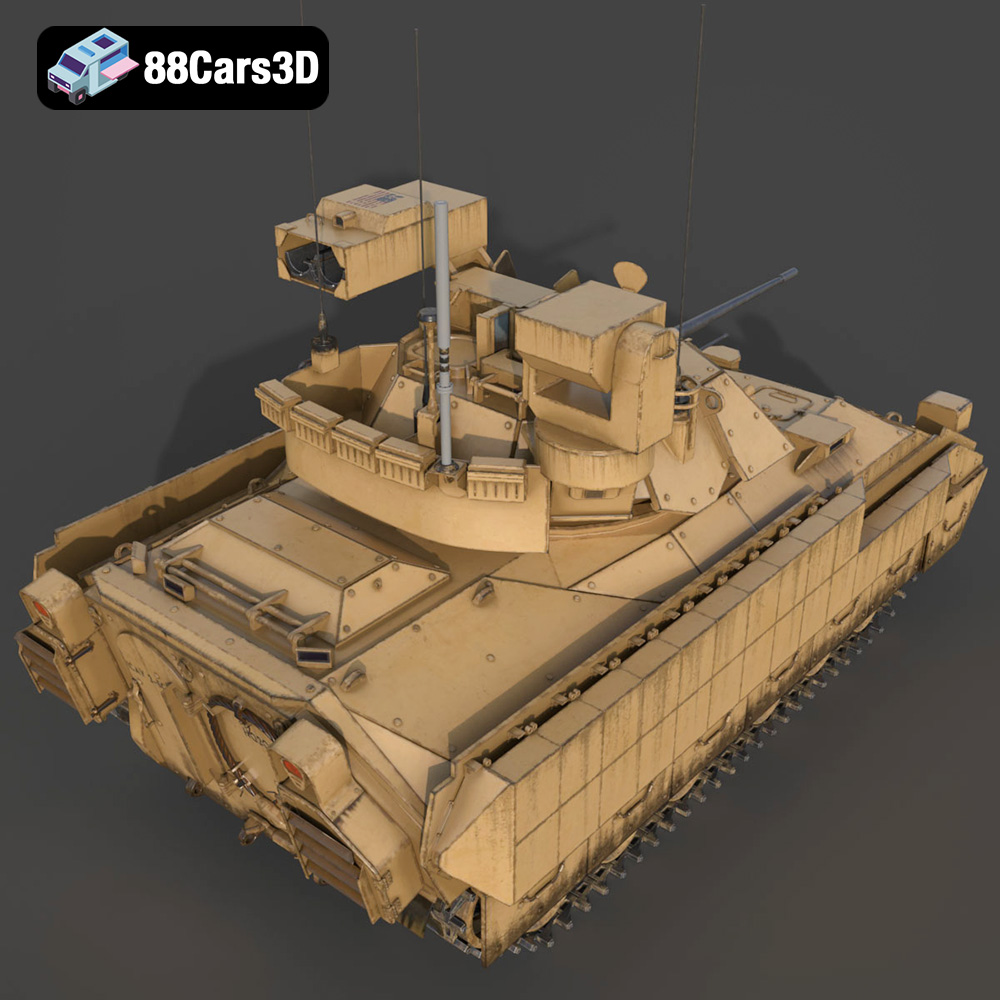
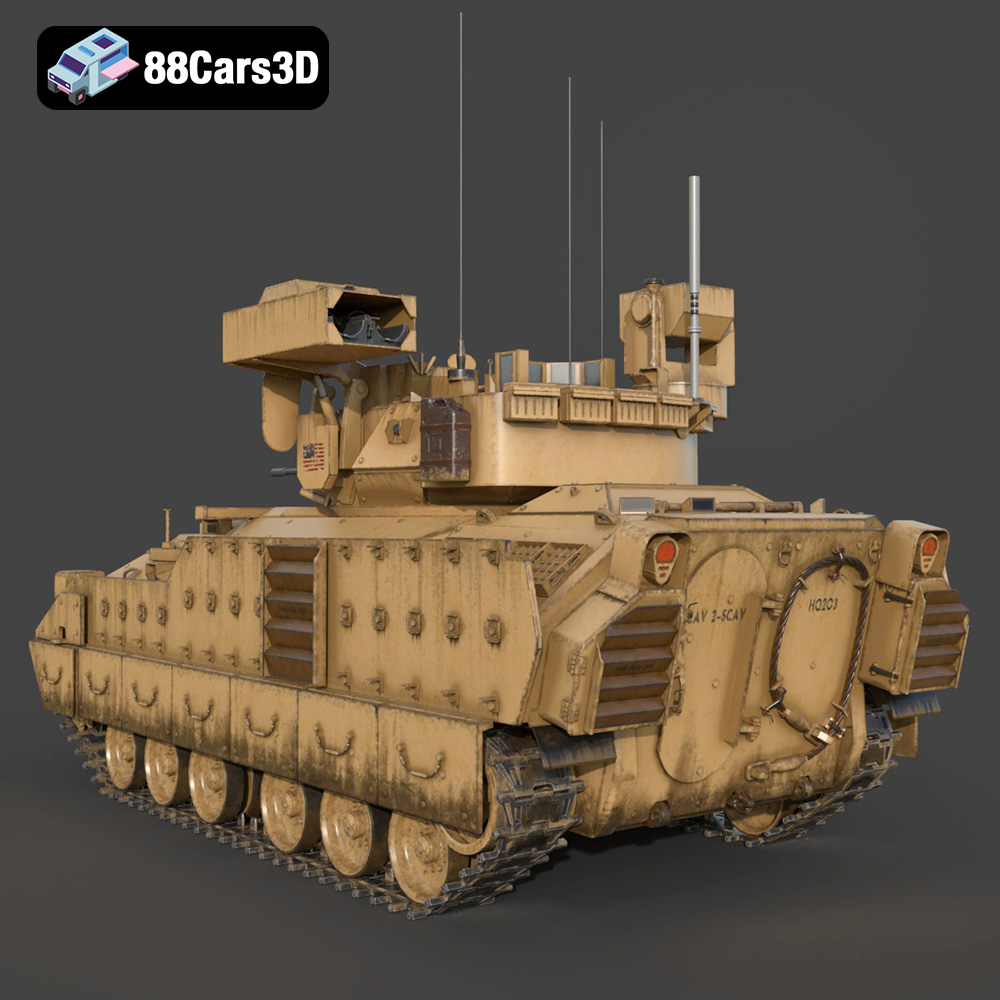
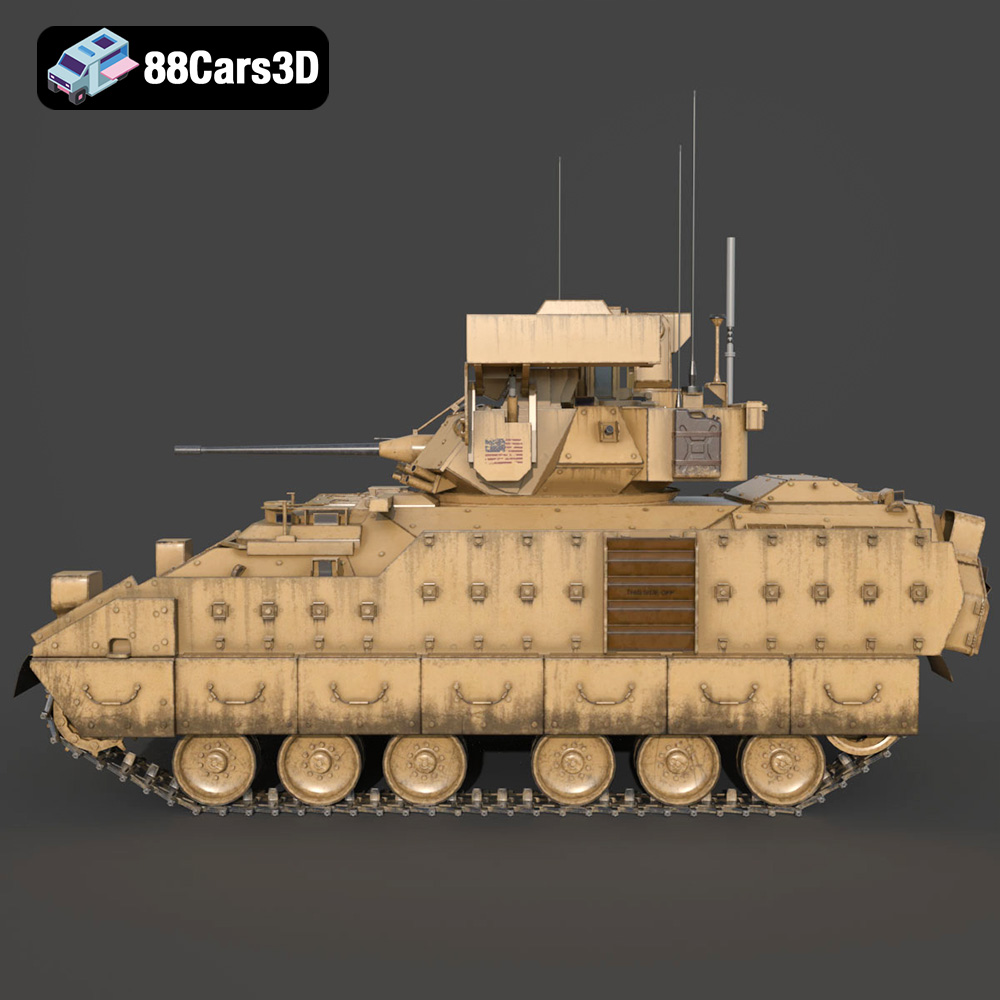
The accuracy of the exterior is paramount for any military vehicle model. The Bradley M2A3 model excels in this regard, boasting accurate hull geometry and proportions that immediately convey its powerful real-world presence. Key elements like the lethal 25mm M242 Bushmaster chain gun and its coaxial machine gun are meticulously replicated, not just in shape but in their mechanical articulation potential. The authentic TOW anti-tank missile launcher pod adds to its visual fidelity, ready for animation or static display. One of the most recognizable visual elements, the Explosive Reactive Armor (ERA) blocks and side skirts, are intricately modeled, conveying the vehicle’s robust protection. Even the smallest details, from intricate tank tracks, road wheels, and drive sprockets to accurate external stowage racks, antennas, and sensor masts, are present. This level of detail is crucial for projects demanding historical accuracy or cinematic close-ups, where every bolt and weld contributes to the realism. Such high-quality 3D car models, or in this case, military vehicles, set the standard for digital realism.
True immersion in 3D often goes beyond just the exterior. For a vehicle like the Bradley M2A3, the ability to peer inside or even simulate an interior perspective is invaluable. This model addresses that with detailed commander, gunner, and driver hatch assemblies, complete with replicated vision blocks and periscope optics. Accurate tactical display panels and instrument clusters, along with represented seating arrangements and internal crew layouts, mean the model is not just a shell but a functional representation. Crucially, the geometry for these interior features is optimized for first-person POV in gaming, making it ideal for detailed cockpits in simulations or interactive experiences. Furthermore, the model’s design includes properly separated turret, gun barrel, and track components. This intelligent segmentation is vital for animators and game developers, allowing for realistic pivot setups for turret rotation, gun elevation, and track animation, transforming a static model into a dynamic, deployable asset.
The performance demands of real-time engines like Unreal Engine and Unity are stringent. Game assets must strike a delicate balance between visual fidelity and computational efficiency. The Bradley M2A3 3D model is engineered precisely for this environment, making it a stellar candidate for modern warfare games, military simulators, and strategy titles.
Integrating a complex asset like the Bradley M2A3 into Unreal Engine begins with importing the .fbx or .unreal file. Upon import, developers can leverage Unreal’s powerful material editor to create physically-based rendering (PBR) materials that accurately represent the vehicle’s various surfaces—from the matte finish of military-grade paint to the metallic sheen of exposed edges and the gritty texture of tracks. The model’s well-defined UV mapping ensures textures apply seamlessly, supporting weathering effects, battle damage, or camouflage variants. Furthermore, with its separate turret, gun, and track components, setting up animation blueprints for realistic movement is straightforward. Developers can rig the model using Unreal’s skeletal mesh system, creating control bones for rotation of the turret and elevation of the cannon, and even implementing complex track animation systems that respond dynamically to terrain. The properly set pivots streamline this process significantly, reducing development time and effort.
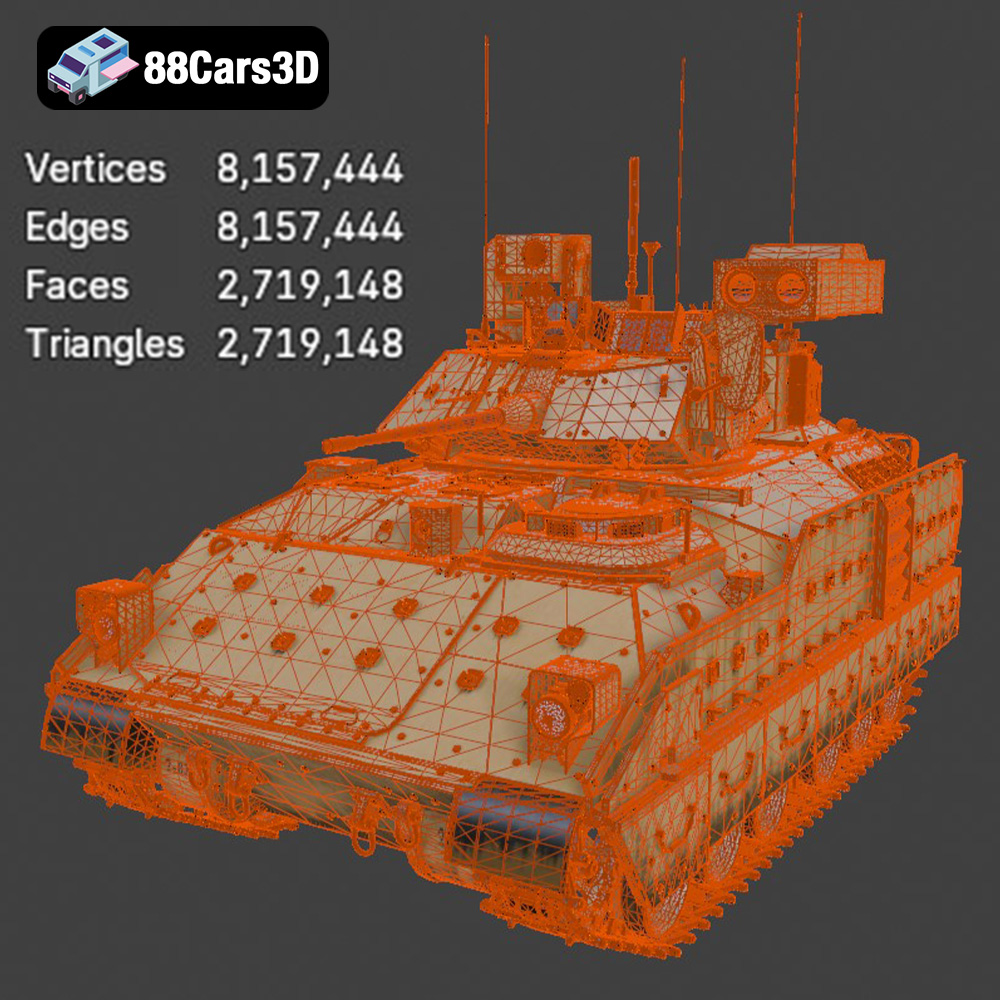
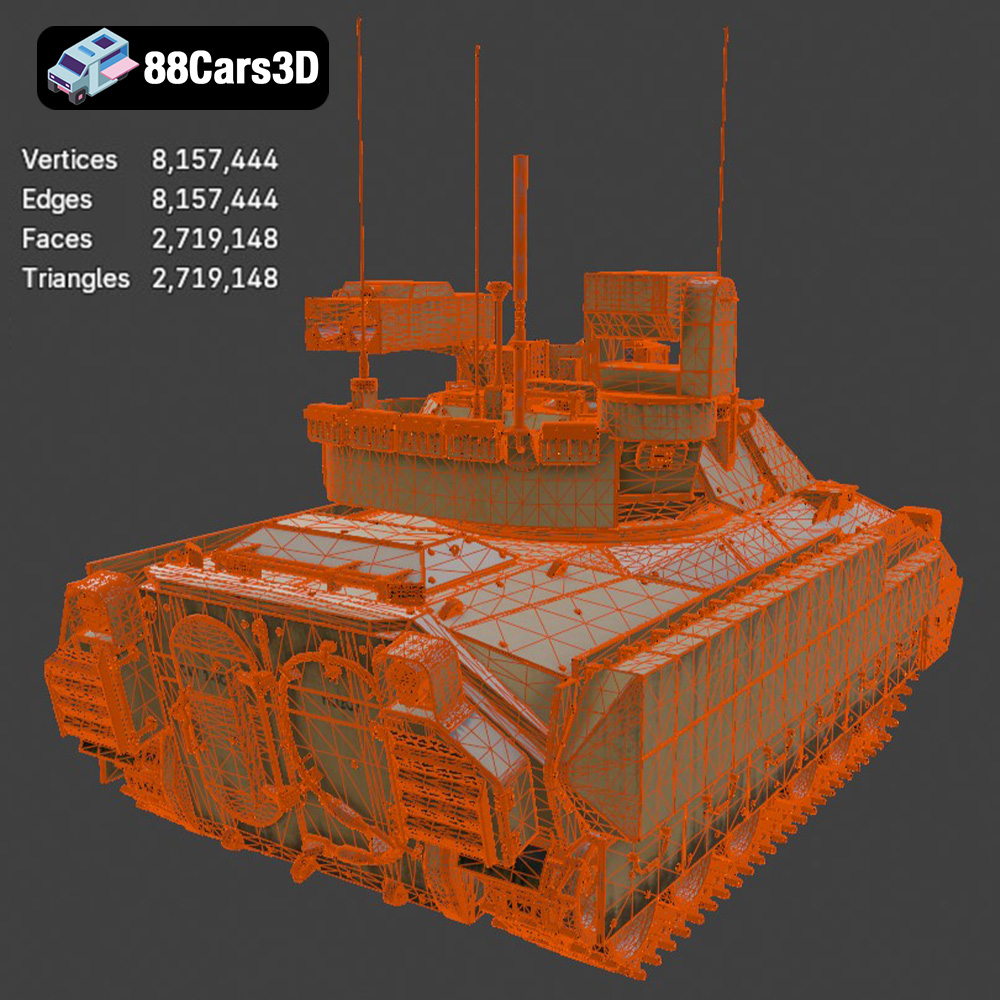
A significant advantage of this Bradley M2A3 model is its optimized geometry structure. With 2,719,148 triangles, it achieves an impressive balance, delivering exceptional high-fidelity realism for cinematic quality while remaining suitable for high-end real-time engines. This poly count allows for rich detail without excessively taxing rendering pipelines, especially when combined with advanced rendering techniques like normal mapping, which can simulate even finer details. For game developers, this means the model can be used directly in demanding AAA titles or scaled down with LODs (Levels of Detail) for less powerful platforms or distant views without significant visual degradation. The game-ready nature of the model, including its real-world scale accuracy and proper pivot setups, makes it an invaluable asset that significantly accelerates production timelines for military game development.
Beyond interactive experiences, the Bradley M2A3 3D model shines in static and animated rendering contexts, ideal for historical documentaries, cinematic cutscenes, and studio lighting setups. Its high fidelity allows for breathtaking visuals where every minute detail can be appreciated.
When utilized in professional rendering software like Autodesk 3ds Max or Blender, the Bradley M2A3 model truly comes to life. Artists can import the .max or .blend file, which retains all original scene data, or use the robust .fbx or .obj formats. In these environments, the detailed geometry provides an excellent foundation for applying advanced PBR materials with intricate texture sets (albedo, normal, roughness, metallic, ambient occlusion). Lighting plays a crucial role in bringing out the realism; artists can employ complex lighting setups, from High Dynamic Range Image (HDRI) environments for natural outdoor scenes to precise studio lighting for dramatic close-ups. Volumetric effects like fog or dust, depth of field, and motion blur can further enhance the cinematic quality, making the Bradley M2A3 appear as if it’s part of a real-world production. This model serves as a prime example of how high-quality 3D car models, or military vehicles, can elevate visual storytelling.
The exceptional visual accuracy of the Bradley M2A3 3D model makes it perfect for a range of visualization applications. In historical documentaries, it can be seamlessly integrated into archival footage or used to reconstruct key battlefield moments with unparalleled realism. For cinematic cutscenes in games or standalone animations, the model’s articulated components allow for dynamic action sequences, showcasing the vehicle in motion or deploying its weaponry. Furthermore, for AR/VR applications, particularly military training modules, the model’s detailed interior and exterior can create truly immersive and realistic environments. Trainees can interact with a virtual Bradley M2A3, studying its components, practicing maintenance procedures, or engaging in simulated combat scenarios, all within a visually convincing digital space. This goes beyond simple automotive rendering; it’s about creating believable, functional digital ecosystems.
The versatility of a high-quality 3D model extends beyond digital screens. For enthusiasts, model makers, and diorama builders, the ability to translate a digital asset into a tangible object is an exciting prospect. The Bradley M2A3 3D model, provided in the .stl format, is perfectly suited for 3D printing, allowing for the creation of display-scale replicas.
3D printing the Bradley M2A3 requires careful consideration of settings and equipment to capture its intricate details. The recommended scales (1:35 / 1:48 / 1:72) offer a good balance between size and detail retention. Given the model’s complexity, especially elements like the 25mm M242 Bushmaster chain gun and the tank tracks, resin printing (SLA/DLP) is highly recommended over FDM for its ability to produce much finer details and smoother surfaces. A layer height between 0.04–0.12 mm will ensure crisp features. Structural integrity is also key, with recommended wall thickness between 1.2–2.0 mm and an infill of 20–30%. Due to its complex geometry, supports will be required for overhangs and delicate parts like antennas, missile launchers, and machine guns. Printing the hull angled and separating components like tracks and the turret allows for better print success and cleaner finishes.
Once printed, the physical Bradley M2A3 model offers extensive customization potential. Post-processing steps like sanding are essential to smooth out layer lines or support marks. A good primer creates a uniform surface for painting. Hobbyists can then apply authentic factory colors, such as desert tan or NATO woodland camouflage, followed by meticulous weathering finishes to simulate battle wear, dirt, and grime. This allows for personalized replicas that can be incorporated into historical dioramas, tabletop wargaming, or simply displayed as standalone works of art. The ability to move from a digital rendering to a physical object underscores the comprehensive nature of the 3D model and its utility across diverse creative endeavors, making it a truly versatile asset from 88cars3d.com.
The journey from a real-world military marvel to a highly detailed, game-ready, and print-capable 3D model is a testament to the advancements in digital content creation. The Bradley M2A3 3D model is a prime example of an expertly crafted asset, offering unparalleled realism, technical optimization, and versatility for a vast array of professional applications. From the critical understanding of diverse file formats like .blend, .fbx, .obj, .glb, .stl, .ply, .unreal, and .max, to its seamless integration into complex game development pipelines, high-end cinematic rendering projects, and even physical 3D printing, this model serves as a benchmark for quality.
Whether you’re developing a next-generation military simulator, producing a historically accurate documentary, or crafting an immersive AR/VR training experience, the Bradley M2A3 3D model provides a robust and reliable foundation. Its meticulous exterior and interior details, coupled with intelligent optimization for real-time performance, ensure that it meets the rigorous demands of modern 3D production. For professionals seeking top-tier 3D vehicle models that empower creativity and deliver exceptional results, exploring assets like this detailed Bradley M2A3 on 88cars3d.com is an investment in digital excellence. It’s not just a model; it’s a gateway to bringing your most ambitious visions to life.
The Bradley M2A3 is an iconic American Infantry Fighting Vehicle (IFV) renowned for its perfect blend of troop transport capability, formidable firepower, and advanced armor protection. Upgraded with next-generation targeting systems and digital battlefield integration, this legendary military workhorse features recognizable visual elements such as its robust Explosive Reactive Armor (ERA) tiles, the lethal 25mm M242 Bushmaster chain gun, and the twin-tube TOW anti-tank missile launcher.
This highly detailed 3D model boasts an impressive topology of 2,719,148 triangles, ensuring exceptional high-fidelity realism for close-up shots while maintaining optimized geometry structures for high-end real-time engines. Engineered for striking visual accuracy, the model provides an incredible foundation for military game development, immersive AR/VR training simulations, cinematic animations, and historical visualizations.
Perfect for military combat simulations, action-strategy game development, cinematic war documentaries, and tactical VR training environments.
.blend, .fbx, .obj, .glb, .stl, .ply, .unreal, .max
Tags:
bradley, m2a3, infantry-fighting-vehicle, military-vehicle, tank, military-3d-model, game-ready, high-poly, optimized, game-asset, rendering, vr-ar, blend, fbx, obj, glb, stl, ply, unreal, max
$37.50
.blend
.bradley
.fbx
.glb
.m2a3
.max
.obj
.ply
.rendering
.stl
.tank
.unreal
game asset
game-ready
high poly
infantry-fighting-vehicle
military-3d-model
military-vehicle
optimized
VR/AR