Get 20% OFF All Premium 3D & STL Models!

In the expansive and ever-evolving landscape of digital design, the demand for exceptionally detailed and versatile 3D car models has never been higher. Whether it’s for breathtaking cinematic sequences, immersive game environments, cutting-edge AR/VR experiences, or precise architectural visualizations, the foundation of any compelling project often hinges on the quality of its assets. Capturing the essence of automotive history, particularly the grandeur of a bygone era, presents a unique challenge that requires both artistic mastery and technical precision.
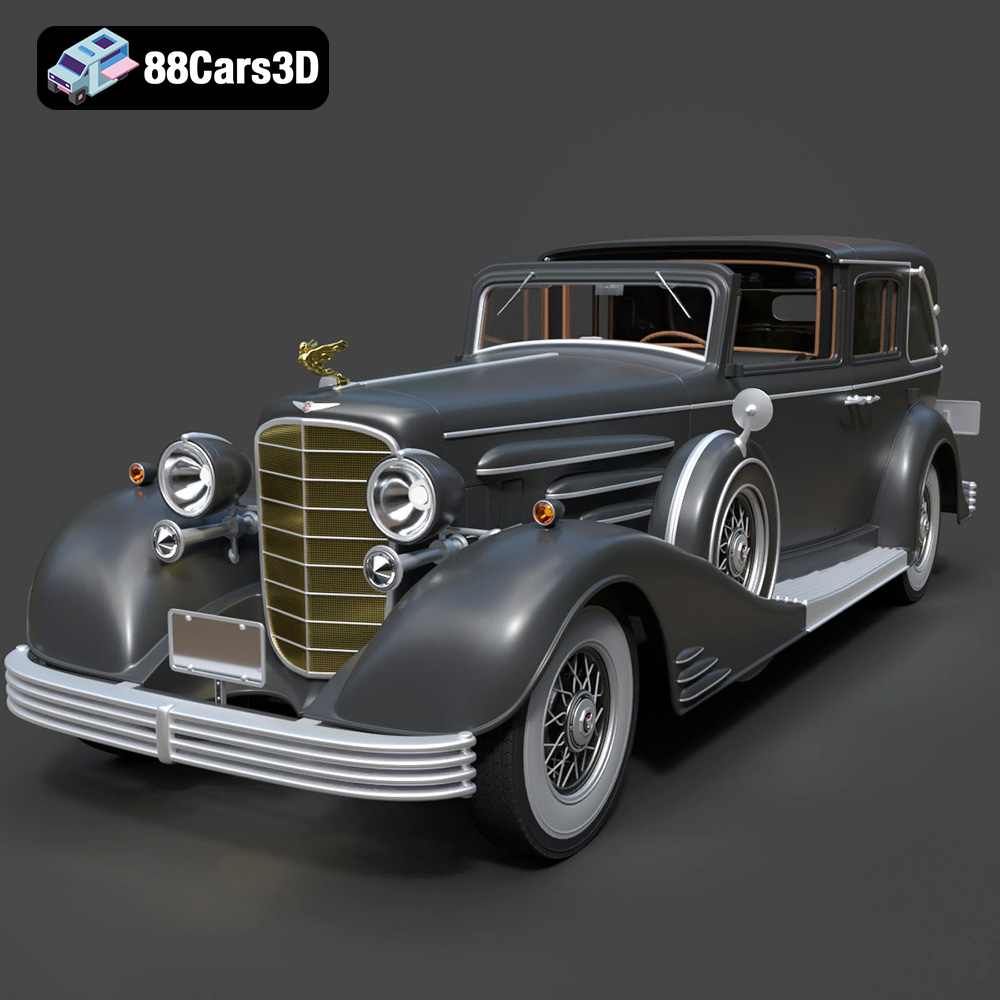
Imagine recreating the roaring twenties or the sophisticated thirties, where every curve and chrome glint speaks volumes about the period’s elegance. This is precisely where a meticulously crafted asset like the Cadillac V16 452-C Town Car 1933 3D Model from 88cars3d.com becomes an indispensable tool. This isn’t just a model; it’s a digital artifact, painstakingly brought to life to serve a multitude of professional applications. In this comprehensive guide, we’ll delve into the intricacies of automotive 3D modeling, exploring the technical considerations, workflow integrations, and the boundless creative potential that high-quality 3D car models unlock for artists and developers worldwide.
Creating a truly exceptional 3D car model is a delicate balance between artistic interpretation and rigorous engineering. It involves understanding the vehicle’s historical context, its design philosophy, and translating those elements into a digital form that is both visually stunning and functionally optimized. This is particularly true for iconic vehicles like the 1933 Cadillac V16 (452-C) Town Car, a symbol of pre-war American luxury and bespoke craftsmanship.
The Cadillac V16 (452-C) Town Car is more than just a car; it’s a piece of art on wheels. Its distinctive open-chauffeur body style, sweeping pontoon fenders, colossal 16-cylinder engine, and the majestic chrome V-shaped grille are all hallmarks of its era. For a 3D model to truly represent this masterpiece, every nuance must be meticulously recreated. This includes the intricate multi-spoke wire wheels, the historically accurate leaf spring suspension detailing, and even the elegant carriage lights that defined period illumination. The Cadillac V16 452-C Town Car 1933 3D Model excels in this area, offering an extraordinary level of visual fidelity. The model captures the distinctive proportions, from its accurate frame geometry to the detailed engine block enclosures, showcasing the legendary 452 cubic-inch V16 layout. Even the opulent rear passenger compartment with its tufted seating and rich woodwork, alongside the exposed driver’s open-air cockpit, has been authentically reproduced, making it perfect for cinematic period pieces and museum-grade interactive visualizations.
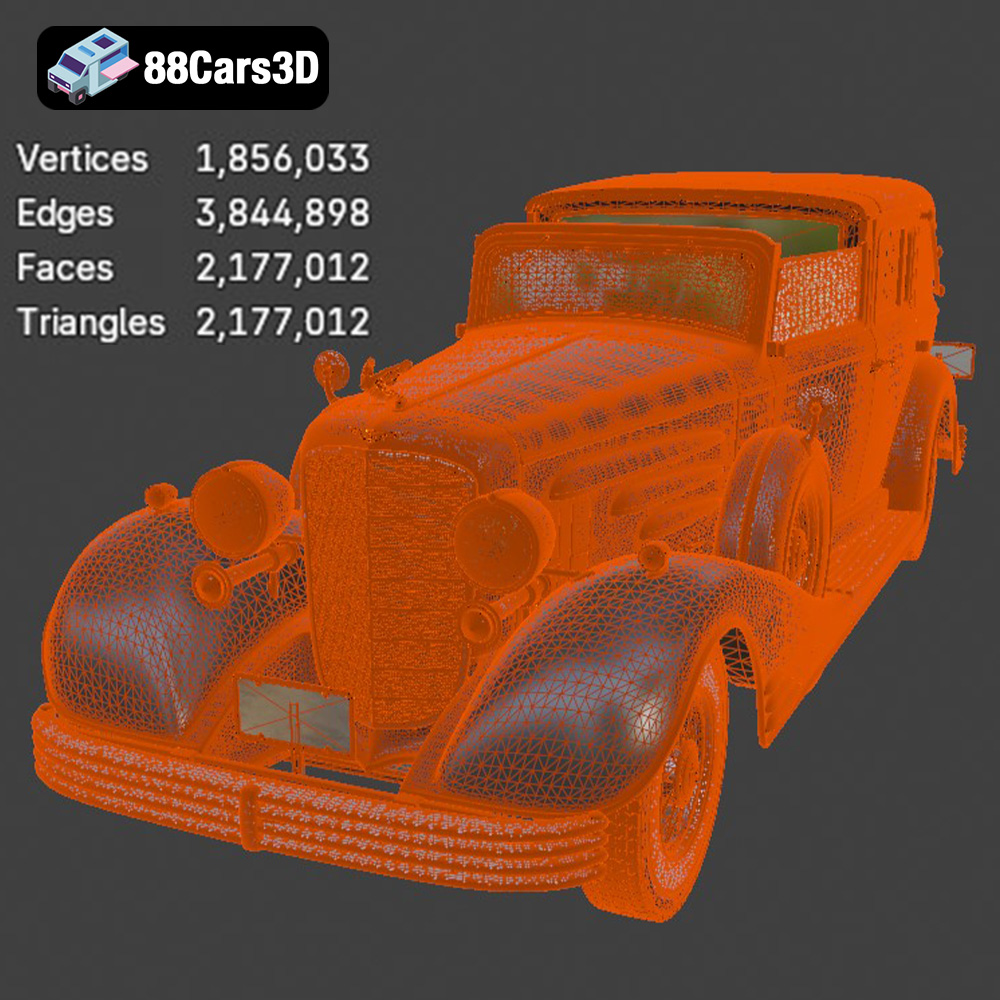
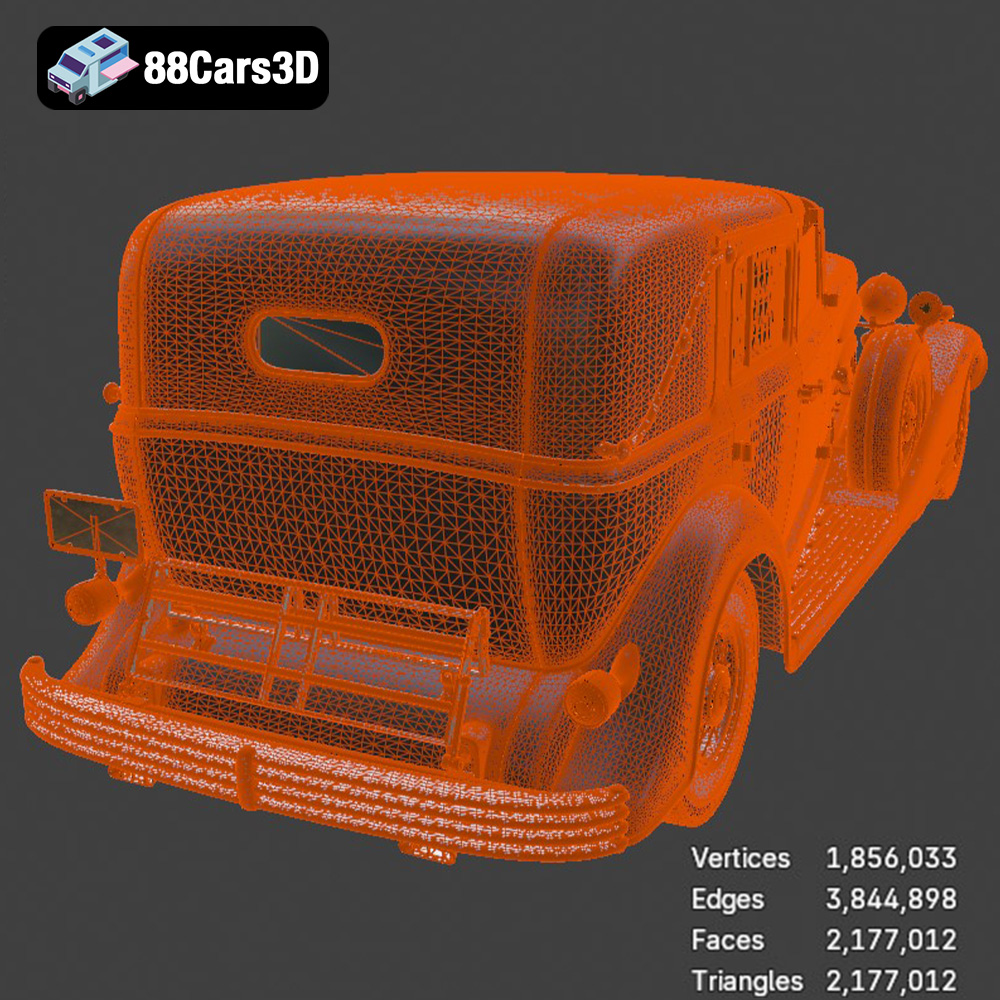
Beyond visual accuracy, the technical structure of a 3D model is paramount. Good topology ensures clean deformations for animation and efficient rendering. Polycount, specifically triangle count in real-time applications, dictates performance. The Cadillac V16 452-C Town Car 1933 3D Model strikes an impressive balance with a detailed topology of 2,177,012 triangles. While this is considered high detail, the geometry is intelligently structured. This allows for stunning photorealism, essential for high-end rendering and cinematic productions, while remaining versatile enough for real-time engines like Unreal and Unity. For game developers, this means a visual asset that holds up under close inspection without unduly taxing engine resources. The optimized geometry for first-person POV in gaming and VR experiences, coupled with real-world scale accuracy and proper pivot setups for steering, wheel rotation, and suspension travel, ensures that this model isn’t just a static display piece but a fully functional digital vehicle ready for dynamic interaction.
Navigating the diverse world of 3D applications requires a firm grasp of various file formats, each tailored for specific purposes and workflows. A high-quality 3D car model, such as the Cadillac V16 452-C Town Car 1933 3D Model, offers compatibility across a broad spectrum of these formats, ensuring maximum flexibility for any project. Understanding which format to use and when is crucial for efficient production pipelines, whether you’re working on automotive rendering, game development, or AR/VR experiences.
The comprehensive range of file formats available for the Cadillac V16 452-C Town Car 1933 3D Model underscores its versatility and the foresight of its creators. This selection ensures that no matter your chosen software or end-use application, you have the right tool for the job, streamlining your workflow and maximizing creative potential.
The true value of a premium 3D asset like the Cadillac V16 452-C Town Car 1933 3D Model lies in its seamless integration into various professional pipelines. From the meticulous detail required for cinematic sequences to the performance optimization demanded by real-time engines, a well-structured model can dramatically accelerate production and elevate visual quality across the board.
For cinematographers, advertisers, and VFX artists, photorealism is the ultimate goal. Software like 3ds Max, paired with renderers like V-Ray or Corona, and Blender’s Cycles or Eevee, are powerful tools for achieving this. The Cadillac V16 452-C Town Car 1933 3D Model, with its 2,177,012 triangle count, provides an exceptional foundation. In 3ds Max, artists can leverage its robust modeling tools to fine-tune reflections on the chrome accents and sweeping bodywork, adjusting material properties for the perfect blend of gloss, metallic sheen, and subsurface scattering on the leather interior. Blender users can utilize its node-based material system to create intricate shader networks for the classic whitewall tires, the rich woodwork detailing, and the period-correct multi-spoke wire wheels. The separate components for wheels, suspension, and steering make it animation-ready, allowing for realistic driving sequences, dramatic camera movements, and dynamic lighting setups that highlight the car’s majestic silhouette in any virtual environment. This level of detail makes it perfect for high-resolution stills or animated sequences in luxury brand campaigns or historical recreations.
Game development demands both visual fidelity and optimal performance. The “Game-Ready & Optimized” nature of the Cadillac V16 452-C Town Car 1933 3D Model makes it an invaluable asset for open-world games, racing titles, and simulators. In Unreal Engine, developers can import the .fbx or .unreal formats, which preserve materials, textures, and pivot points. This allows for immediate integration, enabling quick setup of physics assets, collision meshes, and vehicle blueprints. The optimized geometry ensures that while the car looks stunning, it doesn’t overtax the engine, maintaining smooth frame rates. Developers can easily implement real-time reflections for the polished chrome and body paint, and utilize Unreal’s sophisticated lighting system to cast realistic shadows and ambient occlusion. Similarly, in Unity, the .fbx format can be imported, and its material system can be used to achieve comparable visual quality. The accurate control details, including pedals, gear lever, and large-diameter steering wheel, enhance player immersion, making it suitable for first-person POV experiences or detailed driving simulators. The model’s real-world scale and pre-set pivot points significantly reduce the time spent on initial setup, allowing artists to focus on level design and gameplay mechanics.
Beyond games and film, high-quality 3D car models are essential for architectural visualization (ArchViz) and interactive experiences. For ArchViz, placing a classic vehicle like the 1933 Cadillac V16 in a scene can instantly evoke a specific era, adding scale, context, and a touch of historical grandeur to a rendered building or urban environment. The model’s detail ensures it holds up even in close-up shots, enhancing the realism of the overall visualization. In AR/VR, the .glb format becomes particularly useful. Imagine a virtual showroom where prospective buyers or enthusiasts can walk around, inspect, and even sit inside the Cadillac V16. The optimized polycount and real-world scale are crucial here, providing an immersive and believable experience. Developers can create interactive configurators, allowing users to change body/coachwork colors, modify tire textures, or adjust material finishes in real-time. This level of interaction is vital for educational platforms, luxury virtual showrooms, and museum-grade interactive displays, bringing historical vehicles to a new generation through cutting-edge technology.
The journey of a 3D model doesn’t always end on a screen. For enthusiasts, collectors, and even professional designers, the ability to transform a digital asset into a tangible object through 3D printing offers a unique avenue for appreciation and prototyping. The Cadillac V16 452-C Town Car 1933 3D Model provides an .stl format, opening up this exciting possibility.
While the .stl format is designed for 3D printing, preparing a highly detailed model like the Cadillac V16 requires careful consideration. The model’s high triangle count provides excellent surface detail, which is perfect for resin printing, known for its ability to capture fine intricacies. Recommended scales like 1:12, 1:18, or 1:24 allow for a substantial and impressive physical model without making it unwieldy. Key considerations include wall thickness (1.2–2.0 mm) to ensure structural integrity, especially for delicate parts. Supports will be absolutely required for elements like the exhaust system, mirrors, the intricate wire spokes of the wheels, and the steering wheel to prevent sagging during the printing process. Proper print orientation, such as printing the frame angled for strength and wheels separately, is crucial for minimizing supports and achieving cleaner results. Post-processing, including sanding, priming, and applying authentic factory colors with metallic finishes, will bring the physical model to life, mirroring the digital fidelity.
The .stl file of the 1933 Cadillac V16 isn’t just for hobbyists; it has practical applications for designers and restorers. For instance, it could be used for rapid prototyping of specific components if a physical reference is needed, or for creating display models for automotive museums. The ability to output a display-scale model allows for physical interaction and appreciation that a screen cannot fully replicate. While .stl files do not carry color or texture information, the geometric accuracy derived from the high-fidelity digital model ensures that the printed object is a true representation of the original design. This bridges the gap between the virtual and physical worlds, offering a versatile tool for both aesthetic enjoyment and functional analysis.
A truly professional 3D car model offers more than just static beauty; it provides a canvas for boundless creative customization. The Cadillac V16 452-C Town Car 1933 3D Model is designed with this versatility in mind, allowing artists and developers to adapt it to an endless array of scenarios and stylistic requirements.
The beauty of a high-fidelity 3D model lies in its ability to be re-skinned and re-textured to fit any narrative. For the Cadillac V16, this means the freedom to change body/coachwork colors, experimenting with classic two-tone 1930s factory finishes or even a more contemporary, stylized look for abstract art pieces. Imagine a sleek matte black finish for a modern luxury advertisement versus a vibrant, polished metallic blue for a period film. Tire textures can be modified to reflect different conditions – from pristine, clean whitewalls for a showroom render to weathered, mud-splattered tires for a post-apocalyptic game environment. Material finishes are also highly adaptable; the opulent rear passenger compartment’s tufted seating can be changed from plush leather to velvet, and the rich woodwork detailing can be made to look freshly varnished or aged with a subtle patina. This level of material and texture control allows for dynamic visual storytelling, making the Cadillac V16 model suitable for a diverse range of artistic visions, from historical accuracy to imaginative reinterpretations.
Beyond static renders, the truly interactive potential of a 3D car model comes alive through animation. The Cadillac V16 452-C Town Car 1933 3D Model is designed with animation in mind, featuring separate wheels, suspension, and steering components. This crucial detail allows animators to accurately simulate driving physics, wheel rotation, steering maneuvers, and realistic suspension travel over uneven terrain. Imagine a cinematic shot where the Cadillac gracefully navigates a winding country road, its suspension subtly responding to bumps, or a game scenario where players experience the realistic handling of this vintage luxury vehicle. The proper pivot setup for these components significantly streamlines the rigging and animation process, saving countless hours for character artists and technical directors. Furthermore, adjusting lighting for different environments – from the golden hour glow of a sunset scene to the harsh, direct light of a studio setup – can dramatically alter the mood and visual impact of the animated sequence. This animation readiness makes the model an exceptional asset for dynamic scenes, interactive configurators, and immersive VR experiences where user interaction with the vehicle is key.
The journey through the creation, utilization, and versatility of high-quality 3D car models reveals them to be far more than just digital representations. They are foundational assets that empower artists, designers, and developers to bring their visions to life with unparalleled detail and realism. From the demanding requirements of cinematic rendering to the performance-critical environments of game development and the tangible outputs of 3D printing, a well-crafted 3D model acts as a powerful catalyst for innovation.
The Cadillac V16 452-C Town Car 1933 3D Model stands as a testament to this commitment to quality, offering an extraordinary blend of historical accuracy, technical optimization, and broad format compatibility. Its meticulous detail, intelligent geometry, and animation readiness make it an invaluable tool for recreating the grandeur of a bygone era or injecting a touch of classic elegance into any modern digital production. Whether you’re crafting a stunning visualization, building an immersive game world, or designing a physical display piece, assets of this caliber elevate your work. Explore this and many other premium 3D car models at 88cars3d.com, where quality meets creativity, opening up new possibilities for your next project.
The 1933 Cadillac V16 (452-C) Town Car is an undisputed masterpiece of American automotive history, representing the absolute pinnacle of pre-war luxury and bespoke coachbuilding. Renowned for its whisper-quiet, colossal 16-cylinder engine and the distinctive open-chauffeur “Town Car” body style, this magnificent vehicle defined 1930s elegance and prestige. Key visual elements include its sweeping pontoon fenders, the iconic Goddess hood ornament, majestic chrome V-shaped grille, and dual side-mount spare tires, all culminating in a breathtakingly regal silhouette.
$37.50
.blend
.cadillac
.fbx
.glb
.max
.obj
.ply
.rendering
.stl
.unreal
.v16
1933
452-c
car-3d-model
classic-car
game asset
game-ready
luxury car
optimized
pre-war
town-car
VR/AR