Get 20% OFF All Premium 3D & STL Models!

In the dynamic world of 3D visualization, game development, and industrial simulation, the demand for high-quality, meticulously crafted assets is constantly evolving. From intricate 3D car models to robust heavy machinery, professionals require digital tools that not only look authentic but are also technically optimized for diverse applications. A stellar example of such an asset is a detailed Compact Track Excavator 3D model, a workhorse of construction sites, now a powerful component in digital pipelines.
This compact track excavator stands as a testament to modern engineering, known for its ability to operate with precision and power in tight spaces. Its real-world counterpart is defined by a robust track system, an articulated hydraulic boom, and a heavy-duty digging bucket – all features that must be flawlessly translated into its digital representation. When a 3D model like the Compact Track Excavator 3D Model Download STL FBX OBJ GLB Blend from 88cars3d.com is created with such attention to detail, it opens up a wealth of possibilities, from realistic automotive rendering scenarios to immersive game environments and critical AR/VR training programs.
The versatility of a 3D model is often defined by the file formats it supports. For professionals working across various platforms and disciplines, understanding these formats is paramount. The Compact Track Excavator 3D Model exemplifies this by offering an extensive suite of formats, each tailored for specific use cases, ensuring maximum compatibility and utility.
The .blend format is Blender’s native file type, offering a complete snapshot of a Blender project. This includes not just the mesh geometry, but also materials, textures, lighting, cameras, animations, modifiers, and even scene settings. For artists and studios deeply integrated into the Blender ecosystem, a .blend file is invaluable. It allows for full editability, enabling users to tweak every aspect of the model, from adjusting mesh topology to modifying shader graphs, ensuring the Compact Track Excavator 3D Model integrates seamlessly into ongoing projects without losing any native Blender-specific features. It’s the ultimate format for customization and iterative design within Blender.
Autodesk’s .fbx (Filmbox) format is arguably the most prevalent exchange format in the 3D industry, especially critical for game development and animation pipelines. FBX excels at carrying complex scene data, including meshes, materials, textures, rigging, skinning, blend shapes, cameras, and animations, across different software applications like Maya, 3ds Max, Unity, and Unreal Engine. It’s a binary format, making it relatively efficient for large datasets. For game assets like the excavator, .fbx is essential for importing into real-time engines, where it can be used to set up physics, collision, and character (or vehicle) animations, making it an ideal choice for the core game asset.
The .obj (Wavefront OBJ) format is a widely supported, universal 3D geometry definition file. It’s text-based and primarily stores mesh information such as vertices, normals, UV coordinates, and faces. While it doesn’t store animation or advanced material properties directly, it often comes with an accompanying .mtl (Material Template Library) file, which defines basic material parameters like diffuse color, specular color, and texture maps. OBJ is robust for static meshes and is a reliable choice when cross-software compatibility is the highest priority, ensuring the excavator’s geometry can be loaded into virtually any 3D application for basic rendering or further refinement.
.glb (GL Transmission Format Binary) is an increasingly important format, particularly for web-based 3D, Augmented Reality (AR), and Virtual Reality (VR) applications. It’s the binary version of glTF, designed to be compact, efficient, and quick to load. A single .glb file can encapsulate geometry, materials, textures, and even animations, making it self-contained and easy to deploy on websites, social media, or mobile AR experiences. For showcasing the Compact Track Excavator 3D Model in a virtual showroom or an AR training module, .glb offers an optimized, streamlined solution.
.stl (Stereolithography) is the de facto standard file format for 3D printing. Unlike other formats, .stl defines only the surface geometry of a 3D object using a tessellated representation of triangles. It does not carry color, texture, or material information. While this simplifies the data, it means intricate details rely solely on geometric precision. For hobbyists wanting to print a physical model of the compact track excavator, or for engineers creating scale prototypes, the .stl file provides the necessary raw mesh data for slicing software to prepare for fabrication.
The .ply (Polygon File Format) is often used for storing 3D data from 3D scanners or for CAD applications requiring precise mesh information. It can store a wider range of data than .stl, including color, transparency, normals, and texture coordinates per vertex, not just per face. This makes it suitable for complex analysis, scientific visualization, or when higher fidelity data preservation is required than what OBJ or STL can offer. While less common for general game assets, it provides an additional layer of data integrity for specialized workflows involving the excavator model.
When a product lists .unreal as a format, it typically implies an asset that is not just compatible but specifically prepared and optimized for Unreal Engine. This could mean pre-configured materials, collision meshes, LODs (Levels of Detail), and potentially even basic Blueprints for interactive elements. While Unreal Engine primarily imports FBX files, providing an “.unreal” option suggests the asset has undergone a thorough optimization pass within the engine, ensuring it’s ready to be dropped into a project with minimal setup, saving valuable development time for creators working on construction simulators or industrial visualizations.
Similar to .blend for Blender, the .max format is Autodesk 3ds Max’s native file type. It contains the entire scene, including geometry, modifiers, materials, textures, lights, cameras, animation paths, and environment settings specific to 3ds Max. For professionals whose primary 3D application is 3ds Max, the .max file offers the highest level of control and flexibility, allowing for deep customization, complex rigging, and advanced rendering setups for the Compact Track Excavator 3D Model within the powerful 3ds Max environment.
A truly professional 3D asset goes beyond mere surface representation; it embodies detailed engineering and thoughtful optimization. The Compact Track Excavator 3D Model from 88cars3d.com is a prime example of this philosophy, showcasing a blend of visual authenticity and technical prowess.
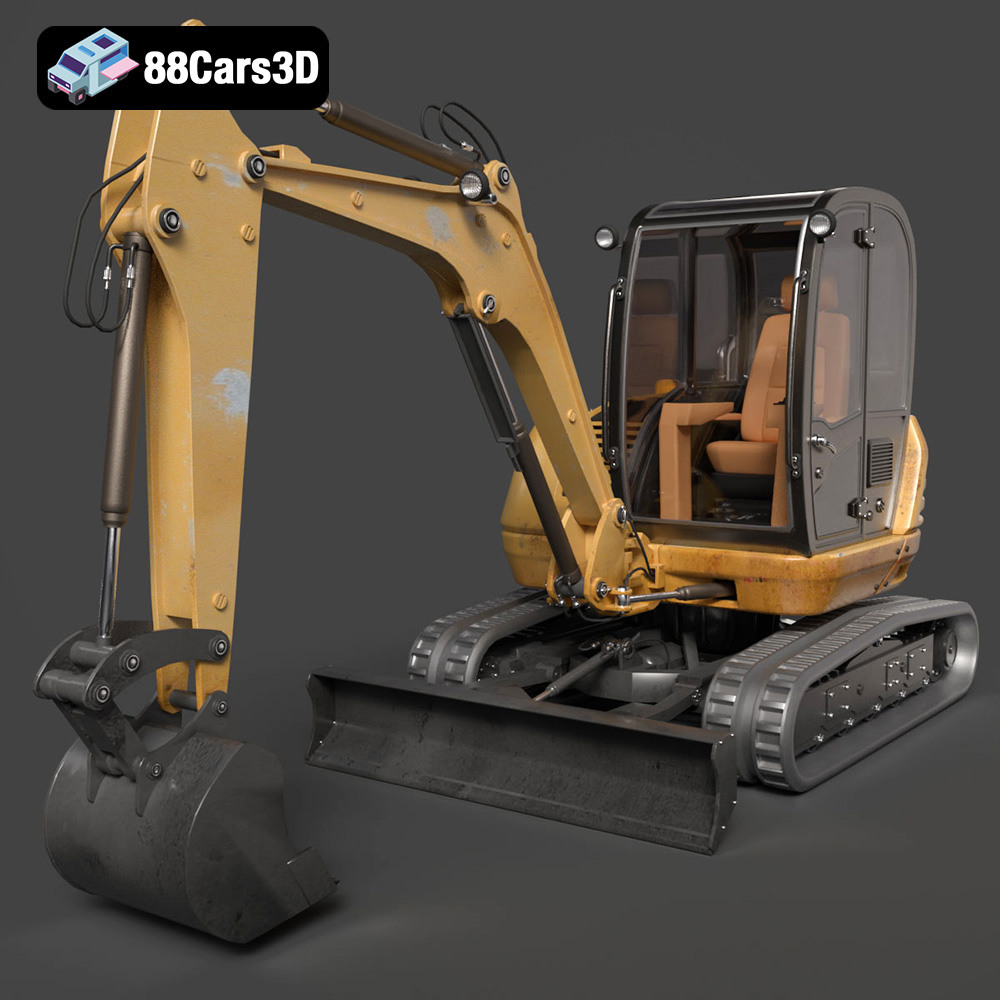
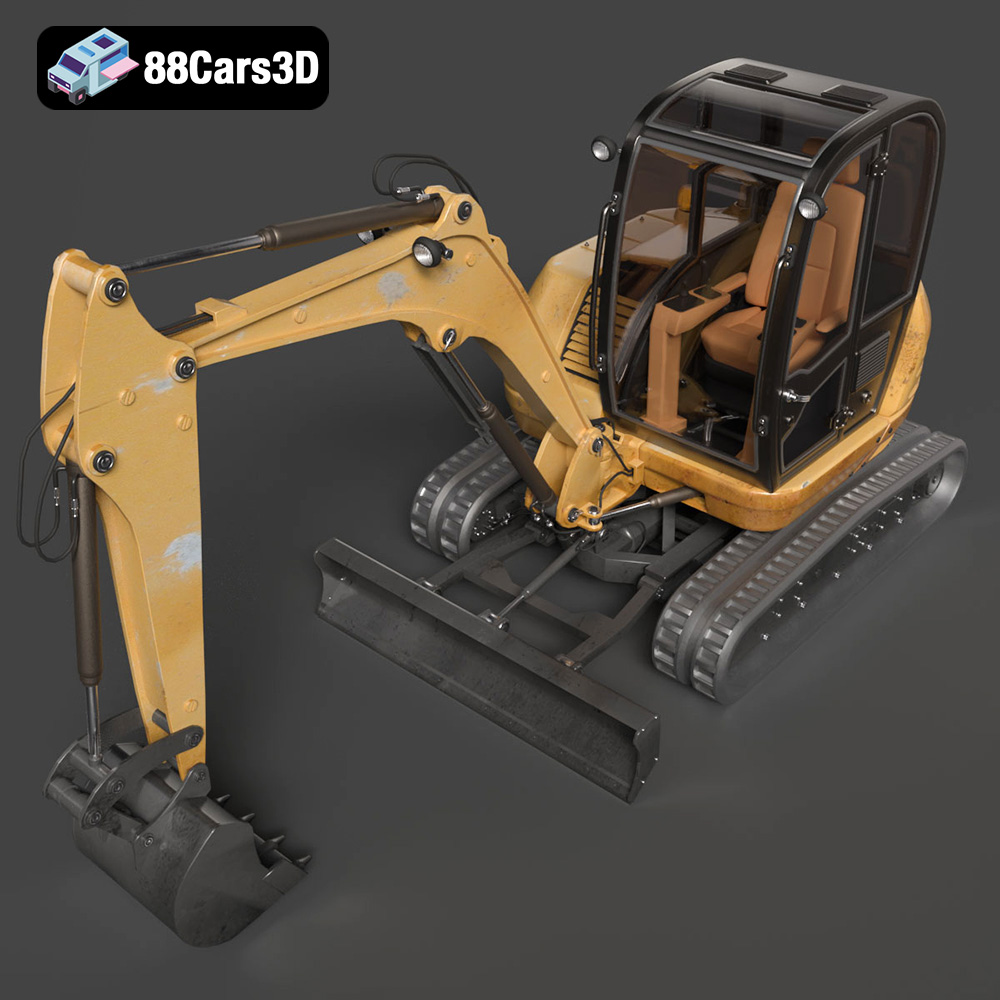
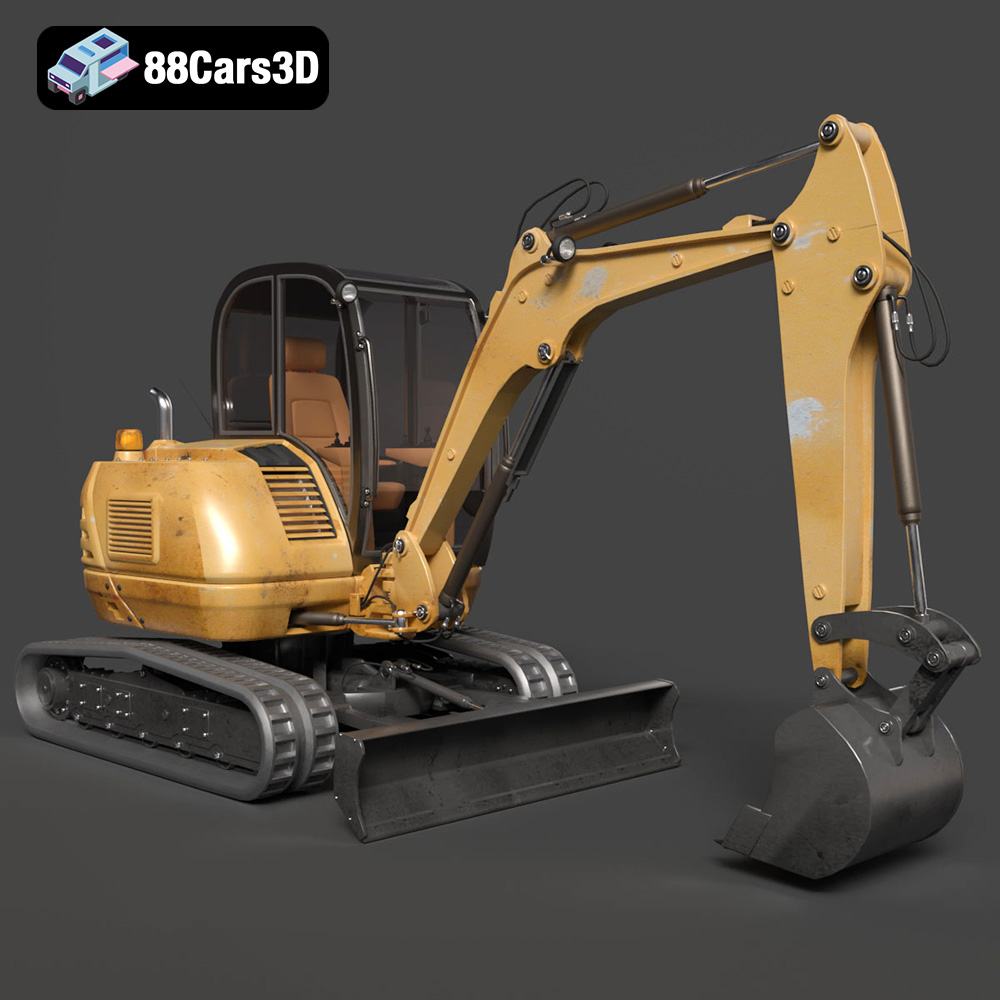
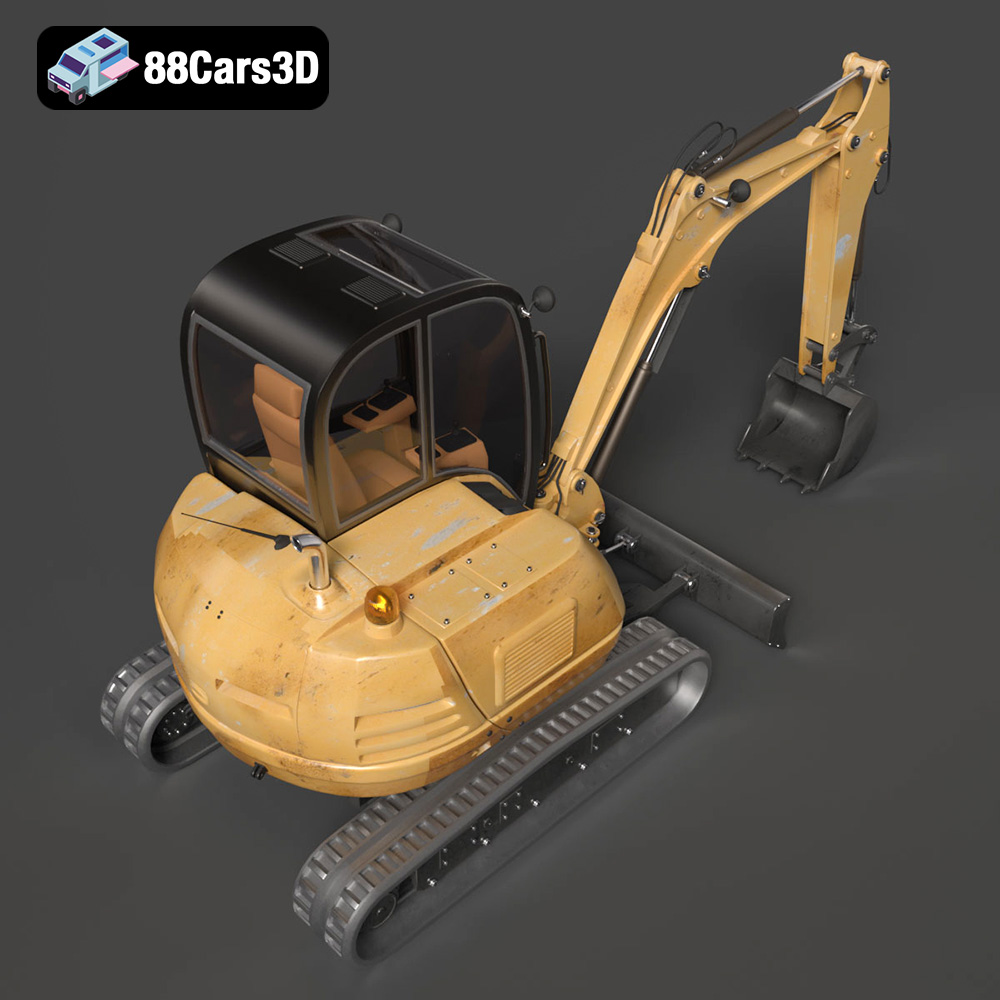
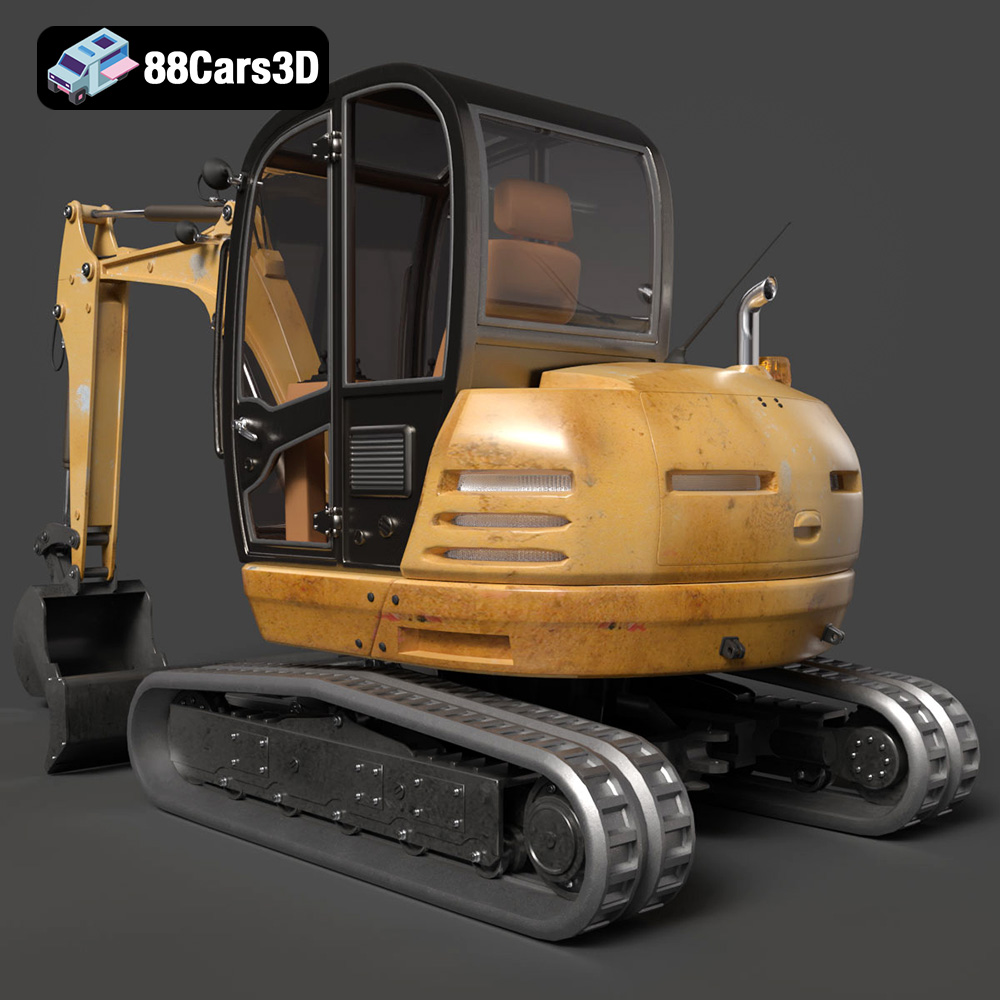
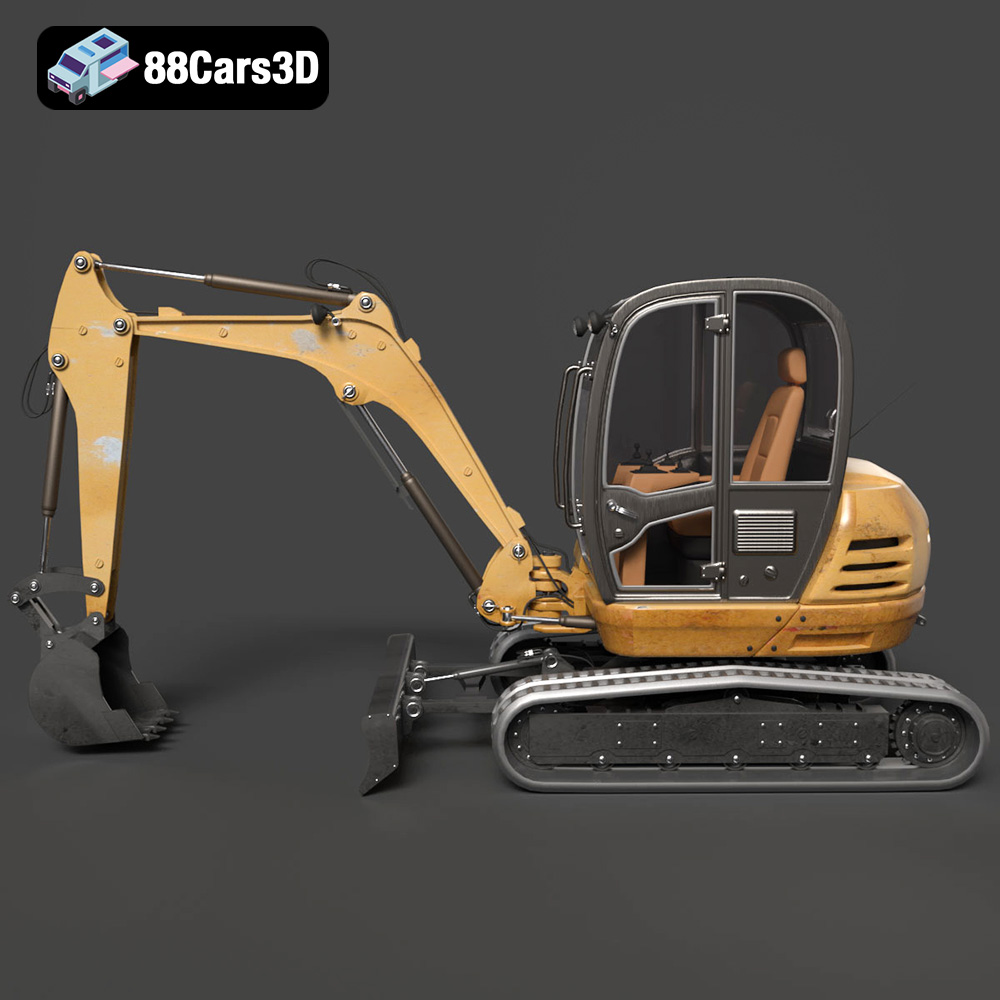
The exterior of this digital excavator is a masterclass in industrial realism. Every component, from the accurate frame geometry to the heavy-duty digging bucket with realistic teeth and reinforced plating, is meticulously modeled. The hydraulic system, a critical element for any excavator, features detailed cylinders, pistons, and precisely routed hoses, ready for dynamic animation. The robust undercarriage boasts highly detailed continuous tracks and drive sprockets, crucial for believable movement simulations. Industrial work lighting and warning beacons add to the functional aesthetic, ensuring the model appears ready for any demanding construction site scenario.
Beyond static representation, the model is intelligently segmented. Separate components for the track, turret, boom, stick, and bucket are engineered with proper pivot points. This forethought ensures seamless rigging and animation workflows, allowing for realistic 360-degree turret rotation, track movement, and multi-stage boom articulation – vital for game development and advanced automotive rendering applications where dynamic motion is key.
The realism doesn’t stop at the exterior. The operator cabin, often overlooked in less detailed models, is fully realized. It features a reinforced safety cage and an ergonomic suspension seat, providing a believable environment for an operator. Within the cockpit, detailed dual joystick controls, driving pedals, and a digital instrument cluster with operational control panels contribute to an immersive experience. Safety levers and a realistic visibility structure complete the interior, making it perfectly optimized for first-person perspective (POV) in gaming, virtual reality (VR) simulators, and heavy equipment training programs.
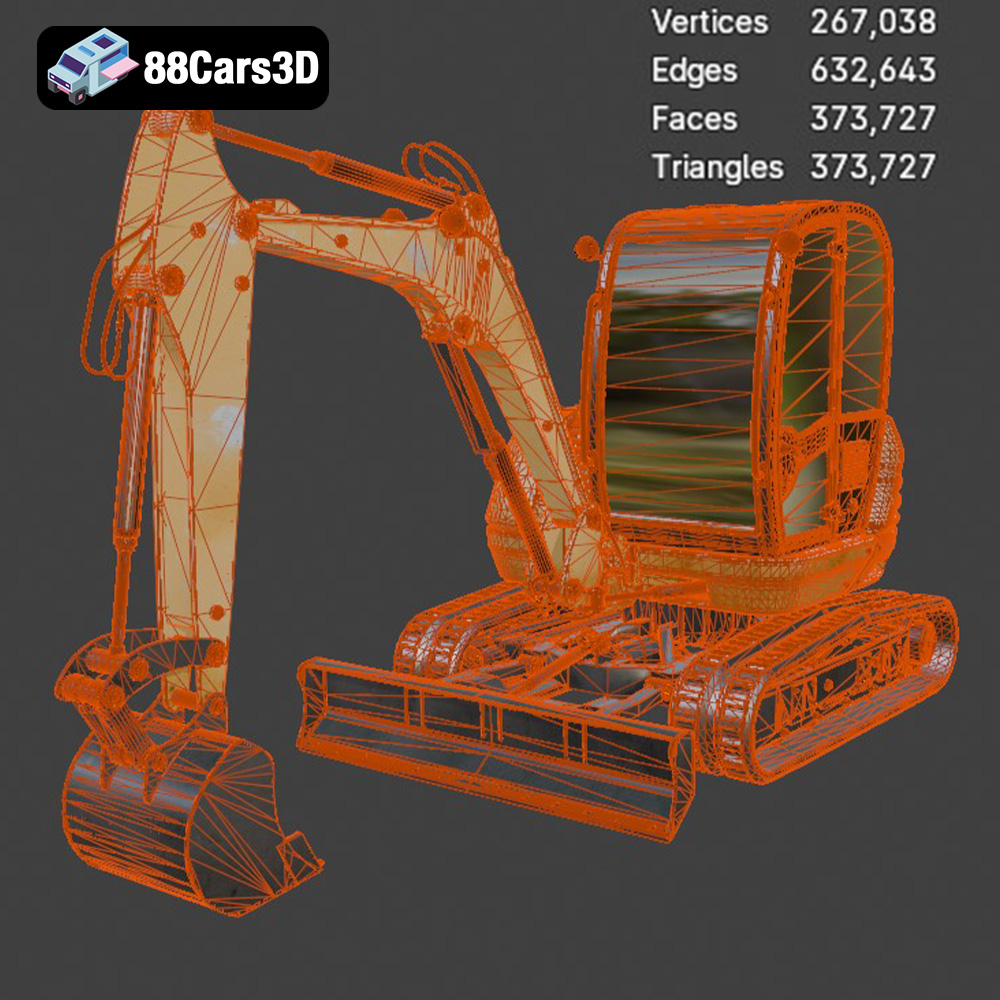
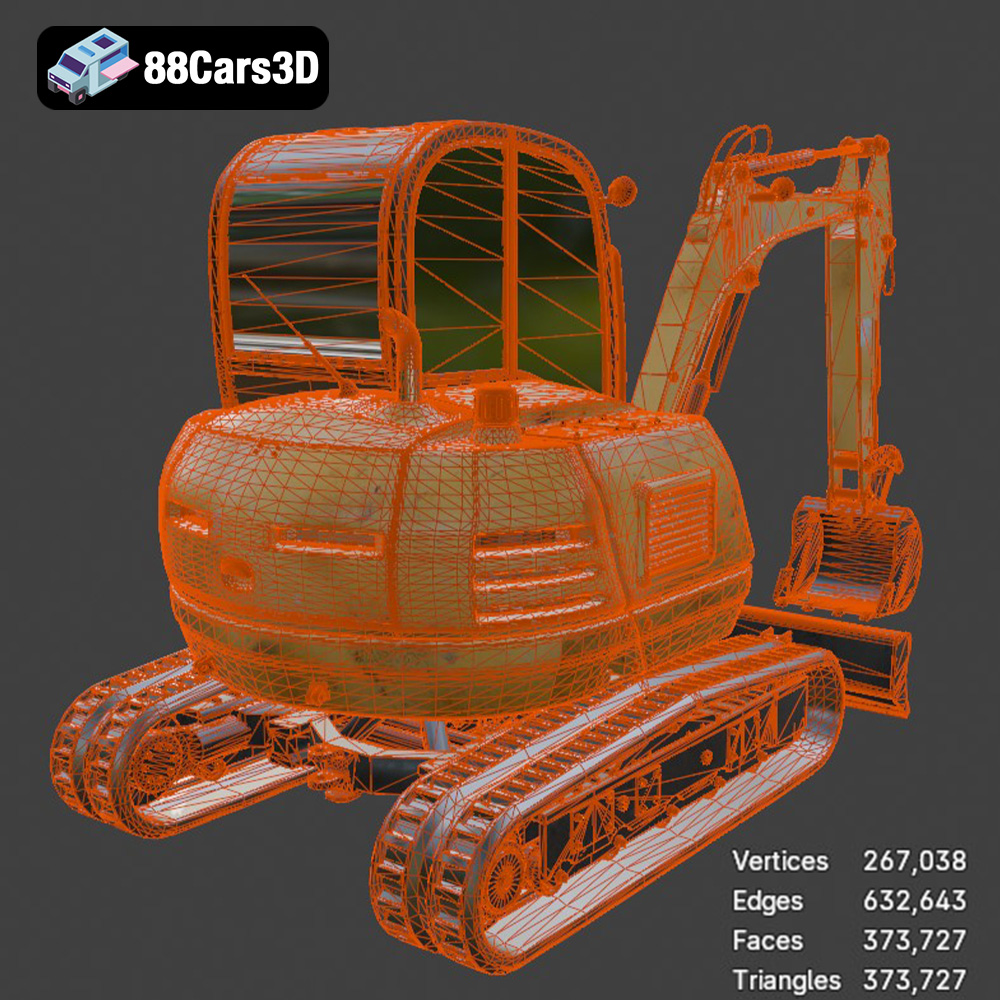
Underpinning the visual fidelity is a solid technical foundation. With 373,727 triangles, the Compact Track Excavator 3D Model strikes an optimal balance. This polycount is sufficiently high to maintain high-end visual realism for close-up renders and detailed animations, yet efficient enough to be considered “game-ready” for real-time engines like Unreal and Unity. Real-world scale accuracy ensures it integrates seamlessly with other assets in a scene, adhering to industry standards. This level of optimization and detailed technical specification is what transforms a simple 3D object into a versatile and professional-grade asset.
The true value of a premium 3D asset lies in its practical application across various professional pipelines. The Compact Track Excavator 3D Model from 88cars3d.com is designed for seamless integration into some of the most demanding creative and industrial workflows.
For game developers, especially those crafting construction simulators, open-world environments, or heavy equipment games, this excavator is an ideal game asset. Its optimized polycount of 373,727 triangles ensures excellent performance in real-time engines without sacrificing visual quality. Importing the model via .fbx into Unreal Engine or Unity allows developers to leverage pre-established pivot points for easy rigging. This means less time spent on foundational setup and more on creating engaging gameplay mechanics around 360-degree turret rotation, realistic track movement, and multi-stage boom articulation.
The “unreal” specific offering suggests that materials, collision meshes, and potentially even LODs (Levels of Detail) are already configured, significantly accelerating the integration process. Developers can focus on implementing intricate physics, creating interactive control schemes for the operator’s cabin, and building dynamic environments where the excavator feels truly at home.
Architectural visualization artists and industrial designers will find the Compact Track Excavator 3D Model invaluable for creating stunning renders. With native .max and .blend files provided, users have complete control over every aspect of the model within their preferred software. This allows for extensive material customization, from changing the main chassis colors to applying intricate dirt, mud, and scratch textures for weathered site realism. Adjustable material finishes (matte metal, gloss paint, rubber tracks) and adaptable work lighting enable artists to craft any scenario, from pristine product showcases to gritty construction site renders.
The meticulous detailing of the hydraulic system, undercarriage, and interior holds up exceptionally well even in extreme close-up shots, making it perfect for high-resolution stills or cinematic animations. Integrating it into architectural site plans or industrial demonstrations adds a layer of authenticity and operational context that elevates any visualization project.
The growing fields of Augmented Reality and Virtual Reality demand highly optimized assets that can load quickly and perform smoothly on various devices. The inclusion of the .glb format makes the excavator model perfectly suited for immersive industrial training programs, virtual showrooms, or even mobile AR experiences. Its efficiency ensures minimal load times and fluid interaction, providing a compelling user experience. Imagine prospective clients exploring a virtual construction site on their tablet, with a fully interactive, real-scale excavator appearing right in their living room.
While digital visualization is a primary use case, the Compact Track Excavator 3D Model also offers a tangible dimension through 3D printing, making it useful for hobbyists, educators, and even engineers.
The availability of the .stl format transforms the digital asset into a physical object. For 3D printing, careful preparation is essential. The model is recommended at scales like 1:35, 1:48, or 1:50, perfect for dioramas or display. Depending on the printer and desired detail, layer heights between 0.04–0.12 mm are suggested, with resin printing highly recommended to capture the fine intricacies of the hydraulic hoses, cabin rails, and bucket teeth. Wall thickness should be maintained between 1.2–2.0 mm, and an infill of 20–30% is generally sufficient for structural integrity. Crucially, supports will be required for overhangs and delicate parts, with print orientation optimized (main body upright, tracks and boom components separately) to minimize support structures and maximize print quality.
Once printed, the physical model can be further enhanced through post-processing. Sanding, applying primer, and painting with authentic industrial yellow/orange finishes can bring the model to life. For ultimate realism, weathering effects like dirt, rust, and oil stains can be applied, transforming the printed excavator into a miniature replica ready for a dusty construction site diorama. This tactile aspect adds another layer of engagement and educational value to the 3D model.
While primarily aimed at display, the inclusion of the .ply format offers potential for engineering applications. PLY files can carry more detailed mesh data, which could be beneficial for certain types of analysis or for integration into more complex CAD workflows where precise geometric measurements are critical. This extends the model’s utility beyond purely aesthetic purposes, allowing for deeper technical exploration.
Investing in high-quality 3D assets like the Compact Track Excavator 3D Model from 88cars3d.com is a strategic decision for any professional. The built-in customization options and inherent flexibility ensure that the asset remains valuable across multiple projects and evolving technical requirements.
The model’s design facilitates extensive customization. Whether it’s changing the main chassis colors to match a specific fleet’s branding, applying a fresh coat of virtual paint, or adding layers of grime and wear for a hyper-realistic scene, the possibilities are vast. Adjusting material finishes allows for fine-tuning the visual impact, from glossy showroom presentation to weathered on-site realism. Furthermore, adapting the industrial work lighting for nighttime construction environments or emergency scenarios adds narrative depth to any visualization or game level.
A well-structured 3D model, especially one offered in multiple industry-standard formats, significantly enhances asset longevity. The Compact Track Excavator 3D Model can be reused across different projects – from a game’s main vehicle to a background asset in an automotive rendering showcase, or even a printed prototype for a client presentation. This reusability saves considerable development time and resources, making it a cost-effective investment. As technology evolves, having a robust, adaptable base model ensures that it can be updated and integrated into future rendering pipelines, AR/VR platforms, and game engines, truly future-proofing your digital library.
The digital landscape of 3D modeling demands assets that are not only visually stunning but also technically robust and versatile. The Compact Track Excavator 3D Model Download STL FBX OBJ GLB Blend perfectly embodies these requirements, serving as an indispensable tool for professionals across game development, architectural visualization, AR/VR simulation, and even 3D printing. Its meticulous detail, balanced polycount, and extensive file format support make it an outstanding choice for any project requiring a high-fidelity representation of heavy construction machinery.
From the nuanced realism of its hydraulic systems and operator cabin to its game-ready optimization and comprehensive customizability, this model empowers creators to bring their visions to life with unparalleled precision. By understanding the intricacies of each included file format and leveraging the model’s integrated features, artists and developers can significantly streamline their workflows and elevate the quality of their final output. For those seeking premium 3D assets that deliver on both aesthetics and technical performance, exploring offerings like this exceptional excavator model at 88cars3d.com is a clear path to digital excellence.
The Compact Track Excavator represents the pinnacle of modern construction and heavy machinery engineering. Designed for versatility and power in confined spaces, this machine is characterized by its robust track system, highly articulated hydraulic boom, and heavy-duty digging bucket. Its distinctive industrial styling is complemented by exposed hydraulic hoses, a reinforced operator cabin, and an aggressive stance that makes it a staple on any digital construction site. This meticulously crafted 3D model features a well-optimized topology with 373,727 triangles, delivering uncompromising visual fidelity while remaining efficient for real-time applications. Whether deployed in game development, industrial simulations, AR/VR training programs, or high-end architectural visualizations, the asset is structured to provide maximum realism. The meticulously modeled undercarriage and boom pivot points ensure seamless rigging and animation.
$36.50
.blend
.excavator
.fbx
.glb
.max
.obj
.ply
.rendering
.stl
.unreal
compact-track-excavator
construction-equipment
game asset
game-ready
heavy-machinery
low-poly
optimized
vehicle-3d-model
VR/AR