Get 20% OFF All Premium 3D & STL Models!

In the dynamic world of 3D visualization, the demand for hyper-realistic and functionally optimized assets continues to grow. From blockbuster video games to cutting-edge architectural presentations and immersive virtual reality experiences, a high-quality 3D model can be the linchpin of a successful project. Automotive subjects, in particular, present a unique challenge, requiring an intricate balance of aesthetic fidelity and technical efficiency. Crafting a vehicle from scratch demands significant time, expertise, and computational resources, often placing a heavy burden on production schedules.
This is precisely where expertly pre-modeled assets become invaluable. Imagine needing a contemporary, family-friendly SUV to populate a bustling urban street scene for an architectural visualization, or a versatile vehicle for a new open-world game. The solution lies in robust, ready-to-use models that integrate seamlessly into diverse pipelines. Today, we’re delving deep into one such exemplary asset: the Hyundai Santa Fe 2019 3D model. This model isn’t just a digital representation; it’s a meticulously engineered solution designed to empower professionals across various industries, providing the detailed realism and technical optimization needed to elevate any project. Its availability through platforms like 88cars3d.com ensures that creators have access to premium assets that meet the rigorous demands of modern 3D production.
The versatility of a 3D model often hinges on the breadth of file formats it supports. Different formats are optimized for distinct purposes, software environments, and performance needs. The Hyundai Santa Fe 2019 3D model is offered in a comprehensive suite of formats, ensuring maximum compatibility and utility for any professional workflow. Understanding these formats is crucial for leveraging the model effectively.
The .blend format is the native file type for Blender, a powerful open-source 3D creation suite. When you download the Hyundai Santa Fe 2019 3D model in .blend format, you gain access to a fully editable Blender scene. This typically includes not just the raw mesh data, but also the scene hierarchy, material setups (often utilizing Blender’s Principled BSDF shader for physically based rendering), lighting, camera views, and any modifiers or rigging applied. For Blender artists, this means an immediate, ready-to-render setup that can be easily customized, animated, or integrated into existing Blender projects without any loss of data or conversion artifacts.
FBX (Filmbox) is a proprietary file format owned by Autodesk, widely regarded as the industry standard for exchanging 3D data between different software applications. Its strength lies in its ability to store a vast amount of 3D data, including geometry, materials, textures, animations, rigging, and camera information, while maintaining scene hierarchy. The .fbx format is ideal for moving the Hyundai Santa Fe 2019 3D model between DCC (Digital Content Creation) tools like 3ds Max, Maya, and Blender, and especially into real-time game engines like Unreal Engine and Unity. For game developers, .fbx is often the go-to for its robust animation support and efficient handling of complex scenes, making it perfect for game assets like our detailed SUV.
OBJ (or .obj) is a simple, universal 3D geometry definition file format that can be opened and used by virtually any 3D software. It stores mesh geometry (vertices, normals, texture coordinates, and faces) and references external material files (.mtl). While .obj does not support animation, rigging, or scene hierarchy in the same way .fbx does, its widespread compatibility makes it an excellent choice for basic mesh transfer and archiving. For users needing raw geometry for retopology, sculpting, or cross-software basic integration of the Hyundai Santa Fe 2019 3D model, .obj offers a reliable, no-frills solution.
GLB (GL Transmission Format Binary) is a compact, binary version of the glTF (GL Transmission Format) file format, which is an open-standard, royalty-free specification for 3D scenes and models. .glb files encapsulate all necessary assets (geometry, materials, textures, animations) into a single file, making them incredibly efficient for web-based 3D applications, augmented reality (AR), and virtual reality (VR) experiences. When you need to display the Hyundai Santa Fe 2019 3D model interactively in a browser, a mobile AR app, or an immersive VR showroom, the .glb format provides an optimized, fast-loading, and visually rich solution.
STL (STereoLithography) is the most common file format for 3D printing. It describes only the surface geometry of a 3D object, representing it as a series of connected triangles (a triangulated surface). While it doesn’t store color or material information, its simplicity and ubiquitous support across 3D printing software make it indispensable. For hobbyists or professionals looking to produce a physical replica of the Hyundai Santa Fe 2019 3D model, the .stl file is the critical output for successful fabrication, enabling precise physical models for display or prototyping.
PLY (Polygon File Format) is another common file format for storing 3D data, particularly from 3D scanners or for CAD applications. It can store a wider range of properties than .stl, including color, transparency, and sometimes even confidence values for scanned data, allowing for more precise representation of complex surfaces. While less common for direct rendering, the .ply format for the Hyundai Santa Fe 2019 3D model can be useful for engineers or designers who need to integrate the model into CAD software for analysis, reverse engineering, or high-precision manufacturing workflows.
The .unreal extension typically refers to an asset that has been specifically prepared or exported for direct use within Unreal Engine. This might imply optimized geometry, properly configured materials (often using Unreal’s own material system), collision meshes, LODs (Levels of Detail), and a specific asset pipeline setup to ensure the model performs optimally within the engine’s real-time rendering environment. The inclusion of this format for the Hyundai Santa Fe 2019 3D model signifies its explicit readiness for high-performance interactive experiences and game development within Unreal Engine, minimizing setup time and maximizing efficiency.
The .max file format is the native scene file for Autodesk 3ds Max, a leading software for 3D modeling, animation, rendering, and compositing. Like .blend for Blender, a .max file contains all scene information: geometry, materials, textures, lights, cameras, animation, and modifiers. For 3ds Max users, this format offers full control over the Hyundai Santa Fe 2019 3D model, allowing for detailed customization, complex animation sequences, and integration into advanced rendering pipelines like V-Ray or Corona Renderer. It’s the ideal choice for high-end automotive rendering and architectural visualization where 3ds Max is the primary tool.
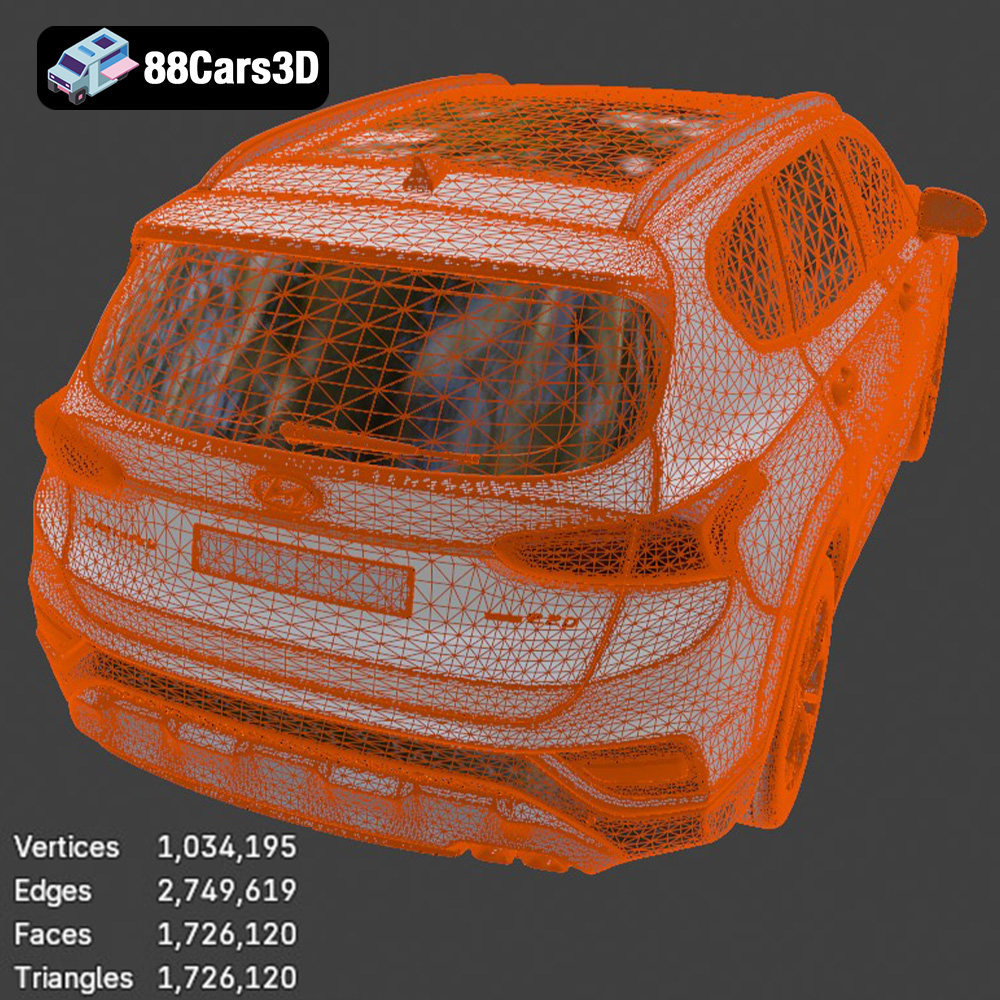
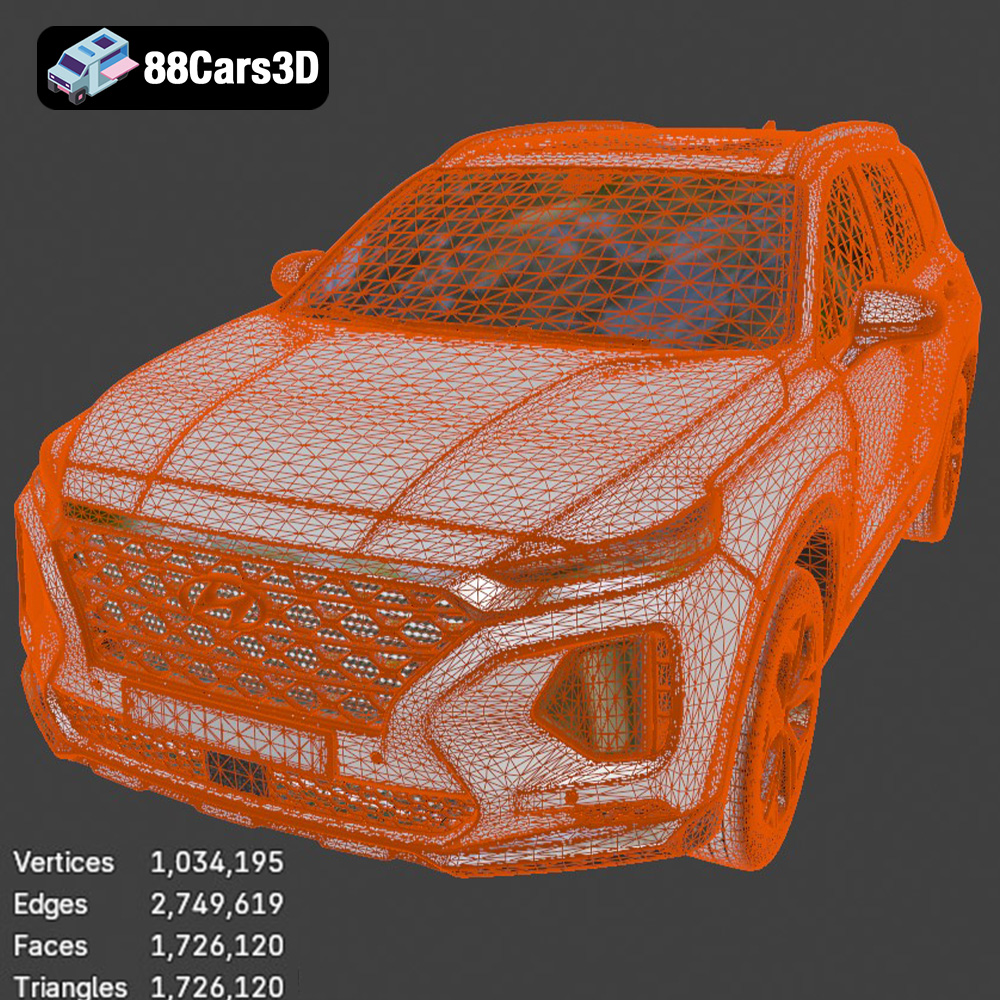
Creating a truly professional 3D car model is a sophisticated endeavor, demanding both artistic skill and technical precision. The Hyundai Santa Fe 2019 3D model exemplifies this fusion, offering a product that is visually stunning yet rigorously optimized. With a geometry boasting 1,726,120 triangles, it strikes a crucial balance: enough detail for uncompromising visual fidelity, yet carefully managed to remain game-ready and efficient for real-time environments. This isn’t just a high polygon count; it’s a strategically distributed mesh that ensures smooth surfaces and sharp details where they matter most, without burdening rendering engines with unnecessary complexity.
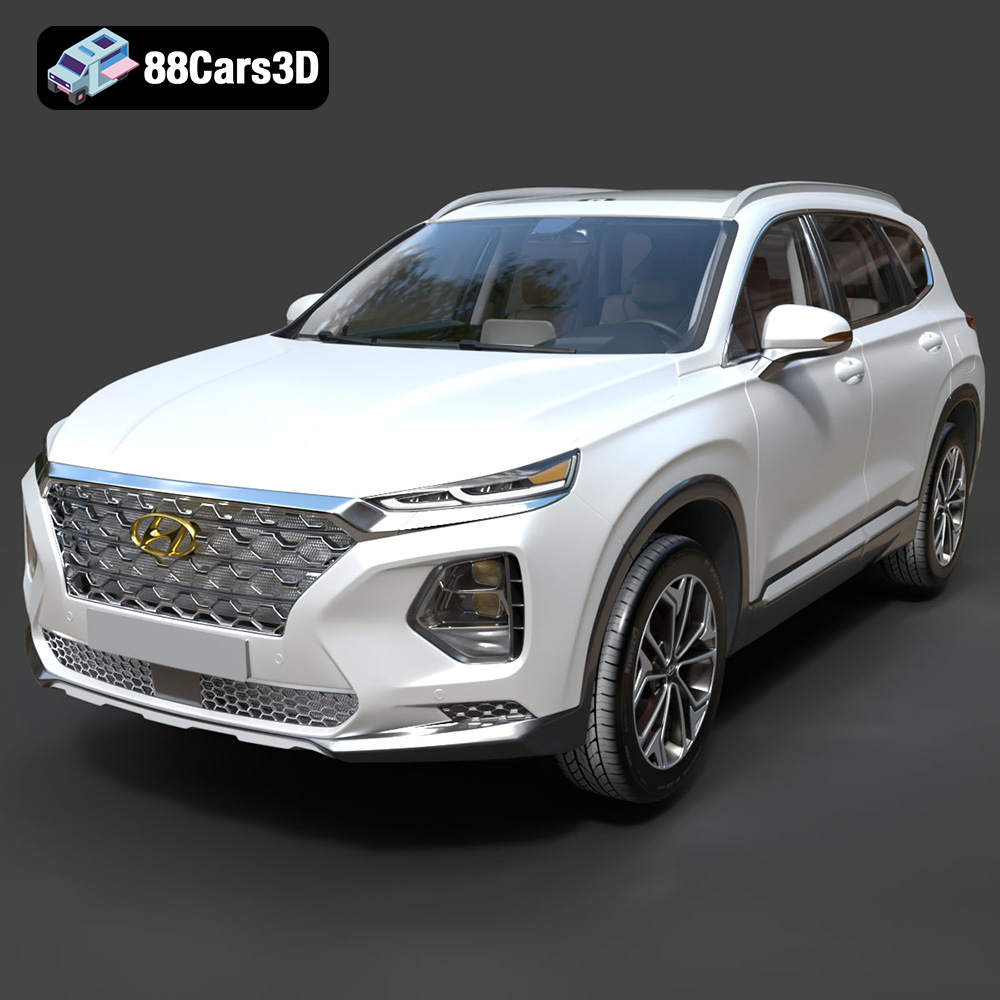
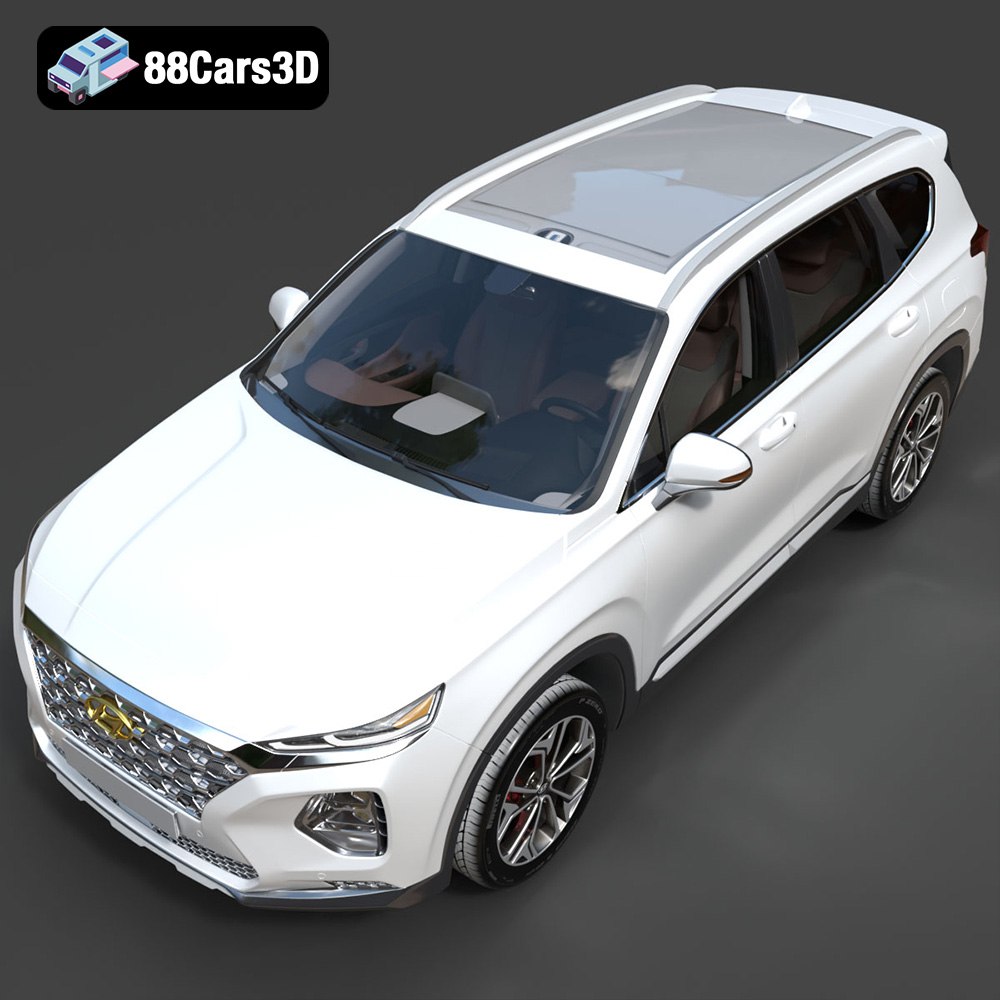
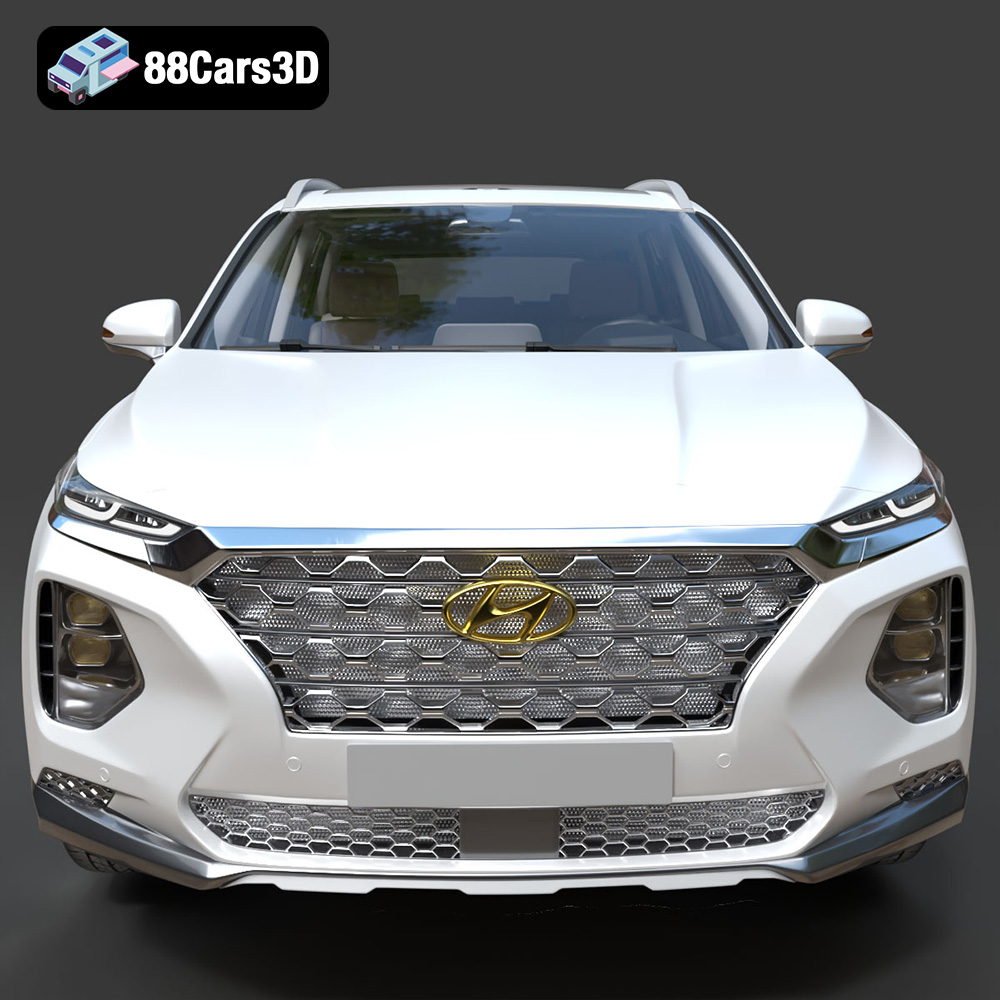
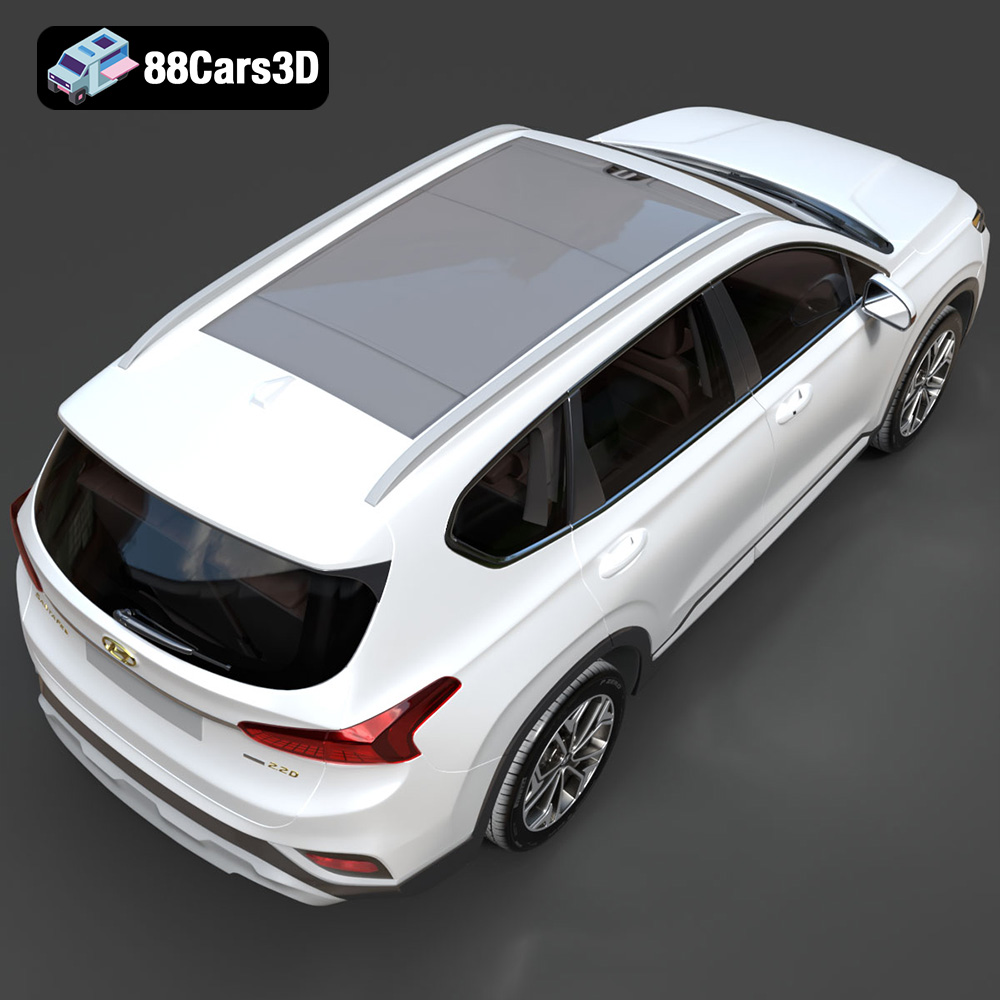
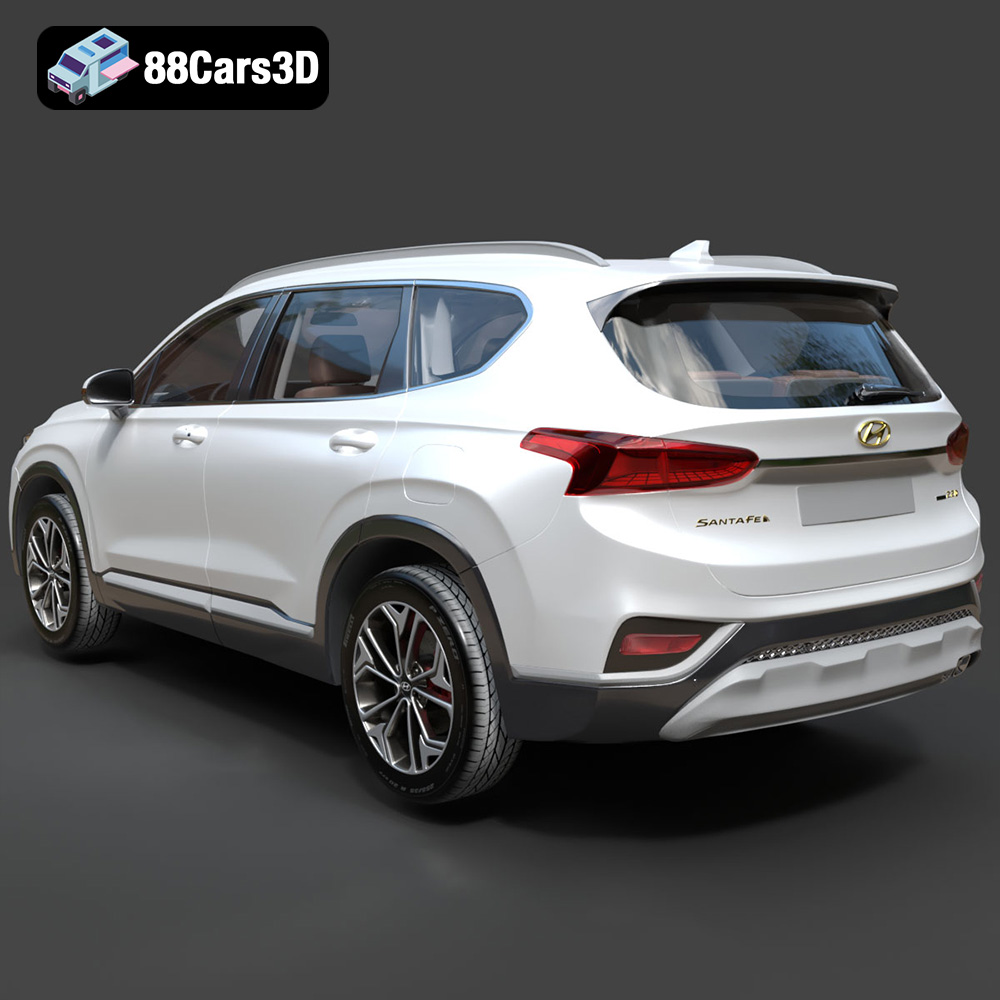
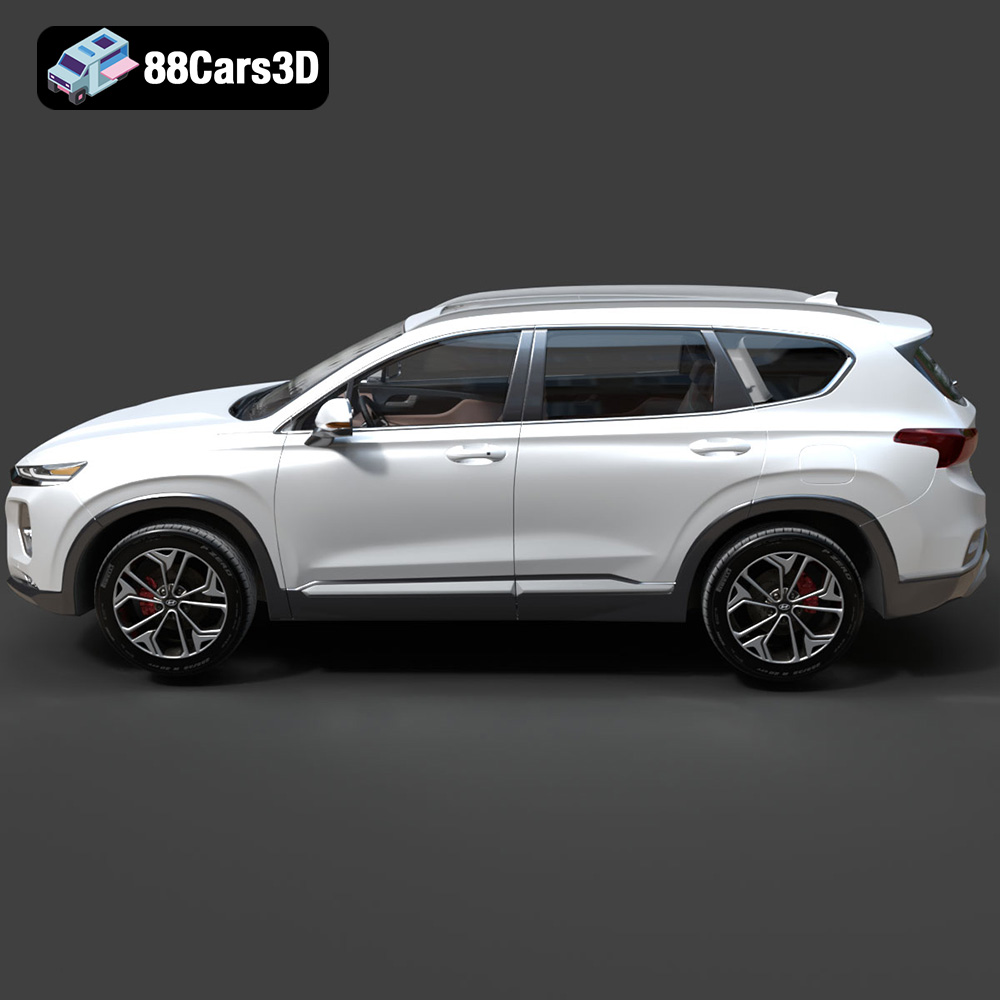
The exterior of the Hyundai Santa Fe 2019 3D model is a masterclass in automotive replication. Every curve, panel gap, and design element has been painstakingly recreated to match the real-world vehicle. This includes the distinctive cascading grille, a signature element of Hyundai’s design language, and the aggressive split-headlight design that gives the Santa Fe its modern identity. Moving along the dynamic side profile, the model showcases precisely sculpted body lines. Furthermore, the attention to detail extends to functional components such as the authentic dual exhaust system, the intricate undercarriage, and the realistic suspension components, ensuring that the model maintains an accurate stance and appearance from every angle. High-fidelity alloy wheels, deeply treaded SUV tires, and a proper pivot setup for steering and wheel rotation further enhance its realism and animation potential.
While the exterior captures the eye, the interior often defines the immersive experience, especially in applications like virtual showrooms or first-person gaming. The Hyundai Santa Fe 2019 3D model delivers a premium cockpit experience, featuring multi-contoured front and rear seats that reflect comfort and style. The accurate multi-function steering wheel, detailed digital instrument cluster, and floating infotainment display bring the cabin to life. Precision control details, including pedals, climate controls, and the gear shifter, are all present, making the interior optimized for a compelling first-person point of view in gaming or interactive architectural walkthroughs. This level of internal detail significantly enhances the overall believability and utility of the asset.
Achieving “game-ready” status while maintaining high-end visual realism is a tightrope walk in 3D modeling. The Hyundai Santa Fe 2019 3D model‘s 1,726,120 triangles represent a carefully calculated polygon budget. This ensures that the model looks superb in cinematic renders, capturing subtle light reflections and intricate surface details, while simultaneously performing efficiently within real-time engines like Unreal Engine and Unity. This optimization includes clean topology, efficient UV mapping (which allows for high-resolution textures without stretching), and a well-organized hierarchy of parts. The meticulous pivot setup for independent steering, wheel rotation, and suspension travel is a testament to its engineering for dynamic real-time interaction and complex animation sequences.
The true value of a versatile 3D asset like the Hyundai Santa Fe 2019 3D model lies in its seamless integration into diverse professional pipelines. Its availability across multiple file formats caters to specific software ecosystems and project requirements, maximizing efficiency and creative potential.
For game developers, performance and fidelity are paramount. The Hyundai Santa Fe 2019 3D model, with its game-ready topology and optimized polycount, is an ideal candidate for open-world games, racing titles, and simulation environments. Utilizing the .fbx or .unreal formats, developers can import the model directly into engines like Unreal Engine or Unity. The model’s proper pivot setup for wheels and steering, along with realistic suspension components, is crucial for implementing believable vehicle physics and animation. Developers can easily apply physically based rendering (PBR) materials, integrate it with collision meshes, and implement Levels of Detail (LODs) to ensure optimal performance across different viewing distances without compromising visual quality. Imagine this detailed SUV cruising through a virtual city street or serving as an interactive element in an emergency services simulator.
In the realm of high-fidelity rendering for automotive showcases, advertising, or architectural visualization, precision and photorealism are non-negotiable. Artists using 3ds Max or Blender will find the .max, .blend, .obj, and .fbx formats incredibly beneficial. Importing the Hyundai Santa Fe 2019 3D model into these platforms allows for leveraging advanced rendering features like global illumination, ray tracing, and sophisticated material systems to create breathtaking visuals. For instance, in an architectural scene, this model can populate a driveway, add context to a street view, or enhance a showroom interior. Artists can apply custom car paint shaders, glass materials, and detailed tire textures, then set up studio lighting or natural outdoor environments to create marketing-ready images or animations that captivate clients.
Augmented Reality (AR) and Virtual Reality (VR) are transforming how consumers interact with products, offering immersive experiences that traditional media cannot match. The .glb format of the Hyundai Santa Fe 2019 3D model is perfectly suited for these cutting-edge applications. Its optimized nature ensures fast loading times and smooth performance on mobile devices and VR headsets, critical for user engagement. Automotive brands can utilize this model to create virtual showrooms where customers can explore the Santa Fe in a 3D space, interacting with its features, changing colors, and even placing it in their real-world environment via AR. This provides a highly engaging and interactive product demonstration tool, moving beyond static images or videos to a truly dynamic experience.
While the Hyundai Santa Fe 2019 3D model is delivered with meticulous detail, its true strength in professional hands lies in its inherent adaptability. Designers and artists rarely use an asset exactly as provided; the ability to customize and integrate it seamlessly into a unique creative vision is paramount. This model is built with that flexibility in mind, allowing for significant modifications to suit specific project requirements.
One of the most immediate customization options is the ability to change body and material finishes. Whether a project demands a specific factory color, a custom metallic sheen, a matte finish, or even a bold, artistic repaint, the model’s material setup allows for easy adjustment. This extends to other elements as well: modifying tire textures to switch between off-road and street variants, fine-tuning glass reflectivity, or even tweaking interior upholstery details. Professionals can leverage the existing material IDs and UV layouts to apply entirely new texture sets, creating unique versions of the Hyundai Santa Fe 2019. Furthermore, the model’s clean geometry and organized structure mean that individual components can be easily isolated, modified, or re-textured, providing a canvas for a wide array of visual storytelling, from hyper-realistic brand campaigns to stylized animated shorts.
Beyond digital rendering, the Hyundai Santa Fe 2019 3D model also offers the exciting possibility of physical manifestation through 3D printing. The inclusion of the .stl format, along with detailed print settings, makes this a straightforward process for hobbyists and professionals alike. For display-scale models (recommended scales like 1:12, 1:18, 1:24), the geometry is robust enough to capture fine details. Recommendations for layer height (0.04–0.12 mm) and the suggestion of resin printing highlight the commitment to achieving high-resolution physical replicas. Specific instructions for wall thickness, infill, and support placement ensure successful prints, particularly for intricate parts like the exhaust system, mirrors, and even delicate interior details. Post-processing steps, such as sanding, priming, and applying authentic factory colors with metallic finishes, are essential for transforming a raw print into a stunning, true-to-life miniature. This capability opens doors for product designers, collectors, or marketing teams seeking tangible prototypes or promotional items.
The versatility of the Hyundai Santa Fe 2019 3D model is best illustrated through its practical applications in professional scenarios. Its optimized design and broad format support make it a go-to asset for a multitude of creative and commercial ventures.
Consider “Metropolis Drive,” an upcoming open-world game set in a sprawling, modern city. The development team at ‘PixelForge Studios’ needs a diverse range of contemporary vehicles to populate their virtual streets, and fast. Manually modeling each car is time-consuming and expensive. They turn to 88cars3d.com, discovering the Hyundai Santa Fe 2019 3D model. Its “game-ready & optimized” specification, with 1.7 million triangles, perfectly balances visual detail with real-time performance. The .fbx format allows for immediate import into Unreal Engine. Crucially, the proper pivot setup for steering, wheel rotation, and suspension travel means their physics programmers can quickly integrate realistic vehicle dynamics. The optimized geometry ensures minimal draw calls, contributing to the game’s high frame rates, and the detailed exterior and interior allow for immersive first-person driving sequences. This single asset saves weeks of development time, allowing PixelForge to focus on core gameplay, while their virtual city gains an authentic, high-quality vehicle.
An architectural firm, ‘Urban Visions,’ is finalizing a high-profile pitch for a new luxury residential complex. Their client demands photorealistic renderings that breathe life into the proposed designs. A key element is showcasing the lifestyle and scale of the development. Rather than relying on generic vehicle stand-ins, Urban Visions licenses the Hyundai Santa Fe 2019 3D model. Using the .max format for their 3ds Max and V-Ray workflow, their visualization artists can place the detailed SUV in driveways, parking spaces, and on surrounding streets. The model’s accurate proportions and authentic design instantly communicate a sense of modernity and realism, making the scene feel lived-in and aspirational. The detailed exterior, complete with alloy wheels and realistic paint materials, catches reflections beautifully under various lighting conditions, transforming a static building rendering into a compelling visual narrative that sells the lifestyle, not just the structure.
‘VirtuShow,’ an automotive marketing agency, is tasked with creating an innovative virtual showroom for a new vehicle launch, allowing potential customers to explore cars in an interactive 3D environment, either via VR headsets or a web browser. For this project, they decide to feature the Hyundai Santa Fe 2019 3D model as an example of a versatile, family-oriented SUV. The .glb format is indispensable here. Its single-file, optimized structure ensures that the model loads quickly and runs smoothly in webGL-based configurators and standalone VR applications. Customers can walk around the Santa Fe, open doors (if animated – a customization possibility), change exterior colors, and even ‘sit inside’ to examine the detailed cockpit. The high visual fidelity, even within an optimized format, provides a compelling and engaging experience, allowing prospective buyers to connect with the vehicle in a way that goes far beyond traditional online car galleries, driving interest and engagement.
The pursuit of digital realism and efficiency is constant in 3D production. High-quality 3D car models are not just aesthetic elements; they are foundational assets that underpin successful projects across gaming, visualization, and immersive experiences. The Hyundai Santa Fe 2019 3D model stands as a prime example of a meticulously crafted asset that embodies both visual fidelity and technical optimization.
From its intricate exterior and detailed interior to its game-ready topology and broad multi-format compatibility – including .blend, .fbx, .obj, .glb, .stl, .ply, .unreal, and .max – this model offers unparalleled versatility. Whether you’re a game developer seeking efficient assets for a virtual world, an architectural visualizer aiming for photorealistic scene composition, or an AR/VR innovator crafting immersive experiences, this model provides the foundation you need. Its potential for customization further extends its utility, allowing artists to tailor it to specific brand guidelines or creative visions. In a market where time is money and quality is king, investing in premium assets like the Hyundai Santa Fe 2019 3D model from 88cars3d.com is a strategic decision that drives professional success and elevates the standard of digital creation.
The 2019 Hyundai Santa Fe represents a bold leap in mid-size SUV design, combining robust family-hauling capabilities with premium, sophisticated styling. This meticulously crafted 3D model captures the essence of the vehicle, highlighting its signature cascading grille, aggressive split-headlight design, and dynamic side profile. From its powerful stance to its elegantly sculpted body lines, every visual element of this modern SUV has been faithfully recreated.
Boasting a highly detailed geometry with 1726120 triangles, this model offers uncompromising visual fidelity while remaining optimized for modern 3D pipelines. The game-ready topology ensures seamless integration into major rendering and real-time environments, making it a highly versatile asset for game development, architectural visualization, AR/VR applications, and high-end automotive animation.
Perfect for realistic urban environments, family lifestyle renders, automotive configurators, and modern traffic simulations.
.blend, .fbx, .obj, .glb, .stl, .ply, .unreal, .max
Tags:
hyundai, santa-fe, santa-fe-2019, suv, family-suv, game-ready, low-poly, optimized, car-3d-model, game-asset, rendering, vr-ar, blend, fbx, obj, glb, stl, ply, unreal, max
$81.50
.blend
.fbx
.glb
.hyundai
.max
.obj
.ply
.rendering
.stl
.unreal
car-3d-model
family-suv
game asset
game-ready
low-poly
optimized
santa-fe
santa-fe-2019
SUV
VR/AR