Get 20% OFF All Premium 3D & STL Models!

The automotive world is a realm where passion, engineering prowess, and aesthetic design converge. Among its many icons, the Porsche 911 Targa stands as a testament to timeless elegance and exhilarating performance. Its unique blend of open-top freedom and coupe-like rigidity has captivated enthusiasts for decades. For 3D artists, game developers, animators, and visualization specialists, recreating such a masterpiece in the digital realm presents both an exciting challenge and a significant opportunity. This is where high-quality 3D car models become indispensable tools, allowing creators to bring these legendary vehicles into virtual worlds with stunning realism.
At 88cars3d.com, we understand the demand for precision and detail in digital automotive assets. Our featured Porsche 911 Targa 3D Model embodies this commitment, offering an unparalleled level of fidelity for any project. Whether you’re crafting a hyper-realistic automotive render, designing a cutting-edge racing game, or visualizing a luxury showroom in virtual reality, this model provides the foundation for exceptional results. Let’s delve into what makes a premium 3D car model, and how this specific Targa asset can elevate your creative endeavors.
Creating a truly photorealistic or game-ready 3D car model goes far beyond simply replicating its external shape. It involves a meticulous blend of artistic skill and technical understanding to ensure accuracy, optimize performance, and maintain versatility across various applications. The Porsche 911 Targa 3D Model from 88cars3d.com exemplifies these principles, engineered for excellence in every polygon.
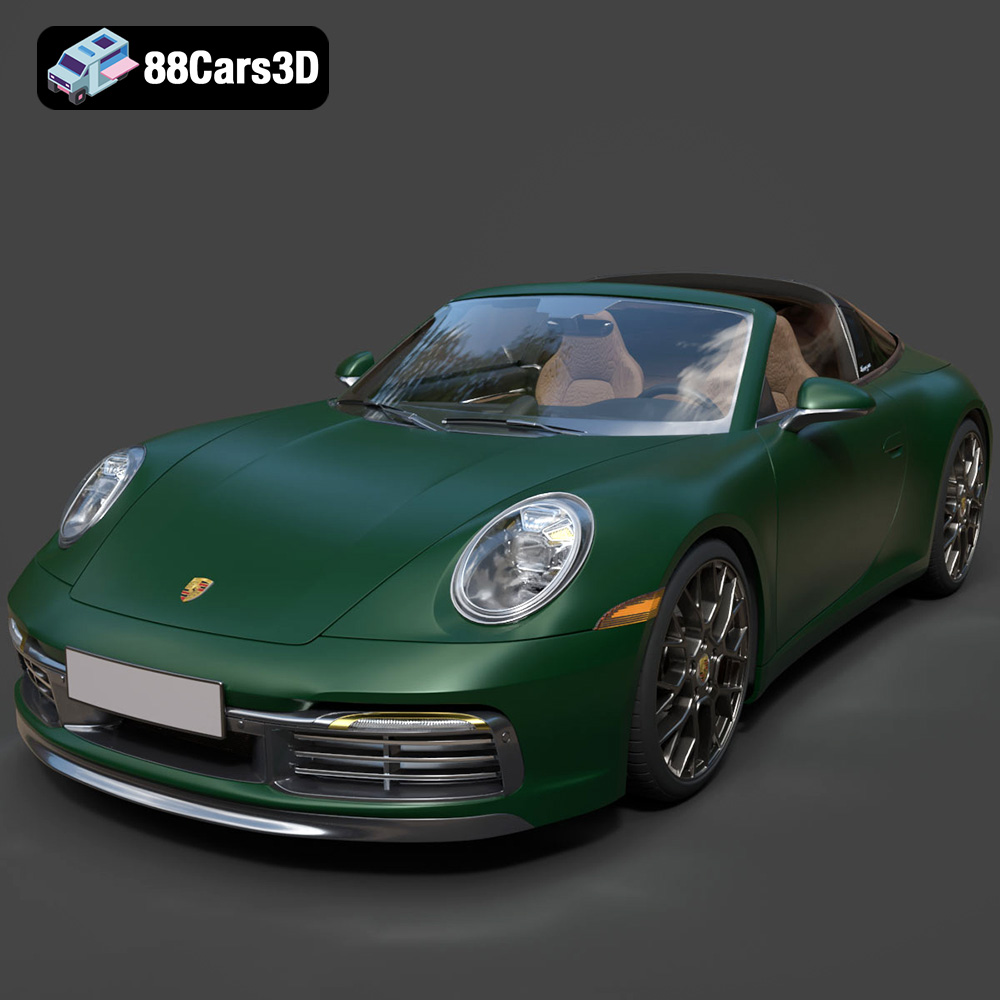
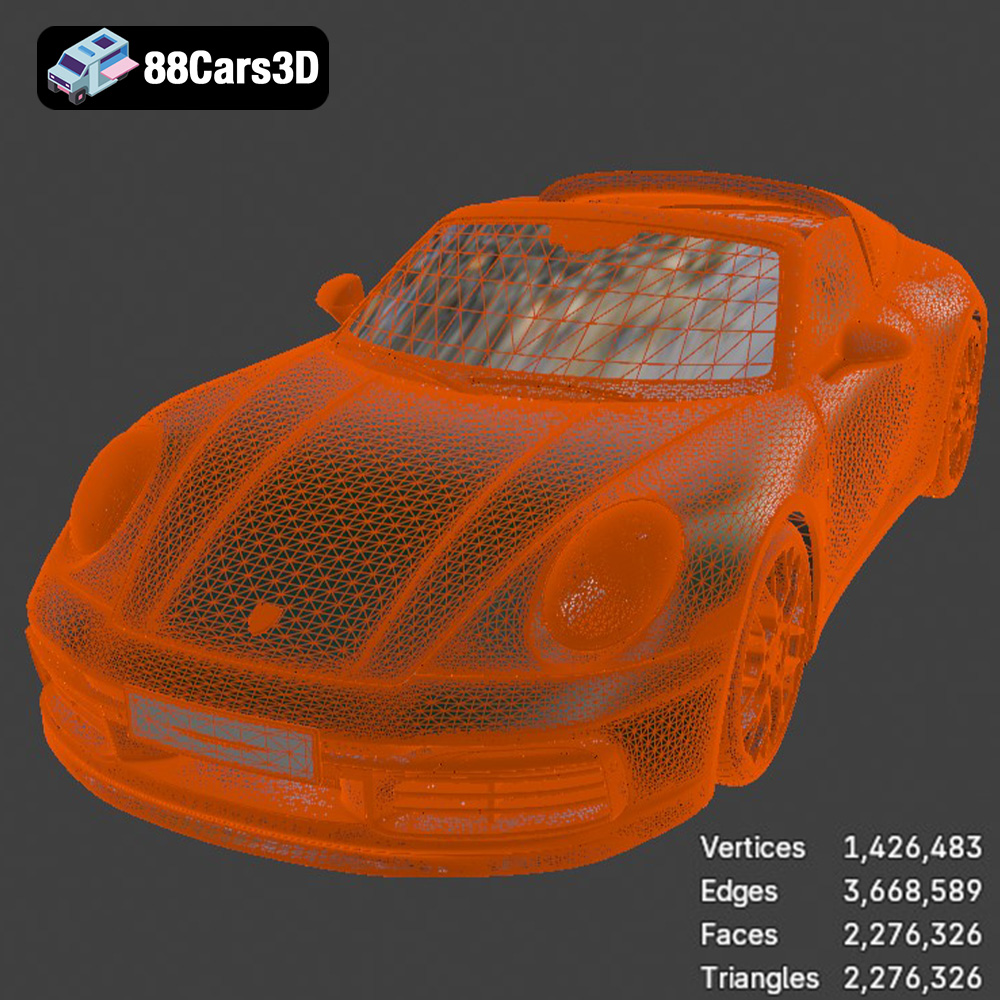
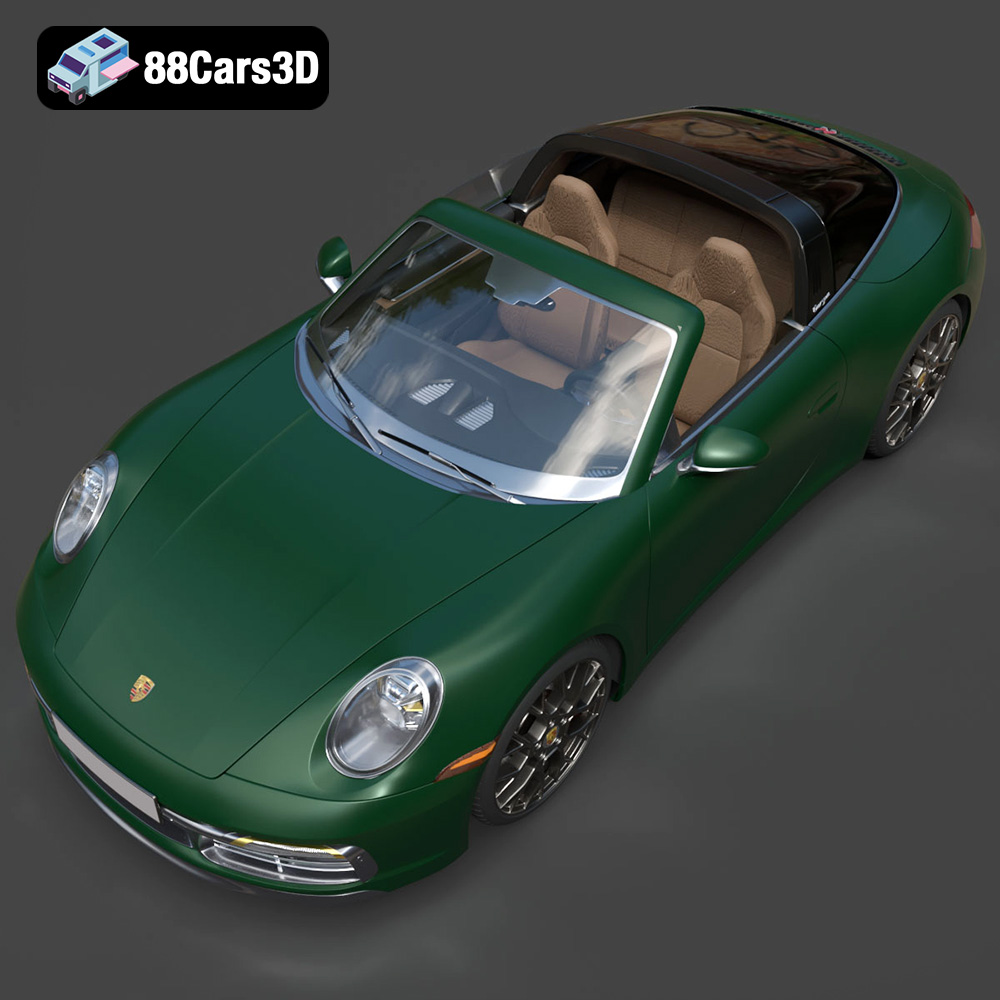
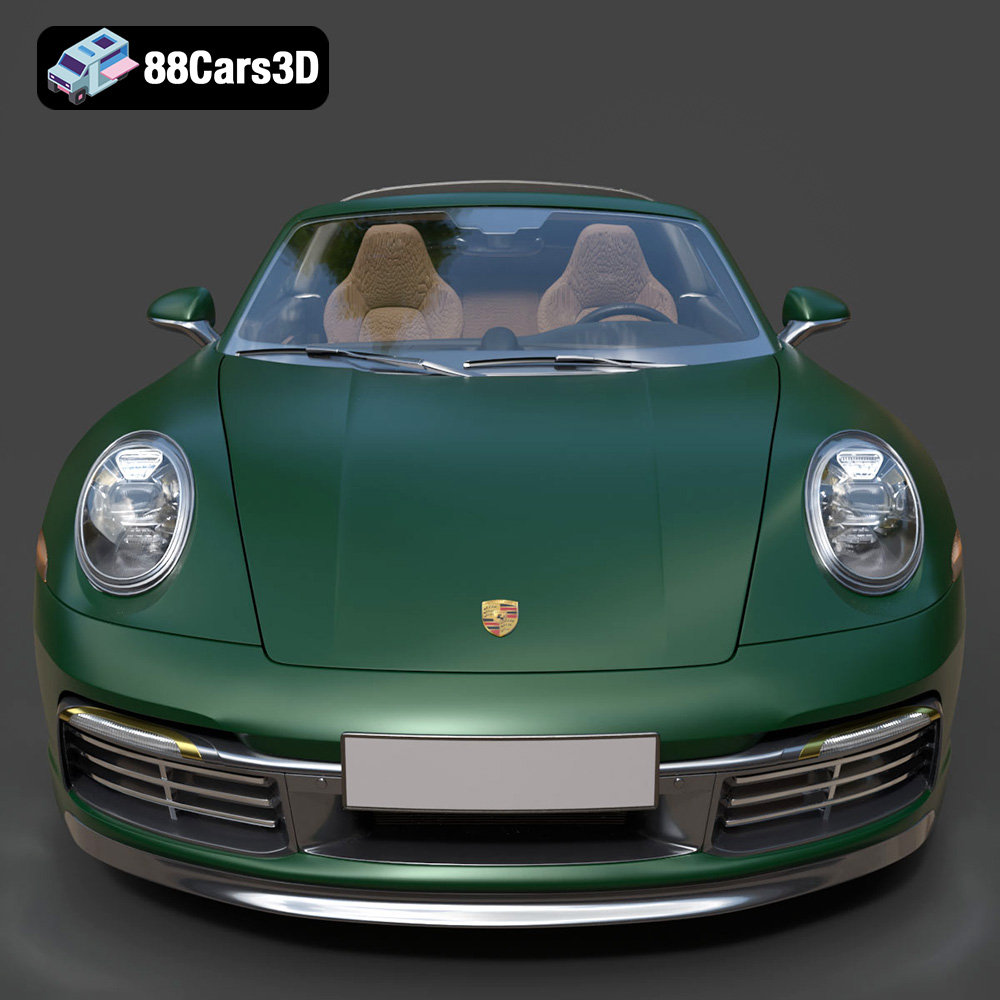
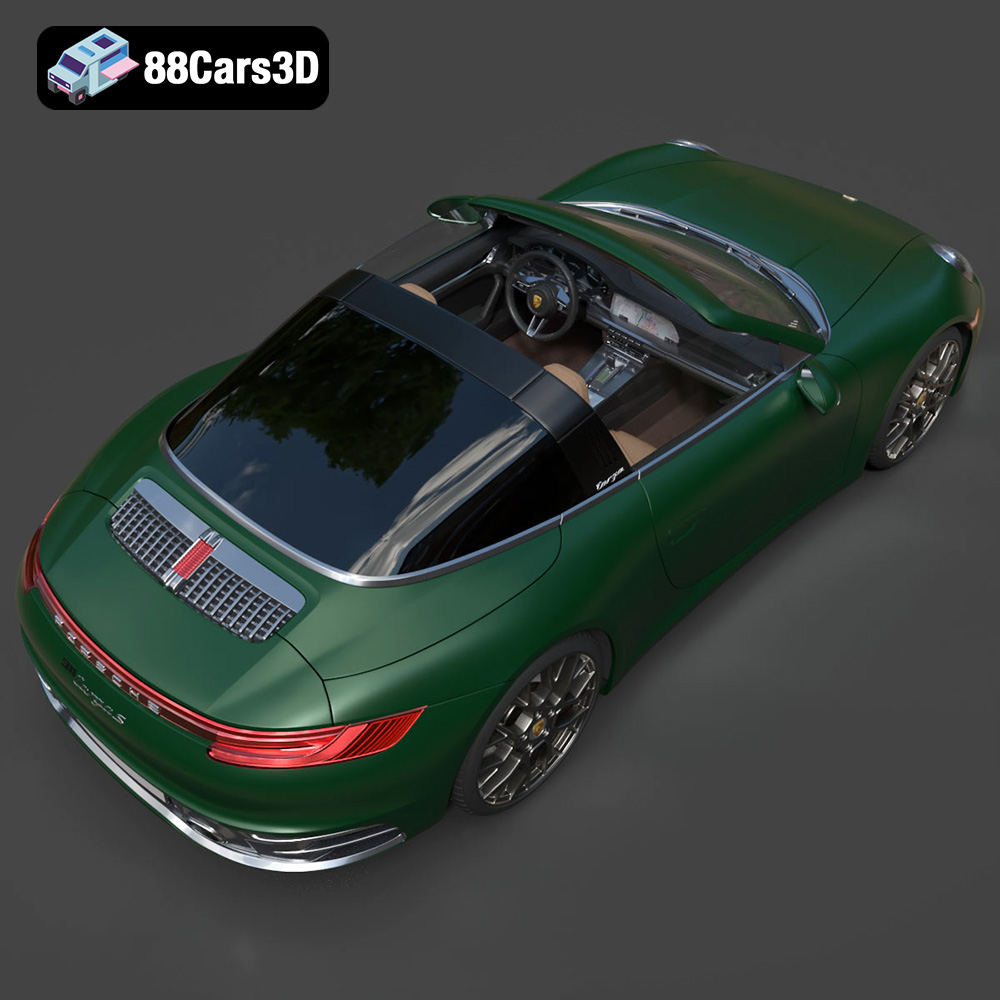
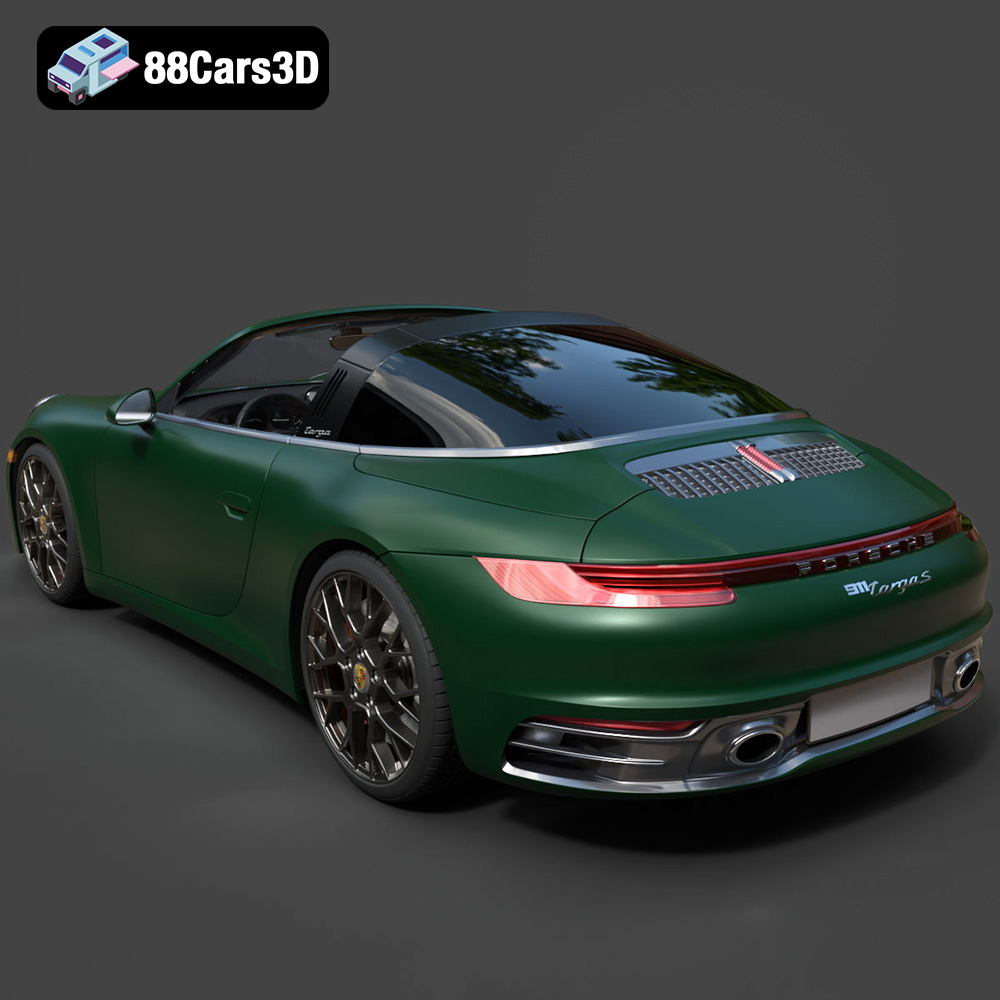
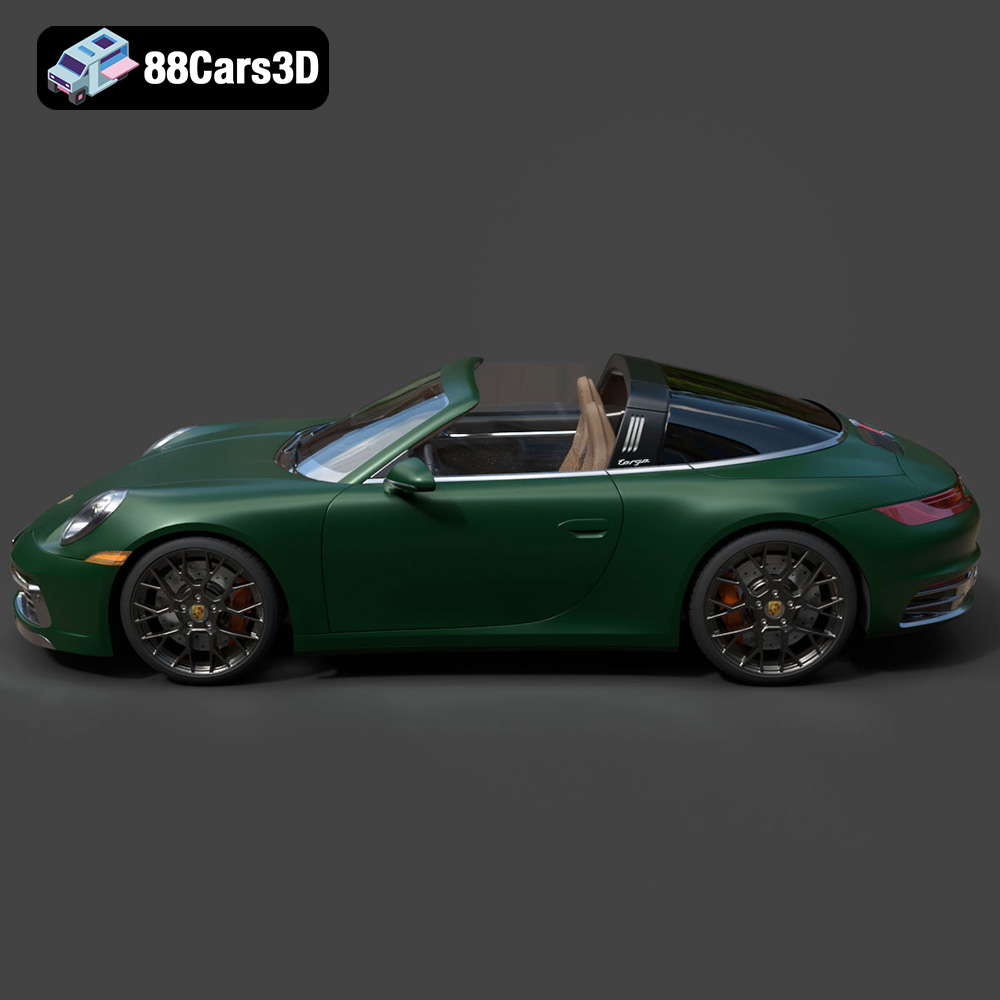
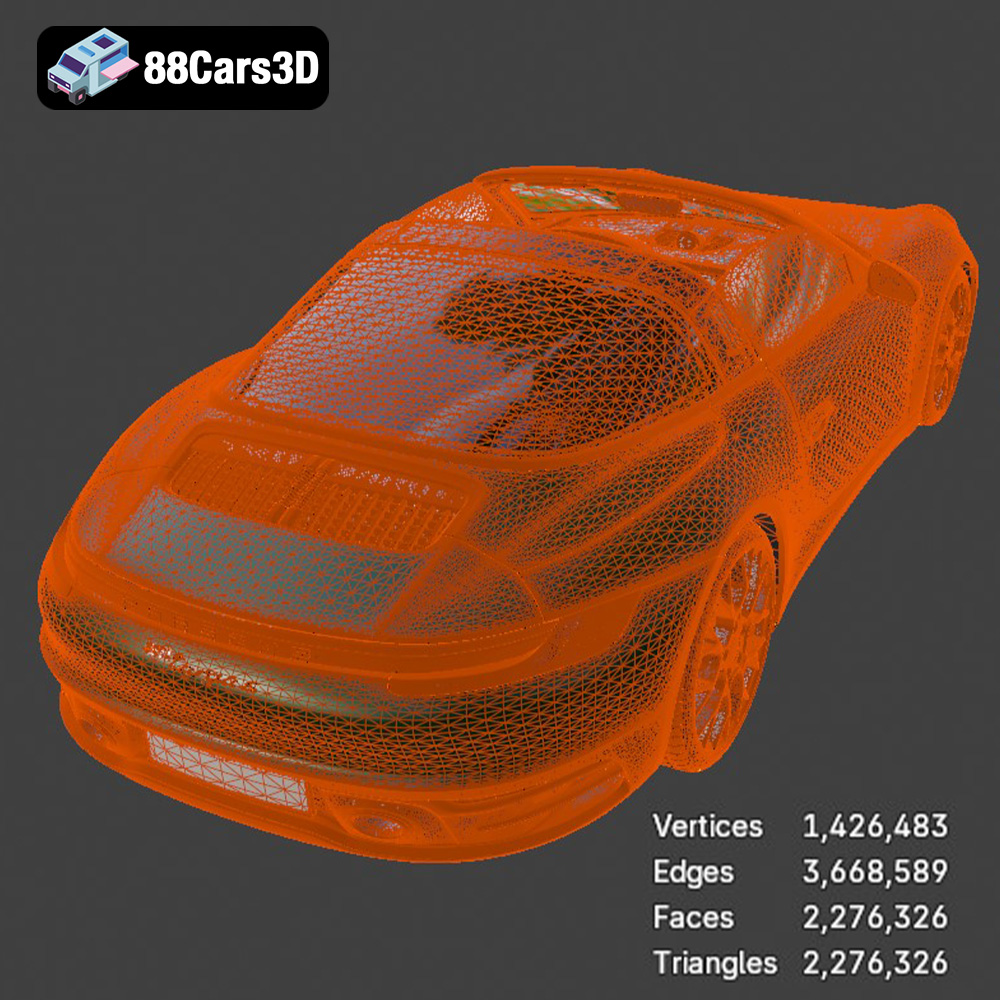
The soul of any iconic vehicle lies in its distinctive design cues. For the Porsche 911 Targa, this includes the signature round headlights, the sweeping rear fenders, the unmistakable silhouette, and of course, the classic Targa roof mechanism. A high-fidelity 3D model must capture these details with exacting precision. The featured Targa model boasts an exact triangle count of 2,276,326, a figure carefully chosen to deliver unparalleled visual fidelity without becoming unmanageably heavy for real-time applications. This level of detail extends to every visible component, from the intricate stitching on the premium leather-trimmed sport seats to the accurate flat-six engine block and the authentic dual exhaust system. Real-world scale accuracy, based on the actual vehicle chassis, ensures that the model integrates seamlessly into any scene, maintaining correct proportions and dimensions.
Beyond raw polygon count, the underlying topology of a 3D model is critical. Clean, efficient topology ensures smooth deformations during animation, prevents shading artifacts, and simplifies UV unwrapping and texturing processes. For the Porsche 911 Targa, the optimized geometry means it’s ready for a diverse range of applications. In real-time environments like game development, an optimized polycount is crucial for maintaining high frame rates. For high-end cinematic rendering, the clean mesh allows for flawless subdivision and hyper-realistic material application. The model’s separate wheels, suspension, and steering components, along with proper pivot setup, are fundamental for realistic animation, whether for a racing simulator or a high-impact automotive commercial. This thoughtful construction makes the model a robust asset for both professional game developers and cinematic artists.
The versatility of a 3D model is significantly enhanced by its availability in multiple file formats, each serving distinct purposes and catering to different software ecosystems and project requirements. The Porsche 911 Targa 3D Model is provided in a comprehensive suite of formats, ensuring maximum compatibility and utility. Understanding these formats is crucial for any professional workflow.
The .blend format is the native file type for Blender, a powerful open-source 3D creation suite. When you receive a .blend file, you’re not just getting the model; you’re getting the complete Blender scene. This typically includes the mesh geometry, materials, textures, lighting setups, cameras, and even animation data if present. For the Porsche 911 Targa, the .blend file would provide a fully editable environment, allowing artists to dive deep into the model’s construction, modify materials, adjust lighting, and prepare it for rendering with Blender’s Cycles or Eevee engines. It’s ideal for those who work primarily in Blender and require full control over every aspect of the asset.
The .fbx (Filmbox) format is an industry-standard proprietary file format developed by Autodesk, widely used for interoperability between 3D software applications. It’s particularly favored in game development for engines like Unreal and Unity due to its robust support for mesh geometry, materials, textures, animation, and rigging data. An .fbx file for the Porsche 911 Targa would be optimized for efficient import into these real-time environments, preserving hierarchies, pivot points (crucial for wheel rotation and suspension), and basic material assignments. It acts as a reliable bridge for transferring complex 3D data across different platforms, making it an essential format for any game asset.
The .obj (Wavefront OBJ) format is one of the oldest and most widely supported geometry definition file formats. It’s a universal format, meaning almost every 3D software application can import and export it. An .obj file primarily stores geometric data (vertices, normals, texture coordinates, and faces) and can reference an accompanying .mtl (Material Template Library) file for basic material properties. While it doesn’t typically store advanced features like animation or rigging, its widespread compatibility makes it perfect for simple mesh transfers between disparate software packages or for scenarios where you only need the raw geometry of the Porsche 911 Targa without complex scene data.
The .glb (GL Transmission Format Binary) is a modern, efficient, and increasingly popular format for 3D models, especially suited for web-based, AR (Augmented Reality), and VR (Virtual Reality) applications. It’s a binary version of the glTF format, which bundles all necessary data (geometry, materials, textures, animations) into a single, self-contained file. This self-contained nature makes .glb incredibly efficient for streaming and displaying 3D content directly in browsers or mobile AR/VR viewers. The Porsche 911 Targa in .glb format would be highly optimized for fast loading and rendering in interactive, lightweight environments, perfect for virtual showrooms or mobile AR experiences.
The .stl (STereoLithography) format is the standard file type for 3D printing. It represents a 3D model as a series of connected triangles, describing only the surface geometry of an object without color, texture, or other CAD attributes. For the Porsche 911 Targa, an .stl file would provide a watertight, manifold mesh ready to be sliced and printed by a 3D printer. The description explicitly mentions it’s “Convertible to .stl format for display-scale hobbyists,” indicating its suitability for physical replication.
The .ply (Polygon File Format or Stanford Triangle Format) is another format used to store 3D data, particularly from 3D scanners. It can store a variety of properties including color, transparency, surface normals, and texture coordinates, in addition to geometry. While less common for direct asset exchange than .fbx or .obj, it’s valuable for applications requiring precise mesh data, such as scientific visualization, CAD, or situations where scanned data might be processed or analyzed. For the Targa model, its inclusion offers an alternative for highly precise geometric applications.
The .unreal format, or more accurately, assets imported and packaged within an Unreal Engine project, signifies an asset that has been specifically prepared and optimized for the Unreal Engine. While not a standalone file format in the same way .fbx is, providing an “.unreal” file implies a pre-configured asset, potentially including Unreal-specific materials, blueprints, LODs (Levels of Detail), and collision meshes. This makes integration of the Porsche 911 Targa into an Unreal project extremely straightforward, saving significant setup time for developers. It’s a true “game-ready” asset, leveraging Unreal’s native capabilities.
The .max format is the native file format for Autodesk 3ds Max, a powerful 3D modeling, animation, rendering, and visualization software. Like .blend, a .max file contains the complete scene data, including geometry, materials, lighting, cameras, animations, and modifiers. For artists working in 3ds Max, the .max file for the Porsche 911 Targa provides the ultimate flexibility, allowing for deep customization, advanced rigging, complex animation sequences, and high-quality rendering with engines like V-Ray or Corona. It’s the go-to format for professional visualization and animation studios relying on 3ds Max.
The true value of a versatile 3D asset lies in its seamless integration into diverse professional pipelines. The Porsche 911 Targa 3D Model is designed with this in mind, offering features and formats tailored for leading industry applications, from high-stakes game development to cinematic rendering.
For game developers, the phrase “game-ready” is paramount. With 2,276,326 triangles, the Porsche 911 Targa model strikes an excellent balance between visual realism and real-time performance. Its optimized geometry and proper pivot setup for steering, wheel rotation, and suspension travel are critical for implementing realistic physics and animation in racing titles, open-world games, and immersive simulators. The availability of .fbx and .unreal formats ensures a smooth import process into Unreal Engine and Unity. Developers can quickly integrate the model, set up materials using PBR (Physically Based Rendering) workflows, and begin implementing game logic for driving mechanics, damage systems, or interactive elements, drastically cutting down development time compared to modeling from scratch.
When it comes to creating breathtaking automotive renders or intricate animation sequences, maximum control and detail are essential. The .max and .blend formats provide artists with the complete scene, allowing for deep customization. In 3ds Max, animators can leverage the separate components (wheels, suspension, steering) to create complex car rigs, enabling realistic driving simulations or dynamic camera movements around the vehicle. The detailed flat-six engine block and cockpit features, including the classic five-dial instrument cluster and functional button layouts, lend themselves to close-up shots and interior visualizations. Artists can experiment with advanced material finishes (matte, gloss, metallic), studio lighting setups, and post-processing effects to achieve photorealistic results in V-Ray, Corona Renderer, or Cycles. This level of fidelity is perfect for brand campaigns, luxury virtual showrooms, and high-definition automotive commercials.
The immersive experiences offered by Augmented Reality (AR) and Virtual Reality (VR) demand efficient and optimized 3D assets. The Porsche 911 Targa, with its balanced polycount and availability in the .glb format, is perfectly suited for these emerging platforms. Imagine a virtual showroom where customers can explore the Targa in a 360-degree environment, customize its paint color and wheel options, or even “sit” inside the detailed cockpit. For mobile AR experiences, the .glb format ensures quick loading times and smooth interaction on various devices. This makes the model an invaluable asset for creating interactive product configurators, immersive brand experiences, or next-generation virtual tours.
The utility of a high-quality 3D model extends beyond digital screens, reaching into the physical realm through 3D printing. The Porsche 911 Targa 3D Model is designed with this capability in mind, offering pathways for hobbyists and professionals alike to bring this automotive icon into tangible form.
The inclusion of the .stl format is a direct nod to the 3D printing community. The model’s clean, optimized geometry ensures that it can be converted into a watertight mesh suitable for additive manufacturing. While the digital model boasts millions of triangles for visual fidelity, the .stl conversion process often involves careful decimation and cleanup to ensure printability without losing crucial details. The detailed brake calipers, suspension geometry, and even interior elements like the sport seats and instrument cluster, are designed to retain their integrity when scaled down for printing. This opens up possibilities for creating desk models, scale replicas, or even components for larger dioramas.
The provided 3D print settings offer a clear guide for achieving optimal results. Recommended scales like 1:12, 1:18, or 1:24 allow for various display sizes, catering to different preferences and printer capabilities. The suggestion for resin printing (with layer heights of 0.04–0.12 mm) highlights the intent for capturing fine details, which are abundant in the Targa model. Proper wall thickness, infill percentages, and crucial support requirements for delicate parts like the exhaust and mirrors are all carefully considered. Furthermore, the advice on print orientation (e.g., frame printed angled for structural integrity, wheels separately) demonstrates a deep understanding of the practicalities of 3D printing. Post-processing suggestions, such as sanding, priming, and applying authentic factory colors with metallic finishes, empower hobbyists to create stunning, realistic physical representations of their favorite Porsche.
A truly professional 3D car model offers not just a static representation, but a dynamic canvas for artistic expression. The Porsche 911 Targa 3D Model is built to be highly customizable, giving artists and designers the freedom to tailor it to their specific project needs, fostering limitless creative possibilities.
One of the most powerful customization options lies in material adaptation. The model’s clean UV mapping (implied by its professional quality and intended applications) allows for easy texture manipulation. Artists can effortlessly change body colors, experimenting with a spectrum of factory colors, custom finishes, or even unique livery designs. Modifying tire textures from low-profile street variants to more aggressive off-road patterns can drastically alter the vehicle’s character and suitability for different environments. Adjusting material finishes—from a high-gloss metallic paint to a stealthy matte wrap—can transform the mood of a scene. This flexibility is invaluable for architectural visualizations where the car needs to match a specific design aesthetic, or for advertising campaigns requiring a unique visual identity.
Beyond static renders, the Targa model is built for dynamic action. The separated wheels, suspension, and steering components, coupled with proper pivot setups, are foundational for animation. Animators can create realistic steering actions, dynamic wheel rotations (including blur effects for speed), and authentic suspension travel over uneven terrain. Imagine an animated sequence showcasing the Targa gracefully navigating a winding coastal road, or a detailed breakdown of its sophisticated suspension system. The interior features, optimized for first-person POV in gaming, also open up opportunities for immersive cockpit views and driver-centric animations. This level of granular control empowers artists to tell compelling stories with the vehicle as a central character.
In the fast-paced world of 3D production, time is often the most valuable commodity. Developing a high-fidelity 3D car model from scratch is an incredibly time-consuming and labor-intensive process, requiring specialized skills in modeling, texturing, and optimization. This is where purchasing a premium asset like the Porsche 911 Targa 3D Model from 88cars3d.com presents an undeniable advantage for both professional studios and dedicated enthusiasts.
For game development studios, architectural visualization firms, or animation houses, pre-made, high-quality 3D car models are essential for accelerating project timelines. Instead of allocating weeks or months for dedicated asset creation, teams can immediately integrate the Targa model, focusing their resources on unique aspects of their project like environmental design, character animation, or interactive gameplay mechanics. The model’s game-ready optimization means less time spent on tweaking polycounts or ensuring clean topology, allowing for quicker iteration and deployment. This efficiency translates directly into cost savings and the ability to meet tighter deadlines without compromising on visual quality.
For independent artists and hobbyists, access to a professionally crafted asset like this Porsche 911 Targa model unlocks creative potential that might otherwise be out of reach. It provides a robust foundation for learning advanced rendering techniques, experimenting with complex animations, or building impressive portfolio pieces without the monumental effort of starting from zero. The detailed interior and exterior, combined with multiple file formats, allow creators to explore various aspects of 3D production, from high-end visualization to physical prototyping. This accessibility democratizes high-quality 3D content, empowering more people to bring their automotive visions to life with stunning realism.
The Porsche 911 Targa is more than just a car; it’s an emblem of design, performance, and heritage. Translating this automotive icon into the digital realm requires an equally meticulous and passionate approach. The Porsche 911 Targa 3D Model available at 88cars3d.com stands as a testament to what’s achievable in 3D automotive asset creation: a blend of exquisite detail, optimized performance, and unparalleled versatility across a spectrum of professional applications. From the intricate geometry that captures its unmistakable silhouette to its readiness for game engines, cinematic renders, AR/VR experiences, and even 3D printing, this model is a powerhouse asset.
By providing a comprehensive suite of file formats—from .blend and .max for full creative control, to .fbx and .unreal for real-time efficiency, and .glb for web-based applications, not to mention .stl for physical output—this model ensures that artists and developers have the right tool for every job. Investing in such a high-quality 3D car model not only saves invaluable production time but also elevates the overall quality and realism of any project. Whether you’re a seasoned professional or an aspiring enthusiast, the Porsche 911 Targa 3D Model is an invaluable addition to your asset library, ready to inspire and drive your creative endeavors forward. Explore this and other premium 3D car models at 88cars3d.com and bring your automotive visions to life.
The Porsche 911 Targa is an iconic masterpiece of automotive engineering, celebrated for its legendary rear-engine layout, unmistakable silhouette, and the classic Targa roof mechanism. Perfectly blending the thrill of open-top driving with the structural rigidity of a coupe, this model features signature round headlights, sweeping rear fenders, and a meticulously crafted dual exhaust system. With an exact triangle count of 2,276,326, this highly detailed 3D model delivers unparalleled visual fidelity and exceptional topology. Optimized for both high-end rendering and detailed visualizations, it maintains the precise geometry needed for cinematic sequences, immersive VR/AR experiences, and next-gen game development. Perfect for high-fidelity racing simulators, luxury virtual showrooms, architectural visualizations, and cinematic automotive animations.
$87.50
.blend
.fbx
.glb
.max
.obj
.ply
.porsche
.rendering
.sports car
.stl
.unreal
911-targa
car-3d-model
classic-car
game asset
game-ready
low-poly
optimized
VR/AR