Get 20% OFF All Premium 3D & STL Models!

In the rapidly evolving landscape of digital creation, the demand for high-fidelity 3D assets has never been greater. From the breathtaking realism of cinematic automotive advertisements to the immersive environments of next-generation video games, 3D car models are the bedrock upon which these experiences are built. They are more than just digital replicas; they are intricate works of art and engineering, designed to convey emotion, performance, and cutting-edge design.
At the forefront of automotive innovation stands the Audi RS E-Tron GT, an all-electric grand tourer that redefines what a performance car can be. Its aggressive yet elegant lines, advanced aerodynamics, and futuristic aesthetic make it a truly captivating subject for any digital project. To accurately translate this marvel of engineering into the virtual realm, creators require a 3D model that captures every nuance, every sculpted curve, and every dynamic element with uncompromising precision.
This is where high-quality 3D car models, such as the Audi RS E-Tron GT 3D Model available on 88cars3d.com, become indispensable. Far beyond simple visual representation, these models serve as versatile tools that power professional workflows across diverse industries, from automotive rendering and game development to architectural visualization and virtual reality experiences. This article will delve into the technical intricacies, practical applications, and pivotal advantages of integrating such a meticulously crafted asset into your projects, exploring how it elevates visual fidelity and streamlines creative processes.
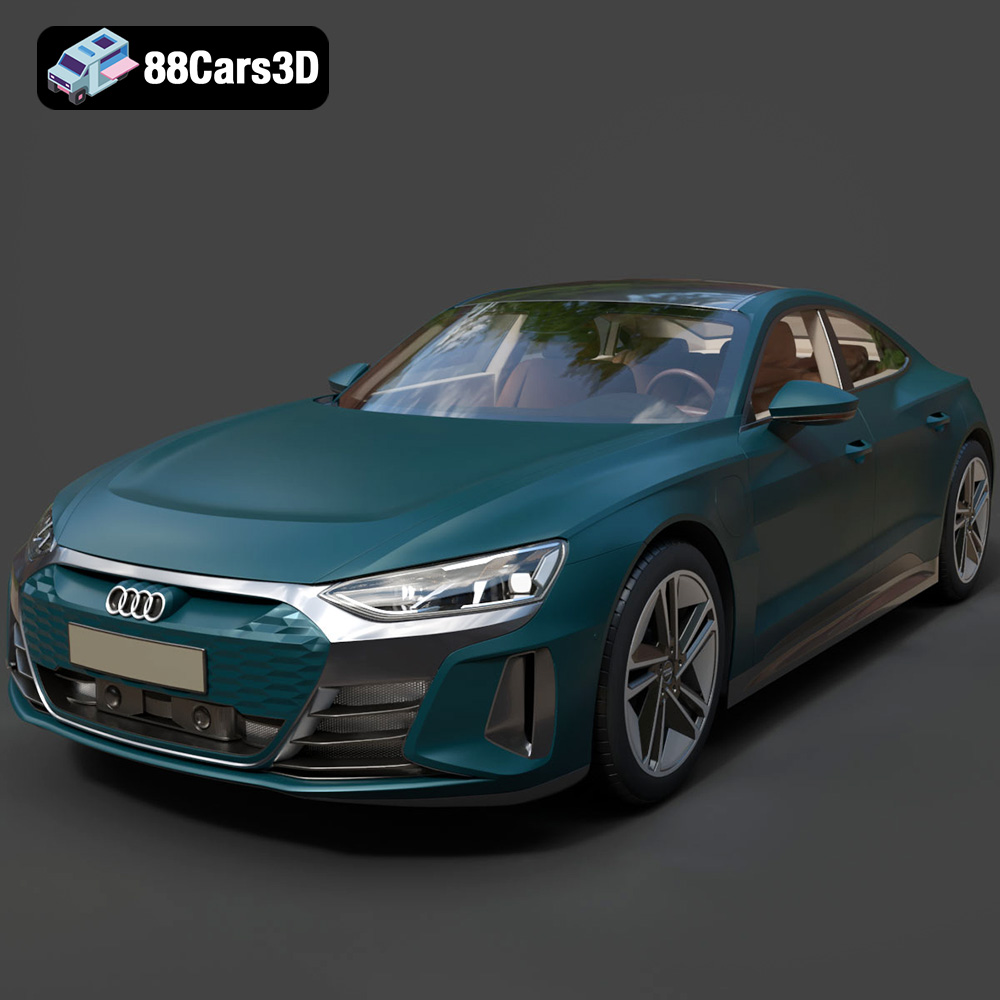
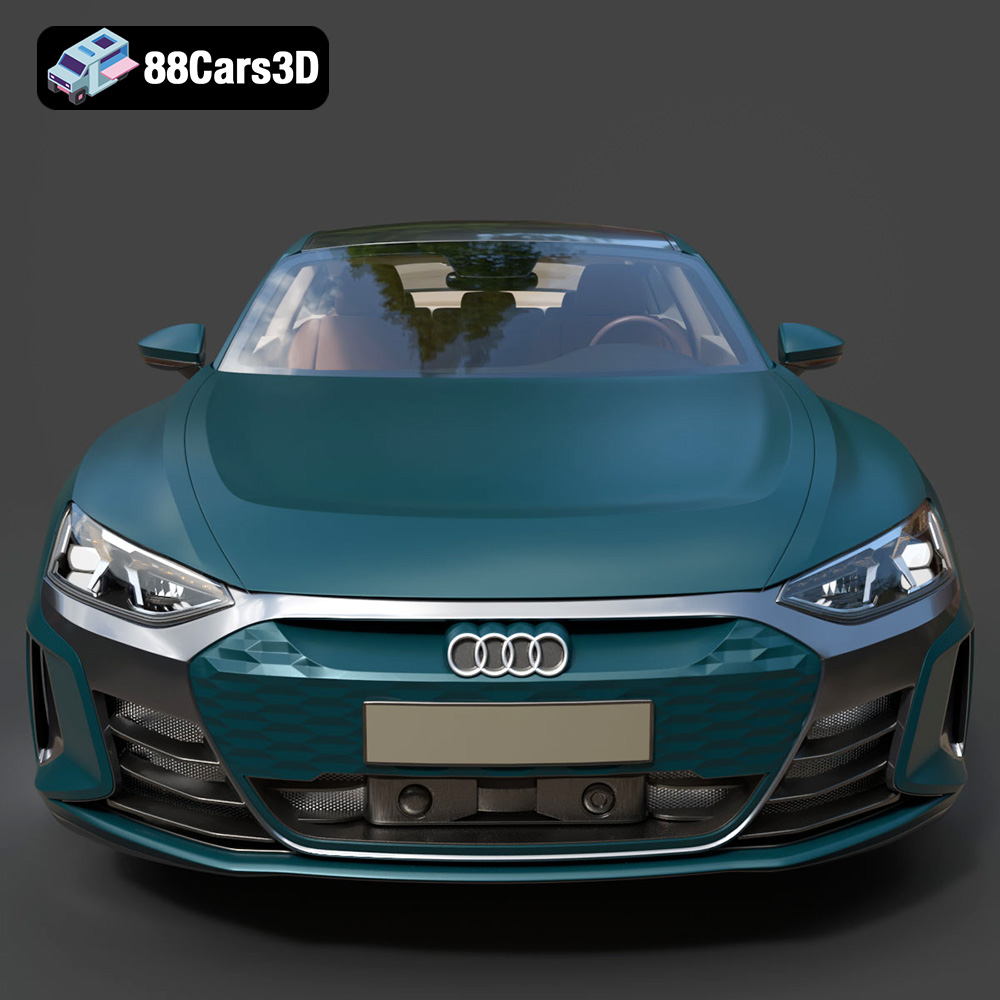
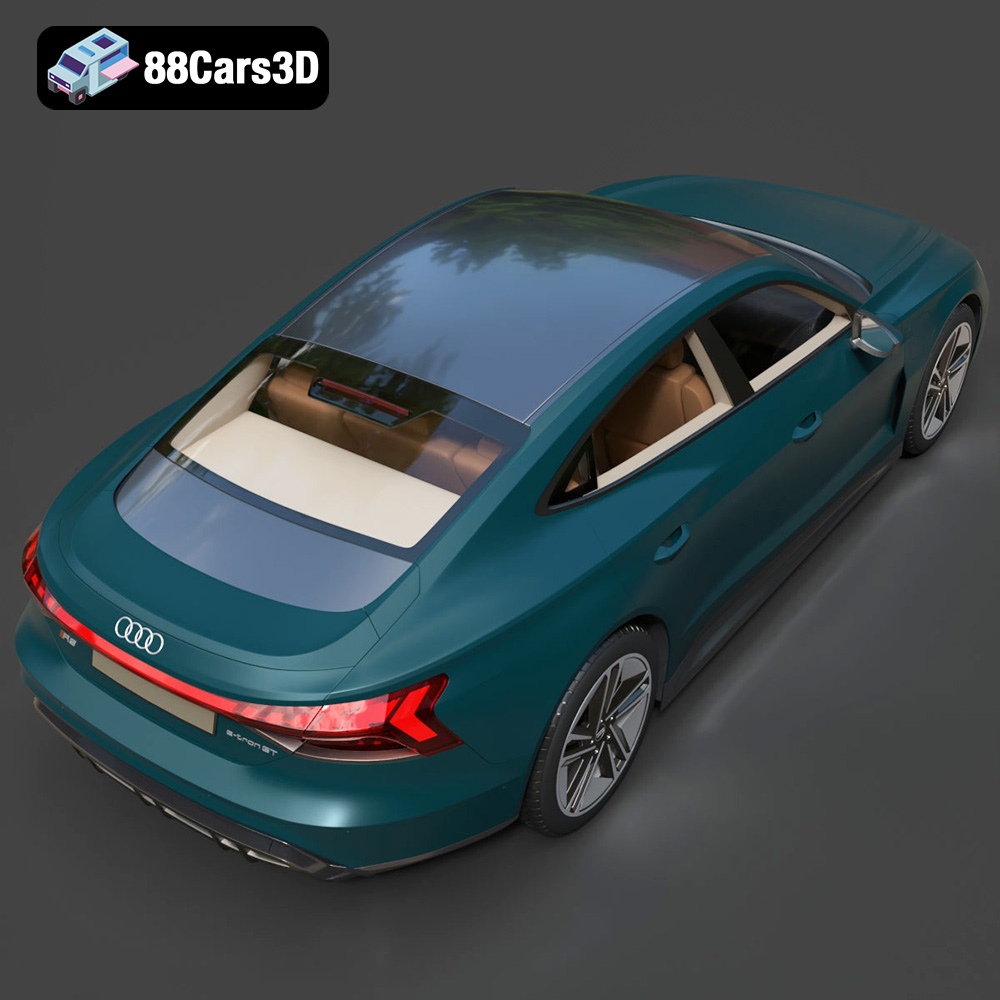
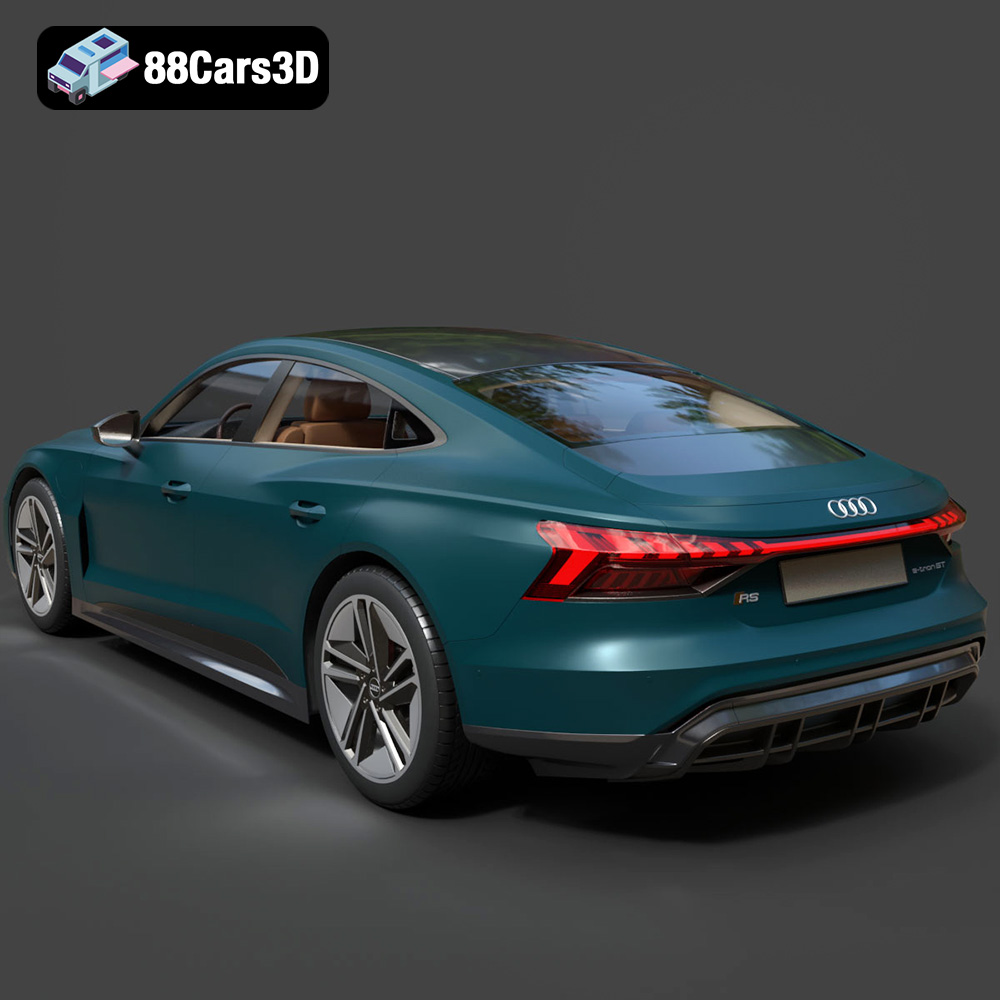
The essence of a truly exceptional 3D car model lies in its ability to faithfully reproduce the original vehicle’s design and engineering. The Audi RS E-Tron GT is a prime example of a vehicle whose presence demands such attention to detail. Its futuristic aesthetic, a blend of Audi’s iconic Singleframe grille reimagined for an EV, sculpted fenders, and a continuous LED taillight strip, defines a new era of automotive design. Translating this into a digital asset requires not just artistic skill, but a deep understanding of automotive form and function.
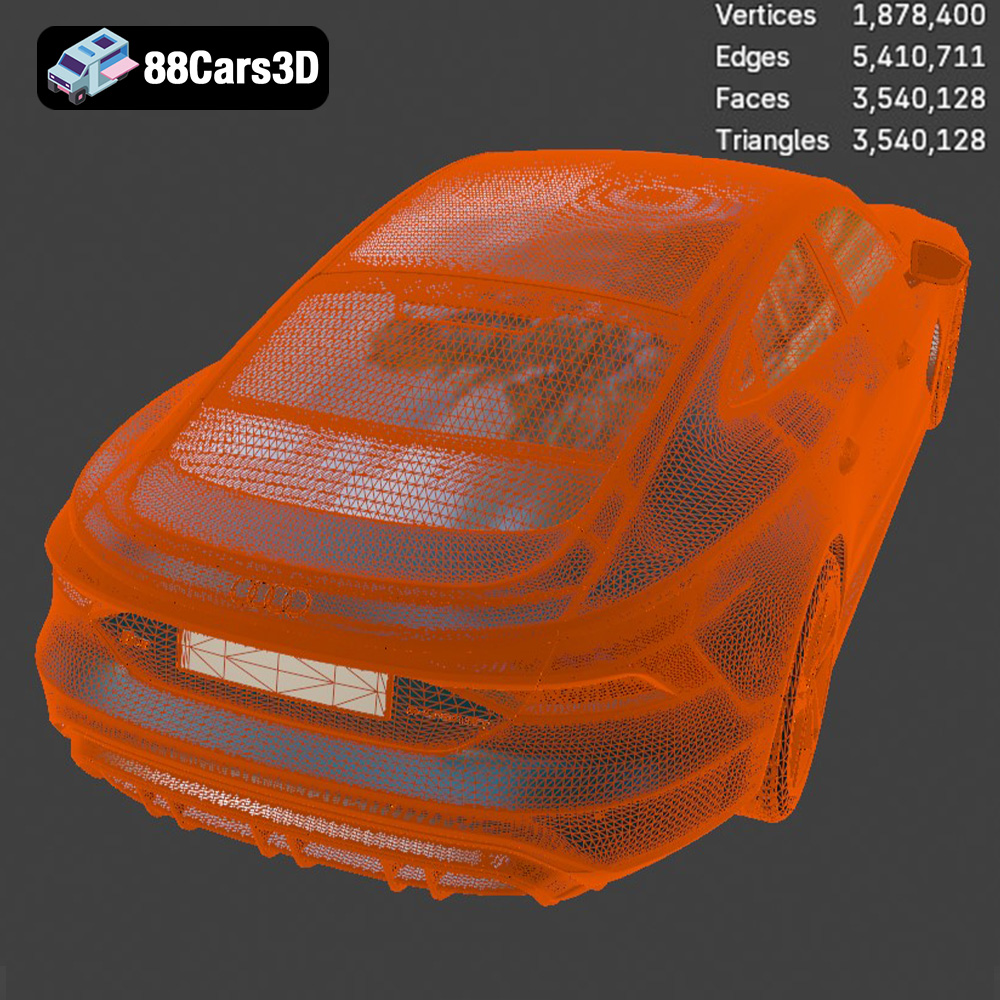
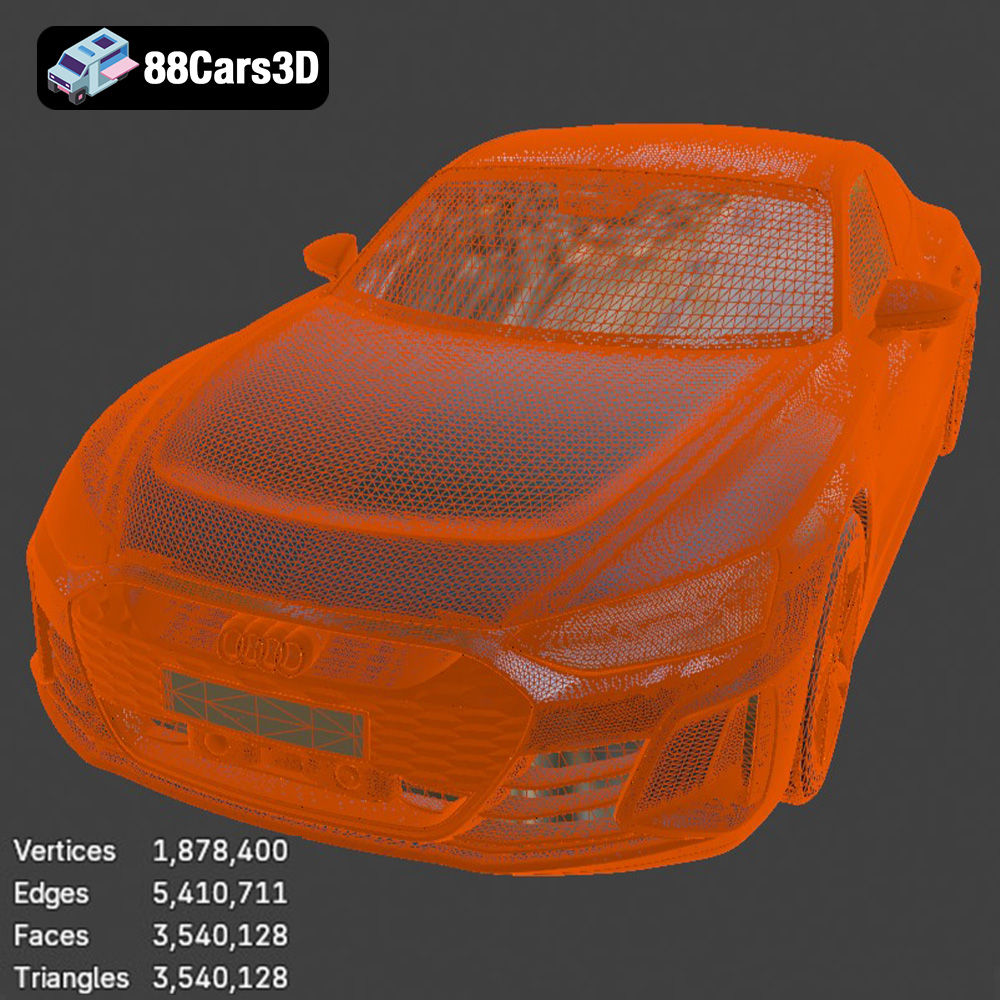
A premium 3D model, like the Audi RS E-Tron GT, doesn’t just look like the car; it embodies its design philosophy. The model’s 3,540,128 triangle count is a testament to its commitment to high-resolution detail. This dense mesh ensures that even the most subtle design elements—the precise radii of the body panels, the crisp edges of the aerodynamic elements, and the complex curvature of the integrated lights—are rendered with absolute accuracy. This level of detail is critical for close-up shots in marketing visuals or for creating believable reflections and refractions in photorealistic renders. The model’s real-world scale accuracy, based on actual vehicle chassis dimensions, further reinforces its authenticity, ensuring that it integrates seamlessly into virtual scenes and maintains correct proportions against other assets.
The exterior of the Audi RS E-Tron GT 3D Model is a showcase of technical precision. Every aspect, from the aerodynamic body geometry to the intricate aero-optimized alloy wheels and high-performance brake calipers, has been meticulously modeled. The distinction extends to functional components such as the detailed electric vehicle undercarriage and battery pack housing, typically hidden but essential for technical accuracy in simulations or exploded views. Crucially, the model features separate wheels, suspension, and steering components. This modularity is vital for animators, allowing for realistic wheel rotation, independent suspension travel, and precise steering articulation. Furthermore, the inclusion of proper pivot setups for these elements significantly reduces setup time in animation packages and game engines, enabling rapid integration into dynamic scenes or driving simulations.
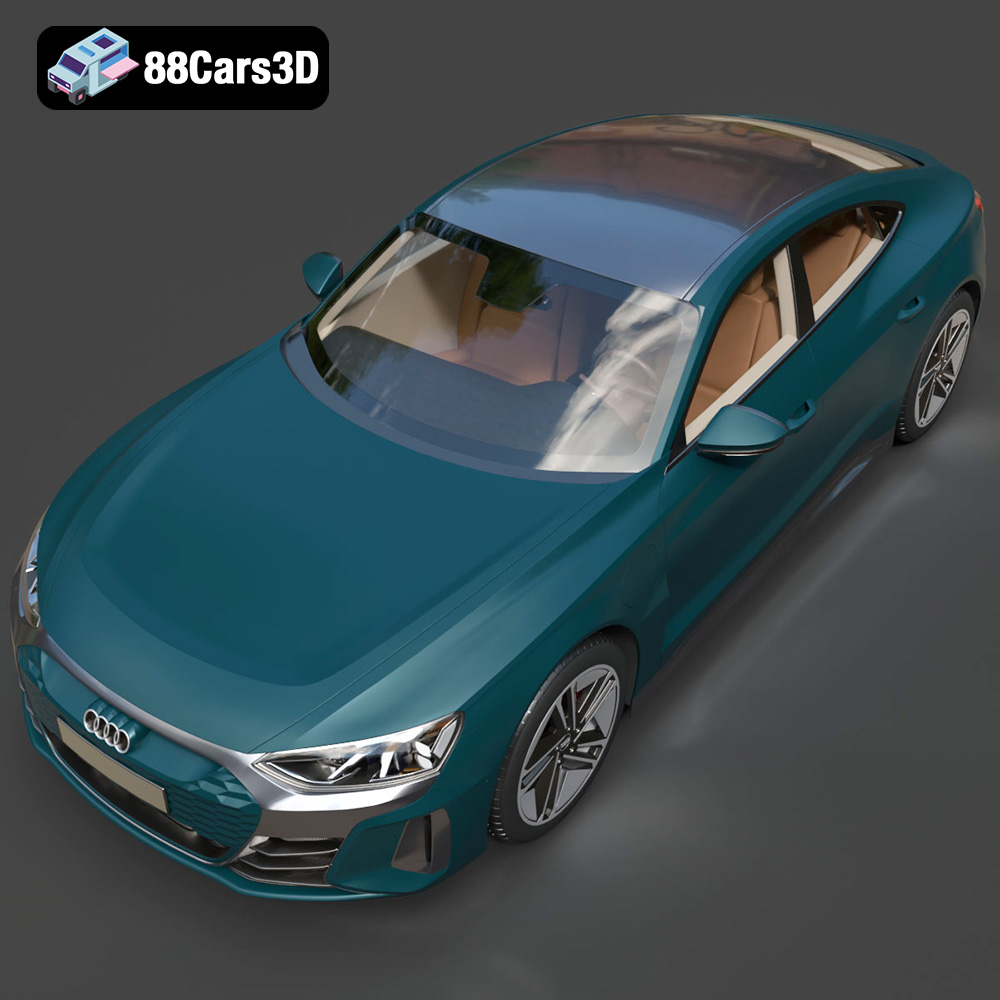
The interior of a vehicle is just as important as its exterior, especially for virtual showrooms, architectural lifestyle renderings, or first-person gameplay. The Audi RS E-Tron GT model extends its high-fidelity detailing to the cockpit. Luxurious sport seats with precise stitching and material textures, a flat-bottomed Alcantara-wrapped steering wheel, and accurate center console controls contribute to an immersive experience. The high-fidelity digital instrument cluster (Audi Virtual Cockpit) and MMI touch response display are modeled to capture the car’s advanced technological interface. Importantly, the interior geometry is optimized for first-person POV in gaming, ensuring that players or virtual visitors experience a realistic and visually engaging environment without excessive performance overhead. This attention to both exterior grandeur and interior intimacy sets the stage for diverse applications, from high-end visualization to interactive experiences.
Navigating the world of 3D modeling requires a foundational understanding of the various file formats available. Each format is designed with specific strengths and use cases, catering to different stages of a project or different software ecosystems. When acquiring a versatile 3D asset like the Audi RS E-Tron GT 3D Model from 88cars3d.com, understanding these formats is key to optimizing your workflow, ensuring compatibility, and achieving your desired output.
The .blend format is the native file type for Blender, a powerful and widely used open-source 3D creation suite. A .blend file typically contains the entire Blender scene, including mesh data, materials, textures, lighting, cameras, animation data, and even physics simulations. Its primary advantage is retaining full editability within Blender. For artists who use Blender as their primary DCC (Digital Content Creation) tool, receiving a .blend file means they can directly access and modify every aspect of the Audi RS E-Tron GT model, from tweaking polygons and UVs to adjusting shader networks and rigging. This offers maximum flexibility for customization, material re-authoring, and scene integration, making it ideal for projects where deep modification or integration into existing Blender pipelines is required.
.fbx (Filmbox) is an Autodesk-developed proprietary format that has become an industry standard for interoperability between 3D software and, crucially, real-time game engines. It is a robust format capable of storing not just mesh data (geometry and UVs) but also materials (though often simplified), textures, animations (skeletal and blend shapes), cameras, and lights. For the Audi RS E-Tron GT 3D Model, .fbx is ideal for transferring the asset to Unreal Engine, Unity, and other real-time pipelines due to its comprehensive data storage and efficient handling of complex scenes. It’s often the go-to for game developers and animators requiring models with animation capabilities. Technical details like pivot points for individual parts (wheels, steering, suspension) are generally well-preserved within .fbx, which is critical for functional vehicle setups in game engines.
The .obj (Wavefront Object) format is another highly universal and widely supported format. It’s a simpler text-based format primarily used for transferring static mesh data, including vertex positions, normals, UV coordinates, and material group information. While it doesn’t typically store animation or complex material definitions (it references external .mtl files for basic materials), its strength lies in its excellent cross-software compatibility. Almost every 3D application can import and export .obj files. For the Audi RS E-Tron GT, an .obj file ensures that the core mesh geometry is accessible in virtually any 3D package, making it a reliable choice for artists needing a clean mesh to start with, especially if their workflow involves multiple software packages for modeling, sculpting, or texturing.
.glb (GLB/glTF Binary) is a relatively newer, royalty-free format optimized for efficient transmission and loading of 3D scenes and models. It’s the binary version of glTF (Graphics Language Transmission Format), designed to be a “JPEG for 3D.” .glb files are highly efficient, compact, and self-contained, often embedding textures and animation directly within the single file. This makes them perfectly suited for web-based 3D viewers, AR (Augmented Reality), VR (Virtual Reality), and mobile applications where file size and loading speed are critical. For presenting the Audi RS E-Tron GT in an interactive web configurator or an AR experience on a smartphone, .glb offers an optimized, high-performance solution.
.stl (Stereolithography) is the de facto standard format for 3D printing. It represents a 3D model as a series of connected triangles, describing only the surface geometry of an object without color, texture, or other CAD attributes. While it lacks visual fidelity features, its simplicity makes it ideal for manufacturing. The Audi RS E-Tron GT 3D Model in .stl format is ready for physical production, allowing hobbyists and professionals to bring the digital car into the physical world through 3D printing. Understanding print settings like recommended scale, layer height, and support requirements, as detailed in the product description, becomes crucial for successful output.
.ply (Polygon File Format or Stanford Triangle Format) is another format for storing 3D data, particularly useful for scanned data, point clouds, and general mesh models. It can store various properties for each vertex (color, normal, confidence) and face (color). While less common for general asset distribution than .fbx or .obj, .ply offers a precise mesh format often used in scientific, CAD, or reverse engineering applications where detailed geometric information is paramount. For the Audi RS E-Tron GT, its inclusion provides an option for highly accurate geometrical analysis or specific niche industrial pipelines.
The .unreal format refers to engine-ready assets specifically prepared for Unreal Engine. This isn’t a single file type but rather a collection of files (meshes, materials, textures, Blueprints) organized and optimized for direct import and use within Unreal Engine. Receiving an “.unreal” package for the Audi RS E-Tron GT signifies that the model has undergone pre-processing and setup for the engine, potentially including LODs (Levels of Detail), collision meshes, material instances, and even a basic vehicle blueprint, significantly accelerating game development workflows and ensuring optimal performance within real-time environments.
Finally, .max is the native file format for Autodesk 3ds Max, a leading software for 3D modeling, animation, and rendering. Similar to .blend for Blender, a .max file contains the complete 3ds Max scene, including geometry, materials, lighting, cameras, and animation data. For professionals whose pipelines revolve around 3ds Max, having the Audi RS E-Tron GT in .max format provides the ultimate flexibility for scene integration, complex animation setups, and high-fidelity rendering using renderers like V-Ray or Corona. It allows for direct access to all model components, modifiers, and intricate material setups, ensuring a seamless experience for 3ds Max users.
In the world of game development, 3D car models are much more than just visuals; they are interactive elements that define player experience. From the handling physics of a racing simulator to the visual fidelity of an open-world environment, the quality and optimization of game assets are paramount. The Audi RS E-Tron GT 3D Model is engineered specifically with these demands in mind, offering a perfect blend of high-end visual realism and performance optimization.
The challenge in game development is always to strike a balance between visual detail and real-time performance. The Audi RS E-Tron GT model addresses this with an impressive 3,540,128 triangle count. While this might seem high for a game asset at first glance, it’s a strategically chosen polycount that allows for breathtaking detail in close-up scenarios—essential for modern racing games or vehicle configurators—while providing a robust base for optimization. Game developers can leverage this high-resolution mesh to generate multiple Levels of Detail (LODs). This involves creating lower-polygon versions of the model that automatically swap in at greater distances from the camera, dramatically reducing render overhead without sacrificing perceived quality up close. Furthermore, the detailed geometry provides excellent source data for baking high-resolution normal maps, ambient occlusion maps, and other textures onto lower-poly versions, enabling photorealistic results with efficient rendering.
The model’s inclusion of formats like .fbx and .unreal makes it highly compatible with industry-leading game engines such as Unreal Engine and Unity. The game-ready nature of the Audi RS E-Tron GT 3D Model means it often comes with essential features pre-configured. Crucially, the proper pivot setup for steering, wheel rotation, and suspension travel is a huge time-saver. Without this, developers would spend hours manually adjusting pivots, which is prone to error and delays. For racing titles or open-world games, this feature ensures that vehicle dynamics can be accurately simulated and animated out of the box, offering a realistic driving experience from day one.
Imagine importing the Audi RS E-Tron GT 3D Model into Unreal Engine. Using the provided .fbx or .unreal package, you’d typically import the static mesh, ensuring that separate elements like wheels, body, and suspension components are correctly identified. Unreal’s physics asset tool would then be used to create collision geometry, essential for realistic interactions with the game world. With the pre-set pivots, creating a vehicle Blueprint is significantly streamlined. You can immediately attach the wheel meshes to the corresponding physics constraints, set up steering angles, and define suspension travel directly. The optimized interior geometry is perfect for implementing a first-person cockpit view, providing players with an immersive driving experience. Material instances can be easily created from the base PBR (Physically Based Rendering) materials, allowing for quick customization of body colors, tire textures, and metallic finishes directly within the engine, empowering rapid iteration on visual styles for different environments or player preferences.
Beyond interactive environments, 3D car models play a critical role in high-end automotive rendering and visualization. This encompasses everything from stunning studio shots for advertising campaigns to realistic lifestyle scenes for architectural visualization. The Audi RS E-Tron GT 3D Model, with its exceptional detail and versatile file formats, provides the perfect foundation for creating visuals that are virtually indistinguishable from reality.
For artists and studios utilizing 3ds Max or Blender for their rendering pipelines, the availability of the Audi RS E-Tron GT in native .max and .blend formats is a significant advantage. These files provide full editability and preserve all the intricate details, including complex material setups and accurate mesh topology, making them ideal for high-resolution output. In 3ds Max, artists can easily integrate the model into existing studio scenes, leveraging powerful renderers like V-Ray or Corona to achieve photorealistic results. Similarly, Blender users can harness Cycles or Eevee, utilizing the model’s clean geometry and robust material definitions to craft stunning renders. The ability to modify tire textures for off-road or street variants, adjust material finishes (matte, gloss, metallic), and adapt lighting for different environments directly within these native files provides unparalleled creative control.
Achieving photorealism is largely dependent on meticulous lighting and material setup. The Audi RS E-Tron GT 3D Model serves as an excellent canvas for exploring advanced techniques. Its accurate body geometry is perfect for showcasing reflections and refractions, which are critical for depicting automotive paint, glass, and chrome. Artists can experiment with various HDRI (High Dynamic Range Image) environments to simulate different times of day or geographic locations, instantly changing the mood and visual impact of the car. For materials, utilizing PBR workflows is essential. The model’s inherent detail supports complex shader networks that define everything from the metallic flakes in the paint to the subtle imperfections on the tire rubber. High-resolution matrix LED headlights and animated light strip taillights, when properly textured and illuminated, contribute significantly to the car’s dynamic presence, especially in low-light or night scenes.
The utility of a detailed 3D car model extends far beyond static images. The separate, animatable components of the Audi RS E-Tron GT – wheels, suspension, and steering – make it an ideal asset for cinematic animations. Imagine a tracking shot that follows the car as it navigates a winding road, its suspension responding dynamically to terrain changes, and its wheels turning realistically. This level of granular control is vital for creating compelling automotive commercials or in-game cutscenes. Furthermore, for virtual configurators or interactive brand experiences, the model’s robust structure allows for real-time adjustments of body colors, material finishes, and environmental lighting, offering users an engaging and personalized exploration of the vehicle in a virtual showroom setting.
The versatility of high-quality 3D car models extends into emerging technologies, offering innovative applications that redefine how we interact with and experience automotive design. The Audi RS E-Tron GT 3D Model, with its comprehensive file format support, is perfectly positioned to leverage these new frontiers.
Augmented Reality (AR) and Virtual Reality (VR) are transforming how products are showcased and experienced. The Audi RS E-Tron GT 3D Model is an exceptional asset for creating immersive virtual showrooms, configurators, and mobile AR experiences. Imagine placing a life-sized Audi RS E-Tron GT in your driveway using an AR app, exploring its exterior from every angle, and even stepping inside the virtual cockpit. For VR, the model can be integrated into high-fidelity environments, allowing users to “test drive” the car virtually or explore its features in a fully interactive space. The inclusion of the .glb format is particularly beneficial here, as it is optimized for efficient transmission and rendering in web-based and mobile AR/VR applications, ensuring smooth performance and rapid loading times.
The realm of 3D printing offers a tangible connection to the digital world. For enthusiasts, designers, or educators, the ability to physically hold a scale model of the Audi RS E-Tron GT is incredibly appealing. The inclusion of the .stl format specifically caters to this application. While the digital model boasts millions of triangles, the .stl conversion provides the necessary surface geometry for physical reproduction. The product description provides crucial 3D print settings, recommending specific scales (1:12 / 1:18 / 1:24), layer heights (0.04–0.12 mm, with resin printing recommended for fine details), and infill percentages. It also advises on necessary supports for detailed parts and optimal print orientation for structural integrity. This detailed guidance ensures that hobbyists can successfully translate the digital masterpiece into a high-quality physical display model, complete with authentic factory colors and metallic finishes during post-processing.
One of the greatest strengths of a well-constructed 3D model is its adaptability. The Audi RS E-Tron GT model offers extensive customization options, making it a flexible asset for a wide range of projects. Artists can effortlessly change body colors to match factory specifications or create custom finishes. Modifying tire textures can transform the car’s character, from a sleek street machine to a rugged concept. Adjusting material finishes allows for fine-tuning the aesthetic, whether a stealthy matte look or a gleaming metallic sheen. This level of control ensures that the model can be repurposed and restyled to fit diverse creative briefs, from brand campaigns and cinematic sequences to technical simulations and interactive art installations, maximizing its value across countless scenarios.
In the competitive digital landscape, the choice of 3D assets can significantly impact project quality, efficiency, and overall success. Opting for premium 3D car models, such as the Audi RS E-Tron GT from 88cars3d.com, is an investment that yields substantial returns for professionals across industries.
The level of detail and technical accuracy in a model like the Audi RS E-Tron GT is not merely aesthetic; it’s foundational. High-resolution geometry, real-world scale, accurate proportions, and properly separated, animatable components mean less time spent on correctional modeling or rigging. This precision ensures that whether the model is used for a close-up render, a physics-driven game, or a detailed engineering visualization, it performs as expected without compromising visual quality or technical integrity. The 3,540,128 triangle count and optimized geometry mean that artists and developers receive an asset that is ready for demanding professional use right out of the box.
Time is a precious commodity in any creative pipeline. High-quality 3D car models streamline workflows by providing production-ready assets that integrate seamlessly into various software environments. The comprehensive range of included file formats (.blend, .fbx, .obj, .glb, .stl, .ply, .unreal, .max) ensures compatibility, reducing conversion headaches and allowing teams to work in their preferred applications. The “game-ready & optimized” nature, with proper pivot setups, significantly accelerates development in engines like Unreal and Unity. For rendering specialists, the detailed materials and clean mesh reduce setup time, allowing more focus on creative direction rather than technical troubleshooting. This efficiency translates directly into faster project completion and higher quality output.
88cars3d.com positions itself as a trusted source for high-quality 3D car models. When purchasing a model like the Audi RS E-Tron GT, creators are acquiring more than just polygons; they are gaining access to expertly crafted assets designed to meet professional standards. This reliability means confidence in the model’s technical specifications, its readiness for diverse applications, and its ability to deliver stunning results. For anyone needing top-tier automotive assets for game development, automotive rendering, AR/VR, 3D printing, or general visualization, 88cars3d.com offers a curated selection that stands up to the demands of modern digital production.
The digital realm continues to expand its boundaries, and with it, the need for exceptionally crafted 3D assets grows exponentially. The Audi RS E-Tron GT 3D Model exemplifies the pinnacle of what a premium 3D car model can offer: unparalleled detail, technical precision, and remarkable versatility across a multitude of applications. From powering next-generation racing games and delivering photorealistic automotive renders to enabling immersive AR/VR experiences and bringing digital designs to life through 3D printing, this model is a testament to the power of high-quality digital assets.
For professionals seeking to elevate their projects with a meticulously engineered and aesthetically stunning vehicle, this model provides the essential foundation. Its robust design, comprehensive file format support, and optimized features make it an invaluable tool for any artist, developer, or designer. Explore the future of automotive design and unlock new creative possibilities by integrating the Audi RS E-Tron GT 3D Model into your workflow. Discover this and other exceptional 3D car models at 88cars3d.com, your gateway to premium digital automotive assets.
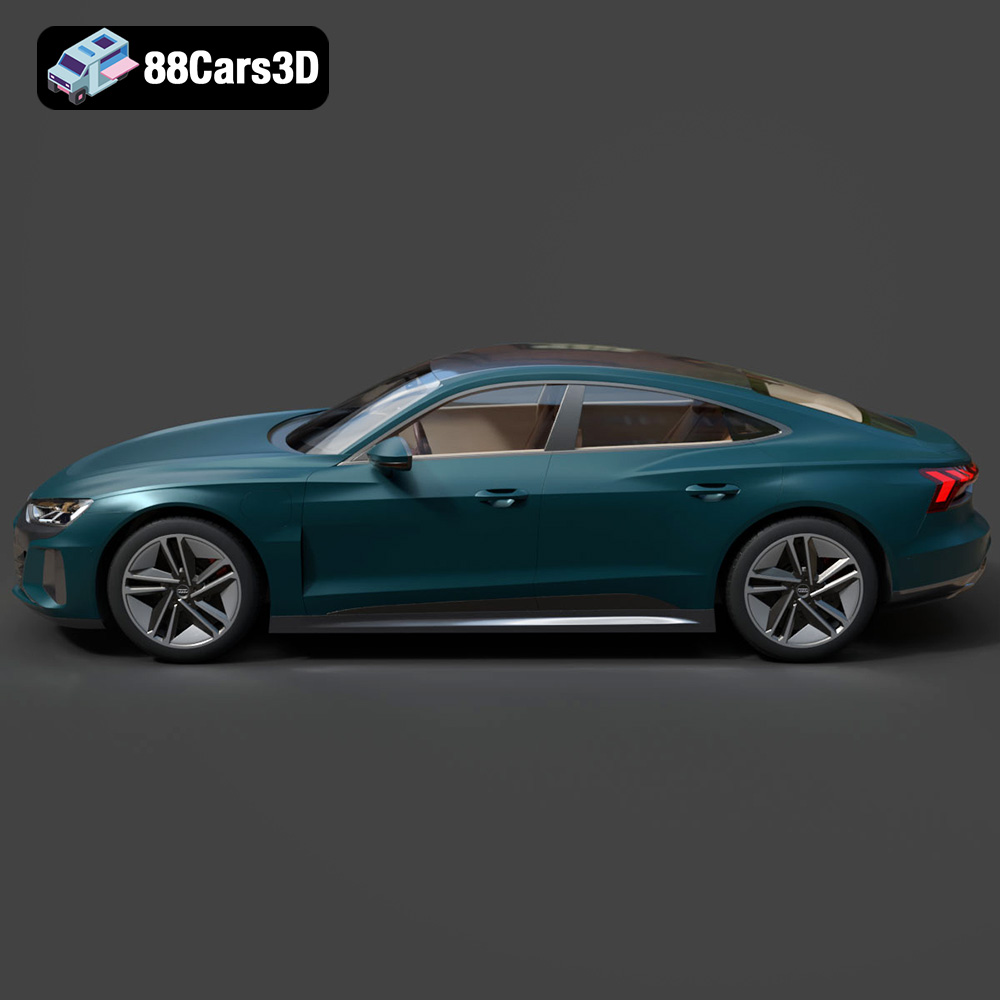
Experience the future of high-performance driving with this incredibly detailed 3D model of the Audi RS E-Tron GT. This all-electric grand tourer masterfully blends Audi’s legendary Quattro heritage with cutting-edge EV technology. Our model captures its aggressive, aerodynamic stance, characterized by the striking inverted Singleframe grille, sculpted blistered fenders, and the signature continuous LED taillight strip that defines its futuristic rear profile.
Engineered for maximum visual fidelity, this model features an impressive 3,540,128 triangle count, delivering breathtaking high-resolution details perfect for close-up shots while maintaining structural integrity for optimization. Whether you are building next-generation racing games, crafting high-end cinematic animations, or developing immersive virtual configurators, this model offers unmatched realism.
Perfect for urban racing environments, high-end automotive visualizations, virtual reality showrooms, and architectural lifestyle renderings.
.blend, .fbx, .obj, .glb, .stl, .ply, .unreal, .max
Tags:
audi, rs-e-tron-gt, electric-car, ev, sports-car, grand-tourer, game-ready, optimized, car-3d-model, game-asset, rendering, vr-ar, blend, fbx, obj, glb, stl, ply, unreal, max
$90.00
.audi
.blend
.ev
.fbx
.glb
.max
.obj
.ply
.rendering
.sports car
.stl
.unreal
car-3d-model
electric-car
game asset
game-ready
grand-tourer
optimized
rs-e-tron-gt
VR/AR