Get 20% OFF All Premium 3D & STL Models!

In the dynamic world of digital design, the allure of classic automobiles transcends mere nostalgia, offering a rich canvas for creativity and technical innovation. From the polished chrome of vintage roadsters to the sleek lines of modern supercars, the faithful recreation of automotive legends in three dimensions is a testament to both artistic skill and advanced engineering. These meticulously crafted 3D car models form the backbone of everything from cutting-edge video games and immersive virtual reality experiences to stunning photorealistic visualizations and even intricate 3D prints.
The pursuit of realism and precision in 3D car models is an ongoing journey. It demands an understanding of complex geometry, advanced texturing, and optimized data structures, all while preserving the essence and historical accuracy of the original vehicle. It’s about bringing a piece of history to life, allowing enthusiasts, designers, and developers to interact with iconic machines in ways previously unimaginable.
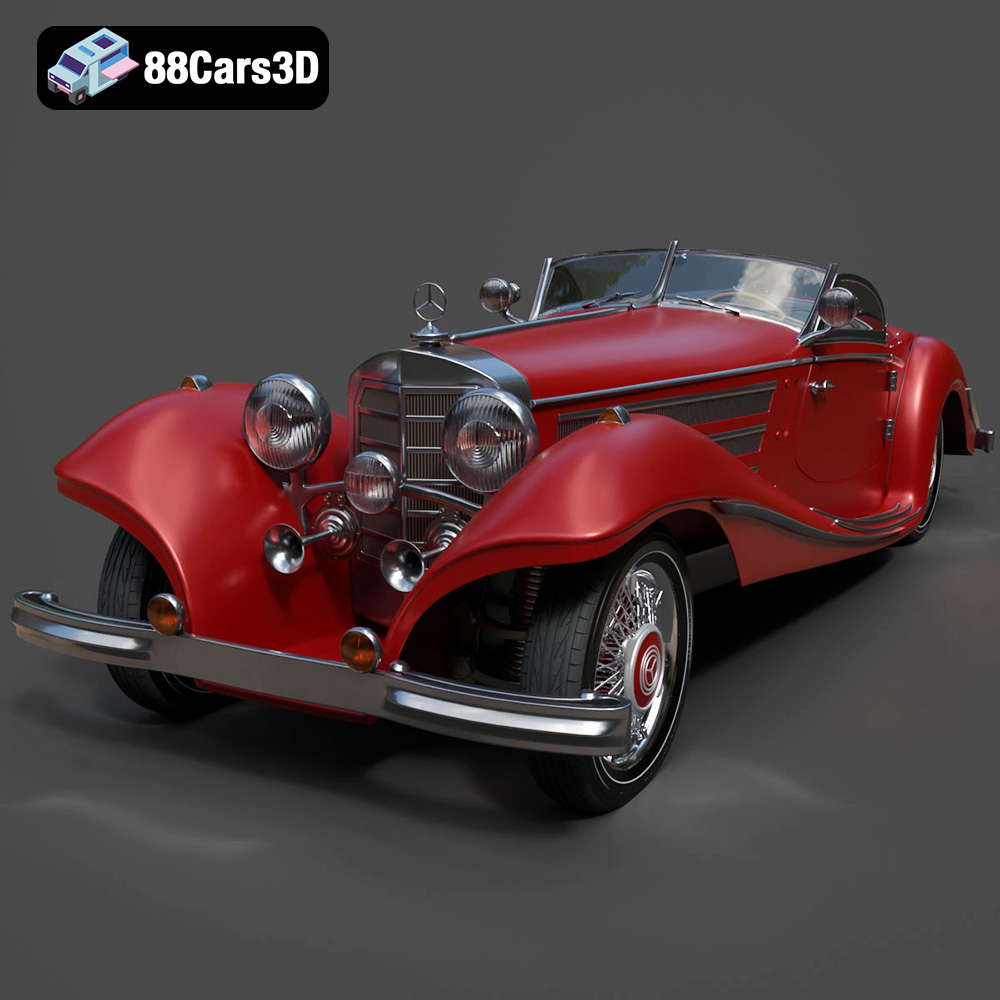
Consider the magnificent Mercedes-Benz 540K Roadster from 1936. A symbol of pre-war automotive luxury and engineering prowess, its sweeping fenders, elongated hood, and iconic external exhaust pipes represent a pinnacle of design. To capture such an automotive masterpiece in digital form requires an exceptional level of detail and technical fidelity. The Mercedes-Benz 540K Roadster 1936 3D Model available on 88cars3d.com stands as a prime example of this dedication, offering a highly detailed, game-ready asset that serves as a foundation for a myriad of professional applications. This article will delve into the technical intricacies, workflow considerations, and diverse applications of high-quality 3D car models, using this exceptional classic as our guiding example.
When working with 3D models, especially complex automotive assets, understanding the various file formats is paramount. Each format serves specific purposes, offering different levels of compatibility, data retention, and optimization for various workflows and software environments. Choosing the right format ensures efficiency, preserves crucial data, and facilitates seamless integration into your projects.
The .blend format is Blender’s native file type. It’s a powerhouse for Blender users, as it saves everything within the Blender scene: mesh data, materials, textures, animations, lighting, camera settings, and even the UI layout. This makes it ideal for projects where Blender is the primary DCC (Digital Content Creation) tool, allowing for full editability and future modifications. For a model like the Mercedes-Benz 540K Roadster, a .blend file provides a complete, ready-to-render scene directly within Blender, perfect for artists who want to dive straight into customization or animation.
Autodesk’s .fbx (Filmbox) format is arguably the most widely adopted interchange format in the 3D industry, particularly for real-time applications like game development. It excels at transferring geometry, materials, animations, and skeletal data between different software packages. Its robust nature makes it ideal for moving assets from modeling software (like 3ds Max or Blender) into game engines such as Unreal Engine and Unity. The .fbx version of the 540K model would be the go-to for game developers seeking an optimized, engine-ready asset with proper pivot points and separated components for animation.
The .obj (Wavefront OBJ) format is a universal standard, highly compatible across almost all 3D software. It primarily stores geometry (vertices, normals, UV coordinates) and material references, making it excellent for simple mesh transfer. While it doesn’t typically store advanced features like animation or rigging, its simplicity ensures maximum compatibility. If you need to import the 540K model into an obscure renderer or a niche CAD program, .obj is a safe bet for getting the core mesh data across.
.glb (GL Transmission Format Binary) is the binary version of glTF, a royalty-free specification for the efficient transmission and loading of 3D scenes and models by applications. It’s highly optimized for web-based 3D, augmented reality (AR), and virtual reality (VR) experiences due to its compact size and ability to embed all assets (textures, animations) within a single file. For developers showcasing the Mercedes-Benz 540K in a web configurator or an AR app, the .glb format offers excellent performance and ease of deployment.
.stl (Stereolithography) is the de facto standard for 3D printing. It represents a 3D model as a series of connected triangles, defining its surface geometry without color, texture, or other attributes. For hobbyists or professionals looking to physically manifest the 540K Roadster, an .stl file is essential. The product description for the 540K model specifically details recommended print settings, highlighting its suitability for physical replication at various scales.
The .ply (Polygon File Format or Stanford Triangle Format) is designed to store 3D data, particularly from 3D scanners. It can store a variety of properties including color, transparency, normals, texture coordinates, and scalar values. While less common for direct asset transfer in entertainment, it’s valuable for precision mesh transfer, CAD integration, or scientific analysis where detailed point cloud or polygonal data is required.
The .unreal format, often referring to a cooked or packaged asset specifically prepared for Unreal Engine, implies an asset that has undergone optimization and packaging within the engine’s ecosystem. This often means the FBX or similar source has been imported, processed, had materials assigned, and potentially collision meshes generated, making it immediately usable within an Unreal project. Having a dedicated “.unreal” file streamlines development significantly for game artists and VR designers working with the Mercedes-Benz 540K model in Unreal Engine.
Similar to .blend for Blender, the .max format is the native file type for Autodesk 3ds Max. It saves the complete scene, including geometry, modifiers, materials, lighting, cameras, animations, and render settings. For professionals deeply integrated into the 3ds Max ecosystem, the .max file provides the highest level of detail and control for advanced rendering, animation, and scene construction with the 540K Roadster.
The availability of such a diverse range of formats for the Mercedes-Benz 540K Roadster 3D Model underscores its versatility and the commitment of 88cars3d.com to support various professional pipelines.
The Mercedes-Benz 540K Roadster is more than just a car; it’s a statement of an era, an icon of pre-war engineering and design luxury. Recreating such a vehicle in 3D demands an almost forensic attention to detail, ensuring every curve, every rivet, and every material accurately reflects the original masterpiece. The Mercedes-Benz 540K Roadster 1936 3D Model delivers precisely this, offering a digital twin that breathes life into history.
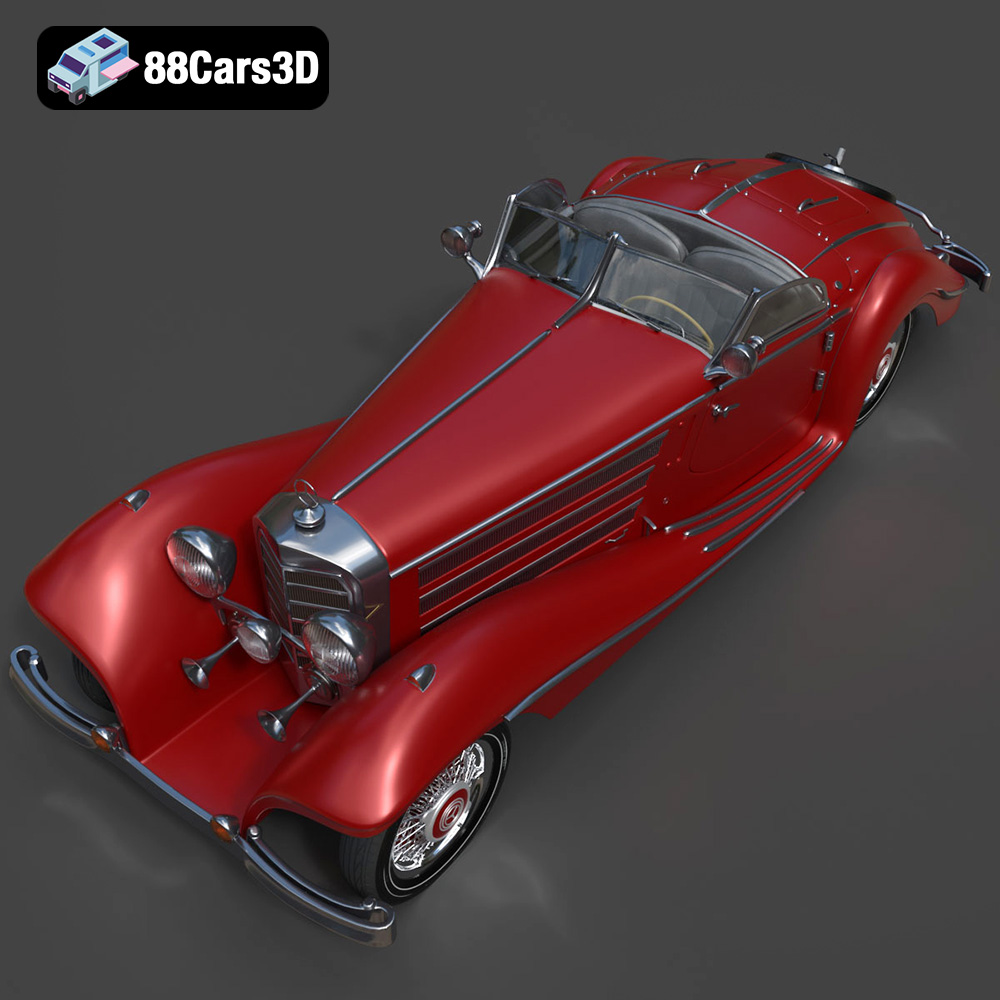
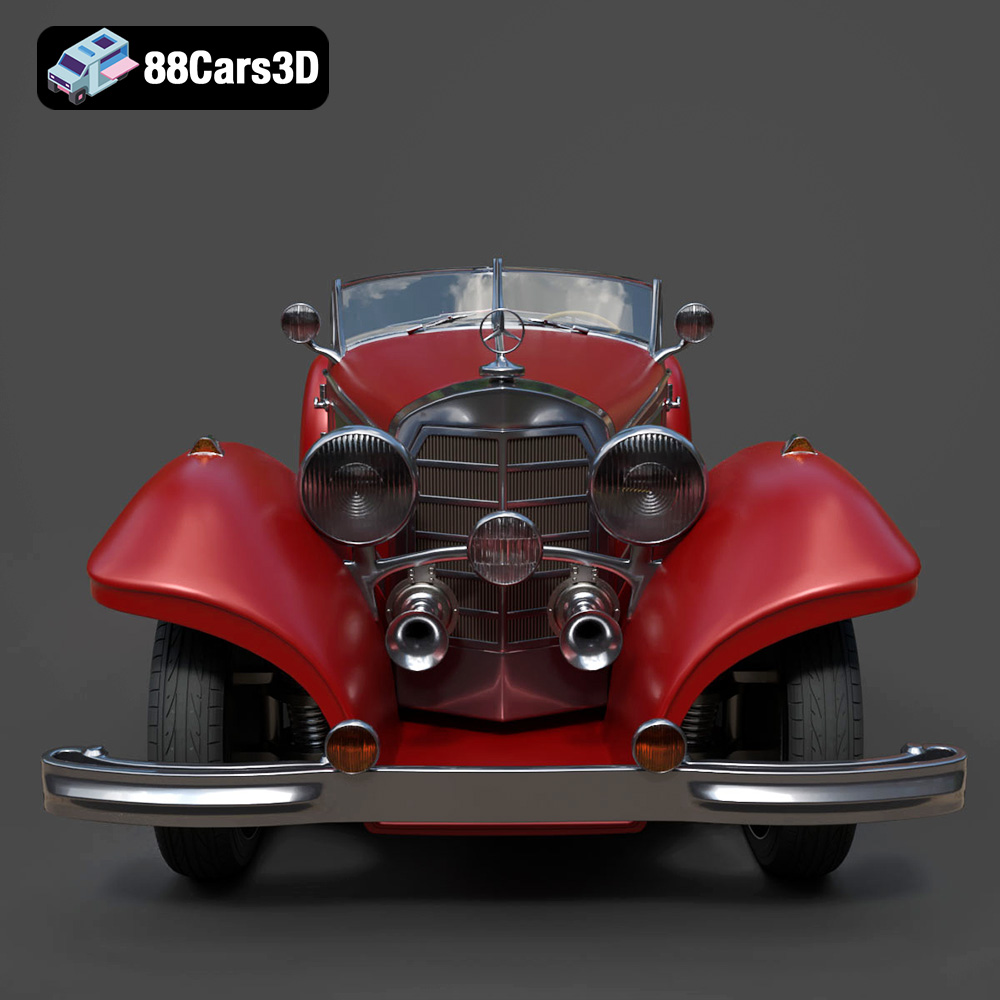
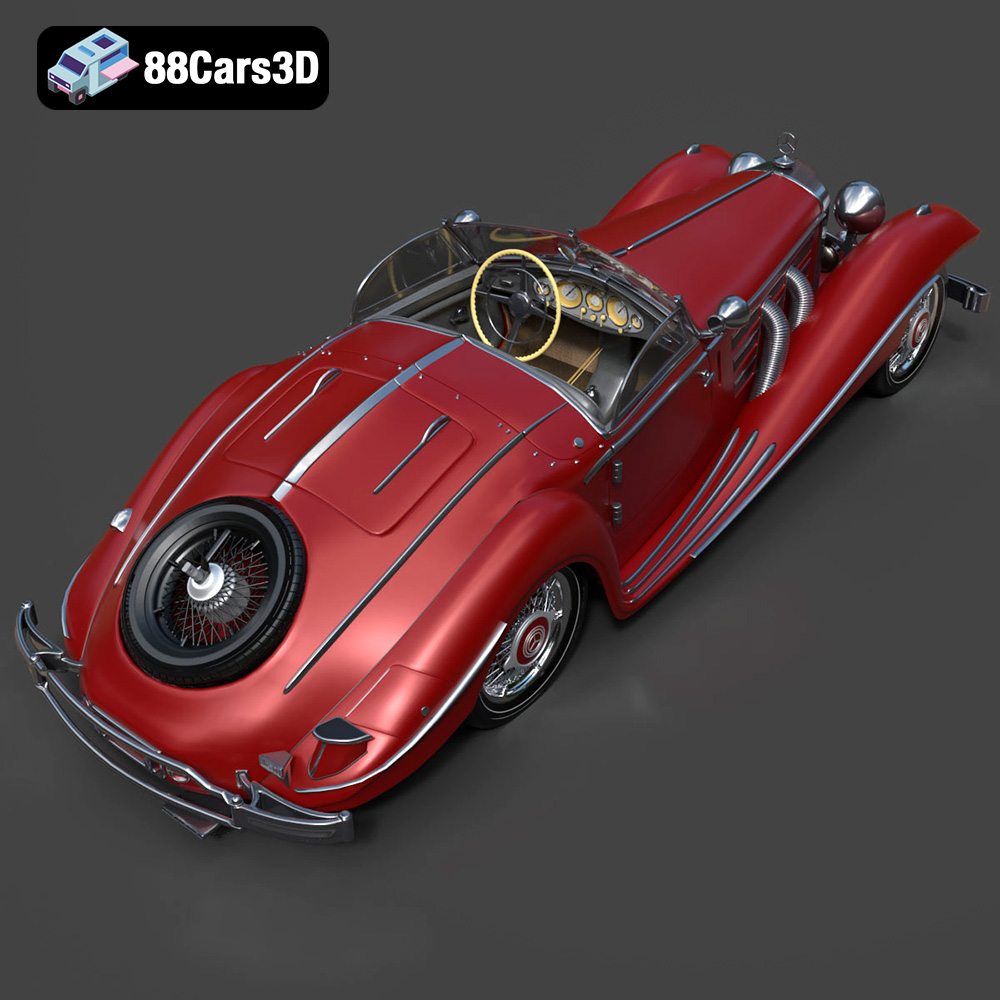
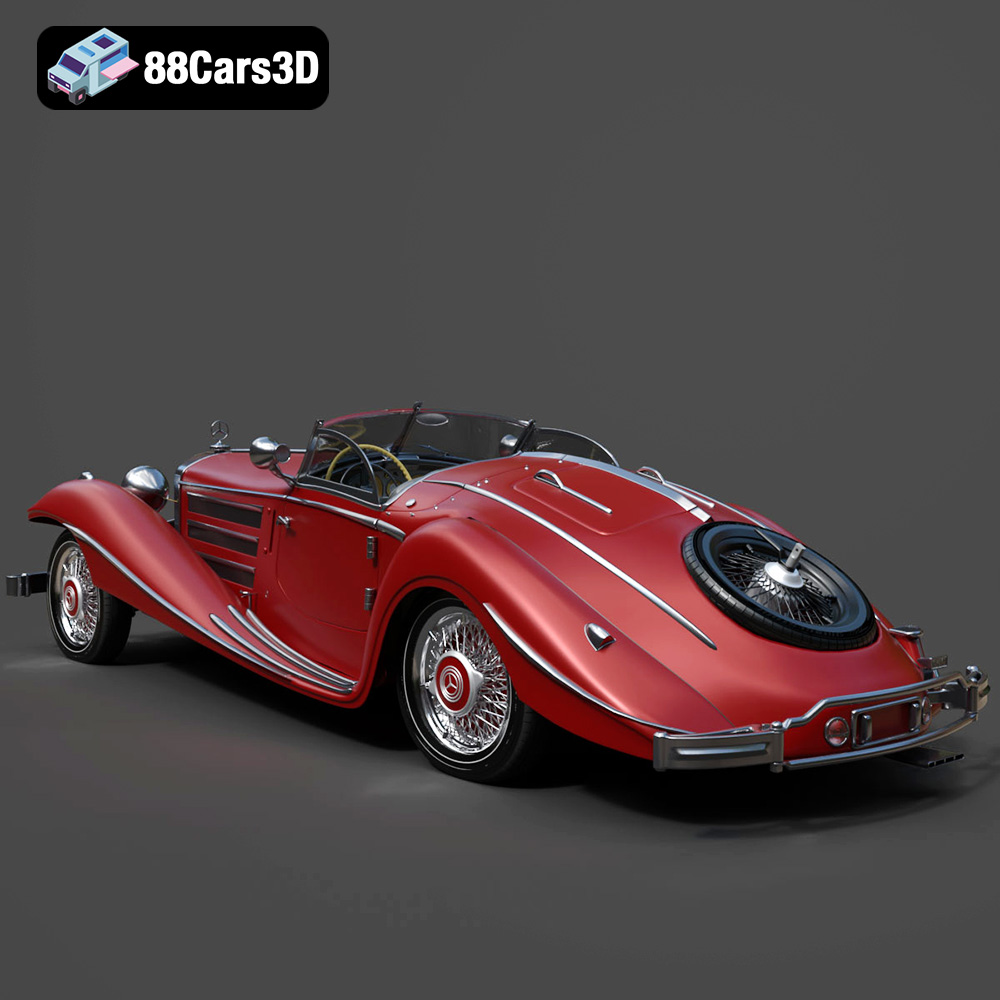
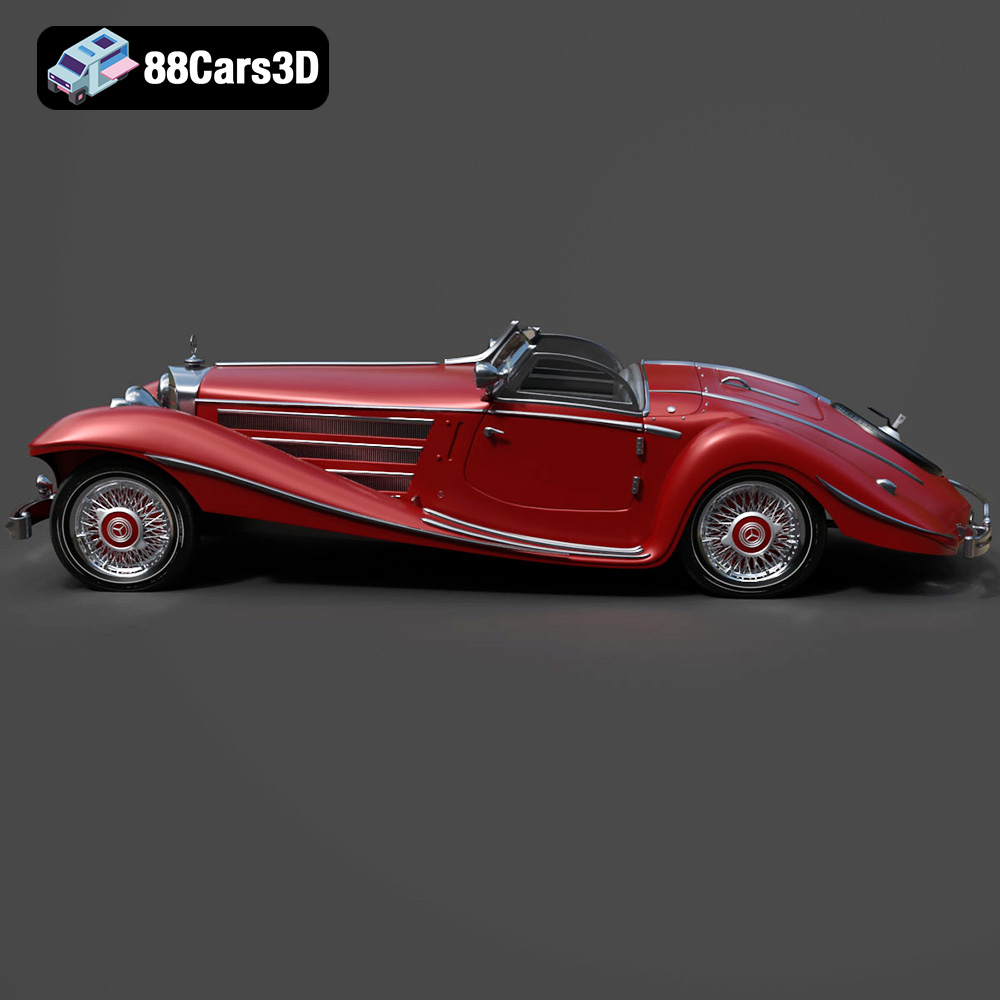
The exterior of the 540K model is a masterclass in accurate 3D modeling. From the majestic, sweeping fenders that define its silhouette to the elongated hood that hints at the powerful supercharged straight-eight engine beneath, every proportion and stylistic cue has been meticulously preserved. Key features like the signature external chrome exhaust pipes, cascading elegantly from the hood, are rendered with exquisite detail, as are the authentic period-correct lighting elements, including large classic headlamps and delicate taillights. The intricate wire-spoke wheels, paired with classic whitewall tires, are not merely textures but carefully modeled geometry, ensuring maximum realism for close-up renders and animations. Even the classic suspension chassis setup is detailed, preparing the model for realistic physical simulations.
Stepping into the virtual cockpit of the 540K reveals an equally impressive level of detail. The luxurious, tufted leather bench seating is faithfully reproduced, inviting the viewer into an era of unparalleled craftsmanship. The large-diameter, vintage-style steering wheel features precise spoke detailing, while the accurate analog instrument cluster presents classic dial faces that feel genuinely authentic. The floor-mounted shifter, handbrake, and mechanical pedal assembly complete the immersive experience, particularly crucial for applications like gaming where first-person POV is essential. This attention to both exterior grandeur and interior nuance makes the model exceptionally versatile for various visualization needs.
The true power of a high-quality 3D car model like the Mercedes-Benz 540K Roadster lies in its adaptability across diverse professional pipelines. Whether you’re a cinematic animator, a game developer, or an architectural visualizer, these assets are designed to integrate seamlessly, enhancing project quality and accelerating development.
For professionals leveraging Autodesk 3ds Max, the .max file format provides a complete scene, allowing for full control over the model. Artists can utilize 3ds Max’s robust toolset for advanced material creation, intricate lighting setups, and sophisticated animation sequences. Imagine rendering the 540K in a historical European setting, with cinematic camera movements highlighting its chrome details and elegant form. The separated wheels, suspension, and steering components are invaluable here, enabling realistic animation of driving sequences or interactive showcases of the vehicle’s mechanics. Furthermore, 3ds Max’s compatibility with powerful renderers like V-Ray or Corona allows for truly photorealistic automotive rendering, crucial for marketing campaigns or high-end visualization projects.
Blender users benefit immensely from the native .blend file, which includes all materials and textures. This allows for immediate integration into Blender’s comprehensive modeling, sculpting, texturing, rigging, animation, and rendering environment. Artists can easily modify the model, experiment with different material shaders (e.g., using Cycles or Eevee), or integrate it into complex scene compositions. For indie game developers or freelance artists, the accessibility of Blender combined with a professional-grade asset like the 540K Roadster provides a powerful and cost-effective solution for creating stunning visuals or game assets. Blender’s Grease Pencil can even be used to add stylized visual effects to the classic car.
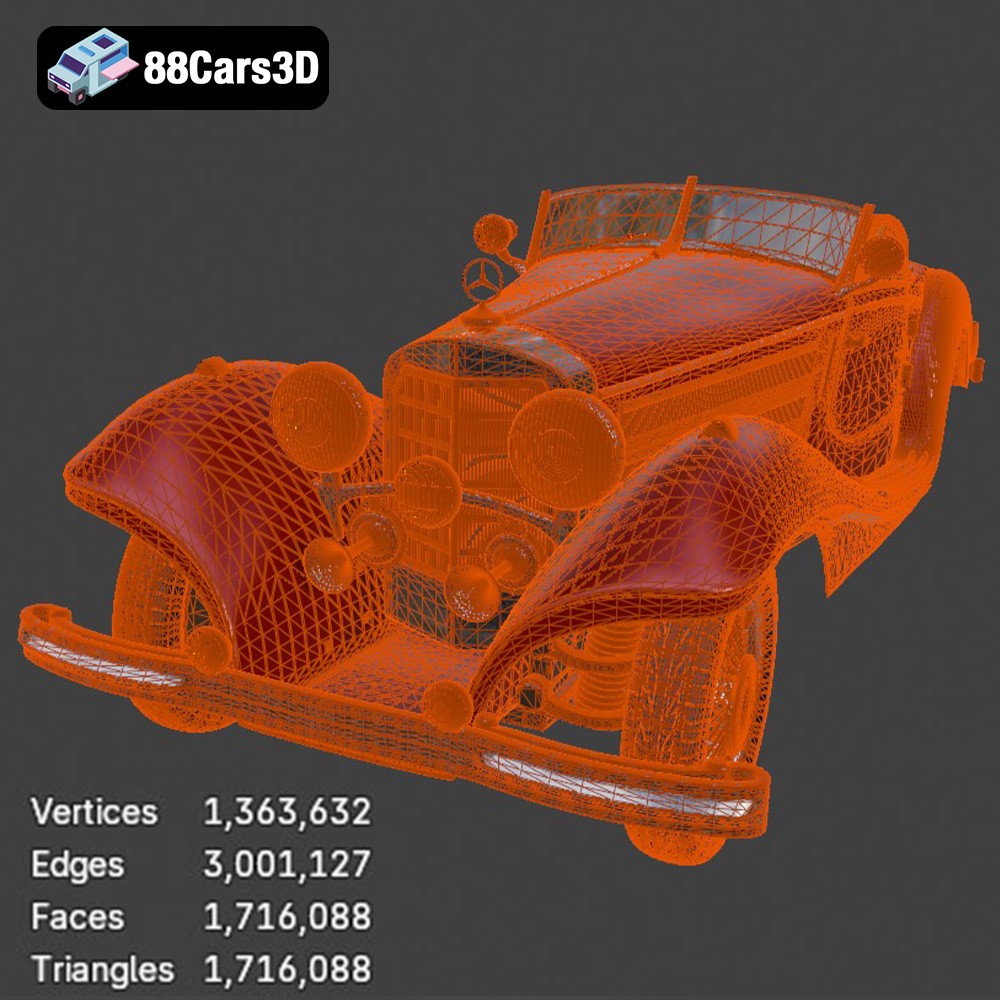
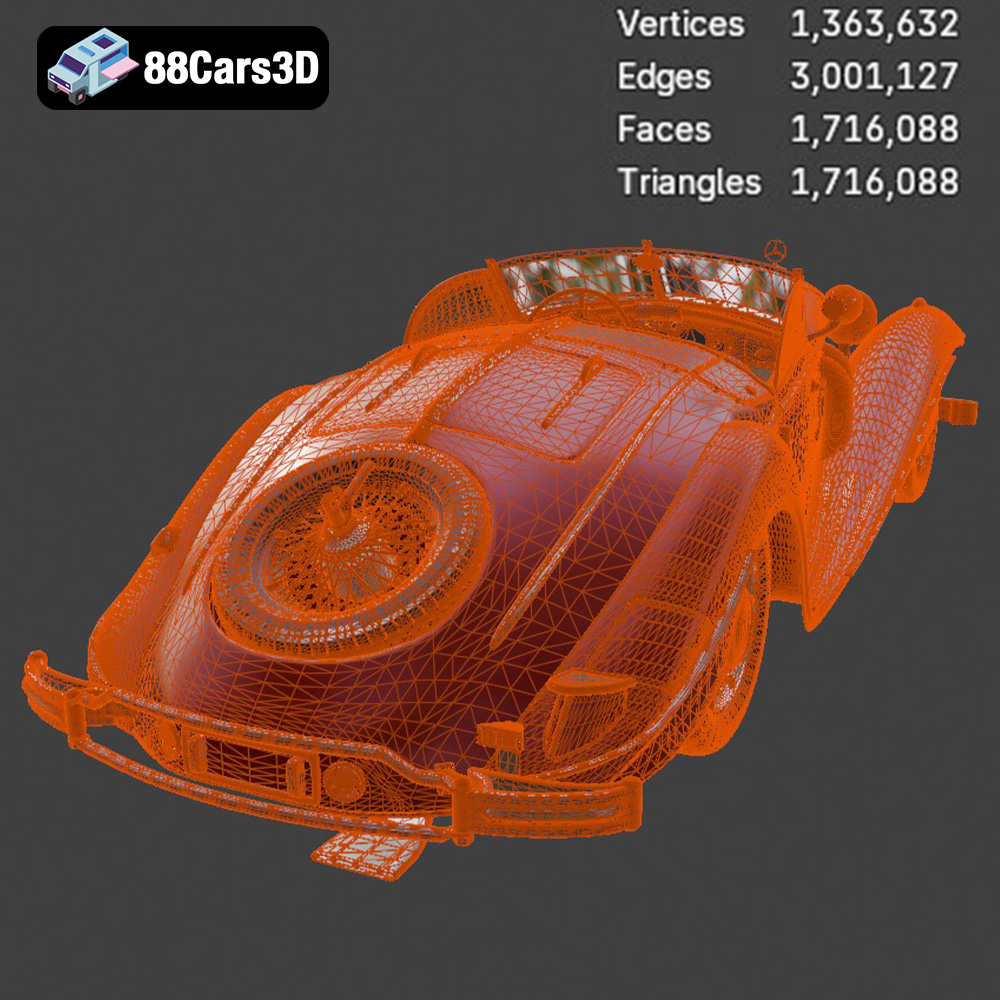
Unreal Engine stands as a leading platform for real-time visualization, game development, and AR/VR experiences. The included .unreal and .fbx formats for the Mercedes-Benz 540K Roadster are explicitly designed for this environment. Developers can import the FBX directly, benefiting from its optimized polycount (1,716,088 triangles) that strikes an excellent balance between visual fidelity and real-time performance. This polycount is perfectly suited for modern virtualized geometry pipelines within Unreal, allowing for high-end visual realism without crippling framerates. Proper pivot setups for steering, wheel rotation, and suspension travel ensure the model behaves realistically within a game or simulation, making it ideal for racing titles, virtual classic car museums, or interactive configurators. Unreal’s advanced material editor, lighting systems (Lumen, Nanite), and sequencer allow for unparalleled visual quality in real-time.
The applications for a high-fidelity 3D car model extend far beyond static renders. The Mercedes-Benz 540K Roadster 3D Model, with its game-ready optimization and comprehensive file formats, unlocks a multitude of creative and professional possibilities.
For game developers, the 540K model is an exceptional asset. Its optimized polycount and real-world scale accuracy make it ideal for integration into open-world games, racing simulators, and even period-piece adventure titles. The separated components for animation (wheels, suspension, steering) allow for dynamic vehicle physics and realistic driving mechanics. Imagine cruising through a historically accurate digital landscape in this classic car, feeling the suspension articulate over bumps, and seeing the steering wheel turn in sync with your inputs. This level of detail elevates the player experience, immersing them fully in the virtual world.
Augmented Reality (AR) and Virtual Reality (VR) are transforming how we interact with digital content. A model like the 540K is perfect for creating immersive virtual showrooms, where users can explore the car’s exterior and interior in full 3D, perhaps even ‘sitting’ inside. Imagine a luxury car configurator where a customer can customize the paint, trim, and wheel options of the 540K in real-time. The .glb format is particularly beneficial for web-based AR/VR experiences, allowing for easy deployment and efficient streaming to mobile devices or VR headsets, making this classic accessible to a global audience.
In the realm of rendering and visualization, photorealism is key. The detailed topology and accurate material setups of the 540K model make it an excellent choice for high-end brand campaigns, lifestyle scenes, and studio lighting setups. Design agencies can use it to create stunning promotional imagery, architectural visualizers can place it in grand estate driveways, and automotive journalists can use it for captivating digital content. The ability to customize body colors, material finishes (matte, gloss, metallic), and adapt lighting allows for endless creative possibilities, producing images that are virtually indistinguishable from real-world photography.
Beyond digital screens, the 540K model can also materialize into a physical object. The inclusion of the .stl format, along with specific 3D print settings, opens up opportunities for hobbyists and collectors to create display-scale replicas. The recommendations for resin printing, specific layer heights, infill percentages, and support requirements are crucial details that guide users towards successful physical reproduction. From intricate exhaust pipes to delicate wire-spoke wheels, the digital fidelity translates directly into tangible detail, allowing enthusiasts to own a miniature piece of automotive history.
The strength of any professional 3D asset lies in its technical foundation. The Mercedes-Benz 540K Roadster 3D Model exemplifies best practices in optimizing for both visual realism and computational performance.
With 1,716,088 triangles, the 540K model strikes a delicate balance. While this is considered high-poly for traditional real-time rendering, it’s perfectly structured for modern engines utilizing virtualized geometry systems like Unreal Engine’s Nanite. These technologies efficiently handle high-density meshes, rendering only the necessary detail based on camera distance, effectively allowing for cinematic levels of detail in real-time applications without the performance overhead of older systems. This ensures that the model looks stunning up close without sacrificing overall scene performance.
Accuracy is paramount for any technical model. The 540K is built to real-world scale based on actual vehicle chassis dimensions. This not only ensures correct proportions for rendering but is critical for accurate physics simulations in games and for seamless integration into existing scenes or CAD environments. Discrepancies in scale can lead to visual inconsistencies and break immersion, a challenge completely avoided with this meticulously scaled asset.
A seemingly minor detail, but one that significantly impacts usability, is the proper pivot setup. For the 540K, this includes correctly positioned pivots for steering, wheel rotation, and suspension travel. This means animators and game developers don’t have to spend valuable time manually correcting pivot origins; the model is ready out-of-the-box for realistic vehicle dynamics. This attention to animation readiness streamlines complex rigging and integration processes, making the asset immediately functional in a production pipeline.
A truly versatile 3D model offers more than just fidelity; it provides flexibility for customization and adaptation to future needs. The Mercedes-Benz 540K Roadster 3D Model includes several advantages in this regard.
The model is designed for easy material modification. Artists can readily change body and tank colors to reflect factory options, historical variations, or custom finishes. The ability to adjust material finishes—from matte to gloss or metallic—allows for diverse aesthetic interpretations and scene requirements. Furthermore, tire textures can be modified, allowing for off-road variants for adventurous simulations or pristine street variants for luxury showcases. This modularity in materials ensures the model can be dynamically adapted to different brand identities, periods, or artistic visions.
Beyond the model itself, its design facilitates seamless integration into various lighting and environmental setups. Whether you’re placing it under the harsh sun of a desert landscape, the soft glow of a studio, or the dynamic lighting of a game world, the model’s clean topology and material definitions will respond accurately. This adaptability is crucial for achieving specific moods or matching the visual style of a larger project, making the 540K a truly future-proof asset for any visualization challenge.
The journey from a historical automotive marvel to a high-fidelity 3D car model is a complex one, demanding precision, technical expertise, and artistic vision. The Mercedes-Benz 540K Roadster 1936 3D Model exemplifies the pinnacle of this craft, offering an asset that is not only visually stunning but also technically robust and versatile across a spectrum of professional applications.
From its intricate exterior and interior details to its optimized geometry for real-time engines and diverse file format support, this model empowers designers, developers, and artists to create breathtaking experiences. Whether you’re populating a virtual museum, developing a next-generation racing game, crafting a cinematic animation, or even bringing a classic to life through 3D printing, the meticulous work invested in such assets pays dividends in quality and efficiency. Investing in high-quality 3D car models like those found on 88cars3d.com ensures that your projects stand out with unparalleled realism and historical accuracy. It’s more than just a model; it’s a digital legacy, ready to inspire and impress in any dimension.
Experience the epitome of pre-war automotive luxury with our Mercedes-Benz 540K Roadster 3D model. A true masterpiece of 1930s engineering and design, the 540K is renowned for its sweeping, majestic fenders, elongated hood housing the legendary supercharged straight-eight engine, and iconic external exhaust pipes. Every signature styling cue, from the prominent chrome radiator grille to the elegant wire-spoke wheels, has been meticulously recreated to capture the majestic presence of this historical classic.
Boasting a highly detailed topology with 1,716,088 triangles, this 3D model delivers unparalleled visual fidelity while remaining structured for modern workflows. Designed to leverage the power of advanced real-time engines utilizing virtualized geometry, it serves as a top-tier asset for high-end game development, cinematic animation, immersive AR/VR experiences, and photorealistic automotive visualization.
$81.00
.blend
.fbx
.glb
.max
.obj
.ply
.rendering
.stl
.unreal
540k-roadster
car-3d-model
classic-car
game asset
game-ready
high poly
luxury car
mercedes-benz
optimized
vintage-car
VR/AR