Get 20% OFF All Premium 3D & STL Models!

In the dynamic world of 3D visualization, the demand for highly detailed and functionally accurate assets continues to grow. From blockbuster video games to cutting-edge architectural walkthroughs and immersive virtual reality training simulations, realistic 3D models are the backbone of compelling digital experiences. While sleek sports cars and intricate architectural designs often capture the spotlight, the robust realm of heavy machinery presents its own unique challenges and opportunities for 3D artists and developers. Crafting assets that convey both the aesthetic and mechanical complexity of industrial equipment requires meticulous attention to detail and a deep understanding of production pipelines.
Enter the Wheel Excavator 3D Model – a prime example of an asset engineered to meet these rigorous demands. This isn’t just a static representation; it’s a meticulously crafted digital twin, poised to bring unparalleled realism and functional integrity to a diverse range of professional projects. Whether you’re an automotive rendering specialist expanding into industrial scenes, a game developer building a realistic simulation, or an architect visualizing a construction site, understanding the intricacies of such a model is crucial for leveraging its full potential. This comprehensive guide will delve into the technical aspects, workflow integrations, and creative possibilities that a high-quality heavy machinery asset like this Wheel Excavator 3D Model unlocks, cementing its place as an invaluable tool in any professional’s toolkit.
The visual accuracy of heavy machinery in a digital environment extends far beyond mere aesthetics; it’s fundamental to believability, functionality, and even safety in certain applications. A poorly modeled excavator might break immersion in a game, but a truly inaccurate one could undermine a critical training simulation or misrepresent project scope in a visualization. High-fidelity models are essential for conveying the raw power and complex mechanics inherent in these industrial behemoths.
For industries relying on heavy equipment, 3D models serve as invaluable tools for training and simulation. Imagine a new operator learning the ropes of a wheel excavator in a virtual environment. The digital model must accurately represent the machine’s scale, the range of motion of its boom, the articulation of its hydraulic cylinders, and even the subtle responsiveness of its controls. The Wheel Excavator 3D Model featured on 88cars3d.com excels in this regard, boasting a fully articulated boom assembly, complex hydraulic routing, and individual components for steering, wheel rotation, and suspension travel. This level of granular detail allows for realistic physics simulations and accurate animation, making it perfect for heavy machinery VR training modules where precise interaction is paramount. The meticulous recreation of every mechanical joint and structural element ensures that the simulated experience mirrors real-world operation as closely as possible.
Architectural and engineering firms frequently utilize 3D models to visualize complex construction projects before ground is ever broken. Integrating realistic heavy machinery like a detailed wheel excavator into these visualizations provides a complete picture of site operations, logistics, and potential challenges. Such models help stakeholders understand the scale of equipment on-site, plan optimal movement paths, and even identify potential safety hazards. For instance, a beautifully rendered scene showcasing an industrial site with this Wheel Excavator 3D Model can illustrate material handling processes, excavation phases, or even simply add a touch of authenticity to project presentations. Its real-world scale accuracy ensures that all elements fit together harmoniously, contributing to more credible and impactful visualizations.
The chosen file format for a 3D model is not merely a technicality; it’s a critical decision that dictates compatibility, functionality, and workflow efficiency across different software platforms and applications. The Wheel Excavator 3D Model is provided in an impressive array of formats, ensuring maximum flexibility for any professional pipeline. Understanding each format’s strengths and typical use cases is key to optimizing your project.
The
Autodesk’s
The
The
The
The
The inclusion of a dedicated
The
The availability of the Wheel Excavator 3D Model in all these diverse formats from 88cars3d.com underscores its versatility, ensuring that it can seamlessly integrate into virtually any professional 3D pipeline.
A high-quality 3D model is only as valuable as its usability within professional pipelines. The Wheel Excavator 3D Model is engineered for smooth integration across various demanding applications, from real-time game engines to photorealistic rendering suites.
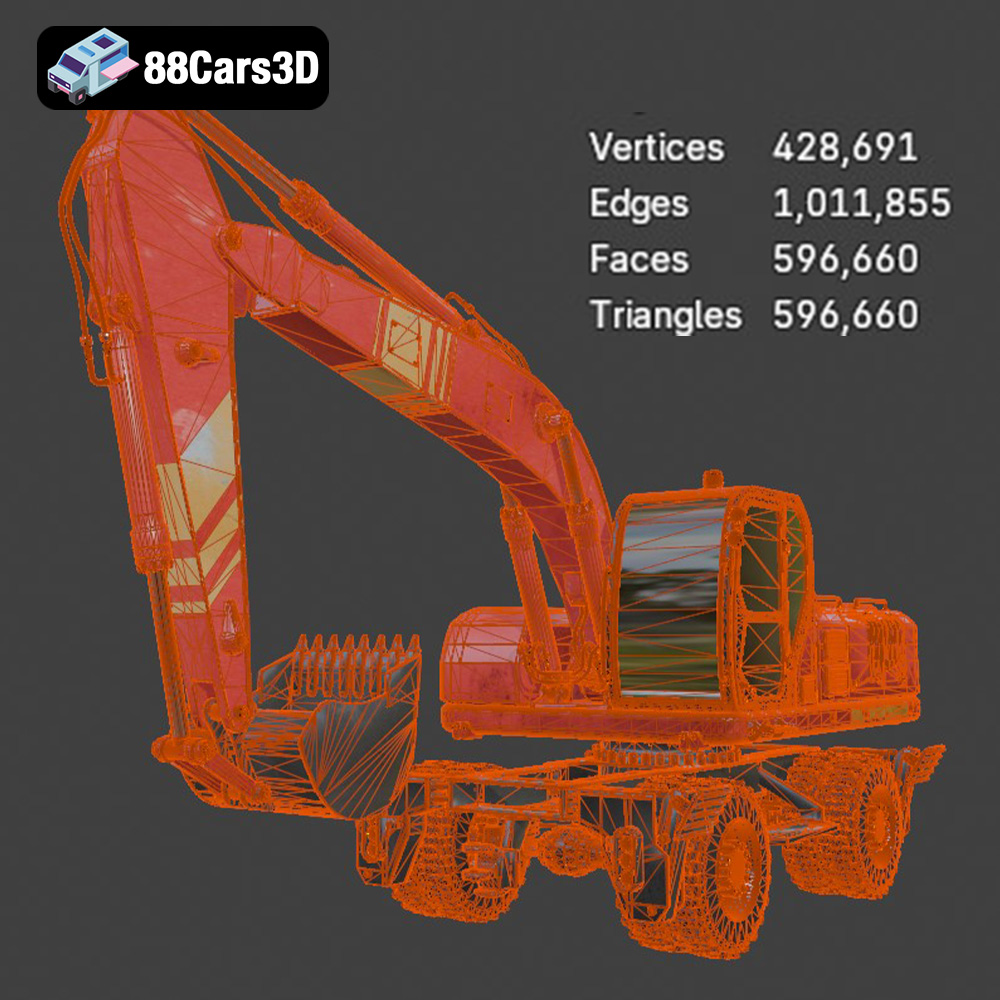
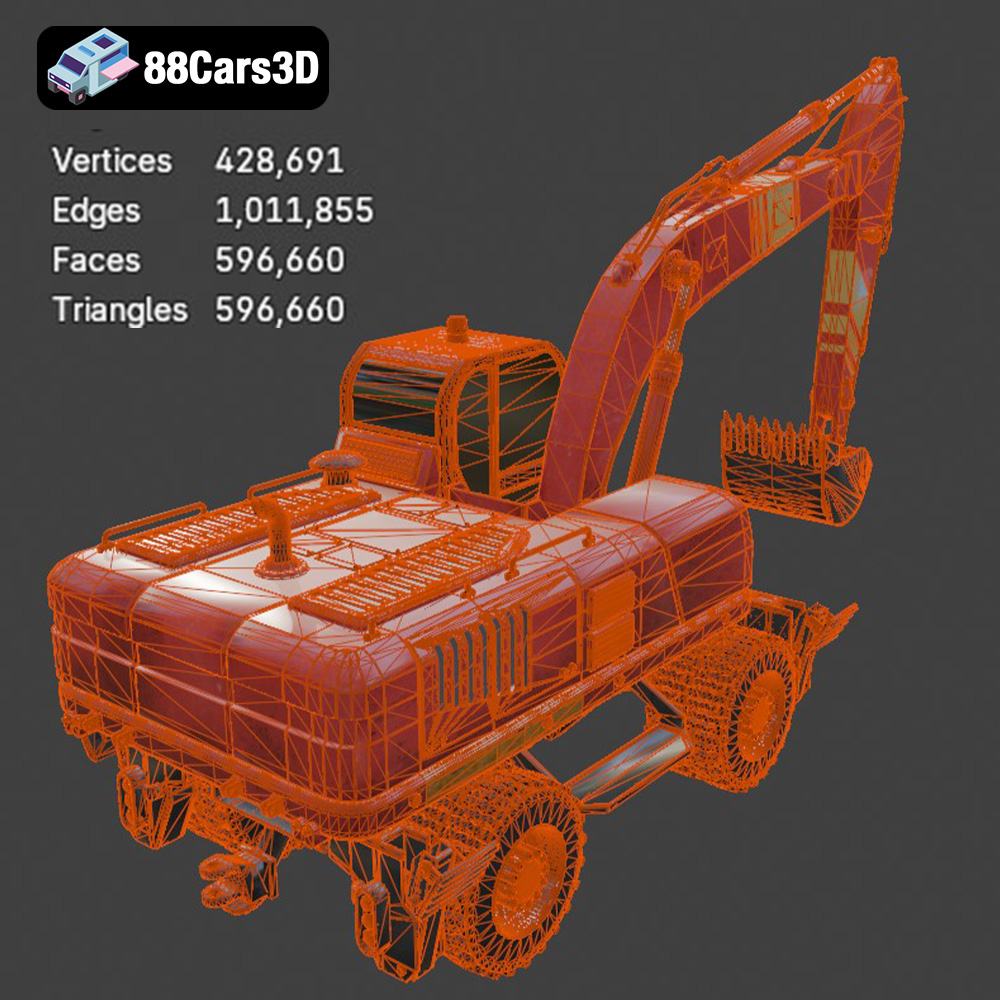
For game developers, performance and visual fidelity are a constant balancing act. The Wheel Excavator 3D Model strikes this balance expertly with its “Game-Ready & Optimized” topology of 596,660 triangles. This polycount is sufficiently detailed for close-up views and cinematic sequences in modern games, yet optimized enough for real-time engines like Unreal and Unity. Using the .fbx or the dedicated .unreal file, developers can quickly import the model. The inclusion of “proper pivot setup for steering, wheel rotation, turntable rotation, and suspension travel” is a critical feature, saving countless hours on rigging and animation. This asset is ideal for construction simulators, open-world exploration games, or even tactical strategy titles where heavy machinery plays a role, offering realistic mechanical movements right out of the box.
For artists focused on stunning visuals, the .max and .blend formats offer the most control. In 3ds Max, professionals can leverage advanced rendering engines like V-Ray or Corona to achieve photorealistic results. The model’s “real-world scale accuracy” and detailed geometry provide a strong foundation for creating impactful marketing materials, product showcases, or architectural visualizations. Artists can easily customize material finishes—changing body colors to factory specifications, adapting tire textures for different terrains, or adjusting metallic sheens—to match specific branding or environmental conditions. Similarly, Blender artists benefit from the fully editable .blend file, allowing them to dive deep into Cycles or Eevee rendering, setting up complex lighting, and integrating the excavator seamlessly into larger scenes, perhaps next to some high-quality 3D car models for a comparative size visualization.
Augmented Reality (AR) and Virtual Reality (VR) demand efficient, high-performing assets due to their real-time nature and often mobile deployment. The .glb format for the Wheel Excavator is specifically optimized for these applications, offering a lightweight, self-contained model perfect for web-based AR/VR experiences or rapid integration into platforms like WebXR. For more complex, interactive VR training modules, the .fbx or .unreal formats provide the necessary depth for robust physics and detailed interactions. The “optimized geometry for first-person POV in gaming” directly translates to a comfortable and realistic experience for users exploring the detailed cockpit in VR, making it an excellent candidate for virtual showrooms or safety training simulations where spatial awareness and interactive fidelity are paramount.
The true value of a premium 3D asset lies in its meticulous construction. The Wheel Excavator 3D Model from 88cars3d.com exemplifies this, with every component thoughtfully designed for both visual fidelity and functional performance.
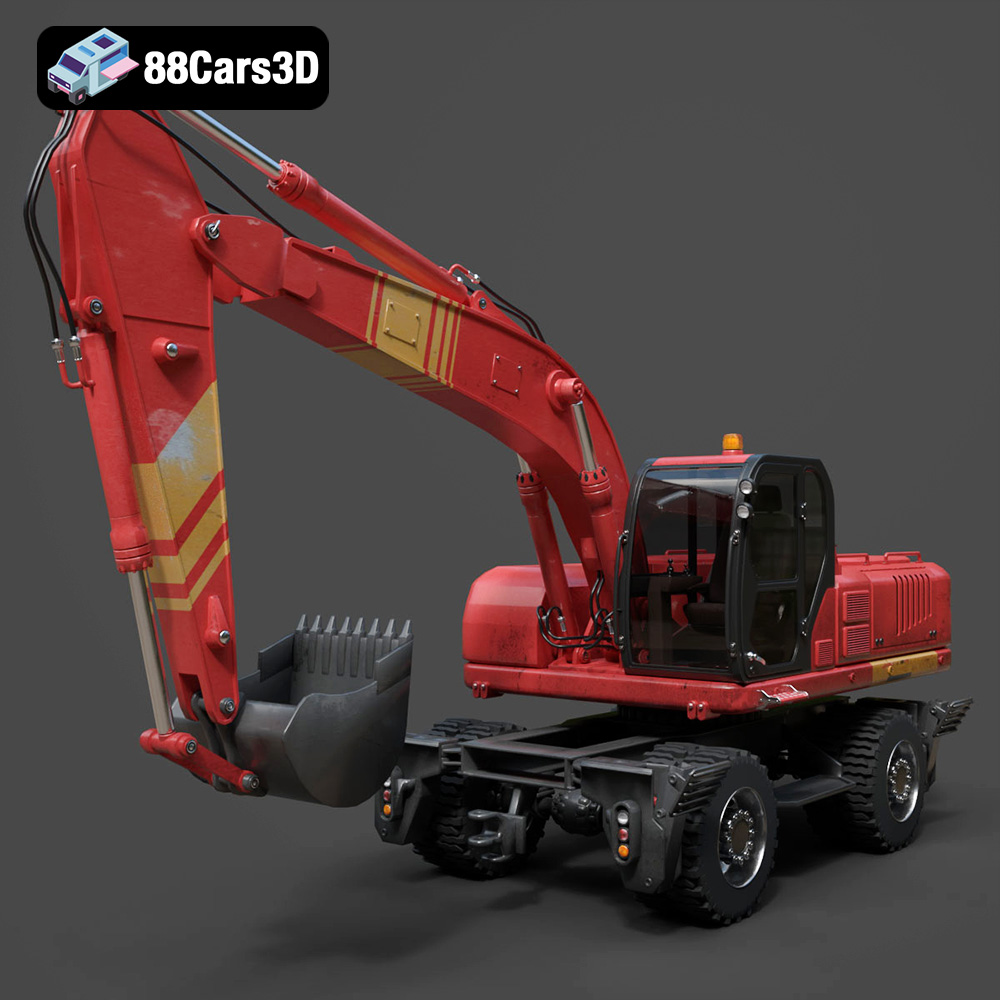
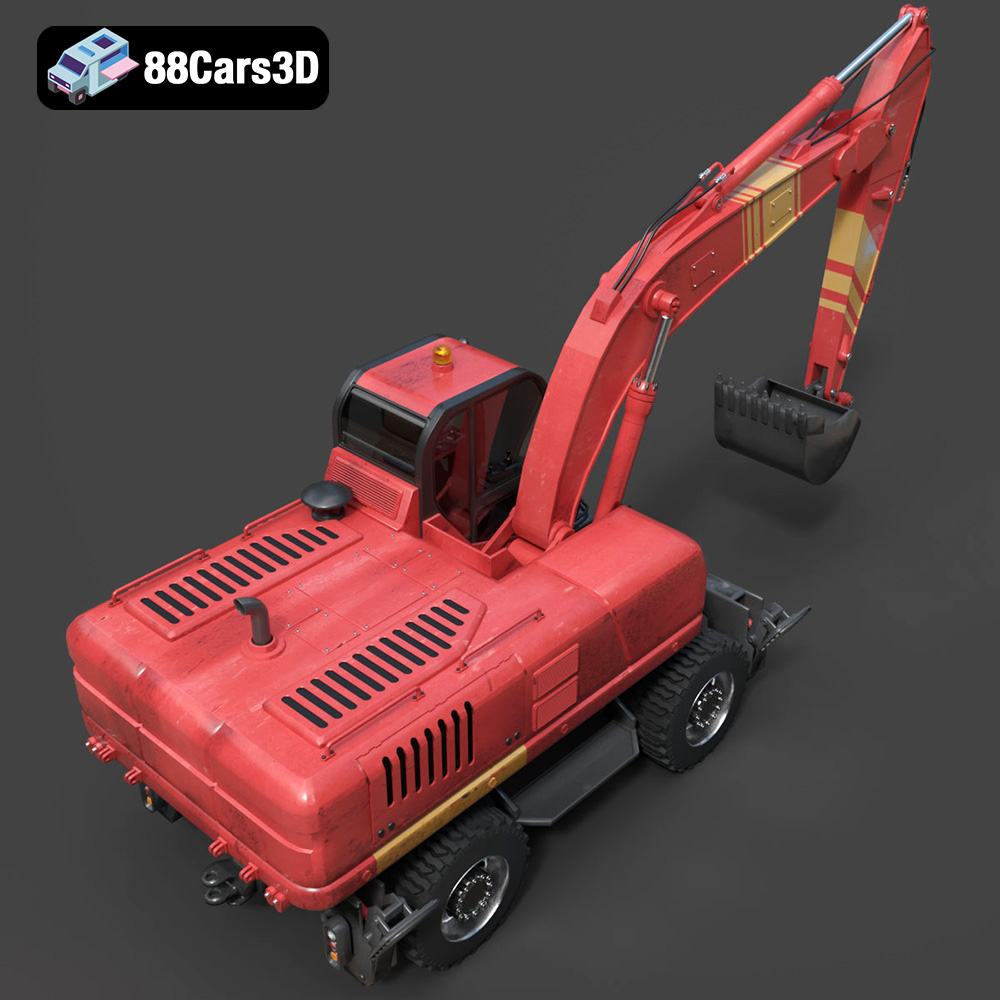
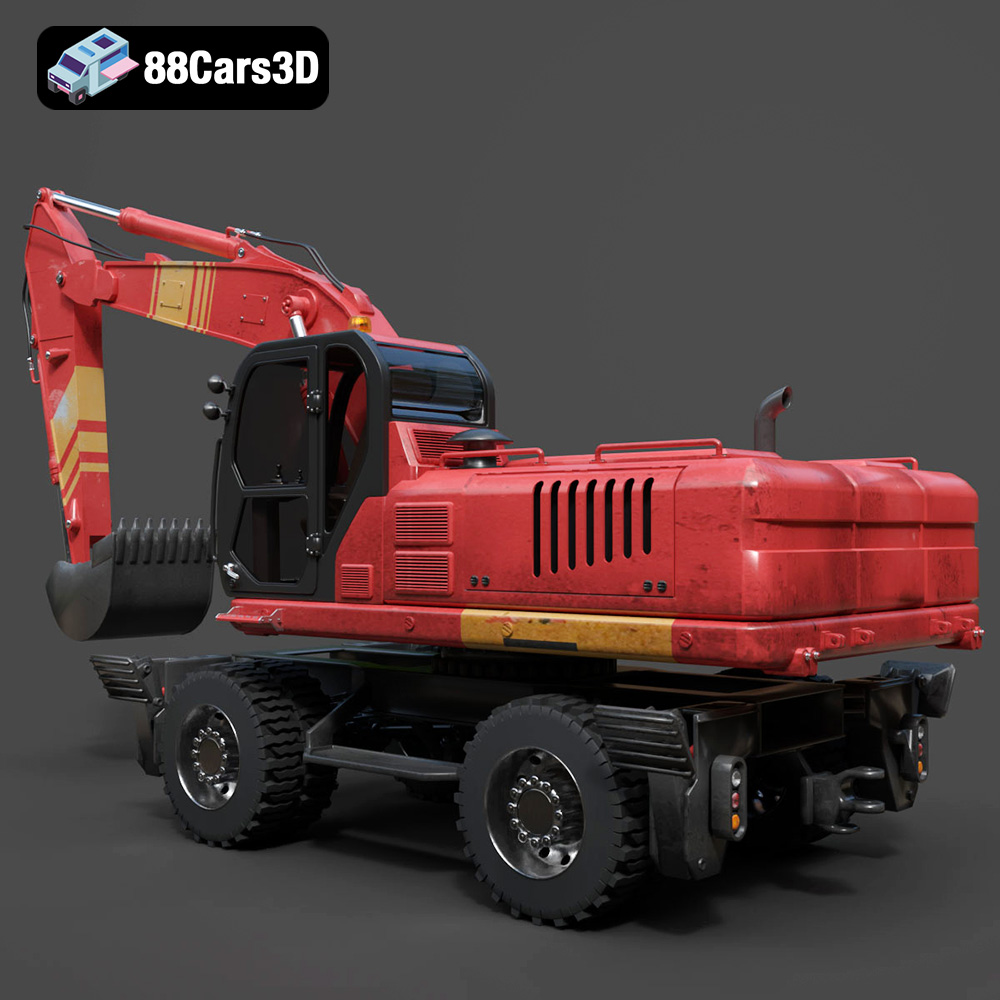
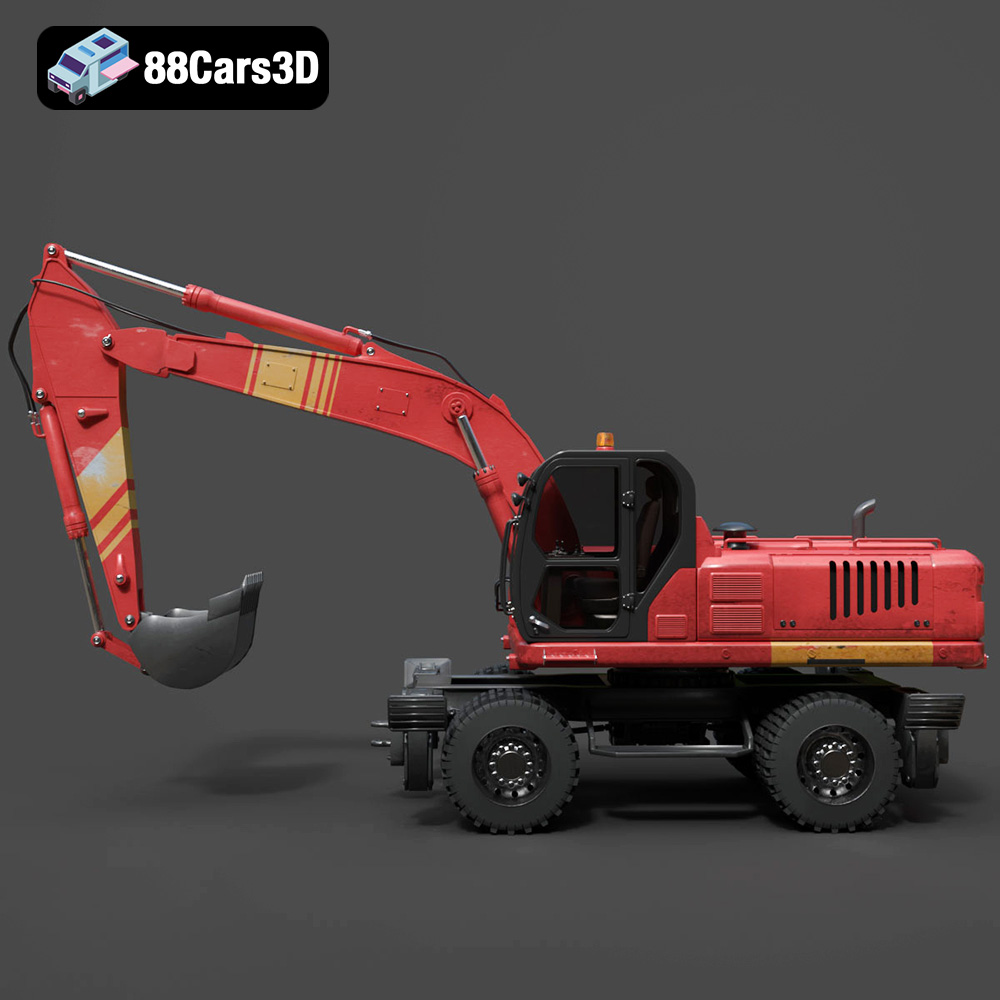
The exterior of this Wheel Excavator is a masterclass in industrial realism. It features “accurate Wheel Excavator frame geometry and proportions,” ensuring it looks and feels true to life. Key elements like the “detailed engine block and robust industrial housing” are not just hinted at but fully realized, adding significant depth even in quick glimpses. The “complex hydraulic cylinders, rams, and heavy-duty hose routing” are recreated with precision, essential for realistic animation of the boom and bucket. Furthermore, “industrial-grade work lights and safety beacon details” contribute to an authentic construction site aesthetic. Even the “pneumatic tires with deep off-road tread patterns” are accurately modeled, and crucial for dynamic scenarios, the “separate wheels, suspension, boom joints, and steering components” are ready for complex animations, making it an ideal asset for dynamic automotive rendering or heavy machinery simulations.
Often overlooked, a detailed interior can elevate an asset from good to exceptional, especially for first-person views or interactive experiences. The Wheel Excavator’s “authentic operator seat with ergonomic contours and armrests,” along with “detailed dual joystick controls and safety levers,” provides a believable environment for a virtual operator. The “accurate instrument cluster and digital display panels” add a layer of functional realism, crucial for training simulations. With “floor-mounted foot pedals for travel and auxiliary control” also present, the model offers a complete and immersive experience from the operator’s POV, directly benefiting game asset developers creating simulation titles.
Achieving a balance between high visual quality and efficient performance is a cornerstone of professional 3D asset creation. With 596,660 triangles, the Wheel Excavator model hits this sweet spot, maintaining “high-end visual realism” without bogging down real-time engines. This optimization implies careful UV mapping for textures and efficient material setup, ensuring that the model looks great while running smoothly. Such technical advantages are critical whether you’re integrating it into a large-scale open-world game or developing a high-resolution cinematic render, making it a highly versatile and valuable addition to any project.
The utility of a robust 3D model extends beyond digital environments. With the advent of accessible 3D printing, professional-grade models can seamlessly transition from virtual assets to tangible objects, opening up new avenues for prototyping, display, and educational tools.
The inclusion of the .stl format for the Wheel Excavator 3D Model is a significant advantage for those looking to bring the digital design into the physical world. This format is the universal language of 3D printers, translating the model’s complex geometry into a series of triangular facets that machines can interpret. The product description provides excellent “3D Print Settings,” recommending scales like 1:12, 1:18, or 1:24, which are ideal for hobbyists creating detailed display models. Crucially, specific guidance on “layer height: 0.04–0.12 mm (Resin printing recommended for fine details),” “wall thickness: 1.2–2.0 mm,” and “infill: 20–30%” ensures successful prints. The necessity for “supports: Required for detailed parts like exhaust, mirrors, handlebars” and advice on “print orientation: Frame printed angled for structural integrity; wheels printed separately” are invaluable tips for achieving high-quality physical replicas.
Creating a truly impressive 3D printed model often involves significant post-processing. The recommendation for “sanding, primer, and authentic factory colors with metallic finishes” highlights the potential for transforming a raw print into a museum-quality display piece. This attention to detail in the physical realm mirrors the digital asset’s fidelity. For enthusiasts of 3D car models or other vehicle types, printing this excavator offers a unique project, allowing for hands-on experience with painting and assembly to achieve realistic results, demonstrating the model’s versatility even for tactile applications.
A truly exceptional 3D asset provides not just quality, but also flexibility. The Wheel Excavator 3D Model is designed with customization in mind, ensuring it can adapt to the unique requirements of diverse projects and creative visions.
The ability to customize an asset significantly extends its lifespan and utility. With the Wheel Excavator, users can “change body/tank colors” to match specific branding, company livery, or desired aesthetic (e.g., “factory colors, custom finishes”). “Modify tire textures (off-road vs. street variants)” allows for quick adaptation to different terrains or narrative contexts. Furthermore, “adjust material finishes (matte, gloss, metallic)” provides granular control over the visual impact, from a well-worn industrial look to a pristine, showroom-ready appearance for automotive rendering projects. Even “adapt lighting for different environments” allows artists to seamlessly integrate the model into varied scene setups, ensuring it always looks its best regardless of the ambient conditions.
Ultimately, the Wheel Excavator 3D Model is a robust foundation for an impressive array of applications. Its “Game-Ready & Optimized” nature makes it a perfect game asset, its detailed fidelity serves rendering and visualization needs, and its optimized formats make it ideal for AR/VR experiences. The 3D printing compatibility further broadens its reach into physical creation. This remarkable versatility, combined with its technical excellence and comprehensive file format support, makes it an intelligent investment for any professional or enthusiast seeking to enhance their digital and physical creations. It’s a testament to the quality of assets available on marketplaces like 88cars3d.com.
The journey through the technical marvels and versatile applications of the Wheel Excavator 3D Model underscores its value as a premium asset for a wide spectrum of creative and industrial professionals. From its meticulously recreated exterior and immersive interior to its optimized performance across various software and engine environments, this model stands as a benchmark for high-fidelity heavy machinery 3D assets. Its availability in an extensive range of file formats—including .blend, .fbx, .obj, .glb, .stl, .ply, .unreal, and .max—ensures seamless integration into game development, architectural visualization, AR/VR simulations, and even the exciting realm of 3D printing. The capacity for deep customization, from paint schemes to material finishes, further cements its utility as a flexible tool capable of adapting to almost any project requirement.
Whether you are building the next generation of construction simulators, crafting breathtaking cinematic renders, or prototyping physical models, this Wheel Excavator 3D Model offers the precision, performance, and realism needed to elevate your work. It’s more than just a model; it’s a meticulously engineered digital component designed to drive success in complex 3D pipelines. For those seeking top-tier 3D car models, heavy machinery, and other vehicle assets, resources like 88cars3d.com provide an excellent starting point for finding assets that meet professional standards and unlock boundless creative possibilities.
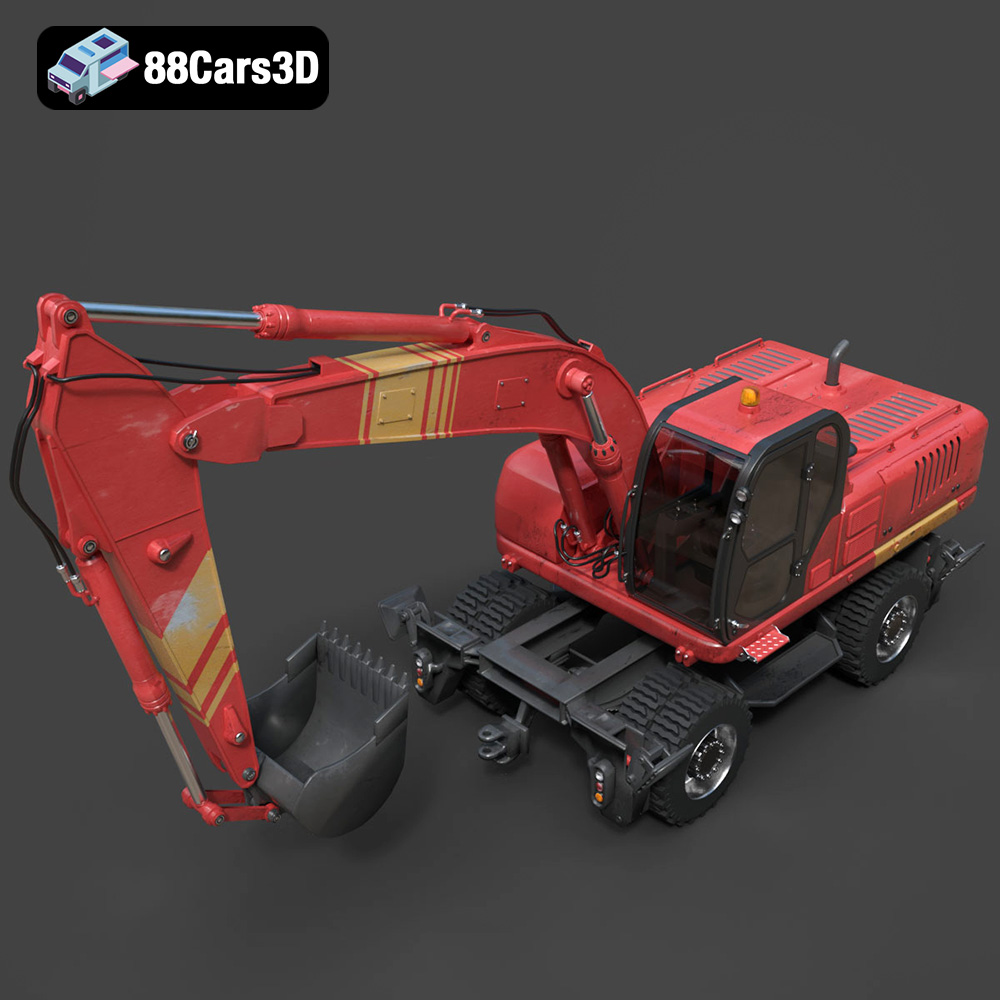
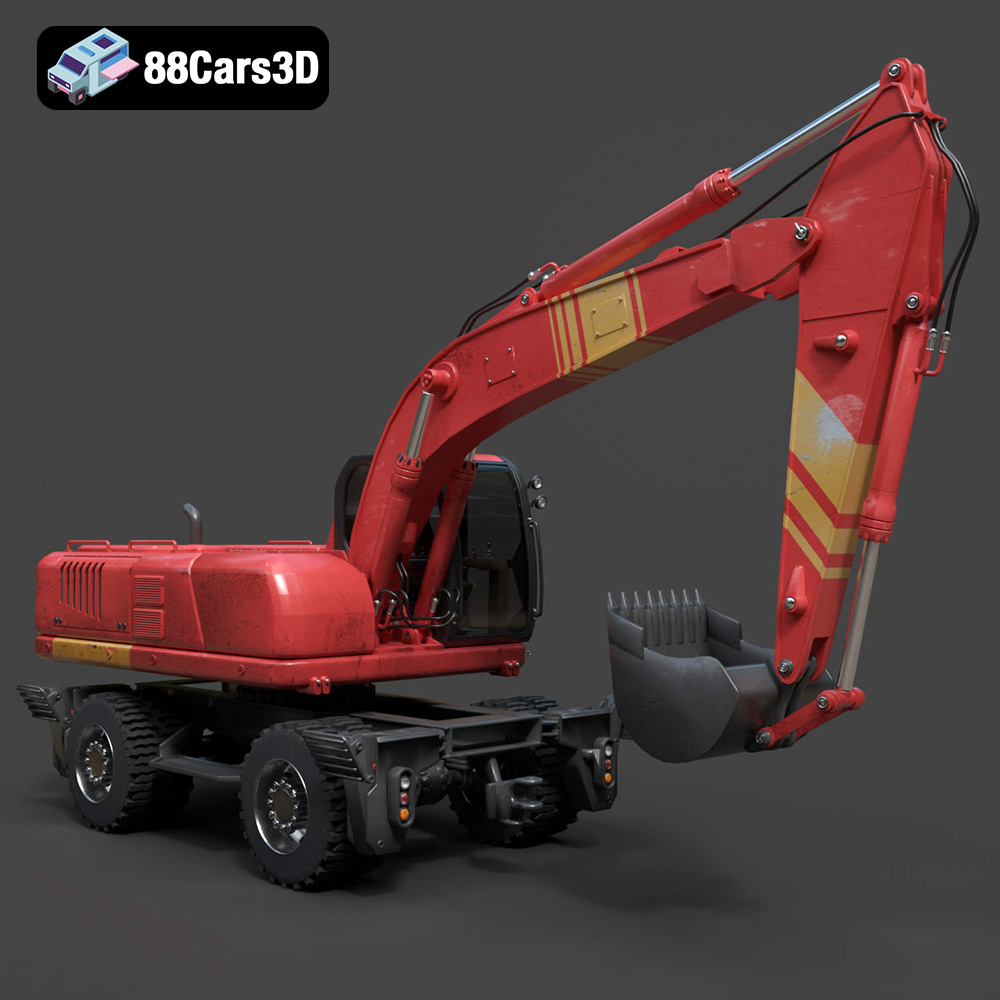
The Wheel Excavator stands as a highly versatile piece of heavy machinery, renowned for its mobility and robust earth-moving capabilities. This meticulously crafted 3D model captures the rugged essence of modern construction equipment, featuring a highly detailed wheeled undercarriage, complex hydraulic routing, a fully articulated boom assembly, and an authentic operator cabin designed for maximum visibility. Every mechanical joint and structural element has been recreated to provide unparalleled realism for industrial and construction scenes.
Boasting a highly detailed topology of 596,660 triangles, this 3D model strikes a fantastic balance between close-up visual fidelity and real-time performance. It is perfectly optimized for modern game engines, VR/AR simulations, and high-end cinematic renderings, ensuring smooth integration into any heavy machinery pipeline.
Perfect for construction simulators, industrial site visualizations, heavy machinery VR training modules, and cinematic renders.
.blend, .fbx, .obj, .glb, .stl, .ply, .unreal, .max
Tags:
wheel-excavator, heavy-machinery, construction-equipment, game-ready, optimized, vehicle-3d-model, game-asset, rendering, vr-ar, blend, fbx, obj, glb, stl, ply, unreal, max
$26.00
.blend
.fbx
.glb
.max
.obj
.ply
.rendering
.stl
.unreal
construction-equipment
game asset
game-ready
heavy-machinery
optimized
vehicle-3d-model
VR/AR
wheel-excavator