Get 20% OFF All Premium 3D & STL Models!

In the expansive and ever-evolving world of digital content creation, the demand for highly detailed and functionally accurate 3D models is constant. From groundbreaking architectural visualizations to immersive game environments and specialized industrial training simulations, the quality of a 3D asset directly impacts the final output’s realism and effectiveness. Heavy machinery, in particular, presents a unique challenge, requiring meticulous attention to mechanical detail, material authenticity, and performance optimization.
Today, we’re taking an in-depth look at a crucial piece of this digital puzzle: the wheel loader. An indispensable workhorse on any construction site, its digital counterpart must embody the same robust power and intricate engineering. This article will explore the complexities of developing, utilizing, and integrating a professional-grade wheel loader 3D model into various pipelines, highlighting how assets like the Wheel Loader 3D Model available on 88cars3d.com exemplify the pinnacle of industrial digital design.
Whether you’re an environment artist crafting a sprawling open-world game, a visualization specialist rendering a photorealistic construction sequence, or a developer building an interactive AR/VR training module, understanding the technical nuances behind such a sophisticated model is paramount. We’ll delve into file formats, optimization strategies, application-specific workflows, and even the fascinating realm of 3D printing these formidable machines.
The versatility of a 3D model often hinges on its availability in various file formats, each tailored for specific software, engines, or end-use applications. For complex assets like heavy machinery, choosing the right format can streamline workflows, ensure compatibility, and preserve crucial data such as materials, rigging, and animations. The Wheel Loader 3D Model, for instance, comes equipped with a comprehensive suite of formats, allowing creators maximum flexibility.
The .blend file format is Blender’s native project file. It’s fully editable and contains all aspects of a Blender scene: mesh data, materials, textures, lighting, cameras, animations, and even modifiers and physics simulations. For artists working primarily in Blender, this is the most powerful format as it retains full editability and allows for non-destructive workflows. Designers can easily adjust topology, modify materials, or even re-rig components if necessary. It’s the ideal starting point for anyone looking to heavily customize the model or integrate it deeply into a Blender-centric pipeline, ensuring that every detail of the wheel loader, from its complex hydraulics to its detailed cockpit, is accessible for modification.
Autodesk’s .fbx (Filmbox) format has become the de facto industry standard for exchanging 3D data between various software applications and game engines. It supports geometry, materials, textures, skeletal animation, blend shapes, and more. For real-time applications like Unreal Engine and Unity, .fbx is often the preferred choice due to its robust support for animation and hierarchal scene data. When importing the wheel loader into a game engine, an .fbx file ensures that the articulated steering, bucket lift, and individual wheel rotations are correctly imported with their pivot points and rigging intact, making it ideal for immediate integration into an interactive environment.
The .obj (Wavefront OBJ) format is one of the oldest and most universally supported 3D file formats. It primarily stores geometric data (vertices, normals, UV coordinates) and can reference external .mtl (material) files for basic material properties. While it doesn’t support animation or complex scene data, its widespread compatibility makes it an excellent choice for cross-software transfers when geometry fidelity is paramount. If you need to import the wheel loader into a less common 3D application or simply need the clean mesh data for sculpting or re-topology, .obj is a reliable option.
.glb (GL Transmission Format Binary) is the binary version of glTF, a royalty-free specification for the efficient transmission and loading of 3D scenes and models by applications. It packages textures and other assets directly into a single file, making it incredibly convenient for web-based 3D viewers, AR applications, and VR experiences. Its compact nature and optimization for real-time rendering mean that the wheel loader can be quickly loaded and displayed in a browser or on mobile AR devices without significant performance overhead, perfect for online configurators or product showcases.
The .stl (Stereolithography) format represents a 3D model as a series of connected triangles (a triangular mesh). It’s the most common file format used for 3D printing, as it defines only the surface geometry of a 3D object without any color, texture, or material information. For hobbyists or professionals looking to physically manifest the wheel loader, an optimized .stl provides a direct pathway to their 3D printer, accurately representing the model’s form for tangible creation.
The .ply (Polygon File Format or Stanford Triangle Format) is a versatile format for storing 3D data, particularly from 3D scanners. It supports various properties like color, transparency, normals, texture coordinates, and confidence values. While less common for general asset exchange than .fbx or .obj, it excels in applications requiring high-precision mesh data, such as CAD integration, scientific visualization, or detailed surface analysis. For engineering or specific industrial simulations, the .ply format offers a robust representation of the wheel loader’s geometry.
The .unreal format signifies an asset specifically optimized and often pre-configured for direct use within Unreal Engine. This might involve optimized material setups using Unreal’s physically based rendering (PBR) system, collision meshes, LODs (Levels of Detail), and even pre-assembled blueprints or prefabs. An .unreal asset often means significantly faster integration and fewer setup headaches for developers targeting Unreal Engine, providing a true plug-and-play experience for the wheel loader.
Similar to .blend for Blender, the .max file is the native format for Autodesk 3ds Max. It contains an entire 3ds Max scene, including geometry, materials, textures, lighting, cameras, animation, and any scene-specific settings or plugins. For users entrenched in the 3ds Max ecosystem, this format offers the highest level of control and editability, allowing for complex animation sequences, advanced rendering setups, and full modification of the wheel loader model within a familiar professional environment.
The availability of these diverse formats ensures that the Wheel Loader 3D Model from 88cars3d.com is not just a high-quality asset, but a highly adaptable and future-proof investment for any digital project.
Creating a truly exceptional 3D model, especially of complex machinery, is a meticulous blend of artistic skill and engineering precision. The Wheel Loader 3D Model exemplifies this synthesis, capturing the formidable presence and intricate mechanics of its real-world counterpart. It’s more than just a static mesh; it’s a digital embodiment designed for dynamic interaction and visual storytelling.
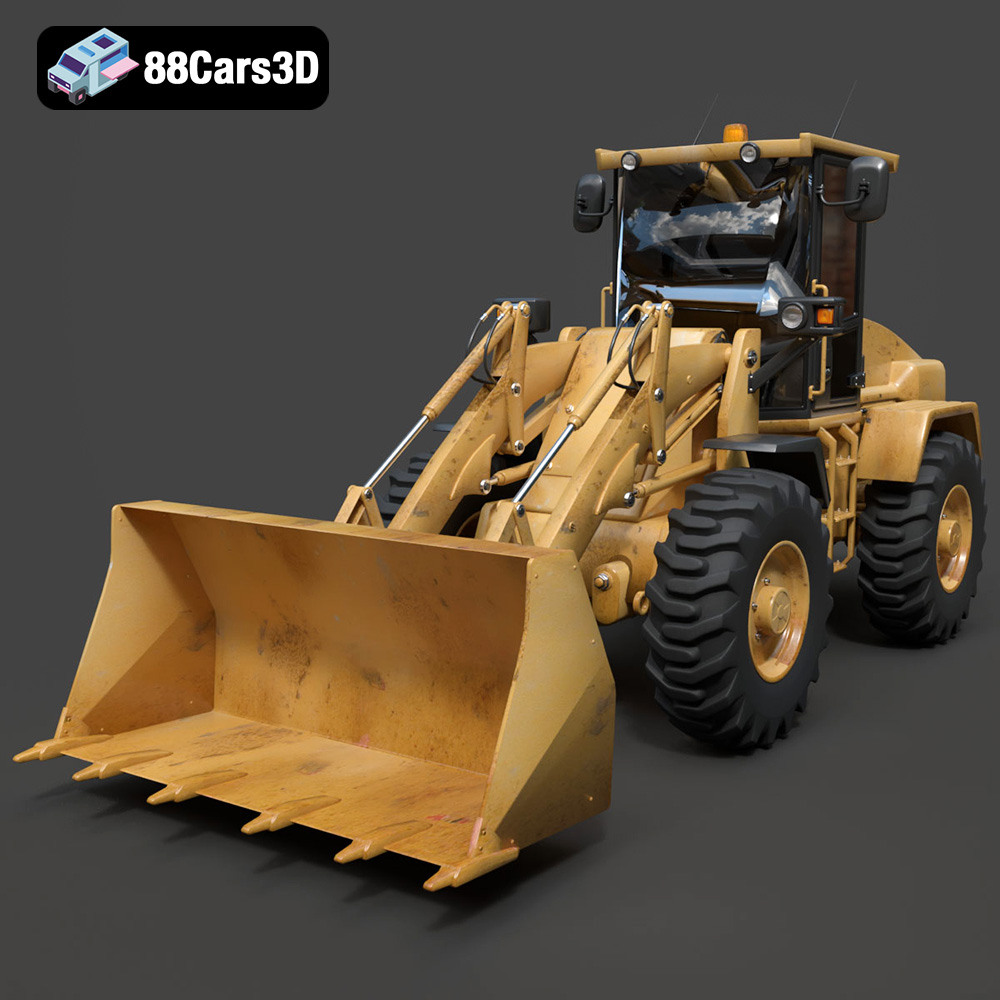
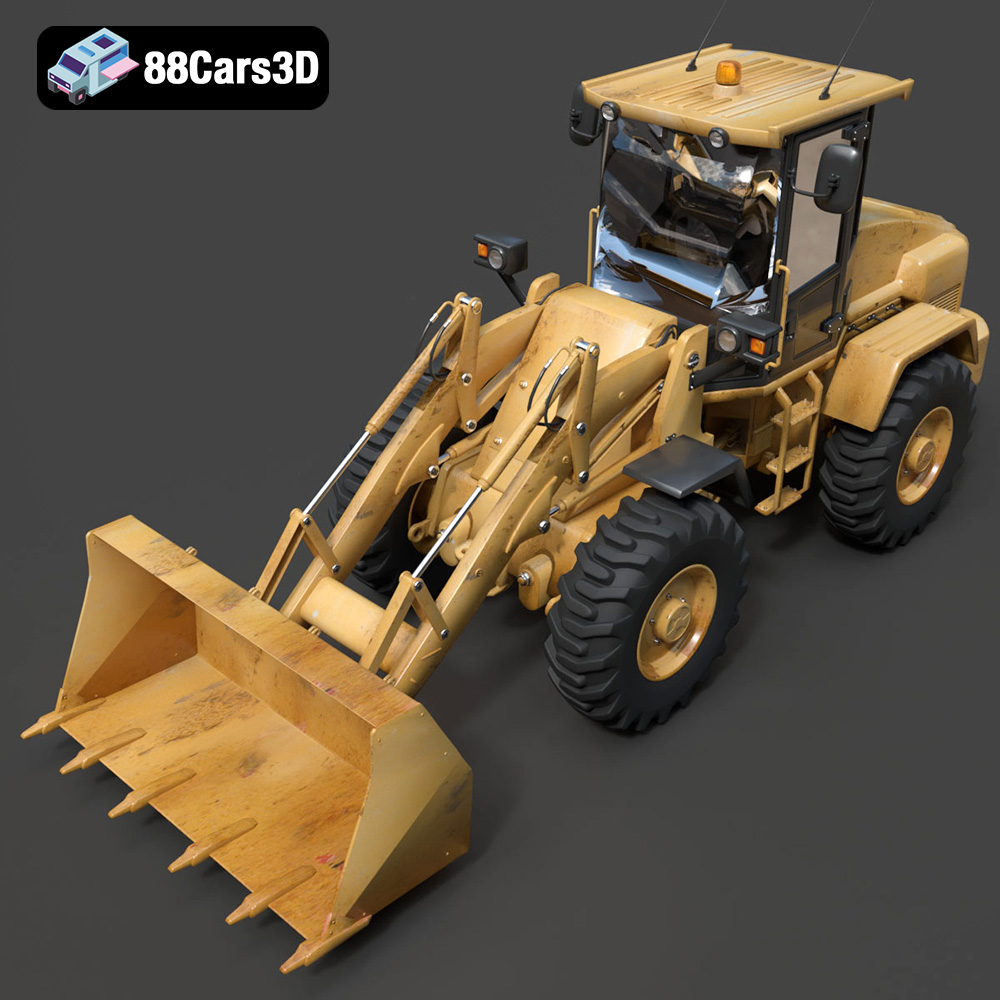
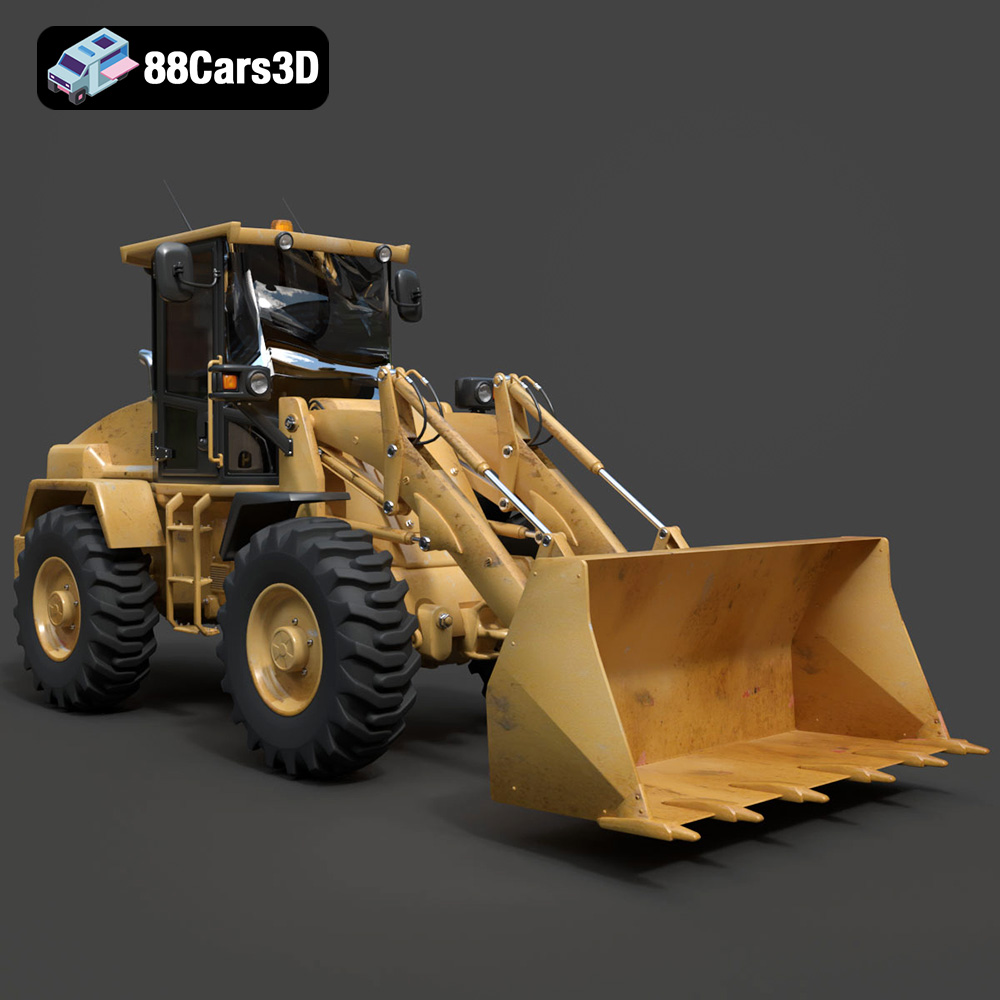
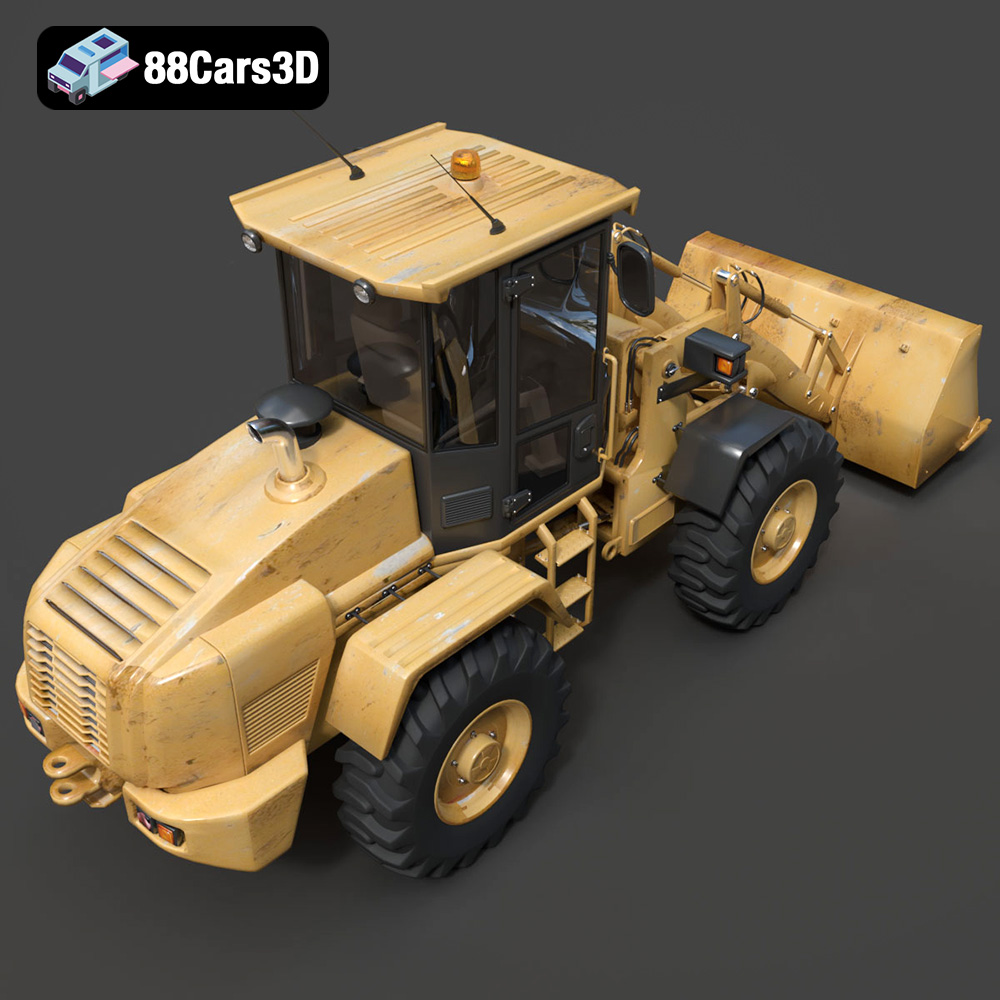
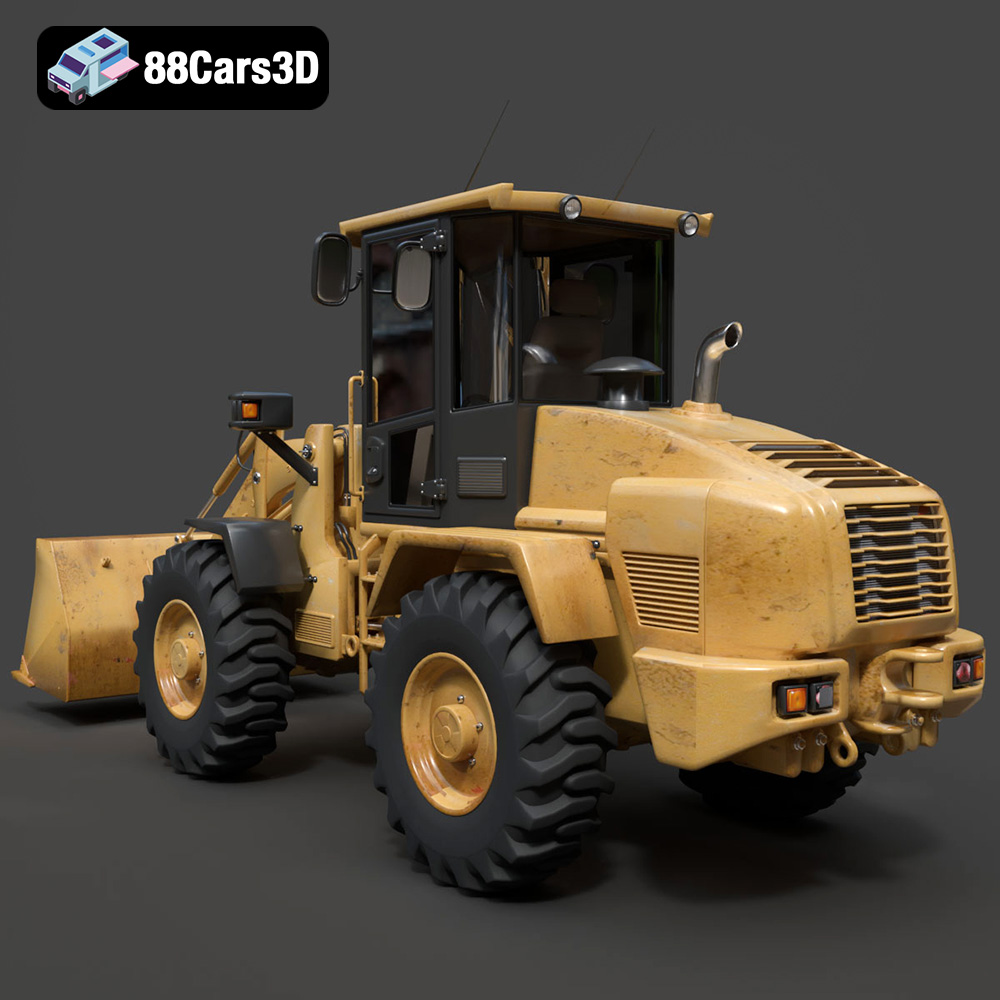
The first impression of any heavy machinery is its raw power and functional aesthetic. This model brilliantly encapsulates the “heavy-duty” nature of a wheel loader. From the massive, deep-tread off-road tires that speak of traction on challenging terrain to the heavily vented rear engine housing hinting at immense power, every visual cue reinforces its purpose. The robust industrial design extends to safety railings, the prominent exhaust stack, and high-visibility work lighting – details that are often overlooked but are crucial for conveying realism. An environment artist leveraging this model for a construction site scene will find these elements instantly sell the authenticity of the setting.
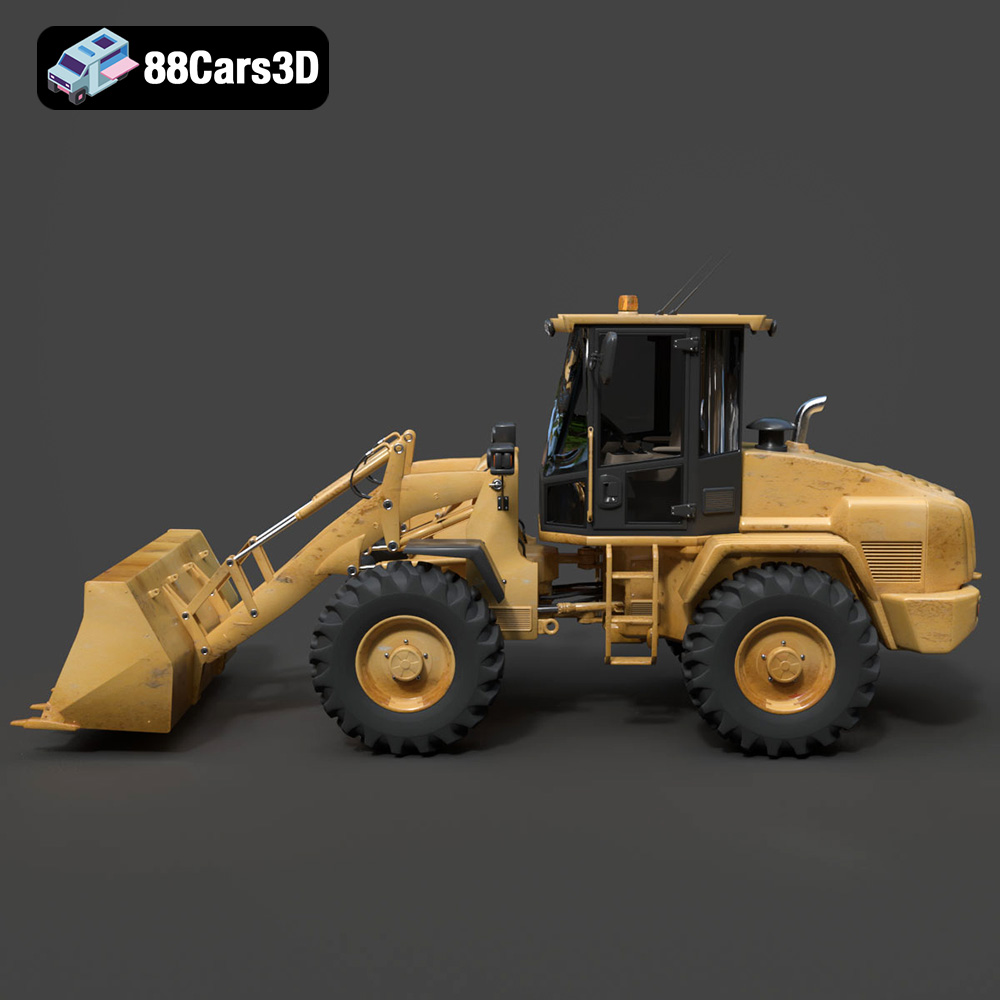
A wheel loader is defined by its movement. Its articulated steering, the powerful hydraulic lift of its boom, and the precise tilt of its bucket are all critical for its operation. The 3D model meticulously recreates these mechanisms. Separate components for the wheels, bucket, lift arms, and articulated joint are not just visually accurate but also correctly pivoted. This “proper pivot setup” is a technical advantage, allowing animators to directly manipulate these parts with ease, simulating real-world operations in cutscenes, interactive sequences, or training modules without complex rigging from scratch. This level of pre-preparation significantly reduces development time and enhances the utility of the asset.
Beyond the impressive exterior, the operator’s cockpit is where the true interactive experience begins, especially for AR/VR applications and first-person gaming. This wheel loader model doesn’t disappoint, featuring a highly detailed interior. The operator seat, complete with armrests and safety restraints, anchors the space. A realistic steering wheel, hydraulic joystick controls, and an instrument cluster with digital displays and industrial gauges provide a convincing environment. Control details like foot pedals, transmission levers, and switch panels are all present. This optimized geometry for first-person POV ensures that players or trainees stepping into the virtual cabin feel genuinely immersed, enhancing the realism of simulations and the playability of games.
In the world of 3D, detail often comes at the cost of performance. A truly professional 3D asset, especially one intended for real-time applications, strikes a delicate balance between visual fidelity and computational efficiency. This Wheel Loader 3D Model is engineered precisely with this principle in mind, making it an exemplary game asset.
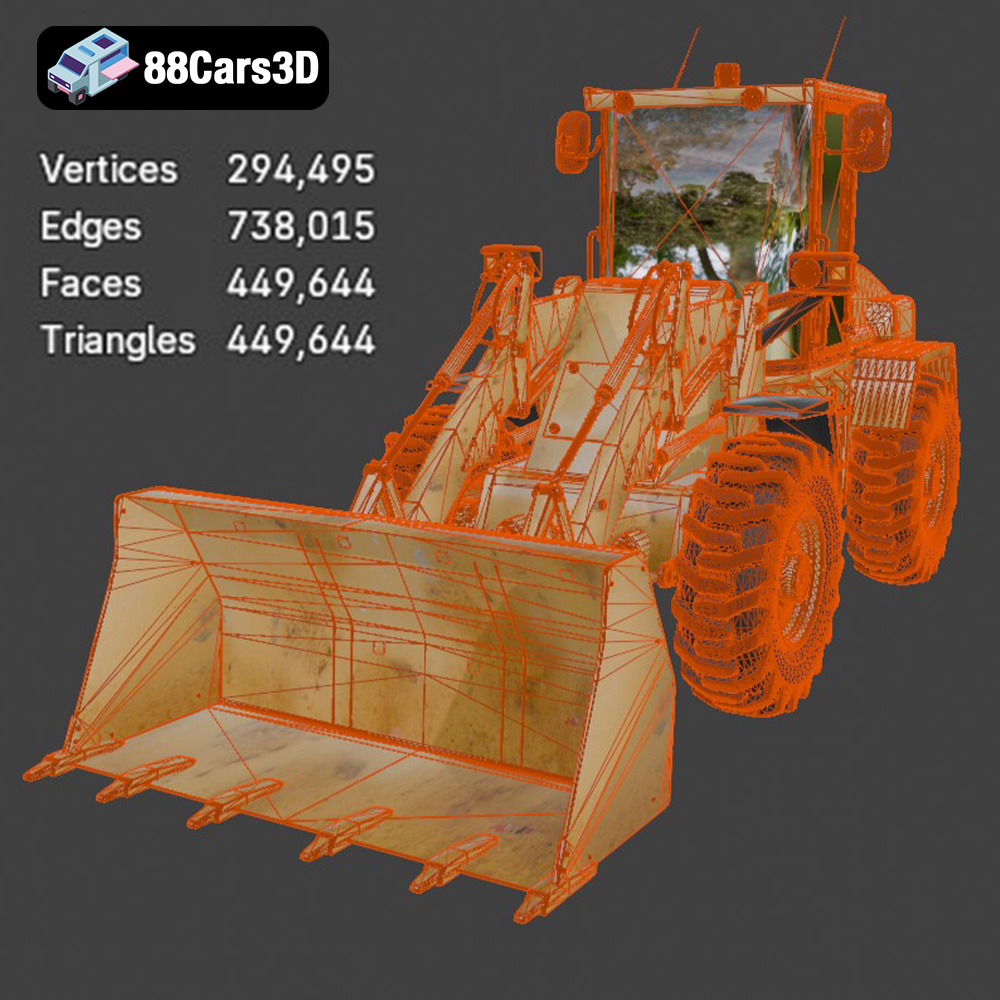
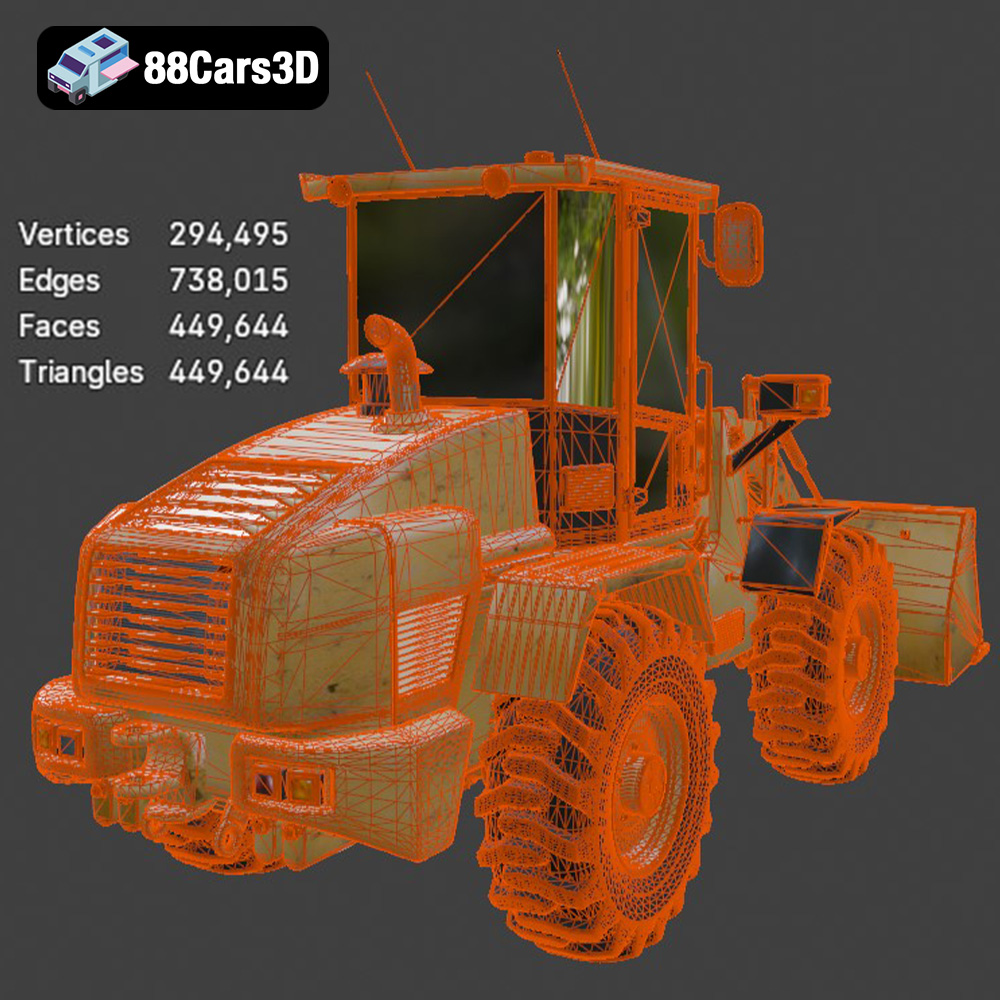
The model boasts a triangle count of 449,644. While this might sound substantial, it represents a “perfect balance” for modern real-time engines like Unreal and Unity. This polycount is high enough to maintain excellent visual realism – showcasing the intricate hydraulics, the detailed engine housing, and the nuanced curves of the chassis – yet optimized enough not to bog down frame rates, even when multiple instances of the vehicle are present in a scene. For game developers, this means fewer compromises between visual quality and smooth gameplay. For architectural renderers, it ensures that even distant elements hold their detail, contributing to overall scene believability without excessive rendering times.
Furthermore, while not explicitly detailed in the product description, achieving “game-ready” status at this poly count implies meticulous UV mapping and efficient material setup. Clean UVs are essential for applying high-resolution textures without distortion, and PBR (Physically Based Rendering) materials ensure that the industrial paint, metallic elements, and rubber tires react realistically to light in any environment, whether it’s the harsh sunlight of a construction site or the dramatic lighting of a cinematic render.
Accuracy in scale is non-negotiable for professional applications. This wheel loader model adheres to “real-world scale accuracy,” ensuring it slots seamlessly into any scene without requiring tedious manual adjustments. This is vital for architectural visualizations where scale models must interact correctly with surrounding structures, or for simulation environments where accurate dimensions are critical for training realism.
Beyond static representation, the model is built for motion. Its “proper pivot setup” for articulated steering, wheel rotation, boom lift, and bucket tilt makes it inherently animation-ready. This isn’t just a visual feature; it’s a technical foundation. Artists can immediately begin animating the vehicle’s operations, creating dynamic sequences for cinematics, interactive controls for player-driven gameplay, or realistic movements for industrial training. The pre-configured pivots save countless hours of rigging and setup, allowing creators to focus on the storytelling and interactivity rather than foundational preparation. This is a hallmark of a truly professional-grade 3D car model or heavy machinery asset from platforms like 88cars3d.com.
The true value of a versatile 3D asset lies in its adaptability across various industries and creative pipelines. This Wheel Loader 3D Model transcends a single purpose, offering immense utility for game development, AR/VR experiences, and high-fidelity rendering and visualization projects.
For game developers, the demand for authentic environments and interactive vehicles is ever-growing. This model is a prime candidate for a multitude of game genres. Its optimized polycount of 449,644 triangles makes it “game-ready” for demanding open-world titles, construction simulators, or even strategic management games where machinery plays a central role. Imagine a player operating this detailed wheel loader, scooping and dumping digital earth, with every hydraulic cylinder moving realistically. Its accurate scale and pre-set pivots allow for direct integration into physics systems, offering compelling and believable player experiences. From driving around a dynamically loaded construction site to performing critical tasks in a mining operation, this asset provides the foundation for engaging gameplay involving heavy-duty vehicles.
The immersive capabilities of Augmented Reality (AR) and Virtual Reality (VR) are revolutionizing training and industrial operations. This wheel loader model is “perfect for immersive virtual operator training.” Trainees can virtually step into the detailed cockpit, grab the realistic joystick controls, and learn to operate the machinery in a safe, controlled, and cost-effective digital environment. The optimized geometry for first-person POV ensures a convincing experience, while the separate, animatable components allow for accurate simulation of complex maneuvers. Beyond training, the model is ideal for industrial configurators, allowing potential buyers to explore different customization options in real-time AR, or for mobile AR experiences that bring heavy machinery directly into an exhibition hall or client presentation.
In architectural visualization (arch-viz) and industrial rendering, context is everything. A construction site, an open-pit mine, or a large industrial facility gains immense realism from accurately rendered machinery. This wheel loader excels in such scenarios, providing “excellent for architectural renderings, mining site scenes, and studio lighting setups.” Its high-end visual fidelity means it can stand up to close-up shots in marketing materials, engineering presentations, or cinematic walkthroughs. The detailed engine compartment, intricate hydraulics, and robust industrial lighting all contribute to photorealistic outputs. Artists can easily integrate it into 3ds Max or Blender scenes, adjust material finishes for weathering effects, and adapt lighting for different environments, from a dusty daytime worksite to a brightly lit night operation, to create compelling visual narratives.
The journey of a 3D model doesn’t always end on a screen. For hobbyists, collectors, or even professionals needing physical prototypes or scale models, 3D printing offers an exciting tangible outcome. The Wheel Loader 3D Model is designed with this possibility in mind, allowing for conversion to the ubiquitous .stl format for physical manifestation.
Translating a complex digital model into a physical object requires specific considerations, and the product description provides excellent guidance. Recommended scales like 1:35, 1:50, or 1:64 offer options for display-scale hobbyists and diorama builders, ensuring the model fits various physical setups. The advice to use a layer height of 0.04–0.12 mm, with resin printing recommended for fine details, is crucial for achieving the model’s intricate components, such as the hydraulic hoses, safety railings, and exhaust stack. These details, which define the model’s high fidelity in the digital realm, require precise printing to be retained physically.
Structural integrity is also key for a robust physical model. Suggestions like a wall thickness of 1.2–2.0 mm and an infill of 20–30% provide practical parameters for durability. Critically, the need for supports for detailed parts like the exhaust, railings, hydraulics, and mirrors, along with specific print orientations (e.g., frame printed angled for strength, wheels and bucket separately), demonstrates a deep understanding of 3D printing best practices for complex engineering models.
The journey from a raw 3D print to a finished scale model often involves significant post-processing. The recommendation for sanding, primer, and authentic industrial colors with weathering effects points to the artistic potential in bringing the model to life. A freshly printed wheel loader can be transformed into a battle-hardened veteran of countless construction projects with careful painting, dry brushing, and washes. This level of detail in the 3D print settings showcases the model’s versatility, proving it to be a valuable asset not just for digital projects but also for tangible, physical creations, extending its appeal to model makers and collectors.
A truly valuable 3D asset offers more than just static beauty; it provides flexibility for customization and seamless integration into diverse professional workflows. The Wheel Loader 3D Model excels in this regard, empowering artists and developers to tailor the asset to their specific project needs and integrate it efficiently into their preferred software environments.
The provided customization options for the wheel loader are incredibly practical for achieving unique visual identities without starting from scratch. The ability to “change main body colors” means you can quickly brand the vehicle for a specific company (e.g., standard industrial yellow, construction orange, corporate white) or adjust it to fit the color palette of your game or visualization scene. Similarly, modifying tire textures – opting for clean variants for a showroom look or muddy/weathered versions for an active worksite – instantly conveys different states of use and environmental context. Adjusting material finishes (matte industrial paint, gloss, rusted metal) allows for further character development, depicting a brand-new machine versus one that has seen years of heavy service. Even adapting lighting for different environments (night work sites, bright daylight) allows for greater flexibility in rendering realistic scenarios. These options provide an invaluable shortcut for artists seeking to achieve specific aesthetics without extensive re-texturing or modeling.
The comprehensive list of included file formats (.blend, .fbx, .obj, .glb, .stl, .ply, .unreal, .max) is a testament to the model’s exceptional workflow compatibility. For those working in Blender, the .blend file provides full editability and access to all native scene data. Unreal Engine developers can leverage the .unreal format for direct, optimized import, potentially saving hours on material setup and collision mesh generation. 3ds Max users benefit from the native .max file, offering the most robust integration within their preferred environment for complex animations and high-end rendering. Meanwhile, the universally compatible .fbx and .obj formats ensure that the wheel loader can be brought into virtually any other 3D software or game engine, from Unity to Maya to Cinema 4D, with minimal friction.
This level of integration is crucial for professional studios and individual creators alike. It eliminates format conversion headaches, preserves critical data like pivot points and material assignments, and ultimately accelerates production timelines. Whether you’re building a vast open-world game, producing a highly detailed automotive rendering for a client, or developing an interactive AR/VR training application, this model is designed to slot effortlessly into your existing pipeline, proving itself as a truly invaluable heavy machinery 3D model asset.
The digital landscape of 3D content creation demands assets that are not only visually stunning but also technically robust and highly adaptable. The Wheel Loader 3D Model stands as a prime example of such an asset, meticulously crafted to meet the diverse needs of modern digital artists, game developers, and visualization specialists. Its formidable earthmoving capabilities and robust industrial design are perfectly captured, making it an indispensable component for any virtual construction site, industrial simulation, or interactive experience.
From its optimized triangle count ensuring seamless performance in real-time game engines like Unreal and Unity, to its intricate mechanical details and highly immersive interior, every aspect of this model speaks to a commitment to quality and utility. The comprehensive suite of file formats, including .blend, .fbx, .obj, .glb, .stl, .ply, .unreal, and .max, guarantees unparalleled compatibility and ease of integration across various professional pipelines. Furthermore, the detailed guidance for 3D printing extends its value beyond the screen, allowing for the creation of tangible, authentic scale models.
Whether you’re developing an engaging construction simulator, crafting a photorealistic architectural visualization, or building an innovative AR/VR training module, this Wheel Loader 3D Model provides the foundation for exceptional results. It’s a testament to the quality and precision available for 3D car models and heavy machinery game assets. For this and other high-quality digital assets, visit 88cars3d.com and elevate your next project.
The Wheel Loader is an essential piece of heavy construction machinery, renowned for its formidable earthmoving capabilities and robust industrial design. This highly detailed 3D model perfectly captures the raw power of the actual vehicle, featuring a massive front-mounted bucket, intricate hydraulic lifting mechanisms, an articulated steering joint, and a heavily vented rear engine housing. Designed for heavy-duty operations, it showcases authentic industrial styling cues including large, deep-tread off-road tires, safety railings, and high-visibility work lighting. Engineered with exceptional visual fidelity, this model features a well-optimized topology with a triangle count of 449,644. It strikes an excellent balance between high-end realism and performance, making it highly versatile for various digital applications. Whether utilized in real-time game engines, immersive AR/VR training simulations, or high-resolution architectural visualizations, this wheel loader asset provides top-tier quality and seamless integration. Perfect for construction site simulations, heavy machinery games, industrial visualizations, and VR operator training modules.
$26.00
.blend
.fbx
.glb
.industrial
.max
.obj
.ply
.rendering
.stl
.tractor
.unreal
construction-equipment
earthmover
game asset
game-ready
heavy-duty
heavy-machinery
high poly
optimized
vehicle-3d-model
VR/AR
wheel-loader