Get 20% OFF All Premium 3D & STL Models!

In the dynamic world of 3D visualization, the demand for highly realistic and meticulously crafted assets is ever-growing. From high-octane racing games to immersive virtual reality experiences and photorealistic architectural renders, the quality of a 3D model can make or break a project’s authenticity. Few subjects command attention like a legendary automobile, and the BMW M5 2008 (E60 generation) stands as an icon of automotive engineering, celebrated for its Formula 1-inspired V10 engine and distinctive aesthetic.
Capturing the essence of such a vehicle in a digital format requires not just artistic skill but also deep technical understanding. A premium 3D car model isn’t merely a static representation; it’s a versatile digital asset engineered for performance, visual fidelity, and broad compatibility. This article delves into the technical intricacies, diverse applications, and workflow benefits of incorporating high-quality 3D car models into professional projects, spotlighting how assets like the exceptional BMW M5 2008 3D Model found on 88cars3d.com elevate digital experiences.
The utility and versatility of a 3D model are heavily dependent on the file formats it supports. Each format is designed with specific use cases in mind, catering to different software, pipelines, and end goals. Understanding these distinctions is crucial for anyone working with 3D assets, ensuring smooth integration and optimal performance. The BMW M5 2008 3D model, for instance, comes with an impressive array of formats, signifying its readiness for virtually any professional pipeline.
The .blend format is the native file type for Blender, a powerful open-source 3D creation suite. When you download a .blend file, you’re receiving a fully editable scene, complete with the original modeling data, materials, textures, lighting setups, and even animation rigs. This format is ideal for artists who primarily work within Blender, allowing for direct access to the model’s construction, enabling easy modifications, rigging adjustments, or material tweaks without any loss of data that can occur during format conversions.
.fbx (Filmbox) is arguably the most prevalent 3D file format in the industry, developed by Autodesk. It’s designed for maximum interoperability, making it the go-to choice for transferring 3D data—including models, animations, cameras, and lights—between different software applications like 3ds Max, Maya, Blender, Unity, and Unreal Engine. Its robust support for complex data structures makes it ideal for game development and real-time pipelines, ensuring that pivot points, hierarchical structures, and animation data are preserved during export and import.
The .obj (Wavefront OBJ) format is a widely supported, simpler alternative to FBX, known for its universality. It primarily stores geometry (vertices, normals, texture coordinates, and faces) and can reference external material files (.mtl). While it doesn’t support animation or rigging information directly, its simplicity and widespread compatibility make it an excellent choice for static meshes, especially when cross-software compatibility is paramount or when a cleaner, geometry-focused import is desired. It’s a reliable fallback for almost any 3D application.
.glb (GL Transmission Format Binary) is a modern, optimized format specifically tailored for web-based 3D, AR, and VR applications. It’s a binary container that includes all necessary assets like models, materials, textures, and animations in a single file, making it incredibly efficient for streaming and display in browsers or mobile AR/VR environments. Its compact nature and ease of deployment are a significant advantage for interactive product visualizations, virtual showrooms, and social media filters.
The .stl (Stereolithography) format is the ubiquitous standard for 3D printing. It represents a 3D model as a collection of unconnected triangles, defining only the surface geometry without color or texture information. While not suitable for rendering or animation, its simplicity makes it perfect for additive manufacturing, where a clean, watertight mesh is essential for successful print jobs. The BMW M5 2008 model’s availability in .stl means it can be brought into the physical world, creating display-scale replicas.
.ply (Polygon File Format or Stanford Triangle Format) is another format for storing 3D data, often used for representing 3D scanned data, meshes from CAD applications, or models requiring high precision. It can store various properties beyond just geometry, such as color, transparency, normals, and even confidence values, making it valuable for scientific visualization, reverse engineering, and applications where detailed mesh data and attribute precision are critical.
While not a traditional standalone file extension in the same way FBX or OBJ are, “.unreal” typically refers to assets specifically prepared, optimized, and often packaged for direct import or use within the Unreal Engine ecosystem. This might involve specific material setups, LODs (Levels of Detail), collision meshes, or even pre-built Blueprints. Receiving a model “unreal-ready” signifies that it has undergone the necessary processing to perform optimally within the engine, minimizing setup time and maximizing performance for game development and interactive experiences.
Similar to .blend for Blender, the .max format is the native file type for Autodesk 3ds Max, a leading software for 3D modeling, animation, and rendering. A .max file contains the complete project scene, including all geometry, materials, lighting, cameras, animations, and modifiers. It provides full editability and is essential for professionals working within the 3ds Max environment, offering granular control over every aspect of the model and its integration into complex scene setups for high-end rendering and animation projects.
The inclusion of this diverse range of formats with a single model, like the BMW M5 2008 from 88cars3d.com, is a testament to its professional-grade design, ensuring it can seamlessly integrate into virtually any digital workflow.
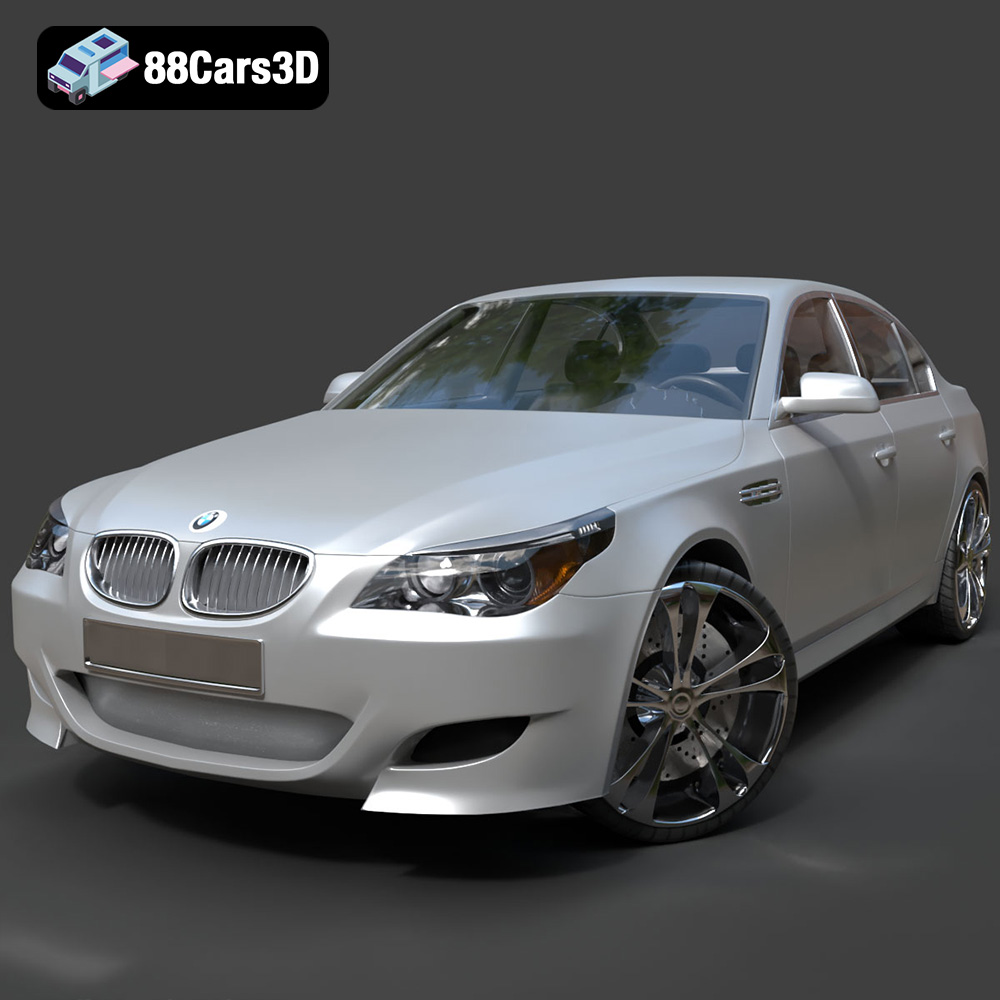
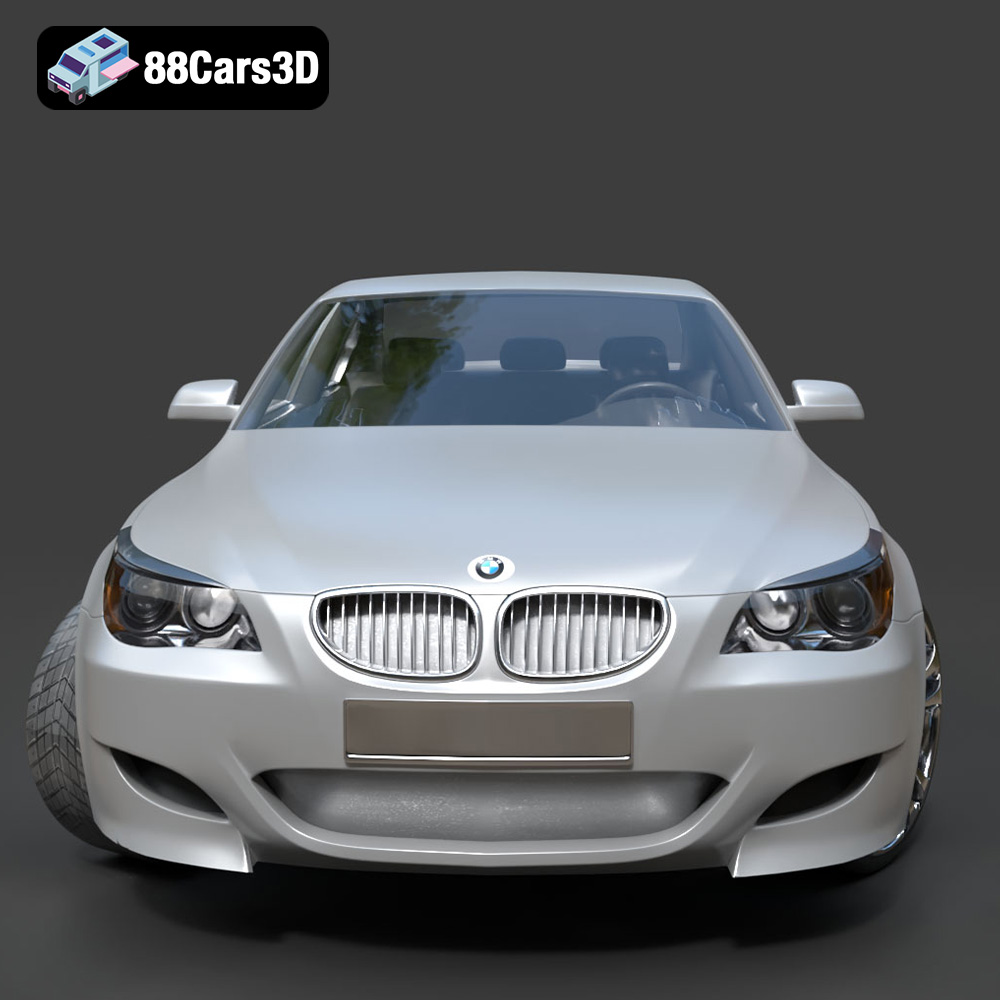
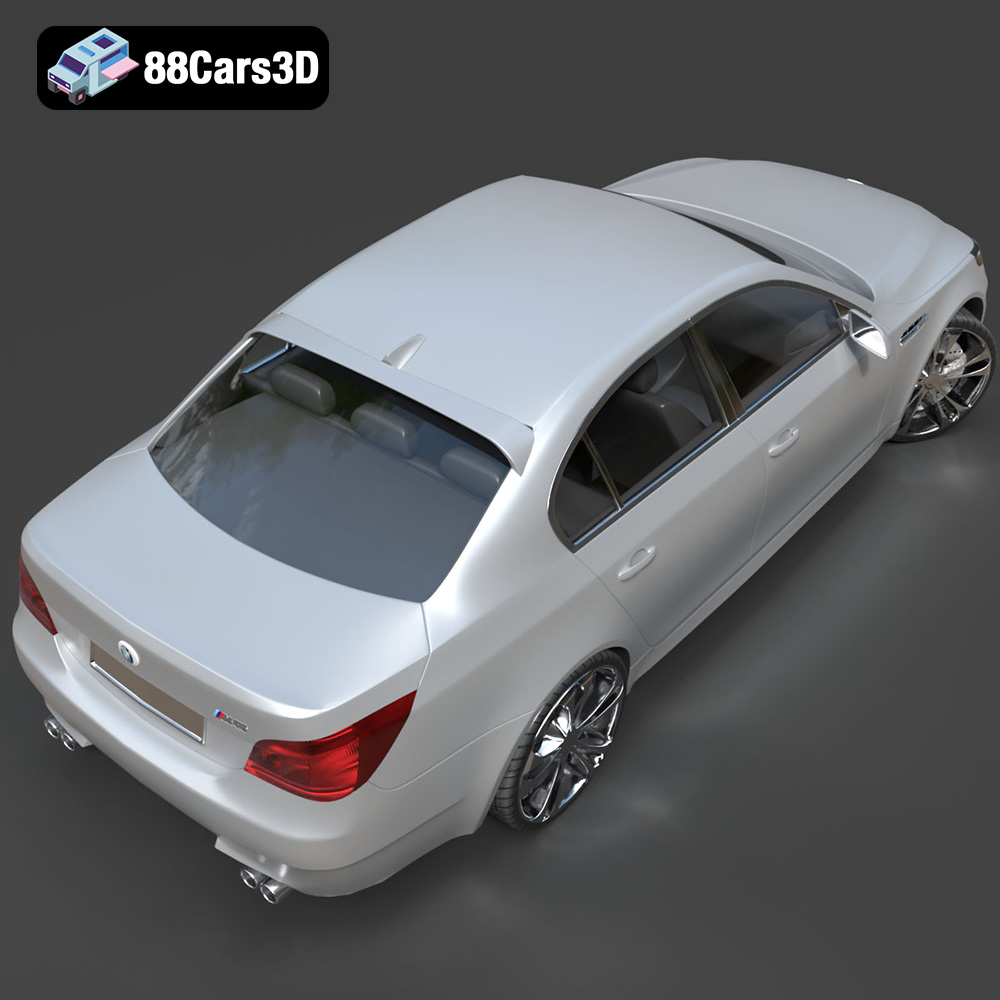
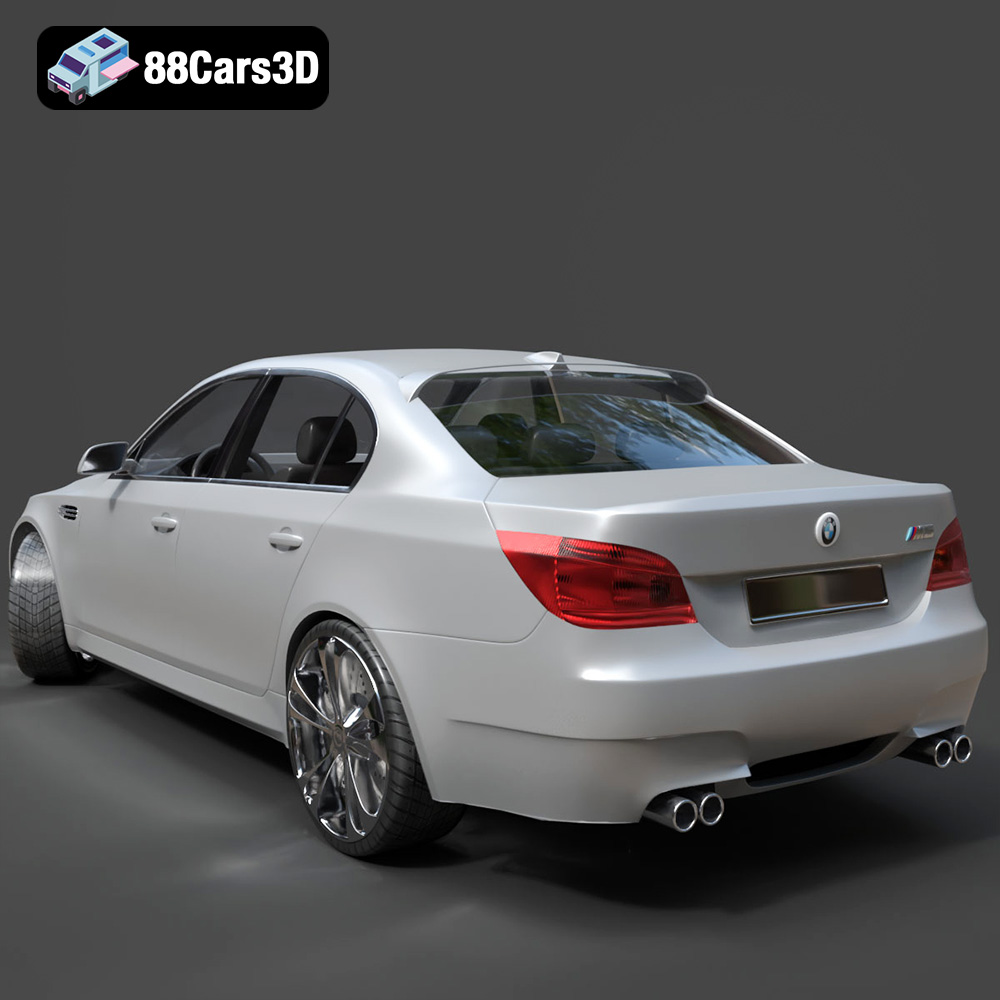
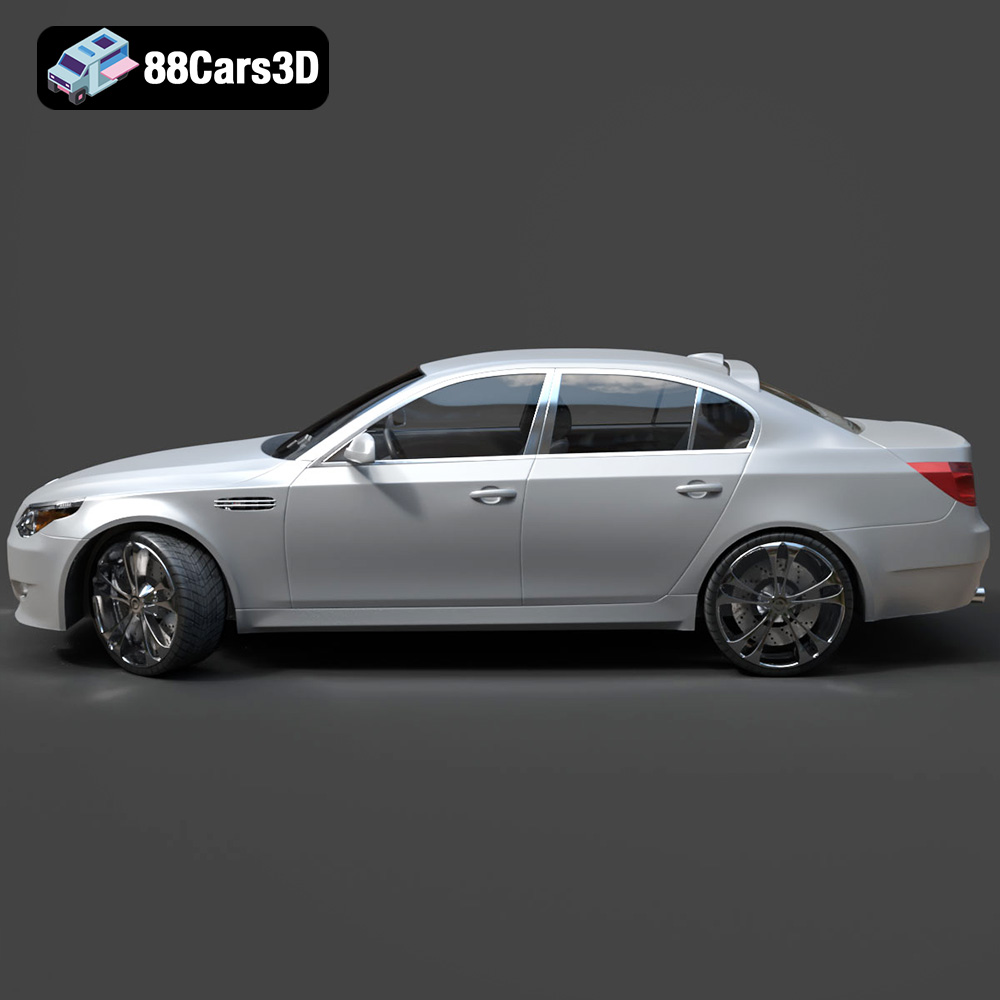
The BMW M5 E60 generation, particularly the 2008 model, holds a special place in automotive history. Its audacious design, characterized by an aggressive front fascia, signature kidney grilles, and the iconic quad exhaust, combined with its exhilarating V10 engine, makes it a prime subject for digital recreation. For 3D artists and developers, a high-quality model of this vehicle isn’t just a car; it’s a narrative element, a performance benchmark, and a symbol of luxury and engineering prowess.
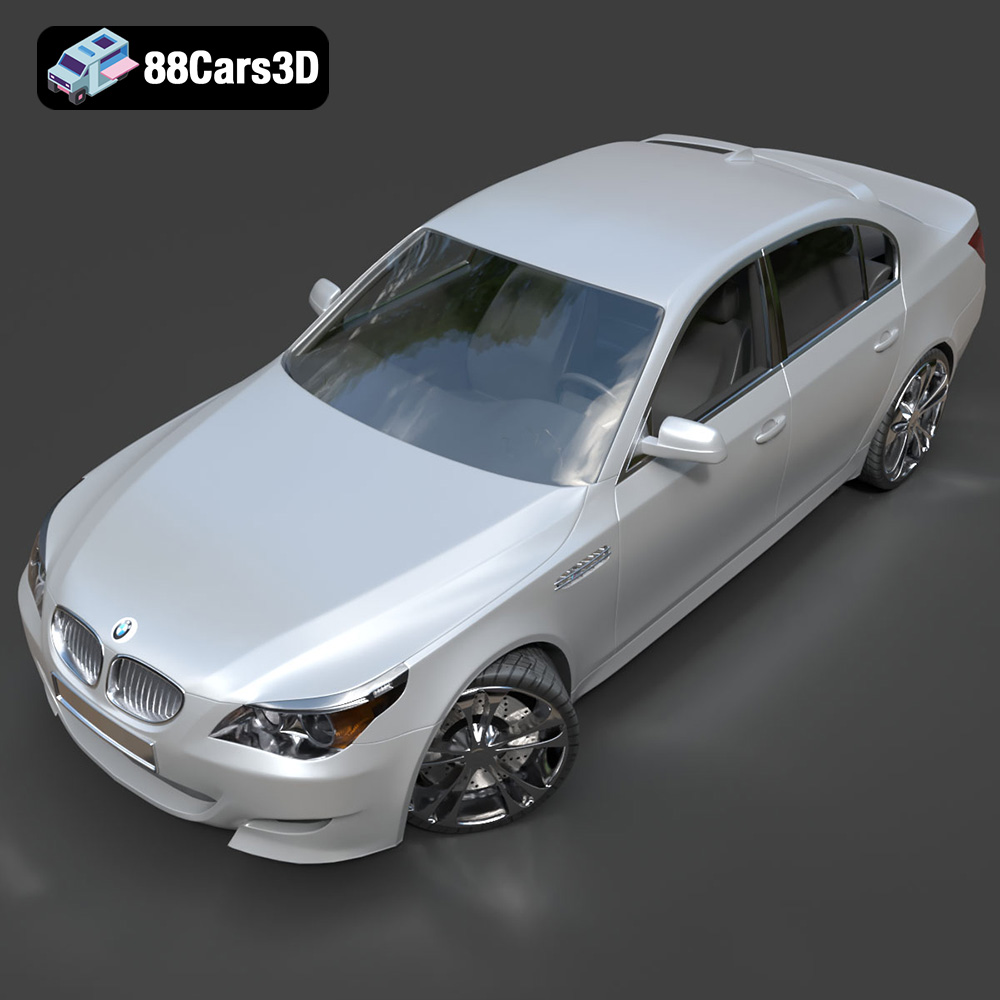
Replicating such a vehicle in 3D demands an obsessive eye for detail. The goal is to go beyond mere resemblance, aiming for an accurate digital twin that evokes the same feeling as the physical car. This includes faithfully reproducing its muscular lines, the subtle curves of its body panels, and the intricate details that differentiate an M5 from its standard counterparts. The aggressive stance, the flared wheel arches housing performance tires, and the distinctive L-shaped LED taillights all contribute to its unique character, which must be perfectly translated into the 3D model.
A key aspect of the E60 M5’s legend is its 5.0L S85 V10 engine. While not always fully visible in all renderings, including a detailed engine block in the 3D model speaks volumes about the model’s overall quality and commitment to authenticity. Furthermore, M-specific elements like the heavily bolstered M sport leather seats, the thick-rimmed M multi-function steering wheel with paddle shifters, and the M-specific tachometer in the instrument cluster are critical for an immersive experience, especially in first-person perspectives within games or VR environments. These interior details ensure that whether the viewer is admiring the car from the outside or “sitting” inside, the M5’s distinctive luxury sports feel is palpable.
The true value of a professional 3D car model lies in its meticulous design and robust technical specifications. It’s a delicate balance between visual fidelity and performance optimization, ensuring the model looks stunning without bogging down real-time engines or hindering complex rendering tasks. The BMW M5 2008 3D model is a prime example of this engineering.
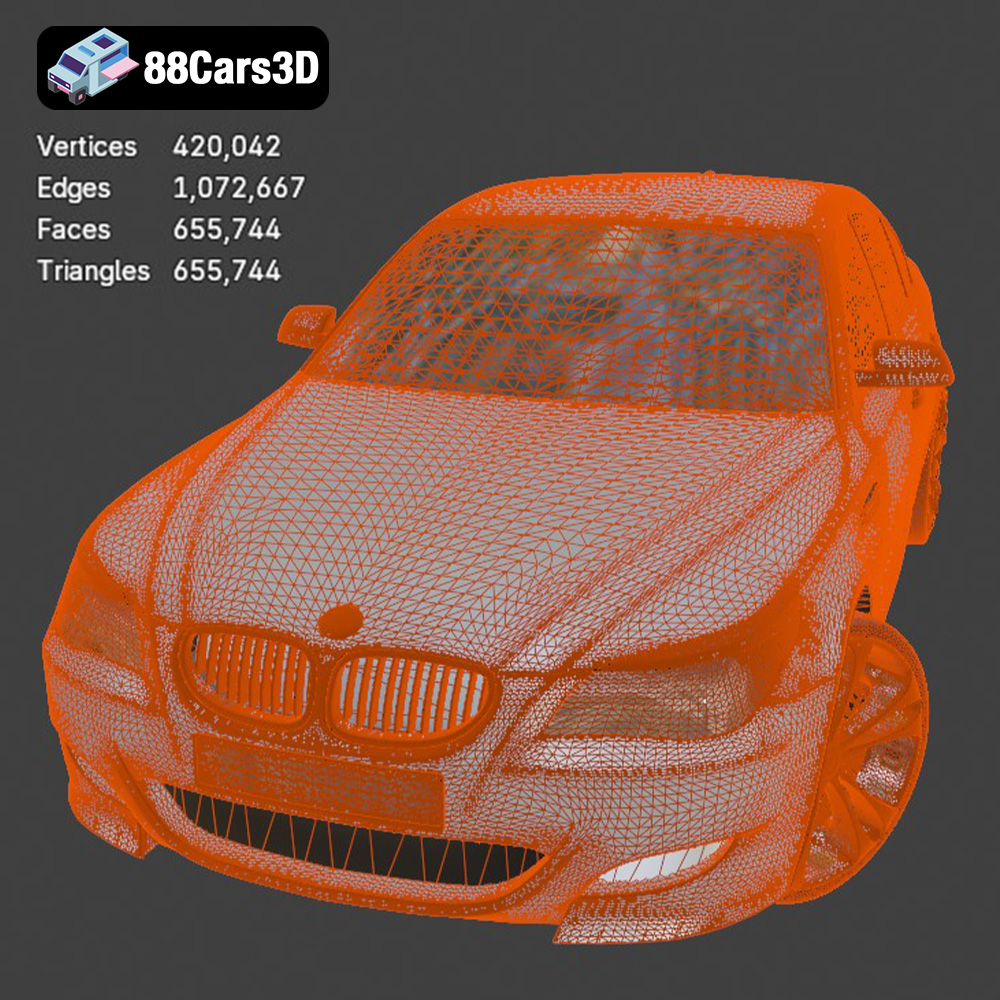
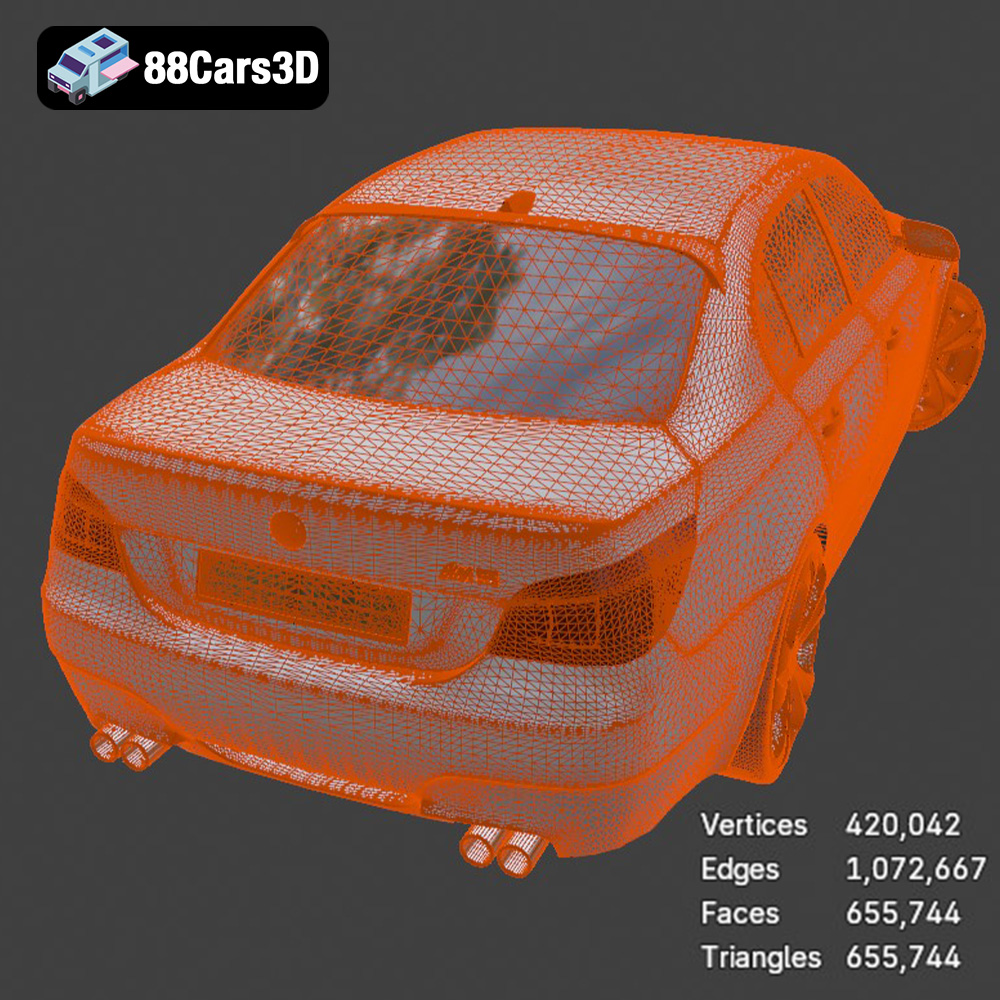
At the heart of any high-quality 3D model is its topology. With a triangle count of 655,744, the BMW M5 2008 model strikes an excellent balance. This polycount is sufficiently detailed to achieve high-end visual realism for close-up renders and cinematics, capturing every curve and panel gap with accuracy. Crucially, it’s also optimized as “game-ready,” meaning it performs efficiently within real-time engines like Unreal and Unity. This careful optimization prevents excessive resource consumption, ensuring smooth frame rates in interactive applications while still delivering stunning visuals.
Beyond the raw polycount, proper edge flow and clean UV mapping are essential. While not explicitly detailed in the product description, professional 3D car models like this typically feature clean, non-overlapping UVs that allow for precise texture application and efficient lightmap generation, crucial for both rendering and real-time environments. The accurate BMW M5 2008 frame geometry and proportions, along with real-world scale accuracy, further ensure that the model behaves realistically in any scene it’s placed in.
A static model has its uses, but a truly professional asset offers flexibility for dynamic scenarios. The BMW M5 2008 model’s design with separate wheels, suspension, and steering components is a significant technical advantage. This modularity is vital for animators and game developers, as it allows for realistic suspension travel, steering articulation, and wheel rotation. The proper pivot setup for these components dramatically reduces the setup time for animating vehicle dynamics, enabling quick implementation into racing simulations or cinematic sequences. This attention to mechanical detail goes beyond aesthetics, directly impacting the model’s functional utility.
The versatility of a well-engineered 3D car model extends far beyond simple imagery. Such assets are foundational components in a multitude of industries, driving innovation and enhancing user experiences. The 88cars3d.com BMW M5 2008 3D model exemplifies this broad applicability.
For game developers, an optimized, game-ready 3D car model is invaluable. The BMW M5 2008 model, with its 655,744 triangles and proper pivot setups, is ideal for integration into racing titles, open-world environments, and vehicle simulators. Its balanced polycount means it can be a primary vehicle without crippling performance, while detailed interior features, optimized for first-person POV, create an immersive driving experience. Imagine navigating a photorealistic urban environment or engaging in high-speed pursuits, all powered by this meticulously crafted digital asset.
Augmented Reality (AR) and Virtual Reality (VR) thrive on high-quality, efficient 3D content. The BMW M5 2008 model, especially in formats like .glb, is perfect for virtual showrooms, car configurators, or even mobile AR experiences where users can “place” the car in their real-world environment. Its real-world scale accuracy ensures a believable presence, allowing potential buyers to explore every angle, customize colors and finishes, and even virtually “sit” inside the car, offering a compelling alternative to physical showrooms. This immersive interaction is key for brands looking to engage customers in innovative ways.
In animation and architectural visualization (arch-viz), the BMW M5 2008 3D model serves as a powerful tool for adding realism, luxury, and dynamic appeal to scenes. For advertising campaigns, the model can be rendered in a studio setup with perfect lighting, showcasing its aggressive styling and premium features. In arch-viz, placing this iconic sports sedan outside a luxury residence or within a modern urban street scene instantly elevates the perceived value and narrative of the visualization. Its detailed exterior and interior mean that both wide shots and intimate close-ups can maintain stunning visual fidelity, enhancing client presentations and marketing materials.
The true test of a 3D asset’s quality lies in its seamless integration into various professional workflows. A well-designed model should save artists and developers valuable time, not create new hurdles. The BMW M5 2008 3D model, with its comprehensive file format support, is built for efficiency across different software environments.
For artists using 3ds Max, importing the .max file provides immediate access to the model in its native environment. This allows for direct manipulation of geometry, materials, and lighting. A common workflow would involve:
Blender users benefit from the native .blend file, offering complete access to the model’s structure. A Blender workflow might involve:
For game developers and real-time visualization specialists, the “unreal” or .fbx formats are paramount. The workflow in Unreal Engine would typically involve:
The inherent compatibility and optimization of the BMW M5 2008 3D model across these diverse platforms streamline project development, allowing professionals to focus on creative output rather than technical troubleshooting.
Beyond digital rendering and real-time applications, the BMW M5 2008 3D model also caters to the rapidly expanding world of 3D printing and physical model creation. The inclusion of the .stl format opens up a realm of possibilities for hobbyists and professionals alike.
3D printing allows for the creation of tangible replicas, ranging from desktop display models to intricate scale models for collectors. The provided 3D print settings offer a clear roadmap for successful output:
This capability adds another dimension to the value proposition of the BMW M5 2008 3D Model, bridging the gap between digital and physical artistry.
Even within the digital realm, customization is key for meeting diverse project requirements. The model offers several avenues for personalization, empowering artists to adapt it to their specific vision:
These customization options ensure that the BMW M5 2008 model is not a static asset, but a dynamic canvas for creative expression.
In a crowded marketplace, selecting the right 3D asset is paramount. For critical projects requiring precision, performance, and aesthetic excellence, the choice becomes even more significant. Investing in a premium 3D car model, such as the BMW M5 2008 found on 88cars3d.com, is an investment in quality and efficiency.
A high-quality asset minimizes post-purchase headaches, offering clean topology, optimized geometry, and comprehensive file format support. It provides a solid foundation for diverse applications, from demanding real-time simulations to photorealistic marketing campaigns. The detailed features, from the engine block to the cockpit, ensure that every angle and interaction with the model meets professional standards.
The BMW M5 2008 3D model stands as a testament to meticulous craftsmanship and technical foresight, ready to be integrated into any professional pipeline. Whether you are a game developer pushing graphical boundaries, an architect envisioning luxury living, or a VR/AR designer crafting immersive experiences, this asset provides the fidelity and flexibility required to bring your vision to life.
Experience the legendary BMW M5 2008 (E60 generation), a defining sports sedan famed for its Formula 1-inspired naturally aspirated V10 engine and striking aerodynamic styling. This 3D model faithfully captures the vehicle’s heritage, showcasing key visual elements like the aggressive front fascia, flared wheel arches, signature quad exhaust system, and iconic kidney grilles that make this super saloon truly special. Designed with meticulous attention to detail, this 3D model features a well-structured topology with a triangle count of 655,744. It offers exceptional game-ready optimization and high-end visual fidelity, making it a premier asset for real-time applications, game development, AR/VR experiences, professional animation, and architectural visualization.
$46.50
.2008
.blend
.bmw
.e60
.fbx
.glb
.m5
.max
.obj
.ply
.rendering
.stl
.unreal
car-3d-model
game asset
game-ready
low-poly
luxury car
optimized
sports-sedan
VR/AR