Get 20% OFF All Premium 3D & STL Models!

In the fast-paced world of digital creation, where photorealism and interactive experiences reign supreme, the demand for exceptionally crafted 3D car models has never been higher. From breathtaking cinematic renders to immersive virtual reality simulations and high-octane gaming environments, a meticulously detailed vehicle asset can be the cornerstone of a project’s success. It’s about capturing not just the aesthetics, but the very essence and engineering precision of an automobile.
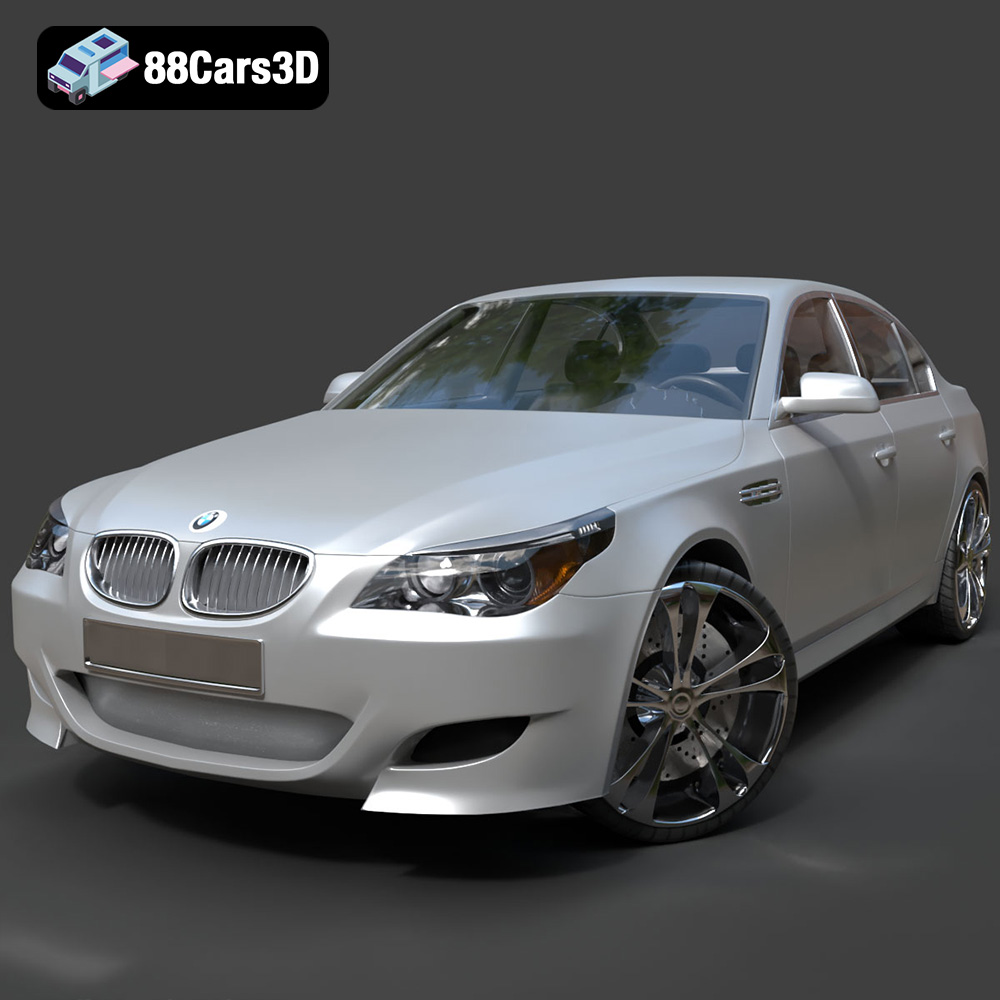
Few cars embody a blend of raw power, sophisticated design, and understated luxury quite like the BMW M5 2008 (E60 generation). A true legend famed for its Formula 1-inspired V10 engine and distinctive styling, this super saloon carved out a unique niche in automotive history. When translating such an iconic machine into the digital realm, precision and technical fidelity are paramount. This is where a high-quality 3D model, such as the BMW M5 2008 3D Model available at 88cars3d.com, becomes an invaluable asset for professionals across various industries. It’s more than just a virtual representation; it’s a versatile tool engineered to deliver unparalleled visual realism and performance, ready to be integrated into diverse digital ecosystems.
The choice of file format for a 3D model is not merely a technicality; it dictates compatibility, functionality, and the efficiency of your workflow. Different formats are optimized for distinct purposes, from real-time game engines to high-fidelity rendering and physical 3D printing. Understanding these nuances is critical for any professional working with 3D car models, ensuring seamless integration and optimal performance. The BMW M5 2008 3D model, for instance, is offered in a comprehensive range of formats, making it adaptable to almost any pipeline.
The .blend file format is the native format for Blender, a powerful and increasingly popular open-source 3D creation suite. A .blend file typically contains a complete Blender scene, including the 3D model’s geometry, materials, textures, lighting, cameras, animation data, and even physics simulations. Its primary advantage is full editability within Blender; users can access and modify every aspect of the model, from adjusting topology to tweaking shader nodes or refining animation rigs. This format is ideal for artists who primarily work within the Blender ecosystem, providing maximum flexibility and control over the asset.
FBX (FilmBox) is arguably the most widely adopted 3D interchange format in the industry, developed by Autodesk. It excels at transferring comprehensive scene data between different 3D software applications and, crucially, into game engines like Unreal Engine and Unity. An .fbx file can carry not just mesh data, but also materials, textures, bone rigs, animations, cameras, and lights. Its robustness and widespread support make it indispensable for pipelines involving multiple software packages, ensuring that complex animated 3D car models retain their integrity when moved from, say, 3ds Max to Unreal Engine. This makes it an ideal choice for game development and animation production where real-time performance and complex scene transfers are common.
Wavefront .obj is one of the oldest and most universal 3D file formats. It’s a simple, text-based format primarily used for transferring static mesh geometry and basic material information (via an accompanying .mtl file). While it doesn’t support animation, rigging, or complex PBR materials directly, its widespread compatibility across virtually all 3D software makes it an excellent choice for basic model exchange. If you need a clean, static mesh of the BMW M5 2008 for a quick import or as a base for further sculpting in another program, .obj is a reliable option for cross-software compatibility.
The .glb (GL Transmission Format Binary) format is a binary version of the glTF (GL Transmission Format), specifically designed for efficient transmission and loading of 3D scenes and models in web browsers, augmented reality (AR), and virtual reality (VR) applications. It’s a “self-contained” format, meaning it bundles all necessary assets like geometry, materials, textures, and animations into a single file, making it incredibly streamlined for real-time applications where file size and loading speed are critical. The .glb format is perfect for deploying interactive 3D car models, such as the BMW M5 2008, in online showrooms or mobile AR experiences.
STL (Stereolithography) is the de facto standard file format for 3D printing. Unlike other formats that describe surfaces, .stl represents a 3D object’s surface geometry using a collection of triangular facets. It contains no color or texture information, focusing solely on the object’s shape for physical fabrication. When you want to bring a digital 3D car model like the BMW M5 2008 into the physical world as a collectible or prototype, converting it to .stl is the necessary step for preparing it for a 3D printer.
PLY (Polygon File Format) is another format often used to store 3D data, particularly from 3D scanners. It can store a wider range of properties than .obj, including color, transparency, surface normals, and even confidence values for each vertex or face. While not as universally supported as .obj, .ply is valuable for applications requiring high precision mesh data, such as reverse engineering, CAD, or scientific visualization, where detailed surface information from the BMW M5 2008 model might be crucial for analysis.
When you see a .unreal file, it signifies an asset package specifically prepared for Unreal Engine. While often derived from an .fbx import, an .unreal asset typically comes with its materials already set up using Unreal’s physically-based rendering (PBR) system, potentially with collision meshes, LODs (Levels of Detail), and proper pivot points configured. This format offers the highest degree of “plug-and-play” readiness for Unreal Engine projects, minimizing setup time and ensuring the BMW M5 2008 integrates seamlessly into your game or real-time visualization.
The .max file is the native project format for Autodesk 3ds Max, a powerful 3D modeling, animation, and rendering software widely used in architectural visualization, product design, and game development. A .max file encapsulates the entire 3ds Max scene, including geometry, materials (especially complex V-Ray or Corona shaders), lighting setups, cameras, animation timelines, and modifiers. For users entrenched in the 3ds Max ecosystem, the .max format offers complete control and editability, allowing for advanced rendering configurations and detailed animation work on the BMW M5 2008.
The availability of the BMW M5 2008 3D model in such a diverse array of formats underscores its versatility and value. It ensures that designers, game developers, animators, and architects can seamlessly integrate this exceptional car model into their preferred software and workflow, without compromising on quality or functionality.
Creating a truly outstanding 3D car model is an intricate process that blends artistic skill with technical mastery. It involves more than just replicating shapes; it’s about translating real-world engineering and design philosophies into a digital format that can perform flawlessly across diverse applications. The BMW M5 2008 3D model exemplifies this fusion, meticulously engineered for both aesthetic appeal and technical efficiency.
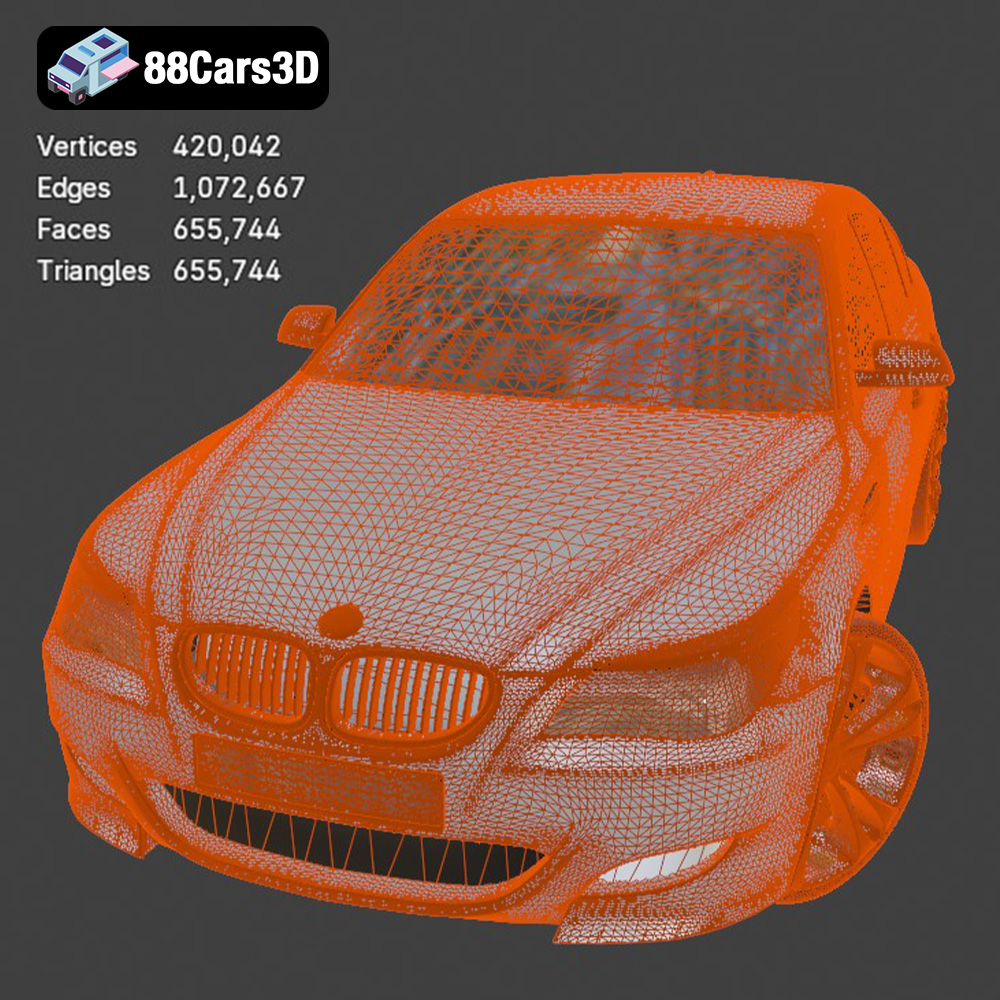
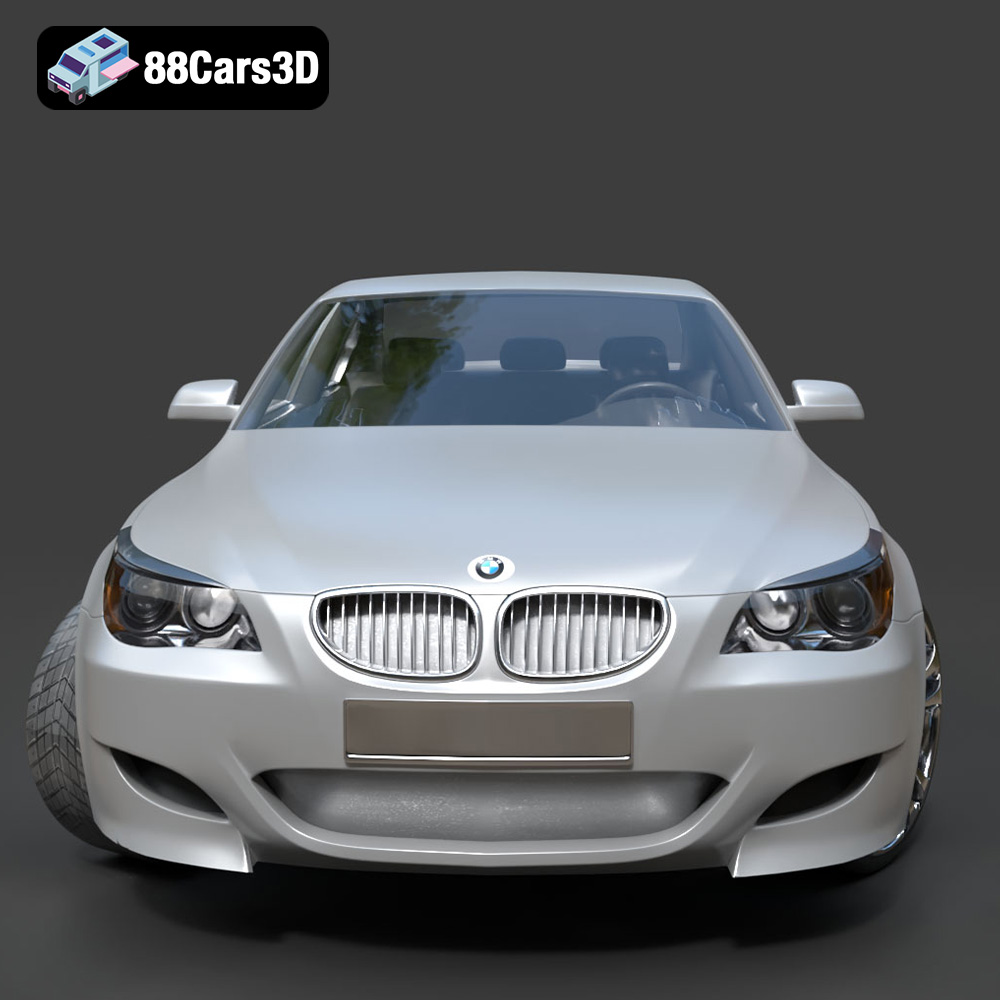
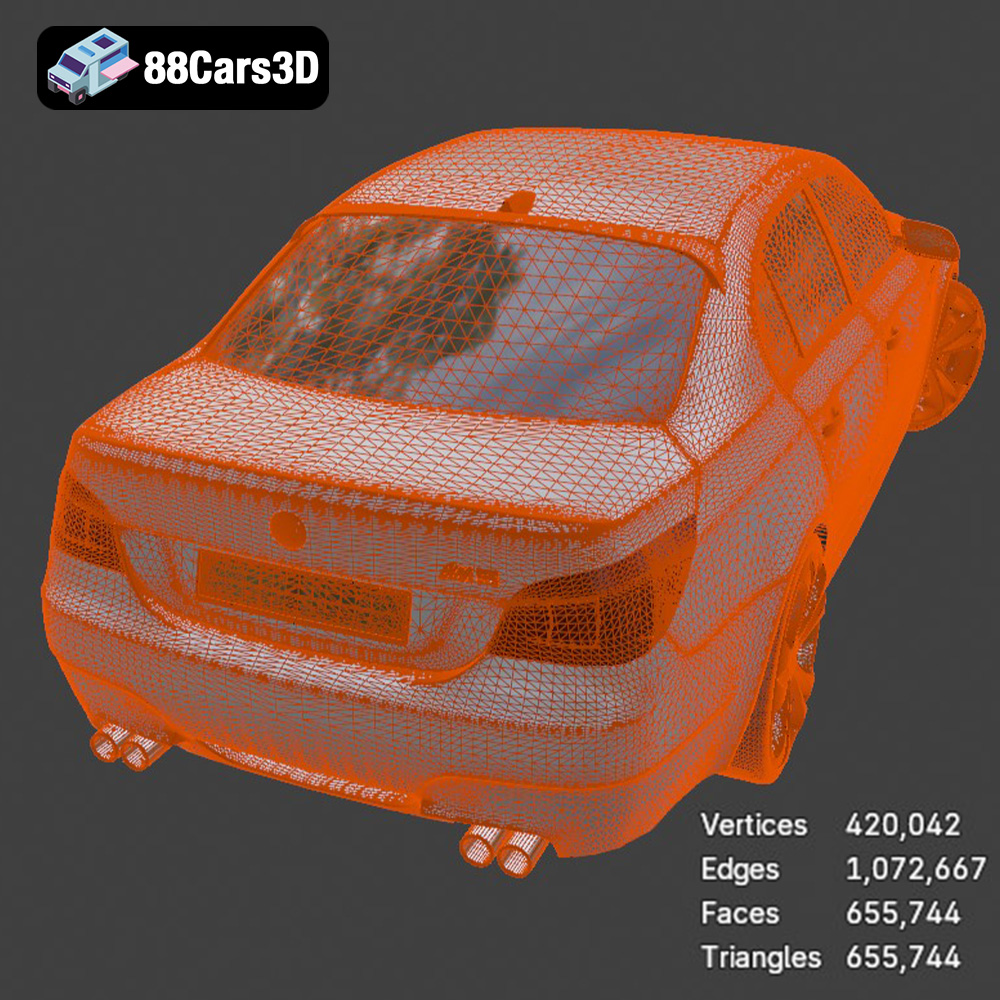
The foundation of any high-quality 3D model lies in its geometry and topology. For an automotive asset, this means adhering to real-world scale accuracy, ensuring that every curve, panel gap, and vent is faithfully represented. The BMW M5 2008 model boasts a well-structured topology with a triangle count of 655,744. This specific poly count strikes a crucial balance: it’s high enough to capture the intricate details of the M5’s aggressive front fascia, flared wheel arches, and iconic kidney grilles, yet optimized enough to be game-ready for real-time engines like Unreal and Unity. Clean topology, characterized by efficient edge loops and quad-based meshes, is vital for smooth deformations during animation and for retaining detail when using subdivision surfaces in rendering applications.
Beyond the mesh, the realism of a 3D car model is heavily dependent on its materials and textures. Modern workflows utilize Physically Based Rendering (PBR) to simulate how light interacts with surfaces in a way that is consistent with the real world. This involves multiple texture maps:
The BMW M5 2008 model utilizes these principles to achieve authentic finishes, from the metallic sheen of its body paint to the nuanced textures of its M-style lightweight alloy wheels and the high-performance tire treads. Proper UV mapping—the process of unwrapping the 3D mesh into a 2D space for texture application—is essential here, ensuring textures are applied without distortion and maximizing pixel density for crisp details.
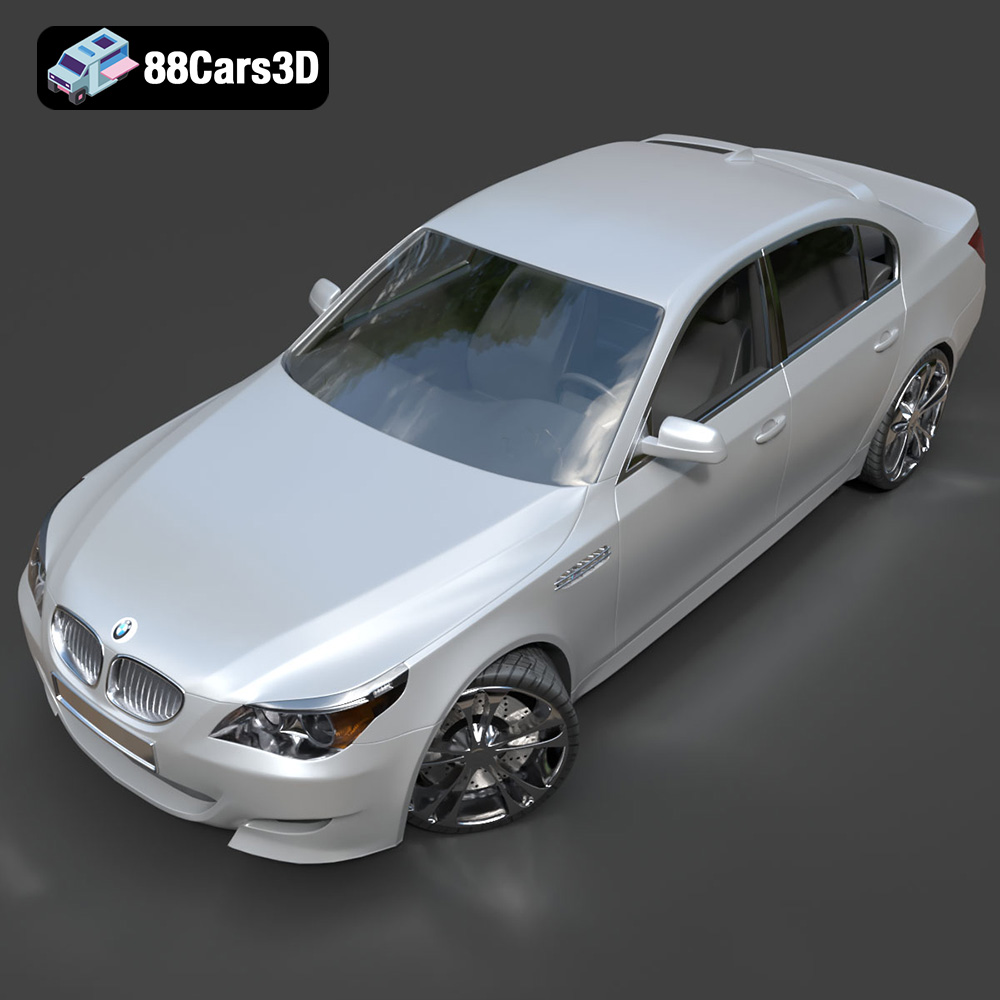
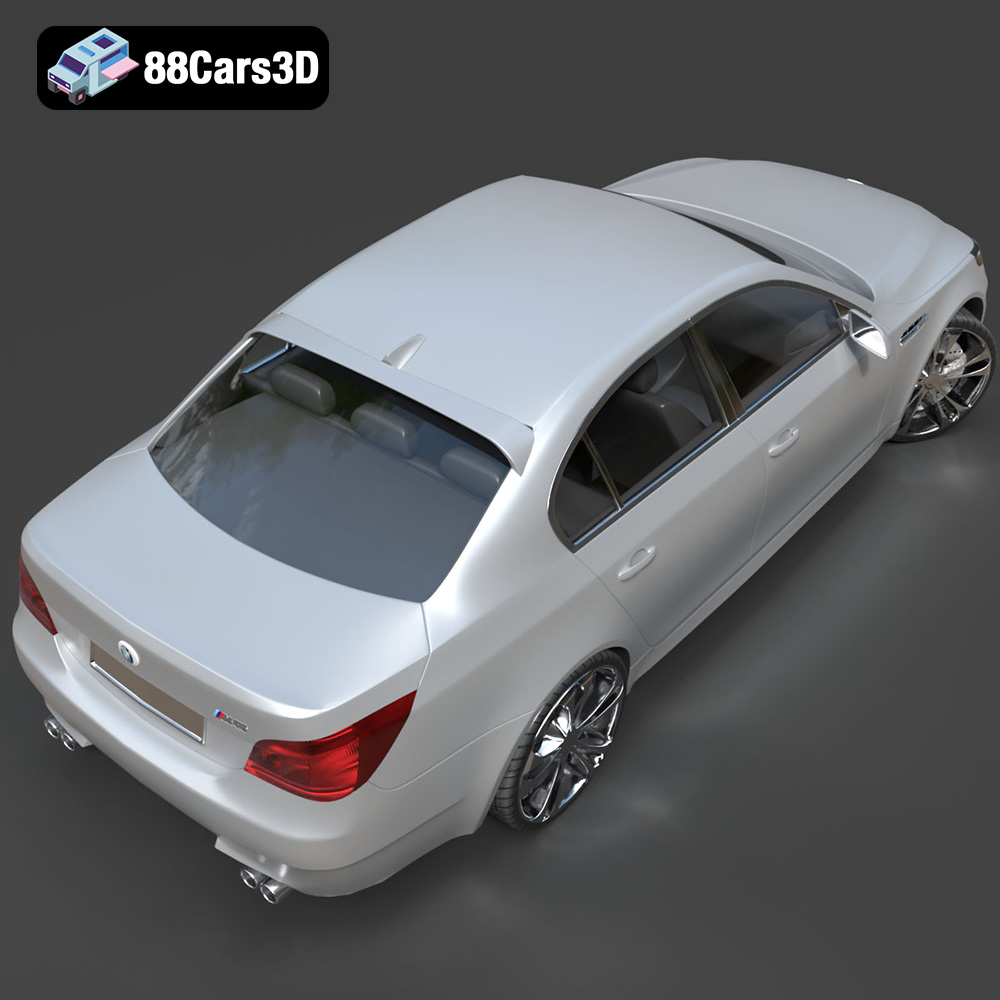
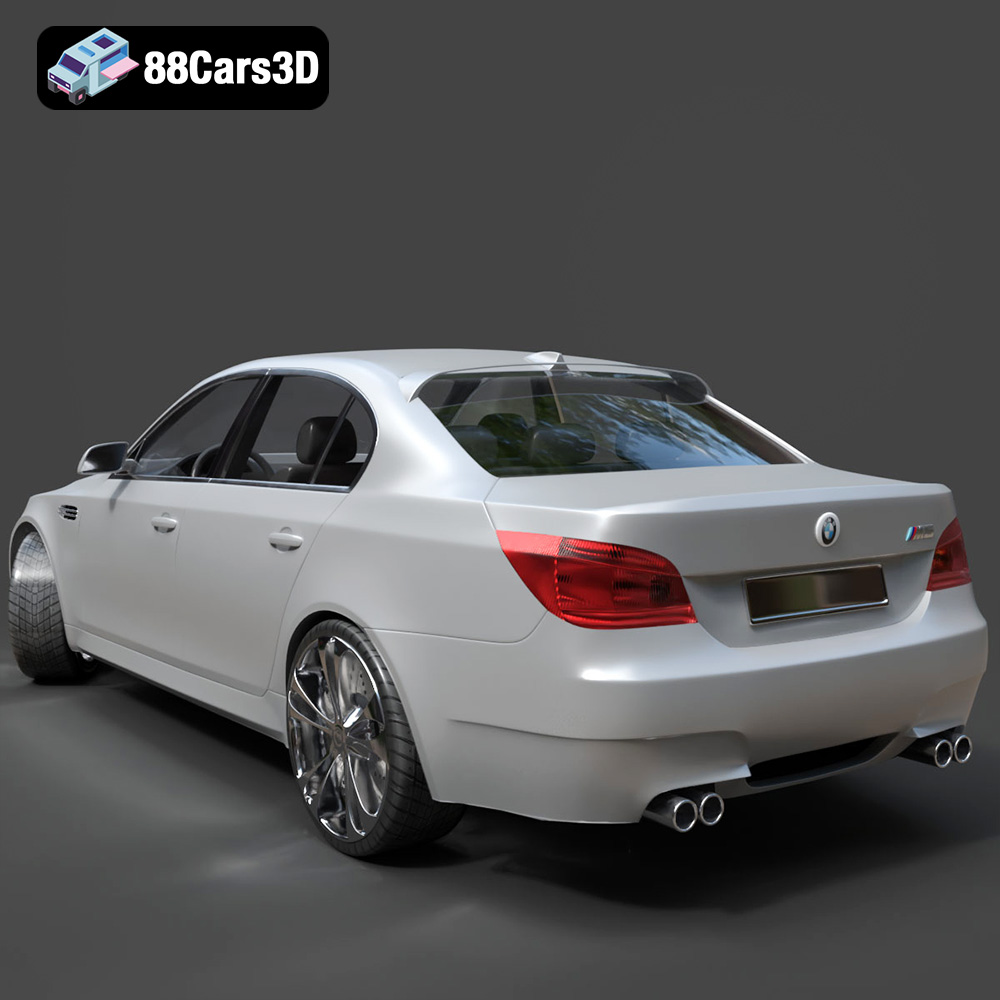
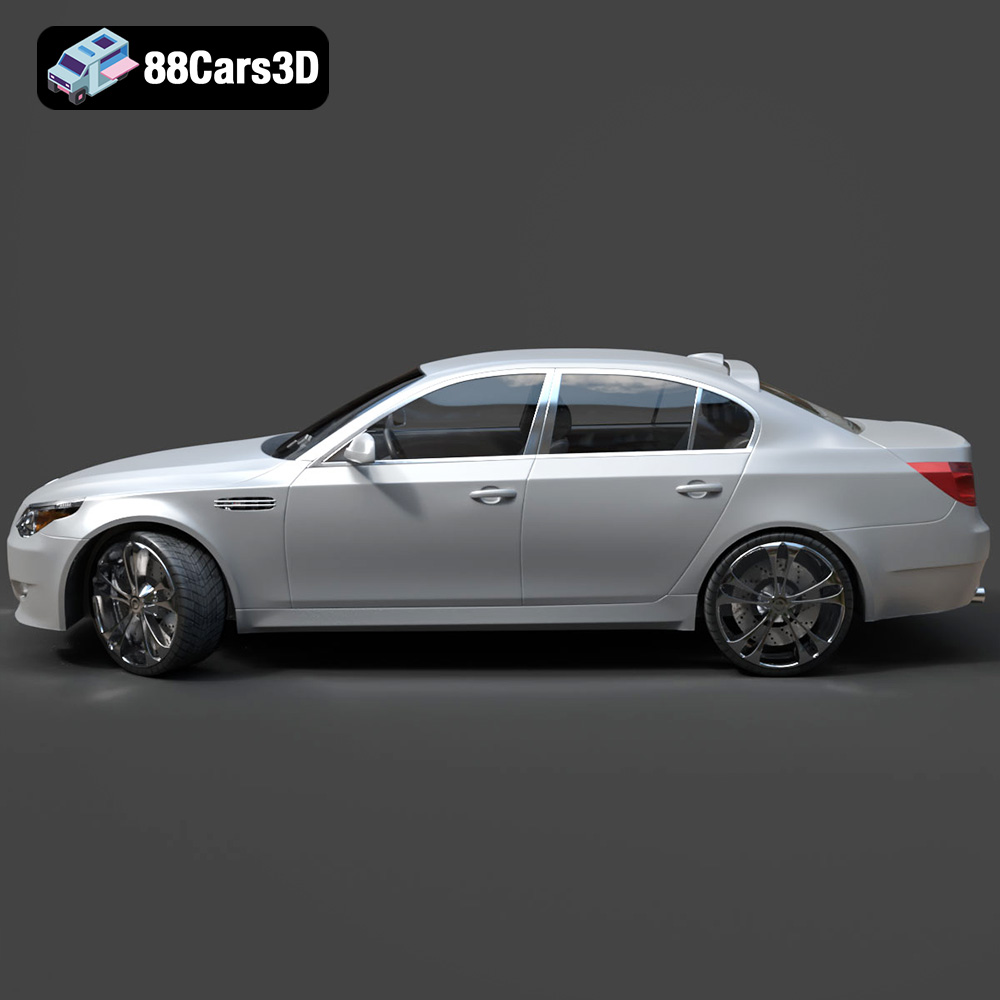
The provided BMW M5 2008 3D model is a testament to meticulous detailing. Externally, it captures the signature M-specific quad exhaust system with its rear diffuser, authentic Bi-Xenon headlights, and distinct L-shaped LED taillights. The separate wheels, suspension, and steering components are not just visually accurate but also functionally prepared for animation, allowing for realistic simulations of driving dynamics. Internally, the cockpit is equally impressive, featuring heavily bolstered M sport leather seats, a thick-rimmed M multi-function steering wheel with paddle shifters, and an authentic instrument cluster with the M-specific tachometer. Even intricate control details like pedals, the SMG shifter, and the iDrive dial are included, with optimized geometry ensuring an excellent first-person perspective in gaming scenarios. This level of comprehensive detail ensures the model is not only beautiful but also functionally versatile for a wide array of applications.
The true value of a premium 3D car model lies in its ability to seamlessly integrate into and enhance various professional pipelines. Whether for interactive media, compelling visuals, or functional prototypes, the right asset can significantly reduce development time and elevate output quality.
For game developers, 3D car models are central to creating believable virtual worlds and engaging gameplay experiences. The BMW M5 2008 3D model, with its “game-ready & optimized” tag and 655,744 triangles, is perfectly suited for this environment. In engines like Unreal Engine and Unity, an asset needs to be efficient. This involves not only an optimized polycount but also:
This model is ideal for open-world games, high-speed racing simulations, or even police chase scenarios within urban environments, providing a stunning visual anchor that performs efficiently.
In the realms of automotive marketing, product showcases, and architectural visualization, photorealistic renders are non-negotiable. Software like 3ds Max (often with V-Ray or Corona Renderer) and Blender (with Cycles) are industry stalwarts for achieving this. The BMW M5 2008 model’s detailed geometry and material readiness make it an excellent candidate for:
The inclusion of a .max and .blend file format ensures users of these powerful applications have full control to push the boundaries of photorealism.
As AR and VR technologies become more prevalent, the need for high-quality, optimized 3D car models grows. The .glb format, specifically, is a game-changer for these applications. The BMW M5 2008 model can be used to create:
The optimized geometry ensures smooth performance on mobile devices and VR headsets, making these immersive experiences truly compelling.
The journey of a 3D car model doesn’t always end on a screen. With the advancement of 3D printing technology, these digital assets can be transformed into tangible, physical objects, opening up new avenues for prototyping, collectibles, and educational tools.
The .stl file format is the bridge between the virtual and physical worlds for 3D printing. While the original 3D model might be highly detailed and feature complex materials, the .stl conversion simplifies it to a surface mesh of triangles, ready for the printer’s instructions. The process often involves ensuring the mesh is “watertight” – meaning it has no holes or gaps – to prevent printing errors. The BMW M5 2008 model, being available in .stl, is perfectly positioned for hobbyists and professionals alike to create physical replicas.
Successful 3D printing requires careful consideration of several technical parameters, and the product description for the BMW M5 2008 model provides excellent guidelines:
This detailed guidance ensures that anyone wishing to print their own BMW M5 2008 can achieve exceptional results, showcasing the power of a well-prepared digital asset.
A truly valuable 3D asset is not just a static object; it’s a flexible foundation that can be adapted and refined to meet the evolving demands of various projects. The BMW M5 2008 3D model offers significant scope for customization, making it a future-proof investment for any digital artist or developer.
The ability to customize a 3D car model is paramount for achieving unique visual narratives and meeting specific client briefs. With the included file formats, users can effortlessly:
This level of flexibility allows the BMW M5 2008 model to serve as a cornerstone asset for countless projects, extending its utility far beyond a single initial application.
Investing in high-quality 3D car models like the BMW M5 2008 from reputable marketplaces such as 88cars3d.com offers significant long-term value. Such assets are:
In a competitive digital landscape, having access to such robust and versatile 3D car models is not just a convenience; it’s a strategic advantage.
The creation and utilization of high-fidelity 3D car models represent a pinnacle of digital artistry and technical engineering. From the intricate geometry that defines every curve to the sophisticated material systems that simulate photorealistic finishes, each element plays a critical role in bringing these virtual vehicles to life. The BMW M5 2008 3D model stands as an exemplary product, meticulously detailed and technically optimized for an astonishing range of applications – be it for high-performance racing simulations, captivating automotive rendering, immersive AR/VR experiences, or even tangible 3D-printed collectibles.
By understanding the nuances of various file formats and leveraging the detailed specifications of assets like the M5, professionals can streamline their workflows, achieve unparalleled visual quality, and unlock new creative possibilities. This versatile model, available through 88cars3d.com, is a testament to the power of well-crafted digital assets, offering a robust foundation for anyone looking to infuse their projects with the legendary spirit and precision engineering of a true automotive icon. It’s an investment in quality, efficiency, and boundless creative potential, ready to drive your next project forward.
Experience the legendary BMW M5 2008 (E60 generation), a defining sports sedan famed for its Formula 1-inspired naturally aspirated V10 engine and striking aerodynamic styling. This 3D model faithfully captures the vehicle’s heritage, showcasing key visual elements like the aggressive front fascia, flared wheel arches, signature quad exhaust system, and iconic kidney grilles that make this super saloon truly special. Designed with meticulous attention to detail, this 3D model features a well-structured topology with a triangle count of 655,744. It offers exceptional game-ready optimization and high-end visual fidelity, making it a premier asset for real-time applications, game development, AR/VR experiences, professional animation, and architectural visualization.
$46.50
.2008
.blend
.bmw
.e60
.fbx
.glb
.m5
.max
.obj
.ply
.rendering
.stl
.unreal
car-3d-model
game asset
game-ready
low-poly
luxury car
optimized
sports-sedan
VR/AR